 Login

Astronomers Detect 84 Mysterious Objects in Nearby Galaxies Unlike Anything They've Seen Before
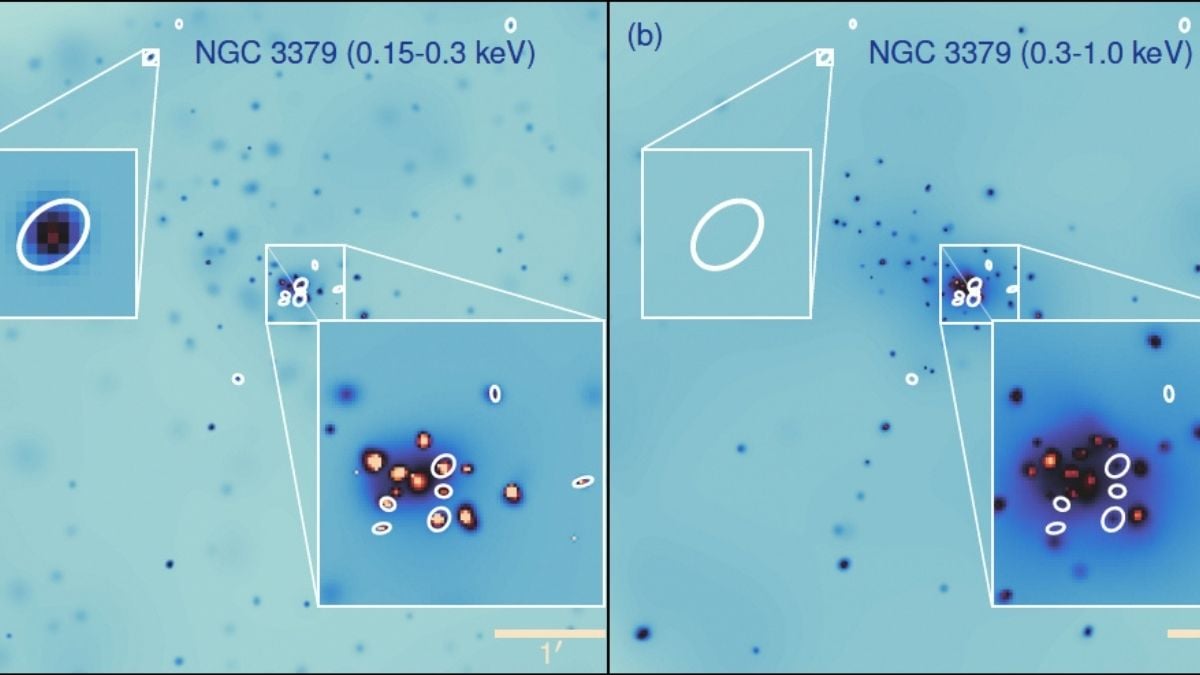 Astronomers found 84 powerful cosmic objects hiding in a kind of light our telescopes can barely detect.

Astronomers found 84 powerful cosmic objects hiding in a kind of light our telescopes can barely detect.
 A lunar city sounds possible until you calculate how fast it would use its water
Maarten Roelfs, fundador da Office EU, diz que a Europa não pode continuar dependente das "big tech" americanas e está a construir uma alternativa europeia ao Microsoft 365, que conta já com mais de um milhão de utilizadores em lista de espera.
The post “Os americanos cruzaram o Rubicão”: Fundador do Office EU quer destronar a Microsoft e Google na Europa appeared first on Tek Notícias.

Scientists have discovered that the weather on a distant world may be far more organized than it first appears. The object, known as SIMP 0136, is a brown dwarf located about 20 light-years from Earth. It is larger and hotter than a gas giant planet such as Jupiter, but it is not massive enough to […]
The post Scientists Discover Jupiter-Like Weather Just 20 Light-Years Away appeared first on Knowridge Science Report.
Aplicativos que utilizam uma premissa simples e a transformam em uma experiência interessante são, particularmente, meus favoritos. Exemplo disso é o Farwave, um app para iPhone e iPad desenvolvido pelo brasileiro Fernando Bunn que permite encontrar estações de rádio de todo o mundo girando um globo 3D até uma determinada região e tocando em uma estação.
A interação baseia-se na localização geográfica, e não em pesquisas por texto. Ou seja, os usuários giram o globo, selecionam uma região e tocam em uma estação, tudo pela mesma interface.

Há, ainda, um botão chamado “Take me anywhere” (“Leve-me a qualquer lugar”, em tradução direta) que seleciona uma opção aleatória para ouvintes que não querem procurar um local específico; além disso, o aplicativo salva o histórico de reprodução para que as pessoas possam retornar a uma estação mais tarde.
Além do rádio, o app também organiza podcasts e músicas utilizando a mesma metáfora do globo. Diferentemente das estações de rádio, assinantes Pro podem pesquisar programas ou adicionar manualmente um feed RSS. O aplicativo também oferece suporte a filas de reprodução, velocidade de reprodução ajustável e downloads para ouvir offline.
Assinantes do plano Pro também podem importar seus próprios arquivos de áudio de um computador ou do aplicativo Arquivos. Cada artista aparece como um “sinal” próprio, e as faixas importadas permanecem no dispositivo para reprodução offline.

O Farwave está disponível gratuitamente na App Store, mas alguns recursos (como supracitado) exigem o Farwave Pro, que custa R$20/mês ou R$100/ano.
via 9to5Mac

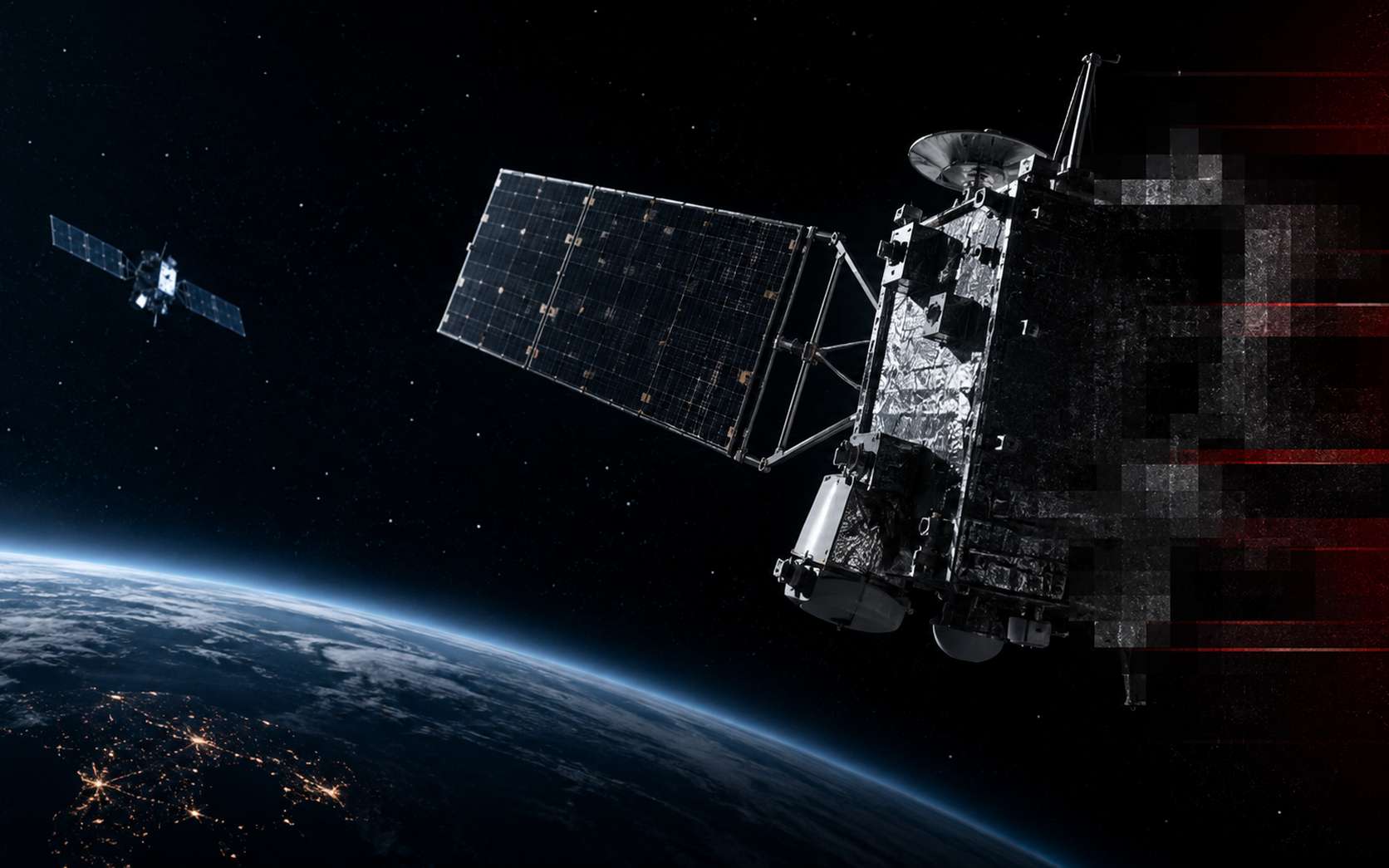
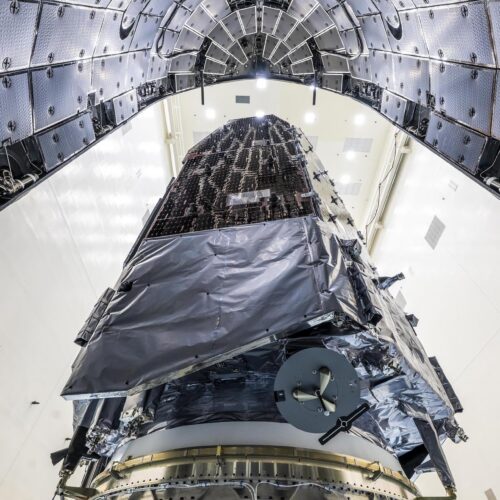
NASA's Nancy Grace Roman Space Telescope is gliding toward its distant observation post on a pinpoint trajectory so precise that engineers estimate the spacecraft's fuel load will last twice as long as their initial expectations, the space agency confirmed Monday.
The $4.3 billion observatory's designers originally planned to load enough propellant into Roman's four fuel tanks for a minimum lifetime of five years, plus a potential five-year mission extension. That was a conservative estimate. NASA officials knew an on-target launch and perfect execution of the observatory's first post-launch course correction maneuver would leave Roman with a hearty fuel reserve.
"As a result of exquisite planning by our orbital dynamics team, brilliant execution by the operations team, and a precise launch from SpaceX, Roman has fuel for at least 22 years of potential science operations," Jamie Dunn, center director at NASA's Goddard Space Flight Center, said in a press release.
© SpaceX
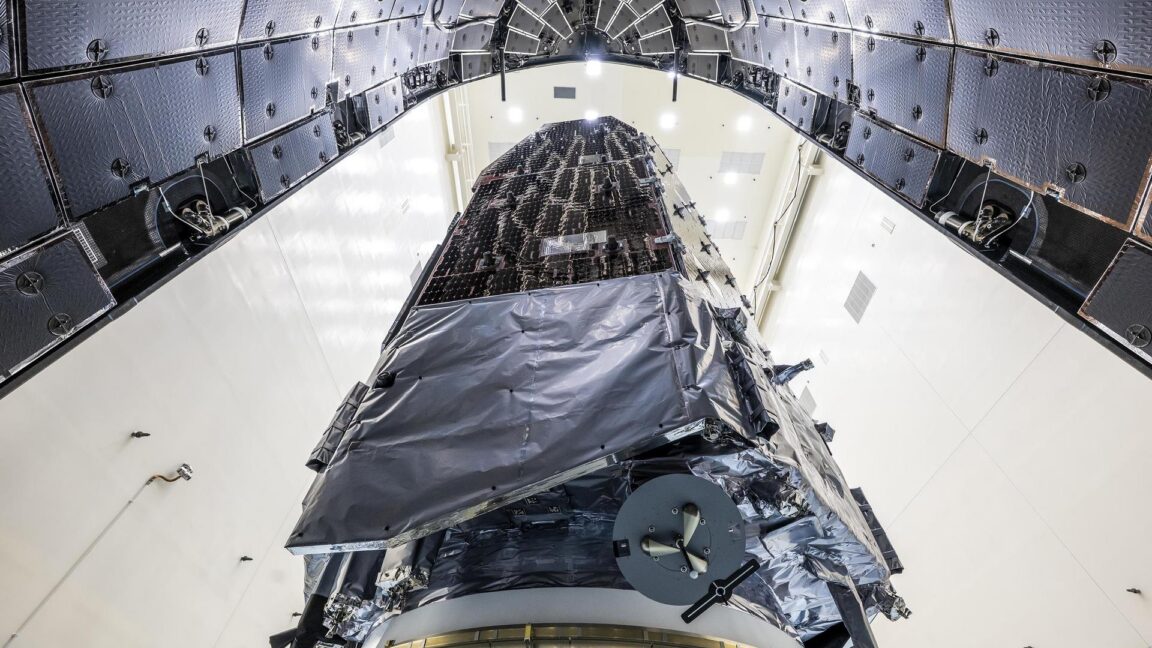
NASA's Nancy Grace Roman Space Telescope is gliding toward its distant observation post on a pinpoint trajectory so precise that engineers estimate the spacecraft's fuel load will last twice as long as their initial expectations, the space agency confirmed Monday.
The $4.3 billion observatory's designers originally planned to load enough propellant into Roman's four fuel tanks for a minimum lifetime of five years, plus a potential five-year mission extension. That was a conservative estimate. NASA officials knew an on-target launch and perfect execution of the observatory's first post-launch course correction maneuver would leave Roman with a hearty fuel reserve.
"As a result of exquisite planning by our orbital dynamics team, brilliant execution by the operations team, and a precise launch from SpaceX, Roman has fuel for at least 22 years of potential science operations," Jamie Dunn, center director at NASA's Goddard Space Flight Center, said in a press release.
© SpaceX
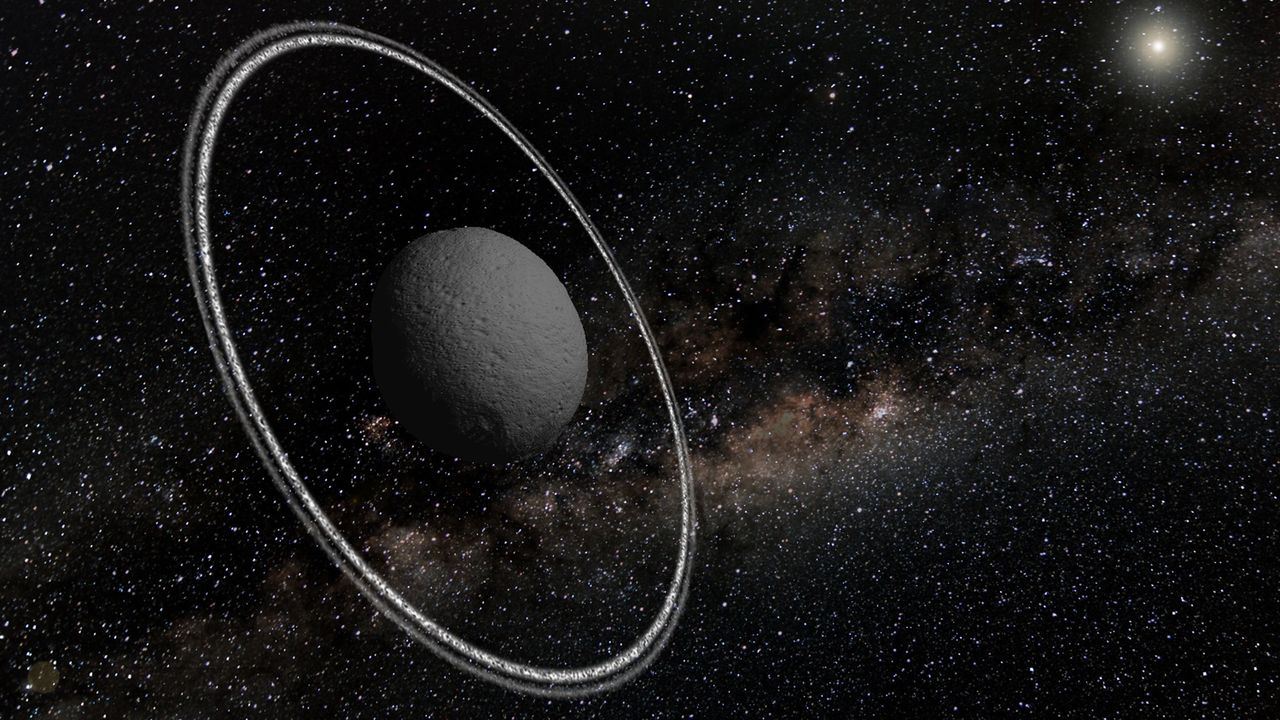
The rings around a strange small body orbiting between Saturn and Uranus look mysteriously different from previous views, new observations from the James Webb Space Telescope (JWST) suggest.
The rings encircle Chariklo, which is a centaur, a strange type of object that shows characteristics of both asteroids and comets. Chariklo is only about 400 miles (250 kilometers) in diameter and is part of a large group of tiny objects in the distant solar system.
Scientists first discovered Chariklo's rings in 2013 — making it the first small solar system body found to have rings — and studied them with ground-based telescopes again in 2014 and 2017. When JWST took another look at Chariklo in 2022, a decade had brought a lot of difference, according to a study published Sept. 9 in the journal Science Advances.
"By comparing JWST observations with those obtained … over the last decade, we discovered opposite changes in the two rings: while the inner ring shows significantly higher opacity, the outer ring shows lower opacity, " Pablo Santos-Sanz, a researcher at the Institute of Astrophysics of Andalusia and first author of the study, said in a statement.
Researchers don't know exactly how the changes took place, but the study authors offered three suggestions. The first is that JWST, which has a fine resolution, was able to see both denser and sparser zones of the rings than previous observations showed. The second is that there were changes in the rings' material or in the grains themselves. Finally, a third possibility is that JWST could see "grains with wavelength-dependent optical properties," meaning the telescope saw effects in composition and grain size that explain the variability.
Santos-Sanz said the research suggests that small bodies with rings — even those orbiting far away from the gravitational influences of planets — may have more changes in their systems than scientists previously thought. "Our results force us to rethink how they form, how they evolve, and what mechanisms maintain their stability," he said.
A theoretical follow-up observation, taken the next time Chariklo passes in front of a star, would help to confirm the new JWST results, the researchers added — especially the apparent decreased opacity of one of the rings and the increased opacity of the other.
"These observations would help disentangle temporal evolution from wavelength-dependent scattering effects, and clarify the physical processes shaping Chariklo’s rings," the researchers stated in the study.
The new observations of Chariklo also mark the first time that scientists have planned a JWST viewing campaign specifically around a stellar occultation — that is, the researchers timed the viewing precisely to when Chariklo passed in front of a distant star from the telescope's point of view.
All observations of Chariklo's rings, on the ground and in space, have used stellar occultations. That's because the rings are too faint to be imaged directly, so astronomers must instead learn more about the rings by measuring the dips and increases in brightness as Chariklo passes in front of the background star. Scientists use a similar method to study the atmospheres of alien planets with JWST's infrared instruments.
Chariklo's speed relative to JWST was low, at 1.5 miles per second (2.5 kilometers per second), allowing for fine imaging of the rings. To time the occultation, the researchers used info from the European Space Agency's Gaia mission, which precisely charts the locations and movements of more than 2 billion stars, as well as calculated the orbit of JWST at a location roughly 930,000 miles (1.5 million km) from Earth in the opposite direction of the sun. According to the researchers, the planning and execution of the mission required "extreme precision."
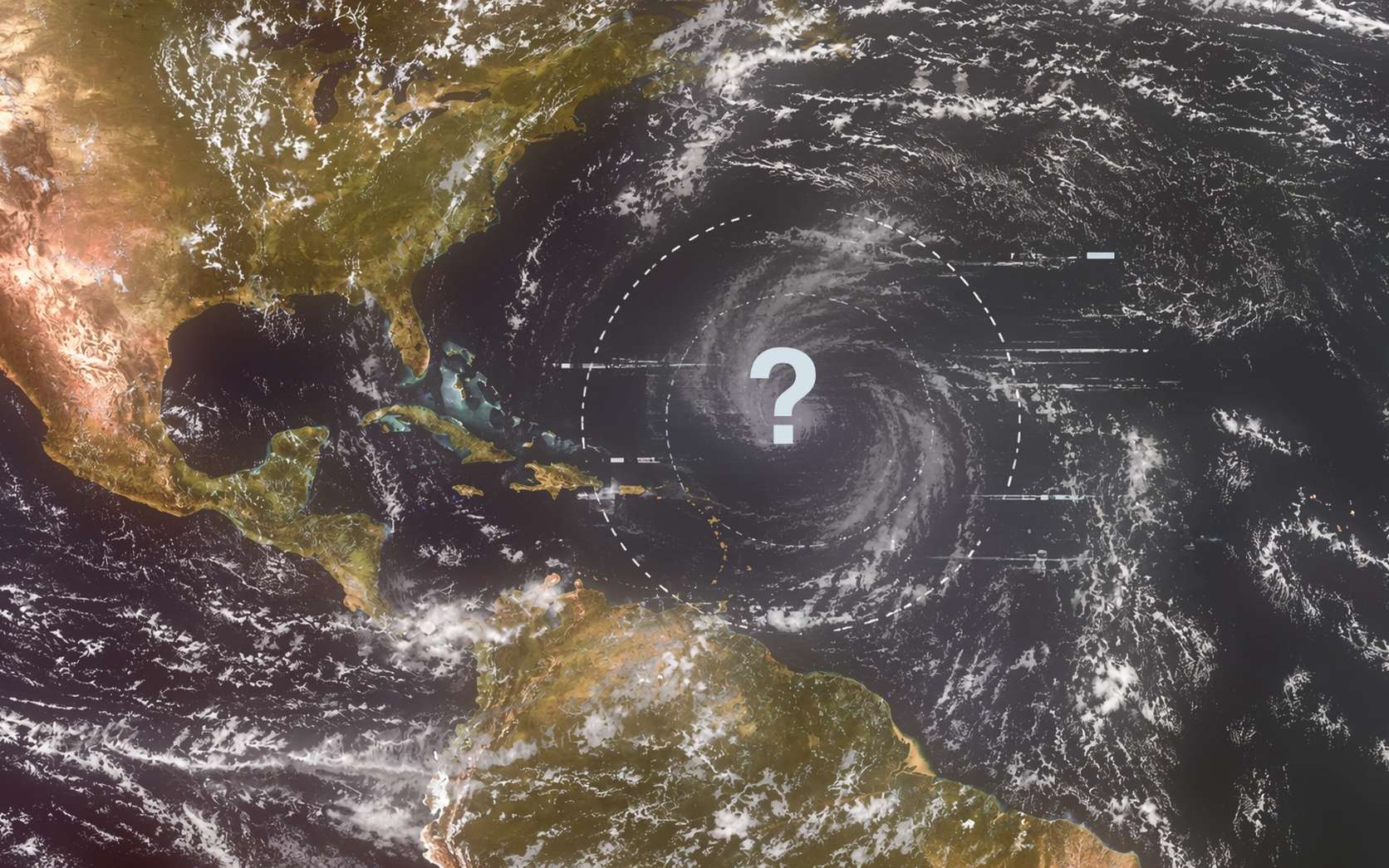
For years, the idea of nuclear weapons in space sounded more like science fiction than a realistic threat. That changed Monday (Sept. 14), when U.S. Air Force Secretary Troy Meink announced at the Air, Space and Cyber Conference in Maryland that the U.S. had deployed "on-orbit space control weapons capable of defending the Joint Force against hostile adversary action."
While the officials have not said that these weapons are nuclear, the announcement has raised a question: If countries are now openly putting weapons in space, how far away are we from a future where nuclear weapons become part of that competition?
The concerns about nukes in space goes back to the 1960s. In 1967, the U.S. and the Soviet Union signed the Outer Space Treaty, in which the nations agreed to not place nuclear weapons or other weapons of mass destruction in orbit around Earth. But this treaty never included an enforcement mechanism — and now, that tenuous compromise may have been violated entirely, inviting other countries to add their own weapons to the final frontier.
With the U.S.' recent announcement, are you worried about an arms race in space? Vote in our poll below, and leave your thoughts in the comments.



Read more of this story at Slashdot.
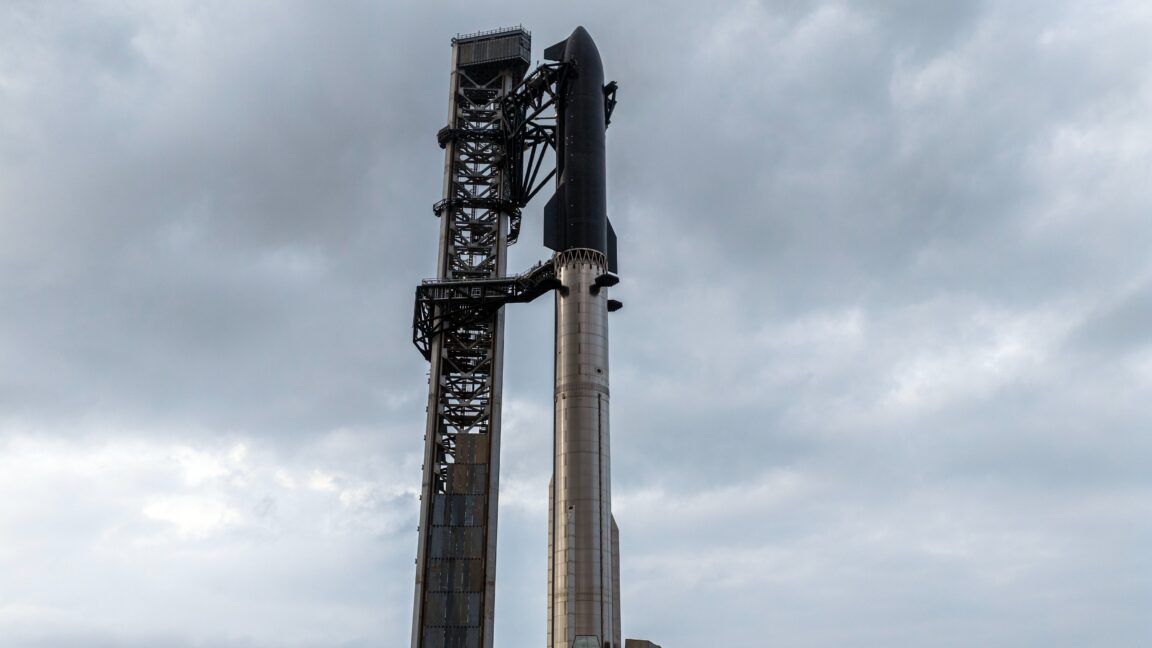
Pending regulatory approval, SpaceX said today it intends to launch its 14th Starship mission as early as September 22. This flight is notable, as it will be the first time that SpaceX attempts to launch the experimental vehicle into orbit.
The company set a target liftoff time of 7:15 am local in Texas (12:15 UTC), with a 75-minute launch window. Sunrise in Brownsville, Texas, is 7:17 am CT, so the launch could make for some striking imagery.
The super heavy lift rocket will be carrying 26 of the larger V3 Starlink satellites into an orbit 275 km above the Earth. In an update on its website, SpaceX said the Starship upper stage will seek to complete six orbits around the Earth before completing its mission after about 10 hours.
© SpaceX
Pending regulatory approval, SpaceX said today it intends to launch its 14th Starship mission as early as September 22. This flight is notable, as it will be the first time that SpaceX attempts to launch the experimental vehicle into orbit.
The company set a target liftoff time of 7:15 am local in Texas (12:15 UTC), with a 75-minute launch window. Sunrise in Brownsville, Texas, is 7:17 am CT, so the launch could make for some striking imagery.
The super heavy lift rocket will be carrying 26 of the larger V3 Starlink satellites into an orbit 275 km above the Earth. In an update on its website, SpaceX said the Starship upper stage will seek to complete six orbits around the Earth before completing its mission after about 10 hours.
© SpaceX
Many of the world’s greatest scientific minds remain in startling disagreement with one another about the nature of reality itself. After conducting what is likely the largest survey of its kind, researchers reported that a vast majority of physicists suspect the big bang doesn’t necessarily mark the beginning of time. And as their additional responses indicate, scientists diverge even more when it comes to other hot-button cosmological topics.
In 2025, researchers put out an international open call for their Big Mysteries in Physics survey. Anyone could partake in the questionnaire, but responses from self-identifying physicists were later separated and reviewed to identify any particularly striking areas of agreement or disagreement. After reviewing answers from over 1,600 physicists, the questionnaire’s authors published their key takeaways earlier this year in Physics Magazine.
The results? Physicists are very divided on explanations for some of the universe’s fundamental operations.
The most dramatic relates to the big-bang theory (technically known as the Lambda Cold Dark Matter theory). About 68 percent of respondents said they don’t think the famous moment necessarily marks the beginning of time. Some of this has to do with how the big bang is presented in popular culture—contrary to many depictions, the theory specifically explains how the universe expanded from a single extremely hot, dense prior state of existence. This means it technically may have very little to do with the beginning of time.
The only other majority opinion pertains to the immediate moments following the big bang. Only 51 percent of physicists agreed that the immediate moments following the big bang involved an incomprehensibly fast period of expansion commonly known as inflation.
Subjects got far more contentious from there, although some of it was understandable. Given how much remains to still learn about dark matter, 17 percent of survey takers think the mysterious material is composed of an undiscovered particle or particles. Around 12 percent argued it could be explained by tweaking the theory of gravity. At best, barely 21 percent of physicists hypothesized it may be some combination of these and other answers.
Quantum physics continues the chaos. Nearly 19 percent of scientists think string theory is likely the best way to integrate gravity into quantum physics, while only 12 percent offered loop quantum gravity as an alternative. Meanwhile, 18 percent lean towards the suspicion that gravity can’t be integrated in any way.
If the survey presents one clear takeaway, it’s that these diverse theories are in no way an indictment of the present-day state of physics. These aren’t amateurs—they’re researchers who base their arguments on volumes’ worth of data, calculations, and scientific testing.
“Consensus, or its absence, tells us where the evidence feels settled and where researchers still see room for radically different ideas,” Niayesh Afshordi, a University of Waterloo physicist and study co-author, explained in a statement. “In this sense, lack of consensus can be a clue. It marks places where better data, sharper theory, or new connections between subfields may be needed”
Afshordi noted that unlike other polls, scientific reality isn’t settled by a majority vote. It’s supported by clear, demonstrable evidence.
“The interesting point is not that physicists are confused. It is that the frontier is genuinely alive,” he added.
The post 68% of physicists don’t think the time started at the big bang appeared first on Popular Science.
O AppZapper, popular desinstalador que oferece uma maneira rápida de excluir aplicativos e seus arquivos associados do macOS, foi reformulado após anos e ganhou um novo design, funcionalidades atualizadas, além de um novo nome: AppZapper 3000.
Lançado originalmente em 2006, o AppZapper 3000 chega justamente no seu 20º aniversário. Entre as novidades, a versão atualizada do aplicativo foi adaptada aos requisitos de segurança do macOS e é mais eficiente na localização de arquivos relacionados aos softwares que serão apagados.
Posts relacionados
O funcionamento do app é um show à parte: após a instalação, basta arrastar e soltar um aplicativo no AppZapper e clicar no botão “Zap All” para remover o aplicativo e os arquivos relacionados, acompanhado de uma animação de arma a laser e efeitos sonoros. Ele localiza e exclui todos os arquivos de um aplicativo em poucos segundos, e os usuários podem escolher entre quatro temas diferentes.
O software pode ser baixado gratuitamente, sendo possível realizar três “zapeadas” gratuitas. A licença custa US$18 para um único usuário e US$29 para um pacote familiar, que permite o uso do aplicativo em até cinco Macs. Há, ainda, um plano corporativo que permite o uso em até 25 Macs, o qual está disponível por US$99.
via MacRumors


 Forget radio signals. Scientists want to search lunar dust for physical evidence of ancient alien technology.
 Don’t worry, it’s supposed to do that.
