 Login

Disaster Survivors Sticking Together
We found grace, humanity and friendship in the stories of disparate Americans hit by climate chaos.


© Philip Cheung for The New York Times

© Olivier Morin/Agence France-Presse — Getty Images

© Chona Kasinger for The New York Times

© Ina Fassbender/Agence France-Presse — Getty Images

© Ahmad Mulia Panjaitan/Associated Press

© Yonhap News Agency, via Reuters

© Wahyudi/Agence France-Presse — Getty Images

© Cindy Schultz for The New York Times

© Kristian Thacker for The New York Times
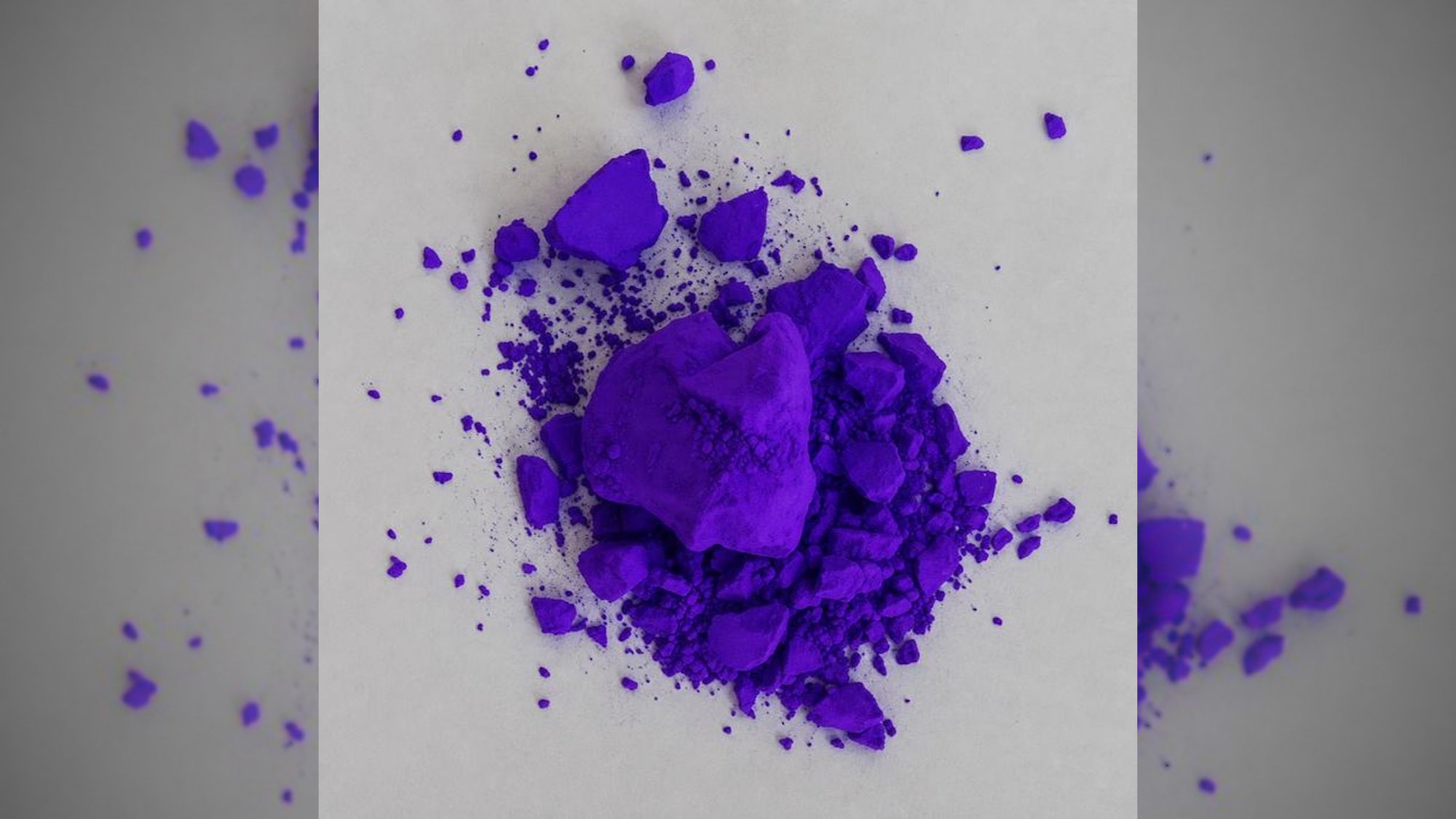
With the dog days of summer nearing an end, many are counting down the days until they can give the darker clothes in their wardrobe a bit more love. Though plenty of people flout seasonal rules and wear all-black year-round, light-colored fabrics are typically the better choice during hotter months because they reflect sunlight and can help keep us cool. This heat-reflecting logic is also partly responsible for the old decree, “don’t wear white after Labor Day!” But what if fashion choices weren’t dictated by the weather? A team of researchers from China and Australia believes they may have cracked that code, and it starts with a rich purple fabric.
The researchers, hailing from Zhengzhou University and Adelaide University, set out to create a dark-colored material that was also effective at keeping people cool. They created an entirely new fabric made of a purple metal-organic framework and zinc oxide nanoparticles. The metal-organic framework which absorbs green light from the sun and gives the purple color, while the zinc oxide nanoparticles which reflect sunlight and radiate heat away.
The material performed exceptionally well during testing. It reflected an average of nearly 88 percent of sunlight and stayed up to 11 degrees Fahrenheit cooler than conventional purple cotton outdoors. It was notably even 7.6 degrees cooler than white cotton. In a world where deadly hot summers are becoming more common, research suggests materials like this could provide outdoor workers with some much-needed relief.
“We have traditionally had to make a choice between cooling performance and appearance,” Adelaide University materials engineer Jun Ma and study co-author said in a statement. “Our research shows that we can have both. We can make a fabric that looks purple, but at the same time reflects most of the sun’s energy and releases heat very efficiently.”
The team published their findings in the journal Small.
Generally speaking, lighter colors are better bets for staying cool because they reflect more sunlight. White or unpigmented materials are the best at beating heat, whereas dark black material will feel the hottest. This same idea applies to building and construction materials as well. Purple, while obviously dark, is also a unique choice for the research because it strongly absorbs green light, which is one of the strongest parts of the solar spectrum.
Caveats are in order, though. Color isn’t the only factor in staying cool. Clothing material and fit are just as important, if not more so. Loose, breathable garments like cotton or linen allow far more airflow than tighter clothing. That’s why Bedouin nomads in the North African desert can wear mostly all black without collapsing from heat exhaustion. Still, all else being equal, lighter colors make for a cooler experience.
To create the fabric, the team combined a purple ZIF-67 metal-organic framework with zinc oxide nanoparticles. Using electrospinning, they spun the mixture into purple thermoplastic polyurethane fibers, which were then woven into fabric. They then cut the material into two-inch squares and exposed them to direct sunlight on a sunny day in Zhengzhou, China, alongside control squares of standard white and purple cotton.
The revised material reflected an average of 87.6 percent of solar radiation. In terms of overall cooling, at least in these tests, it was a resounding success. After a full day baking in the sun, the fabric remained 7.6 degrees cooler than white cotton and 11.2 degrees cooler than traditional purple cotton. The fabric also achieved these thermal gains without sacrificing practical performance, and was flexible, stretch-resistant, and highly breathable, allowing moisture to evaporate effectively rather than trapping sweat. It also maintained both its rich color and cooling properties after 50 wash cycles. Furthermore, UV accelerated-aging tests (simulating roughly 108 days of intense sunlight exposure) showed that the cooling performance did not degrade over time.
It’s still early in the process, but the team believes their new approach could make darker-colored materials less off-putting during warmer weather. While that’s potentially great news for all the goths out there, the researchers emphasize far more practical applications as well. These refined fabrics could be used to make workwear for construction workers, farmers, and others who endure long hours baking in the sun. For outdoor laborers, even modest cooling relief can make a life-saving difference.
“The long-term opportunity is to move beyond the idea that cooling fabrics have to be white,” Adelaide University Chemical Engineer PhD candidate and paper co-author Yangzhe Hou said in a statement.
This summer’s heat has moved from unpleasantly hot to deadly in many parts of the world, and it’s likely a sign of more to come. Both the fashion industry and the general public are already adapting to this brutal new reality. A 2022 New York Times report noted a marked rise in sales of shorts and sandals alongside a sharp decline in fleece and heavy outerwear in recent years, a shift attributed in part to rising global temperatures. Similarly, recent efforts to normalize wearing shorts in office settings and the gradual removal of neckties reflect a workplace culture adjusting to a hotter climate.
The new purple fabric research also joins a now lengthy list of other attempts to apply science and technology to make clothing cooler. An assortment of (often more expensive) cool-tech clothing brands with names Coolcore and Iso-Chill have gained popularity, promising to beat the heat. Kontoor Brands, which owns blue-jean giant Wrangler, even made an Insta-Cool shirt that used phase-change material initially used by NASA astronauts to stay cool.
The post New fabric stays cooler than white cotton—and it’s purple appeared first on Popular Science.

© Jason Gulley for The New York Times

© Jason Gulley for The New York Times

© Chitose Suzuki/The Dallas Morning News, via Getty Images
Since the 1850s, plowing and clear-cutting in modern agriculture have increased how fast soil erodes in the Upper Mississippi River Valley. Across the globe, farming strips soil up to 100 times faster than natural processes. It also removes farmable land and clogs waterways, threatening long-term environmental sustainability. However, scientists in the past have struggled to separate the effects of land-use changes from the transition out of the last ice age over the past 20,000 years.
To determine whether current farming practices are sustainable, researchers from Minnesota recently measured the speed at which soil eroded during the ice age transition and compared it with modern agricultural erosion. They focused on the Trout Creek tributary of the Mississippi River. This tributary has 2 step-like formations, or terraces, on its bank that represent past floodplains before the river eroded to its current level.
The oldest, upper terrace is about 14 meters (50 feet) above the lower terrace, which is about 8 meters (26 feet) above the modern floodplain. Scientists studying nearby areas have suggested that the terraces contain sediment from the last ice age, 20,000 years ago, referred to as the Last Glacial Maximum, to today.
In the upper terrace, the researchers pushed an empty cylinder into the ground, like a straw into a layer cake, to collect a cylindrical sample of sediments about 4 centimeters (1.5 inches) wide and 6 meters (20 feet) deep, called a sediment core. They collected slices of this core from 2 meters (6 feet) and 6 meters (20 feet) to find the terrace’s age.
Some grains in the sediment trap electrons while buried and release them when exposed to light. So the team shone light on the sediment slices to stimulate these electrons and measure the intensity of light emitted, known as their optically stimulated luminescence. Brighter light emissions indicate the sediment is older and was buried for a longer period of time. Using this method, they confirmed that the deep sediment slice was 22,000 years old, and the shallow sediment slice was 20,000 years old, dating the terrace back to the Last Glacial Maximum.
Next, the team drilled into the upper terrace with an auger to collect 25-centimeter (10-inch) wide plastic tubes of sediment. They pulled 4 samples from 0 to 2 meters (0 to 6 feet), and 1 sample from 6 meters (20 feet) deep. They explained that minerals in the sediment called quartz produce the radioactive form of the element beryllium, known as 10Be, when exposed to the Sun, so low 10Be means the sediment was buried quickly and had little sun exposure. The team measured the concentration of 10Be in each sediment sample and used an online calculator to estimate how quickly it eroded. The researchers calculated that during the Last Glacial Maximum, 0.073 millimeters (0.003 inches) of surface sediment were removed per year.
The researchers collected similar samples from the lower terrace and used optically stimulated luminescence to determine that it was between 22,000 and 14,000 years old. This terrace was the floodplain during the transition out of the Last Glacial Maximum, or deglacial period, where temperatures warmed and permafrost retreated. They measured the concentration of 10Be in samples from this terrace and determined that 0.049 millimeters (0.002 inches) of surface sediment were removed per year.
Finally, the researchers measured 10Be in a sediment sample from the modern floodplain, deposited between 14,00 years ago and today. They found that the sediment had eroded 0.053 millimeters (0.002 inches) per year during that interval, at a rate slower than it had during the glacial period, but similar to the deglacial period.
The researchers compared their findings to the average soil loss caused by modern agriculture, as reported by 4 previous scientists studying the area. They saw that modern farming removes an average of 0.60 millimeters (0.02 inches) of soil per year, which is 8 to 12 times greater than all the natural erosion rates they calculated.
They concluded that the recent spike in soil loss from agriculture greatly exceeds that caused by the largest natural climate transition in recent Earth history. Human-driven erosion shows an upward “hockey stick” trend like the one seen in global temperatures, suggesting that similar trends could exist throughout Earth systems. The team concluded that modern agricultural practices aren’t currently sustainable. While measures like native plant reintroduction can help curb this trend, more research is required to determine how best to limit long-term erosion.
The post Is modern farming sustainable? appeared first on Sciworthy.
