
❌

Reading view

Exceptionally Preserved Bird Feathers Found in 66-Million-Year-Old Dinosaur Coprolite

While some dinosaurs are thought to have had ‘fuzzy’ or ‘downy’ feathers (shown in this illustration as the yellow spikes on a Nanotyrannus’ neck), ancient birds (such as the one in the Nanotyrannus’ mouth) were more likely to have had feathers that look similar to the birds of today. Image credit: Andrey Atuchin.

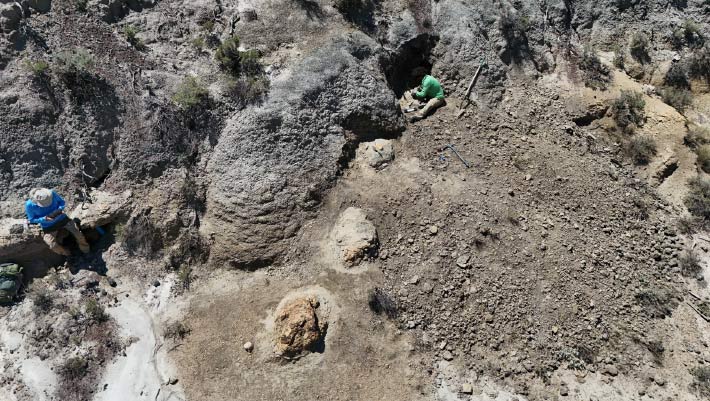
Paleontologists in Montana have discovered remarkably preserved feathers of an ancient aquatic bird inside a fossilized dinosaur dropping, offering rare insight into why certain birds survived the asteroid strike that wiped out the dinosaurs 66 million years ago.

The post Exceptionally Preserved Bird Feathers Found in 66-Million-Year-Old Dinosaur Coprolite appeared first on Sci.News: Breaking Science News.

  •  

Denisovans Once Roamed Southwest China, New Fossils Reveal

An artist’s concept of a Penghu Denisovan walking under the bright Sun during the Pleistocene of Taiwan. Image credit: Cheng-Han Sun.

Paleoanthropologists have identified a trove of Denisovan fossils from a cave in China’s Yunnan province, extending the known range of the elusive human relative and providing the first-ever direct evidence of what its forearm bones looked like.

The post Denisovans Once Roamed Southwest China, New Fossils Reveal appeared first on Sci.News: Breaking Science News.
  •  

Paleontologists Discover First-Ever Adult Tyrannosaurus rex Trackway

The Tyrannosaurus rex trackway in the Hell Creek Formation in North Dakota, the United States. Image credit: Kent Hups.

Paleontologists in North Dakota have unearthed a set of 66.5-million-year-old fossilized footprints that can be confidently attributed to a full-grown Tyrannosaurus rex.

The post Paleontologists Discover First-Ever Adult Tyrannosaurus rex Trackway appeared first on Sci.News: Breaking Science News.
  •  

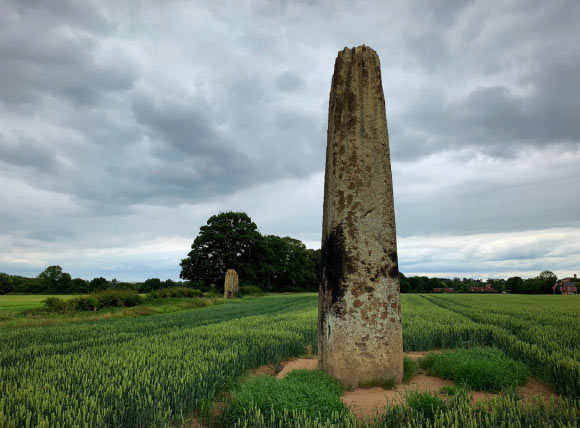
Britain’s Tallest Standing Stones Traced to Their Geological Source

The Devil’s Arrows, the three towering gritstone megaliths on the western outskirts of Boroughbridge, Yorkshire, the United Kingdom. Image credit: Curtin University.

Scientists from Curtin University and the University of York have pinpointed the origin of the Devil’s Arrows, the three towering gritstone megaliths that have stood on the edge of Boroughbridge, Yorkshire, for roughly 4,000 years, ending a long-running archaeological debate.

The post Britain’s Tallest Standing Stones Traced to Their Geological Source appeared first on Sci.News: Breaking Science News.
  •  

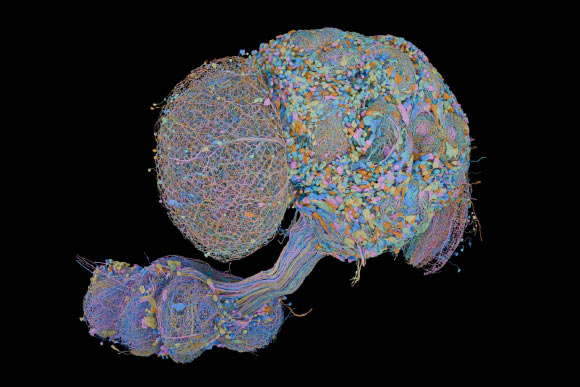
Researchers Unveil Complete Fruit Fly Connectome

The wiring diagram of the central nervous system of an adult male fruit fly will help researchers better understand how the brain enables complex action, from sensory perception to behavior. Image credit: FlyEM Project Team, HHMI’s Janelia Research Campus / Cambridge Connectomics Group / Google Research / Philip Hubbard, HHMI Janelia Research Campus.

After nearly two decades of work, scientists have completed a wiring diagram of the central nervous system of an adult male fruit fly (Drosophila melanogaster).

The post Researchers Unveil Complete Fruit Fly Connectome appeared first on Sci.News: Breaking Science News.
  •  

Hubble and Webb Team Up to Spy Tiny Frozen Worlds beyond Neptune

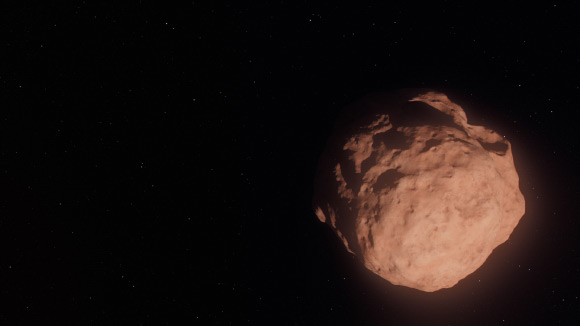
This artist’s concept depicts a trans-Neptunian object. Image credit: NASA / ESA / Leah Hustak, STScI.

For the first time, astronomers combined Hubble and Webb space telescopes to hunt down some of the smallest, faintest objects ever spotted in the outer Solar System.

The post Hubble and Webb Team Up to Spy Tiny Frozen Worlds beyond Neptune appeared first on Sci.News: Breaking Science News.
  •  

New Owl Species Discovered in Peru

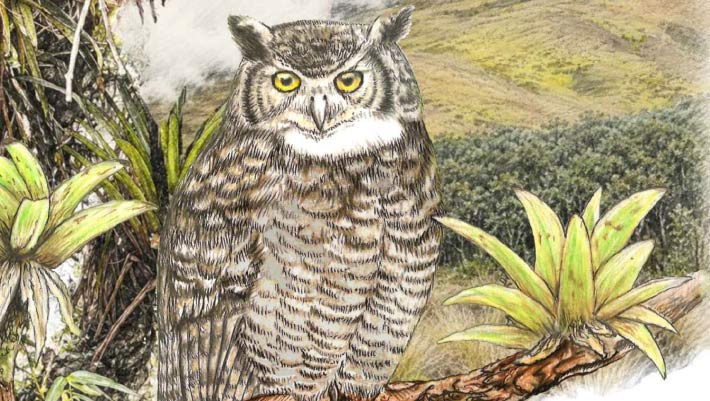
The Jalca horned owl (Bubo jalca). Image credit: López-Lanús et al.

A horned owl living in a narrow strip of high-Andean grassland in northern Peru is a species new to science, according to a paper published in July 2026 in the journal Audiornis.

The post New Owl Species Discovered in Peru appeared first on Sci.News: Breaking Science News.
  •  

115-Million-Year-Old Dinosaur Fossil Recovered from Deep Drill Core in China

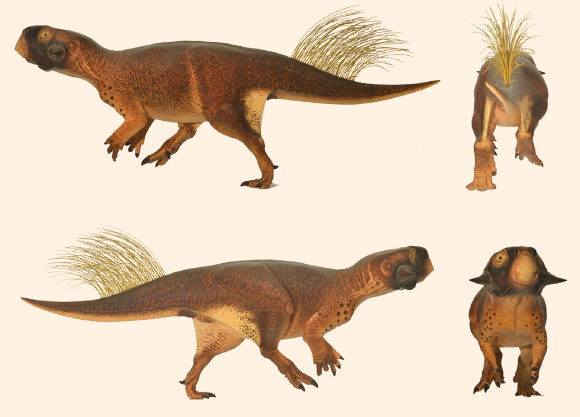
Model of Psittacosaurus sp. based on skin and pigmentation patterns on the specimen from the Senckenberg Museum, Germany. Image credit: Jakob Vinther et al.

Scientists have identified the first dinosaur fossil from a remote western section of the Bayan Gobi Formation in China’s Inner Mongolia, extending the known geographic range of dinosaur fossils in this important Early Cretaceous rock unit.

The post 115-Million-Year-Old Dinosaur Fossil Recovered from Deep Drill Core in China appeared first on Sci.News: Breaking Science News.
  •  

Physicists Devise New Way to Listen for ‘Hairy’ Black Holes

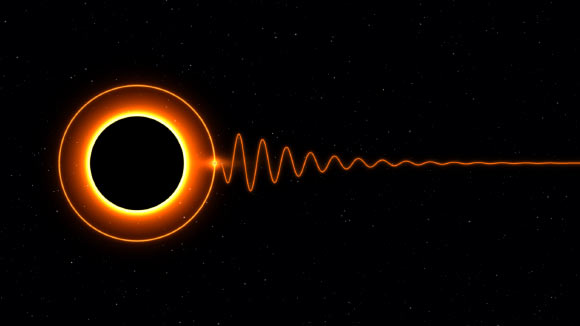
Palomino Ylla et al. found a way to check for black hole hair using changes in ringdown waves. Image credit: Nagoya University.

When two black holes merge, the resulting object rings like a struck bell, radiating gravitational waves that fade in a distinctive pattern called ringdown.

The post Physicists Devise New Way to Listen for ‘Hairy’ Black Holes appeared first on Sci.News: Breaking Science News.

  •  

Hubble Spots ‘Superbubble’ in Large Magellanic Cloud

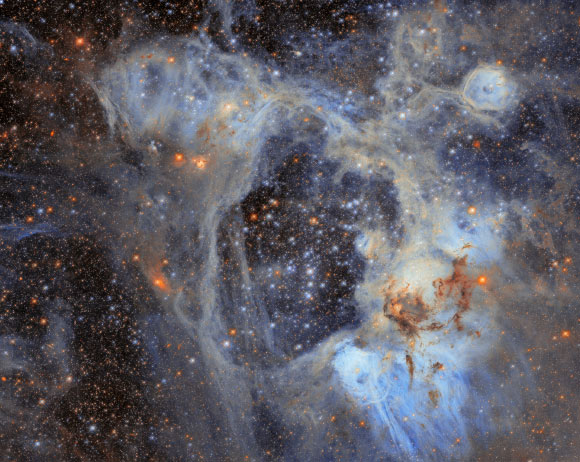
This Hubble image shows the emission nebula LHA 120-N44. Image credit: NASA / ESA / Hubble / D. Gouliermis.

A new images from the NASA/ESA Hubble Space Telescope reveals LHA 120-N44, a striking nebula located roughly 160,000 light-years away in the Large Magellanic Cloud, a satellite galaxy of the Milky Way.

The post Hubble Spots ‘Superbubble’ in Large Magellanic Cloud appeared first on Sci.News: Breaking Science News.
  •  

BepiColombo Begins Final Approach to Mercury

An artist’s impression of the ESA/JAXA BepiColombo spacecraft in cruise configuration, with Mercury in the background. On its 7.2 year journey to the innermost planet, BepiColombo will fly by Earth once, Venus twice and Mercury six times before entering into orbit. The MTM module is shown with ion thrusters firing, and with its solar wings extended, spanning about 100 feet (30 m) from tip-to-tip. The 24.6-foot (7.5 m) long solar array of the MPO orbiter in the middle is seen extending to the top. The Mio orbiter is hidden inside the sunshield in this orientation. Image credit: ESA / ATG Medialab / NASA / JPL.

After nearly eight years and billions of kilometers of travel, BepiColombo -- a science mission led by ESA in close collaboration with JAXA -- has begun its long-awaited arrival at the smallest and innermost planet in our Solar System.

The post BepiColombo Begins Final Approach to Mercury appeared first on Sci.News: Breaking Science News.
  •  

Ancient DNA Rewrites Story of Enigmatic ‘American Cheetah’

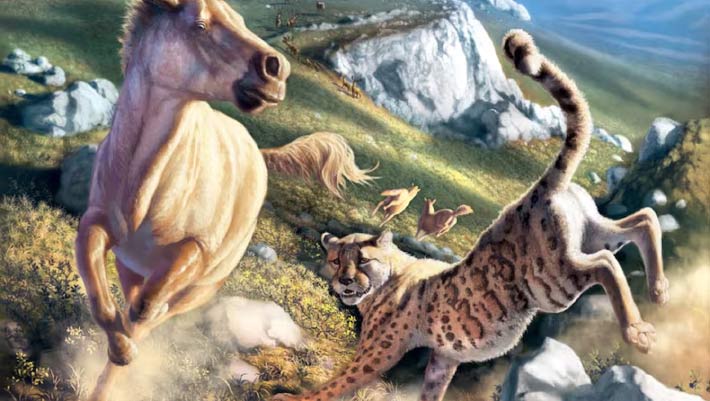
Miracinonyx trumani and the ecosystem this species lived in. Image credit: Julius Csotonyi.

For several decades, paleontologists have described Miracinonyx trumani -- an extinct species of cheetah-like felid that roamed the North American prairies and steppe terrains more than 13,000 years ago -- as North America’s answer to the African cheetah (Acinonyx jubatus).

The post Ancient DNA Rewrites Story of Enigmatic ‘American Cheetah’ appeared first on Sci.News: Breaking Science News.
  •  

Physicists Spot Curious Signal in Hunt for Elusive Dark Matter Particles

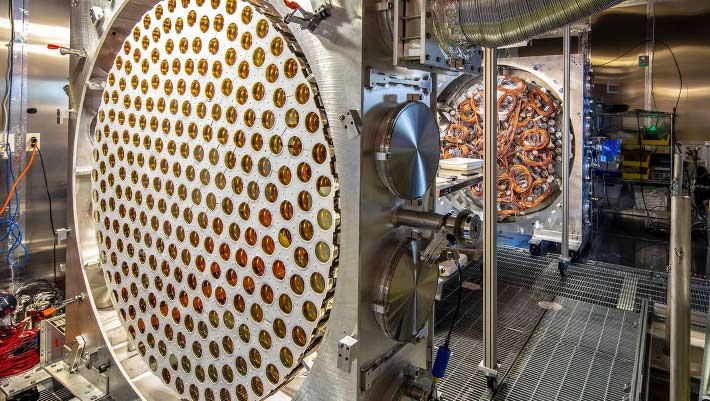
To search for dark matter, LZ uses photomultiplier tubes (shown here before installation in the detector) to capture light from particle interactions. Image credit: Matthew Kapust / Sanford Underground Research Laboratory.

Physicists using the LUX-ZEPLIN (LZ) dark matter detector deep underground in a former South Dakota gold mine say they’ve recorded a single particle interaction that they can’t easily explain, but they’re a long way from claiming a discovery.

The post Physicists Spot Curious Signal in Hunt for Elusive Dark Matter Particles appeared first on Sci.News: Breaking Science News.
  •  

Astronomers Discover Decagonal Wave circling Saturn’s South Pole

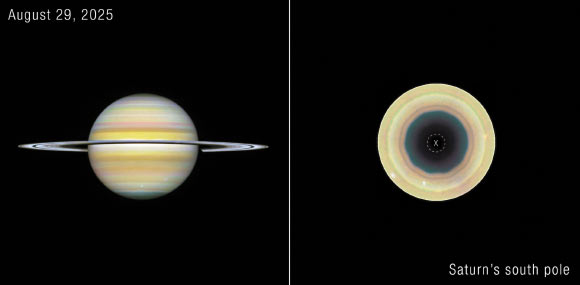
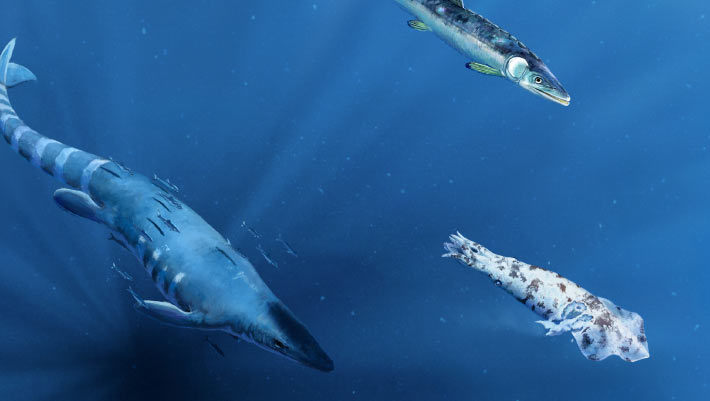
These Hubble images show Saturn and the gas giant’s southern pole with its 10-sided atmospheric wave. Image credit: NASA / ESA / STScI / Agustin Sánchez-Lavega, UPV / Amy Simon, NASA’s Goddard Space Flight Center / Michael Wong, UC Berkeley / Alyssa Pagan.

For almost five decades, Saturn’s north pole has been famous for hosting a bizarre, six-sided jet stream known as the hexagon, a feature first spotted by NASA’s Voyager spacecraft in the 1980s and still churning today.

The post Astronomers Discover Decagonal Wave circling Saturn’s South Pole appeared first on Sci.News: Breaking Science News.
  •  

Gemini North Telescope Captures Stunning Portrait of Merging Spiral Galaxies

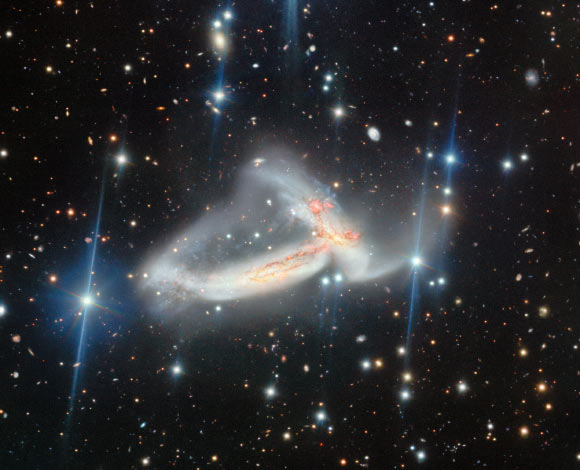
This image of NGC 7253 was captured by the Gemini North telescope on Maunakea, one half of the International Gemini Observatory. Image credit: International Gemini Observatory / NOIRLab / NSF / AURA / J. Miller & M. Rodriguez, International Gemini Observatory & NSF’s NOIRLab / T.A. Rector, University of Alaska Anchorage & NSF’s NOIRLab / D. de Martin & M. Zamani, NSF’s NOIRLab.

A new image from the Gemini North telescope on Maunakea in Hawai’i offers the sharpest look yet at a striking pair of interacting spiral galaxies, cataloged as NGC 7253.

The post Gemini North Telescope Captures Stunning Portrait of Merging Spiral Galaxies appeared first on Sci.News: Breaking Science News.
  •  
  •  

Homo antecessor Had Surprisingly Modern Skull, New Fossils Suggest

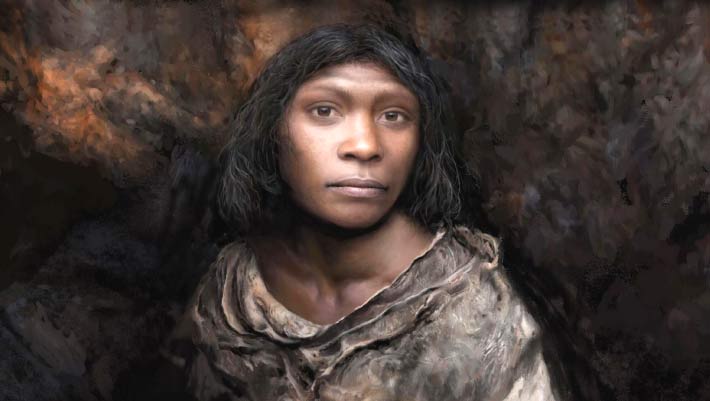
An artist’s rendering of a Homo antecessor individual known as the Girl of Gran Dolina. Image credit: Tom Björklund.

A new analysis of three skull fragments unearthed at the Gran Dolina cave site in Spain indicates that Homo antecessor had bone thickness closer to that of Neanderthals and modern people than to more archaic hominins.

The post Homo antecessor Had Surprisingly Modern Skull, New Fossils Suggest appeared first on Sci.News: Breaking Science News.
  •  

Webb Captures Stunning Infrared View of Eskimo Nebula

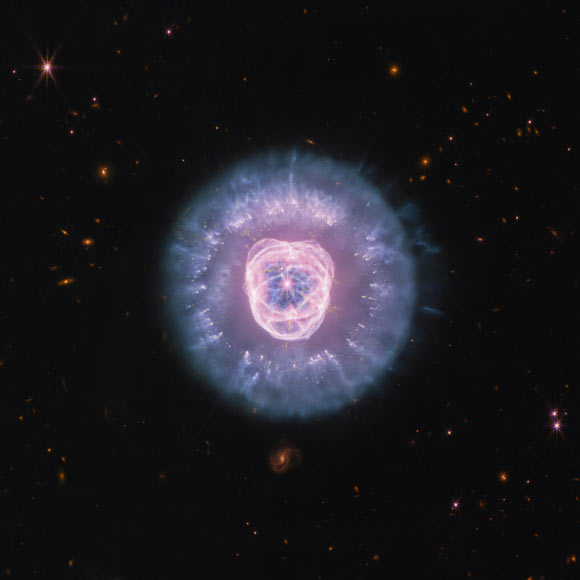
This Webb/NIRCam/MIRI image shows the Eskimo Nebula, a bipolar planetary nebula some 4,200 light-years away in the constellation of Gemini. Image credit: NASA / ESA / CSA / Webb / STScI / Alyssa Pagan, STScI.

New infrared observations of the Eskimo Nebula, a bipolar double-shell planetary nebula in the constellation of Gemini, reveal clumps of dust, ionized gas and expanding shells surrounding a central star.

The post Webb Captures Stunning Infrared View of Eskimo Nebula appeared first on Sci.News: Breaking Science News.

  •  

Why Were There No Tiny Non-Avian Dinosaurs? Mammals May Have Been to Blame

Torvosaurus gurneyi. Image credit: © Sergey Krasovskiy.

Dinosaurs evolved into some of the largest animals ever to walk the Earth, but a new mathematical model suggests that early mammals may have crowded them out of the ecological niches reserved for the smallest creatures.

The post Why Were There No Tiny Non-Avian Dinosaurs? Mammals May Have Been to Blame appeared first on Sci.News: Breaking Science News.
  •  

Webb Finds Stellar ‘Treasure Chest’ in Carina Nebula

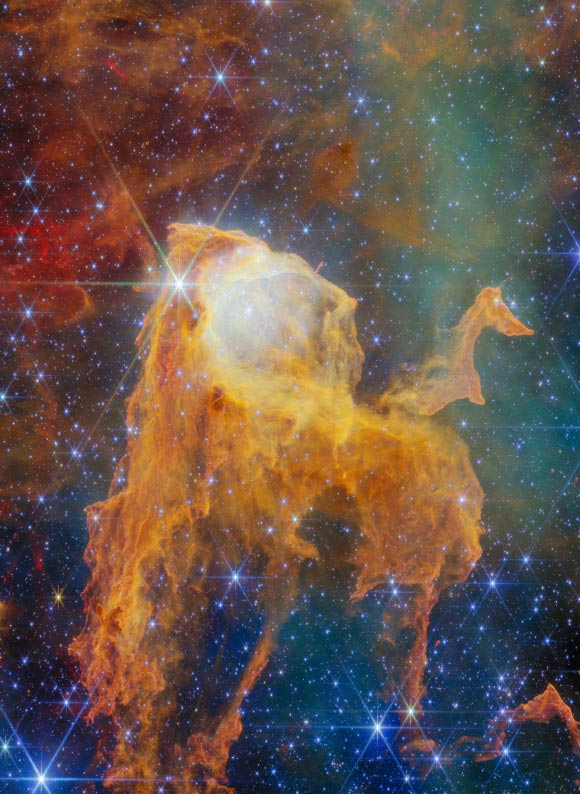
This Webb image shows the Treasure Chest, a cometary globule located within the famous Carina Nebula. Image credit: NASA / ESA / CSA / Webb / M. Reiter / M.H. Özsaraç.

A stunning new image from the NASA/ESA/CSA James Webb Space Telescope reveals a comet-shaped cloud in the Carina Nebula hiding a cluster of about 70 young stars, including a rare giant of O-type nearly 19 times as massive as the Sun.

The post Webb Finds Stellar ‘Treasure Chest’ in Carina Nebula appeared first on Sci.News: Breaking Science News.

  •  
❌