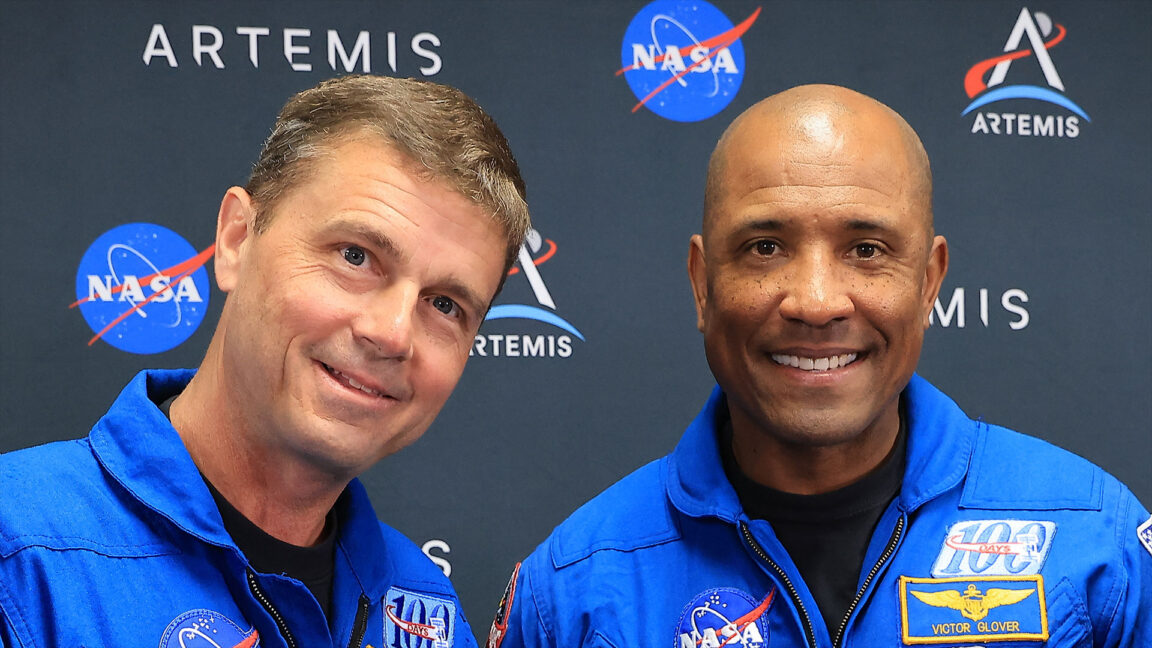
The commander and pilot of NASA's Artemis II mission have gained a new distinction five months after splashing down from the Moon: They're not fully retiring from the space agency.
Reid Wiseman and Victor Glover are the first astronauts to join NASA's emeritus program, enabling them to continue to support the work being done at Johnson Space Center in Houston. They will remain available to train and mentor the current workforce while still being able to pursue employment and opportunities outside of NASA.
"I have asked NASA ... to not use the term 'retire' as much, but technically emeritus is a retirement program," Glover told collectSPACE.com on Wednesday. "It's something we have typically done for scientists when they have groundbreaking research, and they want to go back to academia to teach or to research and publish."
In Emily St. John Mandel’s new novel Exit Party, becoming a “ghost” means running afoul of the state. In this excerpt, a secret agent discovers it doesn’t take much.
This article was produced in partnership with Type Investigations and with support from the Fund for Investigative Journalism.
When Eli Regalado first heard God speak to him, he wondered whether he was hallucinating. Now he likens the experience to having “a thought that is not my thought.” Divine words echo in his mind like a line from a movie or the memory of a loved one’s voice. “It’s not ‘You better do this,’” he says. “It’s just a knowing inside you: This is what you do.”
Holy messages arrive daily while Eli is praying, reading, or watching television. Sometimes they surface in prophetic dreams or missives from strangers. Occasionally, they appear midsentence, when he pauses to ask, “Lord, what do you want to say here?”
Eli’s wife, Kaitlyn, tends to get heavenly dispatches in the shower, when she finally has a moment to herself. Other times, she seeks counsel from above. “I’ll be writing in my journal and praying and asking questions and just believing what I’m hearing is Him,” she says.
God’s directives have been manifold. According to the Regalados, He told them to get married, buy a house, and start having kids. When Eli owned a marketing firm in Colorado, He told him what to name it, whom to hire, and which clients to take on. Then God told him to start preaching in his living room and online. Always, the couple obeyed.
In 2021, when Eli was 41 and Kaitlyn was 28, divine guidance steered them in an unexpected new direction: crypto.
That October, the Regalados later testified in court, Eli’s sister and her husband gifted the couple some of their holdings in a little-known digital coin. “Take this to my people for a wealth transfer,” Eli heard God say. He and Kaitlyn felt that they were being called to sell the cryptocurrency to fellow Christians.
Later, though they had no background in crypto, they came to believe that God wanted them to launch their own coin. Learning as they went, the Regalados created a new cryptocurrency called INDXcoin, which they promoted through family, friends, and contacts in evangelical Christian circles. “I was really feeling that this is the wave of the future,” says Debbie Bonilla, a retired pharmacy technician in her 70s who bought INDXcoin with her husband, Jose. The couple learned about the currency through friends—a minister and his wife, who had also invested. “We just trusted that their judgment was good,” Jose says.
Starting in November 2022, Debbie and Jose withdrew a total of $70,000 from their retirement accounts—a large share of their nest egg—to buy INDXcoin. In all, more than 500 people handed over a total of more than $3 million to the Regalados.
But within a year after the Bonillas bought in, the project collapsed. Investors who had entrusted the Regalados with large sums of cash lost it all, leaving many to wonder where the funds went and some to question whether they had fallen victim to an elaborate fraud.
“Poof—the money just evaporated,” Debbie told me. “Like, how does that happen?”
Though Eli believed God was leading him into crypto, he claims he was initially apprehensive. “Absolutely not,” he recalls thinking. “I don’t know anything about cryptocurrency, and I don’t want to be caught up in some church scam.”
The crypto market was booming, and the Regalados knew people who’d made a fortune investing in early-stage coins. But a growing interest in digital assets also meant a rise in crypto fraud.
In 2025, crypto scammers collected at least $14 billion worldwide, a 17% increase from the previous year, according to blockchain analytics firm Chainalysis. And in the United States, victims of fraudulent crypto investment schemes reported $7.2 billion in losses to the FBI.
Fraud is on the rise partly because many people who invest in crypto don’t fully understand how it works, and launching digital coins is relatively easy. More than 3 million cryptocurrencies were minted in August 2026 alone, according to the website CoinMarketCap. “It’s just something anybody can create,” says Jason Ghetian, a former FBI special agent who has served as an expert witness in crypto cases.
In the US, much of the crypto market lacks the oversight and investor protections in place in traditional finance, including rules around transparency and safeguarding customer assets. “There isn’t adequate disclosure; there’s fraud, there’s manipulation of the price, there’s conflicts of interest,” says Timothy Massad, former chairman of the US Commodity Futures Trading Commission (CFTC). The sector is overseen by a tangled web of state and federal regulators, including the CFTC, the Securities and Exchange Commission, the Financial Crimes Enforcement Network, and others. But “every agency has its own tests and definitions,” says Carol Goforth, a law professor at the University of Arkansas who has written a textbook on crypto regulation. “It is a complicated, fragmented, and often inconsistent approach.”
After the industry spent around $135 million backing crypto-friendly candidates in the 2024 election cycle, the federal government significantly scaled back enforcement efforts. Last year, the Justice Department disbanded its unit focused on crypto crimes, and the Trump White House created a working group aimed at “eliminating regulatory overreach on digital assets.”
The SEC has dropped or retreated from the majority of its active lawsuits against crypto firms, including many with financial ties to the president, the New York Times reported. Donald Trump and his family have netted at least $2.3 billion from their crypto ventures since his reelection, Reuters recently estimated. In August 2026, the SEC proposed new rules that would narrow the circumstances in which crypto transactions fall under securities laws, further limiting the agency’s oversight of the industry. “Any future enforcement will have an uphill battle,” Goforth says.
Even when crypto projects operate aboveboard, prices are often driven by speculation, and large swings are common. Investing in crypto comes with considerable risk, experts say. “With the exception of stablecoins, crypto assets are essentially Ponzi schemes,” says Hilary Allen, a law professor at American University. “There is nothing behind them—no cash flow, no productive capacity—so the only way they can be more valuable is to draw more people in.”
In recent years, state and federal authorities have brought a series of cases against people they allege ran crypto scams that targeted religious communities—an example of what’s known as affinity fraud. Among them are a couple accused of using faith-based appeals to defraud primarily Haitian immigrants of more than $1 billion, an Instagram influencer who took in over $12 million from Muslim followers, and a Miami pastor charged with stealing millions from his Spanish-speaking congregation. “‘God told me’—who can argue with that?” Ghetian says.
“The ties you have with other people—the trust you have—is what the people who are running the scam play on,” says Tung Chan, commissioner of the Colorado Division of Securities. In a civil case filed in January 2024, she accused the Regalados of using investors’ Christian faith to dupe them into buying crypto that was “essentially worthless.”
The suit, filed in Denver District Court, alleged that the couple spent around $1.3 million—nearly 40% of the funds they raised—on personal expenses. Purchases included high-end vacations, designer clothing, jewelry, cosmetic dental work, a Range Rover, an au pair, and extensive home renovations. In her lawsuit, Chan contended that the couple’s “drive to make money” was matched only by “their reckless disregard of securities laws and profound lack of scruples towards their investors.”
Then, in July 2025, Denver’s district attorney charged the Regalados with 40 felonies, including theft, racketeering, and securities fraud. If convicted, they could face decades in prison.But the couple maintain that they haven’t done anything wrong and were simply carrying out God’s wishes.
“If you think following the Lord is reckless, then yeah, we were very reckless,” Eli told me. “Because we just listened and did what the Lord said to do.”
Eli says that when he first heard from the heavens, he was behind bars.
It was 2002, and he was 22, facing eight years in prison for stealing a Honda Civic. Eli had originally been sentenced when he was 20 but was let out after just seven months; he was sent back to jail when he violated the terms of his probation by breaking a beer bottle on a man’s face.
This time around, as Eli tells it, his public defender warned him that it was “legally impossible” that he’d be released early again. But he heard a voice in his head repeating, “I’m going to give you probation.” And then it happened: A judge suspended his sentence. The incident became core to his worldview: “It first has to … look completely impossible,” he says, “and then that’s when God resurrects it.”
After he got out of prison, Eli’s religious zeal didn’t stick. He threw himself into a worldly goal: making money. “I just need to put on this success mask,” he recalls thinking, “so that people would see me as valuable.” He marked “no” when asked about felony convictions on job applications and eventually discovered that he had an aptitude for sales. He hawked everything from vacuum cleaners to leads for contractors, before pivoting to marketing.
In 2010, Icosa Magazine, a Denver-based publication, brought Eli on as a consultant. “He is the most charismatic bullshitter I have ever met in my life,” says Jan Mazotti, who was editor-in-chief at the time. She recalls Eli telling her that Kimbal Musk, Elon Musk’s brother, had offered to let the magazine host events at his restaurant: “I called up there, and they were like, ‘I have no idea what you’re talking about.’” (Eli doesn’t recall the incident.)
In 2013, Eli launched Mad Hatter Agency, a marketing firm specializing in crowdfunding campaigns. Nikko Lobato, an early employee, observed that Eli got a rush from selling that reminded him of Leonardo DiCaprio’s character in the film The Wolf of Wall Street. Eli accepted so many projects, Lobato says, that he sometimes ended up “overpromising and underdelivering.” Four clients I contacted were satisfied; three were not, including one who ended his contract “due to poor performance.” Mike Stemple, an entrepreneur and author, told me that Eli volunteered to help him market a course but never did. (Eli says they had a “personality conflict.”) “My hope, Eli,” Stemple wrote in an email, “is that you understand that your gift to be able to sell anything to anyone … can easily be destructive.”
After he was released from prison, Eli threw himself into a career in sales. “I just need to put on this success mask,” he recalls thinking, “so that people would see me as valuable.”
MATT NAGER
Eli’s personal life was chaotic. “I was always in and out of relationships,” he says. “I was drinking, partying, doing drugs.” He blames his professional missteps on cocaine use and a “nervous breakdown.” He told me that by 2018, as he approached 40, he felt “scared of not becoming somebody” and contemplated suicide. Eli was coming off a three-day cocaine bender when his mother gave him a book called The Power of Right Believing by a Singaporean pastor, Joseph Prince. It moved him deeply. He began delving into charismatic Christianity, a movement that emphasizes a strong personal relationship with God, including prophecy, healing, and speaking in tongues.
Heeding divine direction, Eli says, he quit drugs and hired nearly a dozen friends and relatives to work at his marketing agency, which he renamed Grace Led Marketing. He also started leading daily Bible study with employees and preaching at weekly gatherings in his living room. In 2020, he formed a church called Victorious Grace and began broadcasting sermons on Facebook.
That summer, Eli met Kaitlyn at a party. Thirteen years his junior, Kaitlyn was slender and soft-spoken, with straight dark hair and a gleaming smile. Immediately, she told me, “I just trusted the man with my life.” On their first date, Kaitlyn was “saved” over dinner. Within four months, they wed and bought a house in Denver, and Kaitlyn began running operations at Grace Led Marketing.
By the end of 2020, however, the newlyweds’ income had begun to nosedive. Crowdfunding campaigns were underperforming and clients were paying late, they say. Eli owed over $160,000 in unpaid taxes. “I feel like a failure,” he recalls thinking.
The Regalados further strained their finances by again following what they saw as God’s will. After learning that she was pregnant in March 2021, Kaitlyn took $60,000 out of her 401(k) and paid an architect to draw up plans for a home renovation. Their vision started small but expanded, nearly doubling the home’s original square footage: enlarging their bedroom, adding another, and creating two offices, a gym, and a family room with a bar. “The Lord’s like, ‘Just do it how you want to,’” Kaitlyn recalls. Within months, they had emptied the 401(k). On the strength of another divine pronouncement, they shuttered their marketing business. “We needed a financial miracle badly,” Kaitlyn says.
One night, the Regalados woke at around 4:30 a.m. to a blaring television. Onscreen, Bill Winston, a televangelist based near Chicago, was talking about “sowing a seed.” Often associated with the prosperity gospel, the practice holds that by donating money to worthy recipients, believers create the conditions for future blessings.
“God is telling us to give all we have in both the business + personal accounts to receive 100 fold,” Kaitlyn wrote in her journal in mid-October 2021. The couple had no income and were struggling to pay their bills. Yet shortly before their first child was born, they say, they sent their last $2,718.44 to Bill Winston Ministries.
Just two weeks passed before their divine bounty seemed to arrive. Eli’s sister Raina Applegate and her husband, Daniel, gifted them a trove of cryptocurrency called Sumcoin, the Regalados later testified in their civil trial. In his testimony, Eli recalled them saying, “God is telling us to sow this into you.” (Raina did not respond to requests for comment; Daniel declined to answer specific questions but disputed our reporting and warned that Eli’s version of events should not be trusted.)
Created in 2016 by Ty Jacobsen, a 32-year-old in Idaho who published content about investing online, Sumcoin billed itself as “the world’s first index based cryptocurrency.” The coin’s website stated that its price was determined by an algorithm that tracked the performance of the top 100 cryptocurrencies. According to their civil trial testimony, the Regalados believed that the Sumcoin they had been gifted was worth around $2 million.
Soon after receiving the cryptocurrency, Eli was praying at his kitchen table when he heard God instruct him to “take this Sumcoin to my people, the church.” To the Regalados, signs that they should start selling the coin to other Christians seemed irrefutable: Kaitlyn was drawn to scripture containing the word “hidden”—which translates to kryptós in Greek. A friend who had agreed to pray about whether they should venture into crypto called to confirm: “The Lord says yes.” Despite Eli’s initial concerns about their lack of experience, the Regalados decided to proceed.
The friend, who ran a faith-based coaching business, invited people to join Eli in video calls that were part Bible study, part Sumcoin sales pitch. Within five days, the Regalados had recorded around $9,000 in profit. By February 2022, they were fielding so many queries that Eli hosted a webinar. “Sumcoin is the only coin that can’t be pumped and dumped,” he declared. “It’s very similar to, like, the S&P 500.” (Unlike stock index funds, Sumcoin had no underlying assets to back its value.) That month, the couple made over $260,000 in sales.
Yet Sumcoin was not listed on any of the major crypto exchanges, meaning that those who owned it could mainly trade it with others one-on-one at whatever price the parties agreed on. In a video call with Eli and people interested in Sumcoin, Daniel stated that “the goal is to get the coin 100% liquidable in every facet there is,” including “putting the coin on the exchanges.” The Regalados also told the people they sold Sumcoin to that it would soon appear on exchanges. Once that happened, coins would trade at the price Sumcoin’s algorithm set, according to a deck the Regalados sent one investor in February 2022. One slide put that price at more than $1,200 and included a chart offering coins for $60 to $80.
But months into peddling Sumcoin, the Regalados learned from Jacobsen, its founder, that he wasn’t planning to list it on mainstream exchanges. Jacobsen told me he never intended for the coin to be traded like a stock, asserting, “I’ve never really looked at it as an investment.” This proved to be a major point of contention between Eli and Jacobsen. “He was lying to people about what he was doing,” Jacobsen says, “about what the future was going to hold.” Eli insists, “I was relaying what I was being told.”
By June 2022, the Regalados were hearing a new heavenly instruction: “Build your own coin.”
The Regalados called it INDXcoin. Like Sumcoin, it would base its price on the value of the top 100 digital coins by market cap. Most new cryptocurrencies are tokens created on top of existing blockchains—something anyone can do in minutes through an online token generator. But Eli heard God say, “Don’t do that; it has to be its own thing.” So the Regalados chose a harder route: launching their own blockchain and native coin. They say they paid two developers who’d worked on Sumcoin $100,000 to bring the project to life. Eli says he and Kaitlyn told them, “We don’t know anything that we’re doing.”
The couplelearned on the fly, typing questions like “What is a blockchain?” into YouTube and ChatGPT. Eli saw that crypto projects often issue a white paper to outline their strategy and mechanics, so he hired a freelancer to draft one. The resulting document explained that INDXcoin’s target market included “Christian Believers” and “less experienced crypto enthusiasts.” A website the Regalados created referred to INDXcoin as “the perfect crypto” and touted “incredible growth with minimal risk.” (It noted that INDXcoin was “not a fund” and “does not own the coins it indexes.”)
Before striking upon crypto, the couple struggled to pay bills and prayed for “a financial miracle.”
MATT NAGER
The Regalados gave the people they’d sold Sumcoin to INDXcoin instead. Friends, relatives, and others in their religious network spread the word, and the couple offered some of them referral commissions of 30%. The Regalados also gifted INDXcoin—what they considered “sowing”—to ministries and individuals, some of whom went on to buy more. And they publicized the project on social media, a podcast, and a Christian TV program, as well as through a promotional contest.
In a video sent to prospective buyers, Eli was open about his criminal past and lack of crypto experience. Quoting scripture, he hyped the venture as the latest in “a chain reaction of miracles” and said, “God wants you to have things.”
Debbie and Jose Bonilla, the retired couple who bought $70,000 worth of INDXcoin, say that when they watched one of Eli’s presentations before investing, he appeared to be well versed in scripture. “He seemed sincere,” Debbie says. “He seemed like he was hearing from God.” Because it was a “God-driven vehicle,” she says, she “didn’t feel like we would have nefarious things going on that happen with other cryptocurrencies.”
A more tangible prospect also beckoned. “There was an explanation of how wonderful the returns would be,” Jose says. “That was the selling point—that you could become rich overnight.”
Initially, the Regalados told buyers that they were working to list INDXcoin on established exchanges. They learned that many platforms conduct a legal review to determine whether a coin could be considered a security. For crypto projects, courts have ruled that “when you sell something to people, and people have some reasonable expectation of profit from your actions, then it’s a security,” Massad, the former CFTC chair, told me. Issuers of coins deemed securities must follow the same laws governing stocks and bonds, including registering with the SEC and providing detailed financial disclosures.
The Regalados were not complying with those rules, and Eli began consulting attorneys, whose assessments were concerning. “Freaking out here,” he wrote in his journal in the summer of 2022. “Lawyers are saying it could be a security. Which means I illegally sold this to 100+ people.” But after praying with a “prophetic team” they’d convened to advise them, the Regalados continued selling INDXcoin.
By the fall of 2022, the couple seemed to have found a way forward: After meeting with an attorney named John Benemerito, they decided to position INDXcoin as a “utility” coin, the main purpose of which would be unlocking access to products or services—akin to tokens redeemed in a video game. The Regalados devised a plan to create Kingdom Wealth Community, a members-only platform where INDXcoin holders would have access to coaching, merchandise, courses on finance and spirituality, and more. After reviewing their vision, Benemerito stated in a letter that INDXcoin didn’t need to comply with securities laws, because “it does not provide a direct expectation of profits.”
“Utility coins do not need to be asset-backed as their value is within the platform itself,” a lawyer from Benemerito’s firm later wrote to the Regalados. “However, if the intent is to give the coin a value independent of the platform, then it would need to be asset-backed for it to maintain its value.”
Eli later admitted in court that he did not inform Benemerito that people who bought INDXcoin wanted to make money. (Benemerito told me that “any legal opinion issued by my firm was based on the facts and representations provided to us by the client.”)
Around the same time, Eli told me, the Regalados were having trouble getting INDXcoin listed on existing exchanges. They decided to build not just Kingdom Wealth Community but also their own platform—Kingdom Wealth Exchange—where people could trade INDXcoin for bitcoin, ether, and US dollars. Hundreds of crypto exchanges exist, but the top few handle the vast majority of transactions; it’s rare for cryptocurrency creators to build an exchange just to enable trade in their coin. But the Regalados had told buyers there would be a way to cash out. “There was a lot of pressure as more people were coming in,” Kaitlyn says. “Like, ‘Oh, we gotta get them an exit.’”
The Regalados announced that it would take five weeks to build the exchange, but development work, which they’d outsourced to an Indian firm they’d found online, dragged on into early 2023. “Nothing was working right,” Eli says.
Other roadblocks piled up. A Singaporean consulting firm the Regalados hired suggested that they register Kingdom Wealth Exchange as a money services business in Canada, “allegedly because they were the fastest,” Kaitlyn says, but that process also stalled for months. Meanwhile, the members-only community and crypto wallets the Regalados were building were rife with technical issues. When the couple commissioned a security audit of INDXcoin’s blockchain, it scored 0 out of 10. A follow-up audit in March 2023 noted that the issues had been fixed but raised additional concerns, and it yielded a score of only 5.4. (Eli announced that they’d “passed with flying colors.”)
Insiders were also voicing misgivings about the project’s financial footing. During a live YouTube update back in November 2022, two viewers asked Eli to comment on INDXcoin’s “liquidity pool.” Earlier that month, FTX, one of the world’s largest crypto exchanges, had collapsed after fears about its financial health triggered billions of dollars in customer withdrawals. Eli assured viewers that he and Kaitlyn were working to ensure that they had sufficient reserves and that “there isn’t going to be some FTX meltdown.”
Months later, when the Regalados sent their business plan and white paper to an INDXcoin investor who worked as a financial consultant, he cautioned that “the project is seriously undercapitalized” and wrote in an email, “Projected annual revenues look like they were just plucked from the air.”
And when Roger Gauthier, another investor who referred people to INDXcoin, asked Eli whether he had set aside funds for purchasers who wanted out, Eli said no. “That was my first flag of warning,” Gauthier says.
Dan Wheeler, a crypto influencer known as 360Trader who advised the Regalados on INDXcoin, says he repeatedly warned Eli that the couple needed hundreds of millions of dollars to back the stated value of coins sold and given away. “If there’s no money there,” Wheeler says, “it’s worthless.”
By April 2023, Eli was growing more frustrated: Kingdom Wealth Exchange was nearly six months behind schedule, and payments to the developers in India had ballooned to more than $50,000. People were bombarding him with messages asking when the platform would open. “There’s this humiliation—no one likes failing,” Eli told me. “I succumbed to that pressure.”
The Regalados were staying at a luxury resort in the Florida Keys dotted with palm trees and bougainvillea. One day, Eli was praying on a wicker couch in an open-air tiki hut when he heard God tell him it was time to launch the exchange. He found Kaitlyn and told her, “We’re live on April 11.”
Kaitlyn objected. During testing, the platform still had bugs, including trouble verifying users’ identities. The Regalados hadn’t been able to open a bank account for the exchange, which meant users could transact only in bitcoin and ether, not US dollars and other fiat currencies. And the Regalados hadn’t gotten far in building the community space they’d discussed with their lawyer, having launched just one course.
“We don’t have to have it perfect,” Eli told Kaitlyn. “Let’s just rock and roll. Let’s just get money in. Let’s get these people off our back.”
In the days leading up to the launch, the Regalados discussed limiting sales, a practice crypto platforms sometimes use to manage liquidity and volatility. If INDXcoin holders dumped all the currency they’d bought or gotten for free, it would take over $300 million to fulfill sales orders. But Eli kept hearing God say, “Don’t limit me.” He pushed back: “Then we can basically have what’s called a run on the bank, right?” The evening before the launch, the couple prayed again. “Kait + I got the same verse,” Eli wrote in his journal. “Don’t turn selling off.”
On the morning of April 11, Kaitlyn was beginning to feel optimistic, and Eli was buzzing. “This thing’s gonna explode,” he thought. At 11 a.m., Eli appeared on a livestream. A print of a gray wolf loomed over his shoulder. “Hello INDXcoin family,” he began, clapping for emphasis. “We are live!”
For investors, returns finally seemed within reach. The exchange initially showed INDXcoin trading at around 10 times what people had paid for it, based on how the crypto market was performing overall; the Bonillas’ $70,000 investment looked to be worth more than $716,000.
MATT NAGER
But nearly an hour into the broadcast—after slides of Bible verses and rosy projections—a viewer posted a complaint in the chat: “Exchange says I can’t sell INDX.” “It’s probably just because the liquidity isn’t there right now,” Eli explained calmly. “Just wait a little bit.” Ten minutes later, someone else wrote that his sale wasn’t going through. “Just be patient,” Eli said. “The Lord will provide for Himself.”
Over the next few hours, the Regalados kept checking the exchange’s dashboard. Dozens of transactions were rolling in, but the problem was obvious: Sales were dwarfing purchases. By the afternoon, the $30,000 they’d put in to facilitate trades had been drained. They decided to add another $100,000 to the pot.
A couple hours later, Eli was out getting coffee when he called Kaitlyn to check in. She was crying. “All the liquidity is gone,” she said.
The next day, the Regalados announced that they were suspending sales. “That was when we saw that we could be in trouble,” Jose Bonilla says.
Eli told me that after the launch failed, he felt “crushing anxiety” but heard God remind him, “It’s impossible to mess this up.” He and Kaitlyn took steps they hoped would salvage the project, but months passed, and they kept sales on hold.
In June, Jose emailed the Regalados, explaining that he needed to withdraw half of his investment to fund a community development initiative he’d founded in his native Colombia. Eli replied that they had just reopened sales—limited to one coin per day and 10 per month. When they did so, the exchange had around $20,000 available to fulfill sales orders. “Liquidating HALF of your coins is not probable at this juncture,” Eli wrote. Three days after sales resumed, the Regalados halted them again, blaming a technical glitch.
When Jose followed up a few months later about pulling out half of his investment, Eli replied, “At this time there is zero funds to do that.” In November 2023, the Regalados shut down the exchange and took INDXcoin’s blockchain offline.
“Shame, condemnation, suicidal thoughts have just been pouring in hot and heavy on me,” Eli shared in a video update, standing before an image of a swirling purple cosmos. “Where did I get this wrong?”
Two months later, the Regalados learned that Colorado’s securities regulator was accusing them of committing fraud and selling unregistered securities. The state soon added to the suit 12 defendants it said had received commissions for selling INDXcoin, alleging that they had also sold unregistered securities. Among them were Eli’s brother-in-law, Daniel Applegate,and a company associated with Gauthier, the INDXcoin investor. A judge entered a default judgment after they failed to respond and ordered them to pay judgments of $15,000 and $34,400, respectively. Eli’s father, Eligio Regalado Sr., who was also accused of securities fraud, agreed to refund $122,000 to friends, relatives, and colleagues without admitting or denying liability. (Gauthier denied wrongdoing; Eli’s father, through his attorney, declined to comment. Daniel denied being a part of INDXcoin and, despite being named in the lawsuit, claims that it has nothing to do with him and his wife.)
“I really can’t speak to whether or not he heard God tell him to do it,” Chan, the Colorado securities commissioner who filed the suit, told me. “Even if [the Regalados] meant it from the goodness of their heart, the problem is, it’s not fair to the investors … They lied and omitted key things.”
I spoke with 20 INDXcoin investors, and nearly all had heard about the coin from a trusted friend, relative, or faith leader. Most had little or no experience with crypto. They funded their purchases by raiding retirement funds, cashing out a pension, using proceeds from selling a small business, or taking out a home equity line of credit they’re still paying interest on. One buyer, a disabled veteran in his 70s, hoped profits from his investment would help him recover financially after he accrued debt while being treated for cancer. Another, who had retired, was forced to get a job at Home Depot in his late 60s. “It’s a gut-wrenching, horrible, helpless feeling,” he says.
Investors are divided on whether they were conned. Jose Bonilla, who reported the Regalados to authorities, believes that their actions were “totally intentional.” “They are using a spiritual excuse to defraud,” he says. His wife, Debbie, disagrees and thinks that the Regalados simply “got in way over their heads.”
A number of people who bought in still support the Regalados. “They’re hearing God’s voice and trying their best to follow it,” says Troy Bramblet, a former pastor who lost more than $18,000 on INDXcoin. “It doesn’t guarantee success.”
Wheeler, the crypto influencer who advised the Regalados, also alerted authorities about INDXcoin but remains unsure whether the couple set out to fleece people. “They are zealots—they are literally blinded,” he says. “If you believe God is going to do a thing, then are you scamming people? No. But look how they spent their money.”
In a video posted days after the case was filed, Eli admitted that he and Kaitlyn had in fact “sold a cryptocurrency with no clear exit.” He acknowledged that they had pocketed $1.3 million—including money spent on “a home remodel that the Lord told us to do.”
Last November, I visited the Regalados in the three-bedroom townhouse they rent in a Denver suburb dominated by office parks and cookie-cutter condos. The house they own is uninhabitable—renovations stopped halfway through the project, after they stopped making payments.
In person, Eli is friendly and charming, with a restless energy and subterranean intensity occasionally betrayed by his stare. He is prone to lengthy monologues delivered with such conviction they make you second-guess bald facts. Kaitlyn, who comes across as reserved yet frank, has “Believe” tattooed on her wrist. They told me that they argued frequently after INDXcoin collapsed, but when I was there, Kaitlyn listened to her husband attentively and always laughed at his jokes.
On a sunny Thursday afternoon, I followed the Regalados upstairs to a corner of their bedroom containing a tiny desk and a whiteboard. The room was modestly furnished with what they said were secondhand finds. The bed was unmade, and a Bible lay on the floor.
Eli was preparing to address members of INDXcoin’s private forum in his first live call in nearly two months. He closed his eyes and prayed. “Just allow me to speak simply,” he said, like a teenager asking a parent for a favor. “Just be able to use analogies, to be able to bring it down to their level of understanding.” “Amen,” Kaitlyn said.
After hunting breathlessly for a laptop stand, Eli grabbed a stack of journals—full of divine revelations—and plopped his computer on top. He switched on the camera, and his image appeared before a faux backdrop of potted plants. Eli had a receding hairline and stubbly beard, and he wore a black T-shirt and a silver cross on a thick chain. Before letting callers in, he ran his fingers through his hair and his tongue over his teeth—now perfect, thanks to cosmetic dental work paid for with proceeds from coin sales.
“Okay. Awesome. All right. So hey, good afternoon, INDXcoin community!” Eli began, flashing a smile. “We’ve got some exciting updates.” Then, in the tone of a tech founder reporting on a strong quarter, he shared the news: Two months earlier, a judge had ruled against the Regalados in their civil case, and they were now facing criminal charges from the district attorney’s office.
“Someone asked me, ‘Are you going to do a plea?’” He paused to sip water. “Short answer is no … We haven’t done anything wrong.”
The Regalados deny orchestrating a scam. “If you’re giving massive amounts of money away at the expense of your own self and family, that doesn’t hold up,” Eli says. The couple estimate that they’ve gifted $300,000 in cash, plus a Harley-Davidson motorcycle, a BMW, and a Louis Vuitton bag, to churches and individuals through sowing. They also gave away millions of INDXcoin—90% of the supply. (Eli told me, “No one sows without expecting something in return,” though not necessarily from the recipient.)
In their civil case, the Regalados represented themselves because they couldn’t afford lawyers. They argued that INDXcoin wasn’t a security because it was a utility coin and that the price was set by “immutable algorithm.” They claimed that their technology provider had caused the exchange to fail, consultants had led them astray on compliance, and attorneys had said they didn’t need to maintain liquidity or disclose spending. (Benemerito, the lawyer the Regalados had retained, told me, “Our firm does not advise clients to violate the law.”)
The judge disagreed, finding that INDXcoin was a security and that the Regalados had misled investors about its true value and risks, where their funds went, how many coins had been given away, and more. Noting a “lack of understanding of the harm they have caused,” she ordered them to pay nearly $3.4 million in damages—the amount of money they’d raised. “Ascribing an algorithmic value to a coin does not make it ‘worth’ that amount,” the judge wrote. “In reality, INDXcoin was worthless because no one wanted to buy it.”
When I visited, two months had passed since the ruling. The Regalados still hadn’t read the judge’s opinion in full but had decided to appeal. Later, they would draft briefs with help from Google Scholar and AI. (The case is still pending.)
Besides filing court documents and preparing for their criminal case, the couple spend their days like typical suburban parents: taking their kids to playgrounds, walking their chiweenie, working out. They still host biweekly Bible studies. Sometimes they ride their Harley to Palmer Lake or the Rocky Mountain foothills. (“We only wear helmets when it’s windy or cold,” Kaitlyn says.) Their assets were frozen soon after the civil case was filed; Eli had found work selling roofs but says he was fired when his employer learned about his legal troubles. He declines to disclose his current gig. “It’s not related to marketing and not related to crypto,” he says.
After they were sued over INDXcoin, Eli wondered, “Did I just make this up? Am I crazy?” But he and Kaitlyn concluded that the divine signs they’d received were unmistakable. They believe that INDXcoin will eventually gain traction among world leaders losing faith in the US dollar. “We are privately making preparations,” Eli told me.
“God already saw this coming,” he assured viewers during the November video update. “He’s looking at us and saying, ‘Are you willing to believe me no matter what you see?’”
After the call ended, Eli began leafing through his journals and reading sections aloud. Since our first conversation months earlier, the Regalados had been remarkably amenable reporting subjects. They told me that their criminal defense attorneys had advised them against talking to reporters, but they sat for more than a dozen interviews with me. They provided access to INDXcoin’s private forum and supplied emails, photos, and spreadsheets—even though some documents don’t paint their decision-making in a favorable light. Once, Eli emailed to “come clean” that an anecdote he’d told had been slightly embellished. He apologized and assured me, “Everything else I have said is 100% in line with no stretches or exaggeration.”
The Regalados told me they trusted me in part because God had signed off: Not long after I’d first contacted them, they’d walked into a room with a TV playing Family Feud, and the answer displayed on the screen was “MIT.” Their approach highlighted how they had won over buyers so effectively: They were likable, shared vulnerable details, and telegraphed transparency.
Still, the Regalados didn’t appear to be feeding me an act they’d just cooked up. Instead, they seemed fully committed to their own narrative: one that paints them as righteous underdogs fulfilling a holy mission, no matter the cost. To let their faith waver would mean that everything they had lost—friends, their home, their reputations—had been in vain. It would mean admitting that they had failed. It would mean that no one was coming to save them.
Even ending up in prison wouldn’t persuade the Regalados that they’d misheard God. “He’s going to deliver you from everything, so you won’t be there forever,” Kaitlyn says, “and it might just be part of the story.”
During my visit, the Regalados agreed to show me an earlier chapter. We piled into their Ford Raptor truck, their kids in the back, and drove 20 minutes north to a quiet cul-de-sac in a leafy residential neighborhood.
We slowed near a hulking structure of rotting wooden boards. Red and brown weeds engulfed the lot and threatened to swallow the sidewalk. Out front, a tattered mattress was slumped on its side. Neighbors had sighted squatters and, as winter approached, feared fires. The Regalados still owed their contractor nearly $110,000 for work completed.
Construction on the Regalados’ home stopped after their crypto venture collapsed.
MATT NAGER
I asked whether we could get out, but Eli and Kaitlyn didn’t want to run into anyone. “I just don’t want to have a conversation of like, ‘When are you gonna cut your grass?’” Eli said. (The city had sent them violation notices the previous year for not maintaining the property.)
As we drove away, I asked how it felt to see the ghost of their dream home.
“It used to hurt,” Kaitlyn said.
“Here’s this unfulfilled promise,” Eli added.
But it didn’t bother them anymore.
“If we lose the house,” Kaitlyn said, “that means we’re getting something way bigger and way better.”
They made a U-turn at the end of the street and, seat belts unbuckled, rounded the corner without looking back.
Katia Savchuk is an independent journalist based in the San Francisco Bay Area. Her work has appeared in the New Yorker, Forbes, Mother Jones, and many other publications.
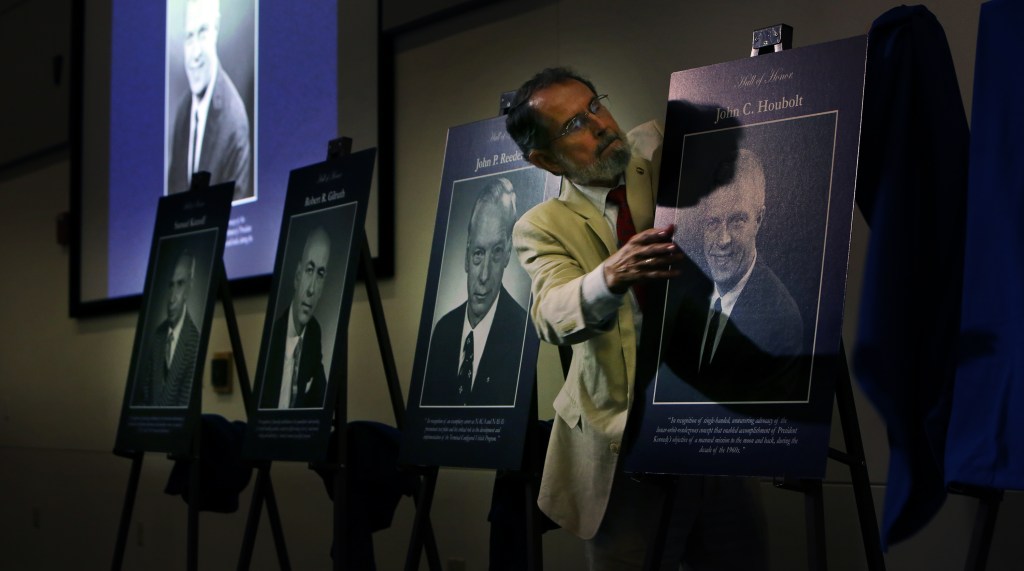
The Langley Research Center National Advisory Committee for Aeronautics (NACA) and National Aeronautics and Space Administration (NASA) Hall of Honor was conceived by members of the Langley Alumni Association and the NASA Langley Research Center as a mechanism to pay tribute to individuals who built exemplary careers at Langley, persevered against the status quo when required and achieved revolutionary scientific understanding and technological progress on the frontiers of the aerospace sciences.
The Hall of Honor formally recognizes those persons whose contributions have had the most sustained and far-reaching influence on the leadership, direction, mission and capabilities of the NACA Langley Memorial Aeronautical Laboratory and NASA Langley Research Center and/or whose work at Langley enabled unprecedented and fundamental advancements in either a scientific or engineering field and made significant contributions to the United States’ aerospace industry for commercial and military aircraft and/or spacecraft.
In 1958, Mary W. Jackson became NASA’s first black female engineer. She was inducted into the Hall of Honor in 2017.
History
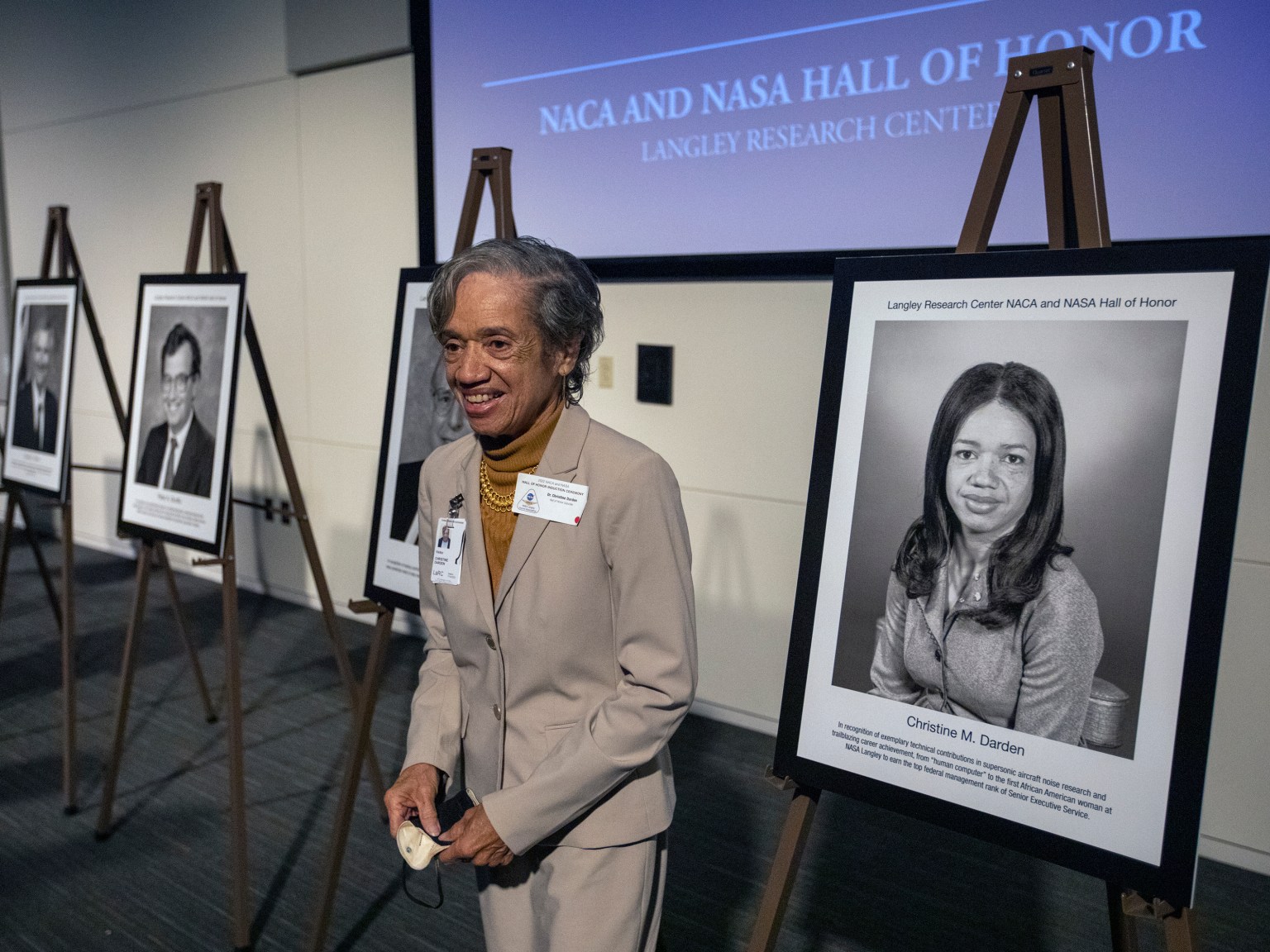
NASA Langley Unveils 2022 Hall of Honor
Famed Hidden Figure Christine Darden was one of 17 members of the 2022 class of inductees to take their rightful place in the Langley Research Center NACA and NASA Hall of Honor – the third such ceremony to take place.
Author: José Luis Granados Mateo is a postdoctoral researcher in the Department of Philosophy at the University of the Basque Country (EHU) and a member of the Integrated History and Philosophy of Science (iHPS) research group. His work focuses on history and philosophy of science, science and values, and the epistemology of scientific practices.
By 1800, water had already changed once. It was no longer one of nature’s simple terms, but a compound of hydrogen and oxygen (see Is Water H₂O? (1) From Element to Compound). The new chemistry had a powerful account of that change. What it still wanted was a more direct experiment: water itself, giving up its constituents.
Then came Volta’s pile.
It was not a spectacular object. Discs of metal stacked in pairs, pieces of moist material between them. Yet it altered the experimental life of electricity. Static machines produced sparks, shocks and theatrical moments. The pile offered something steadier. Electricity could now be made to act for long enough to enter chemistry.
Figure 1 Voltaic pile, the first electric battery, invented by Alessandro Volta in 1800. It did not look spectacular, but it changed what experimenters could do with electricity: it provided a sustained electrical action, long enough for electricity to become a chemical instrument. Source: Science History Institute / Public Domain
Nicholson and Carlisle tried it on water almost at once. They placed wires from the pile in the liquid. Gas appeared, or rather the two sides of the reaction began to declare themselves. Hydrogen was released at one wire; oxygen, in the earliest arrangement, fixed itself to the other, nearly two inches away. Later, with gold or platinum electrodes, oxygen could be collected as gas. The awkward fact remained. The two supposed products of one decomposition appeared at opposite electrical ends of the apparatus.
At first glance, this looked like the experiment the new chemistry had been waiting for.
The trouble was that it looked a little too good.
A cleaner decomposition
The first article in this series followed water from element to compound. That change had not been a simple passage from error to fact. It involved a wider transformation of chemical practice: new gases, new names, balances, combustion experiments, recomposition, and a growing confidence in quantitative composition.
Electrolysis seemed to bypass much of that history. No flame, no combustion vessel, no burning of inflammable air with oxygen, no droplets collected on glass. The battery appeared to make water surrender its constituents directly. If water was composed of hydrogen and oxygen, here was synthesis in reverse: pass electrical action through the liquid and the two gases would come out.
Strictly speaking, electrical decomposition of water was not new. In 1789, Adriaan Paets van Troostwijk and Jan Rudolph Deiman had used repeated sparks of static electricity to obtain a mixture of hydrogen and oxygen from water, then recombined that mixture into water. Their experiment mattered. It was also awkward. The gases came together, in small quantities, and separating them for testing was difficult.
Nicholson and Carlisle’s version looked sharper. The Voltaic pile produced sustained action. The products could be made to appear separately. Hydrogen here, oxygen there. Each could be collected, examined and identified.
That was the improvement. It was also where the puzzle began.
When neatness becomes suspicious
Suppose water is decomposed. What, exactly, has been decomposed? A particle of water, perhaps. Yet if that particle is split into hydrogen and oxygen, why do the products not appear together? Why does hydrogen emerge at one wire and oxygen at the other? Why should the layout of the battery govern the place where each product appears, while the water between the wires shows no visible sign of being torn apart?
This was not an experiment going wrong. The gases appeared reliably. They appeared at the expected poles. That was precisely what made the situation uncomfortable.
Nicholson noticed the difficulty at once. Hydrogen appeared at one wire; oxygen was found at the other, nearly two inches away. The space between them did not look like a region where water was being visibly pulled into its parts. No trail of bubbles marked the route. The products simply appeared at opposite ends of the electrical arrangement, as if the battery had assigned them places.
Others saw the same embarrassment. Cuvier put it bluntly: if oxygen and hydrogen came from the same particle of water, why did they appear at two distant points, each always at its own wire? Haüy pressed the problem in molecular terms. If one molecule of water was decomposed, why were its products separated? If two molecules were decomposed, why did one give only hydrogen and the other only oxygen?
The question was almost childishly simple. That was why it would not go away.
Today we speak of ions, electrodes and charge transport. Those words make the old difficulty vanish before we have properly felt it. Around 1800, chemists had poles, attractions, affinities, particles, electrical fluids, acids, alkalis, metals, and a growing suspicion that electricity and chemistry belonged together. The experiment was clear enough. The mechanism was not.
Chang calls this the distance problem. The phrase is exact. The gases appeared with too much order for a simple story of local decomposition.
The distance problem
The obvious interpretation could still be defended. Perhaps electricity pulled the constituents of water apart. Oxygen went to one pole, hydrogen to the other. Many experiments already suggested that substances had different electrical tendencies, so the idea was hardly absurd.
It left the hardest part untouched.
What travelled through the water? Hydrogen? Oxygen? Something already separated? Something charged? If the constituents were detached somewhere between the electrodes, why did they not appear on the way? If they moved invisibly, why did they not recombine? And if decomposition happened only at the wires, how could it be the decomposition of the same portion of water?
Changes in apparatus did not remove the difficulty. Davy tried water held in separate gold cups, connected only by a moist bridge of fine asbestos, an arrangement he attributed to William Hyde Wollaston. The products still appeared at distant sites. The more carefully experimenters separated the places of action, the more pressing the question became: where, exactly, was water being decomposed?
Figure 2. The distance problem in water electrolysis. Hydrogen appeared at one electrical pole and oxygen at the other, even when the sites of action were separated. The experiment seemed to show that water was decomposed, yet it left open the question of how the products travelled, or whether they were instead produced locally at the electrodes. Source: Diagram generated by the author using AI, based on Chang (2012) and Davy’s 1807 experiments.
That was the oddity. Electrolysis was not messy. If anything, it was too orderly. Hydrogen went one way, oxygen another. The battery gave a geography to the products of decomposition.
A flame did nothing like this. When inflammable air burned with oxygen, water appeared as the product of combination. There were difficulties, of course, but not difficulties of distance. Electrolysis changed the spatial form of chemical evidence. Water did not answer in one place. It answered at two.
Under electrical action, water no longer seemed merely something to be composed or decomposed. It seemed to contain routes.
Ritter changes the verb
Johann Wilhelm Ritter changed the verb.
For Lavoisierian chemists, electrolysis was analysis. Electricity decomposed water into hydrogen and oxygen. Ritter proposed the reverse. Electrolysis was synthesis.
At the negative pole, water combined with negative electricity and yielded hydrogen. At the positive pole, water combined with positive electricity and yielded oxygen. No product needed to travel from a decomposed particle somewhere in the middle of the liquid. The gases were made where they appeared.
It was a radical move. It was not foolish. Ritter took the most striking feature of the experiment seriously: the gases emerged at different poles. He did not treat that separation as an inconvenience to be patched up later. He built his interpretation around it. If hydrogen appears here and oxygen there, perhaps the two gases are being formed locally by two different electrical processes.
The price was high. Water became elementary again. Hydrogen and oxygen became compounds of water and electricity.
To modern chemistry, this looks perverse. Seen from the apparatus, it had one plain advantage: the gases were produced where they were found. Electricity was still widely treated as something with material agency. If a pile drove something into a liquid, why could that something not combine chemically with the liquid? Why must electricity be only the knife, and never part of what is made?
The phlogistonist echo was clear enough. If inflammable air could be read as water combined with phlogiston, hydrogen could be read as water combined with negative electricity. Identify phlogiston with negative electricity, and Ritter’s scheme comes surprisingly close to older anti-Lavoisierian accounts of water.
Priestley, from America, also saw that the new experiment did not force the Lavoisierian reading. He followed the debate through Nicholson’s journal and argued that electrolysis need not be understood as the decomposition of compound water. His intervention matters because it shows how differently the same electrical process could be read. For Lavoisierians, the gases were constituents released from water. For Priestley, they could still be products of another chemical-electrical process.
Ritter’s view did not last. Chemistry was becoming more firmly Lavoisierian, and elementary water had little room left in the emerging discipline. Still, electrolysis itself had not supplied a neat refutation. Ritter had solved the distance problem rather well. His view lost ground as chemists built an electrochemical practice around compound water.
Keeping water a compound
The Lavoisierian problem was delicate. Chemists had to hold three claims together. Water was composed of hydrogen and oxygen. Electricity decomposed it. Yet the products appeared at different electrodes, with no visible decomposition in between.
So the theory needed help.
One option was invisible transfer: one constituent moved through the liquid to its proper pole. Another was a chain of decompositions and recompositions, in which neighbouring particles handed hydrogen and oxygen along until the products emerged at the ends. In related versions, the whole liquid was imagined as electrically ordered, so that the final gases appeared only where that order met the metal.
These were rescue hypotheses. The phrase can sound dismissive, although it need not be. They were attempts to make a powerful practice intelligible. Electrolysis worked. Its effects could be repeated, varied and extended. What was missing was a mechanism that made the spatial separation of the gases sit comfortably with compound water.
The chain idea had a certain elegance. No single particle of hydrogen or oxygen needed to travel the whole distance. A constituent could be passed along through a succession of exchanges, like a message moving through a crowd. The gas would appear only at the end of the chain.
But what exactly was being passed? How were the exchanges coordinated? Why did the process end at just the right pole? The explanation helped, though it left plenty in the dark.
The transfer idea had its own attraction. If chemical particles had electrical characters, perhaps they could be drawn through the liquid. Again, however, the path remained hidden. The water between the wires did not display the process one wanted to see. Without a developed theory of ions and charge transport, the mechanism remained speculative.
None of this made the hypotheses useless. They kept research going. They suggested new apparatuses, new distances, new electrodes, new liquids and new comparisons. An experiment need not be fully understood before it becomes useful.
That is more or less what happened.
When water stopped being negotiable
By the early nineteenth century, compound water was becoming part of the working furniture of chemistry. Not every detail had been explained. The distance problem remained. Yet fewer and fewer chemists were prepared to reopen the older question of whether water might be elementary.
Water as a compound was no longer simply a hypothesis under trial. Increasingly, it was a condition for further work.
That shift mattered. Once water was taken as compound, electrochemistry could ask other questions. What moved towards each pole? What kinds of substances were decomposed by the pile? How did acids, alkalis, salts and metals behave under electrical action? What changed when the electrode, distance or solution changed? How much chemical change corresponded to how much electrical action?
The material practice hardened. Trough batteries became easier to handle. Gold and platinum electrodes helped prevent the products from disappearing into reactions with the metal. Separate cups connected by wet asbestos became a standard arrangement. The theory remained unsettled, but the apparatus was becoming disciplined.
The unresolved puzzle did not stop electrochemistry. Experimenters varied the arrangement. They separated vessels, introduced bridges, changed electrodes, added acids and salts, and studied what appeared where. The field learnt to handle the phenomena before it possessed a settled account of what moved inside the liquid.
Later developments brought more discipline. Faraday gave electrolysis a quantitative discipline in the 1830s. By the end of the nineteenth century, Arrhenius’s theory of ionic dissociation would help make sense of processes that had long remained obscure. That later clarity, though, should not be read backwards into 1800. For decades, electrochemistry advanced with a problem at its centre.
What electricity did to water
Electrolysis changed what water could be made to do in the laboratory. It did not simply reveal a truth waiting inside the liquid. It altered the route by which that truth could be pursued.
The first article in this series followed water into the balance sheet of chemistry. Water became a substance that could be produced, analysed, recomposed, weighed and named through its constituents. Electrolysis added another sort of depth. Water could now be interrogated electrically. Its constitution became a problem of poles, currents, attractions, transport and hidden motion.
Lavoisierian chemistry had given water constituents. Electrochemistry gave it pathways.
The familiar classroom demonstration hides that difficulty. The bubbles are easy to see. Their meaning was not. Hydrogen here, oxygen there: that simple separation forced chemists to imagine invisible processes inside a liquid that otherwise looked continuous and unchanged.
Electrolysis made compound water harder to abandon, without making it transparent. It turned water into an electrochemical object: something that could conduct, polarise, transport, release and exchange. The question was no longer only whether hydrogen and oxygen belonged to water. It was how electrical action could make them appear at all.
Still, electrolysis could not settle the formula. It could make water yield hydrogen and oxygen. It could not tell chemists how those elements should be counted.
That was the next difficulty. Once water had constituents, chemistry still had to learn how to count them.
References
Chang, H. (2012). Is Water H2O? Evidence, Realism and Pluralism. Dordrecht: Springer. doi: 10.1007/978-94-007-3932-1.
Davy, H. (1807). ‘The Bakerian Lecture, on Some Chemical Agencies of Electricity’. Philosophical Transactions of the Royal Society of London, 97, pp. 1–56. doi: 10.1098/rstl.1807.0001.
Faraday, M. (1834). ‘Experimental Researches in Electricity.—Seventh Series’. Philosophical Transactions of the Royal Society of London, 124, pp. 77–122. doi: 10.1098/rstl.1834.0008.
Nicholson, W. (1800). ‘Account of the New Electrical or Galvanic Apparatus of Sig. Alex. Volta, and Experiments Performed with the Same’. Journal of Natural Philosophy, Chemistry, and the Arts, 4, pp. 179–187.
Singer, G. J. (1814). Elements of Electricity and Electro-Chemistry. London: Printed for Longman, Hurst, Rees, Orme, A. Brown, and R. Triphook.
Volta, A. (1800). ‘On the Electricity Excited by the Mere Contact of Conducting Substances of Different Kinds’. Philosophical Transactions of the Royal Society of London, 90, pp. 403–431. doi: 10.1098/rstl.1800.0018.
Wilkinson, C. H. (1804). Elements of Galvanism, in Theory and Practice: With a Comprehensive View of Its History, from the First Experiments of Galvani to the Present Time. 2 vols. London: John Murray.
The cable news network’s president, Rebecca Kutler, wants to leverage its massive online and TV audience to create a fan community. First up: letting you chat with Rachel Maddow.
The cable news network’s president, Rebecca Kutler, wants to leverage its massive online and TV audience to create a fan community. First up: letting you chat with Rachel Maddow.
Cofertility manages the costs of egg freezing and storage, in exchange for half the batch. One young client became suspicious of the arrangement—and started to investigate.
Cofertility manages the costs of egg freezing and storage, in exchange for half the batch. One young client became suspicious of the arrangement—and started to investigate.
Reform doesn't have the dignity of the Tories' grand history, but its lack of historical baggage means it has more freedom to set out radical new policies, says Prof James Alexander. Together, they would be unstoppable.
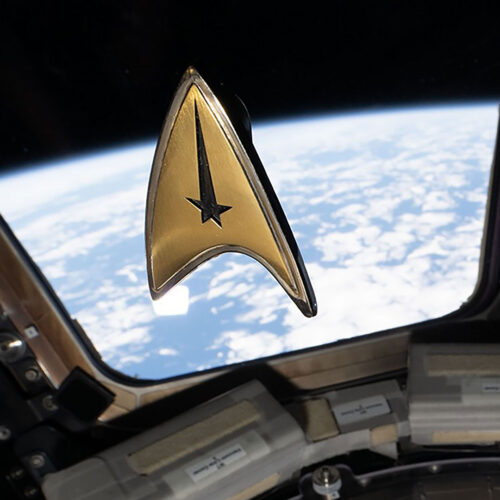
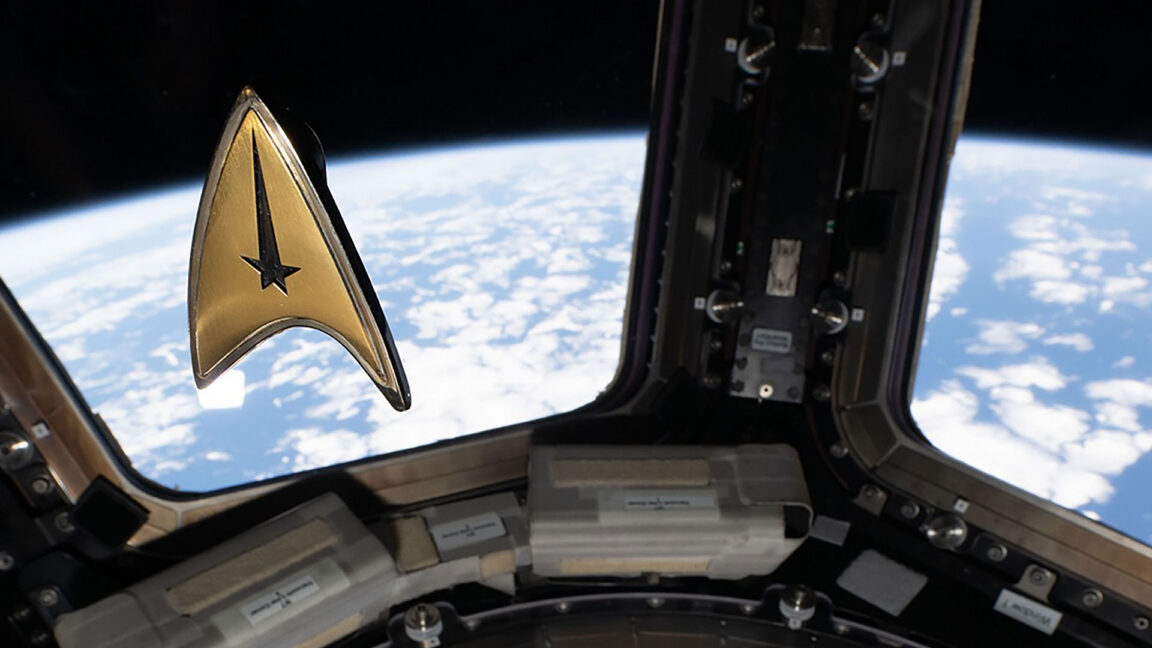
Sixty years after television audiences first tuned in to see the voyages of the Starship Enterprise, an astronaut on board the International Space Station has paid tribute to Star Trek by flying the badge of the franchise's latest fictional captain.
Expedition 75 flight engineer Sophie Adenot with European Space Agency (ESA) donned the Delta badge originally worn by actor Anson Mount for a video recorded from aboard the space station. Mount portrays Christoper Pike in the Paramount+ streaming series Star Trek: Strange New Worlds. Paramount and ESA both released the clip on their Instagram feeds.
"For 60 years, Star Trek has brought us stories of friendship and exploration. I'm wearing Captain Pike's badge aboard the ISS in celebration of continuing the real world work of science and exploration," said Adenot. "For me, exploration and science are about curiosity and cooperation daring to go a little farther together, learning from what we discover and build, and turning that knowledge into a better future for everyone."
 Login










 Hidden for centuries, the hoard reveals a Viking world where silver crossed borders, and its weight could matter more than its shape.