❌

Reading view

Google's AI genome system evaluates every possible one-base change

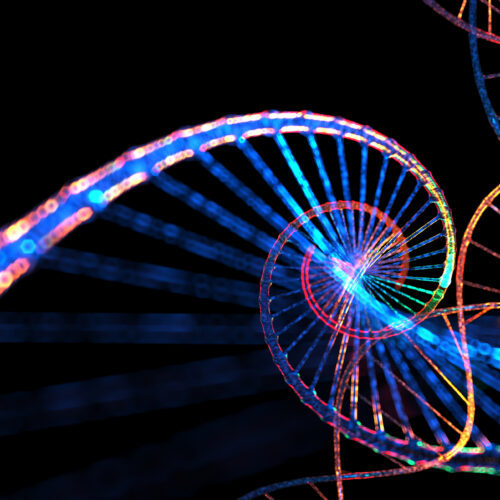
On Tuesday, Google announced AlphaGenome Atlas, a resource that attempts to predict the consequences of every possible single-base variant in the human genome. The human genome is about 3 billion bases long, so trying the other three DNA bases that don't appear in our reference genome means sending a total of 9 billion bases through AlphaGenome software.

AlphaGenome is designed to identify potential functions of non-coding DNA, which does not encode proteins but makes up the vast majority of the human genome. Some of this non-coding DNA is essential for controlling the activity of the protein-coding portion—it tells the cell where and when to make messenger RNAs, how to process them into mature protein-coding forms, and so on. But much of it appears to be little more than the remains of viruses and other molecular parasites.

Being able to identify the functional portion is very useful, as is having all the analysis done by a single software package. But until biologists start to use it heavily (assuming they do), it won't be clear what AlphaGenome offers beyond what we could have gotten out of its training data.
Read full article

Comments

© Vertigo3D

  •  

Google's AI genome system evaluates every possible one-base change

On Tuesday, Google announced AlphaGenome Atlas, a resource that attempts to predict the consequences of every possible single-base variant in the human genome. The human genome is about 3 billion bases long, so trying the other three DNA bases that don't appear in our reference genome means sending a total of 9 billion bases through AlphaGenome software.

AlphaGenome is designed to identify potential functions of non-coding DNA, which does not encode proteins but makes up the vast majority of the human genome. Some of this non-coding DNA is essential for controlling the activity of the protein-coding portion—it tells the cell where and when to make messenger RNAs, how to process them into mature protein-coding forms, and so on. But much of it appears to be little more than the remains of viruses and other molecular parasites.

Being able to identify the functional portion is very useful, as is having all the analysis done by a single software package. But until biologists start to use it heavily (assuming they do), it won't be clear what AlphaGenome offers beyond what we could have gotten out of its training data.

Read full article

Comments

© Vertigo3D

  •  
  •  

Bats May Hold the Secret to Fighting Aging, Cancer, and Infection

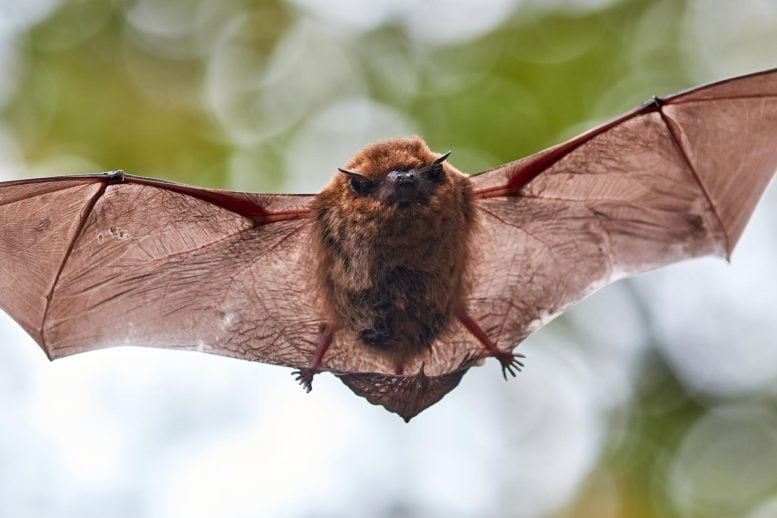
Little Flying Bat ForestBats’ remarkable ability to withstand decades of strenuous flight while keeping infections, inflammation, and cancer in check may offer new clues to healthier human aging Bats are unusually long-lived for animals of their size. Small mammals generally burn energy quickly and die relatively young, yet some bats survive for several decades. Brandt’s myotis, Myotis brandtii, [...]
  •  

Ancient DNA Rewrites Story of Enigmatic ‘American Cheetah’

Miracinonyx trumani and the ecosystem this species lived in. Image credit: Julius Csotonyi.

For several decades, paleontologists have described Miracinonyx trumani -- an extinct species of cheetah-like felid that roamed the North American prairies and steppe terrains more than 13,000 years ago -- as North America’s answer to the African cheetah (Acinonyx jubatus).

The post Ancient DNA Rewrites Story of Enigmatic ‘American Cheetah’ appeared first on Sci.News: Breaking Science News.

  •  

Scientists Map Genetics of Personality across Million People

According to Professor Graur, the functional fraction within the human genome cannot exceed 25%, and is probably considerably lower.

Researchers have identified more than 1,200 locations in the human genome associated with personality traits, offering the most detailed look yet at the biological underpinnings of traits like sociability, anxiety and curiosity.

The post Scientists Map Genetics of Personality across Million People appeared first on Sci.News: Breaking Science News.

  •  

Le Web mondial dépend de câbles sous-marins : ces drones pourraient priver des pays d’Internet

L’essor des drones sous-marins pourrait modifier en profondeur l’équilibre stratégique des océans. Des chercheurs chinois estiment que ces engins autonomes sont désormais capables de menacer une infrastructure essentielle.

  •  

GNOME Disks com GTK4 e libadwaita muda completamente de visual; veja como ficou

CompartilharO GNOME Disks está sendo atualizado para GTK4 e libadwaita e o GNOME Disks com GTK4 e libadwaita muda completamente de visual. Veja as principais …

O post GNOME Disks com GTK4 e libadwaita muda completamente de visual; veja como ficou apareceu primeiro em Blog do Edivaldo - Informações e Notícias sobre Linux.

  •  
  •  

Neanderthal Gene Still Shapes Muscle and Jaws in Some Living Humans

Velazquez-Arcelay et al. found that genetic material from Neanderthal ancestors may have contributed to the propensity of some people today to be early risers, the sort of people who are more comfortable getting up and going to bed earlier. Image credit: Holger Neumann / Neanderthal Museum.

Neanderthals vanished roughly 42,000 years ago, but a piece of their biology appears to be quietly at work in some people today, according to a new study led by scientists from the Max Planck Institute for Evolutionary Anthropology.

The post Neanderthal Gene Still Shapes Muscle and Jaws in Some Living Humans appeared first on Sci.News: Breaking Science News.

  •  

Large genome models used to design new viruses

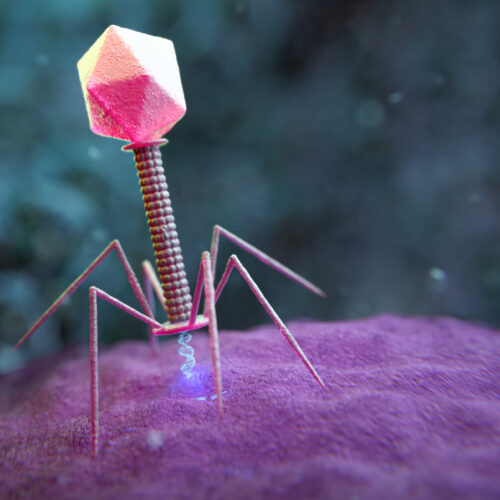
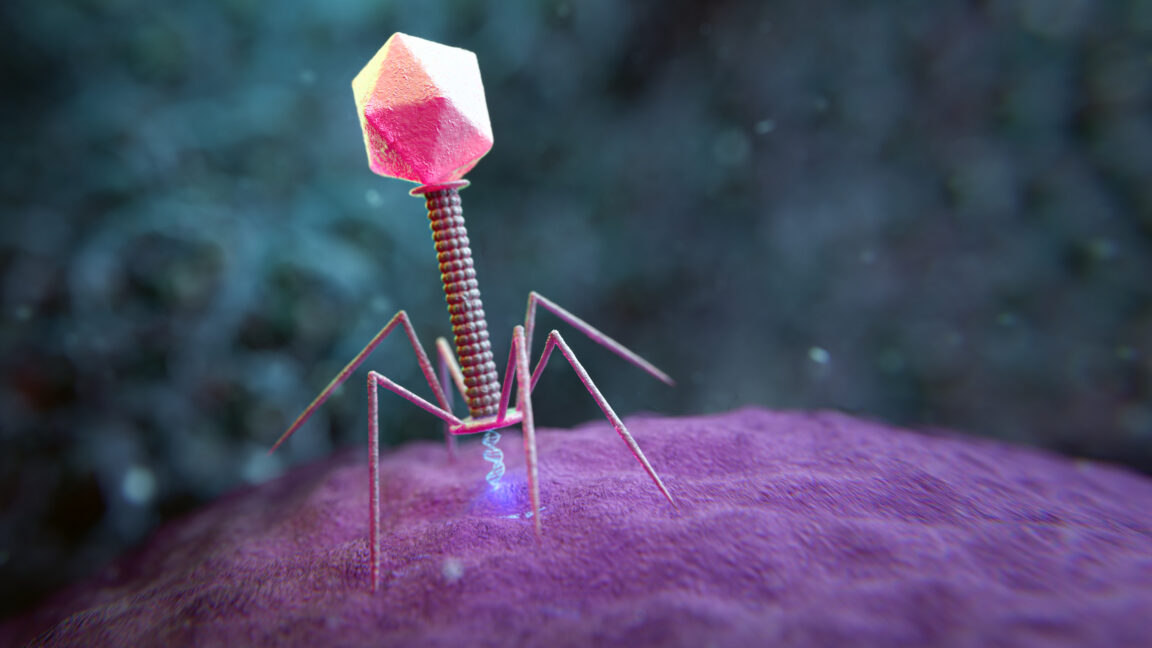
A lot of the AI work in biology has been focused on designing proteins. That's partly because proteins do most of the business of life, catalyzing the interesting chemistry and structuring cells. So, figuring out how to make a new protein can mean directly tinkering with biochemistry, providing new and potentially useful functions.

Since the genetic code provides a layer of abstraction between DNA and proteins, it wasn't obvious what a model trained on DNA could do. Yet people went ahead and made a large genome model, and it turned out to be able to output DNA sequences that could encode functional proteins in bacteria and mimic the gene structures found in complex cells. Now, those same models have been used to output the genomes of viruses that infect bacteria.

This isn't science fiction—all the viruses the models created are closely related to an existing virus. But they do have some distinct features that would be challenging to evolve. And the researchers who did the work, based at Stanford University, suggest we may want to start thinking now about preparing for the potential that someone could develop a related AI that can design a virus that targets vertebrates.

Read full article

Comments

© THOM LEACH / SCIENCE PHOTO LIBRARY

  •  

Scientists Add Unlikely New Member to World’s Carnivorous Plants

Morphology of Saxifraga candelabrum. Image credit: Zhang et al., doi: 10.1038/s41467-026-75288-y.

More than 150 years after Charles Darwin first wondered whether certain sticky-leaved Saxifraga plants might be secretly carnivorous, Kunming Institute of Botany researcher Tao Deng and colleagues say they have finally confirmed it.

The post Scientists Add Unlikely New Member to World’s Carnivorous Plants appeared first on Sci.News: Breaking Science News.

  •  

Como dar nome a um alarme ou timer no iPhone, iPad, Mac e Apple Watch

Se você costuma usar o aplicativo Relógio (Clock) em iPhones, iPads e Macs ou o Timers do Apple Watch para ativar alarmes ou timers, saiba que é possível identificá-los adicionando um nome (ou etiqueta, como a Apple chama).

Isso é muito útil para quem possui múltiplos alarmes/timers em ação e quer ter um controle sobre eles.

Neste artigo, ensinaremos como é simples adicionar uma etiqueta em cada um, veja só.

Como adicionar uma etiqueta a um alarme/timer pelo iPhone, iPad ou Mac

  1. Com o app Relógio aberto, toque/clique na aba “Alarmes” ou “Timers”
  2. No caso de alarmes, você pode criar um novo tocando no botão de “+” ou editar um existente tocando em cima dele.
  1. Na seção “Etiqueta”, digite o nome que quiser.
  2. Você também pode simplesmente fazer isso pela Siri, pedindo algo como:
    • “Crie um alarme de trabalho para amanhã às 7 da manhã.”
    • “Ative um timer de pizza para 2 minutos.”

Como adicionar uma etiqueta a um alarme pelo Apple Watch

  1. Pressione a Digital Crown para abrir o seletor de apps e abra o Alarmes.
  2. Crie um novo rolando até o fim da página e tocando no “+” ou simplesmente toque em cima de qualquer alarme criado.
  3. Toque em “Etiqueta” e dê um nome a ele.

Como adicionar uma etiqueta a um timer pelo Apple Watch

  1. Mantenha a Digital Crown pressionada por alguns segundos e diga algo como:
    • “Ative um timer de pizza para 2 minutos.”
  1. O nome do timer aparecerá no Conjunto Inteligente (Smart Stack) e no próprio app Timers.

  •  

Como renomear um arquivo no app Pré-Visualização [iPhone, iPad e Mac]

Com o aplicativo Pré-Visualização (Preview), usuários de iPhones, iPads e Macs podem facilmente preencher e assinar formulários, escanear documentos e fazer alterações em PDFs e imagens, por exemplo.

Para encontrar mais facilmente um arquivo, você pode renomeá-lo em alguns passos simples.

Veja, nos parágrafos a seguir, como fazer exatamente isso no seu dispositivo! 😉

Com o app Pré-Visualização aberto, faça um dos seguintes procedimentos:

  • Toque e segure o dedo ou clique com o botão direito do mouse em cima do arquivo e escolha “Renomear”.
  • Com o arquivo aberto, selecione a setinha ao lado do nome dele e renomeie-o (no iPhone/iPad, é preciso primeiramente tocar em “Renomear”). Se estiver no Mac, você também pode fazer a mesma coisa indo até Arquivo » Renomear…, na barra de menus.

Simples, né?!

  •  
  •  

Scientists Find Traces of Two Unknown Archaic Hominins in Human DNA

An archaic hominin. Image credit: Ninara / CC BY 2.0.

New research led by the University of California, Berkeley reveals that beyond Neanderthals and Denisovans, humans interbred with two mysterious ‘ghost’ lineages: one in Africa more than 50,000 years ago, another in Eurasia over 1.7 million years ago.

The post Scientists Find Traces of Two Unknown Archaic Hominins in Human DNA appeared first on Sci.News: Breaking Science News.

  •  

Decades of Financial Hardship Linked to Faster Brain Aging

Long-term financial stress accelerates age-related cognitive decline. Image credit: Thomas Breher.

A large British study spanning more than 70 years has found that people who experience chronic money struggles over their working lives show measurable declines in memory and processing speed by their 50s, along with signs of accelerated brain shrinkage decades later.

The post Decades of Financial Hardship Linked to Faster Brain Aging appeared first on Sci.News: Breaking Science News.

  •  
  •  

Scientists Discover New Monkey Species in Democratic Republic of Congo

Colobus congoensis. Image credit: Daniel Rosengren, Frankfurt Zoological Society.

Researchers have identified and formally described a new species of the African monkey genus Colobus living in the remote interior of the Democratic Republic of Congo, marking only the fifth new monkey species found on the continent in the past 75 years.

The post Scientists Discover New Monkey Species in Democratic Republic of Congo appeared first on Sci.News: Breaking Science News.

  •  
❌