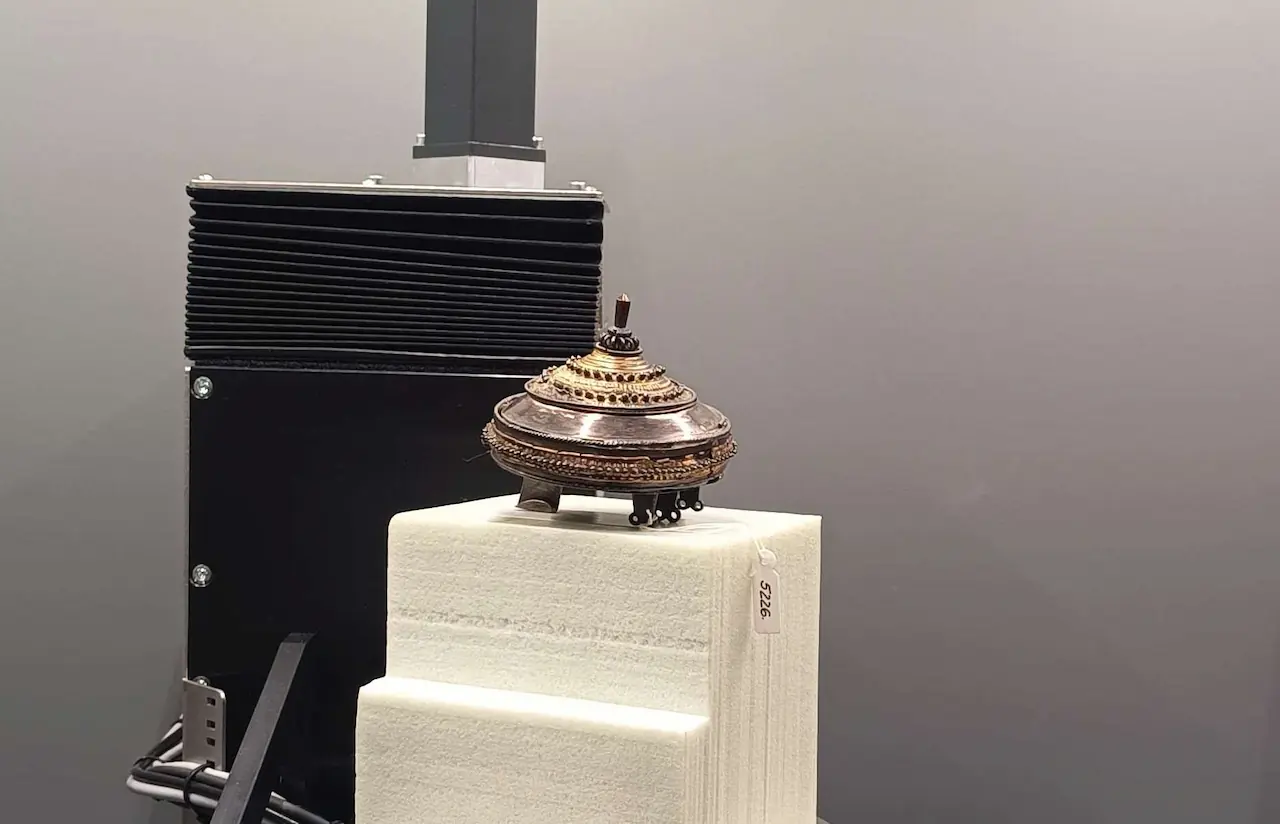
En 1837, unas obras de carretera al noreste de la aldea de Dienstedt, en la actual Turingia (Alemania), sacaron a la luz la tumba de una mujer que había vivido —y muerto— rodeada de un lujo que pocas germanas de su tiempo pudieron permitirse. Junto a su cuerpo aparecieron vasijas de cerámica y bronce, un […]
Una investigación en varios puertos del Mediterráneo revela que numerosas embarcaciones fondeaban más allá de los grandes diques, obligando a reconsiderar la verdadera capacidad de estos centros comerciales.
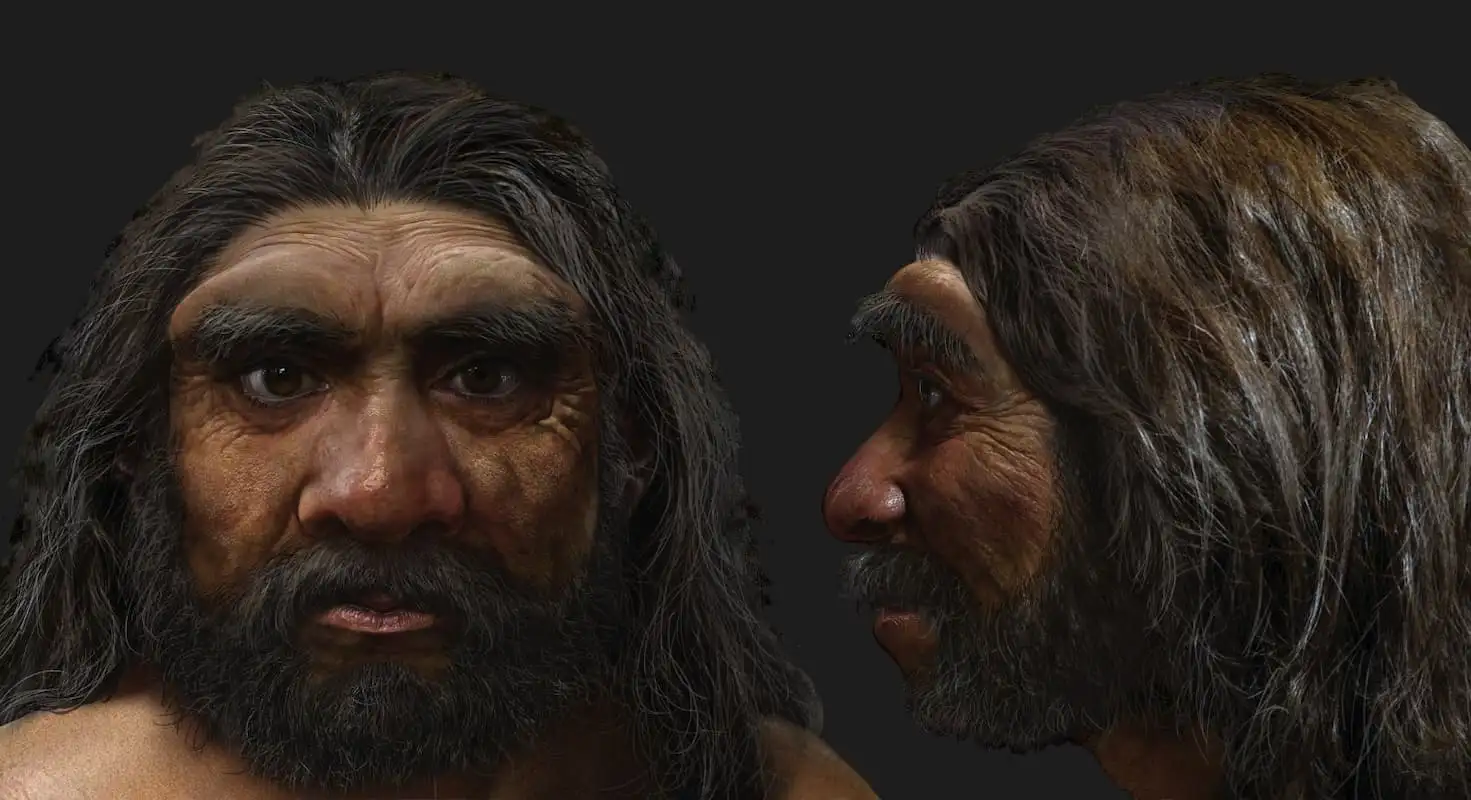
En 2019, un grupo de operarios que trabajaba en la restauración ecológica de una cantera en la provincia china de Yunnan tropezó con huesos y herramientas de piedra enterrados bajo la tierra. Nadie sospechaba entonces que aquel agujero, conocido como Cueva Bianfu (literalmente, «cueva de los murciélagos», por los animales que la habitaban), acabaría convirtiéndose […]
Dados do mais recente balanço do Serviço de Alterações Climáticas Copernicus (C3S), partilhado pelo pelo Centro Europeu de Previsões Meteorológicas de Médio Prazo (ECMWF), mostram que agosto de 2026 foi, a par de julho de 2023, o mês mais quente de sempre desde que há registos.
Com o AppleCare One (agora rebatizado para AppleCare One Individual), vale recordar, é possível proteger três aparelhos em uma única assinatura — você pode adicionar mais aparelhos pagando mais — usando uma única Conta Apple em todos eles, sendo mais econômico que o AppleCare+ tradicional.
No AppleCare One Family isso obviamente muda. Nele, até seis integrantes da família (todos necessariamente integrantes do Compartilhamento Familiar) podem incluir todos os seus aparelhos elegíveis na cobertura — isso mesmo, sem limites de dispositivos.
Os reparos para quebra de aparelhos são ilimitados nos dois planos. A limitação fica para a quantidade de sinistros (perda ou roubo) cobertos: no AppleCare One você tem direito a até três no ano, enquanto que no One Family esse número sobe para até seis. O preço também é diferente, obviamente. O AppleCare One Family sai por US$50/mês, US$30 a mais que o plano individual.
Ainda não suportado no Brasil, o AppleCare One Family estará disponível a partir do dia 14 de setembro nos EUA.
Em beta desde junho, os sistemas 27 reúnem uma série de novos recursos para a Apple Intelligence, além da nova Siri AI — vale lembrar, essas funcionalidades podem não ser compatíveis com todos os dispositivos em que os sistemas 27 estão disponíveis.
Em matéria de iPhone, um diferencial relevante para as gerações mais antigas é a implementação de um novo scheduler de CPU 1Central processing unit, ou unidade central de processamento. para gerenciar melhor as demandas de cargas de trabalho em iPhones a partir do 11, algo já visto anteriormente nos modelos mais recentes — além, claro, de melhorias mais amplas, como na velocidade de envio de arquivos no AirDrop.
No caso do macOS, o maior destaque — além da otimização de desempenho — é o fim do suporte aos Macs com processadores Intel.
NOTA DE TRANSPARÊNCIA: O MacMagazine recebe uma pequena comissão sobre vendas concluídas por meio de links deste post, mas você, como consumidor, não paga nada mais pelos produtos/serviços usando os nossos links de afiliado.
Notas de rodapé
1
Central processing unit, ou unidade central de processamento.
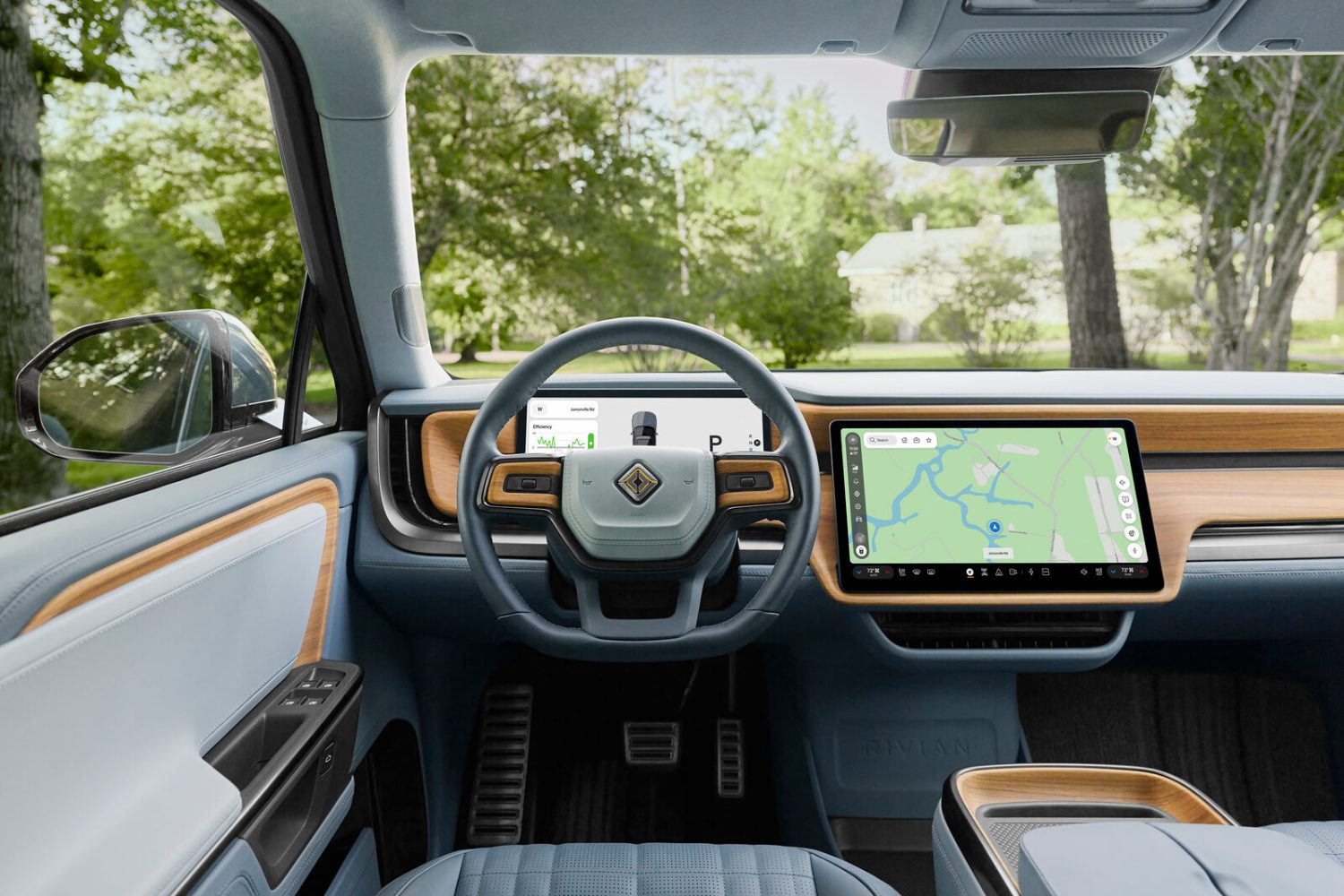
Rivian is rolling out RivianOS 2, the biggest overhaul of its in-car software since the R1 first shipped. For the first time, it puts every vehicle the company sells on a single software stack.
The update, version 2026.31, started reaching eligible R1 and R2 vehicles today. It brings a rebuilt interface, Unreal Engine 5 graphics, real-time police and speed-camera alerts, and a deeper AI layer Rivian calls Unified Intelligence.
Apple’s recent Vision Pro layoffs reached further across the company than initially disclosed, according to Bloomberg News’ Mark Gurman.
Last month, Gurman reported that Apple cut about 100 jobs from the Vision Products Group, largely by shutting down the headset’s gaming team and shrinking the unit that produces immersive video. Combined with reductions on Siri and related software teams, the changes affected more than 200 people. Apple said it was realigning teams to focus on new devices and AI, while creating some new roles and offering affected employees a chance to apply elsewhere.
Gurman now says the cuts also hit Vision Pro-related staff in other parts of Apple, including device security, audio engineering, Siri integration, testing, and visionOS. Because visionOS is expected to underpin upcoming smart glasses as well as the headset, the broader reductions affect shared software rather than Vision Pro hardware alone.
According to Gurman, the company has told employees that Vision Pro and visionOS are not going away. A redesigned successor, internally known as N224, is still not expected before late 2028. Near-term emphasis has shifted to AI wearables, including smart glasses code-named N50 that remain on track for next year. Those glasses are not expected to support the same immersive video or advanced gaming experiences as the current headset.
The moves follow the June departure of Paul Meade, who led Vision Pro and smart glasses work before leaving for OpenAI. People inside the Vision organization have spent months urging new CEO John Ternus to keep investing in the platform even as sales lag, Gurman reports. Colleagues who have discussed the headset with Ternus say he was skeptical from the start that a bulky, expensive enclosed device could reach a mass market. He is still said to support the glasses project, but Gurman reports he would consider walking away from head-worn devices as a category if they fail to catch on.
Apple has described the changes as limited and tied to evolving product priorities. Vision Pro launched in 2024 as the company’s spatial-computing flagship but never became a high-volume product, constrained by price and form factor. In-house immersive videos can cost millions to produce and have not proven cost-effective given relatively small active use. Apple now plans fewer internal productions and more third-party content.
MacDailyNews Take: Vision Pro should never have shipped in its initial or present form and it never would have shipped under Steve Jobs or, it sounds like, under John Ternus.
[This] is exactly what you’d expect to occur when a product is released too early to average users… Apple Vision Pro is a devkit for developers, not for average users, and should have been released as a devkit for developers. – MacDailyNews, March 26, 2024
There are a lot of people inside and outside of Apple who think the company should have waited on the Vision Pro, but it’s fairly easy today to see why Tim Cook released this beta (alpha?) devkit: He likely knew last year, or had a strong inkling, that Project Titan was a goner and there wasn’t much excitement in Apple’s pipeline. He’d need something to point to as “innovation” while he continued on his seemingly unending quest to iterate and monetize products invented by Steve Jobs’ Apple (a very different place) while continuing Apple’s retail store buildout. He also needed something to energize developers and, who knows, they might come up with a killer visionOS app while Apple toils on the long road to real lightweight spatial computing glasses and beyond.
More importantly, Apple last year had already come to the sad realization that they’d missed the generative artificial intelligence revolution and would need a distraction while they feverishly scrambled to catch up (the fruits of which — alongside what sound like disappointing partnerships which hopefully, somehow, preserve user privacy — we’ll hopefully begin to see at WWDC this June).
You have to feel for Cook. After a decade plus of being able to iterate and monetize Jobs’ inspired products and services and continue adding retail stores around the world to spectacular effect, and being lauded for it, he now finds himself in a place that requires actual vision to be able to see which path to take. And he’s not the guy. Even the guy who put him in the position knew it.
Beyond the fact that Cook can’t even execute a compelling live keynote address, his big send off, the “Apple Car,” [the idea of which was also germinated under Jobs] fizzled in ignominious failure.
So, despite myriad misgivings and protestations inside Apple, Cook pulled the trigger early on the Vision Pro. He had to have something to point to that would buy him some time. Even Apple’s rubber-stamping board of lackeys would wake up and start asking questions otherwise.
While Cook is hemming and hawing when faced with shareholders (virtually, of course, never again in person for as long as Cook remains), Apple is currently in scramble mode trying to catch up to rivals in generative AI, a technology the company seems to have completely missed while focusing instead on the not-ready-for-primetime Apple Vision Pro, visionOS, its now-canceled decade-long multi-billion-dollar electric vehicle boondoggle, replacing leather in iPhone cases and Apple Watch bands with overpriced junk in a quest to “save the planet,” forcing employees to endure a constant barrage of time-wasting zero-productivity DEI sessions, and myriad other various and sundry “initiatives” which Cook deems of import. – MacDailyNews, February 28, 2024
When you lose your visionary CEO and replace him with a caretaker CEO, this is the type of aimless, late, bureaucratic dithering that ensues. – MacDailyNews, November 21, 2017
Thankfully, blessedly, today is finally a Brand New Day for Apple!
Please help support MacDailyNews — and enjoy subscriber-only articles, comments, chat, and more — by subscribing to our Substack: macdailynews.substack.com. Thank you!
In addition to cutting dozens of Vision Pro employees who worked on features like immersive video and gaming, Apple is laying off people who worked on Siri and AI, reports Bloomberg.
Apple is “largely shutting down” the Vision Pro team focused on gaming, and it is paring down the team that makes immersive video content. Approximately 100 employees who were part of the Vision Products Group have been laid off, with Apple also cutting 100 people from its Siri and software groups.
[…]
Despite the cuts to the Vision Products Group, employees were told that the Vision Pro and visionOS operating system are not being eliminated.
Apple told Bloomberg that it was realigning some teams in order to “evolve” the business to provide the best experience for users. “While we will create new roles as part of this change, it will also impact a limited number of existing roles,” Apple said.
The job cuts are tiny in relation to the overall company, which had 166,000 full time employees in September 2025 (the last time Apple disclosed its headcount). But as John Ternus prepares to take the CEO job just over one week from now, the timing seems designed to get some unpleasant work out of the way and let the new boss come in with clean hands.
It’s hard to find good people, Apple has plenty of work that needs doing, and it just reported a record quarter. Maybe they don’t need more immersive video content, but it’s not clear to me why the other employees couldn’t be reassigned. And I’m really wondering what’s going on with the general software group, where they’re getting rid of legends like Keith Stattenfield:
So, I posted yesterday on an another place that I had been just laid off at Apple after 37 years. ( Surprise! I got laid off. It was unexpected. I am still coming to terms with it. Yes, I will be ok. ) And I mentioned some of the things I’d done, and mused that I’d thought I’d finish out my career in a few years having passed along the knowledge to younger engineers. Alas, that’s going to get left unfinished.
I felt much the same way, because I’d also hoped to slowly ease into retirement instead of being given options that led me to retire a few years early.
Laying off anyone working on anything related to Apple Vision Pro is a gross strategic blunder, because it signals a lack of confidence in the product. Put them to work fixing bug backlogs if you don’t want them working on what they were doing, but don’t lay them off and let that show up in the press, that’s fucking amateur hour shit.
[…]
And the same goes for the Software Engineering layoffs, which don’t seem to be reported much upon because the layoffs have been described as “Apple Vision Pro, Siri, and software” where perhaps people don’t get that the latter is how Apple refers to the Software Engineering (SWE) org. There are so many bugs that should be fixed, that users encounter in their everyday lives, just reassign people to work on them. It’s stupid to lay people off when they could do that.
Plus, maybe retaining that institutional knowledge would help forestall future bugs.
Laying off employees who were working on a product that largely “failed” in the market is extremely hurtful to those employees, because the product’s failure is not their fault. They were directed to do that work. Apple should find new places for every single one of the employees who worked on Vision Pro. They owe it to the people who they directed to work toward the goal of making and maintaining Vision Pro. They can afford to do that.
Apple didn’t even work that hard to take care of the iPod employees who were once half the company’s revenue. In the end they basically gave Nest a free engineering team.
Recent layoffs of Apple employees working on the Vision Pro were broader than previously thought, Bloomberg’s Mark Gurman reports.
[…]
Gurman reports that people inside the Vision Pro group have spent months lobbying new CEO John Ternus to stay the course on the platform even as sales continue to underwhelm. Colleagues who have discussed the headset with Ternus say he was skeptical of it from the start, seeing it as too bulky and too costly to reach a mass audience.
Interestingly, since visionOS apparently runs on Apple’s upcoming smart glasses, the wider layoffs impact software shared across both product lines rather than the headset alone.
I was recently informed that I am being laid off from my position at Apple. It was unexpected, especially coming right after WWDC, where several of the projects I led and features I contributed to were announced.
Dados do Serviço de Alterações Climáticas Copernicus (C3S) mostram que julho de 2026 foi um dos meses de julho mais quentes à escala global. Na Europa, as condições quentes e secas agravaram os incêndios florestais, enquanto a temperatura da superfície dos oceanos atingiu um novo recorde para o mês.
Un observatorio instalado en el océano Índico captó un proceso geológico que hasta ahora solo podía reconstruirse a partir de sus huellas: el momento en que la Tierra creó nuevo suelo oceánico.
La FDA aprueba mFLUSIVA, la primera vacuna de gripe basada en ARN mensajero, pensada para adultos de 50 años o más y lista para la temporada 2026-2027 en Estados Unidos.
Depois dos problemas registados no sistema de correção digital dos exames nacionais, o Ministério de Fernando Alexandre acaba de divulgar os números de candidaturas entregues na primeira fase do acesso ao Ensino Superior, com 60.391 alunos, mais 21,8% do que em 2025.
Scientists from the Max-Planck-Institut für Kernphysik (MPIK) in Heidelberg, Germany, have announced the first successful detection of antineutrinos from an inactive nuclear reactor.
The research team behind the historic achievement said that detecting antineutrinos, which they described as “the most elusive particle in the Universe,” could improve monitoring, maintenance, safety, and security of nuclear reactors.
Hunting for ‘Faint Flux’ of Antineutrinos Inside Shutdown Nuclear Reactors
In a statement announcing the detection, the researchers point out that even when nuclear fission reactors are turned off, “the story inside the reactor core still has a great deal to tell.”
For example, the long-lived fission products inside nuclear reactors continue to decay for months, or in some cases, years after a reactor is no longer in use. This ongoing radioactive decay can produce what the team termed a “faint flux” of the most elusive particle in the universe: antineutrinos.
Because antineutrinos interact only extremely weakly with matter, they pass almost unhindered through the reactor vessel and surrounding shielding. In theory, the right equipment could detect this activity, offering insights into the reactor’s radioactive inner core.
Fortunately, for MPIK study leader Anthony Onillon and co-leader Thierry Lassere from the independent research group OMINA, also located at MPIK, there is an underground detector around 400 meters from two reactor cores, which were part of the region’s Chooz reactor in northern France.
Dubbed ‘Double Chooz,’ the detector contains over 30 cubic meters of liquid “scintillator.” According to the study authors, when antineutrinos interact with this material, a detectable flash of light is emitted.
“Antineutrinos interact only extremely rarely with matter,” Lasserre explained. “However, when one interacts within the Double-Chooz detector, a characteristic double-light signal is produced that can be distinguished from background events.”
Observing the ‘Faint Glow’ of Radioactivity
To search for the weak antineutrino signal from the decaying Chooz nuclear reactor material, the research team evaluated recorded data from a 17.2-day period when both reactors were shut down. Because antineutrinos interact so rarely with matter, the researchers searched for the characteristic paired flashes produced when one underwent inverse beta decay inside the detector.
After scanning through the data, the team said they found evidence for roughly 100 “antineutrino candidate events” originating from within the reactors. This included signals from the cores and nearby spent-fuel cooling pools.
MPIK scientists Thierry Lassere and Anthony Onillon discussing the Double Chooz data. Image Credit: R. Lackner/MPIK.
The researchers said the measured signal “agrees remarkably well” with simulations of the remaining fuel inventory and the decay of long-lived fission products.The team said this detection marks the first direct experimental validation of the antineutrino emissions predicted by the shutdown reactor models.
“With this new work, the experiment has achieved another first: observing the faint neutrino glow that remains after a reactor goes dark,” the research team explained.
New Perspectives for Reactor Monitoring, Nuclear Safety, and Safeguards
When discussing the significance of the achievement, Dr. Onillon noted that previous efforts have primarily focused on operational nuclear reactors, where the antineutrino flux is much larger. Conversely, their detection was made under challenging conditions using methods perfected by the team.
“Detecting the tiny residual signal after shutdown required exceptionally low backgrounds and careful analysis techniques developed by the Double Chooz collaboration over many years,” the researcher explained.
When discussing the experiment’s practical applications, the team noted that the work provides researchers and regulators with “the first published benchmark” of the antineutrino glow coming from shutdown reactors and spent fuel pools. In theory, such detection could provide information on a reactor during both operational and maintenance phases.
“The results demonstrate that antineutrino detectors can probe nuclear reactors even during shutdown periods, opening new perspectives for reactor monitoring, nuclear safety, and safeguards,” they conclude, adding that such detections “may become relevant for independent verification of reactor status and spent-fuel inventories.”
Christopher Plain is a Science Fiction and Fantasy novelist and has spent the last six years as Associate News Editor and Head Science Writer at The Debrief. Follow and connect with him on X, learn about his books at plainfiction.com, or email him at christopher@thedebrief.org
“Apple Glasses” concept designed by Martin Hajek for iDrop News
Apple is laying groundwork to turn its long-rumored smart glasses into a health and fitness platform, according to a recent job listing highlighted by Bloomberg News’ Mark Gurman.
In his Power On newsletter, Gurman pointed to an opening in Apple’s Vision Products Group for a “strategic product design leader.” The role is tasked with helping “define the future of health, well-being and fitness experiences across vision products.” The successful candidate would “translate ambiguous opportunities at the intersection of spatial computing, wearables, consumer health, and human behavior into clear first-party product direction.”
The posting, which lists locations in Los Angeles and San Jose, also emphasizes experience with “sensor-driven experiences,” digital health or fitness products, personalization, and multimodal interfaces. Cult of Mac noted that the Los Angeles option may reflect proximity to Apple Fitness+ studios in Santa Monica.
This builds on earlier ambitions for the Vision Pro. Gurman reported that Apple had explored an Apple Fitness+ experience on the headset that would let users follow workout classes while body-tracking cameras analyzed form. Those plans were shelved due to technical challenges and the device’s weight, which made it impractical for exercise.
Smart glasses, expected to be a lighter, more everyday alternative similar in concept to Meta’s Ray-Ban AI glasses, offer a better form factor for such features over time. Sensors, cameras, and accelerometers could eventually support workout tracking, form analysis (for activities like weightlifting or yoga), and other biometric insights.
Gurman and other reports indicate these advanced health capabilities are unlikely to debut with the first-generation glasses, currently anticipated around late 2027 (with a possible earlier reveal). Instead, Apple is expected to follow its pattern with the Apple Watch and AirPods: launch the core hardware platform first, then expand health and fitness features across subsequent generations.
The job listing provides one of the clearest public signals yet of Apple’s longer-term vision for its eyewear and other vision products as potential companions to the Watch and AirPods in the company’s health ecosystem. As always with Apple rumors, timelines and final features remain subject to change.
MacDailyNews Take: We feel like we’ve been waiting for Apple’s AR smart glasses for forever!
The Apple Glasses will be the key as holding up slabs of glass as “windows” is suboptimal. When we’re running in a race, for example, we don’t want to have to hold an iPhone or even glance at an Apple Watch, but with a pair of Apple Glasses constantly overlaying time, pace, splits, etc. it’ll be ideal! — MacDailyNews, September 6, 2019
Please help support MacDailyNews — and enjoy subscriber-only articles, comments, chat, and more — by subscribing to our Substack: macdailynews.substack.com. Thank you!
Apple’s popular MacBook Air is experiencing significant supply shortages, while the company explores turning its upcoming smart glasses and headsets into health and fitness devices, according to reporting from Bloomberg News‘ Mark Gurman in his Power On newsletter.
MacBook Air Hit by Memory Shortage
The global shortage of memory chips, driven by surging demand from AI data centers, has now reached Apple’s highest-volume Mac. Retail sources describe inventory of the MacBook Air as more constrained than they can recall. Online orders through Apple’s site show delivery estimates stretching into late August, with some higher-RAM or customized configurations delayed into September.
The crunch previously affected lower-volume models such as the Mac mini and Mac Studio. Apple has already raised prices on Macs and iPads (including a $200 increase that took the MacBook Air’s starting price to $1,299 in the U.S.) to offset higher component costs. The company is also exploring sourcing memory from Chinese suppliers for devices sold in China and is prioritizing production and sales of the entry-level 14-inch MacBook Pro ahead of an expected M6 refresh later in the fall. Marketing for the back-to-school season has been adjusted, with greater emphasis on the Pro and warnings that the MacBook Air is “subject to availability.” The timing is particularly challenging, as the MacBook Air is typically a strong seller during that period.
Health and Fitness Ambitions for Glasses and Headsets
Separately, Apple is working to position its future smart glasses and headsets as health and fitness devices. The company’s Vision Products Group is hiring a strategic product design leader to “define the future of health, well-being, and fitness experiences across vision products,” seeking candidates experienced in digital health products and sensor-driven features.
Earlier plans to bring similar capabilities to the Vision Pro, including a Fitness+ experience that would use body-tracking technology to analyze movements during workouts, were dropped due to technological hurdles and the headset’s weight. Future lighter glasses could incorporate a range of sensors to track movement, form, posture, and other fitness data without compromising comfort, Gurman reports. These features are not expected in the first-generation smart glasses (anticipated around 2027) but are part of longer-term plans that could complement devices such as the Apple Watch.
These developments highlight ongoing supply-chain pressures in consumer electronics caused by AI infrastructure buildouts, alongside Apple’s continued expansion of its health and wearable ecosystem beyond the Watch and AirPods.
MacDailyNews Take: Lighter Apple smart glasses will enable a huge range of applications. We can’t wait!
The Apple Glasses will be the key as holding up slabs of glass as “windows” is suboptimal. When we’re running in a race, for example, we don’t want to have to hold an iPhone or even glance at an Apple Watch, but with a pair of Apple Glasses constantly overlaying time, pace, splits, etc. it’ll be ideal! — MacDailyNews, September 6, 2019
Please help support MacDailyNews — and enjoy subscriber-only articles, comments, chat, and more — by subscribing to our Substack: macdailynews.substack.com. Thank you!
A partir de janeiro de 2027, os alunos até aos 15 anos não vão poder usar smartphones nas escolas. A medida, aprovada hoje em Conselho de Ministros, tem por base os resultados do mais recente estudo do Centro de Planeamento e de Avaliação de Políticas (PLANAPP).
Apple’s release notes say that visionOS 26.6 includes bug fixes and security improvements in addition to optimizing the Spotlight index for the upcoming visionOS 27 launch.
Un equipo de arqueólogos ha concluido tras varios meses de trabajos de campo la excavación de un asentamiento germánico de dimensiones excepcionales en el distrito de Sieker, al sureste de la ciudad alemana de Bielefeld. Los trabajos, desarrollados bajo la supervisión del Landschaftsverband Westfalen-Lippe (LWL), han sacado a la luz una estructura poblacional que los […]
Entre las islas de Moskenesøya y Mosken, en el archipiélago noruego de las Lofoten, las aguas hacen algo que en ningún otro lugar del mundo sucede exactamente igual: se retuerce en mar abierto. No en un estrecho, no en un río, sino en pleno océano, frente a la costa, donde nada debería obligar al agua […]

 Login