As the world's largest search engine, Google is often a target of Europe's Digital Markets Act (DMA), which seeks to rein in Big Tech. The European Commission hit Google with a hefty 460 million euro ($543 million) fine in July for preferring its own services in searches for travel and shopping. Google has now made changes in accordance with the European Union's wishes, but it claims the result is a massive reduction in search quality.
If you don't live in Europe and perform a search for, say, hotels, Google will helpfully provide myriad sponsored links, booking recommendations, and price-comparison tools in its results. The problem is that this content isn't organic—Google includes links and offers contingent on its business interests. To get to the regular search results for these types of lucrative searches, you have to scroll way down the page. Companies that partner with Google can get more exposure, but the European Commission says this creates an unlevel playing field.
"To comply with DMA requirements, we're making significant changes to Search in Europe," Google's Nick Fox told Reuters. "These changes degrade the user experience for Europeans, boosting online intermediaries at the expense of local businesses and removing helpful features people rely on every day."
Mistral raised €3 billion in a Series D funding round led by Samsung Electronics, taking the French AI player’s valuation above €21 billion as it ramps up efforts to build sovereign frontier AI.
Samsung jointly led the round with European Union (EU)-backed Scaleup Europe Fund, and existing investor PSG Equity. According to Mistral, the raise marks the largest ever equity funding round by a European technology company.
New investors included private equity firm Advent and the Grand Duchy of Luxembourg, while existing backers including Mistral’s largest shareholder ASML, Nvidia, Salesforce Ventures and Bpifrance also participated.
Mistral said the funds will expand its frontier AI research and compute capacity, as well as support infrastructure investment, model development, commercial growth and international expansion.
Last year, the startup raised €1.7 billionat a €11.7 billion valuation in a series C funding round led by ASML.
The company said demand is growing for sovereign AI that combines performance with control, as enterprises and governments consider “long-term technology dependencies, data governance requirements and deployment choices”.
Mistral emphasised its “full-stack and open approach” and open-weight models and as a “sovereign AI layer” that gives organisations greater control over their data, models, compute and production systems.
In the game Europe’s push for technological independence has gained urgency following a US decision in June to curb foreign access to two advanced AI models developed by Anthropic.
Mistral CFO Johan Bergqvist told Reuters that Europe having its “own kind of AI provider in the game is important”. He added that there is “politics involved in the access of these solutions” and organisations need to ensure they “do not compromise” their access to the AI supply chain.
Bergqvist also told the outlet the company is on track to hit $1 billion in annual recurring revenue by the end of the year, with growth increasingly coming from Asia and North America. He added a potential IPO remains an option, although the timing is “still up in the air”.
Europe’s biggest mobile operators reportedly entered discussions to create a consortium that will bid on spectrum suitable for satellite services, with the view of launching joint direct-to-device (D2D) services in the continent.
Bloomberg reported Deutsche Telekom, Orange, Vodafone and Telefonica are looking to combine to secure airwaves that the European Union (EU) has earmarked for a European company, as part of a plan to bolster sovereignty and raise competition with Elon Musk’s SpaceX, which dominates the global D2D sector with Starlink.
The EU has indicated it will set rules around the distribution of 2GHz spectrum, reserving a third of the allocation for local companies, a plan which has drawn fire from SpaceX.
As per the EU’s proposal, a satellite operator securing a bulk of the spectrum will have to be majority controlled by a European business, Bloomberg noted.
Vodafone is already notably involved in a satellite joint venture with US-based AST SpaceMobile, designed to offer D2D services. Bloomberg stated the 50-50 ownership of the company would need to be adjusted for Vodafone to be in the running to secure the spectrum.
Current licences for the spectrum are due to expire in 2027.
The EU also plans to reserve a third of the spectrum for the IRIS2 European satellite network, a project led by the European Commission and European Space Agency.
The constellation is being built by a consortium consisting of Hispasat, SES and Eutelsat, offering mainly broadband services with limited D2D capabilities.
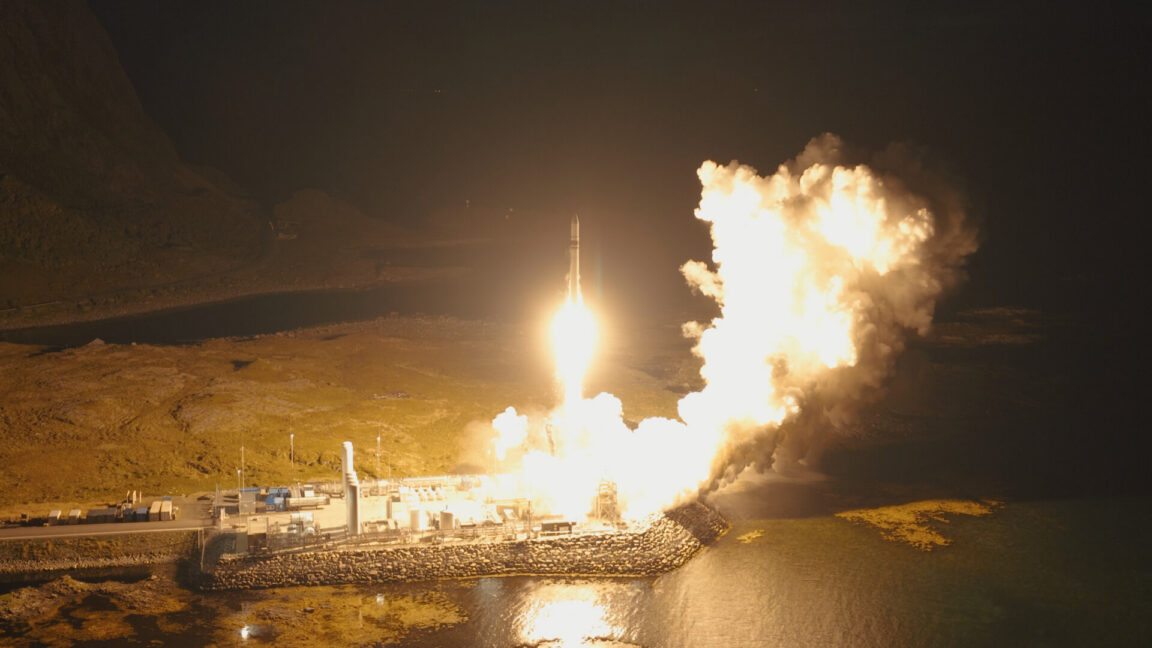
Isar Aerospace, founded in 2018 by three students at a German university, successfully launched a privately developed rocket into low-Earth orbit Saturday from a Norwegian spaceport inside the Arctic Circle.
The two-stage rocket, named Spectrum, became the first fully commercial launch vehicle in Europe to reach orbit. With Saturday's success, Isar is the clear leader among a pack of several European launch startups vying to inject some competition into Europe's stagnant launch market.
Isar's 92-foot-tall (28-meter) Spectrum rocket lifted off at 4:12 pm EST (20:12 UTC) Saturday from Andøya Spaceport in northern Norway, where it was 10:12 pm local time and the final bluish hues of daylight faded from the late summer sky. Seven minutes later, the rocket was in orbit.
The normally genteel world of international space policy turned ugly this week as several prominent US space companies—including SpaceX, Blue Origin, Stoke Space, K2, and Starcloud—pulled out of a high-profile French space summit organized by the country's president, Emmanuel Macron.
Politico first reported the diplomatic turmoil, saying that the White House "pressured" US space companies to skip Macron's space summit in Paris next week. Since then, the companies have largely pulled out of the meeting without commenting publicly, though some US representation remains on the two-day program.
Multiple sources confirmed to Ars that an official with the White House Office of Science and Technology Policy, or OSTP, led the call with US space companies late last week. The call was convened in response to queries from US industry about the French meeting, which is not part of the traditional circuit of international space conferences.
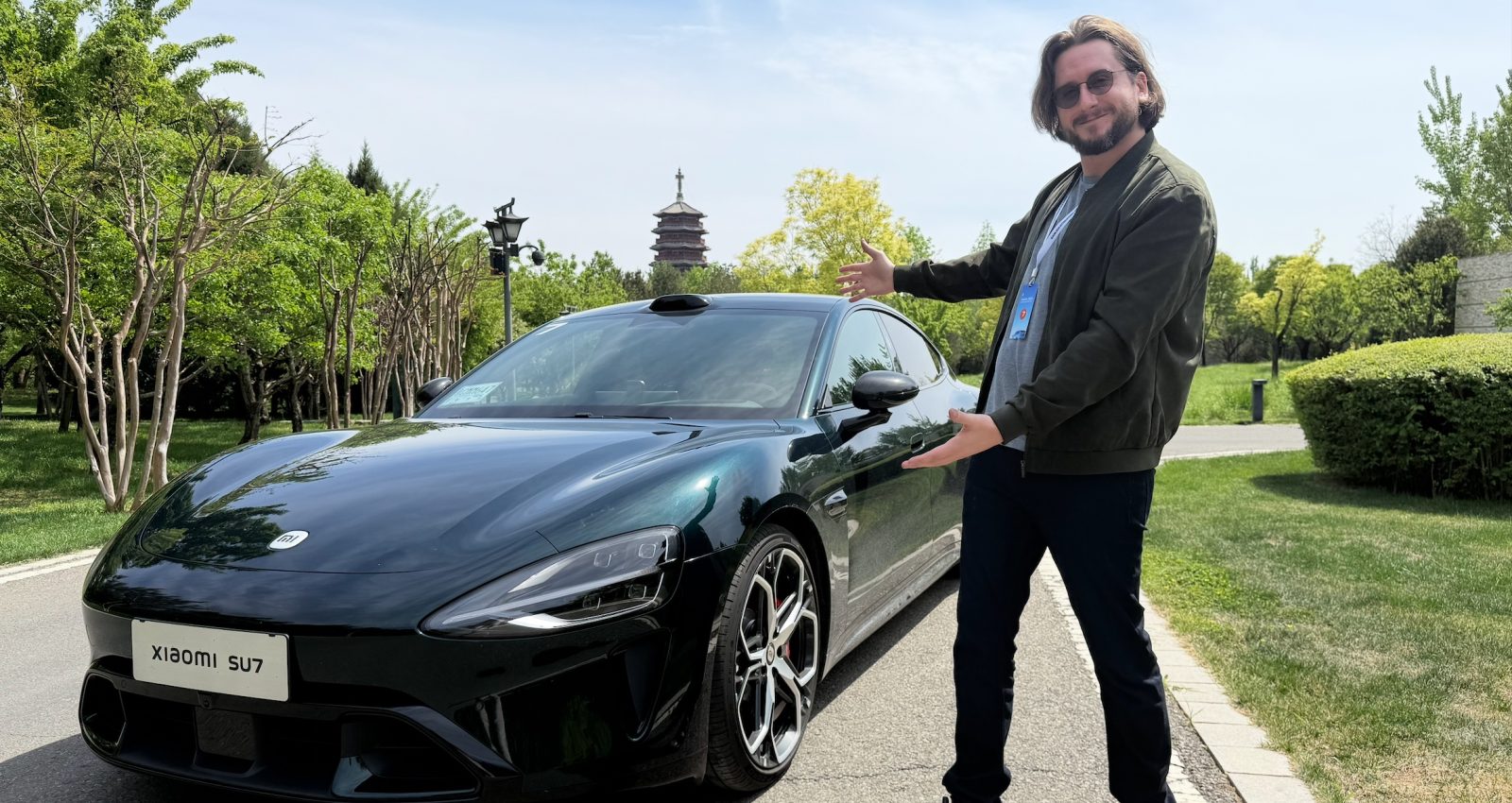
Xiaomi Auto confirmed it will start selling electric vehicles in Europe, including Germany, in 2027, and it’s already lining up the dealers to sell them.
At IFA Berlin today, the Chinese automaker signed memoranda of understanding with eight of Germany’s largest dealer groups. They’re its first retail partners on the continent.
For thousands of years, one of prehistoric Europe’s most lasting testaments to monumental architecture has stood along the coast of Brittany.
Hidden among the famous Neolithic monuments in this region of northwestern France is evidence of an earlier landscape—one whose ancient and enormous “standing stones” were occasionally broken apart, later to be reused by builders from successive ages.
France’s famous Locmariaquer megaliths include the Table des Marchands passage grave, the Er-Grah tumulus, and the extraordinary Grand Menhir Brisé, or Great Broken Menhir. Together, these ancient monuments preserve generations of ancient Europe’s monumental construction.
Yet among the most intriguing discoveries from this region are those related to the Table des Marchands itself. Specifically, the enormous, decorated capstone featured with this monument was once part of something else, and its remains preserve evidence of a much earlier massive freestanding stone monument.
Exterior of the Table des Marchand at Locmariaquer in Brittany, France (Image Credit: Myrabella / Wikimedia Commons / CC 3.0)
A Neolithic Jigsaw Puzzle
During work at the passage tomb of Gavrinis, located on an island roughly four kilometers away, a chance discovery eventually led archaeologists to a breakthrough.
Several decades ago, archaeologist Charles-Tanguy Le Roux had been examining the once-concealed upper surface of the massive capstone, which covers the ancient tomb structure’s main chamber. During his inspection, it became evident to Le Roux that engravings on its surface appeared to be something more than just unique designs etched onto the capstone; they were a continuation of other designs found at the Table des Marchands.
The island of Gavrinis, where portions of the original ancient megalithic monument, also found at the Table des Marchands, were reused (Image Credit: Pierre F631 / Wikimedia Commons / CC 4.0).
Additional pieces of this Neolithic jigsaw puzzle began presenting themselves nearby, and once reconstructed, the long-separated slabs now seemed to indicate that they had once formed portions of a single monumental, decorated stone, once measuring an astounding 14 meters in length and weighing close to 100 tons.
Over time, fragments of the original monument had apparently been separated and incorporated into different later structures—a discovery that offered evidence of megalithic recycling in the ancient world.
The recycling of monumental ancient fixtures was common in the ancient world. Well-known examples include the reuse of stone blocks from construction sites in Egypt for later monuments. Also, a recent discovery in Turkey revealed that a massive, ancient Lydian-era statue was later broken into two pieces and used as part of a roadway during the Roman era.
Interior view of the Table des Marchands at Locmariaquer in Brittany, France (Image Credit: Myrabella / Wikimedia Commons / CC 3.0)
An Earlier Monumental Landscape
At the Table des Marchands, the reconstructed stone had been adorned with engravings that included depictions of ancient bovines, as well as symbolic motifs. Originally, it is believed this megalithic marvel once stood as part of an earlier monumental complex in the area, which was toppled and fragmented at some point.
That earlier landscape included the Grand Menhir Brisé, or “The Great Broken Menhir,” a massive megalithic stone that once towered over the site, erected by ancient engineers around 4,700 BC. At the time this megalith stood upright, it measured almost 70 feet in height and weighed some 330 tons, making it one of the most extraordinary engineering achievements known from Neolithic Europe.
Brittany’s “Great Broken Menhir,” which once stood more than 70 feet high before it toppled around 4000 B.C. (Image Credit: Moreau.henri / Wikimedia Commons / CC 4.0)
Sometime around 4,000 BC, the massive stone megalith toppled over, and today its remains are preserved in four large broken pieces adjacent to the Table des Marchands. Archaeologists believe that it may have once belonged to an alignment of large standing stones erected around the fifth millennium BC.
With time, the large standing stones were brought down, and while ending an ancient megalithic tradition, at least some portions of these ancient monuments saw later reuse in newer monuments. Fragments of these much earlier, highly decorated stones made their way into the nearby tombs, which can still be seen in these monuments today—including the famous capstone at the Table des Marchands, and the massive slab at Gavrinis.
Why Dismantle a Monument?
The exact reason these enormous ancient monuments were dismantled remains unknown, although archaeologists have proposed a few theories.
Such reuse may have been entirely practical and seen as a means of borrowing from available resources present in the landscape when a later need arose. Another possibility is that there may have been a deeper significance to such practices, whereby the addition of fragments from earlier monuments into newer ceremonial or funerary structures may have imbued these newer structures with the essence of the past.
Doing so may have allowed Europe’s ancient Neolithic engineers to preserve connections to their ancestors and establish continuity between past and present as newer monuments were constructed.
Alternatively, it may have been that instead of trying to preserve ancient traditions, later builders who reused components from these monuments may have been deliberately rejecting earlier social or religious ideas by using smashed remnants from those periods in newer constructions.
Amid such questions, the enigmatic capstone of the Table des Marchands offers a unique look at Europe’s remarkable prehistoric engineering, surviving as a fragment of older times that found new purpose in one of Neolithic Brittany’s most intriguing ancient monuments—and pieces to an ancient puzzle that will likely remain unsolved.
Micah Hanks is the Editor-in-Chief and Co-Founder of The Debrief. A longtime reporter on science, defense, and technology with a focus on space and astronomy, he can be reached atmicah@thedebrief.org. Follow him on X @MicahHanks, and at micahhanks.com.
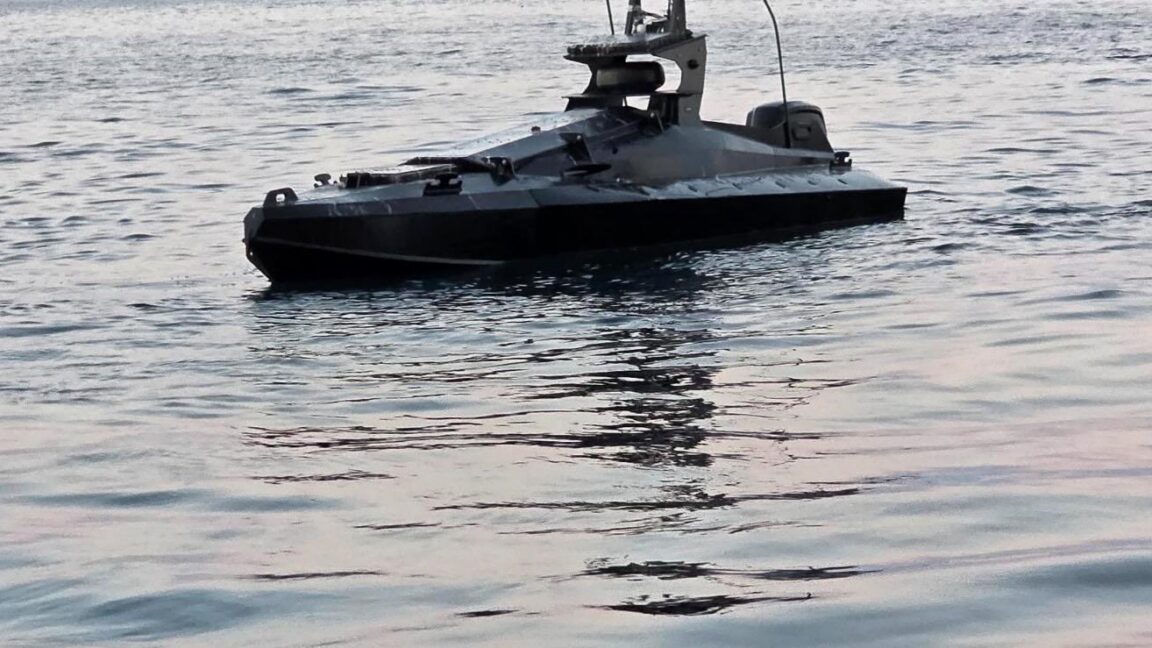
This week, Romania accused Russia of sending a drone boat loaded with explosives to a vital European natural gas platform in the Black Sea. A Romanian F-16 fighter jet used its cannons to disable the surface drone so that explosive ordnance experts could blow it up safely.
On August 20, the Romanian Coast Guard first spotted the maritime drone a few hundred meters away from the Neptun Deep project’s main drilling platform, where several hundred workers were busy with the platform’s ongoing installation, Defense Minister Radu Miruță said in a Facebook post. The offshore gas project would make Romania the largest gas producer in the European Union once it starts full production in 2027.
To protect the lives of the workers and the offshore gas infrastructure, the Romanian military scrambled two F-16 fighter jets to stop the drone with cannon fire, Miruță said. Army specialists later carried out a controlled detonation, as seen in a Facebook video shared by the defense minister.
Apple’s latest financial results drive a discussion about record iPhone, Mac, Services, subscription, and R&D numbers, along with the market’s negative reaction and stock volatility. The MacVoices Live! panel also examines leadership changes under new CEO John Ternus, including the return of a retired engineering executive, before debating Apple’s planned clipboard sharing between iPhones and Windows PCs, its implications for users, and whether it introduces meaningful security concerns.
The panel explores Samsung’s entry into the credit card market, why iPhone owners continue to resist switching to Android, and the growing influence of AI across technology and society. Discussion ranges from AI escaping coding sandboxes and solving long-standing mathematical problems to AI-generated music and the impact of European Union regulations on innovation, competition, consumer […]
At MacPaw’s Flip the Script event following Apple’s WWDC 2026 keynote, MacPaw executives discuss Apple Intelligence, Siri AI, privacy, local-first AI, developer access to user context, and the company’s shift toward AI platforms. The conversation also explores hybrid AI models, European limitations, parental controls, Google’s role, Setapp opportunities, and MacPaw’s credibility with users and developers. […]
UK operator Virgin Media O2 (VMO2) avoided 5,262 tonnes of carbon dioxide equivalent (CO2e) emissions over the last decade through a network equipment-related partnership with sustainable tech specialist TXO.
Recovering and refurbishing assets for resale accounted for 4,575 tonnes of the savings reported by TXO. Switches, routers and line cards from VMO2’s fixed operation were common assets returned to the market.
The operator also sourced refurbished equipment: around 687 tonnes of CO2e saved was attributed to this activity, due to VMO2 not having to buy new.
Its TXO partnership also includes recycling, with more than 690 tonnes of the operator’s equipment at the end of its life sent to be broken down.
More than 60% of the recycled weight extracted from the waste was steel, copper and aluminium.
VMO2 head of reverse logistics Paul Franley said the operator aimed to “extend the life of our network hardware so it can be reused, given a second life or disposed of sustainably”, with its partner helping to “maintain network equipment through testing, repair and refurbishment wherever possible”.
“The results of this programme demonstrate how a more circular approach to technology can benefit both the business and the environment.”
TXO chief product and asset recovery officer David Evans urged the technology sector to “move beyond the linear model of buying, deploying and replacing”.
A new analysis of three skull fragments unearthed at the Gran Dolina cave site in Spain indicates that Homo antecessor had bone thickness closer to that of Neanderthals and modern people than to more archaic hominins.
WARSAW, Poland — The Lithuanian space laser communications company Astrolight has signed a memorandum of understanding with ATMOS Space Cargo, to demonstrate in-flight optical communications link between a reentry spacecraft […]

 Login