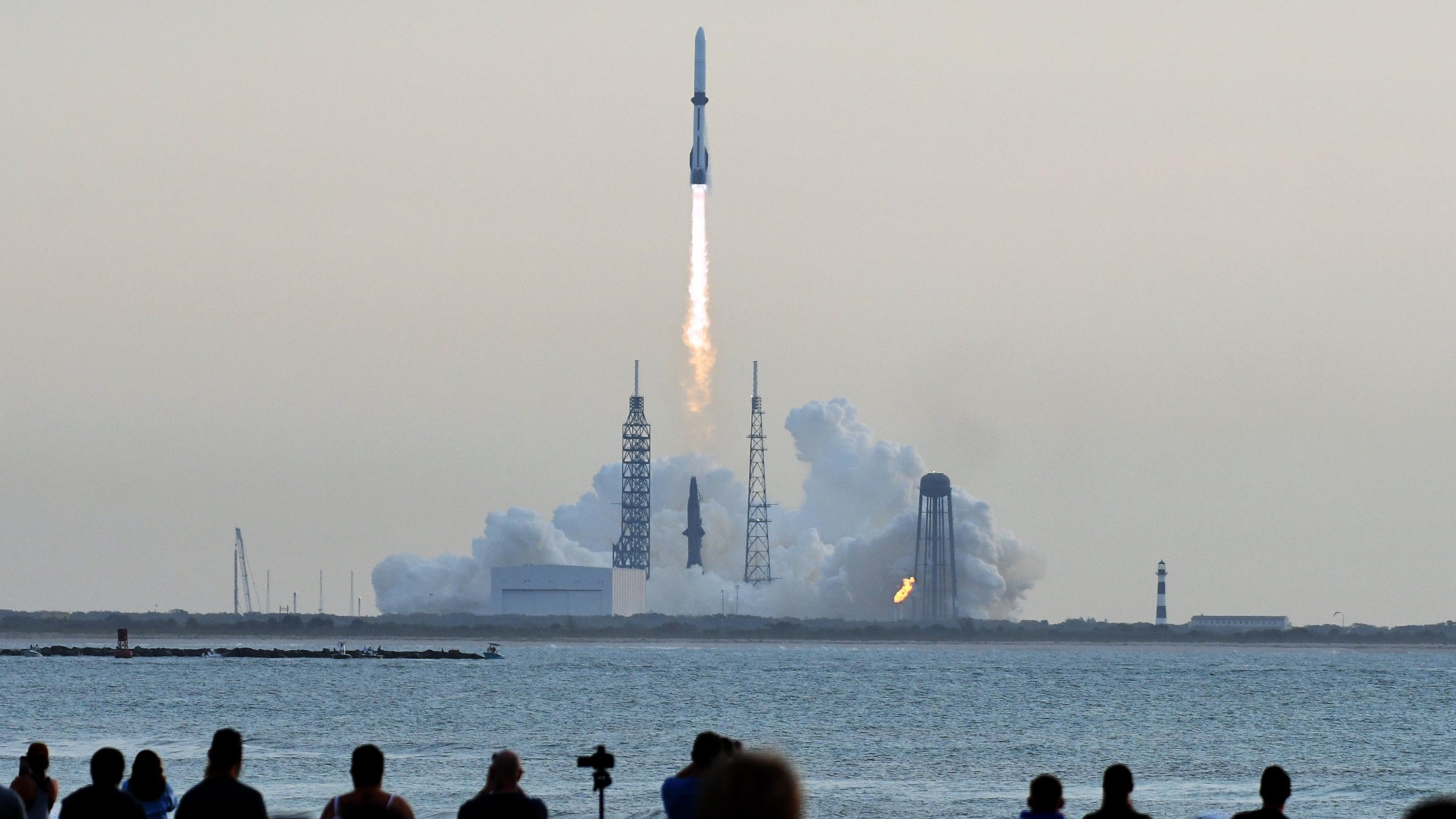
United States Space Command just held its first-ever "Apollo Maneuvers" exercise, which saw spacecraft maneuvering through simulated contested environments.
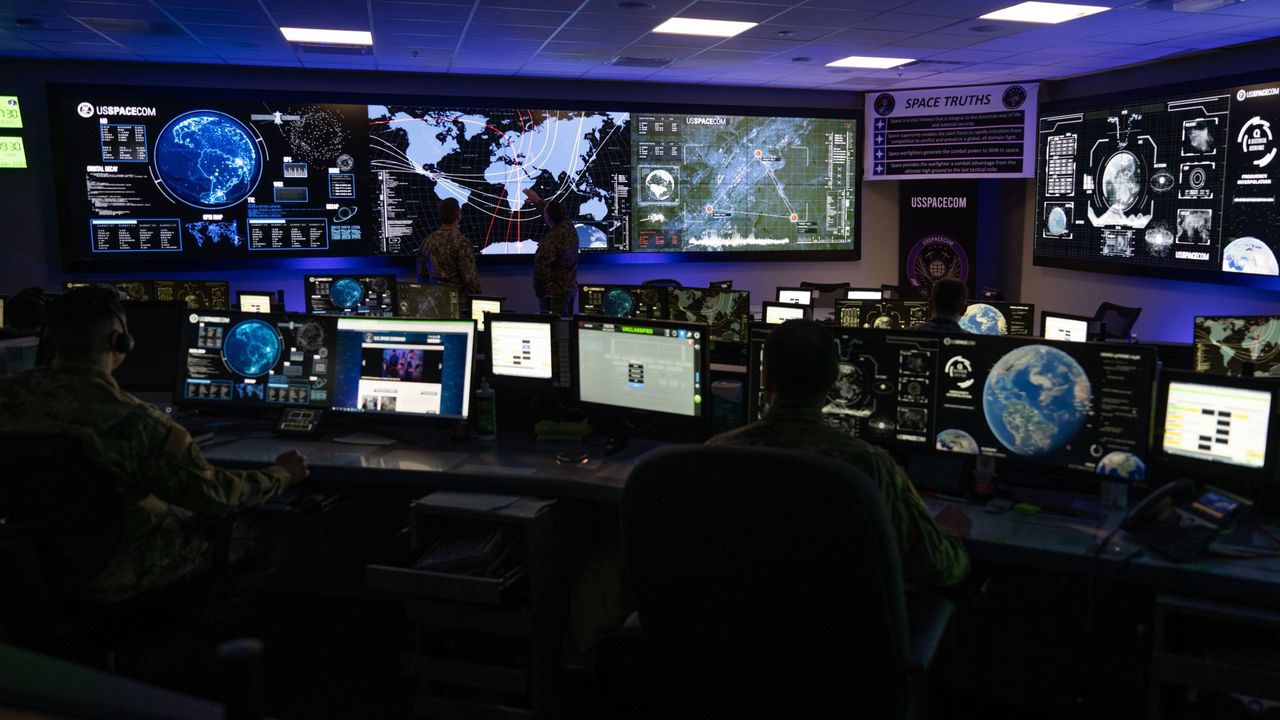
U.S. Space Command combines assets and personnel from each U.S. military branch (including the U.S. Space Force) to project American military power into and from orbit. It's unclear which or how many satellites or spacecraft took place in Space Command's recent Apollo Maneuvers 2026, but the exercise involved international partners, according to a command statement. What is known is that the exercise aimed to demonstrate "dynamic on-orbit operations, validate contested logistics and advance collective space maneuver doctrine."
To put it in plain English, this means that Space Command practiced maneuvering satellites and other spacecraft in proximity to one another in a simulated conflict environment, in order to continue refining the "orbital dogfighting" that the U.S. military has been hinting at for some years.
In military terms, dogfighting refers to the close aerial combat that fighter jets engage in, pitting two or more pilots against one another in contests of flying ability and firepower.
In terms of space, this involves "objects in space maneuvering in and out and around each other in synchronicity, and in control," according to Space Force's Vice Chief of Space Operations Gen. Michael A. Guetlein.
“That's what we call dogfighting in space," Guetlein told attendees at a conference in 2025, according to Air & Space Forces, while speaking about Chinese satellite operations observed in 2024.
From statements that U.S. Space Command leadership gave about its recent exercise, it sounds like Apollo Maneuvers practiced just that, but in space.
"We will take some of our existing satellites and work with partners to demonstrate what are some of the requirements and capabilities to be able to maneuver for advantage, not just maneuver when you have to change your orbital position," Space Force Gen. Stephen N. Whiting, commander of U.S. Space Command, told reporters last month during a briefing at Redstone Arsenal in Alabama, according to Air & Space Forces.
"The side that can maneuver persistently and at scale will set the operational rhythm in orbit."
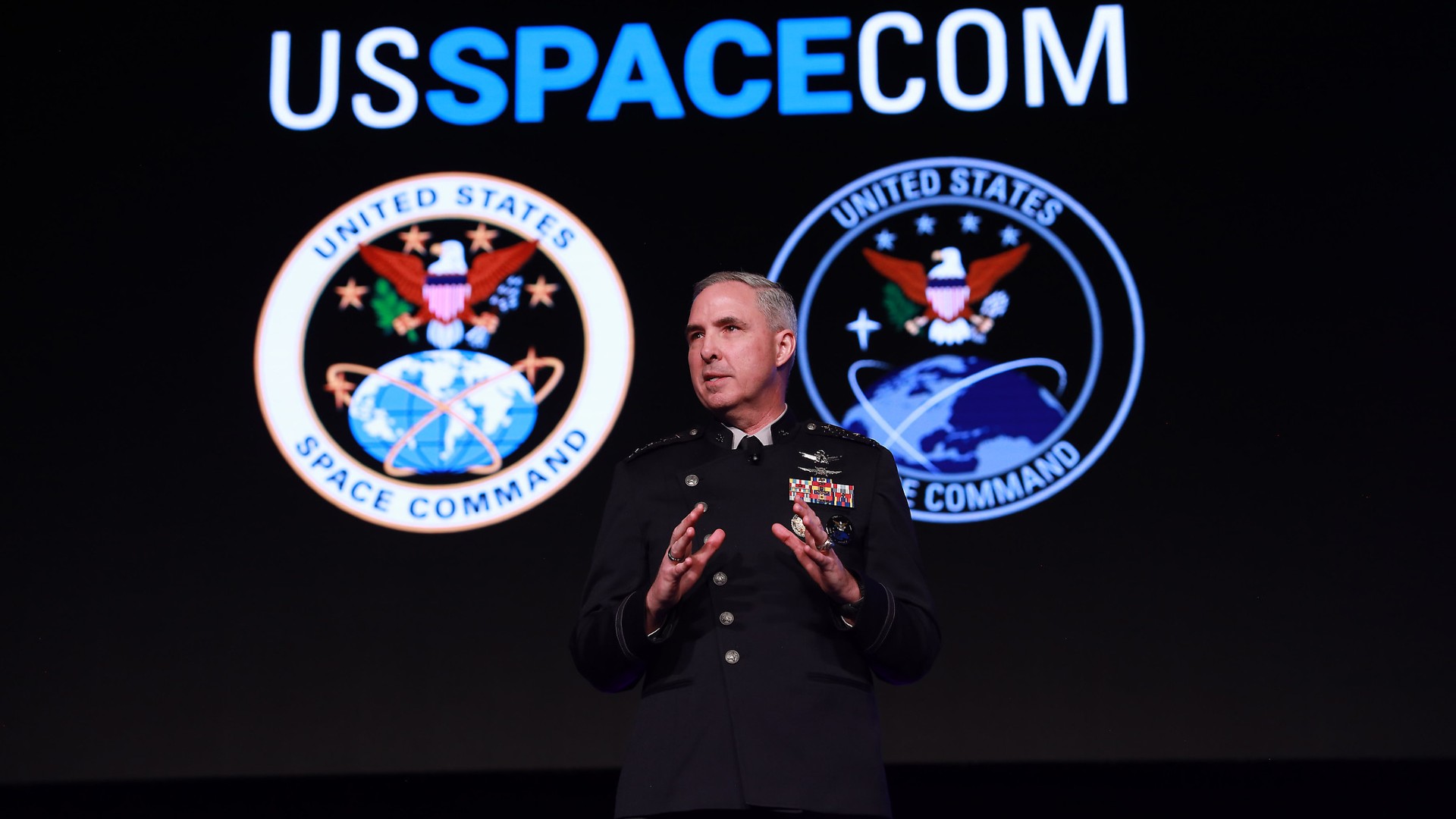
Space Force Gen. Stephen N. Whiting, commander of U.S. Space Command, delivers a keynote address at the Space Foundation's 40th annual Space Symposium in Colorado Springs, Colorado on April 8, 2025. (Image credit: Space Foundation)
When it comes to space and what appears to be the inevitability of a conflict extending to Earth orbit, we're still not quite sure what that will look like. But several nations have been developing capabilities and concepts for maneuvering satellites in close proximity to other satellites with the intent to destroy or disable them, or to deny or degrade their communications or intelligence-gathering capabilities.
But Space Force and U.S. Space Command still appear to lack many of the technologies they say they need to wage such warfare. Speaking at the Space Foundation's Space Symposium in 2025, Whiting stated that that the United States needs "orbital interceptors" to fight in space.
"And what do we call these?" Whiting rhetorically asked attendees. "We call these weapons, and we need them to deter a space conflict and to be successful if we end up in such a fight."
But U.S. Space Force has ordered and executed recent missions that have demonstrated capabilities and technologies along the lines of what Whiting described.
In June 2026, for example, a Rocket Lab Electron rocket sent one of the company's Puma satellites to orbit, where it rendezvoused with a True Anomaly Jackal spacecraft that launched a month earlier. Once both spacecraft were in orbit, they maneuvered close to one another to simulate "dynamic engagements."
The mission showed Space Force's "readiness to lean on our commercial partners to deny, disrupt and counter any adversarial advantage — no matter where they try to operate in space," according to a Space Force statement.
Senegalese engineers in hairnets and white gloves are carefully assembling a nanosatellite at a French lab—another step toward fostering their own space industry back home.
On Sept. 9, 1982, the first private rocket launched from a Texas cattle ranch.
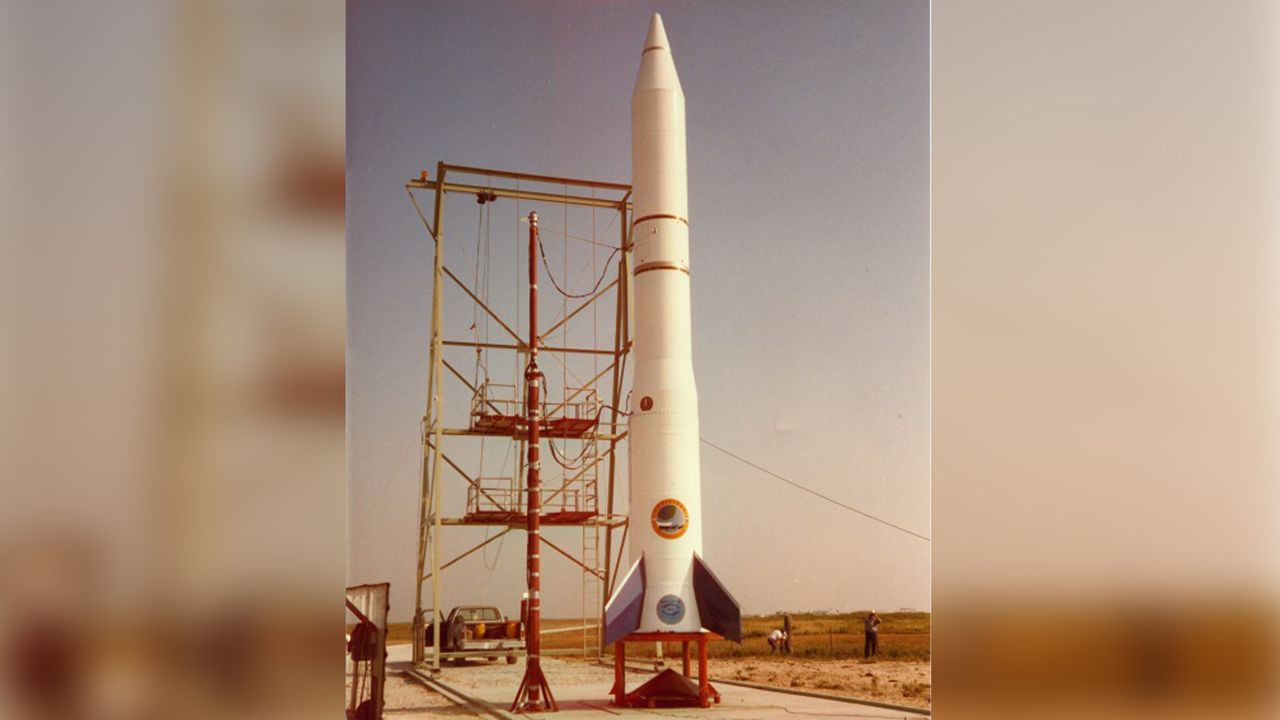
The Conestoga 1 rocket was designed by Space Services Inc. of America (SSIA) and built from spare parts of other rockets. It was named after a type of covered wagon that used to transport American settlers westward to the new frontier during the 19th century.
The 36-foot rocket lifted off from a private launch facility on Matagorda Island, Texas and flew for 10-and-a-half minutes. It reached an altitude of 195 miles and became the first privately funded rocket to reach space.
The only payload on board was 40 gallons of water, which didn't serve much scientific purpose, but it was ejected from the spacecraft at peak altitude to serve as a visual marker so ground crews could watch.
The private Conestoga 1 rocket sits atop its launchpad at Matagorda Island, Texas ahead of its historic Sept. 9, 1982 launch. It was the first privately developed rocket to fly. (Image credit: Space Services Inc.)
Why it mattered
Private rocket launches may seem routine today (SpaceX alone launches hundreds each year), spaceflight in 1982 was primarily the purview of government agencies like NASA, the U.S. military and other national agencies.
That changed with the launch of Conestoga 1 by SSIA. The company, led at the time by legendary Mercury 7 and Apollo-Soyuz astronaut Deke Slayton, and entreneurs Charles Chafer and David Hannah, Jr., was based in Houston and raised $6 million from 57 supporters to develop their rocket, according to Wired. The company initially tried to launch a different type of rocket, called Percheron, in 1981, but it exploded on the pad, according to an account by Inc. magazine.
SSIA found success three years later with Conestoga 1, a solid-fueled rocket based on an old Minuteman missile second stage (which Wired said SSIA bought from NASA for $365,000). It launched on its suborbital mission from Matagordo Island, Texas, which is about 170 miles (274 km) north of what is now Starbase, Texas, home to SpaceX's Starship megarocket launches.
SSIA would go on to launch another suborbital sounding rocket carrying science experiments in 1989. The company attempted to launch a larger Conestoga rocket (Conestoga 1620), which included additional strap-on boosters, in October 1995 from NASA's Wallops Flight Facility on Wallops Island, Virginia, but it failed 46 seconds after liftoff, according to NASA.
Today, SSIA's subsidiary Celestis, a space funeral company, now offers memorial flights by arranging to fly human cremains into space on commercial spaceflights. (SpaceX's Falcon 9 rockets have carried some such payloads. Another branch offers informal star naming services.
But the legacy of Conestega 1 lives on today in a robust commercial space launch industry that has seen a number of private companies enter the space marketplace. SpaceX, Blue Origin, Virgin Galactic and Scaled Composites have even built and flown private astronauts on suborbital (and orbital in SpaceX's case) missions. SpaceX, meanwhile, has built and launched the largest private rocket on Earth, the Starship and Super Heavy booster. It stands over 400 feet tall, is more powerful than NASA's mighty Saturn V moon rocket, and is designed to be fully reusable to allow missions to Earth orbit, the moon and Mars.
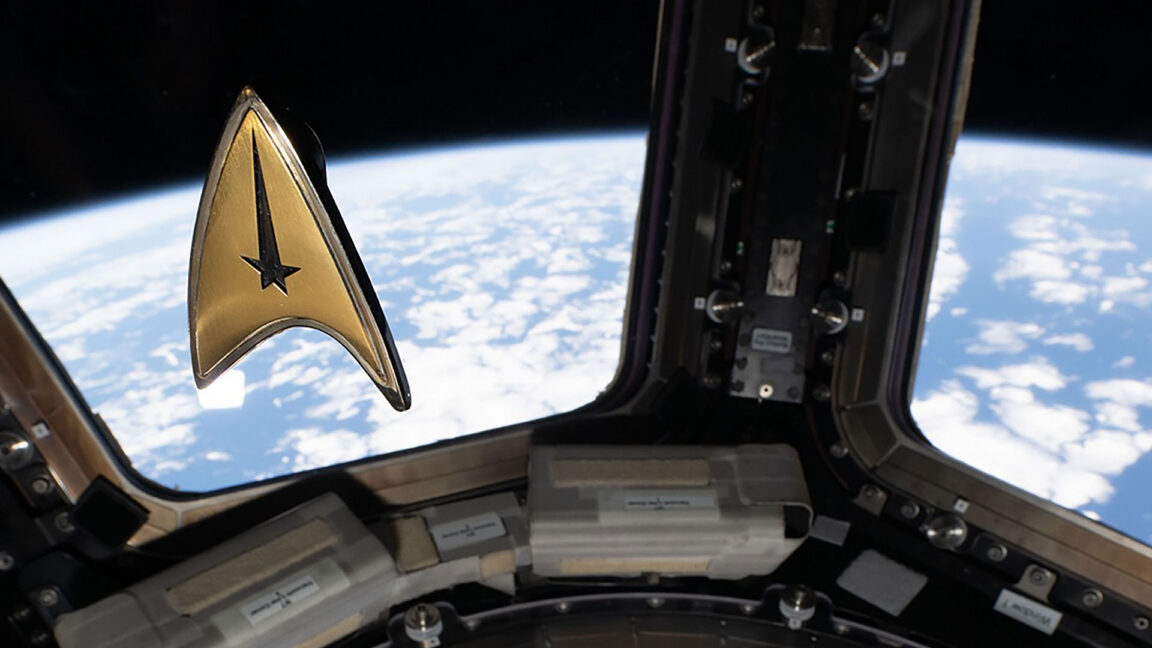
Sixty years after television audiences first tuned in to see the voyages of the Starship Enterprise, an astronaut on board the International Space Station has paid tribute to Star Trek by flying the badge of the franchise's latest fictional captain.
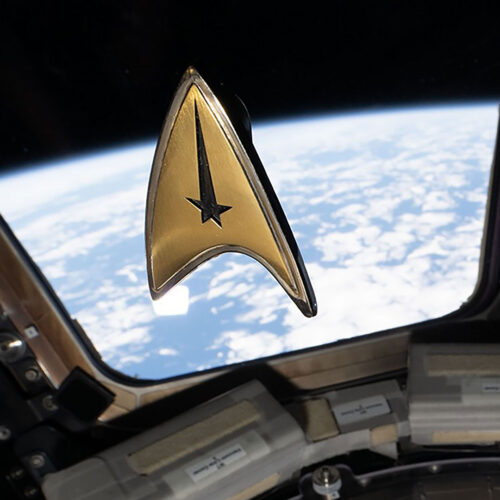
Expedition 75 flight engineer Sophie Adenot with European Space Agency (ESA) donned the Delta badge originally worn by actor Anson Mount for a video recorded from aboard the space station. Mount portrays Christoper Pike in the Paramount+ streaming series Star Trek: Strange New Worlds. Paramount and ESA both released the clip on their Instagram feeds.
"For 60 years, Star Trek has brought us stories of friendship and exploration. I'm wearing Captain Pike's badge aboard the ISS in celebration of continuing the real world work of science and exploration," said Adenot. "For me, exploration and science are about curiosity and cooperation daring to go a little farther together, learning from what we discover and build, and turning that knowledge into a better future for everyone."
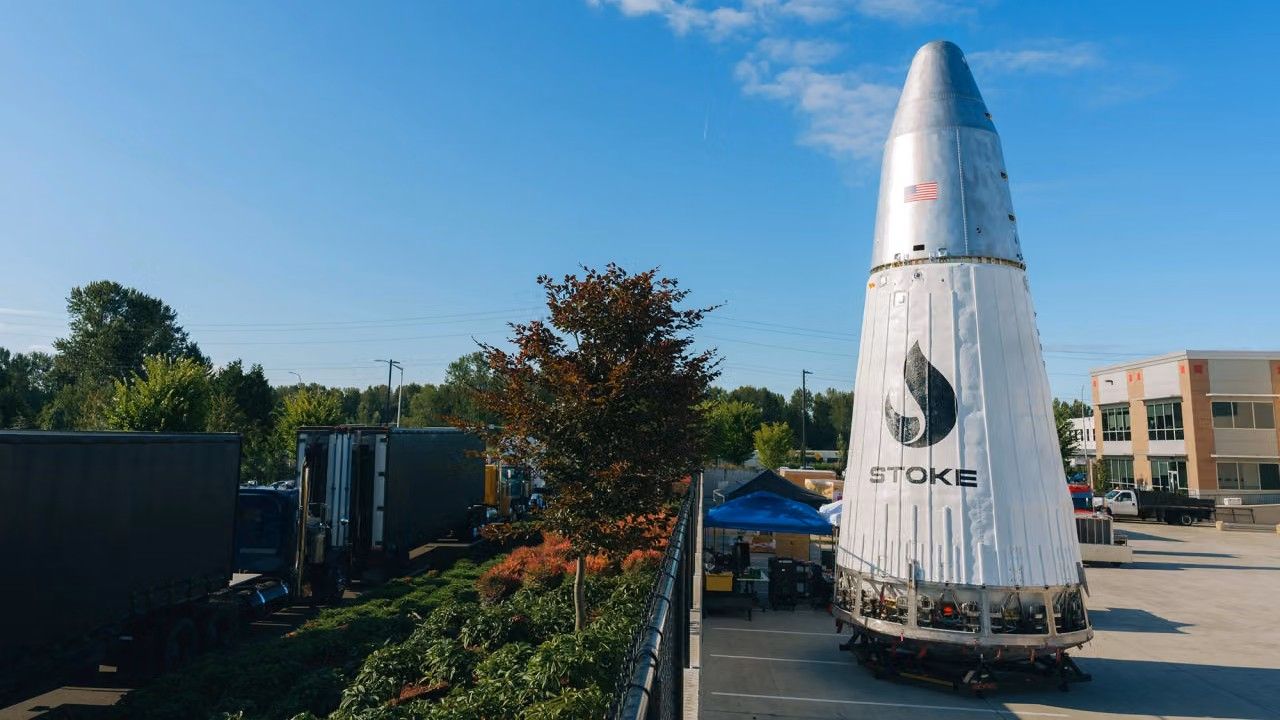
Stoke Space has amassed a substantial sum during its latest round of financing and is revealing exactly where it plans to invest its new stack of cash.
The Kent, Washington-based company just raised $1 billion via its"Series E" capital campaign, bringing Stoke’s total investor haul to $2.3 billion. The Sept. 8 announcement provided a development update for Stoke’s fully reusable Nova Pathfinder launch vehicle and included plans for its never-before-seen Nova Block 2 rocket, a more powerful system designed to be able to deliver up to 15 tons to low Earth orbit (LEO).
“We are humbled by the trust our investors and customers have placed in us in pursuit of this critical generational challenge,” said Andy Lapsa, Stoke CEO and co-founder. “This investment enables us to scale toward delivering the capability and cadence our customers require.”
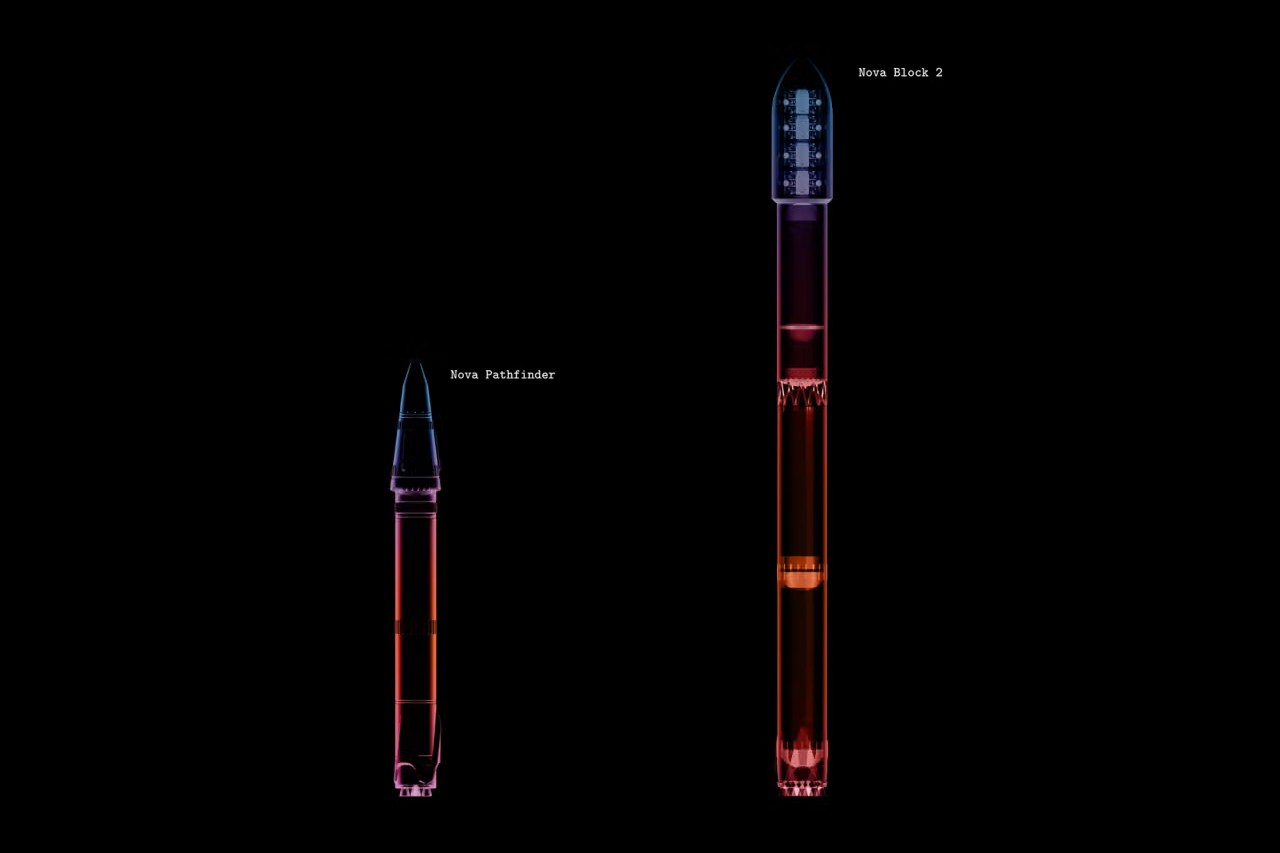
Nova Pathfinder is Stoke’s first orbital launch vehicle (the largest first rocket ever undertaken by a U.S. launch company, according to Stoke), and is based on the same technologies the company is building into its Block 2 design. Both two-stage vehicles are being manufactured with full and rapid reusability in mind, with Pathfinder serving as the proving ground for that architecture.
Pathfinder's first stage is powered by seven Stoke-designed full-flow, staged-combustion (FFSC) Zenith rocket engines, fueled by liquid oxygen and liquefied natural gas (LNG). The first stage on Nova Block 2 will be equipped with 14 Zeniths. Stoke calls FFSC “perhaps the most difficult rocket engine cycle to develop,” but highlights its advantages; the tech leaves fewer residuals like soot around the engines and reduces the amount of maintenance needed between flights, according to the company.
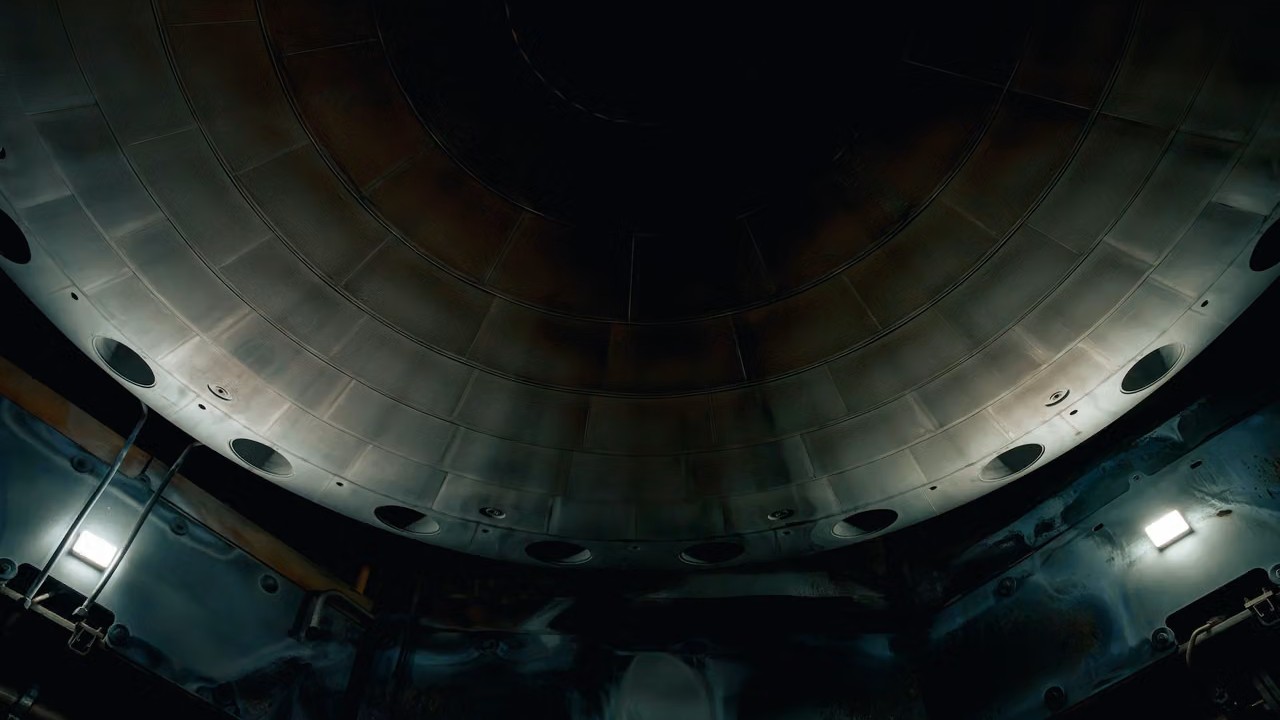
The upper stage of both rockets is the more atypical approach to spacecraft design, compared to other vehicles of the same launch class. The aft end of Nova’s second stage is designed with a heat shield to protect the vehicle during reentry through Earth’s atmosphere. Instead of the ceramic tiles historically used on the heat shields of previous spacecraft, the dome-like structure at the base of Nova’s upper stage is made of metal, which is actively cooled by the liquid hydrogen that fuels the stage’s Andromeda propulsion system.
Rather than a single large, vacuum-optimized engine bell at its center, Nova’s upper stage features 12 small dual-thrust chambers integrated into a circle around the outer edges of the vehicle’s heat shield. Stoke successfully completed a “hopper” test flight of Pathfinder’s upper stage engine system in 2023, flying the vehicle about 30 feet (10 meters) into the air before it safely touched down.
Andromeda upper stage engine and integral re-entry heat shield. (Image credit: Stoke Space)
Scaling up to Block 2, Stoke plans to equip the upper-stage system with independent systems for each of the 12 engines, potentially increasing thrust by over a factor of five, according to the company. Block 2’s upper stage also drops Pathfinder’s tapered design in favor of cylindrical tanks, increasing propellant and payload volume to accommodate a 5-meter-wide (16.4 feet) fairing.
Stoke says the larger Block 2 configuration has been in the works alongside Pathfinder for several years. The company is developing the more powerful rocket to support large commercial and national security satellite constellations, of which there soon may be a high demand.
Nova Block 2’s closest competitors are SpaceX’s Falcon 9 rocket and Rocket Lab’s upcoming Neutron launch vehicle, which is still under development. And Falcon 9 is already being sundowned by SpaceX as the company gets closer to operational flights with its next-generation Starship rocket. While certain Falcon 9 flights for NASA, like crew launches to the International Space Station, are expected to continue until at least 2030, SpaceX CEO Elon Musk has said that Starship’s ultimate success “means winding down Falcon.” The timing should line up with when Stoke hopes to step in with Nova Block 2. Block 2’s first launch is targeted for 2029, with production and flight cadence expected to increase from there.
Nova Pathfinder next to Nova Block 2. (Image credit: Stoke Space)
As Stoke ramps up development for its upgraded launch vehicle, the company’s fresh round of funding will also go toward construction of the physical infrastructure Stoke needs to build, test and eventually operate both vehicles. The company is planning a 475-acre (192 hectares) expansion to its 75-acre (30 hectares) Moses Lake Test Site in Washington to support propulsion and vehicle testing as Pathfinder nears its first launch and Block 2 hardware begins coming online.
Stoke is also expanding its operations at Cape Canaveral Space Force Station (CCSFS) in Florida. The company was selected by the U.S. Space Force in 2023 to manage CCSFS’s Space Launch Complex-14, where it’s now building a new payload processing facility sized to accommodate both vehicles. And to complete its full reusability system, the company is also developing an offshore recovery platform.
Pathfinder has a much shorter timeline to the launch pad. Stoke is targeting early 2027 for Pathfinder’s debut launch, which the company plans to send to orbit with a customer payload. If that’s successful, Stoke hopes to fly multiple Pathfinder missions throughout 2027 and 2028 while Block 2 development and testing continue in parallel.
Once Block 2 does reach the launch pad, Stoke plans to keep Pathfinder in service. “We see value in having more than one way to serve the market, since some missions are particularly well suited to the Pathfinder configuration,” the company said.
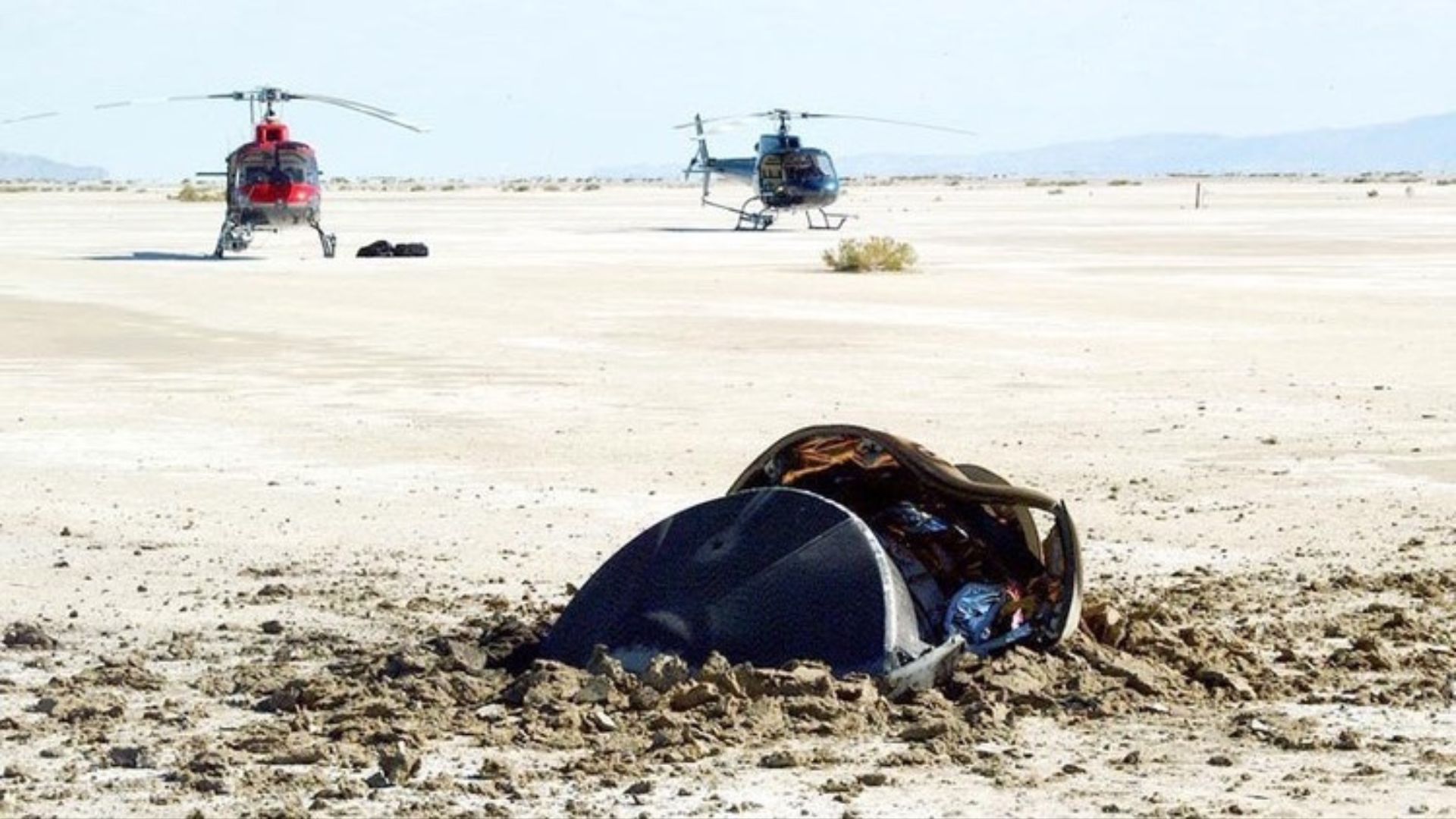
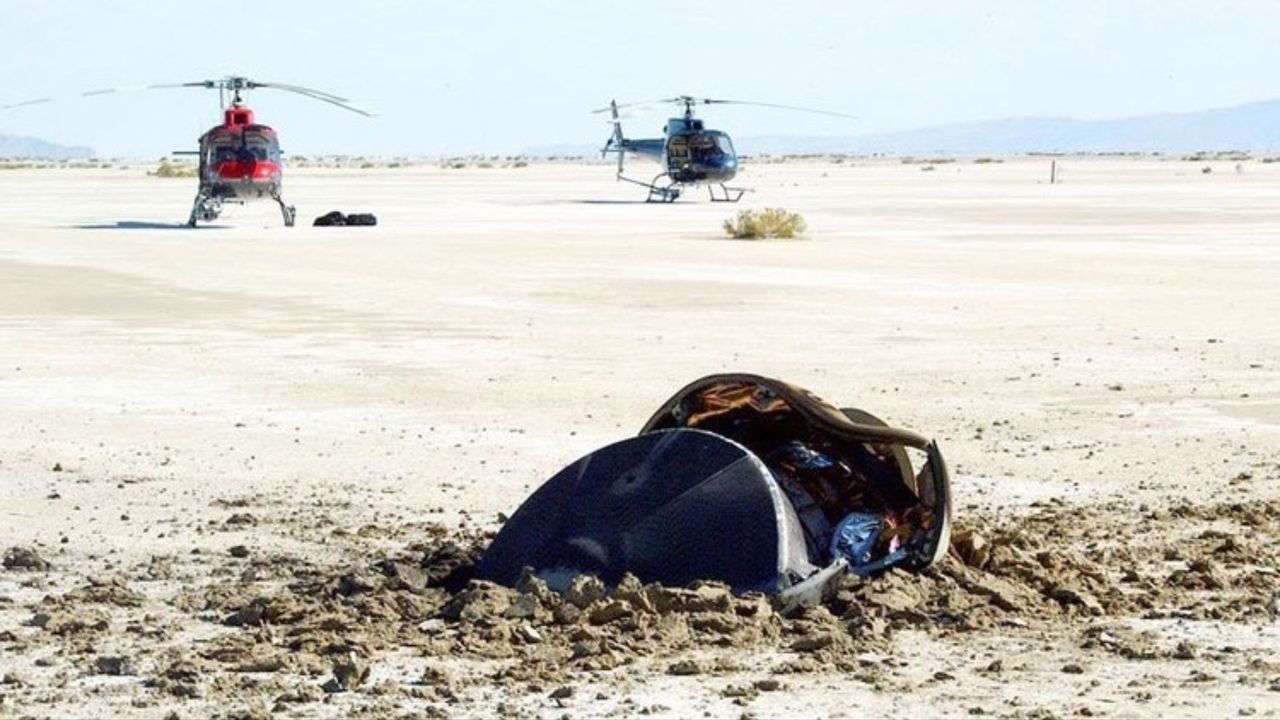
On Sept. 8, 2004, NASA's Genesis spacecraft crash-landed in Utah after its parachutes failed to deploy.
Genesis was NASA's first sample-return mission since the Apollo program, and the first attempt ever to bring back samples from someplace farther than the moon. The spacecraft picked up solar wind particles while orbiting the L1 Lagrange point, which is about 1 million miles from Earth. L1 is a "sweet spot" between the Earth and the sun, where the gravitational pull from both objects balances out.
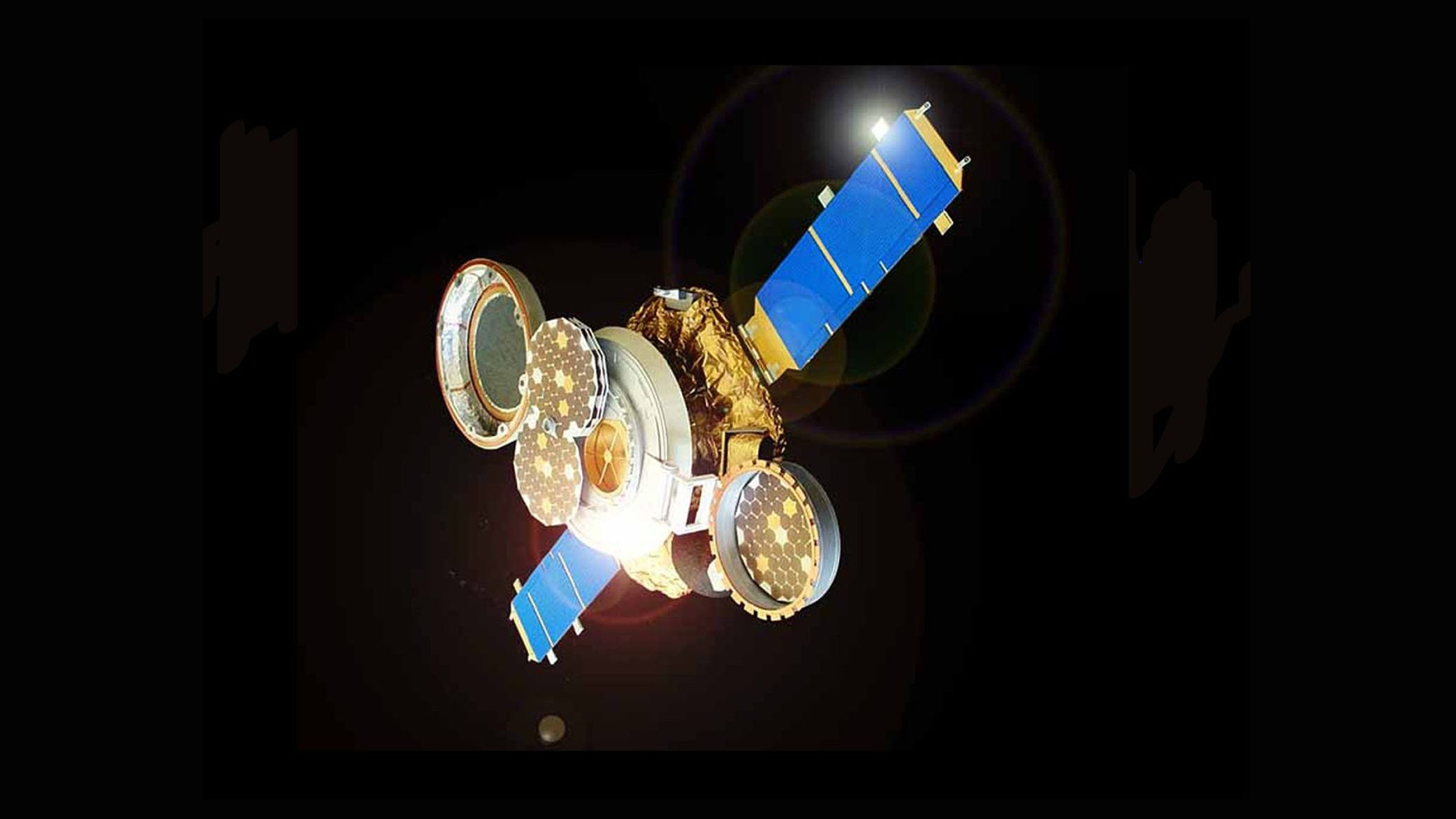
Genesis collected samples of the solar wind using arrays made of ultrathin semiconductors called "wafers." Atoms and ions floating around in space stuck to these wafers, and Genesis was supposed to bring them back safely. But that didn't happen, because its parachute didn't work.
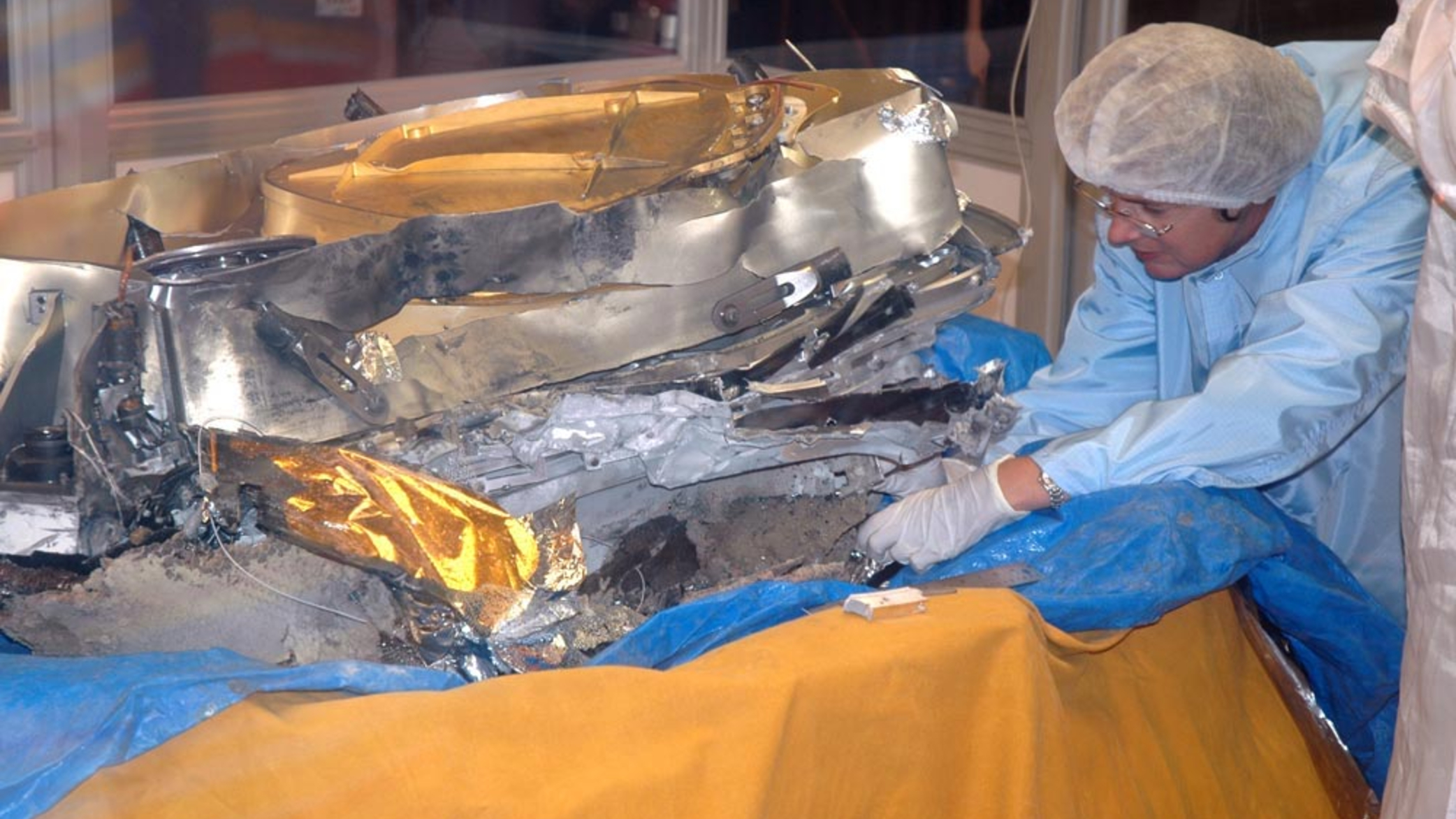
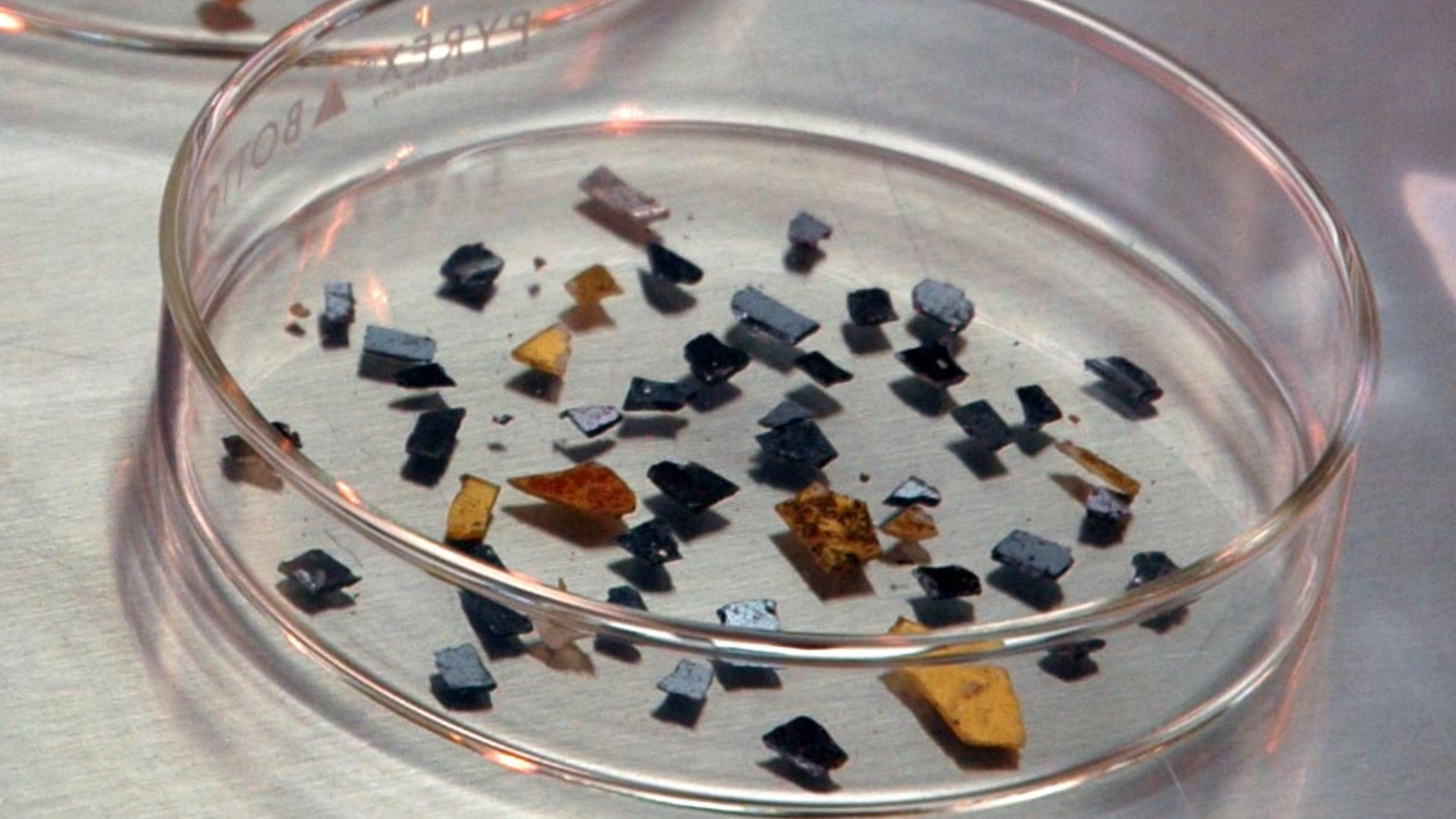
Instead, Genesis tumbled from the sky and slammed into the Utah desert. Scientists literally had to pick up the pieces after the wafers containing the solar wind samples shattered into thousands of tiny shards. Luckily, scientists were still able to salvage some of the samples.
NASA's Genesis solar wind sample return capsule, seen here half-buried in the Utah desert floor, crashed due to a design flaw on Sept. 8, 2004. (Image credit: USAF 388th Range Squadron)
Why it mattered
NASA's Genesis probe launched in August 2001 on a $264 million mission to collect samples of the solar wind. It was the first time NASA tried a sample-return mission since Apollo 17 in 1972 (which was a crewed flight), and this trip would be fully robotic.
A scientist in protective gear trying to secure solar wind samples from crashed Genesis spacecraft.NASAFragments of NASA's shattered Genesis sample cansiter with solar wind samples.NASAThis artist's concept shows what the Genesis spacecraft looked like in space with its fragile sample return wafers exposed to collect solar wind samples.NASA
But a design flaw in the parachute system, and a fairly basic one at that, doomed the Genesis spacecraft. Four gravity switches in the sample-return canister were installed backwards due to an error in the design schematics. It affected both the primary and backup parachute systems.
The switches were supposed to detect when Genesis began braking in Earth's atmosphere and trigger parachute deployment. That never happened, so the probe crashed into Earth instead.
Speaking of things flying through space. There was another event that occurred on this day in 1966 that - while not actually being in space - has influenced our concept of spaceflight for a decade.
On Sept. 8, 1966, the first episode of "Star Trek" debuted on television. The iconic science fiction series, which has spawned a myriad of spin-offs and feature films (not to mention all the merch), has inspired countless engineers, scientists and space fans over six decades.
A team of researchers just chased a pair of reentering satellites in a private jet to learn about the pollution caused by space debris burning up in Earth's atmosphere.
The satellites in question were the European Space Agency's (ESA) Tango and Samba spacecraft, which once formed the Cluster constellation, together with the already de-orbited Rumba and Salsa. The quartet used to study the interaction of Earth's magnetic field with the solar wind. After 25 years of service, ESA took advantage of the Tango and Samba's controlled demise to help scientists learn what happens when satellites break apart and burn up during their spiral back to Earth.
The international team of researchers chased the two reentries, which occurred one day apart — on Aug. 31 and Sept. 1 — above the southern Pacific Ocean a few hundred miles from the Polynesian archipelago of Tonga.
Their goal was to understand what happens when satellites disintegrate and what chemical compounds arise in the process. Although companies such as SpaceX, Amazon and Blue Origin want to launch huge numbers of satellites to space in the next decade — SpaceX alone plans to loft 100,000 of its Starlink V3 spacecraft — very little is known about the effects of satellite reentries on Earth's atmosphere. Researchers are also still unsure which spacecraft burn up completely and how many fragments may reach the ground, putting lives and property at risk.
"We want to understand what happens to these bodies as they fly through the atmosphere, which causes friction and very high temperatures," Jiří Šilha, CEO of the Slovak company Astros Solutions, and one of the researchers aboard the plane, told Space.com. "We know that those satellites break up into fragments, which subsequently melt in the atmosphere."
The researchers chased the reentering spacecraft following exact calculations provided by ESA controllers, who were able to maintain connection with the spacecraft until the very last moment before they plunged into the atmosphere.
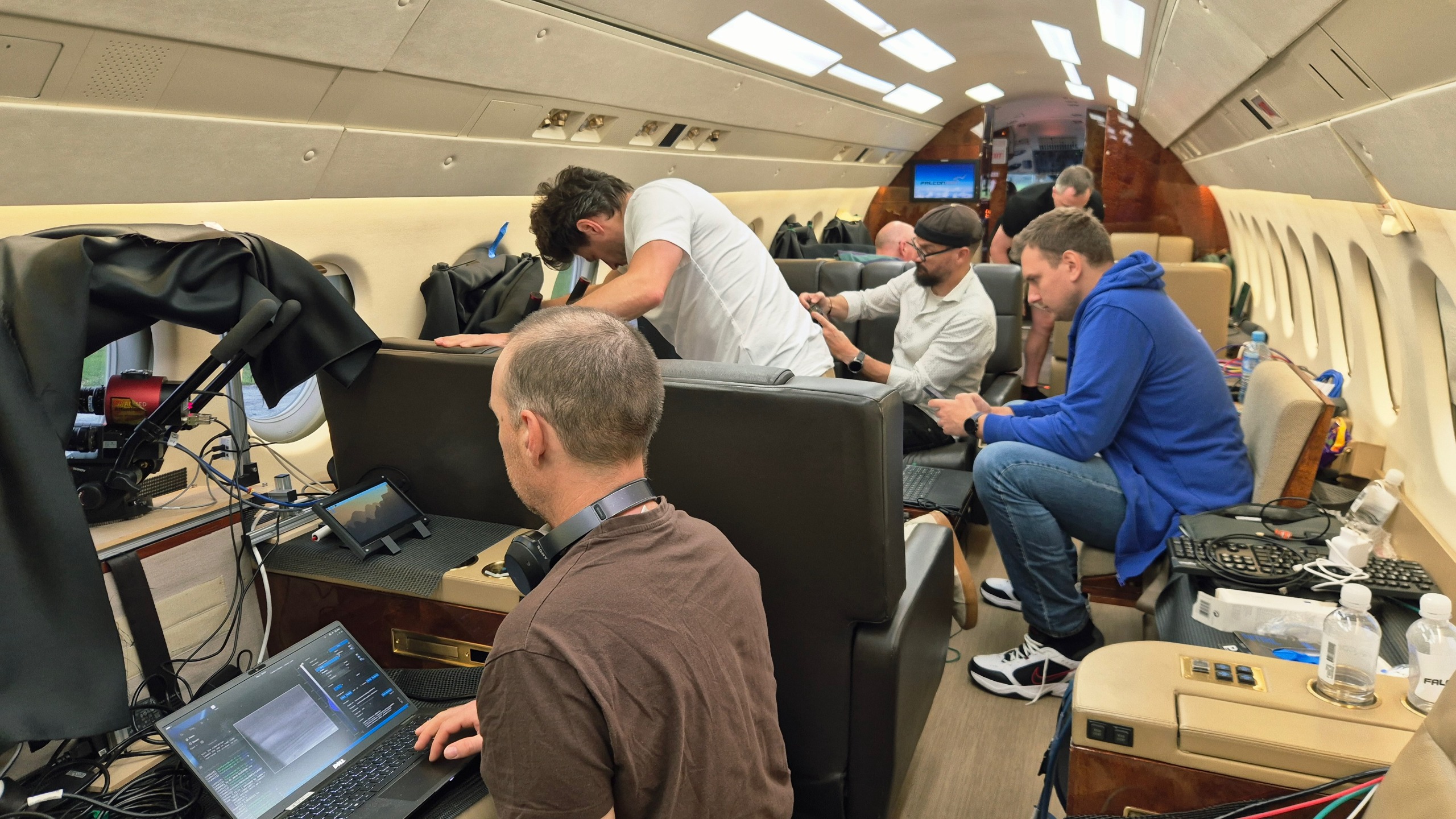
Researchers inside a private jet during a campaign observing the reentry of ESA's Cluster Tango satellite on Sept. 1, 2026. (Image credit: Jiří Šilha)
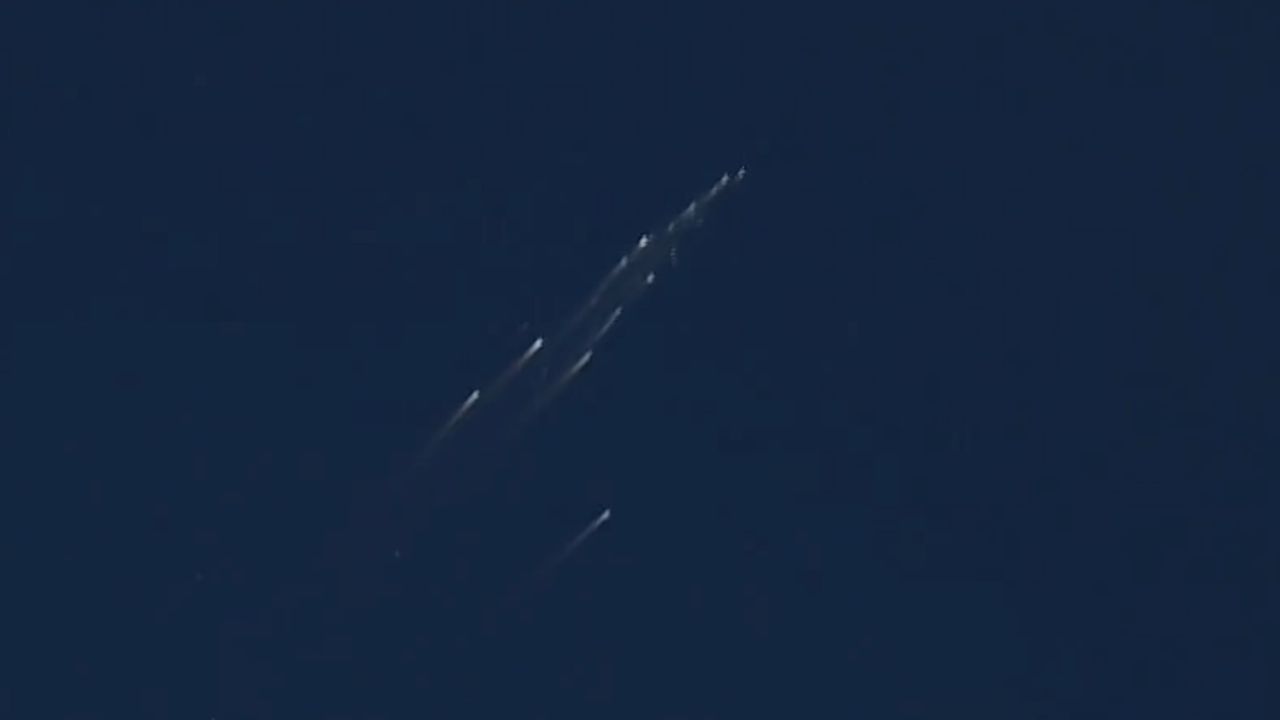
The satellite reentries, although they occurred during daylight, were visible from aboard the plane even to the naked eye, said Šilha, and created spectacular fireballs that lasted tens of seconds.
"Bolides and meteors only last a few seconds or less," said Šilha. "But satellites are slower. They enter the atmosphere at a shallower angle, and the atmosphere slows them down further."
But the researchers were there for science, not for a sky show. And it was a rare opportunity: The Cluster trajectories were so precisely known that the scientists could prepare for them and be at the exact spot at the exact time to witness those explosions from only a couple of hundred miles away.
The aircraft, a small commercial business jet, was packed with 30 cameras and spectrometers fitted with special filters to capture not only how the satellites disintegrated but also detect the spectral signatures of the chemical elements released as their bodies burned up.
Eight scientists were squashed on board the darkened jet operating the instruments through the aircraft's six windows as the pilots navigated to the vicinity of the spot where ESA analysts had predicted the breakup would occur.
"We were flying toward the object, and first it looked like a compact source of light as the material ablated," said Šilha. "At some point, there was a sudden explosion as the satellite disintegrated."
The plane allowed the researchers to overcome any clouds that could obscure the view from the ground, and also to bypass the thickest layer of the atmosphere, which would distort the measurements. As the satellites hurtled through the air, slowing down from the mind-boggling speed of 22,370 mph (36,000 kph) at which they hit the upper atmosphere, the jet approached them to within a distance of around 75 miles (120 kilometers).
"We begin observing it when it's at about 90 kilometers [56 miles] and it stops being visible at about 65 to 70 kilometers [40 to 44 miles]," Šilha said. "For about thirty to forty seconds after the explosion, you can observe an interesting structure as all those various fragments ablate in the atmosphere. Then they all either burn up or slow down."
Šilha said the cameras captured tens of fragments, in detail that had never been observed before.
The researchers also attempted to trace seven chemical compounds, including titanium, sodium and potassium, which get released as satellites burn up. The team was especially interested in aluminum, which makes up the majority of a satellite body. Aluminum is not naturally present in Earth's atmosphere and most likely forms aluminum oxide during the incineration. The potential presence of aluminum oxide in the atmosphere in higher concentrations worries scientists, as it could potentially trigger ozone depletion in the stratosphere.
"We tried to measure the aluminum at different altitudes, using specialized filters, which could tell us when this aluminum interacts with the atmosphere," said Šilha. "That's when the aluminum oxide likely forms, and that's something that has never been observed before. We don't know exactly how and in what quantities the aluminum oxide might be forming."
The researchers will now analyze the data to learn exactly what chemical reactions may be occurring during every second of the breakup and burn-up process. The data will help atmospheric physics and chemistry researchers improve their models to further our understanding of the potential damage the growing satellite industry might do to the planet and its climate in the future.
"The data will help us validate whether the models agree with reality," said Šilha.
The team previously chased the reentry of the first of the four Cluster satellites — Salsa — in September 2024. The lessons from that campaign helped the team get closer to the Tango and Samba spacecraft and obtain more and more accurate data.
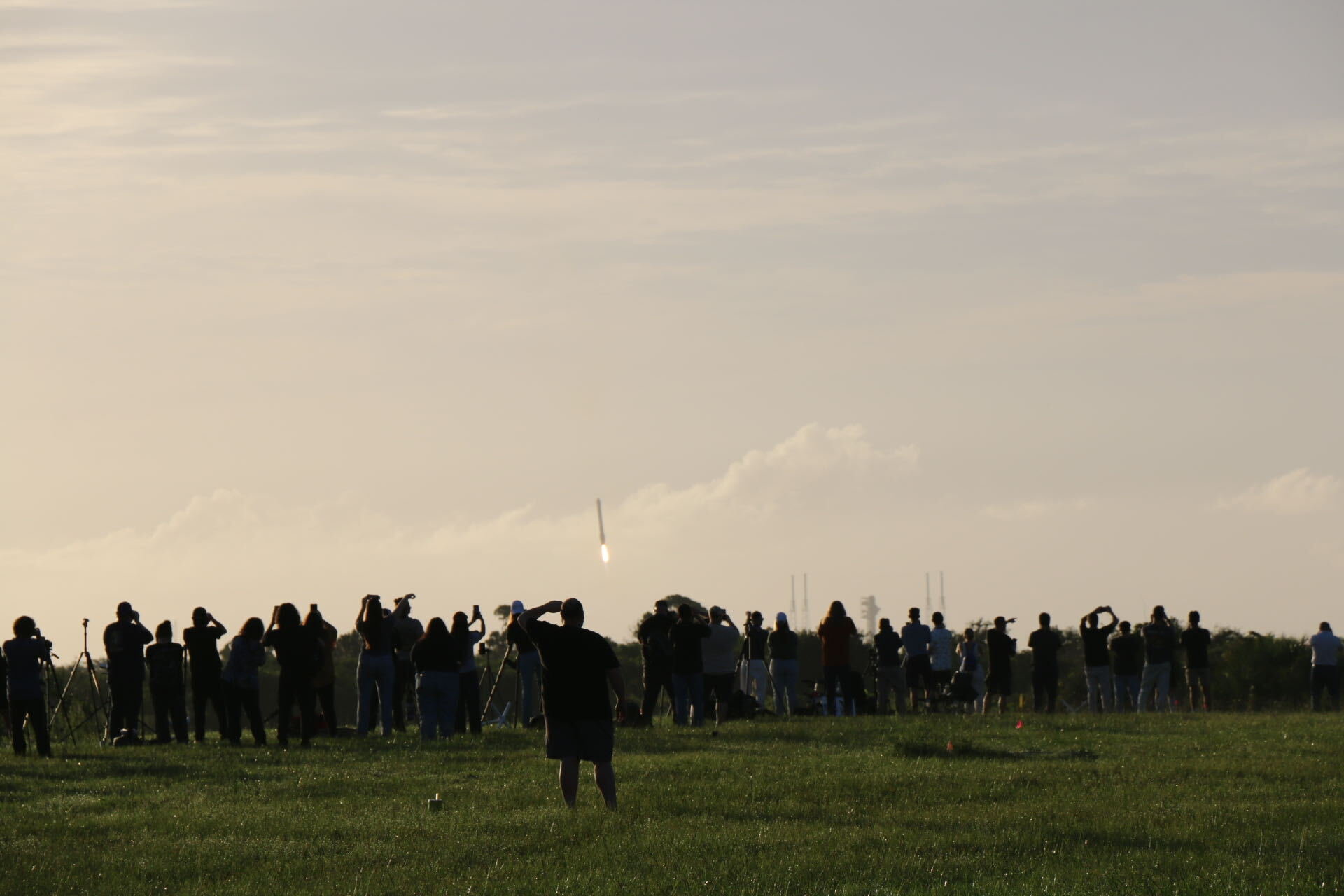
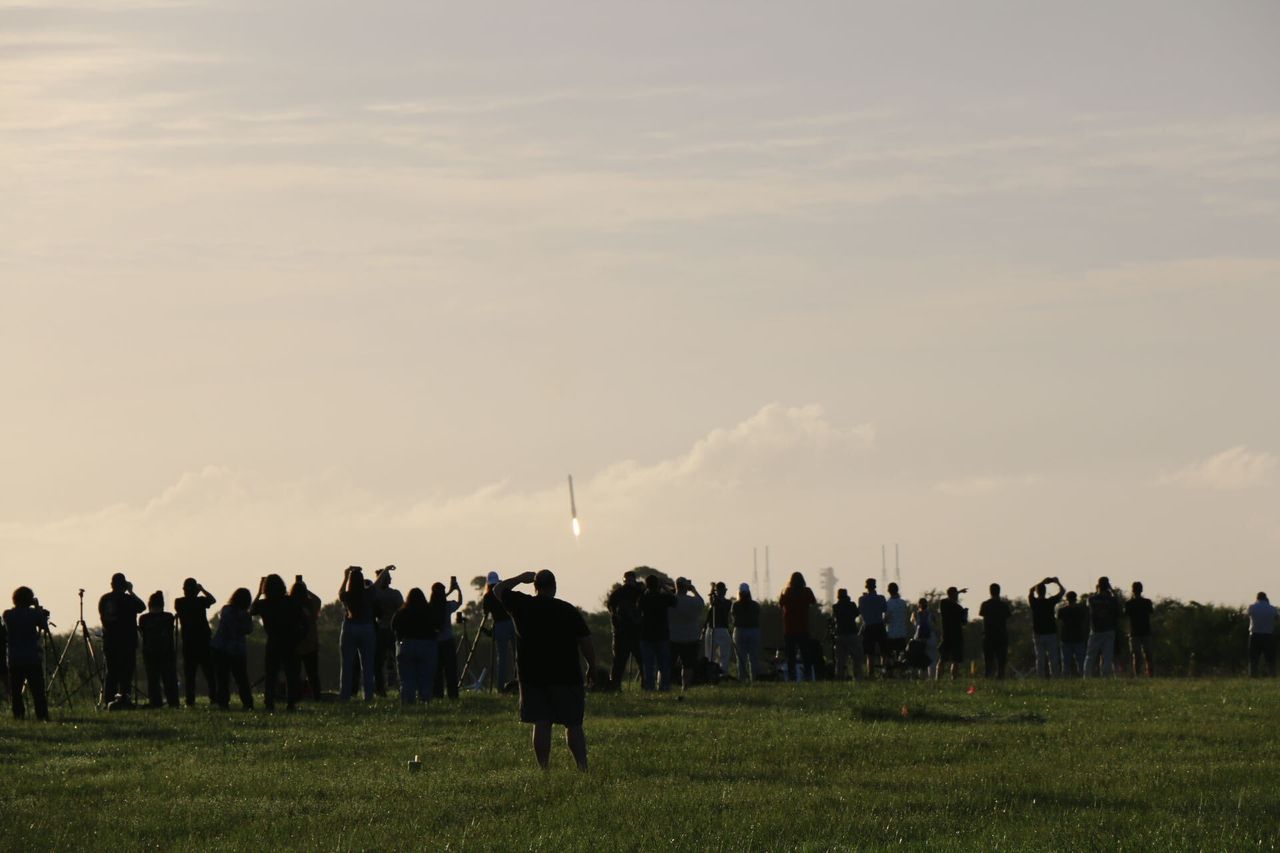
This might look like a rocket launching off Earth, but it's actually a rocket booster perfectly landing on our planet after fulfilling its duty. (Image credit: Chelsea Gohd)
On Aug. 30, the Nancy Grace Roman Space Telescope launched into space aboard a SpaceX Falcon Heavy rocket — then, after completing their job, the rocket's boosters safely landed back on Earth. Watching the events unfold, Space.com's Chelsea Gohd caught one of these beautiful landings on camera as onlookers at NASA's Kennedy Space Center watched in awe.
What is it?
The Roman Space Telescope is NASA's next great observatory, meant to revolutionize how we view the cosmos. Equipped with instruments like a coronagraph that can directly image exoplanets and a Wide-Field Instrument (WFI) that has a massively wide field of view, it's designed to work with big names like the Hubble Space Telescope and James Webb Space Telescope and reveal our universe's intricacies on a grand scale.
But to get to space, like any other space telescope, it needed a rocket to ferry it there. In this case, that was SpaceX's Falcon Heavy rocket. Falcon Heavy is about 230 feet (70 meters) tall and can lift nearly 141,000 pounds (64 metric tons) of payload to low Earth orbit. And importantly, Falcon Heavy's two boosters are reusable.
After launching a payload to space, the boosters split and each lands back on Earth in an upright position. In the image above, Gohd captured one of those boosters landing in the distance.
Why is it incredible?
Though we hear about it so often, there is something undeniably dreamlike about living in a time when a rocket can land its parts back on Earth so precisely. I was also there for the launch of the Roman Space Telescope in Florida, and it was breathtaking to watch such a huge piece of equipment navigate mid-air and straighten itself before landing. The crowd in the picture was equally astonished while the event unfolded.
My mother texted me just after she watched the Roman Space Telescope launch live online, exclaiming that the booster's landing looked just like a taxi returning to its station, getting ready for the next task. I hadn't thought about it that way before, but she was correct.
One of the boosters that participated in Roman's launch landed at Landing Zone 2 and the other hit the ground at Landing Zone 40. As NASA explained in a statement, one of these boosters carried out its very first mission while the other was on its third.
Now, the next spectacle to take our breath away will be Roman's very first images of the universe. Those are expected to drop next year.
It began with an unusual flash detected off the coast of South Africa by an aging American satellite — and to this day, debate continues over whether this odd Cold War event involved an illicit atmospheric nuclear test.
The strange story of the "South Atlantic Flash," better known as the Vela Incident, began on Sept. 22, 1979. At that time, Vela 6911, a satellite in a constellation developed by the United States for the specific purpose of detecting nuclear detonations, observed something that immediately alarmed officials: a peculiar flash of light emanating from somewhere over the South Atlantic Ocean.
A significant part of what concerned U.S. officials at the time had been the double flash of light detected during the event — a distinctive feature that strongly resembled the flashes produced by a nuclear explosion in Earth's atmosphere. The characteristic double flash results from the rapidly changing brightness of the fireball and shock wave produced by an atmospheric nuclear detonation, creating a distinctive optical signature that Vela's sensors were specifically designed to recognize. The South Atlantic event, therefore, seemed like a prime candidate for a secretive nuclear test being carried out by an unknown party — but if that were the case, who was responsible?
What do we know?
U.S. officials responded to a possible nuclear test
Then-President Jimmy Carter was promptly alerted to the situation, as evidenced in diaries the former U.S. leader would publish years later. "There was indication of a nuclear explosion in the region of South Africa," Carter wrote in an entry on the same date of the event. A later entry penned the following February would go on to add that "We have a growing belief among our scientists that the Israelis did indeed conduct a nuclear test explosion in the ocean near the southern end of Africa."
President Jimmy Carter, seated at a desk in the Oval Office of the White House in 1980. (Image credit: Bettmann/Getty Images)
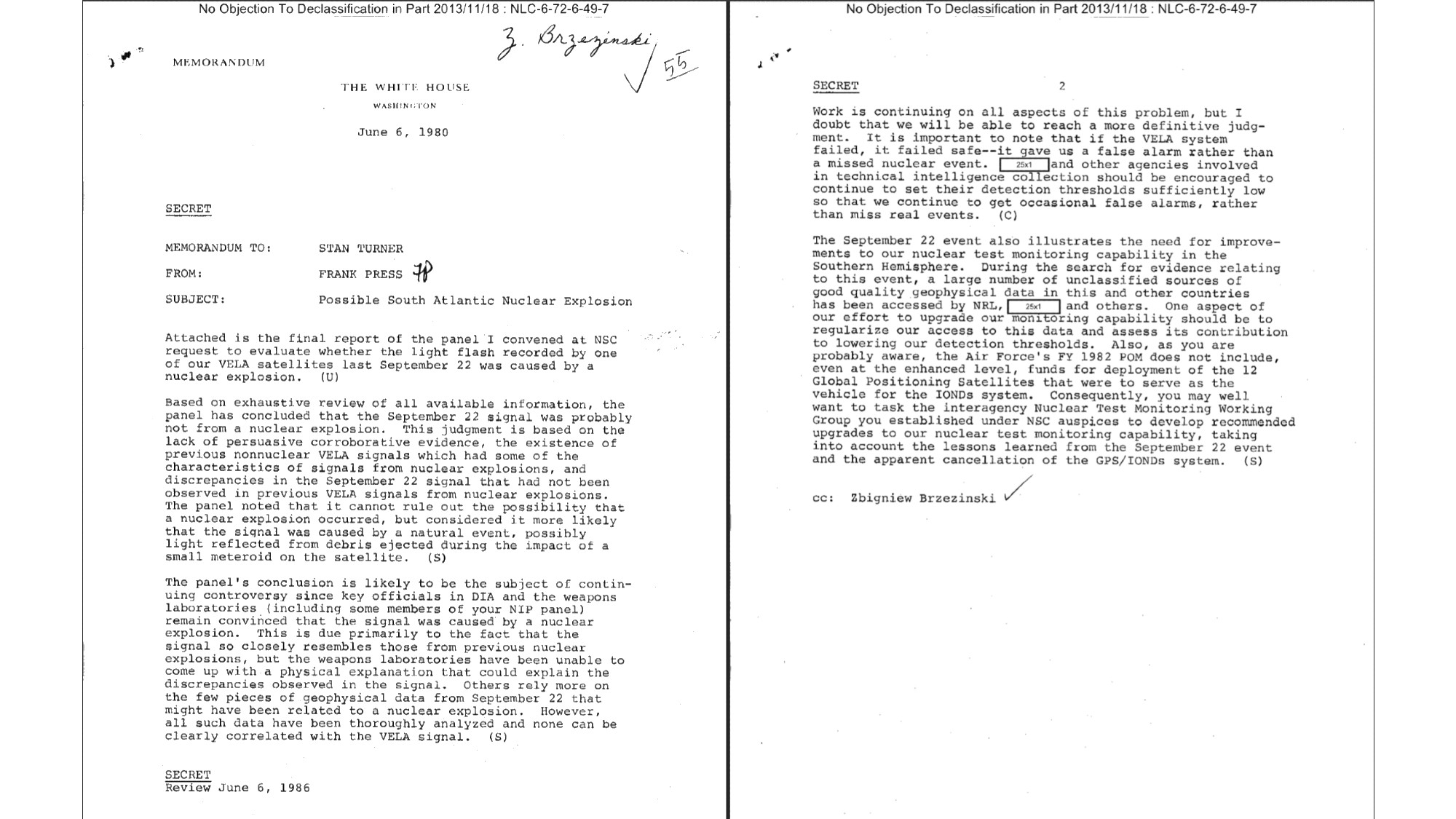
Despite that belief regarding the possibility of a clandestine nuclear test,a scientific panel assembled in 1980, chaired by MIT professor Jack Ruina, eventually put forward an alternative explanation: that the flash had more likely been an anomaly caused by a small meteoroid striking the satellite.
Notably, the panel did not rule out the possibility of a nuclear explosion at the time, although the alternative they put forward remained controversial among scientists and intelligence officials.
A memorandum to Director of Central Intelligence Stansfield Turner from Frank Press, White House science adviser, in which Press explains the reasoning behind the Ruina panel's conclusion that the Vela flash was "probably not from a nuclear explosion" and was therefore more likely "caused by a natural event." (Image credit: Public Domain/National Security Archive)
Documents and government insiders surface
By the turn of the 21st century,formerly classified documents began to surface that revealed the extent of the inner tensions between U.S. government agencies over what caused the Vela incident.
Among the critics of the debris-induced "anomaly" hypothesis had been Defense Intelligence Agency Vice Director Jack Varona. According to documents released in 2006, Varona said the investigations by the 1980 scientific panel had been a politically motivated "whitewash," and that evidence collected by the U.S. intelligence community included detections "unique to nuclear shots in a maritime environment," based on an analysis by the Naval Research Laboratory.
Varona wasn't alone. Other former intelligence officials who came forward over the years included Stansfield Turner, the former Director of Central Intelligence during the Carter administration, who in 2003 described the Vela detection as a "man-made phenomenon."
Similar views were advanced by retired CIA officer Tyler Drumheller, who in 2006 wrote that he had sources at the time who "collectively provided incontrovertible evidence that the [South African] apartheid government had in fact tested a nuclear bomb in the South Atlantic in 1979, and that they had developed a delivery system with assistance from the Israelis."
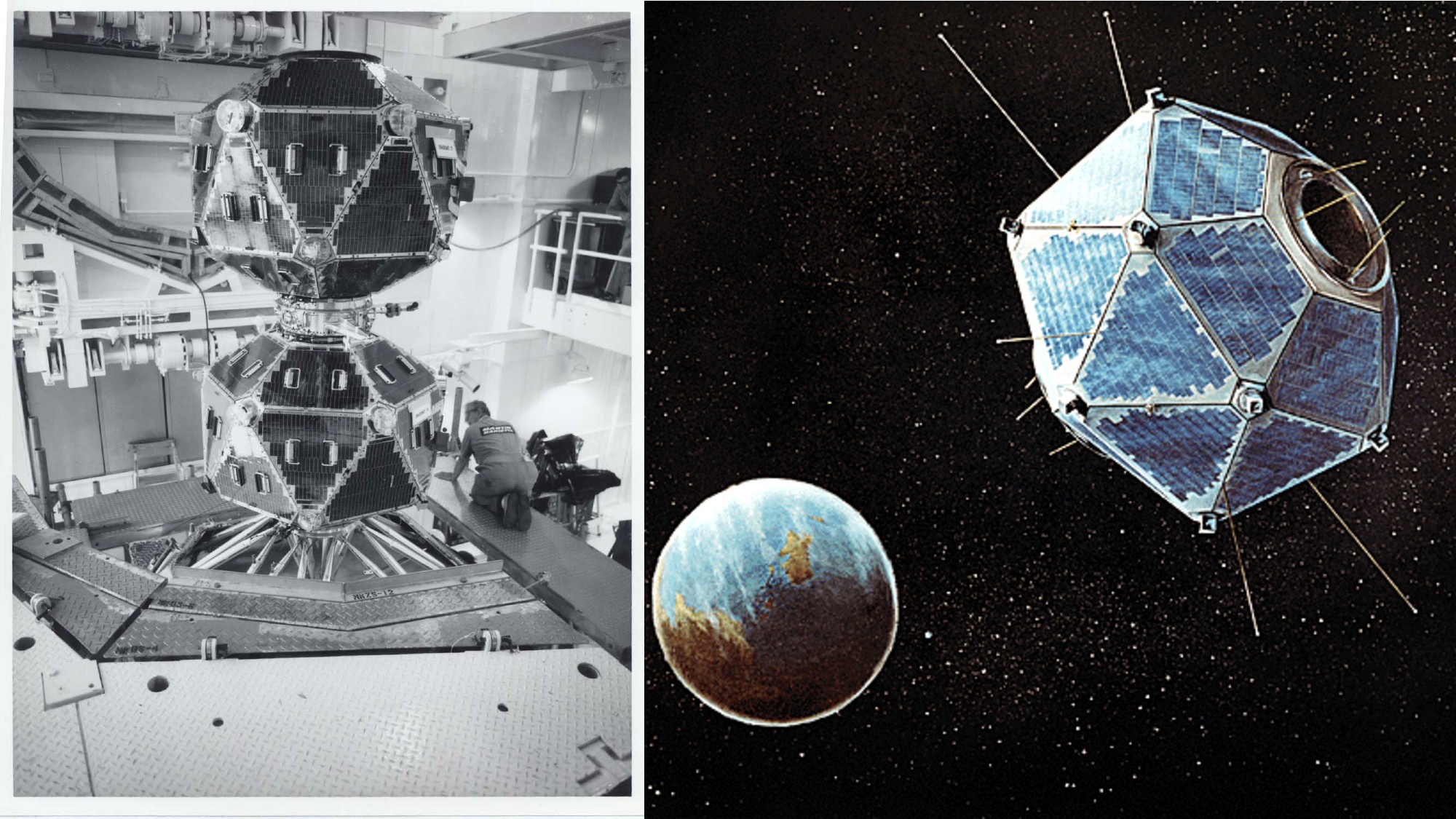
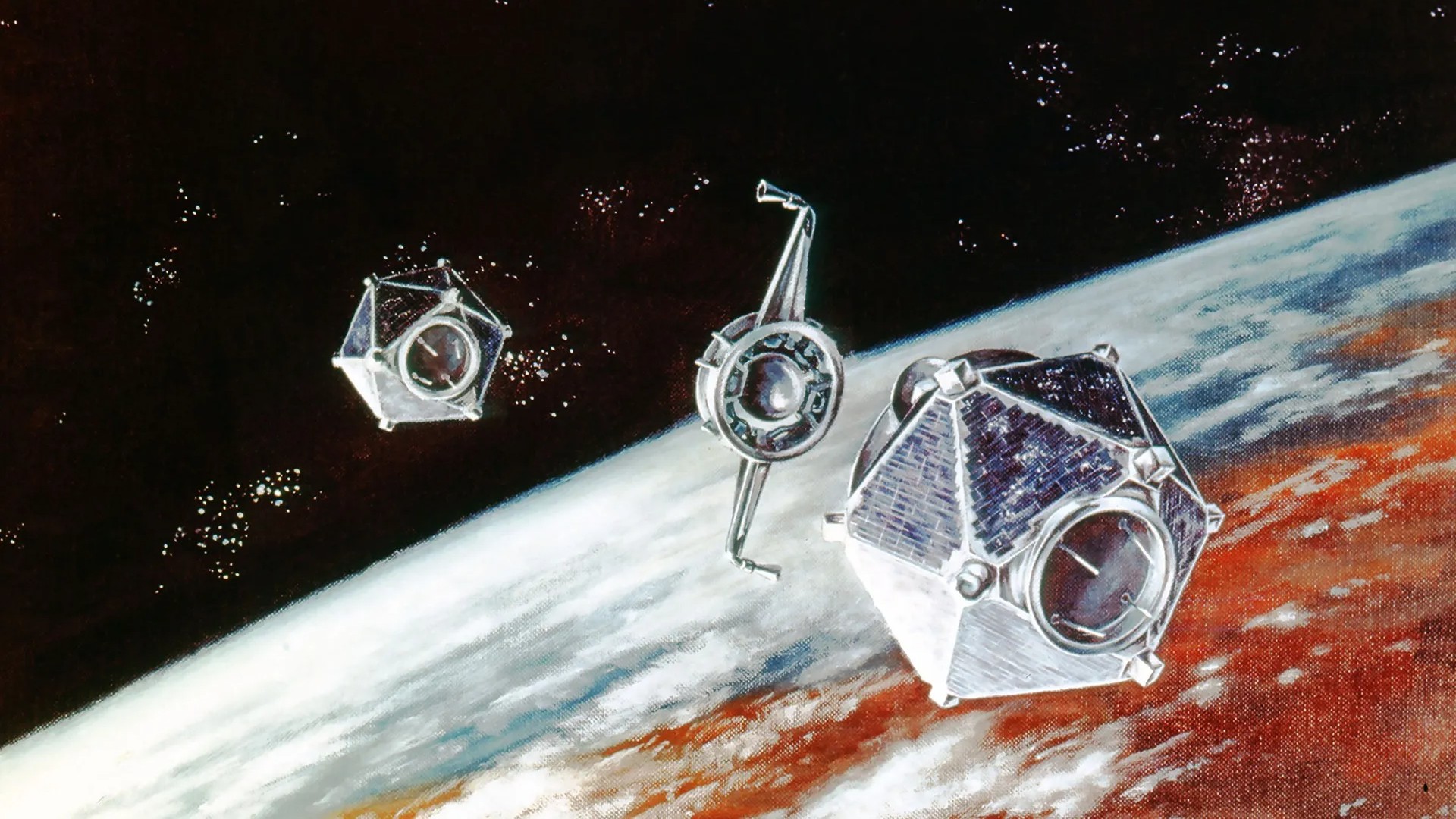
The Vela-5A & B satellites in a cleanroom at Los Alamos National Laboratory (left); and an illustration of one of the satellites in orbit above Earth (right). (Image credit: Los Alamos National Laboratory)
What remains unknown?
Scientists revisit the mystery
While we still don't know if the South Atlantic Flash was a nuclear test, several scientists have reexamined the available evidence within the last decade, and what they found has lent further weight to the idea that the Vela incident had involved a detonation of some kind.
Among the most significant assessments,a 2017 study by Christopher Wright and Lars-Erik De Geer combined modern research into interplanetary dust and hypervelocity impacts with revelations from recently declassified documents, as well as publicly available information that had been previously overlooked.
Their conclusion: while no model was presented for the tenuous "meteoroid" theory advanced by the May 1980 scientific panel, the double flash observed by the Vela satellite in 1979 was indeed "consistent with a nuclear explosion, albeit detected by an aged satellite for which background modulation was abnormal and/or commenced earlier," adding that additional radionuclide and hydroacoustic evidence existed which supported the conclusion "that the Vela Incident was a nuclear weapon test explosion."
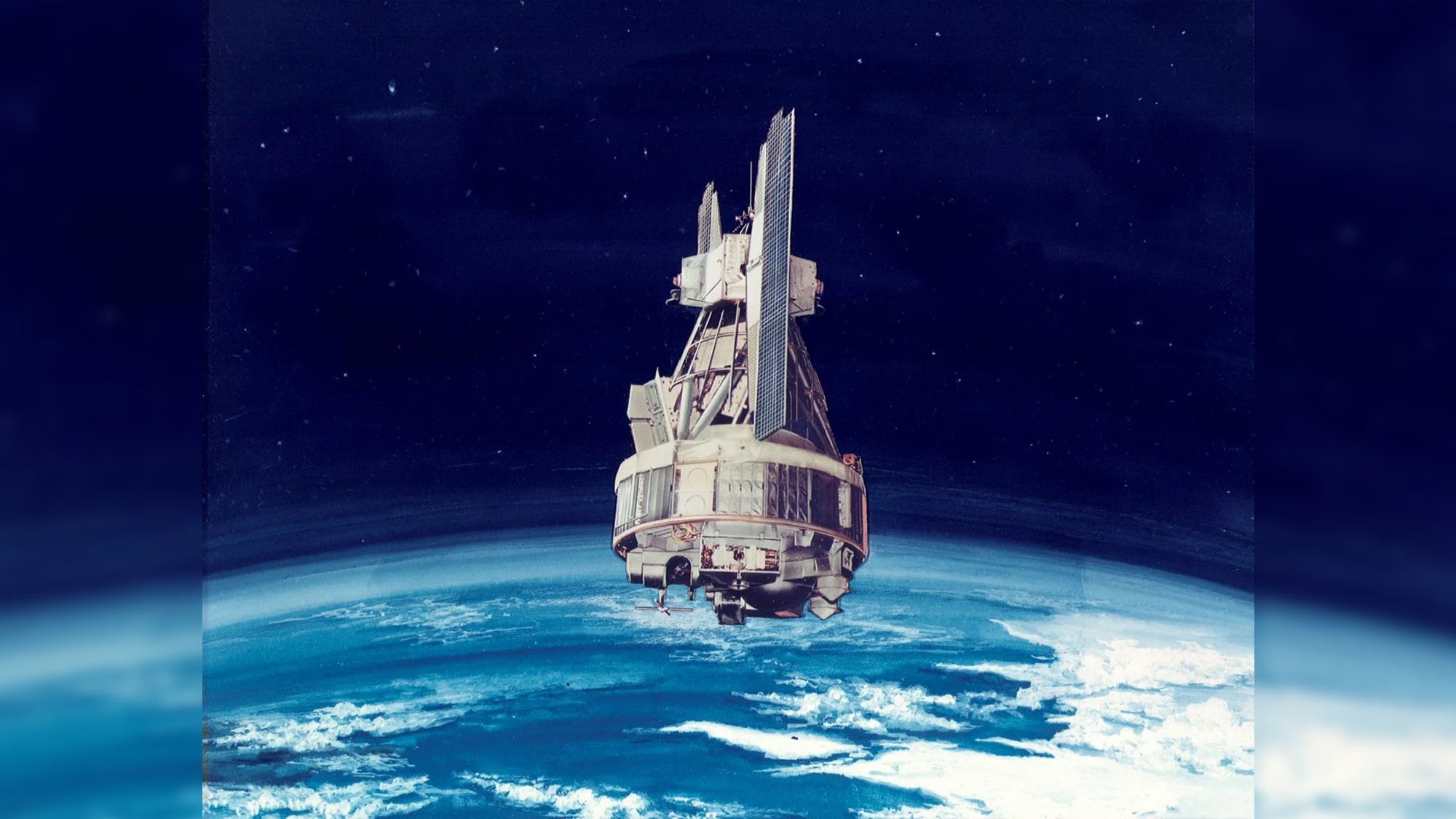
Wright and De Geer weren't alone either.A 2022 study examined data collected by NASA's Nimbus-7 satellite just 16 minutes and 44 seconds after the double flash over the South Atlantic, which suggested a disturbance in the ozone layer that appeared to be consistent with a blast-generated shock wave.
Artist's concept of a Nimbus spacecraft in orbit over Earth. (Image credit: NASA)
Still, some of the original members of the 1980 scientific panel have defended its work amid the more recent scientific studies. Richard Mueller, who served as the panel's youngest member at the time, defended the group's conclusions ina November 2019 oral history conference, maintaining that the chances the Vela incident had involved a nuclear event were "as close to zero as it gets."
This determination, Mueller argued, was made despite early interpretations by many panelists that a nuclear event had seemed most likely. Wright and De Geer, both of whom attended the 2019 oral history conference, were among the participants that pushed back on Mueller's views.
Who was responsible?
Amid the mounting evidence over the last several decades suggesting the Vela incident was indeed a nuclear test, debate continues over who was most likely to have been responsible.
Although suspicions have long centered on a cooperative — and secret — strategic effort between apartheid-era South Africa and Israel, publicly available evidence remains lacking, and a fair amount of information in declassified documents that could point to this possibility remains redacted.
An illustration of two Vela satellites separating in orbit. (Image credit: Los Alamos National Laboratory)
The mystery remains
Thus, after more than four decades, questions continue to linger over the famous Vela incident, including what nations might have been involved in such a test if it occurred. Despite that uncertainty, one thing does seem evident: information conveyed in unredacted portions of declassified records, combined with modern scientific analyses, increasingly point to the likelihood that the strange "South Atlantic Flash" in 1979 was anything but natural.
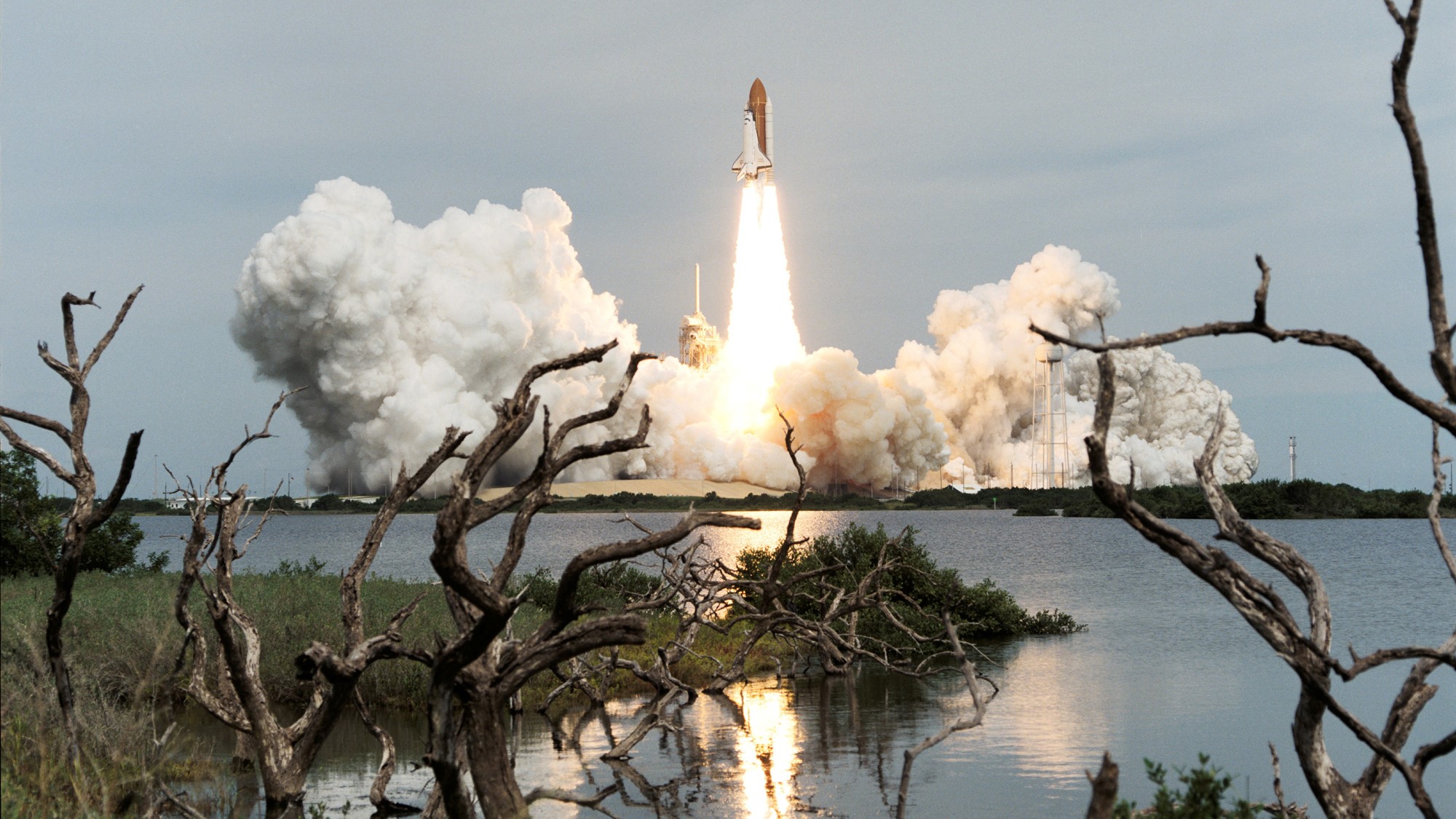
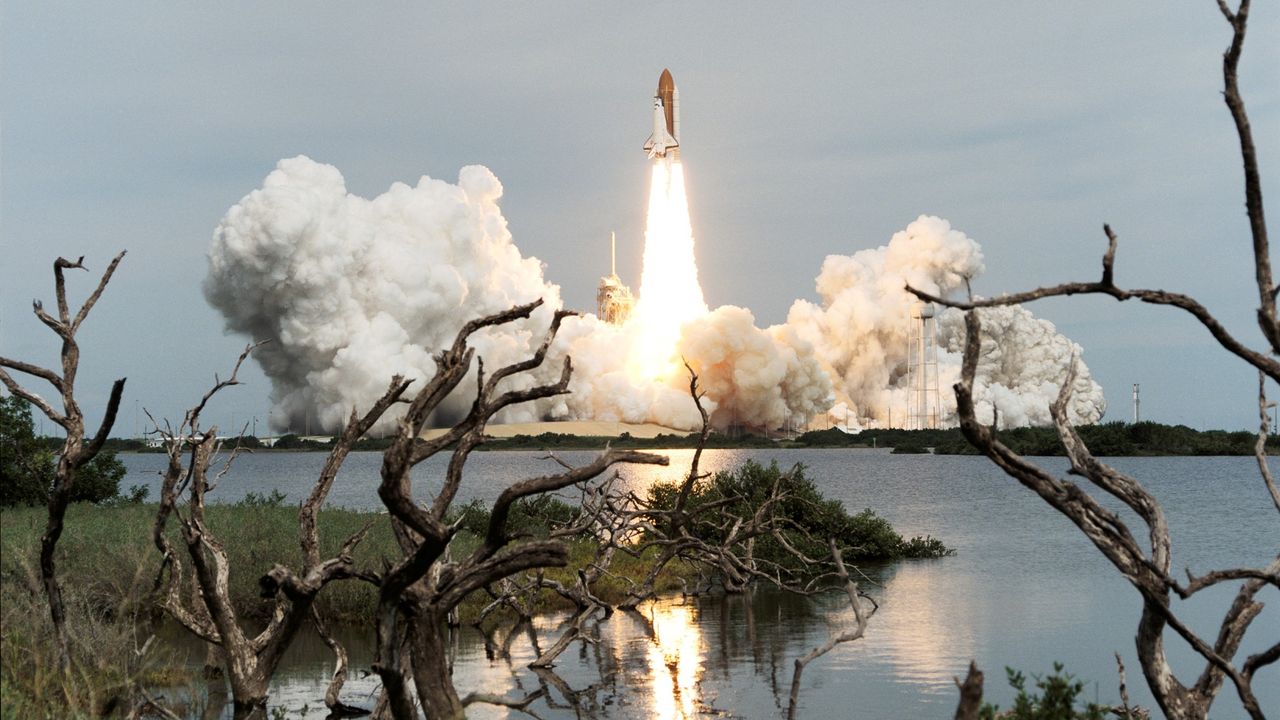
On Sept. 7, 1995, the space shuttle Endeavour launched on mission STS-69. This was the 100th successful crew spaceflight mission for NASA.
Endeavour lifted off from NASA's historic Pad 39A launch site at the Kennedy Space Center in Florida. During the 11-day mission, five crewmembers did science experiments, deployed and retrieved a satellite called Spartan 201, and conducted a nearly seven-hour-long spacewalk to practice methods future astronauts would use to build the International Space Station.
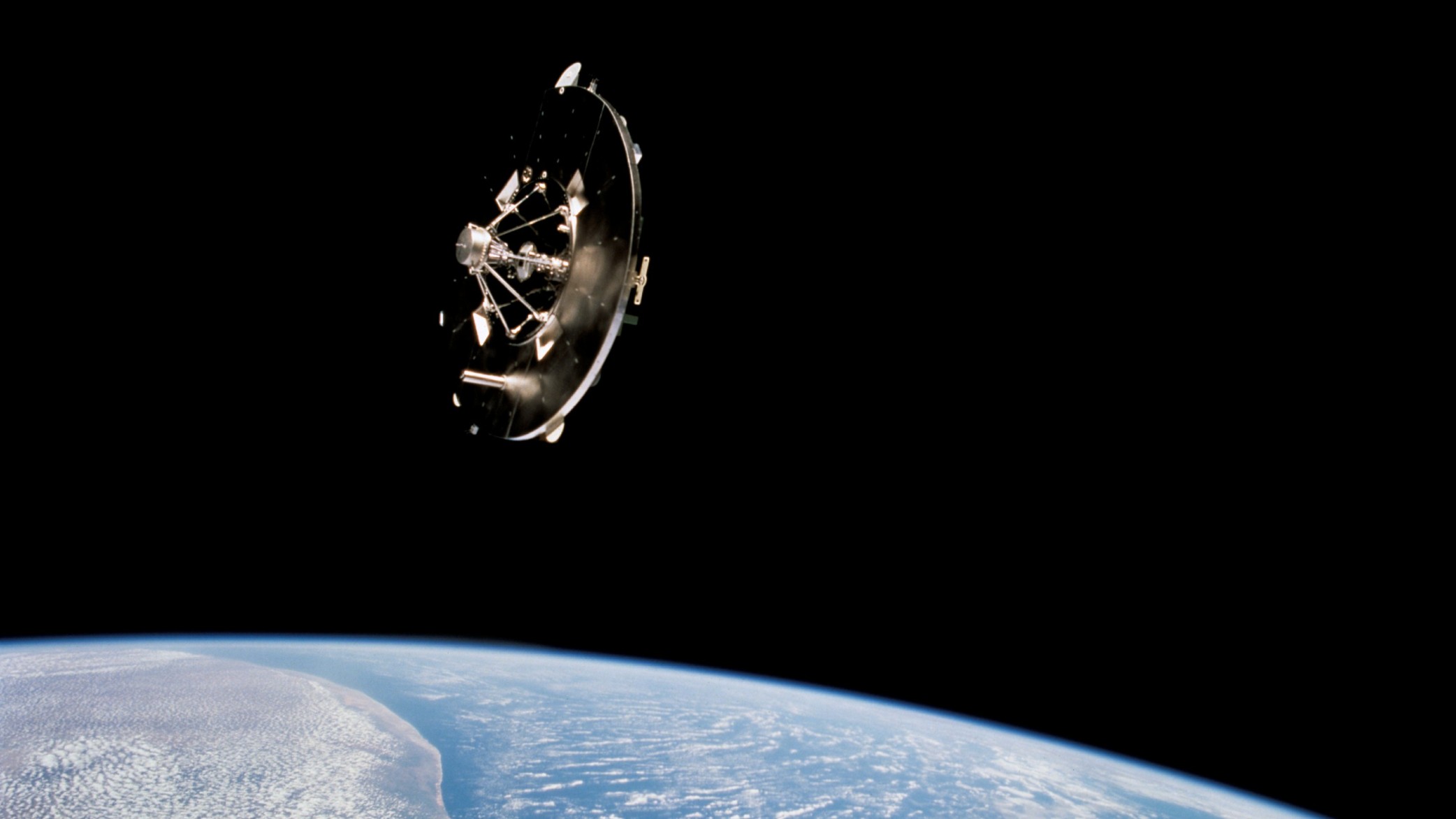
The astronauts also deployed the Wake Shield Facility, a saucer-shaped satellite that flew free of the shuttle for several days. This was the first time two different payloads were retrieved and deployed during the same mission.
NASA's space shuttle Endeavour lifts off on the space agency's 100th astronaut flight on Sept. 7, 1995. (Image credit: NASA)
Why it mattered
The launch of STS-69 on space shuttle Endeavour was a milestone of sorts for NASA and U.S. space exploration. As the 100th crewed flight by NASA astronauts, it showed that flying humans in space was not a one-off or occasional feat.
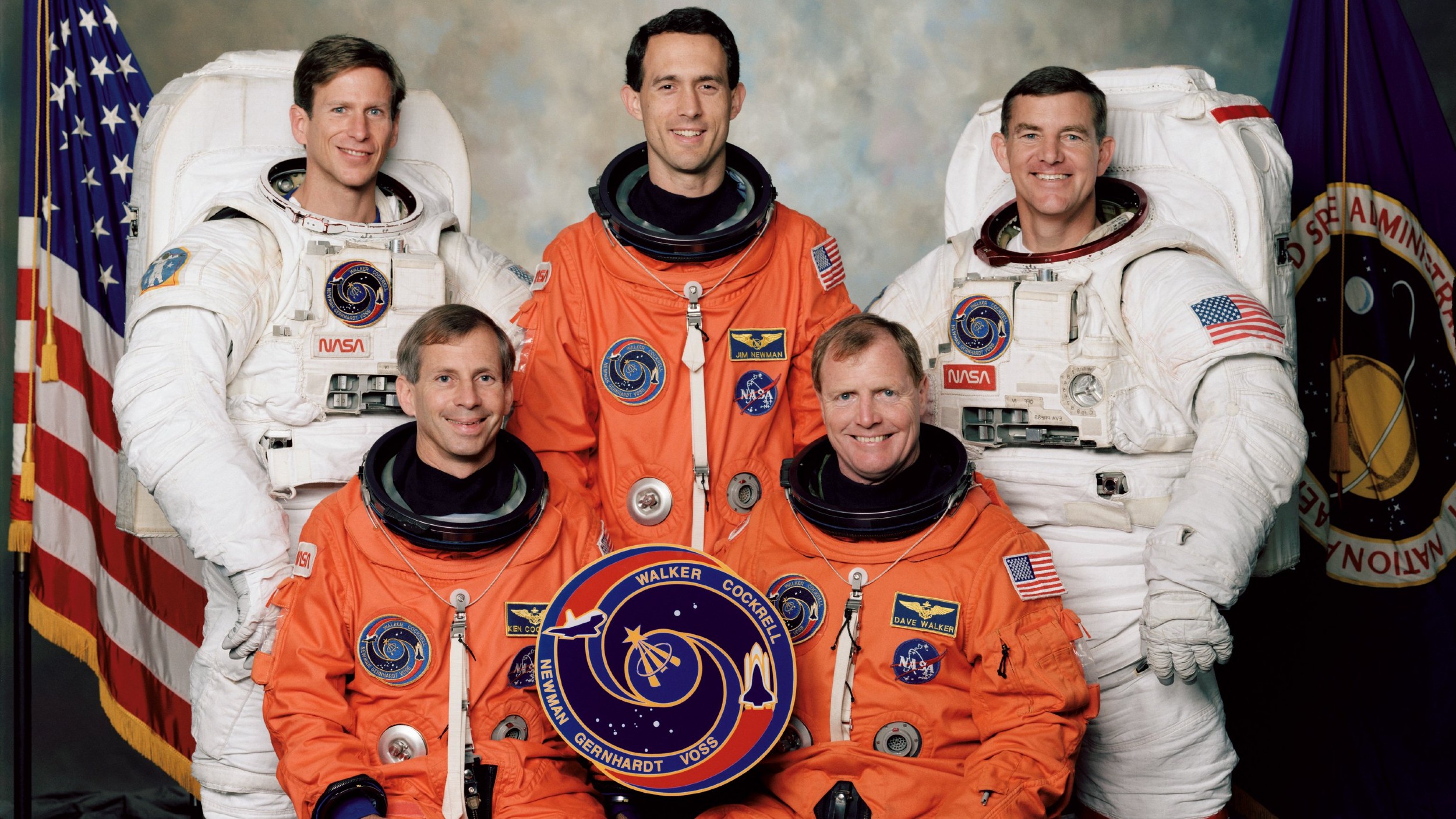
The five-astronaut crew was commanded by David Walker, with Kenneth Cockrell as pilot. Astronaut Jim Voss served as payload commander (remember, this was the first time two different payloads would be deployed in space), with astronauts Jim Newman and Michael Gernhardt rounding out the team as mission specialists.
The saucer-shaped Wake Shield Facility moves away from space shuttle Endeavour after its initial deployment on STS-69.NASAThe five astronauts of NASA's 100th crewed mission, STS-69 on Endeavour: David M. Walker (right front) is mission commander; with Kenneth D. Cockrell (left front) scheduled to serve as pilot. On the back row are (left to right) Michael L. Gernhardt and James H. Newman, both mission specialists; and James S. Voss, payload commander.NASA
The Spartan 201-03 payload was an experiment designed to study the sun's outer atmosphere as it transitioned into solar wind. It was the third of four such Spartan 201 flights on a NASA space shuttle.
The Wake Shield Facility-2, meanwhile, was a sort of in-space factory. The saucer-shaped platform was actually a stainless steel disk designed to create an "ultravacuum environment" in space in order to grow thin films that could be used for new advanced electronics. The disk was actually deployed twice during the 11-day mission and successfully grew four thin films of seven planned, while also performing an electrical field experiment for the U.S. Air Force on its second deployment.
The one spacewalk of the mission was performed by astronauts Voss and Gernhardt, who spent 6 hours and 46 minutes working outside Endeavour to test new thermal upgrades to NASA's extravehicular activity (or EVA) suits, as well as new tools and techniques to build the then nascent International Space Station.
There was one space oddity on this STS-69 mission, according to NASA. The crew was NASA's second "dog crew," or Dog Crew II, with each of the astronauts adopting a dog nickname.
"Walker was Red Dog; Cockrell was Cujo; Voss, Dog Face; Newman, Pluto; and Gernhardt, Under Dog," NASA said in an overview.
When the United States and the Soviet Union signed the Outer Space Treaty in 1967, both nations agreed not to place nuclear weapons or other weapons of mass destruction in orbit around Earth. Specifically, Article IV of the treaty was designed to keep the Cold War's nuclear arms race from extending into space — a goal both superpowers shared.
The problem, then and now, is that neither side has ever had a reliable way to confirm that the other is keeping its word.
After nearly 60 years of uncertainty, a recent feasibility study from MIT physicist Areg Danagoulian proposes a possible solution: a satellite-based sensor that could search for the signature of nuclear material aboard another spacecraft, using high-energy protons trapped by Earth's magnetic field as a probe. The telltale sign of a warhead in space would be a large burst of neutrons scientists expect to be produced when these highly energetic protons interact with radioactive elements, like uranium, inside a warhead. A detector roughly the size of an encyclopedia and equipped with specialized sensors could identify neutrons emanating from the direction of a possible warhead from about 2.5 miles (4 kilometers) away after roughly a week of observation, according to the study's calculations. At closer range, the detection could come much faster.
The consequences of a space-based nuclear detonation are dire. But whether a detection system will prevent nuclear detonation in space will depend on several factors, some of which are technical but many of which are not, experts told Live Science.
What a nuclear blast does in space
On Earth, nuclear weapon tests leave telltale signals — like seismic waves, radioactive debris, and intense bursts of light and heat — that scientists have spent decades learning to detect. However, a warhead could be hidden inside an ordinary-looking satellite, potentially for decades, with nothing on the outside to give it away. If such a weapon were to detonate, it could jeopardize thousands of commercial, scientific and military satellites in a single blast, littering orbit with dangerous debris.
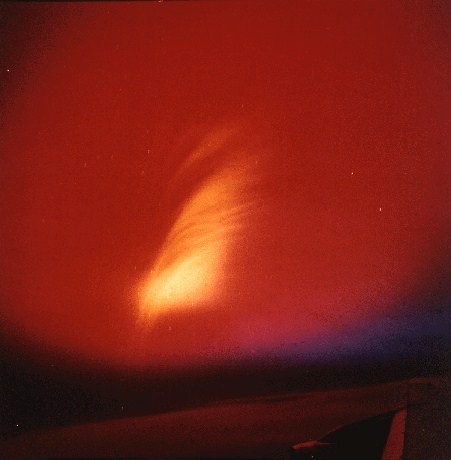
An image from the Starfish Prime nuclear test in 1962, which lit up the magnetosphere with an eerie red glow. (Image credit: By U.S. Air Force 1352nd Photographic Group, Lookout Mountain Station via Wikimedia Commons)
For most of the Outer Space Treaty's history, the missing verification mechanism has been a theoretical gap rather than an urgent one — in part because the world had already seen what a nuclear detonation in orbit does, and largely avoided repeating it.
The clearest example is Starfish Prime, one of a dozen high-altitude nuclear tests the U.S. ran between 1958 and 1962. On July 9, 1962, the U.S. detonated a 1.45-megaton warhead roughly 250 miles (400 km) above the Pacific.
The blast knocked out radio communications for hours, produced artificial auroras visible from Hawaii, and eventually damaged or destroyed eight of the 24 satellites in orbit at that time — including Telstar 1 and Britain's Ariel 1 satellite. Radiation from the blast lingered in orbit for about five years, leaving parts of near-Earth space hazardous for spacecraft. According to eyewitness accounts from the time, the radiation also knocked out roughly 300 streetlights in Honolulu and set off burglar alarms across Oahu.
The Soviet Union conducted its own series of high-altitude nuclear tests, known as Project K, in 1961 and 1962. Those explosions also produced damaging effects on the ground, including disruptions to power and communications in what is now Kazakhstan.
"It was one of the earliest instances where we began to have an understanding of the ways in which the space environment and the terrestrial environment are coupled together," John Barentine, an astronomer who has studied the environmental consequences of Cold War-era activities in space, told Live Science.
Diplomatic issues
Clearly, the impacts of a nuclear detonation in space are significant, and the new paper solves a long-standing problem by providing a way to detect weapons in space.
But is detection likely to work in practice? Getting a satellite close enough to observe another — and keeping it there for a week — would mean maintaining satellites closer than they ordinarily would be, experts say. That could raise suspicions about being spied on or attacked.
"Satellite operators get really freaked out," Thomas González Roberts, an assistant professor at the Georgia Institute of Technology who studies how space powers engage with outer space governance, told Live Science. "If another satellite is spending too much time next to you, you might think that they're spying on you."
Any such workable system would require the cooperation of the country whose satellite was being inspected, and that raises a separate set of questions about the international norms for when and how such inspections could take place, according to Brian Weeden, director of civil and commercial policy for the Center for Space Policy and Strategy at Aerospace Corp.
"In my experience, the policy problems are always the bigger challenge than the technical problems," Weeden told Live Science.
There's very few examples of nuclear damage in space because it's so obviously a bad idea. These weapons are not really designed to be used, if you ask me.
Thomas González Roberts, assistant professor at the Georgia Institute of Technology
Solution in search of a problem?
There's also a question of whether this is a solution in search of a problem. Despite those early tests, deliberate nuclear damage to satellites has stayed rare for good reason, Roberts said. An attacker might have one target in mind, he said, but "you're going to take out more than just that target, and you have limited control over which satellites are affected."
That creates a strategic problem for any spacefaring nation: Any state capable of destroying other countries' satellites with a nuclear weapon "also has a relatively large fleet themselves," Roberts said — meaning the attacker would likely damage their own spacecraft, too.
"There's very few examples of nuclear damage in space because it's so obviously a bad idea," Roberts said. "These weapons are not really designed to be used, if you ask me."
The stakes are higher than ever
In theory, then, rational actors should shy away from launching or detonating nuclear weapons in space. No country has detonated a nuclear weapon in orbit since the 1960s, and it remains unclear how many, if any, nuclear weapons are currently stationed in space undetected.
But the possibility became harder to dismiss in 2024, when U.S. officials said they had evidence that Russia was developing a nuclear anti-satellite weapon — a claim Moscow has denied. The alleged spacecraft, based on media reports, is the Russian military radar satellite Kosmos-2553, which in 2022 launched into a radiation-heavy orbit that most other communication spacecraft avoid, Mallory Stewart of the U.S. State Department said in a 2024 interview. .
While Russia said the mission was meant for accelerated testing of how onboard electronics handle radiation, U.S. officials said the radiation level at that altitude was not high enough for such testing. The satellite was later observed tumbling and making erratic movements. This behavior raised suspicions that the spacecraft could be maneuvering toward a target satellite to detonate as a nuclear weapon, given Russia's "demonstrated willingness to target US and allied on-orbit objects," U.S. Space Command representatives said, according to a report from The Guardian.
The stakes are higher now than they were decades ago. All three experts interviewed for this story agreed that a space-based nuclear detonation today would be catastrophic — largely because of Earth's cluttered orbit. In 1962, 24 satellites, operated by two countries (the U.S. and the Soviet Union), were in orbit. According to a tracker maintained by astronomer Jonathan McDowell, more than 48,000 objects launched by more than 190 countries are tracked in space today; together, they support the communications, navigation, weather forecasting, Earth observation and military systems the world now runs on.
Even satellites that aren't in the blast radius could be damaged by a nuclear explosion in orbit. Modern satellites are built with off-the-shelf, low-cost electronics to keep pace with commercial demand, and they "are probably not hardened against the kinds of radiation you would get from a nuclear detonation of space," Weeden said. "I think that is the biggest concern."
A federal government study had found that a single high-altitude nuclear blast could raise radiation in low Earth orbit enough to disable nearly all unhardened satellites within weeks to months, with direct financial damages approaching $500 billion and the total economic impact potentially topping $3 trillion. The potential losses have only grown as the number of satellites has exploded and the world's dependence on them has increased. At the same time, declining launch costs have lowered the barrier to entry for spaceflight, opening orbit to nonstate actors without sizable satellite fleets of their own. That dynamic makes it more attractive for such actors to exploit major powers' deep economic and military reliance on space, Roberts said.
"It's most attractive for a rogue state like North Korea," he added. "It's not attractive for a spacefaring state like Russia. Doesn't mean they won't do it; it's just that there's enormous amounts of cons to that type of attack."
Ultimately, whether space-based nuclear weapon detection methods like those proposed by the MIT study wind up being useful is a policy question, Weeden said.
Implementing such a detection system "would raise a whole bunch of new discussions about on-orbit inspections and what are the international norms around that," Weeden said.
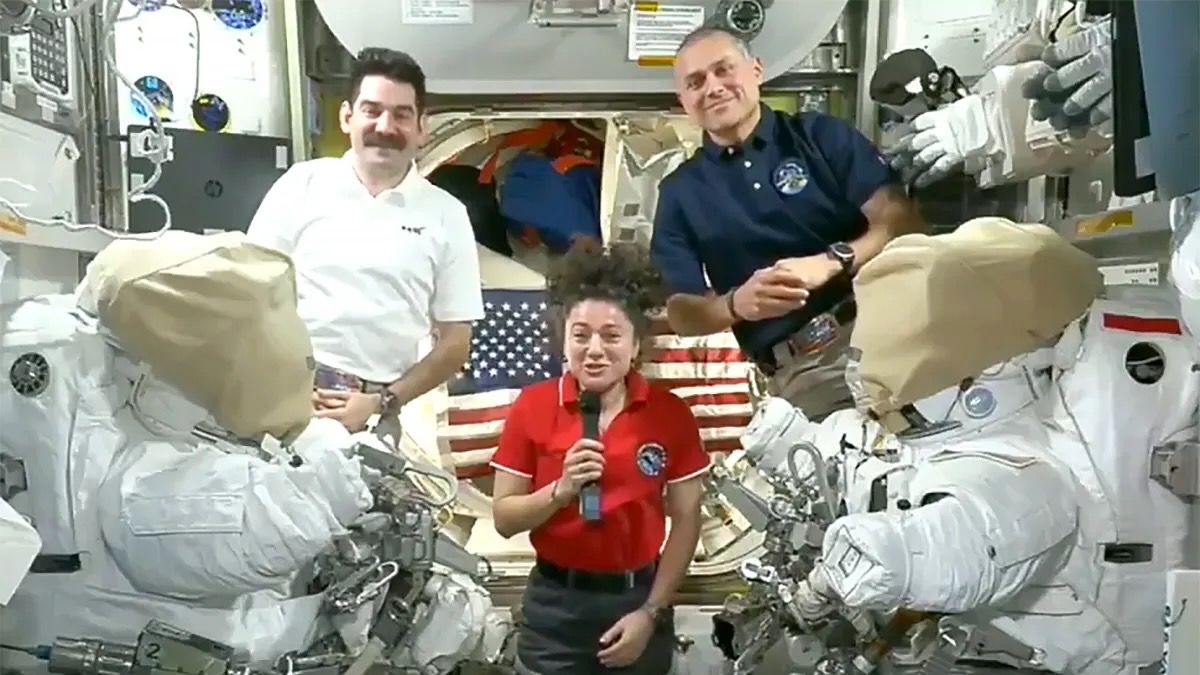
However, the three Russian cosmonauts living on the ISS will have to clock in as usual.
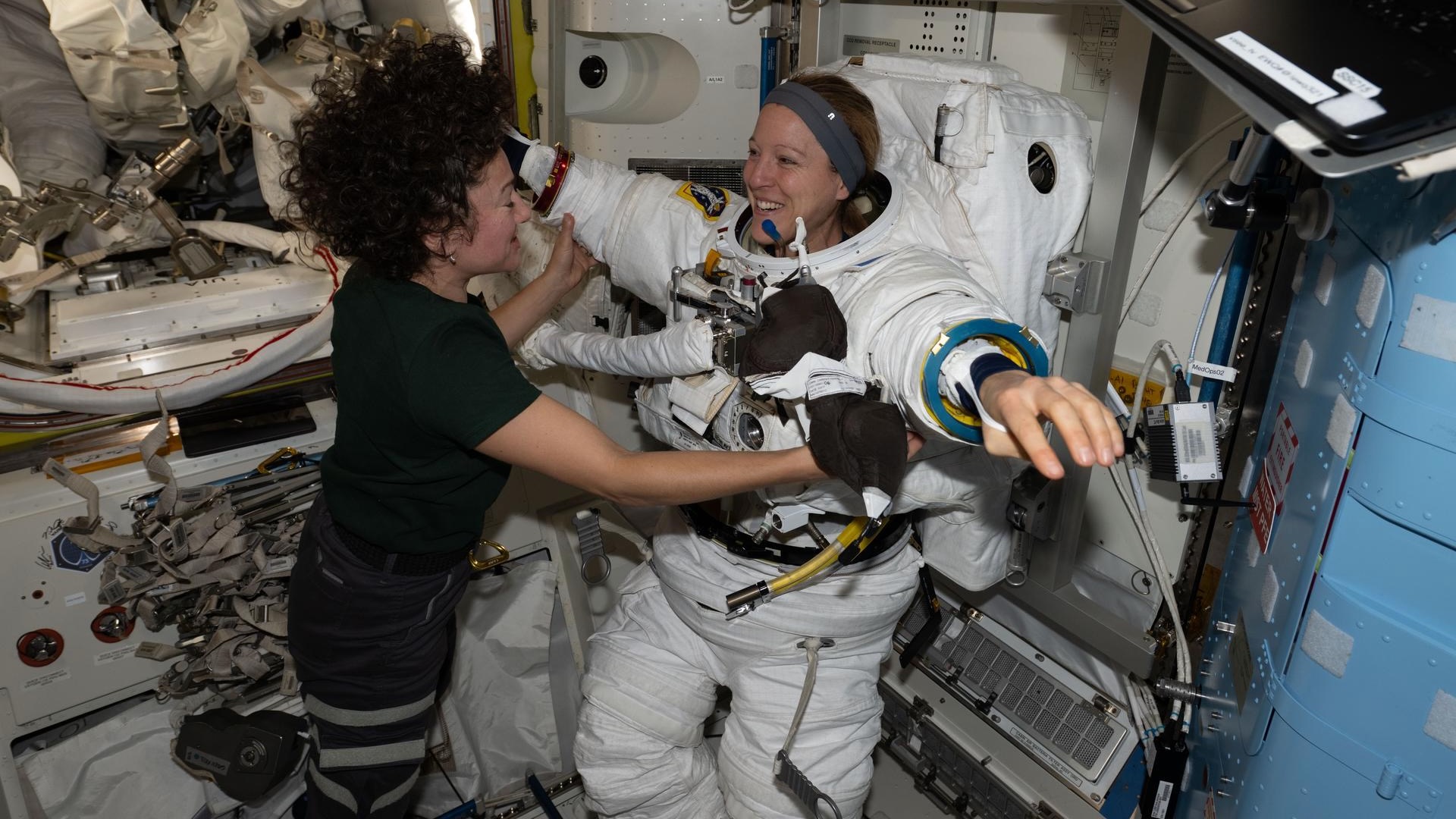
NASA astronaut Jessica Meir (left) and the European Space Agency's Sophie Adenot work together inside the International Space Station’s Quest airlock during spacesuit fit and leak checks. (Image credit: NASA)
The trio — Pyotr Dubrov, Andrey Fedyaev and Anna Kikina — "will be busy monitoring the Progress 94 resupply spacecraft when it undocks on Monday, packed with trash and obsolete gear, from the Poisk module," NASA officials said in an update on Friday.
"It will be replaced by the Progress 96 resupply spacecraft after it launches from Kazakhstan's Baikonur Cosmodrome on Sept. 9 for an automated docking two days later to Poisk’s vacated port," they added.
Adenot, Feyaev, Hathaway and Meir arrived at the ISS in mid-February on SpaceX's Crew-12 mission. Dubrov, Kikina and Menon are relative newcomers, reaching the station aboard a Russian Soyuz spacecraft on July 14.
NASA astronauts on long-duration missions to the ISS generally work a relatively normal schedule, getting weekends and major holidays off. Such downtime is crucial to mission success, as it helps the spaceflyers stay happy, healthy and productive.
They may not be able to mark the holidays in exactly the same ways we do here on Earth, however. For example, the astronauts won't be grilling any hamburgers or hot dogs today, as open flames are verboten on the ISS.
As today's schedule shows, international crewmates do not always have the same days off in orbit. But they try to celebrate major holidays like Christmas together, both to cement the bonds that exist between them and to take the sting out of being so far away from family and friends.
After nearly eight years and billions of kilometers of travel, BepiColombo -- a science mission led by ESA in close collaboration with JAXA -- has begun its long-awaited arrival at the smallest and innermost planet in our Solar System.
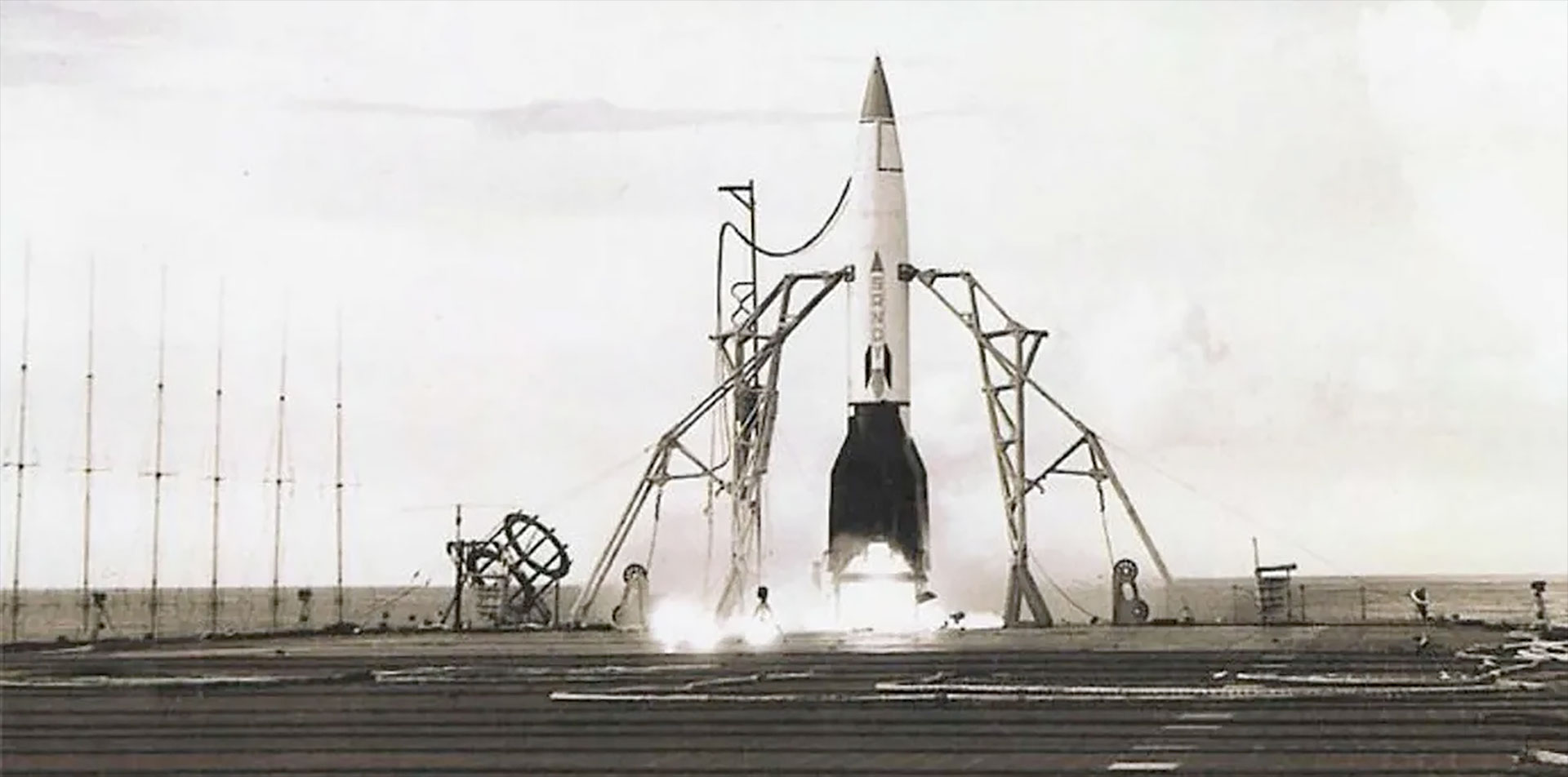
On Sept. 6, 1947, a rocket launched from an aircraft carrier for the first time. The V-2 rocket was captured from a German manufacturing site by the Allied forces at the end of World War II.
V-2s were the world's first long-range guided ballistic missile. They were designed by German rocket scientist Wernher von Braun, a famous aerospace engineer, invented them for Nazi Germany before he was secretly moved to the U.S. and started working for NASA. Von Braun and the seized V-2 missile parts were brought to the White Sands Missile Range in New Mexico, where the scientists assembled the parts and began experimenting with launches.
The first V-2 to launch at sea blasted off from a U.S. Navy ship called the USS Midway in a mission titled "Operation Sandy." The aircraft carrier sailed a few hundred miles south of Bermuda for the launch. After liftoff, the V-2 started tilting midair and only made it to an altitude of 15,000 feet (4,600 meters) before falling back to Earth.
A V-2 rocket ignites its engine on the deck of the USS Midway during the U.S. Navy's first ballistic missile test on Sept. 6, 1947. (Image credit: USS Midway Museum)
Why it mattered
Rockets may be great for space exploration, but the technology's roots are firmly embedded in military applications, with the V-2 rocket standing out as a clear example.
The rocket was designed as a military weapon first and foremost, and it was U.S. military's push to secure such tech that led to Operation: Paperclip, which secreted Von Braun and many other German aerospace scientists out of Germany at the end of World War II.
Operation: Sandy marked the first ballistic missile launch by the U.S. Navy, but today the such missiles are a standard part of the arsenal of some ships. That all started with the 1947 test flight. It also marked a step forward in U.S. missile technology, which would later evolve into orbital rockets just over a decade later.
While the V-2 rocket that launched from the USS Midway veered off course and began to break apart at an alttude of about 12,000 feet, according to MidwayCurrents.org, it did prove the concept of a missile launch at sea.
SpaceX launched 27 more of its Starlink internet satellites to orbit today (Sept. 6).
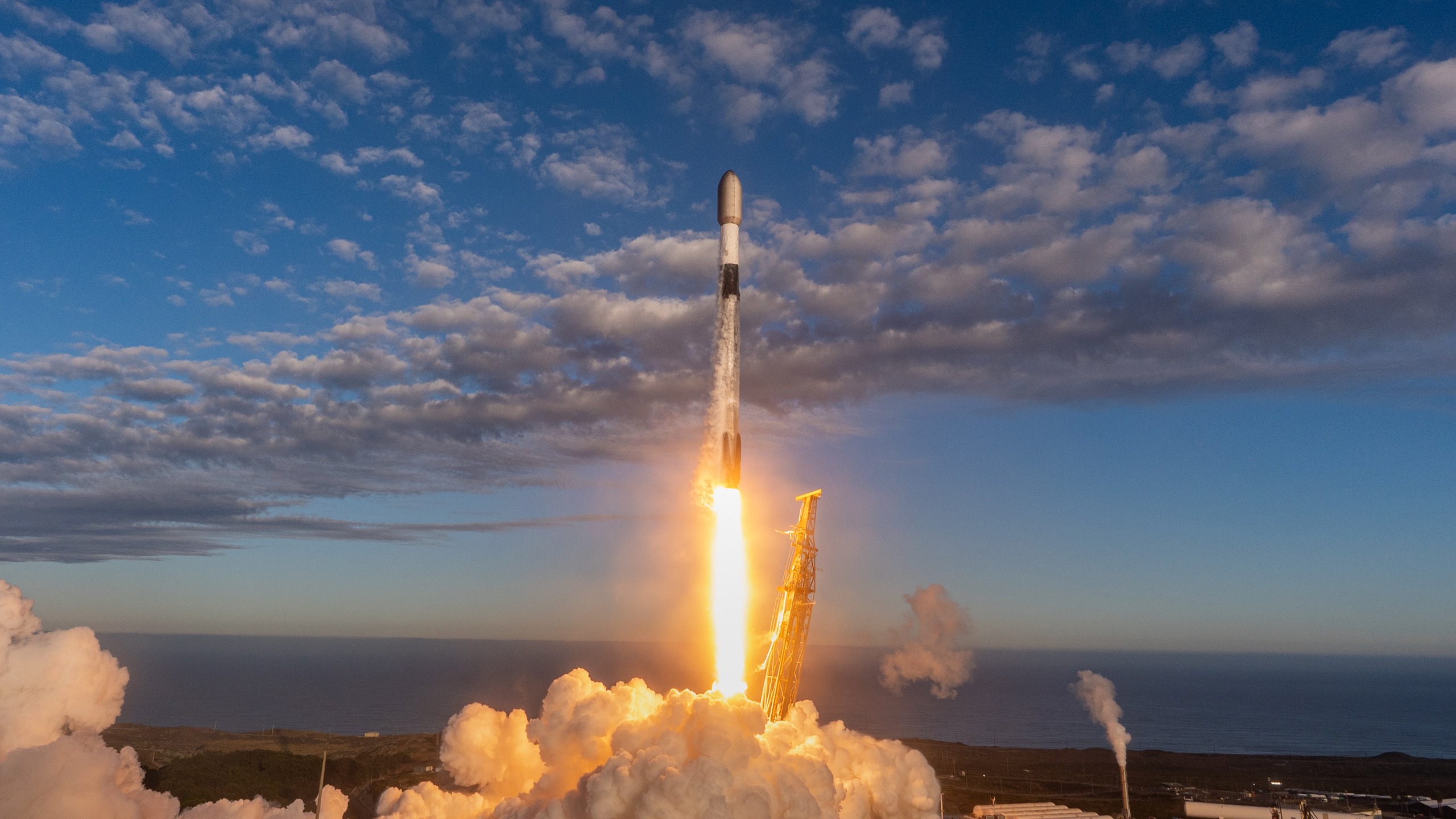
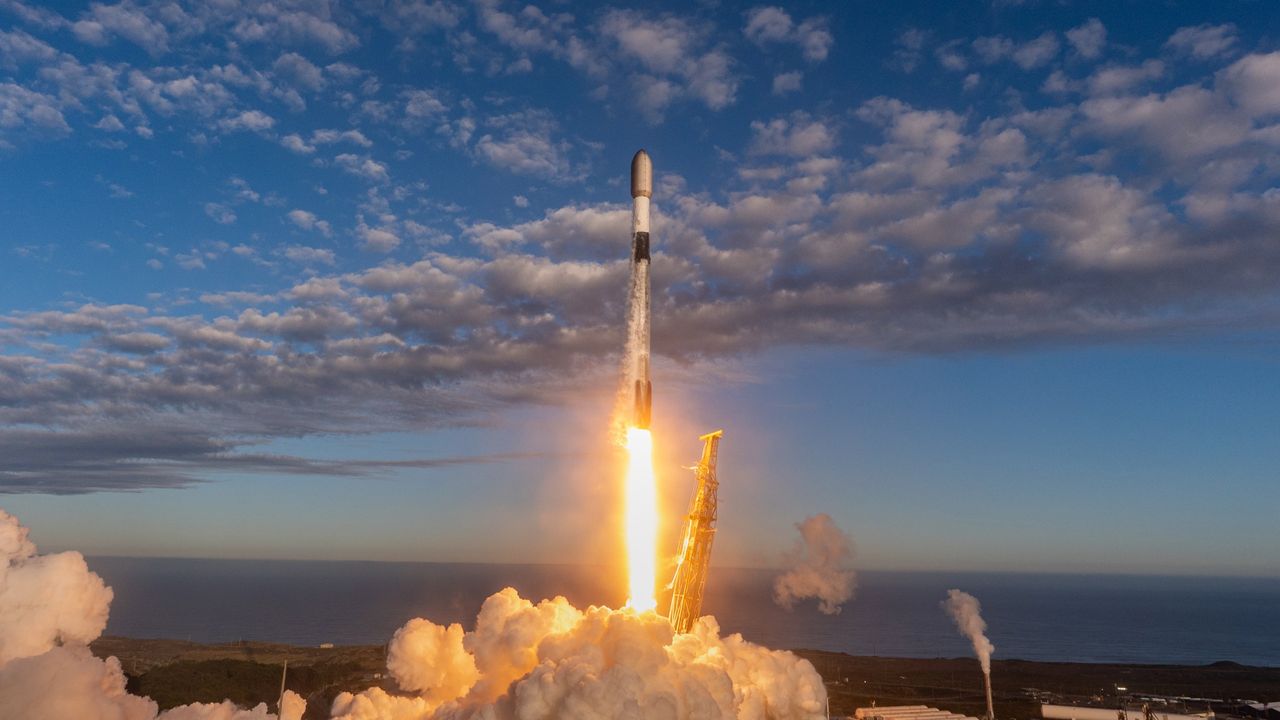
The spacecraft rode to low Earth orbit (LEO) atop a Falcon 9 rocket, which lifted off from California's Vandenberg Space Force Base at 10:26 a.m. EDT (1426 GMT; 7:26 a.m. local California time). The Falcon 9 rose into blue morning skies — something of a rarity for California's central coast, which is often cloaked in fog.
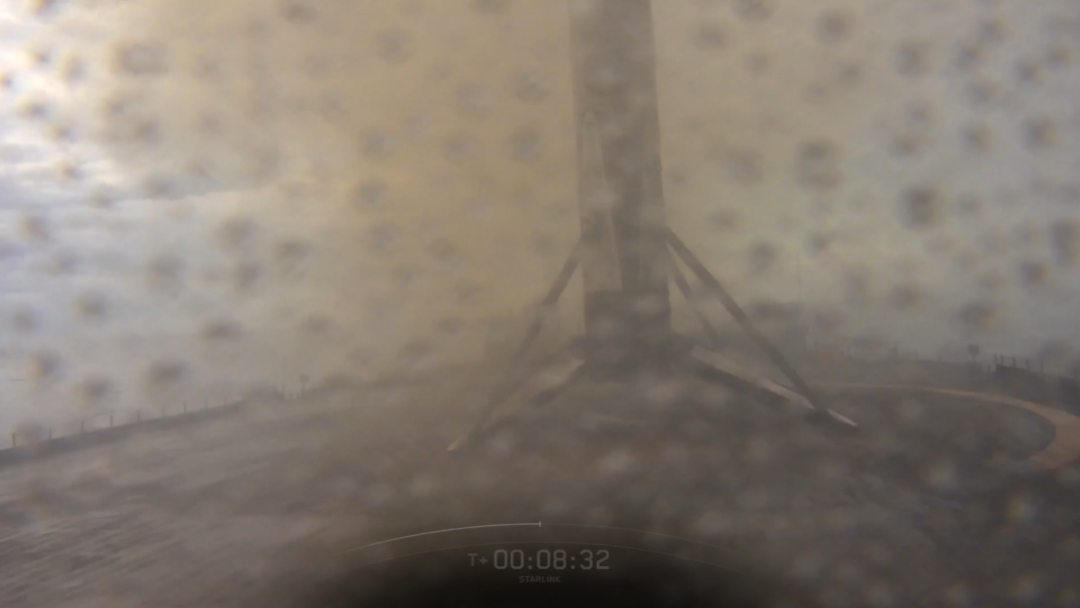
The Falcon 9's first stage came back to Earth as planned 8.5 minutes later, landing in the Pacific Ocean on the SpaceX drone ship "Of Course I Still Love You."
A SpaceX Falcon 9 rocket launches 27 Starlink satellites into orbit from Vandenberg Space Force Base in California on Sept. 6, 2026. (Image credit: SpaceX)
It was the 19th flight for this particular booster, which is designated B1088. This marks about the halfway point to the SpaceX record of 37 flights, which was set by B1067 during a Starlink launch on Aug. 25.
The Falcon 9's upper stage, meanwhile, carried the 27 Starlink satellites to LEO, deploying them on schedule 62 minutes after launch.
SpaceX's sooty Falcon 9 rocket first stage on the drone ship Of Course I Still Love You in the Pacific Ocean after a successful launch and landing on Sept. 6, 2026. (Image credit: SpaceX)
Today's launch was the 103rd Falcon 9 mission of 2026. Eighty of those flights have been dedicated to building out the Starlink megaconstellation, by far the largest satellite network ever assembled. It currently consists of more than 11,000 active spacecraft, according to astronomer and satellite tracker Jonathan McDowell.
Starlink missions fly exclusively out of Vandenberg these days. SpaceX used to launch them from Florida as well, but the company recently put those missions on hold until it gets its Starship megarocket up and running on the Space Coast.
SpaceX will rely on Starship to launch its next-gen Starlink V3 satellites, which are bigger and more capable than the current V2. The company wants to assemble a network of about 100,000 Starlink V3s in LEO, Elon Musk has said.
No rocket had ever reached orbit from Western European soil — until today.
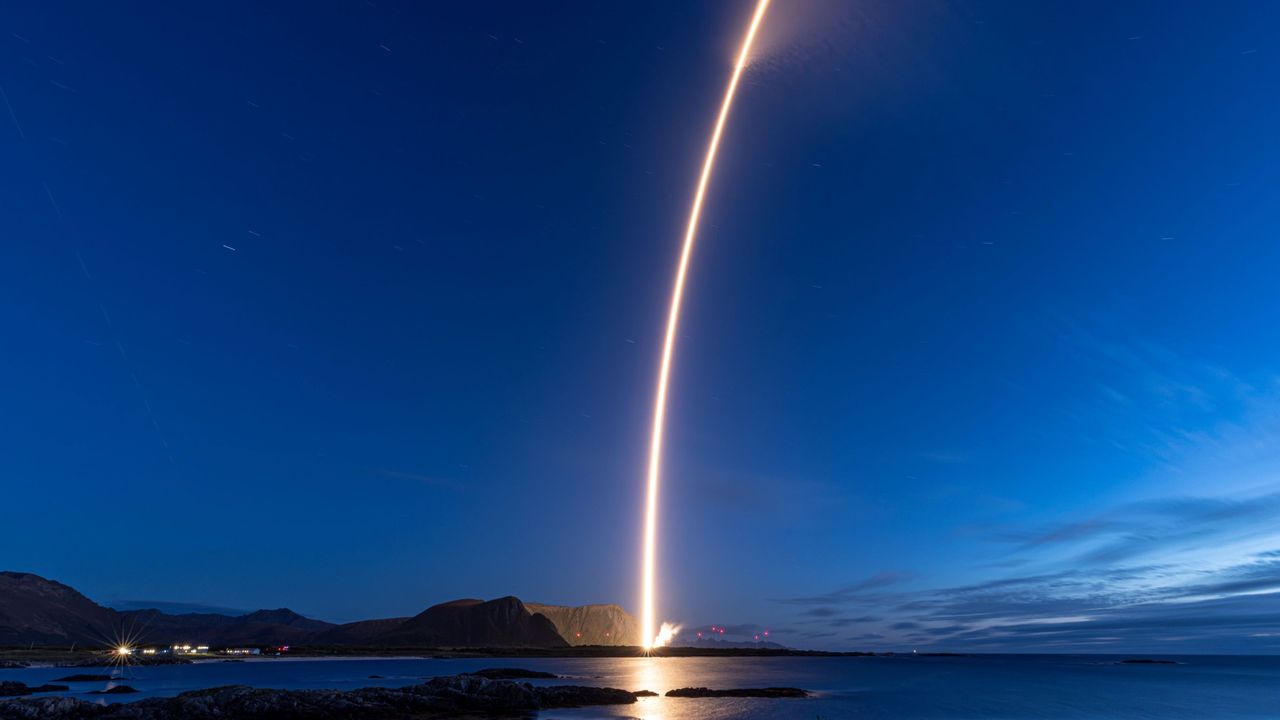
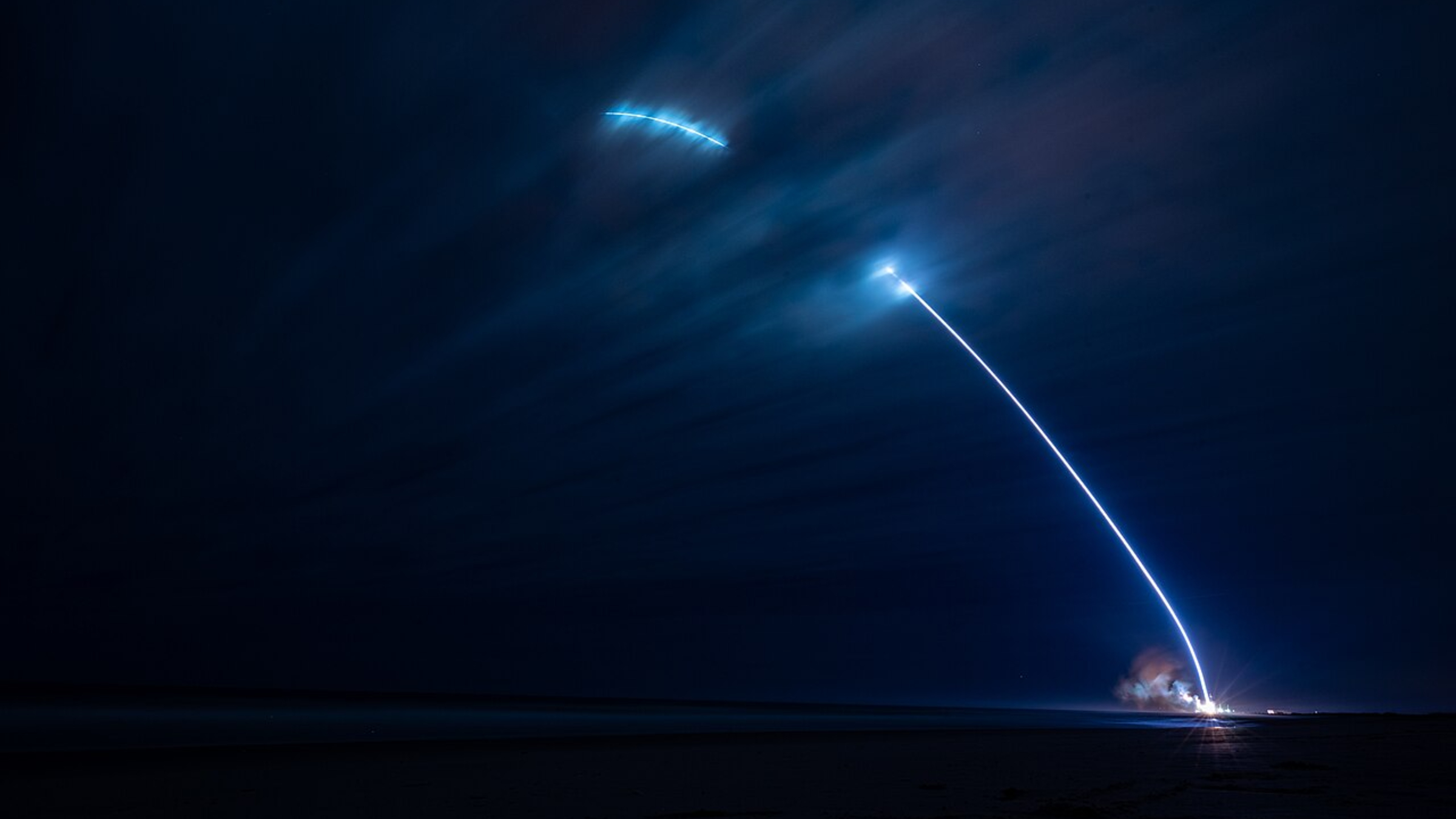
The German company Isar Aerospace launched its Spectrum rocket from Andøya Space Center in northern Norway today (Sept. 5) at 4:12 p.m. EDT (2012 GMT; 10:12 p.m. local time in Norway). A little over seven minutes later, it etched its name into the record books, settling into an elliptical path around our planet.
"This is right now making history — making history for Spectrum, making history for Isar, making history for Europe,” Nikolaos Perakis, Spectrum chief engineer at Isar, said during today's launch webcast, which the company produced in collaboration with NASASpaceflight. "I'm incredibly proud of this massive achievement."
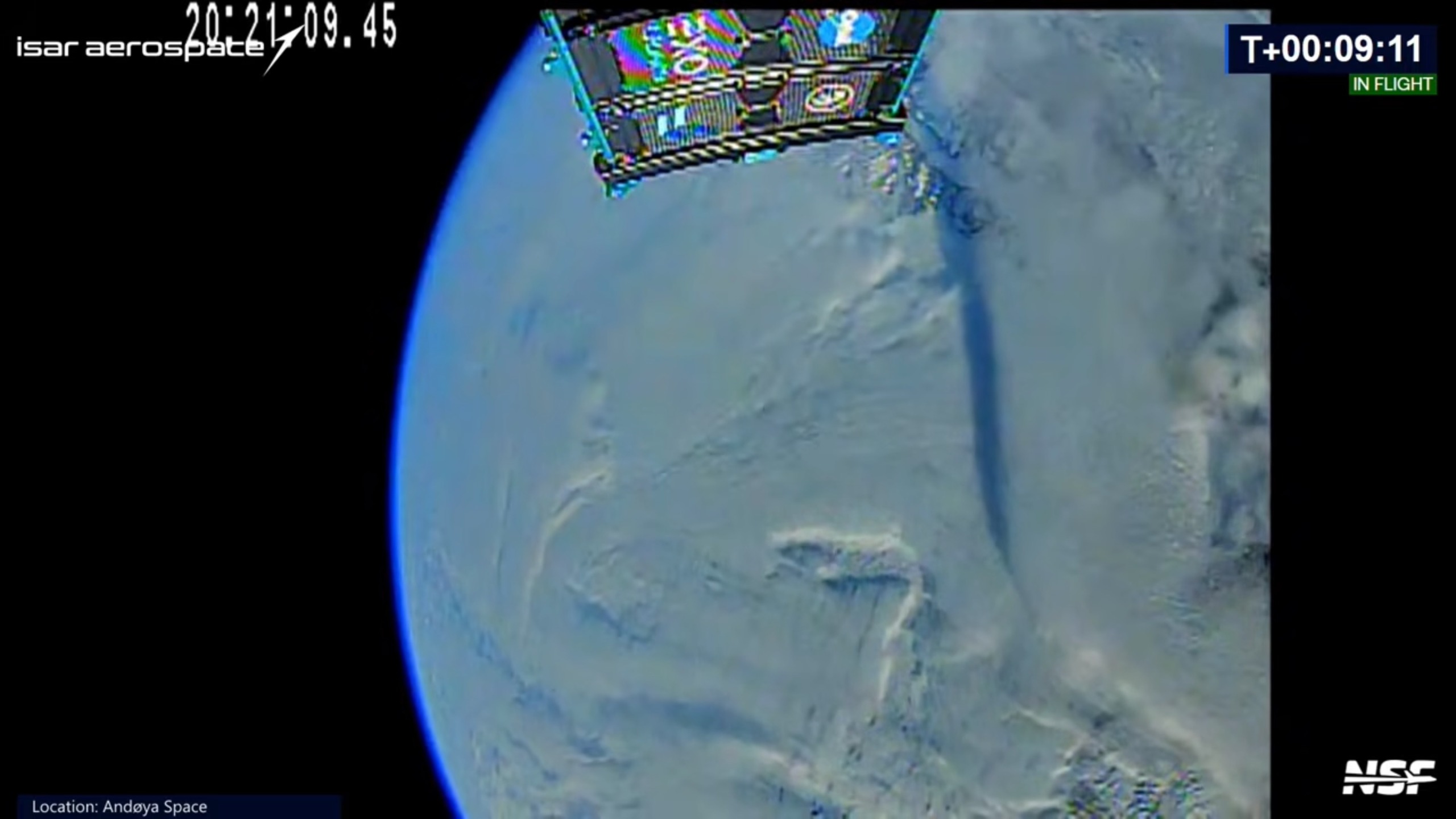
The view from the second stage of Isar Aerospace's Spectrum rocket after it reached orbit on Sept. 5, 2026. (Image credit: Isar Aerospace/NASASpaceflight)
This was Spectrum's second bite at the apple: The two-stage, 95-foot-tall (28-meter-tall) rocket first flew in March 2025, lifting off from Andøya on a flight Isar called "Going Full Spectrum." But, as often happens on debut missions, Spectrum suffered an anomaly that day; it came crashing back to Earth less than a minute after launch.
"A comprehensive investigation was completed within two months of the launch," Isar wrote in a September 2025 update. "The findings identified an unintended opening of the vent valve and a loss of attitude control at the start of the roll maneuver as the initiating events that led to the in-flight failure."
The company took the lessons learned that day and geared up for flight number two, "Onward and Upward," which was originally supposed to launch in January.
An issue with a pressurization valve nixed that plan, however, pushing the flight to March. Bad weather and an intruding boat scuttled multiple attempts that month, and an April 9 try was scrubbed due to a leak in a composite overwrapped pressure vessel.
Isar next tried to fly on June 15 but stood down after "detecting off-nominal behavior in the vehicle's fluid systems," according to a company update that day on X. But the company got that issue under control, rolling Spectrum back to the pad for today's launch.
"We had some delays, obviously," Petrakis said during the webcast. "We had some setbacks, but we came back stronger from them. And it validates this tremendous amount of engineering across all the teams, and that's what brings us into orbit."
Spectrum didn't carry viable payloads on its debut flight, but it did today: Five cubesats and one non-deployable scientific experiment went up on "Onward and Upward."
Spectrum's upper stage needed to deploy those payloads before Isar could declare full mission success. And deployment couldn't occur until after the rocket performed a circularization burn to get out of its initial elliptical orbit, which was estimated to feature a closest approach to Earth of 112 miles (180 kilometers) and a farthest-away point of 311 miles (500 km).
Spectrum was able to check those boxes, ultimately deploying the payloads as planned, Isar announced via X about two hours after launch.
So today was a very big day for Isar, which is thinking big with Spectrum. The company sees the rocket — which can haul about 2,200 pounds (1,000 kilograms) of payload to low Earth orbit — becoming a workhorse launcher of small to medium-size satellites down the road, and its infrastructure supports that vision. Isar says its manufacturing facility near Munich can churn out more than 30 of the rockets per year.
“Flight 2 is a big, big milestone, big success," Petrakis said. "But this is just the beginning. So I'm really looking forward to the next steps."
Spectrum is the first rocket to reach orbit from Western Europe, but others have long flown from a different part of the continent — the Russian part. For example, Plesetsk Cosmodrome has hosted orbital launches for about six decades now. (About 25% of Russia lies in Europe, with the rest classified as part of Asia.)
Editor's note: This story was updated at 4:45 p.m. ET with news of successful launch and orbital insertion, then again at 8:35 p.m. ET with news of payload deployment.
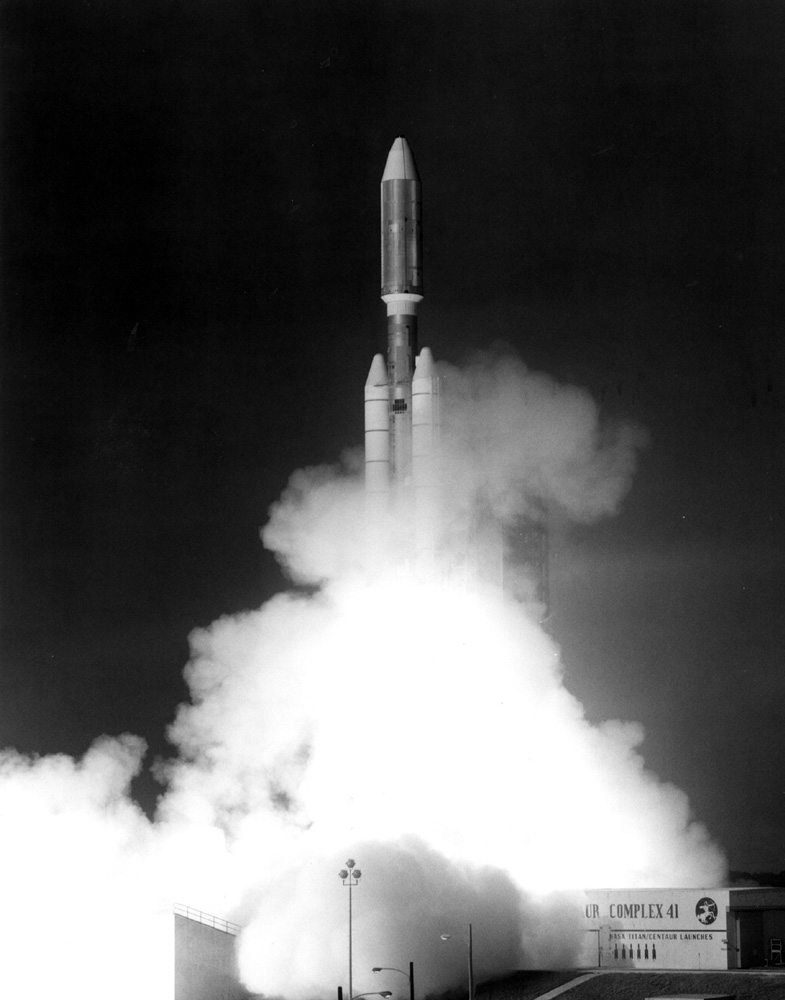
On Sept. 5, 1977, Voyager 1 began its epic journey through deep space with a glorious morning launch from Cape Canaveral, Florida.
Voyager 1 initially launched on a mission to explore the outer planets. After flying by Jupiter and Saturn in 1979 and 1980, the spacecraft took a sharp turn and started heading straight out of the solar system.
The spacecraft's next big encounter will take place in about 40,000 years, when it will fly by another star system. And just in case it comes across any intelligent life out in the universe, it's carrying a golden record with sights, sounds and greetings from planet Earth.
Why it mattered
NASA's Voyager 1 spacecraft launches from NASA's Kennedy Space Center in Florida on Sept. 5, 1977. (Image credit: NASA/KSC)
Voyager 1 is a space exploration icon and NASA's ultimate long-lasting mission.
The spacecraft was part of a two spacecraft mission (Voyager 2 launched a few weeks earlier) to explore the outer solar system like never before. While Voyager 2 launched on a four-planet "Grand Tour" of the solar system, a trajectory that included flybys of Jupiter, Saturn, Uranus and Neptune, it wasn't the fastest of missions.
Voyager 1 launched on a fast-track to Jupiter. In fact, the probe actually overtook Voyager 2 on the way to Jupiter and arrived their first for a flyby in March 1979. A year later, in November 1980, Voyager 1 passed by Saturn in a flyby that shot it out of the solar system.
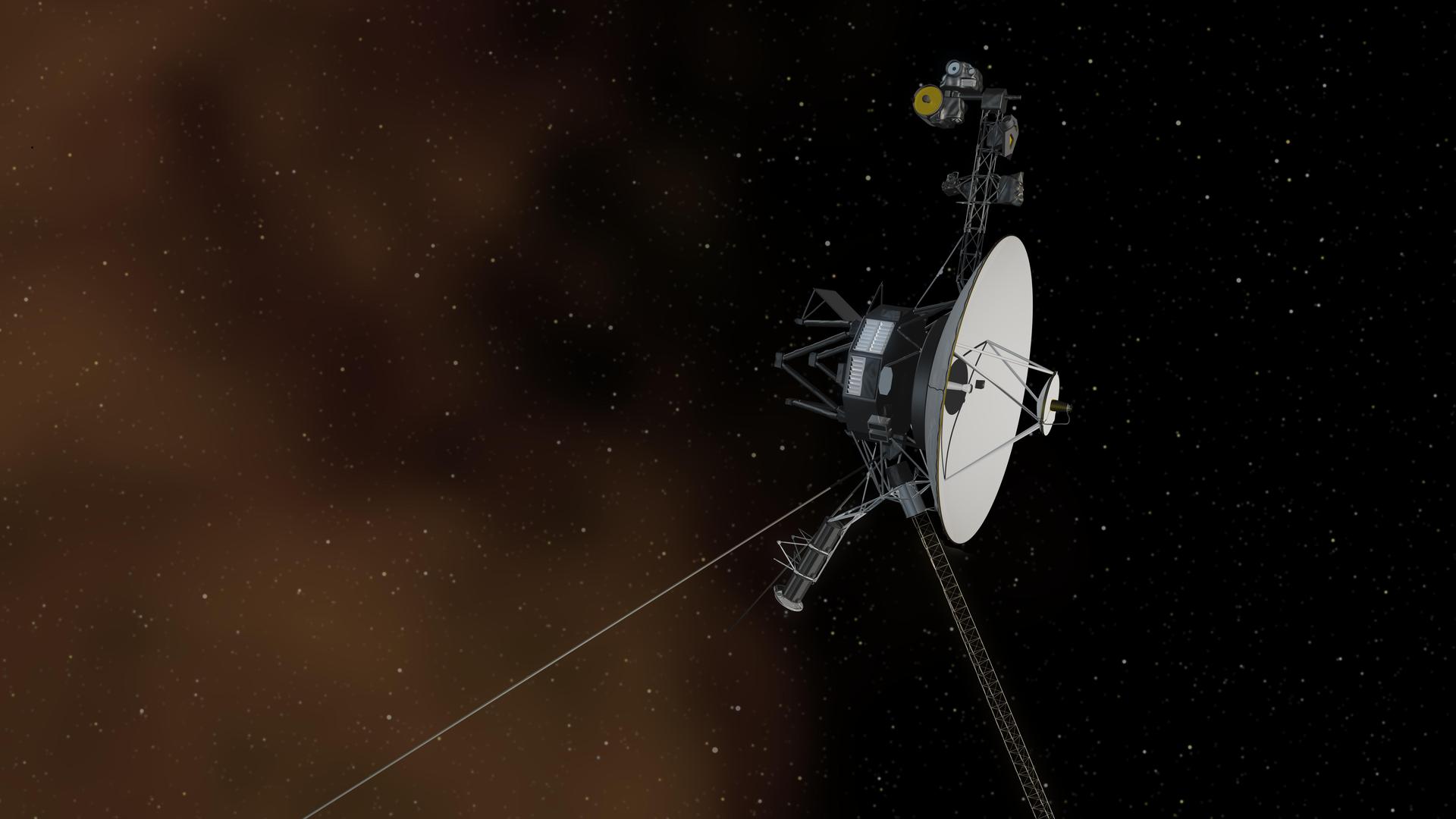
Voyager 1, launched in September 1977, is currently exploring the farthest edges of the solar system. (Image credit: NASA)
By Feb. 17, 1998, Voyager 1 grabbed the record as the farthest human-built object after it flew farther than Pioneer 10 and in 2012, the spacecraft became the first probe ever to enter interstellar space. It remains NASA's farthest flung mission still active today.
Today, Voyager 1 is 15.9 billion miles (171.6 astronomical units) from Earth and still flying. Even 49 years after launch, the spacecraft is still collecting some data, but its nuclear radioisotope thermoelectric generator does not produce as much power as it did at launch, so NASA teams have steadily shut down heaters and unneeded instruments over the decades.
When Blue Origin's New Glenn rocket suddenly blew apart on a Florida launchpad earlier this year, it sent sound waves racing more than 1,000 miles (1,600 kilometers) across the U.S., new data reveals. While imperceptible to human ears, the subtle vibrations have helped researchers analyze the blast in surprising detail.
New Glenn is the largest and most powerful of Blue Origin's commercial rockets. It stands at 320 feet (98 meters) tall, roughly the same size as NASA's Space Launch System (most recently used during the Artemis II mission), and is designed to compete with SpaceX's supersized Starship rockets. New Glenn has launched into space three times: first in January 2025; then again in November 2025, when it launched a pair of NASA spacecraft to Mars; and finally in April this year, when it reached space but failed to deploy a giant communication satellite. During the second launch, Blue Origin successfully landed the rocket's reusable booster on Earth, making it the second company to achieve this feat, after SpaceX.
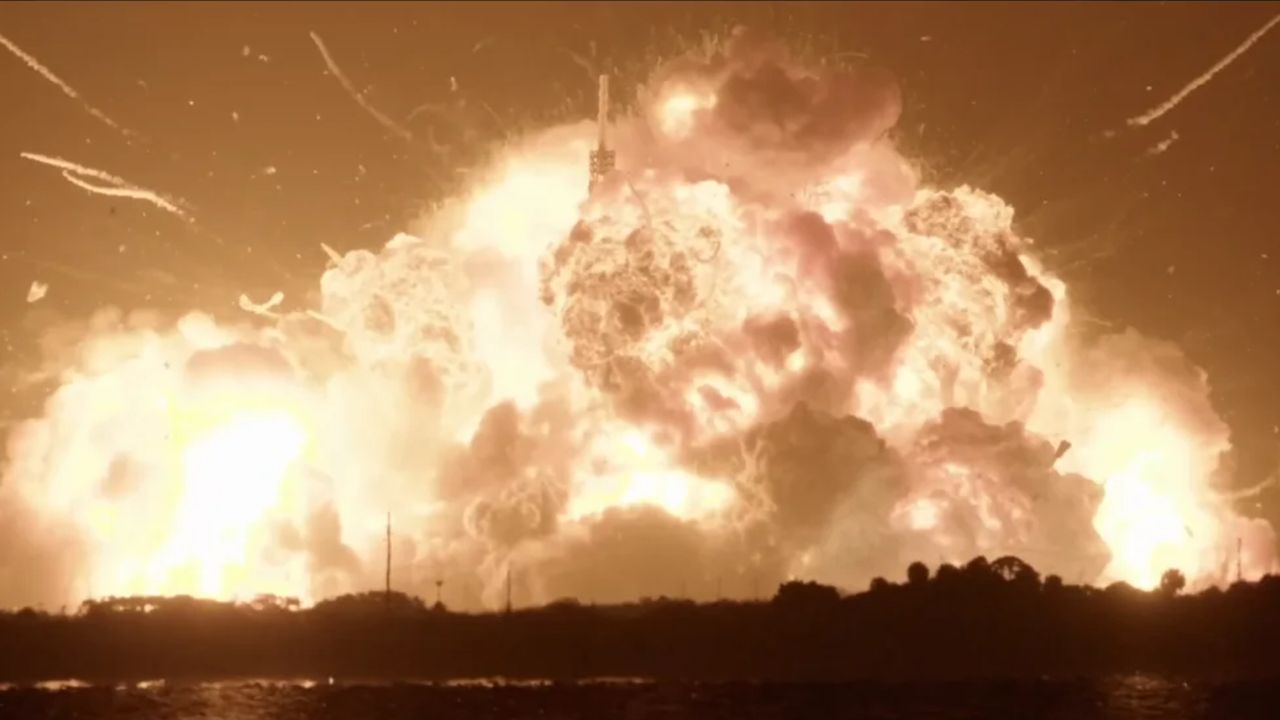
But on May 29, during a static "hotfire test" at Cape Canaveral Space Force Station, shortly before New Glenn's planned fourth launch, the rocket's booster violently exploded without warning. The blast shot bits of flaming debris into the air and unleashed a massive mushroom cloud that briefly lit up the night sky. On Aug. 5, Blue Origin revealed that a faulty oxygen valve likely caused the explosion, according to Live Science's sister site Space.com. (The company has not attempted to launch another New Glenn rocket since.)
The fiery failure is believed to be one of the most powerful prelaunch explosions ever seen. The damage caused to the launchpad alone could take at least a year to fix, according to Ars Technica. This not only affects Blue Origin's ability to launch rockets but could also delay NASA's proposed moon base, which will rely on New Glenn to launch some of its components.
Nobody was hurt by the explosion. But thousands of locals reported hearing a thunderous boom as they were hit with the resulting shockwave, which reached up to 135 miles (217 kilometers) from the launchpad, Florida Today previously reported. However, in terms of the sound produced by this event, this was just the tip of the iceberg.
New Glenn first launched from Cape Canaveral Space Force Station on Jan. 16, 2025, and successfully deployed one of Blue Origin's prototype spacecraft platforms in low Earth orbit. (Image credit: U.S. Space Force)
In a new study, published Aug. 12 in the journal The Seismic Record, researchers analyzed data from special listening stations across the U.S. for signs of infrasound — ultra-low-frequency sound below the range of human hearing — that coincided with the blast. At least 36 stations picked up infrasound signals from the explosion, the farthest of which was located in northeast Texas, about 1,046 miles (1,684 km) from Cape Canaveral Space Force Station.
Detecting such distant low-frequency sound waves not only highlights the scale of the blast but also provided researchers with "a very rare opportunity to study [the] large real-world energetic event" in more detail, study first author Elizabeth Silber, a physicist and planetary scientist at the Sandia National Laboratories in Albuquerque, New Mexico, wrote in a statement.
Based on the frequency and travel distance of the sound waves, the researchers estimated that the explosion had the equivalent power of 0.131 kilotons (144 U.S. tons) of TNT, which is slightly higher than the initial blast that destroyed the nuclear reactor at Chornobyl in 1986, according to a 2009 study.
The most recent New Glenn launch occurred on April 19 this year, when the rocket made it to space but failed to properly deploy a communications satellite. (Image credit: Paul Hennesy/Anadolu via Getty Images)
The team also worked out how much of the rocket's fuel was consumed in the initial explosion. Although the exact amount of fuel in the booster is unknown, they estimate that between 3% and 6% of the rocket’s cryogenic propellant was used up in the initial blast. This may seem low, especially considering the size of the fireball, but it lies within the expected range, researchers said.
"In a large propellant accident, the fuel and oxidizer do not necessarily mix and react all at once," Silber said. "Some material can contribute to the initial blast, while other material can burn more gradually in the fireball and the plume."
The researchers believe that infrasound is an underutilized and potentially valuable tool for tracking spacecraft accidents or other large explosions across the globe.
On Sept. 4, 1962, NASA's Mariner 2 spacecraft performed the first-ever rocket maneuver in deep space as it did a quick mid-course correction on its way to Venus. It had launched just eight days earlier and needed to burn its engines to ensure that its trajectory would take it to Venus.
The midcourse maneuver was necessary because the Atlas-Agena rocket that launched Mariner 2 didn't launch with enough accuracy to get the trajectory right in one shot. When it was about 1.5 million miles (2.4 million km) from Earth, it fired its engines to help steer it in the right direction.
The entire maneuver required five separate commands sent from mission control, telling the spacecraft to roll, pitch, turn and burn its motor. One hundred days later, Mariner 2 flew by Venus and became the first spacecraft to successfully fly by another planet.
Why it mattered
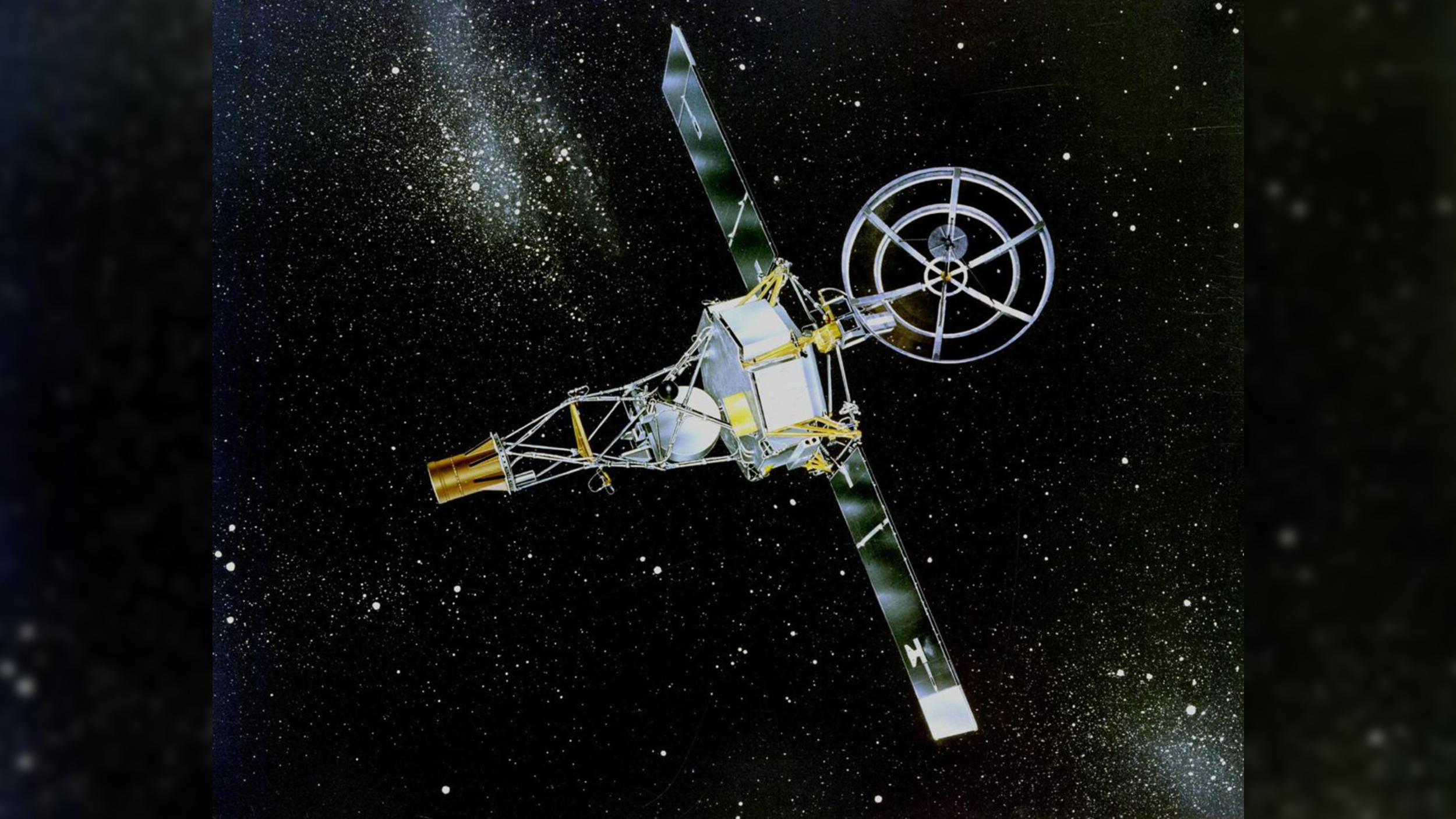
An artist's illustration of NASA's Mariner 2 spacecraft in deep space. (Image credit: NASA)
Tweaking a spacecraft's course in deep space seems a bit routine these days (NASA's newly launched Roman Space Telescope just performed such a feat this week), but in 1962 -- when reaching another planet with a probe was still the stuff of fiction -- it was far from a safe bet.
Mariner 2 launched in Aug. 27, 1962 on what would eventually be the first successful misson to another world. But as stated above, the launch wasn't accurate enough to place Mariner 2 on a direct course for Venus.
That's where the mid-course correction came in. The mission team designed a short engine burn that directed Mariner 2 to roll itself about 9.33 degrees, pitch its nose around 139.83 degrees so that it could turn its rocket engine to face forward, firing the engine, as Time Magazine recounted. The entire process took up to 36 minutes.
Without the mid-course correction, Mariner 2 would have missed Venus entirely. After launch, Mariner 2 was on a heading that would carry it only within 238,600 miles (384,000 kilometers) of the planet's center, then speed on by, according to NASA's official Mariner 2 report. After the course correction, Mariner 2 was on a path to fly by at a much closer distance of 21,607 miles (34,773 km).
Today, such mid-course corrections are a regular part of space mission planning, though they are still critical moments since a mission's success can hinge on their results. In the decades since Mariner 2, space mission designers have achieved amazing feats in mid-course changes, including the now familar gravity assist flybys that allowed NASA to send Voyager 2 on its Grand Tour of Jupiter, Saturn, Uranus and Neptune. Many other missions have achieved such feats.
Even this week, on Sept. 3, 2026, the BepiColombo mission to Mercury performed its own mid-course event, with the mission's Mercury Transfer Module releasing its two spacecraft (one each for Europe and Japan) to begin their arrival at Mercury. The event came eight years after launch and followed a series of maneuvers, including nine planetary flybys to reach the planet.

 Login