David Pogue’s authoring style turns Apple: The First 50 Years turns what could have been names and dates into a richly illustrated journey through Apple’s successes, failures, products, personalities, and untold stories. The print edition combines rare photos with approachable narratives and clever sidebars, while David’s audiobook narration, musical touches, and energetic performance add a different dimension to the story, making the audio edition a must-listen. Get both to have the full experience.
A OpenAI está lançando um novo recurso opcional para o ChatGPT no macOS que pode monitorar suas atividades diárias no computador — abrangendo aplicativos e sites — e transformá-las em memórias e em uma linha do tempo.
Chamado Computer History, o recurso está disponível inicialmente para usuários dos planos Pro, Business e Enterprise. Para usá-lo, é necessário ativá-lo em Configurações » Integrações no aplicativo do ChatGPT para macOS.
ChatGPT can now remember your activity across the apps and websites on your computer.
With Computer History in the desktop app, future interactions feel more personalized and require less explanation. pic.twitter.com/WHZPxPp31R
O ChatGPT agora pode lembrar-se da sua atividade em aplicativos e sites no seu computador.
Com o Computer History no aplicativo para desktop, as interações futuras parecem mais personalizadas e exigem menos explicações.
Segundo a OpenAI, isso permitirá que o ChatGPT localize arquivos, documentos e conversas relevantes para a sua consulta — independentemente de estarem no Google Docs, no Slack ou em uma aba aberta do navegador — sem que você precise reexplicar todo o contexto da sua solicitação.
Isso também será útil para aqueles momentos em que você sabe que leu algo, mas não faz ideia de onde. Naturalmente, a novidade requer que o recurso de Memórias também esteja ativado.
A OpenAI aponta que os usuários terão controle total sobre quais aplicativos e sites o recurso poderá acessar. No macOS, haverá uma nova opção na barra de menus para remover qualquer aplicativo do recurso, além de uma nova configuração no aplicativo do ChatGPT para desktop que permite excluir aplicativos e sites específicos.
Todos esses dados são armazenados localmente; assim, você pode visualizar o que o sistema captura e excluir itens caso não queira que façam parte da linha do tempo. Ademais, o recurso vem desativado por padrão, e você também pode pausá-lo a qualquer momento pela barra de menus.
Como dito, o Computer History está sendo disponibilizado para todos os usuários dos planos Pro, Business e Enterprise — exceto em regiões como o Espaço Econômico Europeu (EEE), o Reino Unido e a Suíça, onde a função será disponibilizada “nas próximas semanas”.
Outras novidades
O ChatGPT também ganhou, recentemente, um punhado de outras novidades que tornam mais fácil incluir documentos e arquivos salvos nas suas conversas, bem como encontrar o que você precisa e retomar de onde parou.
Na web, o texto copiado do Google Docs ou de outra conversa do ChatGPT preserva títulos, negrito, links e listas, tanto durante a escrita quanto após o envio da mensagem.
Adicione arquivos salvos sem precisar carregá-los novamente graças à opção “Adicionar da biblioteca”.
Selecione vários itens da Biblioteca de uma só vez, arrastando o cursor sobre vários arquivos ou pastas para selecioná-los em conjunto.
A busca agora inclui pastas e localiza títulos de conversas. Na web, você também pode pesquisar dentro da Biblioteca para encontrar seus arquivos salvos.
No iOS/Android, o ChatGPT consegue identificar quando uma conversa por voz em segundo plano parece inativa, bem como verificar se você ainda está presente e encerrar a sessão caso não haja resposta.
Se o ditado falhar devido a problemas de conexão ou tempo limite, o ChatGPT tenta novamente de forma automática uma vez, permitindo que você conclua a gravação sem precisar recomeçar.
Ao retornar a uma conversa, as respostas já finalizadas aparecem imediatamente, sem aquela reprodução lenta que dava a impressão de que ainda estavam sendo geradas.
Por fim, usuários com o plugin do Google Drive conectado podem agora visualizar e navegar pelos seus arquivos e pastas diretamente na Biblioteca. Seu conteúdo permanece no Drive e, caso você conceda autorização, o ChatGPT pode alterar o arquivo de origem diretamente. O recurso está sendo disponibilizado para usuários dos planos Plus, Pro, Enterprise, Edu, Healthcare e Business na versão web, tanto no modo Chat quanto no modo Work. O suporte para dispositivos móveis chegará em breve.
In 2006, geneticist Bryan Sykes, Professor of Human Genetics at the University of Oxford, published the results of a study that had taken him a decade to complete. His team had collected and analyzed the mitochondrial DNA and Y chromosome of 10,000 volunteers from England, Scotland, Wales, and Ireland, with the aim of reconstructing the […]
Italian archaeologists have discovered a previously unidentified, nearly 4,000-year-old “Tomb of the Giants,” or “Giant’s Tomb,” at Carrarzu Iddia in central-western Sardinia.
The researchers behind the historic discovery said the new structure is part of a larger group of ancient, ‘enigmatic’ burial complexes on the island known as Giant’s Tombs erected by the Nuragic civilization as collective burial sites beginning around 1800 B.C. due to their megalithic structure.
Giant’s Tomb Site Features a Strategic Placement
According to Finestre sull’Arte, the newly discovered Giant’s Tomb had been covered by thick vegetation, helping it to remain hidden for nearly four millennia. However, surveyors from Sardinia’s two Superintendencies of Archaeology, Fine Arts, and Landscape were already involved in the restoration and excavation of the nuraghe located at the same site when they made the unexpected discovery.
Located at an elevation of approximately 800 yards, the newly identified Giant’s Tomb is located on the southern slope of Crastu Littu. The Italian team suspects the site “is of particular interest” due to its strategic location.
For example, the Giant’s Tomb offers a sweeping view of the Macomer plain. The location also includes a clear vantage point to observe the highlands of Abbasanta and Paulilatino, and an unobstructed view as far as the hills of the Nuoro area and the Gulf of Oristano. The team said this view likely conveys the site’s importance within the wider settlement network of Nuragic Sardinia.
Clearing the Dense Vegetation Reveals Striking Details
After identifying and surveying the new Giant’s Tomb’s location, the two project leaders worked with the landowners to clear away the dense overgrowth and earthen debris that had kept it hidden. Ironically, once the site was fully revealed, the team noted that the covering had likely helped to maintain and preserve its excellent condition over the nearly 4,000 years since its construction.
The most prominent features identified on the vast site were two large stone platforms, called protonuraghi, a sacred well, a residential settlement, and an extensive burial ground. A closer examination confirmed that the Giant’s Tomb, which is made from trachyte blocks, retained the expected architectural elements found in similar collective burial sites.
The entrance of the Giant’s Tomb features a rare two-level design.
One identifying feature is the site’s exedra preceding its entrance. According to the Italian team, this architectural component is one of the most representative aspects of previously identified Giant’s Tombs, distinguishing this “monumental” construction type clearly within that of protohistoric Sardinia
Unfortunately, the excavation revealed that some portions of the ancient site had not survived the intervening four millennia completely intact. The authorities suspect that past illegal excavations that have affected many ancient sites could be part of the cause.
Luckily, previous illegal invasions of the site did not remove everything of historical value. For example, the team found ceramic materials inside the structure that document human occupation of the site, in some cases dating back to the earliest stages of the Nuragic civilization.
Site Includes Rarely Documented Dual-Level Construction
Alongside the site’s more familiar features, the team also identified an internal feature they described as ‘rare’ for a Giant’s Tomb: a second level near the entrance. Future studies of this unusual feature may offer insights into this society’s funerary practices and its construction techniques, which the team notes are still poorly understood.
The Italian team also noted the site’s greater significance when within the larger archaeological context of Carrarzu Iddia, noting that the area has yielded traces of human use and occupation covering the times before, during, and after the Roman era.
When discussing the site’s historical significance, the Italian team pointed to the value of so many extraordinary structures and monuments concentrated within one specific area. This overlap allows researchers to chronologically date the new Giant’s Tomb and place its significance within the wider context of the Island’s inhabitants.
Christopher Plain is a Science Fiction and Fantasy novelist and has spent the last six years as Associate News Editor and Head Science Writer at The Debrief. Follow and connect with him on X, learn about his books at plainfiction.com, or email him at christopher@thedebrief.org
Beyond Elon Musk’s interpretation of The Odyssey, Silicon Valley leaders have often misunderstood classic books like Foundation and The Hitchhiker’s Guide to the Galaxy. It’s evident in their tech.
Beyond Elon Musk’s interpretation of The Odyssey, Silicon Valley leaders have often misunderstood classic books like Foundation and The Hitchhiker’s Guide to the Galaxy. It’s evident in their tech.
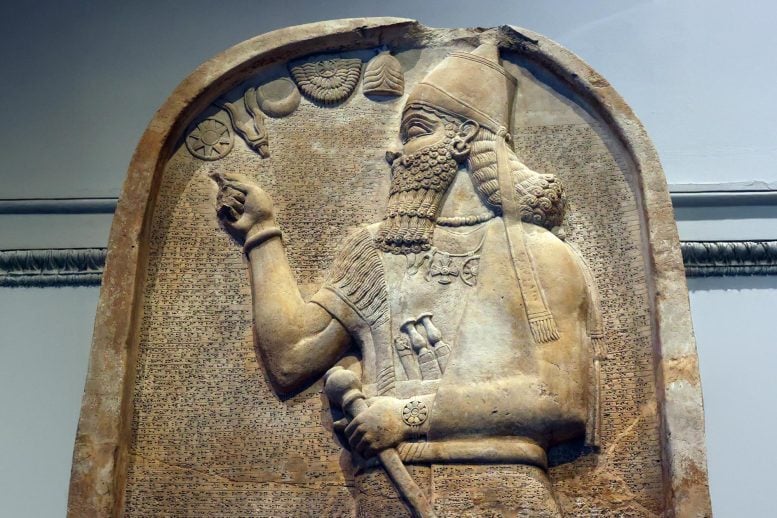
Three missing rulers reveal that Assyria’s official royal chronology may have concealed a more contested political history. For nearly a century, historians have treated the Assyrian King List (AKL) as the standard chronology of Assyria’s rulers, particularly during the empire’s later history. But evidence drawn from inscriptions, tablets, and damaged monuments suggests that this official [...]
Se você acompanha os stories das contas que segue no Instagram, já deve conhecer o botão de reação, representado por um coração. Com ele, é possível reagir a uma postagem sem precisar escrever um comentário — como se estivesse curtindo o conteúdo do story.
Caso assine o Instagram Plus, você pode enviar supercorações (Super Hearts), que deixam os stories dos seus amigos mais especiais, com animações de corações vibrantes que explodem na tela.
Com o app aberto, abra uma publicação dos stories (no topo da aba do seu feed). Ou, se preferir, localize um perfil e abra a bolinha para ver esses posts.
Mantenha o ícone de coração pressionado para ver a animação de supercoração na tela.
Jameela Jamil has dubbed the British 'the most evil people in history' based on the history of the Empire. Read this point-by-point rebuttal by Maxi Gorynski. On the contrary, he says, our Empire was one of the most benign
The Scientific Revolution was significantly influenced by Christian philosophers and scientists, particularly Francis Bacon, who emphasized empirical methods and a rational Creator. The integration of faith and reason laid the foundational principles of modern science. The laws of the physical universe never change and are discoverable using the scientific method.
Analysis of living vertebrates shows that changes in brain evolution helped drive major shifts in reproduction across dinosaurs and birds. A bird egg can look surprisingly oversized for the body that produced it. That puzzle becomes even stranger when viewed through deep time: the largest known bird eggs exceed the largest eggs found from nonavian [...]

 Login