The MacVoices Live! panel examines a class action lawsuit over Apple Photos facial recognition, debating whether on-device processing, user consent, and biometric privacy laws justify the legal action. The conversation moves to TV tracking alternatives after TV Time’s shutdown, then shifts to Bending Spoons’ acquisition of Airtable, exploring the company’s growing portfolio, its business strategy, and the future of database tools in an era of AI-assisted coding development.
Apple’s lawsuit accusing OpenAI of obtaining trade secrets through former employees raises questions about corporate ethics, recruitment practices, confidentiality agreements, and OpenAI’s hardware ambitions. The panel considers the potential legal and financial consequences before examining Apple’s plan to end support for encrypted HFS+ volumes and what users should do with older drives.Panel members include: Chuck Joiner, David Ginsburg, Marty Jencius, Eric Bolden, Brian Flanigan-Arthurs, Jim Rea, Web Bixby, Jeff Gamet, and Mark Fuccio.
Apple’s stock rebounds after recent product price increases, prompting a discussion of customer loyalty, upgrade timing, refurbished options, and long-term confidence in the company. Chuck Joiner, David Ginsburg, Eric Bolden, Jim Rea, and Marty Jencius also examine why advanced Home features may require a 2TB iCloud+ plan, then debates Apple’s rumored foldable iPhone, including price, […]
The launch of a new MacVoices merch store kicks off this session, including product choices, embroidery options, and listener-requested items. Chuck Joiner, David Ginsburg, Eric Bolden, Ben Roethig, Marty Jencius, Jim Rea, Jeff Gamet, and Guy Serle discussion then turn to Apple’s lawsuit involving Jon Prosser, the default judgment being set aside, and what Apple may hope to gain through discovery. The group closes by reacting to Apple Music’s most-streamed artists list and how streaming reflects changing musical demographics.
The MacVoices Live! panel examines backlash around Apple rumor reporting, especially Vision Pro speculation and the impact of click-driven headlines on developers and readers. Chuck Joiner, David Ginsburg, Marty Jencius, Eric Bolden, Brian Flanigan-Arthurs, Jeff Gamet and Mark Fuccio then turn to Bartender’s return after past trust concerns, alternatives for menu bar management, and whether […]
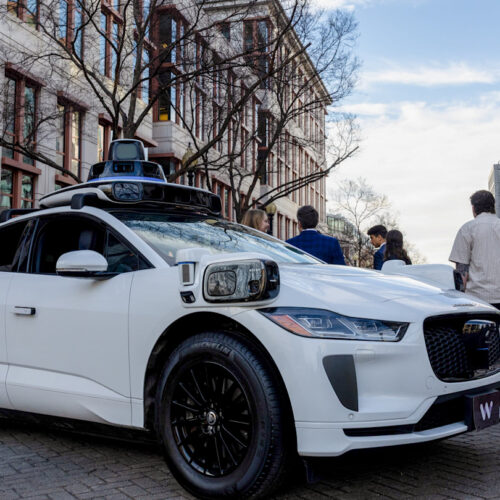
Waymo has sharply increased its lobbying spending as it seeks to persuade US regulators to clear a path for fully autonomous taxi services, intensifying its battle with rival Uber over the future of robotaxis.
The Alphabet-owned company spent more than $1 million between April and June on lobbying the federal government, more than double its outlay a year earlier, according to filings. That put Waymo’s spending close to Uber’s and well ahead of rivals including Amazon’s Zoox and Tesla.
The rise in lobbying comes as Waymo and Uber push competing visions for the future of ride-hailing. Waymo wants a faster route to fully driverless commercial services, while Uber is advocating a staggered rollout in which robotaxis operate alongside human drivers.
Earlier this week, researchers outlined an attack that used a secret input provided by Microsoft 365 Copilot for enterprise to cause the AI assistant to exfiltrate a password present in the user’s inbox. Now, a separate team has devised a similar attack against Grok. The new data theft hack employs a deceptively simple trick to force the Elon Musk-owned large language model to steal user chats and other personal information. At the time this post went live, the assistant continued to cough up the data, despite xAI being informed of it in June.
The lesson from both this week’s episodes—and the countless other ones that have come before it—is that LLMs are incapable of solving the root causes for prompt injections, the most severe vulnerability classes they’re most prone to. That leaves AI developers with no other option but to build a guardrail that steers the model away from the harmful actions. As I noted in Tuesday’s story, the approach is tantamount to a road traffic safety engineer erecting a protective rail around a dangerous bend rather than banking the curve.
Cryptographic Context Injection in the house
Prompt injections exploit LLMs' training to comply with user requests whenever possible. Attackers can capitalize on the predilection by smuggling harmful instructions into emails or webpages the assistant is instructed to summarize. Because LLMs can’t reliably distinguish between content in an email sent by an untrusted party and user instructions entered directly into a prompt, the overly solicitous LLM faithfully follows them. To date, Grok and other LLMs' only recourse is to create guardrails that flag suspicious instructions and forbid them from being executed.
Le Bose QuietComfort SC est un casque sans fil qui mise sur une expérience d’écoute confortable et immersive grâce à sa réduction active du bruit, sa conception circum-auriculaire et sa connexion Bluetooth efficace. Il dispose également d’une autonomie annoncée allant jusqu’à 24 heures et...
Une équipe scientifique vient de dévoiler MatrAIx, une infrastructure open source capable de simuler 8,3 milliards d’individualités virtuelles. Cette modélisation est essentiellement tournée vers le business, car le jumeau numérique de la population mondiale promet de révolutionner le test de...
It’s not every day that attackers can force a frontier AI model to cough up user passwords and other sensitive data without user confirmation. That’s exactly what researchers recently did to Microsoft 365 Copilot for enterprise. Even more unusual is the source they tapped to discover the critical vulnerability that made their exploit possible. Rather than employing reverse engineering or other traditional vulnerability-hunting methods, they asked Copilot. The LLM assistant readily complied.
Researchers at security firm Varonis knew they wanted to create an exploit that would exfiltrate user data when a user did nothing more than click on a link. Like most AI assistants today, Copilot steadfastly refused and made clear that sensitive prompts like that require explicit user consent in the form of a gesture, such as pressing a return key or other key. In response, the researchers peppered Copilot with questions about the guardrails that required user confirmation before the assistant could execute powerful commands.
Loose lips sink ships
The dialog was like a game of 20 questions. Each answer provided a new clue that divulged information about the complex safety mechanism. Why was auto-execution impossible, they asked. What URL structures and deep links were involved? What happens when a page is loaded with input already in the prompt field? Each answer provided a deeper view into the guardrail and its limits. Eventually, Copilot provided a stunning Microsoft trade secret—an undocumented prompt parameter that completely bypassed the requirement for user consent.
Nvidia has disclosed that it owns nearly 123 million shares in SpaceX, further highlighting the chipmaker’s entangled financial relationships with some of its biggest customers.
The $5.5 trillion company owned SpaceX stock worth nearly $21 billion at the end of June, according to an SEC filing on Friday. Elon Musk’s rocket conglomerate’s shares have fallen sharply since its June initial public offering, meaning Nvidia’s stake would now be worth $17 billion.
The disclosure marks a huge pay-off on Nvidia’s investment in xAI, completed in January, shortly before Musk combined the AI lab with SpaceX.
Dutch officials have warned that a high-severity macOS vulnerability that allows attackers to execute malicious code is under active exploitation.
“The NCSC has received a notification indicating that active abuse of this vulnerability has been observed on multiple systems on which port 5900 was accessible from the Internet,” the Netherlands National Cyber Security Centrum warned earlier this week. “In all these cases, root had been accessed on the affected system and a Monero crypto miner had been placed.”
Do you know if your screen sharing is on?
The vulnerability, tracked as CVE-2026-65400, received a patch from Apple last week for macOS Tahoe, Sequoia, and Sonoma. The vulnerability, with a severity rating of 7.1 out of 10, stems from a bug in the macOS screen sharing capability, which allows a remote party to view the screen and control the keyboard and mouse while a machine is turned on. A flaw in the “state management,” which keeps track of preceding events, user interactions, variables, and other system states, is the underlying cause.
After its cloud storage provider went defunct, a PBS affiliate decided to sue a data center provider to regain access to 50TB of TV shows, videos, and other data dating back 70 years.
As reported this week by Current, a trade newspaper covering public broadcasting, St. Louis affiliate Nine PBS filed a lawsuit against Iron Mountain Data Centers on July 28, seeking access to the data. In the litigation filed in Denver District Court, Nine PBS says that its cloud storage provider, Open Source Storage (OSS), used one of Iron Mountain’s Denver data centers to store the channel’s data. However, OSS is being unresponsive, and Nine PBS says Iron Mountain has refused to release its data.
The data in question includes the station’s coverage of the COVID-19 pandemic, East St. Louis’ history, The Great Flood of 1993, and over 11,000 files, The Denver Post reported in July. The lawsuit claims that “most” of the data is “unique and irreplaceable,” according to the Post.
Leading US AI labs such as OpenAI and Anthropic are releasing cheaper models as they fight to retain cost-conscious customers who are switching to cut-price alternatives from Chinese rivals.
The price war comes as rising AI bills push companies to curb usage and seek cheaper models, helping Chinese developers including Moonshot and DeepSeek make inroads with users from Silicon Valley to Europe.
OpenAI recently said that it was slashing prices for GPT-5.6 Luna, its “fastest and most affordable model”, by 80 percent. Anthropic has launched Claude Opus 5, touting the system’s “frontier intelligence... at half the price” of Fable 5, the company’s most capable model.
The Trump administration is recruiting private security firms to conduct federal government-authorized operations, including cyberattacks, against overseas-based criminal organizations that commit hacks on US persons, organizations, or government entities.
In a National Security Presidential Memorandum issued Thursday, US President Donald Trump directed the National Coordination Center (NCC), which operates under the Homeland Security Task Force, to develop a program for conducting specific cyber operations that combat foreign transnational criminal organizations (TCOs). The Departments of Justice and Homeland Security will provide oversight. The lynchpin of that program is bringing in private sector companies to participate.
Devil will be in the still-undefined details
A fact sheet that accompanied Thursday’s memo listed ransomware, sextortion schemes, phishing campaigns, financial fraud, and impersonation scams as activities eligible for private-sector security firms to target. The memo said such firms could “conduct Cyber Surveillance Operations and Cyber Effects Operations” against “cyber-enabled” TCOs. Such groups are defined as “any foreign group that conducts cyber-enabled crime against the United States Government, a United States person, or United States interests, and that is not an institutional part of a foreign government or wholly operated under a foreign government’s direction.”
Terabytes worth of credentials, many belonging to the world’s biggest and most sensitive organizations, have been exposed in a supply-chain attack on LiteLLM, an open source tool that streamlines AI-driven software development. Microsoft, Amazon, Cisco, Samsung, and Salesforce are only a handful of the entities whose access secrets were exposed.
The revelation was posted on Tuesday and Wednesday by security firms CloudSEK and Hudson Rock. CloudSEK said it found cloud keys, repository tokens, SSH keys, Kubernetes secrets, package publishing credentials, environment variables, and AI provider keys that could allow attackers to gain access to more than 2,500 organizations.
40 minutes is all it takes
The credentials were extracted during a 40-minute window in March while the victims used compromised versions of LiteLLM downloaded from the package’s official location in the Python Package Index repository. Hudson Rock said it made the discovery after analyzing a 195TB file that it obtained. Neither firm identified the source of the information.
On Monday, passengers aboard Delta flight 591 going from Las Vegas to Atlanta allegedly spoofed the onboard Wi-Fi, raising the attention of federal law enforcement.
The incident came one day after the DEF CON security conference concluded in Las Vegas and was first described on social media accounts that follow publicly available air-to-ground messages, known as ACARS.
According to the “ACARS Drama” account, a message sent by pilots from the plane stated: “NO INFO AS OF NOW WE HAVE A BUNCH OF PAX THAT WERE AT A CYBER CONFERENCE IN LAS THEY WERE ABLE TO JAM OUR WIFI AND BROADCAST THEIR SIGNAL.”
Google’s Chrome browser has added a new feature that could go a long way in preventing a form of account takeover that’s grown increasingly common as users adopt two-factor authentication, passkeys, and similar protections.
The new Chrome protection is known as device-bound session credentials (DBSCs). The measure stores a unique encryption key in a silicon-resident fortress that’s built into the device running the browser. On Windows machines, this fortress is called a TPM, short for Trusted Platform Module. On macOS and iOS, it’s known as a secure enclave. Other platforms have differing names. Recently released versions of Chrome for Windows and macOS generate a key that’s stored in this fortress.
An antidote to session cookie theft
DBSCs protect against the theft of session cookies, the unique strings of characters that websites store on browsers. Session cookies greatly speed up browsing on sensitive sites that require user authentication. Instead of requiring the exchange of credentials each time a user opens a new site page, the server sets a session cookie that effectively proves the user has already successfully logged in.
Há alguns anos, eu troquei a tela de um iPhone XR da minha esposa em parceria com a iFixit. Pois é, o desafio voltou — desta vez, em um aparelho bem mais recente e complexo: o iPhone 15 Pro Max dela, cuja bateria já estava com apenas 77% de saúde.
Aceitei o convite da iFixit para trocar a peça por uma nova, e topei documentar todo o processo em vídeo para vocês. Divirtam-se:
Para a troca, recebi da iFixit o kit de bateria para iPhone 15 Pro Max, que já vem com todas as ferramentas necessárias, e também o iOpener, aquele saquinho que se aquece no micro-ondas e ajuda muito a amolecer o adesivo que prende a tela ao aparelho.
Confesso que desta vez foi bem mais desafiador do que da última: entre um passo e outro, entre pausas para respirar e conferir o manual outra vez, levei quase 3h do início ao fim. Mas deu tudo certo, e a sensação de ver o aparelho funcionando perfeitamente com uma bateria novinha (e a esposa satisfeita) não tem preço. 😄
Meu muito obrigado à iFixit por mais essa parceria e pelas ferramentas certas para o trabalho. E aí, quem topa o desafio também? 😅

 Login