Reading view
MacVoices #26167: Live! – A New Show, Goodbye BTN, Encryption Fights, Politics, and DuckDuckGo
Review outlines emerging directions in pulmonary arterial hypertension research
Pulmonary arterial hypertension (PAH) is being redefined by molecular biology. Once viewed mainly as a disorder of excessive blood-vessel constriction, the disease is now understood as a progressive process involving vascular remodeling, immune activation, metabolic disruption, and inherited susceptibility. A review published online on June 17, 2026, in the Chinese Medical Journal describes how these interacting mechanisms are reshaping PAH research and opening the door to treatments designed not only to relieve symptoms, but also to alter the disease itself.
PAH is a rare and potentially fatal condition in which the small arteries carrying blood through the lungs become narrowed and structurally damaged. As resistance within the pulmonary circulation rises, the right side of the heart must pump harder to maintain blood flow. Over time, the right ventricle can enlarge, weaken, and fail. Current therapies have improved survival, but many patients continue to experience progressive disease, limited exercise capacity, and an uncertain long-term outlook. The new review was conducted by Dr. Taeil Yang of Gil Medical Center at Gachon University College of Medicine and Professor Wook-Jin Chung of the Gachon Cardiovascular Research Institute in the Republic of Korea.
The authors explain that PAH develops through a complex interaction among several types of cells in the pulmonary circulation. Endothelial cells, which form the inner lining of blood vessels, normally regulate vessel diameter, blood flow, clotting, and repair. In PAH, these cells become dysfunctional and can produce excessive vasoconstrictors while reducing protective signals such as nitric oxide and prostacyclin. Endothelial injury also promotes the recruitment of inflammatory cells and stimulates neighboring smooth-muscle cells and fibroblasts to multiply. The resulting changes thicken the vessel wall and progressively reduce the space available for blood flow.
Inflammation is another central feature of this transformation. T cells, B cells, macrophages, and other immune cells can accumulate around pulmonary arteries, releasing cytokines and growth factors that sustain vascular injury. Rather than being a temporary response to damage, this immune activity may become chronic, reinforcing the abnormal behavior of vascular cells. The review emphasizes that immune signaling is closely connected to endothelial dysfunction and tissue remodeling, suggesting that PAH cannot be fully understood by studying blood-vessel tone alone.
The metabolism of pulmonary vascular cells also changes as the disease advances. Under normal conditions, mitochondria generate much of the energy required for cellular function through oxidative phosphorylation. In PAH, endothelial and smooth-muscle cells may shift toward glycolysis, a pattern resembling the “Warburg effect” observed in cancer. This metabolic reprogramming allows cells to generate energy rapidly while supporting biosynthesis and proliferation. It can also increase resistance to programmed cell death, enabling abnormal cells to persist within the vessel wall. These changes help explain why pulmonary arteries can continue remodeling even when vasoconstriction is medically controlled.
Genetic research has provided some of the strongest evidence that PAH is driven by specific biological pathways. Variants in BMPR2, the gene most commonly associated with heritable PAH, can impair signaling involved in vascular growth, repair, and cell survival. Other genes linked to PAH include SOX17, TBX4, and KCNK3. Several of these genes influence the bone morphogenetic protein, or BMP, pathway and its relationship with transforming growth factor beta, known as TGF-β. When this signaling network is disrupted, the balance between controlled growth and abnormal proliferation can shift, increasing susceptibility to pulmonary vascular disease. Genetic risk, however, is not destiny: environmental exposures, inflammation, infections, hormonal influences, and other biological triggers may determine whether disease develops and how rapidly it progresses.
These discoveries are already influencing treatment strategies. Traditional PAH medicines primarily target pathways that regulate vascular constriction, including endothelin, nitric oxide, and prostacyclin signaling. Newer approaches aim deeper at the mechanisms driving vascular remodeling. Sotatercept has attracted particular attention because it acts on signaling within the BMP/TGF-β superfamily and is designed to restore a healthier balance between growth-promoting and growth-inhibiting signals. By targeting the biology of vessel-wall remodeling rather than simply dilating arteries, the therapy represents a shift toward disease modification. Researchers are also studying seralutinib, which targets growth-factor and platelet-derived growth-factor signaling, as well as immune-directed treatments such as tocilizumab and rituximab. Metabolism-focused therapies remain another active area of investigation.
The review also highlights the growing importance of multi-omics research. Genomics can reveal inherited variants, while transcriptomics shows which genes are active in diseased tissue. Proteomics measures changes in proteins and signaling molecules, and metabolomics captures the chemical products of altered cellular pathways. Combining these layers may reveal why patients with apparently similar clinical diagnoses can have very different disease trajectories or responses to therapy. Such information could eventually help physicians classify patients according to molecular subtypes, identify biomarkers before irreversible vascular damage occurs, and select treatments according to the dominant mechanism in each individual.
Professor Chung argues that the most promising future for PAH depends on connecting laboratory discoveries with carefully designed translational studies and clinical trials. That challenge is substantial because the disease involves multiple interacting cell types and pathways, and because tissue samples from the pulmonary circulation are difficult to obtain. Nevertheless, the expanding molecular framework is changing the goals of treatment. Instead of focusing exclusively on lowering pulmonary artery pressure, researchers are seeking ways to repair endothelial dysfunction, restrain immune activity, normalize cellular metabolism, and reverse pathological remodeling. The field is moving toward precision medicine in which genetic and molecular information may guide therapy, offering patients the possibility of longer-lasting control and, ultimately, recovery of healthier pulmonary vascular function.
Subject of Research: Pulmonary arterial hypertension and its molecular mechanisms and emerging treatments
Article Title: Pulmonary arterial hypertension from a translational perspective: Bridging pathophysiology and treatment
News Publication Date: 17-Jun-2026
Web References: https://doi.org/10.1097/CM9.0000000000004137
References: Chinese Medical Journal, DOI: 10.1097/CM9.0000000000004137
Image Credits: Chinese Medical Journal
Keywords: Pulmonary arterial hypertension; PAH; BMPR2; SOX17; TBX4; KCNK3; BMP signaling; TGF-β; vascular remodeling; endothelial dysfunction; inflammation; metabolic reprogramming; sotatercept; seralutinib; precision medicine

Telo raises its tiny electric truck’s tow rating to 8,000 lbs

Telo is raising the tow rating on its Mini-sized electric truck to 8,000 lbs, up from the 6,600 lbs it previously advertised.
The startup says months of real-world towing convinced it the little MT1 can safely pull more than a truck that size looks like it should. That new number puts a 152-inch pickup roughly on par with a base Ford F-150.
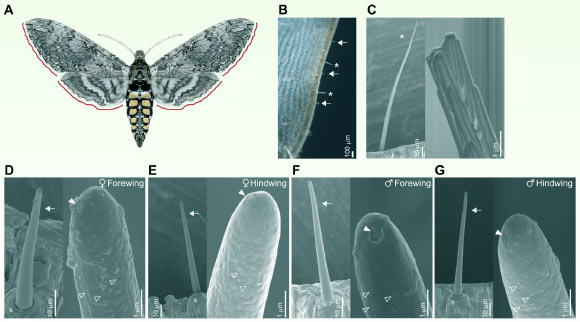
Moths Can Smell With Their Wings, Researchers Say

Scientists at the Max Planck Institute for Chemical Ecology have found that moth wings are equipped with odor-detecting receptors, suggesting the insects use their wings -- not just their antennae -- to sense chemical cues in the air while flying.
The post Moths Can Smell With Their Wings, Researchers Say appeared first on Sci.News: Breaking Science News.
Frequency-Dependent Deep Brain Stimulation in Motor Thalamus Alters Speech and Swallowing
A team of neuroscientists has reported that deep brain stimulation (DBS) targeted to the motor thalamus can reshape how the brain controls both speech and swallowing—and crucially, that the outcome depends on stimulation frequency. The findings, from experiments reported in Nature Communications (2026), suggest that “tuning” DBS parameters may offer more refined control over complex, real-world behaviors than previously possible.
The study centers on motor-thalamus DBS, a strategy explored for movement disorders and related symptoms. Instead of treating stimulation as a single fixed setting, the researchers tested multiple frequencies and monitored changes in speech-related signals and swallowing performance. This frequency sensitivity points to circuit-level dynamics where different stimulation rates engage distinct neural processing modes.
In practical terms, the results imply that higher or lower frequencies may preferentially drive or suppress specific pathways that contribute to oral motor timing. Speech production relies on precisely coordinated patterns of muscle activation, airflow, and sensory feedback; swallowing requires rapid, sequence-based control to protect the airway. Alterations in these timing networks could explain why DBS can influence both functions simultaneously.
The authors describe the effects as frequency-dependent, meaning that the same DBS target produces divergent outcomes when the pulse rate changes. Such divergence is consistent with the idea that stimulation can shift synaptic interactions, firing synchrony, and network oscillations within the thalamocortical loop. When the stimulation rhythm matches intrinsic circuit oscillations, the brain may stabilize certain motor programs; at other rates, it may destabilize them.
Importantly, the work frames DBS not only as a way to modulate symptoms, but as a potential tool for “behavioral steering.” If translated to clinical settings, clinicians could adjust DBS frequency to reduce speech side effects while maintaining or improving swallowing safety, rather than relying on a one-size-fits-all configuration.
The study also highlights an often-overlooked challenge: therapies optimized for movement may inadvertently affect speech and swallowing, both of which share overlapping motor control resources. Frequency tuning could become a lever for mitigating such trade-offs, improving quality of life for patients who already depend on DBS.
While the research is mechanistic, its implications are immediately viral-science-worthy: the possibility that a single hardware intervention can be dynamically optimized for nuanced functions. The next step will be confirming how these frequency effects scale across different individuals and disease states.
As DBS devices become more programmable, the field is moving toward personalized stimulation “dial settings.” This report adds to that momentum by providing evidence that the motor thalamus does not respond uniformly—frequency matters, and the brain appears to treat different pulse rates as different control regimes.
Subject of Research: Deep brain stimulation (DBS) targeted to the motor thalamus and its frequency-dependent effects on speech and swallowing.
Article Title: Frequency-dependent effects of motor thalamus deep brain stimulation on speech and swallowing.
Article References: Tang, L.W., Grigsby, E.M., Damiani, A. et al. Frequency-dependent effects of motor thalamus deep brain stimulation on speech and swallowing. Nat Commun (2026). https://doi.org/10.1038/s41467-026-75588-3
Image Credits: AI Generated
DOI: 10.1038/s41467-026-75588-3
Keywords:
The CDC Has a Cyclospora Lab. DOGE Downsized It Last Year
The Truth About the “Brains Behind Burnham”
"Is Miatta Fahnbulleh the brains behind Burnham?" asks the New Statesman this week, even coining the term "Fahnbullehism". No, says Charlotte Gill: it's the brains behind Fahnbulleh that we need to be looking at.
The post The Truth About the “Brains Behind Burnham” appeared first on The Daily Sceptic.
New Feathered Dinosaur from China Had Peacock-Like Tail

A new genus and species of four-winged pennaraptoran dinosaur from the Early Cretaceous of northern China is adding another twist to the story of how birds evolved from their dinosaur ancestors.
The post New Feathered Dinosaur from China Had Peacock-Like Tail appeared first on Sci.News: Breaking Science News.
Angela Rayner Calls for Benefits Hike in Bid to Join Burnham’s Team
Angela Rayner has been burnishing her Left-wing credentials this morning with a call for a hike in benefits as she joined other Labour big beasts in bidding to join Andy Burnham's top team.
The post Angela Rayner Calls for Benefits Hike in Bid to Join Burnham’s Team appeared first on The Daily Sceptic.
PowerSled saves fuel while bringing portable power to job sites

Powered trailer concepts aren’t new, but they typically focus on solving a single problem, whether that’s reducing fuel costs or powering a reefer unit or utility. The new PowerSled concept is a bit different, promising construction crews the ability to do both.
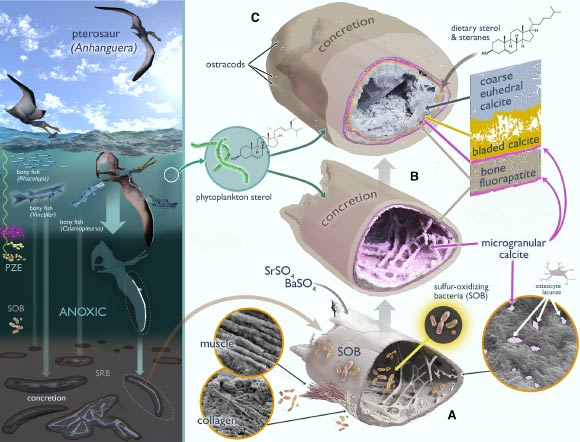
113-Million-Year-Old Pterosaur Fossil Reveals What Flying Reptiles Ate

A 113-million-year-old pterosaur fossil from northeastern Brazil has yielded rare evidence of soft tissues, organic molecules and chemical traces of a diet heavy in fish and cephalopods such as squid or nautilus relatives.
The post 113-Million-Year-Old Pterosaur Fossil Reveals What Flying Reptiles Ate appeared first on Sci.News: Breaking Science News.
“You Have 72 Hours”: Ultimatum for Starmer as Burnham Plots Left-Wing “Path for Britain”
Keir Starmer has been given 72 hours to quit with "dignity" or face a full-blown coup following Andy Burnham's by-election landslide as the challenger plots a Left-wing "path for Britain".
The post “You Have 72 Hours”: Ultimatum for Starmer as Burnham Plots Left-Wing “Path for Britain” appeared first on The Daily Sceptic.
The Day That Satire Died in Britain
Prof James Alexander has pinpointed the day that satire died in Britain: it was in 2015, when Private Eye launched its podcast, and therefore confirmed it was just another tedious organ of the right-on liberal Left.
The post The Day That Satire Died in Britain appeared first on The Daily Sceptic.
Rayner’s Workers’ Rights Reforms Trigger Surge in Legal Claims
Britain is facing a surge in people taking their employers to court, with claims up 55% year on year, following Angela Rayner’s sweeping workers' rights reforms.
The post Rayner’s Workers’ Rights Reforms Trigger Surge in Legal Claims appeared first on The Daily Sceptic.
Claude Fable 5 e Claude Mythos 5 são a última geração do modelo de IA da Anthropic mais poderoso do mercado
O Claude Fable 5 é a primeira versão pública da classe Mythos da Anthropic e supera todos os modelos anteriores em praticamente todos os benchmarks testados. Mas chegou ao mercado com salvaguardas tão conservadoras que perguntas básicas de biologia ativam o sistema de segurança.
The post Claude Fable 5 e Claude Mythos 5 são a última geração do modelo de IA da Anthropic mais poderoso do mercado appeared first on Tek Notícias.
Wing drone delivery might not be a novelty anymore
The Left-Wing Plan to Impose a 90% Global Income Tax to ‘Save the Planet’
Celebrated Left-wing economist Thomas Piketty has unveiled a mad new plan to impose a global 90% income tax and 20% wealth tax to 'save the planet'. It proves global quasi-communism was always the real goal, says Ben Pile.
The post The Left-Wing Plan to Impose a 90% Global Income Tax to ‘Save the Planet’ appeared first on The Daily Sceptic.
Wes Streeting’s Attempt to Merge Reform With the SNP, Plaid Cymru and Sinn Fein into a Mega-Threat of “Nationalism” Falls Flat
In his recent resignation speech, Wes Streeting attempted to merge Reform, the SNP, Plaid Cymru and Sinn Fein into a mega-threat of "nationalism" to which he was the antidote. But it fell flat, says Dr Nicholas Tate.
The post Wes Streeting’s Attempt to Merge Reform With the SNP, Plaid Cymru and Sinn Fein into a Mega-Threat of “Nationalism” Falls Flat appeared first on The Daily Sceptic.