The sharpest images ever taken of the Sun’s surface reveal ribbons of solar plasma curling into tight, wave-like vortices near the edge of a sunspot — a pattern never before seen on our star. The experiment behind the discovery was designed to push the technical limits of a new camera system, not hunt for newContinue reading "World’s largest solar telescope reveals the Sun’s hidden texture"
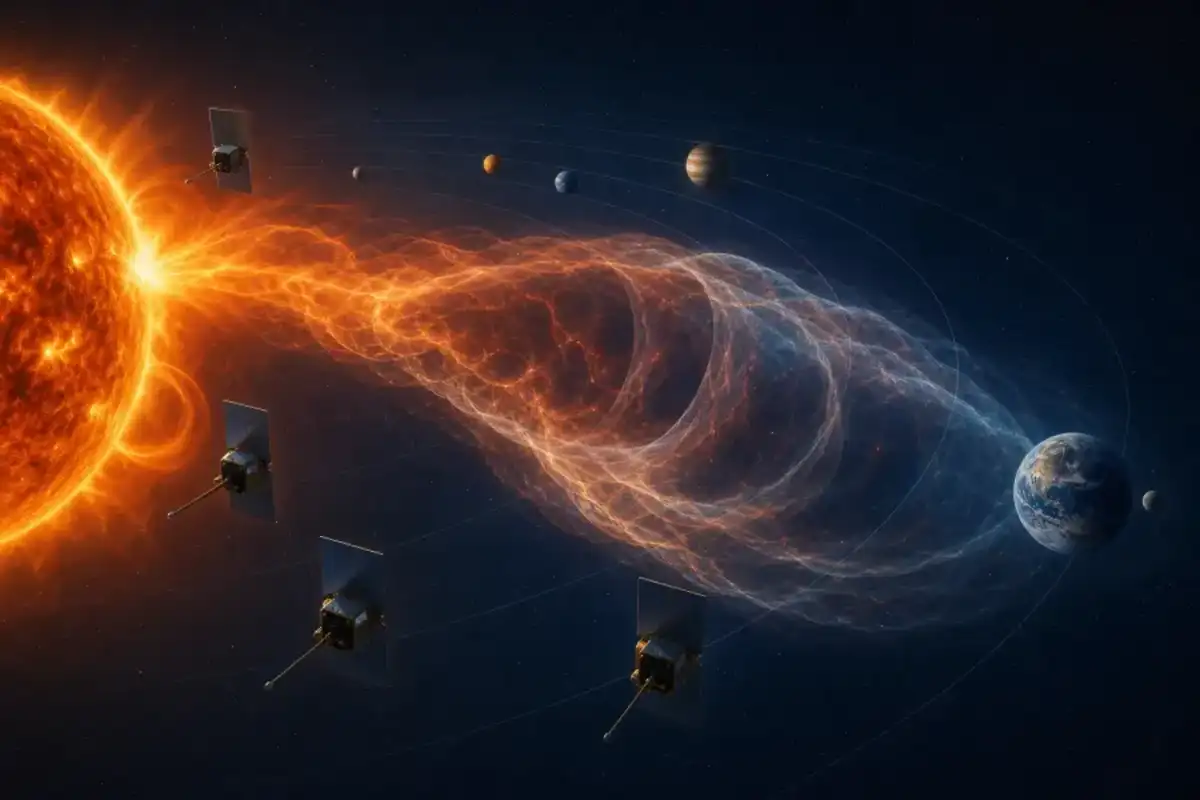
Forecasting a solar storm is a little like watching a wave leave a distant coast and trying to guess when it will reach the beach. Scientists can see a coronal mass ejection (CME) leave the Sun, but its speed and shape can change as it crosses space. By the time it reaches Earth, the warning […]
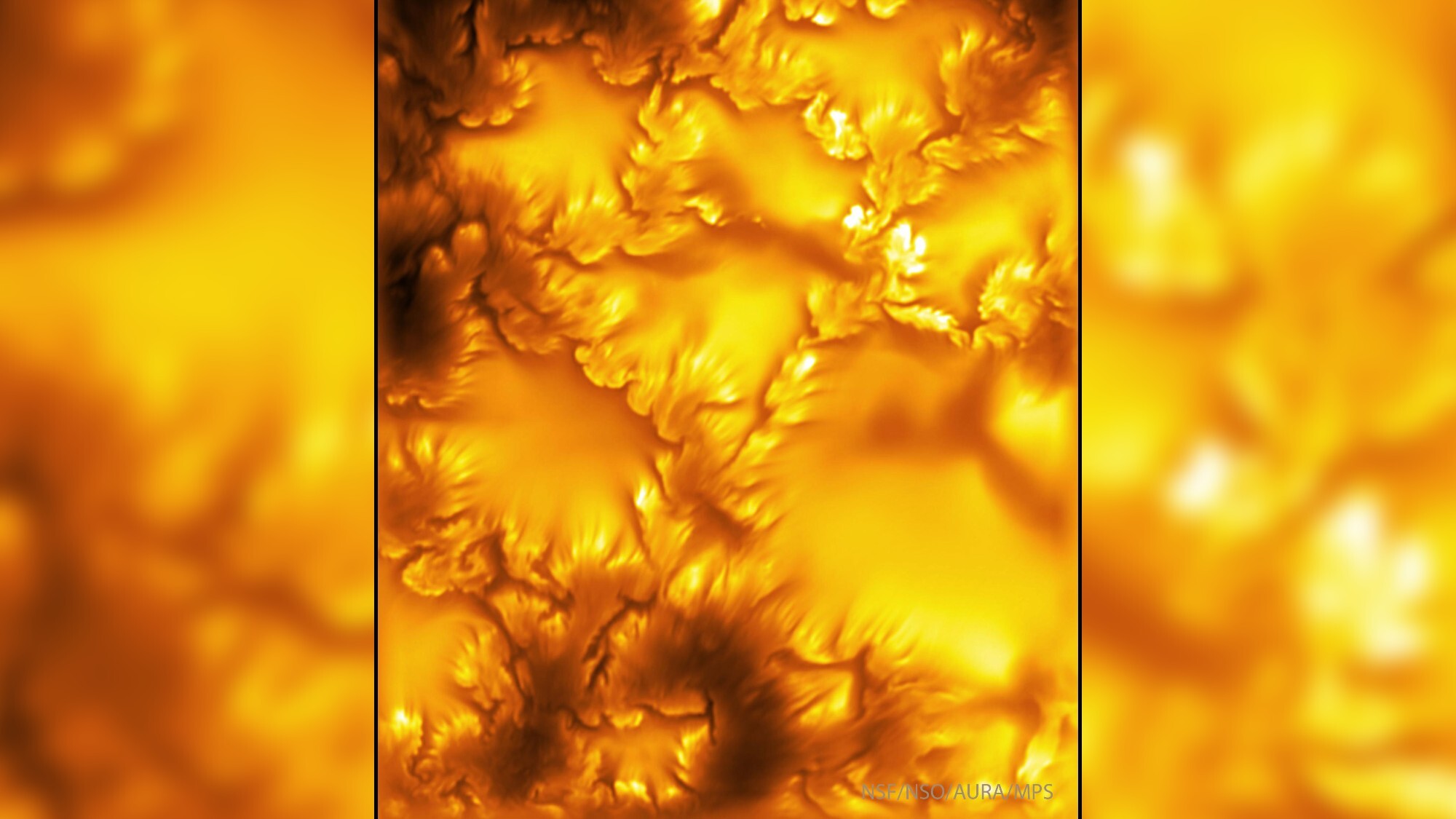
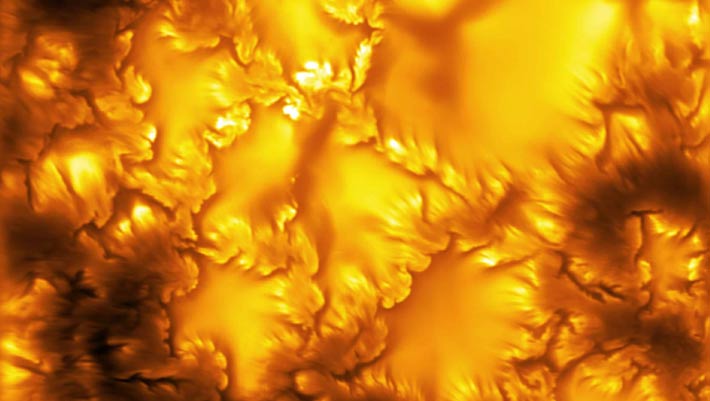
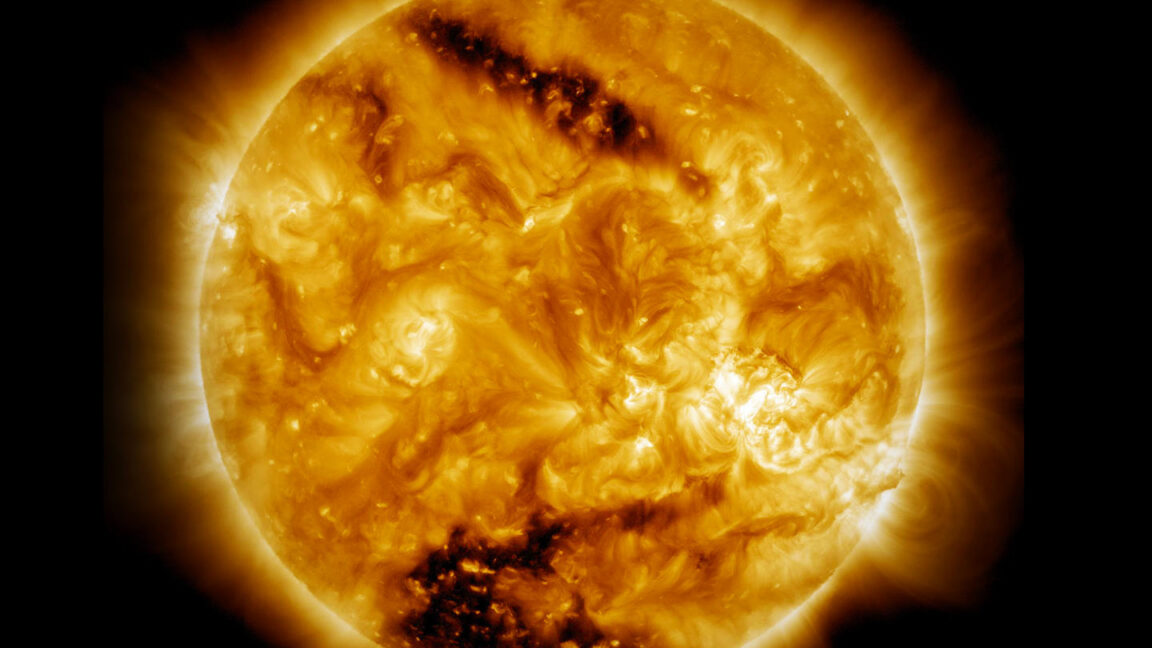
This image of the sun — the sharpest ever snapped — was captured by the NSF Inouye solar telescope. (Image credit: NSF, NSO, AURA, MPS, Inouye Tel)
Scientists have captured the sharpest image ever of our sun's surface. This view has revealed incredible new details about the inner mechanisms driving stellar activity.
What is it?
An international team of researchers using the U.S. National Science Foundation's Inouye Solar Telescope has captured the highest-resolution view of the sun's surface.
In analyzing observations from this telescope, the team, made up of researchers from the National Solar Observatory, the NSF NCR High Altitude Observatory and the German Max Planck Institut für Sonnensystemforschung, discovered strange patterns on the sun's surface. The whirling patterns, they found, are actually evidence of what's called Kelvin-Helmholtz instability (KHI), or instability that happens when there is a change in velocity of fluids.
Why is it incredible?
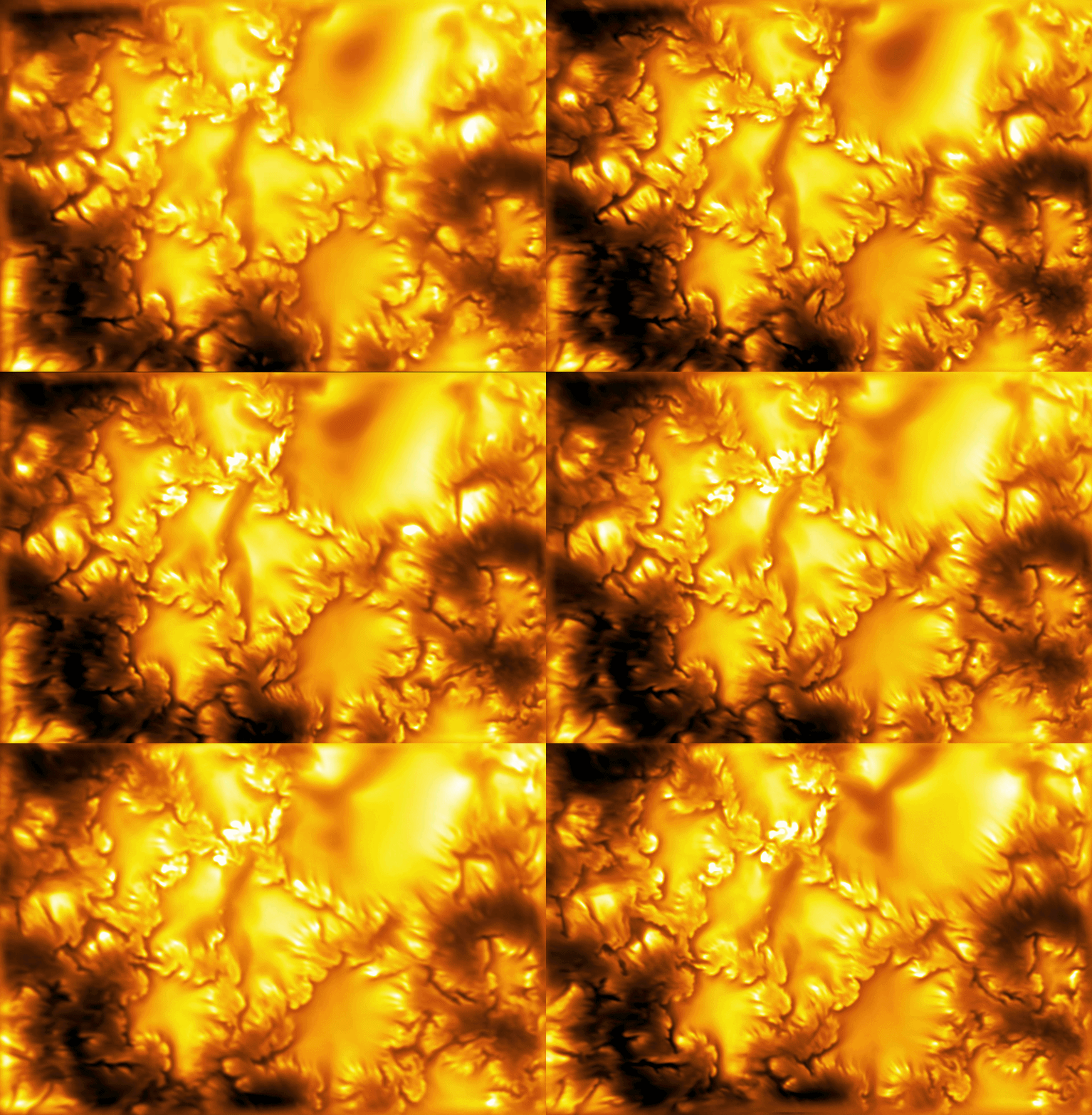
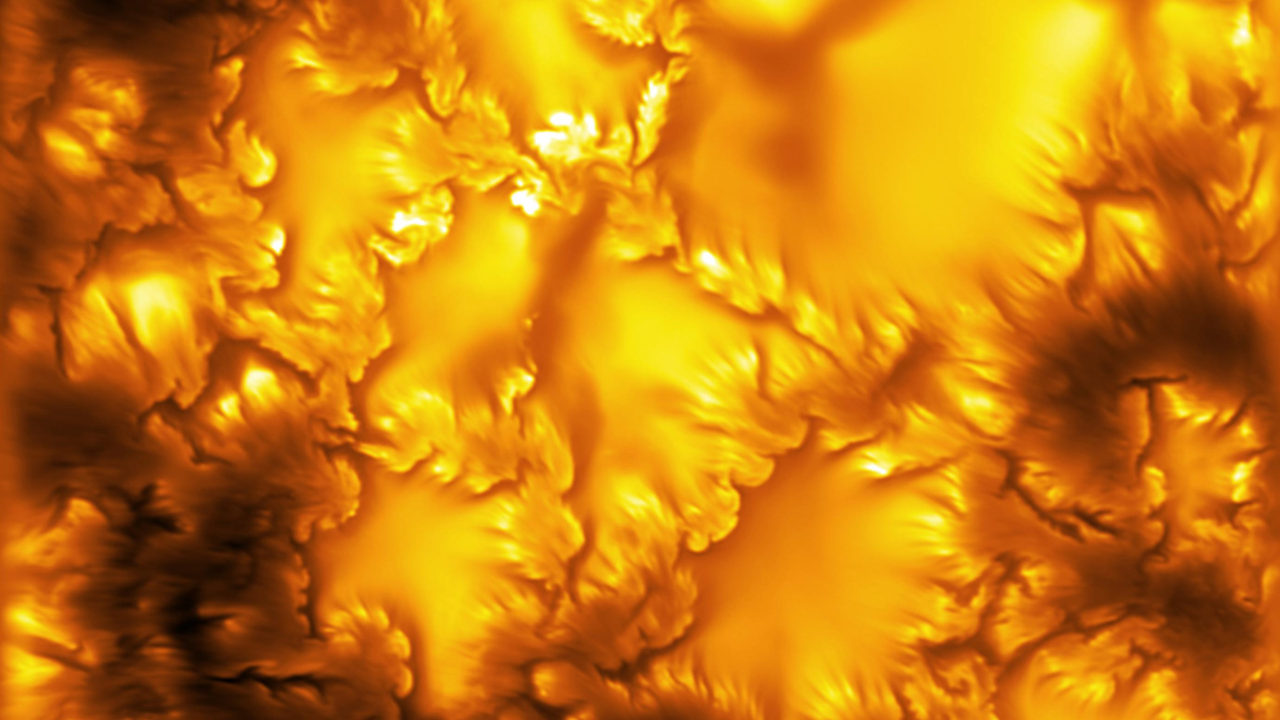
This image is groundbreaking. Capturing the highest-resolution view of the sun's surface is a massive accomplishment, and in the time-lapse video above, you can even see the fluid dynamics on the surface of the sun in motion.
But this view is much more than a beautiful, high-resolution image. These observations have revealed swirls on the sun's surface at the edges of the magnetic areas, allowing the team to identify KHI on the sun's surface. This fluid instability has long been suspected on the sun, but these observations are the first time they have ever been directly seen like this.
“We believe that the discovery of Kelvin-Helmholtz Instability in the solar photosphere, backed up by analysis of numerical simulations, is a major step forward in our understanding of the dynamics and evolution of solar and stellar plasma, and will serve as a basis for future discoveries," David Boboltz, the deputy director at the National Solar Observatory, said in a statement.
A paper describing these findings was published recently in the journal Nature.
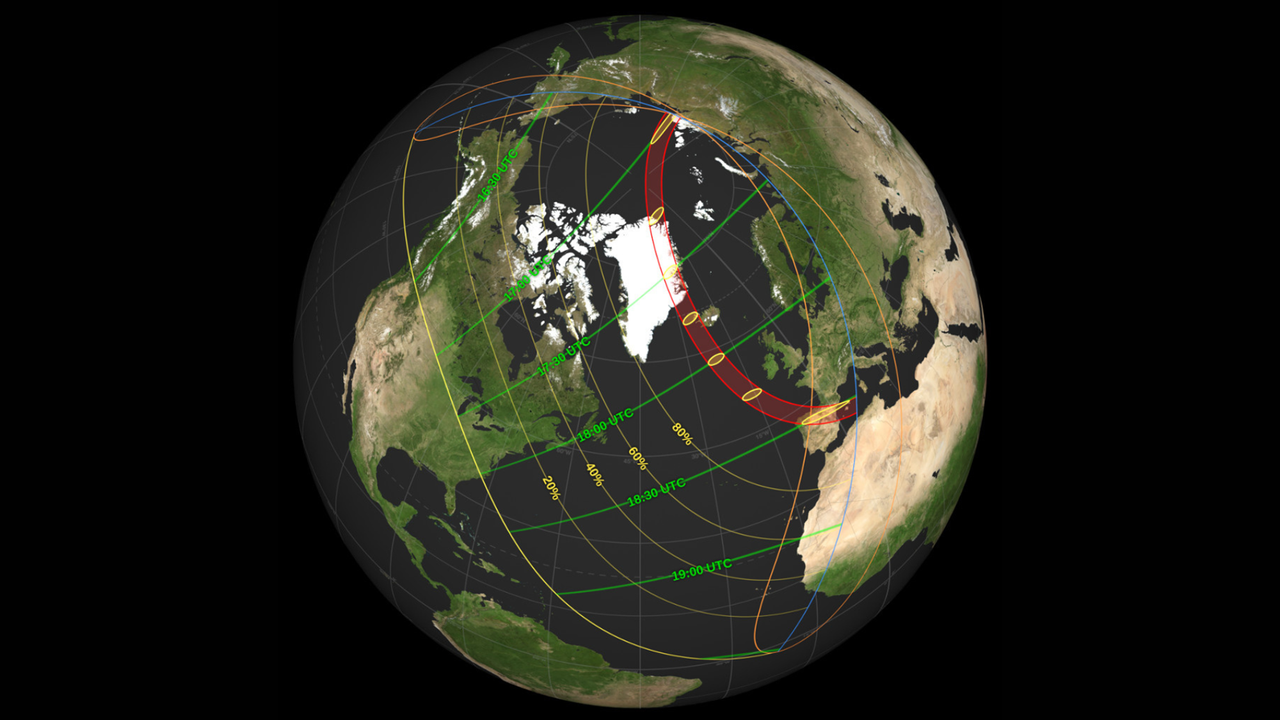
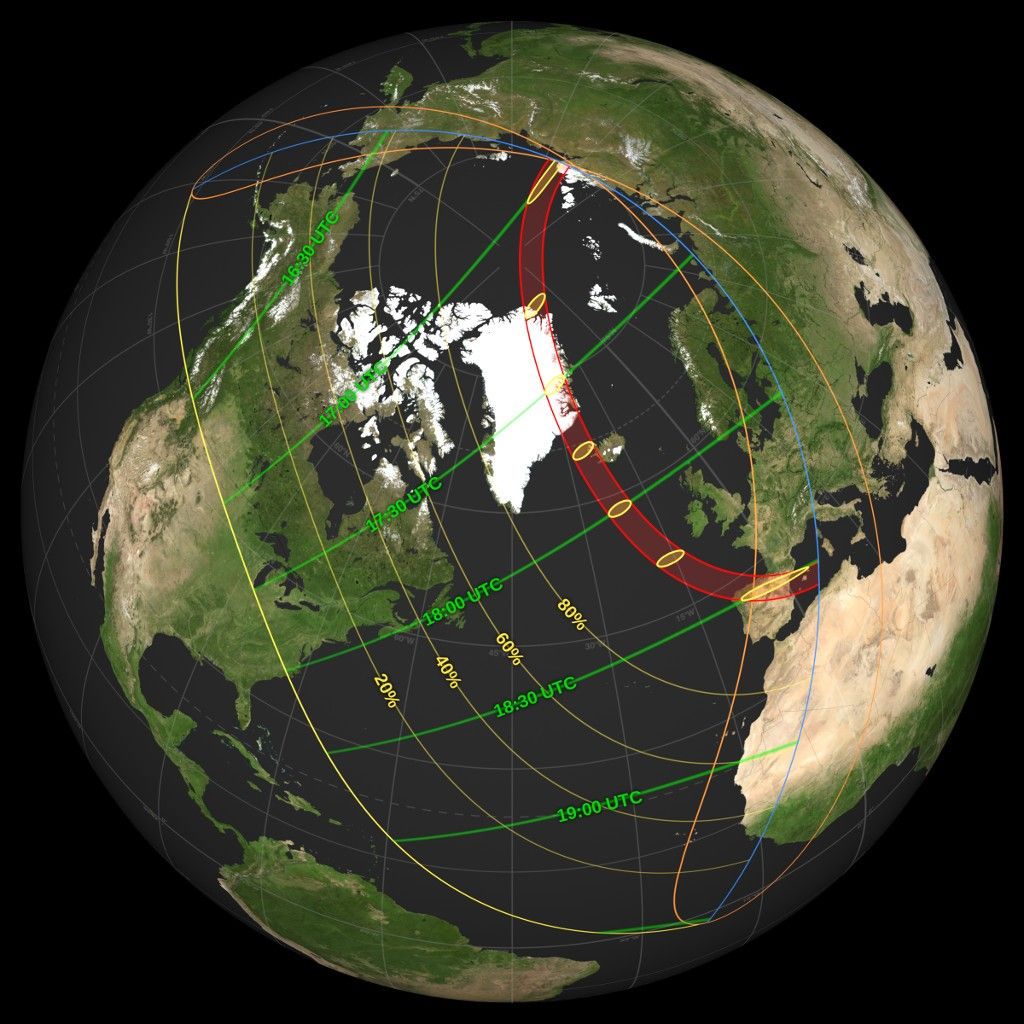
Millions of people across Europe and North America will witness a solar eclipse on Wednesday, Aug. 12, but the event will vary greatly depending on the location. A narrow corridor stretching from Greenland to northeastern Spain will experience a total solar eclipse, much of Europe will enjoy a deep partial eclipse, and parts of North America will see a smaller partial eclipse.
Want to know what you can expect to see from where you are? Here's an overview of the event from various locations, along with the exact viewing times for the Aug. 12 solar eclipse.
Remember, it's important to wear certified solar eclipse glasses during all partial phases of the eclipse. Totality — when the sun's face is completely blocked by the moon — is the only time it's safe to remove your eclipse glasses. (It’s not too late to order last-minute eclipse glasses if you don’t have a pair on hand.)
If you're in the path of totality
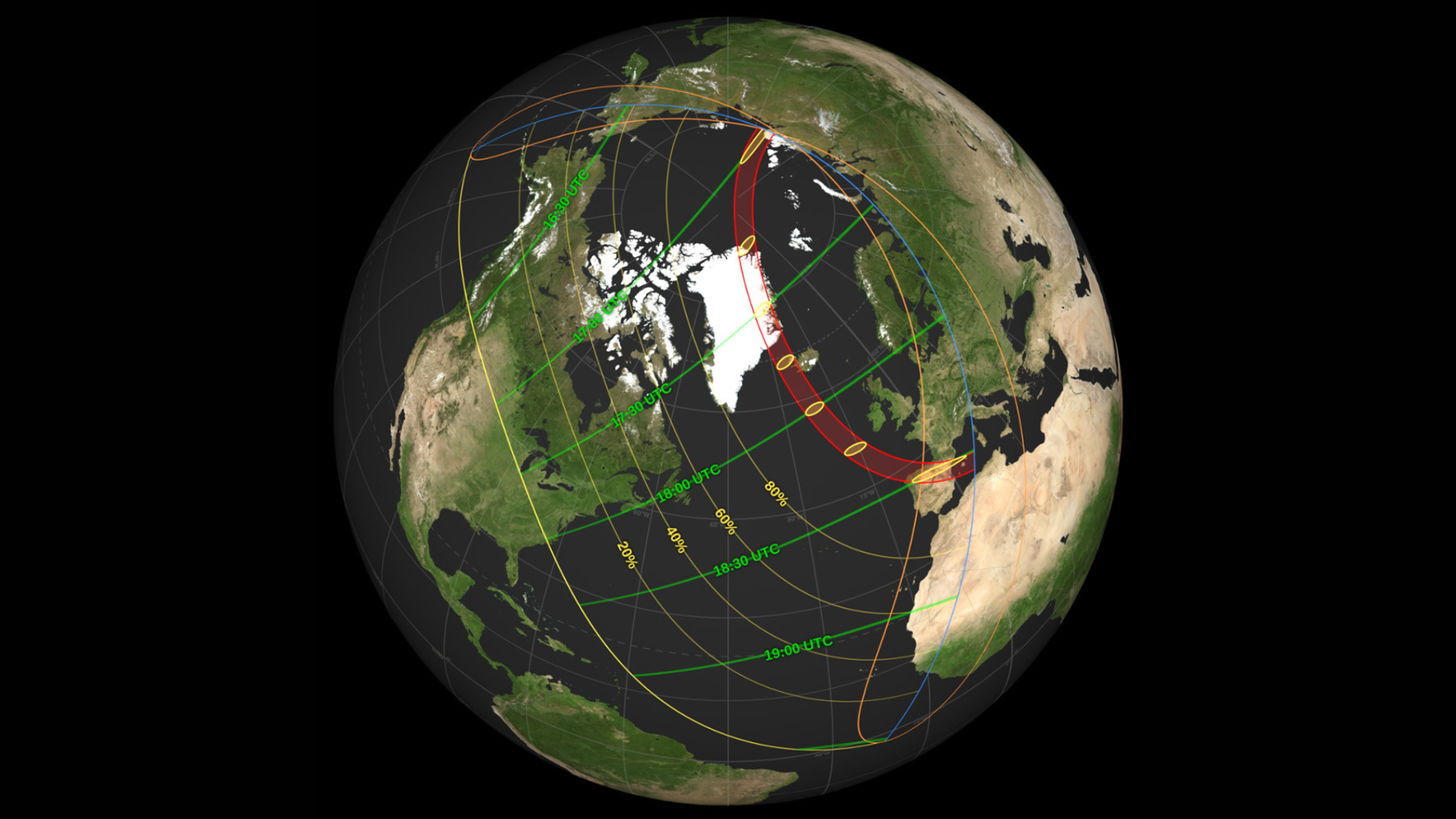
A map of the path of totality (red) for the Aug. 12 solar eclipse. (Image credit: NASA's Scientific Visualization Studio)
If you're fortunate enough to be inside the 180-mile-wide (290 kilometers) path of totality — the path of the dark shadow of the moon — in eastern Greenland, western Iceland or northeastern Spain, you'll experience the moon completely covering the sun for up to 2 minutes, 18 seconds. The sky will darken to twilight, bright stars and planets may appear in the daytime sky, and the sun's spectacular corona (its wispy outer atmosphere) will become visible. Here’s a handy guide to all the gear you’ll need to get the most out of totality.
The closer you are to the centerline of the path, the longer totality will last. But the most important consideration is to stay within the boundaries of the path, because it has a hard edge. Madrid, for example, is barely outside the path and will see a 99.99% partial eclipse — and no totality whatsoever. The partial phases last an hour on each side of totality.
Here's when totality will occur in various locations for the Aug. 12 total solar eclipse:
León, Spain: 8:28 p.m. CEST (1 minute, 45 seconds)
Soria, Spain: 8:29 p.m. CEST (1 minute, 43 seconds)
S'Arenal, Mallorca, Spain: 8:31 p.m. CEST (1 minute, 36 seconds)
If you're in North America
Viewers in North America will see a modest partial eclipse, with the biggest eclipse seen from northern and eastern Canada, Alaska and the northeastern U.S. The farther northeast you are, the deeper the eclipse will appear. Eclipse glasses are essential at every stage of the two-hour event, because there will be no totality. Here are the times of maximum eclipse in various locations:
Iqaluit, Nunavut: 1:24 p.m. EDT (61% eclipse)
St. John's, Newfoundland and Labrador: 3:00 p.m. NDT (53%)
Fairbanks, Alaska: 8:27 a.m. AKDT (37%)
Anchorage, Alaska: 8:21 a.m. AKDT (28%)
Bangor, Maine: 1:53 p.m. EDT (23%)
Quebec City: 1:46 p.m. EDT (24%)
Montreal: 1:45 p.m. EDT (18%)
Boston: 1:55 p.m. EDT (16%)
New York: 1:54 p.m. EDT (9%)
If you want to watch totality from outside the path, there are many live stream options available, including planned streams from NASA and the European Space Agency.
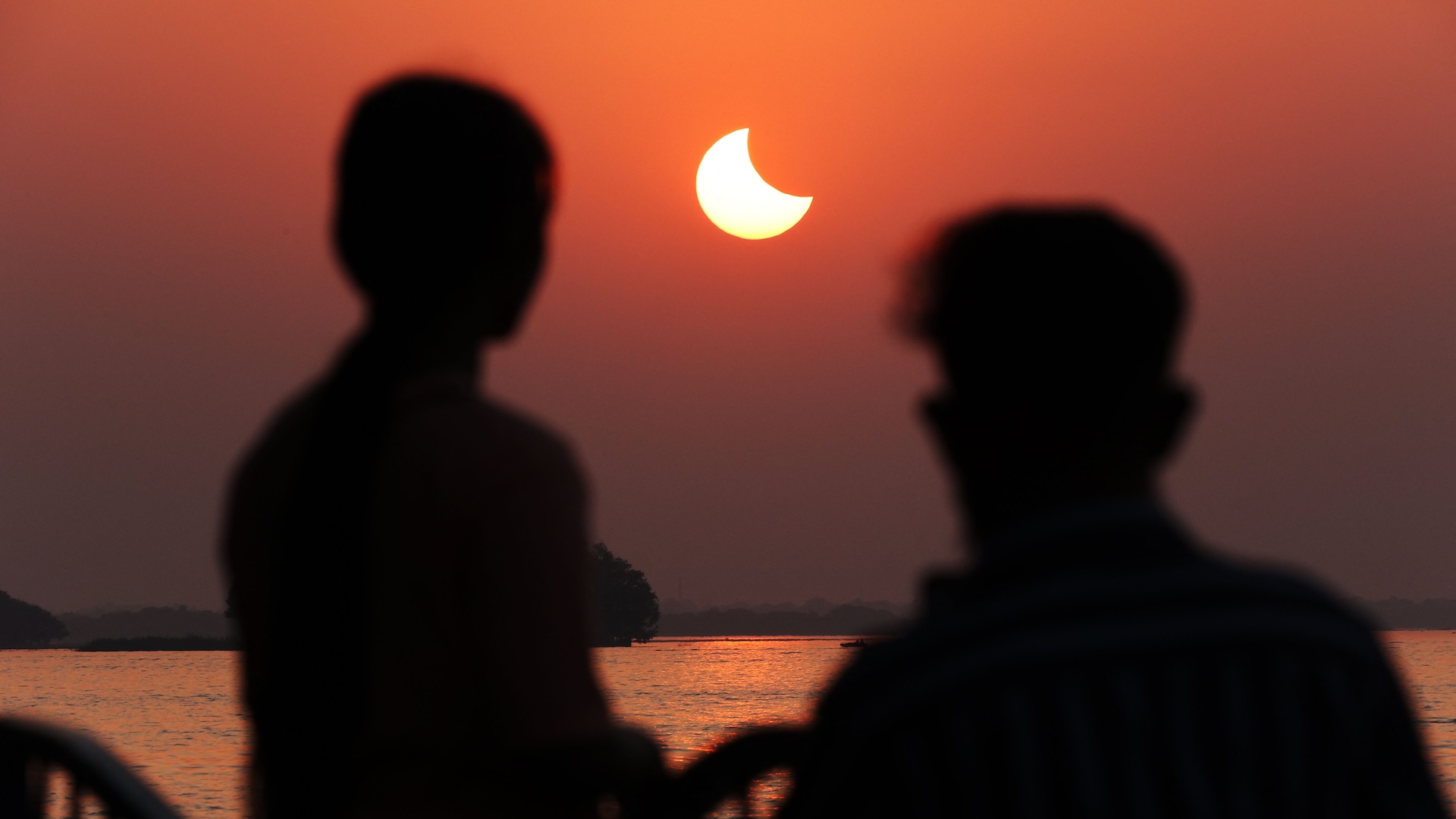
A deep partial eclipse will be visible in many locations throughout Europe, with a smaller eclipse visible in North America. (Image credit: GAGAN NAYAR via Getty Images)
If you're elsewhere in Europe and North Africa
Most of Europe and far northwestern Africa will see a spectacular deep partial eclipse, with more than 90% of the sun covered in many western cities. Although the eclipse will never become total, it will still be an impressive sight, though solar eclipse glasses will be required throughout the event. Here are the times of maximum eclipse in some major cities:
Madrid: 8:32 p.m. CEST (99.9%)
Barcelona: 8:29 p.m. CEST (99.8%)
Algiers, Algeria: 7:33 p.m. CET (96%)
Nice, France: 8:24 p.m. CEST (95%)
Lisbon, Portugal: 7:36 p.m. WEST (94%)
Dublin, Ireland: 7:10 p.m. BST (94%)
Cardiff, Wales: 7:13 p.m. BST (93%)
Belfast, Northern Ireland: 7:08 p.m. BST (93%)
Paris: 8:17 p.m. CEST (92%)
Tangier, Morocco: 7:40 p.m. WEST (92%)
London: 7:13 p.m. BST (91%)
Edinburgh, Scotland: 7:05 p.m. BST (91% eclipse)
To check exactly what you'll see and when, enter your location on an interactive map of the eclipse, which will give you a schedule for when the eclipse begins, peaks and ends where you are.
Do jogo que desafia as regras absurdas das passwords ao simulador que deixa lançar asteroides sobre qualquer cidade, passando pela viagem ao fundo do oceano e pela ferramenta para gastar a fortuna de Bill Gates, o neal.fun é uma das colecções de experiências interactivas mais originais da web.
Kenny still appreciated a good church service and even did readings from the breviary. Unusually, he argued there was no reason why an agnostic shouldn't pray.
Astronomers using the 4-m Daniel K. Inouye Solar Telescope in Hawaii have detected tiny plasma vortices on the Sun’s surface (photosphere) for the first time, revealing a long-suspected process that could transport energy into the million-degree corona.
Wherever two fluids slide past each other at different speeds, the boundary between them buckles, then curls, then rolls up into vortexes. It’s called the Kelvin-Helmholtz instability, and the physics behind it was worked out in the late 1860s. We know this instability explains why wind causes ripples on the surface of water and clouds shear into a row of curves.
For decades scientists argued the same thing must be happening with plasma on the surface of the Sun, and yet nobody had been able to confirm it. Now, a team led by David Kuridze and Friedrich Wöger of the National Solar Observatory reports that Kelvin-Helmholtz instabilities are not just visible on the Sun, but they’re ubiquitous. Their new study proposes that this may change the way we think about how heat, mass, and magnetic energy move through the Sun's atmosphere.
Telescope’s test drive
The reason plasma whirlpools on the Sun stayed hidden for so long is rather trivial: They are very small. Their scale sits below what telescopes with mirrors smaller than 2 meters can resolve. For most of the history of solar physics, that has ruled out every telescope on Earth. This changed when the US National Science Foundation opened the Daniel K. Inouye Solar Telescope, a 4-meter instrument in Hawaii and the largest solar telescope in the world. The telescope entered its operational phase back in November 2021.
New images captured by the world's most powerful solar telescope have revealed something that was hiding in plain sight on the sun for 150 years: thousands of tiny whirlpools twisting across our star's surface. The ultra-detailed observations could help to explain some of the sun's most violent behavior as well as hint at the answer to a long-standing solar mystery.
The new time-lapse footage offers the first direct proof of a long-predicted phenomenon called Kelvin-Helmholtz instability. The effect itself isn't new to science; it's named for physicists Lord Kelvin and Hermann von Helmholtz, who described it in the 19th century. The physicists found that whenever two fluids slide past each other at different speeds, the friction between them, or shear, rolls into spiraling patterns. However, this is the first time this effect has been seen on the sun, where that shear plays out between neighboring streams of solar plasma.
Researchers captured the swirls using the U.S. National Science Foundation's Daniel K. Inouye Solar Telescope in Hawaii and then compared the images against computer simulations of the sun's visible surface, called the photosphere. The findings were published Aug. 5 in the journalNature.
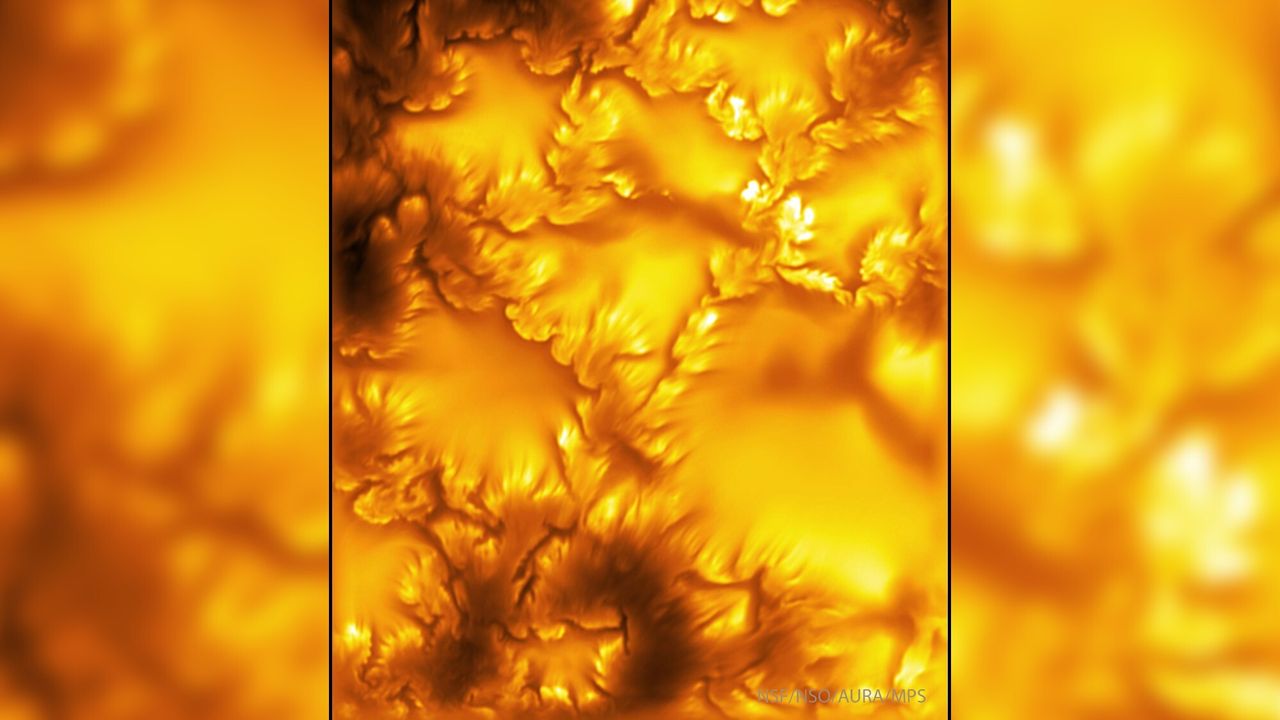
A time-lapse view of the Inouye telescope's obseravtions of the sun. (Image credit: NSF/NSO/AURA/MPS )
The resulting time-lapse footage from the telescope is unlike anything solar physicists have captured before. It shows dozens of tiny vortices clustering along the edges of magnetic regions, some accompanied by delicate, dark stripes known as striations, according to a statement from the National Science Foundation. The telescope's resolution is sharp enough to pick out structures just tens of miles across — a scale so fine that the vortices had gone completely undetected until now.
When the researchers lined the images up against their simulations, the match was close enough — down to the average spacing between vortices — to confirm that they'd finally caught the instability in action.
Beyond the impressive visuals, researchers think these swirls may serve an important function. By constantly twisting and mixing the sun's magnetic-field lines, these vortices may play a part in building up the energy behind solar flares and coronal mass ejections.
The effect also might help to explain the long-standing mystery of why the sun's outer atmosphere, or corona, reaches temperatures of around 2 million degrees Fahrenheit (around 1 million degrees Celsius) while its surface remains hundreds of thousands of degrees cooler, Thomas Rimmele, chief technologist at the National Solar Observatory, said in the statement.
The team now plans to use computer programs to automatically track these vortices across future observations. This will help them measure exactly how much these swirls contribute to heating the corona and driving the explosive space weather that can disrupt satellites, communications and power grids on Earth.
See how much you know about the sun with our sun quiz!
Every total solar eclipse travels from west to east, because the moon and Earth move in the same direction — counterclockwise, or from west to east. Earth rotates eastward once every 24 hours, and the moon also travels eastward as it orbits our planet. Because the moon's shadow moves across Earth faster than the planet rotates beneath it, the path of totality (the route of the moon's umbra, the darkest part of its inner shadow) always sweeps from west to east.
But if you've looked at maps of the Aug. 12, 2026, total solar eclipse, you may have noticed something puzzling. At first glance, the eclipse appears to do the exact opposite. The path seems to begin in far northern Siberia, near the North Pole, before heading toward eastern Greenland, making it look as though the moon's shadow were traveling from east to west. It then appears to curve over western Iceland and northern Spain. So what's going on?
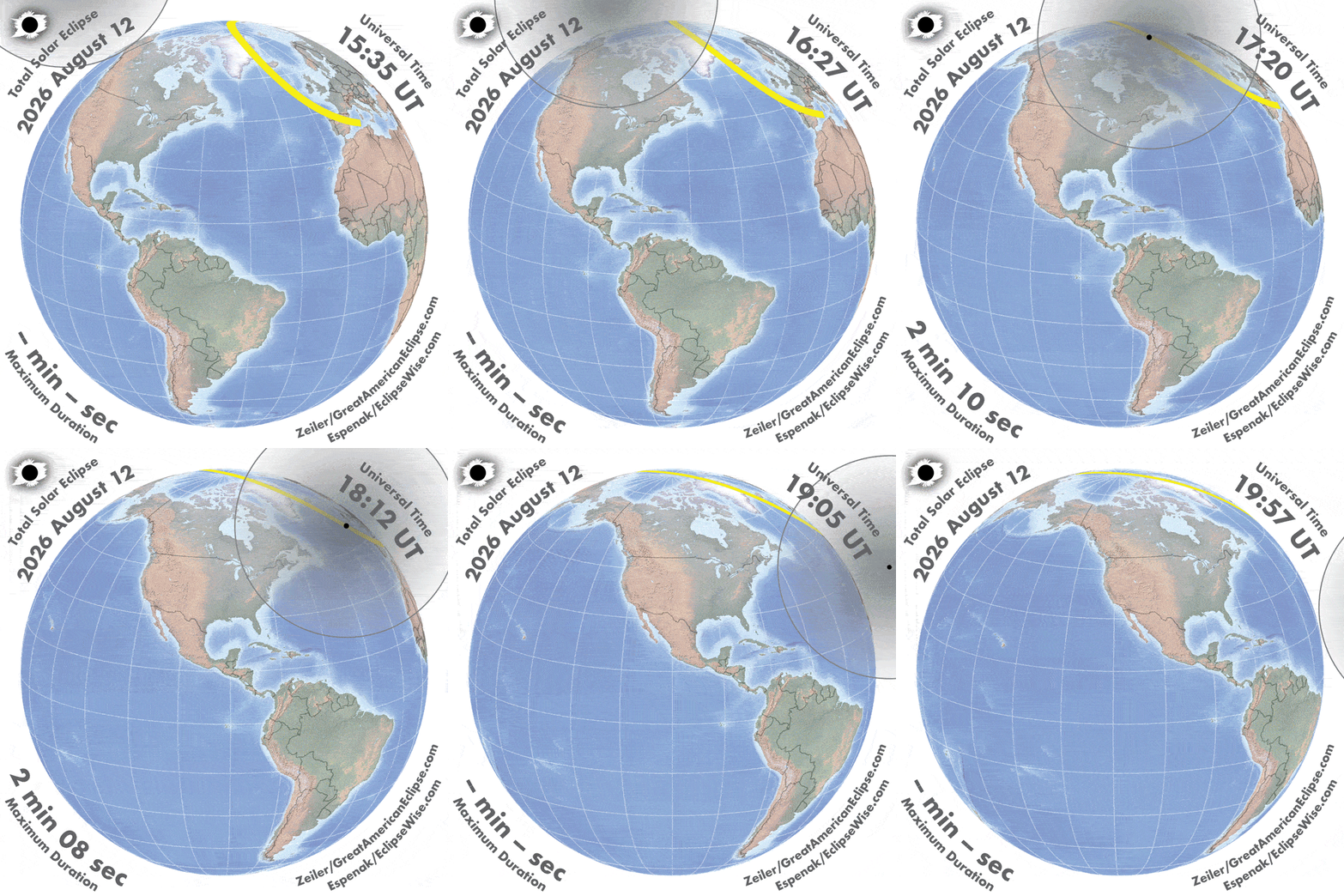
The apparent reversal from Siberia to Greenland is an illusion. It's created by geometry, but it's also a result of viewing the eclipse on a flat map instead of on a globe. The moon's shadow follows a smooth arc across Earth's curved surface and never changes direction, as shown by this animation. This eclipse passes so close to the North Pole that the distortion caused by map projections makes the track appear to bend back on itself, when in reality, the shadow is simply sweeping over the top of the world.
An animation of the shadow path for the Aug. 12, 2026, total solar eclipse, from the point of view of the moon. (Image credit: Michael Zeiler at EclipseAtlas.com/Fred Espenak at EclipseWise.com)
"The path of this eclipse also has a strong north-south component, the combined effect of Earth's rotation and the tilt of both Earth's axis and the Moon's orbit," experts at NASA's Scientific Visualization Studio explained. "Combined with Earth's rotation, the umbra's eastern motion during the first half of its travel is effectively canceled out."
This causes the shadow to sweep over the Arctic in a broad curve, instead of following the more familiar west-to-east path. On a flat map, that curved route can make it look as though the eclipse briefly reverses direction, even though it never actually does.
The moon's shadow has two parts — the narrow umbra, where observers experience totality, and the much broader penumbra, where only a partial eclipse is visible. The widths of these shadows depend on the moon's distance from Earth, while their speed is influenced by the moon's orbit, Earth's rotation and the geometry of the eclipse.
If you are among the millions of people who will be in the moon's penumbra on Aug. 12, make sure to always wear a pair of certified solar eclipse glasses (or use a solar filter on your telescope or binoculars) to view the partial eclipse. It is never safe to look directly at the sun, except during the moment of totality, when the sun is 100% covered.
If you aren't in the right spot for the total solar eclipse, fear not. A near-total lunar eclipse will be visible over most of North America just two weeks later, and there are plenty of other summer skywatching highlights to watch for.
Scientists observing the Sun with the Daniel K. Inouye Solar Telescope have caught a wave-like shape that's never been seen on the Sun's visible surface.
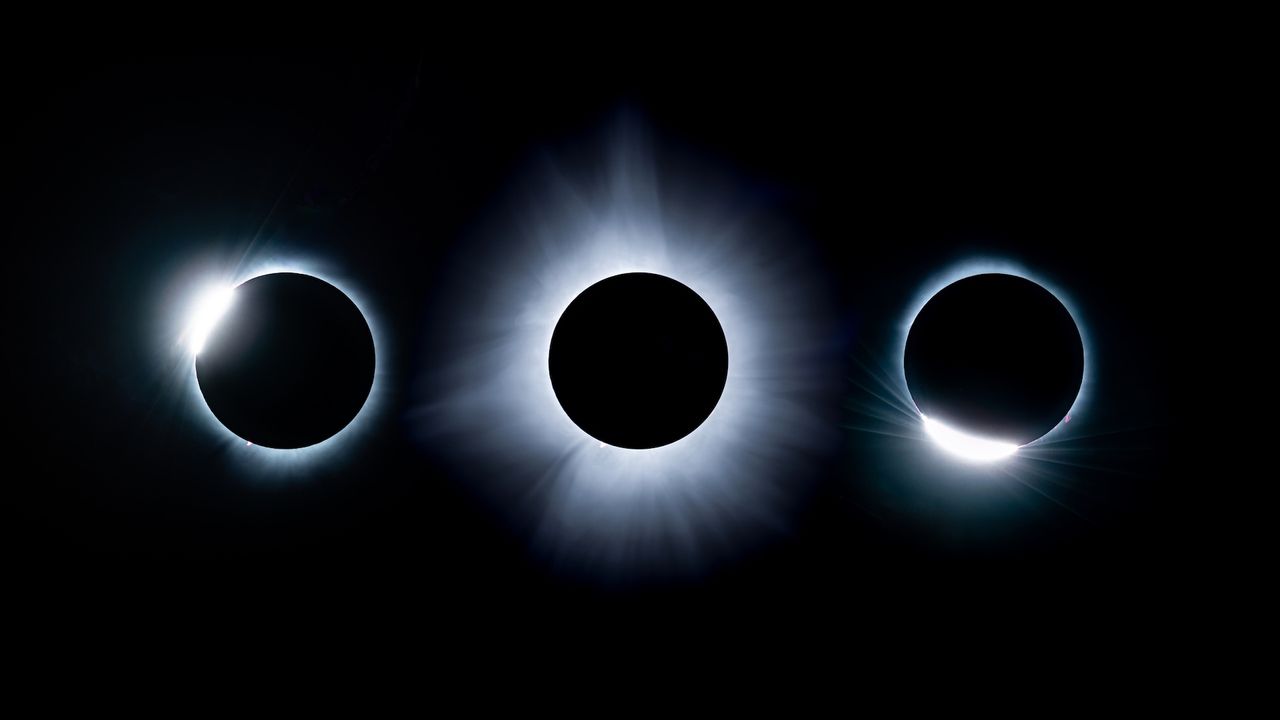
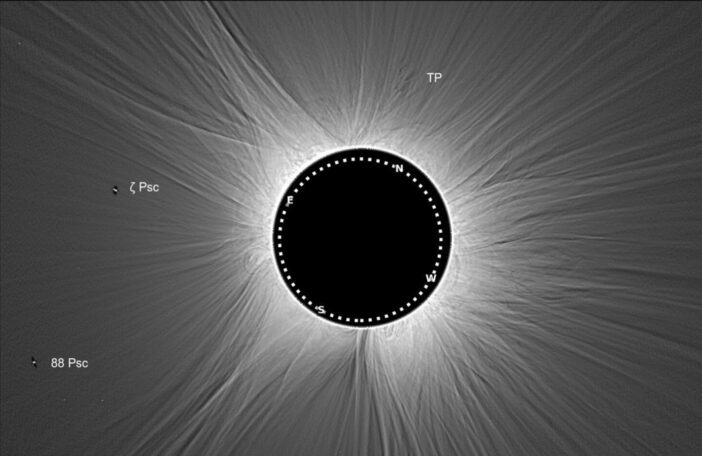
During the 8 April 2024 solar eclipse, the path of totality swept across North America, dazzling millions of skygazers. Scattered along this path were 82 viewing sites of the Dynamic Eclipse Broadcast Initiative citizen science project, which aimed to observe the dynamics of the tenuous solar corona. Though poor weather dashed many observers’ hopes, the project managed to collect data at 11 sites spanning 2,700 kilometers, capturing 49 minutes of coronal behavior. The image above shows the solar corona as seen during totality from one of the DEB Initiative sites. In a recent research article, Matthew J. Penn (Southern Illinois University Carbondale; Tucson Amateur Astronomy Association) and collaborators described the results of the Initiative’s viewing efforts, including identification of downflows and outflows, plumes, coronal loops, and apparent motion of background stars. To learn more about these observations of the solar corona, be sure to check out the full article linked below.
Citation
“Structure and Dynamics of the Inner Corona Measured from the DEB Initiative 2024 Eclipse Image Sequence,” Matthew J Penn et al 2026 ApJL1006 L25. doi:10.3847/2041-8213/ae8797
Depois de semanas de teasers, a Xiaomi mostrou finalmente os seus primeiros veículos elétricos de autonomia estendida (EREV), construídos sobre uma nova plataforma, pensada de raiz para maximizar o espaço interior. Os preços de pré-venda arrancam nos 259.900 yuans (cerca de 33 mil euros), bem abaixo da concorrência.
Skywatchers across North America and Europe should mark Wednesday, Aug. 12 on their calendars. From a daytime solar eclipse to the peak of the Perseid meteor shower beneath a moonless sky, the date offers an exceptionally rare combination of celestial events within a 24-hour period. Add brilliant Venus and the glowing band of the Milky Way after sunset, and the result is a full day of astronomy that could become one of the standout skywatching opportunities of the year.
The first spectacle arrives during daylight as the moon partially covers the sun across Alaska, eastern Canada and parts of the northeastern U.S. A dramatic total solar eclipse will be visible along a narrow path stretching across eastern Greenland, western Iceland and northern Spain — and that's where eclipse chasers will be. However, about 779 million people in North America, Europe and North Africa will see at least a 10% partial eclipse, according to Time and Date.
Northern Canada will experience North America's deepest partial eclipse, with parts of Nunavut in the Canadian Arctic seeing up to 93% of the sun covered, according to Time And Date; large eastern cities like Toronto, Ottawa and Quebec will see between 8% and 24% coverage. The best views in the U.S. will be from Alaska and the Northeast, with Fairbanks, Alaska, seeing 37% of the sun covered, and Boston seeing 16%.
This NASA map shows who will see a total solar eclipse (red line) and who will see a partial eclipse (yellow lines) on Aug. 12. (Image credit: NASA)
In Europe, London will see a 91% eclipse and Paris will get 92%. No matter your viewing location, it's important to use ISO 12312-2 certified solar eclipse glasses throughout the entire partial eclipse. Also remember to fit binoculars, telescopes and cameras with solar filters before pointing them at the sun. (Here’s a great selection of gear that will help you safely watch the eclipse from anywhere).
After sunset, the day's second major event begins. Brilliant Venus will be easy to spot as it reaches dichotomy, the point at which the planet appears half illuminated. Through a small telescope or large stargazing binoculars, skywatchers should see Venus resembling a tiny half-moon as it moves closer to Earth.
Once darkness falls, the day's third and fourth major events will begin. The annual Perseid meteor shower will peak during the overnight hours of Aug. 12-13, and this year's display benefits from one crucial advantage: a new moon. With no moonlight washing out faint meteors, observers under truly dark skies could see between 50 and 75 meteors per hour, while even suburban locations should enjoy frequent "shooting stars," according to The Planetary Society.
The best time to look is from midnight to 2 a.m. local time, when the sky is darkest and the constellation Perseus is highest in the sky. As a final bonus, those under dark, rural skies will see the Milky Way arch overhead, providing one of the finest views of our home galaxy all year.
A daytime solar eclipse, a moon-free Perseid meteor shower, a dazzling Venus and spectacular views of the Milky Way make Aug. 12 a great opportunity for anyone with an interest in the night sky. If skies are clear, it could be the single greatest day and night for skywatching in years.
See how much you know about the sun with our sun quiz!
NASA Science Soars During August Total Solar Eclipse
Each time the Moon covers the Sun during a total solar eclipse — darkening daytime skies and briefly revealing the Sun’s ethereal outer atmosphere, the corona — it presents new opportunities to better understand our star and its influence on Earth.
On Wednesday, Aug. 12, as the next total solar eclipse sweeps over Greenland, Iceland, and Spain, NASA-funded science teams will be chasing the Moon’s shadow with a high-altitude jet and scientific balloons to investigate the Sun’s dynamics and how the temporary darkening of our skies affects our atmosphere.
“From our unique perspective on Earth during a total solar eclipse, scientists can study the Sun’s corona in a way we can’t from anywhere else in the solar system,” said Kelly Korreck, eclipse program manager at NASA Headquarters in Washington. “The Sun impacts our daily life, satellites, and astronauts in space, and we can take advantage of this moment to advance our understanding of that influence.”
High-flying jet to record solar dynamics
Soaring in the nose cone of NASA’s WB-57 high-altitude research aircraft is a suite of four cameras to take high-resolution images of the corona in several different wavelengths of visible and infrared light. Part of an instrument developed by the NASA Scientifically Calibrated In-Flight Imagery (SCIFLI) team at NASA’s Langley Research Center in Hampton, Virginia, the cameras will capture at least 20 images per second, recording structures, outflows, and rapid changes in the corona during the total solar eclipse.
With these images, scientists hope to learn more about the formation of prominences (solar material that gets suspended above the Sun’s surface), better understand the corona and how it gets heated to nearly a million degrees, and investigate how material in the corona and the solar wind are related, which flows out from the Sun across the solar system.
These images of the corona and solar prominences were taken in different wavelengths of visible and infrared light by imagers aboard a NASA’s WB-57 jet during the April 8, 2024, total solar eclipse. The same cameras will fly on a NASA WB-57 jet again during the Aug. 12 eclipse.
NASA / SwRI / William Ashfield
By chasing the Moon’s shadow, the jet will extend how long the cameras can observe the corona. On the ground, the longest anyone will be able to see the corona is two minutes and 18 seconds. But flying along the eclipse path at 460 miles per hour, the jet’s view of the corona will last nearly three minutes.
NASA’s WB-57 will fly at 50,000 feet, above any clouds that might obscure the view of the corona from the ground. The altitude also allows the cameras to observe some infrared wavelengths that get absorbed by the lower atmosphere before reaching the ground, and the corona only has been observed in those wavelengths a few times before.
One of NASA’s WB-57 high-altitude jets will carry a suite of cameras up to 50,000 feet to capture images of the solar corona during the Aug. 12 total solar eclipse.
NASA
The instrument, called SCIFLI Multispectral Airborne Imager, or SAMI, also flew on a WB-57 during the total solar eclipse on April 8, 2024, providing valuable imagery and information about the corona. However, the study’s principal investigator, Amir Caspi of the Southwest Research Institute in Boulder, Colorado, says each total solar eclipse provides new opportunities to learn more about the corona.
“The Sun is always changing,” Caspi said. “Every eclipse is different. So we could see things we didn’t see before. And we learn from each eclipse how to better observe the next one.”
Caspi’s team also is making some enhancements for the 2026 campaign based on lessons learned in 2024. For example, the team will adjust exposure times to better capture bright features that were overexposed in 2024 imagery. They will also leverage software developed since 2024 to process and analyze the data sooner than before.
The experiment is funded by NASA’s Heliophysics Low Cost Access to Space Program.
As a total solar eclipse crosses Russia, Greenland, Iceland, Spain, and Portugal on Aug. 12, 2026, some of the best views will come from 50,000 feet up, aboard NASA’s WB-57 jet. Credit: NASA’s Goddard Space Flight Center
Balloons to watch atmospheric changes
When a total solar eclipse suddenly turns daytime skies dark, our atmosphere changes in ways we don’t yet fully understand.
The NASA-supported Nationwide Eclipse Ballooning Project, led by Angela Des Jardins at Montana State University, is sending students from several U.S. universities to Iceland and Spain to launch scientific balloons before, during, and after the eclipse to better understand those changes.
A student team from the University of Kentucky prepares to launch a ballon from Bloomington, Indiana, to take atmospheric measurements on April 8, 2024, during the 2024 Nationwide Eclipse Ballooning Project campaign.
Sean Bailey (University of Kentucky)
In Iceland, two teams will launch a total of 80 balloons starting 18 hours before the eclipse until eight hours afterward to study how the eclipse affects Earth’s “boundary layer,” the part of the atmosphere that touches the ground. The thickness of the boundary layer changes depending on factors such as surface temperature and moisture in the air.
Previous balloon flights during solar eclipses in October 2023 and April 2024 showed that the boundary layer collapsed, or decreased in thickness, in locations with clear skies but not where there were cloudy skies. Scientists wonder whether that will be different in Iceland in 2026. Changes in the boundary layer are driven by the day-night cycle. However, in Iceland in August, the days are long and nights are short, so the nighttime influences might not be as strong as in 2023 or 2024.
“Will this eclipse be able to collapse the boundary layer?” said Matthew Bernards, a chemical engineering professor at the University of Idaho, who leads one of the Iceland teams.
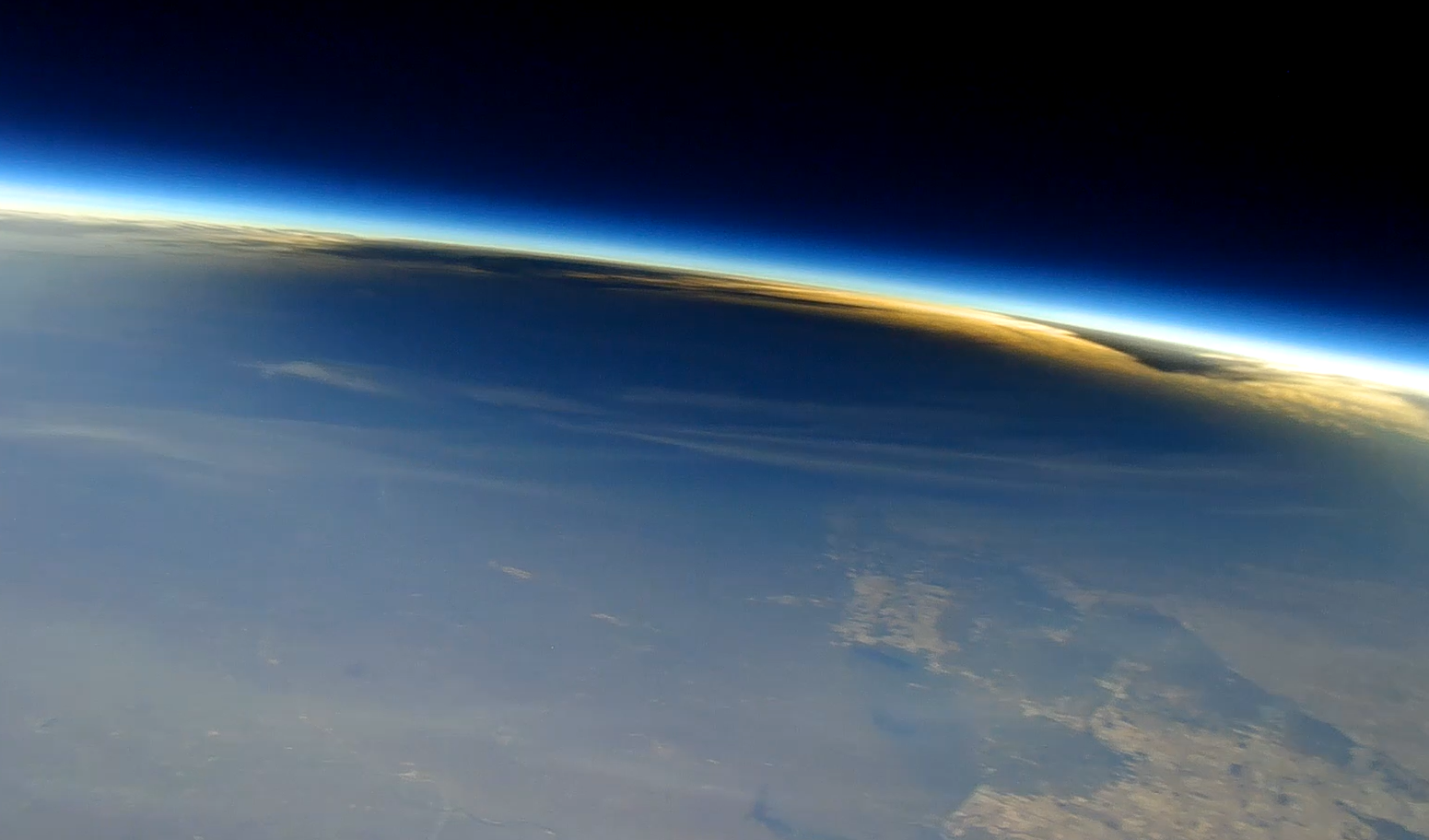
This image shows the Moon’s shadow on Earth during the total solar eclipse on April 8, 2024, as seen from about 90,000 feet from a camera carried by a scientific balloon. Cameras carried by balloons launched from Spain will capture similar images during the Aug. 12 total solar eclipse.
In Spain, three balloon teams will launch a total of six balloons with 360-degree cameras to image the eclipse shadow from above. These balloons also will include instruments designed to measure levels of ozone in the atmosphere, which requires sunlight to form. Similar balloon experiments showed that ozone decreased during totality in April 2024. Scientists wonder whether there will be differences with this eclipse, particularly since it happens at a later time of day and during a different season.
The NASA-funded Nationwide Eclipse Ballooning Project will allow teams of students from across the U.S. to get a unique view of the August total solar eclipse with scientific balloons. Credit: NASA’s Goddard Space Flight Center
Follow along
While the total solar eclipse won’t be visible in the U.S., some parts of the country will be able to see a partial solar eclipse. Learn more about where to see the eclipse and how to view it safely.
by Vanessa Thomas NASA’s Goddard Space Flight Center, Greenbelt, Md.
Anthropic and OpenAI are clashing with the rest of the tech industry over whether “open-source” models from China should be freely available or restricted.

 Login