Reading view
Oferta: iPhone 16 (128GB) por R$4.499,10 no Pix!
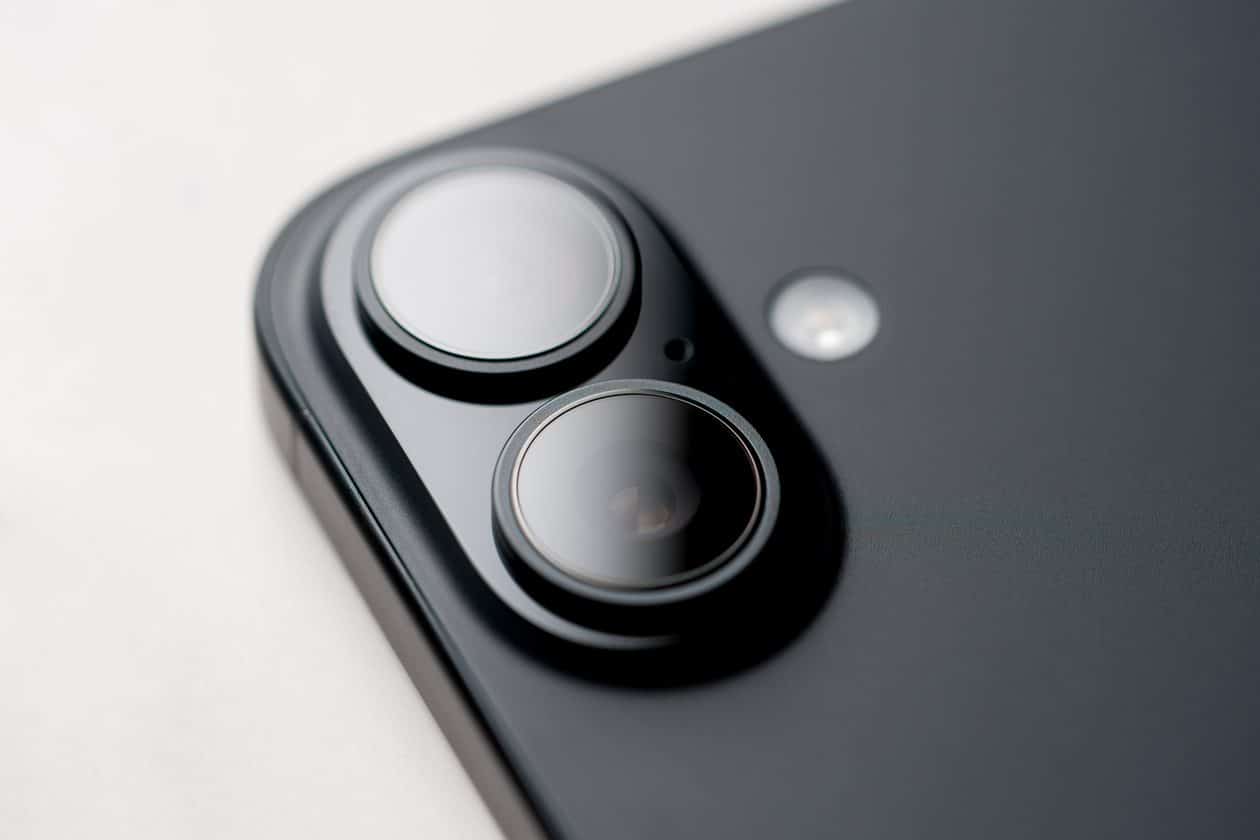
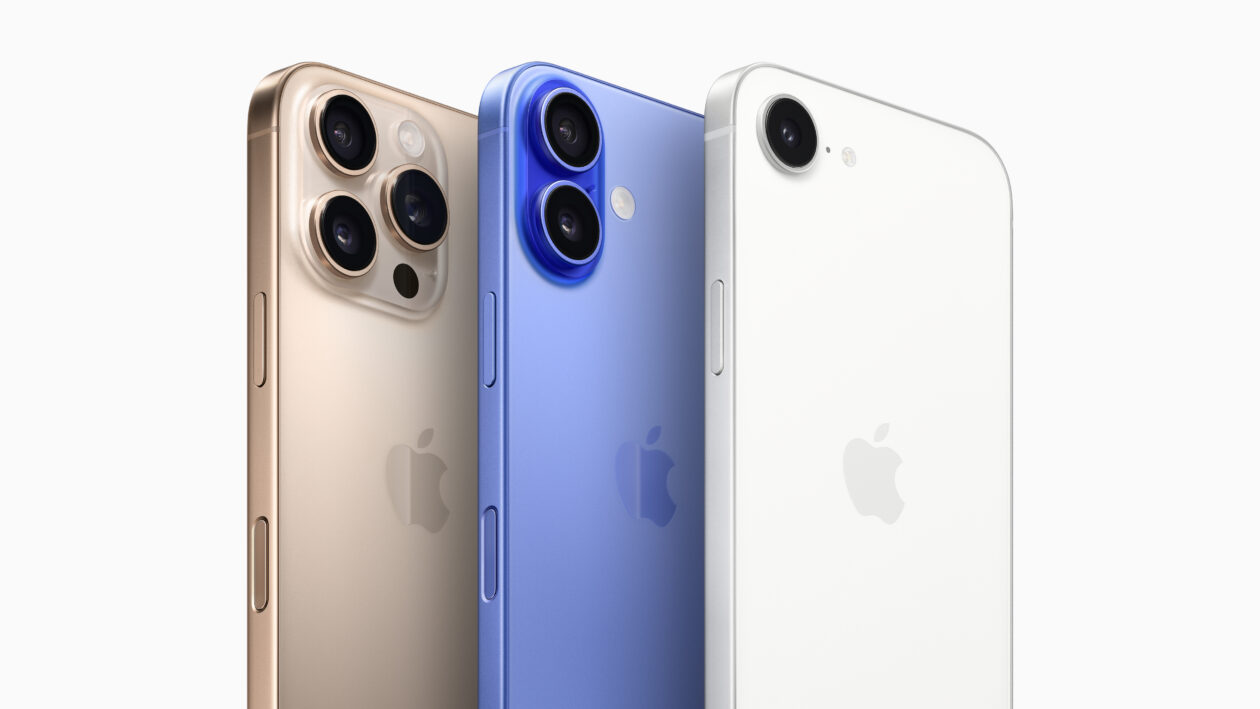
O iPhone 16 segue sendo uma excelente opção para quem quer um smartphone recente da Apple, mas não quer investir tanto em um modelo da linha 17.
Entre as suas especificações, podemos destacar a tela de 6,1 polegadas, o conjunto de duas câmeras (com um sistema Fusion de 48 megapixels e uma câmera ultra-angular de 12MP) e o processador A18, além da presença do Controle da Câmera (Camera Control) e do botão de Ação (Action Button).
Se você está atrás desse modelo, hoje a Amazon está com uma promoção muito boa! Trata-se da versão de 128GB, em todas as cores. Ele está saindo por R$4.999 em até 12x no cartão de crédito!
iPhone 16 de 128GB
— MM Ofertas (@MMOfertas) August 14, 2026
Parcelado: de R$6.799,00 por R$4.999,00 em até 12x
À vista no Pix: de R$6.119,10 por R$4.499,10
💰 Produto vendido e entregue pela Amazon 🤑https://t.co/JUlvT86usS
Se levarmos em conta que o preço tabelado desse modelo aqui no Brasil é de R$6.799 nessa mesma modalidade de pagamento, estamos diante de um desconto de 26%!
Já para quem preferir pagar à vista no Pix, a oferta também é muito boa: ele sai a R$4.499,10, representando um desconto também de 26% se comparado com o valor da Apple nessa mesma condição, que é de R$6.119,10.
Todos os descontos de promoções divulgadas pelo MacMagazine são calculados com base nos preços sugeridos pela Apple ou por outras fabricantes. Pode ser que um determinado produto seja comumente encontrado por valores inferiores em redes varejistas, mas a nossa base de comparação é sempre em cima das tabelas oficiais.
Fique sempre por dentro das ofertas!
Se você não é louco, é claro que gosta de economizar. E, para isso, o MacMagazine tem diversas opções para ajudar você a conseguir comprar o seu produto Apple pagando menos!
Você pode usar a nossa extensão para os navegadores Chrome/Opera/Edge, acompanhar as ofertas pelo MM Fórum, pelo Facebook, pelo X, pelo Threads, pelo Bluesky, pelo Mastodon ou por um canal no Telegram. Escolha a melhor opção para você — ou todas, para depois não se arrepender — e economize! 😉
NOTA DE TRANSPARÊNCIA: O MacMagazine recebe uma pequena comissão sobre vendas concluídas por meio de links deste post, mas você, como consumidor, não paga nada mais pelos produtos/serviços usando os nossos links de afiliado.


Vídeo: troquei a bateria do iPhone 15 Pro Max da minha esposa!
Há alguns anos, eu troquei a tela de um iPhone XR da minha esposa em parceria com a iFixit. Pois é, o desafio voltou — desta vez, em um aparelho bem mais recente e complexo: o iPhone 15 Pro Max dela, cuja bateria já estava com apenas 77% de saúde.
Aceitei o convite da iFixit para trocar a peça por uma nova, e topei documentar todo o processo em vídeo para vocês. Divirtam-se:
Para a troca, recebi da iFixit o kit de bateria para iPhone 15 Pro Max, que já vem com todas as ferramentas necessárias, e também o iOpener, aquele saquinho que se aquece no micro-ondas e ajuda muito a amolecer o adesivo que prende a tela ao aparelho.
Segui à risca o tutorial passo a passo da própria iFixit para a substituição da bateria, e depois o guia específico para reinstalar o adesivo em volta da tela.
Confesso que desta vez foi bem mais desafiador do que da última: entre um passo e outro, entre pausas para respirar e conferir o manual outra vez, levei quase 3h do início ao fim. Mas deu tudo certo, e a sensação de ver o aparelho funcionando perfeitamente com uma bateria novinha (e a esposa satisfeita) não tem preço. 😄
Meu muito obrigado à iFixit por mais essa parceria e pelas ferramentas certas para o trabalho. E aí, quem topa o desafio também? 😅


Suposta película para a tela do “iPhone Ultra” sugere que aparelho terá design assimétrico
O leaker conhecido como Ice Universe [@UniverseIce] publicou ontem no X imagens do que seriam películas para a tela externa do “iPhone Ultra”, o vindouro primeiro smartphone dobrável da Apple.
Como é possível notar, as imagens trazem duas variações do acessório: uma versão completamente transparente e outra com aquele efeito que limita os ângulos de visualização do display para uma maior privacidade.
This is the screen protector for the iPhone Ultra. You can see, the iPhone Ultra actually has an irregular screen with one side square and the other round. Oh my God, can you even handle that? pic.twitter.com/qpQHZHiqcD
— Ice Universe (@UniverseIce) August 11, 2026
O detalhe mais importante aqui, no entanto, é o formato das películas, que conta com cantos retos em um lado e arredondados no outro, dando a entender que o foldable da Maçã terá um design assimétrico.
Em uma outra postagem, desta vez com um vídeo da suposta película, no entanto, Ice Universe disse acreditar que isso se trata de um mal-entendido. Para ele, o mais provável é que a tela do “iPhone Ultra” tenha, sim, cantos arredondados em todas as extremidades, já que a película segue o formato do painel de vidro — e ele não precisa ter necessariamente o formato do display em si, já que se trata de componentes diferentes.
I'm sure this is just a misunderstanding – the protective film covers the entire glass panel, not exactly the same as the actual screen display area. The iPhone Ultra screen itself is still a symmetrical rounded rectangle. pic.twitter.com/Iwu52050uw
— Ice Universe (@UniverseIce) August 11, 2026
O vídeo compartilhado pelo leaker até mostra um mockup do dispositivo com uma tela assimétrica, mas é bem possível que seu criador tenha seguido esse caminho simplesmente por não saber como o smartphone realmente se parecerá.
De qualquer forma, não deverá demorar muito para que essa dúvida seja sanada, uma vez que os rumores são de que a Apple anunciará o “iPhone Ultra” no comecinho de setembro. Ansiosos? 🙂
via GSMArena.com


Usuários de iPhones gastam mais que os de Android com microdramas, revela pesquisa
Uma pesquisa da Omdia revelou que donos de iPhones costumam gastar mais por aplicativos de microdramas (as novelas verticais) que donos de smartphones com Android — inclusive em países como o Brasil.
Por aqui, 48% dos usuários do iPhone pagam por esse tipo de conteúdo, contra 39% do Android. Na Alemanha, as porcentagens são de 49% contra 44%, enquanto na Coreia do Sul elas são de 59% contra 45%.
Posts relacionados
Nos Estados Unidos, a situação é um pouco mais equilibrada. Por lá, 69% dos usuários do iPhone disseram pagar por conteúdos, enquanto no Android o número caiu apenas um ponto percentual, mais especificamente para 68%.
O relatório também concluiu que usuários do iPhone gastam aproximadamente US$14 por semana nesses apps, enquanto no caso de donos de smartphones com Android o gasto é de cerca de US$10 por semana.

A Omdia destaca que esse resultado vai de encontro a suposições que geralmente relacionam o consumo de novelas verticais a um público com menos poder aquisitivo, que geralmente é mais associado ao Android.
No entanto, é importante ressaltar que ela leva em consideração não apenas o consumo, e sim a compra de conteúdos — que costuma ser mais frequente no iOS em praticamente qualquer tipo de aplicativo.


OPPO K15 Smartphone Review: The Truly Practical Choice in the 2K Price Segment
1. Introduction: Cooling Is Usually Reserved for Gaming Flagships, But Mid-Range Phones Need It More
There are plenty of smartphones in the 2,000-yuan price range that focus on stacking specifications, but very few invest in advanced cooling systems.
Looking across the market, phones in this price segment are usually competing on performance, cameras, and fast charging. Cooling solutions are often mentioned only briefly—or ignored completely.
It is not because cooling is unimportant. The reason is simple: with limited costs, manufacturers usually spend their budget on features that users can immediately notice.
However, overheating and performance throttling are exactly the problems that trouble mid-range smartphone users the most.
Examples include:
- A phone becoming too hot to hold while navigating outdoors in summer
- Gaming frame rates dropping from 60fps to 40fps after half an hour
- The device overheating while charging and being used at the same time
- Reduced battery lifespan caused by long-term heat exposure
OPPO K15 is a practical all-round smartphone that brings an active cooling fan system into the 2K price segment.
OPPO K15 Review: 8000mAh Battery + Active Cooling Fan Makes It the Most Practical 2K Phone
The OPPO K15 is equipped with the MediaTek Dimensity 7360 SUPER processor, OPPO’s Tidal Engine optimization system, an 8000mAh large-capacity battery, and IP69 flagship-level water resistance.
It also features:
- Three 50MP cameras
- A large 5000mAh-class imaging system
- Active cooling fan
- Long-lasting battery performance
The phone aims to solve two of the biggest complaints among mid-range smartphone users:
- Overheating
- Running out of battery
Honestly, I did not have very high expectations for cooling performance on a 2K-range smartphone. With cost limitations, simply keeping temperatures under control is already considered good enough.
However, OPPO added an active cooling fan this time, making me curious:
Is the cooling fan just a marketing gimmick, or can it actually reduce temperatures?
Active Cooling Fan: More Than Just a Marketing Feature
The OPPO K15 uses a new-generation Wind Cooling Engine, featuring a built-in micro cooling fan.
According to OPPO, the cooling system can:
- Reduce temperature by 5°C within 5 minutes
- Keep fan noise as low as 30dB during full-speed operation
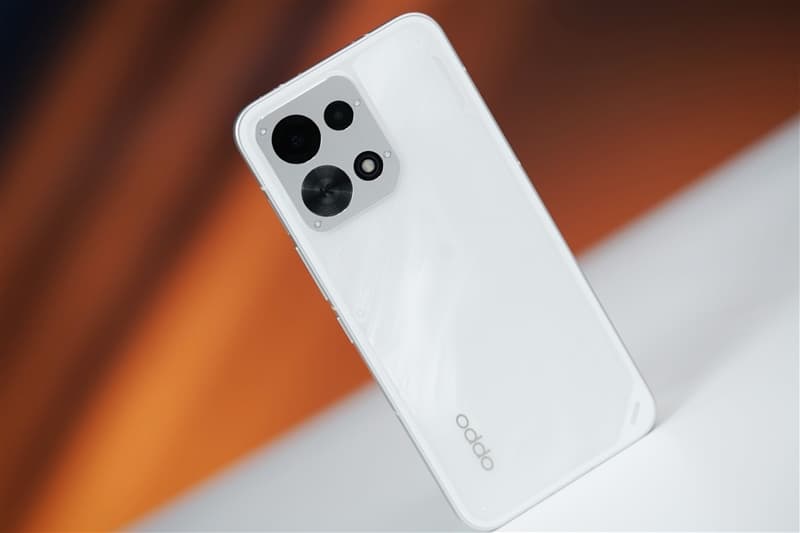
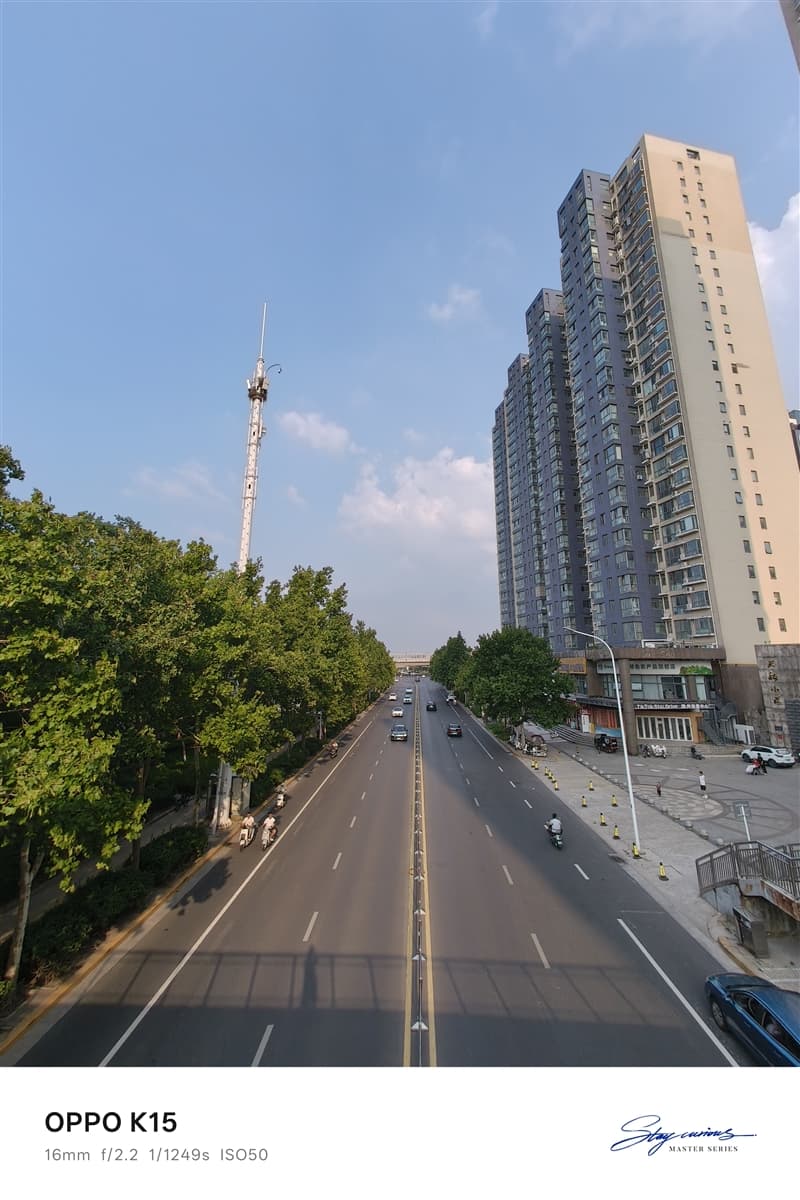
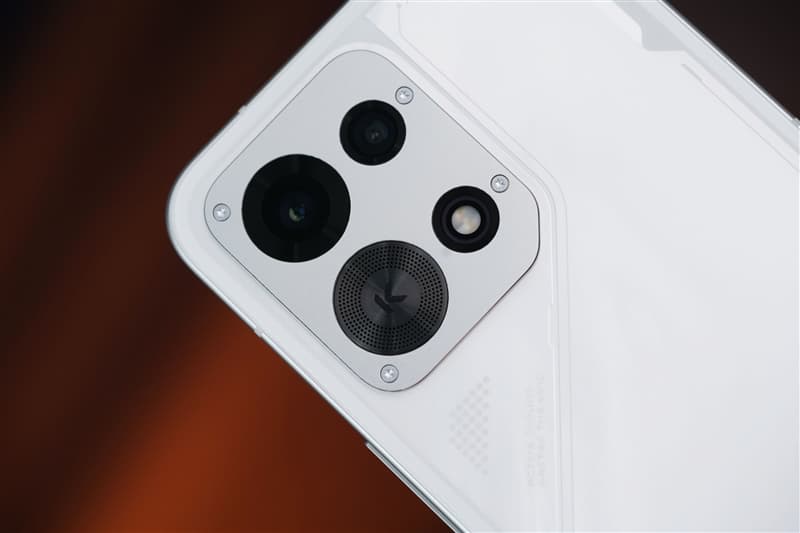
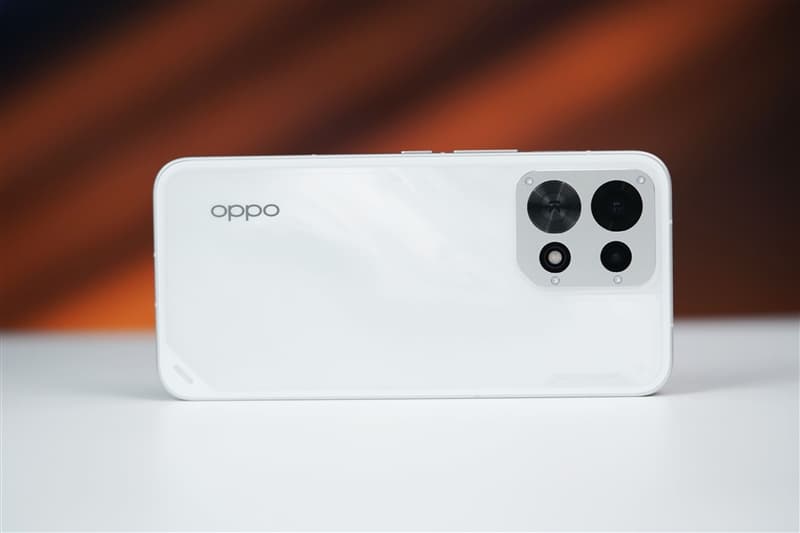
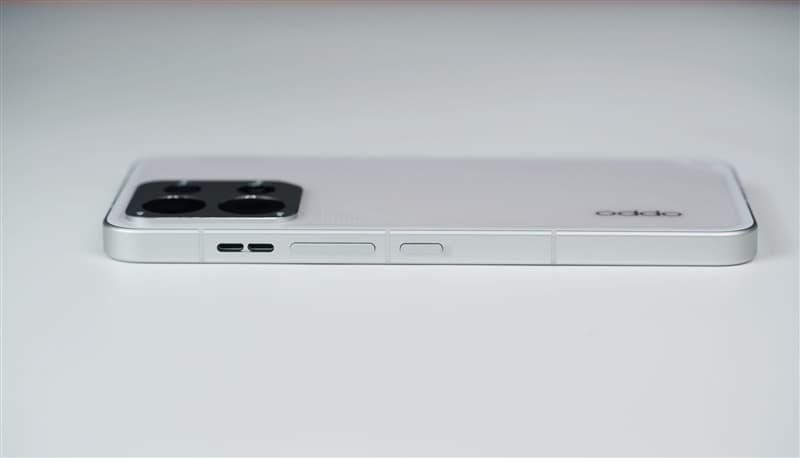
The fan is integrated with the rear camera module design. Thanks to this approach, the back cover remains completely flat without a large camera bump.
The entire phone is only:
- 8.27mm thick
This means the cooling system does not negatively affect the grip or overall feel.
After completing temperature tests, I found that the fan performed better than expected.

Adding a cooling fan to a 2K-range smartphone reminds me of installing a turbocharger on an economy car—not to make it a racing machine, but to ensure it does not lose power when climbing uphill.
For flagship gaming phones, cooling is about achieving peak performance.
For mid-range phones, cooling is about maintaining stable performance during daily use.
Battery and Charging: 8000mAh Battery Designed for All-Day Use
The OPPO K15 features an 8000mAh Glacier Battery, providing enough endurance for heavy daily usage.
It supports:
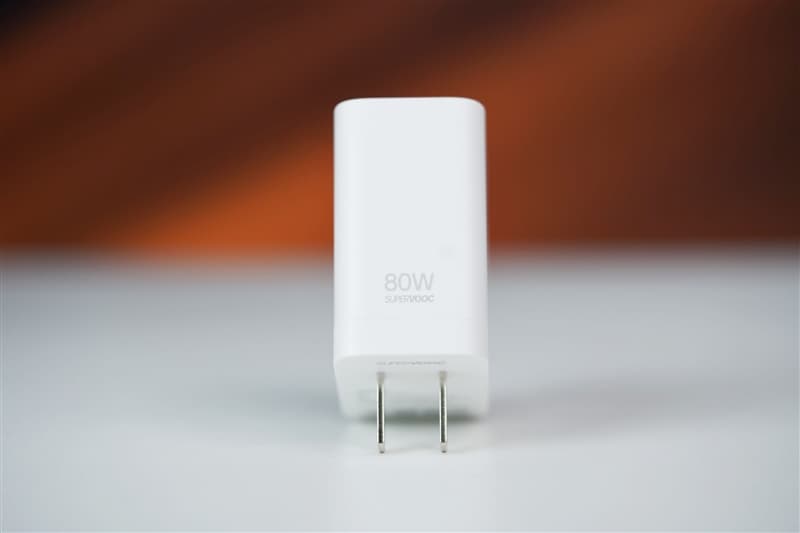
- 80W SUPERVOOC fast charging
- UFCS universal fast charging protocol
- PPS charging protocol
- Bypass charging
- Wired reverse charging
The bypass charging feature allows power to directly supply the motherboard instead of continuously charging the battery during gaming sessions.
This helps:
- Reduce heat generation
- Protect battery health
- Improve long-term durability
The reverse charging function also allows the phone to act as an emergency power source for accessories such as:
- Earbuds
- Smartwatches
- Other small devices
Camera System: Three 50MP Cameras in the 2K Segment
The OPPO K15 features three 50MP cameras:
- Rear main camera
- Ultra-wide-angle camera
- Front selfie camera
The main camera includes:
- 1/2-inch large sensor
- f/1.88 aperture
- Optical Image Stabilization (OIS)
The ultra-wide-angle camera offers:
- 143.3° ultra-wide field of view
The front camera supports:
- 50MP resolution
- Autofocus (AF)
For a phone in the 2K price segment, this camera configuration is quite generous.
Durability: IP69/IP68/IP66 Protection and Military-Grade Testing
The OPPO K15 focuses heavily on durability.
It supports:
- IP69 waterproof rating
- IP68 dust and water resistance
- IP66 protection
- Eight military-standard durability tests
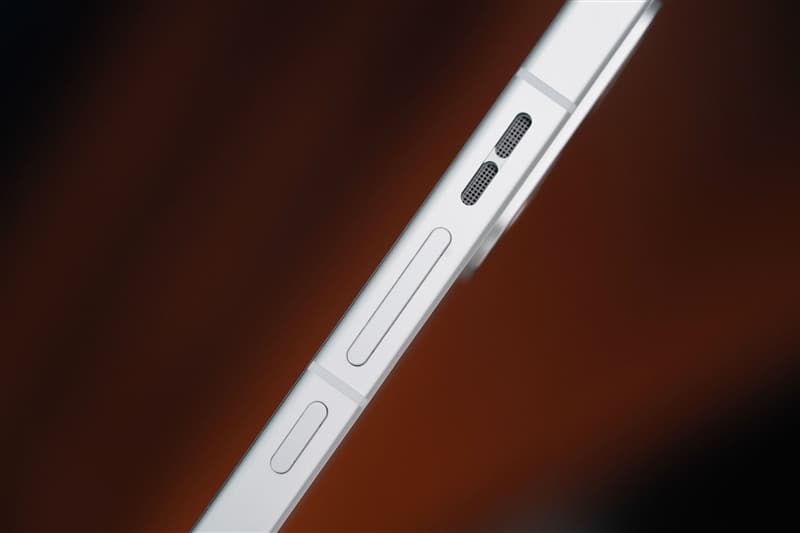
The phone also features:
- Crystal Shield glass protection
- Metal middle frame
The combination makes it more resistant to:
- Drops
- Water exposure
- Dust
- Extreme environments
2. Design Review: Cloud Pattern Back Cover with Hidden Cooling Fan
The OPPO K15 features a 6.59-inch centered punch-hole flat display.
The rounded corners and narrow bezels provide a comfortable viewing experience.
The display supports:
- 1.5K resolution
- 120Hz refresh rate
Daily activities such as:
- Watching videos
- Switching apps
- Scrolling webpages
all feel smooth and responsive.
The front panel uses high-strength Crystal Shield glass, while the back cover has a smooth texture that reduces fingerprints.
Colors and Rear Design
The OPPO K15 comes in two colors:
- Speed White
- Wind Gray
The review unit is the Speed White version, featuring a unique cloud-pattern texture.
When light reflects across the surface, it creates a flowing storm-like visual effect.
At the bottom of the back panel is the text:
“ACTIVE COOLING, MASTER THE WIND”
This highlights the phone’s cooling identity without making the design look aggressive.
Camera Module and Cooling Fan Integration
The rear camera module is one of the most distinctive parts of the phone.
It uses:
- A square silver camera base
- Four corner screws
- Industrial-style design elements
Layout:
- Top left: Main camera
- Top right: Ultra-wide camera
- Bottom left: Cooling fan air intake
- Bottom right: Flash
The fan and camera system are integrated into one flat module.
Despite including an internal fan, the phone remains:
- 8.27mm thick
- Comfortable to hold
- Free from a large camera bump
This design is clever because many flagship phones now have large protruding camera modules, while the OPPO K15 maintains a cleaner back design.
3. Cooling Test: The Active Fan Actually Works — Overheating and Throttling Become Less of a Concern
When people think of smartphones with built-in cooling fans, gaming flagships usually come to mind.
However, for users in the 2K price segment, long-term stable performance is arguably more important.
Common scenarios such as:
- Outdoor navigation under strong sunlight
- Long gaming sessions
- Recording videos for extended periods
- Using the phone while charging
can easily cause mid-range phones to heat up and reduce performance.
The OPPO K15 features the new-generation Wind Cooling Engine, which uses a three-layer cooling solution:
-
Large-area VC vapor chamber
The VC cooling plate quickly spreads heat away from the processor area.

-
High-conductivity graphite layer
The graphite material helps transfer heat more efficiently throughout the body.
-
Built-in micro cooling fan
The active fan pulls hot air away through the exhaust outlet, actively accelerating heat dissipation.
The key difference is that this is active cooling, not traditional passive cooling.
The fan is physically running, and heat is actively being removed.
Temperature Reduction Test
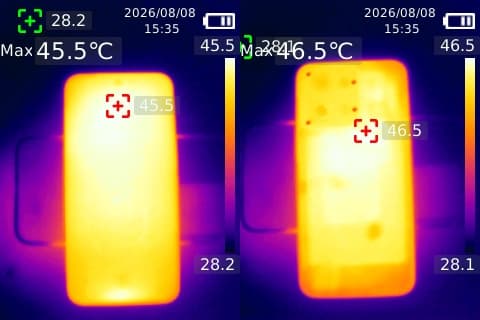
First, we used the AnTuTu stress test to push the OPPO K15 into a high-load state.
After continuous full-load operation:
- Front temperature reached: 45.5°C
- Rear temperature reached: 46.5°C
At this point, the phone felt noticeably hot in the hand.
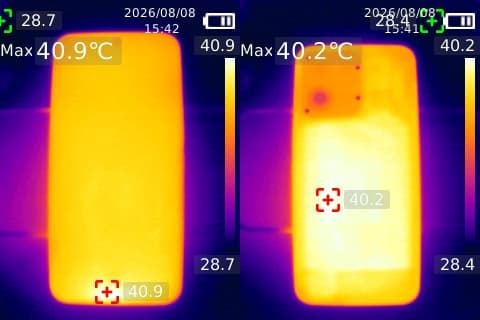
Then we activated the cooling fan.
After 7 minutes:
- Front temperature dropped to 40.9°C
- Rear temperature dropped to 40.2°C
The phone changed from hot to only slightly warm.
After waiting 12 minutes:
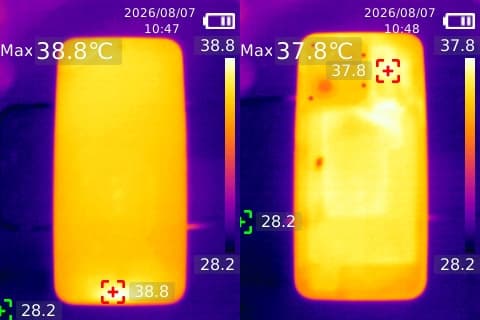
- Front temperature: 38.8°C
- Rear temperature: 36.5°C
Compared with the peak temperature of 46.5°C, the rear temperature dropped by approximately 10°C.
The thermal imaging results clearly showed that heat was being transferred away through the fan system.
The temperature around the cooling fan area was noticeably lower than other parts of the phone, proving that the fan was actively removing heat.
High-Energy Outdoor Mode
The OPPO K15 also includes a High-Energy Outdoor Mode, which can be enabled through the accessibility settings.
Once activated, the system automatically:
- Starts the cooling fan
- Optimizes temperature control
- Keeps the phone operating within a stable performance range
This mode also includes several practical outdoor improvements:
Enhanced Screen Brightness
The display automatically increases brightness, making it easier to see under direct sunlight.
Improved Voice Volume
When Bluetooth devices are disconnected, the phone automatically switches to the speaker and increases volume.
Extended Screen Timeout
The display stays active longer, preventing interruptions during:
- Navigation
- Outdoor work
- Long-term map usage
Quick Access Optimization
Frequently used applications can be pinned to a shortcut bar for faster switching.
There are also desktop shortcut cards that allow one-tap access to important functions.
The combination of cooling assistance and outdoor optimization makes the OPPO K15 more convenient for real-world use.
The purpose of active cooling in a 2K smartphone is not chasing the highest benchmark score.
It is about maintaining stable performance during long gaming sessions, navigation, and video recording.
Other phones compete for peak performance.
The OPPO K15 focuses on staying stable for longer.
4. Performance Test: Dimensity 7360 SUPER + Tidal Engine Focus on Stability
The OPPO K15 is powered by the MediaTek Dimensity 7360 SUPER processor.
Although positioned as a mid-range chipset, OPPO has added its own Tidal Engine optimization system to improve long-term performance.
The phone also features:
- 4950mm² VC vapor chamber
- High-conductivity graphite cooling layer
- Built-in active cooling fan
This combination provides a strong thermal foundation for a phone in this price category.
To evaluate real-world performance, we tested two popular mobile games.
Gaming Test 1: Honor of Kings
For Honor of Kings, we set:
- Frame rate: Ultra-high
- Graphics quality: HD
- Performance mode: Enabled
During a full 5v5 match:
Results:
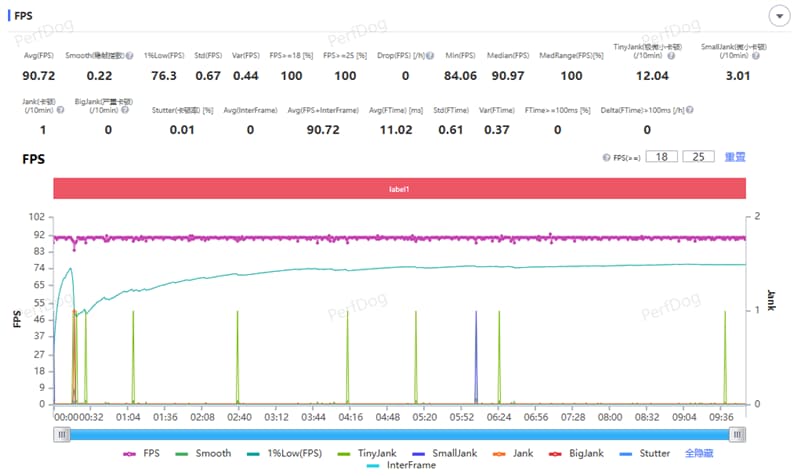
- Average frame rate: 90.72 FPS
- Frame fluctuation index: 0.22
The phone maintained smooth performance throughout the match.
Whether during:
- Large team fights
- High-density skill effects
- Tower battles
there were no obvious frame drops or visible lag.
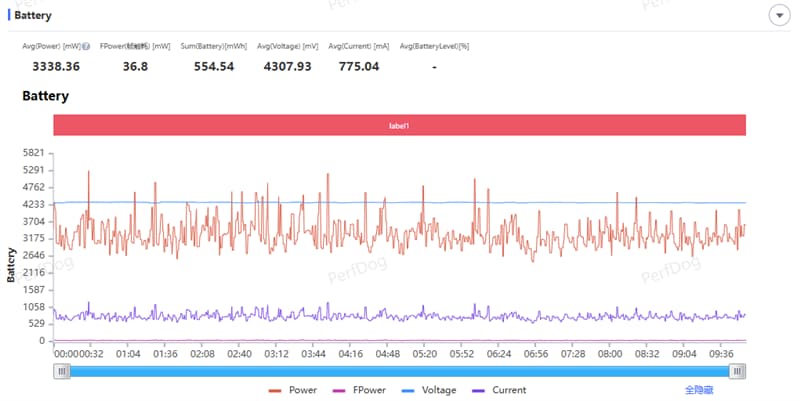
Average power consumption:
- 3.34W
Energy consumption per frame:
- 36.8mW
After enabling the cooling fan in smart variable-speed mode, temperatures remained well controlled.
Gaming Test 2: PUBG Mobile
For PUBG Mobile, settings were:
- Graphics: Smooth
- Frame rate: Extreme (60 FPS)
- Mode: Classic Squad Battle
During the entire match:
- Landing
- Rotating zones
- Fighting enemies
- Final circle battles
the frame rate remained around 60 FPS.
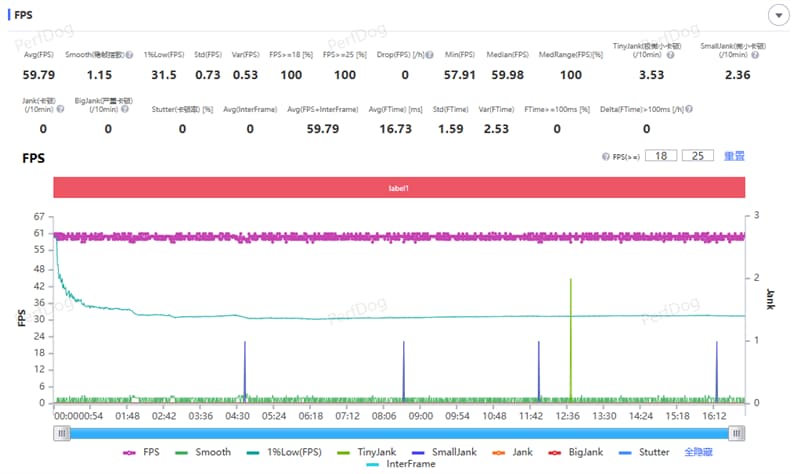
There were no common mid-range phone issues such as:
- Sudden frame drops when entering the zone
- Delayed aiming response
- Stuttering during combat
Average power consumption:
- 2.84W
Energy consumption per frame:
- 47.5mW
The cooling fan helped maintain stable temperature during the gaming session.
5. Camera Review: Three 50MP Cameras Deliver Strong Image Quality
The OPPO K15 represents a major improvement in imaging for the K series.
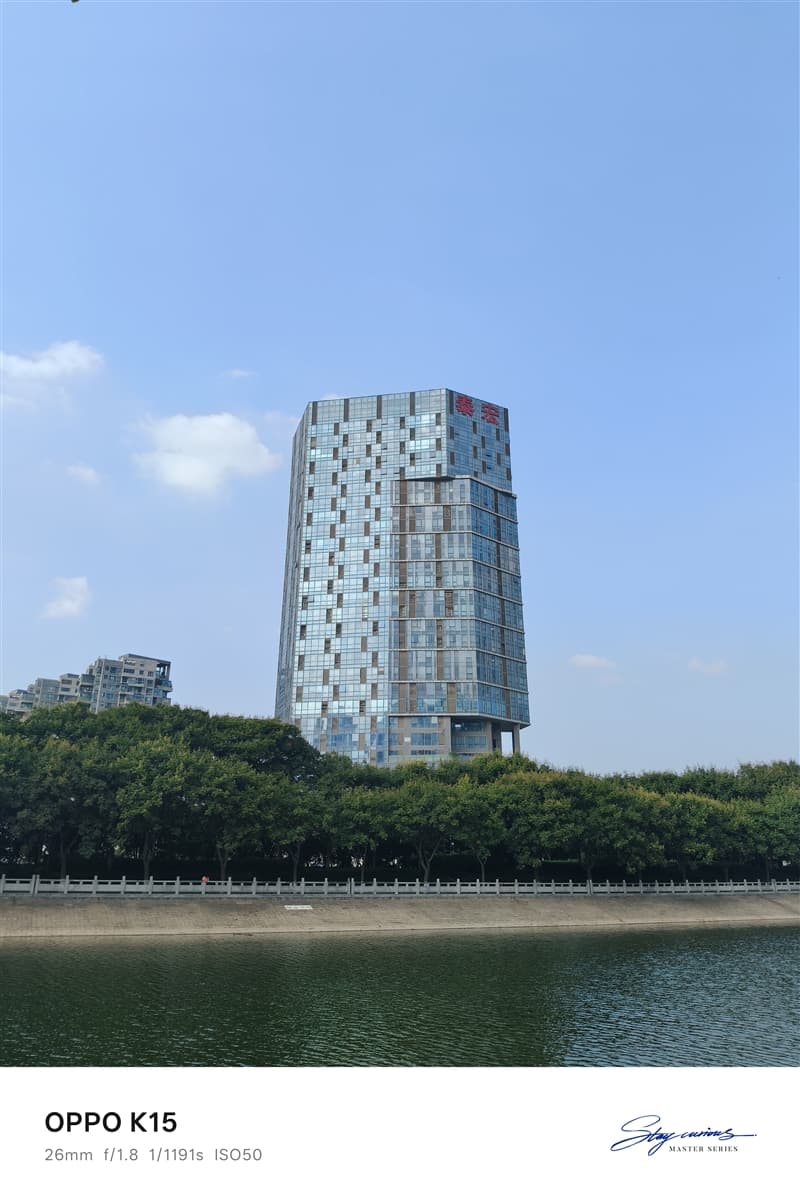

It features three 50MP cameras:
- Main camera
- Ultra-wide camera
- Front camera

The main camera includes:
- 1/2-inch large sensor
- f/1.88 aperture
- OIS optical stabilization
The ultra-wide camera provides:
- 143.3° ultra-wide field of view
Unlike many mid-range phones where secondary cameras are mainly for marketing, the OPPO K15 gives more attention to practical photography.
Main Camera Experience
The 50MP main camera performs well in daylight scenes.
Strengths include:
- Good detail retention
- Natural colors
- Strong dynamic range
- Stable handheld shooting thanks to OIS
Photos maintain good clarity even when zooming into details.
The large sensor also helps improve:
- Low-light performance
- Background separation
- Night photography quality
Ultra-Wide Camera Experience
The 143.3° ultra-wide camera is useful for:
- Architecture photography
- Landscape shots
- Group photos
- Travel scenes
The wider perspective allows users to capture more content in a single frame.
Night Photography
The main camera’s large sensor and optical stabilization help improve nighttime shooting.
Night photos show:
- Better light control
- Reduced motion blur
- Improved shadow details
For a mid-range smartphone, the camera performance is above average.
6. Battery and Charging: 8000mAh Battery Easily Lasts a Full Day, 80W Flash Charging Keeps You Going
Battery life is one of the strongest selling points of the OPPO K15.
The phone comes with an 8000mAh Glacier Battery, which is significantly larger than the batteries commonly found in mainstream smartphones.
For users who rely heavily on their phones every day, such as:
- Outdoor workers
- Travelers
- Navigation users
- Mobile gamers
- Video streamers
the large battery capacity provides a clear advantage.
Battery Life Test
To evaluate real-world endurance, we used the Battery Dog testing tool developed by Kuai Technology.
The test simulated typical daily usage scenarios, including:
- CPU high-load operation
- Multi-thread processing
- AI recognition
- Image browsing
- Video playback
- Web browsing
Testing conditions:
- Screen brightness: 50%
- Auto brightness: Disabled
- Volume: 30%
The results showed:
The OPPO K15 lasted:
14 hours and 33 minutes from 100% battery down to 20%.
Based on this result, the theoretical full battery endurance is approximately:
18 hours of continuous usage.
This result matches the expectations of an 8000mAh battery and demonstrates the phone’s excellent endurance.
For normal users, the OPPO K15 can easily handle:
- A full day of heavy usage
- Long outdoor navigation
- Extended gaming sessions
- Continuous video playback
without worrying about battery anxiety.
80W SUPERVOOC Fast Charging Experience
The OPPO K15 supports:
- 80W SUPERVOOC fast charging
- UFCS universal fast charging
- PPS fast charging protocol
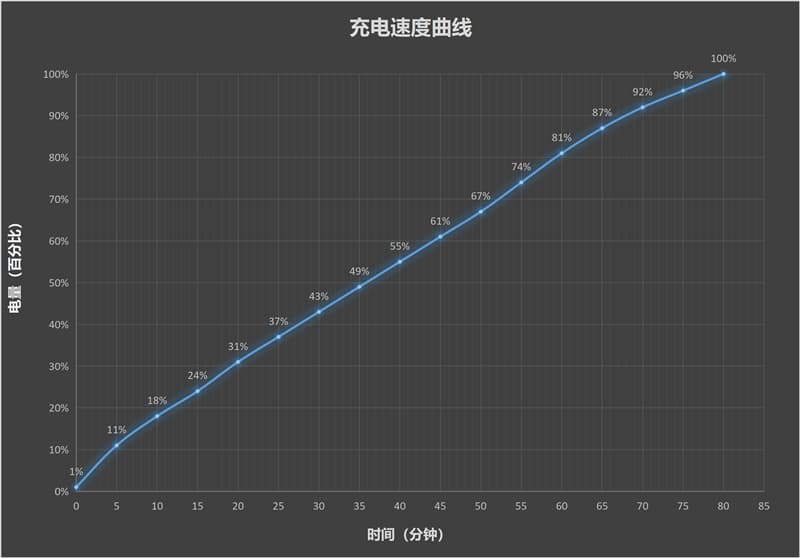
We tested charging with the included 80W charger.
Starting from:
1% battery
Charging results:
| Charging Time | Battery Level |
|---|---|
| 5 minutes | 11% |
| 10 minutes | 18% |
| 30 minutes | 43% |
| 60 minutes | 81% |
| 80 minutes | 100% |
Although the phone uses a large 8000mAh battery, it can still reach a full charge within around 80 minutes.
This provides a good balance between battery capacity and charging speed.
Bypass Charging: Better for Long Gaming Sessions
The OPPO K15 supports bypass charging, which is especially useful for gamers.
When enabled:
- Power goes directly to the motherboard
- Battery charging is reduced
- Heat generation is lowered
- Battery aging is minimized
This means users can keep playing games while connected to power without constantly stressing the battery.
For people who often:
- Play games while charging
- Watch videos for long periods
- Use the phone as a stationary entertainment device
this feature is very practical.
Wired Reverse Charging
The OPPO K15 also supports wired reverse charging.
The phone can temporarily act as a power bank for devices such as:
- Wireless earbuds
- Smartwatches
- Other smartphones
When traveling, this feature provides an emergency power solution without carrying an additional charger.
7. Special Features: IP69 Protection, Breathing Light, NFC and Infrared
Beyond cooling, performance, and battery life, the OPPO K15 also includes many practical features that improve everyday experience.
IP69 Protection: Designed for Tough Environments
The OPPO K15 supports:
- IP69 waterproof protection
- IP68 dust and water resistance
- IP66 protection
It also passed eight military-standard durability tests covering:
- High temperature
- Low temperature
- Rain exposure
- Dust environments
- Drop resistance
This makes the phone suitable for more demanding environments.
Water Resistance Test
During testing, we played Douyin videos on the OPPO K15 while placing it under running water.
The results:
- Video playback continued normally
- Touch controls remained responsive
- Wet fingers could still operate the screen
The phone remained fully functional after exposure to water.
While IP69 protection does not mean users should intentionally abuse their devices, it provides additional confidence for:
- Outdoor workers
- Travelers
- Users in rainy environments
Mist Shadow Breathing Light: Adding Gaming Atmosphere
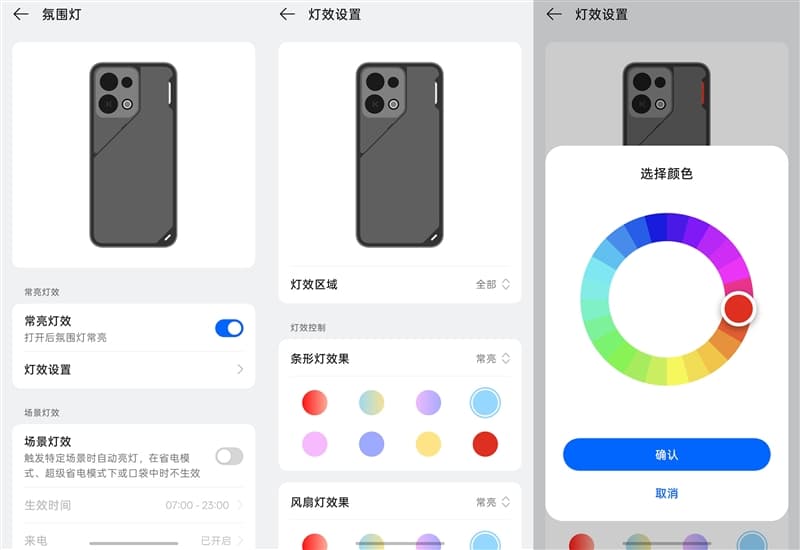
The rear panel includes OPPO’s Mist Shadow Breathing Light system.
Users can customize:
- Full lighting area
- Strip lighting
- Fan lighting
Lighting effects include:
- Flowing effects
- Breathing effects
- Always-on mode
- Flashing effects
The fan lighting also supports:
- Breathing mode
- Constant lighting
- Flashing mode
Multiple colors are available.
At night, the lighting can synchronize with music, creating a gaming-style atmosphere.
Unlike inexpensive RGB lighting effects, the implementation feels more refined.
Users can also configure:
- Activation time
- Lighting behavior
- Automatic disabling when the phone is in a pocket
Mountain-Sea Communication Technology: Better Signal in Weak Areas
The OPPO K15 includes OPPO’s self-developed Mountain-Sea Communication Technology.
The system uses:
- 360° surround antenna design
- Multi-source signal optimization algorithms
It is designed to improve connectivity in difficult environments such as:
- Underground parking areas
- Elevators
- Buildings with weak signals
During testing in an underground parking area:
Network results:
- Ping latency: 37ms
- Download speed: 8.37Mbps
- Upload speed: 16.12Mbps
The phone maintained stable connectivity without obvious disconnections.
Dual-Frequency GPS: Faster and More Accurate Positioning
The OPPO K15 is equipped with:
- Dual-frequency GPS
- Flagship-level sensors
- Multi-source positioning algorithms
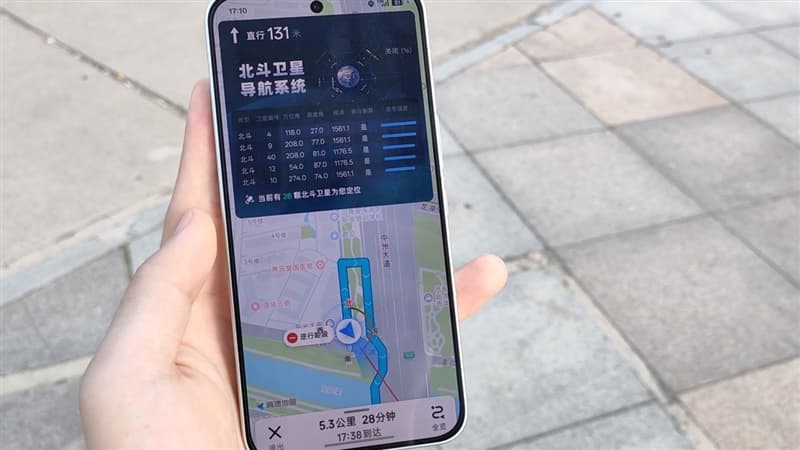
During navigation testing with Amap:
- Location locking was fast
- Navigation started quickly
- Position accuracy remained stable
The real-time navigation interface showed:
- 26 BeiDou satellites assisting positioning
Even in complex environments such as:
- Urban streets
- Tunnels
- Underground parking areas
the positioning performance remained reliable.
8. Final Verdict: A Smartphone That Solves Real Problems
At the beginning of this review, the question was:
Is the cooling fan on a 2K-range smartphone just a gimmick, or does it really work?
After testing, the answer is clear:
It works.
During the AnTuTu stress test:
- Rear temperature reached 46.5°C
- After activating the fan for 12 minutes, it dropped to 36.5°C
A temperature reduction of around 10°C was confirmed through thermal imaging.
The active cooling fan is the feature that truly separates the OPPO K15 from other phones in the same price range.
Many smartphones offer:
- Large batteries
- Water resistance
- Fast charging
But fewer combine these features with an integrated cooling fan.
OPPO K15 Key Strengths
The phone delivers:
8000mAh large battery
Active cooling fan
IP69/IP68/IP66 protection
Stable gaming performance
80W fast charging
Three 50MP cameras
120Hz 1.5K display
Dual-frequency GPS
Strong signal performance
Who Should Buy the OPPO K15?
The OPPO K15 is especially suitable for users who care about:
- Long battery life
- Stable performance
- Outdoor usage
- Gaming without overheating
- Durability
- Practical everyday features
However, users who want:
- Maximum gaming frame rates
- Flagship-level processor performance
may prefer higher-end gaming smartphones.
The Dimensity 7360 SUPER is not designed to chase extreme benchmark records. Instead, it focuses on delivering stable performance over long periods.
Final Conclusion
Many smartphones in the 2K price range compete by making their specification sheets look impressive.
OPPO K15 takes a different approach.
Instead of only chasing higher numbers, it focuses on solving real user problems:
- A phone that does not become uncomfortable when hot
- A battery that lasts all day
- A device that remains reliable outdoors
- A smartphone that can handle daily challenges
The built-in cooling fan is like adding a turbocharger to an economy car—not for racing, but to prevent losing power when climbing a hill.
After testing, the OPPO K15 proves that it can:
- Stay cool under pressure
- Maintain stable performance
- Last through demanding usage
- Survive tougher environments
For users looking for a practical, durable, and reliable smartphone in the 2K price segment, the OPPO K15 is one of the most complete choices available.
OPPO K15: A truly practical smartphone built for real-world use.
The post OPPO K15 Smartphone Review: The Truly Practical Choice in the 2K Price Segment appeared first on IGeeKphone China Phone, Tablet PC, VR, RC Drone News, Reviews.

É seguro fotografar o eclipse solar? Saiba como fazê-lo sem estragar o smartphone ou a câmara
Portugal vai assistir ao primeiro eclipse solar total desde 1912. Explicamos se é seguro fotografá-lo com o smartphone ou com a câmara, usando dicas de especialistas, para evitar danificar o sensor, e ferir os seus olhos.
The post É seguro fotografar o eclipse solar? Saiba como fazê-lo sem estragar o smartphone ou a câmara appeared first on Tek Notícias.
Samsung Galaxy Z Fold8 REVIEW A Powerful Foldable That Finally Feels Refined
Samsung Galaxy Z Fold8
The Galaxy Z Fold8 combines flagship performance, a versatile foldable display, and improved One UI 9, but its high price and ecosystem compromises make the decision more complicated.
The Galaxy Z Fold8 arrives at an interesting point in the evolution of foldable smartphones. Samsung has had several generations to refine the concept, and the Fold8 represents the company’s latest attempt to make a foldable feel less like an experimental alternative and more like a legitimate flagship. With a new generation of Snapdragon hardware, updated software, a redesigned chassis, and a growing collection of AI features, there is plenty here to evaluate beyond the novelty of having a phone that folds.
For this review, I wanted to look at the Fold8 as a smartphone I could actually live with rather than simply evaluating its specifications. That means looking at its performance, battery life, software, cameras, design, and everyday usability while also considering where it fits among the other flagship phones available today.
About the Samsung Galaxy Z Fold8
The Samsung Galaxy Z Fold8 is Samsung’s latest flagship foldable smartphone, combining the portability of a traditional smartphone with a 7.6-inch foldable display that provides a much larger workspace when opened. The Fold8 features a slimmer and lighter design than previous generations, a 120Hz Dynamic AMOLED 2X cover and inner display, and is powered by the Snapdragon 8 Elite Gen 5 for Galaxy processor. It also includes a 50MP wide camera, 50MP ultra-wide camera, and a range of Galaxy AI features designed to make multitasking, communication, photography, and everyday productivity easier.
With up to 1TB of storage and 16GB of RAM, the Galaxy Z Fold8 is positioned as both a premium smartphone and a compact productivity device. Its large inner display makes it particularly suited to multitasking, content consumption, document editing, and other tasks that benefit from additional screen space, while its redesigned hinge and thinner profile make it more practical to carry throughout the day.

Features & Specs
Weight & Size
- Cover Display Dimension: 5.5”
- Main Display Dimension: 7.6”
- Weight: 201g
Camera
- Wide: 50.0 MP
- Ultra Wide: 50.0 MP
- Front: 10.0 MP (Cover) + 10.0 MP HID (Main)
- Zoom: Optical Quality Zoom 2x, Digital Zoom up to 10x
Battery
- 4800 mAh
- Up to 26 hours of video playback
Processor
- Snapdragon 8 Elite Gen 5 for Galaxy
Display
- Cover Display Resolution: 1972 x 1248 WUXGA + Dynamic AMOLED 2X
- Main Display Resolution: 1848 x 2448 QXGA+ Dynamic AMOLED 2X
Storage Options
- 256 GB
- 512 GB
- 1 TB
Memory
- 12 GB (256 GB + 512 GB models)
- 16 GB (1 TB model)
Durability
- Frame: Armor Aluminum Frame
Glass
- Corning Gorilla Glass Ceramic 3 / Corning Gorilla Glass Victus 2
Water Resistance
- IP48
Connectivity
- 5G
- WiFi
Galaxy Exclusives
- Samsung Care+
- Samsung Health
- Samsung Wallet
User Experience
Specifications and benchmark numbers only tell part of the story with a device like the Galaxy Z Fold8. A foldable can have all the right hardware on paper, but what matters is how that hardware comes together when you actually use the phone every day. After spending time with the Fold8, there are several things about the experience that stood out to me.
First of all, the Galaxy Z Fold8 has a bright display that does an excellent job of hiding the crease in most lighting conditions. When the screen is on, the crease is almost impossible to see, which makes the display feel much more like a traditional smartphone screen than I expected.
The hinge also feels tight and well made. Samsung has put a significant amount of R&D into the hinge, including testing how many times it can be opened and closed, and that engineering is apparent in the way it feels during everyday use.
The glass on the front of the phone is nice, although it does not seem to be as scratch-resistant as the glass on the iPhone. If you take care of the phone or use a screen protector, I don’t expect this to be a major issue. The enter screen can potentially scratch, but this isn’t necessarily Samsung’s fault. It is simply where we are with current screen technology. We haven’t quite caught up with what we want to be able to do with glass while maintaining the durability we expect from it.

A Form Factor That Works
Using the wider form factor has been a joy for my eyes. I’ve been noticing that I have to squint when looking at text on my iPhone, but text renders comfortably on the Fold8’s larger display. Reading on this phone has been a joy.
The phone is smaller than an iPhone Pro Max when it is closed, yet the screen still feels like you’re reading from a much larger display. The combination of its compact closed form and large inner display is one of the things I have enjoyed most about using the Fold8.
If you’re an Apple fan, this form factor could be particularly interesting when Apple eventually releases its own foldable iPhone coming up in a month. The Fold8 provides a good example of what a larger foldable phone can offer without requiring you to carry a tablet-sized device.
Typing
Typing on the Fold8 has been a joy, both open and closed. The wider body when the phone is closed gives me a better grip while texting.
One of my concerns was that typing with the phone open would feel unwieldy, similar to typing on an iPad mini. Instead, the split design of the keyboard felt natural after just a few minutes of use and has been very comfortable.
That was one of the surprises of using the Fold8. I expected the larger screen to make typing more awkward, but Samsung’s approach to the keyboard makes good use of the additional screen real estate.
Setup and Connectivity
When setting up the phone, I wanted to test the transfer option between Android devices. Unfortunately, this is where I ran into a problem. The phone would get so far into the transfer process and then fail.
This may have been related to the Google Pixel I was transferring from, but I also ran into an issue when trying to transfer my eSIM. I was ultimately unable to complete the transfer and had to have a brand-new eSIM sent to me via email.
The setup experience wasn’t as seamless as I had hoped, although I don’t necessarily think the transfer issue can be attributed entirely to Samsung.
Samsung’s Magnetic Case
I’m currently using Samsung’s magnetic case with the Fold8. This case is designed only to fit on the back of the phone. It isn’t intended to protect the front or sides. Its primary purpose is to provide MagSafe-style charging and compatibility with magnetic accessories.
When using this case, the phone actually feels lighter than my iPhone Pro Max with a thin case attached to it. That’s an impressive difference considering how much more screen the Fold8 provides when opened.
The magnetic functionality also gives the Fold8 access to a range of charging options and MagSafe-style accessories, which adds another layer of flexibility to the phone.

Performance and Software
Overall, I am very excited about the hardware in this phone. The Snapdragon processor is extremely fast, and the phone comes with a 12GB of RAM. If you keep the phone for more than a year, I expect that combination to make it a relatively future-proof device.
The software experience has also surprised me.
The last time I used a Samsung device, I believe we were on One UI 6 or 7, and I wasn’t a huge fan of it. With One UI 9 and Android 17, the experience feels much more polished. The software feels stable and much more visually appealing than I remember.
I can see how casual iPhone and Pixel users could be tempted to switch to Samsung because of the Fold8. There is a lot to like here, particularly when you combine the hardware with the improved One UI experience.
That said, there are small things I miss from iOS.
For example, I frequently take screenshots, and copying text from a screenshot is incredibly simple on an iPhone. I also miss being able to tap text within an image and select it directly. If this functionality is available in Android 17, I haven’t been able to find the setting that enables it.
These may sound like small things, but when you use a particular operating system for years, those small conveniences add up.
Ecosystem Matters
Having my phone work seamlessly with my Mac, iPad, Apple TV, and the other devices in my Apple ecosystem is another factor that is difficult to overlook. Those little conveniences can turn an otherwise excellent hardware experience into more of a challenge when you move outside of that ecosystem.
For someone who is already heavily invested in Apple, the Fold8 would require giving up some of those conveniences. The hardware may be compelling enough to make that worthwhile, but it is something potential buyers should consider before making the switch.
The same is true for Google users. If you enjoy the Google ecosystem, it is worth remembering that Google has an event coming up on Wednesday where it is expected to introduce its next generation of foldable devices, while Apple is expected to make its own announcements the following month.
Pixel vs. Fold8
For me, the Google Pixel 10 Pro XL has been my secondary phone. It is a great flagship testing phone and has worked well for my second number.
However, as my primary device, as much as I enjoy the new form factor and the speed of the hardware in the Fold8, it can’t push my iPhone into the secondary position. What it has done is knock the Pixel down a spot and taken its place as my secondary phone.
That puts me at something of a crossroads.
I enjoy the bare-bones approach of Google Pixel phones, but that more stripped-down version of Android can sometimes feel a little plain. I previously strongly disliked Samsung’s One UI, but the current version feels much more stable and visually appealing.
Ultimately, both devices are running Android, and your data belongs to either Samsung, Google, or both depending on the services you use. With the Google Pixel, you have options such as GrapheneOS, while there are also Android debloating tools that can be used on the Fold8 to remove some of the software you don’t want.
For example, tools such as Universal Android Debloater Next Generation and ADB AppControl can give experienced users more control over what is installed and running on their device.
For most people, the default experience will be perfectly fine. It’s simply nice to know that tools exist to give you more control if you need it.

Overall Feel
After spending time with the Fold8, I’m very impressed with the hardware. The display is bright, the crease is surprisingly easy to ignore, the hinge feels solid, and the phone is comfortable to hold and use.
The rounded corners are a nice touch, although I think a more pronounced curve could have made the phone slightly more comfortable to hold for long periods. This is a relatively minor complaint, but when you’re using a device this large for extended periods, small ergonomic details matter.
The biggest consideration for me isn’t whether the Fold8 is a good phone. It absolutely is. The question is whether its excellent hardware and improved software experience are enough to overcome the ecosystem conveniences I get from using an iPhone.
For me, the answer is no, at least as my primary phone. But the Fold8 has absolutely earned its place as my secondary device, replacing the Pixel 10 Pro XL in that role.
Benchmark Testing
To get a better understanding of how the Galaxy Z Fold8 performs beyond everyday use, I ran a series of industry-standard benchmarks covering CPU performance, GPU performance, artificial intelligence, everyday productivity, battery life, and sustained graphics performance. These tests provide a consistent way to measure the hardware and compare the results with Samsung’s published performance claims.
Benchmarks don’t necessarily represent how a phone will perform during every real-world task, but they can reveal the capabilities of the processor, GPU, NPU, memory subsystem, and battery. They can also help determine whether a device can maintain its performance under sustained workloads rather than simply delivering a high score during a short test.

Geekbench 7
Geekbench 7 provides a standardized way to measure CPU and GPU performance. The CPU tests are particularly useful for evaluating the Snapdragon 8 Elite Gen 5 for Galaxy’s ability to handle both single-threaded and multi-threaded workloads. Single-core performance is important for many everyday tasks, while multi-core performance becomes more important when several demanding processes are running simultaneously.
The Galaxy Z Fold8 produced a single-core score of 3,056 and a multi-core score of 9,629.
Geekbench 7 CPU
- Single-Core: 3,056
- Multi-Core: 9,629
These results provide a useful baseline for the Fold8’s overall processing capability and help demonstrate whether Samsung’s flagship hardware delivers the level of performance expected from the Snapdragon 8 Elite Gen 5 for Galaxy.
Geekbench 7 also includes a GPU compute test. Rather than measuring traditional gaming performance, this test evaluates how effectively the GPU handles compute workloads.
Geekbench 7 GPU
- OpenCL: 17,377
The OpenCL result gives us another way to evaluate the Adreno GPU and provides a useful point of comparison with other flagship smartphones. While it shouldn’t be treated as a direct representation of gaming frame rates, it helps establish how much computational power is available for GPU-accelerated workloads.
Geekbench AI
The Fold8’s Snapdragon 8 Elite Gen 5 for Galaxy isn’t only designed to deliver high CPU and GPU performance. Samsung also places considerable emphasis on AI capabilities, making Geekbench AI an especially relevant benchmark for this phone.
Geekbench AI measures machine-learning performance across different hardware acceleration paths. Running the benchmark using the CPU, GPU, NNAPI, and Qualcomm’s QNN framework helps show how the phone handles AI workloads depending on which processing hardware is being used.
CPU
Geekbench AI CPU
- Single Precision: 2,552
- Half Precision: 4,109
- Quantized: 6,153
The CPU results provide a baseline for AI workloads without relying on the phone’s dedicated AI acceleration hardware. These numbers are useful for understanding how the Snapdragon processor handles AI tasks when they are executed through the general-purpose CPU.
GPU
Geekbench AI GPU
- Single Precision: 2,984
- Half Precision: 4,576
- Quantized: 4,082
The GPU results demonstrate how the Fold8 handles AI workloads using its graphics processor. This is particularly relevant for applications that can take advantage of GPU acceleration rather than relying entirely on the CPU or dedicated NPU.
NNAPI
Geekbench AI NNAPI
- Single Precision: 670
- Half Precision: 646
- Quantized: 1,476
NNAPI, or Android’s Neural Networks API, provides a standardized way for Android applications to access available neural-network acceleration hardware. These results help show how AI workloads can perform through Android’s broader machine-learning framework.
QNN
Geekbench AI QNN
- Single Precision: 659
- Half Precision: 27,041
- Quantized: 67,208
The QNN results are particularly interesting because QNN is Qualcomm’s neural-network framework and is designed to take advantage of Qualcomm’s AI hardware. The dramatic increase in the half-precision and quantized results compared with the CPU, GPU, and NNAPI results highlights the difference between general-purpose AI processing and the specialized acceleration available through Qualcomm’s QNN framework.
The 67,208 quantized QNN score is especially noteworthy. Quantized models use reduced numerical precision to make AI workloads more efficient, which is important for running AI features locally on a smartphone while minimizing power consumption and processing overhead.
These results don’t mean that every AI application will achieve anything close to the Geekbench AI scores. Applications use different models and APIs, and software optimization plays a significant role. However, they provide evidence that the Fold8 has the specialized hardware needed to support the local AI processing Samsung is promoting with this generation of Galaxy devices.

PCMark for Android
PCMark provides a different perspective than Geekbench because its Work benchmark is designed around common smartphone tasks rather than isolated processor workloads.
For this test, the Galaxy Z Fold8 achieved a PCMark Work 3.1 score of 20,546.
PCMark Work 3.1
- Overall: 20,546
PCMark Work 3.1 evaluates tasks representative of everyday smartphone use, including web browsing, document and data manipulation, image editing, and other productivity-oriented workloads. This makes it useful for putting the synthetic CPU and GPU results into a more practical context.
A strong Geekbench score tells us that the processor is powerful. A strong PCMark score helps demonstrate how that hardware translates into everyday productivity.
3DMark
To evaluate the Galaxy Z Fold8’s sustained graphics performance, I ran 3DMark’s Wild Life Extreme Stress Test. Unlike a standard benchmark that measures peak performance during a relatively short workload, the Stress Test repeatedly runs the same demanding graphics workload to determine how well the phone maintains performance as it heats up.
The Galaxy Z Fold8 produced the following results:
3DMark Wild Life Extreme Stress Test
- Best Loop Score: 5,949
- Lowest Loop Score: 3,037
- Stability: 51%
The most notable result here is the difference between the best and lowest loop scores. The Fold8 started with a score of 5,949 but dropped to 3,037 during the later loops. That’s a reduction of approximately 49% from its best performance.
The resulting 51% stability rating indicates that the phone was unable to maintain anywhere near its initial level of GPU performance throughout the extended workload. This is important because it demonstrates the difference between peak performance and sustained performance. The Snapdragon 8 Elite Gen 5 for Galaxy is capable of delivering very strong graphics performance, but when the GPU is pushed continuously, thermal limitations have a significant impact on how much of that performance can be sustained.
This doesn’t mean the Fold8 will constantly operate at half of its benchmark performance during normal use. Everyday tasks typically don’t place the same continuous load on the GPU that a stress test does. Gaming sessions, however, can create workloads that are much closer to this type of sustained testing, particularly with demanding 3D titles.
For Samsung’s performance claims, the result provides an important qualification. The Fold8 clearly has the hardware necessary to deliver flagship-level peak performance, but the Stress Test shows that sustained performance is considerably lower than peak performance under prolonged heavy workloads. That’s not unusual for a thin, powerful smartphone, but it is something potential buyers should keep in mind if they intend to use the Fold8 for extended gaming or other graphics-intensive tasks.

What the Results Tell Us
Taken together, these benchmarks show that the Galaxy Z Fold8 has the hardware to deliver a true flagship-level experience. The Snapdragon 8 Elite Gen 5 for Galaxy provides strong CPU and GPU performance, while the Geekbench AI results, particularly through QNN, demonstrate the potential of Qualcomm’s dedicated AI hardware. The PCMark Work 3.1 score of 20,546 also shows that this performance translates well to everyday productivity workloads.
The 3DMark Wild Life Extreme Stress Test provides an important look at what happens when that hardware is pushed for an extended period. While the Fold8 achieved a strong Best Loop Score of 5,949, its Lowest Loop Score fell to 3,037, resulting in 51% stability. This shows that sustained GPU performance is considerably lower than peak performance under a prolonged, demanding workload. While most users won’t place this kind of continuous load on the phone, it is worth considering for extended gaming sessions or other graphics-intensive tasks.
No benchmark can completely reproduce the way someone uses a smartphone. However, by combining CPU, GPU, AI, productivity, and sustained-performance testing, we get a much more complete picture of what the Galaxy Z Fold8’s hardware is capable of. The results largely support Samsung’s positioning of the Fold8 as a high-performance flagship, while also showing that peak performance and sustained performance are two very different things.
Conclusion
The Samsung Galaxy Z Fold8 has left me with a somewhat unexpected conclusion. I went into this review expecting to evaluate another generation of Samsung’s foldable hardware, but I came away genuinely impressed by how mature the overall experience has become. The hardware is excellent, the Snapdragon 8 Elite Gen 5 for Galaxy provides plenty of performance, the displays are impressive, and One UI 9 is considerably more polished than I remember from my previous experiences with Samsung.
The Fold8 also demonstrated why foldable smartphones continue to be interesting. The larger inner display isn’t simply a novelty. For reading, typing, multitasking, and working with content, it can fundamentally change how you use a smartphone. At the same time, the device remains relatively compact when closed, making the form factor surprisingly practical.

The biggest drawback is the price. The Fold8 is an expensive smartphone, and while the hardware helps justify some of that premium, buyers need to decide whether the foldable form factor provides enough additional value to warrant the cost. The 3DMark results also show that while the Fold8 delivers excellent peak performance, sustained GPU performance can drop considerably under prolonged workloads.
The Galaxy Z Fold8 isn’t perfect, and it doesn’t have to be. What matters is that Samsung has continued refining the concept rather than simply making a phone that folds. The Fold8 feels like a mature flagship with a different approach to what a smartphone can be. For users who want a larger screen without carrying a tablet, it is one of the most compelling options available. For those deeply invested in another ecosystem, however, the decision is more complicated.
For me, the Fold8 doesn’t replace my iPhone. It does something arguably more interesting: it made me enjoy using a Samsung phone.
For more information, visit Samsung.com
Vazamento revela possíveis cores do “iPhone Ultra”: prata e azul-escuro
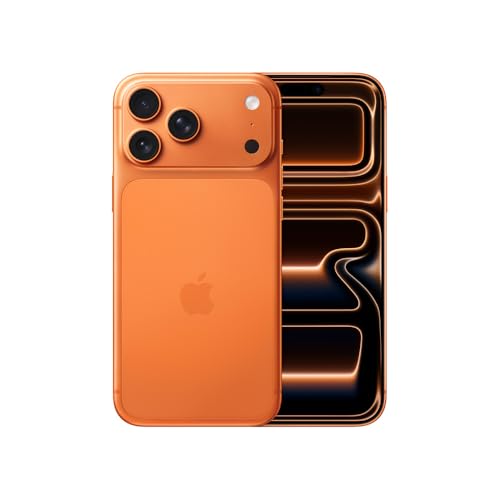
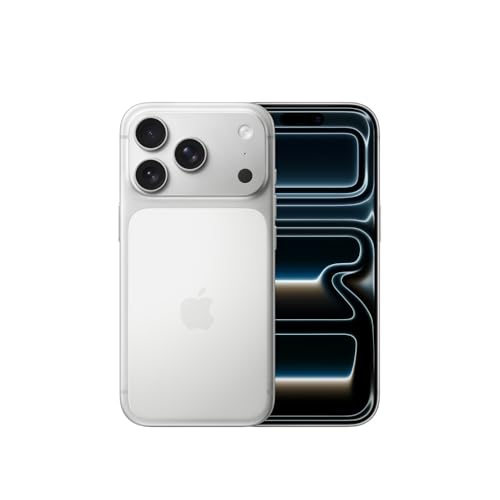
No último fim de semana, o leaker Sonny Dickson compartilhou no X fotos de protetores de lentes de câmera — acessórios de terceiros — feitos para o “iPhone Ultra” (ou “iPhone Fold”), revelando aparentemente duas das cores planejadas para o dispositivo: prata e azul-escuro.
Vale lembrar que se trata de acessórios de fabricantes terceirizados, criados a partir de informações vazadas da cadeia de suprimentos da Apple, e não de peças oficiais. Ainda assim, Dickson tem histórico consistente de acertos em vazamentos desse tipo.
These iPhone Fold camera protectors give us a look at two of the colors planned for the device: silver and dark blue. pic.twitter.com/KMaMu4JyZE
— Sonny Dickson (@SonnyDickson) August 8, 2026
As imagens reforçam um relato de abril, que já apontava um modelo clássico em prata/branco e uma opção em azul-índigo semelhante ao tom azul profundo do iPhone 17 Pro.
O esquema de cores mais contido do “iPhone Ultra” contrasta com o que se espera da linha “iPhone 18 Pro”, que segundo rumores deverá ganhar um novo tom cereja-escuro e uma opção azul-clara, além do prata — depois que a possibilidade de uma versão preta parece ter sido descartada.
As fotos dos acessórios também deixam claro o desenho da plataforma de câmeras na parte traseira do dobrável, com duas lentes dispostas horizontalmente, um flash em formato de pílula e um scanner LiDAR, características já amplamente especuladas para o modelo.
O “iPhone Ultra” é esperado para ser anunciado ao lado do “iPhone 18 Pro” e do “iPhone 18 Pro Max”, no próximo mês.


Como identificar o modelo do seu iPhone ou iPad
Com tantos modelos de iPhones e iPads lançados pela Apple desde 2007 e 2010, respectivamente, fica difícil pra muita gente saber qual aparelho de fato possui — principalmente quem não é muito ligado em tecnologia.
A boa notícia é que você pode conferir essa informação de uma maneira supersimples, nas configurações dos próprios dispositivos. Veja como identificar o seu modelo! 📱
Posts relacionados
- Abra os Ajustes (Settings) e toque em “Geral”.
- Toque em “Sobre” para conferir a informação ao lado de “Nome do Modelo”.

Bem simples, não é mesmo?
iPhone 17 Pro Max
Cores: prateado, laranja-cósmico ou azul-intenso
Armazenamento: 256GB, 512GB, 1TB ou 2TB
iPhone 17 Pro
Cores: prateado, laranja-cósmico ou azul-intenso
Armazenamento: 256GB, 512GB ou 1TB
iPhone Air
Cores: azul-céu, dourado-claro, branco-nuvem ou preto espacial
Armazenamento: 256GB, 512GB ou 1TB
iPhone 17
Cores: lavanda, sálvia, azul-névoa, branco ou preto
Armazenamento: 256GB, 512GB ou 1TB
iPhone 17e
Cores: branco, preto ou rosa-pálido
Armazenamento: 256GB ou 512GB
iPad Pro de 13″
Cores: preto-espacial ou prateado
Armazenamento: 256GB, 512GB, 1TB ou 2TB
Vidro: convencional ou nano-texture
Conectividade: Wi-Fi ou Wi-Fi + Cellular
iPad Pro de 11″
Cores: preto-espacial ou prateado
Armazenamento: 256GB, 512GB, 1TB ou 2TB
Vidro: convencional ou nano-texture
Conectividade: Wi-Fi ou Wi-Fi + Cellular
iPad Air de 13″
Cores: cinza-espacial, azul, roxo ou estelar
Armazenamento: 128GB, 256GB, 512GB ou 1TB
Conectividade: Wi-Fi ou Wi-Fi + Cellular
iPad Air de 11″
Cores: cinza-espacial, azul, roxo ou estelar
Armazenamento: 128GB, 256GB, 512GB ou 1TB
Conectividade: Wi-Fi ou Wi-Fi + Cellular
iPad mini
Cores: cinza-espacial, azul, roxo ou estelar
Armazenamento: 128GB, 256GB ou 512GB
Conectividade: Wi-Fi ou Wi-Fi + Cellular
iPad (A16)
Cores: azul, rosa, amarelo ou prateado
Armazenamento: 128GB, 256GB ou 512GB
Conectividade: Wi-Fi ou Wi-Fi + Cellular
NOTA DE TRANSPARÊNCIA: O MacMagazine recebe uma pequena comissão sobre vendas concluídas por meio de links deste post, mas você, como consumidor, não paga nada mais pelos produtos/serviços usando os nossos links de afiliado.


Como descobrir qual versão do iOS/iPadOS seu iPhone/iPad está rodando
Saber a versão do sistema operacional que o seu dispositivo da Apple está rodando atualmente é muito importante — seja para buscar alguma ajuda com o suporte ou para saber se é a mais recente disponibilizada pela empresa.
Esse processo pode ser feito de um jeito supersimples no seu iPhone ou iPad, como mostraremos em detalhes nos parágrafos a seguir. Veja só! 🙂
Posts relacionados
No seu dispositivo, abra os Ajustes (Settings). Depois toque em “Geral” e em “Sobre”. A informação consta ao lado de “Versão do iOS/iPadOS”.

Também é possível usar a Siri para conferir a mesma coisa, bastando perguntar algo como “Qual versão do iOS [ou iPadOS] eu estou rodando?”

Fácil, não? 📱
iPhone 17 Pro Max
Cores: prateado, laranja-cósmico ou azul-intenso
Armazenamento: 256GB, 512GB, 1TB ou 2TB
iPhone 17 Pro
Cores: prateado, laranja-cósmico ou azul-intenso
Armazenamento: 256GB, 512GB ou 1TB
iPhone Air
Cores: azul-céu, dourado-claro, branco-nuvem ou preto espacial
Armazenamento: 256GB, 512GB ou 1TB
iPhone 17
Cores: lavanda, sálvia, azul-névoa, branco ou preto
Armazenamento: 256GB, 512GB ou 1TB
iPhone 17e
Cores: branco, preto ou rosa-pálido
Armazenamento: 256GB ou 512GB
iPad Pro de 13″
Cores: preto-espacial ou prateado
Armazenamento: 256GB, 512GB, 1TB ou 2TB
Vidro: convencional ou nano-texture
Conectividade: Wi-Fi ou Wi-Fi + Cellular
iPad Pro de 11″
Cores: preto-espacial ou prateado
Armazenamento: 256GB, 512GB, 1TB ou 2TB
Vidro: convencional ou nano-texture
Conectividade: Wi-Fi ou Wi-Fi + Cellular
iPad Air de 13″
Cores: cinza-espacial, azul, roxo ou estelar
Armazenamento: 128GB, 256GB, 512GB ou 1TB
Conectividade: Wi-Fi ou Wi-Fi + Cellular
iPad Air de 11″
Cores: cinza-espacial, azul, roxo ou estelar
Armazenamento: 128GB, 256GB, 512GB ou 1TB
Conectividade: Wi-Fi ou Wi-Fi + Cellular
iPad mini
Cores: cinza-espacial, azul, roxo ou estelar
Armazenamento: 128GB, 256GB ou 512GB
Conectividade: Wi-Fi ou Wi-Fi + Cellular
iPad (A16)
Cores: azul, rosa, amarelo ou prateado
Armazenamento: 128GB, 256GB ou 512GB
Conectividade: Wi-Fi ou Wi-Fi + Cellular
NOTA DE TRANSPARÊNCIA: O MacMagazine recebe uma pequena comissão sobre vendas concluídas por meio de links deste post, mas você, como consumidor, não paga nada mais pelos produtos/serviços usando os nossos links de afiliado.


Quer ter um verão mais descansado? Veja como colocar o smartphone em “modo de férias”
O sistema operativo Android conta com ferramentas que ajudam a criar uma espécie de “modo de férias” no smartphone, permitindo silenciar o que é menos importante neste momento e definir as notificações ou chamadas que realmente quer receber nas férias. Veja como configurar.
The post Quer ter um verão mais descansado? Veja como colocar o smartphone em “modo de férias” appeared first on Tek Notícias.
Análise TEK: Galaxy Z Fold8 destaca-se na “ditadura” da normalização do design nos smartphones
O formato “passaporte” do novo Galaxy Z Fold8 da Samsung mostra que há espaço para inovação no tamanho e apresentação dos smartphones dobráveis, com uma experiência de utilização que vai além da forma e se destaca pela funcionalidade.
The post Análise TEK: Galaxy Z Fold8 destaca-se na “ditadura” da normalização do design nos smartphones appeared first on Tek Notícias.
Signal agora permite usar a mesma conta em mais de um smartphone
O aplicativo de mensagens Signal, conhecido pelo seu grande enfoque em segurança e privacidade, anunciou hoje que está expandindo o suporte a dispositivos vinculados — permitindo agora usar uma mesma conta em mais de um smartphone, tanto no iOS quanto no Android.
No sistema operacional da Apple, o suporte como dispositivo vinculado é uma adaptação do que já era possível fazer com iPads desde 2019. Basicamente, o Signal modificou a mesma interface já existente para que ela funcionasse bem em telas menores, sem perder a compatibilidade com o iPadOS.
Posts relacionados
No Signal, ao configurar a vinculação de um novo dispositivo, o usuário pode escolher entre duas opções: transferir todo o histórico de conversas e mídias armazenadas dos últimos 45 dias ou simplesmente começar do zero — nesse caso, o novo aparelho recebe apenas novas mensagens.
A possibilidade de sincronizar o histórico de conversas, vale recordar, estreou no aplicativo no ano passado. Diferentemente de alguns mensageiros, todo o processo é criptografado de ponta a ponta — ou seja: os servidores do Signal não têm acesso ao conteúdo das mensagens.
Além de possibilitar definir outros smartphones e tablets como dispositivos vinculados, o Signal também permite (há bastante tempo) fazer o mesmo com computadores — seja no macOS, Windows ou Linux.
via 9to5Mac


Oferta: iPhone 17e de 256GB por R$3.909 no Pix!
O iPhone 17e é o atual smartphone de entrada da Apple. Lançado no início do ano, ele traz várias funções interessantes para quem quer um iPhone, mas não pode/deseja investir em modelos mais caros (como o iPhone 17, 17 Pro, etc.).
Entre as suas características, temos uma tela de 6,1 polegadas, uma câmera 2-em-1 Fusion de 48 megapixels, além do processador A19 e o botão de Ação (Action button). Ele também suporta o MagSafe e é plenamente compatível com a Apple Intelligence.
Se você está atrás desse modelo, hoje o Mercado Livre está vendendo a versão de 256GB, na cor preta, por R$4.343,33!
iPhone 17e de 256GB
— MM Ofertas (@MMOfertas) August 4, 2026
Parcelado: de R$5.799,00 por R$4.343,33 em até 10x
À vista no Pix: de R$5.219,10 por R$3.909,00
🛍 Produto vendido e entregue pela loja oficial; aplique o cupom AMODESCONTO 🛍https://t.co/Uv9nwK4Gq2
Se levarmos em conta que o preço tabelado desse modelo aqui no Brasil é de R$5.799, estamos diante de um desconto de 25%! Esse valor pode ser parcelado em até 10x no cartão de crédito, se preferir.
Para quem quer pagar à vista no Pix, o aparelho sai por R$3.909,00 — um desconto também de 25% em relação ao valor à vista praticado pela Maçã, de R$5.219,10.
Para chegar a esses valores, aplique o cupom AMODESCONTO no carrinho.
Todos os descontos de promoções divulgadas pelo MacMagazine são calculados com base nos preços sugeridos pela Apple ou por outras fabricantes. Pode ser que um determinado produto seja comumente encontrado por valores inferiores em redes varejistas, mas a nossa base de comparação é sempre em cima das tabelas oficiais.
Fique sempre por dentro das ofertas!
Se você não é louco, é claro que gosta de economizar. E, para isso, o MacMagazine tem diversas opções para ajudar você a conseguir comprar o seu produto Apple pagando menos!
Você pode usar a nossa extensão para os navegadores Chrome/Opera/Edge, acompanhar as ofertas pelo MM Fórum, pelo Facebook, pelo X, pelo Threads, pelo Bluesky, pelo Mastodon ou por um canal no Telegram. Escolha a melhor opção para você — ou todas, para depois não se arrepender — e economize! 😉
NOTA DE TRANSPARÊNCIA: O MacMagazine recebe uma pequena comissão sobre vendas concluídas por meio de links deste post, mas você, como consumidor, não paga nada mais pelos produtos/serviços usando os nossos links de afiliado.
via Tecnoblog


Refresque o seu smartphone ou tablet com novas aplicações para iOS e Android
Entre aplicações para seguir o Sol no eclipse, jogos e apoio ao exercício físico, as aplicações que a equipa do TEK Notícias escolheu esta semana podem dar uma ajuda a refrescar o seu smartphone ou tablet.
The post Refresque o seu smartphone ou tablet com novas aplicações para iOS e Android appeared first on Tek Notícias.
Vivo V70 FE in offerta su Amazon: ora il prezzo è quello giusto?
Tra le opzioni da considerare per chi è alla ricerca di uno smartphone di fascia media c'è l'ottimo Vivo V70 FE, oggi disponibile in offerta su Amazon con un prezzo ridotto a 350 euro (a fronte di un listino di 449 euro). Il modello, venduto e spedito da Amazon, può rappresentare un'ottima opzione per un mid-range in questa fascia di prezzo. L'offerta è disponibile di seguito. L'acquisto può avvenire anche in 5 rate mensili.
L'offerta è stata verificata al momento della pubblicazione (1/8 alle 17:20). Il prezzo potrebbe cambiare nelle prossime ore
Le specifiche
La scheda tecnica del Vivo V70 FE comprende un display AMOLED da 6,83 pollici, con risoluzione Full HD+ e refresh rate massimo di 120 Hz. A gestire il funzionamento del dispositivo c'è il SoC MediaTek Dimensity 7360 Turbo che viene supportato da 8 GB di RAM e 256 GB di storage.
- vivo V70 FE è disponibile online da Mediaworld a 370 euro.
- vivo V70 FE è disponibile su
a 350 euro. - vivo V70 FE è disponibile su
a 398 euro.
CLICCA QUI PER CONTINUARE A LEGGERE
iPhone 17 Pro sobrevive a queda de avião no Canadá
De todos os possíveis testes de resistência em que o iPhone 17 Pro já se saiu bem, esse foi muito possivelmente um dos mais inusitados: o aparelho foi recuperado sem danos aparentes após cair de um pequeno avião a aproximadamente 1,1km de altitude (cerca de 3,6 mil pés).
O feito foi da artista canadense Heather Cline, que reside na província de Saskatchewan e costuma fazer voos em um avião monomotor junto com seu marido para capturar fotos e vídeos que servem de referência para suas pinturas aéreas.
Durante um desses voos, 30 minutos após realizar a decolagem, uma corrente de ar derrubou o seu iPhone do suporte, enquanto a pequena aeronave voava a mais de 100km/h.
À CBC, Cline declarou que havia adquirido o aparelho no mês anterior:
Foi um grande investimento. […] Eu literalmente não acreditei de início, que eu tinha feito aquilo, e então ele só me olhou e disse: “Eu te disse para não deixar o telefone cair.” […] Eu estava simplesmente arrasada. Pensava, “Será que existe seguro para quem deixa o seu celular cair de um avião?”, tipo, o que você escreveria no pedido de indenização? “Eu sou uma idiota?”
Embora o casal considerasse o aparelho perdido, eles perceberam que ele ainda era localizável pelo app Buscar (Find My), e então decidiram procurá-lo, encontrando-o em meio a uma plantação de canola com a tela virada para cima, sem danos aparentes!
iPhone 17 Pro Max
Cores: prateado, laranja-cósmico ou azul-intenso
Armazenamento: 256GB, 512GB, 1TB ou 2TB
iPhone 17 Pro
Cores: prateado, laranja-cósmico ou azul-intenso
Armazenamento: 256GB, 512GB ou 1TB
NOTA DE TRANSPARÊNCIA: O MacMagazine recebe uma pequena comissão sobre vendas concluídas por meio de links deste post, mas você, como consumidor, não paga nada mais pelos produtos/serviços usando os nossos links de afiliado.
via MobileSyrup


Honor Magic8 Lite : ce smartphone 5G avec écran AMOLED et 8 Go de RAM s’affiche à moins de 215 € sur AliExpress

Oferta: iPhone 16 (128GB) por R$4.739,00 no Pix!
O iPhone 16 segue sendo uma excelente opção para quem quer um smartphone recente da Apple, mas não quer investir tanto em um modelo da linha 17.
Entre as suas especificações, podemos destacar a tela de 6,1 polegadas, o conjunto de duas câmeras (com um sistema Fusion de 48 megapixels e uma câmera ultra-angular de 12MP) e o processador A18, além da presença do Controle da Câmera (Camera Control) e do botão de Ação (Action Button).
Se você está atrás desse modelo, hoje o Magazine Luiza está com uma promoção muito boa! Trata-se da versão de 128GB, em todas as cores. Ele está saindo por R$5.265,55 em até 21x no cartão de crédito!
iPhone 16 de 128GB
— MM Ofertas (@MMOfertas) July 28, 2026
Parcelado: de R$6.799,00 por R$5.265,55 em até 21x
À vista no Pix: de R$6.119,10 por R$4.739,00
🛍 Aplique o cupom IPHONE400 no carrinho 💰https://t.co/88VqNmCj1G
Se levarmos em conta que o preço tabelado desse modelo aqui no Brasil é de R$6.799 nessa mesma modalidade de pagamento, estamos diante de um desconto de 23%!
Já para quem preferir pagar à vista no Pix, a oferta também é muito boa: ele sai a R$4.739,00, representando um desconto de 23% se comparado com o valor da Apple nessa mesma condição, que é de R$6.119,10.
Para chegar a esses valores, não esqueça de resgatar/aplicar o cupom IPHONE400.
Todos os descontos de promoções divulgadas pelo MacMagazine são calculados com base nos preços sugeridos pela Apple ou por outras fabricantes. Pode ser que um determinado produto seja comumente encontrado por valores inferiores em redes varejistas, mas a nossa base de comparação é sempre em cima das tabelas oficiais.
Fique sempre por dentro das ofertas!
Se você não é louco, é claro que gosta de economizar. E, para isso, o MacMagazine tem diversas opções para ajudar você a conseguir comprar o seu produto Apple pagando menos!
Você pode usar a nossa extensão para os navegadores Chrome/Opera/Edge, acompanhar as ofertas pelo MM Fórum, pelo Facebook, pelo X, pelo Threads, pelo Bluesky, pelo Mastodon ou por um canal no Telegram. Escolha a melhor opção para você — ou todas, para depois não se arrepender — e economize! 😉
NOTA DE TRANSPARÊNCIA: O MacMagazine recebe uma pequena comissão sobre vendas concluídas por meio de links deste post, mas você, como consumidor, não paga nada mais pelos produtos/serviços usando os nossos links de afiliado.