❌

Reading view

Bound gravitational waves inspired by photonic systems

When one mentions "waves," we immediately think of a perturbation that propagates. This applies to waves on the shore, sound waves in the air or electromagnetic waves that we use to transmit information via optical fibers. The same idea of propagating perturbations applies to gravitational waves (GWs), which entered the mainstream media a decade ago after their first direct detection. These are perturbations of the elastic fabric that we are all embedded in, called spacetime.

  •  

Memory effects in nanoparticle suspensions

A system will generally move towards equilibrium when a change is made to it in a process called relaxation. To predict the state of the system after some period of time, we only need to know its current state and the external conditions. However, some polymers have memory behaviours where the evolution of the system is not only dependent on the current state, but also on previous states. This is known as the Kovacs effect.

In this work, the researchers investigated the Kovacs effect in a system consisting of suspensions of rod-like nanoparticles. By applying an electric field to these nanoparticles they align, therefore the particles change the liquid’s optical anisotropy, which can be measured as birefringence, which is how the liquid changes light polarization. More birefringence means the particles are more aligned. Importantly, there are faster- and slower-relaxing nanoparticles because of their polydispersity and different sizes, meaning they align at different rates. By changing the strength of the electric field, the faster and slower nanoparticles become out of sync with each other. The future behaviour will then depend on the system’s previous history that is overall hidden by the global birefringence measurement; this is the Kovacs effect.

The researchers modelled the orientational dynamics using the Smoluchowski equation, which describes rotational diffusion of particles. They found that relaxation is not determined by a single timescale or relaxation mode. When some of the modes are fast and some are slow, memory effects will occur. The Kovacs effect is important because it shows that a simple strategy of applying a strong electric field before switching to the target field does not necessarily speed up relaxation. Due to memory effects arising from particles relaxing at different rates, the system overshoots the target state, reducing the expected gain in speed.

To overcome this, the researchers designed improved two- and three-step protocols that suppress the slowest relaxation modes rather than simply matching the average birefringence. These protocols reduce the memory effect, produce a smoother approach to equilibrium, and achieve faster relaxation, although the benefit of additional switching steps becomes progressively smaller. This research improves our understanding of memory effects in complex systems and provides a practical strategy for controlling nanoparticle dynamics more quickly and efficiently.

Read the full article

Memory-aware acceleration of orientational dynamics in nanoparticle suspensions

Miguel Ibáñez et al 2026 Rep. Prog. Phys. 89 068005

Do you want to learn more about this topic?

Scientific developments of liquid crystal-based optical memory: a review by Jai Prakash, Achu Chandran and Ashok M Biradar (2016)

The post Memory effects in nanoparticle suspensions appeared first on Physics World.

  •  

When topology meets entanglement

Topological materials have been receiving a lot of attention in recent years because of their potential applications in future electronic and quantum technologies.

These are a type of material whose electrons have properties that stay stable even when the material has small defects, impurities, or imperfections. They often have surface or edge behaviour that is very different from the interior, because of the structure of the material’s quantum states.

Researchers use quantities such as Berry curvature and Chern numbers to describe topological materials. Berry curvature measures how an electron’s quantum state changes as its momentum changes. Adding this curvature across the whole band gives a Chern number, a whole-number label that can show whether the material is topological.

A key question in this area is: when a material has topological properties, how much of that behaviour is actually tied to quantum entanglement?

In a new paper published recently, Kazuki Ikeda and Steven Rayan tackled this question using the spinless Haldane model. This is a widely used theoretical model for understanding topological materials. This model describes electrons moving on a honeycomb lattice, which has two different sublattices, called A and B.

Here, the researchers added an extra layer of analysis. Instead of only calculating whether the model is topological, they were able to determine where the topological signal comes from.

By introducing a filter based on quantum entanglement, they tested whether the Berry curvature is associated with electron states that are spread across both A and B sublattices, or with states that mostly sit on one sublattice.

They also focused on what happens when the system moves between different topological phases, giving a more organised way to describe what changes when the energy gap closes and the material switches phase.

These results will provide invaluable insights into understanding and designing topological materials going forward.

What’s also interesting here is that, in order to obtain these results, the authors employed Langlands-inspired mathematics to keep track of what changes when the material switches between topological phases.

The Langlands programme is an ambitious mathematical dictionary that tries to translate problems about numbers into problems about symmetry, geometry and analysis.

Although the link in this work is purely conceptual, it does show that Langlands-style structures can organise real physics problems in topological matter.

Read the full article

Quantum entanglement, stratified spaces, and topological matter: towards entanglement-sensitive Langlands data – IOPscience

Kazuki Ikeda and Steven Rayan 2026 Rep. Prog. Phys. 89 067601

The post When topology meets entanglement appeared first on Physics World.

  •  

NASA Completes Astronaut-Deployed Science Instrument for Lunar Surface

Rectangular box-shaped device resting on a metal table. The front face is covered with a grid of many small black rectangular panels bordered in white. Metal components, brackets, and small box units are mounted along the top. The background shows a large windowed wall with a blurred American flag and an Artemis flag visible behind the device.
The fully-integrated LEMS (Lunar Environment Monitoring Station) ready for environmental testing. A small suitcase-size instrument suite built at NASA Goddard, LEMS is designed to carry out continuous, long-term monitoring of the seismic environment at the Moon, including surface motion caused by moonquakes and meteorite impacts in the lunar south polar region.
NASA Goddard/Mike Guinto

NASA has declared “wrenches down” on the first completed payload designed for Artemis astronauts to deploy on the Moon’s surface. Engineers working on NASA’s Lunar Environment Monitoring Station, or LEMS, have completed hardware development and testing and the payload is ready for its permanent home near the lunar South Pole. With the hardware complete, LEMS is ready to support one of the Artemis program’s core goals: enabling sustained lunar science and exploration.

The LEMS instrument package contains two highly sensitive seismometers that will monitor ground vibrations from moonquakes and meteorite impacts, providing scientists with insights into the Moon’s interior and the seismic hazards astronauts might encounter at the surface. Its modular design allows the system to be adapted or expanded to host new instruments in the future, creating a reusable platform that can evolve as scientific priorities grow.

The payload will remain in a clean room at NASA’s Goddard Space Flight Center in Greenbelt, Maryland, where it was built, until it is assigned to an Artemis mission for deployment to the lunar surface.

“The completion of the LEMS scientific instrument is a major step in a new era of lunar surface science. Innovative science experiments will uncover, measure, and reveal the Moon’s secrets while astronauts open new frontiers for discovery,” said Joel Kearns, deputy associate administrator for exploration, Science Mission Directorate, NASA Headquarters in Washington. “And, behind the scenes, countless teams across NASA and our partners are pushing the boundaries of what surface instruments can do, building the tools that will make future exploration possible and safer.”

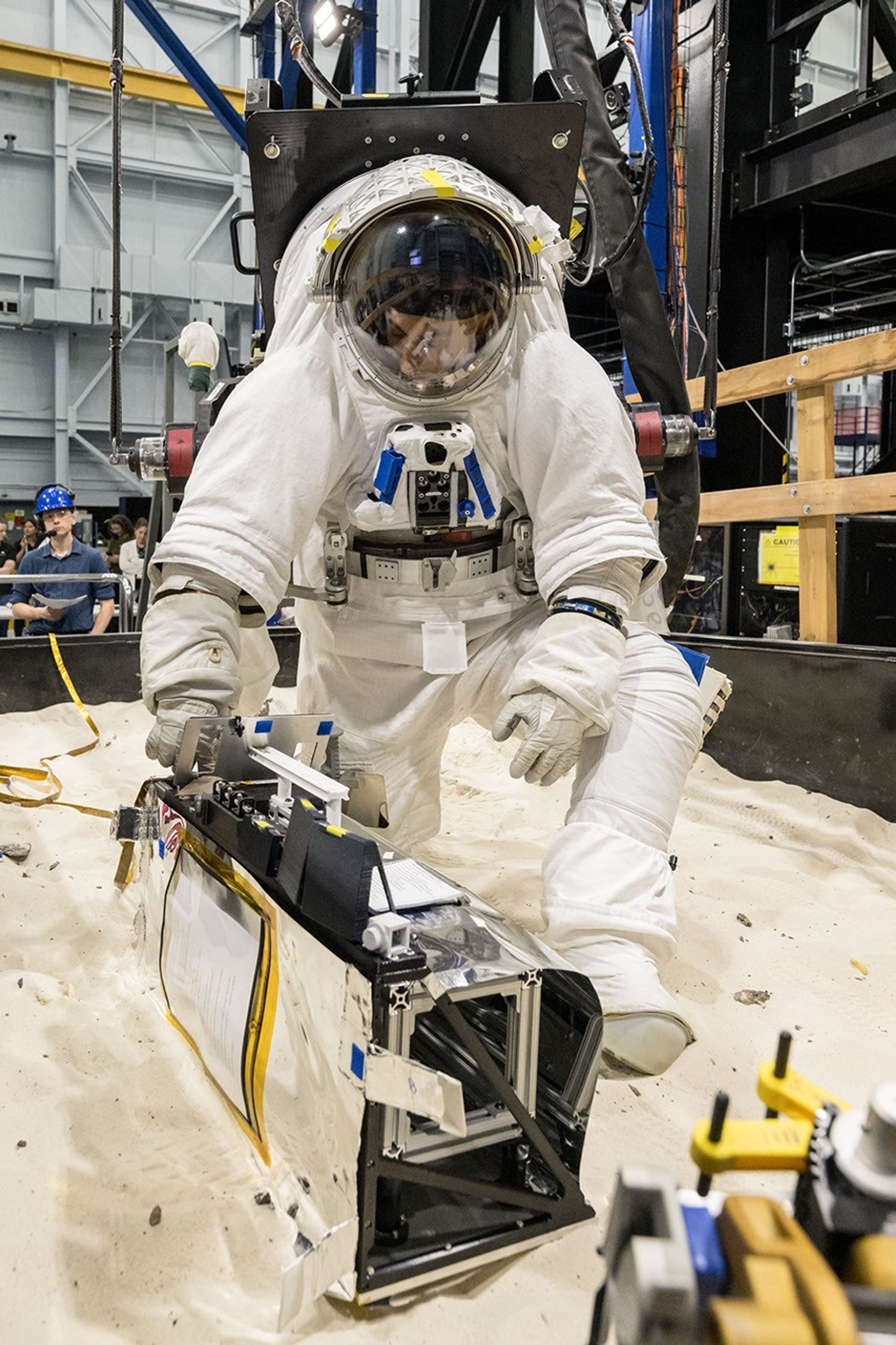
An astronaut in a white spacesuit kneels in simulated lunar soil while working with scientific equipment in a large testing facility. Staff members and support structures are visible in the background.
A scientist wearing NASA’s xEMU prototype space suit is testing the handling of a mockup version of NASA’s Lunar Environment Monitoring Station, or LEMS. The testing took place at the Active Response Gravity Offload System, a simulated reduced gravity environment at NASA’s Johnson Space Center in Houston.
NASA Johnson

The LEMS payload builds on a legacy of lunar seismic tracking. Apollo astronauts deployed a network of seismometers on the Moon’s nearside equatorial region between 1969 and 1972. Those instruments operated until 1977, recording about 13,000 moonquakes and other ground vibrations that helped scientists begin to understand the composition of the Moon’s interior. For decades, researchers have hoped to spread more seismometers, updated with new technologies, across the lunar surface.

Now, LEMS will carry the first seismometers to be deployed by future astronauts to listen for faint ground vibrations, collecting new clues to the Moon’s internal structure and ongoing seismic activity. The sensors will be the most compact, sensitive, and energy-efficient seismometers ever built for planetary exploration.

LEMS itself is about the size of a small suitcase, weighing 11 pounds in the Moon’s low-gravity environment. It will carry not just these seismic sensors, but everything it needs to function independently of humans after deployment. LEMS is built to manage its own power production via a lightweight, flexible solar array that conforms to the shape of the LEMS unit. It also will manage its operational activities to ensure continuous data collection based on a preset plan, and monthly data transmission to Earth. The payload will do all this while maintaining a stable internal temperature throughout the massive day-to-night temperature swings of the South Pole region.

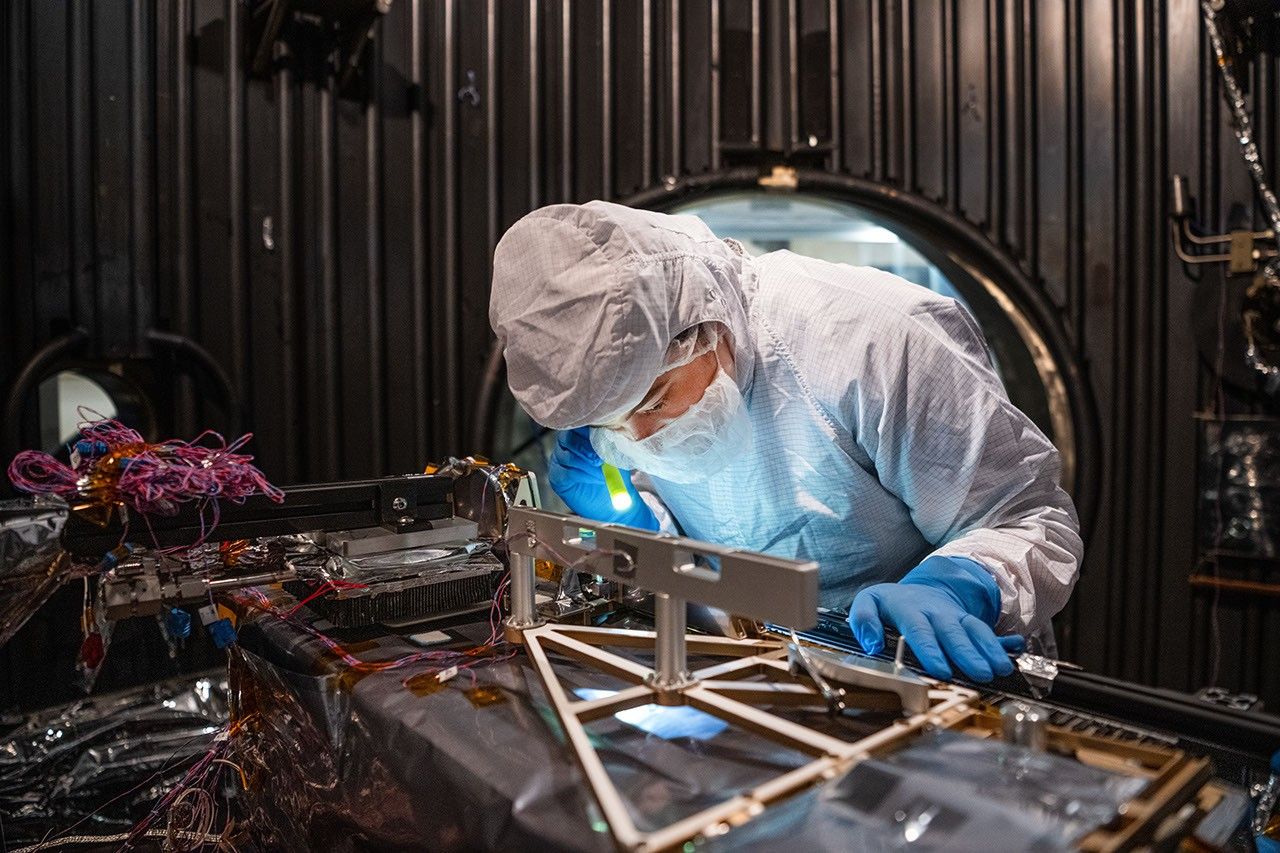
A technician in a white clean-room suit and blue gloves uses a small flashlight to inspect a spacecraft instrument inside a dark testing chamber. Colorful wires and metallic components surround the instrument.
Mechanical Engineer Brie Ludwig inspects the Lunar Environment Monitoring Station (LEMS) in preparation for testing in a thermal vacuum chamber at Goddard Space Flight Center in Greenbelt, Maryland, on March 31, 2026. LEMS is a compact, autonomous, and self-sustaining seismometer suite designed to carry out continuous, long-term monitoring of the lunar seismic environment at the South Polar region.
NASA/Denny Henry

“When we conceived of LEMS, we weren’t just thinking about the next mission, we were thinking about the next generation of lunar exploration,” said Mehdi Benna, a University of Maryland Baltimore County scientist who leads LEMS from NASA Goddard. “Our vision was to create a scientific buoy for the Moon. Like an ocean buoy on Earth, LEMS is designed to be easy to build, adaptable to different scientific objectives, and capable of operating independently for years.”

Before any surface science could happen, Benna and his team had to ensure that LEMS could survive the trip to the Moon and the harsh environment of its surface. Over the past five months, LEMS and its components have been subjected to a demanding series of environmental and operational tests. Engineers verified LEMS can endure the violent shaking of launch, the journey to the lunar surface, and the Moon’s temperature and radiation environment. The team also showed that the instrument package’s mechanical and electrical design is safe for astronaut handling.

The LEMS payload was built to operate through the lunar night, which lasts two Earth weeks, without external power assistance or a heat source. Past lunar surface instruments relied on radioisotope heaters for warmth and power. But LEMS instead will withstand temperatures that dip to minus 400 degrees Fahrenheit in some areas by using advanced insulation materials, low-thermal-conductivity cables that minimize heat loss, and a thermal regulator that conducts heat away during the day to prevent overheating and helps retain heat at night.

These innovations reduce mass and power needs, setting the stage for lighter, energy-efficient instruments that can operate continuously at future Artemis landing sites and the NASA-led Moon Base.

The LEMS payload is led by University of Maryland Baltimore County and University of Maryland College Park. Technical implementation is led by NASA Goddard. The University of Arizona, in partnership with Silicon Audio, Inc., supplied LEMS’ two state-of-the-art seismometers. Morehead State University in Kentucky provided LEMS’ telecommunication system and will operate the instrument on the surface. Washington University in St. Louis will manage the instrument’s data processing and dissemination to the larger scientific community.

  •  

NASA Telescopes Create Colorful ‘Craft’ From Nearby Nebula

4 Min Read

NASA Telescopes Create Colorful ‘Craft’ From Nearby Nebula

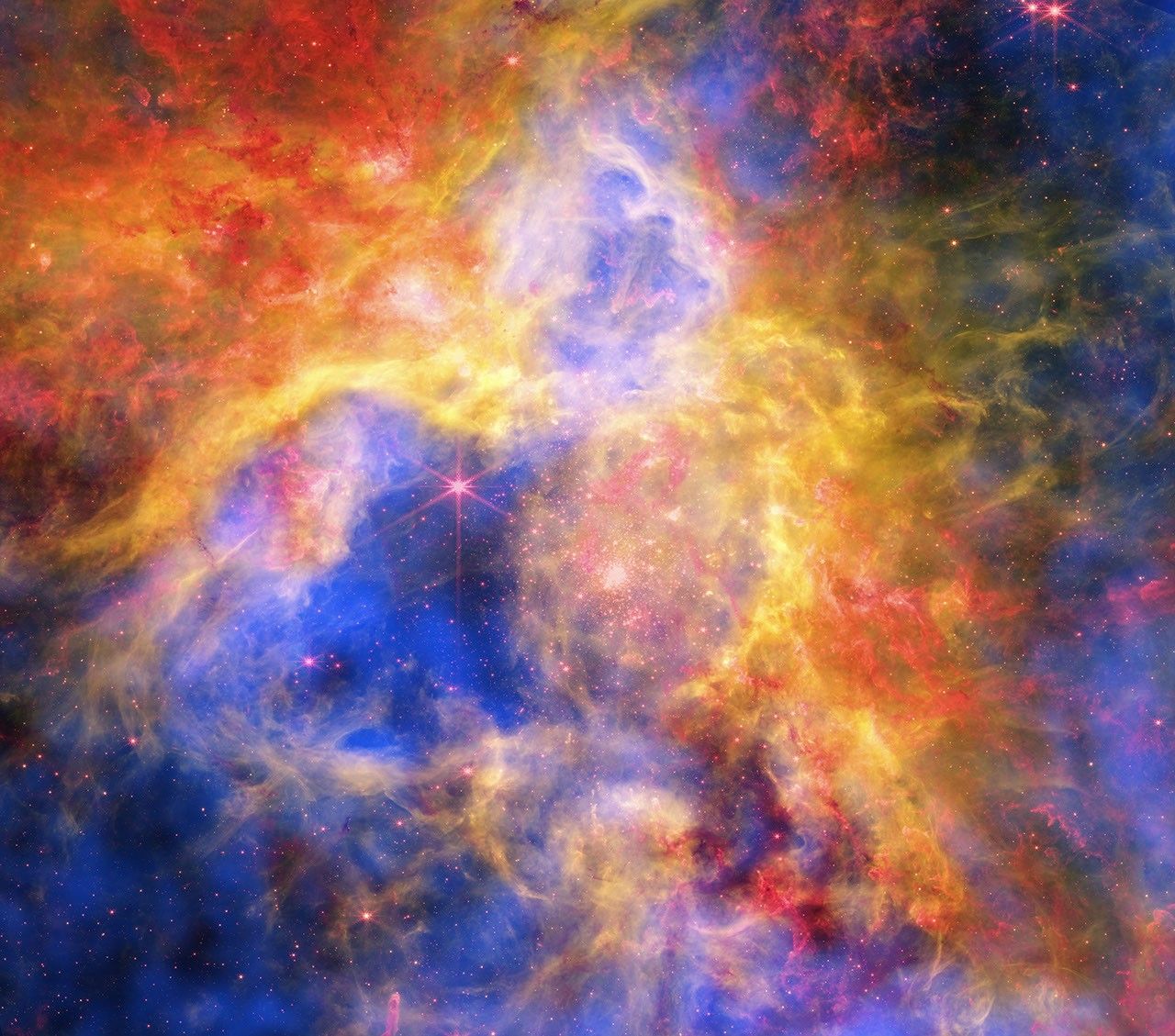
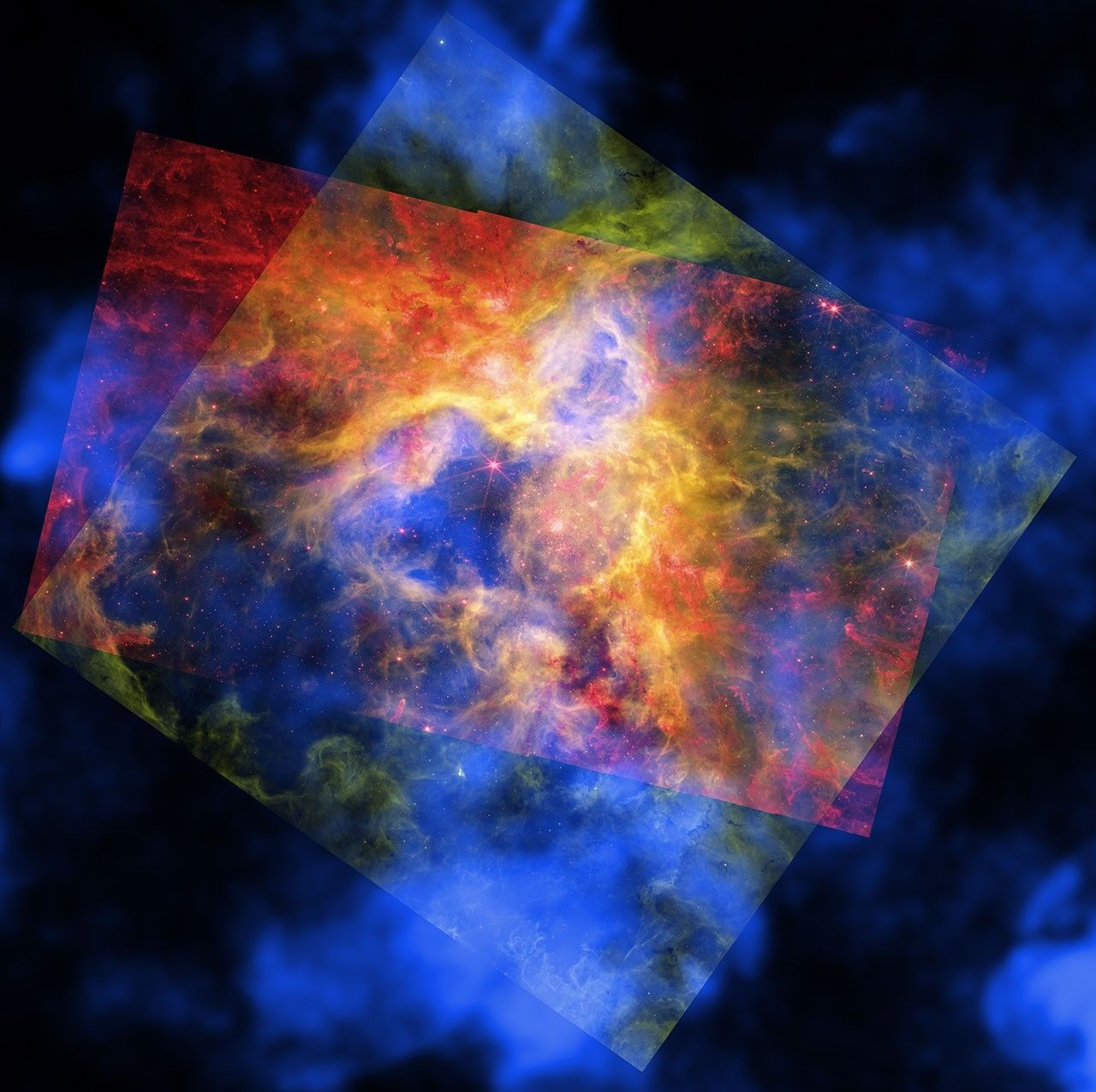
This multiwavelength image of the Tarantula Nebula, one of the brightest and largest regions of star formation to Earth, shows X-rays from Chandra that reveal gas that has been blown away in winds from the surfaces of young, massive stars and heated to millions of degrees by shock waves, like sonic booms from supersonic jets. The infrared data from Webb shows thousands of young stars, plus swaths of cool dust that will provide the ingredients to one day form new stars and planets. Hubble optical data uncovers hydrogen gas that is warmer than seen with Webb, as well as some individual stars through the nebula.

Like a collage made of layered sheets of colored cellophane, a vibrant new image layers observations of a famous star-forming nebula from NASA space telescopes. The resulting cosmic “craft” reveals new details about the star formation region known as 30 Doradus, or the Tarantula Nebula.

Located in the Large Magellanic Cloud, a small neighbor galaxy to the Milky Way about 160,000 light-years from Earth, the Tarantula has thousands of young stars embedded in a vibrant honeycomb-like structure of gas and dust.

This multiwavelength image of the Tarantula Nebula, one of the brightest and largest regions of star formation to Earth, shows X-rays from Chandra that reveal gas that has been blown away in winds from the surfaces of young, massive stars and heated to millions of degrees by shock waves, like sonic booms from supersonic jets. The infrared data from Webb shows thousands of young stars, plus swaths of cool dust that will provide the ingredients to one day form new stars and planets. Hubble optical data uncovers hydrogen gas that is warmer than seen with Webb, as well as some individual stars through the nebula.
X-ray: NASA/CXC/Ohio State Univ./J. Rodriguez et al; Infrared: NASA/ESA/CSA/STScI; Optical: NASA/ESA/STScI; Image Processing: NASA/CXC/SAO/P. Edmonds

Like a collage made of layered sheets of colored cellophane, a vibrant new image layers observations of a famous star-forming nebula from NASA space telescopes. The resulting cosmic “craft” reveals new details about the star formation region known as 30 Doradus, or the Tarantula Nebula.

Located in the Large Magellanic Cloud, a small neighbor galaxy to the Milky Way about 160,000 light-years from Earth, the Tarantula has thousands of young stars embedded in a vibrant honeycomb-like structure of gas and dust.

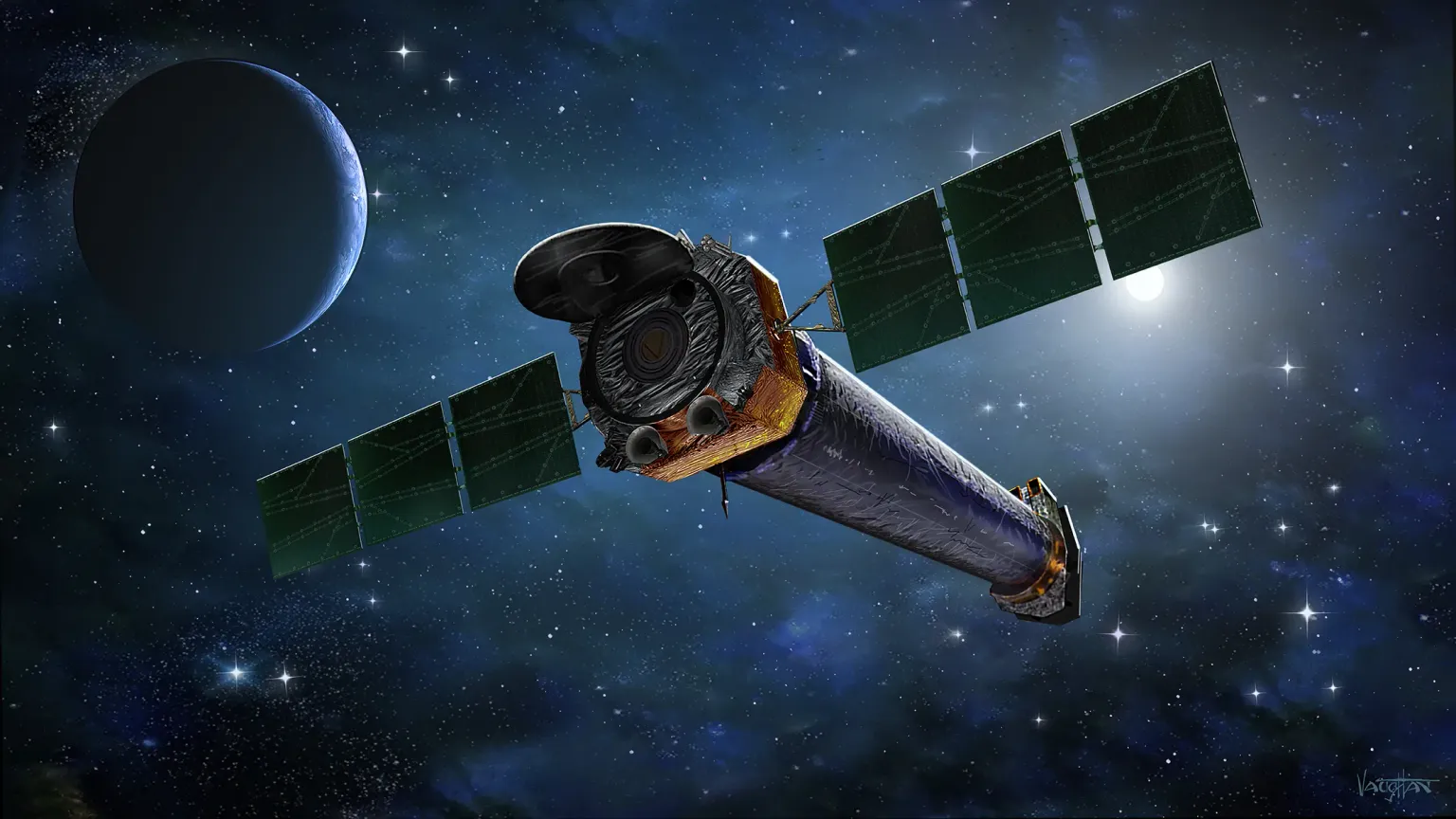
The new composite image contains X-rays from NASA’s Chandra X-ray Observatory, which has repeatedly observed the Tarantula Nebula over the course of its mission, in the layer that appears in blue. The X-ray data reveals gas blown away by winds from the surfaces of young, massive stars and heated to millions of degrees by shock waves, like sonic booms from supersonic jets.

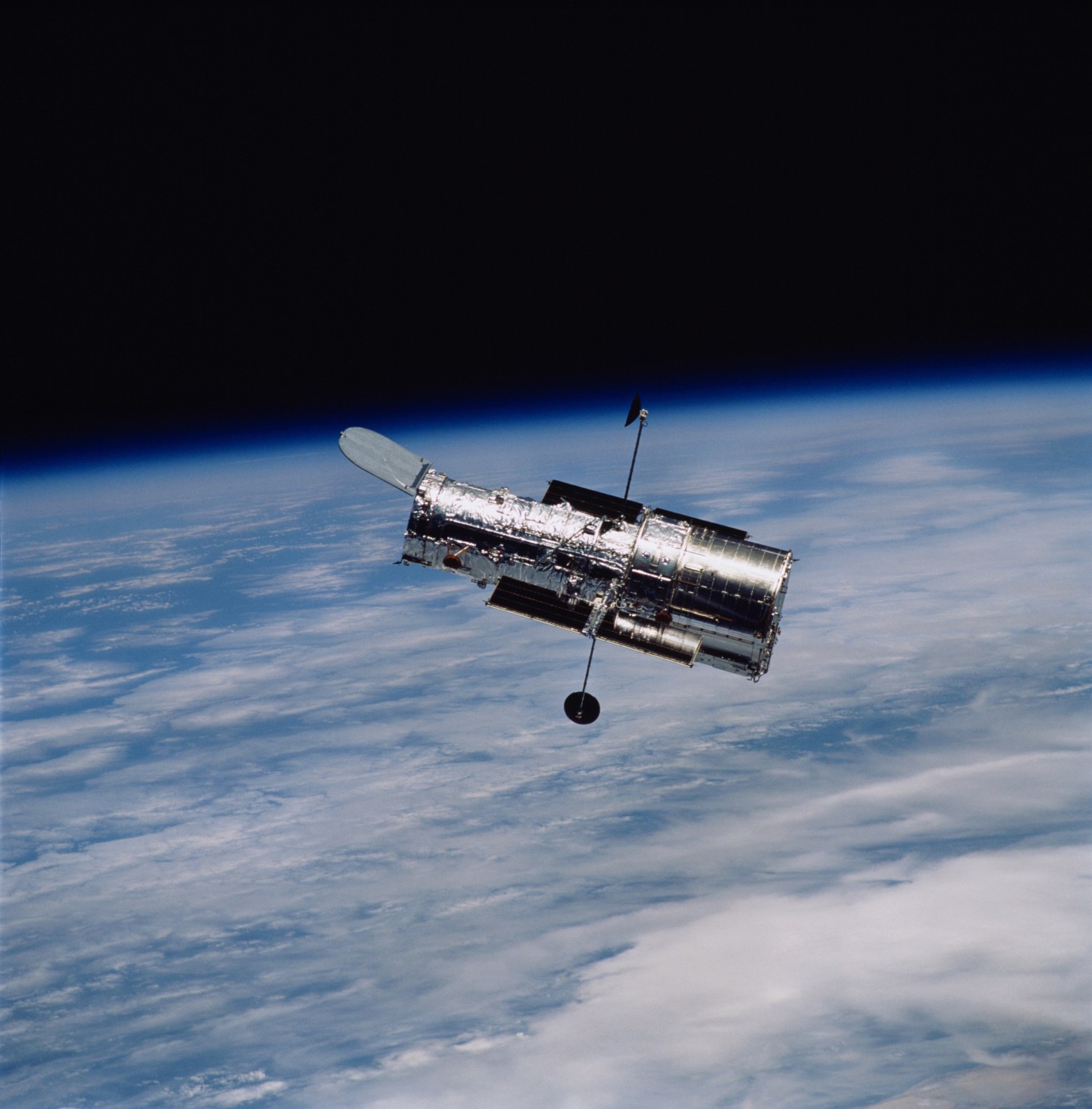
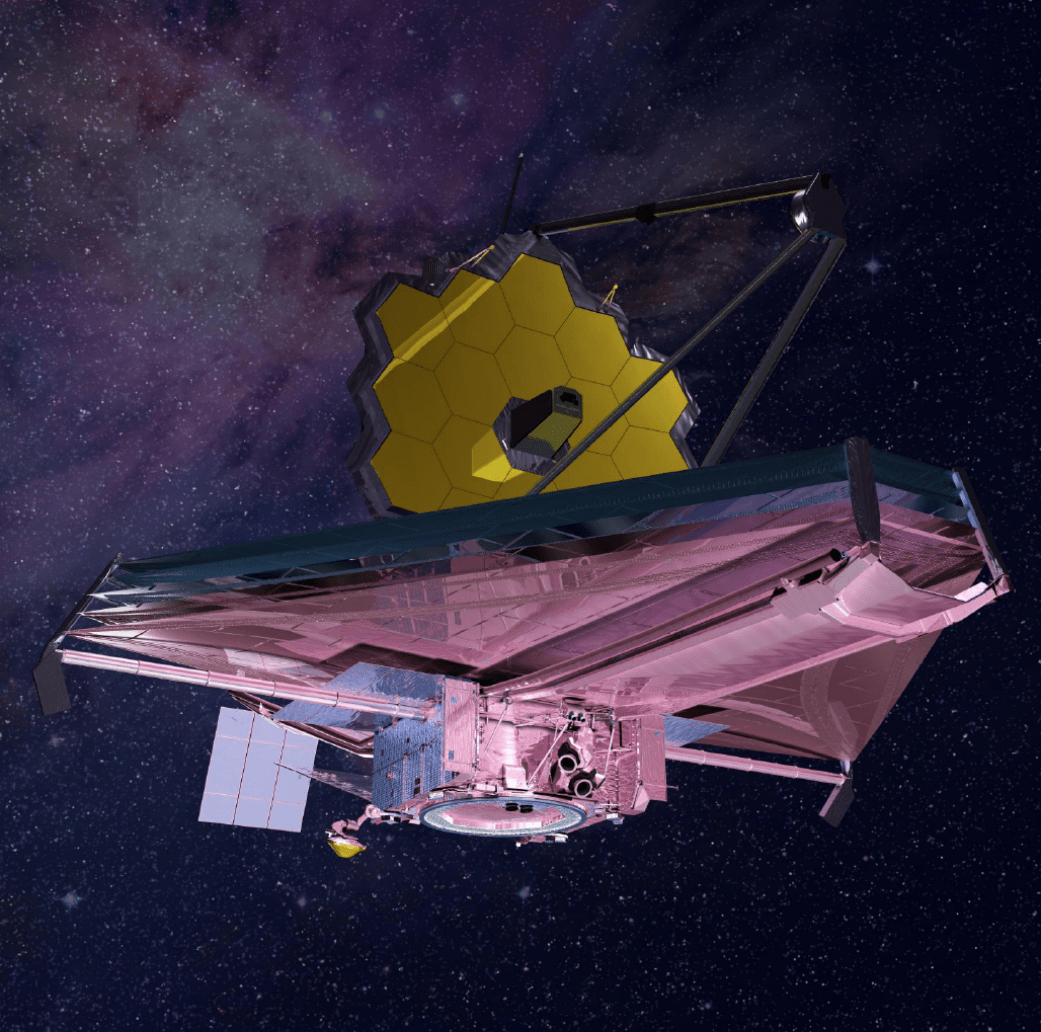
The red represents infrared data from NASA’s James Webb Space Telescope showing thousands of young stars, plus swaths of cool dust that will provide the ingredients to form new stars and planets. Optical data in the green layer from NASA’s Hubble Space Telescope uncovers hydrogen gas that is warmer than seen with Webb, as well as some individual stars through the nebula.

The composite image shows the full Hubble and Webb images of this region, as well as a large section of the Chandra image, all recently published in a research paper in the Astrophysical Journal. In some regions the blue Chandra layer stands alone, and in others it combines with either the red Webb data or the green Hubble data. In the middle region all three images overlap to provide a holistic view in red, orange, yellow, green, and blue.

Previously, astronomers had studied the amount and the impact of energy produced by winds from young, massive stars in the Tarantula Nebula. Scientists expect that much of this energy should heat gas so that it produces X-rays. However, the research paper shows that there is much less X-ray-emitting gas in the nebula than expected. This led researchers to ask: Where has this energy gone and what tamed the Tarantula Nebula?

By studying the data from Chandra, Hubble, and Webb, combined with data from NASA’s retired Spitzer Space Telescope, the team concluded the Tarantula may be losing energy from several sources.

First, up to half of the hot gas is leaking through the shell walls of the gas and dust structures and escaping the nebula. Next, there is stirring and mixing between the cold gas near the shell walls and some of the hot gas, lowering the overall temperature of the gas. Finally, comparisons with computer simulations suggest the Tarantula may be losing energy through conduction. This involves direct physical contact between hot and cooler material, like with a frying pan on a burner, causing the hot and cooler material to equalize in temperature. In the case of the Tarantula Nebula, the hot gas would be conducting heat by being in direct contact with the cooler gas in the shells, especially in the densest regions. This scenario does not necessarily involve mixing the hot and cooler gas.

The combination of these three channels for losing large amounts of energy leads to this colorful and complex display revealed by NASA’s telescopes working together.

This multiwavelength image of the Tarantula Nebula, one of the brightest and largest regions of star formation to Earth, shows X-rays from Chandra that reveal gas that has been blown away in winds from the surfaces of young, massive stars and heated to millions of degrees by shock waves, like sonic booms from supersonic jets. The infrared data from Webb shows thousands of young stars, plus swaths of cool dust that will provide the ingredients to one day form new stars and planets. Hubble optical data uncovers hydrogen gas that is warmer than seen with Webb, as well as some individual stars through the nebula.
Tarantula Nebula / 30 Doradus, cropped version.
X-ray: NASA/CXC/Ohio State Univ./J. Rodriguez et al; Infrared: NASA/ESA/CSA/STScI; Optical: NASA/ESA/STScI; Image Processing: NASA/CXC/SAO/P. Edmonds

The paper describing these results was led by Jennifer Rodriguez of The Ohio State University in Columbus. Additional authors on the paper include Laura Lopez, Ohio State; Lachlan Lancaster, Columbia University in New York City; Anna Rosen, San Diego State University; Omnaraynai Nayak, Space Telescope Science Institute in Baltimore; Sebastian Lopez, Ohio State; Tyler Holland-Ashford, NASA’s Goddard Space Flight Center in Greenbelt, Maryland; and Trinity Webb, Ohio State.

NASA’s Marshall Space Flight Center in Huntsville, Alabama, manages the Chandra program. The Smithsonian Astrophysical Observatory’s Chandra X-ray Center controls science operations from Cambridge, Massachusetts, and flight operations from Burlington, Massachusetts.

To learn more about Chandra, visit:

https://nasa.gov/chandra

About the Author

Megan Watzke

Share

Details

Last Updated
Aug 12, 2026
Editor
Lee Mohon
Contact
Megan Watzke
Location
Marshall Space Flight Center
  •  

Scientists Use Ordinary Sunlight to Create Quantum Entanglement

Scientists have shown that sunlight can be used to create quantum entanglement, a surprising advance that could eventually help make quantum technologies more energy efficient. Quantum entanglement is a strange phenomenon in which two particles become connected so strongly that their properties remain linked, even when they are separated. It is an important part of […]

The post Scientists Use Ordinary Sunlight to Create Quantum Entanglement appeared first on Knowridge Science Report.

  •  

“Magic-Angle” Graphene Uses Faint Light to Transform an Insulator Into a Metal, Revealing a New Way to Make the Unseen Visible

A material that normally blocks the flow of electricity can suddenly begin behaving like a metal when exposed to remarkably weak light, according to a new experiment involving one of the strangest forms of graphene ever created. The breakthrough reveals that an unusual quantum effect could eventually provide a new way to detect some of the faintest radiation around us.

Researchers working with “magic-angle” twisted bilayer graphene found that faint, long-wavelength radiation can effectively melt the material’s fragile correlated insulating state, causing its electrical resistance to plummet. Remarkably, the experiments showed that even relatively weak radiation could trigger a dramatic transition from an insulator to a metal.

Beyond revealing an unusual way that light can manipulate matter, the discovery could provide the foundation for extremely sensitive detectors capable of spotting faint terahertz and far-infrared radiation.

With further development, detectors operating at these wavelengths could have applications ranging from security imaging and material inspection to astronomy and environmental sensing.

The study, published in Nature Communications, centers on magic-angle twisted bilayer graphene, or MATBG—a material produced by stacking two sheets of graphene and rotating them relative to one another at a carefully controlled angle.

Under the right conditions, interactions between electrons can cause magic-angle graphene to enter exotic collective states, including superconducting and insulating phases.

“Here we show that this expectation does not apply to magic-angle twisted bilayer graphene (MATBG) and demonstrate giant photoresponse of MATBG to low-intensity long-wavelength photons when it is tuned to half filling of the moiré band,” researchers write. “Far-infrared photons selectively overheat the low-heat-capacity electronic subsystem, driving a collapse of the correlated order and producing a giant photoresistive response.”

Ordinarily, changing an insulator into a conductor with light requires supplying enough energy to alter how electrons can move through the material fundamentally. Previous experiments involving light-induced insulator-to-metal transitions have frequently depended on intense, ultrafast excitation.

Magic-angle graphene offers another route.

Twisting graphene sheets at carefully controlled angles creates a larger repeating structure known as a moiré superlattice, dramatically changing how electrons within the material interact. Those interactions have already produced some remarkable results.

As The Debrief reported last year, researchers studying magic-angle twisted trilayer graphene uncovered new evidence of unconventional superconductivity, including unusually tightly bound electron pairs and a distinctive superconducting energy gap.

That work was part of a greater effort to understand whether these exotic materials could eventually help scientists design superconductors capable of operating at much higher temperatures.

In the new study, researchers exploited another unusual state that can emerge in magic-angle graphene. At certain electron densities, interactions between electrons become unusually important, allowing them to organize into what physicists call a “correlated insulator.”

That collective state is extremely fragile. The correlated insulating gap exists at an energy scale of only a few millielectronvolts. Previous measurements cited by the researchers indicate that a gap of approximately 1 millielectronvolt at very low temperatures gradually closes as the material warms and disappears around 10 kelvin.

The researchers realized that weakness could become an advantage.

Their experimental device consisted of magic-angle graphene sandwiched between layers of hexagonal boron nitride and configured as a field-effect transistor. A graphite back gate allowed them to precisely control the number of charge carriers and tune the graphene into its correlated insulating state.

They then exposed it to millimeter-wave and far-infrared radiation.

Instead of needing to inject large numbers of charge carriers, the incoming photons heated the graphene’s low-heat-capacity electronic system. That relatively small temperature increase was enough to destabilize the cooperative electronic order, retaining the insulating state.

The gap collapsed, resistance dropped dramatically, and the material became metallic.

Measurements in darkness and under illumination reinforced that interpretation. Without radiation, the graphene displayed the temperature-sensitive resistance expected from an insulator. Under millimeter-wave illumination, it instead exhibited behavior representative of a metal.

Researchers compare the mechanism to superconducting bolometers, highly sensitive radiation detectors in which incoming energy interrupts a superconducting state. But their graphene device essentially operates in reverse: instead of destroying a zero-resistance state, approaching photons destroy a high-resistance correlated insulating state and turn it metallic.

That makes the insulator-to-metal transition more than an unusual demonstration of quantum physics. It becomes the detector’s signal.

The team found that the device responded across wavelengths ranging from 85 to 2,140 micrometers, encompassing far-infrared and millimeter-wave radiation.

That portion of the electromagnetic spectrum is particularly interesting because it can reveal things ordinary cameras cannot. Terahertz radiation can penetrate some materials opaque to visible light, while interactions between this radiation and matter can provide information about a material’s composition.

More capable detectors could therefore eventually contribute to technologies such as security scanners looking for concealed objects, systems inspecting manufactured components without cutting them open, or sensors identifying substances using characteristic spectral markers.

Astronomy offers another potential application. Cold dust, star-forming regions, and other objects that may be faint or obscured at visible wavelengths emit radiation in the far-infrared. Detecting those extremely weak signals requires exceptionally sensitive instruments, making improved detector technology valuable for future astronomical observatories.

The experimental graphene detector exhibited considerable intrinsic sensitivity. The researchers measured an internal voltage responsivity of approximately 17 million volts per watt of absorbed power. They note that its internal responsivity exceeds that of many commercial bolometers operating in the same spectral region.

However, researchers caution that practical external performance is presently limited partly by how efficiently radiation is absorbed, meaning the experimental device is not equivalent to a finished commercial detector. Better antennas, cavities, metamaterials, or other structures designed to funnel radiation into the graphene could potentially improve its performance considerably.

There are other hurdles. The effect currently requires ultra-low temperatures, and the unusually strong response depends upon generating high-quality magic-angle graphene structures. Those requirements mean practical security scanners or telescope cameras based on the technology remain prospective rather than imminent.

Still, there are encouraging characteristics. The photoresponse persisted at temperatures around 6 to 7 kelvin and remained robust in magnetic fields of several tesla, with substantial reduction appearing only above roughly 4 tesla. That magnetic-field tolerance could make the technology attractive for specialized scientific instruments where superconducting detectors may meet limitations.

The current device also has an estimated practical response time of roughly 50 nanoseconds, largely because of its electrical design. The underlying electron cooling occurs much faster, and researchers estimate that smaller devices could reduce that practical limit by at least an order of magnitude. They also envision twisted multilayer materials, wafer-scale growth, and large-format detector arrays as potential directions for future development.

For now, the experiment demonstrates that in certain quantum materials, changing electrical behavior does not necessarily require pumping large amounts of energy into individual electrons. Sometimes, a small amount of light only needs to destabilize the collective state that those electrons have constructed together.

For physicists, the discovery offers a new way to investigate how fragile collective states of matter collapse and recover. For engineers, that same fragility could become useful precisely because extraordinarily weak radiation can trigger an extraordinarily large electrical response.

“Our experiments can be further generalized for time-domain interrogation of the CI state itself,” researchers write. “Radiation-driven excitation confined within the flat band, combined with time-resolved monitoring of the CI photoresistance, would allow direct access to the intrinsic timescale of correlated-order suppression and recovery, thereby probing the collective dynamics within the ground state.”

Study: Elesin, L., Shilov, A. L., Kravtsov, M. et al. “Correlated Insulator Moiré Bolometer.” Nature Communications (2026).

Tim McMillan is a retired law enforcement executive, investigative reporter and co-founder of The Debrief. His writing typically focuses on defense, national security, the Intelligence Community and topics related to psychology. You can follow Tim on Twitter: @LtTimMcMillan.  Tim can be reached by email: tim@thedebrief.org or through encrypted email: LtTimMcMillan@protonmail.com 

  •  

A Bizarre Dead Star’s Magnetic Field Has Revealed a Strange Surprise, Potentially Confirming a 90-Year-Old Theory

An unusual dead star displaying one of the strongest magnetic fields astronomers have ever seen may offer the clearest evidence yet that regions of space appearing to be void of matter are anything but empty.

An international team of astronomers has revealed that the magnetar 1E 1547-5408 displays behavior consistent with vacuum birefringence, a phenomenon first predicted almost a century ago, but never directly observed—until now.

The findings, detailed in a new study published in the journal Nature, were the product of more than 140 hours of observations in 2025 using NASA’s Imaging X-ray Polarimetry Explorer (IXPE), the Neutron Star Interior Composition Explorer (NICER), and Australia’s Murriyang radio telescope.

NASA IXPE
Artist’s concept of NASA’s Imaging X-ray Polarimetry Explorer (IXPE), one of the platforms that made the recent magnetar discoveries possible (Image Credit: NASA)

Spying on the Universe’s Most Extreme Objects

Ranking among the most extreme objects known to astronomers, magnetars are a variety of neutron stars that display unusually strong magnetic fields.

These extreme celestial objects pack more mass than our Sun into a region of space spanning only a few miles; yet they also manage to generate magnetic fields that are sometimes as much as trillions of times that of our planet.

For the recent study, scientists focused on 1E 1547-5408, a magnetar that spins once every two seconds. This magnetar is atypical since it also emits both intense X-rays and bright radio waves. Measuring the polarization of light it produces, researchers were able to discern that X-ray polarization was almost three times stronger than expected, based on current models that characterize the star’s surface, as well as the geometry of its magnetic field.

An Unusual Signal Emerges

The observed characteristics were unexpected, and to explain this, the researchers looked to the concept of vacuum birefringence, a phenomenon originally predicted in 1936. This predicts that magnetic fields possessing enough power could potentially alter the vacuum of space.

According to quantum theory, the vacuum of space isn’t truly empty—it is filled with fleeting “virtual” particles, and when subjected to the influence of such a strong magnetic field, the quantum vacuum is predicted to behave like an extremely large optical filter, whereby light that passes through it is subtly changed, with its polarization increasing.

Based on computer simulations, the researchers found that the proposed vacuum birefringence phenomenon produced results that appeared to be consistent with both the X-ray and radio observations.

Hoa Dinh Thi, a researcher at Rice University and the recent study’s co-lead author, said the team’s model “suggests that reproducing the observed X-ray polarization signatures, while also satisfying the constraints set by radio observations, requires the presence of vacuum birefringence in the neutron star’s environment.”

“This finding exemplifies how neutron stars enable us to test fundamental physics in environments not replicable in labs on Earth,” Thi added.

Although the team says further observations will be required to confirm their findings, their current results offer the strongest evidence to date for one of the longest-standing predictions in quantum physics.

If confirmed through future observations of magnetars, such findings could reveal the presence of other exotic phenomena that may provide astronomers with a unique opportunity to explore the fundamental nature of space itself—and potentially even more surprises in regions of the cosmos that were long assumed to be “empty.”

The recent study, “Vacuum birefringence and the polarized X-ray emission from a radio magnetar,” appeared in the journal Nature. 

Micah Hanks is the Editor-in-Chief and Co-Founder of The Debrief. A longtime reporter on science, defense, and technology with a focus on space and astronomy, he can be reached at micah@thedebrief.org. Follow him on X @MicahHanks, and at micahhanks.com.

  •  

Lion Nebula Roars to Life With NASA’s Webb

 
4 Min Read

Lion Nebula Roars to Life With NASA’s Webb

JWST’s Near Infrared Camera and Mid Infrared Instrument combined image of planetary nebula NGC 2392, the Lion Nebula, against the black background of space. The nebula is at center, circular in shape, and looks like a male lion’s head. In the center is a small, pinkish-white circle with eight-point diffraction spikes, a white dwarf star. Surrounding the star are purple-pink cavernous bubbles and shell-like rings. The bubbles and shells collectively form an oval with two small, wide arcs near the top, reminiscent of a lion’s face and its ears. What appears to be extended outward from the lion’s face is a thick ring of purple-blue material. The width of the ring is consistent throughout and resembles a mane. The area closest to the lion’s face looks cloudy, while the edges of the mane look like there are clumps of dust with comet-like tails. In the background are distant galaxies and stars. Some galaxies are yellow and orange points of light and others have spiral structures. Some stars have diffraction spikes.
NASA’s James Webb Space Telescope imaged the planetary nebula NGC 2392, the Lion Nebula, using the observatory’s NIRCam and MIRI instruments. The central star’s remains are responsible for the nebula’s structure, including a lion face-shaped bubble of ionized gas and dust “mane.”
Credits:
Image: NASA, ESA, CSA, STScI; Image Processing: Alyssa Pagan (STScI)

Observing across the starry “plains” of space, NASA’s James Webb Space Telescope has taken new images of NGC 2392, nicknamed the Lion Nebula. NASA’s Hubble Space Telescope previously viewed this planetary nebula in 2000, imaging the lion face-shaped target in visible light and revealing features such as the “mane” of hazy, comet-shaped objects. Now Webb has captured a clearer, more detailed view of the Lion Nebula due to its high-resolution imaging.

Lion Nebula (NIRCam and MIRI Image)

JWSTu2019s Near Infrared Camera and Mid Infrared Instrument combined image of planetary nebula NGC 2392, the Lion Nebula, against the black background of space. The nebula is at center, circular in shape, and looks like a male lionu2019s head. In the center is a small, pinkish-white circle with eight-point diffraction spikes, a white dwarf star. Surrounding the star are purple-pink cavernous bubbles and shell-like rings. The bubbles and shells collectively form an oval with two small, wide arcs near the top, reminiscent of a lionu2019s face and its ears. What appears to be extended outward from the lionu2019s face is a thick ring of purple-blue material. The width of the ring is consistent throughout and resembles a mane. The area closest to the lionu2019s face looks cloudy, while the edges of the mane look like there are clumps of dust with comet-like tails. In the background are distant galaxies and stars. Some galaxies are yellow and orange points of light and others have spiral structures. Some stars have diffraction spikes.
NASA’s James Webb Space Telescope imaged the planetary nebula NGC 2392, the Lion Nebula, using the observatory’s NIRCam and MIRI instruments. The central star’s remains are responsible for the nebula’s structure, including a lion face-shaped bubble of ionized gas and dust “mane.”
Image: NASA, ESA, CSA, STScI; Image Processing: Alyssa Pagan (STScI)

At first glance the nebula’s overall structure in Webb’s infrared images, with both the NIRCam (Near Infrared Camera) and MIRI (Mid Infrared Instrument) instruments, may look quite similar to Hubble’s earlier visible-light view. However, Webb’s infrared vision highlights features like compact clumps of dust and a haze of ionized gas. It’s taken several thousand years for this collection of gas and dust to reach its current shape, and the nebula’s components continue to be altered.

The source of these constant changes and the reason for the Lion Nebula’s distinct appearance is located at the center: the remains of a dying star. Though it looks like the button nose of the lion, its energy and radiation are powering the intricate structures seen here.

Lion Nebula (MIRI Image)

Planetary nebula NGC 2392, also called the Lion Nebula, against the black background of space. The nebula is in the center, circular in shape, and looks like a male lion’s head. In the very center is a small, bluish-white circle with eight-point diffraction spikes, a white dwarf star. Surrounding the star are light purple-red cavernous bubbles and shell-like rings. The bubbles and shells collectively form an oval with two small, wide arcs near the top, reminiscent of a lion’s face and its ears. What appears to be extended outward from the lion’s face is a thick ring of cyan material. The width of the ring is consistent throughout and resembles a mane. The area closest to the lion’s face looks cloudy, while the edges of the mane look like there are purple clumps of dust with comet-like tails and strands. In the background are distant galaxies and stars. Some galaxies appear as small purple points of light and others with visible blue spiral structures. A couple of the stars have diffraction spikes.
NASA’s James Webb Space Telescope’s mid-infrared image of planetary nebula NGC 2392, nicknamed the Lion Nebula, highlights the varying dust structures. Some dust is being destroyed by the dying central star’s radiation, while some dust filaments manage to survive.
Image: NASA, ESA, CSA, STScI; Image Processing: Alyssa Pagan (STScI)

Massive stars undergo supernova explosions at the end of their lives, but these kinds of events are few and far in between. Most of the universe’s stars have lower masses, like the one belonging to NGC 2392. When a lower-mass star can no longer sustain itself with nuclear reactions in its core, the star becomes unstable and pulsates, losing its mass by shedding its outer layers, which then turn into shells of gas and dust called a planetary nebula. (Stars at this life stage are responsible for producing much of the universe’s observable dust.) The star’s radiation drives the ejected material away, leaving behind the very hot stellar core, also known as a white dwarf.

In the Lion Nebula’s case, the death of the oxygen-rich central star has left behind a white dwarf that is “cooking” everything from the inside and producing a bubble of ionized gas as it does. The gas bubble, which forms the lion’s face, is expanding over time and destroying dust that is in its path. Understanding why the swept-up gas has a complex structure of rings and shells, a common feature in planetary nebulae, is an ongoing endeavor.

The mane of the lion is the interior of a dust shell that is being illuminated by the white dwarf at the center. The tufts of hair, which look like cometary tails of material, are compact clumps of dust that have survived the stellar core’s radiation and protect the material that lies behind them.

Webb’s imagery “freezes” this planetary nebula in time, though the star’s death, and its tumultuous effects, go on. NGC 2392 will continue to undergo changes as its gas and dust migrate away from the stellar core. Astronomers estimate the lion will eventually disperse in approximately 10,000 years — a relatively short period in astronomical terms.

The James Webb Space Telescope is the world’s premier space science observatory. Webb is solving mysteries in our solar system, looking beyond to distant worlds around other stars, and probing the mysterious structures and origins of our universe and our place in it. Webb is an international program led by NASA with its partners, ESA (European Space Agency) and CSA (Canadian Space Agency).

To learn more about Webb, visit:

https://science.nasa.gov/webb

Downloads & Related Information

The following sections contain links to download this article’s images and videos in all available resolutions followed by related information links, media contacts, and if available, research paper and Spanish translation links.

Related Images & Videos

JWSTu2019s Near Infrared Camera and Mid Infrared Instrument combined image of planetary nebula NGC 2392, the Lion Nebula, against the black background of space. The nebula is at center, circular in shape, and looks like a male lionu2019s head. In the center is a small, pinkish-white circle with eight-point diffraction spikes, a white dwarf star. Surrounding the star are purple-pink cavernous bubbles and shell-like rings. The bubbles and shells collectively form an oval with two small, wide arcs near the top, reminiscent of a lionu2019s face and its ears. What appears to be extended outward from the lionu2019s face is a thick ring of purple-blue material. The width of the ring is consistent throughout and resembles a mane. The area closest to the lionu2019s face looks cloudy, while the edges of the mane look like there are clumps of dust with comet-like tails. In the background are distant galaxies and stars. Some galaxies are yellow and orange points of light and others have spiral structures. Some stars have diffraction spikes.

Lion Nebula (NIRCam and MIRI Image)

NASA’s James Webb Space Telescope imaged the planetary nebula NGC 2392, the Lion Nebula, using the observatory’s NIRCam and MIRI instruments. The central star’s remains are responsible for the nebula’s structure, including a lion face-shaped bubble of ionized gas and dust “mane.”

Planetary nebula NGC 2392, also called the Lion Nebula, against the black background of space. The nebula is in the center, circular in shape, and looks like a male lionu2019s head. In the very center is a small, bluish-white circle with eight-point diffraction spikes, a white dwarf star. Surrounding the star are light purple-red cavernous bubbles and shell-like rings. The bubbles and shells collectively form an oval with two small, wide arcs near the top, reminiscent of a lionu2019s face and its ears. What appears to be extended outward from the lionu2019s face is a thick ring of cyan material. The width of the ring is consistent throughout and resembles a mane. The area closest to the lionu2019s face looks cloudy, while the edges of the mane look like there are purple clumps of dust with comet-like tails and strands. In the background are distant galaxies and stars. Some galaxies appear as small purple points of light and others with visible blue spiral structures. A couple of the stars have diffraction spikes.

Lion Nebula (MIRI Image)

NASA’s James Webb Space Telescope’s mid-infrared image of planetary nebula NGC 2392, nicknamed the Lion Nebula, highlights the varying dust structures. Some dust is being destroyed by the dying central star’s radiation, while some dust filaments manage to survive.

Related Links

Explore more: Sonification of NGC 2392

View more: Hubble Image of NGC 2392

View more: Chandra X-ray Observatory Image of NGC 2392

More Webb: News | Images | Science | Home Page


Share

Details

Last Updated
Aug 10, 2026

Contact
Media

Laura Betz
NASA’s Goddard Space Flight Center
Greenbelt, Maryland
laura.e.betz@nasa.gov

Abigail Major
Space Telescope Science Institute
Baltimore, Maryland

Christine Pulliam
Space Telescope Science Institute
Baltimore, Maryland

  •  

Scientists Catch a Hidden Electronic State Forming Almost Instantly

Photoinduced Hidden State Formation IllustrationResearchers observed a hidden state triggered by light forming within 30 femtoseconds. A pulse of light sent a metal-organic framework into a hidden electronic state in just 30 femtoseconds. By watching the transformation almost as it happened, researchers uncovered a fleeting intermediate stage that appears to guide the material into its new state. The work [...]
  •  

Particles Don’t Disappear—They Transform into Something Much Stranger

For about 40 years, physicists have puzzled over a strange problem: What happens when an electrically charged particle encounters a hypothetical magnetic monopole? Some calculations suggested that the outgoing particle simply disappears from the theory. Now, researchers from Ghent University, the University of Cambridge and the University of Oxford may have found an answer. Their […]

The post Particles Don’t Disappear—They Transform into Something Much Stranger appeared first on Knowridge Science Report.

  •  

Trillion-Mile Gas Stream May Explain a Bizarre Triple-Star System

Astronomers have discovered an enormous stream of gas flowing toward a young system of three stars, potentially explaining why its planet-forming disks are strangely tilted. Using the Atacama Large Millimeter/submillimeter Array (ALMA), researchers observed a gas streamer stretching about one trillion miles, or 0.2 light-years, toward the young triple-star system GW Orionis. The findings, published […]

The post Trillion-Mile Gas Stream May Explain a Bizarre Triple-Star System appeared first on Knowridge Science Report.

  •  

Exploring the Foundations of the Scientific Revolution

The Scientific Revolution was significantly influenced by Christian philosophers and scientists, particularly Francis Bacon, who emphasized empirical methods and a rational Creator. The integration of faith and reason laid the foundational principles of modern science. The laws of the physical universe never change and are discoverable using the scientific method.

  •  

Scientist Reveals Plan to Save Earth From Destruction by the Sun

In something like five billion years from now, our Sun is expected to run out of hydrogen fuel, expanding into a red giant that will eventually either engulf the Earth or send it spiraling outwards, an all but guaranteed end of all life on our pale blue dot.

But there may be a way for humanity to survive past the Sun’s demise even without having to leave our planet, as independent researcher Gabriel Harry outlines in a paper accepted for publication in the Journal of the British Interplanetary Society.

It’s admittedly extremely far-fetched, but it’s a fun thought experiment that he argues could result in Earth staying habitable for another “9.1 million billion years.” Who could possibly argue against that?

In an accompanying piece for Phys.org, Harry lays out his daring plan. First, he proposes blocking out the Sun to keep the Earth from burning to a crisp by placing a “large sunshade at the Lagrange point 1, which is a “gravitational balancing spot between the Sun and Earth.”

“We’d need to cover a huge 70-degree area of the sky to ensure the red giant would be eclipsed,” he wrote. It would indeed be immense: it’d need to be roughly 434,000 miles in radius, tied to a carbon tether 1.2 million miles in length.

To provide the warming radiation that was now being blocked, Harry suggests sending fusion reactors some 4,000 miles deep into Jupiter’s atmosphere to produce energy, which would then have to be transmitted via laser back to the Earth.

And to move the Earth away from the self-destructing Sun, Harry thinks we could “redirect an asteroid to fly close to Earth’s surface a million times, with the gravitational slingshot effect gradually transferring energy to increase Earth’s orbital distance.”

Moving it that far away would stop the Earth’s tectonics and nutrient cycles, something Henry images could be solved by “sinking [4 pounds] of antimatter” into the Earth’s core per day.

Fast forwarding some four to five billion years, and any surviving humans would need to move the entire solar system out of the way of an incoming Andromeda galaxy, which is currently on a collision course with the Milky Way, Harry argues. To do so, he suggested firing a “beam of hydrogen just above or below the Sun’s north or south pole” to generate a “gravitational slingshot effect.”

In all, Harry’s galaxy-brain proposal would allow humans to stay alive without having to cover interstellar distances — something that would require a “million times” more energy — or terraforming a new planet. Because, after all, what’s better than staying right here, a comfortable place organic life has called home for around four billion years already?

“By building and maintaining the safeguards, for 9.1 million billion years, life on Earth would enjoy comfortable geology, security, seasons, days and starry nights — until, in a hundred trillion years, the last star fades out and the night sky turns dark,” Harry on Phys.org.

More on the Sun’s death: Earth Will One Day Die, But We Could Survive By Moving Here

The post Scientist Reveals Plan to Save Earth From Destruction by the Sun appeared first on Futurism.

  •  

Forget Lasers—Researchers Just Created Quantum Entanglement Using Sunlight

Lasers are no longer required to produce quantum entanglement, physicists say, after achieving the state using sunlight. In a laboratory experiment, an international team of researchers demonstrated that natural sunlight can produce quantum-entangled photon pairs.

The researchers recently published their quantum entanglement study in Optica, showing that lasers aren’t the only game in town. The work could herald a new energy-efficient approach to sustainable quantum technologies, both on Earth and in space.

Quantum Entanglement

Quantum technologies such as computing, communications, and sensing rely on the strange principles of quantum mechanics, which often defy explanations rooted in classical physics. Typically, quantum technologies use lasers to convert photons inside a nonlinear crystal into entangled pairs through a process called spontaneous parametric down-conversion (SPDC).

Prior to this work, using sunlight to produce quantum entanglement in photons was largely considered impractical. Researchers had assumed that SPDC depended heavily on phase-stable electromagnetic fields, requiring the high coherence of laser beams. Scientists also believed that the intense power of lasers was crucial to the nonlinear processes that produce entanglement. By contrast, sunlight’s relative weakness and incoherence left it largely overlooked as a viable source for generating entangled photons.

Reconsidering Coherence

Earlier work may have dismissed sunlight too readily because scientists had not fully considered the different dimensions of coherence. Across different parameters, sunlight can exhibit varying degrees of coherence. This means that while a beam of sunlight may be coherent in a particular property, such as polarization, it can still generate quantum entanglement along that parameter.

“As long as the pump beam is perfectly polarized, its spatial or temporal incoherence should not preclude the generation of polarization entanglement,” said lead author Cheng Li in a statement.

“The trick to harnessing sunlight is to keep different degrees of freedom of light from influencing each other during the process,” Li added. “This means that sunlight is perfectly capable of generating entangled photons, as long as one can concentrate enough sunlight into a nonlinear crystal to induce SPDC.”

Directing Sunlight

In a natural environment, sunlight spreads across a broad area rather than remaining tightly focused like a laser beam. Efficiently directing it through a nonlinear optical crystal, only a few millimeters wide, therefore presents a significant challenge.

To overcome this obstacle, the researchers constructed a sunlight concentration system that collects light across a 1.4-square-meter surface and focuses it down to approximately the width of a human hair. The specialized solar concentrator is conical rather than flat and is constructed from glass. As sunlight reflects repeatedly across the interior surface on its way toward the cone’s tip, it becomes progressively concentrated and intensified before traveling through a single optical fiber to drive the SPDC process that generates quantum entanglement.

Quantum Entanglement Results

In laboratory tests, the researchers found that their sunlight-driven SPDC system produced performance comparable to that of a laser, achieving 94% fidelity. The efficiency of the entanglement process was also similar to that achieved with laser-based systems. Together, these findings challenge previous assumptions that SPDC requires highly coherent laser light to operate effectively.

The approach also eliminates the need to first convert electrical energy into optical energy, potentially reducing system complexity, heat generation, and points of failure.

“Sunlight is an abundant and reliable resource in many environments, especially in space. Being able to generate quantum-entangled photons directly from sunlight could enable simpler and more resilient quantum systems for satellites and future deep-space missions,” said Hanieh Fattahi, the study’s co-author, in a statement.

“We believe this work can inspire much new research in nonlinear and quantum optics,” Fattahi said, adding that this research “may in turn make sunlight-driven quantum technology more practical.”

The paper, “Generating Quantum Entanglement from Sunlight,” appeared in Science Advances on August 5, 2026.

Ryan Whalen covers science and technology for The Debrief. He holds an MA in History and a Master of Library and Information Science with a certificate in Data Science. He can be contacted at ryan@thedebrief.org.

  •  

Researchers Map the Hidden 3D Geometry of a Quantum Wavefunction

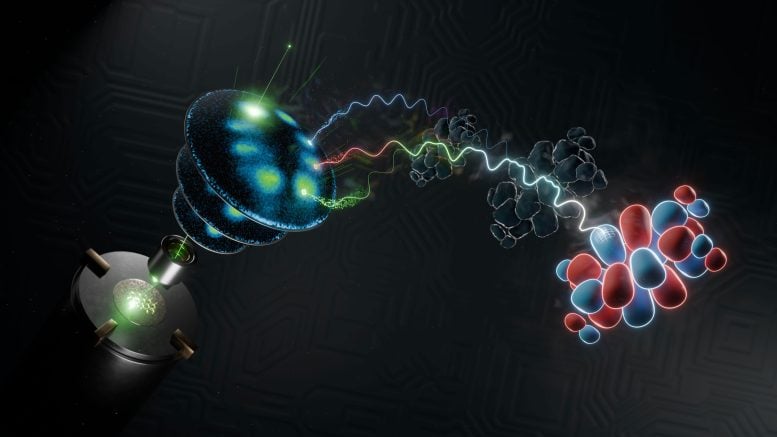
Artistic Illustration of Electron Orbital ImagingPhysicists at Göttingen University imaged three-dimensional wave functions using a tabletop soft X-ray laser. An electron inside a molecule does not occupy one fixed point. Quantum mechanics instead describes it through a “wavefunction,” a mathematical map that gives the probabilities of properties such as position and momentum. Within molecules, these electron wavefunctions are known as [...]
  •  

Lost in Space: Rare Cosmic Flare Exposes a Wandering Black Hole Far From Its Galaxy’s Center

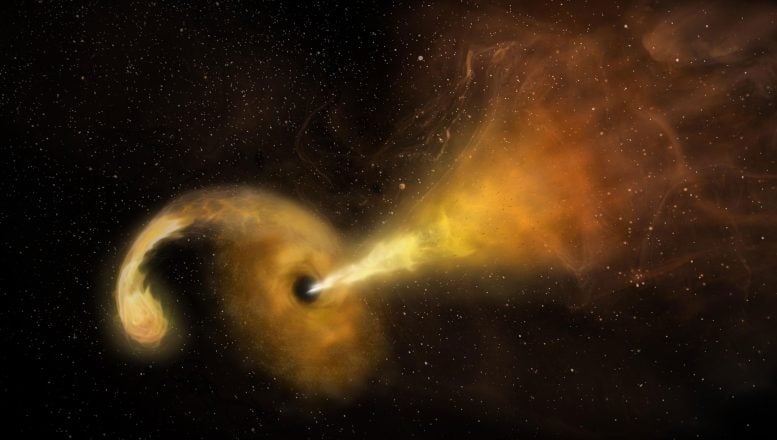
Artist Concept of a Tidal Disruption EventA rare tidal disruption event exposed a massive wandering black hole about 30,000 light-years from its galaxy’s center. A star was torn apart nearly 30,000 light-years from the center of a massive nearby galaxy, exposing a black hole where astronomers rarely see one. The unusually distant flare revealed an extremely rare “wandering” black hole and [...]
  •  

Dark Matter May Be Leaving a Signal in Earth’s Atmosphere

Galaxy Dark Matter Halo Illustration Art ConceptEarth itself may be one of the world’s largest detectors for ultralight dark matter. Earth may already contain one of the largest dark matter experiments ever built. Instead of relying only on specialized equipment inside a laboratory, scientists have found a way to use the planet’s magnetic field, atmosphere, and surface as parts of a [...]
  •  
❌