❌

Reading view

Tokenization Of H2O: Is O2 Next?

Water is the foundation of life itself. The UN says we are entering an age of “Global Water Bankruptcy” and therefore we should be subjected to “bankruptcy management,” where “conservators” are appointed by the court to manage the sale of remaining assets. Hence, tokenization enters stage right: sell the scarcity to the world in a price auction. The whole scheme is indisputably evil! ⁃ Patrick Wood, Editor.

The Elites are Claiming the World’s Water Supply and Plan to Trade It on the Stock Market.

Yep, you heard me right. This is not a joke or exaggeration. The facts are out there for all to see. I wrote about the tokenization of nature in my article “From Blockchain to Ball and Chain: Are We Being Borged?” [1] This article will deal primarily with the tokenization of the world’s water supply.

Tokenization: Turning Life Itself into a Tradeable Chip

For those who do not understand tokenization, here is a short and simple explanation: Tokenization means turning something real, like a share of water rights, a measured volume of water from a river or aquifer, or even credits for water that was “saved” or recycled, into a digital token (a unique digital certificate) that lives on a blockchain.

A blockchain is simply a shared digital notebook that many computers keep identical copies of at the same time, so the records of who owns what cannot be secretly changed by any one person or company.

That token can then be bought, sold, or traded on markets the same way people trade stocks or other assets. Instead of water simply belonging to the land, the local community, or the people who rely on it, it becomes a financial product that large investors, corporations, and institutions can own fractions of and exchange for profit. The right to use, claim, offset, or trade that water becomes the commodity.

Offset means making up for the water you use by helping save or restore the same amount somewhere else. A farmer switches to drip irrigation, a project restores a wetland, or a company reuses treated wastewater. That saved or restored water is measured and turned into credit. You buy or claim the credit. On paper your water use is balanced.

How Dare They Profit from Stealing Our Water

How dare they make money off this corrupt plan to steal, control, measure and meter the world’s water supply. Yes, I sound like Greta. The irony is thick: the same girl who made “How dare you” famous has been thoroughly programmed to cheer for Agenda 2030 and the very control grid she should be screaming against. Since she refuses to use her catchphrase where it actually belongs, then I will.

Water is the foundation of life itself. Every human, every animal, every plant depends on it. Yet the same elites who lecture the public about scarcity and climate are building the machinery to turn every last drop into a tradable asset they can profit from while ordinary people face rationing and surveillance.

This is exactly the process already described and promoted in official reports. Goldman Sachs itself published “Securing and Financing the Future of Water” in 2026, openly stating that tokenization can turn water rights into traceable tokens that track use across markets and deliver credits for companies that conserve or recycle water through connections to flow meters. Read it yourself: https://www.goldmansachs.com/insights/articles/securing-and-financing-the-future-of-water

The United Nations has declared the world has entered an era of “Global Water Bankruptcy.” Their report argues that the old system of local rights is finished and that new enforceable limits, transparent accounting, and centralized management are required. See the official collection: https://unu.edu/inweh/collection/global-water-bankruptcy

The Mapping Machines Are Already Flying Over Your Head

Look at how they are already doing it. Across the United States, helicopters now fly low over farms and aquifers towing giant electromagnetic loops that map the groundwater beneath our feet like an MRI of the earth. California’s Department of Water Resources runs statewide Airborne Electromagnetic Surveys for exactly this purpose. Click here to read how the water mapping technology works: https://water.ca.gov/programs/sgma/aem

hese surveys create detailed maps of every major water source so that usage can later be tracked and limited.

The All-Seeing Eye of Oracle Returns: Now It Watches Every Drop You Use

Oracle Utilities already processes data from more than 100 million meters worldwide with AI systems that detect irrigation, leaks, and individual household use in real time. Their customer platform is designed for exactly this level of precise control: https://www.oracle.com/utilities/customer-platform/

Larry Ellison didn’t just dream of a panopticon. He said the quiet part out loud: “Citizens will be on their best behavior because we are constantly recording and reporting everything that’s going on.” That wasn’t a warning. That was a sales pitch from the man who still owns roughly 40% of Oracle, the company now quietly embedding itself into the pipes that deliver the most basic resource on Earth: water.

Once you own the real-time ledger of every drop that enters every home, every farm, every factory, you don’t need jackboots. You just need a dashboard. Throttle the water, and compliance follows. The same technocratic elite that spent decades consolidating data, finance, and surveillance is now moving on the last ungoverned commons, water itself, under the soothing branding of “customer platforms” and “smart utilities.”

And Ellison isn’t some lone eccentric billionaire operating in a vacuum. He’s a Trump donor who poured roughly $45 million into supporting the 2024 campaign and has since enjoyed the kind of access that turns political proximity into regulatory profit. The same circle that lectures about freedom while building the tools to score, monitor, and ration everyday life now has one of its most unapologetic surveillance advocates sitting in their inner circle.

The water meters are just the latest sensor in a system that already knows when you open the fridge, when and where you drive, when you yawn, drink, text or speak and soon, how long you shower and how many times you flush your toilet.

This is not innovation. This is the elite’s operating system for managed scarcity and behavioral compliance, dressed up as progress and sold by a man who openly celebrated the idea that constant recording would keep the public “on their best behavior.” Oracle isn’t managing utilities. It’s helping construct the choke points. What’s next Larry? Are you going to regulate and tokenize oxygen?

The infrastructure for control is already being paired with the financial machinery. Chainlink, a decentralized oracle network that feeds real-world data such as meter readings and conservation verification into blockchain systems, has published detailed guides on digitizing water rights and conservation credits into tokens so companies can buy offsets just like carbon credits: https://chain.link/article/tokenized-water-rights-credits

In Dubai, the DMCC (Dubai Multi Commodities Centre), a government-backed free zone and major international trading hub, has signed agreements to launch the world’s first digital token backed by verified freshwater reserves, positioning water itself as a tradable commodity on global markets: https://mediaoffice.ae/en/news/2025/june/17-06/dmcc-signs-strategic-mou

They Already Seized the Food and Are Playing God with the Weather

The elites have been systematically taking control of the world’s food supply for years. Bill Gates, through Cascade Investment, has become the largest private owner of U.S. farmland, holding hundreds of thousands of acres across nearly twenty states. At the same time, major asset managers like BlackRock hold massive stakes in the dominant agribusiness corporations that control seeds, fertilizers, processing, and distribution.

Simultaneously, cloud seeding programs and solar geoengineering research, backed by Silicon Valley money and governments, are rapidly expanding. These efforts claim to manage rainfall and cool the planet, yet they place the power to influence weather patterns in the hands of the very institutions already pushing centralized control over water and food.

In other words, they are running the classic Hegelian dialectic to consolidate power:

  1. Create the droughts through weather geoengineering/modification
  2. Declare an emergency and frighten the public.
  3. Arrive with the “solution,” water tokenization that will supposedly save the planet but in reality just make them richer.

The pattern is unmistakable. Connect the dots. First, they buy the land that grows the food. Then they experiment with altering the weather that waters the crops. Now they are mapping, metering, and tokenizing the water itself so that every drop can be tracked, rationed, and sold.

This Is Not Theory. This Is the Takeover in Progress. Technocracy 101

They tell us water is too important to leave in local hands. They declare bankruptcy on systems that have sustained communities for generations. Then they create the digital and physical infrastructure to measure every use, enforce every limit, and profit from every token. The shared nature of water is being rewritten into a system of permission slips owned by the elite few who say that they, the experts, the financiers, the scientists, know best how to manage nature and humanity. It is all part and parcel of the plan of Technocracy Inc.

And make no mistake, this entire scheme sits squarely inside the United Nations Agenda 2030 and its Sustainable Development Goals. SDG 6 pretends to be about “clean water and sanitation for all,” yet the real machinery being built is the global accounting, metering, and financialization of every drop. The same institutions that wrote the goals now promote water “bankruptcy,” enforceable limits, transparent tracking, and market-based solutions that turn a basic necessity of life into a tradable asset class. What is sold to the public as sustainability and equity is in practice the transfer of control from communities and nations to the very financial and bureaucratic elites who drafted the blueprint. Agenda 2030 is the framework being used to justify seizing, measuring, and selling the world’s water under the banner of saving it.

This is the plan. It is already in motion. And the people pushing it expect the public to accept it as inevitable.

It is NOT inevitable.

Resistance is NOT futile.

Expose the plan. Shout if from the rooftops, news sites, podcasts and council meetings.

Don’t let the elites complete their takeover plan. They have the money but we have the numbers.

Read full story here…

  •  

More Starlink satellites and two big launches for China

Rocket launches this week On Tuesday, Aug. 18, Chinese aerospace firm LandSpace is targeting 7:35 p.m. EDT for the second flight of its Zhuque-3 rocket from the Jiuquan Satellite Launch Center in China, according to tracking from Next Spaceflight. The launch was scrubbed last week after a Long March 7A rocket exploded hours before Zhuque-3’sContinue reading "More Starlink satellites and two big launches for China"

The post More Starlink satellites and two big launches for China appeared first on Astronomy Magazine.

  •  

How do slingshot maneuvers work to propel spacecraft?

If a satellite’s velocity increases as it approaches a planet during a slingshot maneuver, why does it not decrease by the same amount when it leaves the planet? How can it experience a net gain in velocity? Robert WaltyStephens City, Virginia Slingshot maneuvers can seem counterintuitive. We know that a spacecraft speeds up as itContinue reading "How do slingshot maneuvers work to propel spacecraft?"

The post How do slingshot maneuvers work to propel spacecraft? appeared first on Astronomy Magazine.

  •  

First test flight of largest all-electric aircraft used just $5 of electricity

The first flight of the largest battery-electric aircraft to take to the skies lasted nearly half an hour while costing just $5 of electricity. That aviation feat comes at a time when jet fuel prices have skyrocketed because of the US war with Iran.

The test flight of Heart Aerospace’s X1 demonstrator aircraft took place at Plattsburgh International Airport in upstate New York on August 12. The X1 aircraft is comparable in size to a small regional airliner and can achieve a maximum takeoff weight exceeding 25,000 pounds with the help of four wing-mounted electric motors. The battery-electric propulsion system delivered more than one megawatt of power during the maiden flight.

All-electric aircraft can offer quieter and cleaner flight without the emissions that come from burning jet fuel. They may also prove more reliably cost-effective than conventional aircraft that come with jet fuel costs subject to geopolitical disruptions.

Read full article

Comments

© Heart Aerospace

  •  

US boosts drone surveillance as flesh-eating screwworms spread in Texas

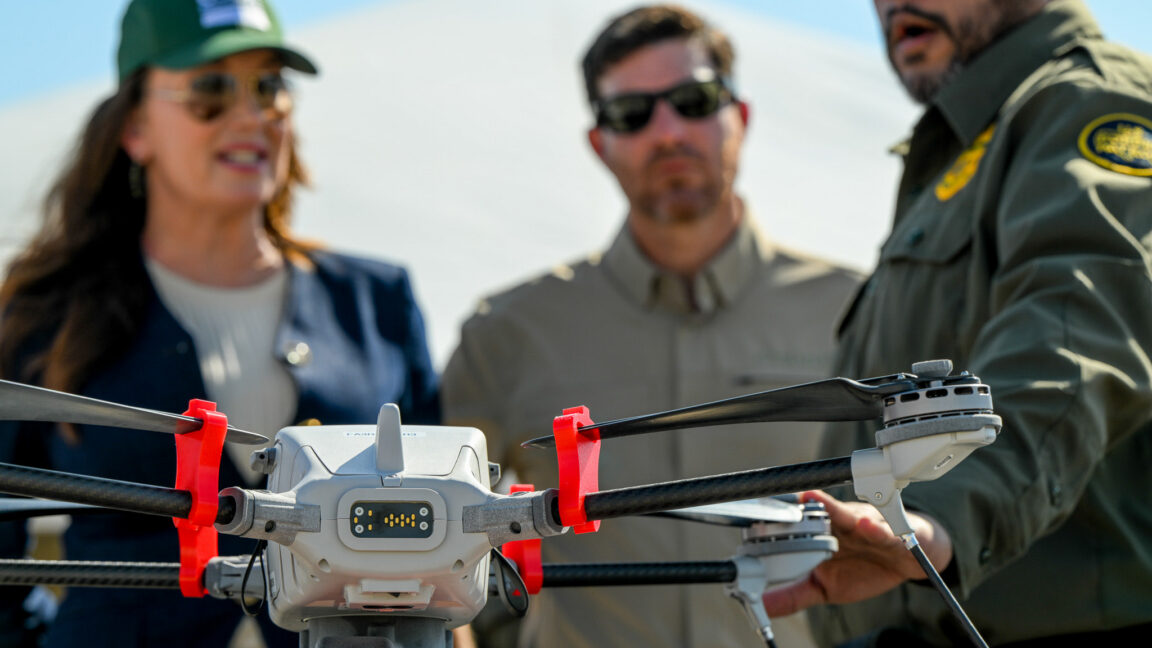
Hundreds of US government drones have switched from border surveillance to a different surveillance mission this summer—looking for signs of screwworm infestations in wild animals and livestock herds.

The flesh-eating New World Screwworm is the parasitic larva that emerges from eggs laid by flies in the open wounds or body openings of warm-blooded animals and humans, with untreated cases potentially leading to severe injury or death. Since the first screwworm cases were detected in South Texas in June, the US Department of Agriculture and US Customs and Border Protection have been conducting “one of the most extensive animal-health surveillance operations in the country,” the USDA said on August 10 in social media posts on platforms like X and Facebook.

The effort involves at least 200 drones owned by the Department of Homeland Security, which includes the Customs and Border Protection (CBP) agency. But the actual number in use "varies depending on availability and need," a USDA spokesperson told Ars.

Read full article

Comments

© US Department of Agriculture

  •  

Russian drones found near vital European offshore gas site, get blown up

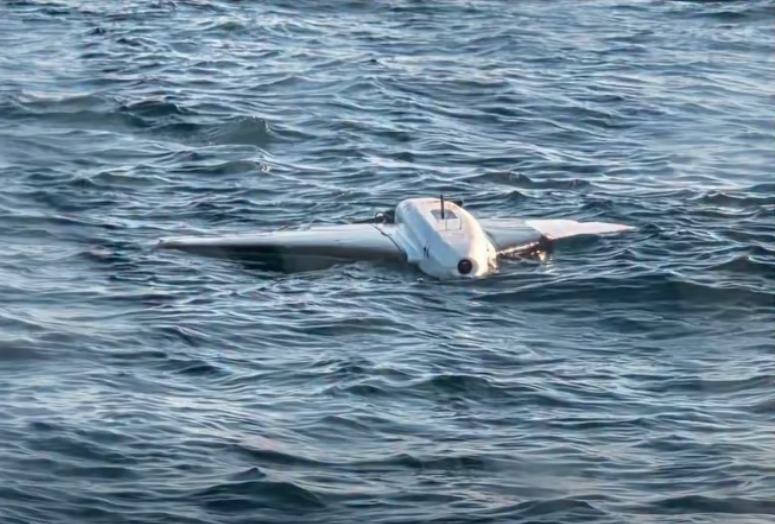
Romanian army divers used explosives to destroy two Russian-made drones found floating in the Black Sea near Romania’s largest natural gas project, according to the NATO member country’s defense minister.

Defense Minister Radu Miruță posted a Facebook video supposedly showing one of the drones being blown up in the water by explosive ordnance disposal divers of the Romanian army on August 11, as reported by Reuters and other news outlets. The drones were first spotted in the water by a ship working in the vicinity of the Neptun Deep—an offshore gas project under development in the Black Sea that will make Romania the largest gas producer in the European Union.

A Romanian Coast Guard ship that responded with army soldiers aboard found two drifting Gerbera-type drones of Russian design along with other debris. Miruță also disclosed that Romania had reached out to “Ukrainian partners who confirmed that the systems do not belong to them.”

Read full article

Comments

© Romanian Ministry of Defense

  •  

'Starwashing': How space companies use the greenwashing playbook while causing environmental damage

From launchpads to low Earth orbit and beyond, space companies and their affiliates are deploying a familiar marketing tactic—with a new twist. In a space economy projected to reach US$1.8 trillion by 2035, they sell space exploration narratives by appealing to a desire to expand humankind beyond Earth—while downplaying or omitting the negative repercussions for Earth and the space environment. Welcome to the age of starwashing.

  •  

Airborne observatory improves views of solar corona during cloud-covered eclipse

Using unique equipment installed on NASA's WB-57 aircraft flying above heavy clouds off the coast of Iceland, a Southwest Research Institute-led team successfully observed a total solar eclipse on Wednesday. The high-altitude jet followed the moon's shadow at 50,000 feet (15,000 meters) to take measurements of the solar corona in nine different wavelengths, ranging from visible to infrared light.

  •  

Europe's mountain summits are warming—vegetation is responding in surprisingly different ways

Decades of climate change have not left Europe's mountain vegetation unscathed. However, the changes observed do not always match expectations. As a new international study by a research team led by researchers from the University of Vienna, the Austrian Academy of Sciences and the BOKU University shows, alpine vegetation has shifted significantly towards warmth-associated species. However, the direct link between this so-called thermophilization and local warming is surprisingly weak. The study has recently been published in the journal Nature Ecology & Evolution.

  •  

New research explores how home languages can strengthen early English reading instruction

During a reading lesson, Mateo, an elementary multilingual learner (MLL) in a Delaware public school, read "sit" as "seat." Jon Kittle, his reading interventionist, walked him through the short vowel sound, but Mateo made the same "mistake" and grew frustrated. Kittle began to wonder if these "errors" were actually the result of Mateo applying what he knew from Spanish, where the letter "i" carries the sound of the English long "ē."

  •  

Google Meet expande recurso de notas para reuniões presenciais

Para os adeptos do recurso Anota pra Mim (Take notes for me) do Meet, o Google anunciou ontem que a funcionalidade passou a ser compatível também com reuniões presenciais.

Rivalizando com iniciativas como o app Granola ou o assistente Notetaker do Wispr Flow, o recurso era anteriormente restrito aos encontros virtuais ocorridos dentro da plataforma do Google.

Recurso "Anota pra Mim" no Google Meet (versão web)
Divulgação/Google

Ele permite que o Gemini transcreva conversas e crie resumos da reunião salvos em um documento do Google, criando ainda um relatório encaminhado ao email do usuário com detalhes dos assuntos tratados e uma lista de tarefas da reunião. O Anota pra Mim é compatível tanto com as versões web quanto com o app do Google Meet.

Recurso Anota pra Mim (Take Notes) no app mobile do Google Meet
Divulgação/Google

De acordo com o Google, a distribuição ampliada começou hoje para a versão web e iniciará no dia 31 de agosto para o app no iOS. A ferramenta está disponível para os assinantes dos planos AI Pro (além do AI Pro for Education) e Ultra — no caso dos consumidores finais — e nos planos padrão e Plus das soluções Business e Enterprise do Google Workspace.

  •  

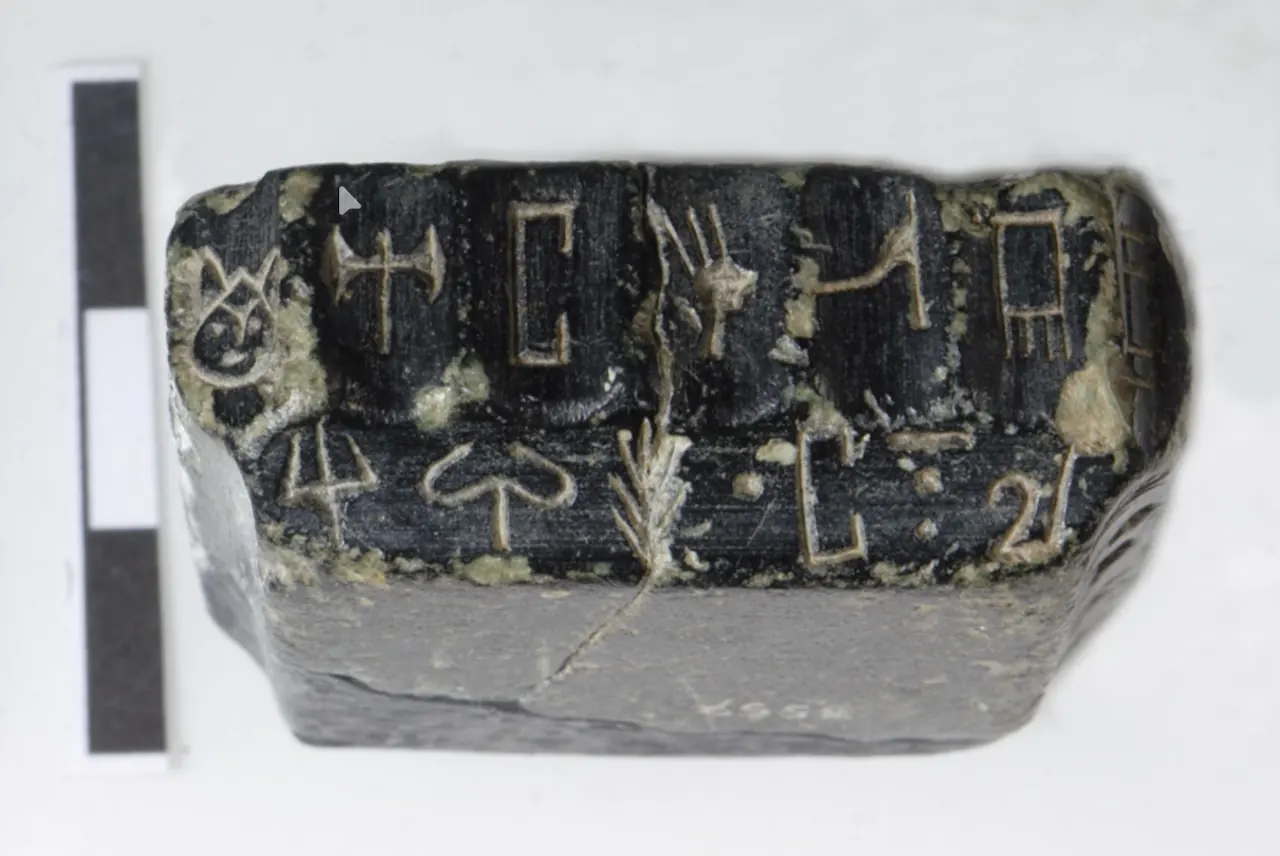
A Linear A Inscription Found on the Island of Crete Reveals a Minoan Ritual and the Name of a God Predating Dionysus

A small object made of dark stone, carved with astonishing precision almost 3,500 years ago, has provided researchers with one of the clearest windows yet into the religion of ancient Crete. It is the inscription known as IO Za 2, engraved on a tiny libation table made of dark green serpentinite, measuring just 4.3 centimeters […]

  •  

Una inscripción en escritura Lineal A encontrada en la isla de Creta revela un ritual minoico y el nombre de un dios anterior a Dioniso

Un pequeño objeto de piedra oscura, tallado con una precisión asombrosa hace casi 3.500 años, ha proporcionado a los investigadores una de las ventanas más claras hasta ahora sobre la religión de la antigua Creta. Se trata de la inscripción conocida como IO Za 2, grabada en una minúscula mesa de libaciones de serpentinita verde […]

  •  

'Godmother of AI' Says Biggest AI Risk In Schools Is Students Losing the Desire to Learn

Fei-Fei Li, aka The Godmother of AI, says the biggest AI risk in education may be students losing the motivation and agency to learn, rather than simply using the technology to cheat. She argues against banning AI outright, saying it can be valuable when used to support engaged students instead of replacing the thinking and struggle that learning requires. Techspot reports: Speaking on an episode of the science podcast Huberman Lab this week, Li talked about the fears around how students are using AI. "The absolute bad outcome is that our young generation, their agency and human-level motivation of learning and living is taken away by tools," the ImageNet inventor warned. "It should not be taken away by humans nor should it be taken away by machines." If we see a generation of graduates who have completely relied on AI without actively trying to learn anything for themselves, they risk leaving education without having "properly developed the brain," Li said. [...] Li certainly isn't advocating for a complete ban on students using AI. She believes it can genuinely help struggling students who are already engaged in their learning. Li herself noted how she struggled with organic chemistry as a premed student, when teaching assistants and professors didn't have enough time to answer every question. While there's no obvious solution, Li says we need to find a way to keep children and students' motivation and agency. "Let's find a way to give them the access and the right way of using these tools," she said. Li added that if AI is used properly in education, it could make the students of the future "way smarter than us because they are superpowered."

Read more of this story at Slashdot.

  •  

Drone Captures Rare Aerial View of Stingray Migration Off Long Island

Drone Captures Rare Aerial View of Stingray Migration Off Long Island

A stunning drone video capturing dozens of stingrays swimming together off the coast of New York has drawn widespread attention from beachgoers and marine life enthusiasts alike. The footage offers an unusual bird’s-eye perspective on cownose rays, a species known for its seasonal visits to Long Island’s waters.

Captured last Friday off Southampton, the video was filmed by Joanna Steidle, a Hamptons-based drone pilot recognized for her striking aerial ocean photography. The clip shows a large group of cownose rays gliding gracefully just beneath the water’s surface, their distinctive wing-shaped bodies visible in remarkable detail.

Cownose rays, which can grow wing spans of up to three feet, are known for traveling in large schools and typically arrive in the region during the warmer summer months. Despite their somewhat intimidating appearance, marine scientists describe the species as shy and generally harmless to humans, posing little threat to swimmers or beachgoers who might encounter them.

While the sight of so many rays moving together may seem unusual to casual observers, experts note that this behavior is a normal part of their seasonal pattern and that these creatures have likely been visiting Long Island’s coastal waters for decades. The viral footage has offered a rare glimpse into a natural phenomenon that typically goes unnoticed by those on shore, highlighting the rich marine biodiversity present just off New York’s beaches during summer.

The post Drone Captures Rare Aerial View of Stingray Migration Off Long Island first appeared on EnviroLink Network.

  •  

Humpback Whales Return to Rio De Janeiro’s Waters, but Can Tourism and Conservation Coexist?

Humpback Whales Return to Rio De Janeiro’s Waters, but Can Tourism and Conservation Coexist?

At sunrise, the yacht Boaventura II departs Rio de Janeiro carrying a boatload of eager whale watchers. Just past the Cagarras Islands, a rocky archipelago three miles from Ipanema beach, passengers crowd the bow, eyes fixed on the horizon.

Their patience is quickly rewarded. A pod of bottlenose dolphins surfaces first, leaping and diving playfully near the boat. Moments later, two plumes of mist rise into the air—the telltale sign of humpback whales. The massive creatures breathe rhythmically at the surface before diving, their distinctive tail flukes briefly visible above the waves.

This scene, once unimaginable, has become increasingly common off Rio’s coast. Humpback whales, hunted to near extinction during the 20th century whaling era, have made a remarkable comeback in Brazilian waters. Their resurgence has sparked a booming whale-watching tourism industry, drawing visitors eager to witness these ocean giants up close.

Yet the very success story that brings tourists to the water is now raising concerns among marine biologists. As boat traffic increases to meet demand, researchers are questioning whether unchecked tourism growth could threaten the fragile recovery of the species. The challenge now facing Rio: how to celebrate and share this conservation triumph without loving the whales back toward danger.

The post Humpback Whales Return to Rio De Janeiro’s Waters, but Can Tourism and Conservation Coexist? first appeared on EnviroLink Network.

  •  

Knowing through uncertainty: probability and the evolution of our cosmos

Abstract space geometric pattern
(Courtesy: Shutterstock/svekloid)

All scientific inquiry involves some kind of uncertainty, but the uncertainties in cosmology are particularly daunting. As well as being complex and difficult to describe, the systems cosmologists investigate are almost by definition out of reach. In these conditions of uncertainty, how confident can we be in the models we’ve built? How can we come to know how galaxies form, how the universe began or how much dark matter it contains?

In The Random Universe: How Models and Probability Help us Make Sense of the Cosmos, cosmologist and astrophysicist Andrew Jaffe offers a masterful and refreshing take on these questions. As the director of the Centre for Inference and Cosmology at Imperial College London, UK, and a past co-investigator on ESA’s Planck satellite that provided us with so much new information about the cosmos, Jaffe is well-equipped to walk readers through the tools that allow us to learn about the world despite its uncertainties. Anchoring his insights in beautifully narrated episodes from the history of physics, astrophysics and cosmology, he sheds light on how our theories of the universe evolved into our current best cosmological model – which nonetheless still has limitations.

Jaffe is particularly good at recounting how we refined, revised and even replaced some of our assumptions in light of incoming evidence such as the first measurements of stellar distance; the discovery of galaxies beyond our own; and precise measurements of cosmological parameters. Throughout this journey, he engages thoughtfully with a rich philosophical tradition that runs from David Hume in the 18th century through Willard Van Orman Quine, Imre Lakatos and Paul Feyerabend in the 20th.

Bayes’ theorem is important because it tells us how to update our degree of belief in light of new evidence

The book’s main protagonist, though, is the mathematician Thomas Bayes. For Jaffe, Bayesian probability is key to dealing with uncertainty, and even to solving Hume’s notorious problem of induction: how do we justify inferences from a finite set of observations to generalizations that go beyond them? Bayes’ theorem is important, Jaffe argues, because it tells us how to update our degree of belief in light of new evidence. It shows us why and how, even in an uncertain world, “the more observations we make, the surer we become”.

Of course, before we can use probability to deal with uncertainty, we first need a model. As Jaffe puts it, “Absent a model, I can’t assign a probability, and absent a probability, I can’t quantify my uncertainty about the world.” So, what exactly is a model? I found Jaffe’s answer to be one of the most captivating elements of the book. As the title of a subsection of chapter five puts it, “a model is a story about the world”. Without models, Jaffe tells us, our world would be an unexplained series of unrelated events. Models are also what allow us to take a finite set of data and use it to create something new. Without this leap, Jaffe suggests, we cannot learn anything about the world, because “you can’t make sense of an experimental result unless you have some model to interpret it”.

Of course, if the way we interpret data depends on our model, then different people may well obtain different interpretations depending on which model and which prior probability they choose. This charge of subjectivity is a longstanding accusation against Bayesians, but Jaffe offers at least a partial solution: “If you and I agree on the model, we should assign the same probability.” This, Jaffe argues, is where objectivity emerges, writing that “we come to the same conclusions if we start from the same premises”.

Models allow us to understand the world by bridging subjectivity with objectivity, and the personal with the collective

Many contemporary philosophers are at odds with the idealized view of science as an objective and linear enterprise that produces theories from a God’s-eye view. Instead, they strive to portray it as something that is social and human, but reliable nonetheless. Jaffe’s own views seem to align with this endeavour; as he puts it, “the scientific coupling of models and observations is a living, breathing, subjective endeavour, simultaneously collective and personal”. Through their interplay with data, he argues, models allow us to understand the world by bridging subjectivity with objectivity, and the personal with the collective.

Not everyone will agree with Jaffe that Bayesian probability offers a solution to Hume’s problem of induction. Personally, I (or perhaps the hardcore rationalist in me) was not convinced. Nevertheless, I found the book’s thesis – that uncertainty is not a hindrance to knowledge, but an opportunity to learn (and learn more) about the world – simultaneously liberating, humbling and empowering. I recommend The Random Universe to scientists, philosophers and anyone interested in better understanding the role of probability in science; the philosophical problems with how we handle uncertainty; and how our standard cosmological model came to be. I also hope it will encourage more collaborations between philosophers and scientists. There are many questions we can explore further if we work together.

  • 2025 Yale University Press, £25hb, 288pp

The post Knowing through uncertainty: probability and the evolution of our cosmos appeared first on Physics World.

  •  

Artificial blood vessels grow with the help of mechanical forces

Tissue engineering offers a means to restore, maintain or replace biological tissues. But it is difficult to grow blood vessels using conventional fabrication techniques like 3D printing, as they are typically not precise enough to print fine capillaries and veins. A team of engineers from the Massachusetts Institute of Technology (MIT) has now developed a new approach to do just that, by using mechanical forces. Their blood-vessel-on-a-chip could be the first step in the scalable production of vascular networks that could then be implanted in the body to replace tissue that has been damaged by disease or injury.

The researchers, led by Ritu Raman, made their chip by filling a Petri dish with a gel containing nutrients and cell-growth factors. They then embedded a small magnet into the gel. Finally, they introduced a thin, hollow tube into the gel and coated the inside of the tube with live endothelial cells – the cells that naturally line blood vessels in the body.

Once anchored onto the inner walls of the tube, the endothelial cells began sprouting new, capillary-like vessels in the gel. And when the researchers moved the embedded magnet back and forth in different directions and by varying degrees, they found that the mechanical forces created by the moving magnet could stretch the vessels and increase the number of new capillaries that grew, as well as their length.

‘Steering’ blood vessel growth

“We also showed that blood vessel growth, or angiogenesis, could be directionally patterned using the mechanical forces created by the magnet and that these directions could change dynamically over time,” explains Raman. “This allows us to ‘steer’ blood vessel growth in all three spatial directions (x, y, z) and make complex geometries (like L-shaped branches) that would not be possible to fabricate using conventional methods.”

The researchers had previously demonstrated that biological cells are highly responsive to mechanical forces in the body, but they did not know how different types of forces – for example, stretching in different directions and at different degrees and frequencies – impacted the 3D structure of blood vessels. The main obstacle lay in developing a coupled magnet system to precisely stretch blood vessels in different directions. To achieve this, they designed a method for mechanically stimulating tissues, dubbed “magnetic matrix actuation”.

In their new work, which is detailed in PNAS, they went a step further and developed a method to accurately yet non-invasively stretch 3D blood vessel tissues they had built in the laboratory.

To better understand the effect of mechanical forces on angiogenesis, the MIT team decided to look into the role of a gene known as PIEZO1, which is just one of the many mechanically sensitive genes in the body. They built on the work of molecular biologist Ardem Patapoutian, who received the 2021 Nobel Prize in Physiology or Medicine for discovering that ion channels in cells open and close in response to mechanical pressure. One such ion channel is PIEZO1, which is regulated by the PIEZO1 gene.

By suppressing this PIEZO1 gene in the endothelial cells they studied, the researchers indeed observed that significantly fewer new blood vessels grew in the gel. This, they say, provides evidence that the applied mechanical forces in their experiment may have been opening the PIEZO1 ion channel in the endothelial cells, so triggering the new blood vessel growth.

“My group has always been interested in engineering artificial tissues that can be implanted in the body to repair damage caused by disease or traumatic injury, but such artificial tissues require integrated networks of blood vessels in order to function,” says Raman. “We hope that our method for precisely fabricating complex networks of blood vessels within engineered tissues will enable the development of such implants,” she tells Physics World.

The post Artificial blood vessels grow with the help of mechanical forces appeared first on Physics World.

  •  
❌