❌

Reading view

Ancient Footprints in Kenya Hint at Bigger Bodies and Group Behavior among Early Human Relatives

One of 1.43-million-year-old footprints found at the GaJi10 site in the Koobi Fora Formation in northern Kenya; a 15-cm (6-inch) ruler is shown for scale. Image credit: Kay Behrensmeyer.

A set of 1.43-million-year-old fossil footprints preserved along the margin of an ancient lake in northern Kenya is offering paleoanthropologists new evidence about the size, gait and social lives of the beings who made them and reopening questions about which species they belonged to.

The post Ancient Footprints in Kenya Hint at Bigger Bodies and Group Behavior among Early Human Relatives appeared first on Sci.News: Breaking Science News.

  •  

“Impossible” Synthetic Motion Opens Faster-Than-Light Speed Possibilities for Extreme Physics Research

A new type of synthetic motion developed at City University of New York (CUNY) gives physicists access to impossible, faster-than-light speeds in an experimental environment. Previously, for researchers to explore such extremes of physics, their only option was simulations, and such real-world effects could not be studied in any practical sense.

In a recent paper published in Nature, scientists from CUNY’s Advanced Science Research Center (ASRC) revealed their new wave amplification technique, which mimics motion without any physical movement.

The synthetic motion machine relies on radio frequencies modulated around a ring-shaped structure to create the illusion of motion.

Extreme Black Holes

The SUNY team traces its inspiration back to the work of Sir Roger Penrose more than fifty years ago, when the scientists proposed a scenario in which a particle could leech energy from a black hole.

Frame-dragging measurements, which involve the pull on spacetime around the edge of a black hole’s ultra-fast rotation, have become a major focus for astrophysics in recent years. Penrose was interested in the region where this pull occurs, known as the ergosphere. He suggested that a particle entering the ergosphere may be torn into two pieces, one of which would fall into the black hole, while the half that escaped would contain even greater energy than the original particle.

Another physicist, Yakov Zel’dovich, built on Penrose’s work to describe a more general version of this effect. He predicted that a sufficiently fast-rotating object could transfer energy to a wave, amplifying it.

A Synthetic Motion Machine

In their quest to study how a rotating body can amplify a wave, the researchers produced a radio-frequency device that mimics a spinning motion. Crucially, this mimicry is unbound by certain physical constraints on motion, allowing for incredible speeds beyond what can be mechanically produced, opening up new experimental possibilities.

“Our approach facilitates a new method of wave–matter interaction in which waves with selected rotational properties extract energy from synthetic time-engineered rotation, producing a form of broadband selective amplification,” said principal investigator Andrea Alù, Distinguished Professor and Einstein Professor of Physics at the CUNY Graduate Center and founding director of the CUNY ASRC’s Photonics Initiative.

“This successful experiment moves ideas about extreme rotational dynamics from theory to practice and creates a versatile experimental platform for exploring a broad range of phenomena at the intersection of astrophysics, wave physics, and quantum science,” said lead author Hadiseh Nasari, a postdoctoral researcher with the CUNY ASRC’s Photonics Initiative. “The work has implications for advances in fundamental science and in communications, optics, and photonics.”

Mimicking Motion

For the project, the CUNY team constructed a ring of networked electronic resonators, whose properties were rapidly modulated in a precisely timed sequence, producing a traveling pattern around the ring. The device itself is stationary, yet the modulated pattern led electromagnetic waves to react as though the device were spinning at the speed of the pattern.

“Waves with the appropriate rotational characteristics extracted energy from the system and became amplified, reproducing the essential physics of the Penrose–Zel’dovich process,” said co-lead author Hady Moussa, a former PhD student with the CUNY ASRC Photonics Initiative. “Our approach relies on engineered metamaterials that are designed to control how waves propagate.

This work in developing synthetic motion has implications far beyond just a single theory on wave amplification. Researchers can now access previously unattainable rotational speeds in experimental physics work thanks to the new device.

Beyond those experimental possibilities, this technique could be used in communication and optics applications, including quantum systems. Future work will involve adapting this revolutionary technique beyond the initial problem into practical technologies for information processing and exploring the universe’s most extreme physics.

The paper, “Observation of Floquet Rotational Super-Radiance,” appeared in Nature on July 8, 2026.

Ryan Whalen covers science and technology for The Debrief. He holds an MA in History and a Master of Library and Information Science with a certificate in Data Science. He can be contacted at ryan@thedebrief.org, and follow him on Twitter @mdntwvlf.

  •  

Wet Harzburgite and Dry Basalt Slabs Maintain Ongoing Seismic Stagnation

A new study in Nature Communications reports that subducting slabs can become effectively “stalled” for long periods—not simply due to mantle temperature or plate motion, but because distinct rock assemblages within the downgoing plate alter how the slab interacts with the surrounding mantle. Using geophysical constraints combined with thermodynamic modeling, the researchers argue that slab dynamics depend on whether the slab interior is dominated by hydrated ultramafic lithologies or by comparatively dry basaltic components.

The central finding is that wet harzburgite—an olivine-rich, ultramafic rock—can sustain slab stagnation by promoting hydration-related weakening processes and controlling the timing and location of mineral transformation. In parallel, the team shows that dry basaltic slab assemblages can also contribute to stagnation, but through a different pathway: by limiting certain water-driven reactions while still maintaining a mechanically coherent, slow-moving interface at depth.

According to the authors, the fate of volatiles is the key variable. As the slab descends, pressure and temperature drive phase changes and dehydration reactions. These reactions can either increase or decrease the effective viscosity and friction along plate boundaries, shifting the balance between slab pull and mantle resistance. Where hydration is sustained, water remains available to weaken lithospheric portions that would otherwise become too rigid to decouple.

In the wet harzburgite scenario, dehydration and metamorphic reactions are predicted to sustain zones of reduced strength within the slab, preventing it from sinking efficiently into the lower mantle. This creates a feedback loop: slower descent limits thermal loss, which in turn preserves conditions that keep the weakening processes active.

In the dry basaltic scenario, the model emphasizes that even without abundant water, basaltic mineralogy can maintain mechanical coupling over a broader depth range. The study suggests that dry assemblages may delay the development of decoupling horizons, thereby prolonging stagnation until the slab eventually transitions to a different rheological regime.

The researchers also connect their results to the observed diversity of subduction-zone behavior, where some slabs advance smoothly while others appear to linger at mantle depths. By treating rock composition explicitly rather than assuming uniform slab properties, the work offers a framework for interpreting why similar plate boundary geometries can yield markedly different slab lifetimes.

Crucially, the analysis links mineral stability, dehydration partitioning, and viscosity contrasts into a single physical narrative. This moves slab “stalling” away from a purely geometric explanation and toward a lithology-driven process that can be tested against seismic signatures.

The findings will likely influence how future models incorporate water budgets and rock types in subduction simulations. If validated by geophysical observations, the wet-versus-dry assemblage distinction could become a practical lever for predicting which slabs will stagnate and for how long.

In short, the study portrays slab stagnation as a sustained state maintained by the contrasting rheological effects of hydrated harzburgite and comparatively dry basaltic materials, reshaping our understanding of how deep Earth water and rock chemistry govern plate evolution.

Subject of Research: Subduction zone dynamics and slab stagnation mechanisms

Article Title: Slab stagnation sustained by wet harzburgite and dry basaltic slab assemblages.

Article References: Shi, D., Shen, Y., Zhao, R. et al. Nature Communications (2026). https://doi.org/10.1038/s41467-026-75639-9

Image Credits: AI Generated

DOI: 10.1038/s41467-026-75639-9

Keywords: slab stagnation; subduction; wet harzburgite; dry basaltic assemblage; dehydration; mantle rheology; volatiles; mineral transformations

  •  

Seguir o que se passa no Parlamento pode ser mais simples. LegisMotion quer mostrar como com “inteligência legislativa”

A LegisMotion é portuguesa e usa IA para “descomplicar” o que se passa no Parlamento, ajudando perceber o que muda a nível legislativo, porque importa e porque pode ser necessário agir. Ao TEK Notícias, Ricardo Rodrigues, fundador do projeto, explica como tudo funciona.

The post Seguir o que se passa no Parlamento pode ser mais simples. LegisMotion quer mostrar como com “inteligência legislativa” appeared first on Tek Notícias.

  •  

Bumblebees Display Emotion-Like Reactions to Sweet and Bitter Tastes

Gibbons et al. showed that bumblebees are capable of modifying their response to noxious stimuli in order to get a higher sugar reward. Image credit: Ralphs Fotos.

Slow-motion video reveals that buff-tailed bumblebees (Bombus terrestris) respond to sweet and bitter tastes with distinct, context-dependent behaviors resembling mammalian expressions of pleasure and disgust, adding fresh evidence to the debate over insect consciousness.

The post Bumblebees Display Emotion-Like Reactions to Sweet and Bitter Tastes appeared first on Sci.News: Breaking Science News.

  •  

Midwife Debriefing After Birth Boosts Perinatal Mental Health

A groundbreaking study from Edith Cowan University (ECU) has demonstrated that a structured, midwife-led birth debrief significantly enhances women’s emotional wellbeing postpartum—a development that could redefine standard maternity care. Conducted at Fiona Stanley Hospital, this research tested a standardized conversation guide for birth debriefings, co-designed with midwives, healthcare managers, and maternity advocates to ensure clinical and emotional relevance.

The intervention centers on an emotionally safe, woman-led discussion facilitated by midwifery expertise and therapeutic communication techniques. According to ECU Research Fellow Dr. Kate Buchanan, such debriefings empower women to reflect on and make sense of their childbirth experience, addressing unresolved questions or distress that may persist after hospital discharge. This approach contrasts markedly with typical critical incident debriefs, which focus on clinical review and involve medical staff rather than midwives, and psychological debriefings aimed solely at trauma patients.

Over 100 women participated in the pilot, reporting high satisfaction levels with the midwife-led conversations. Many described the experience as clarifying, validating, and empowering. Participants particularly valued having the discussion with a midwife they already knew, underlining the importance of continuity of care in emotional processing. Dr. Buchanan highlights that midwives, with their holistic understanding of birth as a profound life event, are uniquely positioned to foster this dialogue.

Significantly, the study underscores the potential of midwife-led debriefs to mitigate birth trauma, a condition affecting roughly 30% of women globally. Women who self-identified as having experienced birth trauma rated the opportunity to talk about their birth with a midwife as the most beneficial aspect of the intervention. This therapeutic exchange may offer relief by deepening understanding of the birth events and connecting mothers to further psychological support if needed.

Despite the additional time and resource investment required, hospital management at Fiona Stanley confirmed the intervention’s feasibility and sustainability, emphasizing the importance of allocated time and ongoing training for midwives. The potential long-term benefits, including reductions in mental health burdens and healthcare costs associated with untreated birth trauma, offer compelling justification for integrating debriefs into routine postnatal care.

This innovative research contributes to expanding the global movement toward integrating psychosocial care within maternal health services. By establishing a replicable model that combines clinical expertise with patient-centered communication, the study positions midwife-led birth debriefing as an essential standard in supporting maternal mental health.

The findings were published in BMC Public Health under the title “Co-design and feasibility testing of a midwife-led birth debrief: an implementation science project,” funded by the Women and Infants Research Foundation. As the movement toward holistic postpartum care gains momentum, this study cements the critical role of midwives not only as birth attendants but also as key agents of emotional support in women’s transition to motherhood.


Subject of Research: People
Article Title: Co-design and feasibility testing of a midwife-led birth debrief: an implementation science project
News Publication Date: 16-Apr-2026
Web References: https://doi.org/10.1186/s12889-026-27342-z
Keywords: Maternal mental health, birth trauma, midwife-led intervention, postpartum care, psychosocial support, implementation science

  •  

Chiens, chats et stress : ce que révèle cette étude pourrait surprendre leurs propriétaires

Que vous trouviez du réconfort dans un regard fidèle ou dans un ronronnement discret, la science commence seulement à comprendre ce que ces interactions ont vraiment comme effet sur notre bien-être. Et ce n’est pas exactement ce que l’on croyait.

  •  

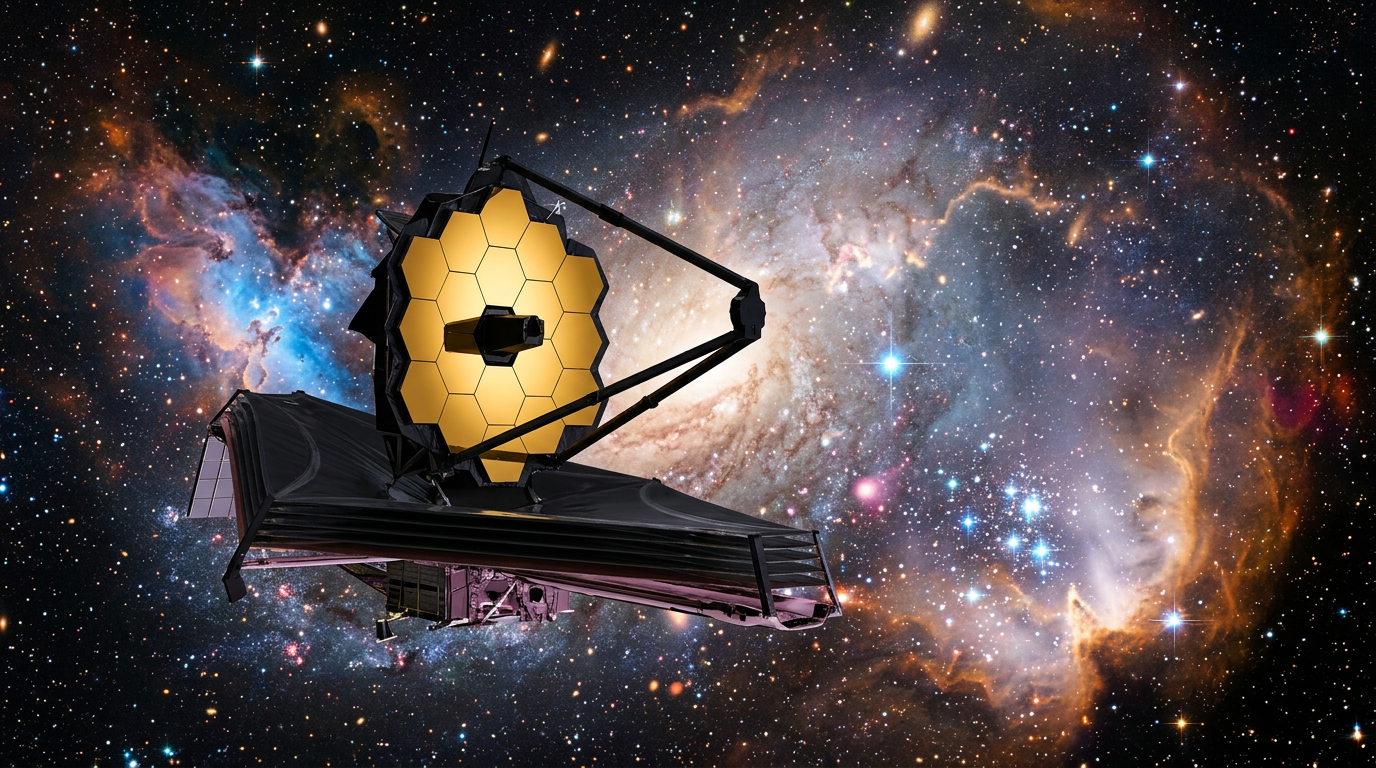
James Webb Space Telescope | Extremely High Redshift Failure

The James Webb Space Telescope (JWST) has observed what appear to be very distant red galaxies challenging the standard big bang theory. Misidentifying some Brown Dwarf stars within our Milky Way as these red distant galaxies brings into question the existing cosmological models.

  •  

How Box Created 13 New Types of Jobs Because of A.I.

Box, a Silicon Valley software maker, expects to have more employees, not fewer, as it hires A.I. architects, A.I. solutions managers and other new A.I.-related positions.
  •  

Webb Spots Supermassive Black Hole Older Than Its Home Galaxy

This Webb/NIRCam image shows the little red dot Abell2744-QSO1, magnified and triply imaged by galaxy cluster Abell 2744. Image credit: NASA / ESA / CSA / Lukas Furtak, Ben-Gurion University / Alyssa Pagan, STScI.

Astronomers using the NASA/ESA/CSA James Webb Space Telescope have found an enormous black hole in the early Universe that appears to predate its own host galaxy, raising fresh questions about how the cosmos’ first supermassive monsters were born.

The post Webb Spots Supermassive Black Hole Older Than Its Home Galaxy appeared first on Sci.News: Breaking Science News.

  •  

Upright Walking and Larger Brains May Explain Why 90% of Humans Favor Their Right Hand

Reconstruction of Homo erectus.

New research from the University of Oxford and the University of Reading suggests bipedalism and expanding brain size helped drive the overwhelming dominance of right-handedness in humans.

The post Upright Walking and Larger Brains May Explain Why 90% of Humans Favor Their Right Hand appeared first on Sci.News: Breaking Science News.

  •  

Brownian Motions and Quantifying Randomness in Physical Systems

Stochastic calculus has come a long way since Robert Brown described the motion of pollen through a microscope in 1827. It’s now a key player in data science, quant finance, and mathematical biology. This article is drawn from notes I wrote for an undergraduate statistical physics course a few months ago. There won’t be any...
  •  
❌