Login

Mighty and Meek: Behe’s Great Work at Age 30
The sheer amount of research that has gone into trying to find alternative explanations to what Behe has proposed is mind-boggling.

Com o aplicativo Pré-Visualização (Preview), usuários de iPhones, iPads e Macs podem facilmente preencher e assinar formulários, escanear documentos e fazer alterações em PDFs e imagens, por exemplo.
Para encontrar mais facilmente um arquivo, você pode renomeá-lo em alguns passos simples.
Veja, nos parágrafos a seguir, como fazer exatamente isso no seu dispositivo! 😉
Com o app Pré-Visualização aberto, faça um dos seguintes procedimentos:

Simples, né?!


Uma nova reportagem do The Information aponta para a existência de um problema estrutural na forma como a Apple gerenciava arquivos de trabalho de seus funcionários — algo que teoricamente permitiu que quem não fazia mais parte do time de colaboradores da empresa continuasse tendo acesso a documentos importantes e confidenciais.
Ex-funcionários da empresa afirmaram ao site que, no tempo em que estiveram em seus cargos, a Maçã incentivava o uso de suas Contas Apple pessoais para armazenar arquivos de trabalho. Para tal, a empresa adicionava 2TB de armazenamento a essas contas e elas passavam a contar com uma pasta denominada “Apple Work”, onde tais arquivos deveriam ser armazenados.
Posts relacionados
Essa abordagem existe para contornar uma limitação presente nos iPhones: a impossibilidade de usar duas contas primárias da Apple no mesmo dispositivo. Desta forma, vincular a pasta de trabalho à conta pessoal dos funcionários é uma maneira de evitar que eles tenham que usar um segundo iPhone apenas para assuntos corporativos — uma questão de comodidade.

Quando o funcionário deixa a empresa, a Maçã remove o armazenamento adicional concedido e o acesso à pasta “Apple Work” — o que, na prática, impede que a maioria dos arquivos de trabalho continuem sendo sincronizados com os ex-trabalhadores. Isso, em teoria, já que nem todos os arquivos eram compartilhados diretamente para essa pasta confidencial.

Os funcionários relatam que, às vezes, documentos do Pages, do Keynote e outros arquivos poderiam ser compartilhados por colegas diretamente para as suas pastas pessoais do iCloud — o que faz com que eles permaneçam disponíveis (e com sincronização ativada) mesmo após deixarem a empresa — sem que eles façam nenhum esforço ativo para mantê-los.
Esse relato vem à tona em meio ao andamento do processo judicial que a Maçã abriu contra a OpenAI, acusando-a de obter, a partir de ex-funcionários, segredos confidenciais envolvendo seus projetos de hardware — o que pode dar a entender que alguns desses segredos poderiam ter sido obtidos sem uma atuação mais ativa dos acusados.
A Apple disse ao The Information que o processo não diz respeito a documentos compartilhados ou armazenados no iCloud e que não persegue ex-funcionários apenas porque arquivos confidenciais foram mantidos acidentalmente em suas contas pessoais — o que dá crédito à informação publicada pelo site, mesmo que não haja relação com o caso.
Por falar no imbróglio com a dona do ChatGPT, o 9to5Mac noticiou recentemente que a Apple rejeitou a atribuição do julgamento à juíza magistrada Virginia K. De Marchi — o que resultou numa redistribuição do caso para o juiz distrital Edward Davila. O juiz Nathanael Cousins, por sua vez, ficará responsável pela fase de produção de provas antes do julgamento.
Com as mudanças, a audiência inicial do processo, que estava marcada para 13 de outubro, foi cancelada e provavelmente acontecerá em outra data — embora os prazos para as partes conversarem sobre uma possível conciliação e planejamento de provas (até 22 de setembro) e para as chamadas initial disclosures (até 6 de outubro) estejam mantidos.

De acordo com informações da Variety, o Apple TV adquiriu os direitos para adaptar a trilogia “Harlem” — que inclui os romances populares “Harlem Shuffle” (2021), “Crook Manifesto” (2023) e “Cool Machine” (2026) — em uma nova série.
Os romances serão adaptados por Graham Yost e Aric Avelino, que serão produtores executivos do projeto ao lado de Barry Jenkins, Adele Romanski, Mark Ceryak, Melissa Bernstein e Colson Whitehead, que é o escritor das histórias originais.
Posts relacionados
Ambientada na cidade de Nova York entre as décadas de 1950 e 1980, a trilogia — que mistura ficção policial com sátira social — acompanha Ray Carney, um vendedor de móveis que é atraído para o submundo criminoso do Harlem (famoso bairro de Manhattan, em Nova York).
O primeiro livro mostra as grandes mudanças econômicas e culturais do bairro na década de 1950; já o segundo mostra a ascensão da cultura de exploração nas décadas de 1960 e 1970; o terceiro, por fim, acompanha a história de Carney na década de 1980.
Ainda não há informações sobre o elenco ou mesmo quando a produção deverá estrear no Apple TV.
O Apple TV está disponível no aplicativo Apple TV em mais de 100 países e regiões, seja em iPhones, iPads, Apple TVs, Macs, dispositivos Android, smart TVs ou online — além de também estar em aparelhos como Roku, Amazon Fire TV, Chromecast com Google TV, consoles PlayStation e Xbox. O serviço custa R$29,90 por mês, com um período de teste gratuito de 7 dias. Por tempo limitado, quem comprar e ativar um novo iPhone, iPad, Apple TV ou Mac ganha 3 meses do Apple TV. Ele também faz parte do pacote de assinaturas da empresa, o Apple One.
NOTA DE TRANSPARÊNCIA: O MacMagazine recebe uma pequena comissão sobre vendas concluídas por meio de links deste post, mas você, como consumidor, não paga nada mais pelos produtos/serviços usando os nossos links de afiliado.


Se você quer baixar vídeos ou imagens de diferentes sites, conheça e veja como instalar o Media Downloader no Linux via Flatpak.
Leia o restante do texto "Como instalar o Media Downloader no Linux via Flatpak"
O post Como instalar o Media Downloader no Linux via Flatpak apareceu primeiro em Blog do Edivaldo - Informações e Notícias sobre Linux.
Apple in China occupies a position unlike the company’s presence in any other country. China is simultaneously a major consumer market, a critical manufacturing center, an extensive developer economy and the home of Apple’s most determined hardware competitors.
That combination creates an opportunity few technology companies can ignore. China has hundreds of millions of affluent mobile users, a strong appetite for premium devices and a digital economy built around smartphones.
It also creates unusual complexity. Apple must compete with Huawei, Xiaomi, Oppo and Vivo while satisfying Chinese regulations, navigating tensions between Beijing and Washington and reducing its manufacturing dependence without damaging the supplier network that helped make the iPhone possible.
The latest market figures show why Apple cannot treat China as a business it has already lost. IDC estimated that Apple captured 18.1 percent of Chinese smartphone shipments during the second quarter of 2026, placing it second behind Huawei at 22.6 percent.
Apple’s shipments increased by 24.4 percent from the previous year even as the wider Chinese smartphone market contracted. The recovery demonstrated that Chinese demand for the iPhone remains substantial when product design, storage, performance and pricing align with consumer expectations.
The same figures also show why the position can never be considered secure. Huawei remains ahead, local brands respond quickly and a few percentage points can separate several major vendors.
China is already one of Apple’s largest markets, but its scale means that even established product categories contain room for expansion.
The country has a large premium smartphone segment, extensive 5G coverage and consumers accustomed to using mobile devices for communication, payments, shopping, entertainment, transport and work.
An iPhone purchase can also lead to AirPods, Apple Watch, iPad, Mac, iCloud storage and paid applications. The commercial opportunity is therefore larger than the initial handset transaction.
Apple’s strongest advantage is its integrated ecosystem. An iPhone can share passwords, photographs, messages and files with a Mac or iPad, while AirPods and Apple Watch extend the experience without requiring separate accounts and setup systems.
That continuity becomes more valuable as households accumulate devices. Replacing one iPhone is relatively easy. Leaving an ecosystem containing several products, purchased applications, cloud storage and shared family services involves greater friction.
Apple also benefits from a premium identity that remains recognizable in China. Local manufacturers now produce sophisticated flagship phones, but the iPhone continues to operate as both a personal computer and a luxury consumer product.
The importance of that status should not be exaggerated. Chinese buyers are technically informed and increasingly willing to support domestic brands. Brand recognition can attract attention, but it does not excuse weak features or an uncompetitive product cycle.

Apple’s 2026 recovery offers a useful example of how quickly its position can improve.
China’s smartphone shipments fell 4.3 percent during the second quarter as memory and component costs pushed several manufacturers toward higher prices. Apple and Huawei held prices more stable, giving buyers a reason to purchase while competing brands became more expensive.
The iPhone 17 generation also addressed several areas where Apple’s standard models had appeared conservative beside Chinese flagships. Stronger base specifications made the regular iPhone more competitive without requiring every customer to move into the Pro tier.
This matters in a market where consumers compare display technology, camera systems, storage, battery life, charging and AI features closely. Apple cannot depend entirely on iOS loyalty when domestic companies introduce visible hardware improvements at several price levels.
The rebound does not establish a permanent trend. Smartphone demand in China remains affected by economic confidence, upgrade cycles, government incentives and the timing of major shopping festivals.
Apple’s position can also look different according to the research firm and whether a report measures shipments or consumer sales. Quarterly rankings should be treated as evidence of momentum rather than a final judgment on the market.
The important signal is that Chinese consumers have not broadly rejected the iPhone. Demand can return rapidly when the product and price create a convincing upgrade.
Huawei gives Apple a competitor with advantages unavailable to most global smartphone manufacturers.
The company combines strong national recognition with advanced cameras, communications technology, custom chips, local services and an expanding HarmonyOS ecosystem. Its return to premium smartphones removed the opening Apple had gained when U.S. restrictions disrupted Huawei’s access to important components.
Huawei can also position its products as part of China’s technological self-reliance. That message carries commercial and political weight beyond a conventional comparison between two phones.
Apple must therefore compete against product quality and national sentiment simultaneously. An iPhone can offer strong performance and still lose a purchase to a domestic flagship viewed as technically capable and strategically important.
Xiaomi, Oppo and Vivo add different pressures. They move quickly across price categories, experiment with folding designs, adopt larger batteries and provide features adapted to local applications and buying habits.
Chinese phone makers also operate inside a retail and software environment they understand directly. They can build relationships with local platforms, carriers and commerce services without translating a global strategy into Chinese requirements.
Apple follows a more centralized product model. That consistency protects the identity of the iPhone, but it can make the company slower to answer features gaining popularity inside one country.

Apple in China is not only an iPhone business. The installed device base creates demand for applications, cloud storage, entertainment, subscriptions and digital purchases.
China has an enormous developer community producing games, commerce platforms, social services, education tools and productivity software. The App Store connects those developers with high-value iPhone and iPad customers.
The relationship is commercially important but politically complicated. Apple must operate the mainland App Store according to Chinese law, including rules affecting games, generative AI, communications services and content.
Applications available elsewhere may be absent from the Chinese storefront. Developers may also need licenses or regulatory approval before distributing certain categories of software.
Apple changed commission rates and related policies for the mainland China storefront in March 2026. The company described the adjustments as part of maintaining a strong business opportunity for Chinese developers.
Regulatory and developer pressure has not disappeared. Complaints involving commissions, distribution restrictions and payment policies continue to challenge Apple’s control of the platform.
The company cannot simply copy its response from another region. European rules focus heavily on alternative marketplaces and interoperability, while China combines competition concerns with content regulation, data localization and licensing requirements.
Every concession must therefore be designed for a distinct legal environment without fragmenting iOS into an unmanageable collection of regional systems.
Apple’s relationship with China extends far beyond the devices sold there.
For more than two decades, Apple and its manufacturing partners built a dense network of factories, component suppliers, engineers, logistics operators and toolmakers across the country.
That network does more than provide low-cost labor. It can place specialists from several suppliers near an assembly site, modify production lines quickly and increase output to enormous volumes during a product launch.
China’s infrastructure also supports the less visible stages of manufacturing. Components require precision tooling, testing equipment, chemicals, packaging, subassemblies and experienced quality-control teams before final assembly begins.
Apple has expanded iPhone production in India and moved parts of its Mac, iPad, Apple Watch and AirPods supply chains to countries including Vietnam. It is also increasing semiconductor and component commitments in the United States.
Those investments reduce the danger of relying on one country, but they do not recreate China’s complete manufacturing environment immediately.
A factory in another region may assemble an iPhone while still depending on Chinese machinery, materials, subcomponents or engineering support. Production diversification is therefore a gradual redistribution of individual stages rather than a clean departure.
Apple must reduce concentration risk without weakening the manufacturing system responsible for its product quality, scale and launch schedules.
The same China supply chain that provides Apple with extraordinary efficiency also exposes the company to political decisions outside its control.
Tariffs can raise the cost of devices exported from Chinese factories. Export restrictions can limit access to materials or production equipment, while sanctions may affect suppliers and technology partners.
Chinese government policies can influence the use of foreign devices inside state agencies and companies. U.S. rules can restrict the technologies available to Chinese firms that also participate in Apple’s supplier network.
Apple cannot solve these problems through product design alone. It must maintain relationships with two governments whose technology policies increasingly emphasize security, domestic production and strategic independence.
Moving more assembly to India gives Apple additional flexibility, particularly for iPhones destined for the United States. China nevertheless remains important as a production center and consumer market.
An aggressive withdrawal could damage supplier relationships and local sales. Moving too slowly could leave Apple vulnerable to another trade disruption.
The company is trying to preserve Chinese capabilities while creating enough capacity elsewhere to keep a political dispute from becoming a worldwide product shortage.
Apple’s physical stores remain an important advantage in China because they give the company direct contact with customers.
The stores allow buyers to compare models, receive technical support, attend educational sessions and enter the ecosystem without depending entirely on a carrier or reseller.
That experience is particularly valuable for premium products. A customer considering a Mac, Apple Vision Pro or high-end iPhone may need more explanation than someone replacing an inexpensive handset.
Retail locations also communicate long-term commitment. A prominent store represents more than a sales channel; it signals that Apple intends to remain part of the local technology market.
Online commerce is equally important. Chinese consumers are accustomed to large shopping festivals, aggressive promotions and rapid delivery through domestic platforms.
Apple must balance its controlled global pricing with a market where discounts can change quarterly rankings. Too little flexibility makes the iPhone appear expensive, while frequent reductions can train customers to delay purchases and weaken its premium image.
The strongest 2026 performance came partly from avoiding price increases while component costs were forcing rivals to reconsider their pricing. That advantage may disappear when competitors adjust their supply chains or launch another cycle of promotions.
China is often discussed as a sales problem for Apple, but it also functions as a demanding test of the iPhone.
Domestic flagship phones compete through larger batteries, rapid charging, advanced camera hardware, folding displays and deep integration with local digital services.
Features considered experimental elsewhere can become established expectations more quickly in China. Apple’s slower adoption cycle may look disciplined in one market and conservative in another.
The company must decide which expectations represent durable improvements and which are temporary specification contests. Copying every local feature would weaken Apple’s focused product strategy, but ignoring major changes creates openings for rivals.
This pressure can benefit Apple globally. Competition in China forces the company to defend the value of its standard iPhone, improve battery efficiency, strengthen cameras and make software features more useful outside English-speaking markets.
The opportunity is therefore not limited to selling more devices. China can reveal where Apple’s global assumptions no longer match the most competitive part of the smartphone industry.
The post Apple in China Is Its Greatest Opportunity and Hardest Test appeared first on AppleMagazine.
Todas as empresas de capital aberto (que possuem ações à venda na bolsa de valores) são obrigadas, por lei — na maioria dos países (inclusive Brasil) —, a disponibilizar publicamente suas demonstrações financeiras periodicamente. Esse costuma ser um momento bastante esperado por acionistas (analisando se a empresa na qual estão investindo está sendo bem administrada e gerando lucros), investidores (para captar novas oportunidades de alocar seus recursos), além da imprensa e de curiosos em geral. Na última quinta-feira (30/7), foi a vez da Apple de divulgar seus resultados financeiros referentes ao trimestre abril-junho de 2026.
Para alegria de todos, o CEO 1Chief executive officer, ou diretor executivo. Tim Cook se despede da sua posição com o melhor terceiro trimestre fiscal que a empresa já registrou — um recorde absoluto! Como já informado aqui no MacMagazine, no período de abril a junho (encerrado no dia 27/6), a companhia relatou uma receita de US$109,4 bilhões (alta de 16,4%) em relação ao mesmo trimestre do ano anterior, e lucro líquido de US$29,8 bilhões (um avanço de 27%). A margem bruta chegou a incríveis 50,1%, a maior já apurada em períodos semelhantes da história da empresa!
Hoje, a Apple tem orgulho de relatar o nosso melhor trimestre de abril-junho de todos os tempos, com crescimento de receita de dois dígitos em iPhone, Mac e Serviços, e em todos os segmentos geográficos.
A fala acima é de Cook. Ele deixará o cargo em 1º de setembro, quando John Ternus assumirá, e passará a presidir o conselho de administração.
Uma das grandes surpresas do relatório foi o crescimento no faturamento de Macs. Pela primeira vez, a categoria ultrapassou a casa dos US$10 bilhões em um trimestre abril-junho, e o crescimento de 29% superou o do iPhone.
A explicação está em parte na procura alucinada por Macs mini para rodar agentes de inteligência artificial e na leva de lançamentos de março: MacBook Air com M5, MacBook Pro com M5 Pro e M5 Max, e principalmente o MacBook Neo, o modelo de entrada que estreou a US$600 — preço que subiu para US$700 em junho, no reajuste geral motivado pelo custo de memória. A Apple parece ter encontrado um mercado relevante abaixo do Air, e vale acompanhar o que isso faz com a margem da linha nos próximos trimestres.
O iPad foi a única categoria no vermelho, com queda anual de 6%. Não é surpresa: a própria Apple havia avisado que a comparação seria difícil, pois no ano anterior houve o lançamento do iPad com chip A16. O iPad Air com M4, que chegou em março, não foi suficiente para compensar. Cabe ainda analisar se o bem-sucedido MacBook Neo não acabou levando um pouco do mercado dos tablets, também.
A margem bruta de 50,1% e o lucro por ação de US$2,02 não são resultado apenas da operação, e esse detalhe se perde facilmente na comemoração dos recordes.
À primeira vista, no press release — e nos comentários que fizemos no último podcast —, esse ponto não ficou bem claro, mas merece atenção. A Apple informou, no comunicado, que a margem incluiu cerca de dois pontos percentuais e o lucro por ação incluiu US$0,11 vindos de reembolso de tarifas, dinheiro que a empresa havia pago ao governo americano e recebeu de volta depois que a Suprema Corte derrubou, em fevereiro, as tarifas impostas sob a IEEPA (a lei de poderes econômicos internacionais de emergência). A empresa não detalhou a origem exata dos valores devolvidos, mas a decisão da Corte é o evento que abriu caminho para os reembolsos.
É dinheiro real, entra legitimamente no resultado, mas não é recorrente e não diz nada sobre a capacidade da Apple de vender aparelhos. Descontando o efeito, a fotografia muda um pouco: a margem bruta cai para aproximadamente 48%, exatamente o que o consenso projetava, e o lucro por ação vai para cerca de US$1,91, contra os US$1,89 esperados. De uma superação de 6,9% no lucro, sobra uma de pouco mais de 1%.
Ou seja: o trimestre continua bom em receita e em volume, que são genuinamente fortes. Mas o brilho extraordinário no lucro é, em boa parte, contábil, e não se repete.
A Apple abre a margem bruta em dois blocos apenas: produtos e serviços. Ela nunca divulga margem por categoria individual (não existe margem oficial de iPhone, Mac ou iPad em documento nenhum da empresa, e todo número desse tipo que circula é estimativa de analista), mas os dois blocos que ela abre já contam a história.
| Linha de negócio | Margem do FQ3 2026 | Margem do FQ3 2025 | Variação |
|---|---|---|---|
| Produtos | 40,07% | 34,52% | +5,55pp |
| Serviços | 75,62% | 75,58% | +0,04pp |
| Consolidado | 50,06% | 46,49% | +3,57pp |
A margem de hardware subiu 5,55 pontos percentuais em 12 meses. A margem de hardware não sobe 5 pontos por ganho de eficiência: é ali que o reembolso de tarifas desembarcou, porque tarifa incide sobre produto físico. A prova está na linha seguinte: serviços, que não pagam tarifa nenhuma, ficou praticamente parado. A melhora não foi operacional.
Vale registrar um desequilíbrio que explica boa parte do valuation da Apple. Serviços representam 28,1% da receita, mas respondem por 42,4% do lucro bruto do trimestre. Produtos são 71,9% da receita e apenas 57,6% do lucro. Cada dólar de serviço vale quase o dobro de um dólar de hardware, e é por isso que o mercado aceita pagar perto de 40x o lucro por uma empresa que, no fim das contas, vende telefone.
Os relatórios revelaram um problema silencioso do trimestre. Serviços cresceram 12,1%, um bom número isolado, mas bem abaixo dos 16,2% do trimestre encerrado em março e, mais grave, abaixo do que a própria Apple havia sinalizado. Na teleconferência de abril, o diretor financeiro Kevan Parekh disse que os serviços cresceriam em ritmo “similar ao reportado em março” (ou seja, algo perto de 16%, ressalvando o efeito cambial). Ficaram cerca de 4 pontos percentuais aquém.
A linha chegou a recuar 0,8% em relação ao trimestre imediatamente anterior. Foi o único item da projeção que a Apple não cumpriu, e não é um item qualquer: é o que sustenta o múltiplo da ação. Parte da imprensa de mercado atribuiu a reação negativa à combinação de serviços com a Grande China, embora as estimativas para a região divergissem bastante entre as casas: havia projeções de US$18,8 bilhões, que o resultado cumpriu, e de US$19,5 bilhões, que não.
Some-se a isso um risco que não tem data marcada. Boa parte da receita dos serviços vem do acordo pelo qual o Google paga à Apple para ser o buscador padrão do Safari — cerca de 36% da receita de anúncios de busca, algo próximo de US$20 bilhões por ano. Existe um processo em andamento que questiona a legitimidade desta taxa. A sentença de setembro de 2025 permitiu que o acordo continuasse, mas o Departamento de Justiça dos Estados Unidos recorreu em fevereiro de 2026 e o Google entrou com recurso próprio em maio. Se a decisão cair, o buraco nessa linha é de dois dígitos de bilhão!
Fora das manchetes do balanço, três indicadores das demonstrações merecem atenção, e nenhum deles apareceu no material de divulgação.
Há ainda um detalhe na linha de outras receitas, que agrupa o que a Apple ganha fora da operação: juros do caixa aplicado, juros pagos sobre dívida, variação cambial e valorização de participações minoritárias. O resultado foi de US$572 milhões positivos, contra US$171 milhões negativos há um ano — um giro de US$743 milhões. A carteira de caixa e aplicações subiu para US$146,5 bilhões, enquanto a dívida caiu para US$82,3 bilhões. Mais dinheiro rendendo, menos juros a pagar. É lucro financeiro, não operacional.
O trimestre relatado é recorde. A projeção que o acompanha, não. E como o mercado precifica futuro e não passado, foi ela que dominou a reação. A ação, que havia fechado o pregão a US$333,43, caiu cerca de 6,5% na negociação estendida ao longo da teleconferência, o que equivale a aproximadamente US$317 bilhões de valor de mercado. No dia seguinte, a queda se confirmou: -7,35%. A projeção da Apple para o trimestre de setembro, o último do ano fiscal, veio com dois números desconfortáveis.
| Indicador | FQ3 2026 (real) | FQ4 2026 (projetado) |
|---|---|---|
| Crescimento de receita | 16,4% | de 9% a 11% |
| Margem bruta | 50,1% | de 47% a 48% |
| Margem bruta sem reembolso de tarifas | 48,1% | de 47% a 48% |
| Receita implícita | US$109,4 bilhões | de US$111,7 a US$113,7 bilhões |
A desaceleração de 16,4% para algo entre 9% e 11% já seria suficiente para incomodar. O que agravou foi a justificativa: Parekh afirmou que o impacto das restrições de oferta deve “aumentar significativamente” em relação ao trimestre anterior — citando explicitamente iPhone, Mac e iPad —, e mencionou ainda ventos contrários de câmbio sobre a receita de iPhone.
A margem projetada de 47% a 48% é o número mais revelador de todo o balanço. Ela fica abaixo do resultado limpo deste trimestre sem o reembolso de tarifas. Ou seja: a Apple está dizendo que a margem vai cair de verdade, em bases comparáveis. O colchão de estoque de memória comprado a preço favorável, que segurou os custos nos últimos trimestres, está acabando, e o trimestre de setembro é justamente o que carrega o lançamento dos “iPhones 18 Pro/18 Pro Max” — e provavelmente do “iPhone Ultra”, o primeiro dobrável da empresa.
Ternus assumirá como diretor executivo em 1º de setembro, com Cook passando a presidente executivo do conselho. A julgar pelo balanço, ele recebe uma casa em ordem: receita recorde, base instalada de aparelhos ativos em máxima histórica em todas as categorias principais, patrimônio líquido de US$107,5 bilhões e — possivelmente — a companhia mais valiosa do mundo.
Recebe também três problemas bem definidos. O primeiro é o custo de memória, que já forçou aumentos de preço no MacBook Air, no Mac mini e no Mac Studio, e que agora vai comprimir margem sem o amortecedor do estoque barato.
O segundo é a desaceleração dos serviços, com os recursos judiciais contra o acordo de busca com o Google ainda pendentes.
O terceiro é entregar a Siri reformulada, anunciada na WWDC26, movida pelo Gemini do Google, prevista para o ciclo do iOS 27 e adiada por tempo indeterminado na União Europeia — decisão que a Apple atribui às exigências da Lei dos Mercados Digitais (Digital Markets Act, ou DMA).
A leitura mais honesta deste balanço talvez seja esta: Cook encerra sua gestão entregando o melhor trimestre abril-junho da história da Apple, a maior capitalização de mercado do mundo e uma operação que cresce dois dígitos em todos os continentes em que atua. O que ele não entrega pronto é a próxima curva: provar que a aposta de rodar inteligência artificial dentro do aparelho, e não na nuvem, vale o múltiplo de 40x que a ação vinha cobrando. Essa parte, agora, é com Ternus.
Metodologia
Os números do trimestre e do comparativo anual foram extraídos das demonstrações consolidadas condensadas não auditadas da Apple referentes ao terceiro trimestre fiscal de 2026 e ao terceiro trimestre fiscal de 2025, conferidas linha a linha. As margens por linha de negócio, os indicadores de balanço patrimonial e de fluxo de caixa e todos os percentuais foram calculados a partir desses documentos.
As estimativas de consenso de Wall Street citadas foram compiladas antes da divulgação junto a Yahoo Finance, TipRanks, Zacks, Visible Alpha, Hudson Labs e Goldman Sachs.
A projeção para o trimestre de setembro e as declarações do diretor financeiro vêm da teleconferência de 30 de julho de 2026, com apuração de 9to5Mac, CNBC e AppleInsider.
Os dados de mercado chinês são da IDC e da CAICT. A série de fechamentos mensais da ação tem origem em StatMuse, StockAnalysis.com, FinancialContent e Macrotrends, via S&P Global Market Intelligence.
O ajuste identificado como “sem reembolso de tarifas” não é uma linha contábil: é cálculo próprio a partir do efeito que a Apple declarou no comunicado de resultados.
Observação
Este texto não constitui recomendação de investimento.


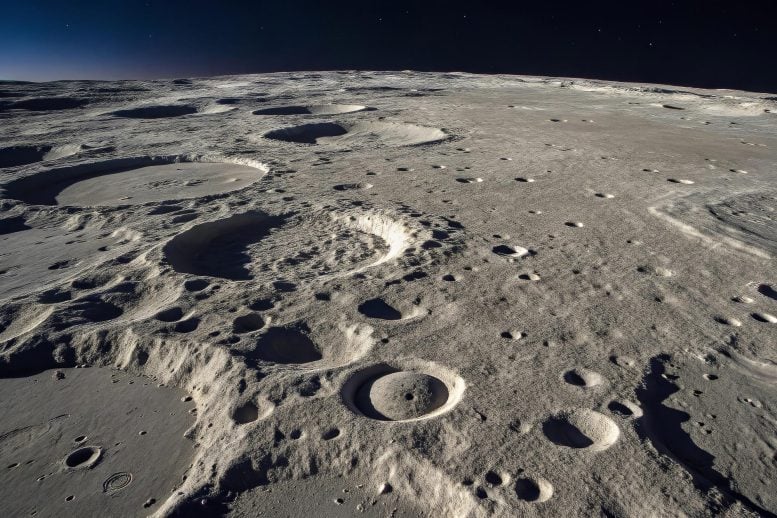 The Moon’s far side is overturning a long-held theory, revealing that the early Solar System’s asteroid assault may have faded slowly instead of exploding in one catastrophic burst. For decades, scientists have debated whether the early Solar System endured one sudden, catastrophic wave of asteroid strikes or a much longer period of gradually fading violence. [...]
Scientists once suspected that a brutal, years-long winter starved the dinosaurs following an asteroid impact 66 million years ago. New evidence suggests a more violent end: widespread firestorms that may have burned even thick-skinned dinosaurs to a crisp within hours.
The roughly six-mile-wide (10-kilometer-wide) asteroid struck Mexico's Yucatán Peninsula, excavating the Chicxulub crater and vaporizing enormous quantities of rock. Some of that material condensed into tiny droplets called spherules, which spread around the planet before falling back through Earth's atmosphere at several miles per second.
As the spherules slowed, their kinetic energy became heat, producing an intense pulse of thermal radiation. Earlier models suggested the effect would have resembled a worldwide broiler that was potentially deadly to exposed, thin-skinned animals, but not powerful enough to ignite vegetation across the globe.
A new study argues that those calculations overlooked a crucial ingredient: a thick layer of fine silicate dust formed from rock vapor that did not initially condense into spherules. Evidence for that dust emerged in 2023 from the Tanis fossil site in North Dakota, where researchers identified a layer of extremely fine, impact-derived material deposited above the spherules. A similar dust layer has since been documented at the K–Pg boundary (which divides the "age of reptiles" and the "age of mammals") in Raton Basin across the Colorado–New Mexico border.
"It reinvigorated my interest in what happened to the leftover vapor — that's where this work started," lead author Brandon Johnson, a planetary scientist at Purdue University, said in a statement.
The dust would have acted like an insulating blanket, preventing thermal radiation from escaping into space and redirecting more heat toward Earth’s surface. The researchers estimated that the surface heat pulse could have been about 3.5 times more intense than what was suggested by models considering the falling spherules alone. "We're in the realm where we might be essentially killing off everything within that first hour or two," Johnson said.
The radiation may not have directly ignited thick pieces of wood, but it exceeded ignition thresholds for grass, lichen, and pine needles, which could have fueled larger fires. The study also found that exposed terrestrial animals may have received about 17 times the thermal dose considered lethal to humans.
Animals sheltering underground or in water would have had a better chance of surviving the initial heat pulse. Afterward, the same dust may have blocked sunlight for years, triggering the prolonged "impact winter" more typically blamed for the dinosaurs' extinction.
There is, however, a missing element: the wildfire evidence that supports this dust-caused inferno theory has only been found in North America. "It could be that we will eventually find the record of completely global wildfires," said Alfio Alessandro Chiarenza, a paleontologist at University College London who was not involved in the study. "We just don't have it so far."
The study was published on July 28 in the journal JGR Biogeosciences.

A cada atualização anual do macOS, uma escolha da Apple em particular gera quase tanta curiosidade quanto as mudanças e os novos recursos do seu sistema operacional: o nome que acompanhará o update.
Hoje, faremos uma breve recapitulação das principais escolhas da Maçã sobre os nomes de cada versão do sistema operacional dos seus computadores, passando por décadas de codinomes felinos e, mais recentemente, paisagens californianas.
Antes disso — no período do Mac OS Classic, que abrange os sistemas dos Macintoshes lançados entre 1984 e 2001 —, os nomes dos sistemas da Apple eram usados quase exclusivamente de forma interna. Publicamente, as versões recebiam denominações bastante protocolares, mas, nos bastidores, praticamente todas carregavam codinomes.

O System 6, por exemplo, teve versões conhecidas internamente como Antares (6.04), Big Deal (6.05), SixPack (6.06) e Terminator (6.08). Já o System 7 passou por uma verdadeira coleção de nomes, incluindo Blue, Beta Cheese, Cube-E, I Tripoli, Jirocho, Mozart, Capone, Danook, Thag e Marconi, entre outros. Também houve casos específicos, como Road Warrior, utilizado nos primeiros PowerBooks, além de Unity, Buster, Son of Buster, Harmony e Ides of Buster, empregados em versões posteriores do sistema.
A partir do Mac OS 8, os nomes foram predominantemente relacionados à teoria musical — é o caso do codinome Tempo no Mac OS 8, Allegro no Mac OS 8.5 e Sonata no Mac OS 8.7 (versão de desenvolvimento do que viria a ser o Mac OS 9). As exceções são o Mac OS 8.1 (intitulado Bride of Buster) e o Mac OS 8.6 (Veronica).
Essa só se tornou uma tradição marqueteira a partir do Mac OS X 10.2, quando Steve Jobs apresentou a nova versão do sistema operacional como Mac OS X Jaguar, levando um codinome ao público pela primeira vez — antes do Jaguar, a Apple utilizou os codinomes Kodiak para a versão beta, Cheetah para a 10.0 e Puma para a 10.1 —, inaugurando a era de nomes de grandes felinos.
Os animais ditaram os sistemas dos Macs por cerca de dez anos (de 2002 até 2012): foi o caso do Mac OS X 10.3 Panther, Mac OS X 10.4 Tiger, Mac OS X 10.5 Leopard, Mac OS X 10.6 Snow Leopard, Mac OS X 10.7 Lion e, por fim, OS X Mountain Lion 10.8 — que abandonou (temporariamente) o prefixo “Mac”.
A partir da décima versão do macOS (então OS X), a Apple adotou publicamente nomes com as regiões da Califórnia, tendência que segue em vigor até os dias de hoje.
A troca, aliás, andou em paralelo a uma mudança paradigmática do sistema: foi somente com o OS X Mavericks 10.9 que a Maçã deixou de cobrar pela atualização dos seus sistemas operacionais, permitindo que os seus usuários, a partir do Snow Leopard (na compilação 10.6.8), atualizassem as suas máquinas sem custos adicionais — uma realidade que permanece até os dias de hoje.
O primeiro destino geográfico escolhido pela Apple remete a uma região litorânea conhecida pelas altas ondas, propícias para a cena local do surfe. O papel de parede do OS X 10.9 dava destaque à curvatura de uma grande onda em tons de azul e turquesa, com clara inspiração na localização que deu nome ao update.

Em matéria de software, o OS X Mavericks ficou marcado pelo aprimoramento na gestão de performance, bateria e memória, aproveitando melhor o hardware dos computadores da Apple. Quanto aos recursos, o sistema trouxe os links compartilhados no Safari, respostas embutidas em notificações, abas e tags no Finder, melhor suporte ao uso de múltiplos monitores, além da introdução de novos aplicativos, como o Mapas e iBooks.
Pouco mais de quatro horas adiante (ou 314km, para ser mais exato), encontramos o Parque Nacional de Yosemite. A área já era considerada tão importante para a preservação ambiental que Abraham Lincoln autorizou sua proteção e uso público em 1864, anos antes da criação de Yellowstone, reconhecido como o primeiro parque nacional do mundo. Outro grande entusiasta de Yosemite foi Theodore Roosevelt, que ajudou a consolidar a sua importância dentro do sistema de parques americanos.
Um dos maiores símbolos do parque — e também o destaque do wallpaper oficial do sistema — é o Half Dome, um monólito de granito com impressionantes 2.696 metros de altitude. Localizada no coração de Yosemite, a formação foi considerada inescalável por alguns geólogos do século XIX, até que George G. Anderson realizou a façanha em 1875, escalando-a descalço. Muito possivelmente, a foto usada pela Apple foi registrada com uma lente teleobjetiva nas proximidades da Ahwahnee Meadow.

O OS X Yosemite 10.10 foi um marco importante na trajetória do macOS. Muito lembrado pelas mudanças de design na interface — com elementos translúcidos e ícones de formas planas que definiriam a identidade visual do sistema por várias gerações —, ele também deixou como legado a introdução dos recursos de Continuidade (Continuity) entre o OS X e o iOS.
Inicialmente, a novidade englobava apenas o AirDrop, as chamadas telefônicas, o app Mensagens, o Handoff e o Instant Hotspot. Ainda assim, ela inaugurou um nível de interoperabilidade que ajudou a redefinir a forma como o mercado de tecnologia passou a enxergar ecossistemas compostos por diferentes produtos de uma mesma marca.
A apenas 20 minutos de distância do Ahwahnee Meadow, a próxima parada do Mac é outra atração turística presente dentro do Parque Nacional de Yosemite: o El Capitan é um monólito de granito de quase 900 metros que se ergue acima do vale do parque.

O papel de parede provavelmente foi fotografado a partir do mirante Tunnel View, de onde é possível avistar o El Capitan à esquerda do vale. Ao fundo, surge o Half Dome — um enquadramento que parece refletir o espírito da atualização. Diferentemente de Yosemite, o OS X El Capitan 10.11 deu menos ênfase à introdução de novos recursos e concentrou seus esforços em correções de bugs, otimizações de desempenho e refinamentos da experiência de uso. Entre as principais novidades, estavam um Spotlight aprimorado, a adição do Split View e diversas melhorias nos aplicativos nativos da Apple.
Cerca de 338km depois (aproximadamente quatro horas e meia) de Yosemite, passando pela cordilheira de Sierra Nevada (situada no leste da Califórnia, a oeste do Mount Whitney), temos o Lone Pine Peak, cenário da montanha que aparece no wallpaper do sistema.

Além da mudança de nomenclatura de OS X para macOS (colado e com o “m” minúsculo, como segue até os dias de hoje), a atualização é particularmente lembrada pela inclusão da Siri no Mac, o Desbloqueio Automático (Auto Unlock) com o Apple Watch e a Área de Transferência Universal (Universal Clipboard) entre Macs, iPhones e iPads.
Uma rápida viagem de 80 minutos (129km) é capaz de nos levar ao próximo destino fotografado pela Apple: North Lake, localizada na pequena cidade de Bishop, entre as montanhas da cordilheira de Sierra Nevada. Ali, muito possivelmente em meio ao outono, o registro eternizado no papel de parede do sistema foi feito.

Quando falamos do sistema, aos moldes do próprio El Capitan e do Snow Leopard, o macOS High Sierra 10.13 focou muito mais no aprimoramento interno do macOS do que em novos recursos, mas vale mencionar a inclusão do novo sistema de arquivos da Maçã (o Apple File System, ou APFS), do suporte aos formatos audiovisuais HEVC e HEIF, bem como a chegada da segunda geração da tecnologia de desempenho gráfico Metal.
Depois das montanhas, que peculiarmente ficam na margem do wallpaper, vieram as dunas. Com uma distância de 253km (ou três horas de carro), o próximo destino é o Parque Nacional do Vale da Morte, o ponto mais quente do continente americano — onde se registrou a maior temperatura da história (56,7°C) em julho de 1913, e onde a foto do papel de parede do macOS Mojave 10.14 foi feita.

Já sobre as novidades do sistema, essa versão do macOS é particularmente conhecida pela introdução do Modo Escuro, a inclusão dos Conjuntos (Stacks) na Mesa (Desktop), além da estreia de apps já conhecidos dos usuários de iOS, como o Apple News, o Bolsa (Stocks), o Gravador de Voz (Voice Memo) e o Casa (Home).
A 428km adiante do Deserto de Mojave (cerca de cinco horas e meia de carro), nós temos a Ilha de Santa Catalina, destino paradisíaco — e remoto — da costa sul da Califórnia que deu nome à versão do macOS lançada em 2019. Pela posição da foto, o que se especula é que o registro oficial da Apple tenha sido feito com o auxílio de um drone ou helicóptero, sobrevoando as águas para capturar Catalina sob diferentes períodos e iluminações para fornecer o tema dinâmico disponível no sistema.

Essa atualização marcou o fim do iTunes, que foi segmentado em um catálogo de aplicativos separados (Apple TV, Música, Apple Podcasts), mas sua adição mais relevante muito possivelmente foi o recurso Sidecar, que possibilita o uso do iPad como um monitor externo do Mac.
Com uma distância de 524km da Ilha de Catalina, a próxima parada é na Ponte Bixby Creek (inaugurada em 1932 e particularmente conhecida por suas estradas com curvas), localizada na costa central de Big Sur, que dá nome a essa versão do macOS — o papel de parede retrata também a parte litorânea do local.

Sobre o sistema, a versão marcou a transição dos processadores da Intel para o Apple Silicon com o lançamento do M1, trazendo novos ícones, materiais translúcidos, um novo Dock, Central de Controle e de Notificações.
Esta versão também foi um marco para o sistema operacional, pois, pela primeira vez em muitos anos, a Apple abandonou as sub-versões 10.x e passou para o número 11 — o que se manteve nos anos subsequentes.
Ainda na costa de Big Sur, o macOS Monterey 12 marcou a quebra de uma tradição: pela primeira vez em anos, a Apple optou por não incluir um registro fotográfico como possível papel de parede ou tela de descanso, mantendo apenas temas dinâmicos para ilustrar o sistema dos Macs naquela ocasião.

O Condado de Monterey, que inspirou o nome do sistema, é particularmente lembrado por ter abrigado a primeira capital da Califórnia, quando a região ainda era de domínio dos governos da Espanha e do México.
Em relação ao sistema, o grande destaque foi a introdução do Controle Universal (Universal Control), permitindo que um único conjunto de periféricos (como teclados e mouses) seja utilizado simultaneamente no Mac e no iPad.
Por volta de 450km de distância (quatro horas e meia de trajeto) depois, temos o Condado de Ventura, que inspirou essa versão do macOS. Emancipado do Condado de Santa Bárbara em 1873, ele abriga o píer mais antigo do estado da Califórnia. Mais uma vez, a Apple optou por não incluir um papel de parede fotográfico.

Quanto aos seus recursos, o macOS Ventura 13 se destacou pela adição do recurso Organizador Visual (Stage Manager) e melhorias no Spotlight, Safari, entre outros aplicativos nativos do sistema que ganharam reformulações.
Do Condado de Ventura até Sonoma, são 748km (pouco mais de sete horas de trajeto) até a região norte de San Francisco, conhecida por abrigar centenas de vinícolas. O registro da Apple foi feito na vinícola Mazzocco Sonoma, no rancho de Warm Springs.

Depois de dois anos, a Apple enfim retornou com os papéis de parede fotográficos no macOS, funcionando também como protetores de tela (screensavers) dinâmicos que lentamente se tornam um wallpaper estático após o login.
A maior novidade do sistema foi a implementação dos widgets interativos na Mesa (Desktop), além de reformulações no modo Jogo, na relação do sistema com acessos remotos e no compartilhamento de conteúdos em videochamadas, com novidades também no Safari, na Siri e nos recursos de acessibilidade.
Saindo de Sonoma, nosso próximo destino está localizado a quase sete horas de distância (mais ao sul da Califórnia, a exatos 547km de distância); trata-se do Parque Nacional da Sequoia, que abriga algumas das maiores árvores do planeta em termos de volume.

O registro do papel de parede é remoto o suficiente para não termos uma dimensão exata da sua localização geográfica (até porque a Apple nunca divulgou essa informação), mas é seguro afirmar que as imagens foram capturadas em algum dos bosques de sequoias da Sierra Nevada.
Além da estreia controversa dos recursos da Apple Intelligence devido à discrepância entre o que foi apresentado e as funcionalidades entregues, o macOS Sequoia 15 introduziu o Espelhamento do iPhone (iPhone Mirroring), a organização de janelas em mosaico e o aplicativo Senhas (Passwords).
Do Parque Nacional de Sequoia, partimos rumo ao norte, até a fronteira entre a Califórnia e o estado do Nevada (uma distância de 330km, ou três horas e meia de trajeto). O próximo destino é o Lago Tahoe, também presente na cordilheira de Sierra Nevada. Ele é particularmente conhecido por ser o maior lago alpino da América do Norte em termos de altitude.

Conhecido por suas águas cristalinas, o lago é um destino frequente para esqui. O papel de parede do macOS Tahoe 26 exibe um ângulo baixo sobre o lago, com as rochas em primeiro plano, enquanto os pinheiros e as montanhas de Sierra Nevada aparecem ao fundo.
Quanto ao sistema, além da unificação da numeração com todo o ecossistema (iOS, iPadOS, watchOS, tvOS e visionOS) da Apple, essa versão foi especialmente marcada pelo redesign de interface com a estreia do Liquid Glass. Outras novidades incluem a adição das Atividades Ao Vivo (Live Activities) ao recurso Continuidade, além de revisões do Spotlight, Central de Controle e os recursos da Apple Intelligence.
E, enfim, chegamos à versão mais recente do macOS! Com uma distância de 330km (trajeto com cerca de três horas e meia), nosso próximo destino é o cartão postal da cidade de San Francisco: a Ponte Golden Gate.

Ela foi, até 1964, a maior ponte suspensa do mundo — caso seus cabos de sustentação fossem esticados, teriam tamanho o suficiente para dar três voltas no planeta.
Enquanto sistema, assim como o Snow Leopard ou o High Sierra, o macOS Golden Gate 27 é marcado por sua abordagem de priorização dos refinamentos, tanto relacionados ao visual Liquid Glass quanto aos recursos da Apple Intelligence e da Siri, que agora se torna Siri AI.
E você aí, usa o macOS desde que versão? Alguma, em especial, lhe marcou? Ou você (ainda) não é usuário de Mac, mas gostou de todas essas curiosidades? 😊
via Basic Apple Guy

 a large amount because I tested for them in the beginning.
A solar eclipse, the Perseids, bright Venus after sunset, and a deep partial lunar eclipse highlight August’s skywatching.
A solar eclipse, one of the year’s best meteor showers, Venus at its brightest in the evening sky, and a lunar eclipse to close out the month.
That’s “What’s Up” for August.
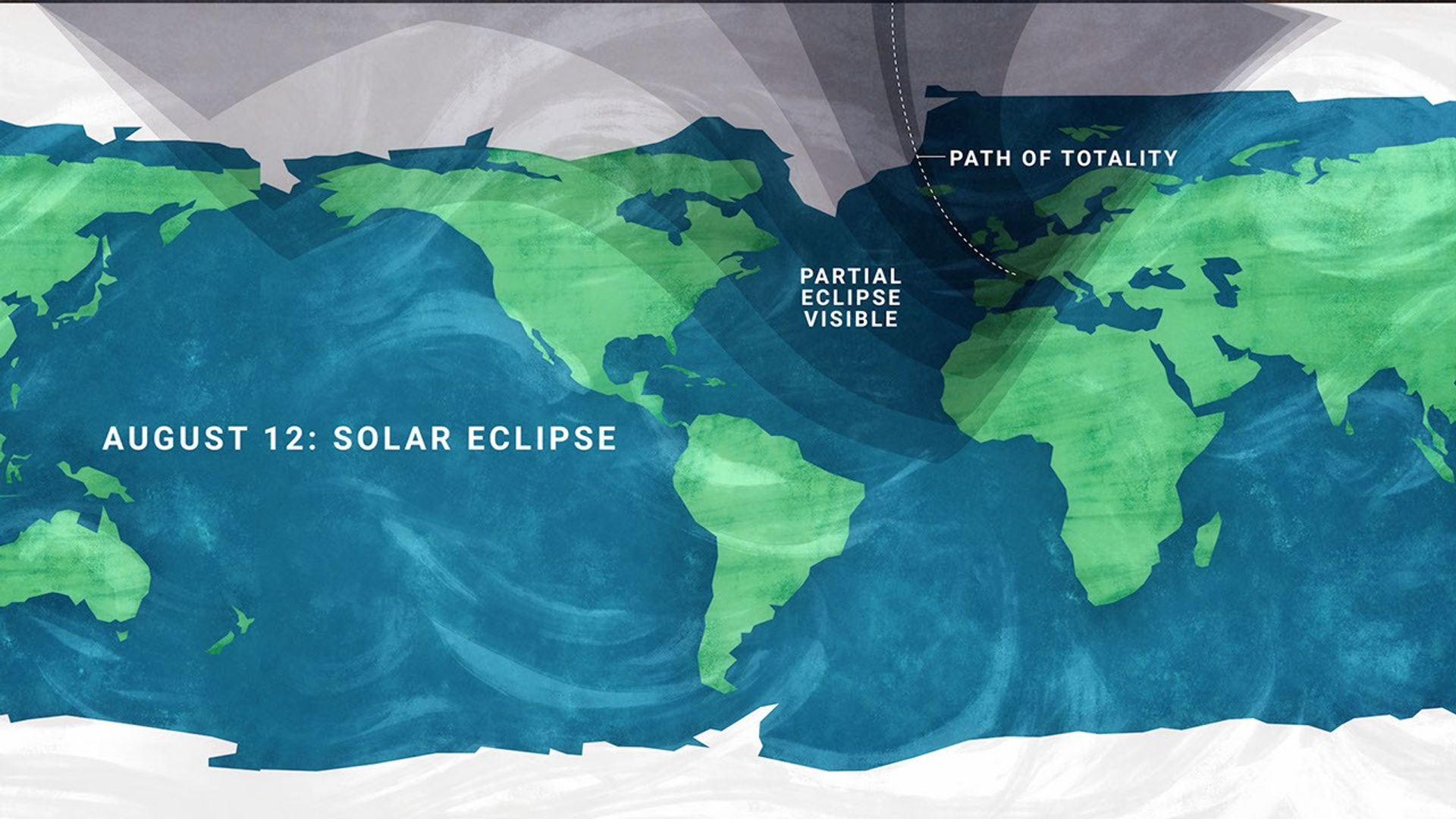
On Aug. 12, a total solar eclipse crosses northern Russia, Greenland, Iceland, and northern Spain, with a small corner of Portugal inside the path of totality.
In parts of the United States, from Alaska to North Carolina, the eclipse is partial. The Moon will take only a small bite out of the Sun, and the amount of coverage will vary with location.
Remember to watch safely. Use certified eclipse glasses or a safe solar viewer any time any part of the Sun is visible. Regular sunglasses are not safe. And never use binoculars, a telescope, or a camera without a solar filter made for the front of the optics.
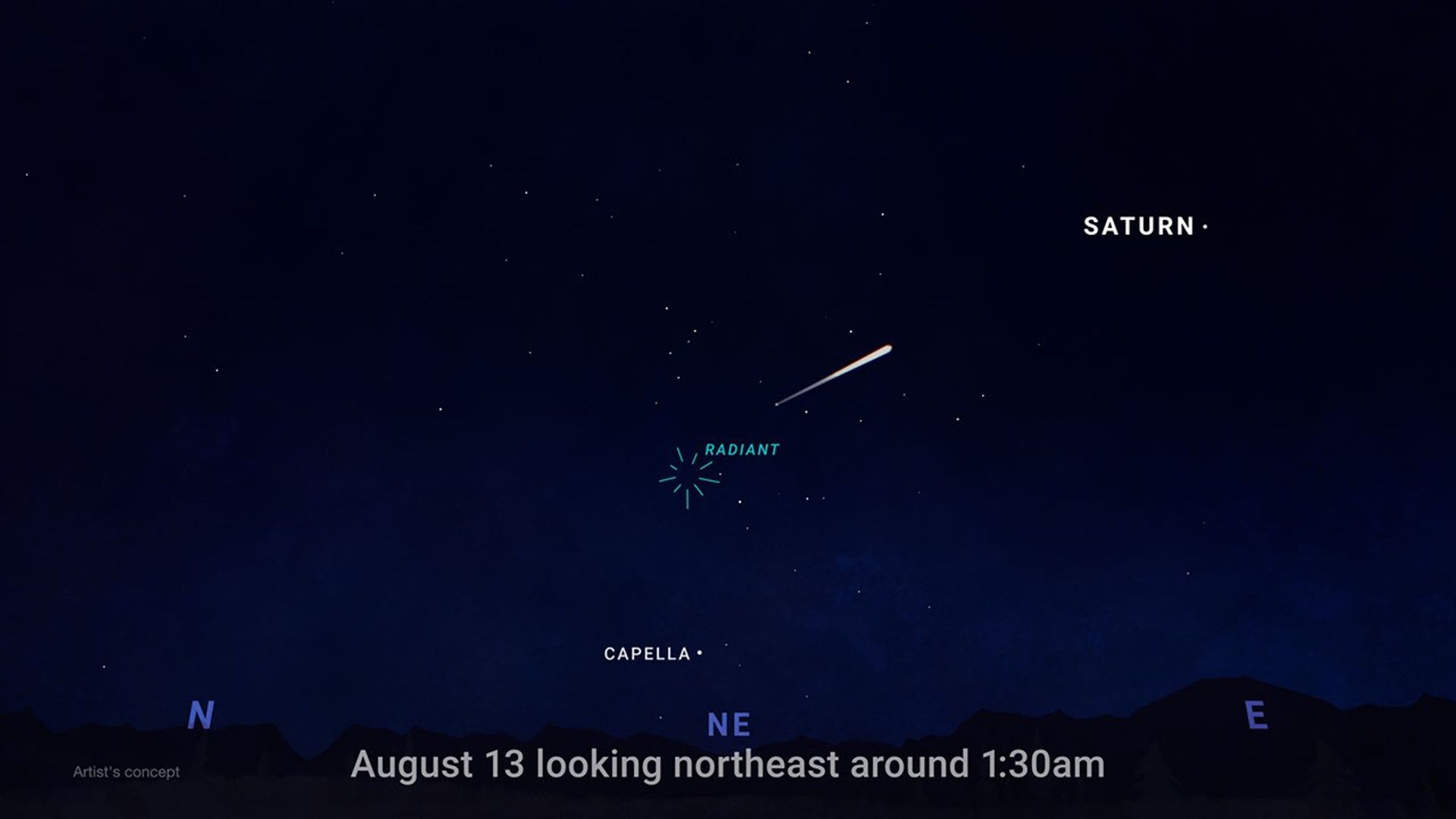
Later that same night, the Perseid meteor shower will light up the sky, peaking the evening of Aug. 12 into the early morning hours of the 13th. And with a New Moon arriving on the 12th, the skies will be ideally dark.
The Perseids happen every year when Earth passes through a debris stream left behind by Comet Swift-Tuttle. As those tiny bits of comet dust hit our atmosphere at high speed, they burn up as bright streaks of light.
To view this meteor shower, look toward the northeast once it’s fully dark and watch for the constellation Perseus to clear the horizon. This is where the meteors originate, but let your eyes wander, because they can flash across any part of the sky.
For the best view, stay out late as the stars climb higher, find a dark open spot, and give your eyes 30 minutes to adjust.
Aug. 14-16, Venus reaches its greatest eastern elongation, which is its widest apparent separation from the Sun during this evening appearance.
Look low in the western sky shortly after sunset for the bright object that will outshine every star around it. Through a telescope after sunset, Venus will look close to half lit, like a tiny lunar phase.

On the night of Aug. 27, continuing into Aug. 28 for some time zones, the Full Moon slips through Earth’s shadow, resulting in a partial lunar eclipse. It will be visible from much of North and South America and parts of Europe and Africa.

At maximum eclipse, about 93% of the Moon’s diameter will be inside Earth’s dark central shadow, called the umbra. The Moon will not be completely covered, but it can look dramatically darkened, with a rusty, coppery tint along the covered edge.
Unlike a solar eclipse, a lunar eclipse is safe to watch with just your eyes. Binoculars or a small telescope can give you a closer view of Earth’s curved shadow moving across the Moon.
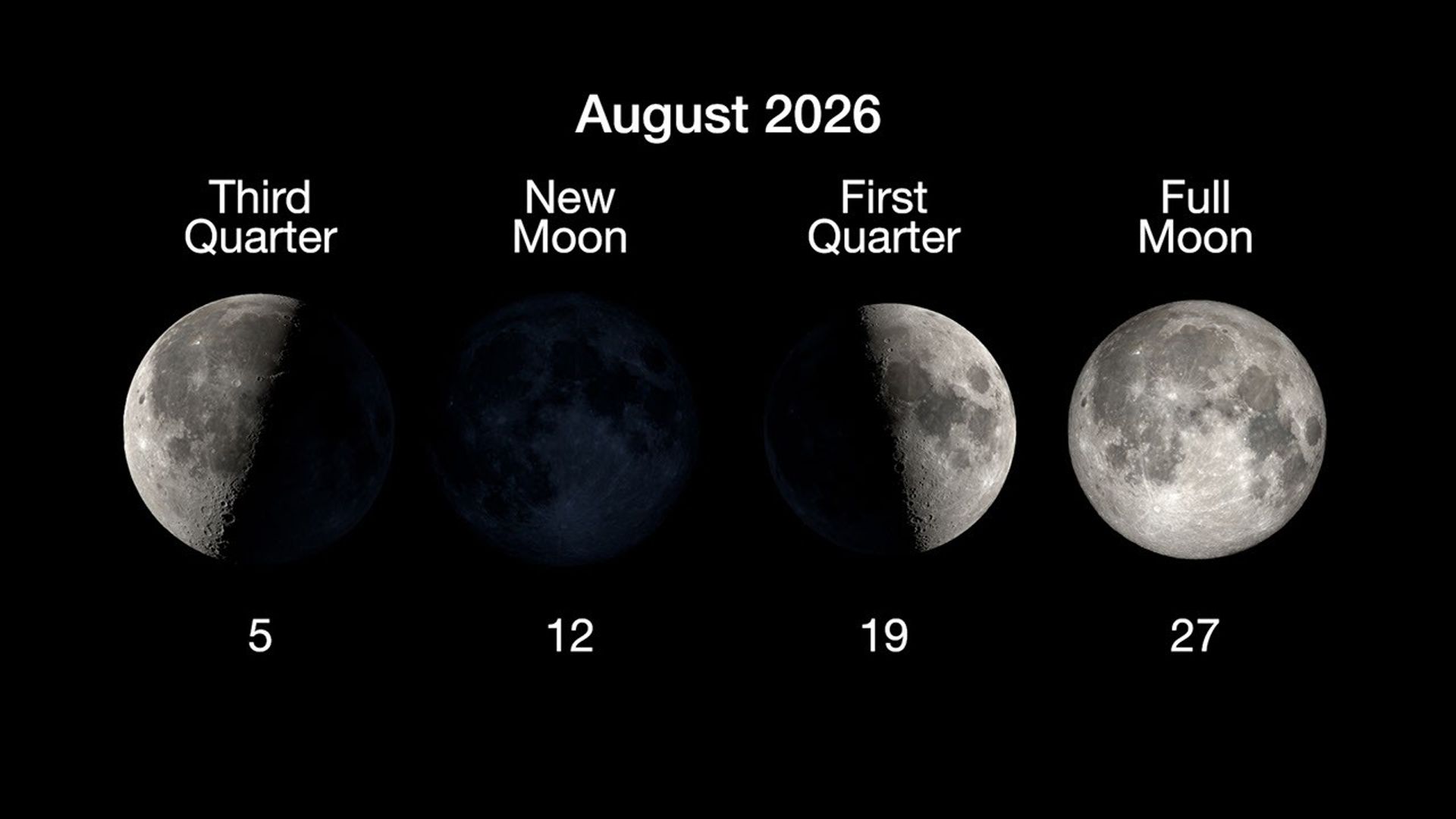
Here are the phases of the Moon for August.
You can stay up to date on all of NASA’s missions exploring the solar system and beyond at science.nasa.gov. I’m Raquel Villanueva from NASA’s Jet Propulsion Laboratory, and that’s What’s Up for this month.
The post What’s Up: August 2026 Skywatching Tips from NASA appeared first on NASA Science.

A solar eclipse, the Perseids, bright Venus after sunset, and a deep partial lunar eclipse highlight August’s skywatching.
A solar eclipse, one of the year’s best meteor showers, Venus at its brightest in the evening sky, and a lunar eclipse to close out the month.
That’s “What’s Up” for August.
On Aug. 12, a total solar eclipse crosses northern Russia, Greenland, Iceland, and northern Spain, with a small corner of Portugal inside the path of totality.
In parts of the United States, from Alaska to North Carolina, the eclipse is partial. The Moon will take only a small bite out of the Sun, and the amount of coverage will vary with location.
Remember to watch safely. Use certified eclipse glasses or a safe solar viewer any time any part of the Sun is visible. Regular sunglasses are not safe. And never use binoculars, a telescope, or a camera without a solar filter made for the front of the optics.
Later that same night, the Perseid meteor shower will light up the sky, peaking the evening of Aug. 12 into the early morning hours of the 13th. And with a New Moon arriving on the 12th, the skies will be ideally dark.
The Perseids happen every year when Earth passes through a debris stream left behind by Comet Swift-Tuttle. As those tiny bits of comet dust hit our atmosphere at high speed, they burn up as bright streaks of light.
To view this meteor shower, look toward the northeast once it’s fully dark and watch for the constellation Perseus to clear the horizon. This is where the meteors originate, but let your eyes wander, because they can flash across any part of the sky.
For the best view, stay out late as the stars climb higher, find a dark open spot, and give your eyes 30 minutes to adjust.
Aug. 14-16, Venus reaches its greatest eastern elongation, which is its widest apparent separation from the Sun during this evening appearance.
Look low in the western sky shortly after sunset for the bright object that will outshine every star around it. Through a telescope after sunset, Venus will look close to half lit, like a tiny lunar phase.
On the night of Aug. 27, continuing into Aug. 28 for some time zones, the Full Moon slips through Earth’s shadow, resulting in a partial lunar eclipse. It will be visible from much of North and South America and parts of Europe and Africa.
At maximum eclipse, about 93% of the Moon’s diameter will be inside Earth’s dark central shadow, called the umbra. The Moon will not be completely covered, but it can look dramatically darkened, with a rusty, coppery tint along the covered edge.
Unlike a solar eclipse, a lunar eclipse is safe to watch with just your eyes. Binoculars or a small telescope can give you a closer view of Earth’s curved shadow moving across the Moon.
Here are the phases of the Moon for August.
You can stay up to date on all of NASA’s missions exploring the solar system and beyond at science.nasa.gov. I’m Raquel Villanueva from NASA’s Jet Propulsion Laboratory, and that’s What’s Up for this month.
Asteroid 44 Nysa has the weirdest shape yet seen for an asteroid, and that’s saying something.
The post Astronomers Spot Weird, Three-Lobed Asteroid with a Moon appeared first on Sky & Telescope.
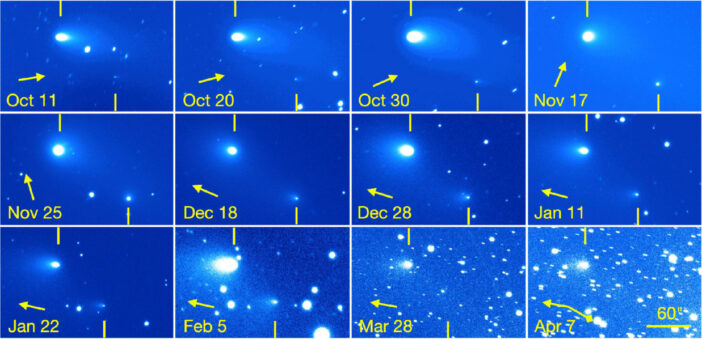
Traversing through the solar system, a comet split in two, and a recent study used six months of observations to investigate when and why.
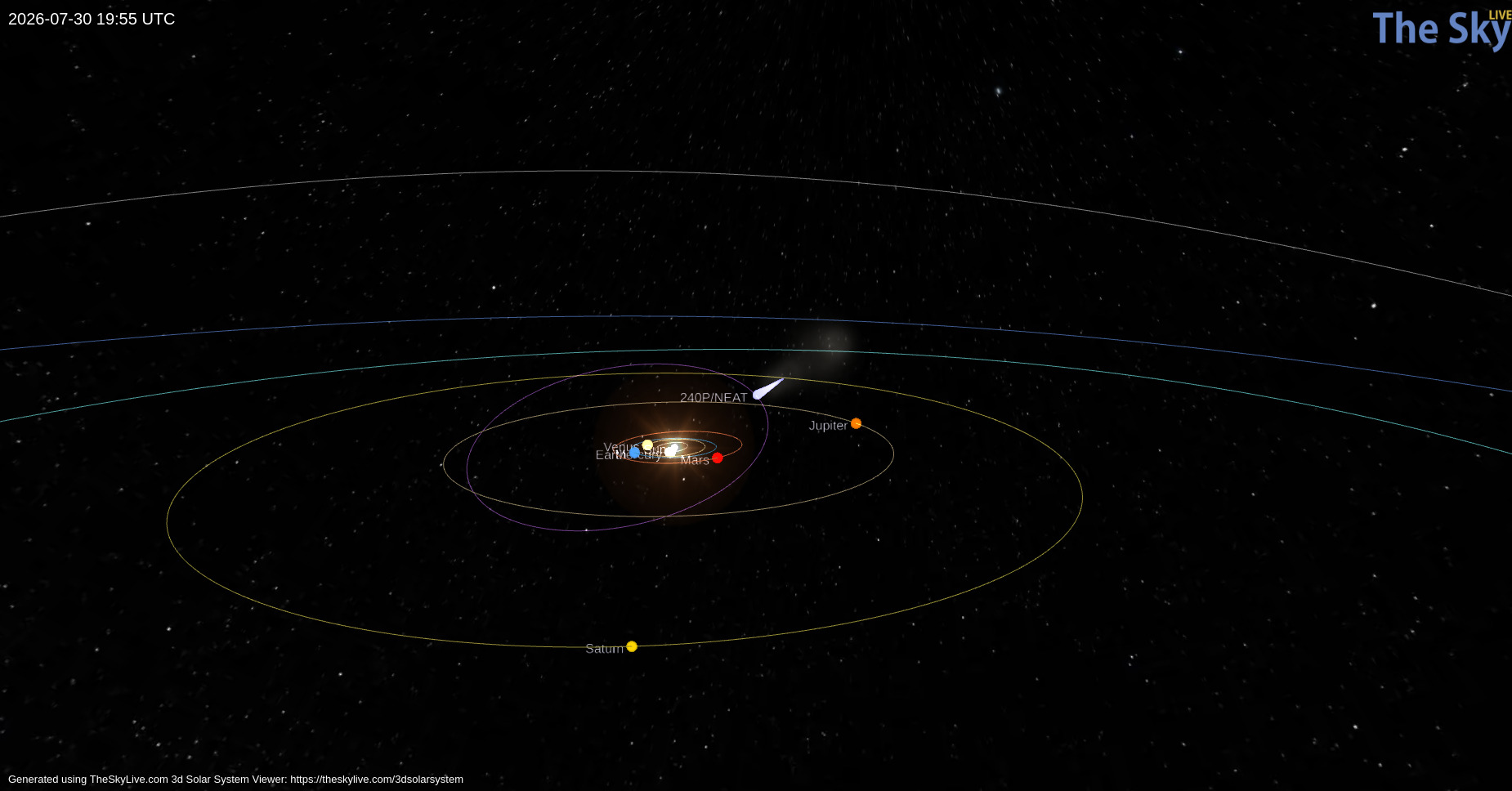
Orbital path of 240P/NEAT (purple) and the position of the comet on 30 July 2026 (light blue teardrop). Click to enlarge. [TheSkyLive]
Most recently, 240P swept closest to Jupiter in July 2007, shifting the comet’s perihelion distance (closest approach to the Sun) from 2.5 to 2.1 au, and several long-lived bursts in brightness in 2018/2019 could have been spurred by this orbital shift. Excitingly, a fainter comoving object, 240P-B, was first reported in June 2025 as the comet headed toward perihelion — at some point recently, 240P had split in two!
Over the last century, numerous split comets have been recorded, but detailed physical studies of these objects are rare. With growing evidence suggesting splitting and disintegration are the primary mechanisms of comet destruction, understanding the properties and cause of 240P’s split is imperative.
With 240P on the move to perihelion, David Jewitt (University of California, Los Angeles) and collaborators monitored the comet from October 2025 to April 2026 to establish the likely cause of its split. Employing the Alhambra Faint Object Spectrograph and Camera on the 2.56-meter Nordic Optical Telescope, the authors obtained detailed imaging of the comet from two months before to four months after perihelion to characterize both components.
Tracking both photometric and morphological changes across their observations, the authors estimated the dust-loss rates, physical sizes, and separation speed of 240P-A and 240P-B. The brighter component, 240P-A, has an estimated radius between 400 and 600 meters and a dust-loss rate almost four times higher than 240P-B. Because 240P-B is fainter, its radius is harder to constrain observationally. From its lower dust-loss rate and lower brightness, the authors estimated a radius around 300 meters (and no smaller than 50). Based on how the separation of the two comet pieces changes over time, the authors determined that the split of 240P occurred at least three years before their observations.
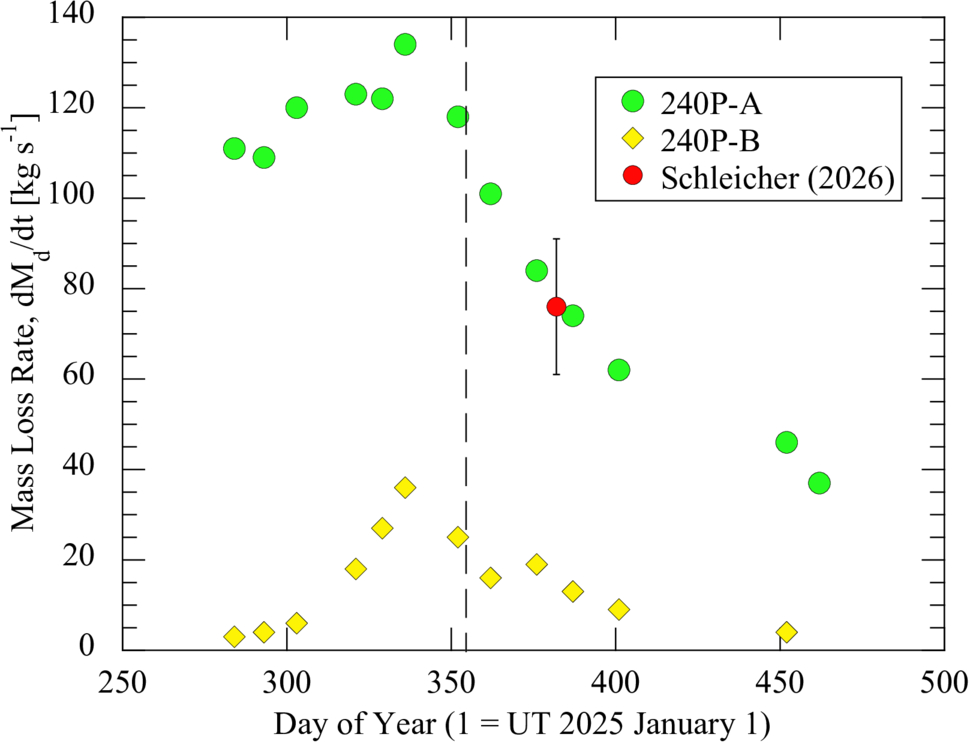
Dust mass-loss rates for 240P-A (green circles) and 240P-B (yellow diamonds) over the course of the observations. Both components peak shortly before perihelion (dashed vertical line). Click to enlarge. [Jewitt et al 2026]
How exactly did this fragmented comet get this way? The authors considered a number of comet-splitting mechanisms: tidal forces, asteroid impact, pressure buildup below the comet’s surface, thermal stresses, and rotational instability. Given the comet’s orbit, it has not had close enough encounters with the Sun or other planets for tidal forces to be the culprit, and it traverses well above the asteroid belt, avoiding collisions. Pressure buildup and thermal stresses can fracture comets, but both are unlikely to launch such a large fragment as seen in this system.
This leaves rotational instability as the likely source of 240P’s split. Outgassing torques lead to rotational instability, especially in subkilometer comets like 240P, and 240P has exhibited recent outgassing. In addition, the separation speed between the 240P components is comparable to the escape speed of the primary comet, which is expected for rotational breakup. To confirm this hypothesis, future observations measuring the rotation period of 240P are necessary, but this study adds to the small number of split-comet observations that aid in understanding comet destruction.
“Investigation of Split Comet 240P/NEAT,” David Jewitt et al AJ 172 113. doi:10.3847/1538-3881/ae83ac
The post Spying on a Split Comet appeared first on AAS Nova.
Over the past couple of weeks, my immune system has been struggling to fight off a cold. It’s been unpleasant, as all colds are. But throughout this time—in defiance of my plight—I’ve been waging my own war against immune systems, thanks to Pathogenic, a new roguelite twin-stick shooter from developer Aberrant Labs.
As I've downed endless shots of ineffective cough syrup, I’ve done little else with my free time than repeatedly take on the role of a bodily invader. And let me tell you: Being on the enemy’s side is much more fun. Really fun, as it turns out.
Action roguelites are a dime a dozen these days, and it takes something special to stand out. So as quiet Internet whispers turned into widespread cacophonous praise—the little indie game quickly racked up 100,000 sales and an “overwhelmingly positive” review score on Steam—I set aside my default skepticism and gave it a shot.


© Aberrant Labs/Slug Disco
Scientists have found the first triple-lobed asteroid in the asteroid belt between Mars and Jupiter — and it has a small moon to boot.
The asteroid in question is 44 Nysa, which was discovered all the way back in 1857. Of course, back then it was just a pinprick of light in the sky, and subsequent observations — including some from the Hubble Space Telescope — had failed to tell us much about Nysa. Those previous observations suggested Nysa might be bi-lobed, like many asteroids and comets such as asteroid 52246 Donaldjohanson, which NASA's Lucy mission flew past in 2025.
However, new joint observations by the Large Binocular Telescope (LBT) on Mount Graham in Arizona and the Very Large Telescope (VT) on Paranal mountain in Chile have revealed that this asteroid actually seems to have three lobes, the first such object ever seen.
"The images reveal a remarkably unusual object," said lead researcher Kate Minker of Arizona's Lowell Observatory in a statement. "The most likely explanation is that Nysa is either a contact trinary, consisting of three connected components, or an extremely irregular coherent body unlike anything we've previously observed."
Obtaining the detailed images of Nysa was not easy. Key to the success were two high contrast imaging devices, the Italian-built SHARK-VIS on the LBT and SPHERE and its ZIMPOL polarimeter on the VLT, used in conjunction with adaptive optics that counteract the blurring effect of the atmosphere.
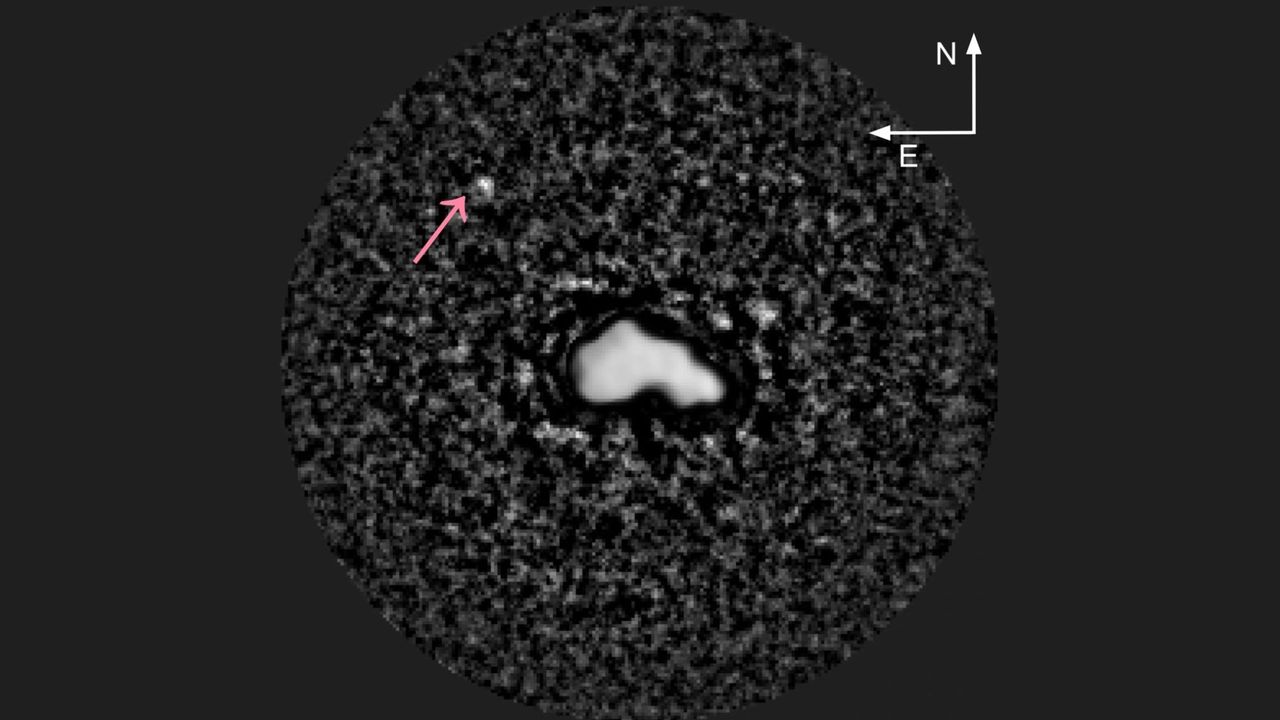
"These observations had to be combined with specially developed image-processing techniques to further sharpen the images and remove the bright halo surrounding the asteroid, potentially hiding faint companions," said Anthony Berdeu of the European Southern Observatory.
The images showed an irregular-shaped body 47 miles (75 kilometers) at its widest point, with two notable valleys or "colli" that wrap around the asteroid's circumference and which Minker's team interprets as being the necks of the different lobes. Furthermore, the images revealed a 0.6-mile-wide (1-km-wide) moon orbiting Nysa at a distance of at least 106 miles (170 km). The moon has been designated S/2026 (44) 1 for now. And, because it was seen independently during two different observing campaigns, it was possible to observe its motion around Nysa.
"We borrowed a specialized technique from another field of astronomy, known as high-contrast imaging, to detect the small moon whose faint light was overwhelmed by the intense brightness of the primary asteroid," said Gianluca Li Causi of the SHARK-VIS team at the Italian National Institute for Astrophysics (INAF).
Nysa is named after the mythical land where the ancient Greek god Dionysus was raised by nymphs. Al Conrad of the Large Binocular Telescope Observatory finds the name fitting because Dionysus was the Greek god of theater, which for the ancient Greeks often involved wearing masks and hiding one's true identity.
"We're finally unmasking the asteroid's true nature, long after it was discovered," said Conrad.
How such a bizarre object formed remains uncertain, but Minker's team does have a couple of ideas.
The team's preferred explanation is that Nysa is a contact trinary — three asteroid bodies being held together loosely by gravity. The best alternative, the researchers say, is that Nysa once upon a time had a close encounter with a much larger asteroid that slammed into it, thereby deforming it. In these situations, modeling suggests that gravitational tidal forces could have deformed Nysa's mantle, creating Nysa's odd shape and even ripping it apart into a bunch of fragments in a string-of-peals configuration. If this is the case, then where did the other fragments go? Such events usually produce a family of asteroids all sharing the same composition, but Nysa seems to be alone (barring its moon, of course).
There could be a way to distinguish between the two possible origins. By tracking the moon's orbital velocity and period, astronomers will be able to pin down the exact mass and density of Nysa and then see which model matches it best.
Nysa has been a subject of study because it can also tell us about the birth of our own planet Earth. Nysa is more reflective than many other asteroids thanks to its surface composition that is abundant in a silicate mineral called enstatite, which lacks iron. Asteroids like this are generally called E-types, and Nysa is the largest and brightest of all of them. E-type asteroids are thought to have formed close to the sun and therefore have been identified as potential building blocks of the inner planets. If Nysa is a relic of that time, it could tell us a great deal about conditions in the inner solar system 4.5 billion years ago.
The findings can be read on the arXiv archive, and have been submitted to the journal Astronomy & Astrophysics.
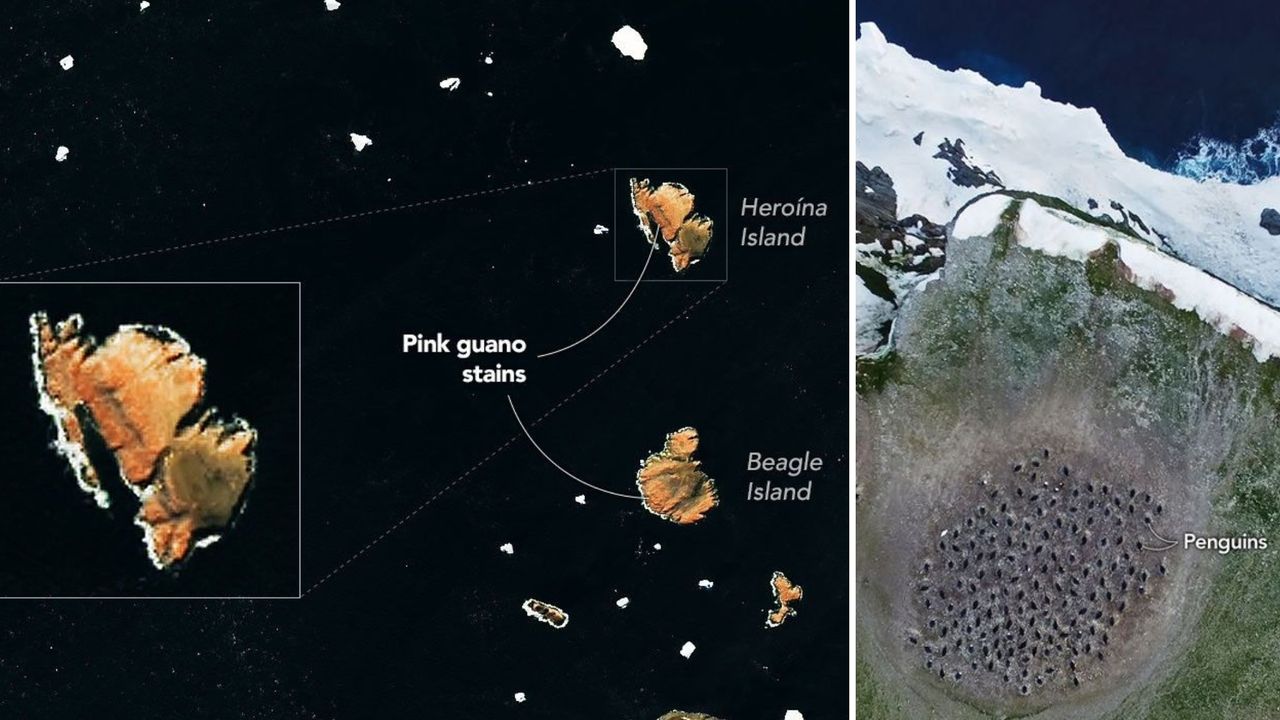
The diets of penguins on Antarctica's Danger Islands can be seen from space. At least indirectly.
Using satellite images captured by the Landsat 8 spacecraft operated by NASA and the United States Geological Survey, scientists can track changes in Adélie penguins' diets based on the color of their guano, or droppings.
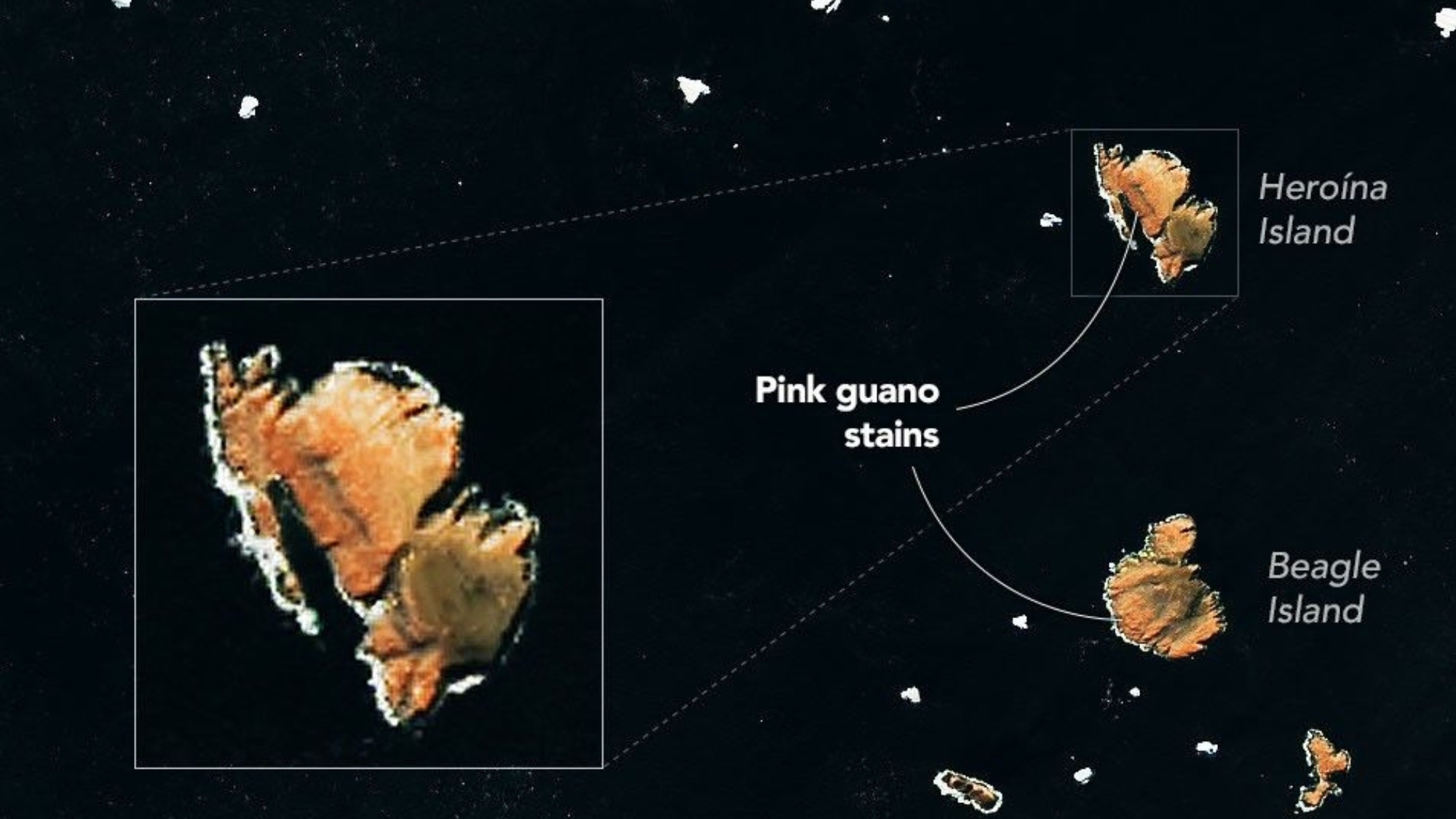
The image above shows pinkish-orange guano staining large sections of some of the Danger Islands, Heroína Island and Beagle Island. The penguins that live there eat a diet rich in krill, small marine crustaceans that are bright pink in color due to a specific type of algae upon which they feed.

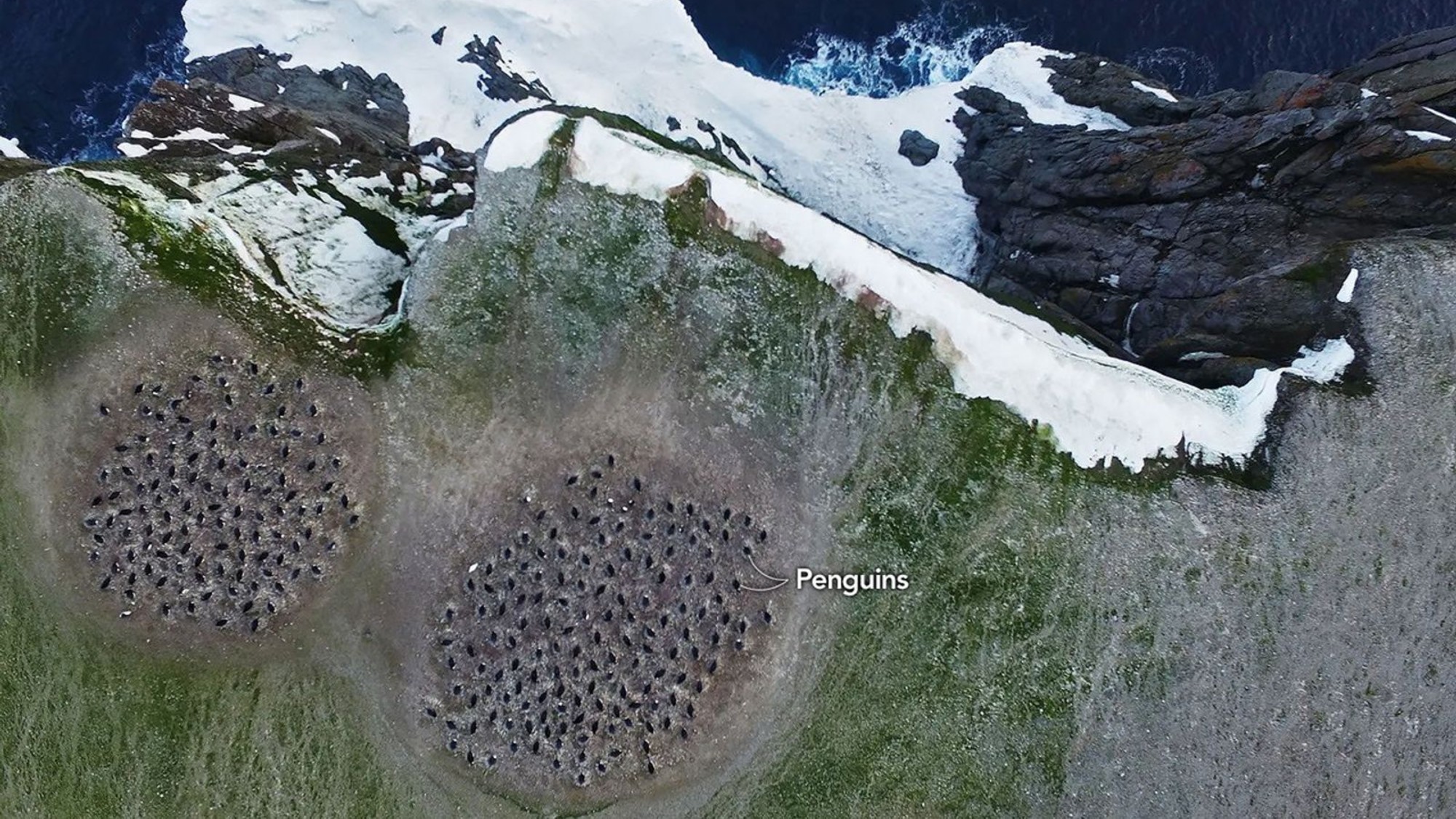
The bright pink color of the penguins' droppings stands out in satellite imagery, allowing researchers to monitor the birds' populations from space. But scientists wanted a closer look, and collected drone imagery as well, as seen in the image below.
It's pretty amazing that the diet of a specific population of birds can be monitored from 438 miles (705 kilometers) above Earth's surface. The imagery collected by Landsat-8 helped scientists locate where the penguin colonies might be, allowing them to find them in-person and collect guano samples. Those samples contained evidence of what the penguins were eating over time.
Researchers are using those satellite images and samples to track how the penguins' diet might be affected by changes in sea ice conditions, according to a NASA statement.
"Sea ice is such a hugely important factor in the Antarctic marine environment," said Clemson University biologist Casey Youngflesh who led a study comparing the penguins' diet and sea ice conditions. "The structure of the region's food web is changing in response."