❌

Reading view

Moths Can Smell With Their Wings, Researchers Say

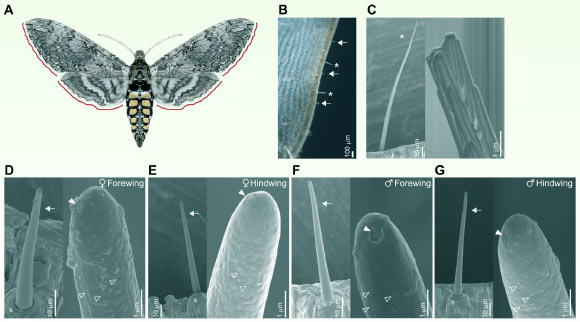
Reda Ismaieel et al. examined the olfactory capabilities of the wings of the tobacco hawkmoth (Manduca sexta). Image credit: Reda Ismaieel et al., doi: 10.1242/jeb.252047.

Scientists at the Max Planck Institute for Chemical Ecology have found that moth wings are equipped with odor-detecting receptors, suggesting the insects use their wings -- not just their antennae -- to sense chemical cues in the air while flying.

The post Moths Can Smell With Their Wings, Researchers Say appeared first on Sci.News: Breaking Science News.

  •  

Frequency-Dependent Deep Brain Stimulation in Motor Thalamus Alters Speech and Swallowing

A team of neuroscientists has reported that deep brain stimulation (DBS) targeted to the motor thalamus can reshape how the brain controls both speech and swallowing—and crucially, that the outcome depends on stimulation frequency. The findings, from experiments reported in Nature Communications (2026), suggest that “tuning” DBS parameters may offer more refined control over complex, real-world behaviors than previously possible.

The study centers on motor-thalamus DBS, a strategy explored for movement disorders and related symptoms. Instead of treating stimulation as a single fixed setting, the researchers tested multiple frequencies and monitored changes in speech-related signals and swallowing performance. This frequency sensitivity points to circuit-level dynamics where different stimulation rates engage distinct neural processing modes.

In practical terms, the results imply that higher or lower frequencies may preferentially drive or suppress specific pathways that contribute to oral motor timing. Speech production relies on precisely coordinated patterns of muscle activation, airflow, and sensory feedback; swallowing requires rapid, sequence-based control to protect the airway. Alterations in these timing networks could explain why DBS can influence both functions simultaneously.

The authors describe the effects as frequency-dependent, meaning that the same DBS target produces divergent outcomes when the pulse rate changes. Such divergence is consistent with the idea that stimulation can shift synaptic interactions, firing synchrony, and network oscillations within the thalamocortical loop. When the stimulation rhythm matches intrinsic circuit oscillations, the brain may stabilize certain motor programs; at other rates, it may destabilize them.

Importantly, the work frames DBS not only as a way to modulate symptoms, but as a potential tool for “behavioral steering.” If translated to clinical settings, clinicians could adjust DBS frequency to reduce speech side effects while maintaining or improving swallowing safety, rather than relying on a one-size-fits-all configuration.

The study also highlights an often-overlooked challenge: therapies optimized for movement may inadvertently affect speech and swallowing, both of which share overlapping motor control resources. Frequency tuning could become a lever for mitigating such trade-offs, improving quality of life for patients who already depend on DBS.

While the research is mechanistic, its implications are immediately viral-science-worthy: the possibility that a single hardware intervention can be dynamically optimized for nuanced functions. The next step will be confirming how these frequency effects scale across different individuals and disease states.

As DBS devices become more programmable, the field is moving toward personalized stimulation “dial settings.” This report adds to that momentum by providing evidence that the motor thalamus does not respond uniformly—frequency matters, and the brain appears to treat different pulse rates as different control regimes.

Subject of Research: Deep brain stimulation (DBS) targeted to the motor thalamus and its frequency-dependent effects on speech and swallowing.

Article Title: Frequency-dependent effects of motor thalamus deep brain stimulation on speech and swallowing.

Article References: Tang, L.W., Grigsby, E.M., Damiani, A. et al. Frequency-dependent effects of motor thalamus deep brain stimulation on speech and swallowing. Nat Commun (2026). https://doi.org/10.1038/s41467-026-75588-3

Image Credits: AI Generated

DOI: 10.1038/s41467-026-75588-3

Keywords:

  •  

The Truth About the “Brains Behind Burnham”

"Is Miatta Fahnbulleh the brains behind Burnham?" asks the New Statesman this week, even coining the term "Fahnbullehism". No, says Charlotte Gill: it's the brains behind Fahnbulleh that we need to be looking at.

The post The Truth About the “Brains Behind Burnham” appeared first on The Daily Sceptic.

  •  

New Feathered Dinosaur from China Had Peacock-Like Tail

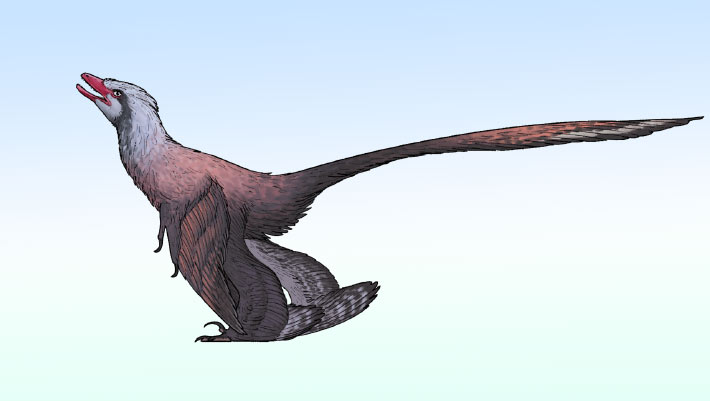
Changzhousaurus sinensis. Image credit: Connor Ashbridge / CC BY 4.0.

A new genus and species of four-winged pennaraptoran dinosaur from the Early Cretaceous of northern China is adding another twist to the story of how birds evolved from their dinosaur ancestors.

The post New Feathered Dinosaur from China Had Peacock-Like Tail appeared first on Sci.News: Breaking Science News.

  •  

Angela Rayner Calls for Benefits Hike in Bid to Join Burnham’s Team

Angela Rayner has been burnishing her Left-wing credentials this morning with a call for a hike in benefits as she joined other Labour big beasts in bidding to join Andy Burnham's top team.

The post Angela Rayner Calls for Benefits Hike in Bid to Join Burnham’s Team appeared first on The Daily Sceptic.

  •  

113-Million-Year-Old Pterosaur Fossil Reveals What Flying Reptiles Ate

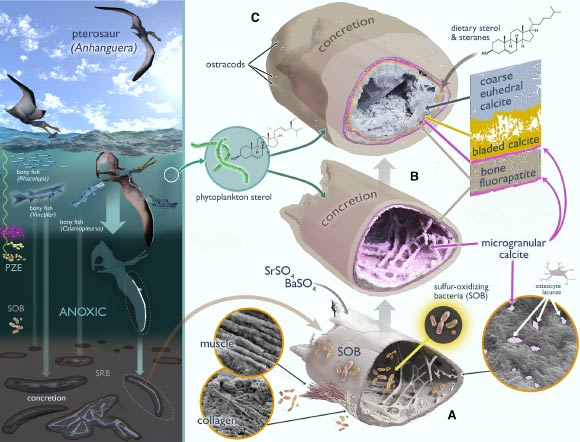
Grice et al. integrate organic geochemical analyses with high-resolution micro-mineral imaging of a three-dimensionally preserved Cretaceous pterosaur wing phalanx from Brazil to reveal steroid biomarkers and multi-stage mineralization pathways underlying its preservation. Image credit: Grice et al., doi: 10.1016/j.isci.2026.116199.

A 113-million-year-old pterosaur fossil from northeastern Brazil has yielded rare evidence of soft tissues, organic molecules and chemical traces of a diet heavy in fish and cephalopods such as squid or nautilus relatives.

The post 113-Million-Year-Old Pterosaur Fossil Reveals What Flying Reptiles Ate appeared first on Sci.News: Breaking Science News.

  •  

“You Have 72 Hours”: Ultimatum for Starmer as Burnham Plots Left-Wing “Path for Britain”

Keir Starmer has been given 72 hours to quit with "dignity" or face a full-blown coup following Andy Burnham's by-election landslide as the challenger plots a Left-wing "path for Britain".

The post “You Have 72 Hours”: Ultimatum for Starmer as Burnham Plots Left-Wing “Path for Britain” appeared first on The Daily Sceptic.

  •  

Rayner’s Workers’ Rights Reforms Trigger Surge in Legal Claims

Britain is facing a surge in people taking their employers to court, with claims up 55% year on year, following Angela Rayner’s sweeping workers' rights reforms.

The post Rayner’s Workers’ Rights Reforms Trigger Surge in Legal Claims appeared first on The Daily Sceptic.

  •  

Claude Fable 5 e Claude Mythos 5 são a última geração do modelo de IA da Anthropic mais poderoso do mercado

O Claude Fable 5 é a primeira versão pública da classe Mythos da Anthropic e supera todos os modelos anteriores em praticamente todos os benchmarks testados. Mas chegou ao mercado com salvaguardas tão conservadoras que perguntas básicas de biologia ativam o sistema de segurança.

The post Claude Fable 5 e Claude Mythos 5 são a última geração do modelo de IA da Anthropic mais poderoso do mercado appeared first on Tek Notícias.

  •  

The Left-Wing Plan to Impose a 90% Global Income Tax to ‘Save the Planet’

Celebrated Left-wing economist Thomas Piketty has unveiled a mad new plan to impose a global 90% income tax and 20% wealth tax to 'save the planet'. It proves global quasi-communism was always the real goal, says Ben Pile.

The post The Left-Wing Plan to Impose a 90% Global Income Tax to ‘Save the Planet’ appeared first on The Daily Sceptic.

  •  

Wes Streeting’s Attempt to Merge Reform With the SNP, Plaid Cymru and Sinn Fein into a Mega-Threat of “Nationalism” Falls Flat

In his recent resignation speech, Wes Streeting attempted to merge Reform, the SNP, Plaid Cymru and Sinn Fein into a mega-threat of "nationalism" to which he was the antidote. But it fell flat, says Dr Nicholas Tate.

The post Wes Streeting’s Attempt to Merge Reform With the SNP, Plaid Cymru and Sinn Fein into a Mega-Threat of “Nationalism” Falls Flat appeared first on The Daily Sceptic.

  •  

Snapdragon C é a nova aposta da Qualcomm para dinamizar os portáteis Windows na gama de entrada

Cristiano Amon, CEO da Qualcomm, subiu ao palco da Computex para apresentar a visão da marca para um mundo onde o agente de IA não está preso a um dispositivo. Trouxe consigo chips para todos os bolsos, desde portáteis de baixo custo à robótica.

The post Snapdragon C é a nova aposta da Qualcomm para dinamizar os portáteis Windows na gama de entrada appeared first on Tek Notícias.

  •  
❌