What sets Pastebot 3 apart is its addition of deep automation tools. Not only does the update add MCP support, making it an excellent tool to use with Claude or ChatGPT/Codex, but it includes a brand new CLI that you or an agent can use from Terminal or incorporate into scripts you build.
[…]
New filters have been added that allow you to transform clippings using text transformations and even shell scripts. Using the ability to script custom filters, I’ve begun adding a few of my own to Pastebot for things like adding and removing bullets from multiple lines of text.
I’ve long been aware of this app but hadn’t paid much attention because I’m happy using LaunchBar as my clipboard and snippet manager. LaunchBar has some transformations built-in, and I’ve built up a collection of my own scripts, but it’s appealing that Pastebot comes with so many out of the box.
From Pastebot’s main UI, you can select multiple items at once and right-click to add them to a Stack, or you can pick them one at a time in any order you’d like. As you select items, they’re numbered in the order you’ll paste them into a document using a keyboard shortcut. It’s an excellent feature for filling out forms or copying data from one spreadsheet to another.
There are also rule-based Smart Pastebins for automatic organization, like every link or image copied from Safari. Smart Pastebins can be filtered by clipping size, type, file extension, creation date, text, text length, and more. Multiple parameters can be combined for detailed filtering, and custom notes can be added to clippings to make them easy to find via search.
[…]
Tapbots says Pastebot 3 was built to work with Apple's Universal Clipboard feature, and when enabled and active, anything you copy on your iPhone is saved in Pastebot automatically.
Importantly, Pastebot 3 requires macOS 26 Tahoe or later and comes with a 14-day free trial. Users can buy the app directly from Tapbots for $39 or subscribe through the App Store for $2.99 per month or $24.99 per year.
[…]
The direct purchase includes one year of updates, with additional years available for $19 each. Users who stop paying for updates can continue using the latest version covered by their purchase. Pastebot 2 owners can also get a $12.99 upgrade discount by entering their existing license key at checkout.
They are not offering any upgrade path for MAS customers. The reason they stated was “upgrade pricing has always been our way of thanking people who bought directly from the site.”
I generally try to avoid complaining about App Store review, since I do think they have a really hard job to do. But I’m about 2 more PB3 rejections from just giving up.
A teleoperated centaur robot dubbed “Threehalves” could represent the future of manual work in some of our planet’s most dangerous environments, according to Satyress Robotics, the California startup behind the project. In disasters such as mudslides, wildfires, and rubble searches, the company says its robot can keep workers safe from on-site hazards.
The other side of the story is the robot’s creepy, almost demonic appearance, as conveyed on the provocative Satyress Robotics website, the imagery for which is so unusual that it almost gives the impression of being a parody—particularly in an age of breathless reporting on corporate claims, and sudden appearances of “viral” news stories.
Therefore, The Debrief decided to take a deeper look at this mechanical oddity that more closely resembles something out of Christopher Nolan’s The Odyssey than a project in development in a California robotics lab.
An Unsettling Robot
Threehalves isn’t exactly news; all of the available information on the robot was posted on the company website over a year ago, around the time of their only post on X. Yet it’s recently been discovered by internet outlets noting the creepy design of this robot that the company claims is here to help.
“It’s obviously quite over the top, but ultimately, this is at the extreme end of humanoid robotics in size and capability,” a company representative told The Debrief.
“People may be familiar with humanoid robots from TV/movies or product videos, but likely don’t understand just how powerful and heavy they are (especially ours, which is coming in at just under 7ft tall and 240 lbs currently),” the rep added. “Our thought is someone who didn’t know what it is should definitely stay away from it, and those that do know or are operating the machine should be reminded it’s quite dangerous.”
“If you look at something like a lathe or mill, they generally look intimidating, for good reason, even though they could be dressed up to look friendly and soft,” the rep concluded. “We’ll point out, though, that the ‘evil’ look is mostly from it being pitch black; with different colors or a wrap on it, it does not put off that vibe.”
Robot “Superpowers”
Part of Threehalves’ sales pitch is that it won’t replace jobs, but instead will merely transfer them to robotic operators using a joystick to guide Threehalves through manual work in dangerous environments. The website claims that this amounts to granting workers “superpowers,” allowing them to focus on honing their craft in new extreme situations. However, while the operator won’t have to directly get their hands dirty, Satyress Robotics told The Debrief that Threehalves is designed for line-of-sight, close-proximity operation.
“We don’t have any plans to develop much autonomy above what’s needed to keep the robot from damaging itself,” the Satyress Robotics representative said. “Our goal is to have experienced trade experts in control of the bots at all times. Forestry, for instance, is the deadliest job in the US – our goal is to save lives first and foremost, and we believe that is also enough economically to justify the cost of the bot without any autonomous productivity gain.”
Two of the robots can fit in a standard truck bed, allowing them to be easily transported to remote locations. Lacking hands, the robot can be fitted with a variety of unique attachments to hold various tools from chainsaws to drills. Of note, the robot is shown holding a gas-powered chainsaw. Exactly how it would manage to get the chainsaw started without an obvious way to pull the ripcord is unclear.
Safety First
With fears of a demonic Terminator immediately conjured up by Threehalves’ appearance, the company informs us that although “this robot is more dangerous than it looks,” the same is true of any humanoid robot, and this one comes equipped with a variety of safety features.
Ironically, one of these is the robot’s menacing horns, which significantly slow the robot down in moving through standard-size door frames, and can even be replaced with larger horns that make traversing such portals impossible.
“It’s another way to make it clear this isn’t a toy, [a] security guard, etc,” the Satyress Robotics representative said. “It’s built for one reason, for a teleoperator to do dangerous work or heavy lifting from a safe, in line of sight distance.”
“We are not looking at any use cases in commercial buildings, and certainly not residential,” they added.
The recommended methods to halt the robot may be as disconcerting as its appearance. Credit: Satyress Robotics
A Violent Stop
Additionally, air reservoirs in the chest cavity and on the robot’s back are designed to activate pin locks on all its joints, rendering the robot immobile if air pressure is lost. Imagery on the website suggests this can seemingly be accomplished by stabbing Threehalves with a knife or shooting it with a gun. Fortunately, a more pacifist option to halt the robot also exists: simply by hitting an e-stop button located on its stomach.
When pressed on why the company would design their robot to be susceptible to gunfire specifically, the representative didn’t seem to find this the least bit unusual.
“Nothing software wise/control wise, whether autonomous or teleoperated, can be guaranteed to never have any kind of control issue,” the Satyress Robotics representative said. “This gives a means to lock the brakes remotely without necessarily damaging the robot beyond repair.”
Robot Reality or Hoax?
With the unsettling design and suggestion that the robot may eventually have to be shot to stop it from injuring a human, one of this reporter’s main questions became: “Is this a joke?” The outlandish nature of the project reminds one of prankster Joey Skaggs’ tricks on the media, such as the time he convinced WNBC-TV in New York and United Press International that he had recently developed a cure-all derived from roach hormones, which he was injecting into his followers.
However, the Satyress Robotics representative confirmed that the company’s new quadrupedal working robot is no joke.
“It’s not a prank. Also, we’re building it with the goal of keeping workers safe, so we just want to make it clear we’re thinking of every edge case and looking for ways to solve them outside of software,” the representative explained. “We are quite a ways away from showing the robot in any kind of elegant motion, thus the static renders/photos.”
Given that the company hasn’t posted on social media in over a year and has no LinkedIn presence, it was unclear who was behind the operation and if it was still underway. According to the company, they will shortly be making a video to introduce themselves.
While one picture on the website appears to show a live test with a joystick, there are no videos of Threehalves in motion on the website, and our email conversation confirmed it is not yet a functional robot.
For now, the company tells The Debrief that they are currently working on component-level testing and any commercial version of the Threehalves is more than two years away.
Ryan Whalen covers science and technology for The Debrief. He holds an MA in History and a Master of Library and Information Science with a certificate in Data Science. He can be contacted at ryan@thedebrief.org, and follow him on Twitter @mdntwvlf.
Dois dias depois de Washington ter proibido a importação de novos modelos de robots humanoides e quadrúpedes, Pequim respondeu com uma declaração do Ministério do Comércio acusando os EUA de discriminação e prometendo contramedidas se a decisão não for revertida. O anúncio surge semanas antes de Trump receber Xi Jinping.
Quand un aspirateur robot perd 70 % de son prix, difficile de ne pas lever les yeux de son balai. Le Lefant M210 passe à 89,95 € chez Amazon, un tarif qui change la donne pour automatiser le ménage au quotidien.
Usuários do Threads em todo o mundo já podem enviar mensagens para a Meta AI por meio da área de mensagens diretas (direct messages, ou DMs) da rede social, segundo informações do Engadget.
Antes disso, já era possível interagir com o chatbot da empresa comandada por Mark Zuckerberg em certos mercados por meio de menções em posts, mas essa nova opção permite iniciar conversas mais privadas com a ferramenta.
Segundo a Meta, é possível compartilhar posts do Threads, imagens, links e vídeos com a Meta AI, bem como manter conversas duradouras e explorar tópicos de interesse do usuário. “A experiência de mensagens diretas (DMs) oferece às pessoas maior flexibilidade sobre como e onde interagem com a Meta AI”, afirmou a companhia em um comunicado.
Divulgação/Meta
O próprio sistema de DMs é uma adição relativamente recente ao Threads, que só foi ganhar esse recurso no ano passado. Com essa atualização, a rede social fica em paridade com as outras plataformas da Meta (Facebook, Instagram e WhatsApp), que já permitem o envio de mensagens privadas para a Meta AI há algum tempo.
A empresa disse ainda que pretende continuar testando a interação com a Meta AI em feeds públicos em mercados selecionados e que considera aumentar sua disponibilidade. Nos lugares nos quais essa função já pode ser acessada, basta incluir @meta.ai na sua postagem com o prompt. Para diminuir a frequência com que ela aparece no seu feed, selecione a opção “Não tenho interesse”.
A Tapbots revelou o Pastebot 3, uma nova versão do seu gerenciador de área de transferência para o macOS.
A empresa anunciou a nova versão no seu perfil do Mastodon, juntamente com um relato sobre questões pessoais que impactaram o trabalho da empresa recentemente. Ela ainda mencionou que trabalha em novidades para o Ivory e o Phoenix, seus clientes do Mastodon e do Bluesky, respectivamente.
Entre as funções presentes na nova versão, o site oficial do utilitário destaca recursos como o histórico da área de transferência, Pastebins customizados, um menu de colagem rápido para acesso instantâneo das funcionalidades do Pastebot, filtros avançados para aplicar a um determinado conteúdo copiado (antes de colar) e até mesmo a criação de stacks para copiar/colar conteúdos em lote.
Outros recursos (de maneira geral, presentes em versões anteriores) incluem o bloqueio de apps com conteúdos sensíveis (como credenciais ou senhas, impedindo que sejam capturados pelo Pastebot), sincronização com o iCloud, atalhos, uma espécie de “cola” dos seus comandos, bem como acesso à CLI e ao app Atalhos (Shortcuts) da Apple.
O Pastebot 3 ainda está em análise na Mac App Store, mas ele já pode ser baixado no site oficial da Tapbots. Ele possui um teste gratuito de 14 dias e pode ser adquirido tanto com uma licença vitalícia de US$40 (com suporte a um ano de atualizações) quanto com uma assinatura de US$3/mês ou US$25/ano.
Un robot virtual con curiosidad artificial aprende a entender el lenguaje en la mitad de tiempo que uno indiferente, y empieza a jugar y a equivocarse como un niño pequeño.
Samsung entre enfin sur le marché des lunettes intelligentes. Conçues avec Gentle Monster et Warby Parker, ses premières montures misent sur l’intelligence artificielle de Google et l’intégration à son écosystème pour tenter de rivaliser avec Meta.
Graças a essa versatilidade, o novo modo de voz pode fazer bem mais que apenas conversar. Além de poder ser usado em chats, ele também está integrado ao Work e ao Codex — o que significa que você pode usá-lo para coordenar e acompanhar tarefas, sem usar texto.
ChatGPT Voice is now in the desktop app.
Control your computer and direct multiple agents running in ChatGPT Work or Codex, using just your voice.
It's powered by GPT-Live, so it can speak, listen, and coordinate work in the app at the same time.
Para usar a novidade, é necessário abrir um novo chat ou uma nova tarefa vazia no app e selecionar a opção “Iniciar nova conversa por voz”. As conversas ou tarefas precisam necessariamente ser iniciadas nesse modo — caso contrário, apenas o ditado por voz estará disponível.
O ChatGPT Voice oferece suporte a uma alternância natural entre as falas. Você pode interromper o ChatGPT durante uma resposta, fazer uma pergunta complementar ou mudar de direção. Se o ChatGPT começar a executar uma tarefa, continue falando para verificar o progresso ou orientar o trabalho.
Além disso, a OpenAI destaca que é possível iniciar conversas separadas para conversas mais longas, enviar ao app uma screenshot para apresentar o contexto do que está na tela, bem como usar o recurso pelo Remote do iOS com o iPhone emparelhado ao computador.
O ChatGPT Voice no desktop está sendo disponibilizado gradualmente para os planos Plus, Pro, Business, Edu e Enterprise. Nos dois últimos, há um período inicial de duas semanas com acesso antecipado antes de o recurso ser ativado por padrão.
É possível baixar o novo app do ChatGPT para macOS nessa página.
A Apple estaria testando um assistente de inteligência artificial para o aplicativo Apple Store — aparentemente nos mesmos moldes do recurso que a empresa tem testado desde o ano passado no app Suporte.
Na descrição do assistente, a Apple também destaca que ele coletará e armazenará dados para personalizar a experiência do chat e possivelmente otimizar o assistente — inclusive compartilhando o chat com parceiros.
Como observado pelo MacRumors, isso pode indicar que a Apple usará um modelo de IA de terceiros para alimentar esse assistente.
Eis a descrição da novidade:
Caso o assistente virtual de compras do app Apple Store esteja disponível, a Apple coletará e armazenará as informações da sua conta, identificadores do dispositivo, informações da operadora e do chat, e, se habilitados, dados da localização para personalizar a experiência do chat, fornecer respostas relevantes e, caso opte, otimizar o assistente virtual de compras. Antes de compartilhar o chat com nossos parceiros, a Apple remove os identificadores pessoais do chat. Nossos parceiros usam tais informações somente para ajudar a Apple a fornecer respostas conversacionais. A Apple salvará as transcrições para nossa análise comercial, disponibilizando-as assim que você retornar ao app Apple Store, e, caso opte, para otimizar o assistente virtual de compras. É possível controlar se o uso que você faz do assistente virtual de compras será aproveitado para oferecer uma experiência melhor, basta acessar Conta » Configurações e selecionar “Otimizações de Chat” no app Apple Store.
Detalhes sobre o funcionamento do recurso em si ainda não foram divulgados pela Apple.
"Apple co-founder Steve Wozniak's Woz Ed foundation is partnering with Realbotix, best known for their RealDoll-branded artificial companions, to deploy AI-powered robotic tutors in classrooms," writes Slashdot reader Hentes. "The doll will serve as a sort of artificial teaching assistant, helping students who get stuck or generating lessons. Students will be assigned an ID code, allowing the robot to provide personalized mentoring." NYS Focus reports: "This deployment in a working school district represents a landmark moment for both AI and humanoid robotics," said Andrew Kiguel, CEO of Realbotix, which is currently building the robot. "[Salamanca City Central School District in Western New York] marks the beginning of a new era where humanoid robots and intelligent AI assistants become standard tools in STEM education."
The female robot, named Sally, will have a "lifelike appearance" with silicone skin and long brown hair, Kiguel said in an interview with New York Focus. It will be stationary in a seated position but have a wide range of upper-body movements and facial expressions. [...]
Salamanca plans to introduce the robot and avatar in its high school AI and robotics courses, which use curriculum developed by Apple co-founder Steve Wozniak to prepare students for high-demand tech jobs. The district plans to expand it to high school students in other classes if the pilot is successful. Realbotix's classroom robot has drawn scrutiny because the company is connected to RealDoll, the longtime maker of hyperrealistic sex dolls and sex robots. Realbotix acquired RealDoll's parent company in 2024 but says the education-focused operation has separate employees, payroll, facilities, and technology, with plans to formally separate the businesses at the ownership level.
The "companion robots" are different from sex robots and intended to address what it's described as a "loneliness epidemic." Kiguel has previously said the company's goal is to produce robots and AI that are "indistinguishable from humans."
Le robot Neo de la société 1X revient avec une promesse déroutante : des mains presque humaines, capables de bouger à une vitesse troublante et de manipuler notre environnement avec une précision inédite. Est-ce trop beau pour être vrai ?
Les soldes battent leur plein chez Cdiscount, avec de nombreux bons plans à la clé. Parmi eux, le robot aspirateur laveur Proscenic Q20 Plus profite d'une offre intéressante pour automatiser le nettoyage de vos sols et alléger votre quotidien.
Engineers have developed a new robot that can swim underwater, then rise to the surface and take flight, in an aerial-aquatic feat that mimics some of nature’s most formidable fliers and swimmers.
Developed by researchers at the Massachusetts Institute of Technology (MIT) and the Swiss Federal Institute of Technology Lausanne (EPFL), the new robot’s capabilities could help launch a new generation of aerial-aquatic exploration vehicles.
Dubbed the “Flapping-Wing Aerial-Aquatic Vehicle” (FAAV), this lightweight robotic platform weighs less than 300 grams and can transition seamlessly between water and air with its very flexible flapping wings. Now, the team’s findings, published in the journal Science, could help scientists better understand how diving birds, which include puffins, petrels, loons, and gulls, are so adept at navigating two vastly different environments.
Such capabilities, the team says, could also pave the way toward advanced drones in the coming years that could transform ocean research.
Inspired by Diving Birds
Departing from conventional modern designs employed for aircraft or underwater vehicles, the team based their design on diving birds, which evolved to fly over water, then plunge beneath the waves to hunt for food, before surfacing and resuming flight.
MIT’s new aerial aquatic robot seen launching from water into the air (Image Credit: Raphael Zufferey/MIT)
One problem when it comes to replicating these abilities in robots involves the density of water, which is around 1,000 times denser than air. Because of this, the engineering team had to carefully balance the flexibility of the robotic wings in their design, along with flapping frequency, tail angle, and other factors that allowed the robot to move efficiently through both environments without requiring propellers or separate propulsion systems.
Finding the Sweet Spot for Transmedium Travel
Experiments were undertaken by the team in the lab and in Switzerland’s Lake Geneva, and helped the team determine that the robot achieved best performance with medium-sized wings that flap at approximately five times per second. Under such conditions, the robot was able to swim one meter per second, then by pitching upward at a 70-degree angle, it could break through the surface, and continue this same movement to propel itself through the air.
Although the robot still has some limitations compared to the avian examples that inspired it, interestingly, it does appear to have one advantage: unlike diving birds, which paddle using their feet to achieve aquatic launches into the air, the new robot has no such requirement, and can transition from water to air relying only on its wings and adjustable tail.
Future Drones with “Aerial-Aquatic” Abilities
In the future, drones equipped with such capabilities could be leveraged to monitor marine ecosystems in a variety of ways. The team also says it could help to observe environmental concerns, such as water near glaciers or offshore infrastructure, or even collect data from hazardous locations that are either too difficult or simply too costly for ships to reach.
“Our dream vision is for oceanographers, marine biologists, and members of coastal communities to launch this robot from a boat, or from shore, and it would fly close to the area of interest, such as an iceberg or a port facility, or over a pod of whales,” according to Raphael Zufferey, assistant professor of mechanical engineering at MIT.
“It would dive into the water to take a measurement or collect a sample, and fly back to deliver the data at a fraction of the cost of traditional methods. Then it could go back out to dive for more,” Zufferey recently told MIT News.
Drawing from movements in nature influenced by evolution, the researchers hope their bird-inspired design may eventually help scientists by introducing cost-effective, but formidable new tools to help obtain information from some of the most challenging environments, all with help from robots that can do what only nature’s diving birds could once achieve.
The achievement is detailed in a new paper, “Leaping out of the water: aerial-aquatic locomotion with flapping wings,” which appeared in the journal Science.
Micah Hanks is the Editor-in-Chief and Co-Founder of The Debrief. A longtime reporter on science, defense, and technology with a focus on space and astronomy, he can be reached atmicah@thedebrief.org. Follow him on X @MicahHanks, and at micahhanks.com.
This effect, known as structural color, is the same reason butterfly wings look iridescent without pigment. Pressure causes microscopic structures within the material to shift, altering how light reflects and creating a real-time visual indicator of force.
Touch Without the Computation
Most vision-based tactile sensors can map contact and force in detail, but only at the cost of heavy computation that slows them down. Simpler systems are faster, but sacrifice detail. The new material developed by Sasso’s team sidesteps this problem by building the sensing function into the material itself. With just a standard USB camera, researchers can track color changes on the surface and immediately infer pressure, strain, and contact shape without complex data reconstruction.
“You won’t guess how much information is generated when your finger presses a light switch. A human hand contains more than 10,000 mechanoreceptors to do the job, yet touch sensing remains one of the major challenges in robotics,” Sasso said. “We were happy to capture the finger ridges, as no existing technology can reproduce such sensor density at [a] comparable scale and simplicity. The key idea behind this project was to think outside the box: instead of embedding dense and overengineered sensor arrays, sensing is moved into the material itself, where mechanical cues are directly transformed into colour fields and captured using a simple low-cost USB camera.”
Professor James Busfield, one of the paper’s co-authors, described the advantage more simply: “What is particularly powerful is that the information is already in the light signal. You are no longer reconstructing touch – you are observing it directly.”
From Precision Manufacturing to the Operating Room
Reducing the computational demands of touch sensing opens up new possibilities. A robotic gripper made with this material could handle tiny parts more gently, since changes in force are immediately detectable. Prosthetic limbs equipped with similar sensors could also provide users with more detailed tactile feedback.
The researchers also see potential applications in surgery, where detecting subtle pressure differences could help clinicians interpret tissue properties.
A Decade of Groundwork Behind One Material
Professor Federico Carpi from the University of Florence and Professor James Busfield from Queen Mary worked together on this project, merging years of separate work on stretchable sensors and polymer behavior into one material system. This allowed the team to use a mechanochromic material as the sensor itself, not just as a base for electronics.
Many approaches to robotic touch have relied on increasingly complex sensor arrays, wiring, and computing systems. Rather than adding more electronics, Sasso’s team’s approach allows the material itself to encode touch into visible color. It remains unclear whether this color-based method can be scaled for use in commercial robotic hands, but this work suggests that the future of robotic touch might rely as much on smart materials as on advanced electronics.
Austin Burgess is a writer and researcher with a background in sales, marketing, and data analytics. He holds an MBA, a Bachelor of Science in Business Administration, and a data analytics certification. His work focuses on breaking scientific developments, with an emphasis on emerging biology, cognitive neuroscience, and archaeological discoveries.
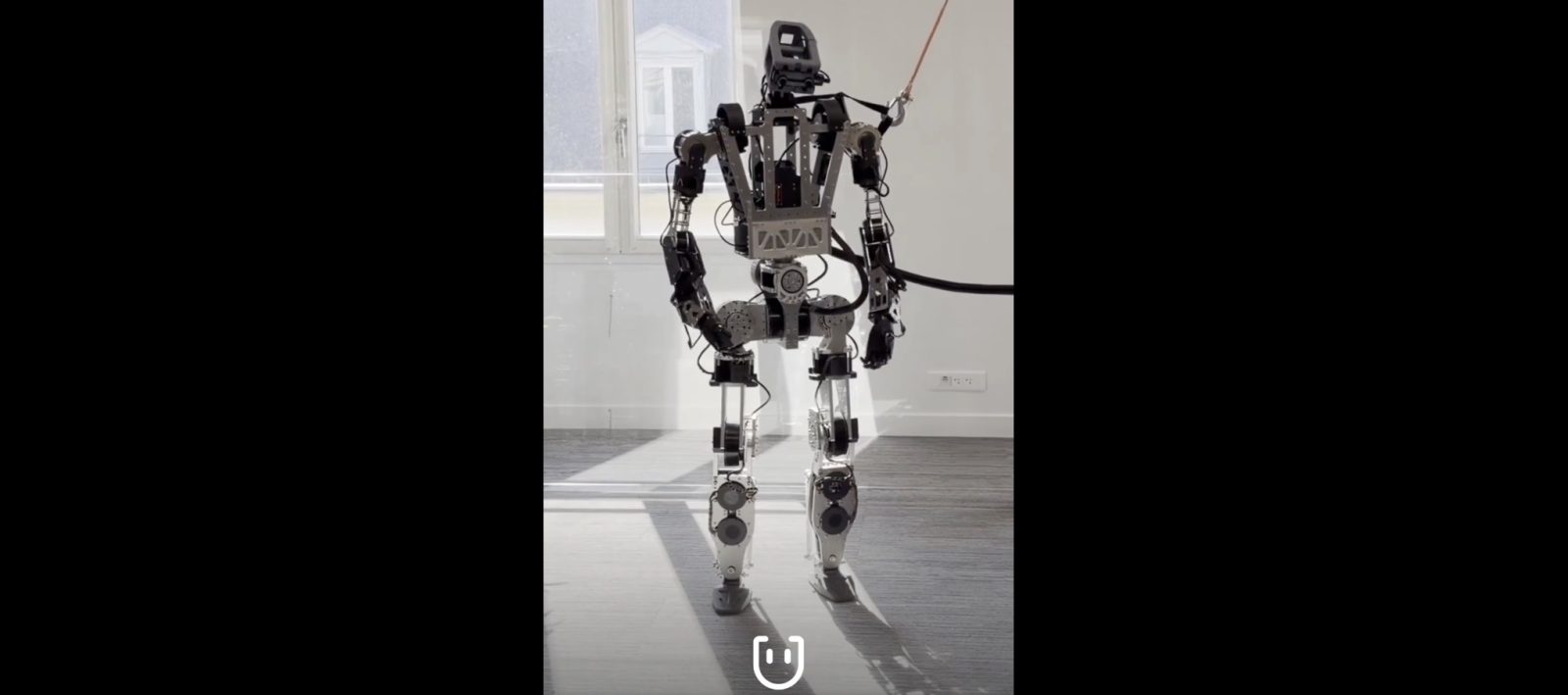
A scientist who worked on Tesla’s Optimus humanoid robot is now building a rival of his own — in Europe, not Silicon Valley.
Rémi Cadène, co-founder and CEO of Paris-based startup UMA, unveiled plans for a lightweight humanoid robot called Northstar and says the company is already talking to 50 potential customers.
That visitor—a robotic rover named Perseverance—has been conducting investigations on Mars since February 18, 2021, and the new aerial images reveal its current location in an area that mission specialists have dubbed “Arbot.”
While Perseverance’s latest appearance reveals little more than a greenish spec on the planet’s rust-colored surface, also visible in the new images are the long path its formidable tires have left in the Martian soil as the robotic explorer has trekked west of its initial landing site.
The new images, captured on June 13, 2026, were taken just one day before Perseverance broke the previous distance record held by a robotic explorer on Mars: NASA’s Opportunity rover.
However, Perseverance completed this phase of its journey in record time compared to its predecessor, which took more than 11 years to traverse a similar distance. Perseverance, by contrast, covered the same distance in less than half that time, with just five years and four months of travel now behind it.
In the image above, NASA’s Perseverance Rover appears in the center of the image as a small, greyish-green reflective spot. Also visible are the impressions left by its all-terrain tires, revealing the robotic rover’s long path over the last several years of Martian exploration (Image Credit: Credits: NASA/JPL-Caltech/University of Arizona)
The images were made possible by the MROs’ High-Resolution Imaging Science Experiment (HiRISE) camera, which also captured surface features in the Arbot area that include ridges and windswept areas along Mars’ rugged exterior.
Built and operated by the University of Arizona, HiRISE captures images with resolutions as fine as about 25 centimeters (10 inches) per pixel, allowing researchers to distinguish features roughly the size of a kitchen table from orbit. The camera has returned hundreds of thousands of detailed images since the MRO arrived at Mars two decades ago, contributing to a growing data set that has transformed scientists’ understanding of the Red Planet.
Documenting everything from active dust avalanches and shifting dunes to fresh impact craters, the unprecedented resolution its imagery provides has made HiRISE one of the most powerful planetary imaging instruments ever deployed.
Last year, the MRO’s HiRISE camera also successfully captured images of the interstellar comet 3I/ATLAS as it made its way past Mars during its trip through our Solar System. Although the HiRISE images weren’t the clearest images of the interstellar visitor obtained during its visit, they did help demonstrate just how formidable NASA’s MRO and its suite of instruments are.
Micah Hanks is the Editor-in-Chief and Co-Founder of The Debrief. A longtime reporter on science, defense, and technology with a focus on space and astronomy, he can be reached atmicah@thedebrief.org. Follow him on X @MicahHanks, and at micahhanks.com.
A Nvidia continua a apostar no ecossistema de robótica e apresentou o primeiro sistema de segurança que prepara o ambiente para os robots agirem em ambientes dinâmicos, ao lado de trabalhadores humanos.

 Login