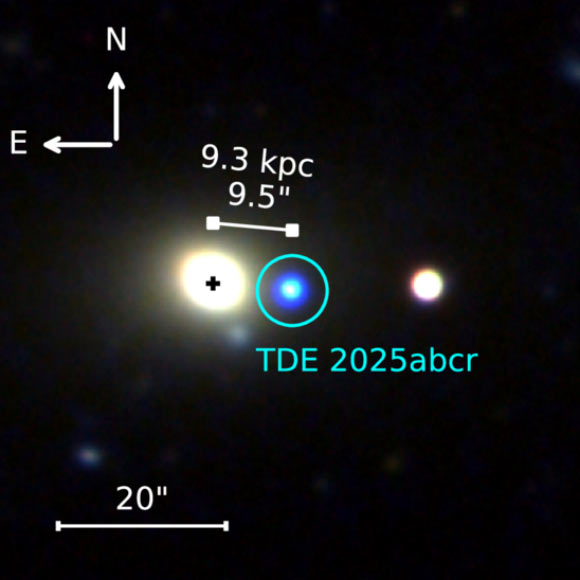
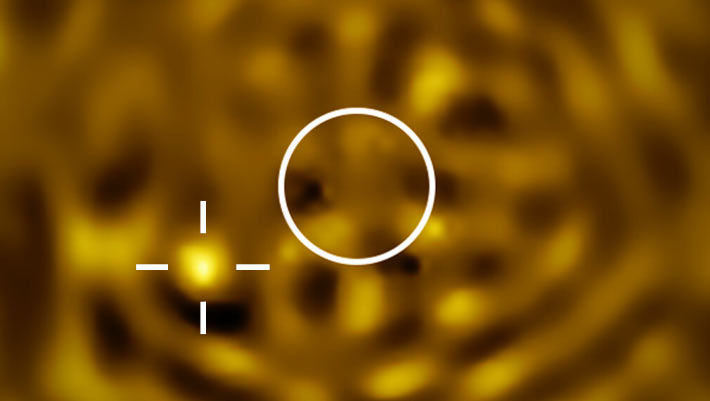
Astronomers have discovered a dormant supermassive black hole 30,000 light-years from the center of WISEA J014656.04-152214.7 -- a massive galaxy located about 750 million light-years away in the constellation of Cetus -- after it briefly lit up by tearing apart a star.
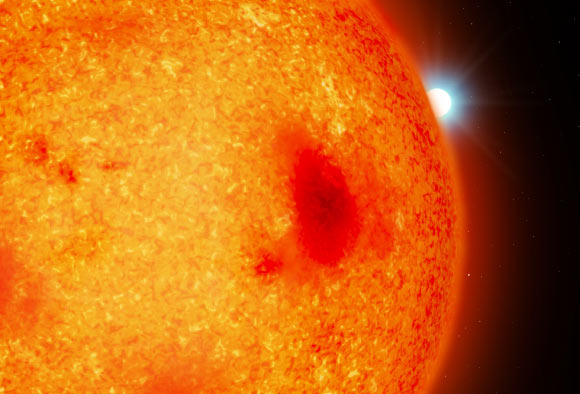
After a century of speculation, astronomers using ESO’s Very Large Telescope (VLT) have captured the clearest evidence yet that the red supergiant Betelgeuse is orbited by a faint companion star.
A Amazon solicitou à Comissão Federal de Comunicações (Federal Communications Commission, ou FCC) dos Estados Unidos uma licença para operar uma nova rede de 5.105 satélites destinada a fornecer serviços para dispositivos celulares, com planos de iniciar os lançamentos em 2028.
À época da notícia, inclusive, a Apple e a Amazon firmaram um acordo pelo qual a Globalstar operará em conjunto com a rede de satélites Leo 1Low Earth orbit, ou órbita terrestre baixa. da Amazon; de modo que ambas as redes sustentarão futuros serviços via satélite para a Maçã.
A Amazon Leo já anunciou um acordo com a Apple para viabilizar serviços via satélite para modelos compatíveis de iPhone e Apple Watch — incluindo SOS de Emergência via satélite, Mensagens, Buscar e Assistência Rodoviária via satélite — e para colaborar com a Apple em futuros serviços via satélite utilizando a rede expandida.
A Amazon planeja implantar cinco camadas orbitais projetadas para cobrir diferentes regiões do planeta. Três delas atenderão áreas densamente povoadas, enquanto as outras estenderão o serviço às regiões polares.
The small exoplanets of our Sun’s second-nearest neighbor, Barnard’s Star, are inhospitable wastelands, British astronomers say.
Located six light-years from Earth, Barnard’s Star is separated from our closest neighbor, Alpha Centauri, by about 66° in our sky. Now, University of Cambridge researchers have revealed their findings on this exosolar system in a recent paper published in the Monthly Notices of the Royal Astronomical Society.
After careful analysis, the astronomers announced that the exoplanets are unlike any in our solar system, presenting a brutal and barren environment.
Barnard’s Star Exoplanets
Scientists only discovered these four small planets orbiting Barnard’s Star in 2025. Unlike anything in our solar system, these orbital bodies fit into a size range larger than Mars, but smaller than Earth or Venus.
Like a peeled onion, these smaller planets are rich in a mineral only found deep below the Earth’s surface. Chemical analysis revealed large amounts of the mineral periclase on the surface of these planets, something typically only found hundreds of kilometers deep on our planet.
“Barnard’s Star has an enormous amount of the element magnesium compared to other stars, so its planets are likely to be rich in magnesium too,” said lead author Xander Byrne from Cambridge’s Institute of Astronomy. “On Earth, that magnesium goes into making minerals called olivines, which are really important for storing water within the planet.”
A Lack of Water and Atmosphere
Unfortunately for those looking for extraterrestrial life, magnesium serves a different purpose on these exoplanets. Instead of water-storing olivine, it produces the abundant periclase, which is a poor store of water.
Even worse, these inhospitable exoplanets likely no longer have an atmosphere. According to the University of Cambridge team, these ten-billion-year-old planets probably only managed to hold an atmosphere for two billion years at most.
“These planets were always going to be hostile, because they’re really close to their star,” said Byrne. “Even the outermost planet orbits ten times closer than Mercury orbits the Sun. When you’re that close to your star, and have such little gravity, your atmosphere just gets blown off.”
In addition to the lack of atmosphere, the planets’ proximity to Barnard’s Star leaves them tidally locked, like our Moon, with one side always facing toward the star.
Exoplanet Stability
However, there is one positive element to these small planets. Typically, such close-orbiting systems are highly unstable, with the planets shooting out from the system, falling into their host star, or catastrophically colliding. Yet in this case, the system is as ordered as a piece of music.
The three inner planets of the exosolar system have years in a 9:12:16 ratio, producing two of what is known as a “perfect fourth” in music. This musical harmony is known as an orbital resonance, with the same type of effect stabilizing Jupiter’s moons in their orbits around that planet.
While our ability to view Barnard’s Star from Earth may be limited, the European Space Agency’s upcoming Plato mission may allow astronomers to discover ever smaller worlds orbiting in the nearby exosolar system.
“Larger planets are much easier to detect than small ones, so we know about very few sub-Earth planets like the ones in this system,” said Byrne. “But the sensitivity of these new missions will help to reduce this bias, allowing us to discover more and more planets that are small and rocky, like Earth.”
The true significance of the research may lie in the value of a null result. While these planets are bleakly hostile to life, observing this exosolar system’s composition can aid future astronomers in narrowing down the search for extraterrestrial life.
Ryan Whalen covers science and technology for The Debrief. He holds an MA in History and a Master of Library and Information Science with a certificate in Data Science. He can be contacted at ryan@thedebrief.org, and follow him on Twitter @mdntwvlf.
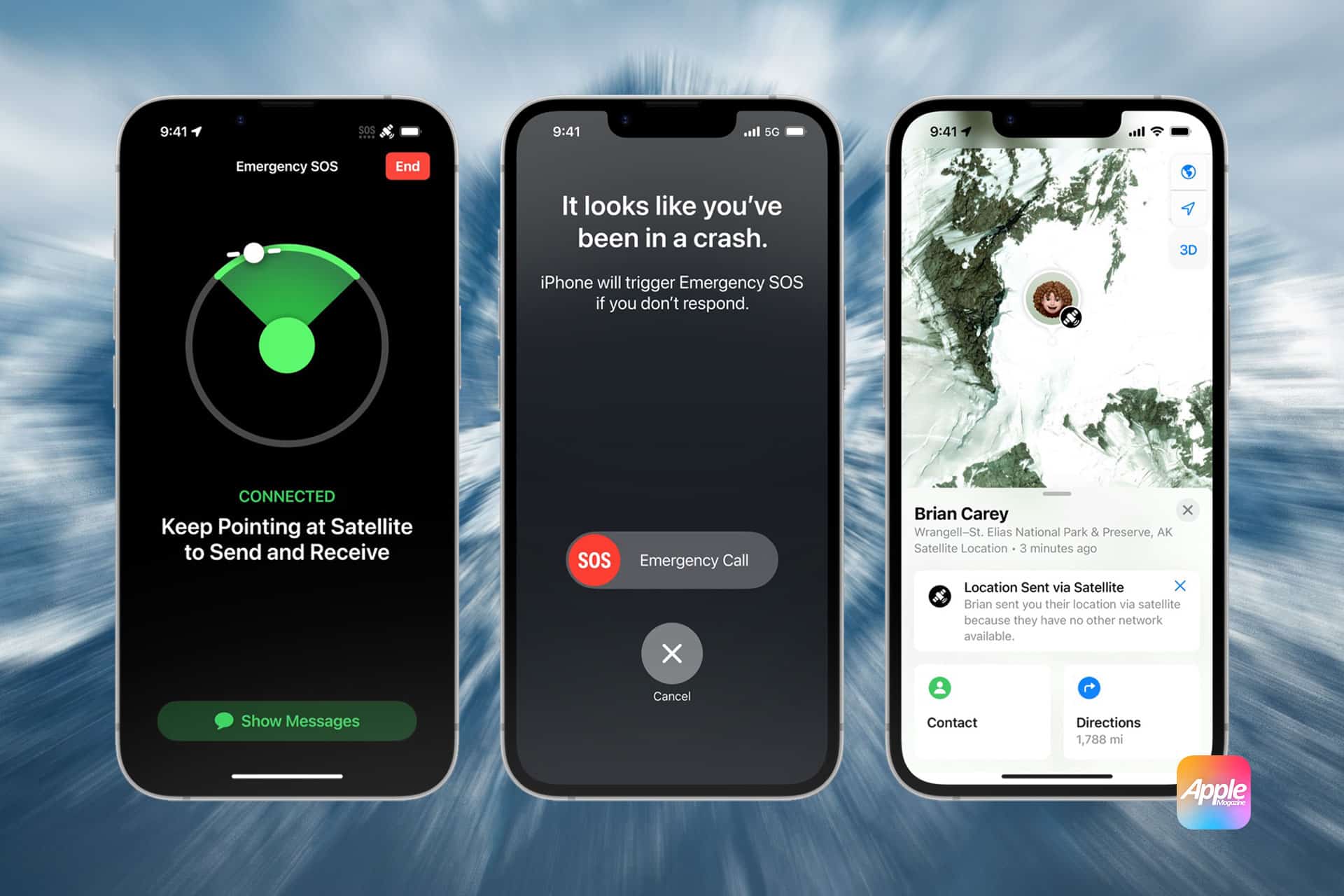
Emergency SOS via satellite is now available in Andorra and Iceland, allowing supported iPhone and Apple Watch users to contact emergency services when cellular and Wi-Fi coverage are unavailable.
Apple added both countries to an updated support document, expanding the feature to 20 supported markets. Users in Andorra and Iceland can call or text 112 before choosing the satellite option when an ordinary emergency connection cannot be completed.
The expansion covers every iPhone 14 or later model running iOS 26.4 or newer. Apple Watch access requires Apple Watch Ultra 3 with watchOS 26.4 or later.
Emergency SOS does not turn the devices into conventional satellite phones. The system is designed for short emergency exchanges in locations where normal communication networks cannot be reached. Users must remain outdoors with a sufficiently clear view of the sky and follow onscreen directions while the device establishes and maintains a connection.
Emergency SOS via Satellite Reaches 20 Markets
Emergency SOS via satellite first launched in the United States and Canada in November 2022 with the iPhone 14 lineup. Apple gradually added European countries, Australia, New Zealand, Japan and Mexico as regulatory approval and emergency-service support became available.
Andorra and Iceland now join Australia, Austria, Belgium, Canada, France, Germany, Ireland, Italy, Japan, Luxembourg, Mexico, the Netherlands, New Zealand, Portugal, Spain, Switzerland, the United Kingdom and the United States.
The addition is particularly relevant for travelers and residents exploring mountainous or remote terrain.
Andorra contains extensive hiking, cycling and skiing areas across the Pyrenees, where cellular coverage can become unreliable beyond populated valleys and resorts. Iceland presents a different but equally demanding environment, with large rural areas, volcanic landscapes, glaciers and routes far from conventional infrastructure.
Satellite availability does not guarantee a connection everywhere. Mountains, deep valleys, dense tree cover and tall structures can obstruct the line between the device and a passing satellite. Apple also warns that satellite connectivity may not function in locations above 62 degrees latitude, which can affect some northern regions.
Most of Iceland lies below that threshold, although environmental conditions and the position of surrounding terrain can still influence performance.
International travelers can generally use Emergency SOS while visiting a supported country, even when the feature is not offered in their home market. Exceptions apply to devices purchased in certain countries or regions where Apple satellite connectivity is restricted.
iPhone 14 and Newer Models Gain the Expansion
Every version of iPhone 14 and later contains the hardware required for Apple satellite features. Users in Andorra and Iceland must install iOS 26.4 or a newer release before relying on Emergency SOS.
The system appears only when the iPhone cannot reach cellular service or Wi-Fi. Apple recommends trying the local emergency number first because another carrier network may still be able to complete the call even when the user own provider shows no coverage.
When the call fails, the iPhone offers Emergency Text via Satellite. The user answers a short series of questions describing the emergency, including the type of assistance needed and whether anyone is injured.
The compressed questionnaire reduces the amount of information that must be transmitted through the limited-bandwidth satellite connection. Once connected, the iPhone sends the responses and location to an emergency dispatcher or an Apple-supported relay center capable of contacting local responders.
In Andorra and Iceland, the applicable emergency number is 112.
Users can also choose to notify emergency contacts. When Medical ID and emergency contacts have been configured in the Health app, selected details can be shared during the incident.
The conversation does not operate at the speed of an ordinary text exchange. Under ideal conditions, a message may require approximately 30 seconds to send. Light or moderate foliage can extend that delay beyond one minute, while heavier obstructions may prevent a connection entirely.
The iPhone displays guidance showing which direction to turn or move as satellites pass overhead. The phone can remain connected while the screen is locked, but it should not be placed inside a pocket or backpack during the exchange.
Apple Watch Ultra 3 Works Without an iPhone Nearby
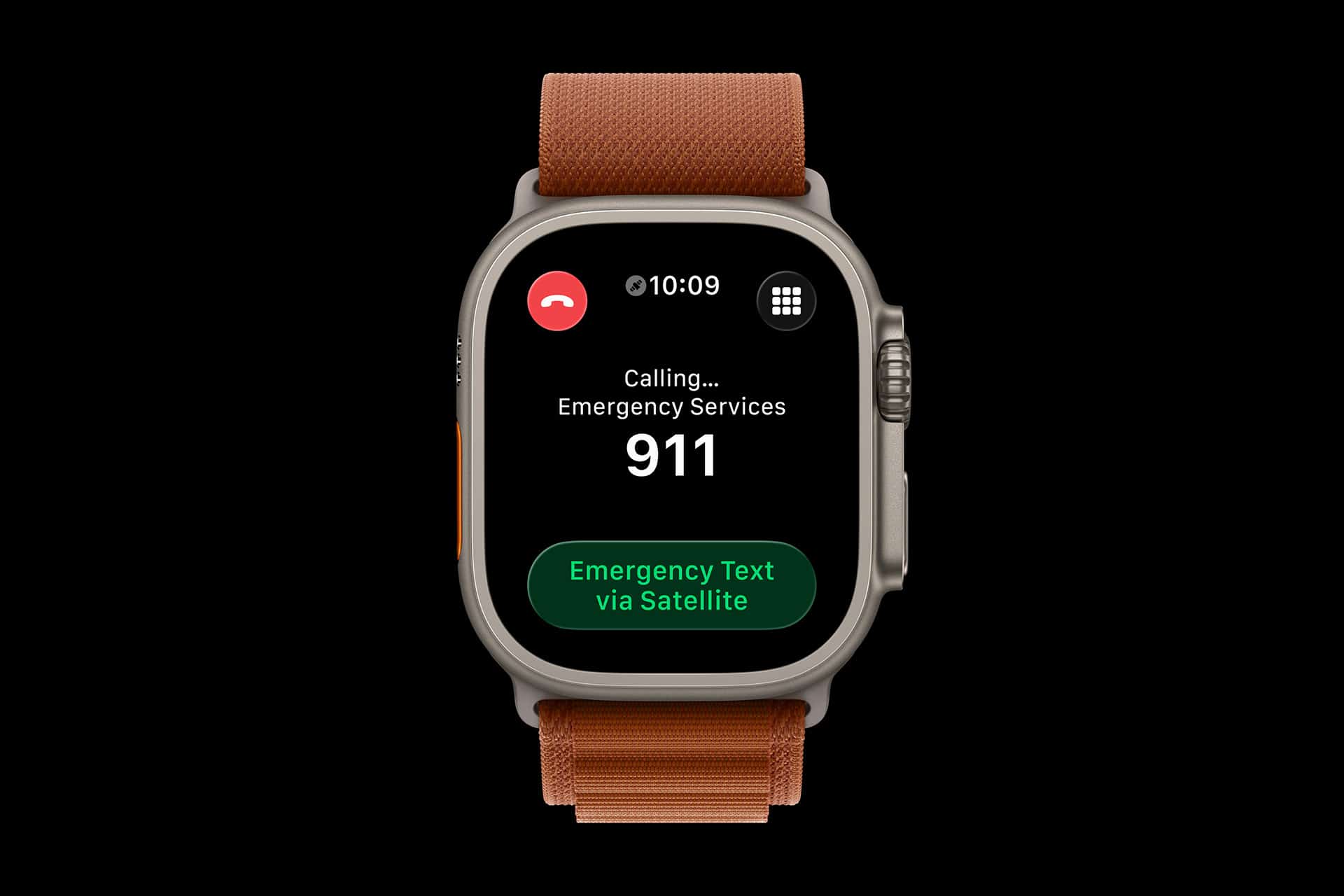
Apple Watch Ultra 3 brings similar protection directly to the wrist, allowing users to contact emergency services even when an iPhone is not available.
Emergency SOS via satellite on Apple Watch Ultra 3 does not require an active carrier plan. Apple includes the service at no additional charge for two years following activation of the watch.
When cellular and Wi-Fi connections are unavailable, users can attempt an emergency call or open Messages and text 112. If the message cannot be delivered through an ordinary network, the watch presents the satellite emergency option.
Apple Watch Ultra 3 also guides the wearer toward the satellite connection. The device can remain in its normal position on the wrist rather than being held above the head, although the user may be instructed to turn or move away from an obstruction.
A wet watch may have more difficulty maintaining satellite communication, an important limitation for swimmers, boaters and users caught in severe weather.
The watch can send the emergency questionnaire, location, elevation, Medical ID information and battery level. Emergency contacts can also receive information about the incident when the user has enabled that option beforehand.
Crash Detection and Fall Detection add another layer. If iPhone 14 or later or Apple Watch Ultra 3 detects a severe crash or hard fall and the user remains unresponsive, the emergency notification may be transmitted over satellite when cellular and Wi-Fi networks are unavailable.
Image Credit: Apple Inc.
Preparation Matters Before Going Off-Grid
Apple provides a connection demonstration that allows users to practice finding a satellite without contacting emergency services.
On iPhone, the demonstration can be opened through the Satellite controls or the Emergency SOS section in Settings. Apple Watch Ultra 3 users can add the Satellite control to Control Center or place a satellite complication on the watch face.
Testing the process before a remote trip helps users understand how quickly conditions can affect the connection. A clear field may establish contact rapidly, while a canyon or heavily wooded trail may require movement toward more open terrain.
Medical ID and emergency contacts should also be completed before leaving network coverage:
Health > Profile > Medical ID
A Medical ID can provide responders with information such as allergies, medical conditions, medications and emergency contacts. Users remain responsible for deciding which personal details they want stored and shared.
Emergency SOS via satellite is included free for two years after activating an iPhone 14 or newer model. Apple provides the same two-year period with Apple Watch Ultra 3, although the company has not established the long-term price that may apply after promotional access ends.
The arrival in Andorra and Iceland gives hikers, drivers, skiers and other travelers another route to help, but the safest preparation still includes checking weather conditions, sharing an itinerary and carrying adequate power before moving beyond ordinary network coverage.
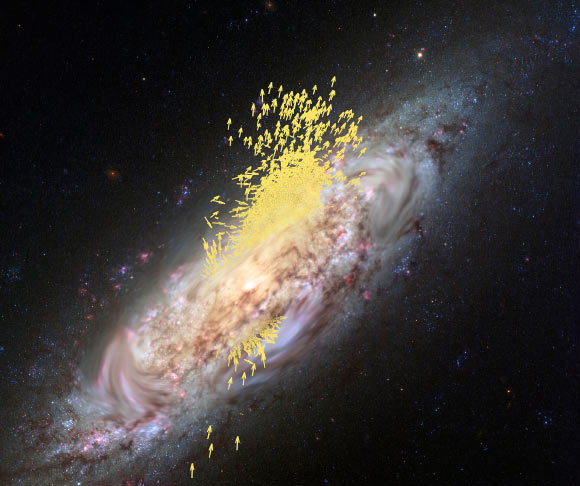
A head-on collision with another galaxy billions of years ago may have dramatically reoriented the Milky Way’s disk, according to new supercomputer simulations that reveal how violent mergers can leave spiral galaxies looking surprisingly normal today.
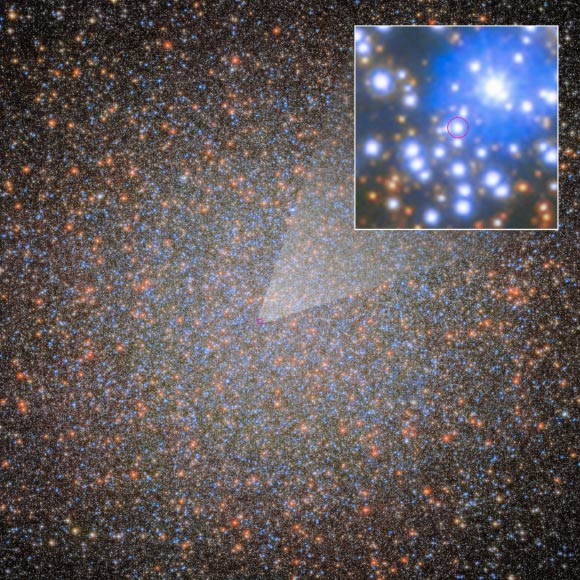
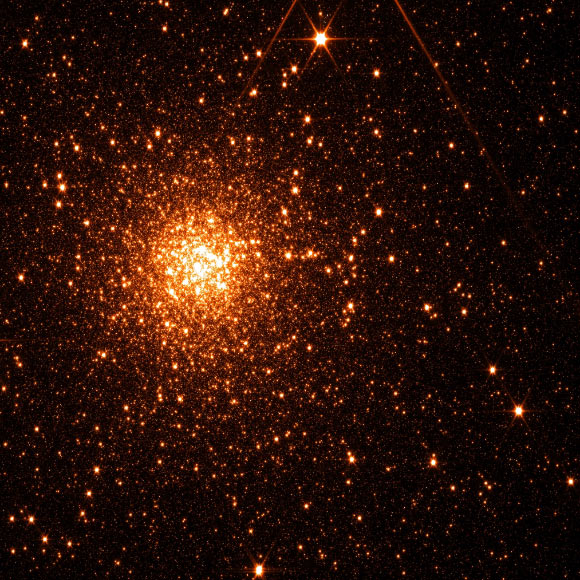
After decades of searching, astronomers have pinpointed the first of an estimated 10,000 stellar-mass black holes thought to lurk in Omega Centauri, the most massive stellar system in the Milky Way found so far, with a stellar mass of 3.6 million solar masses.
Ainda que não seja perfeita, a Siri pode ajudá-lo em diversas coisas — como ativar alarmes, conferir a previsão do tempo ou abrir um aplicativo.
Em se tratando do Apple Watch, a assistente pessoal da Apple pode ser ainda mais útil, já que está no seu pulso o dia todo.
Caso você utilize a assistente no seu smartwatch, saiba que é possível habilitar o Ajuste Automático do Volume, que regula o volume de fala da Siri com base nos ruídos de fundo do ambiente onde você estiver no momento.
Material: alumínio ou titânio Cores: cinza-espacial, prateado, ouro rosa, preto brilhante, natural, dourado ou ardósia Tamanho: 42mm ou 46mm Conectividade: GPS ou GPS + Cellular Pulseiras: esportiva ou estilo milanês
NOTA DE TRANSPARÊNCIA: O MacMagazine recebe uma pequena comissão sobre vendas concluídas por meio de links deste post, mas você, como consumidor, não paga nada mais pelos produtos/serviços usando os nossos links de afiliado.
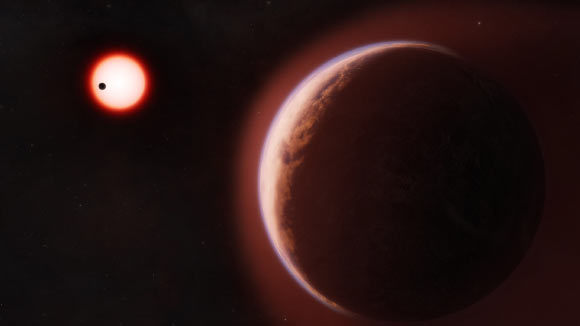
Using spectral data from the Magellan Clay telescope at Las Campanas Observatory, astronomers detected helium escaping from LHS 1140b, a rocky exoplanet that orbits in the habitable zone of the nearby low-mass star LHS 1140.
A new analysis suggests the four sub-Earth exoplanets orbiting Barnard’s star -- the Sun’s nearest single-star neighbor -- are likely packed with the deep-Earth mineral periclase, stripped of their atmospheres and far too hostile to support life.
Using near-UV spectroscopic data from the Space Telescope Imaging Spectrograph (STIS) on the NASA/ESA Hubble Space Telescope, astronomers discovered four white dwarfs orbiting nearby red dwarf stars.
Using the Karl G. Jansky Very Large Array (VLA) s and the Five-hundred-meter Aperture Spherical Radio Telescope (FAST), astronomers have created the sharpest-ever radio maps of neutral hydrogen around the Orion Nebula.
Amazon and several other non-geostationary satellite operators have formed a trade association to represent their fast-growing market, with SpaceX notably absent despite having by far the largest NGSO constellation.
New Webb and Hubble data not only confirm the existence of two distinct populations of stars in the ancient stellar system Terzan 5, once classified as a globular cluster, but also provides evidence for two more recent rounds of star formation.
Scientists from Goethe University, Frankfurt, studying alternatives to black holes have suggested a mathematically viable formation mechanism for one proposed alternative called a ‘Gravastar.’
Although the team behind the newly proposed gravastar formation mechanism conceded that black holes still represent the simplest and most natural solution to gravitational collapse, they also suggest that the physics behind the alternative, which doesn’t require a single point where spacetime curves infinitely, called a “singularity,” can make them “easier to accept” than black holes.
If correct, and some or all black holes are, in fact, gravastars that mimic their expected properties, the work would establish a valid formation mechanism that could rewrite decades of accepted science and open a new field of research dedicated to understanding this previously misunderstood phenomenon.
Meet Gravastar: The Black Hole Mimicker without a Singularity
According to standard cosmology theories, black holes form when extremely massive stars stop generating energy, allowing the force of gravity to take over and collapse the remaining matter into a single point, or singularity. Unfortunately, the research team behind the new study notes that “the laws of physics break down” within the singularity, making the formation of the resulting black hole a difficult phenomenon to predict.
“How can spacetime be curved infinitely at that point, the singularity?” asks the team’s statement announcing the new approach. They also note that no information escapes a black hole, including light, making studying its inner workings effectively impossible, and opening up the possibility that “black holes are in fact entirely different objects.”
Some options have been proposed, including ‘horizonless’ black hole mimickers. The team notes that these proposed options are “mathematically consistent alternatives” that also address the physics challenges posed by traditional black holes.
Still, how these alternative objects form has remained largely unclear. The research team said this lack of a formation mechanism constitutes “a significant open problem” since understanding how they form is the “first step” to determining if they truly exist.
New Model Creates a ‘Big Bang’ Inside a ‘Mini-Universe’
In the new formation model, theoretical physicists Daniel Jampolski and Theoretical Astrophysics Professor Luciano Rezzolla from Goethe University showed that the collapse of a dying star may not go far enough that it reaches the point of no return, where “the collapse to a black hole is inevitable.”
Instead, the collapse slows down near a point scientists call the Schwarzschild radius, then stops. The result is what the team termed a “miniature universe” within the collapsing matter, which they compared to the dynamics of the Big Bang, which most theorists agree formed the entire universe.
Since the universe’s expansion was driven by dark energy, the new model proposes that the dark energy within the mini-universe establishes an “equilibrium” with the counteracting force of gravity, therefore halting the collapse of the star “before a black hole can form.”
“The Big Bang of the emerging universe can unfold once the star has already collapsed almost to the point of becoming a black hole,” explained Jampolski, who discovered the black hole alternative gravastar solution in his master’s thesis while under the supervision of Professor Rezzolla.
Maintaining an Unbiased Approach Toward “What We Do Not Know”
When discussing the impact of their proposed black hole alternative formation model, Jampolski said that from a mathematical and physics standpoint, it is “easier to imagine that the Big Bang occurs only at a very late stage, when matter has already been compressed to an extreme degree, thereby giving rise to new effects.” The team also notes that the unresolved behavior of matter in this environment “leaves room for new physics.”
Although the team’s model offers a mathematically sound formation for an alternative to black holes, Rezzolla notes that the search for gravastars or other alternatives “should not suggest a skepticism towards black holes,” which, he adds, “still represent the most natural and simplest solution to the fate of gravitational collapse.”
Instead, the Goethe professor explained, his general role as a scientist and his specific discipline as a theoretical physicist make it essential that he and his colleagues “maintain an unbiased approach towards what we do not know and hence explore both the accepted wisdom and the more exotic interpretations.”
“History teaches us that it is not unusual for the latter to become the former,” the professor added.
Christopher Plain is a Science Fiction and Fantasy novelist and Head Science Writer at The Debrief. Follow and connect with him on X, learn about his books at plainfiction.com, or email him directly at christopher@thedebrief.org.

 Login