Lead-gen and ecommerce managers: two Google Ads bidding changes landed this summer. Here's what shifts, what doesn't, and which campaigns to audit first.
Neonatal necrotizing enterocolitis (NEC) remains one of pediatrics’ most devastating intestinal disorders, and safer, mechanism-driven therapies are urgently needed. New findings suggest that tiny vesicles naturally present in human breast milk—exosomes—may offer protection by delivering a specific regulatory microRNA.
Researchers report that exosomes enriched with miR-144-5p can help restore the intestinal tight junction barrier, a key defense line that collapses during NEC. By focusing on miR-144-5p, the team moves beyond earlier observations that breast milk exosomes can reduce NEC severity and instead pinpoints a molecular cargo likely responsible for part of that benefit.
The study centers on how NEC damages epithelial integrity and promotes inflammatory signaling. Tight junction disruption is associated with increased permeability, bacterial translocation, and worsening inflammation—conditions that accelerate disease progression in vulnerable newborns. The investigators therefore examined whether miR-144-5p could counter these barrier failures in NEC contexts.
Mechanistically, the work links miR-144-5p action to the TLR4/NF-κB pathway, a well-known inflammatory axis. Toll-like receptor 4 (TLR4) senses danger-associated cues and can trigger NF-κB activation, driving transcription of pro-inflammatory mediators. In NEC, exaggerated signaling through this route contributes to tissue injury and impaired repair.
By modulating this cascade, miR-144-5p appears to dampen downstream inflammatory responses while promoting recovery of junctional structure. The paper’s data indicate that exosomal delivery is central: miRNAs packaged within vesicles can be taken up by recipient cells more efficiently than naked RNA, enabling functional gene regulation in target intestinal compartments.
Together, the results support a model in which breast milk exosomal miR-144-5p alleviates NEC by suppressing TLR4-driven NF-κB activation, thereby reducing inflammatory injury and enabling tighter regulation of epithelial junctions. If translated, such a cargo-guided approach could complement existing supportive NEC treatments.
While additional work will be required to confirm efficacy across models and to evaluate safety, the study provides a clear mechanistic roadmap: therapeutic exosomes or miRNA mimics that bias TLR4/NF-κB activity may be a promising strategy for protecting the neonatal gut.
Subject of Research: Neonatal necrotizing enterocolitis (NEC), breast milk-derived exosomes, miR-144-5p, tight junction barrier repair, TLR4/NF-κB signaling.
Article Title: Human milk exosomal-miR-144-5p alleviates neonatal necrotizing enterocolitis by regulating the TLR4/NF-κB pathway.
Article References: Chen, Z., Chen, C., Hu, X. et al. Human milk exosomal-miR-144-5p alleviates neonatal necrotizing enterocolitis by regulating the TLR4/NF-κB pathway. Pediatr Res (2026). https://doi.org/10.1038/s41390-026-05305-9
Claude Mythos Preview discovered new attacks in testing against weakened cryptographic algorithms, which protect online financial transactions, private communications and more.
Today, humans speak or use signs in approximately 7,500 different languages. However, this figure, impressive as it may seem, represents only a snapshot of a constantly changing history, and questions about the evolution of linguistic diversity have remained among the most elusive for science for decades. How many languages existed before the appearance of written […]
Para a estreia das telas OLED1Organic light-emitting diode, ou diodo emissor de luz orgânico. e do suporte ao toque em computadores com o suposto “MacBook Ultra”, a Apple poderá recorrer exclusivamente à Samsung Display como fornecedora dos painéis.
A informação partiu do site sul-coreano The Elec, o qual afirmou que, segundo as suas fontes relacionadas à cadeia de suprimentos, cerca de 250 mil unidades de painéis OLED de 14 e 16 polegadas (8,6ª geração) da Samsung foram encomendadas, com previsão de produção em massa para o mês de agosto.
A Apple não teria cogitado a LG Display e tampouco a BOE para o desenvolvimento dessas telas, devido a questões de rendimento, tornando a Samsung a única fornecedora viável.
De acordo com uma série de leakers, analistas e jornalistas, especulava-se que o “MacBook Ultra” tivesse o seu lançamento entre o final deste ano e o início do ano que vem, mas devido à crise de memória é possível que ele de fato chegue às lojas somente em 2027.
Segundo o jornalista Mark Gurman (da Bloomberg), tal Mac deverá ser equipado com os chips M5 Pro e M5 Max, com o conjunto (design, construção e tela) posicionando-o acima dos MacBooks Pro.
MacBook Pro de 16″
Cores: preto-espacial ou prateado Tela: padrão ou nano-texture Chips: M5 Pro ou M5 Max Memória: 24GB, 36GB, 48GB, 64GB ou 128GB Armazenamento: 1TB, 2TB, 4TB ou 8TB
Cores: preto-espacial ou prateado Tela: padrão ou nano-texture Chips: M5, M5 Pro ou M5 Max Memória: 24GB, 36GB, 48GB, 64GB ou 128GB Armazenamento: 1TB, 2TB, 4TB ou 8TB Adaptador de energia: USB-C de 70W ou 96W
NOTA DE TRANSPARÊNCIA: O MacMagazine recebe uma pequena comissão sobre vendas concluídas por meio de links deste post, mas você, como consumidor, não paga nada mais pelos produtos/serviços usando os nossos links de afiliado.
Confirmando rumores, a Appleanunciou hoje, nos Estados Unidos, a chegada do Apple Upgrade, seu programa de leasing de iPhones, iPads, Macs e Apple Watches feito em parceria com a Klarna.
Exclusivo das Apple Stores (inclusive a Online), ele permite alugar iPhones e Apple Watches por 12 ou 24 meses. iPads e Macs, por sua vez, podem ser utilizados por 24 ou 36 meses.
Na Apple, colocamos o cliente no centro de tudo o que fazemos e estamos muito satisfeitos que o Apple Upgrade ofereça aos nossos clientes — tanto online quanto nas lojas — uma maneira mais flexível de pagar pelos produtos que eles adoram.
—Karen Rasmussen, vice-presidente da Apple Store online
Antes de completar o seu pedido, o usuário passa por uma rápida avaliação de crédito conduzida pela Klarna, que também mantém um app com todas as informações do Apple Upgrade. Caso aprovado, ele está liberado para escolher o dispositivo desejado.
Segundo a Maçã, o programa avisará o usuário quando ele estiver apto a fazer um upgrade sem pagar qualquer tipo de taxa. A Apple também permite acelerar a troca mediante um pagamento adicional e oferece instruções sobre como devolver o aparelho antigo.
Divulgação/Apple
Também é possível continuar com o dispositivo que o usuário já está utilizando ao final do período de leasing ou simplesmente devolvê-lo para a Apple. Caso ele escolha a primeira opção, no entanto, será necessário realizar um pagamento único para mantê-lo.
A Apple alerta que, caso o contrato de leasing seja encerrado antes do fim do prazo estipulado, “taxas substanciais” poderão ser cobradas. Além disso, se o usuário não tomar nenhuma ação após o fim do contrato, sua assinatura será convertida em um contrato de leasing mensal que durará até seis meses. Se o usuário continuar sem tomar uma decisão após o fim desse período extra, ele terá que pagar a taxa de compra integral.
O Apple Upgrade também permite adicionar as coberturas do AppleCare aos dispositivos no momento da assinatura do serviço, dando aos usuários um pouco mais de tranquilidade na hora de investir em um novo iPhone/iPad/Mac/Apple Watch.
Eis os dispositivos oferecidos pelo Apple Upgrade, começando pelos iPhones:
iPhone 17e: a partir de US$25/mês por 12 meses ou US$18/mês por 24 meses;
iPhone 17: a partir de US$33/mês por 12 meses ou US$23/mês por 24 meses;
iPhone Air: a partir de US$42/mês por 12 meses ou US$29/mês por 24 meses;
iPhone 17 Pro: a partir de US$46/mês por 12 meses ou US$32/mês por 24 meses;
iPhone 17 Pro Max: a partir de US$49/mês por 12 meses ou US$35/mês por 24 meses.
Vale notar que, embora o iPhone venha desbloqueado, é preciso selecionar uma das operadoras cobertas pelo Apple Upgrade (AT&T, T-Mobile ou Verizon). Também não é possível utilizar um plano pré-pago.
Agora, os iPads:
iPad mini (A17 Pro): a partir de US$16/mês por 24 meses ou US$12/mês por 36 meses;
iPad Air (M4) de 11 polegadas: a partir de US$20/mês por 24 meses ou US$16/mês por 36 meses;
iPad Air (M4) de 13″: a partir de US$26/mês por 24 meses ou US$20/mês por 36 meses;
iPad Pro (M5) de 11″: a partir de US$32/mês por 24 meses ou US$25/mês por 36 meses;
iPad Pro (M5) de 13″: a partir de US$41/mês por 24 meses ou US$31/mês por 36 meses.
Os Macs:
MacBook Air (M5) de 13″: a partir de US$35/mês por 24 meses ou US$25/mês por 36 meses;
MacBook Air (M5) de 15″: a partir de US$41/mês por 24 meses ou US$29/mês por 36 meses;
MacBook Pro de 14″ (linha M5): a partir de US$54/mês por 24 meses ou US$39/mês por 36 meses;
MacBook Pro de 16″ (linha M5): a partir de US$81/mês por 24 meses ou US$58/mês por 36 meses;
iMac (M4): a partir de US$41/mês por 24 meses ou US$29/mês por 36 meses;
Mac Studio (M4 Max /M3 Ultra): a partir de US$68/mês por 24 meses ou US$49/mês por 36 meses.
Por fim, os Apple Watches:
Apple Watch Series 11: a partir de US$22/mês por 12 meses ou US$12/mês por 24 meses;
Apple Watch Hermès Series 11: a partir de US$76,04/mês por 12 meses ou US$40,78/mês por 24 meses;
Apple Watch Ultra 3: a partir de US$45/mês por 12 meses ou US$25/mês por 24 meses;
Apple Watch Hermès Ultra 3: a partir de US$87,28/mês por 12 meses ou US$47,03/mês por 24 meses.
Clientes têm ainda a opção de entregar o seu dispositivo antigo para receber um desconto no pagamento do novo, assim como já acontecia em compras tradicionais.
Além disso, como era esperado, a Apple aproveitou o lançamento do seu novo serviço para descontinuar o antigo iPhone Upgrade Program, que estava no ar há mais de uma década.
E vamos deixando o nosso aplicativo — disponível para iPhone, iPad, Mac e Apple Watch — cada vez mais nos trinques! 😉
Acaba de sair a versão 5.1 dele, e agora é possível dar um “Peek” nos artigos diretamente pela tela inicial de posts: basta tocar e segurar sobre um deles para ter uma prévia rápida do conteúdo, sem precisar abri-lo por completo.
Também chegou o suporte a deep links: a partir de agora, ao tocar em qualquer link do MacMagazine — seja recebido por mensagem, encontrado em outro app ou mesmo em uma busca —, você é automaticamente levado para o post correspondente dentro do nosso app.
A tela de posts ganhou ainda dois novos ajustes de personalização: um para sempre lembrar o filtro selecionado e outro para exibir sempre os títulos completos dos posts na lista principal, sem cortes.
Além disso, esta versão traz correções de bugs e refinamentos na interface, bem como mais aprimoramentos gerais em acessibilidade.
Agradecimentos
Fica aqui um agradecimento especial ao Cassio Rossi pelas colaborações feitas em nosso projeto no GitHub para esta versão.
A atualização já está disponível na App Store — e, como sempre, vale a pena atualizar o quanto antes para aproveitar todas as novidades. Em breve, é claro, voltamos com mais! 😉
Abrindo a última semana de julho com a nossa seleção de promoções na App Store, para esta segunda-feira!
O destaque do dia é o jogo Klocki, do desenvolvedor Maciej Targoni — o mesmo criador do sucesso HOOK.
Sua meta é conectar, de forma uniforme, diferentes tipos de linhas em diversas fases, bastando tocar em um bloco e depois no outro para movê-los. A coisa parece simples nas primeiras fases, mas, quando as figuras se tornam 3D, tudo fica bem mais desafiador!
Confira um vídeo:
Não há tempo, não há limite. O objetivo é relaxar e completar cada uma das fases. A trilha sonora fica por conta de Wojciech Wasiak.
Não perca mais tempo, aproveite esse desconto agora!
Abaixo outros jogos/apps que, juntos, somam mais de R$130 em descontos:
Jogos
Jogo de corrida.
Jogo da franquia LEGO.
Jogo de estratégia.
Aplicativos
Escaneie e defina as palavras.
Utilitário para metadados.
Utilitário para sua biblioteca musical.
Aproveite as ofertas e até amanhã! Vale lembrar que as ofertas são sempre por tempo limitado, então é bom correr. 🦖
A Apple disponibilizou oficialmente hoje o iOS 26.6 (compilação 23G71), iPadOS 26.6 (idem), macOS Tahoe 26.6 (25G72), watchOS 26.6 (23U67), tvOS 26.6 (23L773), Software do HomePod 26.6 (idem) e visionOS 26.6 (23O770) para todos os usuários.
Também foram liberados o macOS Sonoma 14.8.8 (compilação 23J620) e o macOS Sequoia 15.7.8 (24G824) para as máquinas que estão rodando essas versões mais antigas.
Anthropic and OpenAI are clashing with the rest of the tech industry over whether “open-source” models from China should be freely available or restricted.
O aplicativo Atalhos (Shortcuts) facilita a vida de muita gente que usa iPhones, iPads e Macs diariamente. Com ele, você pode realizar ações e automatizar tarefas com múltiplos passos, bastando apenas um toque ou o uso da Siri.
Caso queira, é possível renomear um atalho que tenha sido criado anteriormente usando esse app — seja para refletir o seu propósito ou para facilitar a busca quando precisar usá-lo.
Com o app aberto, toque/clique na aba “Biblioteca” ou “Todos os atalhos”. Mantenha o dedo pressionado em cima do atalho desejado ou clique com o botão direito do mouse. Depois, vá até “Renomear” e digite o novo nome.
Opcionalmente, selecione os três pontinhos ou dê dois cliques em cima do atalho, vá até o nome do atalho e renomeie-o.
MacBook Neo helped Apple move against the global PC market in the second quarter of 2026, delivering double-digit Mac shipment growth while most leading computer manufacturers sold fewer units than a year earlier.
Preliminary data from IDC estimates that Apple shipped 6.7 million Macs during the quarter, up 10.1% from 6.1 million in Q2 2025. Its worldwide market share rose from 8.5% to 9.9%, placing the company within a fraction of the 10% threshold.
The rest of the industry moved in the opposite direction. Global shipments fell 4.9% year over year to 68.2 million units, ending nine consecutive quarters of growth. A separate Omdia estimate placed the decline at 3.6% and Apple growth at 15.9%, but both research groups identified the same pattern: the Mac gained ground while established Windows PC vendors contracted or remained flat.
IDC directly connected the Apple increase with the arrival of its lowest-priced notebook. MacBook Neo began shipping in March, giving the model its first complete quarter of retail availability between April and June.
MacBook Neo Drives Mac Shipment Growth
MacBook Neo entered the market as an alternative for buyers previously priced out of the Mac lineup.
The 13-inch notebook launched at $599 with an A18 Pro chip, 8GB of unified memory, a Liquid Retina display and up to 16 hours of video playback. It also brought macOS, Apple Intelligence and integration with the iPhone ecosystem into a price range commonly occupied by mainstream Windows laptops and Chromebooks.
That positioning attracted students, families and first-time Mac customers who did not need the performance or display technology of a MacBook Air or MacBook Pro. The four-color aluminum design also gave the entry model a more recognizable identity than the older Mac notebooks that frequently remained on sale through discounts.
IDC had already identified the computer as an unusual source of strength when it revised its notebook forecast earlier in 2026. Demand exceeded initial expectations in several markets, and reported inventory shortages appeared shortly after the March launch.
The effect became much more visible in Q2. MacBook Neo was available for the entire three-month period, allowing Apple to increase production, expand retail distribution and serve customers who could not obtain the computer during its first weeks.
The entry model also widened the Mac lineup without replacing the MacBook Air. Buyers seeking more memory, faster ports, longer wireless web use or additional external-display support could continue moving toward the M5-powered Air, while the less expensive machine handled education, office work, web browsing and communication.
That separation allowed Apple to reach lower price points without reducing the value of its premium notebooks.
Image Credit: Apple Inc.
Lenovo, HP and Dell Lose Shipments
Apple remained the fourth-largest traditional PC vendor, but its performance contrasted sharply with the companies above it.
Lenovo retained first place with 16.6 million units and 24.4% market share. Its shipments declined 2.1% from the previous year.
HP experienced the steepest drop among the top five, falling 9% to 13 million units. Dell shipped 9.3 million computers, representing a 5% decline. Asus remained nearly flat at 5 million units, up only 0.2%.
Manufacturers outside the five largest brands collectively suffered a 10.5% contraction, indicating that weaker demand and component inflation placed even more pressure on smaller companies.
The figures measure shipments into distribution channels or directly to end users, not confirmed retail purchases by individual consumers. A manufacturer can therefore record shipment growth while some inventory remains unsold in stores or warehouses.
MacBook Neo demand appears to have been strong enough to support Apple production increases rather than simply filling channels. The company reportedly doubled its annual production target after the initial response, although later quarters will reveal how much of Q2 reflected lasting demand rather than launch-period enthusiasm.
Apple also benefits from operating at a scale that provides leverage with memory, storage and semiconductor suppliers. Smaller PC brands face greater difficulty securing components at competitive prices when shortages intensify.
Memory Costs Reverse the PC Recovery
The Q2 contraction arrived after manufacturers and commercial customers accelerated purchases during late 2025 and early 2026.
Buyers expected memory and storage prices to rise, encouraging some businesses to replace computers earlier than planned. Vendors also increased inventories while components remained available.
That activity supported nine quarters of market growth but borrowed demand from later periods. Once the early purchases were completed, the industry faced a more difficult combination of expensive components, cautious consumers and elevated retail prices.
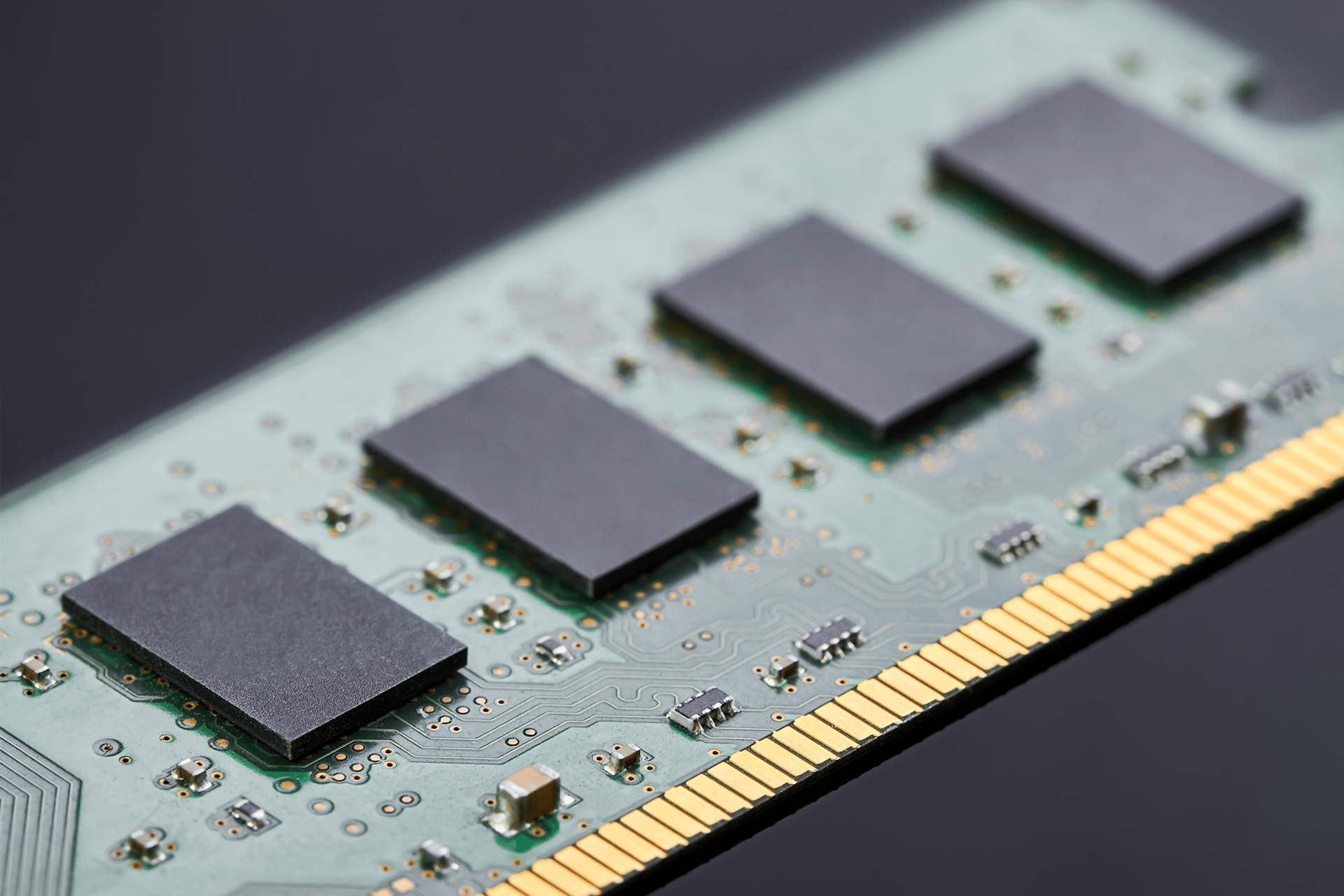
The memory shortage is closely connected to the AI infrastructure boom. Chipmakers are dedicating more production capacity to high-bandwidth memory used by data center accelerators, limiting the supply of conventional DRAM needed for personal computers.
IDC expects little relief before the end of 2027 or early 2028. The research company forecasts an 11.3% decline in worldwide PC shipments across 2026, with the fourth quarter potentially falling 20% from the previous year.
Computer revenue may not decline at the same pace. Manufacturers have raised prices faster than shipments have fallen, allowing them to collect more money from fewer units.
That strategy creates another problem. Retailers and distributors can become trapped with expensive inventory if customers refuse the new prices, forcing promotions or production reductions later.
MacBook Neo initially softened that pressure by giving Apple a new product near the bottom of the notebook market. Its original $599 price made the Mac competitive with midrange Windows machines at the moment many rivals were becoming more expensive.
Image Credit: Freepik
The Price Increase Creates the Next Test
The strongest Q2 MacBook Neo shipments were recorded while most customers could still buy the computer at its introductory price.
Apple raised the U.S. starting price to $699 in late June as memory and storage costs affected the Mac and iPad lineups. The education price remained at $599, preserving the original offer for eligible students and educators.
A $100 increase changes the comparison with discounted Windows notebooks and places the entry model closer to older MacBook Air configurations available through third-party retailers.
Apple must now determine whether the appeal came primarily from the low launch price or from the combination of macOS, battery life, design and iPhone integration.
The company remains better positioned than many rivals to absorb supply disruption, negotiate long-term component agreements and promote several notebooks at different prices. MacBook Neo also uses an iPhone-class A18 Pro processor rather than an M-series chip, providing another way to manage silicon costs and production capacity.
IDC expects the full PC market to deteriorate during the second half of 2026. Apple will enter that period with almost 10% worldwide share, but the September quarter will be the first to measure MacBook Neo demand almost entirely at the higher $699 retail price.
Está precisando ter um controle mais rígido do tempo que seus filhos usam o computador? Então instale a ferramenta de controle parental TIMEKPR no Ubuntu e resolva seu problema.
Artificial intelligence may not deliver on its promise of vast economic opportunity at a price that humanity is willing to pay
In March, Anthropic, the cutting-edge artificial intelligence business that gave us the chatbot Claude, published an analysis on the impact of AI on employment, to help us assess the claim that intelligent robots were about to redefine human existence, ending demand for human labor.
Last year in May, Anthropic’s co-founder, Dario Amodei, claimed AI could wipe out half of all entry-level jobs in one to five years. Last January, he told us AI would probably become a “general labor substitute for humans”. In June he said we risk “a world where the economic trade-off dial is stuck on the hypergrowth, hyper-inequality setting”.
The EHRC has released new trans schools guidance on how to comply with the Equality Act. But from changing rooms to pronoun use it puts children at risk, says Caroline Ffiske.

 Login