
❌

Reading view

Barnard’s Star Planetary System May Be Filled with Water-Poor Rocky Worlds

An artist’s illustration of exoplanets orbiting Barnard’s star. Image credit: International Gemini Observatory / NOIRLab / NSF / AURA / P. Marenfeld.

A new analysis suggests the four sub-Earth exoplanets orbiting Barnard’s star -- the Sun’s nearest single-star neighbor -- are likely packed with the deep-Earth mineral periclase, stripped of their atmospheres and far too hostile to support life.

The post Barnard’s Star Planetary System May Be Filled with Water-Poor Rocky Worlds appeared first on Sci.News: Breaking Science News.
  •  

Astronomers Detect Gamma-Ray Burst’s Magnetic Fingerprint

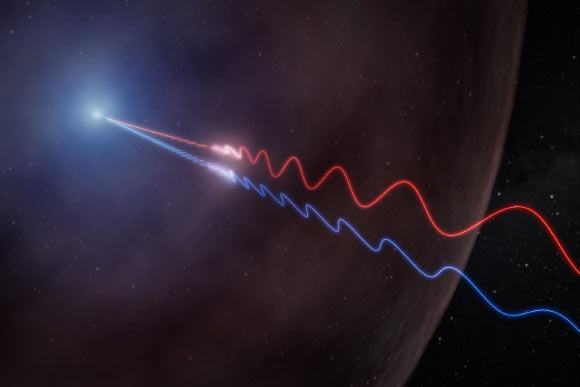
This illustration depicts Faraday rotation in the afterglow of a gamma-ray burst. A powerful jet (upper left) sends polarized radio waves outward through the thin wall of a surrounding bubble of magnetized gas called an HII region. As the light passes through this material, its polarization angle is twisted by the magnetic field. Because the effect is stronger at longer wavelengths, the red and blue waves, which represent different radio wavelengths, exit the bubble oscillating in different directions. By measuring this difference, astronomers were able to map the magnetic environment surrounding GRB 260310A for the first time. Image credit: NSF / AUI / NRAO / M. Weiss

Using NSF’s Very Large Array (VLA), astronomers made the first radio detection of polarized light and Faraday rotation from a gamma-ray burst afterglow, offering an unprecedented glimpse of the magnetic fields surrounding one of the Universe’s most powerful explosions.

The post Astronomers Detect Gamma-Ray Burst’s Magnetic Fingerprint appeared first on Sci.News: Breaking Science News.
  •  

Astronomers Discover and Directly Image Third Planet in Beta Pictoris System

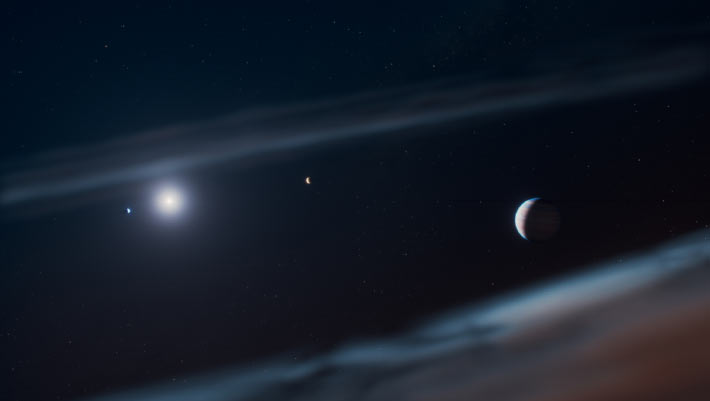
This artist’s concept shows the Beta Pictoris system with the discovered giant exoplanet Beta Pictoris d at the right. Image credit: NASA / ESA / CSA / STScI / Ralf Crawford, STScI.

Named Beta Pictoris d, the newly-discovered world is 100 times fainter than Beta Pictoris b -- the first planet discovered around the A5-type star Beta Pictoris -- and is among the lightest exoplanets ever to be imaged from the ground.

The post Astronomers Discover and Directly Image Third Planet in Beta Pictoris System appeared first on Sci.News: Breaking Science News.

  •  

Pluto’s Moon Charon May Still Be Slowing Its Spin, Study Suggests

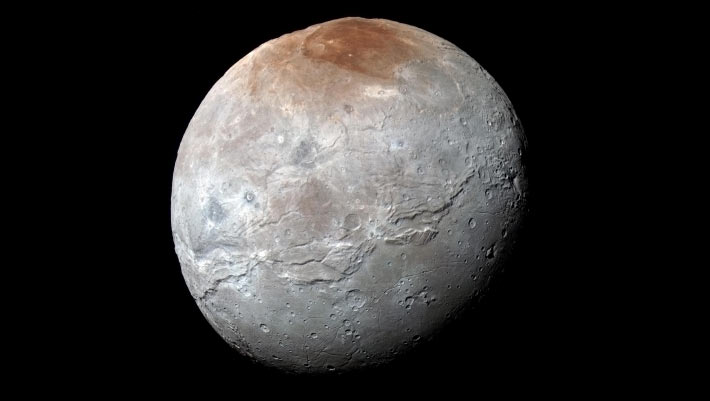
This impressive view of Charon was captured on July 14, 2015. Charon’s color palette is not as diverse as Pluto’s; most striking is the reddish north (top) polar region, informally named Mordor Macula. Image credit: NASA / Johns Hopkins University Applied Physics Laboratory / Southwest Research Institute.

New research indicates that Pluto’s largest moon, Charon, may continue to lose rotational energy despite the pair’s long-standing tidal lock, offering scientists a rare glimpse into the hidden interiors of distant icy worlds.

The post Pluto’s Moon Charon May Still Be Slowing Its Spin, Study Suggests appeared first on Sci.News: Breaking Science News.
  •  

Losing Even 80 Minutes of Sleep a Night Linked to Weight Gain

The study sheds new light on the link between sleep deprivation and obesity. Image credit: Sweet Briar College.

New research from Columbia University found that adults who cut their sleep by about 80 minutes for six weeks packed on a pound (0.45 kg) and moved less during the day.

The post Losing Even 80 Minutes of Sleep a Night Linked to Weight Gain appeared first on Sci.News: Breaking Science News.
  •  

Webb Catches Supermassive Black Hole Feeding from Cosmic Gas Streams

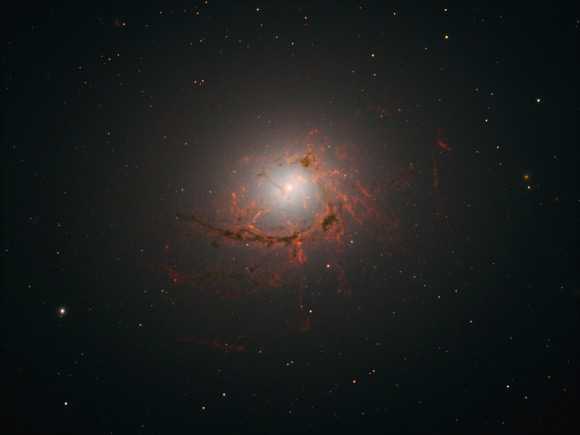
This Hubble image shows the elliptical galaxy NGC 4696. Image credit: NASA / ESA / Hubble / A. Fabian.

New images of the giant elliptical galaxy NGC 4696 from the NASA/ESA/CSA James Webb Space Telescope reveal gas filaments funneling material into a spinning disk around a supermassive black hole 800 light-years across.

The post Webb Catches Supermassive Black Hole Feeding from Cosmic Gas Streams appeared first on Sci.News: Breaking Science News.
  •  

Astronomers Discover Four New White Dwarfs in Solar Neighborhood

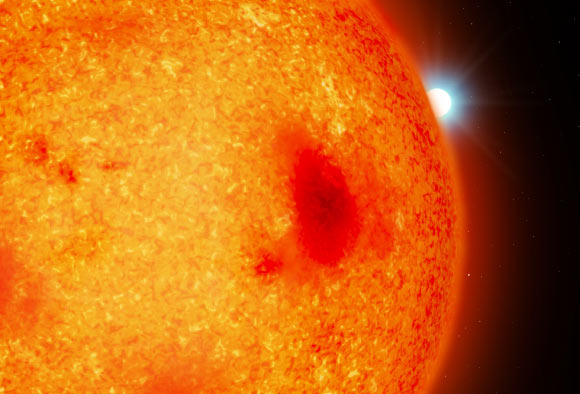
An artist’s impression of a red dwarf with a white dwarf binary companion peeking out from behind. Image credit: Mark A. Garlick / University of Warwick.

Using near-UV spectroscopic data from the Space Telescope Imaging Spectrograph (STIS) on the NASA/ESA Hubble Space Telescope, astronomers discovered four white dwarfs orbiting nearby red dwarf stars.

The post Astronomers Discover Four New White Dwarfs in Solar Neighborhood appeared first on Sci.News: Breaking Science News.

  •  

Ediacaran Sea Creature May Hold Earliest Evidence of Right-Handedness

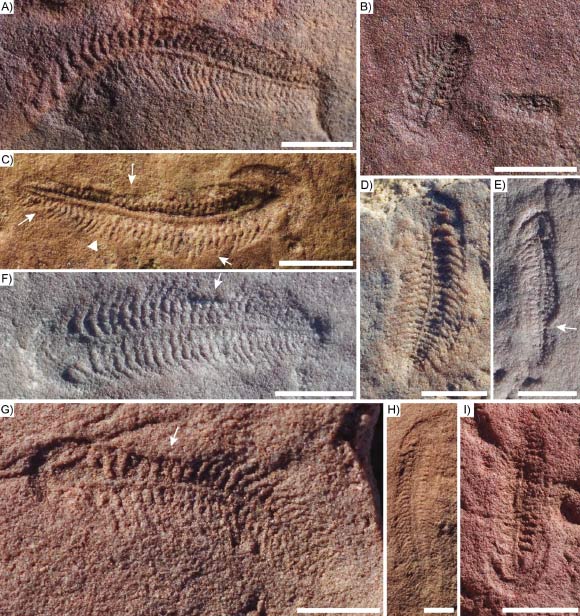
Fossils of Spriggina floundersi from South Australia; white arrows highlight lifted areas, white triangle indicates divergent bend angle of adjacent modules. Scale bars - 10 cm. Image credit: Evans et al., doi: 10.1038/s41598-026-53857-x.

Spriggina floundersi, a marine species that lived during the Ediacaran period 550 million years ago, is one of Earth’s earliest bilaterally symmetrical animals.

The post Ediacaran Sea Creature May Hold Earliest Evidence of Right-Handedness appeared first on Sci.News: Breaking Science News.

  •  

Euclid Discovers Earliest Quasars Ever Seen

This collage shows 15 of the 31 newly discovered quasars by ESA’s Euclid space telescope. EUCL J172902.75+641018.1 and EUCL J125308.55+705432.3 are visible on the first row, the first and second from the left, respectively. Image credit: ESA / Euclid / Euclid Consortium / NASA / Euclid Science Ground Segment / Antoine Basset, CNES.

Astronomers using ESA’s Euclid space telescope have discovered 31 ancient quasars from a time when the Universe was just 670 to 800 million years old. One of these objects, dubbed EUCL J172902.75+641018.1, sets the new record for the most distant quasar ever reported.

The post Euclid Discovers Earliest Quasars Ever Seen appeared first on Sci.News: Breaking Science News.

  •  

Human-Dog Bond is Ancient, Universal and Strikingly the Same Everywhere: Study

Testing situation and hunters with their dogs -- examples from each of the four non-WEIRD societies: (a) pointing test in Mongolia, (b) unsolvable problem test in Vanuatu, (c) showing test in Mongolia, (d) Vanuatu, (e) Mongolia, (f) Madagascar, (g) Peru. Image credit: Bräuer et al., doi: 10.1038/s41598-026-57657-1.

New research spanning five continents and vastly different cultures -- from the steppes of Mongolia to the rainforests of the Pacific -- shows that hunting dogs and their owners cooperate, communicate and rely on each other in nearly identical ways, suggesting the relationship was forged in deep evolutionary time, perhaps 30,000 years ago.

The post Human-Dog Bond is Ancient, Universal and Strikingly the Same Everywhere: Study appeared first on Sci.News: Breaking Science News.
  •  

Domestic Cats Age Like Humans, New Study Shows

Lauren Scott & Brittany Florkiewicz show that cat facial signals correspond to different social functions, which have likely been influenced by domestication. Image credit: Sci.News / Makieni777 / Rise-a-mui / Alexas_Fotos / Dorothe / Vaclav Zavada / Artem Makarov / Daga Roszkowska / Birgit / Pasi Mammela.

Domestic cats (Felis catus) develop the same patterns of brain shrinkage and neurological decline as aging humans, and scientists think that makes them an ideal window into dementia and aging.

The post Domestic Cats Age Like Humans, New Study Shows appeared first on Sci.News: Breaking Science News.

  •  

Interstellar Comet 3I/ATLAS Formed Up To 12 Billion Years Ago, New Observations Suggest

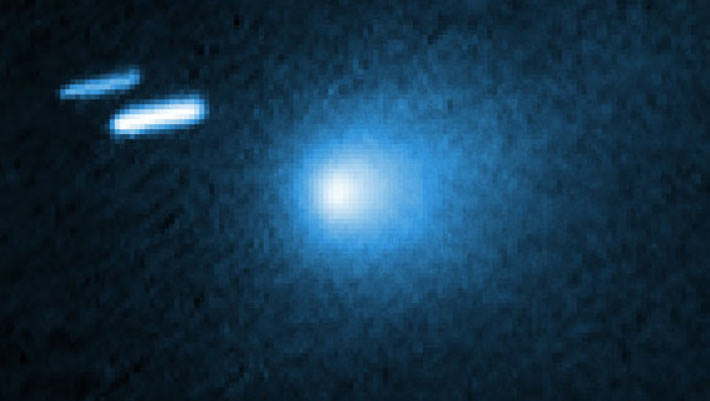
Hubble captured this image of 3I/ATLAS on July 21, 2025, when the comet was 446 million km (277 million miles) from Earth. Image credit: NASA / ESA / David Jewitt, UCLA / Joseph DePasquale, STScI.

The interstellar comet 3I/ATLAS carries a chemical fingerprint unlike anything in our Solar System, and it may have formed 10 to 12 billion years ago, before our Sun even existed, according to two papers published in the journal Nature.

The post Interstellar Comet 3I/ATLAS Formed Up To 12 Billion Years Ago, New Observations Suggest appeared first on Sci.News: Breaking Science News.
  •  

Secret to Heliconius Butterflies’ Longevity May Be Hidden in Pollen

Heliconius hecale. Image credit: Robert Lawton / CC BY-SA 2.5.

Entomologists have compiled decades of data from butterfly houses, wild field studies, and lab experiments to build the most comprehensive picture yet of how long Heliconius butterflies live and how slowly they age.

The post Secret to Heliconius Butterflies’ Longevity May Be Hidden in Pollen appeared first on Sci.News: Breaking Science News.

  •  

Asteroid Donaldjohanson is Wobbly, Peanut-Shaped Object with Watery Past, Scientists Say

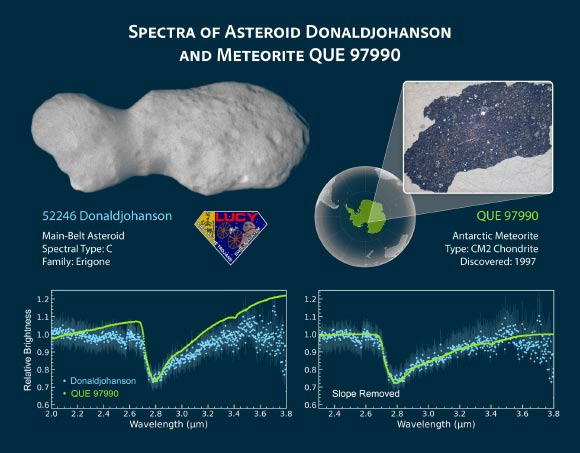
The asteroid Donaldjohanson is composed of two heavily cratered lobes, connected by a smoother neck, with overall dimensions 8.8 km by 4.4 km by 3.1 km. Image credit: NASA / Goddard / SwRI / Dan Gallagher.

The main-belt asteroid Donaldjohanson, a heavily cratered fragment born from a catastrophic breakup 155 million years ago, appears to wobble through space while preserving clues to the migration of water-rich worlds in the early Solar System, according to a new analysis of images and data from NASA’s Lucy spacecraft.

The post Asteroid Donaldjohanson is Wobbly, Peanut-Shaped Object with Watery Past, Scientists Say appeared first on Sci.News: Breaking Science News.
  •  

Webb Sees Jupiter-Size Exoplanet Being Roasted by Its Star

An artist’s impression of the hot-Jupiter exoplanet HD 80606b. Image credit: NASA / ESA / CSA / Joseph Olmsted, STScI.

HD 80606b has one of the most extreme orbits of any known exoplanet and the NASA/ESA/CSA James Webb Space Telescope just caught it getting flash-fried as it whipped past its star.

The post Webb Sees Jupiter-Size Exoplanet Being Roasted by Its Star appeared first on Sci.News: Breaking Science News.

  •  

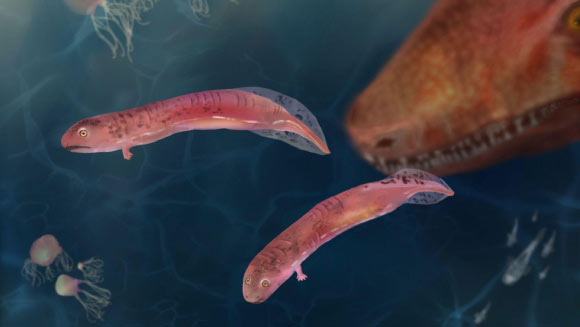
Earth’s First Land Animals May Never Have Been Amphibian-Like After All

New fossil evidence suggests that embolomeres did not undergo a metamorphosis the way that modern amphibians do when growing up, which challenges a long-standing scientific belief that amphibians, reptiles, and mammals evolved from animals that had a tadpole stage. Image credit: Berit Godring.

Paleontologists from the Field Museum of Natural History have described the fossilized remains of baby embolomeres, crocodile-like predators that prowled ancient rivers and swamps between 350 and 280 million years ago.

The post Earth’s First Land Animals May Never Have Been Amphibian-Like After All appeared first on Sci.News: Breaking Science News.

  •  

CERN Physicists Discover Third and Final Member of Doubly Charmed Baryon Family

An artist’s impression of the doubly charmed Ωcc⁺ baryon. Image credit: Daniel Dominguez / CERN.

Physicists with LHCb Collaboration at CERN’s Large Hadron Collider (LHC) have detected the elusive Ωcc⁺ baryon, a particle containing two charm quarks and one strange quark, completing a long-sought family of doubly charmed baryons first predicted over half a century ago.

The post CERN Physicists Discover Third and Final Member of Doubly Charmed Baryon Family appeared first on Sci.News: Breaking Science News.
  •  

Scientists Use Math to Solve Viral Word Game ‘Wordle’ with 99% Success Rate

Wordle, a popular word-guessing game, challenges players to identify a five-letter secret word through iterative guesses and feedback on letter placement. The players must figure out the secret word within six guesses. After each guess, the letters will be color-coded based on different criteria. Optimizing the choice of guesses is critical for maximizing success within the limited attempts allowed. Image credit: Aladaileh et al., doi: 10.63562/2577-8439.1146.

Researchers at Binghamton University have applied a 70-year-old theory of information to the viral word game Wordle, revealing how a carefully chosen first guess can dramatically improve a player’s chances of solving the puzzle.

The post Scientists Use Math to Solve Viral Word Game ‘Wordle’ with 99% Success Rate appeared first on Sci.News: Breaking Science News.
  •  

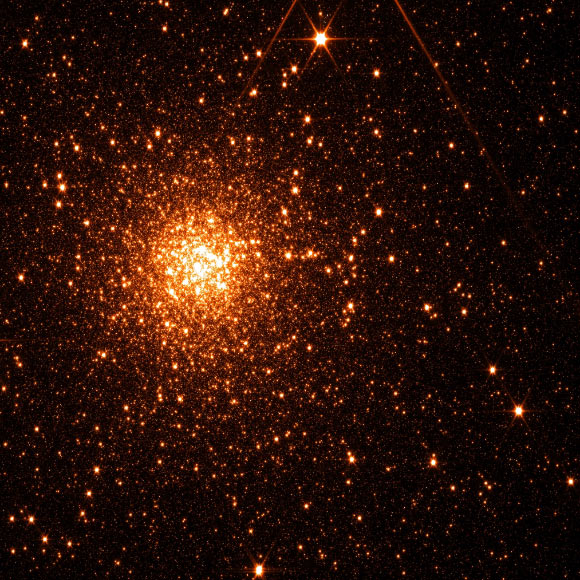
Astronomers Find Four Separate Generations of Stars in ‘Globular Cluster’ Terzan 5

This Webb/NIRCam image shows the star cluster Terzan 5. Image credit: NASA / ESA / CSA / Webb.

New Webb and Hubble data not only confirm the existence of two distinct populations of stars in the ancient stellar system Terzan 5, once classified as a globular cluster, but also provides evidence for two more recent rounds of star formation.

The post Astronomers Find Four Separate Generations of Stars in ‘Globular Cluster’ Terzan 5 appeared first on Sci.News: Breaking Science News.

  •  

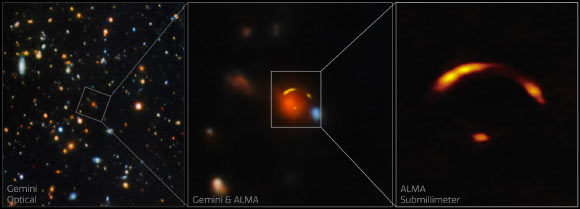
Astronomers Trace Elusive High-Energy Neutrino to Star-Forming Galaxy in Early Universe

The origin of high-energy astrophysical neutrinos remains unresolved, and secure electromagnetic counterparts to individual events are rare despite rapid follow-up. Dusty star-forming galaxies at cosmic noon (redshift of z ≈ 1-4) are natural cosmic-ray calorimeters, yet observational links between these galaxies and neutrinos have remained unknown. Urata et al. report a compact-core, dusty star-forming galaxy within an IceCube localization, JCMT0402-0424, a quadruply lensed galaxy at z = 2.988 located inside the 90% containment region of the IceCube event IC 210922A. Image credit: International Gemini Observatory / NOIRLab / NSF / AURA / ALMA / ESO / NAOJ / NRAO / T.A. Rector, University of Alaska Anchorage & NSF’s NOIRLab / D. de Martin & M. Zamani, NSF’s NOIRLab / Yuji Urata. MITOS Science Co., LTD.

JCMT0402-0424, a dusty starburst galaxy around 11 billion light-years away, is the strongest candidate yet for the source of the high-energy neutrino event IC 210922A, according to a team of astronomer led by Yuji Urata of MITOS Science Co.

The post Astronomers Trace Elusive High-Energy Neutrino to Star-Forming Galaxy in Early Universe appeared first on Sci.News: Breaking Science News.

  •  
❌