❌

Reading view

Dave Eggers told OpenAI staff that ChatGPT was ‘silencing an entire generation’

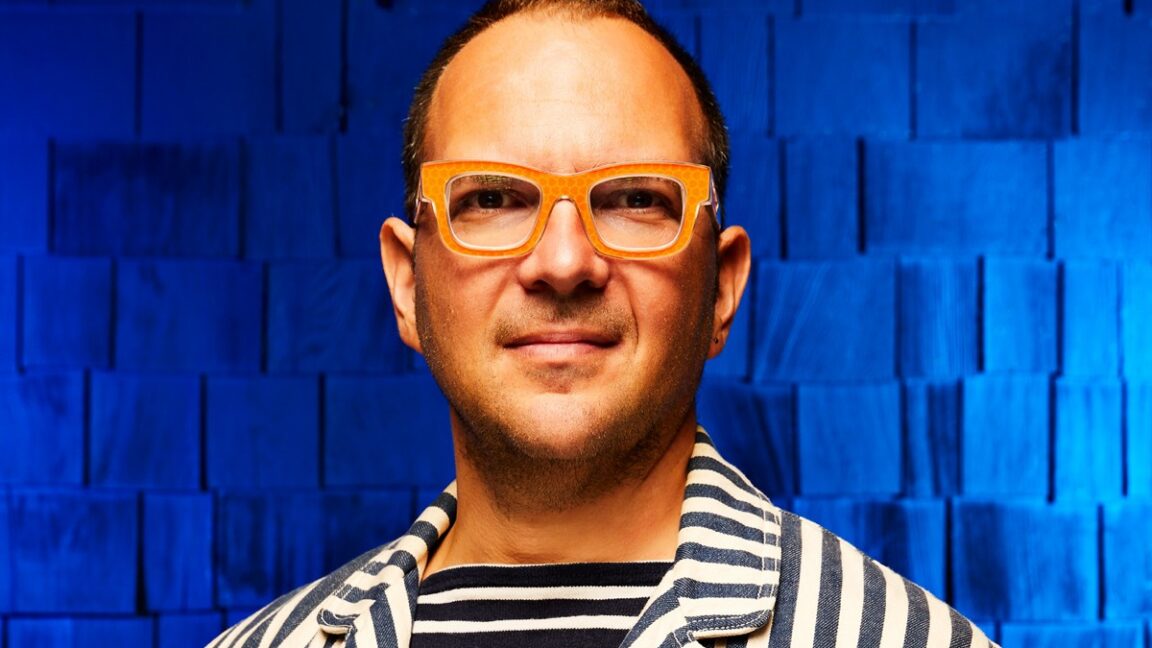
Dave Eggers attends the "The Turning Point: To Be Destroyed" premiere. | Image: John Lamparski/Getty Images for Tribeca Festival

Last year, Sam Altman invited author Dave Eggers to give a talk to around 200 OpenAI staffers. The man has written countless novels, screenplays, pieces of journalism, started McSweeney's, and founded multiple schools and nonprofits that support writers and the arts more broadly. So one might expect he'd roll into the company's offices and offer tips on being relentlessly prolific, or how to excel in multiple fields. Instead, he apparently laced into the company. According to the Financial Times, Eggers told the staff:

"The effect of ChatGPT on educators' lives is catastrophic. Whether you intended to do it or not, you've made every teache …

Read the full story at The Verge.

  •  

The Guardian’s Carter Sherman fondly remembers being terrified by Ocarina of Time

Carter Sherman sitting on a the floor in front of a couch, instead of just on it for some reason.
Carter, there’s a couch RIGHT THERE. | Image:

Carter Sherman has been covering sex, gender, and the complex personal and national politics that accompany them for years. She was a senior reporter for Vice and has written for Elle, Ms. magazine, and Los Angeles magazine as well. Along the way, she's garnered a Scripps Howard Award, a National Press Club Journalism Award, and four Emmy nominations.

She's also the author of The Second Coming: Sex and the Next Generation's Fight Over Its Future. That book looks at how the internet and our polarized political landscape have changed sex and relationships, from school board battles over sex ed to abortion access. These days she finds herself …

Read the full story at The Verge.

  •  

Book publishers sue Google for copyright infringement over Gemini AI training

Group of major publishers accuses the tech giant of ‘one of the most prolific infringements of copyrighted materials in history’

A group of major publishers have filed a lawsuit against Google, accusing the company of illegally using millions of copyrighted books to help build its Gemini artificial intelligence models, in “one of the most prolific infringements of copyrighted materials in history”.

The case, filed in federal court in New York, has been brought by three publishers – Hachette Book Group, Cengage Learning, and Elsevier – and bestselling American author Scott Turow.

Continue reading...

© Photograph: Bloomberg/Getty Images

© Photograph: Bloomberg/Getty Images

© Photograph: Bloomberg/Getty Images

  •  

AI companies want to water down Australia’s copyright laws. Artists are outraged, Labor is split

Anthony Albanese will deliver a landmark speech on AI this week as MPs are torn between attracting datacentre investment and protecting the rights of creatives

When Anna Funder stood before a pack of journalists at Parliament House this month, she presented herself not just as a writer but also a “victim of crime”.

The Stasiland author was using the analogy to illustrate how technology companies have flagrantly “hoovered up” her literary works for their own profit.

Continue reading...

© Composite: Victoria Hart/AAP/Getty Images

© Composite: Victoria Hart/AAP/Getty Images

© Composite: Victoria Hart/AAP/Getty Images

  •  

How to burst the AI bubble: Strike at its roots

Last year, we featured a lengthy interview with tech journalist/science fiction author Cory Doctorow about his book, Enshittification: Why Everything Suddenly Got Worse and What To Do About It. The prolific Doctorow is back with a provocative new book that serves as a follow-up of sorts, focusing on AI and related issues: The Reverse Centaur's Guide to Life After AI.

Doctorow doesn't actually enjoy talking about AI, but he's constantly being asked to comment on it. "I made the tactical error of being sick of talking about AI," Doctorow told Ars. "So I wrote a book about why I think it's a dumb thing to keep asking people to talk about, and now I have to talk about it." Reverse Centaur is Doctorow's attempt to "sort out the bullshit from the material reality."

In automation theory, per Doctorow, a "centaur" describes a human augmented with a technology, like machine learning, or even just driving a car or using autocomplete. A reverse centaur "is a machine head on a human body, a person who is serving as a squishy meat appendage for an uncaring machine," Doctorow said in a speech last December. He gave the example of an Amazon delivery driver, surrounded by AI cameras monitoring their driving, who essentially serves as a peripheral to the delivery van.

Read full article

Comments

© Copyright Julia Galdo and Cody Cloud (JUCO)/CC-BY 3.0

  •  

WOOK e Worten reforçam aposta digital com nova gama de eReaders BOOX GO

Há dois novos modelos de eReaders BOOX GO que chegam mesmo a tempo das férias, para quem não dispensa a leitura de livros ou outros conteúdos digitais.

The post WOOK e Worten reforçam aposta digital com nova gama de eReaders BOOX GO appeared first on Tek Notícias.

  •  

Exclusive eBook: How AI is becoming the next military advisor

A collection of stories about how militaries are using AI models to make decisions.

This subscriber-only eBook is a package of six stories that were originally published in MIT Technology Review between April 11, 2025, and April 21, 2026, and have been updated to reflect recent developments.

Stories written by James O’Donnel by James O’Donnell

Choose which file format to download this eBook:

Related Stories:

  •  

How Author Dave Eggers Avoids Smartphones, Internet Access, and Flock Cameras

A few weeks ago on a bike ride "inspiration struck" for Dave Eggers, reports SFGate... Without a pen and paper handy, he was stuck texting the idea to himself. The problem? Eggers doesn't own a smartphone. "It takes 20 minutes to write a sentence," Eggers said... It's a funny predicament for Eggers, given that he's arguably the city's biggest proponent of the written word... Now age 56, Eggers' latest book is called "Contrapposto"... On writing days, Eggers bikes to his sailboat docked near the Golden Gate Bridge. He writes using a hefty 1998 Mac that has never been connected to the internet. On the boat, he keeps "banker's hours," working 9 to 5 without any meetings or interruptions except for the occasional wildlife visit. "You're there with the cormorants and the occasional porpoise and sea lions and seals, and when you want to take a break, you walk around and you're in the thick of it, one of the most beautiful spots on Earth," he said. "Especially coming from the Midwest, it never gets old." Given Eggers' decidedly low-tech existence, it's not surprising that the current state of San Francisco gives him pause, but there's a streak of hope that underlies his concerns. He abhors the growing surveillance technology that's gripping the city, refusing to get into Ubers that use recording devices, but he feels a well-written ballot measure about Flock cameras could potentially save our dwindling privacy. ChatGPT's effects on the art of writing are demoralizing, but he welcomes that teachers are re-embracing pencil and paper, with cursive making a big comeback. The wave of artificial intelligence ads blanketing bus stops imploring companies to stop hiring humans are so over the top, they'd sound cliché if he were to include them in one of his dystopian tech industry novels like "The Circle" or "The Every," but tech philanthropy has helped many of his projects flourish. Case in point, Art + Water, a new art space scheduled to open next year on Pier 29 funded largely by art world donations... Co-founded with the artist JD Beltran, the space is slated to operate as an old-school apprenticeship system, hosting 10 artists in residence mentoring 20 students, all free of charge... The ultimate goal is to break down the financial barriers that keep students from pursuing art. Thanks to Slashdot reader destinyland for sharing the article.

Read more of this story at Slashdot.

  •  

‘Happiness is not just about GDP’: ambitious plan or utopia?

Some will question its credibility – but the alternative future to the one imagined in the Global Justice Report is far more bleak

In our increasingly dystopian world, who wouldn’t want to at least be open to a utopian antidote? The Global Justice Report, published on Thursday, outlines how to build a prosperous, equitable world within safe planetary boundaries. It’s a push from the modern eco-socialist left in a global battle for ideas that will shape the future.

Based on past social achievements and future energy transformation, it indicates that the overwhelming majority of people on the planet could, by the end of the century, work less and earn more – while keeping temperatures down and avoiding much of the current destruction of nature. It is an ambitious, comprehensive and upbeat plan, and a stronger argument around which to build a political campaign than abstract goals of net zero or decarbonisation.

Continue reading...

© Photograph: Emmanuel Croset/AFP/Getty Images

© Photograph: Emmanuel Croset/AFP/Getty Images

© Photograph: Emmanuel Croset/AFP/Getty Images

  •  
❌