The 7,000-year-old fish traps represent the first known evidence that humans were responsible for an unlikely population of brown trout in the mountains.
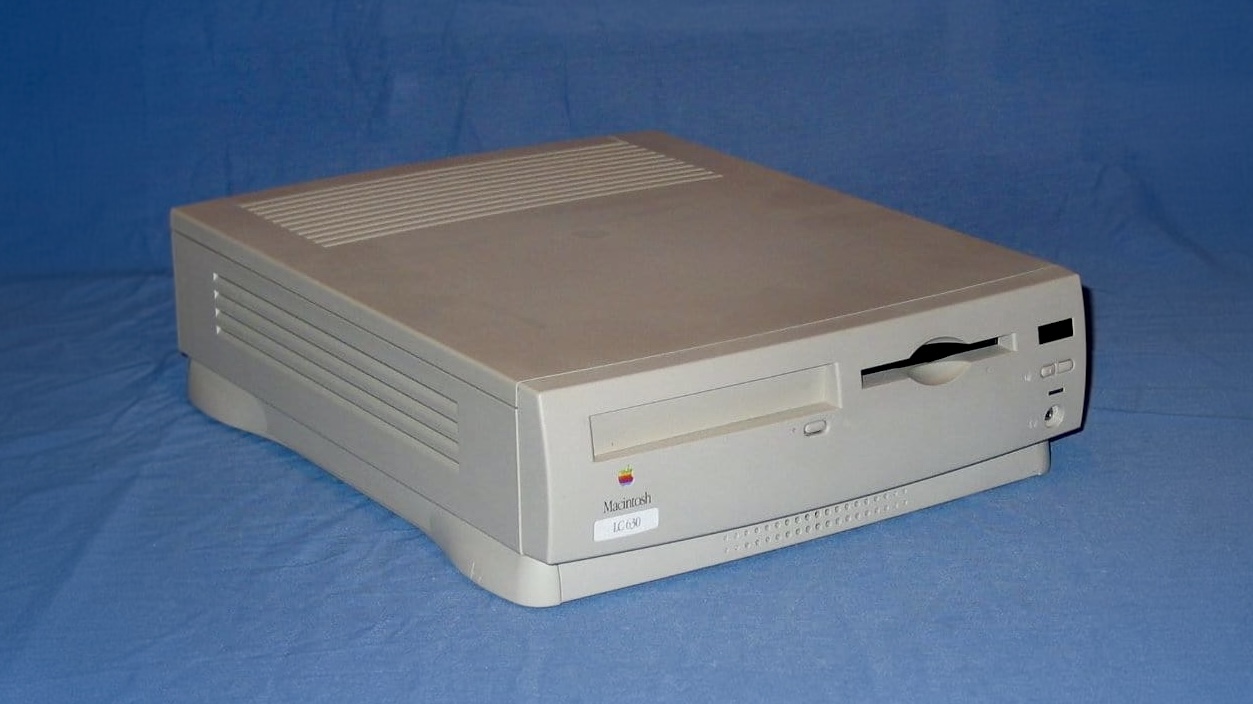
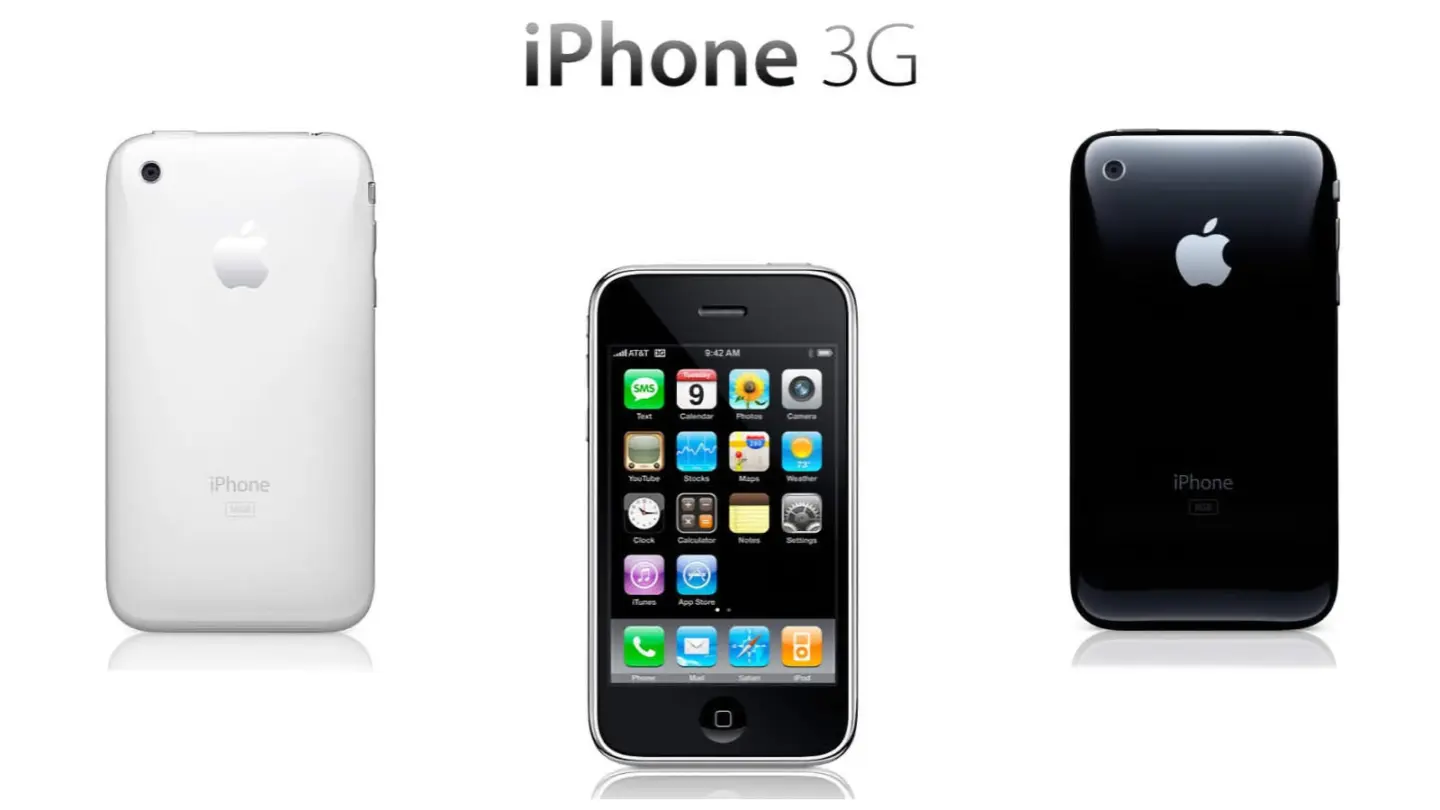
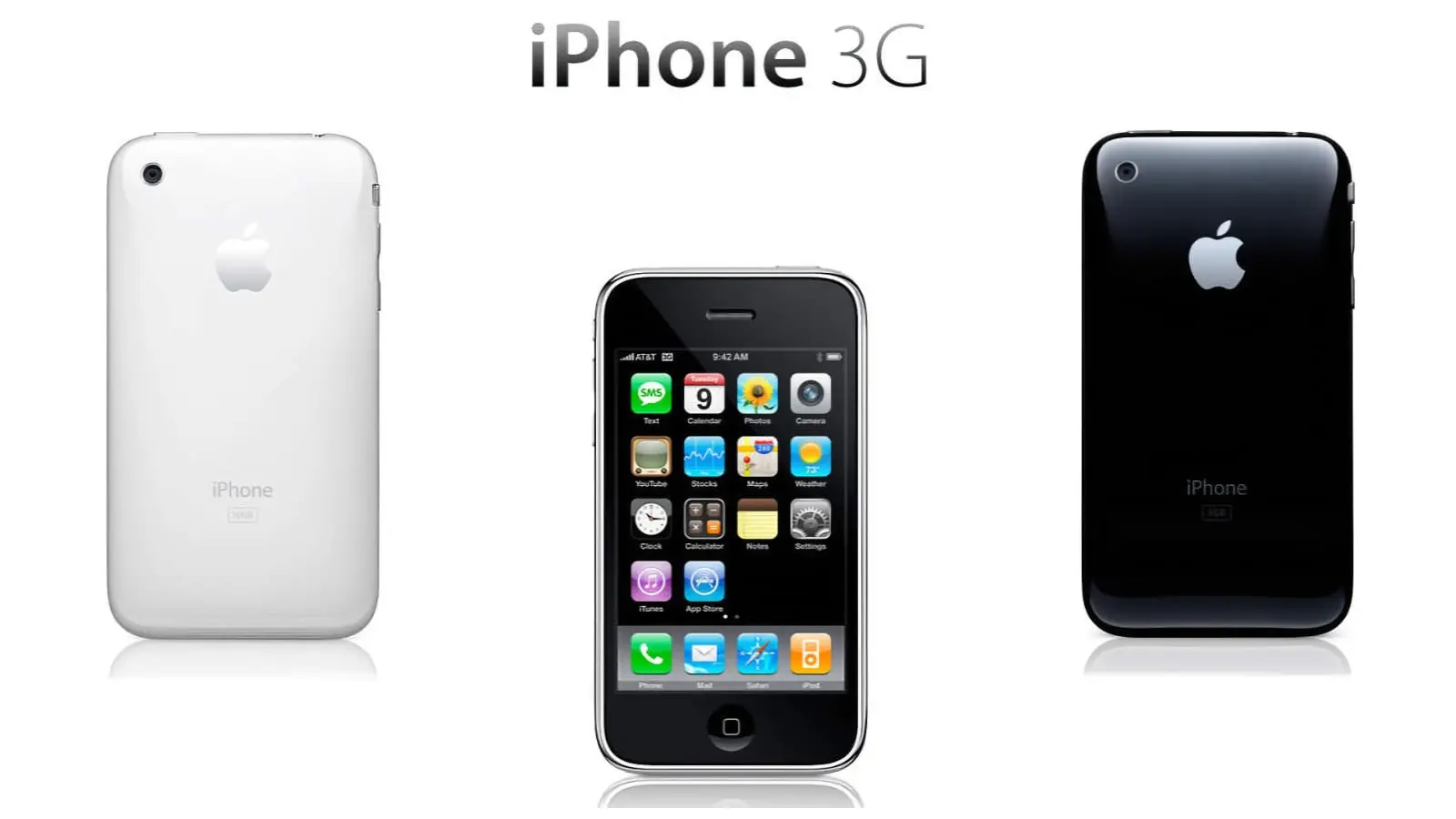
Before Apple ever had their own custom in-house silicon with the debut of the A4 chip on the iPhone 4, there were Samsung chips. The first few iOS devices relied on these early chips, while every device since the first iPad sports a chip made by Apple. These are the known as the “A-Series” SOCs, […]
Everyday when you see any sort of graphic in a GUI (graphical user interface), or in any printed media such as a billboard, poster, etc; they relate to different image file formats. Each format was created for specific purposes. While some are universal, others are less known about, and a few are difficult to interact […]
Cylinder seals were far more than ancient signatures. They fused art, power, and belief into objects that revealed exactly who their owners were. The earliest form of the signature came from ancient Iraq in the form of cylinder seals. Mesopotamians, the ancient inhabitants of the land between the Euphrates and Tigris rivers, are credited for [...]
Tutankhamun’s 1925 examination left behind evidence that official accounts largely omitted. A closer look at the records reveals a troubling gap between scientific history and what actually happened. November 2025 marks 100 years since archaeologists first examined Tutankhamun’s mummified remains. What followed wasn’t scientific triumph—it was destruction. Using hot knives and brute force, Howard Carter’s [...]
Siri Wolfram helped define the original promise of Apple’s voice assistant. When Siri debuted on the iPhone 4S in 2011, it could answer factual and computational questions without sending users through a list of search results. Ask about a mathematical calculation, scientific quantity, historical statistic or unit conversion, and Wolfram Alpha could provide a structured answer.
That partnership gave early Siri something many modern AI assistants still struggle to guarantee: a source designed to compute answers rather than produce plausible sentences. Wolfram Alpha was not a chatbot. It was a computational knowledge engine built around curated data, symbolic mathematics and algorithms.
Siri AI enters a far more ambitious era. Apple now wants its assistant to hold natural conversations, understand personal context, interpret images, find information across apps and complete actions. Yet the old Siri Wolfram relationship remains useful for understanding what Apple gained, what was lost as assistants became more conversational and why verified computation may become even more valuable in the generative AI age.
Siri Wolfram Was Built Around Answers
The original Siri Wolfram integration reflected a straightforward idea: users wanted direct answers without manually searching, opening websites and comparing sources.
Wolfram Alpha was particularly effective for questions with a computable result. It could solve equations, compare financial data, convert measurements, retrieve astronomical information, calculate dates and present structured scientific facts. Siri provided the voice interface, while Wolfram supplied the knowledge engine behind selected responses.
A user could ask how many days remained until a date, calculate a percentage, compare populations or request information about a mathematical concept. Siri translated the spoken request and delivered the result in a format suitable for the iPhone.
The experience was narrow compared with modern generative AI, but it had a valuable discipline. Wolfram Alpha attempted to determine an answer from structured information. It did not need to improvise an explanation every time.
That made Siri Wolfram especially useful for mathematics, science, education and quick factual calculations. The assistant could sound intelligent because it was connected to a system built to compute.
Image Source: Google
What Siri Wolfram Alpha Could Do Well
Siri Wolfram Alpha worked best when the request had a definable structure. Arithmetic, percentages, conversions, equations and statistics were natural categories. The system could also retrieve information about weather history, geography, nutrition, astronomy, transportation and other data-rich subjects.
The integration helped make Siri feel different from ordinary web search. Instead of showing several links, the assistant could present one answer with supporting figures or charts.
That approach had limitations. Wolfram Alpha could only respond effectively when it understood the request and had the relevant data or computational method. It was not designed for open-ended conversation, personal writing, emotional nuance or the countless informal questions users ask assistants.
Siri also relied on several external services, with Wolfram Alpha handling only certain knowledge categories. The experience could therefore feel inconsistent. One request produced a polished computational response, while another returned a web search or a limited canned answer.
Still, the partnership demonstrated a principle Apple has never fully abandoned: the best assistant does not need to create every answer itself. It needs to route each request to the system most qualified to handle it.
Generative AI Changed the Definition of an Assistant
Modern AI assistants are expected to do far more than retrieve facts. Users want them to explain ideas, write messages, summarize documents, analyze images, brainstorm projects and remember the direction of a conversation.
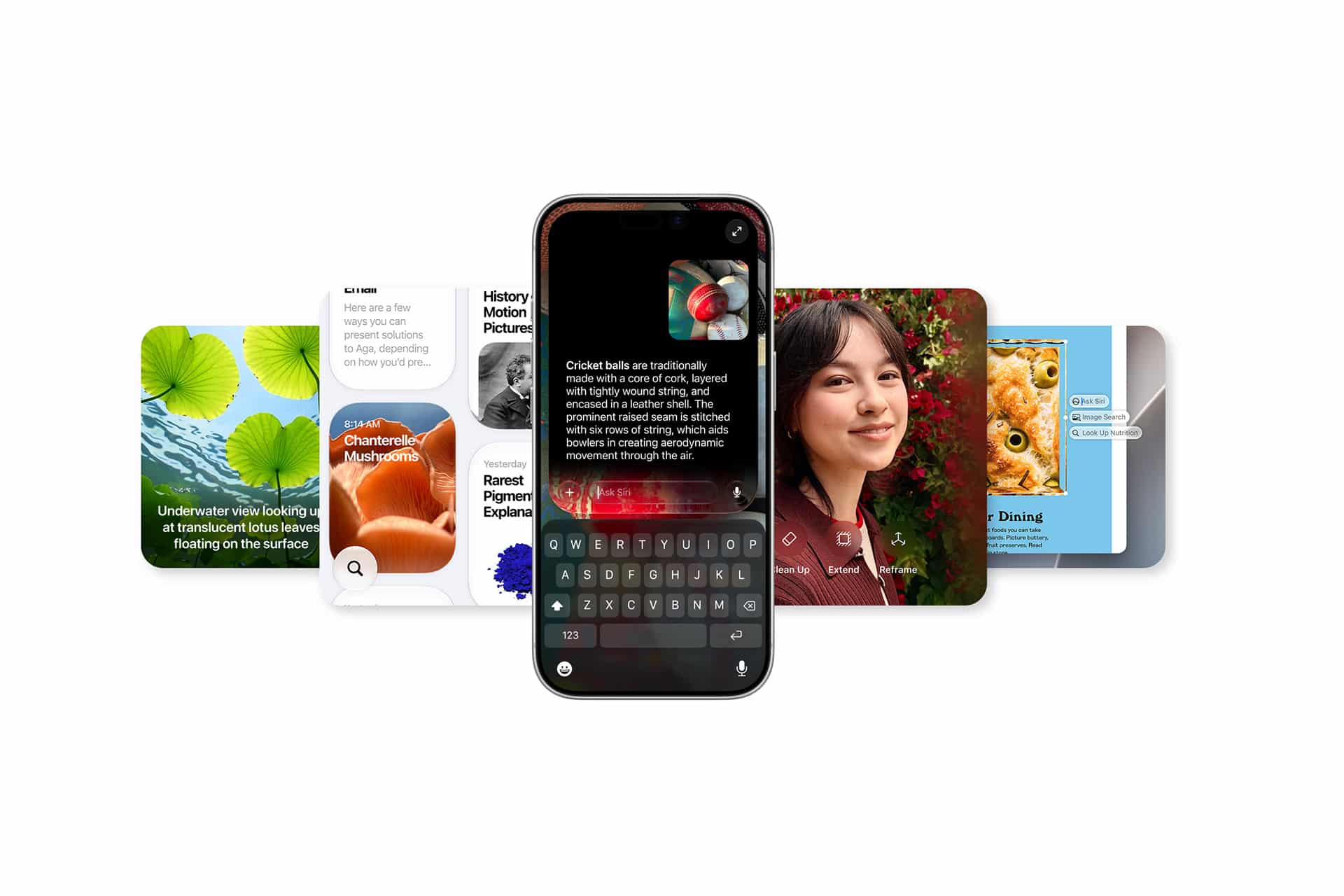
Siri AI is Apple’s response to that expanded expectation. Powered by Apple Intelligence and Apple Foundation Models, the new assistant can handle open-ended requests and continue natural conversations. It can use personal context from supported apps, understand onscreen content and connect requests with app actions.
This is a dramatic expansion from the Siri Wolfram era. The old model was largely transactional: ask a question, receive an answer. Siri AI is intended to interpret intent, understand relationships between information and help complete a larger task.
A user may ask Siri AI to find a restaurant recommendation buried in Messages, locate a hotel confirmation in Mail and add the details to a travel note. That request involves personal context and several system services rather than one public factual answer.
The assistant becomes less like a talking search box and more like an operating-system layer.
Image Credit: Apple Inc.
Conversation Creates a Reliability Problem
Generative AI makes assistants more flexible, but it also introduces uncertainty. A language model can produce an elegant response even when the underlying information is incomplete or wrong. The same fluency that makes the assistant enjoyable can make an inaccurate answer sound convincing.
The old Siri Wolfram model avoided much of that risk within its strongest categories. A mathematical calculation came from a computational engine. A unit conversion followed a defined relationship. A data query could be tied to structured information.
Siri AI needs both capabilities. It needs conversational intelligence for requests that cannot be reduced to a formula, while retaining access to reliable tools for tasks that demand precision.
Apple can use specialized systems for calculations, calendars, maps, weather, app actions and personal information rather than asking one generative model to invent every result. Foundation models can understand the request, then direct the work to an appropriate source.
That structure would preserve the strongest lesson from Siri Wolfram: intelligence also means knowing when not to guess.
Personal Context Is the New Knowledge Engine
Wolfram Alpha gave Siri access to public computational knowledge. Siri AI adds a second knowledge source: the user’s own information.
Apple says Siri AI can understand personal context across messages, emails, photos, notes and other supported content. It can help retrieve a detail without requiring the user to remember which app contains it.
This changes the assistant’s value. Wolfram Alpha could explain the distance between two cities. Siri AI could find the hotel reservation, identify the arrival time and retrieve the message where a friend recommended a nearby restaurant.
That personal layer also requires stricter privacy. Apple uses on-device processing for many requests and Private Cloud Compute when more processing power is required. The company has designed the system so personal data does not become part of an ordinary cloud AI profile.
Siri Wolfram answered questions about the world. Siri AI is being designed to answer questions about the user’s place within it.
Image Credit: Apple Inc.
Apps Complete the Transition
Siri AI also moves beyond knowledge by connecting directly with apps through App Intents. Developers can expose content and actions so the assistant can help users complete tasks instead of only describing how to do them.
That could include editing a photo, retrieving a document, starting a workout, updating a task or sending information through a supported app. Onscreen awareness adds another route, allowing users to ask about content already visible without explaining every detail again.
Wolfram Alpha remains valuable because some questions require specialized computation. App Intents extend the same routing philosophy into actions. Siri does not need to contain every capability internally. It needs to understand the request and connect it with the correct tool.
This may become the defining structure of Siri AI: one conversational interface backed by models, apps, services, personal context and specialized knowledge engines.
The Old Siri Still Has a Lesson for the New One
Siri Wolfram belonged to a more limited assistant era, but its underlying approach was disciplined. The system used a specialized source for questions that demanded structured knowledge and computation.
Siri AI has a wider assignment. It must converse naturally, interpret images, understand personal information and complete actions across Apple devices. That breadth can make Siri far more useful, but only if Apple preserves dependable pathways for calculations and factual tasks.
The future assistant should not choose between Wolfram-style precision and generative flexibility. It should combine them. A conversational model can understand what the user wants. A computational engine can provide the numerical answer. Personal context can supply relevant details. App Intents can complete the task.
The old Siri Wolfram integration showed that a voice assistant could make expert knowledge accessible through one spoken request. Siri AI now aims to place conversation, personal context and action around that foundation.
The assistant has become larger, more personal and more capable. Its credibility will still depend on something the 2011 version understood well: when a question has a correct answer, intelligence should calculate before it speaks
A dried-out felt-tip marker and a snapped-off piece of molded black plastic sold for $857,600 at a Sotheby's auction on Wednesday.
What otherwise might have been worthless bits of trash commanded the highest bids due to where the two items were 57 years ago—lifting off aboard NASA's Apollo 11 spacecraft on humanity's first mission to land astronauts on the Moon. More than flown odds and ends, one was the problem that almost stranded Neil Armstrong and Buzz Aldrin on the lunar surface, and the other was the simple solution to saving the mission.
"Houston, Tranquility. Do you have a way of showing the configuration of the engine arm circuit breaker?" radioed Aldrin to Mission Control after realizing he or Armstrong had inadvertently broken off the top of the circuit breaker switch that would enable their ascent engine to ignite, beginning their trip back to Earth. "The reason I'm asking is because the end of it appears to be broken off. I think we can push it back in again. I'm not sure we could pull it out if we pushed it in, though."
As Christopher Nolan’s The Odyssey arrives in theaters, archaeologists working off the western coast of Greece say a real-life cult site devoted to the legendary story’s hero has been uncovered.
Local traditions had long told of a stony hilltop on the Greek island of Ithaca that had once been home to a shrine to Odysseus, the legendary Greek king of the isle and main protagonist in Homer’s famous poem.
Now, after close to two decades of archaeological work on the island that served as home to the fictional king in Homer’s epic literature, archaeologists say they have uncovered the most compelling evidence yet that a genuine historical cult site had existed there, dedicated to the famed hero of The Odyssey.
An Ancient Cult Site Devoted to Odysseus
Researchers with the University of Ioannina recently revealed the discovery of new inscriptions and artifacts supporting the existence of a cult element devoted to Odysseus, uncovered at the ancient complex at Agios Athanasios, which had been a public sanctuary devoted to the worship of Homer’s famous hero during the Hellenistic and early Roman periods.
According to a statement released by the Greek Ministry of Culture, the building complex is characterized by a series of robust structures located on terraces, which involve several monumental elements featuring carved architecture and niches for what appear to have been votive offerings or inscriptions, all of which point to its use as a cult site.
Yannos Lolos, one of the project’s lead archaeologists, recently told ArtNet that the site’s role was revealed partially through a reexamination of existing materials found there, which helped reveal what he calls “new and strong inscriptional evidence” linking the site to Odysseus.
Bronze Bust and Inscription Discoveries
Among the most important discoveries at the site were a small bronze bust of Odysseus dating to the first or second century C.E., as well as a roof tile fragment which bore an inscription that reads, “to Odysseus.”
However, an even more compelling discovery involved a second stamped roof tile inscribed with the hero’s name but appearing in the Greek genitive case; this is significant, since it indicates ownership, thereby identifying the sanctuary as “belonging” to Odysseus.
A close-up image depicting the tile recovered from the site, bearing an inscription that references Homer’s Odysseus (Image Credit: Greek Ministry of Culture).
Based on current evidence, organized cult worship is believed to have begun at the site by around the late fourth century B.C.E., which places its use at around 500 years after Homer composed his famous epic poem, and almost a full millennium after the legendary events the epic describes.
The physical sanctuary itself was built onto a massive natural rock formation, and remnants of the ancient structure include a primary tower, a large oblong building, and terraces which were carved directly into the underlying bedrock.
Excavations over the last several years have also revealed the site’s deeper history, which points to evidence of earlier Mycenaean occupation during the 13th and 14th centuries B.C.E., at which time the site had likely served as a strategic center overseeing nearby harbors and local water resources.
A Discovery with Legendary Significance
In a statement, the Greek Ministry of Culture said the two new engravings arrives “in combination with the other available data, to document the development of a prominent public complex at the site,” which it said help to establish the “major role in the religious, social and possibly political life of the Ithacians of the Hellenistic-early Roman periods, but also with a broader pilgrimage character.”
The recognition of this ancient cult site only adds to the existing evidence that already supported worship of Odysseus on Ithaca. Past discoveries have revealed ancient coins depicting the hero, found near ritual offerings at Ithaca, which were also linked to cult activities. However, the identification of the sanctuary offers the most conclusive archaeological evidence to date that Homer’s legendary hero had been the cult’s focus.
Of course, these discoveries fall short of establishing Odysseus as a true historical figure, and most scholars agree that Odysseus was a fictional character born out of traditions that incorporated real places and events into their broader mythos.
However, in at least a few instances, the lines between myth and ancient history have been blurred—a famous example being Heinrich Schliemann’s identification of a site (originally discovered by British amateur archaeologist Frank Calvert, with his identification of the mound of Hisarlik) which helped reveal the archaeological reality behind the city of Troy, which had previously been considered a mythical location.
It was also reported last year that an archaeological discovery resembling the “labyrinth” from Greek mythology had been uncovered on Crete, in a discovery some have called “one of the most important archaeological finds” of the century.
Although the discoveries at Ithaca don’t establish Homer’s Odysseus as a historical figure in this way, they do confirm that centuries after The Odyssey was composed, inhabitants of Ithaca engaged in cult activities to honor the legendary king at a sanctuary on the island, which, according to legend, he once ruled.
Micah Hanks is the Editor-in-Chief and Co-Founder of The Debrief. A longtime reporter on science, defense, and technology with a focus on space and astronomy, he can be reached atmicah@thedebrief.org. Follow him on X @MicahHanks, and at micahhanks.com.
 Login



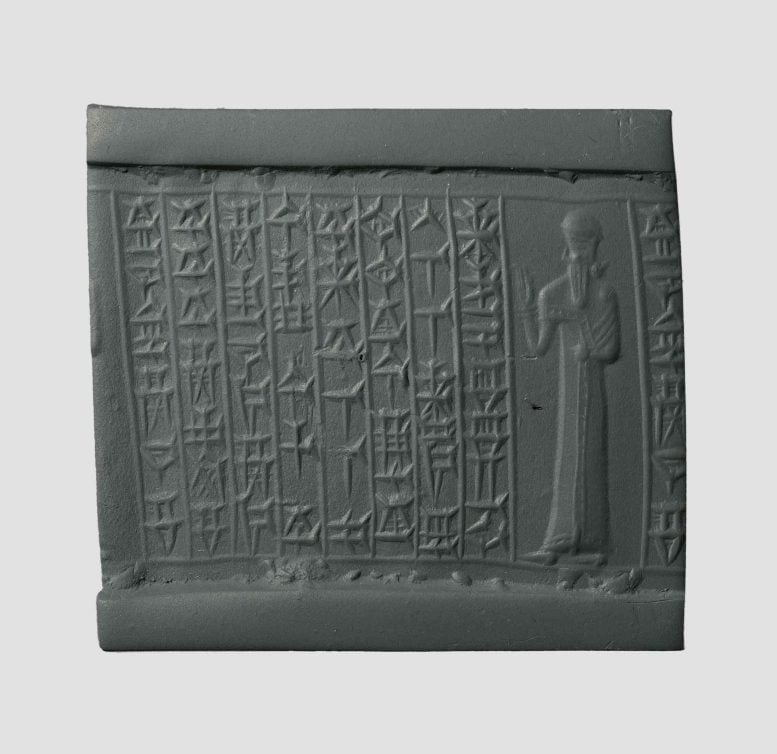 Cylinder seals were far more than ancient signatures. They fused art, power, and belief into objects that revealed exactly who their owners were. The earliest form of the signature came from ancient Iraq in the form of cylinder seals. Mesopotamians, the ancient inhabitants of the land between the Euphrates and Tigris rivers, are credited for [...]
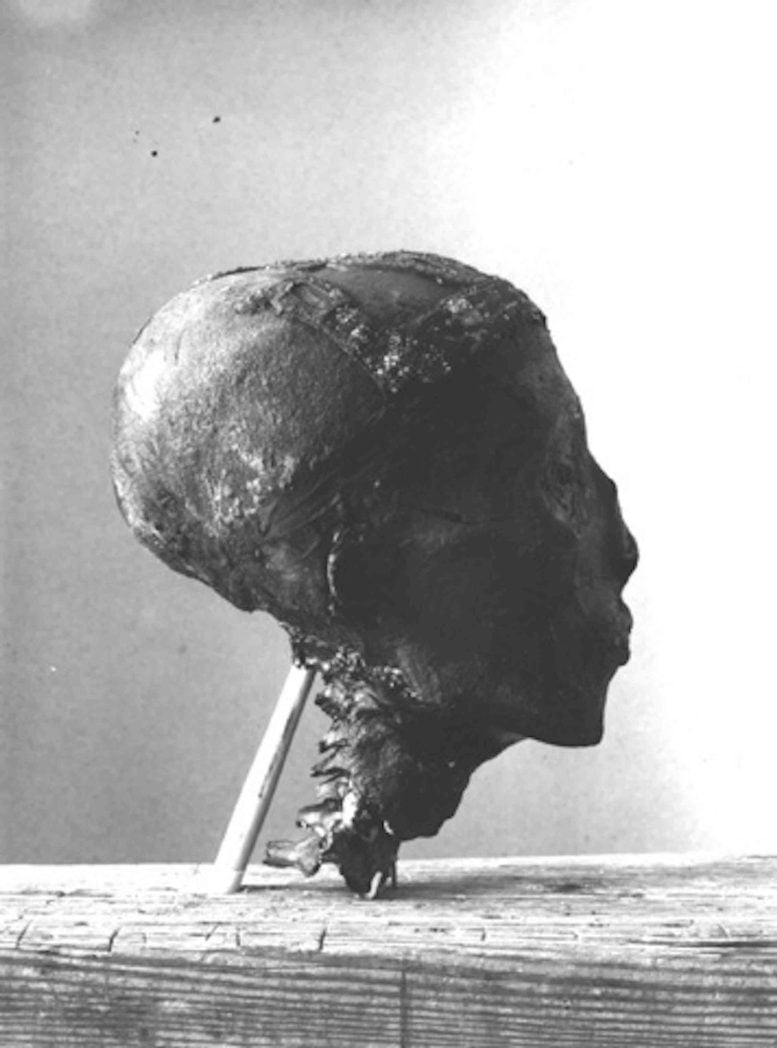 Tutankhamun’s 1925 examination left behind evidence that official accounts largely omitted. A closer look at the records reveals a troubling gap between scientific history and what actually happened. November 2025 marks 100 years since archaeologists first examined Tutankhamun’s mummified remains. What followed wasn’t scientific triumph—it was destruction. Using hot knives and brute force, Howard Carter’s [...]