Over at Snazzy Labs, Quinn Nelson has a great in-depth look at the changes coming to Apple’s Game Porting Toolkit with macOS 27 this fall. Paired with Metal 4, it’s a real leap over what’s possible today, and Nelson showcases the difference well.
Thanks to the upcoming update, Nelson was able to use CrossOver, a Windows-to-Mac compatibility layer that allows PC games to be played on a Mac, to spotlight some impressive numbers on games ranging from Red Dead Redemption to the recently released 007 First Light.
Not all games Nelson tried showed the same leap in performance, but that’s true on compatibility layers like Proton on the Steam Deck, too. What’s remarkable is that it’s all done in software and as Nelson points out, the advent of coding agents like Codex and Claude may help bring more PC games to Mac using the Game Porting Toolkit by reducing the porting costs.
Nelson also makes a pitch for an Apple gaming device. I agree with him that more than ever, the pieces, right down to a hardware-focused incoming CEO, are all there for such a device, and I remain optimistic. However, I’ve made the case for such a device for years now to no avail. Still, whether or not Apple builds gaming hardware itself, watch the full video above. It’s a fantastic view of how far the Mac has come as a potential gaming platform since the advent of Apple silicon.
A Google e a Epic Games retiraram esta semana o acordo que tinham alcançado para alterar uma decisão judicial nos Estados Unidos. A gigante tecnológica terá agora de abrir a Play Store a lojas de aplicações de terceiros a partir de 22 de julho.
Horror is so hot right now. There’s Obsession, Evil Dead Burn and Hokum in the cinema, Widow’s Bay, From and Something Very Bad Is Going to Happen on TV, and, of course, a rotting smorgasbord of horror games including Resident Evil Requiem (pictured top) and Reanimal, soon to be joined by Silent Hill: Townfall, Silver Pines and Dreadmoor. We’re also seeing weird cross-pollinations, with horror movie studio Blumhouse making games, while games themselves become horror films and the whole backrooms genre infects every medium it touches.
So it was fascinating to attend last week’s horror and gaming conference at Falmouth University, in Cornwall: a gathering of students, researchers and lecturers, all engaged in the academic study of horror games. There were brilliant talks on zombies and posthumanism, the gothic in games, and the role of monstrous little girls in survival horror (there are a lot of them!). Subjects as diverse as masculine fragility, disability and ageing came up; Will Doyle, creative director at Supermassive Games, gave a great keynote on the art of creating horror in games using tools such as revulsion, spatial alienation and the human instinct of apophenia. I learned a lot about theorists such as Julia Kristeva and Mark Fisher, and about the technical similarities between indie horror games and film noir (for example, the use of darkness and creative camera techniques to “hide” budget restrictions). It was incredible fun.
PC, PS5, Xbox Series X/S, Nintendo Switch, Nintendo Switch 2; Marimittu Games A soft puzzle game makes a sharp point about the over-optimised future ahead
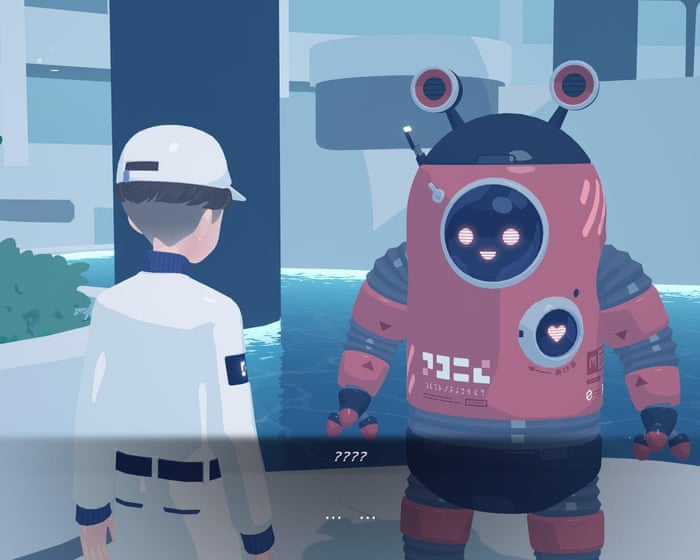
In the far future, on a planet that is not Earth, AI is in charge. This entity is no Skynet-esque killer robot but a machine that cares for humanity. Manifesting most visibly as cute droids, the technology is pervasive – embedded in everything from the design of the sleek architecture to the gorgeous, mostly sunny artificial weather. The so-called Optimization System has but one responsibility: ensuring the greatest happiness for the greatest number of people.
In less skilled hands this game might have felt like an undergraduate seminar on the limits of utilitarianism. But Japanese studio Marumittu Games elegantly marries its philosophical concerns with smart design choices. You play as a young, unnamed Facilitator tasked with tending to both the city’s bots and its human residents. Each morning you wake up, sleepily loping off to the bathroom before sitting down for an exquisitely rendered breakfast, and then embark on your day’s work. Like everything else in this near-future scenario, labour is designed to cause as little frustration as possible, amounting to simple maths brain teasers on a grid – nothing too taxing, but enough to keep you engaged.
Space is incomprehensibly vast. So huge that the human mind struggles to even conceptualize it. The observable universe spans roughly 93 billion light-years. Even our own humble galaxy, the Milky Way — a few tiny stitches of the universal canvas — stretches across 100,000 light-years and contains hundreds of billions of stars.
It's no wonder, then, that space video games struggle so mightily with anything approaching a "realistic" interpretation of those incredible distances, especially in an age where we have yet to invent a technology that can traverse them in a reasonable time.
The Artemis 2 mission's Orion module got up to speeds of around 25,000 mph during its trans lunar injection burn. Ignoring fuel and safety concerns, at those speeds, it would still take us at least 80,000 years to reach our nearest neighbor, Alpha Centauri.
So how do game developers manage to distill some of the awe of the vastness of space while making it feel like a manageable space? How do they shrink space to a navigable size without making it feel small or claustrophobic?
"On a 1 to 10 billion scale — which makes the Sun about the size of a large grapefruit — Earth is smaller than the ball point in a pen and located about 15 meters (49 feet) away from the Sun," explains Bennett. "On that same scale, the Moon — the farthest a human being has ever traveled — lies only about 4 centimeters (1½ inches) away from us. The planets of our solar system are much farther, though you can still walk to the outermost planets in only 10 minutes or so."
Bennett said most science fiction films and games get the scale wrong by making long-distance travel look too easy. Considering the above 1-to-10 billion-scale representation, for instance, and given that reaching the outermost planets in our system — far further than any human being has ever travelled — would take ten minutes, "to reach the nearest stars, you’d have to walk the distance across the United States."
Just simulating a small part of the existing universe would push current hardware to its limits, even with crutches like procedural generation. Developers use various techniques, like level-of-detail scaling, instancing, and streaming, to create the illusion of vastness without melting hardware.
Bennett also talks about how scale works in the case of interstellar objects like asteroids and maneuvering around them.
Films and games, he says, "tend to make it look very difficult to avoid collisions with asteroids, with spacecraft having to dart this way and that to pass through an asteroid region safely. In fact, while there are many millions of asteroids in the asteroid belt of our solar system, the full region is so large that it would take incredibly bad luck to crash into an asteroid by accident. That is why spacecraft studies of asteroids require careful planning to get a spacecraft close enough to any asteroid to get photos and other data."
The reality is that even in its most populated regions, asteroids are typically hundreds of thousands to millions of kilometers apart in our system's asteroid belt. Standing on one of the asteroids, it would be incredibly unlikely that you'd be able to see even one of the largest other asteroids with the naked eye.
How games cope with the enormity of space
(Image credit: Egosoft)
"This absolutely IS a design conflict that all space games have to solve," said Bernd Lehahn, Founder and Managing Director of Egosoft, the company that makes the successful X franchise of space simulators (most recently X4: Foundations).
"On the one hand, space must feel very large, or else players will feel cheated. Space and sci-fi have always been about the dream of infinite distances and exploration in a seemingly endless universe. At the same time, most games, the X games included, do not want to force players through unnecessarily long flight times or, god forbid, boredom."
Lehahn says his studio tries to strike a balance between areas that feel more content dense with regions that feel more like an unsettled frontier, to impart a sense of the true emptiness of space.
(Image credit: Egosoft)
"There should be room for both extremes: dense, highly populated regions, often with artificial means of transportation that allow the player to find and visit many important places relatively quickly, but also the empty, remote, fringe areas of space, where the experience is much slower, but where exploration happens, and the uncharted map allows for mystery and secrets."
Finding a solution to modeling and traversing the vastness of space has been an issue for Egosoft from the release of the original X game back in 1999, and continues to be something the studio grapples with today. The reality is that most of space is empty, so empty that you don't even have visual cues to indicate you're moving through it. Traveling through it without some kind of cheat or compression would involve unimaginable stretches of black emptiness with nothing happening, but too much compression begins to feel artificial.
"X4: Foundations probably has the most sophisticated solution to this conflict," Lehahn said. For the latest game, the team combines a number of solutions. It starts with scaled tiers of engine technologies with increasingly limited steering. Faster, more powerful engines allow for increasingly speedy, but more straight-line or on-rails travel.
(Image credit: Egosoft)
The team also uses the conceit of "jump gates" to leap across huge swaths of the universe in a blink, as well as teleportation and time acceleration to similarly compress travel. There are also space highways with slipstream acceleration to hurry things along.
Importantly, the X games also often give players things to do during the downtime of space travel. Giving players minor, uneventful tasks or other distractions can help fill out long stretches of uninterrupted travel. Above all else, Lehahn wants to ensure players are enjoying themselves.
"X4: Foundations is still a game. We want it to feel as realistic as possible—allow players to experience the universe and truly believe the 'sectors' are endless, planets are real size, and you can move in relation to planets and even larger celestial objects. But sometimes, if there is a conflict between fun gameplay and realism, then we may have to compromise on realism a bit."
A different approach
(Image credit: Frontier Developments)
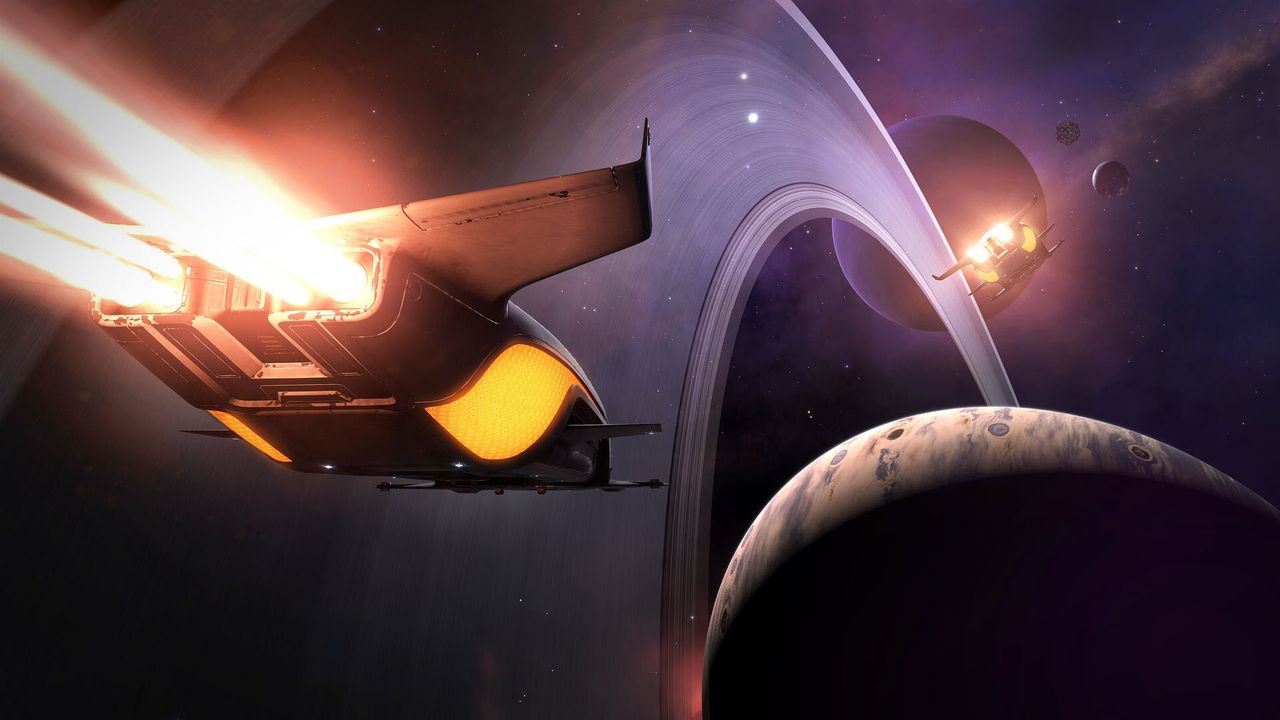
Rather than compress space into a manageable slice, the Elite Dangerous team at Frontier Developments takes on a much more ambitious challenge.
"We have a 1:1 scale Milky Way," says Executive Producer Gauthier Verquerre. "Roughly 400 billion star systems."
To create that vast canvas, the team uses a technology called the Stellar Forge, which uses real astronomical catalog data and models phenomena like the collision of stellar systems and the way stars and planets form to procedurally generate systems. The systems are generated once when a system is discovered and regenerated in the same way whenever a player visits them.
(Image credit: Frontier Developments)
One of the most daunting challenges Elite Dangerous faces is that the game doesn't just model the galaxy on a macro scale. It also has to generate planetary surfaces and space station interiors for players to explore.
"Throughout the universe, we have these spectacular stellar phenomena which players are out there discovering every day," said Verquerre. "The flip side of that is that we have players meeting in the same star systems, or on the planetary surface. We have to represent both the huge 1:1 scale of space that we have in the game for interstellar elements like Lagrange clouds or nebulae, and the personal scale of 'I'm on foot in a planetary settlement.'"
Despite releasing way back in 2014, only a tiny fraction of the space the game simulates has been explored by players.
According to Verquerre, "There's still over 99% of the universe out there, waiting to be explored, where any Commander can be the first to add their name to the system and say 'I was the first one to see this'. We also added System Colonisation last year, allowing our players to construct space stations and planetary settlements. That's been really rewarding for us, seeing the rate at which the bubble has expanded."
(Image credit: Frontier Developments)
To empower players to explore that nearly infinite playground, Elite Dangerous (like X4) takes a tiered approach. Three methods of travel provide increasing compression of space/travel time.
"There's Deep Space, where ships move at ‘slow’ speeds (around 300m/s, under Mach 1) to access individual gameplay actions like combat or mining," Verquerre told me, "Supercruise, which is essentially a form of FTL travel within a system useful for scanning systems, and Hyperspace, where players travel between star systems through a tunnel."
The game also recently introduced a fourth tier of movement, dubbed Supercruise Overcharge, which allows players to navigate star systems at a much greater speed. Even with these many systems for speeding up transit, however, traversing such unimaginably vast distances can eat up a huge amount of time, and Frontier has tried to ensure that travel is peppered with events and resource management to keep players engaged.
"It's all about the player," Verquerre explains. "Explorers often want a little solitude, or an unexpected encounter, whilst our traders are considering the risk of what they're carrying. Fuel and heat management tend to be primary considerations; no one wants to be marooned out in deep space! There are also interdictions, where a Commander can be pulled out of a jump and find themselves hunted."
(Image credit: Frontier Developments)
"Additionally, those long trips that our players are taking out into deep space mean that small damage adds up, canopy cracks and moments of tension take the beauty of space and translate it almost instantly into abject fear."
The magic and awe of the staggering scope of space is a core part of the Elite Dangerous mystique, and it's not lost on Verquerre.
"I remember a journey I once made to Beagle Point, one of the most remote star systems found in Elite Dangerous, which I’d consider to be one of the most memorable gaming moments in my life. The sense of achievement in reaching a system that you’ve plotted out at the end of a journey is something very tangible, and it always makes me look forward to the next adventure."
A (nearly) infinite challenge
(Image credit: ESA/Hubble & NASA (D. Calzetti (University of Massachusetts) and the LEGUS Team))
Space games don't fail to simulate the scale of the cosmos because developers lack ambition or imagination.
The reality is that the universe operates on scales that challenge not only the capacity of the human behind them, but also that of our machines to reproduce them. Bridging that gap requires not just bigger maps, but smarter design, and a recognition that sometimes, the awe of the infinite matters more than the numbers behind it.
"X4: Foundations" and "Elite Dangerous" are both available to play now on PC. You can also pick up Dr Bennett's book, "The Scale of the Universe", on Amazon.
Pokémon Go celebrated its 10th anniversary with a Times Square takeover in New York featuring a special event to defeat the Pokémon species Mewtwo. Nearly 2,000 people played the game together simultaneously in what organisers called one of the largest in-person Pokémon battles in history
Sony’s decision last week to quietly announce the end of physical games production for the PlayStation in 2028 is one of the most perfect PR disasters in recent gaming history – and considering what has been happening with Xbox, that’s saying something.
First, there was the timing. Sony posted the news of its decision on the PlayStation blog, less than a week after admitting that it would be deleting 550 movies from the digital libraries of PlayStation owners due to the end of a licensing deal – thereby perfectly illustrating the dangers of purchasing digital products. (Surprise! You never actually owned them!) The move is in stark contrast with the company’s stance on this very issue back in 2013. When Microsoft was attempting to push Xbox One as a digital-first console with strict controls on the sharing and reselling of its games, Sony brilliantly mocked its rival with a short video on how easy it was to lend physical games to pals on the PS4. Oh dear.
PS5, PC, Xbox Series X/S; Ubisoft Singapore/Ubisoft Ubisoft has removed all the boring parts of pirate life from its fantasy RPG, creating something more focused and fun
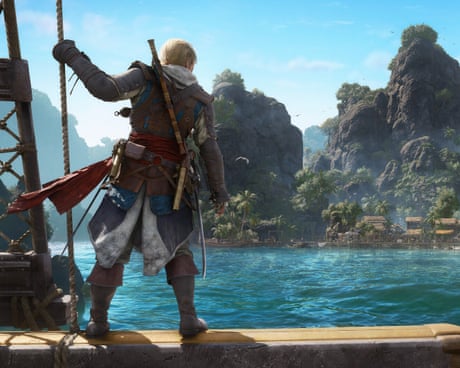
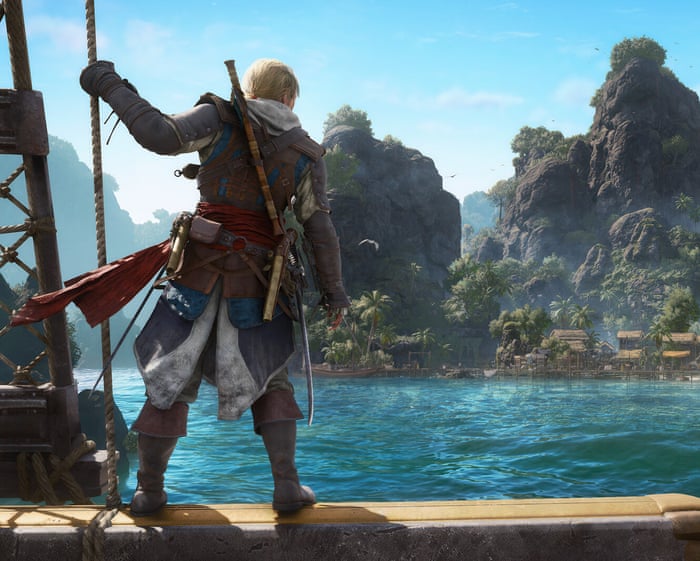
Edward Kenway isn’t your dad’s Assassin’s Creed protagonist. Neither sworn to ancient oaths nor given a noble destiny, he’s just a guy who likes coin, dislikes rules, and whose gold-chasing, rule-dodging lifestyle sees him embroiled in an ancient war between Templars and assassins quite by accident. After he’s shipwrecked with a man named Walpole who turns out to be a Templar, Edward assumes Walpole’s identity in the hopes of securing the bounty he mentioned.
Edward wears life lightly. The world around him is violent and chaotic, and those in his vicinity are more obsessed with double-crossings than a Mission:Impossible movie writers’ room. Ed just smiles, undeterred by it all, and gets on with plundering. It’s all just fun and games to him, and he is set on conquering the Caribbean on his own terms. He is a brilliant extension of the player, in that way, and that’s what this remake of the 2013 pirate-themed Assassin’s Creed does so well: the sense of freedom.
L'ufficializzazione del prezzo di Steam Machine ha concretizzato i timori di tutti coloro che si aspettavano un listino al lancio superiore ai 1.000 euro, dal momento che la macchina di Valve parte da ben 1.039 euro per la configurazione da 512 GB senza controller, per arrivare a ben 1.428 euro per la variante da 2 TB con un controller incluso.
Nei mesi precedenti Valve ha sempre mantenuto il massimo riserbo sul prezzo, proprio a causa delle continue fluttuazioni causate dalla crisi dei chip, che le hanno impedito di presentare il listino sin dal primo annuncio. Tuttavia, con l'ufficialità ormai svelata, l'azienda si è leggermente sbottonata e ha raccontato qualche dettaglio in più sul come sarebbero dovute andare le cose in una situazione di normalità.
Nel corso di un'intervista con IGN, gli ingegneri di Valve Pierre-Loup Griffais e Yazan Aldehayyat hanno infatti confermato che Steam Machine ha subito un aumento di prezzo in linea con quello avvenuto con Steam Deck lo scorso maggio, quando la piattaforma portatile ha ricevuto un rincaro pesantissimo di oltre il 45%. Sebbene i due non abbiano potuto svelare il prezzo originario a cui Valve intendeva proporre la macchina, un rapido conto permette di stimare che il prezzo di lancio originario sarebbe dovuto essere molto vicino ai 730 dollari per il modello base e ai 920 dollari per la variante da 2 TB.
GameStop non intende demordere con la sua iniziativa per comprare eBay, proposta annunciata negli scorsi mesi e inizialmente rifiutata. L’amministratore delegato Ryan Cohen ha confermato nelle scorse ore che nei prossimi giorni pubblicherà nuovi documenti relativi al progetto, inclusa una presentazione dettagliata delle motivazioni strategiche e del piano operativo che dovrebbe sostenere l’eventuale integrazione tra le due società.
A livello finanziario, però, rimane un fatto imprescindibile: GameStop ha una capitalizzazione di circa 10 miliardi di dollari e sta cercando di comprare un’azienda che vale più o meno cinque volte tanto. Il denaro deve per forza provenire da qualche fonte esterna. Anche l’idea di fondo lascia un po’ interdetti: Cohen ha detto di voler creare una piattaforma di e-commerce in grado di competere meglio con Amazon, combinando la presenza online di eBay con le attività e la community costruite da GameStop negli ultimi anni.
Nel frattempo, Cohen ha detto che intende rinunciare al piano di incentivi presentato da GameStop a inizio anno, che avrebbe potuto fruttargli qualcosa come 35 miliardi di dollari. Sarebbe scattato solo in caso di una trasformazione radicale dell’azienda, con un aumento della capitalizzazione superiore a dieci volte e un significativo miglioramento della redditività. Cohen ha detto che preferisce concentrare la propria attenzione sulla crescita operativa dell’azienda e sul completamento dell’acquisizione.
La grande promessa disattesa dall'attuale generazione di console è quella relativa al framerate: siamo a metà 2026 e ancora dobbiamo fare i conti con titoli che girano a 30 fps sullo schermo. A quanto pare, non farà eccezione nemmeno GTA 6, anche se un leak dello store polacco di MediaMarkt (MediaWorld in Italia) suggerisce l'inserimento di una modalità Prestazioni a 60 fps, selezionabile dalle impostazioni. Per il momento, Rockstar Games non si è espressa sull'argomento.
GTA 6 AVRÀ LA MODALITÀ PRESTAZIONI A 60 FPS?
L'analisi di Digital Foundry ritiene plausibile un tetto massimo di 30 fps, persino sulla PS5 Pro che sotto la scocca nasconde una potenza di calcolo maggiore. La ragione sarebbe da ricercare nell'estrema complessità degli scenari, ricchi di dettagli e di NPC animati nell'ambientazione open world di Vice City, ritenuti impossibili da gestire senza scendere a compromessi in termini di fluidità. Vale a maggior ragione se, come si intuisce dai trailer, la volontà è quella di mantenere sempre attiva la gestione dell'illuminazione con ray tracing.
Mitchell Institute workshop participants found little consensus on where competition ends and conflict begins as China expands counterspace capabilities
You certainly can't accuse Remedy Entertainment of playing it safe and sticking to what they know.
2019's Control was a third-person shooter, last year's multiplayer spin-off, FBC: Firebreak, was a first-person shooter, and now this year's direct follow-up, Control Resonant, is a melee-focused action game. Despite the genre flip, though, it's undeniably Control — a freaky sci-fi horror mash-up that's dripping with atmosphere.
We played 40 minutes of Control Resonant at Summer Games Fest, and spoke with lead level designer Anne-Marie Grönroos about the new enemy designs, architecture, and sci-fi influences. Here's what we learned about one of this year's most anticipated upcoming sci-fi games.
"Control Resonant" has a new protagonist, but we're keeping things in the family as we take the reins of Dylan Faden, troubled brother of "Control" protagonist Jesse. Dylan Faden wakes up inside the Oldest House — a paranormal, space-defying skyscraper in the center of New York that acts as the headquarters for the Federal Bureau of Control (FBC).
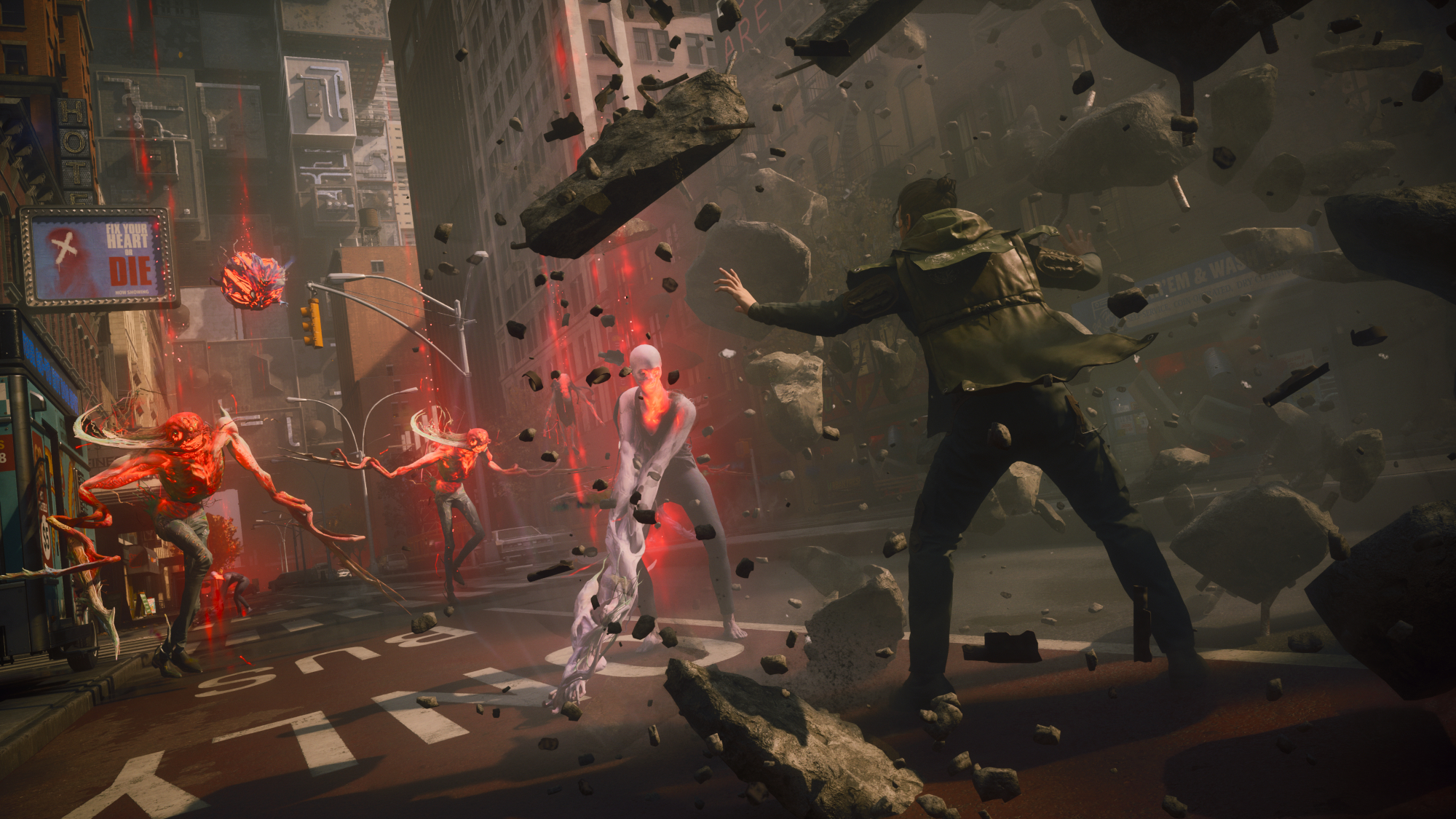
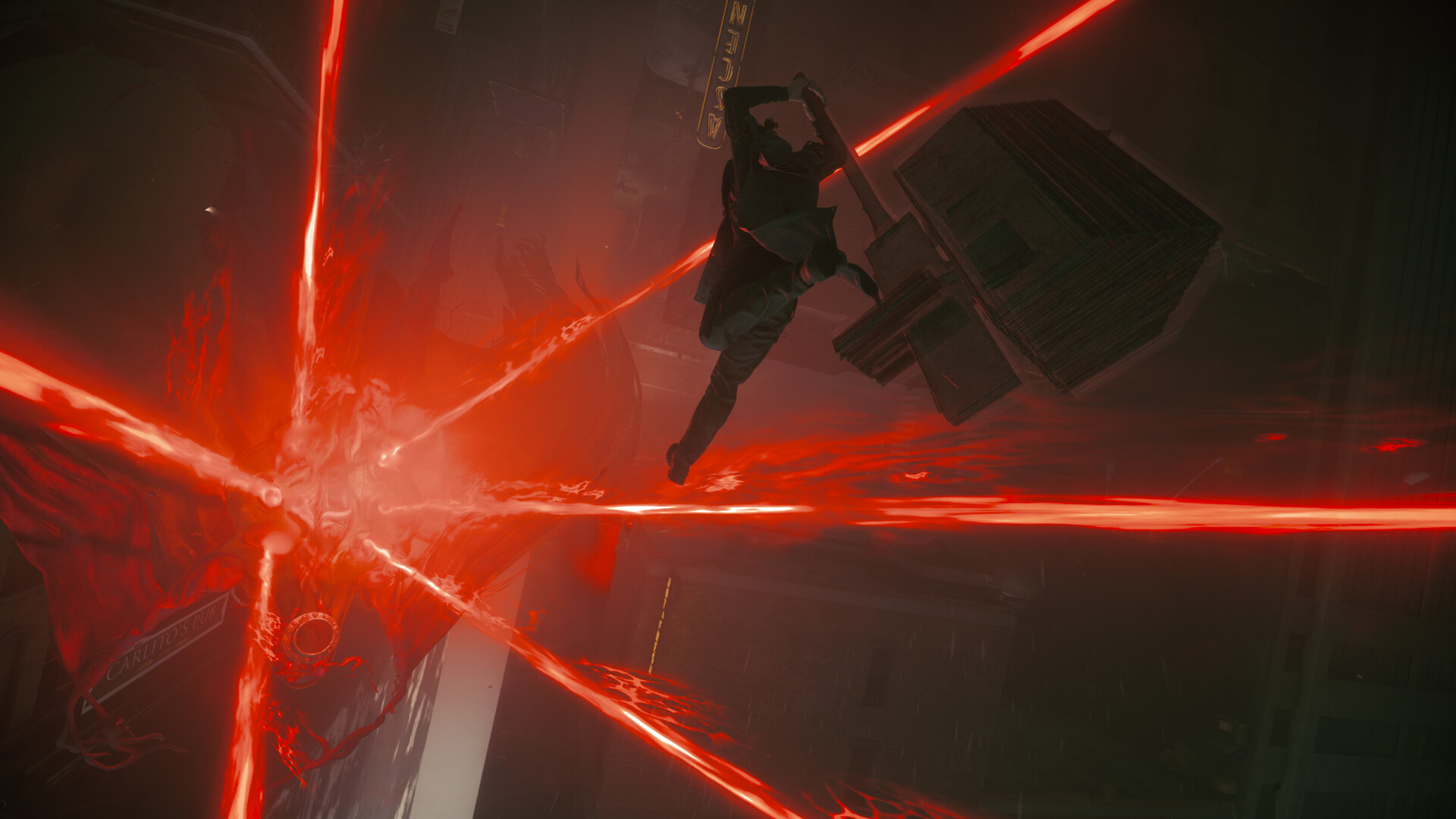
Jesse promptly stabs Dylan, who wakes up surrounded by blood, death, and the massacred bodies of his FBC jailers. With no idea what's going on, Dylan flees the FBC to find that the Hiss — otherworldly crimson monsters from another dimension — have overrun Manhattan.
(Image credit: Remedy)
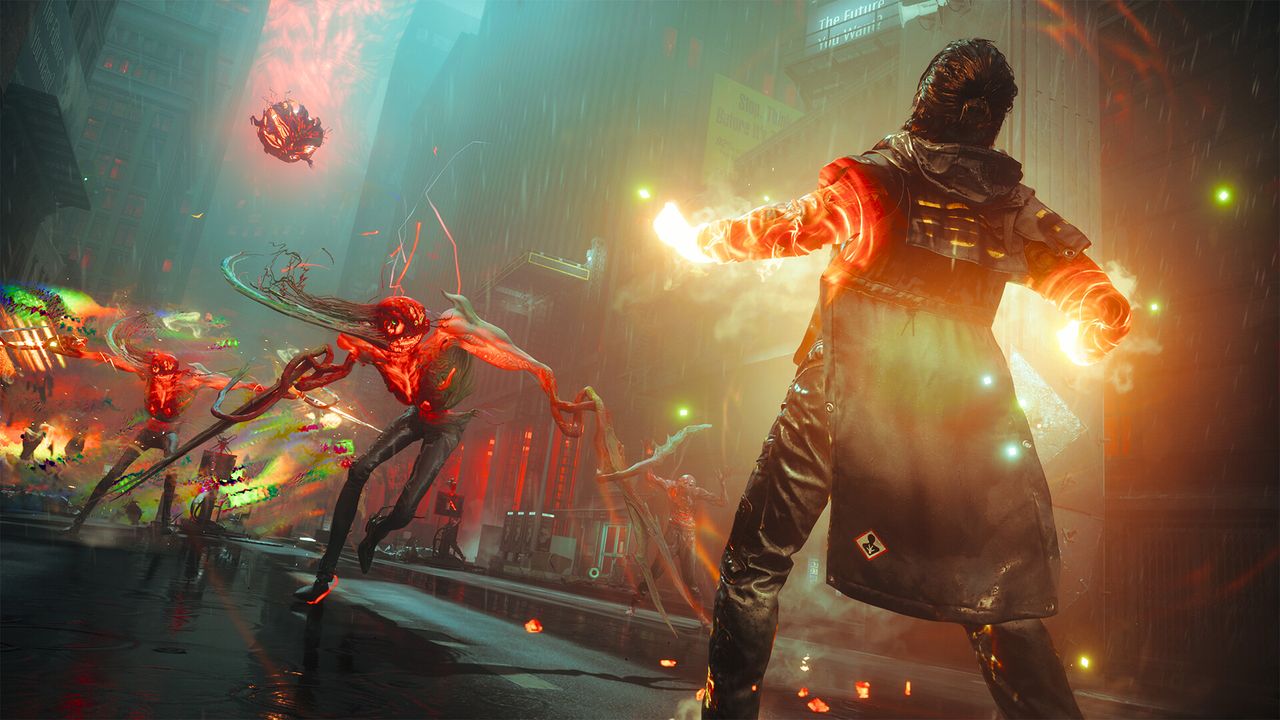
To fight these monsters, Dylan wields a unique weapon called the Aberrant (which just so happens to be the bar that Jesse stabbed him with). Much like Jesse's Service Weapon in the original, Aberrant can morph into multiple kinds of weapons, such as dual swords, an axe, and a scythe.
As a third-person action game (or spectacle fighter), Control Resonant feels like a toned-down version of Devil May Cry. It's just a bit slower and a bit more reserved, but it's still exhilarating to pull off combos and beat the snot out of the Hiss.
Combat is usually locked into arenas, locking you into an encounter until you've killed the Hiss. Larger enemies need to be prioritised, as the smaller Hiss will keep respawning until they're destroyed.
(Image credit: Remedy)
The Hiss are even more grotesque than I remembered from the first game; an observation that Grönroos was happy to confirm. "The enemies are a lot more mutated than they were in the first game," he notes. “They aren't just dudes shooting guns at you. A lot less human and more monstrous."
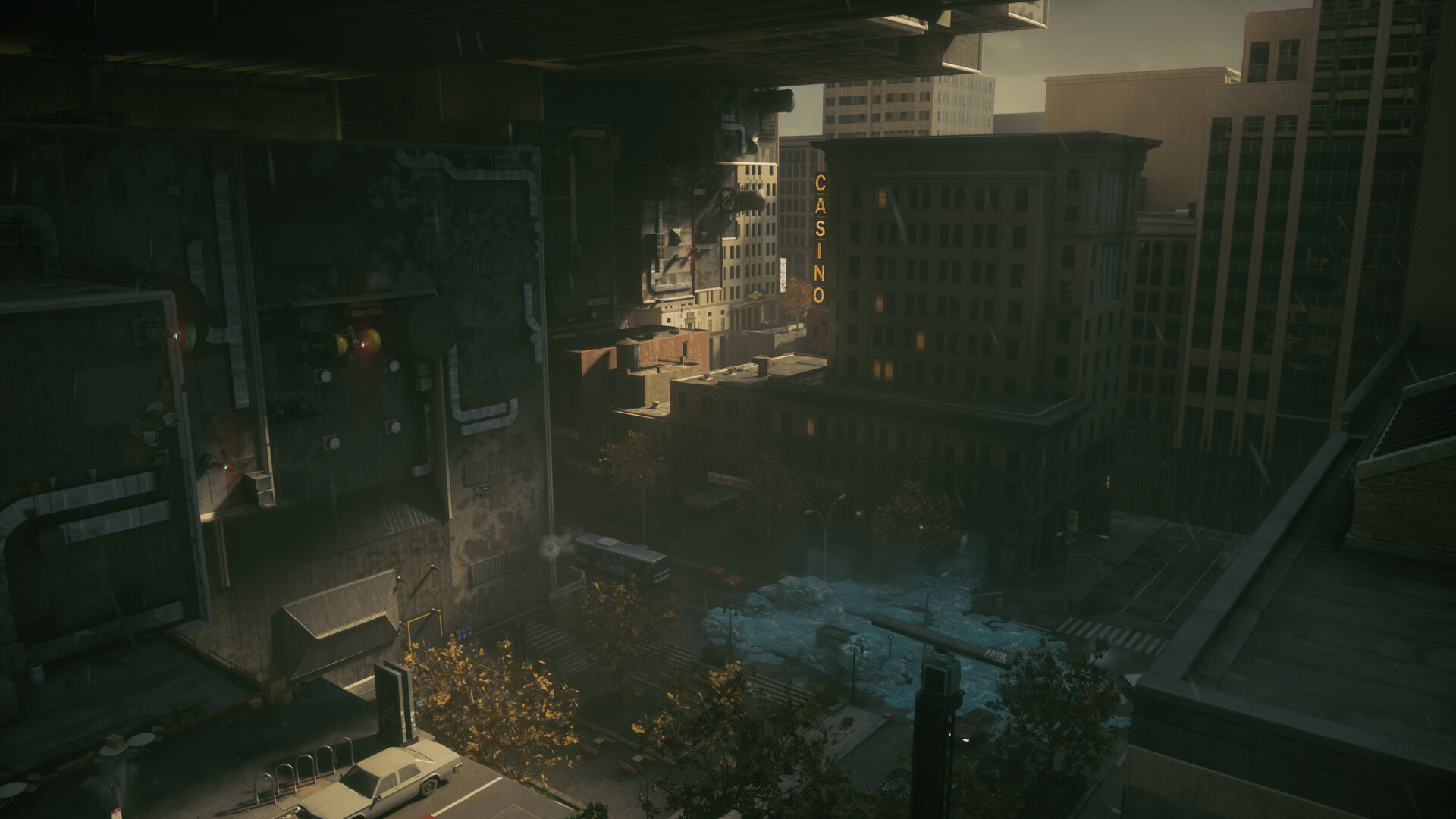
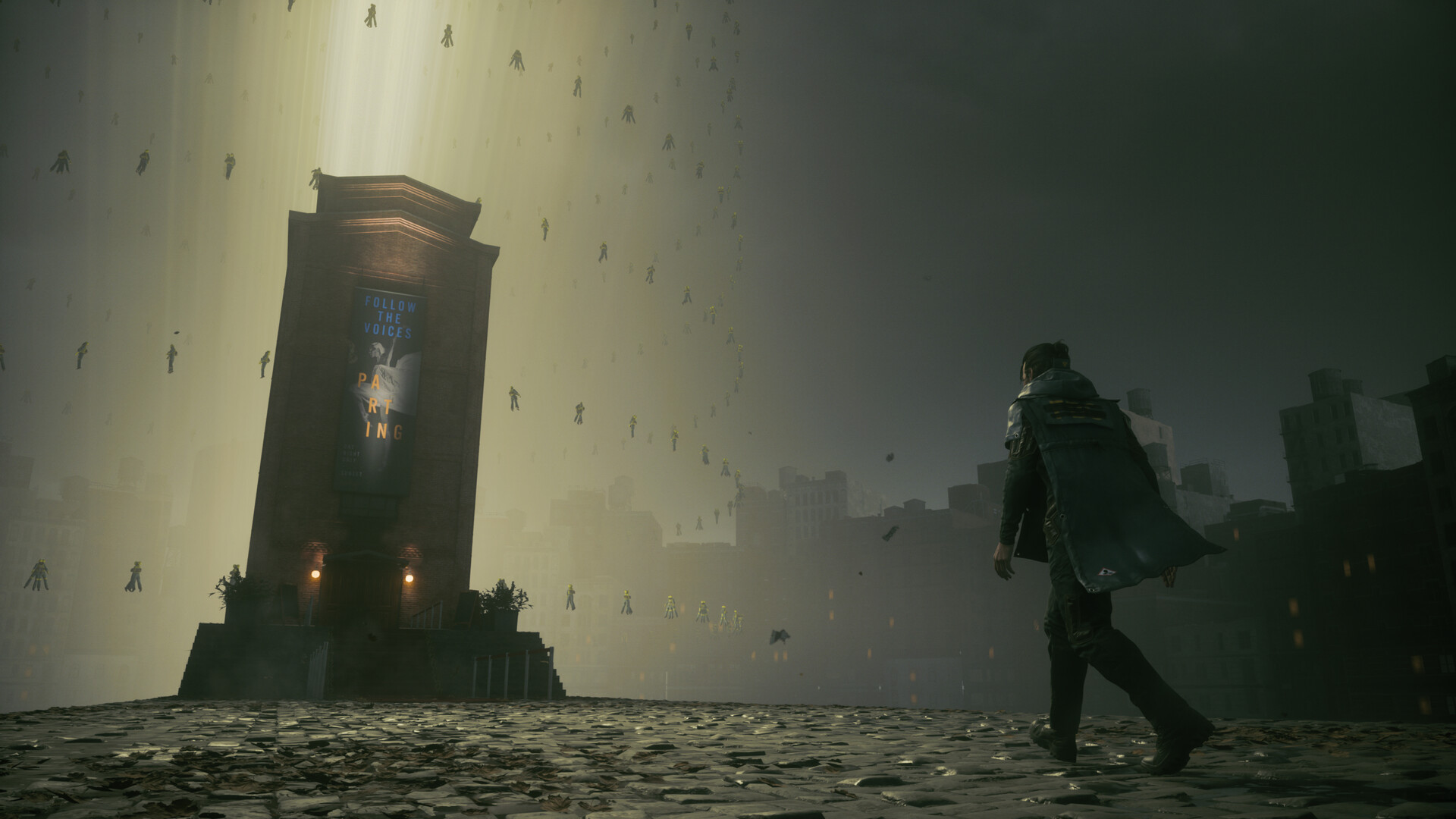
While Jesse was confined to the Oldest House, Dylan now has the freedom to roam Manhattan to find his sister. The first game's aesthetic was defined by the Brutalist architecture of FBC's surreal headquarters, and while you’ll certainly see that style here in place, Resonant pulls from a much wider pool.
"The further away you get from either the Oldest house or the Field Office, the less and less of that you'll see," explains Grönroos. "But when you see Brutalist architecture, that's also a sign that the FBC has a pretty strong presence here."
(Image credit: Remedy)
Manhattan has been well explored in video games — from Insomniac's Spider-Man and Tom Clancy's The Division through to "inspired by" titles like GTA IV — but Control Resonant's version of New York is a much more self-contained, streamlined version of the city that never sleeps.
Instead of an open world, we get a more linear platforming experience as Dylan navigates the rooftops like platforms, climbing, dashing, and double-jumping his way through the twisted landscape. This, combined with the psychedelic colors and trippy atmosphere, creates a uniquely surreal vibe that we really dig.
The Control universe is rife with sci-fi influences, with the fictional SCP Foundation sitting at the heart. The FBC investigates Altered World Events, where supernatural forces descend into reality and warp it. These lead directly to the creation of Altered Items, which are just objects infused with paranormal powers. It's all dressed up in a sort of 60s and 70s retrofuturism aesthetic, reflecting the space age and rise of media like Star Wars.
(Image credit: Remedy)
Beyond those obvious touchstones, though, there are surprising influences for this latest game. During our interview, Director Mikael Kasurinen mentioned Neon Genesis Evangelion as an influence for Control Resonant, with Grönroos adding that it heavily impacted the geometrical patterning in the game. "We also always have Inception as a reference. When you look at the city environments, this is the most Inception that we can get."
My demo ended with me facing off in a boss fight against a giant floating head with its jaw missing. Throughout the fight, it kept trying to sling rocks at me while keeping its distance, but I was able to keep up with its pace. Eventually, I managed to take it down, and then was taken to The Gap, a mysterious hub area where Dylan could upgrade his abilities.
He has plenty of upgrades to choose from, such as being able to telekinetically throw rocks, use them to form a shield, or conjure up this Aberrant into other weapons like a whip and hammer. I took a quick peek at each of the weapons and skill trees, and it seems like the combo system will definitely get more intricate later on.
(Image credit: Remedy)
There's a huge amount of variety in how to mix and match different weapons to dictate the pace and flow of battle. You can start your combo with a flurry of quick attacks from dual swords, and then come crashing down with a slow but mighty hammer at the end.
The action feels so different from the gunplay of the first game, and yet eerily familiar. Control Resonant also takes a page from Kingdom Hearts' playbook with flashy finishers. Dylan has access to a variety of them, our favorite being using the giant hammer to smash the Hiss into pieces.
Grönroos said that the biggest lesson that Remedy learned throughout developing its recent games, from Control, Alan Wake 2, FBC: Firebreak, and now Control, is giving players more freedom and agency. "Before Control, we used to just make these linear games," she explained. "Control was actually our first game where you could even backtrack, and Alan Wake 2 took that a little bit further, and now Control Resonant as well."
(Image credit: Remedy)
One of the highlights of the first Control game was the Ashtray Maze, a level where players had to fight against waves of enemies as they ran through a kaleidoscope of constantly shifting rooms and layouts. It was an adrenaline-fueled combat gauntlet that was equally exciting as it was fantastical. Grönroos was one of the minds behind designing it.
Can we expect something similar in Control Resonant? "There are definitely surprises," teases Grönroos. "Of course, I can't say what they are, but I think what made the Ashtray Maze really work was how unexpected it was. So I think there's stuff like in Control Resonant that's like that for sure."
Control Resonant launches on September 24 for PC, PS5, and Xbox Series X|S.
L'industria dei videogiochi perde una delle figure che hanno contribuito a definirne l'identità sonora, e non parliamo di una qualsiasi, ma di quella di un pilastro della storia videoludica, Doom, quel titolo che abbiamo visto girare pressoché ovunque. Bobby Prince, compositore e sound designer è morto il 16 giugno all'età di 81 anni dopo una malattia. La notizia è stata confermata a distanza di un paio di giorni e condivisa anche da id Software, lo studio che collaborò con lui nei primi anni Novanta.
Come si diceva inizialmente, il nome di Prince è legato in modo indissolubile a Doom, uno dei videogiochi più influenti di sempre. Le sue composizioni contribuirono a creare l'atmosfera frenetica e oscura che ha reso il titolo un punto di riferimento per il genere degli sparatutto in prima persona.
Rest in peace to the video game music pioneer Bobby Prince.
Your music lives on forever. pic.twitter.com/8LAT6CGZ5Y
Il GameCube continua a dimostrarsi una console leggendaria, anche grazie all'impegno della community modding che ci regala continuamente nuove esperienze da raccontarvi. Questa volta la console Nintendo è stata trasformata in niente meno che un PC Windows (ma senza sostituirne l'hardware!), grazie ad un progetto portato avanti da Rairii, NTx86 e stonedDiscord che ha portato alla creazione di una versione personalizzata di Windows NT in grado di essere eseguita su architettura PowerPC, ovvero la stessa alla base del processore di GameCube (un G3 Gecko da 485 MHz).
Il risultato è una piattaforma ibrida estremamente curiosa, anche perché l'architettura del sistema è molto più vicina a quella utilizzata da Apple per i vecchi Mac (infatti Mac OS X Cheetah è arrivato con facilità su Wii) e il progetto in questione risulta compatibile anche con Wii e Wii U, per via delle similitudini tra le tre console.
Ovviamente parliamo di una procedura che non può essere applicata su un GameCube senza alcuna modifica, ma se volete approfondire tutti i passaggi necessari potete trovarli all'interno del lungo video pubblicato da Jiga Tech che trovate poco sotto, dove lo youtuber ci guida attraverso tutto il procedimento di modifica e installazione di Windows NT su GameCube, inclusi tutti gli eventuali problemi da affrontare per la gestione delle periferiche, considerando che la console non presenta porte USB standard utilizzabili (cosa invece disponibile su Wii).

 Login