❌

Reading view

“It Was the Most Incredible Thing I Ever Witnessed”: New Film Details World’s First Private Astronauts—and a Life-Altering UAP Encounter

The fascinating behind-the-scenes story of the exploits of the first team of private astronauts to cross the Kármán line is finally being told.

A newly released documentary film, “Beyond Blue Sky: The Untold Story of the First Private Astronauts,” now available on Apple TV and Amazon Prime, reveals the award-winning accomplishment and includes firsthand testimony from the pilots and engineers who made the inaugural private astronaut space flights possible.

The film also includes one of the two record-setting astronauts, U.S. Navy combat veteran Brian Binnie, sharing an unusual, life-altering experience for the first time on screen, an event that he credits for inspiring him to continue after a crushing setback almost ended his dreams of flying to space.

A Private Astronaut’s Failure and a UAP Encounter

In an email to The Debrief, documentary filmmaker Kevin Curran noted that his Emmy-nominated crew, “with a proven space pedigree,” including chronicling milestones of Blue Origin, SpaceX, Astrobotic, and NASA, was able to capture “razor’s-edge supersonic test flight footage” to reveal the story of the first team of private astronauts to join the small group of humans to have ventured into space.

Along the way, the documentary depicts the team’s successes and failures in their pursuit of reaching space for the first time—and then doing so two more times with extra ballast—to win a $10 million prize.

Although Binnie, a Princeton-educated aeronautical engineer and 20-year Navy pilot, would typically seem like the obvious choice for the award-winning space attempt, a difficult crash landing on the first rocket-powered test flight of the program had Binnie doubting whether he would get another opportunity to pilot SpaceShipOne for the remaining five test flights.

Image Credit: Beyond Blue Sky, Kevin Curran

As incredible as the team’s historic accomplishments were, Curran told The Debrief that the story took an unexpected, but inspiring turn when Binnie revealed an out-of-this-world encounter that he credited with inspiring him to recover from that setback and ultimately make the historic flight.

“The rest of the documentary is pretty incredible/riveting, I think, but [Binnie’s] story makes it so topical right now with the Pentagon’s release of UAP files,” Curran told The Debrief.

“I Turned Around Expecting to See Them Behind Me”

According to Curran, his team had no idea about Binnie’s encounter when they started filming. As the ebullient filmmaker noted, the team was about six weeks into production on a film that he says “we thought would simply be an untold, feel-good story involving perseverance and redemption within the birth of private spaceflight.” Then, while the cameras rolled, Binnie made his revelation.

Although Curran notes that the pilot had previously confided in “dozens of people within the aerospace and test flight world over the years about his extreme close encounter,” this was the first time the veteran of 33 combat missions had “courageously” shared his experience on-screen.

first private astronaut UAP experience
Documentary film director Kevin Curran has taken protecting Brian Binnie’s legacy personally. Image Credit: Kevin Curran.

“Like any good story, it simply became more fascinating the more we pulled on the thread,” Curran told The Debrief.

The tale began on December 17, 2003, when Binnie successfully piloted SpaceShipOne to nearly 68,000 feet on its first rocket-powered test flight, a critical early accomplishment that made him the first pilot to go supersonic in a privately funded vehicle. However, the flight ended in an extremely rough landing that damaged the craft’s landing gear, wing, and fuselage, putting Binnie’s future as one of three test pilots of SpaceShipOne in doubt.

“After the crash, the 47-year-old Binnie faced the reality that he may never fly the spaceship again on the remaining five test flights of the program,” a summary emailed to The Debrief explains.

Six days after the hard landing, Binnie was awake one morning at around 4 a.m., unable to sleep comfortably in his bed. Then, according to the astronaut’s account, he noticed that “bright lights were coming through my window blinds. I rose, opened the window blinds to find that daylight had manifested in my backyard.” The decorated Navy veteran noted that while his backyard was illuminated, everything else he looked at was dark.

first private astronaut UAP experience
Binnie (above) is shown at his home. Image Credit: Focus on the Signal LLC, Kevin Curran.

The next part of Binnie’s story details the presence of around a dozen translucent, glowing “orbs” he said he could perceive within the lit area. However, the pilot recalled, the orbs did not seem bright enough to account for the inordinately bright light illuminating his backyard. During his on-screen recollection, the award-winning pilot also details the movement of the orbs, including two of them approaching him from approximately 50 feet away, passing through his bedroom window, and entering his chest.

“I turned around expecting to see them behind me, but they weren’t there,” he said.

Binnie described the pre-dawn experience as “the most incredible thing I ever witnessed.”

The Impact on Binnie and the Documentary Crew

When discussing the impact that the unusual experience had on him, Binnie told Curran’s team that he initially searched for a conventional explanation. With advanced engineering degrees and a 20-year Navy career that led him to become both a test pilot and manager of the SpaceShipOne program, he was well accustomed to evaluating unusual observations. However, after exhausting all prosaic possibilities, the trained scientist, pilot, and observer ultimately concluded that the mysterious glowing orbs represented an intelligent phenomenon that had somehow allowed him to perceive them.

“It gave me hope that I had a purpose, and that purpose was to not simply take defeat, but was to pick myself up and continue,” Binnie told the documentarian.

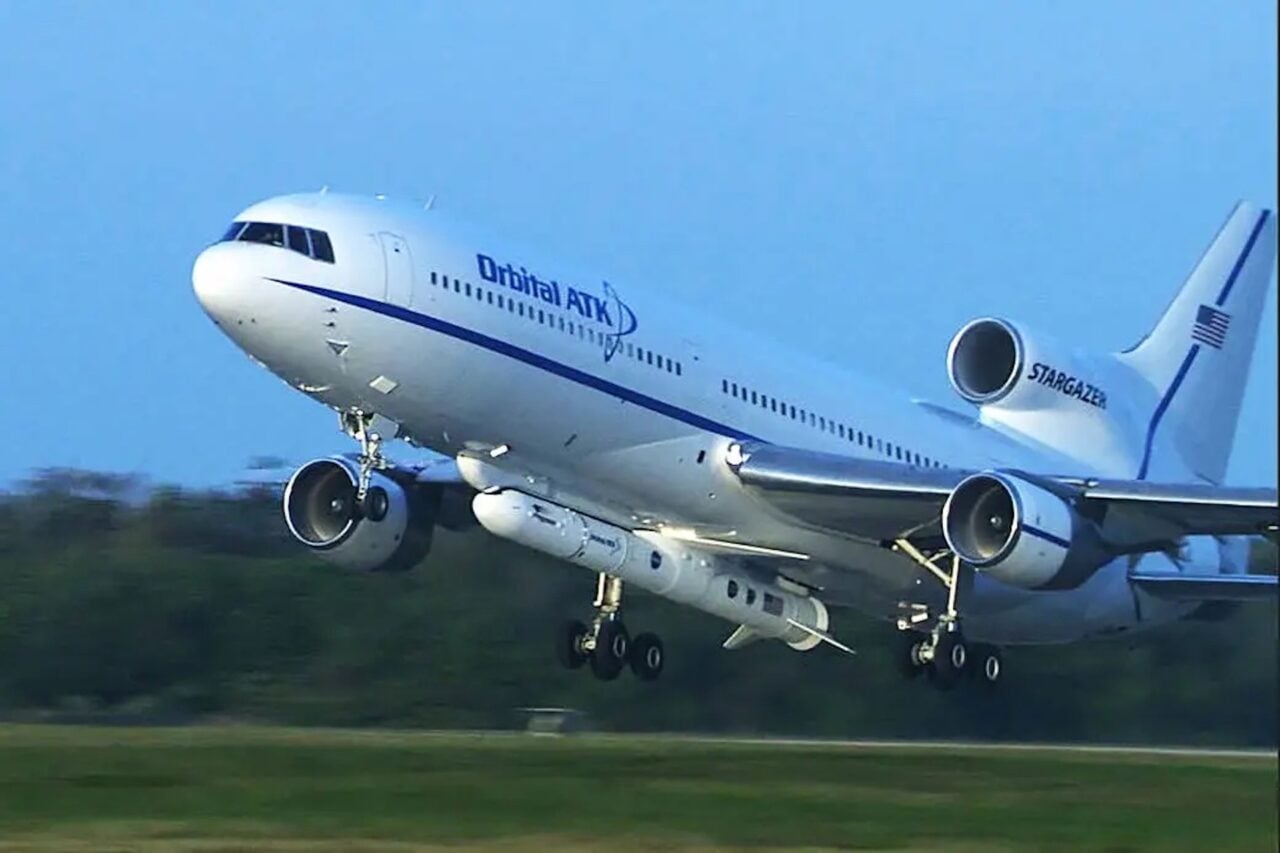
After what the team calls “a bizarre series of events” that offered Binnie a second chance to pilot SpaceShipOne, the newly reinvigorated aviator boarded the craft’s final flight on October 4, 2004. During the launch phase, when the pilot and craft are hauled to a high latitude by the mothership, White Knight, Binnie said he once again reflected on the apparent UAP experience, including how he felt the orbs had given him an intangible drive to complete his mission and make history.

first private astronaut
White Knight prepares to carry SpaceShipOne to space. Image Credit: Dave Moore.

By the time the flight was complete, winning both the Collier and Ansari XPRIZE, Curran said the accomplishment proved that a team of “renegade geniuses” could achieve a NASA-level feat for a fraction of the space agency’s typical cost. As far as the late pilot’s unusual UAP encounter, Curran credits Binnie’s courage for sharing his experience with UAPs, while also noting the effect the man’s retelling had on him and his crew.

Brian Confided in Colleagues for Years, But This is His First Filmed Account

“One thing I wish to clarify, in the event it matters, is that I believe Brian’s story,” Curran told The Debrief, while once again citing the combat veteran’s impressive credentials.

The documentarian also noted that there has been a stigma around the UAP subject for a long time, and that Binnie “was really brave to come out to me in 2020 before any of the House Oversight Committee testimonies or recent releases by the Pentagon.”

Brian confided in only a few aerospace colleagues about the experience for many years, and even learned of another astronaut with a similar experience, but the story’s inclusion in the film was the first time he shared it on record before passing away.

“I simply want to protect Brian Binnie’s memory and surviving family, as he was always kind to me, inspiring, and I’m proud to have called him a friend,” Curran concluded.

The project “is dedicated to the memory of test pilots Brian Binnie and Mike Melvill, the first two private astronauts who had the courage to fly stick-and-rudder to space,” the documentary team states.

“Thankfully, they shared their extraordinary stories on camera before they were lost forever in the Mojave sand,” the team concludes.

Christopher Plain is a Science Fiction and Fantasy novelist and Head Science Writer at The Debrief. Follow and connect with him on X, learn about his books at plainfiction.com, or email him directly at christopher@thedebrief.org.

  •  

This is How NASA Flight Tests New Technology

3 Min Read

This is How NASA Flight Tests New Technology

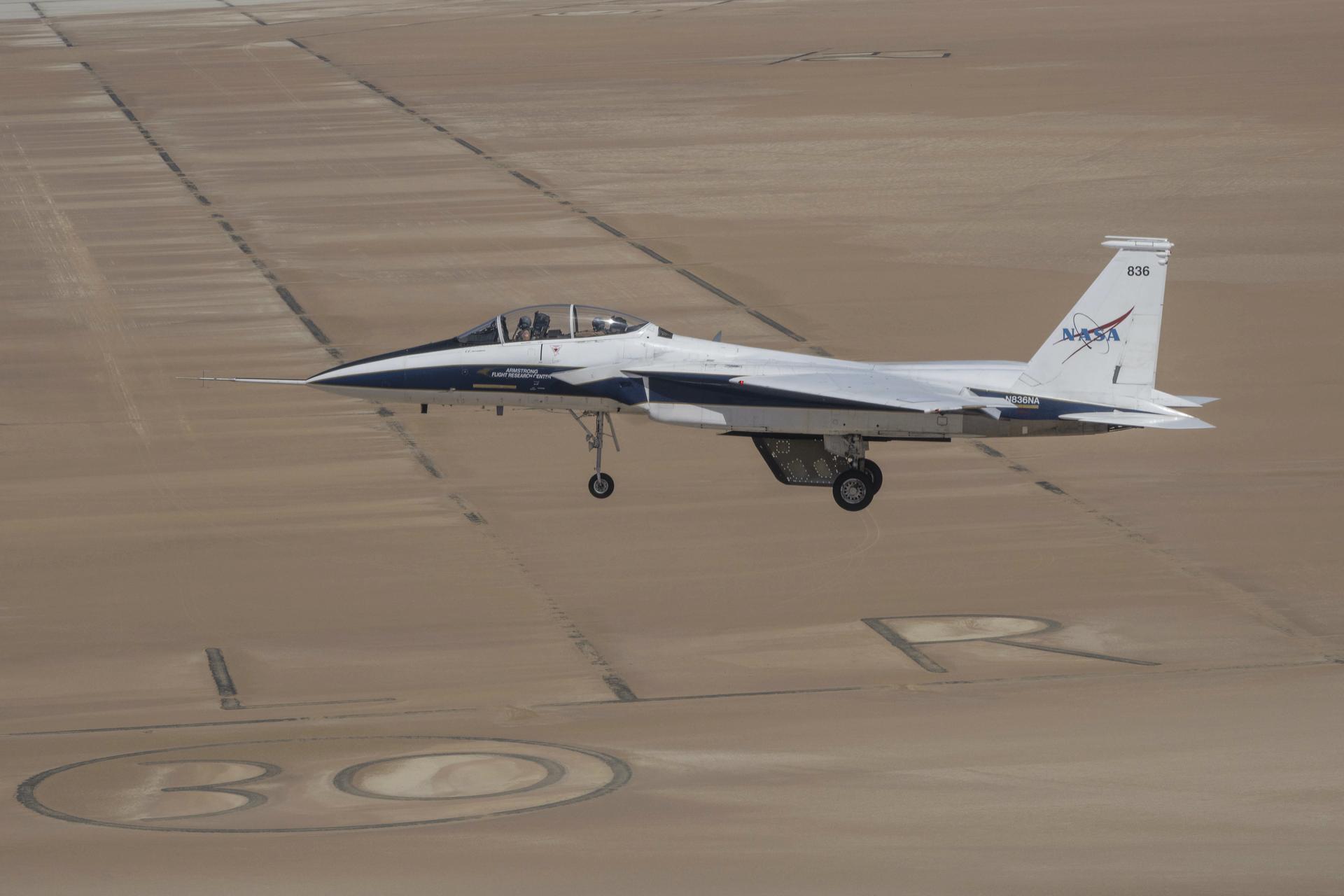
A white and blue painted jet aircraft flies above a tan lakebed with the gear and wheels out. A model wing hangs below the aircraft’s center line. The cockpit is closed and two pilots are visible inside with flight gear on.
An F-15 aircraft flies above the world’s largest compass rose above NASA’s Armstrong Flight Research Center in Edwards, California, on Monday, April 20, 2026. NASA’s Crossflow Attenuated Natural Laminar Flow (CATNLF) test article is attached to the bottom of the F-15. The project aims to lower fuel costs for future commercial aircraft by testing a scale-model wing designed to improve laminar flow.
Credits: NASA/Jim Ross

Flight tests are a big part of how NASA turns breakthrough ideas into reality. From flying humans faster than the speed of sound to proving designs that helped shape the space shuttle, flight testing transforms bold concepts into safer, more efficient technologies that benefit the public.

“Flight tests are a way to safely and effectively prove new technology, which helps certification authorities certify equipment,” said Wayne Ringelberg, chief pilot at NASA’s Armstrong Flight Research Center in Edwards, California. “It helps industry iterate and make systems better, and it promotes research in areas where new ideas can be developed.”

For nearly 80 years, teams at NASA Armstrong have used flight testing in the Southern California desert to push the limits of aerodynamics and advance aviation. Thanks to that work, NASA-developed innovations are aboard every U.S. commercial aircraft and inside every control tower today.

“The space side of NASA uses flight test, too. Every mission, like Artemis II, is never routine,” Ringelberg said. “Everything we’re doing when flying a test mission is something new or different.”

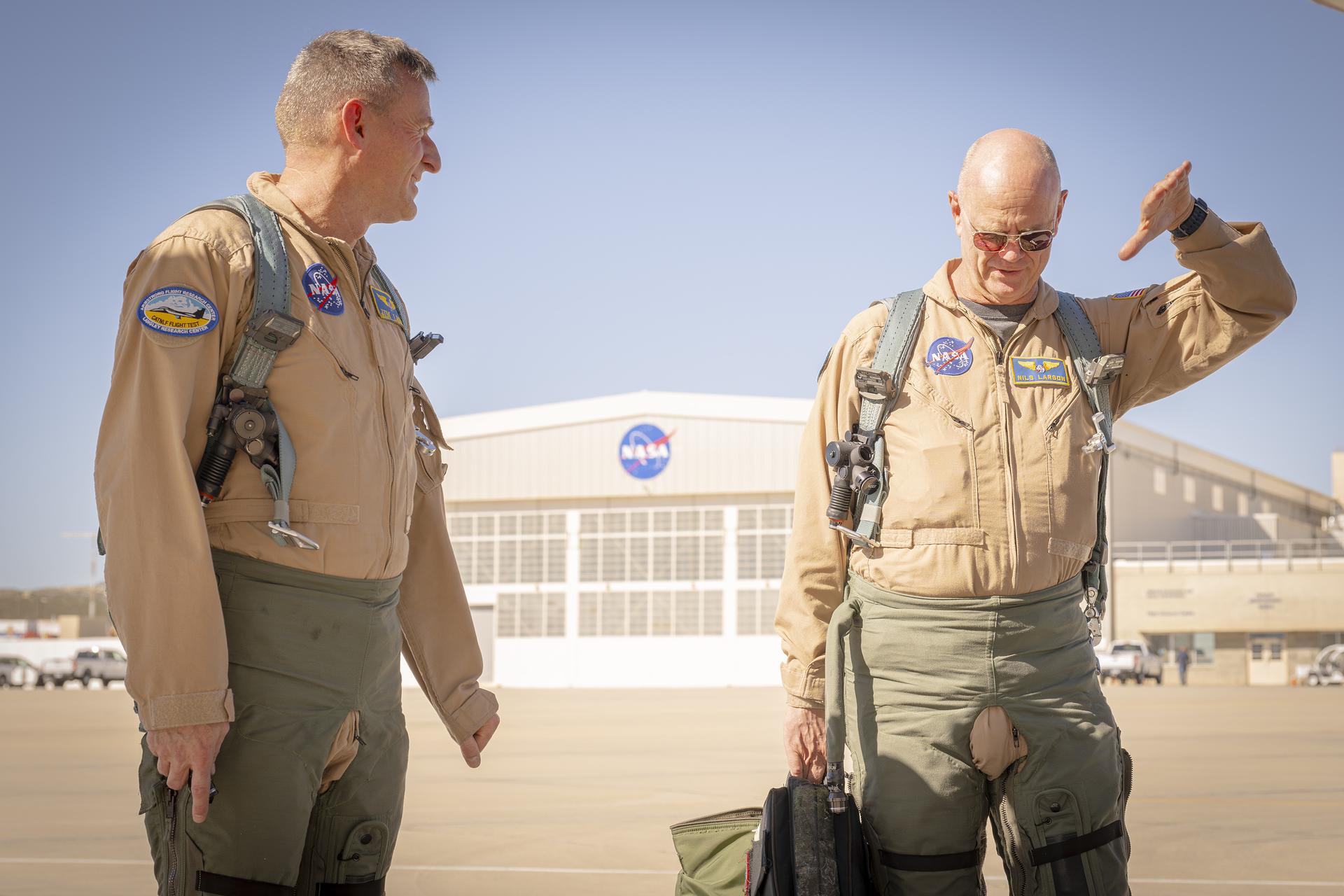
Two men, wearing tan flight suits and green flight gear, walk on a concrete surface away from a building in the background. The man on the left looks at the man on the right as he is moving his left hand in the air. This same man is carrying a bag with flight gear in his right hand.
NASA test pilots Jim Less, left, and Nils Larson walk away from a hangar at NASA’s Armstrong Flight Research Center in Edwards, California, on Thursday, Feb. 4, 2026. The pilots support the agency’s Crossflow Attenuated Natural Laminar Flow (CATNLF) project, which aims to lower fuel costs for future commercial aircraft by testing a scale-model wing designed to improve laminar flow.
NASA/Christopher LC Clark

Every NASA test flight — whether it’s studying new software, hardware, or the revolutionary technology of an experimental X-plane — relies on engineers, researchers, pilots, maintenance crew, control room operators, and many others working together.

“Experienced operators and engineers evaluate how things work in flight,” Ringelberg said. “Most new technologies are designed to work in a lab or can be tested in a wind tunnel or other facility, but you never really know how they’ll perform until you fly them.”

Preflight tests often include computer analysis, simulation, wind tunnel testing, and ground tests focused on an aircraft’s ability to withstand the forces of flight and the environments through which it may fly. After hardware or software is deemed safe to fly, researchers turn the mission over to the flight test team.

To support testing, NASA Armstrong maintains an aircraft fleet modified to create space for new hardware or instruments, as well as the ability to integrate new software. These aircraft are flying laboratories, and pilots are trained to accomplish experimental missions.

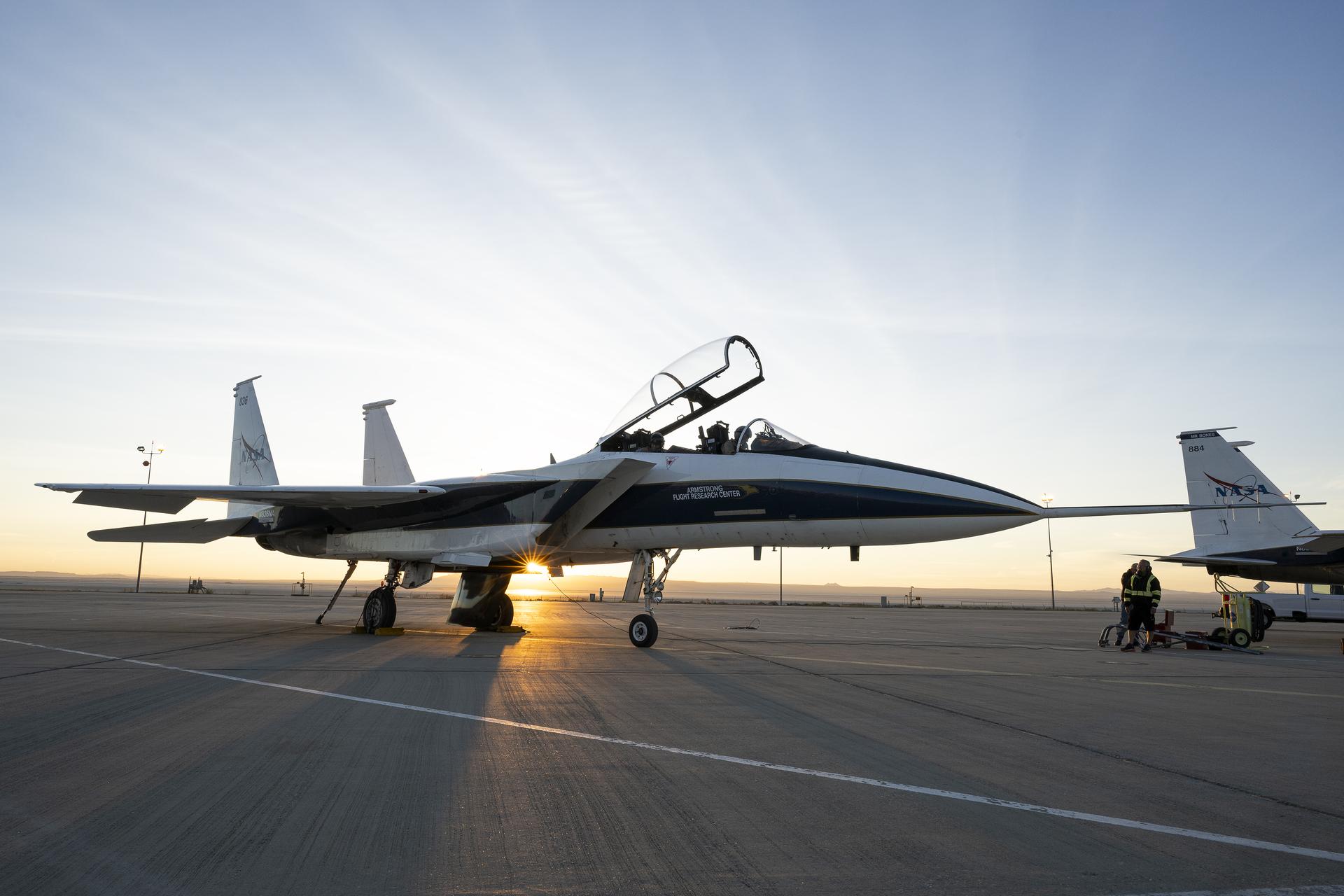
A white and blue painted jet aircraft sits on a concrete surface. The canopy of the aircraft is open, and two pilots sit inside wearing flight gear. The tail of a second jet aircraft is seen to the right of the image, and a desert landscape is seen in the background.
An F-15 research aircraft sits on the ramp at NASA’s Armstrong Flight Research Center in Edwards, California, on Tuesday, March 17, 2026. NASA pilots Jim Less, front seat, and Carrie Worth prepare for the flight. The agency’s Crossflow Attenuated Natural Laminar Flow (CATNLF) test article is attached to the bottom of the F-15. The project aims to lower fuel costs for future commercial aircraft by testing a scale-model wing designed to improve laminar flow.
NASA/Carla Escamilla

For example, flight testing recently helped NASA gather critical data on laminar flow, or the smooth flow of air, over a wing. The work could lower fuel costs for future airliners. Computer modeling, wind tunnel tests, and other methods helped advance the research, but to find out even more about how the wing concept could reduce drag for future airliners, NASA used a scale model in actual flight.

NASA researchers strapped the Crossflow Attenuated Natural Laminar Flow (CATNLF) model wing to the belly of one of NASA Armstrong’s F-15s. The arrangement allowed them to collect all the information they would need without doing the extensive, costly modifications required to install a full-scale wing on an aircraft.

After a flight series is complete, engineers and researchers analyze the data. Did the instrument work as designed? Did the experimental aircraft perform safely at a high altitude? Did the software operate as planned? Each test raises its own set of questions to evaluate.

NASA continues working with academia, the Department of War, and industry partners to advance U.S. aviation through flight test and bring new benefits to the flying public.

Share

Details

Last Updated
Jun 22, 2026
Editor
Dede Dinius
Contact
Keep Exploring

Discover More Topics From NASA

💾

NASA’s Crossflow Attenuated Natural Laminar Flow (CATNLF) project aims to lower fuel costs for future commercial aircraft by testing a scale-model wing desig...
  •  

June 23, 2015: 60,000 orbits for Mars Odyssey

NASA’s Mars Odyssey spacecraft completed its 60,000th orbit of the Red Planet on June 23, 2015. When Odyssey launched in April 2001 with a goal of better understanding Mars’ environment, the Red Planet was generally thought to be dry, barren world; the mission transformed our understanding, discovering widespread subsurface water ice. Its continuous observations haveContinue reading "June 23, 2015: 60,000 orbits for Mars Odyssey"

The post June 23, 2015: 60,000 orbits for Mars Odyssey appeared first on Astronomy Magazine.

  •  

Spiritual Physics | The Science Behind UFOs and Exotic Energy

I further develop "spiritual physics" to explore the dynamics of UFOs, linking their behavior to concepts of exotic energy and matter. By applying Newtonian kinematics and imaginary numbers, the model suggests UFOs harness unseen energy and achieve incredible speeds. The interplay between real and imaginary mass could explain their elusive movements.

  •  

SpaceX tests new vehicle, Swift gets a lift

Rocket launches this week Tonight, Monday, June 22, according to tracking from Next Spaceflight, The China Aerospace Science and Technology Corporation (CASC) plans to launch a Long March 7A rocket from the Wenchang Space Launch Site located in the South China Sea on the island of Hainan at 10:10 p.m. EDT. The payload has notContinue reading "SpaceX tests new vehicle, Swift gets a lift"

The post SpaceX tests new vehicle, Swift gets a lift appeared first on Astronomy Magazine.

  •  

Warp Drive To Reach the Stars is Impossible

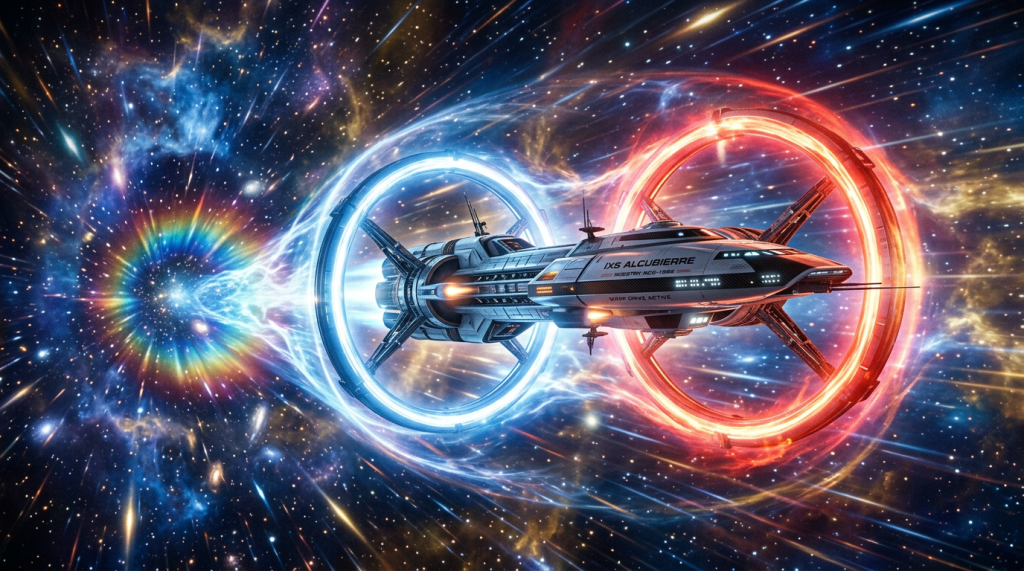
The exploration of faster-than-light travel, particularly through the concept of warp drive, presents significant theoretical challenges. While models exist, such as the Alcubierre drive, practical implementation remains impossible due to the non-existence of the required negative energy. Thus human exploration of neighboring star systems must be concluded as impossible.

  •  

Menstruation in space will be studied for 1st time with 'Operation Period'

One new mission is setting out to study menstruation in microgravity for the first time ever.

Forty-six years ago, NASA engineers asked Sally Ride if 100 tampons was the right amount to send with her for a six-day spaceflight. Though people laugh at that fact today, there has still never been any scientific study dedicated to studying menstruation in space. But a non-profit called Operation Period aims to change that. Led by Gen-Z researchers, this non-profit works to provide what its founder Manju Bangalore calls "menstrual freedom," which she says would mean everyone can have easy access to menstrual products. Meanwhile, the organization also aims to tackle the wider issues that leave people without such access in the first place. With its upcoming suborbital mission Operation Period-01 (OP-01), this ambitious team is taking their cause into microgravity. On OP-01, the mission's founder will launch to space to conduct the research themselves on a Virgin Galactic suborbital flight in 2027.

In conducting their work here on Earth, Operation Period found that "there were still some of those same gaps in spaceflight medicine," Manju Bangalore, the founder and executive director of Operation Period and research astronaut in training for OP-01, told Space.com. " I want all menstruators to be able to live life with their full dignity and reach their fullest potential, and that includes astronauts."

With a background in physics and astronomical engineering as well as with training in bioastronautics and having spent time working at NASA, Bangalore brings her love of space to this cause. She and Priya Abiram, the Director of Research at Operation Period's Redshift Lab, feel so strongly about their message, even 9 years since the pair founded their non-profit; in fact, with this mission, the two will become some of the youngest South Asian women to travel to space.

"On a personal level, I've always been fascinated by space and human space exploration. It's what's always excited me as a child, and I've kept that curiosity going," Bangalore said. "I didn't think those two missions would ever combine into this. It wasn't something I ever planned, but I'm very grateful to lead this historic mission to advance menstrual health in this way."

And just as this team is excited to bring their research into a suborbital environment, Virgin Galactic is excited to be expanding the range of microgravity science the non-profit supports. "This mission with Operation Period is a powerful example of how Virgin Galactic can continue to support real-time, in-flight scientific investigation into long-overlooked areas of human health, helping advance more inclusive and innovative exploration that delivers insight for both space and life on Earth," Virgin Galactic director of system analysis & research Amber Favaregh said in an emailed statement.

Recently, Operation Period expanded to include a research wing, and this mission will be conducted under that umbrella. The team was not yet able to share specific details on the exact protocol that will be conducted during the mission, information they said will be shared at a date closer to launch, but they did share the current issues that this research aims to begin to address.

Currently, astronauts typically choose to fully suppress their periods during their spaceflights, through hormonal IUDs or oral contraceptive pills. While that is a choice astronauts might continue to make in the future, without data to show the reality of dealing with a period in space, astronauts are left with fewer choices with their own bodies. Comprehensive data on menstruation in space will also be important if astronauts are to complete longer spaceflights or even extended stays on the moon. While the mission has not yet revealed its priorities and exactly what data it will collect, with such limited data on menstruation in space, there is a lot of knowledge to be gained.

While "the data that we have, although limited, says that it is generally safe to menstruate, in terms of long duration missions, we don't have quantitative data," Bangalore said. "We don't have enough data to continue to assist with patient resource allocation for mission planners."

Historic missteps like the "100 questions" moment with Sally Ride highlight an issue that could have big effects on future, longer-term missions. Sure, having a ridiculous number of backup products would ensure that there is no need unaddressed, mass considerations for spaceflight are extremely serious and future missions will need to have better data to know what will be needed in a microgravity environment.

And just like with other science in space, the research conducted in microgravity will also be used on Earth. The pair aim to collect menstruation data that will benefit astronauts as well as people back on our home planet. .

"I think on Earth, there's a lot of gaps right now in menstrual health research," Bangalore said. As just one example, she cited recent findings that menstrual product companies were reporting incorrect absorbency of their products because they were testing products with saline, which is very different from menstrual blood. "This was potentially leading to doctors to underdiagnosed heavy menstrual bleeding, which right now the stats say affects 20% of American menstruators," Bangalore said.

With this being the first mission of its kind, OP-01 will not answer every question that remains about menstruation and space, but it will bring data to a conversation decades in the making. "Our hope is to continue to iterate this research so that we can do future suborbital flights, as well as orbital flights, to continue to create larger data sets," Bangalore said. "I think the point of preliminary studies is to be able to know what questions to ask in the future, so we don't expect that this suborbital flight will solve everything or create all the data that we need, right, but we hope that this will be a good stepping stone."

Momentum for this research was actually sparked by many millions of views on a viral social media video in which Bangalore conducted an early version of a menstrual fluid dynamic experiment in a low-gravity environment aboard a parabolic flight.

This viral moment "ended up being a really cool kind of 'in' to continue talking about destigmatizing periods," she said. "Through that, I got to talk more about the gaps in spaceflight medicine, in terms of menstrual health."

  •  

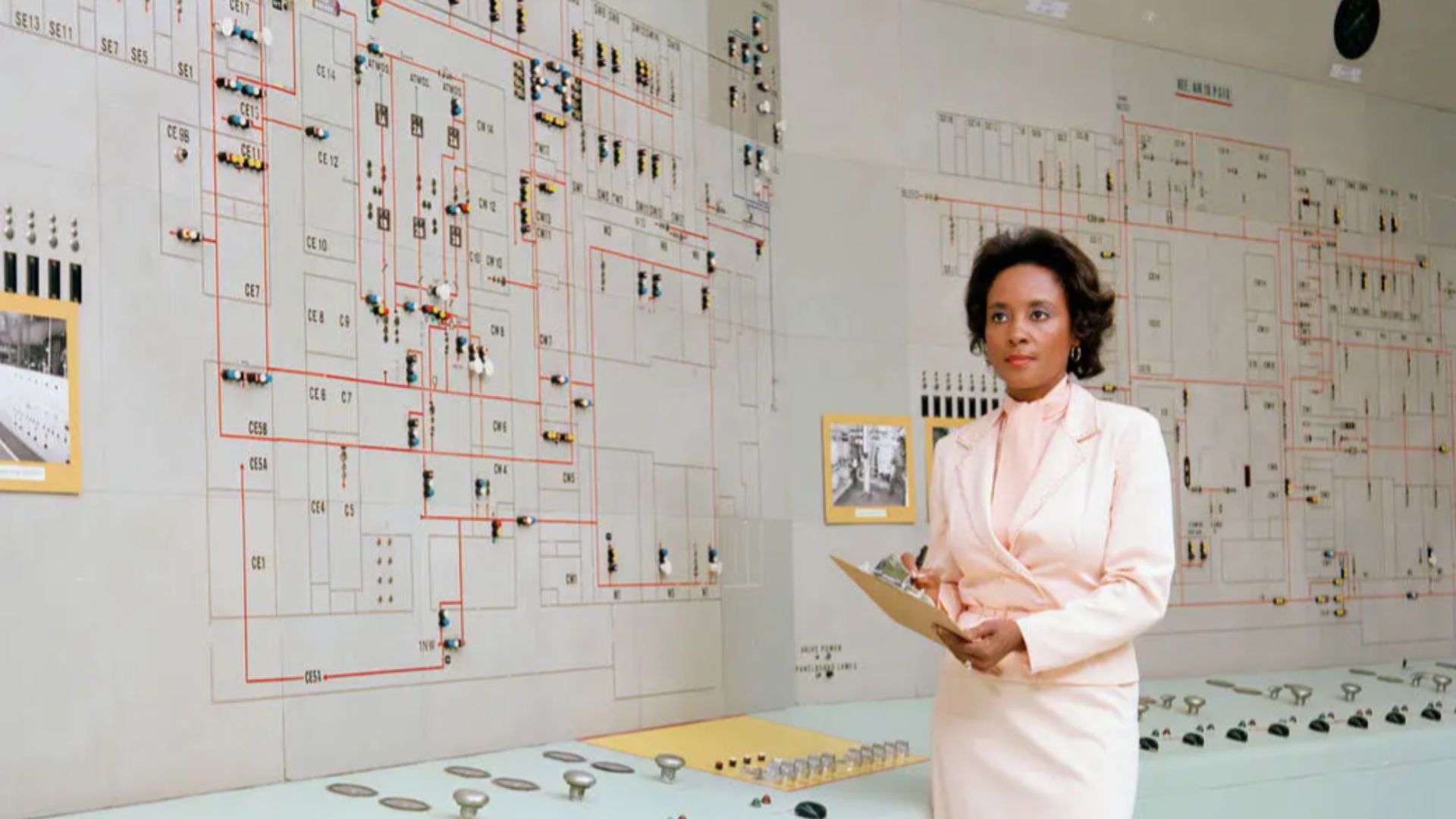
Annie Easley, a hero of NASA | Space photo of the day for June 19, 2026

A Black woman wearing a pale pink skirt suit set stands in front of a control board with diagrams.

Annie Easley at NASA's Glenn Research Center. (Image credit: NASA)

It's Juneteenth in the U.S. today (June 19), a federal holiday that commemorates the end of slavery in America.

Though the Civil War ended in April of 1865, it wasn't until June 19 that same year when Union soldiers officially enforced the law that all enslaved people would be free. But the end of slavery was only the beginning of the challenges soon to follow; for one, segregation between Black and white people in the U.S., both systemic and informal, persisted for years. And we still live in a time when active racism, and the consequences of prior racism, trickle into many aspects of society.

It indeed affected NASA; Black women at the agency were once discriminated against despite making serious contributions to the space program. Our image of the day today celebrates the accomplishments of one such woman, Annie Easley.

Who is Annie Easley?

In 1955, Annie Easley started working for NASA's predecessor organization, the National Advisory Committee for Aeronautics (NACA). Her job was to serve as a "human computer," which was a position unique to the time. (NACA was dissolved in 1958, and its duties and personnel were taken on by the newly created NASA.)

Human computers at NACA and NASA were women who worked as basically early versions of computer programmers. To be a human computer, you had to be extremely good at mathematics, performing reliable calculations on a consistent basis to aid space missions.

Eventually, though, NASA moved toward the use of machine computers more often; Easley transitioned along with the space agency, ultimately becoming a full-fledged computer programmer.

As NASA explains, Easley's career shifted once again as it progressed. After some time, she took a position as the space agency's EEO, or Equal Employment Opportunity, counselor. She worked with NACA/NASA for 34 years before retiring in 1989. She passed away in 2011.

The importance of NASA's human computers

Like Easley, many of NASA's human computers became computer programmers once the agency made the transition to relying more heavily on machine computers. They together performed hundreds of thousands of calculations for the space program.

Easley alone was able to develop code that was crucial in research of energy-conversion systems, which paved the way for hybrid vehicles like the Centaur upper-stage rocket. Down the line, this work of hers contributed to the 1997 launch of the Cassini spacecraft that headed to Saturn.

However, the story wasn't as golden as it sounds retrospectively. Though NACA started hiring white women as "computers" in 1935, the agency didn't begin allowing Black women to enter the workforce until 1943. And that was only due to a shortage of professionals because of World War 2. In fact, human computers at the agency were not called professionals but rather "subprofessionals," and they were regularly talked down to by men who worked at the organization.

Black women had it particularly bad: They had to jump through hoops imposed by both racism and sexism.

Easley was one of just four African Americans out of 2,500 employees at NACA when she was hired.

In a 2001 interview, Easley recalled her mother saying to her: "'You can be anything you want to. It doesn't matter what you look like, what your size is, what your color is. You can be anything you want to, but you do have to work at it.'"

"I still believe that," she said.

  •  

Scientists Just Discovered the Eye Defies a Long-Held Rule of Vision

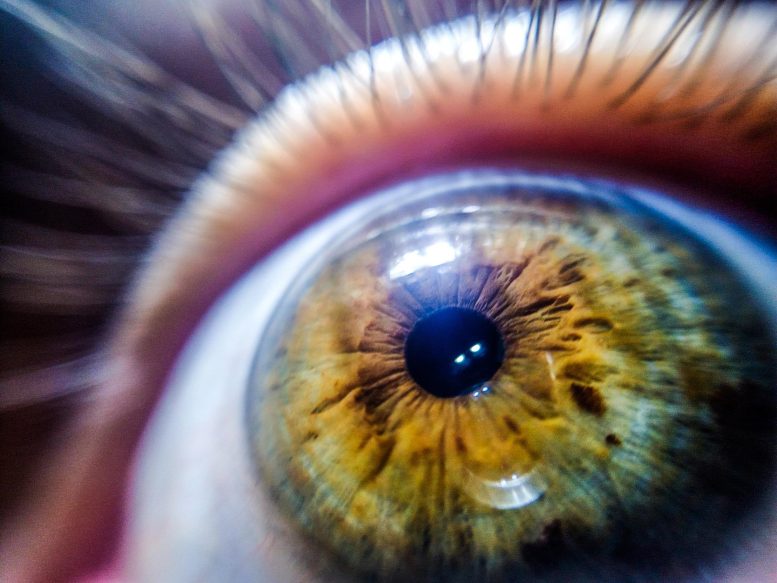
Close Up of Human EyeA Yale-led study uncovered unexpected communication between retinal visual pathways that were thought to operate separately. Researchers at Yale School of Medicine (YSM) have discovered unexpected insights into how the eye handles visual information. When we view a scene, the visual system quickly separates different features, including color, contrast, and motion, and processes them independently. [...]
  •  
  •  

In Ancient Pits Near Stonehenge, Scientists See Hints of Solstice Ritual

British archaeologists may have found the remains of a site where people celebrated the solstice thousands of years ago, a few miles from the famed stone circle.
  •  

June 18, 1983: Sally Ride is the first American woman in space

Sally Ride made history aboard the Space Shuttle Challenger on June 18, 1983, becoming the first American woman in space 20 years nearly to the day after Soviet Valentina Tereshkova’s flight. In 1977, as she was finishing her Ph.D. in physics, Ride saw a newspaper ad placed by NASA to recruit astronauts. For the firstContinue reading "June 18, 1983: Sally Ride is the first American woman in space"

The post June 18, 1983: Sally Ride is the first American woman in space appeared first on Astronomy Magazine.

  •  

NASA’s Fermi Mission Uncovers Possible Sibling Supernova Remnants

6 min read

NASA’s Fermi Mission Uncovers Possible Sibling Supernova Remnants

A new study of two supernova remnants, the debris left behind after stars explode, suggests the explosions came from stellar siblings that once orbited each other. The first star’s detonation sent its binary companion hurtling through space, and then, after traveling for thousands of years, the surviving star blew up too.

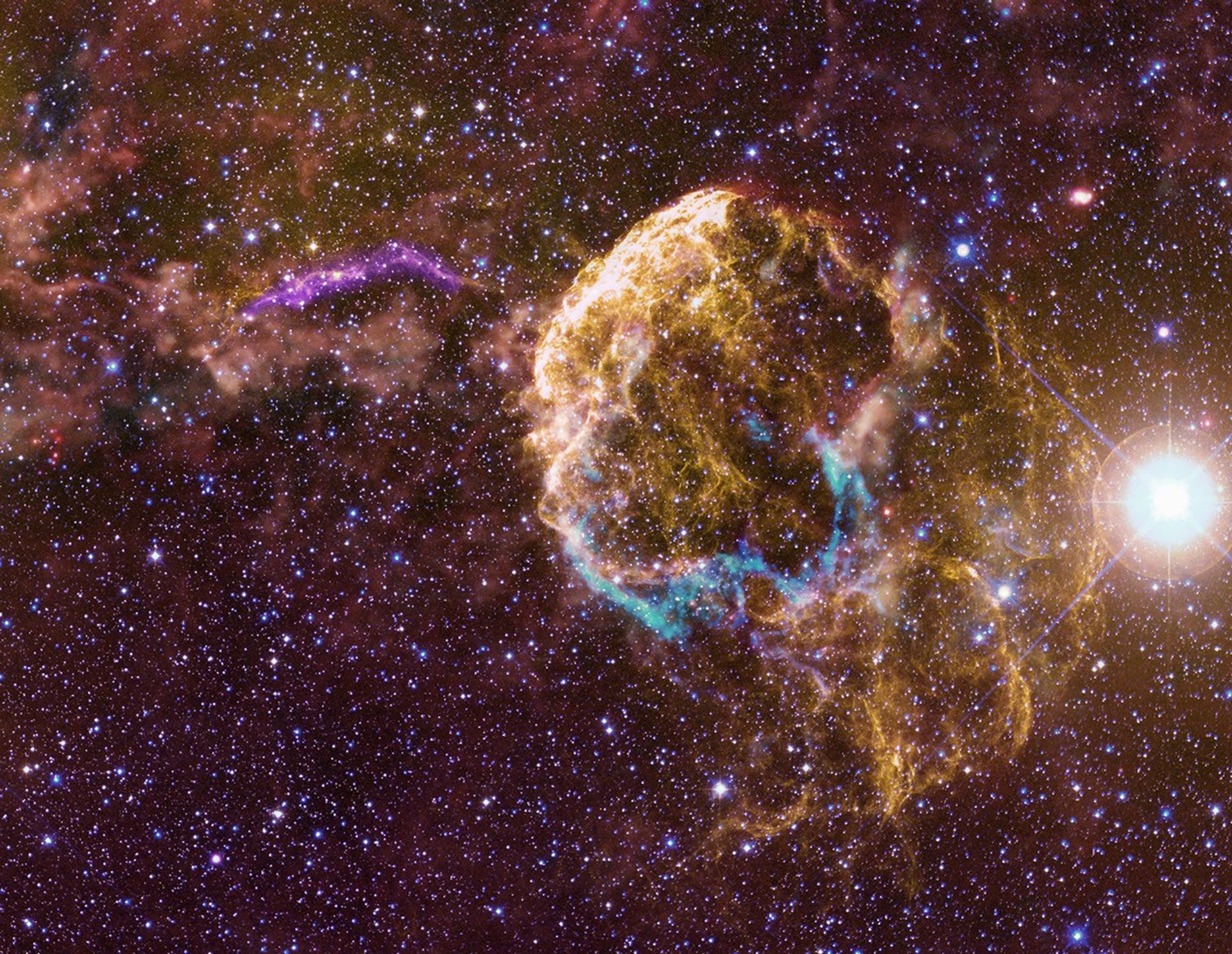
Infrared, visible, and ultraviolet image of the area around the Jellyfish Nebula
This multiwavelength scene shows the Jellyfish Nebula supernova remnant (right), the interstellar cloud it’s interacting with, and a distinctive curving filament to its upper left. The filament, which is shown here both in optical and ultraviolet (UV) light, is the visible part of an overlapping supernova remnant, G189.6+3.3, that is more prominent in radio and X-rays. Visible light is shown in yellow, UV from NASA’s Neil Gehrels Swift Observatory is shown in violet, and infrared light from NASA’s retired WISE (Wide-field Infrared Survey Explorer) mission appears in cyan, red, and orange. Both remnants are located about 6,000 light-years away in the constellation Gemini. The brilliant star at far right is Propus, also known as Eta Geminorum.
NASA Goddard Space Flight Center and M. Michailidis et al. 2026; optical: DSS; infrared: NASA/WISE/JPL-Caltech/UCLA; ultraviolet: NASA/Swift

“Using 16 years of data from NASA’s Fermi Gamma-ray Space Telescope, our analysis uncovered gamma rays associated with a supernova remnant that was hidden in the glare of its neighbor, the Jellyfish Nebula, one of the brightest gamma-ray-emitting supernova remnants known,” said Miltiadis Michailidis, a postdoctoral fellow in the physics department at Stanford University in California. “There are so many striking connections between the two remnants that we conclude they’re likely related, giving us the first known example of a binary system where both stars have undergone supernova explosions.”

Michailidis presented the findings Wednesday at the 248th meeting of the American Astronomical Society in Pasadena, California. A paper describing the results will appear in a future edition of Nature Communications.

The study focused on a faint supernova remnant called G189.6+3.3, which is mainly visible in X-rays. It is upstaged by its brighter and better-known neighbor, the Jellyfish Nebula (IC 443). The two star wrecks, both located in the constellation Gemini, appear to partially overlap as seen in X-rays. Recent X-ray evidence suggests that hot plasma likely associated with G189.6+3.3 may extend across the entire region, a hint that the overlap may be nearly total.

A massive star explodes when its energy-producing core runs out of fuel and collapses under its own weight, triggering an explosion that blows the star apart. The explosion’s shock wave encloses a hot cloud of debris that rapidly expands into space. So far, astronomers have cataloged about 300 supernova remnants in our galaxy.  

The Fermi mission is part of NASA’s fleet of observatories monitoring the changing cosmos to help humanity better understand how the universe works. More than a decade ago, observations from Fermi’s LAT (Large Area Telescope) showed that the shock waves of supernova remnants accelerated particles to within a fraction of the speed of light, a process first proposed by physicist Enrico Fermi — the mission’s namesake — in 1949.

These high-speed particles, called cosmic rays, interact with interstellar gas to produce gamma rays, the highest-energy form of light. Protons make up 99% of cosmic ray particles. To prove that accelerated protons are responsible for the glow, astronomers search for a specific gamma-ray feature. When cosmic-ray protons smash into interstellar gas, they produce a short-lived particle called a neutral pion, which almost immediately decays into a pair of gamma rays. This emission occurs within a specific band of energies associated with the neutral pion’s mass and lies within the range detected by Fermi’s LAT instrument.

In 2013, Fermi observations proved that the Jellyfish Nebula, which is interacting with part of a glowing cloud of hydrogen gas known as Sharpless 249, produced gamma rays through this mechanism. Its neighbor, G189.6+3.3, was discovered in 1994 as part of an X-ray survey by the German-led ROSAT (Roentgen Satellite) mission.

A bright filament of gas lies between the overlapping remnants. New observations of this feature reveal that the shock wave from G189.6+3.3 slammed into dense interstellar gas there and dramatically slowed, key evidence that both remnants are interacting with the same cloud system.

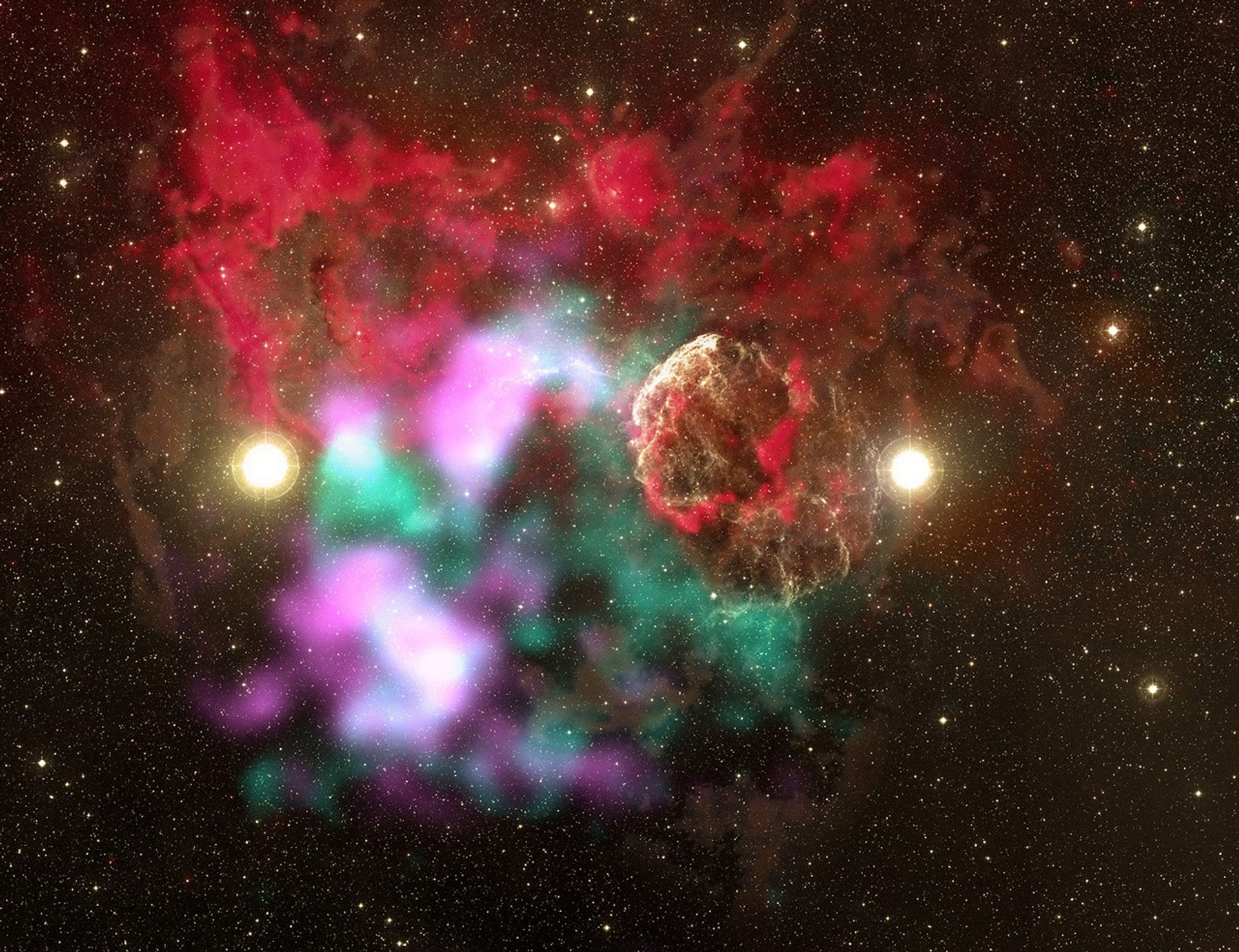
Multiwavelength composite showing high-energy light from the G189 supernova remnant
The well-known supernova remnant IC 443 (right) has an older, fainter neighbor (shown here in blue-green and magenta) called G189.6+3.3. A filament of gas between them, glowing in visible and ultraviolet light (violet arc at center), traces the neighbor’s shock wave and shows that both remnants are interacting with the same molecular cloud, shown in red, orange, brown for infrared and radio data and yellow for visible light. Blue-green shows X-rays from the fainter remnant, while magenta shows gamma rays with energies greater than 10 billion electron volts; for comparison, visible light has energies between about 2 and 3 electron volts. In this view, high-energy light from the much brighter IC 443 has been removed for clarity. Gamma-ray emission near the filament stems from protons accelerated in the supernova’s shock wave as it expands into the cloud.
NASA Goddard Space Flight Center and M. Michailidis et al. 2026; radio, MWISP and ESA/Planck; infrared: NASA/WISE/JPL-Caltech/UCLA; optical: DSS; ultraviolet: NASA/Swift; X-ray: SRG/eROSITA; gamma ray: NASA/DOE/Fermi LAT Collaboration

Astronomers think the Jellyfish Nebula is also a candidate PeVatron, a cosmic particle accelerator capable of boosting protons to energies so high they could nearly escape our galaxy. Such particles can produce gamma rays with trillions of times more energy than visible light. Finding a second particle accelerator near the Jellyfish Nebula could offer scientists new clues for how supernova remnants develop into PeVatrons.

“The overlapping remnants, a connecting gas filament, and the availability of data from Fermi and other facilities motivated us to delve into this complex but little-studied region,” said co-author Marianne Lemoine-Goumard, an astrophysicist at the French National Centre for Scientific Research (CNRS) based at the University of Bordeaux. “With Fermi’s LAT instrument, we found gamma-ray emission associated with accelerated protons in the northern part of the fainter remnant. If both remnants are interacting with the same structure, then they must share a common distance from us.”

The team concludes the remnants lie about 6,000 light-years away, their explosion centers are separated by roughly 40 light-years projected onto the plane of the sky, and the original stars may have been 20 or more times the Sun’s mass.

Estimates of the remnants’ ages vary widely, but the team concludes that the age of the Jellyfish Nebula is 8,000 to 9,000 years, while G189.6+3.3 is between 20,000 to 110,000 years old. This means the delay between the explosions could have extended for up to 100,000 years.

In addition, the team conducted computer simulations of a million massive binary systems. They show that systems where the stars orbit close enough to exchange matter and interact during their lives can readily produce dual supernova explosions with similar separations and time delays as those found for the remnants. The team also estimated that the chance of randomly encountering this combination of observed spatial alignment and compatible distances to be less than 1%, strongly supporting a physical association.

“The evidence we’ve compiled — including observations across the spectrum, the chemical and physical properties of the remnants, simulations, and more — paints a compelling picture of a dual supernova event,” said Michailidis.

This study identifies a unique possible example of a binary system where both stars exploded as supernovae and left behind separate, detectable supernova remnants. Astronomers think that most massive stars form in binary or multiple-star systems. The Jellyfish Nebula/G189.6+3.3 complex offers astronomers a rare opportunity to study how massive binary stars evolve, exchange matter, explode, and experience velocity changes — called kicks — induced by the supernova blast. It also provides a powerful new laboratory for understanding how coupled supernova remnants behave, including how they accelerate particles, generate gamma rays, and shape their surrounding environments.

“Fermi’s gamma-ray observations of supernova remnants continue to reveal the dynamic lives of stars,” said Elizabeth Hays, the Fermi project scientist at NASA’s Goddard Space Flight Center in Greenbelt, Maryland. “We can now connect the glowing remains of two massive stars to a powerful pair that evolved together over thousands of years.”

By Francis Reddy
NASA’s Goddard Space Flight Center, Greenbelt, Md.

Media Contact:
Claire Andreoli
301-286-1940
NASA’s Goddard Space Flight Center, Greenbelt, Md.

  •  
❌