❌

Reading view

A Bizarre ‘Bullseye’ in Space Could Hold a Major Clue to Unraveling One of the Universe’s Greatest Mysteries

New research reveals how an unusual celestial object resembling a cosmic “bullseye” could offer clues to one of the most perplexing phenomena in our universe.

The research, undertaken by physicists Pierre Sikivie and Yuxin Zhao at the University of Florida, focuses on an astronomical feature quite unlike any other—the galaxy LEDA 1313424, whose concentric rings have garnered it the apt nickname of the “Bullseye galaxy.”

Based on Sikivie and Zhao’s recent research, detailed in a new paper that appeared in The Astrophysical Journal, quantum behavior related to long-mysterious dark matter may hold the key to the galaxy’s unusual appearance.

Unraveling a Bullseye Galaxy’s Circular Secrets

In the past, astronomers have attempted to explain LEDA 1313424’s unusual concentric appearance as the likely result of an ancient collision between two galaxies.

Not so, according to Sikivie and Zhao, who now take a vastly different approach by arguing that a better explanation may involve a Bose-Einstein condensate of axions, a variety of extremely light hypothetical particles.

Bullseye galaxy
A stunning Hubble Telescope view of the Bullseye galaxy (Image Credit: NASA, ESA, I. Pasha (Yale), P. van Dokkum (Yale)).

This concept has much deeper roots that go back close to a century ago, when the first galaxy featuring an unusual concentric ring was discovered. This example, dubbed the Cartwheel galaxy, was only the first in a succession of similar astronomical discoveries involving galaxies with “ringed” appearances that incorporate as many as three annular features.

Unraveling an Annular Enigma

Explaining why these galaxies look this way has remained elusive. One theory proposed by astronomers, as noted earlier, involves impacts between two galaxies, which could create waves of density whose ripples become evident in ring-like structures surrounding the resulting galaxies.

However, a discovery in 2025 by Imad Pasha, a Yale University astronomer, and his colleagues presented an even stranger development in this ongoing concentric saga: the discovery of a galaxy that possesses not three rings, but nine of them. With its discovery, this remarkable celestial object’s unusual appearance garnered the nickname now familiar to us: “The Bullseye galaxy.”

Bullseye galaxy art concept
Artist’s concept detailing the annular features encircling LEDA 1313424 (Image Credit: NASA, ESA, Ralf Crawford (STScI))

One theory that astronomers believed may account for the galaxy’s nine concentric structures had been a hypothetical impact—and a very energetic one—that occurred about 56 million years ago. However, while investigating this possibility, Sikivie and Zhao say a problem emerged: this would mean that the outermost ring in the galaxy would have had to travel at a speed of 758 miles per second as it blasted outward from the galaxy’s center.

This speed, they say, is impossible to reconcile with what astronomers can already discern about the nature of the supposed collusion, as well as the well-characterized behavior of galactic material observed in other regions of the cosmos.

An Alternative Approach

In an effort to get to the bottom of the mystery behind this unique galaxy, Sikivie and Zhao have put forward an alternative idea: that the rings in the Bullseye galaxy might instead be a byproduct of dark matter’s mysterious properties.

According to astronomers, dark matter is believed to be a nonluminous material that populates our universe, contributing around 85% of its total mass. Despite its ubiquity, direct detections that could confirm its existence have remained elusive.

However, there are some intriguing cosmic phenomena that astronomers are aware of that are very good candidates for being indirect evidence of this mysterious material. These observations include gravitational motion that occurs in galaxies, whereby the accumulation of dark matter is believed to manifest in the appearance of spherical halos encircling them.

In the past, Sikivie has explored this possibility, and whether current prevailing theories about dark matter, such as the idea that hypothetical particles known as axions, may offer the best interpretation of the physical reality behind dark matter.

If dark matter is indeed related to axions, it would also be required to obey what astrophysicists call conservation of angular momentum. According to Sikivie, when axions and galaxies interact, a phenomenon should emerge where portions of dark matter halos closest to the center would become oriented in structural forms known as “caustic rings.”

“We had earlier proposed that disk galaxies have caustic rings of dark matter with a pattern of ring radii, very similar to the pattern of ring radii observed in LEDA 1313424,” Sikivie recently said.

With this idea in mind, Sikivie and Lhao then turned their attention to the mysterious bullseye of LEDA 1313424 and “fitted the observed ring radii to the pattern of ring radii in the caustic ring interpretation,” from which they discerned that “LEDA’s rings are the imprint of caustic rings of dark matter on the baryonic matter in LEDA’s disk.”

Strange Quantum Behaviors

A further aspect of the researchers’ theory involves the quantum behavior that axions are expected to engage in.

Under extremely cold conditions, these hypothetical dark matter particles could collectively occupy the same quantum state, forming what is known as a Bose-Einstein condensate—a strange state of matter in which quantum effects become visible on macroscopic scales.

According to the team, such a condensate could interact with ordinary matter in ways that match astronomical observations. If the duo is correct, this could imply that ring-shaped galaxies such as LEDA may not result from galactic collisions at all—instead, these unique cosmic structures might be evidence of dark matter axions that have undergone Bose-Einstein condensation.

Presently, much like dark matter, axions have remained hypothetical and frustratingly difficult to detect. Of course, given their elusiveness, this also makes them a very good candidate in terms of helping scientists close in on the dark matter mystery, and new models are helping to provide potentially compelling new resolutions for such problems.

For now, mysterious ringed galaxies remain mysterious. However, as the work of researchers like Sikivie and Lhao progresses, one of astronomy’s more unusual recent discoveries is gradually coming into focus, while providing fresh insight into the intriguing quantum nature of dark matter.

The team’s recent paper, “The Nine Rings of the Galaxy LEDA 1313424,” appeared in The Astrophysical Journal.

Micah Hanks is the Editor-in-Chief and Co-Founder of The Debrief. A longtime reporter on science, defense, and technology with a focus on space and astronomy, he can be reached at micah@thedebrief.org. Follow him on X @MicahHanks, and at micahhanks.com.
  •  

Astronomers Trace Elusive High-Energy Neutrino to Star-Forming Galaxy in Early Universe

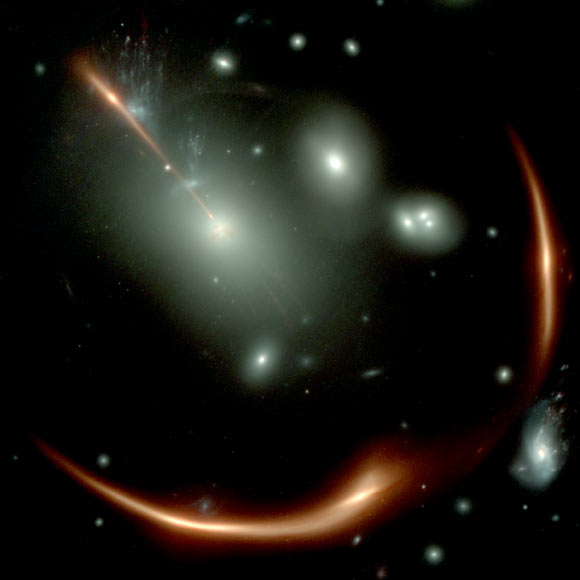
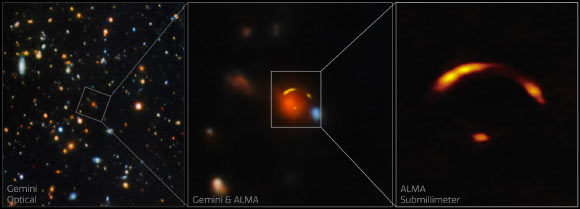
The origin of high-energy astrophysical neutrinos remains unresolved, and secure electromagnetic counterparts to individual events are rare despite rapid follow-up. Dusty star-forming galaxies at cosmic noon (redshift of z ≈ 1-4) are natural cosmic-ray calorimeters, yet observational links between these galaxies and neutrinos have remained unknown. Urata et al. report a compact-core, dusty star-forming galaxy within an IceCube localization, JCMT0402-0424, a quadruply lensed galaxy at z = 2.988 located inside the 90% containment region of the IceCube event IC 210922A. Image credit: International Gemini Observatory / NOIRLab / NSF / AURA / ALMA / ESO / NAOJ / NRAO / T.A. Rector, University of Alaska Anchorage & NSF’s NOIRLab / D. de Martin & M. Zamani, NSF’s NOIRLab / Yuji Urata. MITOS Science Co., LTD.

JCMT0402-0424, a dusty starburst galaxy around 11 billion light-years away, is the strongest candidate yet for the source of the high-energy neutrino event IC 210922A, according to a team of astronomer led by Yuji Urata of MITOS Science Co.

The post Astronomers Trace Elusive High-Energy Neutrino to Star-Forming Galaxy in Early Universe appeared first on Sci.News: Breaking Science News.

  •  

Ancient Cosmic Event Revealed by Radionuclides in Deep-Sea Sample

In an extraordinary breakthrough that delves deep into the cosmic past, an international consortium of scientists from Dresden, Sydney, and Canberra has uncovered rare signatures of radioactive isotopes embedded within a deep-sea manganese crust. This discovery provides unprecedented insights into the astrophysical phenomena responsible for forging the universe’s heaviest elements, particularly illuminating the timeline of the last significant r-process nucleosynthesis event in the solar system’s vicinity. Their findings, published in the esteemed journal Nature Astronomy, draw a cosmic map that stretches back over 100 million years, signaling the rarity and tremendous scale of cataclysmic events such as neutron star mergers or exceptionally energetic supernovae.

Ferromanganese crusts, mineral deposits found at profound ocean depths ranging from hundreds to thousands of meters, serve as unparalleled geological time capsules. These crusts accrete slowly—millimeters over millions of years—absorbing trace elements, including rare radioactive isotopes transported from distant cosmic events. By decoding these isotopic deposits, researchers can trace the history of cosmic explosions and paint a detailed portrait of stellar processes that shaped the chemical evolution of our galaxy.

Central to this research is the isotope plutonium-244, with its rare genesis through the rapid neutron-capture process, known simply as the r-process. During such events, atomic nuclei experience a rapid succession of neutron captures, instigating the synthesis of heavy elements beyond iron. Conditions conducive to this process are believed to arise predominantly during titanic neutron star collisions or hyper-energetic supernovae, events many orders of magnitude less frequent than typical supernova explosions. Detecting plutonium-244 within the Earth’s geological record offers direct evidence of these rare phenomena.

The team’s meticulous analyses utilized state-of-the-art detection methods to isolate and quantify iron-60, plutonium-244, and curium-247 isotopes in Pacific Ocean crust samples. Iron-60 serves as a definitive marker of conventional supernovae, and its isotope profile corresponded precisely to two well-documented near-Earth supernova events occurring within the past few million years. In stark contrast, plutonium-244 exhibited a distribution pattern dramatically different—one consistent with deposition over a much longer timespan, pointing to a rare cosmic event that transpired at least a hundred million years ago.

Intriguingly, plutonium-244’s widespread but time-extended presence suggests it did not originate from the same near-Earth supernovae that deposited iron-60. Instead, it implies an older, more distant event where the synthesized elements had ample time to diffuse through the interstellar medium, creating a diffuse veil of heavy atoms engulfing the solar neighborhood. This insight recalibrates our understanding of when and how the most massive elements were introduced into our galactic environment.

Adding further weight to this narrative is the absence of curium-247, another isotope forged by the r-process. Despite its pivotal role—curium-247 decays more rapidly than plutonium-244, with a half-life of approximately 15.6 million years—its conspicuous scarcity in the crust sample indicates no recent r-process activity within the last 100 million years. This “expiry date” phenomenon serves as a cosmic clock, reinforcing the conclusion that the solar system’s immediate neighborhood has been devoid of major r-process events for many millions of years.

The technical sophistication required for these measurements cannot be overstated. Detecting individual plutonium atoms amidst an ocean of roughly ten sextillion non-plutonium atoms illustrates the extraordinary sensitivity needed. Recent advancements at the VEGA facility in Sydney, led by Michael Hotchkis, have pushed the boundaries of accelerator mass spectrometry, enabling researchers to detect and map plutonium distribution layer by layer with unparalleled time resolution. This breakthrough is complemented by the pioneering use of the Heavy Ion Accelerator Facility in Canberra for iron-60 detection, underscoring the collaborative, multinational nature of this endeavor.

Furthermore, a comprehensive age model was constructed using beryllium-10 isotopes measured at the DREAMS facility in Dresden. These measurements were instrumental in refining the growth history of the ferromanganese crust, allowing the researchers to place each isotopic signature accurately within a cosmic timeline spanning more than ten million years. Coupled with advanced imaging techniques such as X-ray scanning and 3D reconstruction of smaller drill cores, the team assembled a remarkably precise chronicle of element deposition.

The implications of this research extend beyond the confines of our solar system. Prof. Anton Wallner, head of the Accelerator Mass Spectrometry and Isotope Research Department at HZDR, emphasized that the detected plutonium likely originated from extraordinarily rare cosmic explosions, such as neutron star mergers recently observed via gravitational waves—albeit occurring far outside our own galaxy. These discoveries not only challenge preexisting assumptions about local r-process events but also rule out alternative hypotheses, including the crossing of the solar system through dense interstellar clouds, as a source of these heavy elements.

This research heralds a new era in studying cosmic nucleosynthesis. Upcoming analyses involving lunar samples provided by NASA promise to enrich our understanding of recent r-process events further. Equally exciting is the anticipated operational commencement of the HAMSTER facility at HZDR, which aspires to replicate and surpass current detection capabilities. This facility aims to detect a broader spectrum of rare radionuclides, potentially unlocking fresh insights into the astrophysical origins of our universe’s elemental diversity.

In sum, the discovery of plutonium-244 traces scattered throughout ancient oceanic crust reframes our knowledge of cosmic history and nucleosynthesis. It reveals a universe punctuated by rare, monumental events that have imprinted an indelible trace on Earth’s geological archives. These findings not only illuminate the elemental assembly of the cosmos but also open up new frontiers for studying the universe’s most violent and transformative phenomena with unprecedented detail and temporal precision.


Subject of Research: Not applicable

Article Title: The timing of the last r-process event near Earth from interstellar 60Fe, 244Pu and 247Cm deposition on Earth

News Publication Date: 15-Jun-2026

Web References: http://dx.doi.org/10.1038/s41550-026-02841-6

References: Published in Nature Astronomy


Keywords

r-process nucleosynthesis, plutonium-244, curium-247, iron-60, deep-sea manganese crust, neutron star mergers, supernova, radioactive isotopes, accelerator mass spectrometry, interstellar medium, cosmic explosions, element formation

  •  

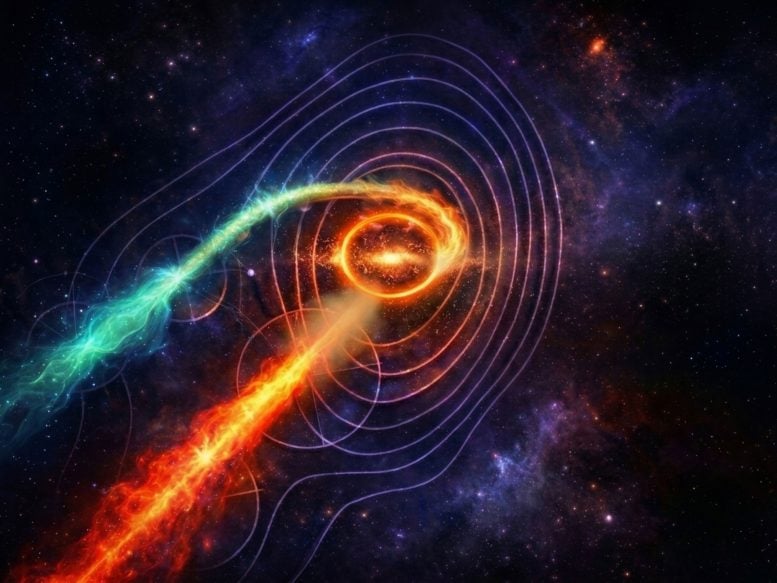
Astronomers Finally Find Milky Way’s Missing Black Hole Wind

This image shows the evidence for the wind blowing away from Sagittarius A*: the white dot in the center of the image shows the supermassive black hole; in orange is data from ALMA, mapping the location of cold gas composed of carbon monoxide in the image; in blue is X-ray data from Chandra; a large cone-shaped cavity, visible as an absence of cold gas in the ALMA data, is filled by hot X-ray-emitting gas in the Chandra data. Image credit: NASA / CXC / UMass / Wang et al. / ALMA / ESO / NAOJ / NRAO / Longmore et al. / Minniti et al.

After a 50-year search, astronomers have uncovered evidence that Sagittarius A* -- the 4.3-million-solar-mass black hole that resides at the center of our Milky Way Galaxy -- is blowing a hot cosmic wind into its surroundings, carving out a giant cavity near the Galaxy’s heart.

The post Astronomers Finally Find Milky Way’s Missing Black Hole Wind appeared first on Sci.News: Breaking Science News.

  •  

Webb Weighs Most Distant Inactive Black Hole Ever Found

This Webb image shows the highly distorted red galaxy MRG-M0138 seen through a foreground cluster of galaxies (white sources). Image credit: NASA / ESA / CSA / Webb.

A supermassive black hole 6 billion times the mass of the Sun lurks in MRG-M0138, a gravitationally lensed quiescent galaxy seen when the Universe was just 3 billion years old, according to an analysis of data collected by the NIRSpec Integral Field Spectrograph onboard the NASA/ESA/CSA James Webb Space Telescope.

The post Webb Weighs Most Distant Inactive Black Hole Ever Found appeared first on Sci.News: Breaking Science News.

  •  

Astronomers Detect a Close Pair of Supermassive Black Holes for the First Time

Center of the Galaxy Markarian 501Researchers discovered a closely orbiting pair of supermassive black holes in Markarian 501 by tracking two jets of particles. The binary system could merge within 100 years and may produce detectable gravitational waves. Current evidence indicates that nearly every large galaxy contains a supermassive black hole at its center, with a mass ranging from millions [...]
  •  

Hubble Captures Active Spiral Galaxy: Messier 88

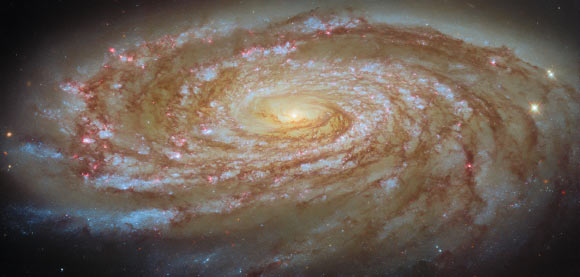
This image, taken with the Wide Field Camera 3 (WFC3) instrument aboard the NASA/ESA Hubble Space Telescope, shows the spiral galaxy Messier 88. Image credit: NASA / ESA / Hubble / D. Thilker / MAUVE-HST Team.

A newly-released Hubble image shows Messier 88, a black hole-powered spiral galaxy that is gradually plunging toward the crowded heart of the Virgo Cluster.

The post Hubble Captures Active Spiral Galaxy: Messier 88 appeared first on Sci.News: Breaking Science News.

  •  

Webb Spots Supermassive Black Hole Older Than Its Home Galaxy

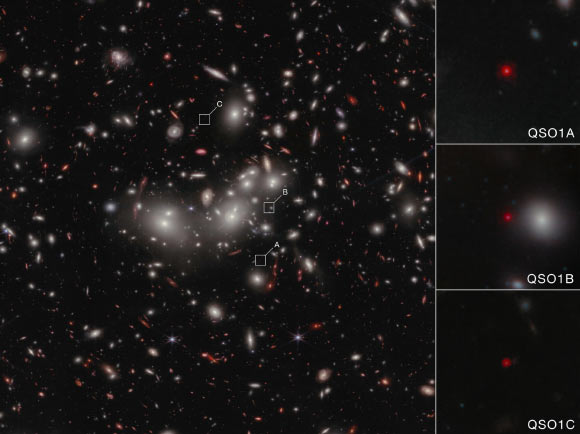
This Webb/NIRCam image shows the little red dot Abell2744-QSO1, magnified and triply imaged by galaxy cluster Abell 2744. Image credit: NASA / ESA / CSA / Lukas Furtak, Ben-Gurion University / Alyssa Pagan, STScI.

Astronomers using the NASA/ESA/CSA James Webb Space Telescope have found an enormous black hole in the early Universe that appears to predate its own host galaxy, raising fresh questions about how the cosmos’ first supermassive monsters were born.

The post Webb Spots Supermassive Black Hole Older Than Its Home Galaxy appeared first on Sci.News: Breaking Science News.

  •  

Searching for planets in a galaxy far away

The Star Wars series depicted alien heroes fighting against evildoers and their planet-destroying superweapons “a long time ago in a galaxy far, far away.” But what do scientists really know about alien planets in distant galaxies beyond our own? These worlds, known as extragalactic exoplanets, are expected to exist, assuming the Milky Way is no different from other galaxies. However, we have yet to find them since other galaxies are still too far, far away for modern exoplanet-observing techniques.

Recently, a team of astronomers analyzed a stream of over 700,000 stars that the Milky Way likely absorbed from the dissolving Sagittarius dwarf galaxy. These stars are very distant, so the team investigated whether any of them host large, close-orbiting exoplanets called hot Jupiters, which are relatively easy to find.  

They established a set of 3 criteria to narrow down their list of stars. First, each star should appear bright enough when observed by the Transiting Exoplanet Survey Satellite, or TESS, to ensure high-precision results from the team’s data processing software. Second, each star must have more than a 50% likelihood that it originated from the Sagittarius dwarf galaxy, based on motion and position measurements from the Gaia mission. Finally, each star should have a radius of less than twice the Sun’s, as it’s easier to find planets around smaller stars. They used these criteria to limit their candidate list to around 20,000 stars.

After selecting their candidate stars, the team analyzed publicly available TESS catalog data using the software packages eleanor and TESS-Gaia Light Curve, or TGLC. These tools allowed them to plot each star’s brightness over time, in graphs called light curves. Then, the astronomers looked for periodic brightness dips in these light curves as evidence that an exoplanet passed in front of the star. From this, they excluded several thousand additional stars with too much light interference from their surroundings, reducing their final sample size to just over 15,000 stars.

To find hot Jupiters, the team looked for brightness dips at intervals of 14 hours to 10 days, which is the typical orbital period range for hot Jupiters. Then, they used geometry to derive each exoplanet’s radius from the fraction of the starlight it blocked. They excluded candidates with dips corresponding to objects with radii at least twice that of Jupiter’s, as these are likely caused by orbiting companion stars rather than exoplanets.

Among all the stars they surveyed, the team’s strongest candidate to host a hot Jupiter was a star labeled TIC 92223525. They calculated that this star could host an exoplanet with a radius 1.76 times the size of Jupiter’s and an orbital period of 7.2 days. However, when they reviewed this star’s light curve, they found that it was likely contaminated by its neighbor, TIC 92223526. The regular brightness dips from this system of orbiting stars mimicked that of an exoplanet, creating a false positive for TIC 92223525 that was difficult to detect during initial screening. As a result, the team ultimately excluded this candidate, leaving them with no confirmed exoplanets.

The researchers drew several conclusions from their inability to find hot Jupiters in their sample of stars from the Sagittarius dwarf stream. They estimated that if more than 1% of these stars hosted hot Jupiters, it would have been highly unlikely not to detect one in a sample of over 15,000 stars. This places an upper limit of about 1% on the occurrence rate of hot Jupiters. If this estimate is accurate, then even an ideal exoplanet search team would need to examine over 11,000 stars to find an extragalactic hot Jupiter. Accounting for more realistic levels of scientific uncertainty, a future team would likely need to study at least 80,000 stars to find one. 

Although this survey of the Sagittarius dwarf stream yielded null results, the team suggested that future researchers continue searching it and other star streams from different galaxies. Scientists have identified over 20 such streams in the Milky Way. Researchers studying these streams could find the first extragalactic exoplanet or provide evidence that other galaxies produce fewer hot Jupiters than our own. But let’s hope none of them find the first extragalactic Death Star!

The post Searching for planets in a galaxy far away appeared first on Sciworthy.

  •  
❌