❌

Reading view

This Week's Sky at a Glance, June 19 – 28

The Moon as it will appear in an amateur telescope at 10 p.m. EDT Friday the 19th. This week Venus and Jupiter continue moving apart low in the western twilight. Vega and Arcturus shine equally high after dark. And watch Beta Lyrae self-eclipse.

The post This Week's Sky at a Glance, June 19 – 28 appeared first on Sky & Telescope.

  •  

Tropical Storm Arthur

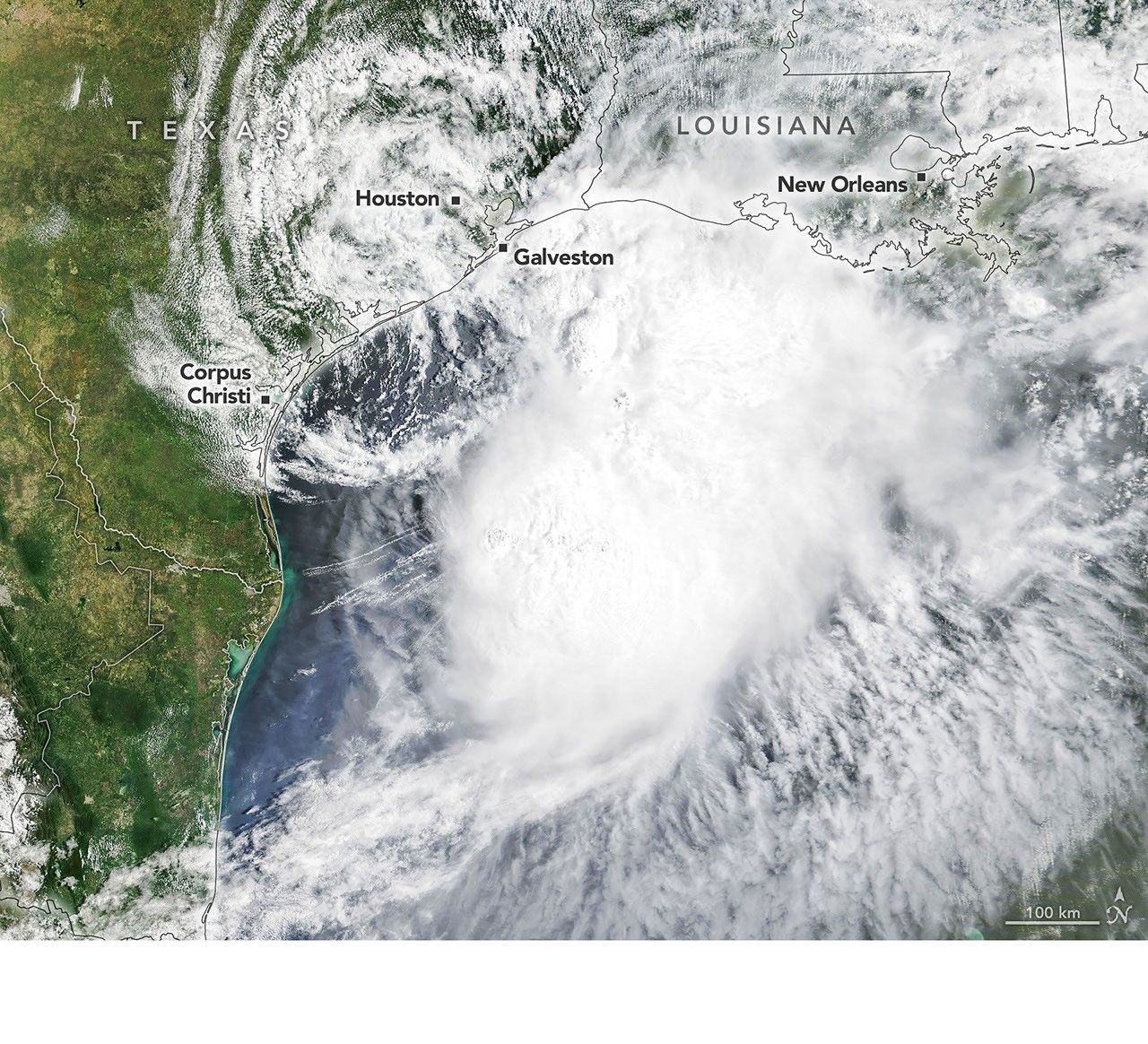
Natural color
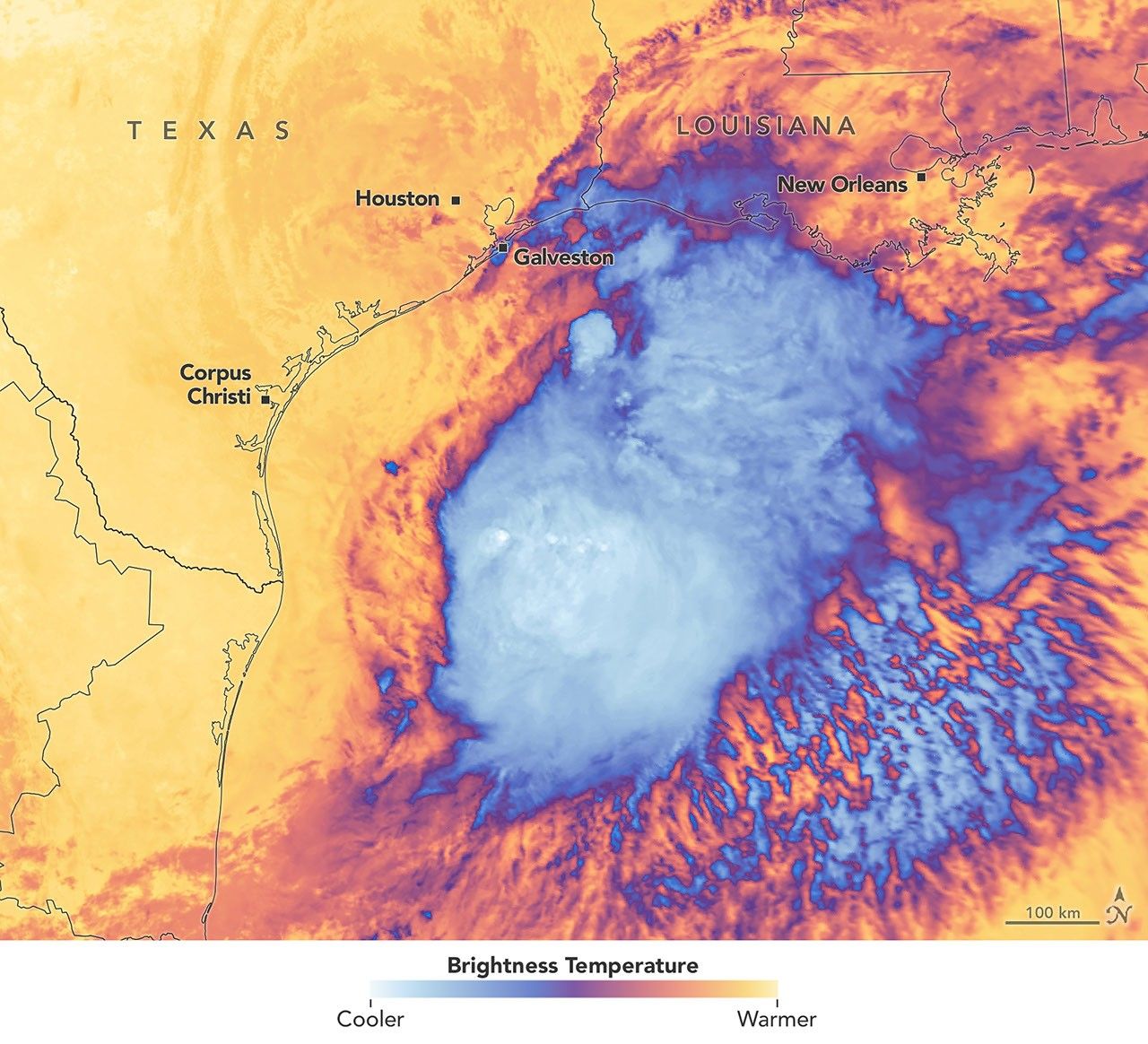
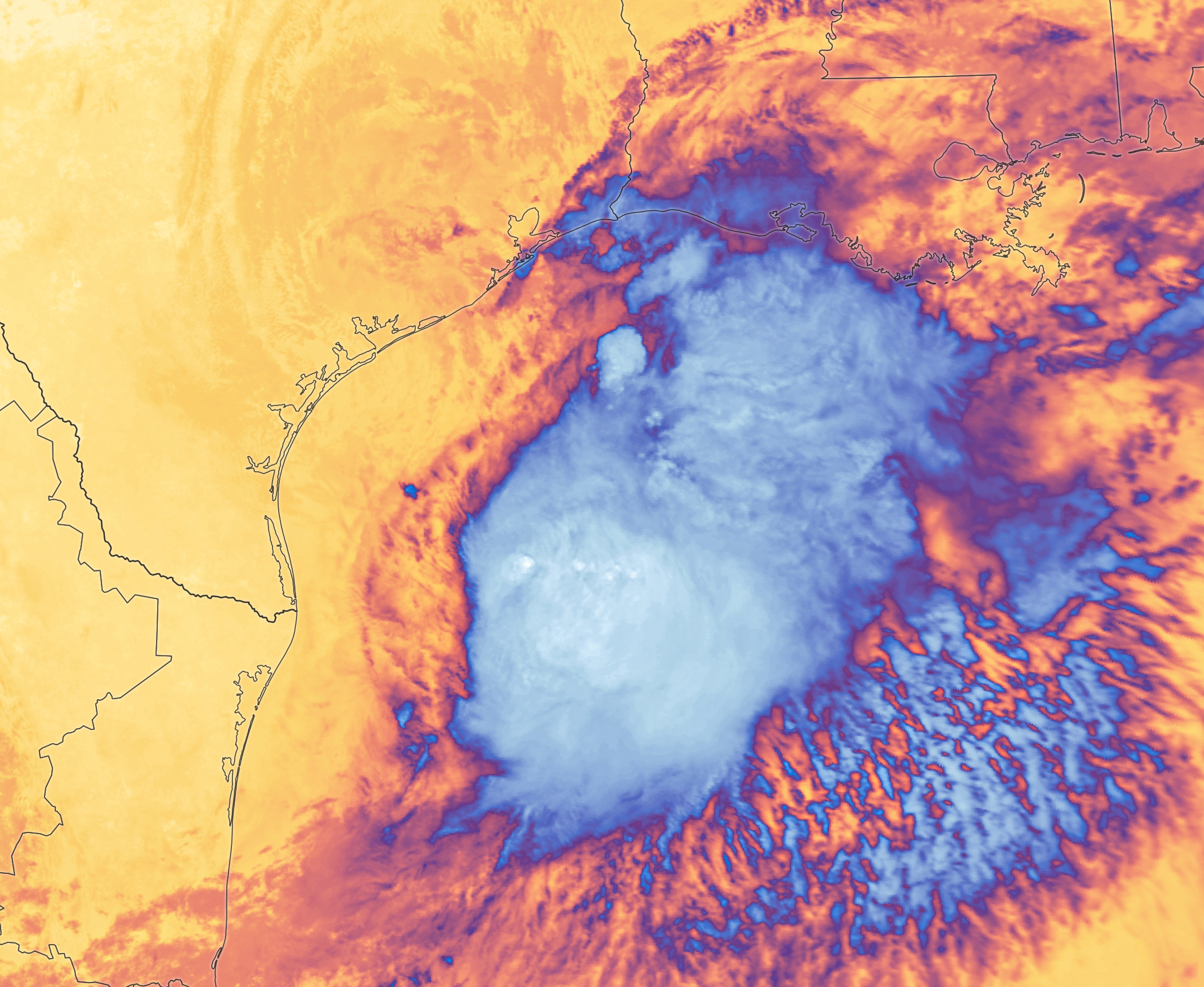
brightness temperature
Tropical Storm Arthur’s white storm clouds cover the waters off the U.S. Gulf Coast. Some clouds extend inland over parts of Texas and Louisiana.
NASA Earth Observatory/Michala Garrison
White and purple areas of cloud off the Gulf Coast indicate the cooler areas of cloud tops associated with Tropical Storm Arthur.
NASA Earth Observatory/Michala Garrison
Natural color
brightness temperature
Images from the MODIS (Moderate Resolution Imaging Spectroradiometer) on NASA’s Terra satellite show Tropical Storm Arthur on the morning of June 17, 2026. The left image is natural color; the right shows infrared signals known as brightness temperature. NASA Earth Observatory images by Michala Garrison.

Tropical Storm Arthur, the first named storm of the 2026 Atlantic hurricane season, brought high winds and heavy rain to the U.S. Gulf Coast in mid-June.

NASA’s Terra satellite captured this natural-color image (left) at 10:30 a.m. Central Time (15:30 Universal Time) on June 17. The second image (right) depicts infrared signals known as brightness temperature, which help distinguish cooler cloud tops (white and purple) from the warmer surface below (yellow and orange). Around the time these images were acquired, the system had just recently been designated a tropical storm, according to the National Hurricane Center (NHC).

Though Arthur stayed below hurricane strength, it still delivered strong winds to parts of the Gulf Coast as it tracked northeast. The storm had maximum sustained winds of 40 miles (65 kilometers) per hour around the time these images were captured. Tropical-storm-force winds extended 175 miles (280 kilometers) from the storm’s center, the NHC reported. Measurements at Galveston, Texas, for instance, showed a gust of 48 miles per hour.

The storm also produced heavy rainfall that the National Weather Service warned could lead to life-threatening flash flooding. Estimates from IMERG (the Integrated Multi-Satellite Retrievals for GPM), a product of the GPM (Global Precipitation Measurement) mission, showed high rainfall rates over Gulf waters and extending inland on June 17.

As Arthur weakened and became less organized, it continued to bring abundant moisture to central Gulf Coast states on June 18. The National Weather Service reported rainfall rates of 3 inches (7.6 centimeters) per hour in southeastern Louisiana. Forecasts indicated that storm-total rainfall amounts could exceed 12 inches (30 centimeters) in areas, with some locations seeing totals approaching 20 inches (51 centimeters).

NASA Earth Observatory images by Michala Garrison, using MODIS data from NASA EOSDIS LANCE and GIBS/Worldview. Story by Kathryn Hansen.

Downloads

Tropical Storm Arthur’s white storm clouds cover the waters off the U.S. Gulf Coast. Some clouds extend inland over parts of Texas and Louisiana.

June 17, 2026: Natural color

JPEG (2.94 MB)

White and purple areas of cloud off the Gulf Coast indicate the cooler areas of cloud tops associated with Tropical Storm Arthur.

June 17, 2026: Brightness temperature

JPEG (2.51 MB)

References & Resources

You may also be interested in:

Stay up-to-date with the latest content from NASA as we explore the universe and discover more about our home planet.

Typhoon Jangmi
2 min read

The sprawling storm promised to deliver torrential rain across a wide swath of southern Japan.

Article
Tropical Cyclone Narelle Crosses Australia
3 min read

The powerful storm lashed the northern edge of the continent with damaging winds and drenching rain as it made landfall…

Article
Super Typhoon Sinlaku
3 min read

The violent storm aimed at the U.S. Northern Mariana Islands and Guam in mid-April 2026.

Article

The post Tropical Storm Arthur appeared first on NASA Science.

  •  

Et si la Méditerranée devenait le terrain de jeu de véritables ouragans ? Voici ce que disent les chercheurs

En mars 2026, le cyclone Jolina ravageait l'Afrique du Nord. Quelques années plus tôt, la tempête Daniel tuait des milliers de personnes à Derna, en Libye. Ces catastrophes ont un nom peu connu du grand public : les médicanes. Le réchauffement climatique leur donne de l'ampleur. 

  •  

Inequality Amplifies Climate Disaster Risks Globally

As the frequency and intensity of climate-related disasters escalate on a global scale, a groundbreaking study sheds new light on a critical and often overlooked dimension of risk: the profound impact of inequality in human development. In research published in Nature Communications, an international team of scientists led by Teber, K., Sippel, S., and Krause, M. reveals that disparities in human development significantly amplify the vulnerability of populations to climate-induced hazards, complicating disaster preparedness and response efforts worldwide.

While the physical manifestations of climate change—rising temperatures, extreme weather events, and sea-level rise—have been extensively documented, the interplay between socioeconomic factors and disaster risk has not been fully elucidated until now. This study meticulously integrates human development metrics with environmental exposure data to quantify how inequalities exacerbate the consequences of climate disasters. By doing so, it provides new insights into risk assessment models that have traditionally prioritized hazard exposure over social vulnerability.

Central to the researchers’ approach is the utilization of the Human Development Index (HDI), which incorporates income, education, and health dimensions, to evaluate disparities both within and across countries. The team employed advanced geospatial analyses to map the confluence of low human development and high climate hazard exposure, uncovering hotspots where disaster risk is magnified by social inequities. These findings underscore that vulnerability extends beyond mere exposure to danger, deeply rooted in systemic inequalities that limit adaptive capacities.

The study reveals a stark pattern: regions with lower human development indices experience disproportionately higher disaster impacts, even when faced with similar climatic hazards compared to more developed areas. This disparity is attributed to factors such as inadequate infrastructure, limited access to healthcare, poor education, and economic constraints that together impair communities’ ability to prepare for, respond to, and recover from disasters.

Technically, the authors introduced novel risk amplification indices that integrate HDI components with hazard intensity and frequency data. This composite metric quantifies how social factors amplify baseline risk, offering a more nuanced predictive framework that can inform targeted interventions. Their methodology leverages machine learning algorithms to analyze large-scale data sets, including remote sensing inputs, socioeconomic surveys, and historical disaster records.

Perhaps most strikingly, the analysis highlights that even incremental improvements in human development metrics can substantially mitigate disaster risks. For example, enhancements in education and healthcare access foster resilience by equipping individuals and communities with knowledge, resources, and capacities essential for effective disaster management. Conversely, deep inequalities create feedback loops that not only increase immediate disaster impacts but also prolong recovery processes, entrenching vulnerability across generations.

The implications of this research are far-reaching for policymakers, disaster risk managers, and international development agencies. It challenges the prevailing paradigm that treats climate risk primarily as a function of environmental exposure, advocating instead for integrated strategies that explicitly address human development inequalities. This approach aligns with the principles of sustainable development and climate justice, calling for equitable investments in social infrastructure alongside climate adaptation measures.

Moreover, the study engages with the broader discourse on resilience by illuminating how socio-economic determinants influence adaptive capacity. It resonates with existing frameworks such as the Sendai Framework for Disaster Risk Reduction, which emphasize reducing underlying risk drivers. By providing empirical evidence linking human development disparities directly to heightened disaster risk, it strengthens the case for multidimensional risk reduction policies.

The authors also caution against simplistic or reactive disaster management approaches that neglect the complex socio-economic landscape. Investments solely focused on physical infrastructure or early warning systems, while vital, are insufficient if communities remain socially and economically fragile. Instead, a holistic paradigm embracing human development as a core component of disaster risk reduction can lead to more sustainable and equitable outcomes.

From a technical perspective, the research outlines future avenues for refining integrated risk models by incorporating real-time socioeconomic data and enhancing the granularity of development indices. Such dynamism is crucial in capturing evolving vulnerabilities amid rapid urbanization, demographic shifts, and climate variability. This adaptability can improve predictive accuracy, helping anticipate disaster hotspots and allocate resources more efficiently.

The study’s findings also invite critical reflection on the intersections of climate change, inequality, and governance. They suggest that mitigating climate disaster risks requires not only technological innovations but also profound socio-political transformations that address systemic inequities. Strengthening governance frameworks that promote inclusive participation and equitable resource distribution is key to achieving the dual goals of human development and climate resilience.

Importantly, this research situates human development inequality not as a peripheral issue but as a central amplifier of disaster risk with cascading social, economic, and environmental consequences. By integrating interdisciplinary methods spanning environmental science, social research, and data analytics, it exemplifies the complexity of the climate risk challenge and the necessity of multifaceted solutions.

This study arrives at a crucial moment when global climate policies are increasingly recognizing the imperative to embed equity considerations within adaptation and mitigation frameworks. It provides robust data-driven evidence that such equity is not merely a moral imperative but a practical necessity for reducing disaster risk and safeguarding vulnerable populations worldwide.

In sum, the work by Teber and colleagues marks a pivotal advancement in climate risk science, offering a transformative lens through which to view the vulnerabilities that shape disaster outcomes. It redefines risk not as an isolated environmental phenomenon but as a socially embedded condition influenced profoundly by human development disparities. Emerging from this new understanding is a clarion call to reimagine disaster risk reduction through the prism of equity, justice, and sustainable development.

As climate change continues to intensify, the urgency of addressing human development inequalities in disaster risk assessment and management could determine the resilience of entire communities and nations. This integrative, data-informed framework has the potential to guide future policies aimed at building a safer, more equitable world capable of withstanding the increasing challenges posed by a changing climate.

Subject of Research:
Climate-related disaster risk amplification due to inequality in human development

Article Title:
Inequality in human development amplifies climate-related disaster risk

Article References:
Teber, K., Sippel, S., Krause, M. et al. Inequality in human development amplifies climate-related disaster risk. Nat Commun 17, 5067 (2026). https://doi.org/10.1038/s41467-026-73873-9

Image Credits:
AI Generated

DOI:
https://doi.org/10.1038/s41467-026-73873-9

  •  

Ancient Cosmic Event Revealed by Radionuclides in Deep-Sea Sample

In an extraordinary breakthrough that delves deep into the cosmic past, an international consortium of scientists from Dresden, Sydney, and Canberra has uncovered rare signatures of radioactive isotopes embedded within a deep-sea manganese crust. This discovery provides unprecedented insights into the astrophysical phenomena responsible for forging the universe’s heaviest elements, particularly illuminating the timeline of the last significant r-process nucleosynthesis event in the solar system’s vicinity. Their findings, published in the esteemed journal Nature Astronomy, draw a cosmic map that stretches back over 100 million years, signaling the rarity and tremendous scale of cataclysmic events such as neutron star mergers or exceptionally energetic supernovae.

Ferromanganese crusts, mineral deposits found at profound ocean depths ranging from hundreds to thousands of meters, serve as unparalleled geological time capsules. These crusts accrete slowly—millimeters over millions of years—absorbing trace elements, including rare radioactive isotopes transported from distant cosmic events. By decoding these isotopic deposits, researchers can trace the history of cosmic explosions and paint a detailed portrait of stellar processes that shaped the chemical evolution of our galaxy.

Central to this research is the isotope plutonium-244, with its rare genesis through the rapid neutron-capture process, known simply as the r-process. During such events, atomic nuclei experience a rapid succession of neutron captures, instigating the synthesis of heavy elements beyond iron. Conditions conducive to this process are believed to arise predominantly during titanic neutron star collisions or hyper-energetic supernovae, events many orders of magnitude less frequent than typical supernova explosions. Detecting plutonium-244 within the Earth’s geological record offers direct evidence of these rare phenomena.

The team’s meticulous analyses utilized state-of-the-art detection methods to isolate and quantify iron-60, plutonium-244, and curium-247 isotopes in Pacific Ocean crust samples. Iron-60 serves as a definitive marker of conventional supernovae, and its isotope profile corresponded precisely to two well-documented near-Earth supernova events occurring within the past few million years. In stark contrast, plutonium-244 exhibited a distribution pattern dramatically different—one consistent with deposition over a much longer timespan, pointing to a rare cosmic event that transpired at least a hundred million years ago.

Intriguingly, plutonium-244’s widespread but time-extended presence suggests it did not originate from the same near-Earth supernovae that deposited iron-60. Instead, it implies an older, more distant event where the synthesized elements had ample time to diffuse through the interstellar medium, creating a diffuse veil of heavy atoms engulfing the solar neighborhood. This insight recalibrates our understanding of when and how the most massive elements were introduced into our galactic environment.

Adding further weight to this narrative is the absence of curium-247, another isotope forged by the r-process. Despite its pivotal role—curium-247 decays more rapidly than plutonium-244, with a half-life of approximately 15.6 million years—its conspicuous scarcity in the crust sample indicates no recent r-process activity within the last 100 million years. This “expiry date” phenomenon serves as a cosmic clock, reinforcing the conclusion that the solar system’s immediate neighborhood has been devoid of major r-process events for many millions of years.

The technical sophistication required for these measurements cannot be overstated. Detecting individual plutonium atoms amidst an ocean of roughly ten sextillion non-plutonium atoms illustrates the extraordinary sensitivity needed. Recent advancements at the VEGA facility in Sydney, led by Michael Hotchkis, have pushed the boundaries of accelerator mass spectrometry, enabling researchers to detect and map plutonium distribution layer by layer with unparalleled time resolution. This breakthrough is complemented by the pioneering use of the Heavy Ion Accelerator Facility in Canberra for iron-60 detection, underscoring the collaborative, multinational nature of this endeavor.

Furthermore, a comprehensive age model was constructed using beryllium-10 isotopes measured at the DREAMS facility in Dresden. These measurements were instrumental in refining the growth history of the ferromanganese crust, allowing the researchers to place each isotopic signature accurately within a cosmic timeline spanning more than ten million years. Coupled with advanced imaging techniques such as X-ray scanning and 3D reconstruction of smaller drill cores, the team assembled a remarkably precise chronicle of element deposition.

The implications of this research extend beyond the confines of our solar system. Prof. Anton Wallner, head of the Accelerator Mass Spectrometry and Isotope Research Department at HZDR, emphasized that the detected plutonium likely originated from extraordinarily rare cosmic explosions, such as neutron star mergers recently observed via gravitational waves—albeit occurring far outside our own galaxy. These discoveries not only challenge preexisting assumptions about local r-process events but also rule out alternative hypotheses, including the crossing of the solar system through dense interstellar clouds, as a source of these heavy elements.

This research heralds a new era in studying cosmic nucleosynthesis. Upcoming analyses involving lunar samples provided by NASA promise to enrich our understanding of recent r-process events further. Equally exciting is the anticipated operational commencement of the HAMSTER facility at HZDR, which aspires to replicate and surpass current detection capabilities. This facility aims to detect a broader spectrum of rare radionuclides, potentially unlocking fresh insights into the astrophysical origins of our universe’s elemental diversity.

In sum, the discovery of plutonium-244 traces scattered throughout ancient oceanic crust reframes our knowledge of cosmic history and nucleosynthesis. It reveals a universe punctuated by rare, monumental events that have imprinted an indelible trace on Earth’s geological archives. These findings not only illuminate the elemental assembly of the cosmos but also open up new frontiers for studying the universe’s most violent and transformative phenomena with unprecedented detail and temporal precision.


Subject of Research: Not applicable

Article Title: The timing of the last r-process event near Earth from interstellar 60Fe, 244Pu and 247Cm deposition on Earth

News Publication Date: 15-Jun-2026

Web References: http://dx.doi.org/10.1038/s41550-026-02841-6

References: Published in Nature Astronomy


Keywords

r-process nucleosynthesis, plutonium-244, curium-247, iron-60, deep-sea manganese crust, neutron star mergers, supernova, radioactive isotopes, accelerator mass spectrometry, interstellar medium, cosmic explosions, element formation

  •  
  •  
❌