❌

Reading view

Experimental Copper-Based Drug Clears Alzheimer’s Plaques and Boosts Memory in Mice

Using the APP/PS1 mouse model of familial Alzheimer’s disease, Pyun et al. investigated the effect of Cu(ATSM) on brain microvascular abundance and function of P-glycoprotein and the associated effects on exogenous amyloid-beta clearance, brain amyloid burden, and cognitive function. Image credit: Pyun et al., doi: 10.1021/acschemneuro.6c00252.

Copper diacetyl bis(4-methyl-3-thiosemicarbazone), or Cu(ATSM), restored a key waste-removal system in the brain, reducing toxic amyloid-beta buildup and improving spatial memory in lab models of Alzheimer’s disease, according to a team of researchers at Monash University.

The post Experimental Copper-Based Drug Clears Alzheimer’s Plaques and Boosts Memory in Mice appeared first on Sci.News: Breaking Science News.

  •  

Scientists Mapped Every Neuron in a Fruit Fly and the Brain Wasn’t Running the Show

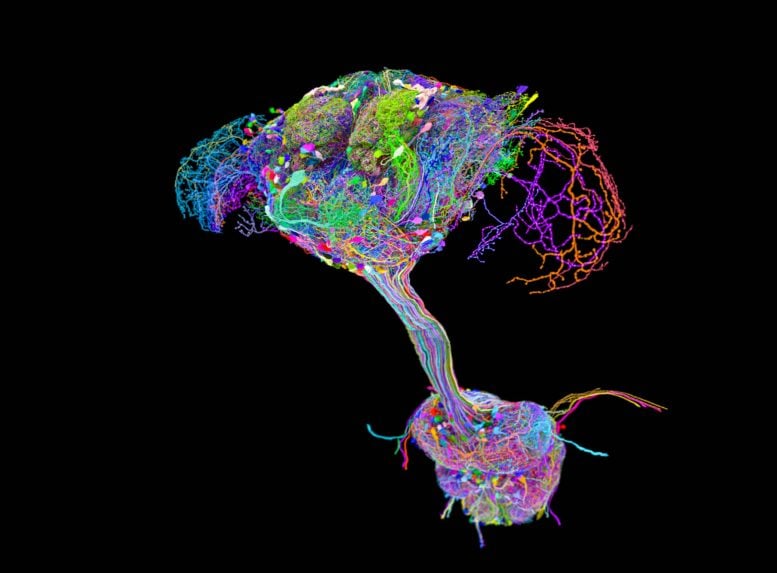
Fruit Fly Brain ConnectomeScientists have created the first complete brain-to-body wiring map of a fruit fly, revealing that complex behavior may arise from distributed neural teamwork rather than a central controller. A large international research team led by labs at Harvard Medical School and Princeton University has reached a major neuroscience milestone: a complete wiring diagram of every [...]
  •  

Scientists Found a Hidden Brain Signal That Predicts Social Behavior

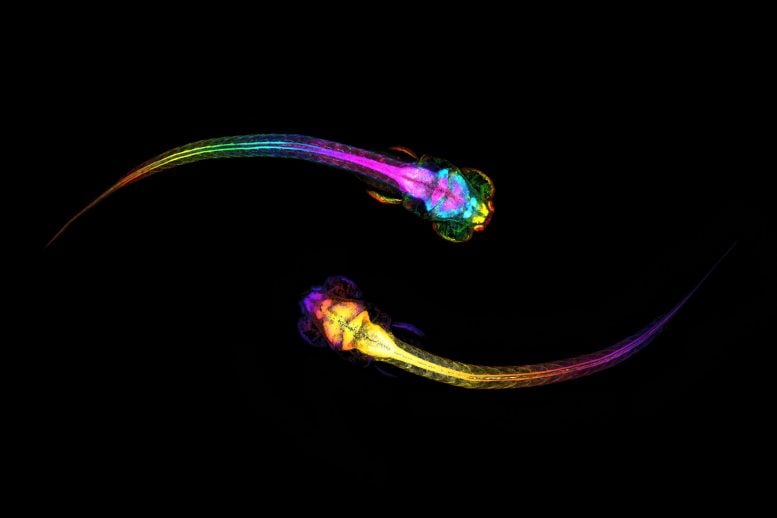
Two Socializing ZebrafishScientists discovered that the brain begins preparing for social connection before we even make the first move. Why do we decide to approach other people? According to new research, the answer may start unfolding in the brain several seconds before any movement takes place. A team of scientists from the Hebrew University of Jerusalem has [...]
  •  

The Brain May Not Need Full Sleep To Recover, New Research Finds

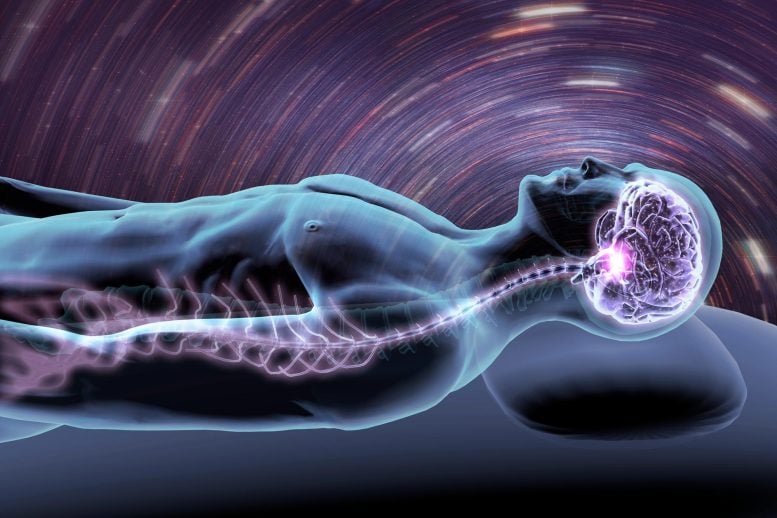
Sleep Dreaming Brain Spinal Cord Nervous SystemA new study suggests that reproducing a crucial sleep-like brain pattern in awake animals may help preserve memory and learning abilities. What if part of the brain could get some of the benefits of sleep without the rest of the brain ever going offline? A new NIH-funded study suggests that may be possible. Researchers found [...]
  •  

Scientists Reveal the Hidden Way Caffeine Sabotages Sleep

Happy Smiling Doctor Holding Coffee CupEEG studies suggest caffeine can reduce deep, restorative sleep even when sleep duration appears normal. Its effects vary by individual, and relying on caffeine for energy may come at the cost of nighttime recovery. Evening coffee has long been debated. Some people can drink it and fall asleep with no trouble, while others struggle to [...]
  •  

A ‘Memory Switchboard’ in the Hippocampus May Help Explain How the Brain Learns Without Overwriting Old Memories


Scientists have often wondered how the brain can take in new experiences without erasing stored memories. However, a new study in Nature now identifies a circuit-level mechanism that may help answer this question—and it may also offer clues for improving artificial intelligence.

Researchers at NYU Langone Health recorded the activity of hundreds of neurons simultaneously across several brain regions in mice. By tracking how signals move from the hippocampus to the neocortex, where long-term memories are kept, they found that a subset of hippocampal neurons appears to participate in routing information between regions in distinct patterns. These cells participate in both incoming and outgoing signaling, but do so using distinct patterns of activity.

Separate Channels Through the Same Cells

The study focused on a series of interconnected brain regions: CA3, which processes rapidly changing information; CA1, which serves as a central hub; and the retrosplenial cortex, which is important for navigation and spatial memory. About one in four CA1 neurons receives most of the signals from CA3. When these same neurons send signals to the retrosplenial cortex, they fire in a different pattern, creating a separate outgoing channel using the same cells.

Rather than using new neurons, the brain separates these channels by changing how the same neurons fire together. The researchers suggest this arrangement may help reduce interference between new learning and more stable cortical memories.

“Our findings help explain how memory can be both moldable and enduring,” said co-lead author Joaquín Gonzalez, PhD, a postdoctoral fellow in the Department of Psychiatry at NYU Grossman School of Medicine. “By changing how the same cells fire together instead of turning on new cells, the brain can keep information organized and protect older memories.”

What Happens During Sleep

The CA1 neurons involved in learning during the day also stay active at night. The researchers found that these cells remain busy during sleep events called sharp-wave ripples, which are bursts of activity the hippocampus uses to replay and strengthen memories from the day.

Since overlapping neurons are recruited during both waking activity and sleep replay, the same circuit elements appear to participate in both learning and consolidation. This theoretically allows the brain to use a single system for both learning and storing memories, without the two processes interfering with each other.

“Our study shows how learning and memory consolidation can coexist in the same network,” said co-lead author Mihály Vöröslakos, MD, PhD. “Our discovery was made possible because for the first time, we were able to record hundreds of individual neurons across all the key regions simultaneously in animals that were moving around naturally.”

Implications for Disease and AI

The system identified in this research may help explain how memory disorders begin. In Alzheimer’s disease, for example, the hippocampal circuits examined here are some of the earliest to deteriorate. These networks are essential for sorting and organizing new experiences.

“Our discovery of a ‘memory switchboard’ deep in the hippocampus may provide clues as to how memory circuits fail in Alzheimer’s disease,” said co-senior author Zhe S. Chen, PhD, a professor in the Departments of Psychiatry and Neuroscience at NYU Grossman School of Medicine.

Artificial intelligence systems have a hard time holding onto what they’ve already learned when faced with new tasks, a problem researchers call catastrophic forgetting. The human brain appears able to update memories without catastrophic forgetting by altering the use of existing neural circuits. By studying how our brains pull this off, scientists hope to design AI that can keep learning new things without forgetting the old.

“By showing how the mammalian brain can safeguard memories during learning, our research may offer a biological blueprint for designing next-generation AI technology that can update itself continuously without overwriting what it has already acquired,” said co-senior author György Buzsáki, MD, PhD, the Biggs Professor of Neuroscience at NYU Grossman School of Medicine.

The researchers plan to investigate whether similar switchboard-like channels exist in other memory circuits. The authors caution that their findings in mice under controlled conditions do not yet allow conclusions about the human brain.

Austin Burgess is a writer and researcher with a background in sales, marketing, and data analytics. He holds an MBA, a Bachelor of Science in Business Administration, and a data analytics certification. His work focuses on breaking scientific developments, with an emphasis on emerging biology, cognitive neuroscience, and archaeological discoveries.

  •  

High-Dose Psilocybin Case Report Suggests Hidden Function May Persist in Advanced Alzheimer’s


For five years, an elderly woman with advanced Alzheimer’s disease had spoken mostly in single words, needed help walking, and showed little spontaneous interaction with the people around her. Then, roughly 19 hours after receiving a high dose of psilocybin-containing mushrooms, she emerged from a prolonged, deep sleep-like state and began talking about her life.

The striking episode, described in a new case report published in Frontiers in Neuroscience, does not show that psilocybin reverses Alzheimer’s disease. The researchers are careful to stress that this was a single patient, observed in a real-world private clinical setting without brain imaging, formal sleep monitoring, or standardized cognitive testing.

Still, the study’s authors say the case raises the interesting possibility that in late-stage dementia, some functional abilities may indeed remain dormant rather than be completely lost.

“Advanced Alzheimer’s disease is generally regarded as a stage of irreversible functional decline,” researchers write. “This case documents transient multidomain functional improvement in advanced Alzheimer’s disease following psilocybin administration.”

The case involved a Japanese-American woman in her 80s with a 10-year history of Alzheimer’s disease. The patient was described as being in an advanced stage of dementia, with the previous five years being noted for severe decline.

Her speech had become mostly monosyllabic, and she had chronic urinary incontinence, executive dysfunction, dysphagia, dependent mobility, flat affect, prolonged somnolence, and a severe reduction in spontaneous communication.

Her diagnosis had been made clinically about a decade earlier, based on a steadily progressive neurodegenerative course, memory impairment, language reduction, executive dysfunction, and functional decline.

The intervention was a single oral dose of 5 grams of psilocybin-containing mushrooms from the “Enigma” strain. Researchers note that no established psilocybin dosing framework exists for advanced dementia, and the dose was high by almost any comparison.

Recreational users commonly describe 1 to 3 grams of dried Psilocybe cubensis mushrooms as a typical range, while doses around 3.5 grams or more are generally considered strong. A 5-gram dose is often treated as an especially intense experience. However, direct comparisons are imprecise because psilocybin content can vary widely between mushroom species, strains, batches, and even different parts of the same mushroom.

The study also notes that the dose was “relatively high compared with dosing approaches commonly used in modern clinical trials,” which typically use carefully measured amounts of purified psilocybin rather than whole mushrooms.

One month later, after some improvements persisted, the patient underwent a second supervised session using 3 grams.

The first session produced a dramatic acute response. The patient experienced autonomic activation, profuse sweating, suspected hyperthermia, and what the researchers describe as a prolonged deep sleep-like state. Exact temperature measurements were not available.

The study’s timeline shows that the first 12 hours were dominated by autonomic and sleep-like effects. At about 19 hours, the patient spontaneously awakened and produced roughly four hours of autobiographical speech.

By the first day, she showed increased alertness and recognition of family. By the second day, she was independently walking. By days two and three, she was dressing herself and showing spontaneous initiative. Around the same time, her diapers remained dry, including at night.

The improvement in continence was particularly notable to researchers because urinary control depends on more than a single simple reflex. It requires awareness of bodily signals, executive inhibition, and coordination among brain networks affected by dementia. The report states that the patient remained continent one month after the initial session, which was one reason a second session was performed.

During that second session, the patient reportedly remained more verbally expressive and described positive imagery involving surfing with her son on a peaceful island.

Researchers also observed improved facial expressivity, emotional reciprocity, spontaneous humor, and greater agility while walking. At one point during follow-up, the patient spontaneously said, “It is pleasant to come here.”

The study’s broader importance is in what it may suggest about the brain in advanced neurodegenerative disease. Alzheimer’s is usually understood as a progressive condition in which neurons and networks progressively deteriorate, stripping away memory, communication, mobility, and autonomy. By the advanced stage, treatment is largely supportive, and meaningful functional recovery is generally considered unlikely.

Psilocybin, however, is known to transiently alter large-scale brain dynamics via activation of the serotonin 5-HT2A receptor. Researchers point to prior human neuroimaging studies showing changes in default mode network integrity, network segregation, and functional connectivity after psilocybin administration. They also cited preclinical research suggesting psychedelics may promote structural and functional plasticity, including dendritic growth and synaptic remodeling.

That does not mean psilocybin repaired the patient’s Alzheimer’s disease. Instead, researchers suggest a more measured interpretation. The drug may have temporarily altered brain network activity, allowing remaining functional systems to reintegrate or become accessible again, at least for a limited period.

The report does not claim that plaques, tangles, or neurodegeneration were reversed. It also does not show that other patients would experience similar results. Because this was a single case, there was no control group, no placebo comparison, no formal biomarker confirmation, and no standardized cognitive testing to measure the degree of change.

Researchers acknowledge that mixed or alternative neurodegenerative contributions, including vascular components, cannot be fully excluded. Although they found no evidence of acute delirium, intoxication, or another acute neurological diagnosis during the observation period, the case remains observational. Causality cannot be established, and fluctuations in neurodegenerative disease cannot be completely ruled out.

The safety picture is also incomplete. While no severe persistent adverse effects, prolonged agitation, clinically significant cardiovascular instability, persistent psychotic symptoms, delayed neurological deterioration, or delayed medical complications were observed during follow-up, the acute phase included suspected hyperthermia and profuse sweating. In frail elderly patients, especially those with advanced dementia, such responses could carry serious risks.

For that reason, the findings should not be read as a green light for unsupervised psychedelic use in dementia patients. Psilocybin is still a powerful psychoactive compound, and older adults with complex neurological disease may be especially vulnerable to complications.

Ultimately, the value of the report doesn’t lie in providing a treatment recommendation but in documenting an unusual clinical observation that researchers say warrants controlled investigation.

The case also lands amid a flood of scientific interest in psychedelics as tools for studying brain plasticity, perception, memory, and large-scale network dysfunction.

As The Debrief has previously reported, recent brain-imaging work has found that psilocybin can temporarily dissolve familiar brain-network patterns tied to the sense of self, while other studies suggest psychedelics may redirect visual processing toward memory-related regions. Additional research has analyzed how a single dose of psilocybin may produce lasting brain changes, how the compound can reshape neural pathways associated with depression, and how psychedelic effects may be influenced by factors such as exercise, food restriction, and immune signaling.

However, most clinical work with psilocybin has centered on psychiatric conditions such as depression, anxiety, PTSD, and substance use disorders.

More recently, researchers have begun asking whether similar neuromodulatory effects might have relevance for people with mild cognitive impairment or early Alzheimer’s disease.

Published clinical data involving advanced dementia remain extremely limited, which is why the new report is best understood not as evidence of a treatment, but as a provocative case study that may help guide future controlled research.

This recent case does not prove efficacy, but it questions assumptions about what may remain possible in a brain already deeply affected by Alzheimer’s disease.

If future studies find similar effects under supervised conditions, the implications could be significant, not only for dementia care but also regarding understanding how much latent function can persist beneath the outward appearance of severe decline.

“Residual functional capacity may persist in advanced Alzheimer’s disease and may become transiently accessible following psilocybin induced modulation of large-scale brain networks,” researchers conclude. “Systematic investigation is warranted.”

Tim McMillan is a retired law enforcement executive, investigative reporter and co-founder of The Debrief. His writing typically focuses on defense, national security, the Intelligence Community and topics related to psychology. You can follow Tim on Twitter: @LtTimMcMillan.  Tim can be reached by email: tim@thedebrief.org or through encrypted email: LtTimMcMillan@protonmail.com 

  •  

A Surprising Discovery Suggests Autism Is Not One Condition

Autism Confused Girl Stickers FaceBrain scans have uncovered two biologically distinct forms of autism hidden within the spectrum. An international team of researchers has identified at least two biologically distinct forms of autism by examining how different regions of the brain communicate with one another. The findings could help advance more precise and personalized approaches to autism care and [...]
  •  

DMT Users Have Described Encounters with Non-Human Intelligences for Decades—A New Mathematical Framework Could Test Such Claims


In the literature related to the powerful entheogen dimethyltriptamine (DMT), it is often reported that individuals claim to have had encounters with what they perceived as non-human entities during their DMT experiences. Descriptions related to these powerful visionary experiences range from what some describe as insect-like forms and machine-like intelligences, to what some describe as conscious entities associated with intricate geometries.

For years, many researchers have regarded these reports purely as hallucinations generated by the human brain while under the influence of the psychedelic compound. However, past studies have never directly tested whether these reported entities could represent something other than internally generated hallucinations.

Now, a recent preprint paper outlines a path toward testing this assumption experimentally.

A collaborative team from the Trace Institute and the nonprofit Noonautics has released a preprint titled Traces of the Other –Are DMT Entities Real? DMT Phenomenology in the Framework of Conscious Realism. The study presents a mathematical framework for understanding the human psychedelic experience and outlines experiments designed to test its primary hypothesis.

The research was led by Professor Emeritus Donald Hoffman, founder of the Trace Institute, and Dr. Andrew Gallimore, a neurobiologist and pharmacologist at the Okinawa Institute of Science and Technology and head of Noonautics. The preprint is currently awaiting peer review.

A Problem With a Default Answer

According to some figures, as many as 45% of the individuals who take a sufficient dose of DMT report experiences involving non-human beings. People describe these entities as intelligent and autonomous, and report similar experiences across different cultures and backgrounds.

Typical hallucinations tend to draw on material from memory, such as familiar faces, animals, or places. By contrast, encounters with other humans appear in less than 5% of DMT encounters.

The authors of the new preprint study argue that these reports are difficult to reconcile with conventional accounts of pure hallucination and that the consistency of reports regardless of culture, location, belief systems, and other factors warrants deeper investigation. 

A Framework Built on Conscious Realism

The project draws on Hoffman’s theory of conscious realism, which proposes that interacting conscious agents fundamentally constitute reality. In this framework, the physical world as humans perceive it functions more like a user interface than a direct view of objective reality. According to this theory, conscious agents of varying levels of complexity may exist beyond what humans normally perceive and go unnoticed in everyday life.

The researchers propose that DMT changes the perceptual interface, allowing consciousness to access regions where normal perceptual constraints are absent. In these regions, it may be possible to detect traces of other conscious agents. Hoffman says the project “will provide a new framework for exploring the effects of psychoactive substances such as DMT on the structure and function of spacetime.”

The Protocol That Makes Testing Possible

Testing these ideas has become possible due to past work involving technical development by Gallimore and researcher Rick Strassman. Typically, a DMT experience lasts only three to five minutes, which is not long enough for structured experiments. The extended-state DMT protocol, called DMTx, uses a controlled intravenous infusion to maintain a stable experience for up to an hour, allowing researchers to adjust the dosage as required.

That controllable window makes experimentation possible. “With a theoretical foundation for the highly unusual state of consciousness induced by DMT, we can test these theories experimentally,” Gallimore says.

Experiments Built to Fail

The proposed experiments are designed so that if the external-agent hypothesis is incorrect, the results will be negative. In one protocol, a computer in a sealed room randomly displays either blue or yellow, and a subject under DMTx attempts to learn the hidden color by interacting with an entity. Another experiment involves two isolated subjects under DMTx who try to transmit a random word to each other through a shared entity, a process that would be difficult to explain solely in terms of internal brain mechanisms.

The researchers acknowledge several limitations. Cooperation from entities cannot be guaranteed, results depend on subjective reports, and expectation bias is difficult to rule out. The preprint continues to treat the hallucination model as the default explanation for these entities. What distinguishes this work is that the hypothesis is now formulated in a way that allows for experimental testing.

“This collaboration is a first step to a mathematics of altered states of consciousness and, ultimately, for engineering our perceptual interface to expand our view of reality,” Gallimore says.

Hoffman and Gallimore will discuss the research publicly on Saturday, June 13, 2026, at the Lighthouse Campus at the historic Venice Beach Post Office in Los Angeles, with video to follow on YouTube.

Austin Burgess is a writer and researcher with a background in sales, marketing, and data analytics. He holds an MBA, a Bachelor of Science in Business Administration, and a data analytics certification. His work focuses on breaking scientific developments, with an emphasis on emerging biology, cognitive neuroscience, and archaeological discoveries.

  •  

A Hidden Brain Rhythm May Map the Line Between Conscious and Unconscious States


For patients with disorders of consciousness such as coma, vegetative states, or unresponsive wakefulness, clinicians face a longstanding challenge of determining whether any awareness remains. While surface brain recordings can measure general electrical activity, they do not reveal what is happening deep within the brain.

Now, a new study from Ludwig-Maximilians-Universität München may bring clinicians closer to a measurable indicator of brain states in these conditions.

Researchers at LMU have found a new type of electrical rhythm in the central thalamus, a small area deep inside the brain. Published in Nature Human Behaviour, the study suggests that this rhythm could serve as a biological indicator of conscious states.

A Signal That Tracks Awareness

This rhythm allows researchers to closely track certain states of consciousness. It appears during wakefulness and REM sleep, but disappears as soon as non-REM sleep begins. In non-REM sleep, slower brain waves take over, and the thalamic signal fades.

The signal does more than just appear with consciousness. It also changes as the brain moves between different states. For example, the rhythm becomes stronger during REM sleep, which lets researchers see small shifts in awareness even within the same stage of sleep.

“Our results show that the central thalamus plays an important role in regulating brain states,” said Dr. Aditya Chowdhury, lead author of the study. “In the context of existing research, our results show that this small deep-lying brain structure could actively influence our states of consciousness.”

Professor Tobias Staudigl, who led the research team, argues the signal’s consistency makes it more than just an interesting discovery. “These characteristic rhythm patterns can be reliably attributed to specific states and thus have the potential to serve as a measurable biological signature of states of consciousness,” Staudigl said.

Getting Inside the Deepest Part of the Brain

Recording electrical activity from deep brain structures is one of neuroscience’s most persistent technical problems. Standard surface EEG can detect general patterns from the brain’s outer layers, but it misses details from deeper areas. Since the thalamus sits at the center of the brain, it has remained largely inaccessible through non-invasive methods.

The LMU team had a rare chance to study this. Their research involved patients already undergoing deep-brain stimulation therapy for epilepsy, which uses electrodes in the thalamus to help control seizures. These electrodes let the researchers record signals directly from inside the thalamus, something that is almost never possible otherwise.

The team combined these recordings with surface EEG, eye-tracking, and detailed sleep-stage analysis. This approach allowed them to see how thalamic activity changes as patients transition between wakefulness and different sleep stages. Their findings offer the most detailed picture yet of what the thalamus actually does as consciousness changes.

Medical Implications

Disorders of consciousness, like coma, vegetative state, and minimally conscious state, are some of the hardest problems in neurology. One reason is that doctors have lacked reliable biological markers to assess patients’ awareness. The thalamic rhythm found in this study could help solve that problem.

If this signal truly tracks brain states linked to consciousness, it could help doctors evaluate awareness in patients who cannot communicate, guide treatment choices, and monitor how patients respond to care over time. The researchers believe it could also be used to improve deep brain stimulation therapy by allowing doctors to adjust treatment based on real-time thalamic activity rather than general clinical signs.

Staudigl was recently awarded funding by the European Research Council to explore the clinical potential of this discovery and to develop applications for treating neurological disease.

Understanding consciousness has always been one of science’s most difficult challenges. While the study does not answer the fundamental question of what consciousness is, these findings provide a consistent, measurable signal that indicates how the brain moves between conscious and unconscious states.

Austin Burgess is a writer and researcher with a background in sales, marketing, and data analytics. He holds an MBA, a Bachelor of Science in Business Administration, and a data analytics certification. His work focuses on breaking scientific developments, with an emphasis on emerging biology, cognitive neuroscience, and archaeological discoveries.

  •  

Scientists Demonstrate What Pianists Have Argued for Over 100 Years


For more than a century, musicians have maintained that the way a pianist touches a key influences the sound that emerges. Many scientists, however, have argued that after the hammer strikes the string, the instrument itself determines the outcome, making the pianist’s touch irrelevant.

Now, a recent study published in the Proceedings of the National Academy of Sciences provides some of the strongest evidence yet in support of the musicians’ perspective.

A research team led by Dr. Shinichi Furuya of the NeuroPiano Institute and Sony Computer Science Laboratories developed a custom sensor system called HackKey. This system can record the movement of all 88 piano keys at 1,000 frames per second, with a spatial precision of 0.01 millimeters. The team invited 20 internationally recognized pianists to play notes while intentionally aiming for contrasting timbres, such as bright versus dark and light versus heavy. Listeners were able to distinguish among the different timbres, even individuals with no experience playing the piano.

The Movements Behind the Sound

The researchers identified a series of micro-movements beneath each keystroke. These movements are so subtle that they are almost impossible to see, but precise enough for listeners to perceive differences in sound.

Small changes in how quickly a key accelerates, slight overlaps between notes, and variations in the speed of initial contact with the key all influenced how listeners described the resulting sound. When each of these factors was adjusted individually, the perceived timbre changed. Adjusting a single movement feature was enough to reliably change how listeners perceived timbre. The results show that touch has a direct effect on sound, independent of factors such as volume or tempo.

The study describes these micro-movements as a motor skill developed through years of advanced training. The researchers call the emerging science of mapping movement to musical experience “dynaformics.”

A Debate as Old as the Modern Piano

The debate over whether touch can alter piano timbre dates back to at least the early 1900s, when music educators began discussing what distinguishes one performer’s sound from another. The piano’s mechanical action appeared to support the skeptics, since the hammer, once released, moves independently before striking the string and is not directly contacted by the pianist’s finger.

As a result of this mechanical process, many acousticians concluded that any reported differences in tone were psychological, influenced by context, volume, or timing rather than by touch. Musicians maintained their position but did not have the scientific tools to prove it.

To settle this debate, Furuya’s team developed a custom biometric contact-sensing system called HackKey, capable of recording the movement of all 88 piano keys at 1,000 frames per second with sub-millimeter precision. The system captured in-depth piano movement data that previous technology could not. For the first time, researchers could observe the specific actions of elite pianists and relate those movements to listeners’ descriptions of sound.

What It Means Beyond the Concert Hall

Piano teachers have often used general phrases like “play warmer” or “use a softer touch” because the specific movements that create certain sound qualities were not well understood. This study now offers a guide to those movements.

Future training tools may allow students to see precisely what their fingers are doing when a note is played successfully or not. Instead of relying on a teacher’s metaphor, students could compare their own keystrokes to a standard and work to improve their technique. The researchers suggest that this approach could make expressive technique easier to teach and visualize, especially for students who find it difficult to translate verbal instructions into physical actions.

The research may also apply to rehabilitation, robotics, and human-computer interaction. Discovering that small differences in movement can shape auditory perception offers new insight into how the brain links movement and sensory experience. Some researchers are exploring whether systems based on expressive musical movement could help patients recover dexterity and coordination after injury.

Most scientific research on music has focused on elements that are easier to measure, like pitch, loudness, and rhythm. Timbre, or the quality or “color” of a sound that makes one instrument or voice different from another, has been harder to measure. This study offers a new way to understand the mechanics behind this concept. The findings suggest that some of the most expressive parts of music come from movements too small to see, developed through years of practice.

Austin Burgess is a writer and researcher with a background in sales, marketing, and data analytics. He holds an MBA, a Bachelor of Science in Business Administration, and a data analytics certification. His work focuses on breaking scientific developments, with an emphasis on emerging biology, cognitive neuroscience, and archaeological discoveries.

  •  

Scientists Discover Gut Signal That Turns Off Sugar Cravings

Woman Diet Craving Cake DessertScientists discovered a hidden gut-brain network that can change cravings when the body needs more protein. The body has a remarkable ability to recognize when it is missing important nutrients and adjust behavior accordingly. New research shows that the gut plays a much larger role in this process than previously understood, actively detecting protein shortages [...]
  •  

Cambridge Scientists Just Reversed a Form of Nerve Damage Once Thought Permanent

Damaged Neuron Brain Nerve CellCambridge researchers used lab-grown human brain and spinal cord tissues to uncover a hidden mechanism that blocks nerve repair. By reversing that biological brake, they restored the ability of damaged nerve fibers to regrow. Scientists at the University of Cambridge have created miniature brain and spinal cord circuits in the lab that mimic the neural [...]
  •  

Scientists May Have Finally Solved the Mystery of the Strange Hum Heard Around the World

Blurry Hearing The HumA mysterious low-frequency sound known as The Hum has been reported around the world for decades, leaving researchers searching for its source. Imagine lying in bed late at night and hearing a faint engine-like drone that seems to come from somewhere outside. You check the windows, listen for traffic, and search for a nearby machine. [...]
  •  

Surprising New Study Challenges a Century-Old Theory of Habit Formation

Habit Human BrainA new study challenges the long-held idea that habits form only through slow, gradual repetition. What if your habits don’t form through countless repetitions over months or years? What if the brain can decide, almost instantly, that a behavior is no longer worth thinking about? That possibility is at the center of a new Johns [...]
  •  

Scientists Discover Alzheimer’s-Linked Proteion’s Surprising Role in Making Memories Last

Tau Tangles Amyloid Beta Neuron Cells Brain Alzheimers DementiaA new study shows that tau helps organize and preserve long-term memories, while abnormal tau may contribute to memory problems in Alzheimer’s disease by disrupting memory formation and recall. New research has revealed that tau, a protein closely linked to Alzheimer’s disease, is also essential for creating long-lasting memories. The findings could point to new [...]
  •  

Researchers Suspected Brain Inflammation in Long COVID but Found Something Else

Color Black White Brain ScansBrain scans suggest long COVID’s biggest clues may lie in the brain’s emotion centers, not widespread inflammation. A new brain imaging study suggests that persistent symptoms of long COVID may not be driven by ongoing brain inflammation, as many researchers have suspected. Scientists in Finland used advanced imaging techniques to examine the brains of people [...]
  •  
❌