O Trump Phone não é o que parece e uma nova desmontagem da iFixit confirma o que muitos suspeitavam. Afinal, o smartphone é quase idêntico ao HTC U24 Pro, lançado em 2024.
I turned off Siri on the Mac years ago and never looked back. Similarly, I found Apple Intelligence so fruitless I never engage with it. But the new Siri AI coming to macOS 27 Golden Gate has at least got me slightly rethinking things.
I'm still early in testing Siri AI, as I've only had access to it in the macOS 27 developer beta for little more than 24 hours. It's also in an early preview state on the dev beta, so there should be lots of runway for improvements before it releases later this year. I don't even know if it's done indexing my files and folders on our review unit M5 MacBook Air and M5 Max MacBook Pro. Unlike on the iOS 27 dev …
Esqueça os bloqueadores de sites chatos e as notificações que ignora ao fim de dois dias. O Cat Gatekeeper tem uma abordagem diferente, e muito mais fofa, para o doomscrolling. Trata-se de um gato laranja “gorducho” que invade o ecrã e não sai de lá até a pausa acabar.
Dear Physics of the Cosmos (PhysCOS) community members-
If you’re attending the American Astronomical Society’s 2026 Summer Meeting (AAS 248) in Pasadena CA, please join us for the following PhysCOS-organized activities (all times Pacific):
Monday 15 June
10a – 11:30a, Conference Center 204: NASA’s Future Large Gamma Ray (FLAG) Mission Concepts Working Group
Additionally, the following activities may be of special interest to the PhysCOS community:
Sunday 14 June
10a – 12n, Conference Center 102: High Energy Science Analysis with HEASARC Services
2p – 4p, Conference Center 101: An Introduction to Fornax: Scalable Data and Compute for Scientific Analysis
Monday, 15 June
12:45p ‑ 1:45p, Ballroom DE: NASA Update Town Hall
2p – 3:30p, Conference Center 211: HEAD: NuSTAR and the future of hard X-ray observations
2p – 3:30p, Ballroom F: Gamma-ray Astrophysics from Fermi to the Future
6:15p – 8:15p, Conference Center 106: NSF NOIRLab Open House
And please drop by the PhysCOS table in the Exhibit Hall!
For more information on PhysCOS throughout the meeting, check out our meeting webpage.
Wishing you the best,
Dr Francesca Civano & Dr Brian Humensky PhysCOS Chief Scientists, NASA GSFC
Dr Bernard Kelly PhysCOS Support Scientist, NASA GSFC
American Astronomical Society
The 248th Meeting of the AAS
The 248th AAS meeting (joint with the High Energy Astrophysics and the Laboratory Astrophysics Divisions) will be held 14-18 June 2026 in Pasadena, California.
Uma publicação no Threads juntou mais de 1.700 respostas com os atalhos de teclado favoritos da internet. Recolhemos os mais surpreendentes, e há boas hipóteses de ainda não conhecer alguns dos atalhos sugeridos.
A Apple confirmou na WWDC 2026 todos os modelos compatíveis com o iOS 27, e a boa notícia é que nenhum iPhone ficou para trás face à versão anterior. Já a nova Siri com IA só chega aos modelos mais recentes, mas apresenta uma justificação para tal.
The IPO market is back, and it’s not the same companies leading the charge. FAANG had a good run, but a new acronym is taking over: MANGOS — Meta (or Microsoft, depending on who you ask), Anthropic, Nvidia, Google, OpenAI, and SpaceX. Half of that bunch is heading to public markets in the same window, and it’s a stress test for investors, for valuations, and for […]
A Ingram Micro reorganiza a sua operação local, que passa a ter acesso direto às capacidades da estrutura ibérica, com foco em cibersegurança, cloud, IA e soluções para PME portuguesas.
Dear Physics of the Cosmos (PhysCOS) community members-
As we prepare for our Ad ASTRA Community Science Workshop, we are writing to share important updates regarding the agenda structure and instructions for abstract submissions.
The Community Science (Ad ASTRA) Workshop is organized by the NASA Astrophysics Division to engage the community in identifying future large, strategic astrophysics missions. Structured over three thematic days—Science, Capabilities and Implementation, and Community Discussion—the workshop provides a comprehensive framework to connect scientific priorities with technological readiness and mission implementation. Across all three days, plenaries, panels, breakout sessions, and poster contributions are designed to maximize community interactions and discussion. The outcomes of the workshop will help NASA prioritize mission concepts and shape a balanced, forward-looking astrophysics portfolio that is consistent with the Astro2020 recommendations and existing and future science gaps.
To best serve the community and facilitate meaningful collaboration, we are splitting the mission concept presentations into two distinct focuses: Science on Day 1, and Capabilities and Implementation on Day 2. We are relying on you—the concept teams and the broader community—to submit abstracts for both days. We are also offering the option to present mission concepts as posters, and will offer the opportunity to present as posters any abstracts for which there is insufficient room in the parallel sessions.
Please review the detailed agenda structure and submission guidelines below:
Day 1: Science Focus
Science Questions: Day 1 will focus on open science priorities and questions from strategic documents (Astro 2020 Decadal Survey, Enduring Quests – Daring Visions from 2014) and more recent science questions that the mission concepts submitted to ASTRA will address.
Abstract Submission: Presentations for Day 1 are not restricted to mission concept team members. We strongly encourage other scientists in the community to submit abstracts presenting important science questions and to use this opportunity to connect with concept teams.
Breakout Sessions: These sessions will be organized by science themes (Compact Objects and Energetic Phenomena, Cosmology, Galaxies, Exoplanets & Astrobiology, Stars and Stellar Populations). Moderators will present a summary of the panel discussions at the end of Day 1.
Day 2: Mission Concepts – Capabilities and Implementation
Focus: Day 2 is focused on implementation, capabilities, and technologies (software and hardware) relevant to the ASTRA submitted mission concepts. A summary of the Innovation for Astrophysics Missions Workshop (May 2026) will inform discussions regarding industry and other capabilities and opportunities that may be leveraged.
Breakout Sessions: These sessions will be organized by capability groups, which will be determined once the submitted mission concept documents are reviewed.
Format & Goals: Breakout sessions will feature a mix of presentations and flexible discussion. The goal is for teams with concepts at varying maturity levels to collaborate, find commonalities, and strengthen their respective capability groups.
Abstract Submission Note: Teams may submit multiple abstracts for these sessions if their concept spans different capabilities (e.g., requiring both UV and X-ray technologies).
Day 3 & Workshop Outcome
A primary goal of this workshop is to refine a draft “science-to-capabilities” matrix, which will be built using inputs from your submitted ASTRA mission concept documents. During the Day 1 and 2 breakout sessions, moderators will capture key discussion points to present during end-of-day summary panels. On Day 3 of the workshop, we will hold a plenary discussion to recap the week and collaboratively revise the “science-to-capabilities” matrix. Together as a community, we will add, refine, and prioritize science questions, mapping them to mission concepts.
Key Upcoming Dates:
24 June 2026: Abstract submission deadline (link). If you have already submitted an abstract and would like to modify it based on the guidelines above, please delete your previous contribution and send another submission.
Uma análise sem precedentes de um enigmático “pequeno ponto vermelho” detetado pelo telescópio James Webb reforça a teoria de que estes objetos são buracos negros supermassivos em crescimento, ajudando a resolver um dos maiores mistérios do Universo primitivo.
A empresa espacial de Elon Musk fixou o preço a 135 dólares por ação, numa avaliação de 1,77 biliões de dólares que "pulveriza" todos os recordes anteriores. As ações da SPCX estreiam-se hoje às 14:30 (hora de Portugal continental) no Nasdaq.
A conferência anual da Agência Espacial Portuguesa regressa a Lisboa este mês e segue o tema "A Arquitetura do Poder: Geopolítica na Segunda Era da Exploração Espacial”. A participação é gratuita, com inscrição obrigatória.
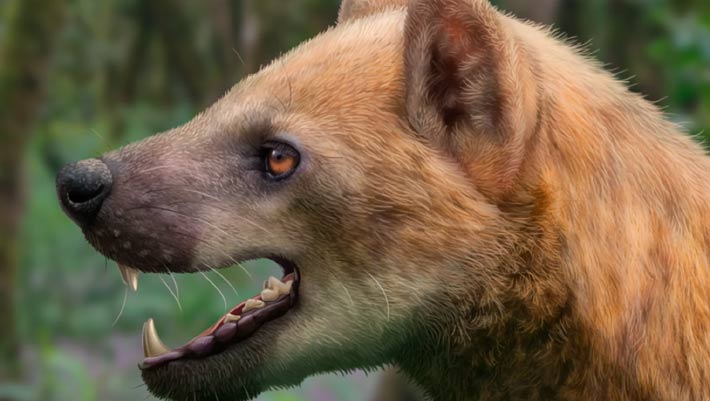
Paleontologists have identified a previously unknown species of amphicyonid -- the extinct family of carnivorous mammals popularly known as bear-dogs -- from two specimens unearthed at a rich fossil site in the Vallès-Penedès Basin near Barcelona, Spain.
Ao TEK Notícias, Montse Ferrer, co-diretora regional do Gabinete do Leste e Sudeste Asiático e do Pacífico da Amnistia Internacional, explica como funcionam as “fábricas” de burlas online no Camboja, onde vítimas são “recrutadas” sob falsas promessas de emprego e forçadas a participar em esquemas de fraude.
The origins and fate of massive compact objects such as black holes, neutron stars, and white dwarfs can only be fully answered by measuring deci-Hertz (dHz) gravitational wave emission. A plethora of innovative mission concepts have been proposed motivated by this need, promising incredible potential sensitivity and requiring substantial technical development. Like COBE rather than Plank, we optimize time to first knowledge over ultimate sensitivity. We describe the highest priority science goals contained in and motivating a dHz observatory, the minimum sensitivity required to make these observations, and the fastest, least-costly mission that meets these minimum requirements. We dub this mission the Deci-hertz Interferometer Space Antenna (DISA).
Elon Musk’s rocket company is spending big and losing money. That has raised questions about whether it can justify its valuation for its blockbuster initial public offering.
Promovido pelo Fraunhofer Portugal AICOS, o concurso quer incentivar jovens talentos das universidades portuguesas a criar soluções inovadoras com impacto económico e social, respondendo a desafios reais através da tecnologia.
As co-chief executive of the start-up Prometheus, the Amazon founder is using A.I. to improve how devices ranging from computers to jet engines are made.

 Login