Login

Turning the Psychedelic Experience into a Math Problem
Extended DMT trips could help scientists probe a new theory of reality that puts consciousness first
The post Turning the Psychedelic Experience into a Math Problem appeared first on Nautilus.


Extended DMT trips could help scientists probe a new theory of reality that puts consciousness first
The post Turning the Psychedelic Experience into a Math Problem appeared first on Nautilus.
This new five-step protocol could make surgery a lot less painful
The post The Healing Power of Dreaming Under Anesthesia appeared first on Nautilus.

 Brain scans have uncovered two biologically distinct forms of autism hidden within the spectrum. An international team of researchers has identified at least two biologically distinct forms of autism by examining how different regions of the brain communicate with one another. The findings could help advance more precise and personalized approaches to autism care and [...]
In the literature related to the powerful entheogen dimethyltriptamine (DMT), it is often reported that individuals claim to have had encounters with what they perceived as non-human entities during their DMT experiences. Descriptions related to these powerful visionary experiences range from what some describe as insect-like forms and machine-like intelligences, to what some describe as conscious entities associated with intricate geometries.
For years, many researchers have regarded these reports purely as hallucinations generated by the human brain while under the influence of the psychedelic compound. However, past studies have never directly tested whether these reported entities could represent something other than internally generated hallucinations.
Now, a recent preprint paper outlines a path toward testing this assumption experimentally.
A collaborative team from the Trace Institute and the nonprofit Noonautics has released a preprint titled Traces of the Other –Are DMT Entities Real? DMT Phenomenology in the Framework of Conscious Realism. The study presents a mathematical framework for understanding the human psychedelic experience and outlines experiments designed to test its primary hypothesis.
The research was led by Professor Emeritus Donald Hoffman, founder of the Trace Institute, and Dr. Andrew Gallimore, a neurobiologist and pharmacologist at the Okinawa Institute of Science and Technology and head of Noonautics. The preprint is currently awaiting peer review.
According to some figures, as many as 45% of the individuals who take a sufficient dose of DMT report experiences involving non-human beings. People describe these entities as intelligent and autonomous, and report similar experiences across different cultures and backgrounds.
Typical hallucinations tend to draw on material from memory, such as familiar faces, animals, or places. By contrast, encounters with other humans appear in less than 5% of DMT encounters.
The authors of the new preprint study argue that these reports are difficult to reconcile with conventional accounts of pure hallucination and that the consistency of reports regardless of culture, location, belief systems, and other factors warrants deeper investigation.
The project draws on Hoffman’s theory of conscious realism, which proposes that interacting conscious agents fundamentally constitute reality. In this framework, the physical world as humans perceive it functions more like a user interface than a direct view of objective reality. According to this theory, conscious agents of varying levels of complexity may exist beyond what humans normally perceive and go unnoticed in everyday life.
The researchers propose that DMT changes the perceptual interface, allowing consciousness to access regions where normal perceptual constraints are absent. In these regions, it may be possible to detect traces of other conscious agents. Hoffman says the project “will provide a new framework for exploring the effects of psychoactive substances such as DMT on the structure and function of spacetime.”
Testing these ideas has become possible due to past work involving technical development by Gallimore and researcher Rick Strassman. Typically, a DMT experience lasts only three to five minutes, which is not long enough for structured experiments. The extended-state DMT protocol, called DMTx, uses a controlled intravenous infusion to maintain a stable experience for up to an hour, allowing researchers to adjust the dosage as required.
That controllable window makes experimentation possible. “With a theoretical foundation for the highly unusual state of consciousness induced by DMT, we can test these theories experimentally,” Gallimore says.
The proposed experiments are designed so that if the external-agent hypothesis is incorrect, the results will be negative. In one protocol, a computer in a sealed room randomly displays either blue or yellow, and a subject under DMTx attempts to learn the hidden color by interacting with an entity. Another experiment involves two isolated subjects under DMTx who try to transmit a random word to each other through a shared entity, a process that would be difficult to explain solely in terms of internal brain mechanisms.
The researchers acknowledge several limitations. Cooperation from entities cannot be guaranteed, results depend on subjective reports, and expectation bias is difficult to rule out. The preprint continues to treat the hallucination model as the default explanation for these entities. What distinguishes this work is that the hypothesis is now formulated in a way that allows for experimental testing.
“This collaboration is a first step to a mathematics of altered states of consciousness and, ultimately, for engineering our perceptual interface to expand our view of reality,” Gallimore says.
Hoffman and Gallimore will discuss the research publicly on Saturday, June 13, 2026, at the Lighthouse Campus at the historic Venice Beach Post Office in Los Angeles, with video to follow on YouTube.
Austin Burgess is a writer and researcher with a background in sales, marketing, and data analytics. He holds an MBA, a Bachelor of Science in Business Administration, and a data analytics certification. His work focuses on breaking scientific developments, with an emphasis on emerging biology, cognitive neuroscience, and archaeological discoveries.
For patients with disorders of consciousness such as coma, vegetative states, or unresponsive wakefulness, clinicians face a longstanding challenge of determining whether any awareness remains. While surface brain recordings can measure general electrical activity, they do not reveal what is happening deep within the brain.
Now, a new study from Ludwig-Maximilians-Universität München may bring clinicians closer to a measurable indicator of brain states in these conditions.
Researchers at LMU have found a new type of electrical rhythm in the central thalamus, a small area deep inside the brain. Published in Nature Human Behaviour, the study suggests that this rhythm could serve as a biological indicator of conscious states.
The signal does more than just appear with consciousness. It also changes as the brain moves between different states. For example, the rhythm becomes stronger during REM sleep, which lets researchers see small shifts in awareness even within the same stage of sleep.
“Our results show that the central thalamus plays an important role in regulating brain states,” said Dr. Aditya Chowdhury, lead author of the study. “In the context of existing research, our results show that this small deep-lying brain structure could actively influence our states of consciousness.”
Professor Tobias Staudigl, who led the research team, argues the signal’s consistency makes it more than just an interesting discovery. “These characteristic rhythm patterns can be reliably attributed to specific states and thus have the potential to serve as a measurable biological signature of states of consciousness,” Staudigl said.
Recording electrical activity from deep brain structures is one of neuroscience’s most persistent technical problems. Standard surface EEG can detect general patterns from the brain’s outer layers, but it misses details from deeper areas. Since the thalamus sits at the center of the brain, it has remained largely inaccessible through non-invasive methods.
The LMU team had a rare chance to study this. Their research involved patients already undergoing deep-brain stimulation therapy for epilepsy, which uses electrodes in the thalamus to help control seizures. These electrodes let the researchers record signals directly from inside the thalamus, something that is almost never possible otherwise.
The team combined these recordings with surface EEG, eye-tracking, and detailed sleep-stage analysis. This approach allowed them to see how thalamic activity changes as patients transition between wakefulness and different sleep stages. Their findings offer the most detailed picture yet of what the thalamus actually does as consciousness changes.
Disorders of consciousness, like coma, vegetative state, and minimally conscious state, are some of the hardest problems in neurology. One reason is that doctors have lacked reliable biological markers to assess patients’ awareness. The thalamic rhythm found in this study could help solve that problem.
If this signal truly tracks brain states linked to consciousness, it could help doctors evaluate awareness in patients who cannot communicate, guide treatment choices, and monitor how patients respond to care over time. The researchers believe it could also be used to improve deep brain stimulation therapy by allowing doctors to adjust treatment based on real-time thalamic activity rather than general clinical signs.
Staudigl was recently awarded funding by the European Research Council to explore the clinical potential of this discovery and to develop applications for treating neurological disease.
Understanding consciousness has always been one of science’s most difficult challenges. While the study does not answer the fundamental question of what consciousness is, these findings provide a consistent, measurable signal that indicates how the brain moves between conscious and unconscious states.
Austin Burgess is a writer and researcher with a background in sales, marketing, and data analytics. He holds an MBA, a Bachelor of Science in Business Administration, and a data analytics certification. His work focuses on breaking scientific developments, with an emphasis on emerging biology, cognitive neuroscience, and archaeological discoveries.
For more than a century, musicians have maintained that the way a pianist touches a key influences the sound that emerges. Many scientists, however, have argued that after the hammer strikes the string, the instrument itself determines the outcome, making the pianist’s touch irrelevant.
Now, a recent study published in the Proceedings of the National Academy of Sciences provides some of the strongest evidence yet in support of the musicians’ perspective.
A research team led by Dr. Shinichi Furuya of the NeuroPiano Institute and Sony Computer Science Laboratories developed a custom sensor system called HackKey. This system can record the movement of all 88 piano keys at 1,000 frames per second, with a spatial precision of 0.01 millimeters. The team invited 20 internationally recognized pianists to play notes while intentionally aiming for contrasting timbres, such as bright versus dark and light versus heavy. Listeners were able to distinguish among the different timbres, even individuals with no experience playing the piano.
The researchers identified a series of micro-movements beneath each keystroke. These movements are so subtle that they are almost impossible to see, but precise enough for listeners to perceive differences in sound.
Small changes in how quickly a key accelerates, slight overlaps between notes, and variations in the speed of initial contact with the key all influenced how listeners described the resulting sound. When each of these factors was adjusted individually, the perceived timbre changed. Adjusting a single movement feature was enough to reliably change how listeners perceived timbre. The results show that touch has a direct effect on sound, independent of factors such as volume or tempo.
The study describes these micro-movements as a motor skill developed through years of advanced training. The researchers call the emerging science of mapping movement to musical experience “dynaformics.”
The debate over whether touch can alter piano timbre dates back to at least the early 1900s, when music educators began discussing what distinguishes one performer’s sound from another. The piano’s mechanical action appeared to support the skeptics, since the hammer, once released, moves independently before striking the string and is not directly contacted by the pianist’s finger.
As a result of this mechanical process, many acousticians concluded that any reported differences in tone were psychological, influenced by context, volume, or timing rather than by touch. Musicians maintained their position but did not have the scientific tools to prove it.
To settle this debate, Furuya’s team developed a custom biometric contact-sensing system called HackKey, capable of recording the movement of all 88 piano keys at 1,000 frames per second with sub-millimeter precision. The system captured in-depth piano movement data that previous technology could not. For the first time, researchers could observe the specific actions of elite pianists and relate those movements to listeners’ descriptions of sound.
Piano teachers have often used general phrases like “play warmer” or “use a softer touch” because the specific movements that create certain sound qualities were not well understood. This study now offers a guide to those movements.
Future training tools may allow students to see precisely what their fingers are doing when a note is played successfully or not. Instead of relying on a teacher’s metaphor, students could compare their own keystrokes to a standard and work to improve their technique. The researchers suggest that this approach could make expressive technique easier to teach and visualize, especially for students who find it difficult to translate verbal instructions into physical actions.
The research may also apply to rehabilitation, robotics, and human-computer interaction. Discovering that small differences in movement can shape auditory perception offers new insight into how the brain links movement and sensory experience. Some researchers are exploring whether systems based on expressive musical movement could help patients recover dexterity and coordination after injury.
Most scientific research on music has focused on elements that are easier to measure, like pitch, loudness, and rhythm. Timbre, or the quality or “color” of a sound that makes one instrument or voice different from another, has been harder to measure. This study offers a new way to understand the mechanics behind this concept. The findings suggest that some of the most expressive parts of music come from movements too small to see, developed through years of practice.
Austin Burgess is a writer and researcher with a background in sales, marketing, and data analytics. He holds an MBA, a Bachelor of Science in Business Administration, and a data analytics certification. His work focuses on breaking scientific developments, with an emphasis on emerging biology, cognitive neuroscience, and archaeological discoveries.
 Scientists discovered a hidden gut-brain network that can change cravings when the body needs more protein. The body has a remarkable ability to recognize when it is missing important nutrients and adjust behavior accordingly. New research shows that the gut plays a much larger role in this process than previously understood, actively detecting protein shortages [...]
 Cambridge researchers used lab-grown human brain and spinal cord tissues to uncover a hidden mechanism that blocks nerve repair. By reversing that biological brake, they restored the ability of damaged nerve fibers to regrow. Scientists at the University of Cambridge have created miniature brain and spinal cord circuits in the lab that mimic the neural [...]
 A mysterious low-frequency sound known as The Hum has been reported around the world for decades, leaving researchers searching for its source. Imagine lying in bed late at night and hearing a faint engine-like drone that seems to come from somewhere outside. You check the windows, listen for traffic, and search for a nearby machine. [...]
 A new study challenges the long-held idea that habits form only through slow, gradual repetition. What if your habits don’t form through countless repetitions over months or years? What if the brain can decide, almost instantly, that a behavior is no longer worth thinking about? That possibility is at the center of a new Johns [...]
 A new study shows that tau helps organize and preserve long-term memories, while abnormal tau may contribute to memory problems in Alzheimer’s disease by disrupting memory formation and recall. New research has revealed that tau, a protein closely linked to Alzheimer’s disease, is also essential for creating long-lasting memories. The findings could point to new [...]
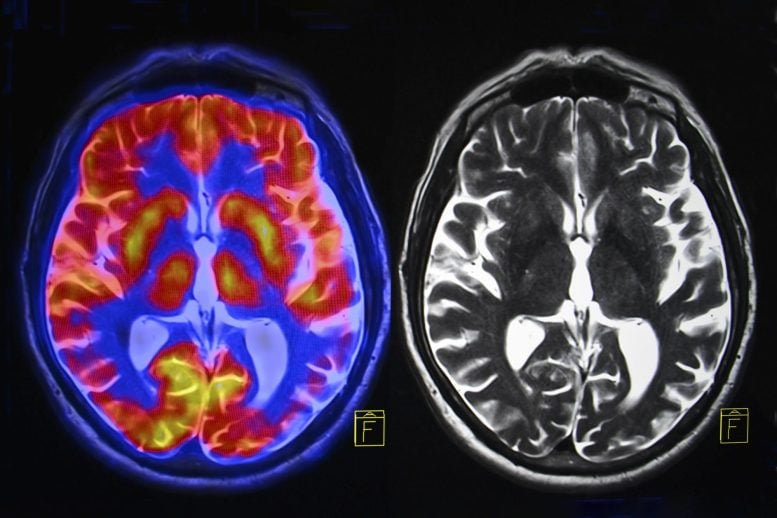 Brain scans suggest long COVID’s biggest clues may lie in the brain’s emotion centers, not widespread inflammation. A new brain imaging study suggests that persistent symptoms of long COVID may not be driven by ongoing brain inflammation, as many researchers have suspected. Scientists in Finland used advanced imaging techniques to examine the brains of people [...]
 People under stress may find it harder to orient themselves in space, and researchers in Bochum have identified a possible reason why. The stress hormone cortisol appears to interfere with the brain system that helps people navigate. It weakens the activity of grid cells, which are important for spatial orientation. Researchers at Ruhr University Bochum [...]
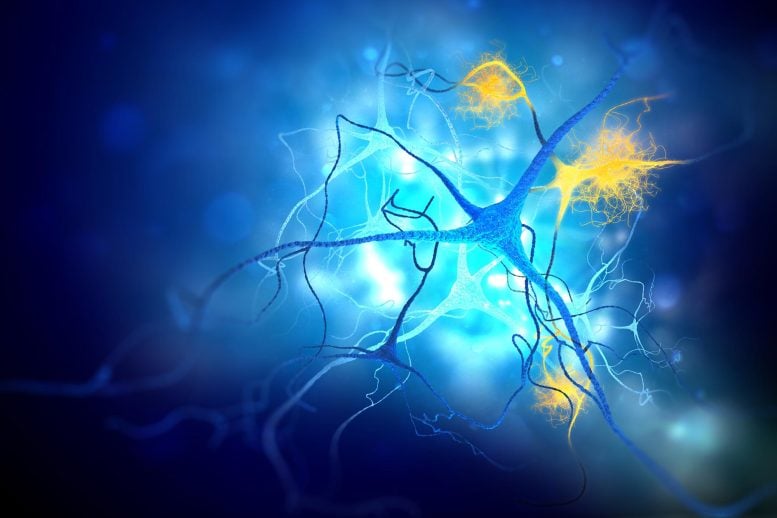 Two new tool compounds may help scientists study TAOK proteins linked to Alzheimer’s disease and other neurological disorders. Alzheimer’s disease is the leading cause of dementia and affects more than seven million people in the United States. Some treatments can slow the disease, but most address symptoms rather than the root biology, and none can [...]
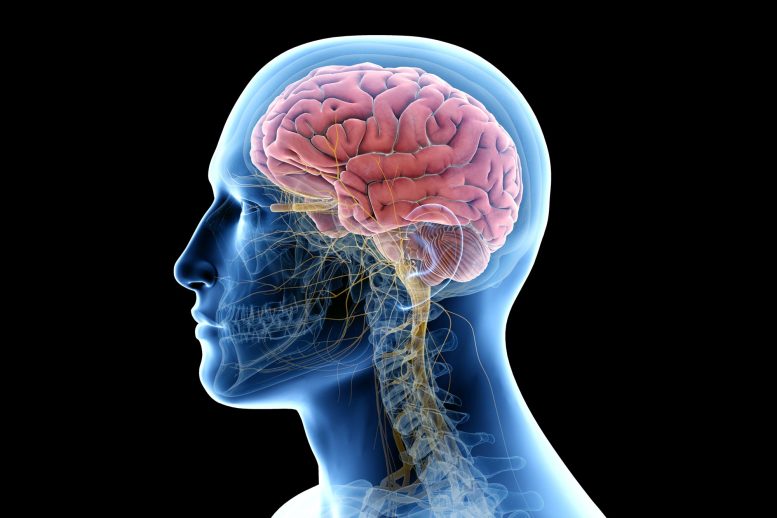 Researchers suggest that old psychoanalytic ideas and modern brain science may be describing the same mental processes from different angles. More than a century after Sigmund Freud developed his influential theories of the mind, some researchers believe modern neuroscience may be arriving at surprisingly similar conclusions. A new paper published in the neurocognitive journal Entropy [...]


 A simple writing task may offer clues about aging brains. Researchers found that dictation, in particular, exposed subtle differences linked to cognitive impairment. Handwriting depends on both fine motor skills and complex mental processes, including selecting, organizing, and interpreting sensory information. Because writing places heavy demands on the brain, changes in handwriting may help reveal [...]
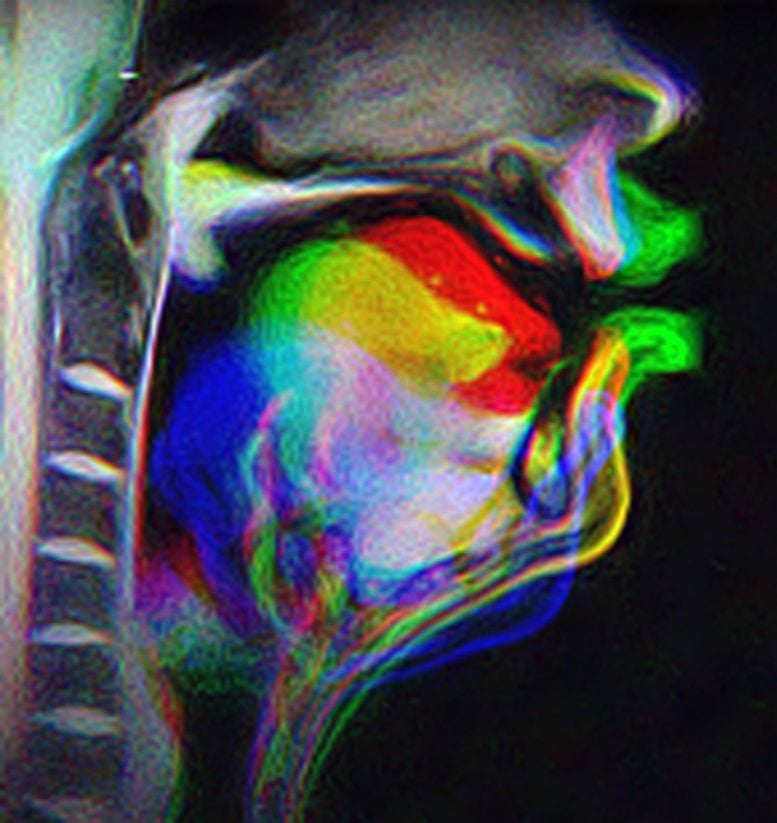 Scientists have discovered that the brain’s sensory systems play a much larger role in speech learning than previously believed. New research suggests that learning to speak a new language, or recovering speech after injury, relies more heavily on the brain’s sensory systems than on regions responsible for controlling movement. The findings, from researchers at McGill [...]