❌

Reading view

Astronomers Finally Find Milky Way’s Missing Black Hole Wind

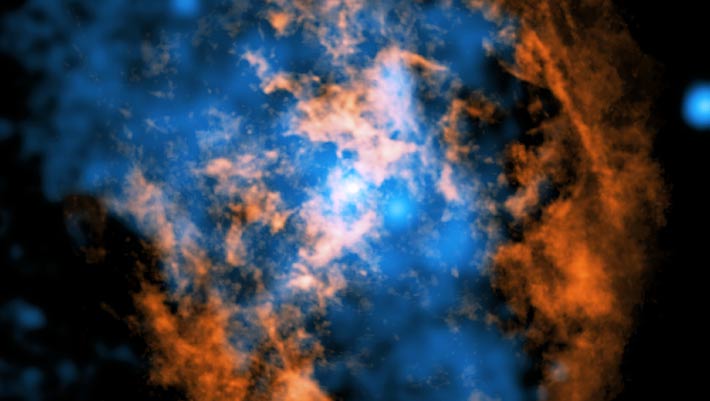
This image shows the evidence for the wind blowing away from Sagittarius A*: the white dot in the center of the image shows the supermassive black hole; in orange is data from ALMA, mapping the location of cold gas composed of carbon monoxide in the image; in blue is X-ray data from Chandra; a large cone-shaped cavity, visible as an absence of cold gas in the ALMA data, is filled by hot X-ray-emitting gas in the Chandra data. Image credit: NASA / CXC / UMass / Wang et al. / ALMA / ESO / NAOJ / NRAO / Longmore et al. / Minniti et al.

After a 50-year search, astronomers have uncovered evidence that Sagittarius A* -- the 4.3-million-solar-mass black hole that resides at the center of our Milky Way Galaxy -- is blowing a hot cosmic wind into its surroundings, carving out a giant cavity near the Galaxy’s heart.

The post Astronomers Finally Find Milky Way’s Missing Black Hole Wind appeared first on Sci.News: Breaking Science News.

  •  

Attraverso l'uso di radar montati su velivoli scientifici, un team internaz…

Attraverso l'uso di radar montati su velivoli scientifici, un team internazionale guidato dall'UniversitΓ  di Durham ha mappato Highland A, una regione geologica di 32.000 chilometri quadrati sepolta sotto due chilometri di ghiaccio nell'Antartide orientale. I dati rivelano un antico paesaggio di 14 milioni di anni fa β€” caratterizzato da valli, crinali e fiumi asciutti risalenti a un'epoca in cui il clima era temperato β€” rimasto perfettamente intatto poichΓ© il ghiaccio sovrastante ha agito da guscio protettivo anzichΓ© da mola abrasiva. La scoperta fornisce parametri cruciali per calcolare l'attrito basale e prevedere lo scivolamento dei ghiacci verso l'oceano, un fattore determinante per i modelli climatici dato che il bacino contiene abbastanza acqua da innalzare il livello globale dei mari di oltre sette metri.
  •  

Using bacteria to fight fungal brown rot

Brown rot is a common fungal disease in the Southeastern United States that affects stone fruits like peaches, cherries, and plums. Monilinia fructicola is a tan, fuzzy fungus that grows on tree flowers, twigs, and fruit, and is the most common cause of brown rot. Once brown rot infects a tree, the damage is irreversible, causing significant crop losses in commercial orchards. Farmers try to control the spread of M. fructicola by applying chemical sprays, called fungicides, to fruit trees in the spring.

In M. fructicola, a biosynthesis gene named MfCYP51 encodes a major protein critical to the fungi’s survival. Certain fungicides, called demethylation inhibitor (DMI) fungicides, stop M. fructicola from growing by targeting this protein. Over the last 20 years, DMI fungicides have become less effective against brown rot as M. fructicola becomes more resistant.Β 

Living microorganisms and their metabolites can control fungal diseases as an alternative to chemical fungicides, known as biofungicides. Many bacteria produce compounds like hydrogen cyanide and pyrrolnitrin that damage fungal cells. However, scientists have not found a biofungicide suitable for commercial production.​ A group of researchers at Clemson University in the USA and Huazhong Agricultural University in China set out to test whether the soil bacteria Pseudomonas chlororaphis and Bacillus subtilis could be effective biofungicides against brown rot.Β 

The researchers performed an incubation experiment to analyze how the fungal cells make their critical protein from the MfCYP51 gene, a process called gene expression, under different fungicide treatments. They used 3 M. fructicola strains sensitive to traditional DMI fungicides and 3 resistant strains. They tested these with 5 different fungicide treatments: a DMI fungicide, a mixture of P. chlororaphis metabolites, a mixture of living B. subtilis cells, a DMI fungicide + P. chlororaphis metabolites, and a DMI fungicide +Β  B. subtilis cells. They also set up a control treatment with sterile water instead of fungicide.Β Β 

After 6 hours, the researchers extracted the molecule that measures gene expression, called RNA, from the fungi. They found that both the P. chlororaphis treatment and the DMI fungicide + P. chlororaphis treatment substantially reduced MfCYP51 expression in both the sensitive and resistant isolates compared to the controls. In contrast, the DMI fungicide, B. subtilis, and DMI fungicide + B. subtilis treatments increased MfCYP51 expression in the resistant isolates. The researchers concluded that P. chlororaphis has a unique ability to reduce gene expression, unlike other biofungicides.

​To further investigate how the biofungicide treatments work, the team tested whether P. chlororaphis and B. subtilis produced the anti-fungal metabolite pyrrolnitrin. They added 1 milliliter of each treatment to a machine that separates and identifies liquid compounds using high pressure, called a high-performance liquid chromatograph. They found that the P. chlororaphis treatment contained pyrrolnitrin, so they hypothesized that it was responsible for reducing gene expression.

Additionally, the researchers tested their 5 treatments on brown rot in fruit. For each treatment, they took 10 Gala apples, washed and sterilized their surfaces, and sprayed them with the fungicides. After 24 hours, they poked holes in the apples with toothpicks and added 20 microliters of liquid containing M. fructicola cells to the poked holes. They placed the apples in a humid chamber for 5 days and measured the number and size of brown rot spots that developed on their surfaces.Β 

Despite decreasing MfCYP51 expression, ​the researchers found that P. chlororaphis treatment alone didn’t reduce brown rot disease compared to the control, but the DMI fungicide and B. subtilis treatments did. The mixed treatments of DMI fungicide + P. chlororaphis and DMI fungicide + B. subtilis both reduced brown rot disease compared to the control, but only the DMI fungicide + P. chlororaphis treatment prevented it.Β 

​The researchers concluded that although biofungicides may not be fully effective on their own, commercializing them could allow farmers to use less DMI fungicide. They explained that scaling back the use of DMI fungicides would slow M. fructicola resistance. Finally, they proposed that future researchers test biofungicide mixtures containing pyrrolnitrin in the field to observe real-world effects on stone fruit trees.

The post Using bacteria to fight fungal brown rot appeared first on Sciworthy.

  •  

Popular Weight-Loss Drug Found To Slow Biological Aging in Landmark Human Trial
GLP-1 Semaglutide Obesity Weight Loss Drug NewspaperA widely prescribed class of weight-loss and diabetes medications may be doing more than improving metabolic health. Drugs such as Ozempic and Wegovy have transformed the treatment of obesity and type 2 diabetes, helping millions lose weight and improve metabolic health. But scientists are increasingly uncovering effects that extend far beyond the scale. Research has [...]
  •  

Tucker Carlson | Why Are We Defending Mass Murder in Gaza? Because Our Greatest Ally Demands It

Tucker Carlson asks, why are we defending mass murder in Gaza? Because Israel our greatest ally demands it. It is now time to rethink that relationship, he says. Also he interviews Francesca Albanese UN Special Rapporteur on the occupied Palestinian territories, asking her to define the genocide in Gaza.

  •  

Jewish Anti-Zionist Congress | An Historic Stand Against Oppression

Jews and people of Jewish descent everywhere - those whom the Zionist state claims to speak for – are uniting to declare their unwavering opposition to Zionism. Since the First Zionist Congress over a century ago, Zionism claimed to speak on behalf of all Jews, while permanently attempting to silence opposition to its constant crimes.

  •  

Massive Iron Ore Discovery and Global Warming

A recent high-grade iron ore discovery in Western Australia, valued at $6 trillion, raises questions about environmental policies. The processing of iron ore to make steel requires coal, leading to significant CO2 emissions, highlighting the stark contradiction with the Climate Cult agenda.

  •  

Jesus | Who is My Mother? Who are My Brothers?

In the Gospel of John, Jesus addresses His mother as "Woman" rather than "Mother," highlighting a spiritual bond rather than a physical lineage. True kinship in faith transcends ethnicity and genetic ties, asserting that only those who follow God's will are considered Jesus’s true family, replacing traditional Jewish identity.

  •  

Christian Zionism is the Problem

Christian Zionism is a Satanic doctrine because it supports Israel's war against the indigenous Palestinians, by blending politics with distorted biblical beliefs. However I argue that true worship and salvation lie in Christ, not in political or ethnic identities.

  •  

Alien Life on the Exoplanet K2-18b is Already Disputed by Scientists

Recent claims of potential biosignatures on the exoplanet K2-18b have been challenged by researchers at the University of Chicago. Their analysis suggests that the detection of dimethyl sulfide may be inconclusive due to overlapping signals from non-biological molecules, emphasizing the limitations of current detection technology and urging caution against premature conclusions.

  •  

Lessons from Nebuchadnezzar: Pride Before Downfall

The sovereignty of God over earthly rulers and the inevitable accountability of all leaders, including Trump and Netanyahu, for their actions is discussed. The importance of humility, prayer for innocents in conflict areas, and living by Christ's teachings, avoiding pride and vengeance, while trusting in divine justice is the only way.

  •  

The Essential Role of Carbon in Life’s Chemistry

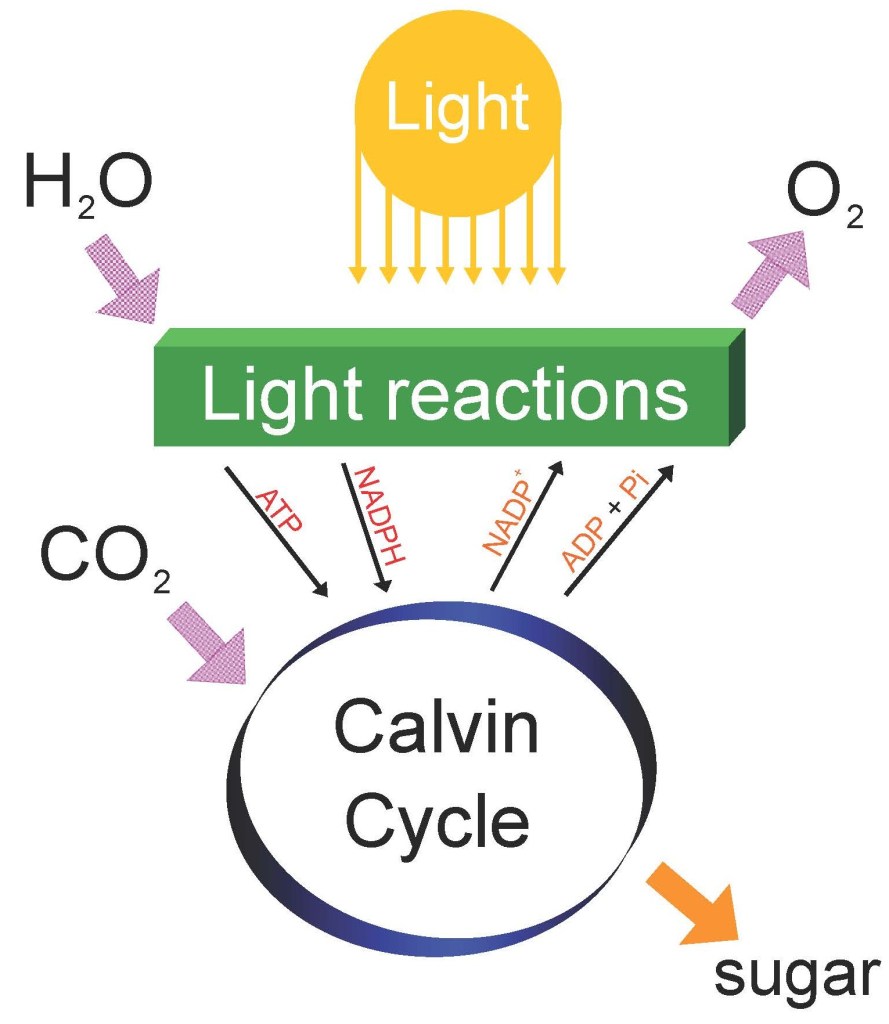
The fundamental differences between Carbon and Silicon as bases for life are presented. All known life relies on Carbon for energy through processes like photosynthesis, whereas Silicon-based life is impossible. The belief in creating sustainable fuels while eliminating Carbon is contrary to all logic. No Carbon means no life!

  •  

Art Bearing Witness to the Palestinian Genocide

The art piece "Bearing Witness" by Jessamy Offszanka, inspired by the suffering of Palestinian children in Gaza, aims to highlight the horrors of war and evoke action against the ongoing conflict. Despite its powerful message, the artwork's potential for recognition was stifled by its politically sensitive nature, reflecting societal indifference to the plight of innocents.

  •  

Greenhouses Gases Trapping Heat in Earth’s Atmosphere is the New Phlogiston

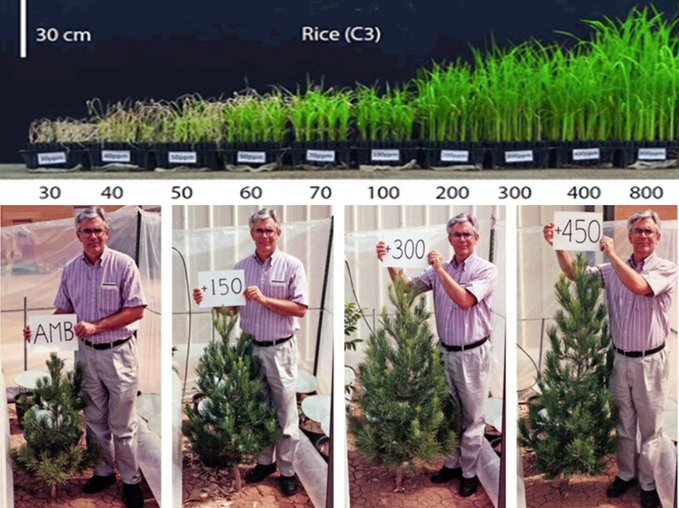
Al Gore's claims about greenhouse gases causing ocean boiling is insane. Modern beliefs about carbon dioxide heating the planet is the new phlogiston theory. I argue that CO2 is essential for plant life, challenging the notion of harmful anthropogenic climate change.

  •  

Global Surveillance | Separating Fact from Fiction

What are the facts on self-assembling electronic circuits or chips made with superconducting graphene nanotubes or graphene oxide that have been or will be injected into humans to connect them to the 'internet of things' for global surveillance?

  •  

Reproductive Rights is the Crime of the Century

Reproductive rights is a euphemism for the right to murder unborn children in the womb. Now that right is extended to those born alive but left to die. No civilised society should tolerate this demonic practice.

  •  

Genocide Apologist Amir Tsarfati Says The Mass Killing of Palestinians Is Not Genocide Because God Told Them To Do It

Behold Israel's Amir Tsarfati, a well-known Christian preacher and teacher of prophecy based out of Israel, isΒ on the offensiveΒ accusing people who oppose Israel's genocidal actions in Gaza of being "antisemitic."

  •  
❌