Login

Oldest Wine in the World Is Still Liquid Inside 2,000-Year-Old Roman Funeral Urn
 You wouldn't want to drink from this 2,000-year-old vintage though.
 You wouldn't want to drink from this 2,000-year-old vintage though.
 An airtight medieval latrine preserved a pocket-sized wax ledger, complete with an unpleasant odor.

One way archaeologists learn how ancient people, including Neanderthals, did things is to attempt to do those things themselves, a process called experimental archaeology. Normally, that involves making stone tools, butchering deer, or distilling birch tar. But in a new study, it meant doing very destructive things to teeth from one of the world’s most carefully protected animals.
That's because the archeologists suspected that Neanderthals once used rhino teeth as tools. By using the teeth to make stone tools, the researchers demonstrated that Neanderthals probably did the same thing, adding to what we know about the wide range of items in their toolkits.
Some Neanderthal archaeological sites in Europe and Asia seem to have many more rhinoceros teeth lying around than you’d expect. We know Neanderthals hunted a now-extinct species of rhinoceros in Europe and eastern Asia, but the people who had inhabited these sites looked like they had been collecting rhino teeth for some reason.
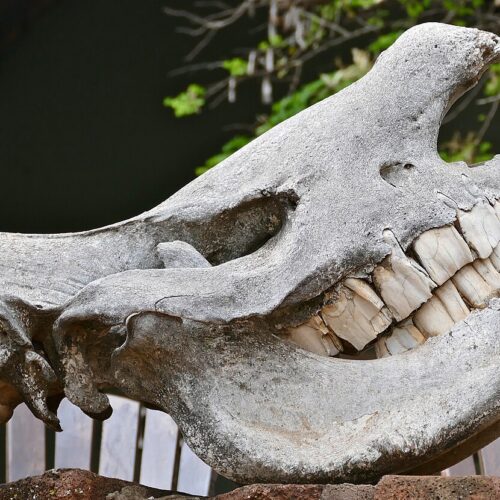
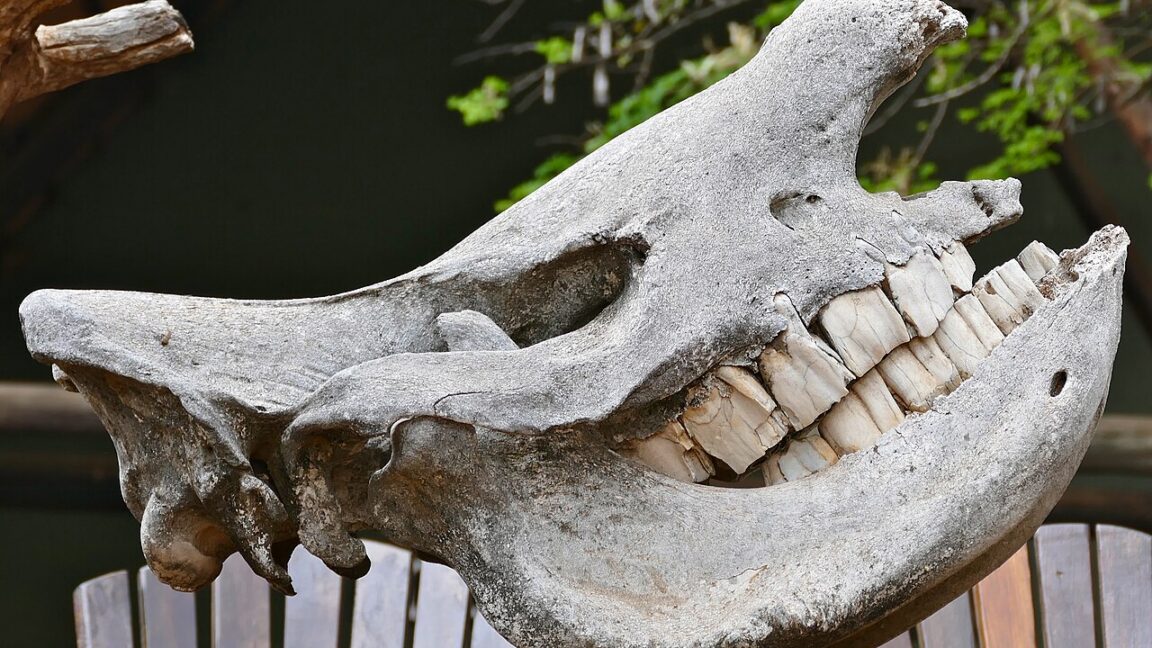
© By Bernard DUPONT from FRANCE - White Rhino Skull, CC BY-SA 2.0, https://commons.wikimedia.org/w/index.php?curid=55453022
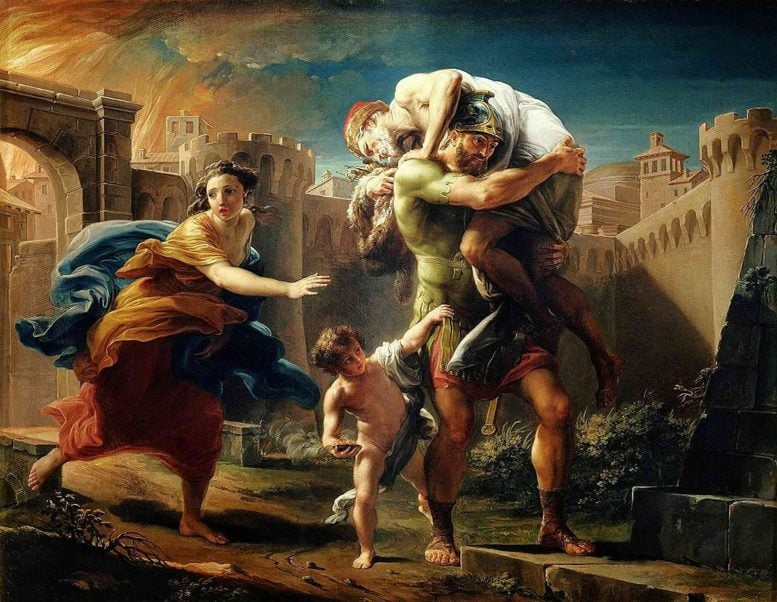 An Iliad fragment discovered inside an Egyptian mummy shows how Homer’s influence extended across Roman culture, from imperial identity and education to everyday life in Roman Egypt. Archaeologists have found something unexpected inside a 1,600-year-old Roman-era Egyptian mummy: a fragment of Homer’s Iliad. It wasn’t placed beside the body but inside the mummy’s abdomen. But [...]
It’s a regrettable reality that there is never enough time to cover all the interesting scientific stories we come across. So every month, we highlight a handful of the best stories that nearly slipped through the cracks. May's list includes the discovery of a possible prehistoric mining site in the Pyrenees; a new species of tiny blue octopus; why cats seem to prefer silver vine to catnip; and why political polarization might behave like a phase transition, among other noteworthy stories.
 Credit:
IPHES-CERCA
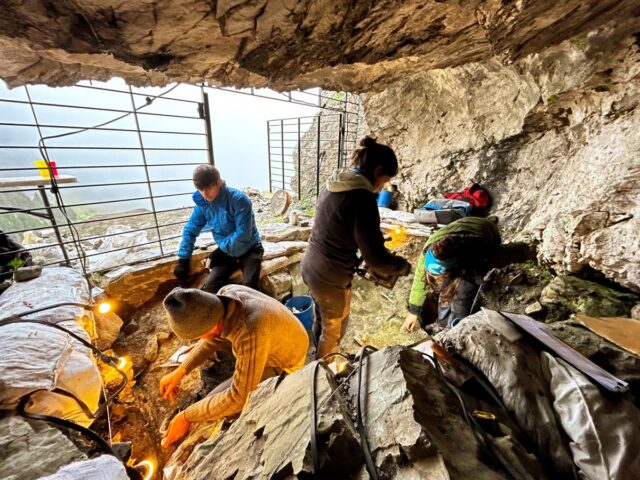
High in the eastern Pyrenees is a prehistoric cave, excavated between 2021 and 2023. Based on analysis of artifacts uncovered at the site, a team of Spanish archaeologists believes this may have served as an ancient copper smelting spot, with far more frequent occupation by humans than previously thought. The researchers described these preliminary findings in a paper published in the journal Frontiers in Environmental Archaeology.
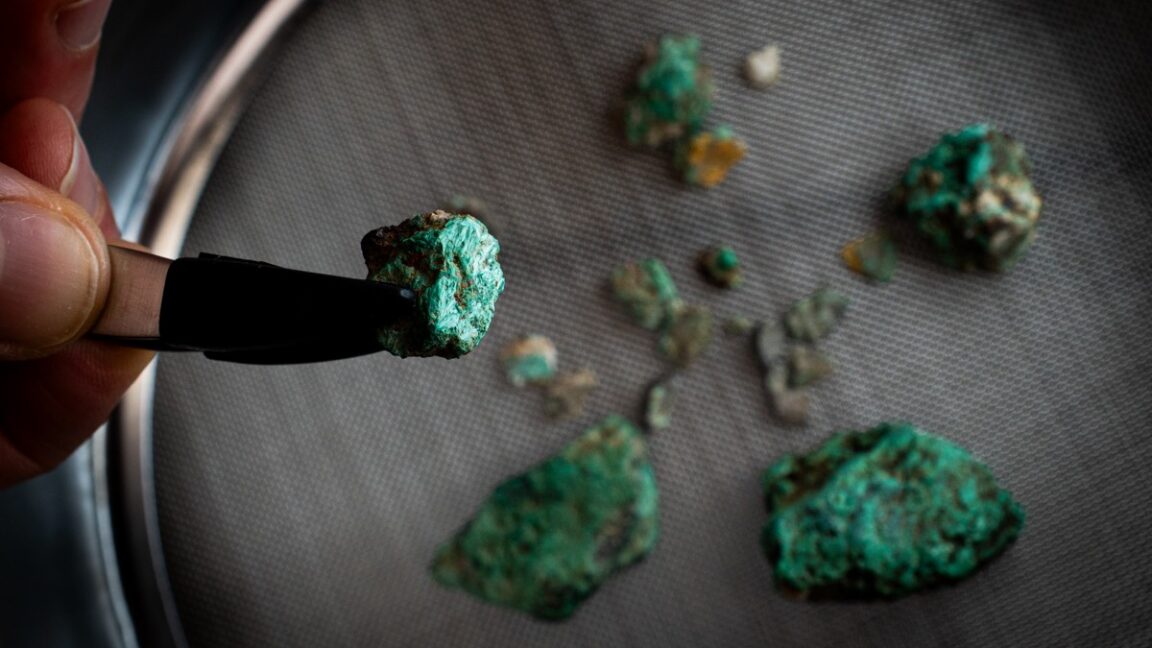
© Maria D. Guillén / IPHES-CERCA
Ancient cultures across the globe have been playing games of chance — using dice — far, far longer than historians had ever realized, a new study finds. Researchers turned up these gaming pieces from as far back as 12,000 years ago. That makes them the oldest known dice.
These came from western North America. Until their discovery, the oldest known dice were from Mesopotamia, an ancient region in what is now Iraq. The oldest of those were only about 5,500 years old.
Many Native American cultures have a rich history of dice games and still play them today.
Such games could have helped foster social connection, says archaeologist Robert Weiner, who was not part of the new study. If you meet strangers, “how are you going to interact?” he asks. Dice games could have offered one way for strangers to bond. Weiner works at Dartmouth College in Hanover, N.H.
But until now, the roots of early American dice games had been fuzzy. Robert Madden hoped to track down those origins. In the April 2 American Antiquity, he describes the search for the earliest dice in what is now the mainland United States.
Madden, too, is an archaeologist. He works at Colorado State University in Fort Collins. He started his search by sifting through records of Native American artifacts. He was scouting for objects that might be dice.
He set rules for sorting out possible dice. Most Native American dice are two-sided with at least one side marked. So that’s what Madden looked for. He rejected objects with holes. These might have been part of jewelry. Any die candidates also had to be small enough to fit in one’s hand.
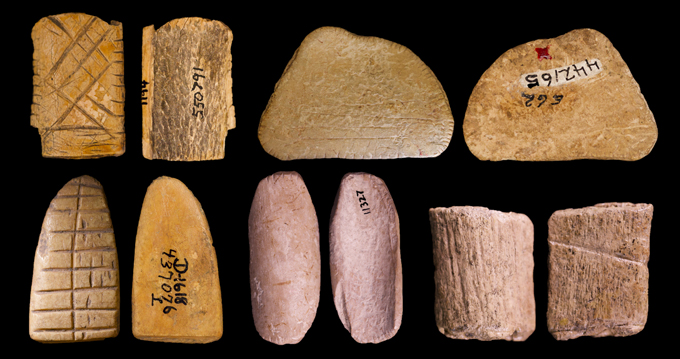
In all, 565 objects met all those criteria. An additional 94 objects were probably dice but would need more details to be sure.
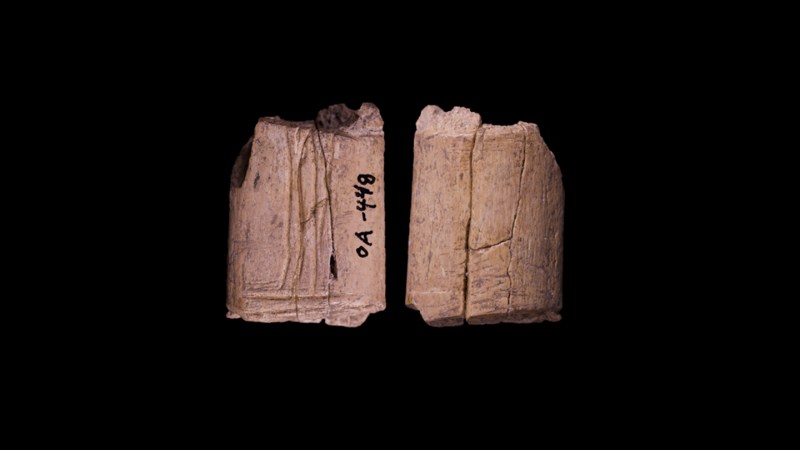
The items came from 57 archaeological sites across 12 U.S. states in the Great Plains and American West. Most of the promising objects were 450 to 2,000 years old. About 31 were 2,000 to 8,000 years old. And at least 14 artifacts dated as far back as 12,000 years ago. Those oldest ones came from Wyoming, Colorado and New Mexico.
Madden then traveled to examine the oldest of these artifacts in person. He found some objects that had not yet been described or linked to gaming.
“It was amazing to hold these pieces of deep history in my hand,” Madden says. In-person inspections confirmed to him that these ancient objects were in fact dice. Each was made of bone, worn smooth by use and time. Lines had been carefully etched on one side. Some had faint traces of red pigment to mark the different sides.
Especially notable: They looked much like more modern Native American dice.
“If you took dice from 2,000 years ago and the prehistoric ones and put them in a bag and shook it up, it would be really hard to tell the difference between them,” Madden says. “They look very similar.”
Submit your question here, and we might answer it an upcoming issue of Science News Explores
Weiner agrees. “I don’t think there’s a compelling alternative explanation for many of these objects,” he says.
The new study likely understates the true diversity, in space and time, of dice in Native American cultures. After colonial contact, settlers documented 18 tribes in the eastern U.S. that played dice games. Yet Madden’s search turned up no dice from there. Future research should explore that region, he says.
Finding the oldest dice also pushes back when people first seem to have been experimenting with the concept of probability. It highlights Native American contributions to early intellectual developments, Madden says. That Native Americans used dice to generate randomness this long ago, he says, “is a very exciting connection to make.”

© Hein von Horsten / Getty Images
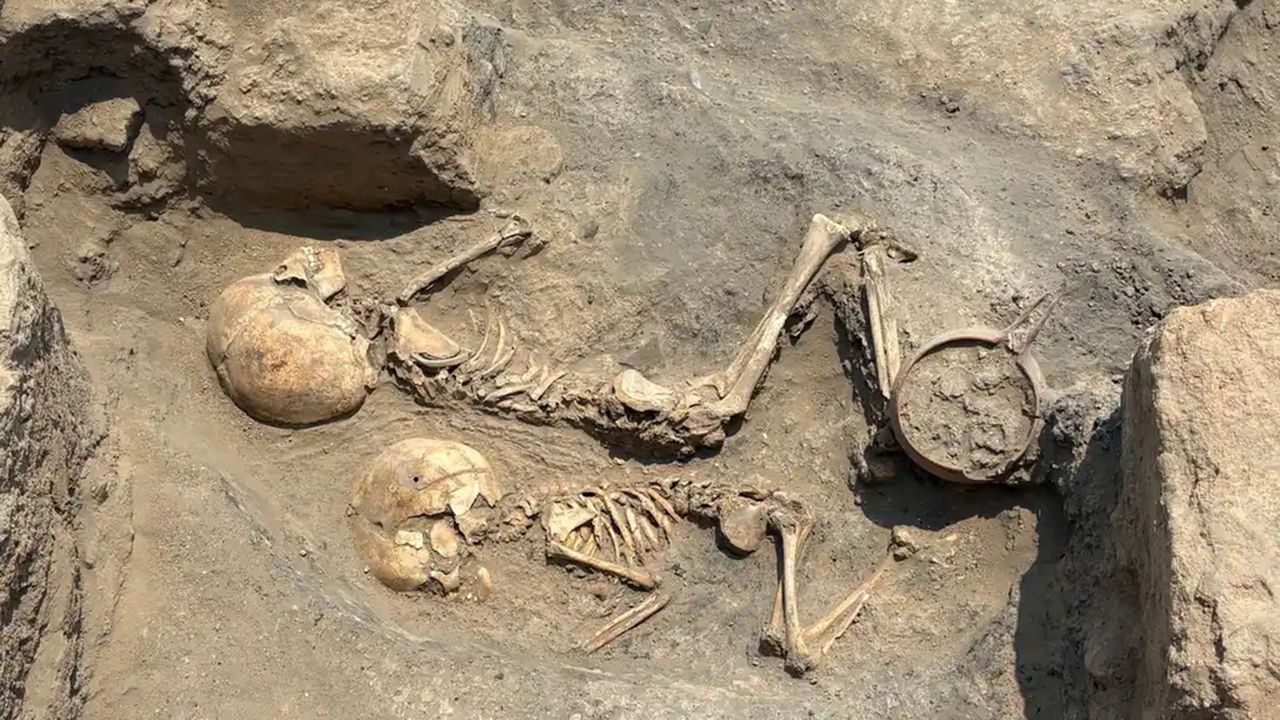


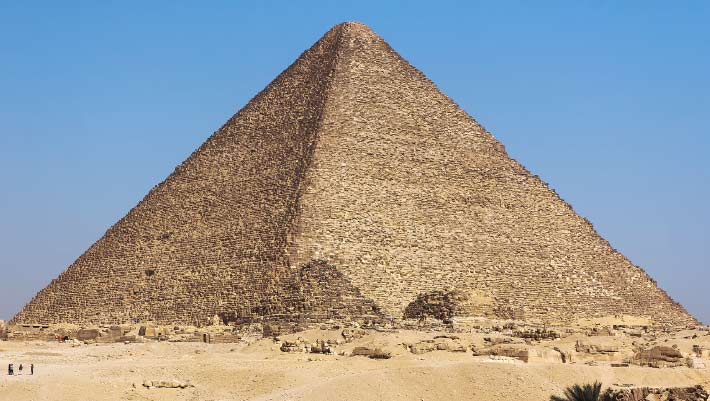
For more than four and a half millennia, the Khufu Pyramid has stood on the Giza plateau, enduring dozens of earthquakes without serious structural damage.
The post Great Pyramid of Giza’s Design Naturally Shields It from Earthquakes, Archaeologists Say appeared first on Sci.News: Breaking Science News.