 Login

A 1,200-Year-Old Hairless Dog Mummy Was So Well Preserved That Archaeologists Thought It Was Recent
 A startling date reveals the strange, complicated lives of dogs in an empire before the Incas.
 A startling date reveals the strange, complicated lives of dogs in an empire before the Incas.

You’ve set up Focus modes for work and weekends, built Shortcuts for repetitive tasks, and rearranged your Home Screen until everything is perfect. But then your phone buzzes with another notification for a newsletter, shipping update, or sale. Meanwhile, the important email you need to follow up on is buried under everything else. You’ve put thought into how your devices work for you, but are you in charge of your email or is it in charge of you?
SaneBox brings that same attention to detail to your email. Its AI filtering sorts your messages with nothing to install, and since 2010, it has helped people separate the messages that need attention from the ones that can wait.
SaneBox’s SaneLater folder keeps messages that can wait in a dedicated folder, so you can focus on more important things. SaneNews collects newsletters in one place, ready for when you can take a break. And if the same unwanted sender keeps interrupting your day, move one of their messages to SaneBlackHole to keep their future messages out of your inbox.
There are tools for staying on top of ongoing conversations, too. SaneNoReplies collects conversations where you haven’t received a response, so you can follow up. When you need an answer before a deadline, SaneReminders can remind you to check back. You can snooze messages, too, putting something aside until you have time.
SaneBox works with the account and apps you already use. It sorts messages on your mail server, so its folders are available in Apple Mail, Outlook, or whatever other email app you use on your Mac, iPhone, and iPad.
SaneBox also learns from your email habits, and you can teach it your preferences. If a message belongs somewhere else, move it and SaneBox will use that folder going forward. Plus, the Daily Digest brings together unread messages in your SaneBox folders, so you can review everything when you’re ready to wrap up your day.
Privacy matters, too. SaneBox sorts using message headers, not the contents of your emails, and it doesn’t store full messages or attachments. Its security is reviewed every year as part of Google’s verification process, audited independently by Leviathan Security Group, and tested through HackerOne.
All of that adds up to less time managing email and more time for everything else, which is why more than 100,000 people rely on SaneBox and have given it a 4.9 rating across more than 1,000 reviews.
Best of all, SaneBox fits elegantly into the email system you already know and use. Start a seven-day free trial with no credit card required, and get a $25 credit toward a SaneBox subscription, the equivalent of three months of use.
Our thanks to SaneBox for sponsoring MacStories this week.
Nearly 100 years after the dirigible Graf Zeppelin made the first nonstop airship journey across the Pacific Ocean, another airship has successfully completed a round-trip flight from New Mexico to Japan and back. But the significance of this modern feat was less about the journey's length and more about its purpose: demonstrating how a lighter-than-air platform can act as a cell phone tower in the sky.
The trans-Pacific flight that took place over a month between August and September 2026 was the most notable milestone yet for Sceye, a US aerospace company based near Albuquerque, New Mexico. Sceye has developed an uncrewed platform filled with helium for buoyancy and equipped with an electric-powered propeller for active propulsion, allowing it to resist most strong winds and keep hovering over the same location for long periods. The platform also uses top-mounted solar panels and onboard batteries to stay powered for stratospheric operations around the clock.
“We can stay over an area of operation, and we do that in the stratosphere right around 60,000 feet, so we're twice as high as air traffic and we're above the jet stream, and yet 30 times closer than low-Earth orbit satellites,” Mikkel Frandsen, founder and CEO of Sceye, told Ars. “We can fly through day and night until the sun comes up the next morning and recharges the batteries, at which point we're still at the same altitude and still over the same area of operation.”


© Sceye
Russian drones are suspected of sinking a cargo ship and leaving chemical tankers ablaze near the Black Sea coasts of Bulgaria and Romania, respectively. The latest attacks mean that at least seven ships have been attacked in the exclusive economic zones of NATO member countries—and even within Romania's territorial waters if Russian involvement is confirmed in the case of the chemical tankers.
Such attacks have spurred requests for NATO to redeploy counter-drone systems to provide more protection. In a social media post on October 15, NATO Secretary General Mark Rutte stated that NATO had increased "counter-drone capabilities" along the alliance's eastern flank after meeting with the leaders of Bulgaria and Romania.
The latest attacks this week occurred within 24 hours between October 14 and October 15, when the two chemical tankers were set afire after Russian drones were detected in Romanian airspace, according to Deutsche Welle. Both ships were sitting at anchor near the mouth of the Sulina canal that connects the Black Sea to the Danube River, which has become a crucial shipping export route for Ukraine, Reuters reported.


© Hristo Rusev/Getty Images
Despite the expansion of Starlink and other communications satellite services, most of the world’s Internet traffic still travels through subsea cables crisscrossing the ocean floors. Those fiber-optic cables coexist with a network of oil and gas pipelines and submarine power cables—and all these crucial links connecting countries and continents now face growing sabotage risks as gray-zone warfare and open conflicts have become widespread.
The rising risks to the world’s invisible infrastructure beneath the waves are the main subject of a new book by Elisabeth Braw, a senior fellow at the Atlantic Council who leads the Threats to the Global Maritime Order Initiative. Her book, titled Undersea War, explores the modern rise in suspicious incidents in which ships dragging their anchors for unusually long periods have cut or damaged undersea cables and pipelines, from the Baltic Sea to the Pacific Ocean.
Braw acknowledges that about 60 percent of undersea cable damage is primarily due to human error during fishing and shipping activities, when weighted nets or anchors drag across the seabed. Natural hazards like storms and undersea landslides also account for a smaller proportion of such incidents. In total, between 150 and 200 cables are damaged each year and usually repaired quickly.
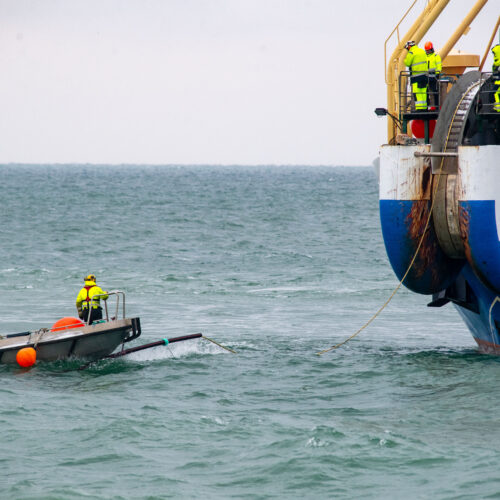
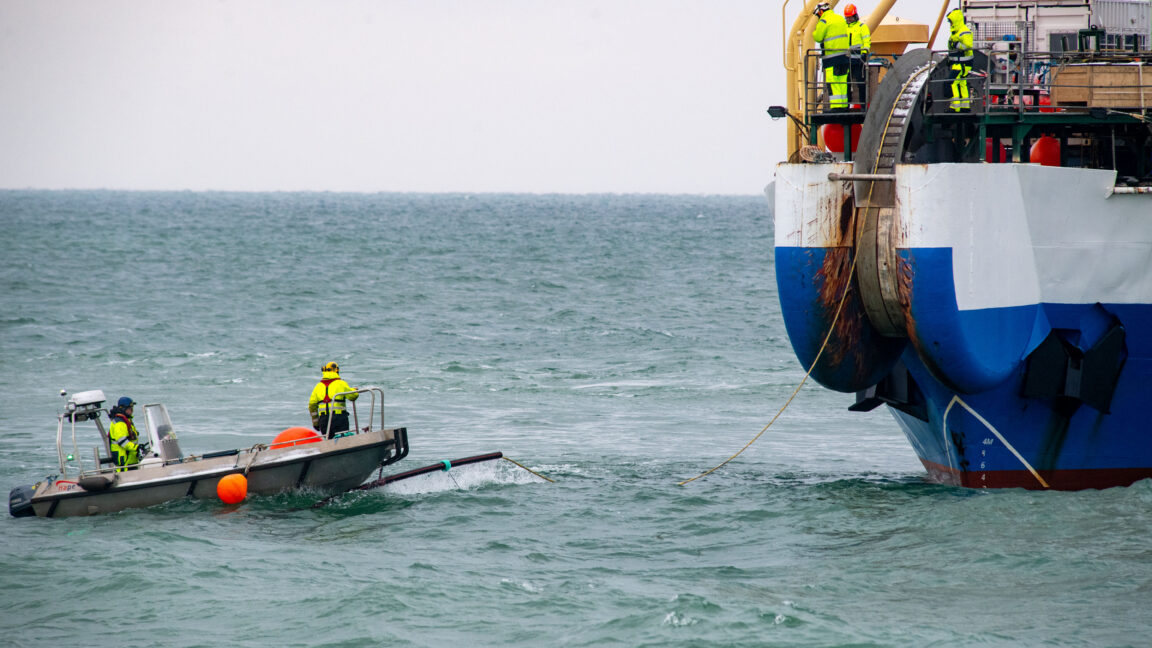
© Stefan Sauer/picture alliance via Getty Images
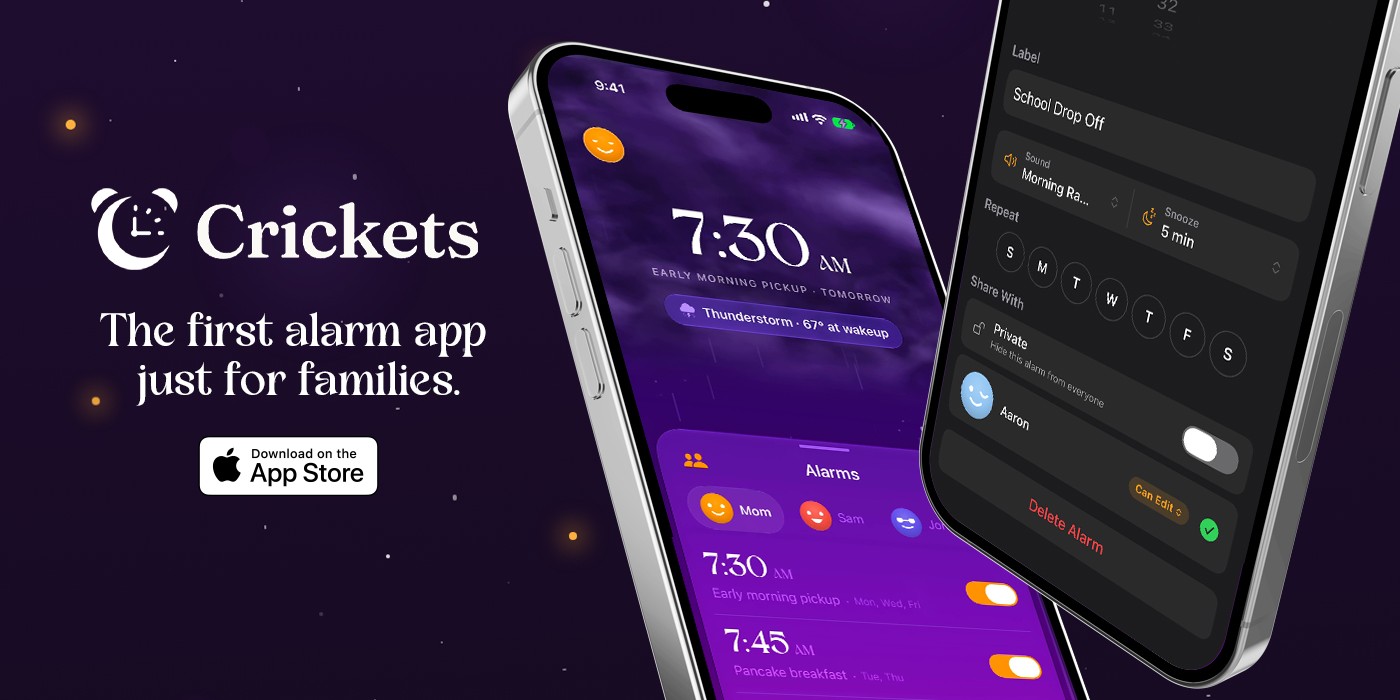
Getting your whole family up and pointed in the right direction every morning isn’t simple. Everyone’s on a different schedule, and schedules change day to day. It’s a mess that’s solvable with the help of Crickets, the first alarm built for the realities of everyday family life.
Crickets lets everyone in your family see the alarms others choose to share and, with permission, change them. So instead of asking everyone when they need to be up the next day, you already know. If you’re the first one up, that’s a superpower. Whether it’s a flight that got delayed in the dead of night or a 5:00 AM message from your kids’ school about a schedule change, you can adjust alarms without waking a soul. And it works both ways: when a practice is canceled or a trip departs later, anyone you’ve granted edit access can push your alarm back while you sleep in.
Crickets even gives you tomorrow’s weather as you head off to bed. That way, you’ll know things like whether you should get up a little early to deal with the snow that’s forecast overnight.
Everyone in your circle is right there on your Home Screen and Lock Screen, too. Plus, with widget and Live Activities support, you can keep track of who’s already awake and who’s been hitting the snooze button. You’ll see your morning coming together without even opening the app.
Each person in your circle stays in control. They decide which alarms to share and which to keep private, and they can grant or revoke editing access whenever they want. People can belong to more than one circle without those circles merging, too. That way, parents can be in a circle with their kids, but their kids’ friends circle remains theirs alone.
A single subscription covers every member of your Apple Family Sharing group, allowing you to coordinate everyone’s alarms at once, while keeping each person’s sharing choices their own.
For a closer look at Crickets and a more coordinated start to the day, visit cricketsalarm.app. And, for a limited time, MacStories readers and AppStories listeners can get 50% off for six months with code MACSTORIES2026. Select Redeem on the paywall and enter the code.
Our thanks to Crickets for their support of MacStories this week.

It happens to all of us. You come across an article you want to read, but you’re in the middle of something and don’t have the time. GoodLinks gives those articles a home on your iPhone, iPad, and Mac, with a clean, customizable reading experience when you’re ready to return to them.
Recently updated for iOS, iPadOS, and macOS 27, GoodLinks lets you organize the articles you save for later with tags and stars before sitting down to read with its highly customizable reader. Article Sync, which is part of GoodLinks Premium, can sync complete articles along with their images through iCloud, so they’re available on every device.
GoodLinks also lets you highlight your favorite passages of articles, export your highlights as Markdown, and add notes to your highlights. Plus, GoodLinks has extensive Shortcuts support, allowing you to use what you save with your other apps and workflows, and a local API on the Mac to script your links, tags, and highlights.
The app can summarize articles using Apple Intelligence on compatible devices or external AI providers when you provide your own API keys. That allows you to use the model that suits your needs best, or you can turn off summarization entirely.
A single universal purchase covers iPhone, iPad, and Mac and includes all current features plus one year of feature upgrades. Everything you unlock is yours to keep. After that, an optional GoodLinks Premium subscription unlocks new features, which you keep even if you cancel.
Whether you’re catching up on your latest saved stories or building a complex reading workflow to handle hundreds of articles, visit GoodLinks to learn more and download the app today.
Our thanks to GoodLinks for sponsoring MacStories this week.

You’ve been paying a tax on being healthy. Four dollars here for hydration, five there for sleep, another subscription for fasting, another for habits, and each one only ever sees its own slice of you. Your Apple Watch is already collecting the whole picture; what’s missing is a set of apps built to work with it, and with each other.
The FunnMedia Premium Plus Bundle Unlock 13 premium apps on your Apple devices for less than $5/month. fixes that with one subscription: 13 premium apps for health, wellness, and productivity, fully unlocked, for $59.99 a year.
What makes it work is that every app comes from the same small indie studio and is built around Apple Health, Apple Watch, and widgets. Because they all read from and write to Health, a log in one app shows up where it should, and the whole set shares one design language instead of feeling like a pile of downloads.
In practice, a day looks like this. SleepMinder scores last night before you’re out of bed. WaterMinder nudges you from your wrist before you’re thirsty. Calory scans your lunch barcode, FastMinder watches your eating window, and Couch to Fit squeezes in a seven-minute workout before dinner. FitnessView pulls all of it into dashboards that show real trends, HabitView keeps your streaks honest, and ZenMinder and RelaxTopia handle the wind-down. When your doctor asks for numbers, HealthExport hands over a PDF. Widgetive, NoteFolio, and ReplyCube cover the productivity side.
This isn’t an unknown lineup. WaterMinder is an Apple Editors’ Choice with more than 10 million downloads!
Bought individually, these subscriptions run past $300 a year. The bundle is $59.99, cancel anytime, and every app FunnMedia releases from here on is added automatically. Subscribe once and the next launch is already yours. Get it at funnmedia.com/bundle.
Equations once used to predict whether populations of rabbits would boom, stabilize, or collapse are now being applied to something potentially even more complicated: romantic relationships.
According to mathematician Laurent Pujo-Menjouet of Claude Bernard University Lyon 1, the forces that determine whether a couple survives life’s inevitable stresses can be studied much like other complex systems. Attraction can strengthen or fade, outside pressures can push a relationship away from stability, and perhaps most importantly, there may be a critical mathematical threshold beyond which recovery becomes increasingly difficult.
In his new book, Love! Valour! Equations! The Mathematics of the Couple, published by CRC Press, Pujo-Menjouet draws on mathematical ecology, psychology, literature, and even film to explore why some couples weather years of conflict, stress, children, illness, and financial hardship while others gradually drift apart.
The goal isn’t to produce an equation that predicts who will fall in love with whom. Instead, Pujo-Menjouet treats relationships as dynamical systems—systems that change over time, respond to disturbances, and can move toward either stability or decline.
“There is no mysterious enchantment or magic potion. By now, that would be known,” Pujo-Menjouet writes in the book, which draws on mathematics, psychology, literature, and film. “Is all hope lost then? Certainly not. That is precisely where everything becomes interesting.”
The mathematical models Pujo-Menjouet uses originated in ecology. His work uses Malthusian growth models and the Lotka-Volterra equations, originally developed to describe population dynamics in animals such as rabbits. He also studies the Allee effect, a phenomenon that explains how populations struggle to recover if they drop below a particular size.
Pujo-Menjouet adapts these concepts to relationships, using the idea of a critical threshold to examine when a couple may become increasingly vulnerable to separation. He also draws on the research of psychologist John Gottman, who showed that relationship behaviors can be quantified as data.
“Just as we can predict population growth or endangered species, we can model the evolution of feelings within a couple,” Pujo-Menjouet explains. “We’re not trying to predict who you’ll fall in love with, we’re trying to understand why some couples remain stable despite life’s inevitable shocks while others slowly drift apart.”
The basic idea is simple: a relationship may have a critical threshold, or minimum level of stability needed to keep the bond intact. Pujo-Menjouet’s model considers three main forces: mutual attraction, the gradual weakening of feelings over time, and each partner’s emotional response to the other.
“If your feelings fall below this threshold and stay there, the mathematics predicts an inevitable decline toward separation,” Pujo-Menjouet says. “However, understanding this threshold gives couples a powerful tool: they can recognize danger zones and take corrective action.”
These models emphasize how couples recover from drifting apart. The key question is not whether couples experience conflict, but whether they have the resilience to restore balance afterward.
“Life will always send its wolves: stress, illness, work, children, financial difficulties,” Pujo-Menjouet says, “mathematics helps us understand how to build the brick house rather than the straw one.”
Researchers such as Pujo-Menjouet are considering whether they could combine these mathematical models with artificial intelligence to create an early-warning system for relationships. Such a system could detect the signs of instability before they become apparent to the people involved.
Pujo-Menjouet compares this method to a GPS for relationships, showing where a couple currently is, where its dynamics may be heading, and the various ways they could arrive at a healthier place. Although the models don’t decide who somebody will love, they can help explain how relationships evolve and what actions might help couples maintain their connection. Early detection of problems would allow partners to make changes before reaching a stage where recovery becomes unlikely.
Pujo-Menjouet admits that present-day mathematical models have limitations. Most of these models are based on data from Western relationships. In contrast, the factors that impact whether a relationship succeeds or fails can differ from one culture, religion, or generation to another. He points out that the model must account for additional factors to be applicable everywhere.
Human behavior also introduces unpredictability that mathematical models cannot fully account for. People can change their habits, strengthen their commitment, seek therapy, or otherwise alter the dynamics of a relationship in ways the equations cannot anticipate. The equations identify tendencies rather than determine an unavoidable outcome.
“Mathematics can illuminate patterns and provide guidance,” Pujo-Menjouet says, “but ultimately, the success of a relationship depends on two people choosing, every day, to nurture their connection. The equations can show you the path, but you still have to walk it together.”
Austin Burgess is a writer and researcher with a background in sales, marketing, and data analytics. He holds an MBA, a Bachelor of Science in Business Administration, and a data analytics certification. His work focuses on breaking scientific developments, with an emphasis on emerging biology, cognitive neuroscience, and archaeological discoveries.
Jaden Caradine knew he wanted to be an engineer at eight years old. He just took a winding road to get there.
Before he enrolled at Embry-Riddle Aeronautical University, before he discovered the field that would become his focus, and before he landed a Pathways internship at NASA’s Langley Research Center in Hampton, Virginia, Caradine spent five years as a mechanic in the United States Marine Corps, four of them stationed in Japan. It was a deliberate detour, one that shaped how he approaches everything since.
“I’ve kind of always known I wanted to be an engineer,” he says. “I just had to figure out what kind.”

Caradine grew up in the Salt Lake City area, raised by a mother who put him on a snowboard at four and on a rock face not long after. He was the kind of kid who learned to love science not for its own sake, but for what it could do. “Math is an enabling skill,” he says. “It’s not about doing the math. Math has a purpose and it’s useful.”
By the time someone asked young Jaden what he wanted to be, the answer was immediate. “I was building Legos,” he says, “and I just thought — I want to build stuff. I can’t really see myself being anything other than an engineer.”
Right out of high school, Caradine enlisted in the Marines, trained as a mechanic, and shipped out to Japan. During those five years, between the technical work and the distance from home, he started reading books on decision-making, career planning, and long-term thinking. He found a framework he keeps coming back to: ikigai, a Japanese concept that maps the intersection of what you’re good at, what you enjoy, what the world needs, and what you’re paid to do.

“Your ikigai is the thing where all of those overlap,” he says. Engineering was already in the picture. The question was what kind.
The answer arrived through research and a company Caradine stumbled on while scanning the landscape of emerging aerospace technology. They were using magnets to spin a launch system to 14,000 or 15,000 RPM and release small satellites into orbit, recovering the energy on the way down through the same magnetic system. “I thought that was awesome,” he recalls. “So, I started looking into aerospace engineering, and it was a good fit.”
Once he had the field, the destination wasn’t hard to find. Caradine transferred to Embry-Riddle Aeronautical University’s Daytona Beach campus to study aerospace engineering and immediately started showing up everywhere he could — satellite conferences at Kennedy Space Center, industry events in Orlando, small satellite gatherings back in Salt Lake City. “I went to all the career fairs, even though I wasn’t looking for a job yet,” he says. “I just wanted to learn as much as I could, as fast as I could.”
At every NASA booth, he asked questions. He learned about Pathways, the program that places undergraduate and graduate students at NASA centers with the potential to convert to full-time civil service positions, but he waited a year to apply. “I hadn’t really done the things I wanted to do in order to write a strong application yet,” he says. He wrote the next application with the intention of using it as a practice run. He got in.
His reason for choosing NASA over industry was simple and firm. “NASA doesn’t work for profit,” he says. “We’re here to remove barriers so that industry can eventually do the things they weren’t able to do before.”
“Human beings are far more capable than we give ourselves credit for. A journey of a thousand miles starts with a single step and can only be taken one step at a time.”
At NASA Langley, Caradine is part of the Systems Analysis and Concepts Directorate, where “we help agency leaders figure out why they should make certain decisions, especially those that have lots of moving parts,” he explains. Specifically, he works with the in-space servicing, assembly, and manufacturing (ISAM) team, a group focused on the emerging field of building and maintaining infrastructure in space, rather than simply launching and discarding it.
A major part of his summer was curating the State of Play, a comprehensive document that consolidates everything happening in the ISAM sector across government, academia, and industry into a single, navigable resource.
“Jaden joined the team and immediately contributed to this year’s State of Play update,” says Dale Arney, aerospace engineer and Caradine’s mentor. “He also created an automated tool that will help the team create future updates more quickly.”
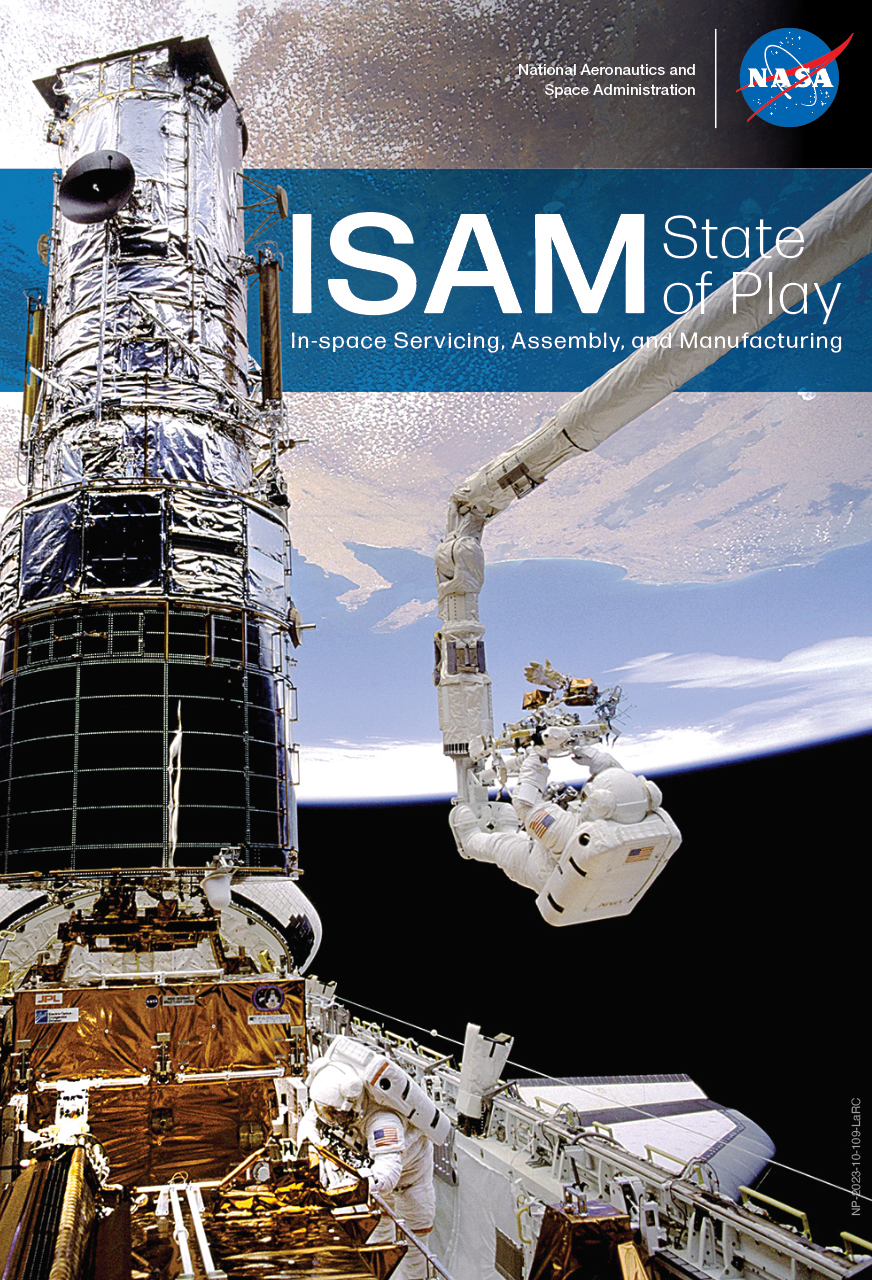
That tool scrapes aerospace news from across the web, compiles relevant updates into organized tables, and produces a readable summary on a regular cadence. “It kind of replaced the need for everyone on the team to spend 30 or 40 minutes every day scrolling through news to keep up,” he says.
“Jaden was constantly looking for ways to improve himself, the team, and our products,” Arney adds. “He was eager to take the lead in trying a number of new processes and ideas to try to make them work for us.”
The thing that surprised Caradine most about NASA Langley had nothing to do with the technical work. He had expected some departmental siloing that could develop in large organizations, where people become experts in narrow areas with limited cross-pollination among teams.
“That’s not something I’ve experienced here,” he says. “We all talk to each other, across all teams. We share resources. We collaborate quite extensively.” He describes a culture that expects everyone to engage with the whole problem, not just their corner of it. “Everyone kind of bounces around on different teams to learn the whole aspect of the problem and support each other.”
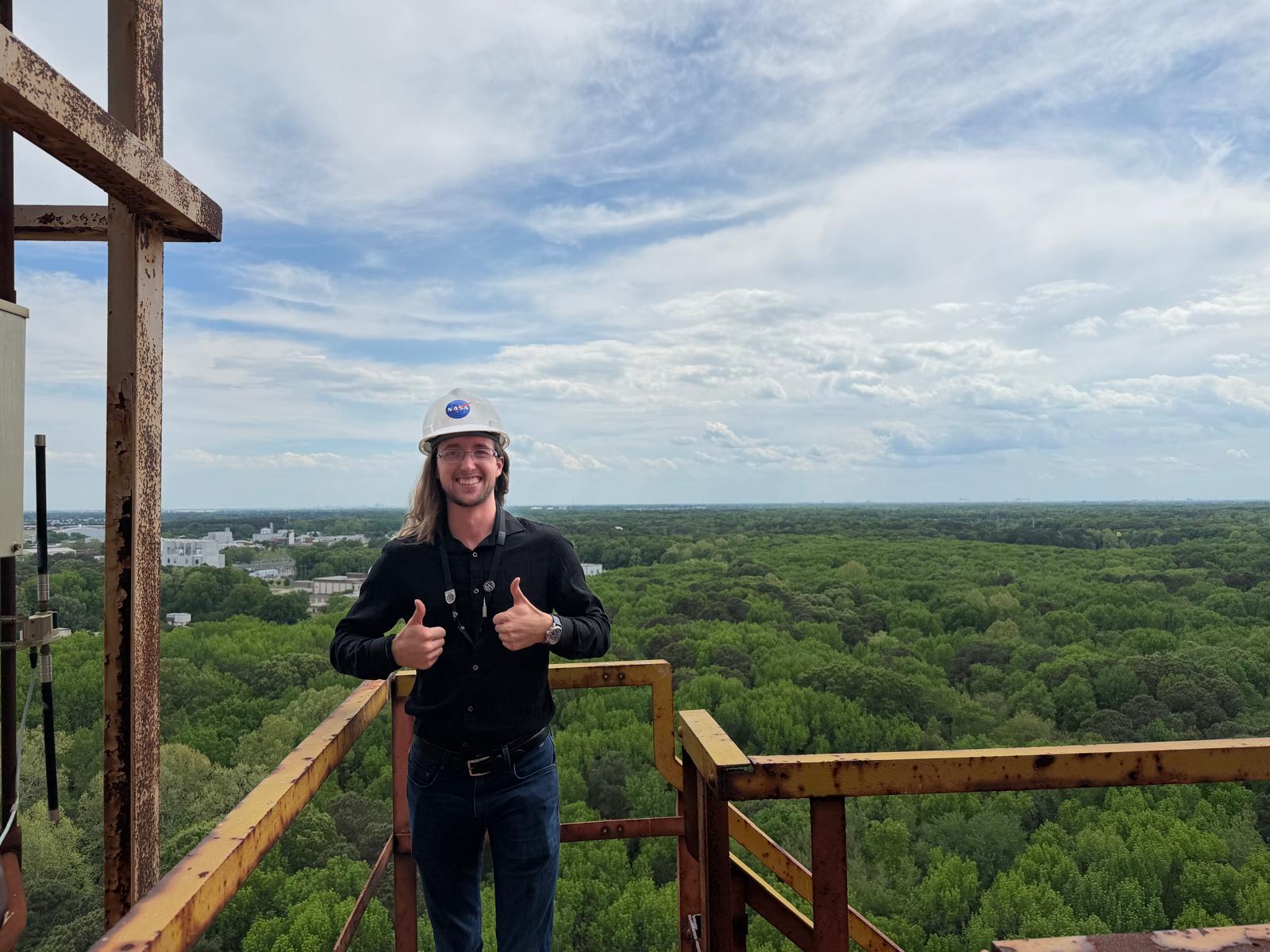
For anyone considering the Pathways program, his advice is direct. “Do it,” he says. “Human beings are far more capable than we give ourselves credit for. If it seems like too much, break it down. A journey of a thousand miles starts with a single step and can only be taken one step at a time.”
Caradine heads back to Embry-Riddle as a junior this fall, with plans to return to Langley next summer. Grad school is on the horizon, and he’s exploring programs that nurture important analysis skills for SMAB, including decision, strategic, and systems analysis.
“Before coming here, I was trying to do everything and cast a wide net,” he says. “Now I know what I need to know how to do. That’ll give me the opportunity to focus my efforts on the high-value skill sets.”
The Sirens of Titan by Kurt Vonnegut
Dungeon Crawler Carl by Matt Dinniman
Caradine’s instinct runs more toward fantasy than science fiction, but this one, he says, hits something real.
“I enjoy the leveling aspect — constantly improving, constantly getting better. In books it might be physical strength, but in reality, strength takes on many different forms. Constant improvement is quite rewarding in real life, as it is in books.”
The audiobook production, he adds, is its own experience: full sound design, character actors, the works. “It’s like listening to a movie.”
The team also recently convinced him to start Dune, by Frank Herbert. He’s about halfway through.

Part of the Systems Analysis and Concepts Directorate at NASA’s Langley Research Center.
Learn more about our work by visiting our website.
People online are distressed at men butchering words such as ‘hyperbole’ and ‘hors d’oeuvres’ – highlighting a gender reversal in ‘intelligence gaps’
There are common non-negotiables we look for in a prospective partner. They should be kind, caring and thoughtful. Having a shared interest helps. So does remembering important dates and anniversaries. But how much does it matter if they know how to pronounce the word “gnocchi”?
Turns out that’s a potential dealbreaker, at least according to a (rather judgy) cohort on TikTok. See: the “Illiterate Boyfriend” trend, which is testing some couples on the app. Users have compiled a list of what are essentially SAT words for women to ask their male partners to read. Many of these men – this is an overwhelmingly heterosexual activity – fail to finish the list unscathed. They trip over entries such as “hyperbole”, “cynicism”, “diaphragmatic” and the oft-butchered French term, “hors d’oeuvres”.
Continue reading...
© Illustration: Rita Liu/The Guardian

© Illustration: Rita Liu/The Guardian

© Illustration: Rita Liu/The Guardian

Dear MacStories reader,
It’s Zac here, the developer of Soulver — a notepad calculator you might have heard of. You type your thinking in plain text, and live answers appear in a column alongside as you go.
I started working on Soulver all the way back in 2005. The reason I’m still improving it 20 years on is the enthusiasm of the people who use it: nearly every day, someone writes to tell me how useful it is in their daily work. For many of them it’s one of those apps that stays open all day — for every budget, quote, and what-if.
This summer I released Soulver’s biggest update in 7 years, with 50+ new features. My favorite is trip planning: write out how many nights you’d like to spend in each destination, and Soulver works out the dates of every leg. Rearrange the itinerary and the dates update. There’s nothing quite like it.
Soulver continues to be a one-time purchase, not a subscription. By popular request, it’s now also a universal purchase: buy it once and it’s yours on Mac, iPad & iPhone. And this week, MacStories readers can get Soulver for $20 off: $39 instead of $59. The offer runs through September 11.
Soulver isn’t for everyone. But if you’re the kind of person who likes to think through problems with numbers step by step, give it a try — there’s a free 60-day trial, so you can see if it clicks for you.
Get Soulver 4 for $39 — $20 off for MacStories readers through September 11
Our thanks to Soulver for sponsoring MacStories this week.
Social media scuttlebutt about Mark Zuckerberg’s $300 million superyacht failing to assist stranded boaters off the coast of Alaska was partly corroborated by ship-tracking data—and eventually prompted responses from both the US Coast Guard and a spokesperson for Zuckerberg.
The incident was made public when Michael Love, a passenger aboard the replica steamship Wilderness Legacy during an Alaska cruise, posted about it on the social media platform Bluesky. The ship detoured to rescue a stranded 21-foot skiff with two women, a child and a dog, after the US Coast Guard had supposedly first radioed Zuckerberg’s superyacht, Launchpad, for help without success.
“There was near unanimous booing when the captain announced this,” Love wrote in describing the Alaska cruise passengers’ response to the lack of help from Zuckerberg’s ship.


© Sylvain Lefevre/Getty Images
Social media scuttlebutt about Mark Zuckerberg’s $300 million superyacht failing to assist stranded boaters off the coast of Alaska was partly corroborated by ship-tracking data—and eventually prompted responses from both the US Coast Guard and a spokesperson for Zuckerberg.
The incident was made public when Michael Love, a passenger aboard the replica steamship Wilderness Legacy during an Alaska cruise, posted about it on the social media platform Bluesky. The ship detoured to rescue a stranded 21-foot skiff with two women, a child and a dog, after the US Coast Guard had supposedly first radioed Zuckerberg’s superyacht, Launchpad, for help without success.
“There was near unanimous booing when the captain announced this,” Love wrote in describing the Alaska cruise passengers’ response to the lack of help from Zuckerberg’s ship.
© Sylvain Lefevre/Getty Images
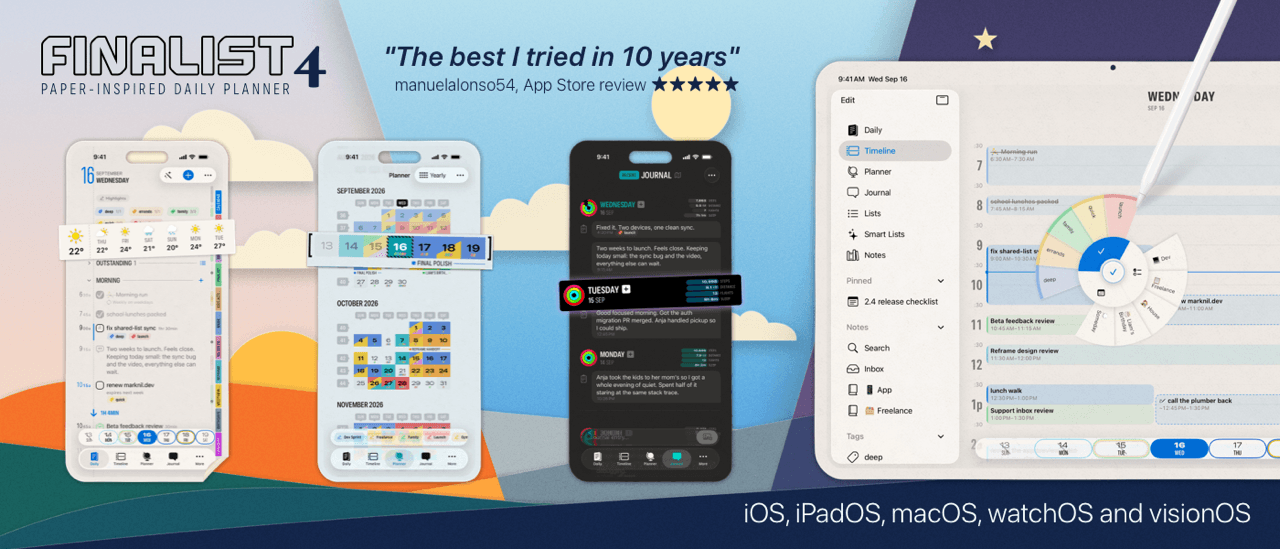
If you read MacStories, you might have caught John’s Finalist 1.0 review a few years back. A lot has changed since: version 4.0 is out this week, its biggest update yet. Finalist is a paper-inspired daily planner for iPhone, iPad, Mac, and now Apple Watch, giving you one place to plan your day, week and month. It wrangles all your stuff into one cohesive system to help you stay on top of it all: Reminders, Calendars, habits, tasks, notes, weather, and lots more.
New in 4.0 are Notes. Write native notes that sync to your iCloud, or point Finalist at a folder of markdown files and it round-trips cleanly with Obsidian vaults, GitHub, or any editor you like. Markdown tasks inside those files show up in your timelines as real tasks, on the right date, with the right tags. There are even timeline swimlanes per tag, to visualize any endeavour.
The Watch app is also new and it extends Finalist to your wrist. Its Now card answers the day’s current question: your first moves in the morning, the running time block with a countdown, an evening wrap-up with streaks to protect. It has some very nifty complications and a Smart Stack widget.
Or take a look at Broadsheet, a newsprint-inspired layout that shines on big screens. It has delightful touches throughout: tap a World Clock and the whole page retunes to another city, with date, weather, tasks, and appointments all in that timezone. The Timeline tab lets you sketch your day in pencil. Perfect for timeblocking, especially with Pencil Pro and its squeeze menu.
Apple has featured Finalist as App of the Day multiple times, and a large Discord community drives it forward. To help you try it, MacStories readers get 50% off their first year with code MACSTORIES40.
Our thanks to Finalist for sponsoring MacStories this week.

You think faster than you can type. Across a day of email, Slack, notes, and chatbot prompts, that gap quietly eats your time.
Cotypist closes that gap. It’s smart autocomplete for your Mac: as you write, it predicts your next few words and shows them inline, right at your cursor. Press Tab to take the next word or the whole line, then carry on. If a suggestion isn’t what you had in mind, keep typing and it catches up within a letter or two. Accept a word here and a line there, and you’ll have to type far less than you used to.
Most AI writing tools try to do too much and don’t sound like you. Cotypist only fills in the words you’d have typed anyway (just faster), and it picks up your vocabulary as you go, so the result still sounds like you. It works almost everywhere you write: Mail, Messages, Slack, Notes, Obsidian, your browser, even the prompt box in ChatGPT. And it all runs on your Mac, so nothing you type ever leaves your Mac.
Cotypist comes from the maker of Timing, the Mac time-tracker many MacStories readers already know, so it’s built to feel native and stay out of your way. Setup takes about a minute: drag it into Applications, launch it, then start typing, no account required.
Cotypist is free to download, with a 30-day Pro trial and no credit card. When the trial ends, you can keep Pro or drop to the free plan. Until the end of August, MacStories readers get 10% off their first bill at cotypist.app/macstories. Give it ten minutes and see if it can keep up with you.
Our thanks to Cotypist for sponsoring MacStories this week.
