A Motorola lançou recentemente o aplicativo oficial Moto Buds para iOS, o que permite aos usuários dos fones de ouvido da marca personalizar recursos dos acessórios com facilidade diretamente pelo iPhone.
Segundo a empresa, o app dá acesso a recursos adicionais como cancelamento ativo de ruído, equalização sonora, controles por toque, detecção de uso e conexão dupla, que serve para gerenciar os dispositivos conectados simultaneamente aos fones.
Como os fones já lançados não vieram de fábrica preparados para o aplicativo para iOS, é necessário usar um smartphone com Android para atualizar o firmware, de modo que o app reconheça os acessórios compatíveis quando conectados ao iPhone.
Para isso, é preciso acessar as configurações dos fones no app da Motorola para Android e instalar a versão de firmware mais recente. Segundo a empresa, os moto buds 2 plus requerem a versão v17200 ou superior, enquanto os moto buds 2 devem ter pelo menos a versão v10.74.
Feito isso, é só desconectar os fones do aparelho com Android e emparelhá-los ao iPhone.
NOTA DE TRANSPARÊNCIA: O MacMagazine recebe uma pequena comissão sobre vendas concluídas por meio de links deste post, mas você, como consumidor, não paga nada a mais pelos produtos/serviços ao usar os nossos links de afiliado.
A 1.000 anos-luz da Terra, o telescópio James Webb encontrou algo que parece desafiar a própria fronteira entre estrela e planeta: anãs castanhas com apenas duas vezes a massa de Júpiter. E há uma investigadora portuguesa entre os responsáveis pela descoberta.
Una investigación exhaustiva ha analizado la muerte de Jesús integrando medicina forense, el Evangelio de Juan y el estudio de la Síndone y el Sudario. Los resultados muestran que el fallecimiento fue probablemente un colapso multiorgánico por varios factores: pérdida de sangre, agotamiento físico, insuficiencia respiratoria y fallo cardíaco por estrés. El estudio revela una asombrosa coherencia entre la ciencia y los relatos bíblicos, confirmando que la Pasión fue una realidad biológica y no una metáfora.
The European Space Agency is determined to move ahead decisively and independently with its Venus mission after NASA officials effectively acknowledged that they would be unable to fulfill their commitments to provide the U.S.-built onboard radar instrument, according to the project’s lead scientist. The European spacecraft, known as Envision, will conduct detailed scans of Venus’s […]
Construir uma base na Lua é muito mais do que levar astronautas até lá. A NASA procura soluções para produzir energia, extrair oxigénio do regolito lunar e fabricar no próprio local materiais que possam ser usados na construção e nas operações.
Depois de décadas de testes e protótipos falhados, o Exército norte-americano vai receber 26 lasers anti-drone de 30 kW, num contrato de 465 milhões de dólares com a AeroVironment. Este é um marco que pode acelerar toda a indústria de armas de energia dirigida.
For the first time, astronomers combined Hubble and Webb space telescopes to hunt down some of the smallest, faintest objects ever spotted in the outer Solar System.
Foi o motor e a fonte de energia da BepiColombo durante oito anos. Agora, a 200 milhões de quilómetros da Terra, o módulo que levou a missão até “perto” de Mercúrio ficou para trás, sozinho numa órbita em torno do Sol.
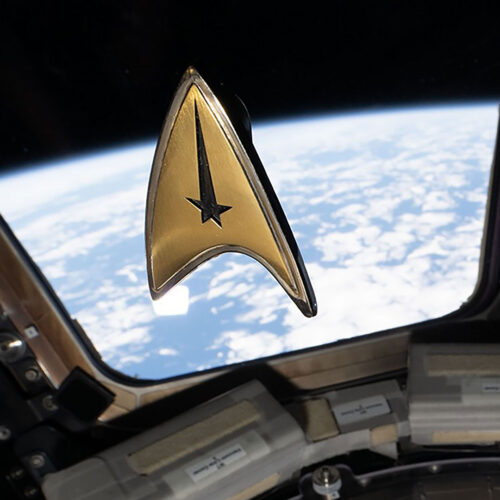
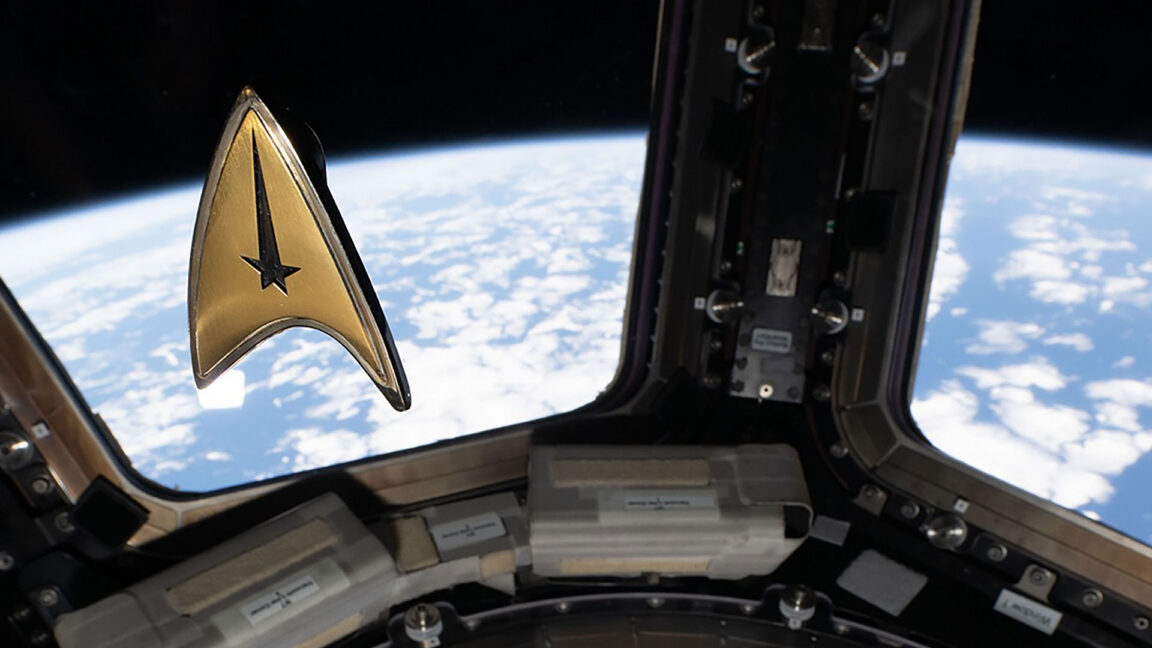
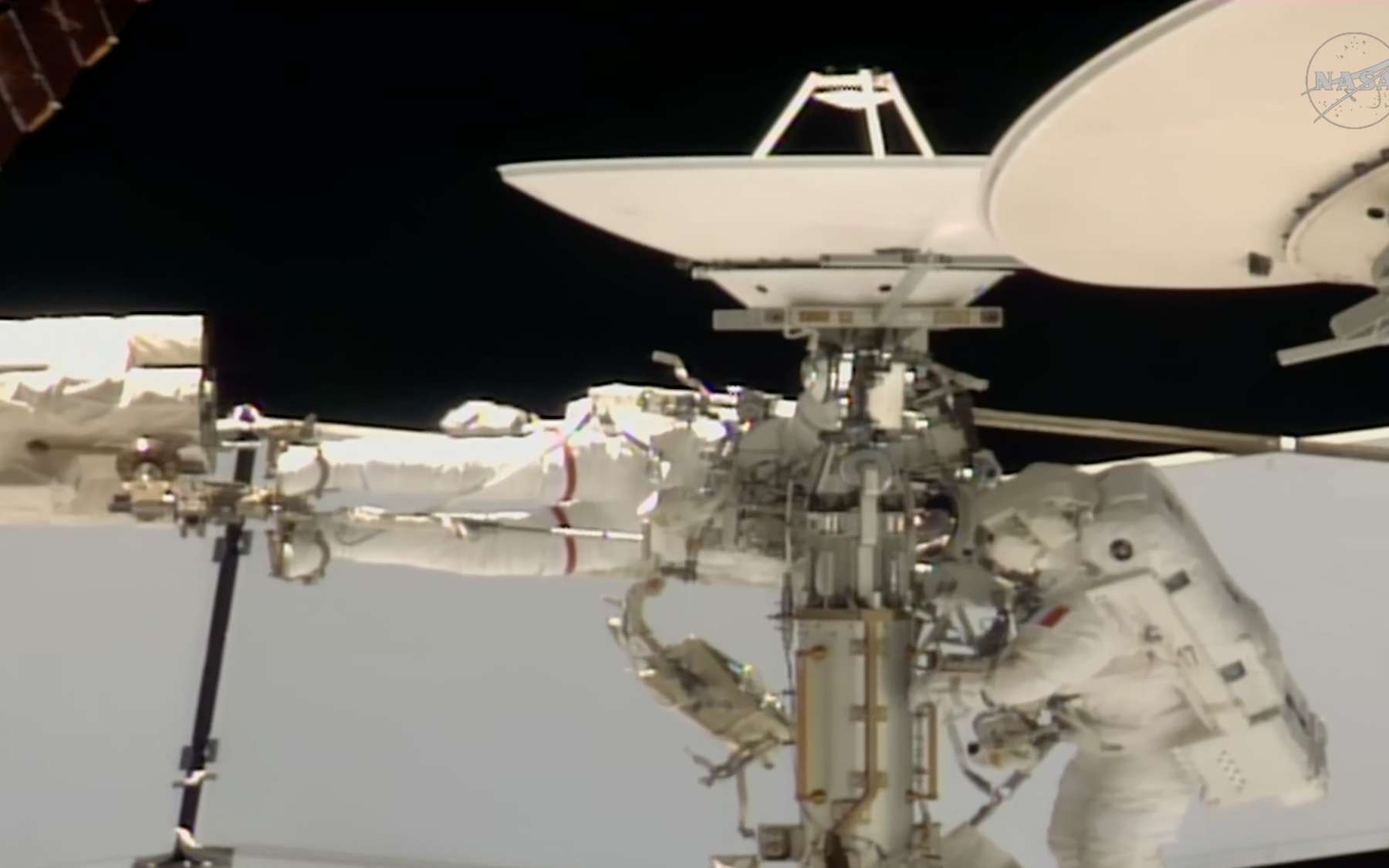
Sixty years after television audiences first tuned in to see the voyages of the Starship Enterprise, an astronaut on board the International Space Station has paid tribute to Star Trek by flying the badge of the franchise's latest fictional captain.
Expedition 75 flight engineer Sophie Adenot with European Space Agency (ESA) donned the Delta badge originally worn by actor Anson Mount for a video recorded from aboard the space station. Mount portrays Christoper Pike in the Paramount+ streaming series Star Trek: Strange New Worlds. Paramount and ESA both released the clip on their Instagram feeds.
"For 60 years, Star Trek has brought us stories of friendship and exploration. I'm wearing Captain Pike's badge aboard the ISS in celebration of continuing the real world work of science and exploration," said Adenot. "For me, exploration and science are about curiosity and cooperation daring to go a little farther together, learning from what we discover and build, and turning that knowledge into a better future for everyone."
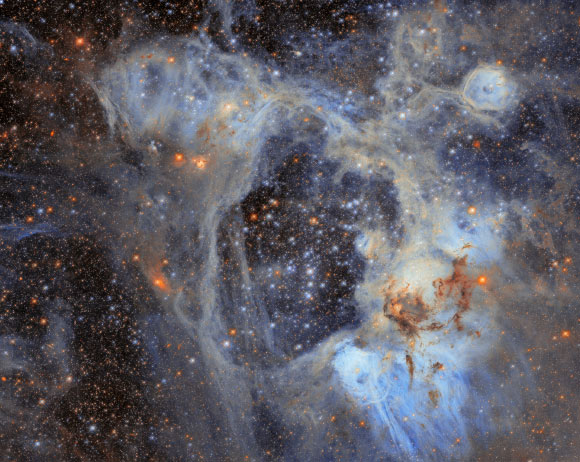
A new images from the NASA/ESA Hubble Space Telescope reveals LHA 120-N44, a striking nebula located roughly 160,000 light-years away in the Large Magellanic Cloud, a satellite galaxy of the Milky Way.
On its second attempt, Isar Aerospace successfully placed satellites into orbit, marking the first achievement of its kind for Europe’s private space industry. The mission, dubbed Onward and Upward, lifted off from Isar Aerospace’s own launch pad at the Andøya Space complex in Norway at 22:12 CEST on September 5 (23:12 Kyiv time), deploying the […]
After nearly eight years and billions of kilometers of travel, BepiColombo -- a science mission led by ESA in close collaboration with JAXA -- has begun its long-awaited arrival at the smallest and innermost planet in our Solar System.
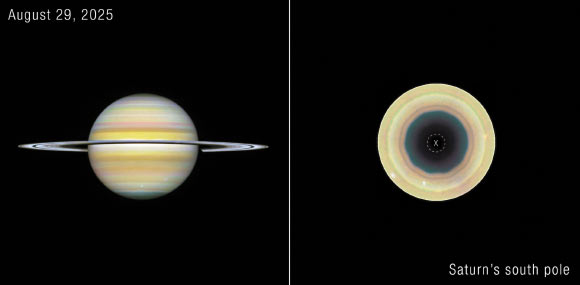
For almost five decades, Saturn’s north pole has been famous for hosting a bizarre, six-sided jet stream known as the hexagon, a feature first spotted by NASA’s Voyager spacecraft in the 1980s and still churning today.
A massive chunk of Greenland’s Petermann Glacier has broken away, forming an iceberg the size of Manhattan in what scientists say is the most significant Arctic calving event recorded in years.
As the dramatic event unfolded, the European Space Agency’s (ESA) Copernicus Sentinel-1 mission captured the breakup on August 4, as the 29-square-mile ice tongue detached from the eastern edge of Petermann Glacier.
The new “ice island,” also known as a tabular iceberg, is estimated to be close to 500 feet thick and was produced by an event that experts believe to represent the single largest loss of floating ice since 2012, and the most massive calving event anywhere in the Arctic since 2020.
Satellites Reveal a Rapid Iceberg Breakup
Evidence of an imminent calving event had begun showing months ago in the form of cracks in the glacier. On August 3, Sentinel-1 radar imagery revealed significant deterioration that was showing along the center of the glacier’s ice tongue.
The crewmembers aboard the nearby vessel weren’t the only ones armed with cameras who were observing the massive breakup. For many years, an international team of researchers has been monitoring conditions on Petermann Glacier using Sentinel-1 imagery. Since 2019, a series of tracking and expanding fractures and other clear signs of instability have gradually worsened.
Additionally, interferometric measurements collected earlier in 2026 showed signs that deformation and fractures were spreading through the ice tongue in advance of a likely break, allowing scientists both on-site and observing via satellites in orbit to plan for the event.
The ESA’s Copernicus Sentinel-1 (Image Credit: ESA/Mlabspace).
Iceberg Break Antipated for Years
“Petermann Glacier has long been one of Greenland’s largest remaining ice tongues,” said University of Ottawa PhD student Adam Garbo, one of the many researchers involved in monitoring the glacier prior to the calving event.
“We’ve anticipated this break for years, and seeing it finally happen is remarkable,” Garbo said in a statement. “It’s a powerful reminder of how quickly these systems can change.”
This event was by no means the first time that the Petermann Glacier has undergone a major calving event. In 2008, 2010, and in 2012, similar significant ice losses were logged, although its floating ice tongue had remained mostly stable since that time.
The recent event signals the end of that period of relative stability. Additionally, researchers say two more sections—measuring around 97 and 87 square kilometers—are likely to detach as existing rifts continue to appear and gradually separate.
Sentinel-1 Spots a Massive Break Up Event
With the help of the ESA’s Sentinel-1C and the recently launched Sentinel-1D satellites, a remarkably detailed view of the calving event was made possible. During its commissioning period, Sentinel-1D and its predecessor satellite achieved one-day repeat synthetic aperture radar observations.
Above: Optical image of the Petermann glacier from Sentinel-2 (left) and an interferogram from Sentinel-1 (right), which reveals deformation and fractures within the ice tongue (Image Credit: ESA/contains modified Copernicus Sentinel data (2026), processed by ESA/CC BY-SA 3.0 IGO).
The resulting interferograms allowed scientists to examine how fractures propagated, and aalso how the floating ice responded to factors that include ocean water movement in the vicinity prior to the separation.
“The changes we observed on Petermann Glacier were occurring very rapidly in the lead-up to the iceberg calving event, so it was incredibly exciting to monitor the crack propagation with interferometry in near-real time,” said University of Leeds PhD student Molly Hammond in a statement.
Satellites like those with the Sentinel mission are especially useful for observations in polar regions since their radar systems allow researchers to observe the Earth’s surface even when cloud coverage or darkness would normally obscure visibility. This allows the ability to continuously monitor activity around these remote glaciers, and a chance to trek the new ice island as it continues to drift.
Ongoing Monitoring After a Rare Event
“This type of large tabular iceberg is relatively rare in the Arctic, making this calving event a unique opportunity to study how such a vast ice mass drifts, evolves and eventually breaks apart,” ESA researcher Martin Wearing said in a statement.
Although the iceberg currently poses no practical concerns, Environment and Climate Change Canada is currently monitoring the iceberg’s movement, and will provide assessments about whether it could pose any risk to Arctic shipping and offshore infrastructure in the months ahead.
Those monitoring efforts will likely continue into the foreseeable future, since massive ice islands as large as the newly formed iceberg can survive for many years before they eventually undergo fragmenting of their own, dispersing smaller pieces into the surrounding ocean. These smaller pieces can be much more difficult to track, and thereby could pose greater risks.
For now, scientists plan to continue watching the new ice island, which will offer new insights into Arctic glacier dynamics, as well as the changes that are impacting one of Greenland’s most closely watched glaciers.
Micah Hanks is the Editor-in-Chief and Co-Founder of The Debrief. A longtime reporter on science, defense, and technology with a focus on space and astronomy, he can be reached atmicah@thedebrief.org. Follow him on X @MicahHanks, and at micahhanks.com.
Hier, à 400 kilomètres au-dessus de la Terre, Sophie Adenot avait rendez-vous avec l’histoire. Et l’astronaute française a répondu présente. Même si sa sortie extravéhiculaire ne s’est pas tout à fait déroulée comme prévu.
A Satechirevelou ontem uma nova versão do seu carregador de mesa ChargeView, agora com seis portas USB-C e uma potência total de 240W. Ele conta com uma tela LCD 1Liquid crystal display, ou display de cristal líquido. semelhante à do primeiro modelo da linha (lançado em abril), capaz de exibir a potência liberada em cada uma das portas em utilização, além de contar com a tecnologia GaN 2Gallium nitride, ou nitreto de gálio..
As portas C1 e C2 contam com suporte a uma potência de 140W cada com a tecnologia USB Power Delivery (PD) 3.2, que conta com o Extended Power Range (EPR) e Adjustable Voltage Supply (AVS) para carregamento via USB-C (o protocolo de carregamento rápido do iPhone 17).
As portas C3 e C4 fornecem 100W de potência cada, enquanto a C5 e a C6 estão limitadas a 30W de carregamento cada. Além disso, essas quatro últimas fazem uso da tecnologia USB PD 3.0 com suporte ao Programmable Power Supply (PPS).
Em matéria de acabamento, ele possui uma parte em metal fosco e uma cobertura brilhante para a tela. Sua cor, Space Black, foi pensada para combinar com o ecossistema de computadores da Apple, com destaque para o MacBook Pro e o Studio Display. O carregador é acompanhado ainda de um suporte, o qual permite que ele seja utilizado tanto na horizontal quanto na vertical em sua mesa de trabalho.
NOTA DE TRANSPARÊNCIA: O MacMagazine recebe uma pequena comissão sobre vendas concluídas por meio de links deste post, mas você, como consumidor, não paga nada mais pelos produtos/serviços usando os nossos links de afiliado.
Notas de rodapé
1
Liquid crystal display, ou display de cristal líquido.
Através de um novo contrato com a Força Aérea Portuguesa, os drones AR5 da Tekever vão apoiar missões de longo alcance, incluindo a vigilância da Zona Económica Exclusiva (ZEE) de Portugal, podendo ser também utilizados em áreas como segurança costeira e proteção ambiental.
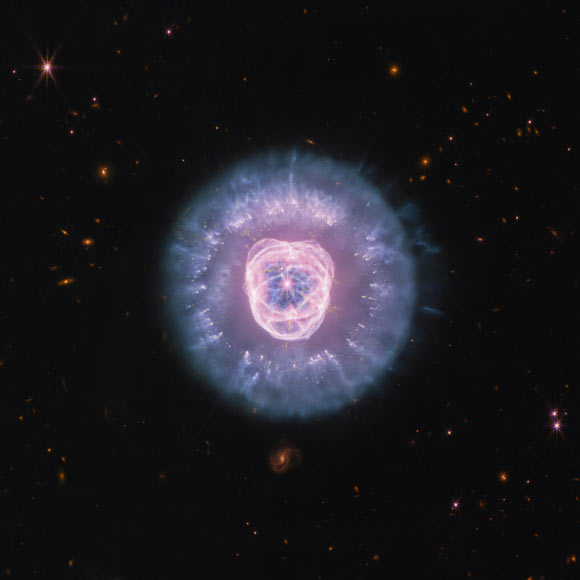
New infrared observations of the Eskimo Nebula, a bipolar double-shell planetary nebula in the constellation of Gemini, reveal clumps of dust, ionized gas and expanding shells surrounding a central star.
As câmaras dos drones de vigilância K3 Scout, usados pelas forças especiais da Marinha britânica, tinham componentes de origem chinesa quem estavam a enviar dados para a China, obrigando o Ministério da Defesa a cortar a ligação à internet dos equipamentos.

 Login