Em mais um aceno ao governo dos Estados Unidos, a Apple anunciou hoje novas parcerias com empresas do seu país natal para o fornecimento de materiais para os iPhones 18 Pro/18 Pro Max e Duo.
Parte do American Manufacturing Program (AMP), essas parcerias incluem companhias como a Perryman Company, produtora de titânio do estado da Pensilvânia, e a Qnity Electronics, fabricante de tecnologias para câmeras do estado do Delaware.
Sabih Khan, COO 1Chief operating officer, ou diretor de operações. da Apple, comentou o anúncio:
Estamos muito felizes em expandir nossa parceria com empresas que produzem materiais e componentes avançados para nossa nova linha de iPhones aqui mesmo nos Estados Unidos. A engenhosidade americana é vital para todos os nossos produtos, desde o titânio usado no iPhone Duo até as inovações revolucionárias em câmeras do iPhone 18 Pro. Temos orgulho de trabalhar com a Perryman e a Qnity Electronics para continuar expandindo nosso Programa de Fabricação Americana e apoiar a geração de empregos nos EUA.
Ainda segundo a Maçã, a Perryman receberá um investimento de US$100 milhões ao longo dos próximos três anos, que garantirá o fornecimento, para o iPhone Duo, de titânio de grau 5 com pelo menos 80% de material reciclado.
Parte do AMP desde março, a Qnity Electronics vai produzir filmes avançados para o novo sistema de câmera com abertura variável dos iPhones 18 Pro/18 Pro Max.
A Apple também aproveitou a oportunidade para relembrar outros investimentos em fabricantes americanos (ou com fábricas nos EUA), incluindo a Broadcom, que fornece chips de radiofrequência para seus dispositivos; a Corning, responsável pelos vidros Ceramic Shield; a Coherent, que produz componentes para o Face ID; a TSMC, que fabrica chips para todos os principais produtos da empresa; e a Amkor Technology, empresa de empacotamento de semicondutores.
New US partners like Perryman and Qnity Electronics have helped to make iPhone Duo and iPhone 18 Pro possible. https://t.co/12nNak07z6
Novas parceiras americanas, como a Perryman e a Qnity Electronics, ajudaram a viabilizar o iPhone Duo e o iPhone 18 Pro.
Anunciado em 2025, o AMP envolve um investimento de US$600 bilhões [1, 2] na economia dos EUA — e, segundo a Apple, já sustenta mais de 450 mil empregos. O programa, vale lembrar, surgiu em meio às ameaças tarifárias feitas pelo presidente Donald Trump a importações, com destaque para a China — principal polo de fabricação de iPhones.
Meta a du mal à faire décoller ses IA, alors la firme a pensé autrement avec sa nouvelle application Muse. Plutôt que de proposer un chatbot, le groupe de Mark Zuckerberg mise sur une autre bataille : celle des agents capables d’agir à la place de l’utilisateur. Et les premiers chiffres montrent...
When I make my yearly trip to Denver, I always bring my road bike. It's my annual chance to suffer on the kinds of gradients unavailable in the glacier-scoured lands of northeastern Illinois. In advance of this year's trip, Specialized hooked me up with its new gravel bike, the Diverge 4 Pro, so I brought it with me to challenge it in ways not possible on the fastidiously groomed gravel trails of suburban Chicago.
In contrast to the Specialized Turbo Creo 2 we reviewed a couple of years ago, the Diverge 4 Pro is strictly human-powered. Specialized calls it "the ultimate getaway vehicle," designed with input from off-road adventure riders, scientists, and racers. It's marketed as the only gravel bike you need for racing, adventure, and distance rides. While I can't speak to its racing performance, I can say the Diverge 4 Pro is a blast on any kind of gravel and does well enough on the road.
Priced at $8,249, the Diverge 4 Pro is designed for rough trails and technical descents, both of which unfolded below me at the summit of an is-it-gravel-or-is-it-single-track climb in Douglas County, Colorado. I took a deep breath, and down I went. The descent was rutted and slightly more technical than anything I'll ever run into around Chicago, but I had enough time on the bike to realize that if I had trouble on the descent, it wouldn't be the bike's fault.
When the Artemis 2 crew splashed down in the Pacific Ocean on April 10, the excitement was palpable — Reid Wiseman, Victor Glover, Christina Koch, and Jeremy Hansen had swung around the Moon, broken a human spaceflight distance record, and come home safely. But for the Artemis program, it was just the beginning. Between April’sContinue reading "Why we need in-orbit refueling to return to the Moon"
NASA’s Cosmic Origins Program is excited to invite you to the second Early Career Workshop, designed to support and empower the next generation of astrophysics leaders and PIs. The workshop aims to provide insights to early career scientists about the wide range of work done in the Cosmic Origins Program, to explain and demonstrate the tools and opportunities available to them, and to answer any questions they may have. This year we will have MORE early-career talks and panels to share your thoughts and ideas.
The workshop will take place virtually from October 20 – 22nd 1:00-4:00pm ET. Registration and tentative agenda will be announced soon. Make sure you are subscribed to both email lists to receive all updates!
The call for NASA Infrared Telescope Facility observing proposals for semester 2027A (February 1 to July 31, 2027) opened on September 1. The proposal Deadline is Thursday, October 1, 2026, 5PM Hawaii Standard Time. Available instruments are listed here. Remote observing is offered from any location with broadband Internet access for any project that utilizes IRTF facility instruments. Click here for information about IRTF Computer and Remote Observing Information. Please see the announcement for available instruments and for further information. Please review the information and use our Online Application Form.
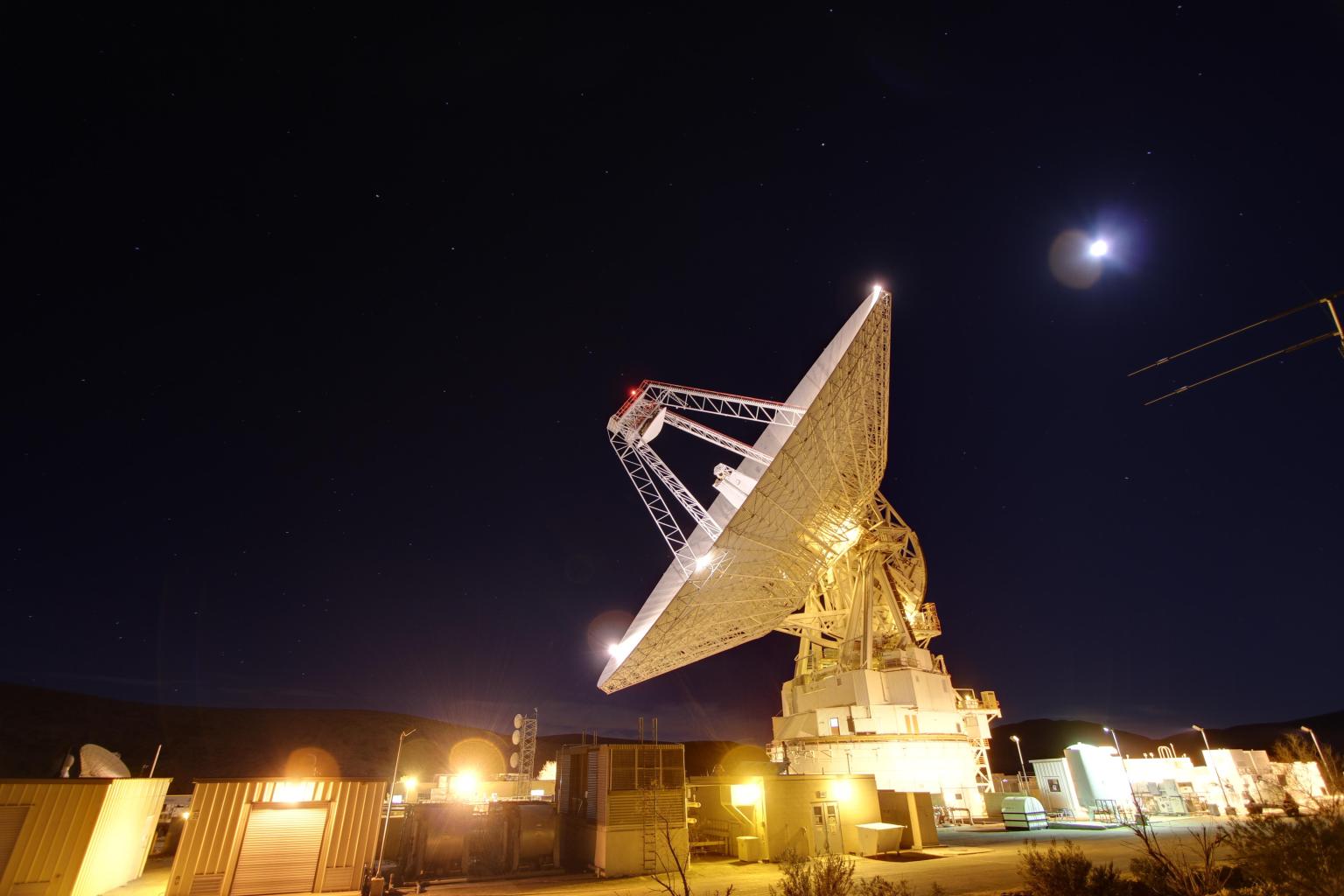
On Sept. 10, 2026, NASA commemorated the completed repairs of the Guam Remote Station’s central antenna with a ribbon-cutting ceremony.
Members of NASA, the Governor’s Office of Guam, military personnel, and family members gathered to celebrate the Guam Remote Station’s return to operations.
NASA
The ribbon-cutting event was held in front of the repaired central antenna. As of 2026, the newly hardened station has withstood two super typhoons more powerful than Mawar with minimal damage.
SCaN Deputy Manager for Network Operations Jena Garrahy addresses members of the Guam Remote Station ribbon-cutting event.
NASA
Guam Remote Station Site Manager Kristopher Copple was among those recognized during the ceremony.
Jena Garrahy (right), SCaN Deputy Manager for Network Operations, presents a certificate of recognition to Guam Remote Station Site Manager Kristopher Copple (left).
NASA
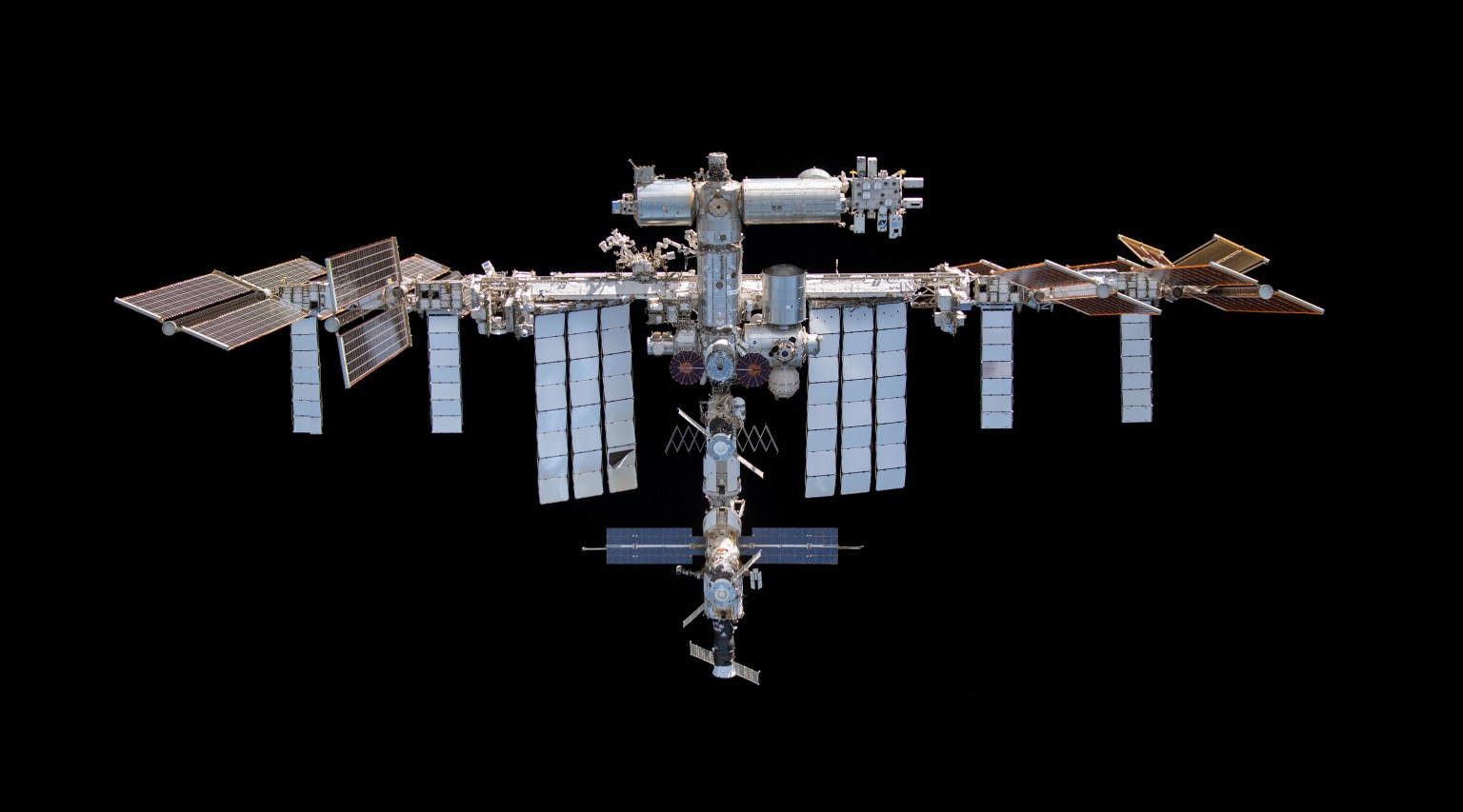
NASA’s Guam Remote Station is key to the Tracking and Data Relay Satellite (TDRS) constellation maintaining continuous communications with the International Space Station.
An artist’s concept of the International Space Station using NASA’s Tracking and Data Relay Satellite (TDRS) fleet to transmit data to Earth.
NASA
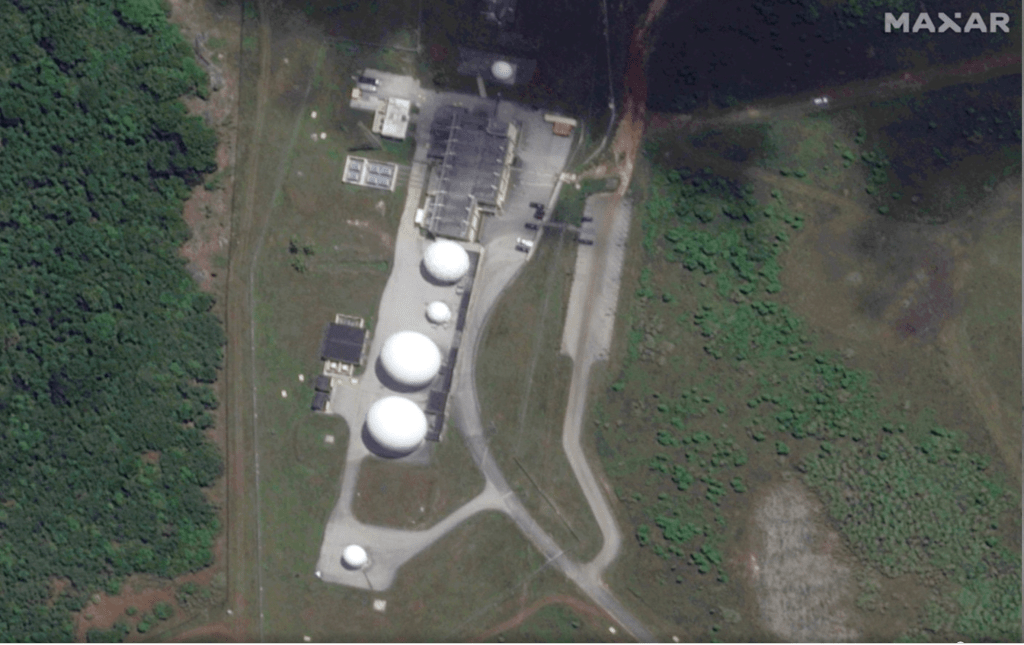
A 2023 aerial photo of the Guam Remote Station prior to Super Typhoon Mawar landing on the island.
Satellite image of NASA remote ground terminal located in Dededo area, Guam, released by U.S. commercial satellite company MAXAR.
MAXAR
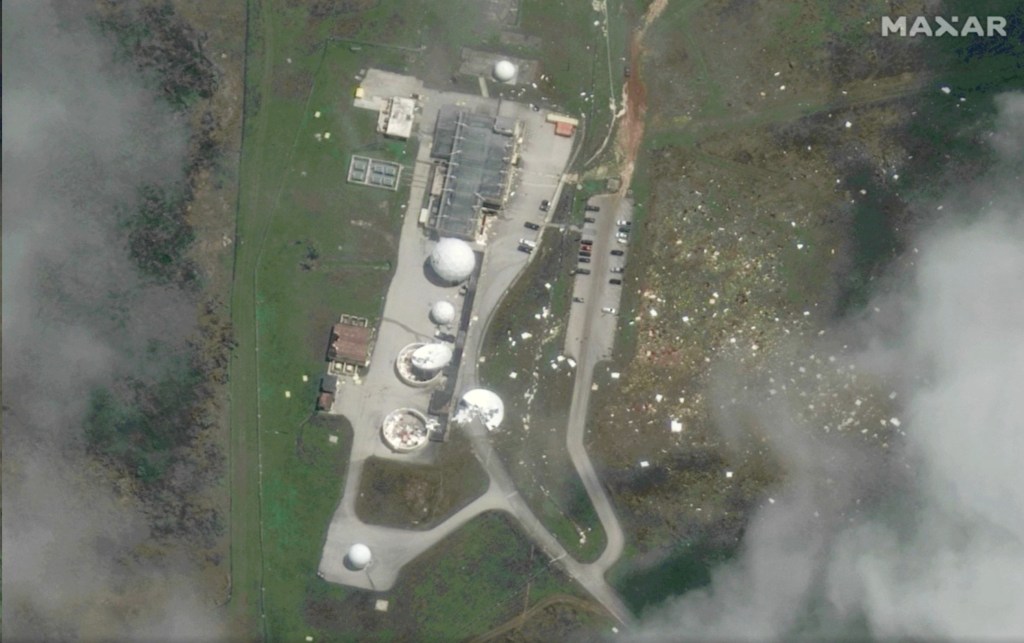
An aerial photo of the Guam Remote Station immediately after Super Typhoon Mawar struck the station. of the station’s three ground antennas were demolished.
Satellite image of NASA remote ground terminal located in Dededo area, Guam, released by U.S. commercial satellite company MAXAR.
MAXAR
NASA celebrated the full restoration of its Guam Remote Station with a ribbon-cutting on Sept. 10, closing out more than three years of recovery after Super Typhoon Mawar devastated the site in 2023. Engineers from across the agency completed the final and most complex step of the rebuild on July 1, when they returned the station’s central antenna to service.
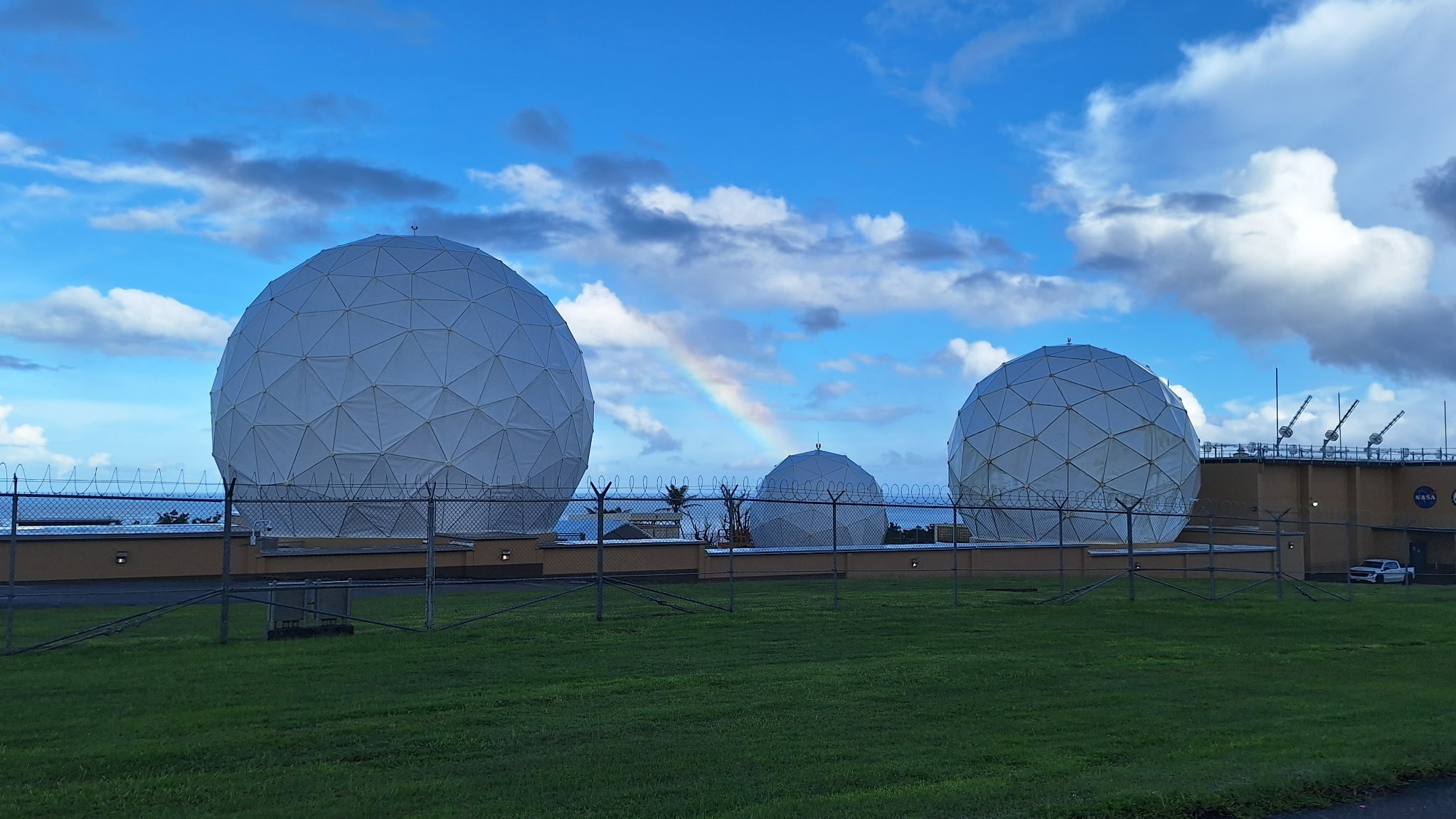
A rainbow arcs over the newly repaired Guam Remote Station antennas.
NASA
For nearly three decades, the Guam Remote Station has been one of three ground stations supporting NASA’s Tracking and Data Relay Satellites, or TDRS, a critical part of the Near Space Network. From 22,000 miles above Earth, the relays link spacecraft in low Earth orbit with the ground, allowing flight controllers to communicate with astronauts, command spacecraft, and receive mission data. The Guam station alone closes the “Zone of Exclusion,” a stretch of orbit beyond the relays’ line of sight. Without it, the International Space Station can lose contact with Earth for up to 20 minutes of every 90-minute orbit, an unacceptable risk for crewed missions.
On May 24, 2023, the Category 4 super typhoon struck Guam with 185 mph winds and more than 28 inches of rain, destroying two 16.5-meter antennas and damaging an 11-meter north antenna and the Inter Facility Link building at NASA’s station. The Zone of Exclusion reopened for the first time since 1998, cutting TDRS coverage to about 85% of a spacecraft’s orbit.
NASA made emergency repairs to the least-damaged antenna and borrowed two mobile terminals from the U.S. Army to expand coverage. The patchwork restored partial service within months, in time for a November 2023 spacewalk.
In early 2025, Congress dedicated disaster-relief funding to rebuild the ground station and harden the network against future storms. Construction began that summer and finished in summer 2026, when the rebuilt central antenna rejoined TDRS operations and the Zone of Exclusion closed once more. The same appropriation funded critical upgrades at three additional Near Space Network ground stations.
The return to service of the Guam Remote Station’s central antenna represents far more than the restoration of a critical piece of infrastructure — it is a testament to the dedication, resilience, and ingenuity of the people who made it possible.
Jena Garrahy
SCaN Deputy Program Manager for Network Operations
At the ribbon-cutting, representatives from NASA’s SCaN (Space Communications and Navigation) Division joined the station’s workforce and local leaders to mark the central antenna’s return to service. The Guam team, which led debris removal, site security, and on-island recovery, was recognized for its work to keep NASA connected to its missions through the outage and rebuild. A companion ceremony at NASA’s White Sands Complex in Las Cruces, New Mexico, honored the engineers and specialists across SCaN who supported the recovery off island.
“The return to service of the Guam Remote Station’s central antenna represents far more than the restoration of a critical piece of infrastructure — it is a testament to the dedication, resilience, and ingenuity of the people who made it possible,” said Jena Garrahy, Deputy Program Manager for Network Operations. “Through long days, challenging conditions, and unexpected obstacles, this team remained focused on the missions that depend on these critical assets every day.”
The Near Space Network is funded by SCaN, a division of NASA’s Research and Technology Mission Directorate, at the agency’s Headquarters in Washington. The network is operated out of NASA’s Goddard Space Flight Center in Greenbelt, Maryland. Repairs of the Guam Remote Station were managed out of NASA’s Glenn Research Center in Cleveland.
About the Author
Korine Powers
Lead Writer and Communications Strategist
Korine Powers, Ph.D. is a writer for NASA's SCaN (Space Communications and Navigation) Program office and covers emerging technologies, commercialization efforts, exploration activities, and more.
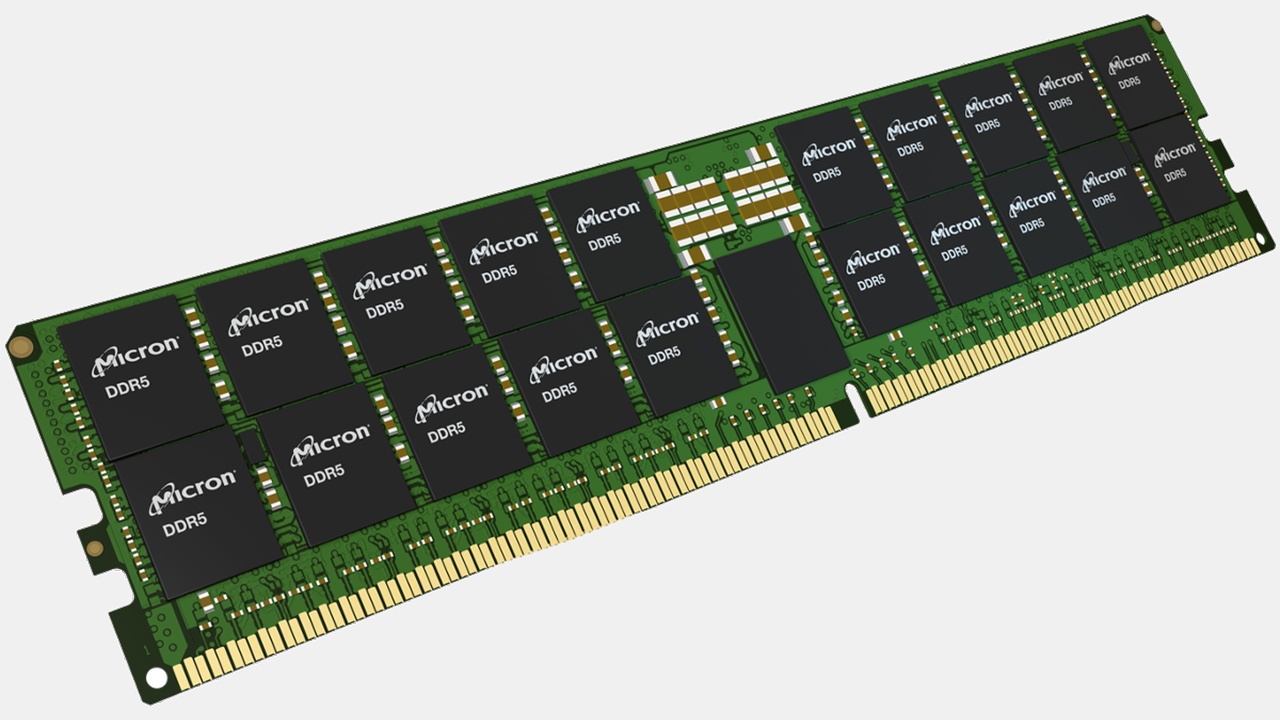
Micron this week introduced its first 512GB DDR5-9200 memory module that is designed for servers used for applications that demand a lot of memory. The new modules — which are currently being validated by AMD and Intel with their next-generation server platforms — will enable server makers to build machines with up to 12TB of fast memory. What remains to be seen is the price of such modules and servers.
To build its 512GB DDR5 RDIMM, Micron uses advanced packaging that stacks multiple DRAM dies vertically and connects them using through-silicon vias (TSVs). The company does not disclose which memory devices and how many of them it uses, but claims that a single 512GB RDIMM consumes over 60% less operating power than four 128GB modules — based on 16.0W for one 512GB module compared with the 44.2W total for four 128GB modules — which suggests that we are dealing with fairly advanced ICs.
Micron's 512GB module is not the industry's first 512GB DDR5 RDIMM — that achievement belongs to Samsung — but it is certainly the industry's first 512GB module certified to operate with a 9200 MT/s data transfer rate with standard 1.1V voltage (which implies on usage of Micron's 16Gb DDR5-9200 devices made on its 1γ (1-gamma) fabrication process that uses EUV lithography and consumes 20% less power than predecessors, though we are speculating).
Truth to be told, 512GB DDR5 memory modules are rather niche products, which is perhaps why Samsung's 512GB RDIMMs formally introduced in 2021 have not become widespread even after AMD and Intel introduced processors with over 100 cores. Micron positions its 512GB DDR5 RDIMM primarily for servers running analytics, in-memory databases, simulations, virtualization, agentic AI, and other workloads demanding high-core-count processors and plenty of memory. As processors with 200 or more cores emerge, 512GB modules may become more relevant as 12TB of memory in a server running two 256-core CPUs means 24GB per core, which no longer looks particularly excessive for applications like in-memory databases, analytics, or caching.
Micron claims that in memory-constrained Spark Support Vector Machine (SVM) analytics workloads, systems featuring 512GB memory modules can provide up to 1.4 times the performance of configurations equipped with 256GB DDR5 modules, though the company does not disclose how much memory in total these systems use. Micron also says the higher-capacity memory can increase throughput and concurrency for memory-intensive database and caching applications such as RocksDB and Redis.
AMD and Intel are working with Micron to qualify the new modules for their upcoming server platforms. Micron plans to begin volume production of its 512GB DDR5 RDIMMs sometime in the second half of 2027 and intends to align the schedule with customer requirements.
One of the more pressing questions about Micron's 512GB DDR5-9200 memory modules is their price. A 256GB DDR5-6400 RDIMM currently retails for around $19,000. Given the unique proposition that 512GB modules have for memory-constrained applications, such modules can cost significantly more than 256GB memory sticks, which will not help their broad adoption.
With the ongoing memory shortage, smaller smartphone and laptop manufacturers are reportedly looking at new ways to tackle the problem. While some are changing how they design their products, others are placing orders months in advance and are even forced to test incoming memory chips to make sure they are not fake. A Reuters report suggests that more than the price, availability has become a bigger problem, with manufacturers struggling to secure enough chips in the first place. Still, device makers like Fairphone say that memory now makes up nearly 60% of a device's bill of materials.
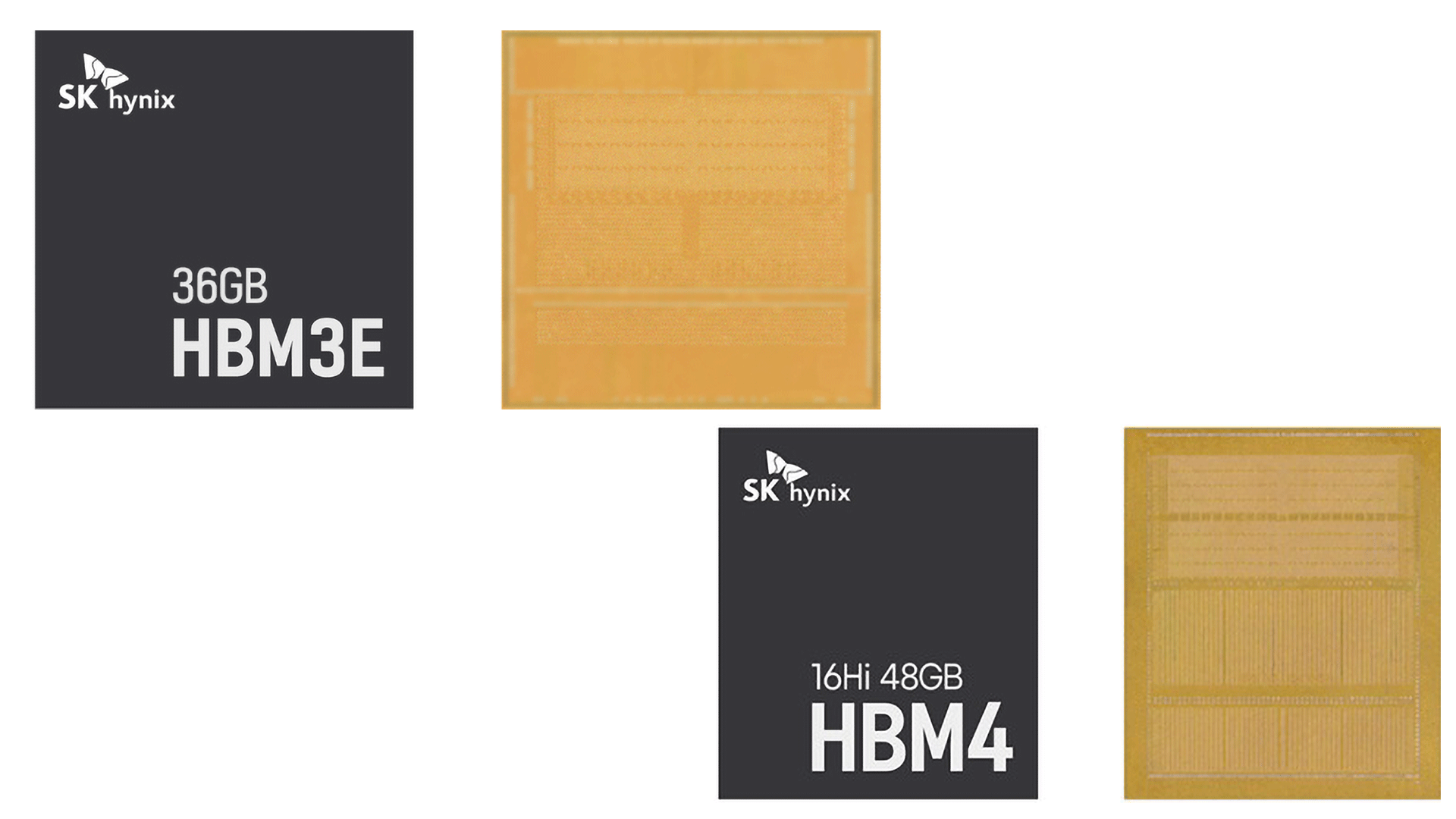
Back in July, memory maker SK Hynix’s CEO Kwak Noh-jung said that 2027 will be the "worst year" for the ongoing memory shortage and expects the memory crunch to last until 2030. For smaller manufacturers, however, simply paying more for memory isn't always enough. The situation is particularly difficult for budget-oriented phones and laptops, where memory makes up a much larger portion of the overall product cost.
According to Raymond van Eck, CEO of repairable-phone maker Fairphone, memory can account for almost 60% of the bill of materials in phones costing around $400. That itself is worrying, as a recent Counterpoint Research report expects global smartphone shipments to fall 13.9% this year to 1.08 billion units, marking the largest annual decline on record.
Finnish phone maker Jolla has designed two motherboard versions, allowing it to switch between combined packages for discrete chips depending on availability. The company is also testing samples from every batch it receives to ensure new memory isn't being sold as refurbished hardware.
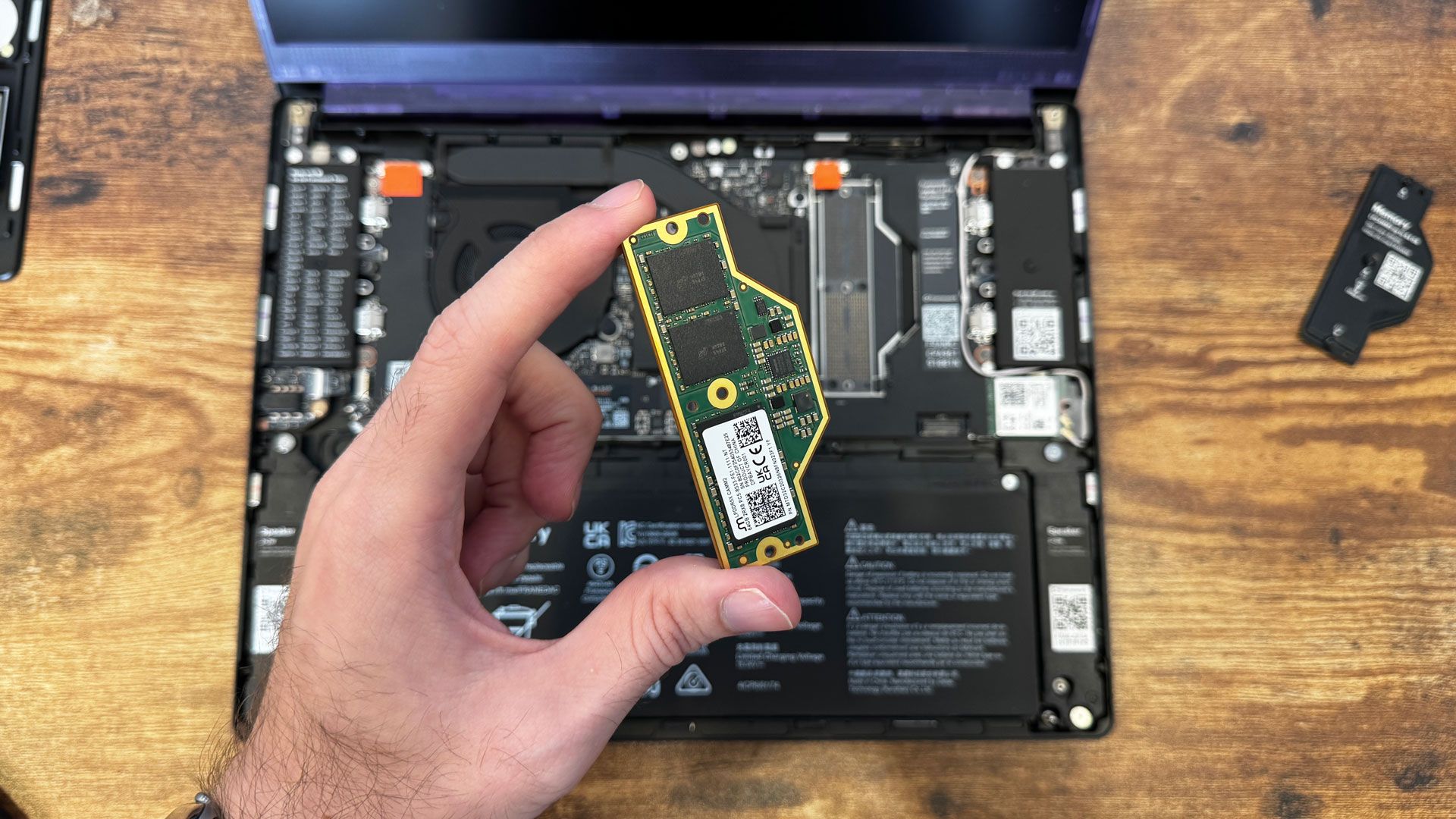
Similarly, laptop manufacturer Framework has been able to rely on its highly modular approach where customers can install memory salvaged from older laptops or opt for second-hand units, giving the company and its users another way to deal with limited supply. The company is also placing non-cancellable orders well in advance, even when it doesn't know the final price or exact delivery volume.
Back in July, it nearly doubled memory pricing for 32GB and 64GB variants of the Framework Laptop 13 Pro after receiving a cost update from its LPCAMM2 supplier. However, after sourcing new inventory at a reduced cost, the company recently announced a price drop for the same, including retroactive orders that have already shipped.
This community meeting aims to provide you with an overview and explanation of the processes and plans for mission concepts submitted to the Ad ASTRA workshop. The meeting will include a description of how the NASA Astrophysics Division will use the information gathered at the workshop. Additionally, this meeting aims to collect feedback and questions that the COPAG community may have regarding the process and plans that further mission concept selections.
Our Spotlight Series highlights recent advances in AGN science, with a strong emphasis on participation from early-career researchers, and includes plenty of time for community discussion following the presentations.
Unveiling the Role of Multi-Phase AGN Outflows with MIRACLE
Speaker
Dr. Matteo Ceci (Università di Firenze)
Abstract
Galaxy evolution is tightly connected to Active Galactic Nuclei (AGN) through feedback processes in which gas accretion onto the supermassive black hole drives powerful multiphase outflows. Detailed studies in the local Universe are crucial to resolve the physical scales and gas phases involved, enabling a comprehensive view of AGN-host interactions. I will present first results from the MIRACLE (Mid-IR Activity of Circumnuclear Line Emission) program, combining JWST/MIRI, MUSE, and ALMA observations of seven nearby Seyfert galaxies. Thanks to JWST’s spatial resolution (50-150 pc), we probe atomic and molecular gas in the circumnuclear regions and assess the impact of AGN activity on their host galaxies. Focusing on NGC 1365, we trace the ionized outflow up to kiloparsec scales and constrain its energetics and effects on star formation (SF). By combining mid-IR diagnostics with advanced photoionization and kinematic models, we reproduce ~60 optical and mid-IR emission lines, disentangling AGN- and SF-driven components and providing robust estimates of gas density, ionization, extinction, and outflow mass. We show that classical methods commonly adopted in the literature can underestimate outflow masses by up to an order of magnitude.
Disk Reflection as the Origin of the X-ray Polarization of NGC 4151 with IXPE
Speaker
Dr. Elias Kammoun (California Institute of Technology)
Abstract
The geometry of the X-ray emitting region around accreting supermassive black holes remains poorly constrained, but X-ray polarimetry now offers a new and direct perspective on it. I will present a spectro-polarimetric study of the nearby type-1 AGN NGC 4151, combining two long IXPE observations from 2022 and 2024 with simultaneous XMM-Newton and NuSTAR spectroscopy. IXPE reveals a polarization degree of 6–7% above 4 keV aligned with the radio jet, plus a distinct low-energy component at a different angle, providing evidence for at least two polarized components in the 2–8 keV band. While earlier work read the hard X-ray signal as a radially extended, slab-like corona, I will test an alternative: that the polarization is instead dominated by relativistic reflection from an accretion disk illuminated by a compact, lamp-post corona. Fitting the IXPE Stokes spectra with recently developed models, we find the data favor a low coronal height and a wide torus opening angle, with disk reflection supplying ~20% of the 2–8 keV flux. The same configuration reproduces the full 0.4–79 keV spectrum, showing that disk reprocessing by a compact corona can account for both the polarization and the broadband spectral properties of NGC 4151.
Seminar Connection
Zoom Registration, you will receive connection details by email after registration:
How the Faint Radio Sky is Changing Our Understanding of Star Formation and Galactic Outflows
Speaker
Allison Matthews (Carnegie Observatories)
Abstract
In the last decade, with the commissioning of high sensitivity radio telescopes, we have opened a new window into the faint radio sky. These novel facilities probe fundamental physical processes that regulate star formation and characterize star formation in normal galaxies like our Milky Way over nearly all cosmic time. Deep observations from MeerKAT and LOFAR have revealed that prior observations may have missed half the star formation at all cosmic times. This discrepancy has critical implications across astrophysics: estimates of gravitational wave events, the frequency of astrophysical transients, and the chemical evolution of galaxies. These same high-sensitivity radio facilities are simultaneously placing critical constraints on the physical drivers of galactic winds that we believe regulate star formation across all of cosmic time. In this talk, I will present these findings and outline programs with next generation radio facilities that will improve our observational constraints on the rate and regulation of star formation across cosmic time.
Influencers aren’t just battling competitors for brand deals. They’re now battling AI versions of themselves
Earlier this year, Emily Schuman, the creator of the lifestyle blog Cupcakes and Cashmere, saw a photo of herself she didn’t recognize on Instagram. In a sponsored ad, Schuman, who has more than 500,000 Instagram followers, is holding up a vial of GLP-1 drugs, advertising the telehealth company Gala. There was just one problem: Schuman had never heard of Gala and had nothing to do with the ad.
The ad was based on a digitally altered version of a selfie Schuman had taken in her car and posted on Instagram years earlier. Once her followers got wind, they flooded her inbox with questions about the sponsorship as it didn’t seem consistent with Schuman’s personal brand. Soon after, Schuman discovered this was just the beginning. There was also an Instagram post where an AI version of her with darker hair appears to apply foundation to promote a makeup brand called Meroda Cosmetics, and TikTok posts with generated images of her promoting the blood testing company Superpower.
O Instagram anunciou que agora será possível adicionar as publicações em que você foi marcado ao grid principal do seu perfil.
Com a novidade, é possível adicionar uma publicação com uma marcação ao seu perfil tanto a partir de uma notificação recebida por mensagem direta quando você é marcado quanto por meio da aba de Marcações. Também é possível remover a publicação do seu perfil a qualquer momento, sem excluir a sua marcação da postagem original.
Há efeitos que emulam cabines fotográficas, a estética de câmeras digitais dos anos 2000 ou transformam as pessoas em bonecos de crochê ou papel, dentre outras possibilidades. Também é possível modificar os efeitos existentes ou criar suas próprias versões.
Aos poucos, informações sobre os novos produtos da Apple — que geralmente não são detalhadas pela empresa — vão sendo reveladas. Ontem, por exemplo, comentamos por aqui as capacidades oficiais das baterias dos iPhones 18 Pro/18 Pro Max.
Agora, essas informações abordam as quantidades de RAM1Random access memory, ou memória de acesso aleatório. que os novos dispositivos possuem — não só dos iPhones, mas também dos Apple Watches Series 12 e Ultra 4.
Ainda segundo a reportagem, o Xcode ainda não oferece suporte ao iPhone Duo, mas como o dobrável utiliza o mesmo chip A20 Pro dos iPhones 18 Pro, é provável que ele também possua 12GB de memória.
Eles também confirmaram que os novos Watches têm uma quantidade maior memória do que os seus respectivos antecessores.
Apple Watch Series 12: 4GB
Apple Watch Ultra 4: 4GB
Os Apple Watches Series 11 e Ultra 3, cabe lembrar, possuem 2GB de RAM — portanto, os novos modelos contam com o dobro de memória.
Apesar da grave escassez de chips de memória — que levou a Apple a aumentar os preços de iPhones, iPads, Macs e outros produtos nos últimos meses —, as linhas Series 12 e Ultra 4 mantiveram os mesmos preços iniciais das linhas Series 11 e Ultra 3.
Notas de rodapé
1
Random access memory, ou memória de acesso aleatório.
I have a confession. I love my social media algorithm. It is a perfectly curated window into my insane and inquiring mind. It knows precisely which videos will tickle me and which memes will gently distract me from the slow collapse of humankind.
On Tuesday the Australian government announced “world-leading” reforms that would force social media platforms to allow users to opt-out of algorithms, dubbed “my feed, my way”. On the same day, I was delighted to be confronted with a video on Instagram of a woman accidentally spilling a bucket of eels on a Chinese train. Dozens of eels slithered among the passengers, who appeared not as surprised as I would have expected.

 Login