❌

Reading view

Skydance’s Discovery+ prices increase by up to 20 percent

Discovery+ subscription prices went up today.

Ad-free plans for new subscribers went from $10 per month to $12/month. Ad-based plans went from $6 to $7.

The new prices take effect for new subscribers immediately. Current subscribers to the streaming service, which primarily features unscripted content, like reality shows and documentaries, will receive 30 days’ notice before the new prices take effect, starting with bills issued as of November 12.

Read full article

Comments

© Jakub Porzycki/NurPhoto via Getty Images

  •  

Projeto adapta o iOS 16 para rodar em… smartphones Android

A ideia de rodar o iOS em um smartphone Android parece absurda, mas se tornou realidade com o projeto Hackios.

A proposta é do usuário do GitHub ios-sweet, que substituiu o kernel Linux dos smartphones Android pelo XNU, desenvolvido pela Apple para iOS, iPadOS, macOS, watchOS, tvOS e visionOS.

Quando o dispositivo Android é inicializado, o sistema reconhece o celular como um iPhone X — dispositivo que foi escolhido por não ter o código de autenticação de ponteiros (Pointer Authentication Code, ou PAC), assim como o Redmi Note 10 Pro, da Xiaomi, usado na adaptação inicial.

Já circulam vídeos do sistema adaptado ao Redmi Note 12 Pro, ainda com dificuldades notáveis de desempenho:

Embora o código do iOS permaneça fechado, o XNU do macOS foi liberado pela Apple. Pelos indícios nos documentos incluídos nos arquivos do projeto, o iOS foi adaptado com o auxílio de inteligência artificial (IA).

Depois de ligado, o celular carrega uma imagem intermediária no bootloader, que inicia o XNU em uma partição formatada para simular o armazenamento do iPhone X, com uma cópia do iOS 16.7 — a versão mais recente do sistema disponibilizada ao aparelho.

Alguns apps nativos são carregados junto com a Tela de Início, e os toques e gestos para alternar entre eles (além dos botões de volume e de liga/desliga) são reconhecidos, mas o celular não consegue ativar as câmeras, o som e a GPU 1Graphics processing unit, ou unidade de processamento gráfico., nem usar dados móveis, Bluetooth e Wi-Fi.

Além do Redmi Note 10 Pro, a adaptação já tem versões para o Redmi Note 12 Pro e o LG V60, enquanto outros aparelhos (como OnePlus 7T, Redmi 5 Plus e Galaxy S23 Ultra) foram listados, mas ainda não têm versões disponíveis para download.

Para quem tem um aparelho compatível e quiser se aventurar, vale conferir o site do projeto, que disponibiliza o download na página do desenvolvedor no GitHub.

via Android Authority

Notas de rodapé

  • 1
    Graphics processing unit, ou unidade de processamento gráfico.

  •  

AI Paints Building Schedules Out of Noise, Cutting Energy Use by Nearly 29 Percent

Buildings are responsible for an enormous share of global electricity demand, and the way their air conditioners, lights, and heating systems are scheduled can make the difference between a grid under strain and one running smoothly. For years, engineers have tried to optimize these schedules with evolutionary algorithms and reinforcement learning, but the problem becomes brutally hard when dozens of buildings share a single electrical network and must be coordinated simultaneously. A new study published in Discover Artificial Intelligence proposes a strikingly different approach: instead of searching step by step for the best schedule, a generative artificial intelligence model learns to paint one directly out of pure noise, guided by a map of how the buildings are physically wired together.

The framework, called DMCBO, short for Diffusion-driven Multi-objective Collaborative Optimization for Building Clusters, was developed by Yalan Zheng of Zhengzhou Technical College and Taixiang Yin of North China University of Water Resources and Electric Power. Their central insight is that the joint scheduling of equipment settings and load distribution across an entire cluster of buildings can be treated as a high-dimensional data sample, much like an image. Diffusion models, the same family of generative techniques behind modern text-to-image systems, work by progressively corrupting data with Gaussian noise and then learning to reverse that corruption. The researchers reformulated multi-objective building optimization as exactly this kind of conditional denoising process: starting from random noise, the model strips away noise step by step until a complete, Pareto-optimal collaborative schedule for every piece of equipment in every building emerges.

Technically, the forward diffusion process is a fixed Markov chain that adds tiny amounts of Gaussian noise to real scheduling data over one hundred steps, with the noise coefficient increasing linearly from 0.0001 to 0.02 until the original data becomes indistinguishable from standard Gaussian noise. A neural network is then trained to predict the noise that was added at each step, given the noisy schedule and a conditional encoding vector describing the current situation. Once trained, the model can generate fresh solutions at inference time by sampling pure noise and running the reverse process, refining it over one hundred denoising steps into a schedule tailored to the prevailing weather, occupancy, and grid conditions. Because this generation is a gradient-based learning process rather than an iterative search, it avoids the local optima traps that plague traditional multi-objective evolutionary algorithms and the reward oscillations that destabilize deep reinforcement learning.

What makes the system genuinely cluster-aware is its use of graph neural networks. The researchers model the building cluster as a graph mapped onto a radial distribution microgrid topology, where nodes represent buildings and edges encode physical constraints such as maximum line thermal capacities and transformer limits. A two-layer graph convolutional network passes messages between neighboring buildings, fusing spatial-topological dependencies and network constraints into a single graph embedding. This embedding is concatenated with an adjustable preference weight vector to form the condition that steers the denoising trajectory. In effect, when the model generates a control strategy for one building, it simultaneously perceives the state of its neighbors and the limits of the shared electrical infrastructure, suppressing systemic coordination errors from 0.18 down to 0.06 in the team’s experiments.

The multi-objective aspect is handled through an elegant scalarization trick. Each objective, such as energy consumption, operating cost, or thermal comfort, is normalized to a dimensionless value between zero and one using Min-Max normalization based on historical operational bounds. The normalized objectives are then blended into a single scalar condition via a weight vector whose components sum to one. During training, these weights are sampled from a uniform Dirichlet distribution, exposing the model to the entire space of possible preferences so it learns the distribution of the full Pareto front. At deployment, a decision maker can slide the weight vector like an adjustment knob, instantly generating schedules that emphasize energy saving, comfort, or a balanced compromise, all within the same trained model.

The denoising backbone itself is a U-Net adapted to process one- and two-dimensional building scheduling tensors. Diffusion time steps are embedded through sinusoidal positional encodings, while the graph-derived condition is injected into every residual block via Adaptive Layer Normalization. A bottleneck layer with multi-head self-attention captures long-range dependencies across the entire daily scheduling horizon, and symmetric skip connections preserve high-resolution information during reconstruction. The authors trained the model for 300 epochs on dual NVIDIA Tesla V100 GPUs, and the loss curves dropped from 0.75 to below 0.03 with training and validation curves closely coinciding, indicating no overfitting. As the reverse diffusion step count decreased from 90 to 10 during analysis, the noise-prediction error distribution became sharply concentrated at zero, demonstrating extremely high denoising precision at the end of generation.

Validation was carried out on the open-access Building Data Genome Project 2 dataset, which supplied real hourly weather records, operational schedules, and annual electricity, cooling, and heating load profiles across diverse climate zones. Because that dataset provides metered energy data rather than physical building models, the team used United States Department of Energy Commercial Reference Buildings as templates and calibrated them in EnergyPlus, a high-fidelity thermodynamic simulation platform, to create a digital twin consistent with the real data. All results were benchmarked against a rule-based control strategy with static thermostat setpoints of 25 degrees Celsius in summer and 22 degrees in winter, and every experiment was repeated ten independent times to confirm statistical significance.

The headline numbers are impressive. In high-demand summer conditions, DMCBO achieved an average energy-saving rate of 28.6 percent and cut peak load by 38.5 percent, shaving the afternoon peak from roughly 560 kilowatts down to about 440 kilowatts and saving approximately 142.80 US dollars per day. Cumulative daily power savings exceeded 1,000 kilowatt-hours, compared with 400 kilowatt-hours for a traditional collaborative strategy and just 120 kilowatt-hours without coordination. In winter, peak shaving and valley filling reached about 39 and 42 percent respectively, far above the 22 and 25 percent of conventional methods. When the solution sets were projected into objective space, DMCBO dominated the baselines: it reached a hypervolume indicator of 0.95 within 12,000 function evaluations, versus 0.85 for NSGA-II and 0.70 for MOPSO, while keeping operating costs between 140 and 160 dollars against more than 210 dollars for deep reinforcement learning and 260 to 300 dollars for a GAN-based generative approach.

Robustness and scalability proved equally compelling. Under injected stochastic disturbances mimicking sudden weather changes and occupancy swings, the framework confined power fluctuations to a narrow band of plus or minus 5 kilowatts, whereas the deep reinforcement learning baseline swung between minus 15 and plus 20 kilowatts. Scaling from 5 to 50 buildings, the global energy-saving rate actually rose from 28.5 to 31.2 percent, because larger clusters unlock more load-complementary opportunities that the graph encoder can safely exploit within encoded grid boundaries. Computation time grew to 9.8 seconds at the 50-building scale, but that remains comfortably within the 15-minute control horizon used by real building management systems, and the hypervolume index slipped only slightly to 0.88. Ablation experiments confirmed that both the graph neural network module and the choice of 100 diffusion steps, which yields a 50-millisecond inference latency, were essential to this balance of speed, accuracy, and stability.

The authors are candid about limitations. The framework has so far been validated only in simulation, and EnergyPlus simplifies sub-minute mechanical actuation latencies that real HVAC hardware would introduce; they propose cascading PID loops and predictive safety margins to absorb those delays in practice. Data quality, generalization to residential buildings and extreme climates, the computational cost of scaling to city-sized networks, and the black-box nature of the generative process all remain open challenges, with explainable AI and transfer learning flagged as future work. Still, the architecture is designed to slot into standard building management systems as a supervisory layer, transmitting setpoints over protocols such as BACnet or Modbus. If the simulation gains survive contact with physical buildings, the idea of generating optimal energy schedules from noise, guided by a graph of the grid itself, could become a powerful new tool in the push toward decarbonized cities.

Subject of Research: Conditional diffusion models with graph neural networks for multi-objective energy optimization in building clusters

Article Title: Diffusion model-driven multi-objective collaborative optimization for building energy management using graph neural networks

Article References: Zheng, Y., & Yin, T. (2026). Diffusion model-driven multi-objective collaborative optimization for building energy management using graph neural networks. Discover Artificial Intelligence, 6(1), Article 1383. https://doi.org/10.1007/s44163-026-02140-z

Image Credits: AI Generated

DOI: 10.1007/s44163-026-02140-z

Keywords: diffusion models, graph neural networks, building energy management, multi-objective optimization, EnergyPlus, smart buildings, Pareto optimization, deep learning, energy efficiency, HVAC control, microgrids, generative AI

  •  

What is the release date for Lioness season 3 episode 8 on Paramount+?

At last, Joe (Zoe Saldaña) has been rescued in Lioness season 3. Frankly, that's an episode earlier than expected.

Still, it seems as though there's more to be solved. The timing of her rescue suggests there's more to the CIA's strategy than we've been able to give proper attention to (at least, I really hope that's the case), with Joe saying she can potentially "never" return home.

But does anybody really know what they're talking about? And when does Lioness season 3 episode 8 arrive on Paramount+?

What time can I watch Lioness season 3 episode 8 on Paramount+?

Lioness season 3 episode 8 will drop on one of the world's best streaming services in the US and Canada on Sunday, September 20 at 12am PT / 3am ET.

Here's when it will be released in other nations:

  • US – 12am PT / 3am ET
  • Canada – 12am PT / 3am ET
  • UK – 8am BST
  • India – 12:30pm IST
  • Singapore – 3pm SGT
  • Australia – 5pm AEST
  • New Zealand – 7pm NZST

When do new episodes of Lioness season 3 come out?

Byron, Kaitlyn and Joe look at someone across the table

(Image credit: Paramount+)

Lioness season 3 will have a total of eight episodes, with new entries airing weekly. That gives us the following schedule:

  • Episode 1: out now
  • Episode 2: out now
  • Episode 3: out now
  • Episode 4: out now
  • Episode 5: out now
  • Episode 6: out now
  • Episode 7: out now
  • Episode 8: September 20

  •  

I've watched the first 4 episodes of MobLand season 2, and the 'explosive' Guy Ritchie series makes a mind-blowingly perfect return to Paramount+

We're living in a drought of bold and brave storytelling. By that, I mean that almost everything we consume on our favorite streaming services plays it safe, looks the same, or lacks so much substance that you can't really say anything about it other than "it's fine".

MobLand, however, has been bucking that trend, and season 2 continues to build on an authenticity that's light years ahead of anything else. Why? At large, it's because MobLand trusts its audience to be able to think critically.

You've probably read reports of streamers modifying their scripts and plots to accommodate 'second screen' viewers — subscribers who've put something on in the background while doing something else. Without naming any names, this is starting to result in bland, unambitious storytelling that spoon-feeds you information unnecessarily.

But MobLand season 2 shows us just how fulfilling the results can be when creators and distributors alike are prepared to disrupt popular industry trends. The rich, complex layers to the central storyline feel never-ending, forcing you to play close attention to every second of dialogue and action.

The Harrigan family, as always, are unhinged. Conrad's (Pierce Brosnan) feud with Kevin (Paddy Considine) ramps up a notch, embroiling new 'fixer' Frankie (Johnny Flynn) in their mess as family arch-rival Kat (Janet McTeer) tries to take control of London from a distance.

This leaves Harry (Tom Hardy) having to clean up even more mess than before, particularly considering his and Jan's (Joanne Froggatt) impending divorce. On top of that, daughter Gina (Teddie Allen) has gone missing.

If you think you understand, you don't — between the Harrigans and us, it's the blind leading the blind. But that makes tuning into Paramount+ this week all the more enriching... because everyone is prepared to take a risk.

MobLand season 2 is a masterclass in how 2020s TV should be constructed

There's something so wonderfully hypnotic about watching a Dame and a former James Bond shower us with See You Next Tuesdays like it's no big deal (I counted, and Conrad says this four times within the first six minutes of episode 1). But such gimmicks aren't what makes MobLand season 2 so entertaining.

As I've touched on above, it all comes down to the construction. Having a whip-smart script, edgy editing and a soundtrack so defiant that Spotify would ask a listener with the same taste if they were okay, doesn't automatically give you a good show — all elements of production need to be working in complete synergy.

There will be no spoilers in this review, so I need you to trust me when I say that some scenes had all of their creative elements working in such beautiful harmony that I spiritually ascended. Never before have I wanted to be involved in organized crime, but throw me into an action sequence with dynamically rhythmic edits and Firestarter by The Prodigy as the soundtrack and I'd seriously consider it.

If I had to described MobLand season 2 in one word, it would be relentless. From the onslaught of family issues to the duplicity and deceit within them, nothing ever lets up. It's a mental scramble to keep up with everything that happens in a single episode (let alone the entire season); Guy Ritchie has created the most violent workout for the mind possible.

Throw yourself into it at full-throttle and you'll never want the grip of MobLand to let you go. It's not worth having any favorites — they'll either die or deceive you — but that in itself is a fitting lesson in trust. You stick out the ride and try to survive, and become pleasantly addicted to the process.

I've never loved a 'prick on a scooter' more

Maeve cheers in victory

(Image credit: Paramount+)

It goes without saying that our ensemble cast is, as always, on top form. If there was any truth to the alleged behind-the-scenes drama involving Tom Hardy, all it's done is fuel the fire of some exceptional television. Harry's constant need to live on his wit's end is often amusing, while Conrad's slowly declining grip on reality never loses its gravitas.

Maeve (Helen Mirren) needed no improvement, really, but I've particularly enjoyed her power-dressing wardrobe this time around. In direct contrast is Bella (Lara Pulvey), who is the most fretful and unguarded we've ever seen her. Seraphina (Mandeep Dhillon) is on the way up the food chain, but her own worst enemy.

It's a social study in how complicated humans are while intent on making their own problems infinitely worse, then. But a particular shoutout must go to our most important newcomer, "prick on a scooter" Frankie Cooper.

Without giving too much away, he's brought into's Harry's orbit to act on behalf of the terrifyingly aloof Kat, all while dressed like the third Gallagher brother if he used the Lime app. With a chillingly monotone voice, and eyes that seem like they're constant dissociated from the world around him, he's the first genuinely troubling threat to Harry since the show began.

Frankie's relationship to everyone around him is just another fascinating dimension to behold, revealing a collective fear and vulnerability among the rest of the characters that we've not yet seen. From beginning to end, Ritchie's thought process is truly masterful.

Thank God MobLand season 3 is already a done deal. Thank God we get to experience more of this addictive high. If you thought The Gentlemen season 2 was good, you ain't seen nothing yet.

  •  

Apple bundles Apple TV, Arcade, and Music Select into iCloud+ in 100+ countries

Apple iCloud

Apple is turning paid iCloud+ storage plans into a much broader services bundle in more than 100 countries, adding Apple TV, Apple Arcade, and a new limited music offering called Apple Music Select at no extra charge. The change applies even to the cheapest 50GB tier and is rolling out through the end of September 2026.

The United States, United Kingdom, Canada, Australia, New Zealand, and most of Western and Northern Europe — including Germany, France, Italy, Spain, Denmark, Norway, and Sweden — are not included. Russia is also left out.

What subscribers get

Every paid iCloud+ plan in the included markets now covers:

• Apple TV streaming, with access treated as equivalent to a standalone subscription

• Apple Arcade, including more than 200 games, with existing game saves and progress preserved

• Apple Music Select, a set of ad-free, Apple-programmed stations for lean-back listening, including regionally relevant mixes plus categories such as Top Songs, 80s, and 90s, available in the Home tab of the Music app

Full Apple Music is not included. Apple is instead offering a discounted upgrade path from iCloud+ to a complete Music subscription. In Mozambique, that discounted add-on was cited at $2.79 a month for Individual and $4.49 for Family. In India, the 50GB iCloud+ plan costs 75 rupees a month; adding discounted Music at 115 rupees can still undercut the old Apple One individual price of 195 rupees.

Family Sharing continues to work: storage, TV, and Arcade can be shared with up to five other people.

Standalone plans and Apple One are being wound downIn the affected countries, Apple will stop selling standalone Apple TV and Apple Arcade subscriptions. Existing standalone subscribers will be moved onto iCloud+ and keep uninterrupted access. Apple One is closing to new sign-ups in those markets, though current Apple One customers can keep their plans.

The strategy looks like a pivot: instead of pushing a premium multi-service bundle in price-sensitive markets, Apple is using cheap cloud storage as the hook and wrapping entertainment around it.

Apple TV’s map gets bigger

The same announcement expands Apple TV into 59 additional countries, bringing the service to 170 countries worldwide. Content and Arcade catalogs can still vary by region.

Eddy Cue, Apple’s senior vice president of Services and Health, said in a statement that the company is “excited to bring Apple TV and Apple Arcade to iCloud+ users in over 100 countries in one convenient subscription.”

There is no timeline for whether the same deal will ever arrive in the U.S. or other excluded markets.

Full list of countries and territories:

Albania; Algeria; Angola; Anguilla; Antigua and Barbuda; Armenia; Azerbaijan; Bahamas; Bahrain; Barbados; Belize; Benin; Bermuda; Bhutan; Bosnia and Herzegovina; Botswana; British Virgin Islands; Burkina Faso; Cameroon; Cape Verde; Cayman Islands; Chad; Côte d’Ivoire; Democratic Republic of the Congo; Dominica; Egypt; Eswatini; Fiji; Gabon; Gambia; Georgia; Ghana; Grenada; Guinea-Bissau; Guyana; India; Iraq; Israel; Jamaica; Jordan; Kazakhstan; Kenya; Kosovo; Kuwait; Kyrgyz Republic; Lebanon; Liberia; Libya; Madagascar; Malawi; Maldives; Mali; Mauritania; Mauritius; Micronesia; Moldova; Montenegro; Montserrat; Morocco; Mozambique; Namibia; Nauru; Nepal; Niger; Nigeria; North Macedonia; Oman; Pakistan; Palau; Papua New Guinea; Qatar; Republic of the Congo; Rwanda; Saint Kitts and Nevis; Saint Lucia; Saint Vincent and the Grenadines; São Tomé and Príncipe; Saudi Arabia; Senegal; Serbia; Seychelles; Sierra Leone; Singapore; Solomon Islands; Sri Lanka; Suriname; Tajikistan; Tanzania; Tonga; Trinidad and Tobago; Tunisia; Türkiye; Turkmenistan; Turks and Caicos; Uganda; Ukraine; United Arab Emirates; Uzbekistan; Vanuatu; Yemen; Zambia; Zimbabwe.

MacDailyNews Note: Availability of specific features, shows, and games may still differ by country, region, or device. Existing iCloud+ subscribers in the listed markets should receive TV and Arcade automatically as the rollout completes this month.


‎
Please help support MacDailyNews — and enjoy subscriber-only articles, comments, chat, and more — by subscribing to our Substack: macdailynews.substack.com. Thank you!

Support MacDailyNews at no extra cost to you by using this link to shop at Amazon.

The post Apple bundles Apple TV, Arcade, and Music Select into iCloud+ in 100+ countries appeared first on MacDailyNews.

  •  

Assinatura Meta One é lançada com limites de IA ampliados, recursos profissionais e mais

A Meta está lançando um novo pacotão que combina suas assinaturas de aplicativos individuais com uso adicional de recursos de inteligência artificial. Chamado Meta One, esse pacote passou por testes no início deste ano, mas agora está disponível globalmente, com várias categorias para usuários individuais, criadores e empresas.

Há dois pacotes para usuários individuais: o Core, por R$32/mês (ou US$8/mês nos Estados Unidos), e o Premium, por R$97/mês (US$20/mês). Ambos incluem as assinaturas Instagram Plus, WhatsApp Plus e Facebook Plus, além de oferecerem um limite maior de geração de mídia com a Meta AI.

Divulgação/Meta

As assinaturas Meta One voltadas a criadores e empresas variam de R$60/mês (US$15/mês) a R$2.000/mês (US$500/mês). Elas também incluem as assinaturas individuais dos aplicativos da Meta, além de benefícios como um botão de seguir em destaque, selo de verificação, melhor posicionamento nos resultados de busca e monitoramento contra contas falsas que se passam por você.

Eis os planos:

  • Essencial (R$60/mês ou US$15/mês): obtenha ferramentas para gerenciar sua presença e mais acesso ao Meta Business Agent no WhatsApp para responder a clientes 24 horas por dia, 7 dias por semana. Inclui também selo de verificação, canal verificado no aplicativo WhatsApp Business e proteção contra falsificação de identidade, para que as pessoas saibam que você é quem diz ser.
  • Avançado (R$200/mês ou US$50/mês): recursos avançados de publicação, como agendamento de Stories com até 30 dias de antecedência, links em posts orgânicos e Reels, relatórios de análise exportáveis ​​e insights mais detalhados sobre o público. Permita que membros da equipe acessem sua conta sem compartilhar sua senha e obtenha mais dispositivos conectados e créditos para transmissões comerciais no WhatsApp. Inclui também um volume ainda maior de respostas do Meta Business Agent.
  • Expert (R$600/mês ou US$150/mês) e Máximo (R$2.000/mês ou US$500/mês): oferecem os níveis mais altos de acesso a recursos e capacidade do Meta Business Agent para equipes que operam em grande escala.
Divulgação/Meta

A Meta afirma que a “experiência principal” em seus aplicativos e na Meta AI continuará gratuita, e os usuários ainda poderão adquirir as assinaturas para o Facebook, o Instagram e o WhatsApp separadamente, sem o pacote One.

A empresa também diz planejar aprimorar ainda mais as assinaturas com a inclusão de recursos de edição, óculos com IA e muito mais “ao longo do tempo”.

  •  

A moins de 195 € sur AliExpress, la montre OnePlus Watch 4 voit ses stocks se vider

Avec son boîtier en titane, son écran OLED et son architecture à deux puces, la montre OnePlus Watch 4 cherche à combiner fonctions connectées, suivi sportif et autonomie prolongée dans un même appareil connecté. En ce moment, elle passe sous les 195 € sur AliExpress à la faveur d'une remise et...

  •  

Nothing Headphone (1) Pro Leaked: Triple-Driver Audio, 60-Hour Battery and September 29 Launch

Nothing appears to be preparing a more premium version of its over-ear headphone lineup. According to information reported by Dealabs, the company is expected to introduce the Nothing Headphone (1) Pro in the coming weeks, with a European price of €349 and a U.S. price of $399. Nothing’s move into premium headphones also gives the brand another way to extend its distinctive Nothing’s transparent design language beyond smartphones and earbuds.

The new model is reportedly scheduled to launch on September 29, positioning it firmly in the premium wireless headphone market rather than the entry-level segment.

Nothing’s Transparent Design Gets a Premium Treatment

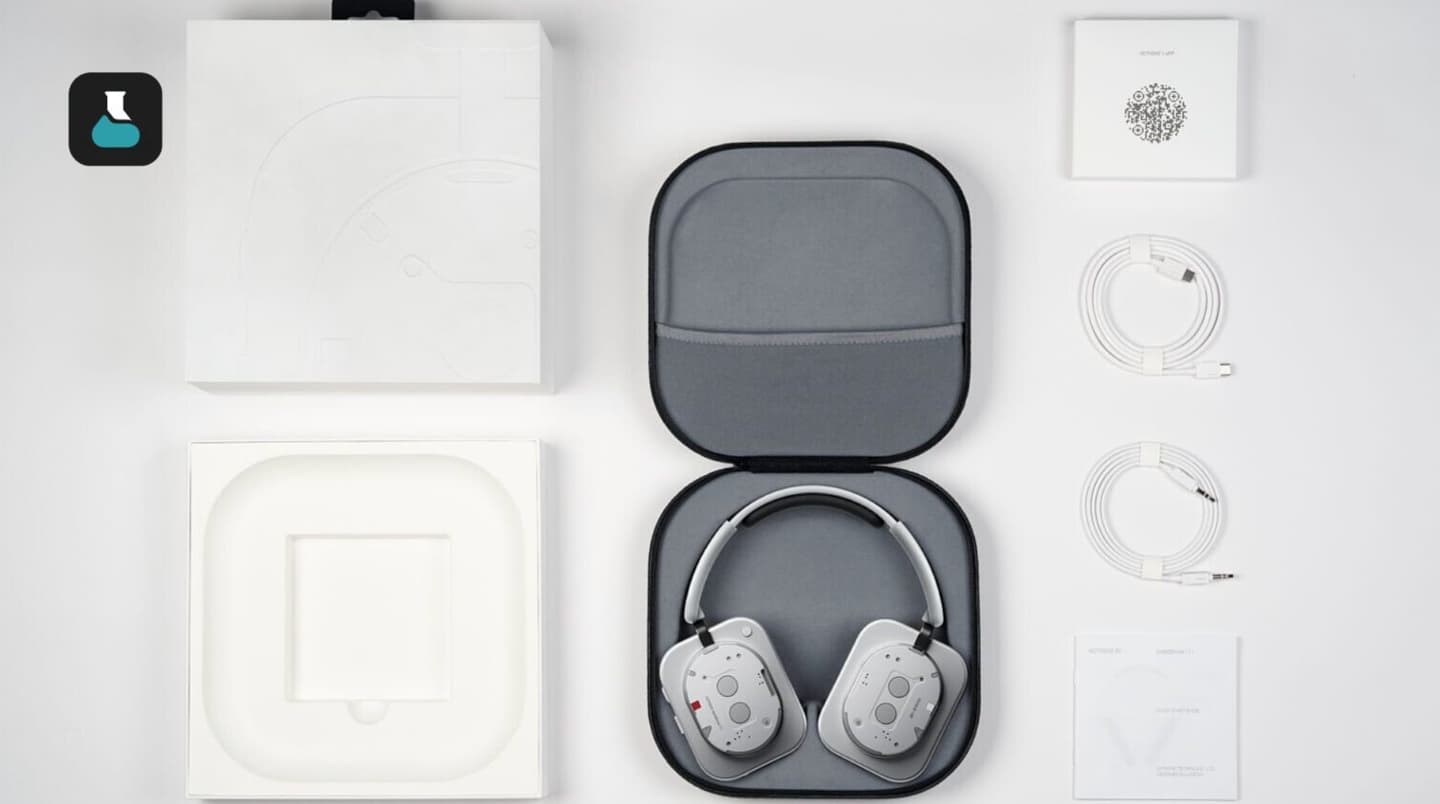
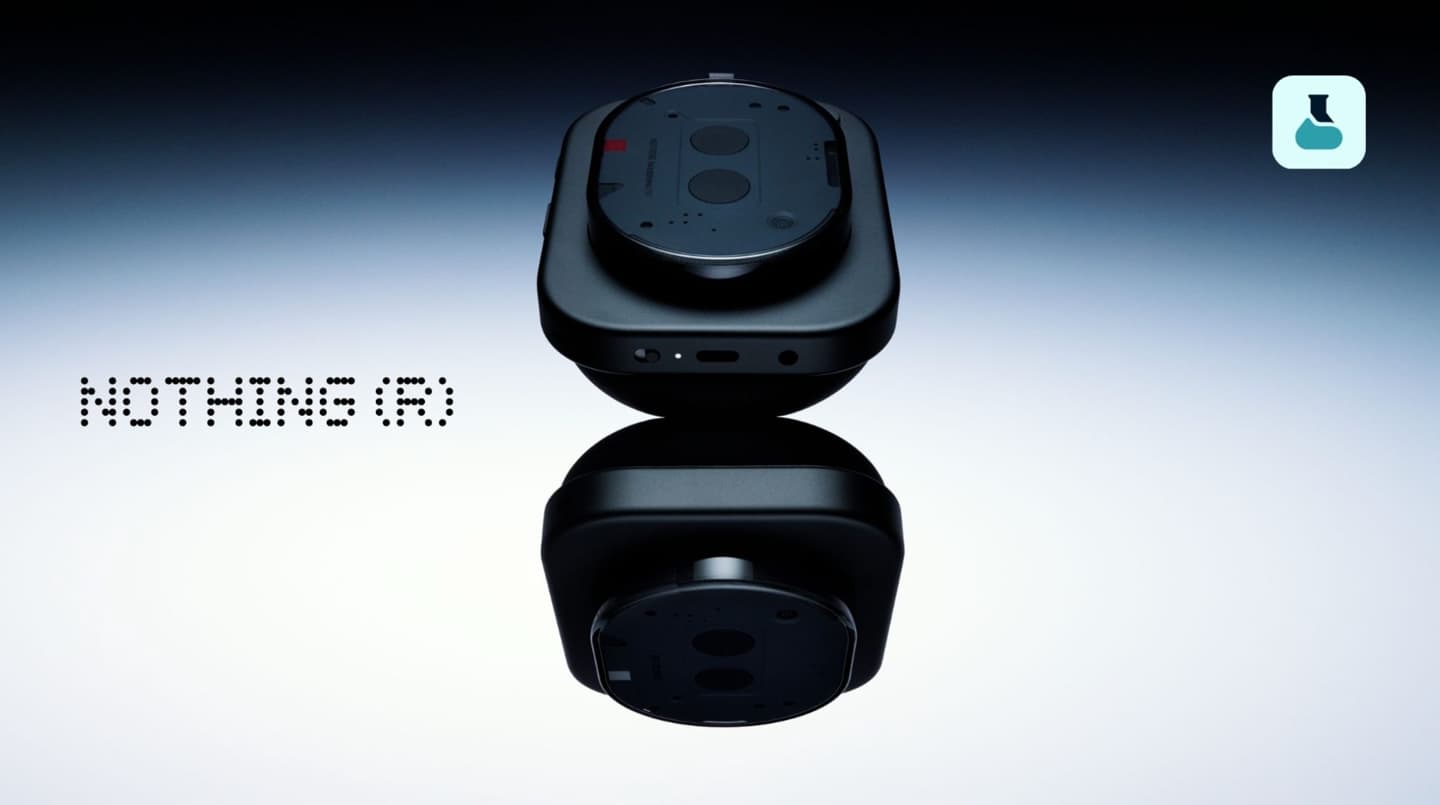
The Headphone (1) Pro is expected to continue Nothing’s recognizable design language, including the brand’s semi-transparent aesthetic. The headphones are reportedly offered in black and white, while the construction combines an aluminum body with scratch-resistant glass elements.

The headset is also said to carry an IP52 rating, providing some protection against dust and light water exposure. While that rating does not make the headphones suitable for heavy rain or water immersion, it could provide additional peace of mind during everyday use.

Triple-Driver System Could Be the Biggest Upgrade

One of the most interesting features of the Headphone (1) Pro is its reported three-driver audio architecture. Instead of relying on a conventional single-driver setup, the headphones are expected to use separate drivers to handle different parts of the frequency range.

The high-frequency section could use an XMEMS driver, a technology designed around extremely fast mechanical response and precise high-frequency reproduction. If implemented as reported, the combination could give Nothing a stronger technical selling point against other premium wireless headphones.

The company is also reportedly working with Metropolis Studios, a well-known London recording and mastering facility, on the headphone’s tuning. That collaboration could help Nothing pursue a more studio-oriented sound profile rather than simply emphasizing heavy bass or consumer-friendly sound.

10 Microphones and Adaptive ANC

The Headphone (1) Pro is expected to include 10 microphones, which could support both active noise cancellation and voice-related functions.

The headphones are reportedly equipped with adaptive active noise cancellation (adaptive ANC) that can adjust to surrounding conditions. A transparency mode is also expected, allowing users to hear environmental sounds without removing the headphones.

This combination should make the Headphone (1) Pro more practical for commuting, office use and other situations where users may need to switch between immersive listening and environmental awareness.

Hi-Res Audio, LDAC and More Sound Controls

For wireless audio, the new headphones are expected to support LDAC and Hi-Res Audio, potentially giving compatible devices access to higher-quality Bluetooth audio transmission.

Nothing is also reportedly preparing a Flat EQ option alongside more advanced sound-adjustment features. The company may position these controls toward listeners who want greater control over how their music sounds rather than relying solely on preset profiles.

The reported involvement of Metropolis Studios further suggests that audio quality will be one of the major selling points of the Pro model.

Bluetooth 6.1 and a 3.5mm Headphone Jack

Connectivity is another area where the Headphone (1) Pro could stand out. The headset is reportedly expected to use Bluetooth 6.1, while also retaining a 3.5mm audio jack.

The wired connection will be useful for listeners who prefer a direct audio connection, want to avoid Bluetooth compression, or need to connect the headphones to devices without wireless audio support.

The combination of modern Bluetooth connectivity and a traditional wired input also gives the headphones greater flexibility across different listening environments.

Up to 60 Hours of Battery Life

Battery life could be another major advantage. The Headphone (1) Pro is reportedly capable of delivering up to 60 hours of playback, although real-world endurance will likely depend on factors such as ANC usage, volume level, codec selection and connection mode.

The headphones are also expected to support fast charging, allowing users to restore listening time without keeping the headset connected to power for long periods.

Nothing Headphone (1) Pro: What to Expect

Based on the leaked information, the Nothing Headphone (1) Pro could be a significant step beyond a typical lifestyle-focused wireless headset. Its combination of a three-driver audio system, XMEMS technology, 10 microphones, adaptive ANC, LDAC, Bluetooth 6.1 and up to 60 hours of battery life gives it a specification sheet aimed squarely at the premium market.

The reported €349 European price and $399 U.S. price would also put it in direct competition with established premium headphone brands.

Nothing has yet to officially confirm all of these specifications, so the final hardware, features and regional pricing should be treated as unconfirmed until the company makes its announcement. If the September 29 launch date is accurate, more official details should emerge soon.

The post Nothing Headphone (1) Pro Leaked: Triple-Driver Audio, 60-Hour Battery and September 29 Launch appeared first on IGeeKphone China Phone, Tablet PC, VR, RC Drone News, Reviews.

  •  

OpenAI anuncia novidades para o ChatGPT Voice, Work, Codex e a Biblioteca

A OpenAI anunciou recentemente uma série de novidades para o ChatGPT, incluindo uma atualização muito bem-vinda para usuários do ChatGPT Voice.

Agora, o assistente pode usar os modelos GPT-5.6 ou GPT-6 Astra quando precisa pesquisar ou raciocinar sobre questões mais difíceis — e o usuário pode escolher qual usar com um seletor.

Além disso, a empresa também simplificou os limites de uso diários do GPT-Live:

  • Go: até 3 horas com o GPT-Live-1 mini, substituindo o acesso ao GPT-Live-1;
  • Plus: até 3 horas com o GPT-Live-1;
  • Pro (US$100/mês): até 15 horas com o GPT-Live-1;
  • Pro (US$200/mês): uso ilimitado do GPT-Live-1;
  • Plus e Pro: não mudam mais para o GPT-Live mini depois de atingir o limite de uso do Voice.

Com essas mudanças, os planos Plus e Pro não mudam mais para o GPT-Live-1 mini depois de atingir o limite de uso do Voice. Além disso, os níveis separados de inteligência do Voice (Instant, Medium e High) foram descontinuados.

Novidades para o ChatGPT Work e Codex

A OpenAI anunciou também que a Deep Research está agora disponível no ChatGPT Work e no Codex para os planos Plus, Pro, Business, Enterprise e Edu. Basta ao usuário digitar @Deep Research ou pedir explicitamente para usá-la no comando.

Outra novidade chegando aos dois recursos é o plugin Data, que ajuda a analisar dados de negócios conectados. É possível fazer uma pergunta sobre um negócio, investigar mudanças ou até mesmo criar um dashboard interativo sobre o conteúdo analisado.

Now everyone can put data to work.

We’re introducing a new Data agent in ChatGPT Work so you can turn your company’s data into answers, interactive dashboards, and action—just by asking.

Just add the Data Plugin in ChatGPT Work, connect to the data sources and context you… pic.twitter.com/R7N3I2NFCN

— ChatGPT (@ChatGPT) September 10, 2026

Biblioteca

Agora também é possível compartilhar arquivos e pastas no ChatGPT pela Biblioteca. É possível compartilhar com pessoas específicas ou com integrantes do workspace, com opções de gerenciamento de acesso e uma visualização dos conteúdos compartilhados.

Por fim, a Biblioteca também suporta agora o Box, o Dropbox e o SharePoint, que se juntam ao Google Drive para permitir que o usuário pesquise com facilidade por arquivos e pastas disponíveis nessas plataformas e os usem como contexto em conversas.

  •  

Esses são os dispositivos que a Apple descontinuou após o evento “Surprise and shine”

Há pouco, durante a keynote “Surprise and shine” (“Surpreendente e brilhante”), a Apple apresentou novos iPhones (inclusive um modelo dobrável inédito), Apple Watches atualizados e até mesmo uma nova geração dos AirPods — os quais, naturalmente, substituíram os seus antecessores diretos no portfólio de produtos da Maçã.

Entre os que abriram espaço para os novos aparelhos, temos os populares iPhones 17 Pro e 17 Pro Max, lançados há exatamente um ano. Isso, é claro, está longe de ser uma surpresa, já que a Apple tem o costume de descontinuar os seus modelos topos-de-linha sempre que anuncia uma nova geração.

Divulgação/Apple

Muito parecidos em termos de design com os iPhones 18 Pro e 18 Pro Max, eles chamavam atenção pela opção de cor laranja-cósmico (cosmic orange), bem como pelo corpo unibody feito de alumínio — depois de anos apostando no aço inoxidável/titânio. Com sua descontinuação, os iPhones 17, Air e 17e permanecem como os remanescentes da última geração de smartphones da Apple.

Outro iPhone que se despediu de nós foi o iPhone 16 Plus, o “irmão maior” do modelo intermediário lançado em 2024. Muito parecido com o iPhone 17 (que não conta com uma variante Plus) no visual, ele nunca chegou a cair nas graças do público, que parecia sempre preferir o modelo menor ou partir logo para os iPhones Pro — sina carregada também pelos iPhones 14 Plus e 15 Plus.

Divulgação/Apple

Partindo agora para os relógios inteligentes da Maçã, temos mais duas baixas esperadas: o Apple Watch Series 11 e o Apple Watch Ultra 3, que deram lugar, obviamente, para o Series 12 e o Ultra 4 — situação parecida com a dos iPhones Pro, já que a Maçã também costuma descontinuar seus relógios mais recentes assim que anuncia novas versões.

Assim como seus sucessores, o Series 11 e o Ultra 3 introduziram apenas melhorias pontuais quando foram revelados no ano passado [1, 2], mantendo o visual geral de modelos anteriores.

Divulgação/Apple

Por fim, temos os AirPods 4 (introduzidos em 2024), que vinham em versões com e sem cancelamento ativo de ruído (ANC, na sigla em inglês), tendo sido os primeiros dessa linha a contar com esse recurso como opção. Anunciadas hoje, ambas as versões dos AirPods 5 vêm com ANC (que, inclusive, está 50% melhor), com a diferença entre elas sendo, desta vez, a presença do controle deslizante de volume nas hastes e um estojo compatível com recarga sem fio no modelo mais caro.

Divulgação/Apple

E aí, acha que algum desses dispositivos vai deixar saudade? Comente abaixo!

iPhone 17 Pro Max

Cores: prateado, laranja-cósmico ou azul-intenso
Armazenamento: 256GB, 512GB, 1TB ou 2TB
R$ 10.599,00
R$ 12.499,00

iPhone 17 Pro

Cores: prateado, laranja-cósmico ou azul-intenso
Armazenamento: 256GB, 512GB ou 1TB
R$ 9.999,00
R$ 11.499,00

iPhone 16 Plus

Cores: ultramarino, branco, preto, rosa ou verde acinzentado
Armazenamento: 128GB, 256GB ou 512GB
R$ 6.665,56
R$ 8.499,00

iPhone 16

Cores: ultramarino, branco, preto, rosa ou verde acinzentado
Armazenamento: 128GB, 256GB ou 512GB
R$ 5.110,00
R$ 6.799,00

Apple Watch Ultra 3

Cores: natural ou preto
Pulseiras: loop Alpina, loop Trail, Oceano ou estilo milanês de titânio
R$ 8.050,47
R$ 10.499,00

Apple Watch Series 11

Material: alumínio ou titânio
Cores: cinza-espacial, prateado, ouro rosa, preto brilhante, natural, dourado ou ardósia
Tamanho: 42mm ou 46mm
Conectividade: GPS ou GPS + Cellular
Pulseiras: esportiva ou estilo milanês
R$ 4.222,21
R$ 5.499,00

AirPods 4 com Cancelamento Ativo de Ruído

R$ 1.888,00
R$ 1.999,00

AirPods 4

R$ 1.251,94
R$ 1.499,00

NOTA DE TRANSPARÊNCIA: O MacMagazine recebe uma pequena comissão sobre vendas concluídas por meio de links deste post, mas você, como consumidor, não paga nada mais pelos produtos/serviços usando os nossos links de afiliado.

  •  

Donos de iPhones antigos ganham mais um ano de comunicação via satélite gratuita

Após as muitas novidades do evento especial de mais cedo, a Apple anunciou no comunicado de imprensa sobre os iPhones 18 Pro que está estendendo o período de acesso gratuito à conexão via satélite para aparelhos mais antigos.

Segundo a empresa, donos de iPhones das linhas 14, 15 e 16 poderão acessar os recursos por mais um ano — algo disponível para quem já ativou o serviço em um país suportado.

O serviço de comunicação via satélite oferecido pela Apple, vale recordar, é apresentado como um teste gratuito — o que significa que a empresa pretende cobrar por ele futuramente.

Não se sabe, no entanto, o quão distante estaria essa cobrança, visto que a empresa vem adiando o período de teste gratuito para os aparelhos compatíveis desde o seu lançamento, em 2022.

Isso significa que a linha iPhone 14 já teve o prazo de gratuidade (que originalmente havia sido prometido para apenas dois anos) para o serviço por três vezes desde o ano supracitado.

Apesar de a conectividade via satélite ainda não estar disponível por aqui, não deixa de ser uma boa notícia, não é mesmo?

via MacRumors

  •  

Apple aumenta preços de iPhones (novos e antigos) no Brasil e nos EUA

É, meus amigos… A crise causada pelo aumento dos custos de chips de memória e armazenamento atingiu o produto mais consolidado da Apple, o iPhone.

A empresa atualizou, há pouco, a Apple Store Online com os novos valores praticados para os smartphones que já estavam em linha antes da chegada dos iPhones 18 Pro/18 Pro Max e Duo. E sim, nem o 17e escapou!

Como já era de se esperar, esses aumentos se refletiram em vários outros países onde a Apple atua, como o Brasil.

Confira as tabelas com os preços antigos e os novos! 🤑

Nos EUA

iPhone 16 e 16 Plus

ModeloPreço anteriorPreço novoVariação
16 de 128GBUS$700US$800+14,3%
16 Plus de 128GBUS$800——
16 Plus de 256GBUS$900——

Como podemos observar, apenas uma configuração do iPhone 16 está disponível. O 16 Plus foi descontinuado.

iPhone 17e

ModeloPreço anteriorPreço novoVariação
256GBUS$600US$700+16,7%
512GBUS$800US$900+12,5%

iPhone 17

ModeloPreço anteriorPreço novoVariação
256GBUS$800US$900+12,5%
512GBUS$1.000US$1.100+10%

iPhone Air

ModeloPreço anteriorPreço novoVariação
256GBUS$1.000US$1.100+10%
512GBUS$1.200US$1.300+8,3%
1TBUS$1.400US$1.700+21,4%

iPhones 17 Pro/17 Pro Max vs. iPhones 18 Pro/18 Pro Max

ModeloPreçoModeloPreço Variação
17 Pro de 256GBUS$1.10018 Pro de 256GBUS$1.200 +9%
17 Pro de 512GBUS$1.30018 Pro de 512GBUS$1.400+7,6%
17 Pro de 1TBUS$1.500 18 Pro de 1TBUS$1.800 +20%
——18 Pro de 2TBUS$2.400 —
17 Pro Max de 256GBUS$1.20018 Pro Max de 256GBUS$1.300+8,3%
17 Pro Max de 512GBUS$1.40018 Pro Max de 512GBUS$1.500+7,1%
17 Pro Max de 1TBUS$1.60018 Pro Max de 1TBUS$1.900+18,8%
17 Pro Max de 2TBUS$2.00018 Pro Max de 2TBUS$2.500+25%

Apple Watches

Curiosamente, a Apple mexeu apenas nas versões com as caixas maiores do Apple Watch Series 12 — ou seja, os modelos de 42mm seguem os mesmos preços. O SE 3 e o Ultra 4 seguem intactos.

ModeloPreçoModeloPreçoVariação
Series 11 (GPS, alumínio de 46mm)US$430Series 12 (alumínio de 46mm)US$450+4,6%
Series 11 (GPS + Cellular, alumínio de 46mm)US$530Series 12 (GPS + Cellular, alumínio de 46mm)US$550+3,8%

No Brasil

iPhone 16 e 16 Plus

ModeloPreço anteriorPreço novoVariação
16 de 128GBR$6.800R$7.000+2,9%
16 Plus de 128GBR$8.500——
16 Plus de 256GBR$9.300——

iPhone 17e

ModeloPreço anteriorPreço novoVariação
256GBR$5.800R$6.000+3,4%
512GBR$7.300R$7.500+2,7%

iPhone 17

ModeloPreço anteriorPreço novoVariação
256GBR$8.000R$8.300+3,7%
512GBR$9.500R$9.800+3,1%

iPhone Air

ModeloPreço anteriorPreço novoVariação
256GBR$10.500R$11.000+4,7%
512GBR$12.000R$12.500+4,1%
1TBR$13.500R$15.500+14,8%

iPhones 17 Pro/17 Pro Max vs. iPhones 18 Pro/18 Pro Max

ModeloPreçoModeloPreçoVariação
17 Pro de 256GBR$11.50018 Pro de 256GBR$12.000 +4,3%
17 Pro de 512GBR$13.00018 Pro de 512GBR$13.500+3,8%
17 Pro de 1TBR$14.500 18 Pro de 1TBR$16.500+13,7%
——18 Pro de 2TBR$21.000—
17 Pro Max de 256GBR$12.50018 Pro Max de 256GBR$13.000+4%
17 Pro Max de 512GBR$14.000 18 Pro Max de 512GBR$14.500+3,5%
17 Pro Max de 1TBR$15.50018 Pro Max de 1TBR$17.500+12,9%
17 Pro Max de 2TBR$18.500 18 Pro Max de 2TBR$22.000 +18,9%

Apple Watches

ModeloPreçoModeloPreçoVariação
Series 11 (GPS, alumínio de 46mm)R$5.899Series 12 (GPS, alumínio de 46mm)R$6.099+3,4%
Series 11 (GPS + Cellular, alumínio de 46mm)R$6.799Series 12 (GPS + Cellular, alumínio de 46mm)R$7.399+8,8%

Não está nada fácil, infelizmente… 😭

iPhone 17 Pro Max

Cores: prateado, laranja-cósmico ou azul-intenso
Armazenamento: 256GB, 512GB, 1TB ou 2TB
R$ 10.599,00
R$ 12.499,00

iPhone 17 Pro

Cores: prateado, laranja-cósmico ou azul-intenso
Armazenamento: 256GB, 512GB ou 1TB
R$ 9.999,00
R$ 11.499,00

iPhone Air

Cores: azul-céu, dourado-claro, branco-nuvem ou preto espacial
Armazenamento: 256GB, 512GB ou 1TB
R$ 7.999,00
R$ 10.499,00

iPhone 17

Cores: lavanda, sálvia, azul-névoa, branco ou preto
Armazenamento: 256GB, 512GB ou 1TB
R$ 6.332,22

iPhone 17e

Cores: branco, preto ou rosa-pálido
Armazenamento: 256GB ou 512GB
R$ 4.776,67
R$ 5.799,00

iPhone 16 Plus

Cores: ultramarino, branco, preto, rosa ou verde acinzentado
Armazenamento: 128GB, 256GB ou 512GB
R$ 6.665,56
R$ 8.499,00

iPhone 16

Cores: ultramarino, branco, preto, rosa ou verde acinzentado
Armazenamento: 128GB, 256GB ou 512GB
R$ 5.110,00
R$ 6.799,00

Apple Watch Series 11

Material: alumínio ou titânio
Cores: cinza-espacial, prateado, ouro rosa, preto brilhante, natural, dourado ou ardósia
Tamanho: 42mm ou 46mm
Conectividade: GPS ou GPS + Cellular
Pulseiras: esportiva ou estilo milanês
R$ 4.222,21
R$ 5.499,00

NOTA DE TRANSPARÊNCIA: O MacMagazine recebe uma pequena comissão sobre vendas concluídas por meio de links deste post, mas você, como consumidor, não paga nada mais pelos produtos/serviços usando os nossos links de afiliado.

  •  

Rivals season 2 part 2 release date confirmed by Hulu and Disney+ — but it's the first-look images that have me screaming

  • Rivals season 2 part 2 release date confirmed for November 11 by Hulu and Disney+
  • Begins with a three-episode premiere followed by weekly releases
  • Upcoming episodes will feature 'a Hunt Ball, a chaotic Bonfire Night and a very Rivals Christmas

Breathe a sign of relief, Jilly Cooper fans: Rivals season 2 part 2 returns to Hulu (US) and Disney+ (international) from November 11, 2026.

The season's second half is set to kick off with a three-episode premiere, with weekly releases of the remaining three episodes following after.

Our core cast is set to return — well, all except for one, which we'll get to in a minute — but we'll also see the introduction of three important new characters.

Rachael Stirling will play Lady Monica Baddingham’s vampish younger sister Araminta Pemberton, Rupert Evans is erudite headmaster David Hawkley, and Santiago Cabrera takes on the role of Argentinian Polo legend Alejandro Mendoza.

While overarching plot details have been limited to episodes featuring " a Hunt Ball, a chaotic Bonfire Night and a very Rivals Christmas," the shock part 1 cliffhanger tells us exactly where we'll be picking the action up... and that's a bittersweet thing.

Rivals season 2 part 2 first-look images tease a Lizzie-Freddie reconciliation

Spoilers for Rivals season 2 part 1 ahead.

Rivals season 2 part 2 is set to pick back up with Monica's (Claire Rushbrook) funeral, with the full mid-season synopsis reading: " Picking up after the gut-wrenching mid-series finale, Tony Baddingham (David Tennant) and Declan O'Hara's (Aiden Turner) battle for the Cotswolds crown reaches fever pitch, while Rupert Campbell-Black (Alex Hassell) is forced to confront his own personal demons.

"Against a backdrop of hedonistic parties, Bonfire Night chaos, the Hampshire Hunt Ball and a turbulent Christmas, affairs unravel, alliances fracture and rivalries intensify. Caught in the middle of the frenzied franchise war, Taggie O'Hara (Bella Maclean) must find the courage to follow her heart, while those around her face the consequences of ambition, power and secrets that can no longer remain hidden. But as series two draws to a close, who will get their happy ending?"

Freddie and Lizzie look at each other

(Image credit: Hulu/Disney)

Not only does this signal that Taggie and Rupert will find their way back to each other before the season ends, but the above first-look image also teases an much-anticipated reunion between Freddie (Danny Dyer) and Lizzie (Katherine Parkinson).

After almost being caught together in the first half of season 2, Lizzie decided to be the bigger person and end things with Freddie before their colliding worlds got any more complicated. Has this decision made her happy? No, so you know that it's not going to last for long.

Expect "secrets, betrayals and explosive twists," and if we're being honest... that's just the start of it.

  •  

What is the release date for Lioness season 3 episode 7 on Paramount+?

God, the search for Joe (Zoe Saldaña) is taking its sweet time, isn't it? At this rate, things still won't be resolved by next week's Lioness season 3 finale.

The CIA has narrowed its rescue search to the Houston area, but fallout from dismantled Russian networks in Washington has led to some tense confrontations and a pretty disastrous decision for one of our leading senators.

But surely this week has to bring better things... right? And when does Lioness season 3 episode 7 arrive on Paramount+?

What time can I watch Lioness season 3 episode 7 on Paramount+?

Lioness season 3 episode 7 will drop on one of the world's best streaming services in the US and Canada on Sunday, September 13 at 12am PT / 3am ET.

Here's when it will be released in other nations globally:

  • US – 12am PT / 3am ET
  • Canada – 12am PT / 3am ET
  • UK – 8am BST
  • India – 12:30pm IST
  • Singapore – 3pm SGT
  • Australia – 5pm AEST
  • New Zealand – 7pm NZST

When do new episodes of Lioness season 3 come out?

Byron and Kaitlyn look across a desk

(Image credit: Paramount+)

Lioness season 3 will have a total of eight episodes, with new entries airing weekly. That gives us the following schedule:

  • Episode 1: out now
  • Episode 2: out now
  • Episode 3: out now
  • Episode 4: out now
  • Episode 5: out now
  • Episode 6: out now
  • Episode 7: September 13
  • Episode 8: September 20

  •  

The universal language of space is... Star Trek? Mais oui.

Sixty years after television audiences first tuned in to see the voyages of the Starship Enterprise, an astronaut on board the International Space Station has paid tribute to Star Trek by flying the badge of the franchise's latest fictional captain.

Expedition 75 flight engineer Sophie Adenot with European Space Agency (ESA) donned the Delta badge originally worn by actor Anson Mount for a video recorded from aboard the space station. Mount portrays Christoper Pike in the Paramount+ streaming series Star Trek: Strange New Worlds. Paramount and ESA both released the clip on their Instagram feeds.

"For 60 years, Star Trek has brought us stories of friendship and exploration. I'm wearing Captain Pike's badge aboard the ISS in celebration of continuing the real world work of science and exploration," said Adenot. "For me, exploration and science are about curiosity and cooperation daring to go a little farther together, learning from what we discover and build, and turning that knowledge into a better future for everyone."

Read full article

Comments

© ESA

  •  

OnePlus Watch 4 : cette montre connectée premium passe sous les 195 € sur AliExpress

La OnePlus Watch 4 réunit Wear OS, un grand écran LTPO AMOLED et de nombreuses fonctions dédiées au quotidien comme au suivi de la forme. Une montre pensée pour faire plus qu'afficher des notifications. En ce moment, cette montre s'affiche à moins de 280 euros sur AliExpress grâce à une double...

  •  

Apple preps privacy-first home security cameras and monitoring service

Apple logo with security lock

Apple is preparing a dedicated home-security product line and a companion monitoring service, according to Bloomberg News’ Mark Gurman, as the company maps a broader expansion of its smart-home business beyond next week’s iPhone event.

In a Sept. 4 report on Apple’s product pipeline under new Chief Executive Officer John Ternus, Gurman said the company is working on an in-home security sensor and system slated for 2027. The device is described as a privacy-centric camera and automation accessory that would use artificial intelligence to watch a room’s environment rather than continuously storing traditional video footage. That hardware, he wrote, is expected to tap into a new Apple home-security and monitoring service.

The framing is consistent with earlier Gurman reporting that Apple has been developing battery-powered security hardware — previously discussed as a camera and later as a small sensor, internally associated with the J450 project — that can recognize people, use infrared sensing, and trigger automations such as lights or music when a household member enters or leaves a room. Apple has also been said to be exploring a wider lineup that could eventually include additional cameras and a facial-recognition doorbell aimed at rivals such as Amazon’s Ring and Google’s Nest.

A service layer would be a notable shift. Apple already offers HomeKit Secure Video through iCloud, but Gurman’s latest account points to a more complete security and monitoring offering — the kind of recurring product that could sit alongside Apple’s other subscription businesses. Industry coverage of the same Bloomberg report has noted that such a service could later be bundled into Apple One, though Apple has not announced pricing, professional monitoring, or how much processing would stay on-device.

The security push is part of a larger home reset. Gurman and other reports have said Apple is first rolling out refreshed living-room hardware, including a new Apple TV 4K, an updated HomePod mini, and a screen-equipped home hub often referred to as a HomePad, before the 2027 security system arrives. The company has long lagged Amazon and Google in connected-home hardware even as it has marketed privacy as a differentiator. An AI-first sensor that avoids constant video recording would be an attempt to turn that brand position into a product category.

Apple has not publicly confirmed the devices or the service. Details on design, battery life, outdoor coverage, emergency dispatch, and whether video would still be captured after an AI alert remain unreported. What Gurman’s reporting does make clear is that Apple now sees home security as both a hardware line and a services opportunity — and that the company is targeting 2027 to bring them to market together.
‎
MacDailyNews Take: This will be great – as long as it works with our Eufy cameras!


‎
Please help support MacDailyNews — and enjoy subscriber-only articles, comments, chat, and more — by subscribing to our Substack: macdailynews.substack.com. Thank you!

Support MacDailyNews at no extra cost to you by using this link to shop at Amazon.

The post Apple preps privacy-first home security cameras and monitoring service appeared first on MacDailyNews.

  •  
❌