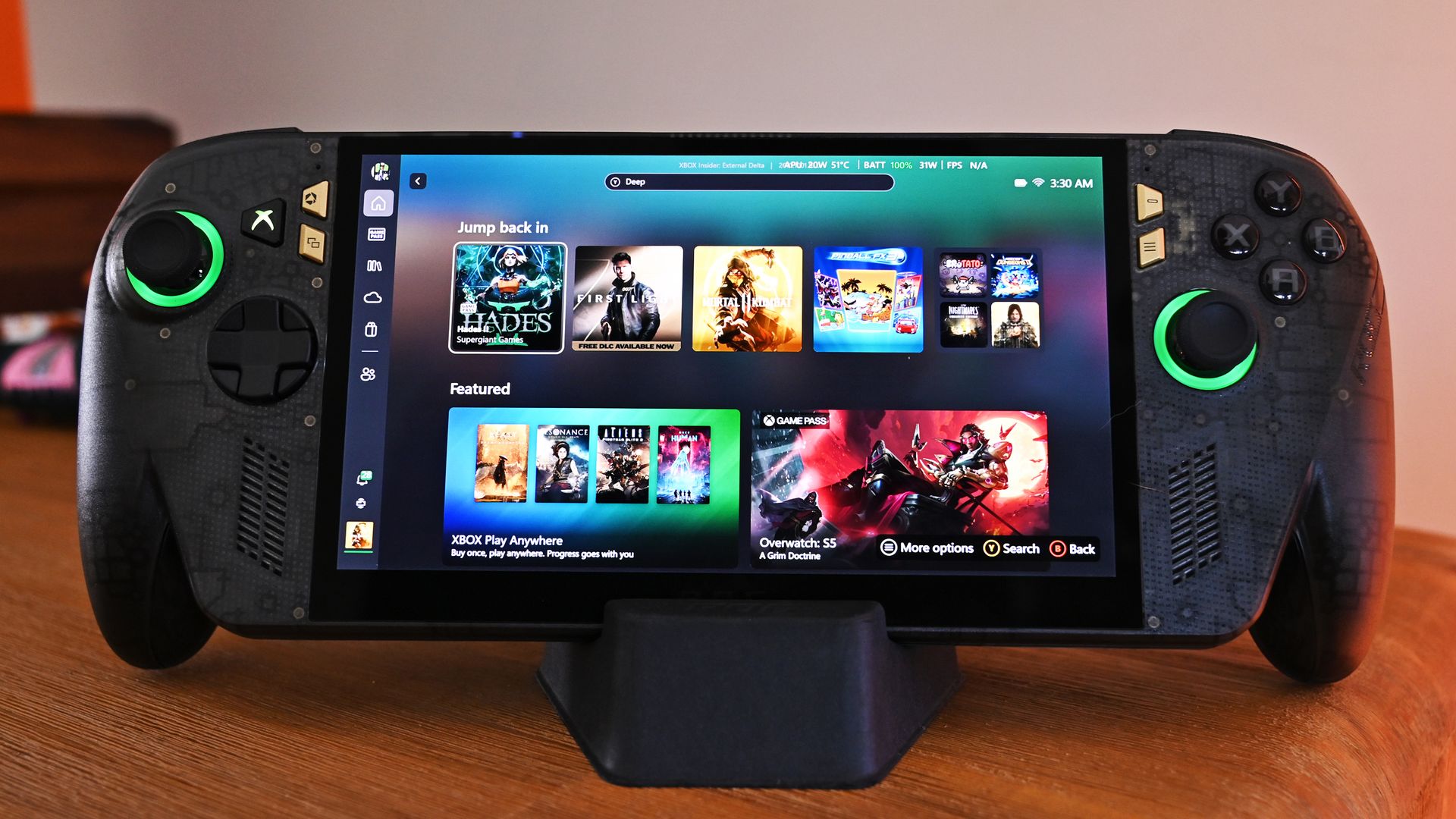
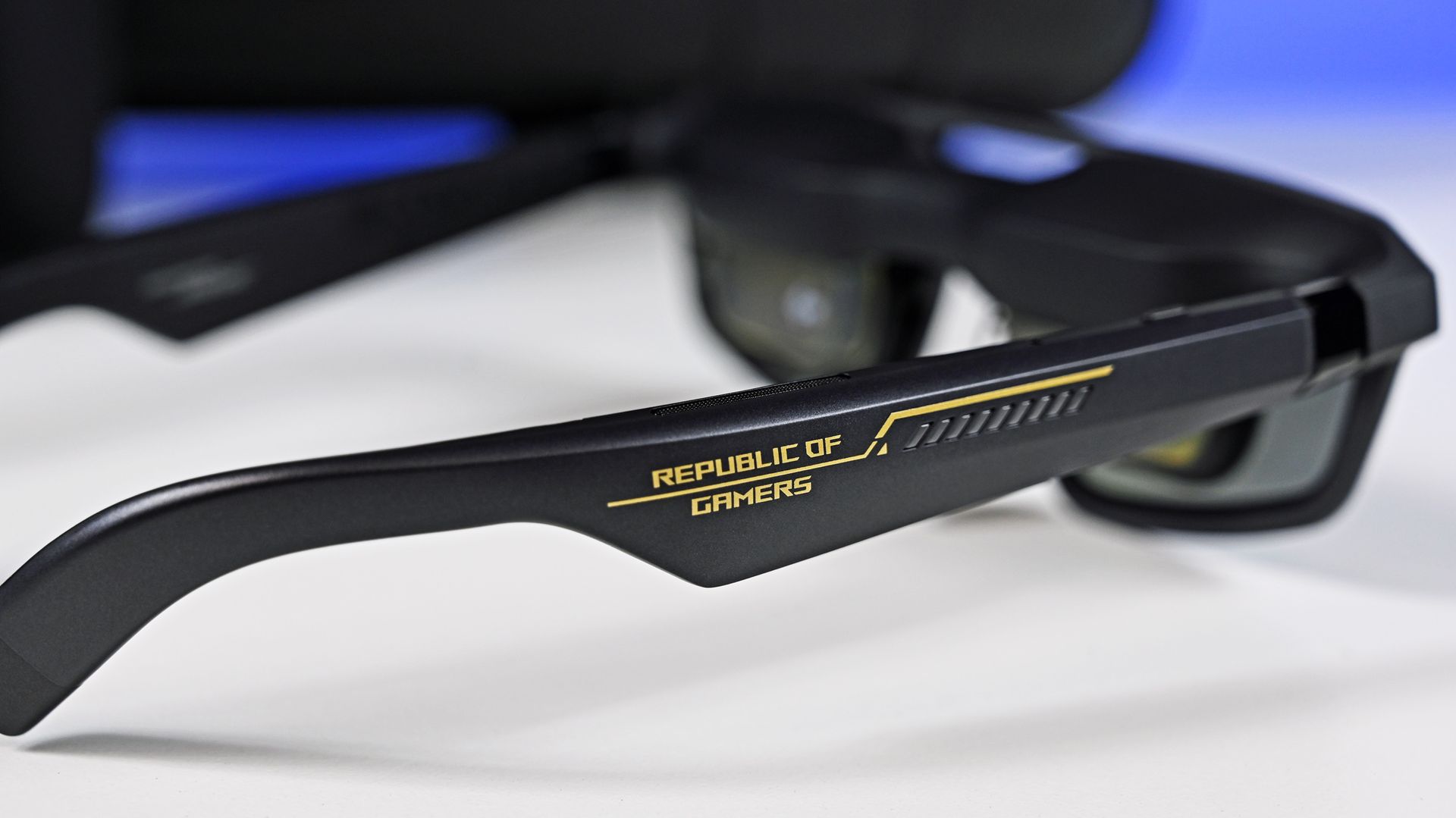
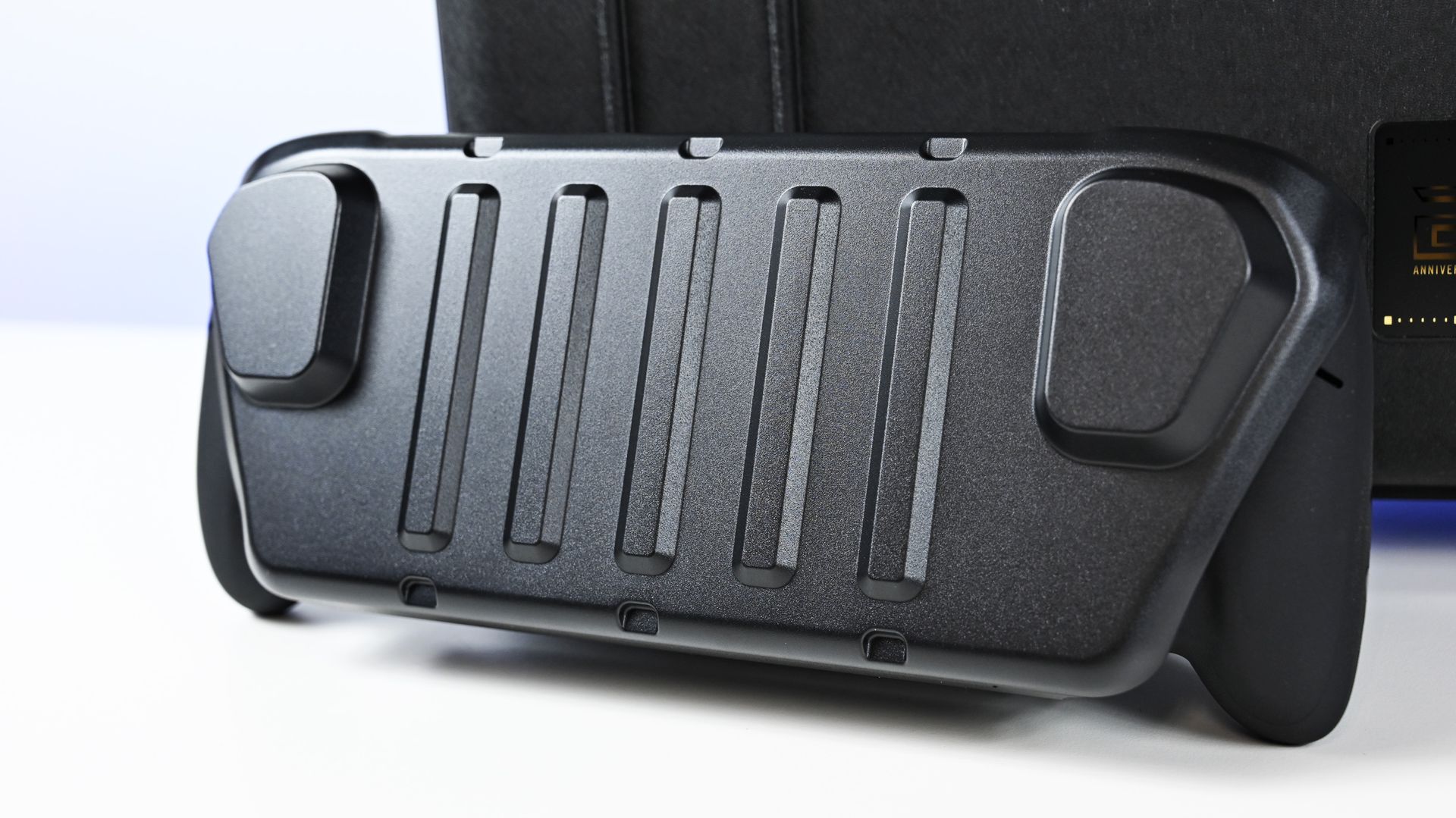
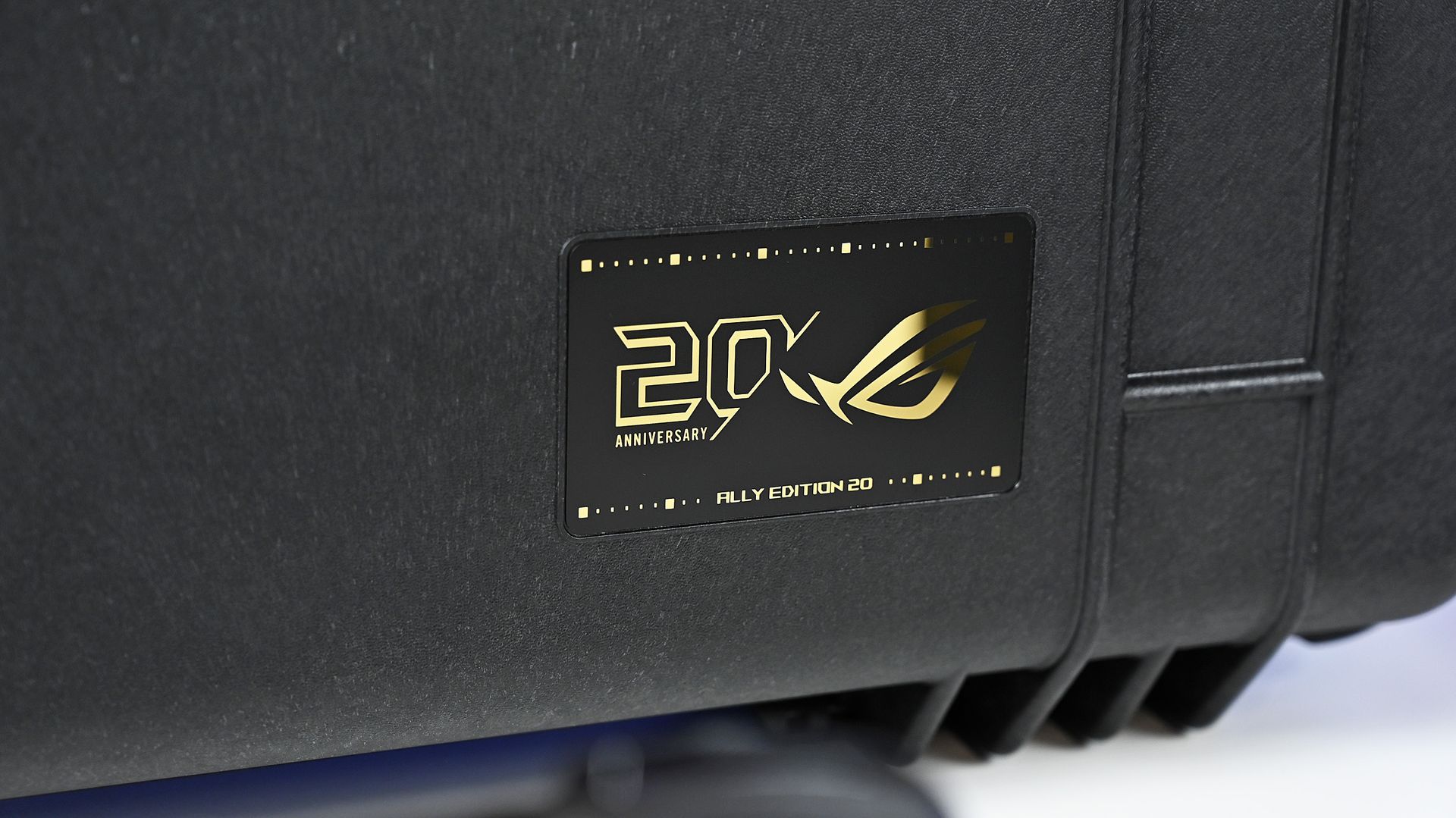
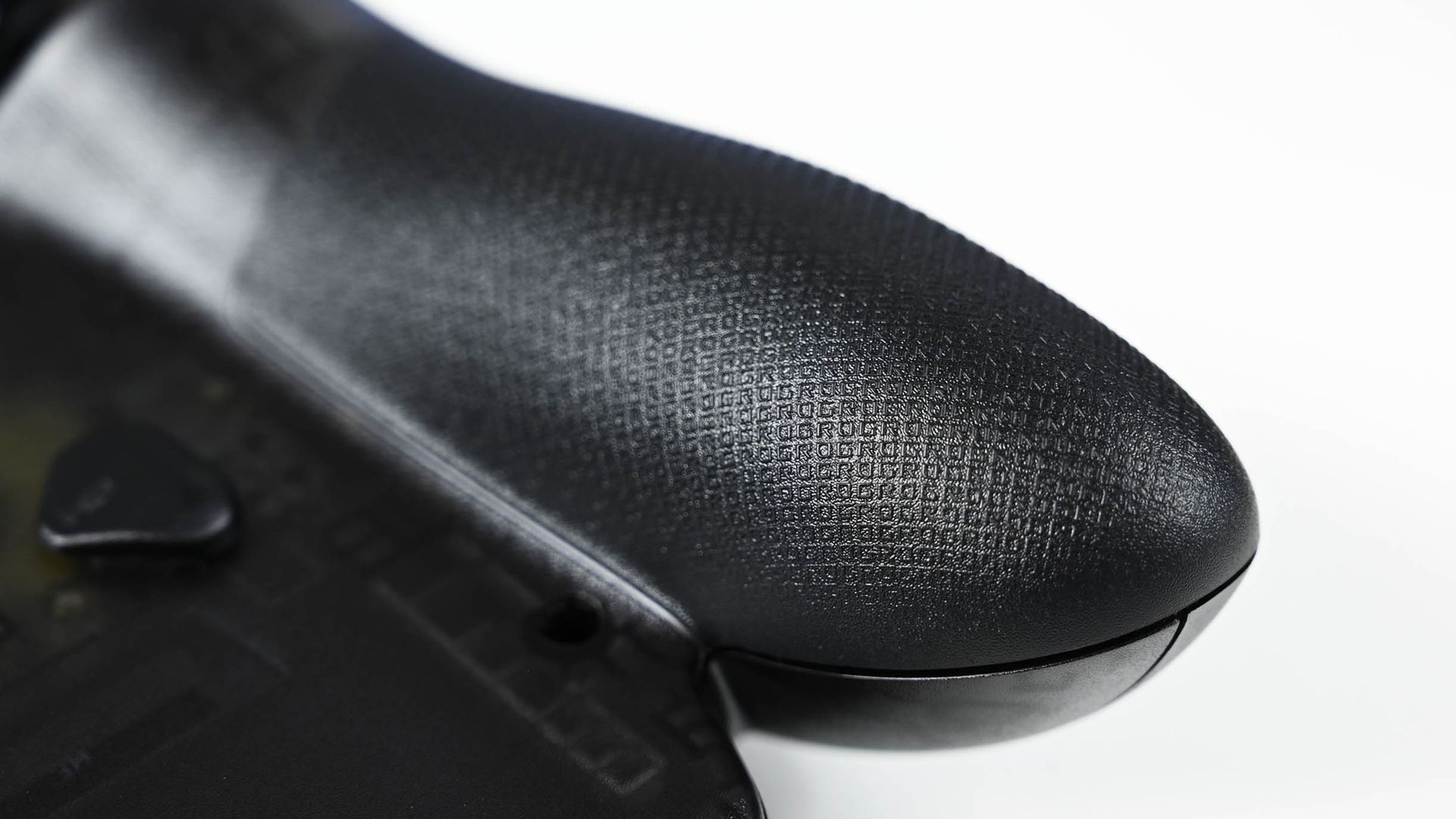
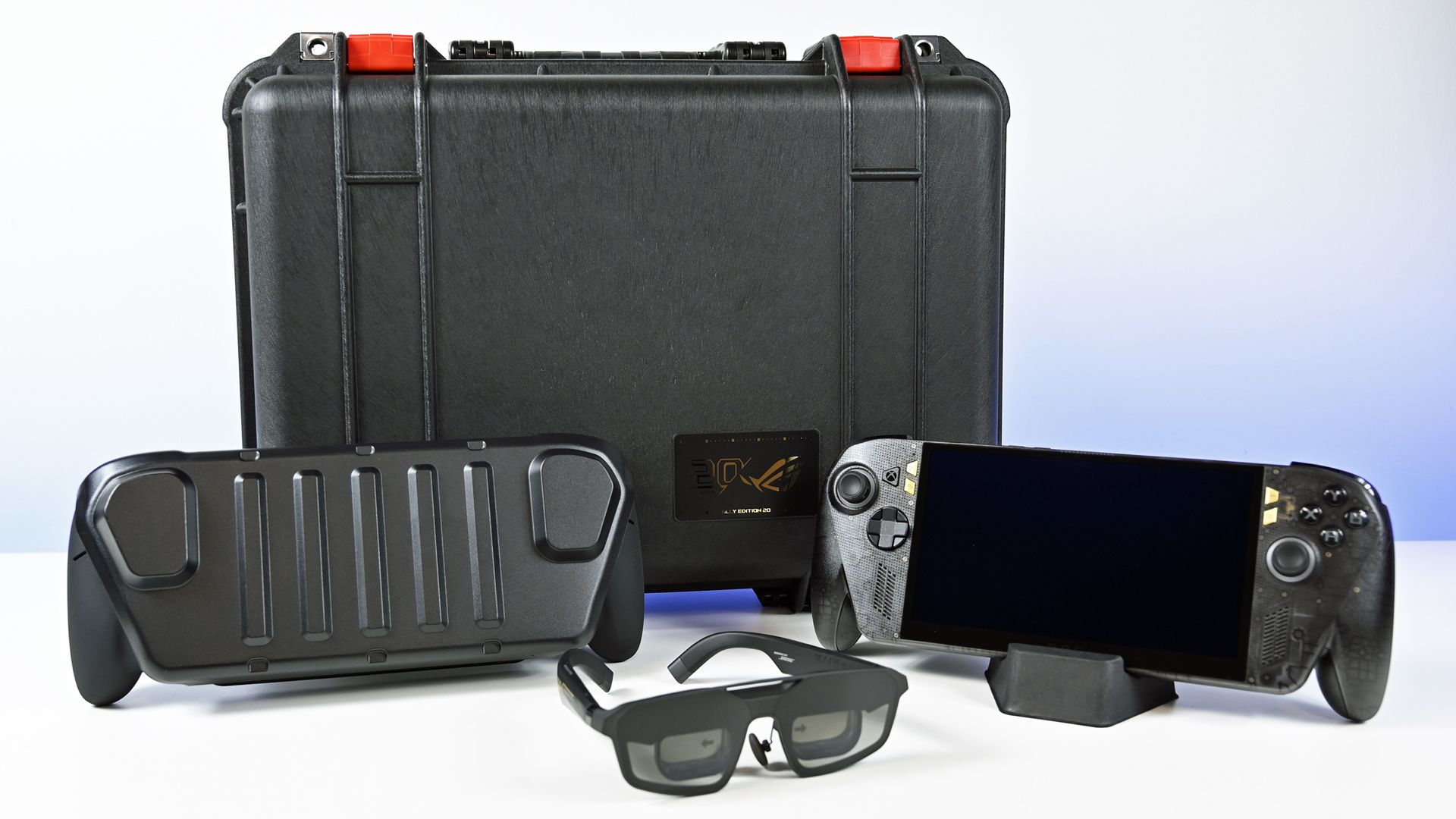
It was just a few days ago that I was unboxing the new ASUS ROG XBOX Ally X20, which went on sale just five days ago on October 15th, and now both the handheld ($1,299) and the $2,499 bundle (handheld + XREAL glasses, dBrand skin) are sold out at both Best Buy and ASUS.com.
Indeed, I'm not even saying they sold out today, but rather that today was the first day I checked to see if there was any inventory left. Going by a Reddit thread, it appears it sold out sometime yesterday or Sunday.
That's a very impressive metric, when you consider the pricing here. The current ROG XBOX Ally X is available for $999, while this refreshed model (which is better in every way) is $300 more. And the $2,500 bundle is also no joke, especially for what many would consider a secondary gaming PC.
Sure, we can attribute this to limited production and a finite inventory on hand, but it’s worth noting that preorders began almost two months ago on August 25th, giving ASUS ample time to prepare for demand.
And we know there was demand. Looking at our internal numbers for click-throughs, we saw back in August an unusually high amount of interest in the ROG XBOX Ally X20, more than you might expect from the most expensive ROG Ally to date.
A lot of this goes back to what I've been saying for years: Gaming is one of the few price-proof areas in tech, practically insulated from the harsh economic realities that many people are facing, on top of the overall higher prices attributed to AI-driven demand for RAM and NAND (storage).
ASUS
ROG Xbox Ally X20
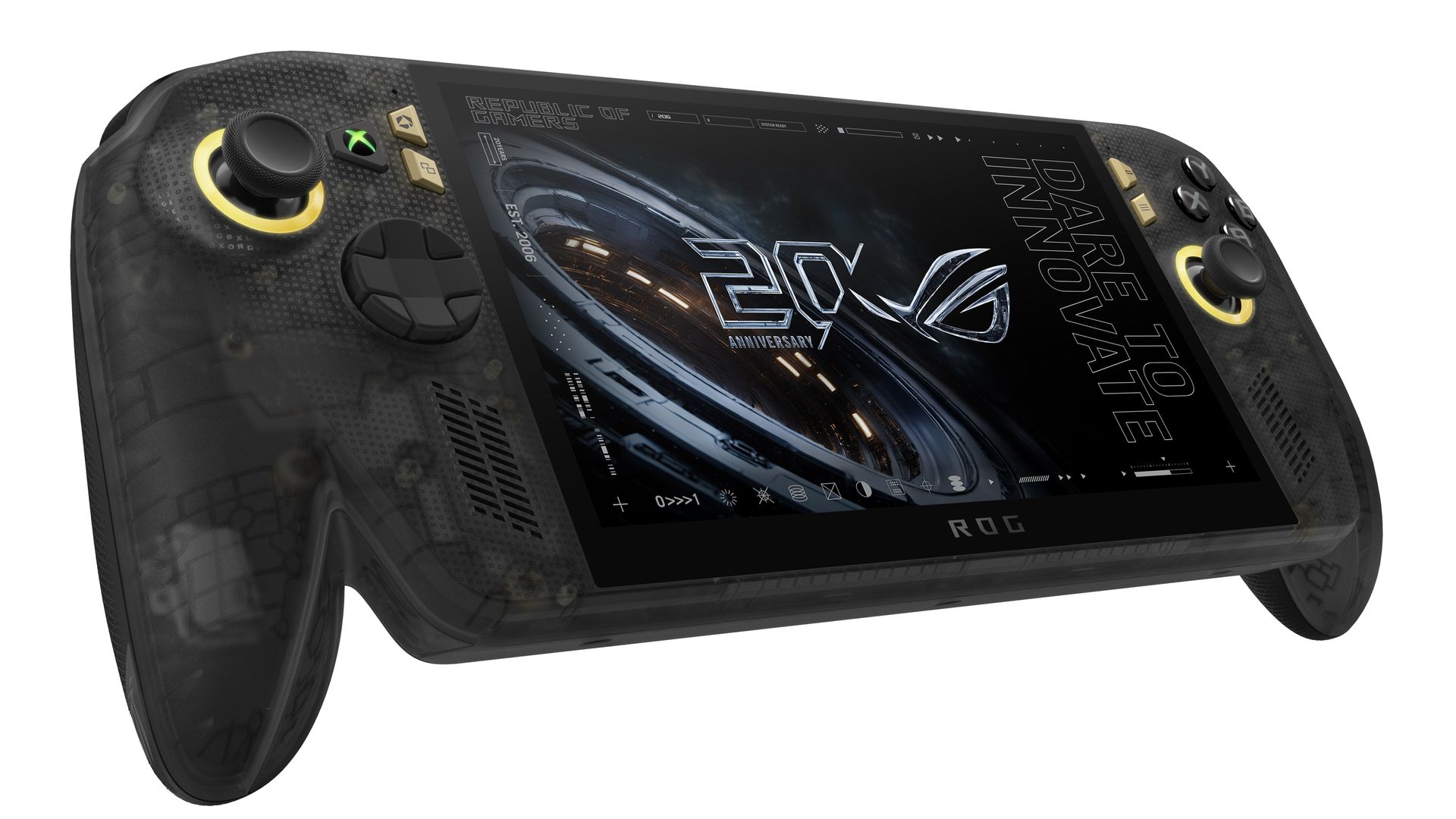
A refined celebration of ASUS’s gaming legacy, the Ally X20 Anniversary Edition pairs its upgraded Ryzen AI Z2 Extreme chip with a vibrant 7.4‑inch OLED HDR display and a boosted 80 Wh battery. It’s a sleeker, more efficient Windows gaming handheld built to mark the milestone with sharper visuals, quieter thermals, and longer play sessions.
Whether a recession, a pandemic, a RAM shortage, or a crypto mining craze (remember that?), gamers are almost always willing to fork over big bucks to have the latest gear. It's one reason that, despite some of the doom-and-gloom over PC sales in the last decade, gaming PCs grew year-over-year consistently.
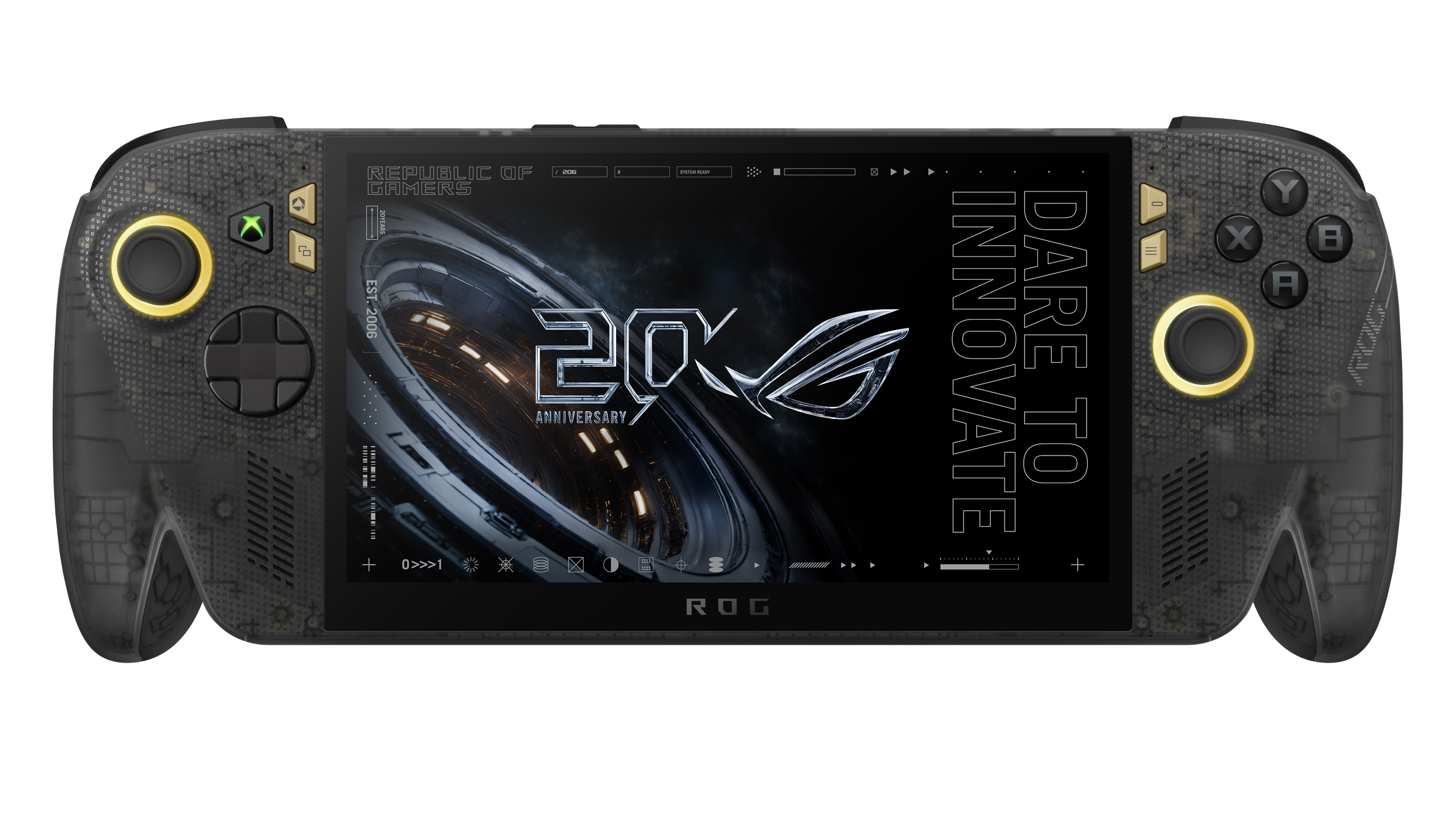
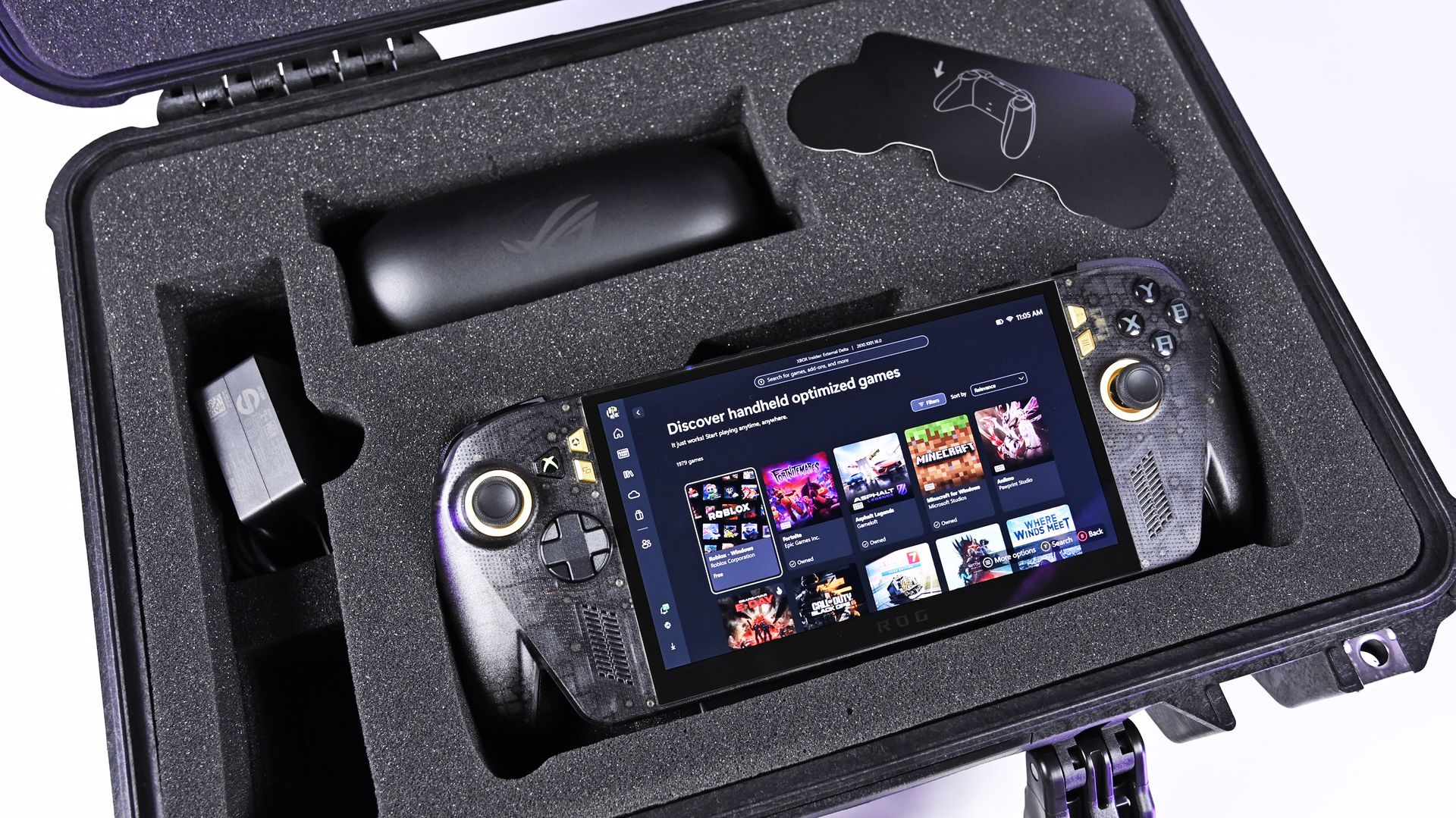
Front view of the ROG Ally X20 handheld, which is in very high demand. (Image credit: Daniel Rubino)
If you haven't followed this story closely, you'd be forgiven for thinking this is just a simple refresh of last year's XBOX Ally X, albeit with an OLED panel replacing the IPS.
That ... would be way oversimplifying it.
Yes, the same AMD Z2 Extreme and 24GB of RAM are here (albeit slightly faster memory), so overall performance is very much the same, but ASUS basically completely rebuilt this entire device with all new components. In fact, I've been documenting all the changes that I've noticed and collected from talking to ASUS and from past press events.
So, here's what's actually new:
Larger 7.4-inch OLED panel (up from 7.0 IPS)
1,400 nits peak HDR (no HDR before)
600 nits peak SDR (was 500 before)
Dolby Vision support
Corning Victus + DXC anti-reflection coating
Smaller bezels
Redesigned airflow channel specifically for cooling the OLED panel
Completely redesigned PCB USB4 ports
Upgraded fan and heatsink fins for better cooling
Hybrid metal dome switches for a more tactile D-pad
Transforming D-pad
TMR joysticks (Hall-effect style)
LEDs increased from 2 to 4 per stick
Quieter, more tactile ABXY buttons
Realigned shoulder buttons
Smoked black translucent housing
Rubberized ergonomic grips
Upgraded microSD Express slot (up to ~1 GB/s)
And this translates into a major real-world difference in terms of fit and finish, as well as overall enjoyment of the device, which is why so many people are praising the build quality.
While Intel's G3 Extreme trounces AMD in performance, the overall gaming experience on the ROG XBOX Ally X20 is very likely the best of any handheld. Plus, a faster AMD or newer Intel chip would have driven the price up even further (see MSI's $1,800 Claw).
Of course, the one pain point is still ... Windows 11. At least for the out-of-the-box experience (OOBE), but we'll talk about that another time. Once you're set up, the Ally X20 is top-tier.
ROG XBOX Ally X20 is getting great reviews
(Image credit: ASUS)
It's worth noting that reviews, both professional and from consumers, have been near-universal in their acclaim for the ROG XBOX Ally X20.
Yeah, Best Buy only has 10 reviews posted, but it's a solid 5.0 across the board, with some noting, "This is the single most refined PC handheld ... I’ve tried." and "it might be the best quality handheld device in the market," and "ASUS Definitely hit it out of the park with this one."
Going by more professional reviews, IGN says the OLED takes the machine "to a completely new level" and argues that the extra $300 is"absolutely worth it" if you have the cash. Notebookcheck is similarly effusive, calling the OLED a "game changer" and describing the image quality as "simply stunning."
And one of my favorite YouTube channels, 128KB, dedicated to handheld gaming, also gave high praise (you can see the podcast embed above).
That kind of word of mouth goes a long way, and ASUS seems to have quite a hit on its hands despite the current market circumstances.
Of course, my review is coming out shortly, but spoiler alert: I don't differ much from most of the other conclusions. Sure, "The X20 should have been the original Ally X last year" is a common theme, but OLED displays this small with variable refresh were hard to come by in 2025, so ASUS went with what it could mass-produce at the time.
The Ally X20 selling out across every configuration shows just how aggressively ASUS has captured the handheld gaming PC conversation. This launch isn’t a blip or a lucky surge; it’s a clear sign that ASUS understands what Windows handheld buyers want and is willing to push the category forward faster than anyone else.
When a premium bundle disappears instantly, it tells you the audience is hungry, confident, and ready to invest in hardware that feels genuinely next‑gen. ASUS, in my opinion (and others'), set a new bar, and the rest of the industry now has to decide whether it can keep up with the pace ASUS just established.
Anyway, let me know in the comments what you think about the state of handheld gaming in 2026, and whether the ROG XBOX Ally X20 is on your radar (if it comes back in stock).
ASUS
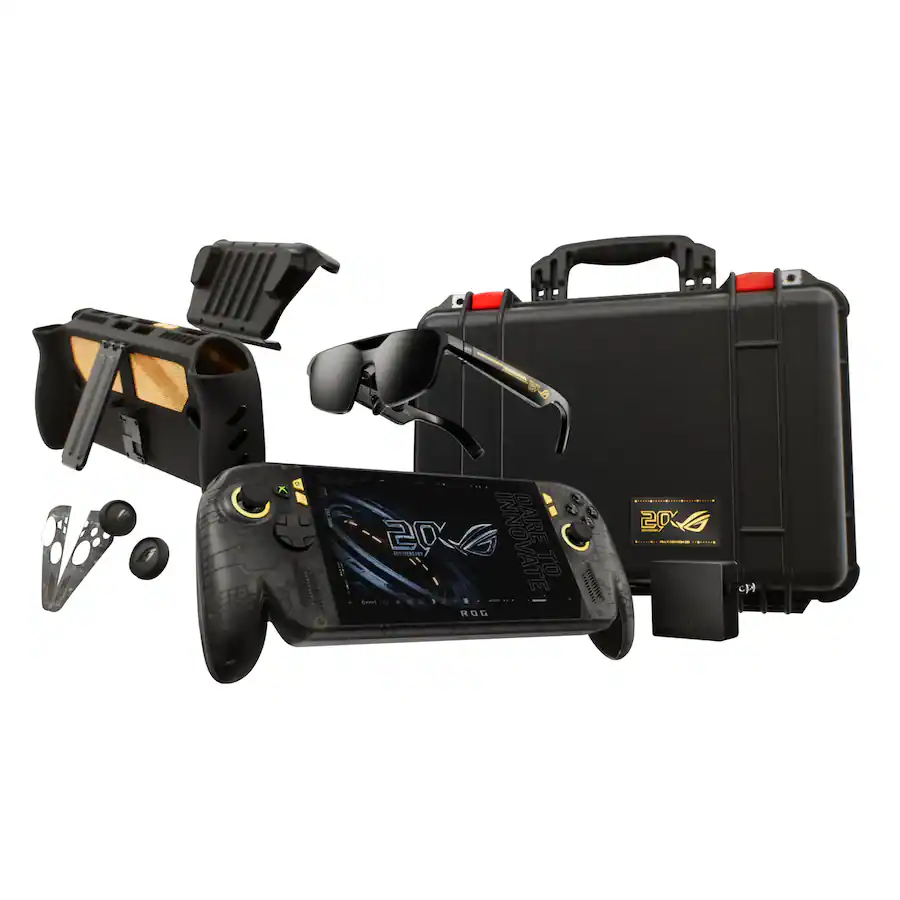
ROG Xbox Ally X20 Bundle
Twenty years of ROG innovation, marked by the limited ROG Edition 20 lineup in an exclusive colorway. The ROG XBOX Ally X20 Bundle carries that celebration forward, pairing the handheld with the ROG XREAL R1 Edition 20 Gaming AR glasses to create a complete gaming setup that travels with you.
Join us on Reddit at r/WindowsCentral to share your insights and discuss our latest news, reviews, and more.
Regain control of Google Ads with a curated article stack on lead quality, Local Services Ads migration, Smart Bidding goals, and proving PPC business value.
PC; Origame Digital This odd but absorbing adventure sends you waddling across Antarctica in search of an eldritch entity – uncovering a world far stranger than it first appears
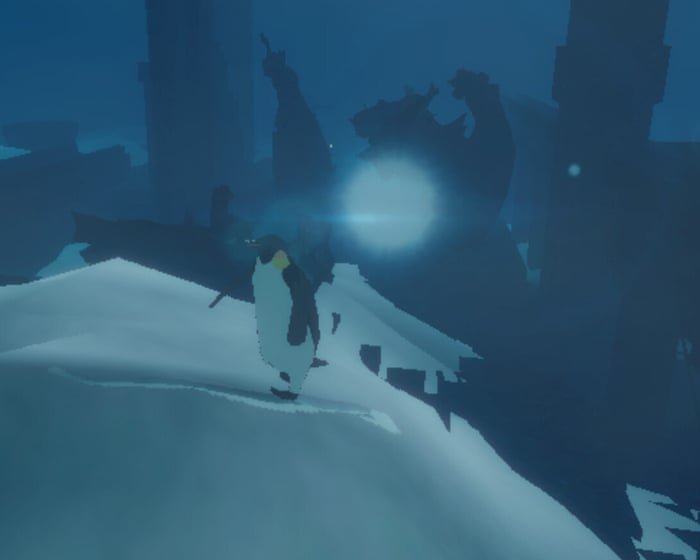
A Nazi kneels down on frozen snow, staring at an endless Antarctic horizon. Another holds a gun to his head, ready to end his own life. I direct a small waddling penguin up to them, trying to imagine what it could be thinking. Dismay, perhaps. Likely bewilderment. But then a faint smile seems to break out across its beaky face, as if amused by these silly humans and their misguided belief that they could ever best this howling, harsh landscape.
For most games, the idea of playing as a penguin observing Nazis losing the plot near the south pole would be weird enough. But Penguin Colony, developed by Origame Digital, pushes further. This is an audacious, frequently brilliant retelling of HP Lovecraft’s 1936 novella At the Mountains of Madness, in which eldritch horrors are just as common as Nazis. Further weirdness abounds: the many collectibles scattered about this place are not shiny gold objects à la Super Mario or Sonic. Rather, they are words. So tottering about as a semiaquatic bird, you have a unique mission: collect human language.
In 2004, physicists isolated graphene, a sheet of carbon just one atom thick. It launched the study of two-dimensional (2D) materials: crystals a few atoms thick in which electrons are confined to a plane and can behave quite differently from those in ordinary solids. The family of known and predicted 2D crystals has since grown to thousands of members. Two recent studies show how computation can search that family for the most promising ones, the first for unusual electronic “topology”, the second for crystals well suited to twisting.
A hidden property of electrons
Electrons in a crystal can only have energies within allowed ranges called bands, separated by forbidden gaps. If a gap separates the filled electrons from the empty states, the material is an insulator. In a semimetal, filled and empty bands just touch, so a few electrons can move freely.
Two insulators can still differ at a deeper level, described by topology: a property of the whole set of electron states that cannot change smoothly, only by closing the gap or breaking a protecting symmetry. A doughnut and a coffee mug are topologically alike because each has one hole, and neither can become a sphere without tearing.
The idea took off with the quantum spin Hall effect. Proposed for graphene in 2005, it proved unobservable there because the effect is far too weak. A 2006 proposal for thin layers of mercury telluride was confirmed in 2007. In such a topological insulator the interior blocks current, yet the edges conduct, with electrons of opposite spin travelling in opposite directions, which protects them against many kinds of imperfection.
Symmetry-based methods known as topological quantum chemistry in 2017 made it possible to decide whether a computed electronic structure is topological. Applied to three-dimensional crystals, they pointed to thousands of candidates. Flat crystals lagged behind, with only about 400 known topological or related monolayers.
The first study, “Two-dimensional Topological Quantum Chemistry and Catalog of Topological Materials” 1, adapts these methods to 2D crystals and applies them to 8,872 entries in two computational databases. It finds 4,073 with nontrivial topology or a related property called obstruction, including 905 topological insulators, 2,129 topological semimetals and 1,003 obstructed atomic insulators, plus 36 close variants. In an obstructed insulator the electrons are centred on empty positions between the atoms rather than on the atoms themselves. The bulk looks ordinary, but cutting the crystal along certain lines produces edge states, and small flakes can carry fractions of an electron’s charge at their corners. The study also calculates edge states for selected materials. Its catalogue includes over 100 monolayers already made in laboratories, but most entries are computer predictions whose properties remain to be tested.
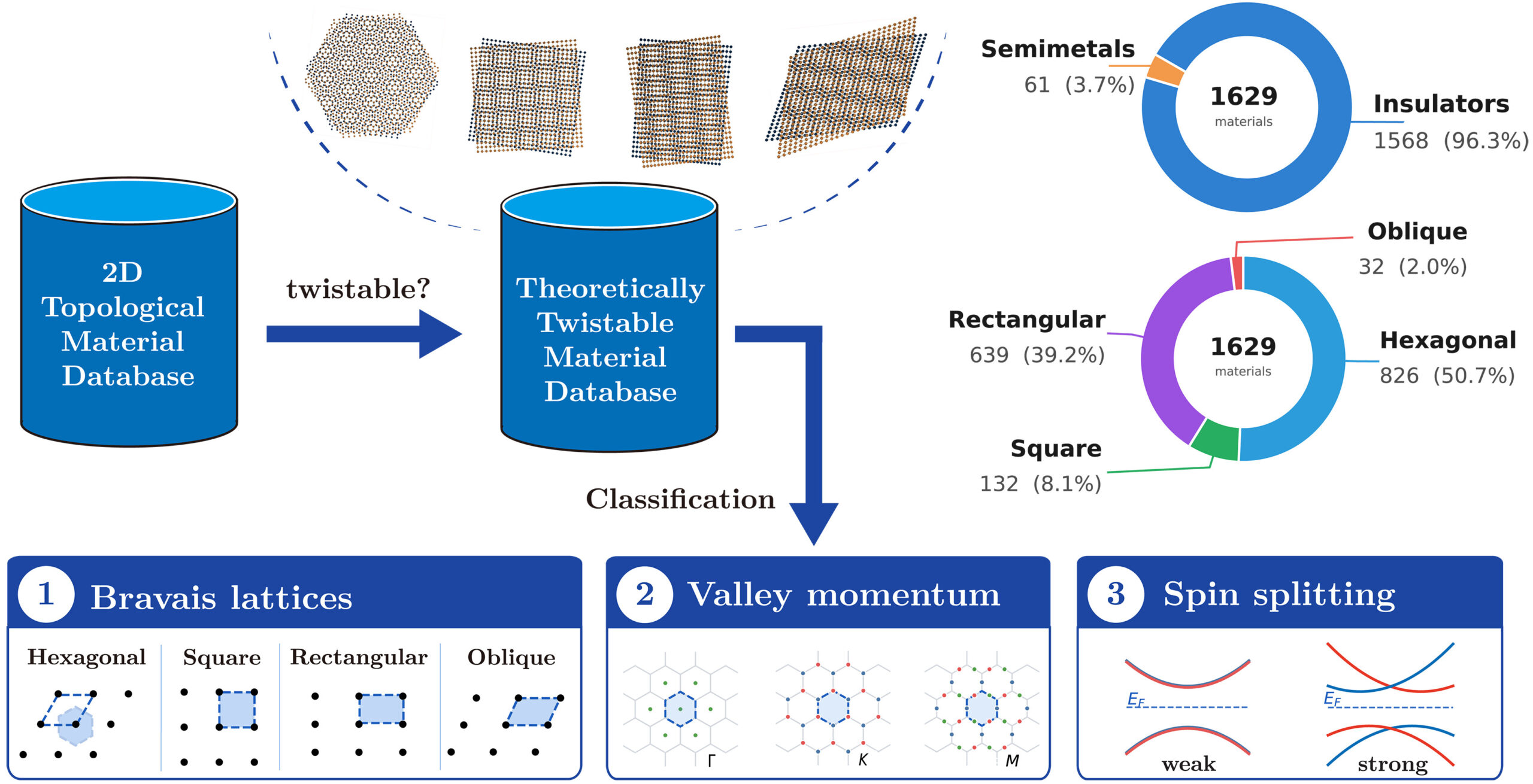
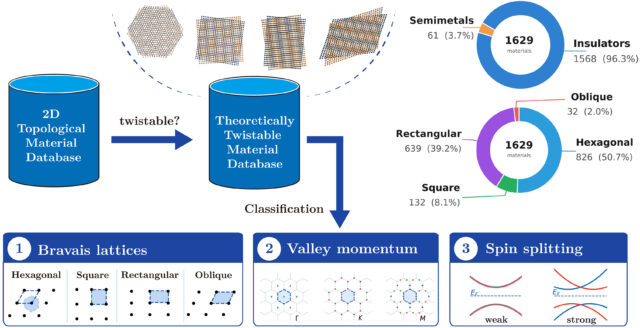
Workflow of the database construction. Starting from a 2D topological material database, a filtering score is applied to construct a database of theoretically twistable materials, which includes both semimetals and insulators. The candidate materials in this database are further classified according to their Bravais lattices, valley splitting, and spin splitting. Source: Y. Jiang et al. (2026) Science doi:10.1126/science.adu1550
Twisting layers
Stack two atomic sheets and rotate one slightly, and the mismatch creates a large interference pattern, called a moiré pattern, much like two overlapping window screens. Electrons feel this longer repeating pattern, and under the right conditions their bands become nearly flat. Electrons in a flat band have little energy of motion, so their mutual repulsion dominates and strongly correlated behaviour can emerge.
In 2011, calculations predicted that two graphene sheets twisted by about 1.1 degrees, a “magic angle”, would have such flat bands. In 2018, experiments at that angle revealed insulating states caused by electron repulsion, and superconductivity. Twisted layers of other materials, such as MoTe2 and WSe2, have since shown many correlated phases, though the mechanisms are still debated.
Most work has focused on these few materials, because most crystals have electronic structures too complicated to predict once twisted. The second study, “2D theoretically twistable material database” 2, therefore defines a material as theoretically twistable if its low-energy electrons admit a simple description. In a metal, the relevant electrons must sit at isolated points, as in graphene. In an insulator, the top of the filled band or the bottom of the empty band must stand clear of other bands. Insulators must also have gaps between 0.2 and 3 electronvolts, because larger gaps make electrical contacts difficult. The search was limited to crystals with at most 12 atoms in the repeating cell and four chemical elements.
Starting from the first study’s database, it identifies 61 semimetals and 1,568 insulators. It ranks them with a score and sorts them by lattice shape (about half are hexagonal), by where in momentum space the relevant electrons sit, and by the strength of spin-orbit coupling, the link between an electron’s spin and its motion. These choices shape the moiré pattern, which can resemble honeycomb, kagome or square lattices. Square-lattice moiré systems have been proposed but not yet realized, and could help simulate models relevant to cuprate superconductors.
Calculations on twisted bilayers of SnSe2, SnS2, ZrS2, HfS2 and Sc2CCl2 at a twist of about 7 degrees show isolated flat bands, as the database predicts. Experiments connect the theory to the laboratory. Bulk crystals of SnSe2, SnS2, HfS2, GaTe and ZrNCl were grown. Single layers of several candidates, including SnSe2, HfSe2, ZrS2 and WS2, were peeled off with a gold-assisted technique that yields larger, cleaner flakes. A dual-gated two-layer SnSe2 device was built for electrical measurements, and a twisted two-layer HfS2 device was used for scanning tunnelling measurements near absolute zero.
The direction is clear. Instead of discovering materials by trial and error, it is becoming possible to search systematically for crystals with chosen properties, then test them layer by layer.
Author: César Tomé López is a science writer and the editor of Mapping Ignorance
Disclaimer: Parts of this article may have been copied verbatim or almost verbatim from the referenced research paper/s.
References
U. Petralanda, Y. Jiang, H. Pi, M. G. Vergniory, B. A. Bernevig, N. Regnault, and L. Elcoro (2026) Two-dimensional topological quantum chemistry and catalog of topological materials Science doi: 10.1126/science.adu2107↩
Y. Jiang, U. Petralanda, H. Pi, G. Skorupskii, Q. Xu, D. Calugaru, H. Hu, J. Xie, R. A. Mustaf, P. Hohn, V. Haase, A. Ouahchi, S. Samal, J. Zhu, D. Yang, Z. Geng, G. Avedissian, Y. Wang, M. G. Vergniory, M. Claassen, et al. (2026) 2D theoretically twistable material database Science doi:10.1126/science.adu1550↩
The studio is swapping the Mushroom Kingdom’s vivid palette for the blood-soaked grit of military action series
Where do you go after Mario? It’s a question the team at Ubisoft Paris found itself pondering three years ago after wrapping up work on the charming turn-based tactics adventure, Mario + Rabbids: Sparks of Hope, sequel to its unexpected crossover hit, Mario + Rabbids: Kingdom Battle. By melding a rather specialist genre with video gaming’s biggest household name, the developer introduced chin-stroking strategic play to a whole new audience. “Having the opportunity to work with the Mario franchise was a privilege, and it’s still something I’m very proud of,” says level designer director, Julien Vial. “I still remember seeing the first prototype and being blown away by all the possibilities.”
Now, Ubisoft Paris has returned with a new project, but this time the studio is swapping the Mushroom Kingdom’s vivid palette for the blood-soaked grit of military action series Rainbow Six. Where Mario and Rabbids saw squishy creatures bounce harmlessly across levels as Mario encased foes in honey, Rainbow Six Tactics, a turn-based tactical spin-off from Rainbow Six Siege, sees balaclava-clad insurgents take shrapnel rounds to the chest. A seamless tonal shift, then.
Long before I was a Mac user, I had two different computers I considered my first; a forbidden Windows 95 Compaq Presario which I took apart when I was 9, as well as my first real computer – an HP Pavilion a420n. My first real computer was the one where I could have my own […]
Galaxies rotate faster than the matter we can see should allow. Evidence for an unseen, gravitating substance began to build in the 1930s with Fritz Zwicky’s studies of galaxy clusters, and strengthened in the 1970s as Vera Rubin measured how stars orbit within spiral galaxies. Nearly a century later, dark matter is still known almost entirely through its gravity. It holds galaxies together and shaped the web of cosmic structure, yet its nature remains unknown.
Axions, plural
One candidate has an unusual origin. In the late 1970s, physicists proposed a new particle to solve a puzzle in the theory of the strong nuclear force. Frank Wilczek named it the axion, after a laundry detergent, because it promised to clean up the problem. By 1983 theorists had shown that axions about a millionth of an electronvolt in mass could make up cold dark matter, the slow-moving kind. Later, string theory, an attempt to unify gravity with quantum physics, suggested that nature may contain not one axion but many, with masses spread across a vast range. Some of these particles could be extraordinarily light: around 10⁻²² electronvolts, more than 10²⁷ times lighter than an electron.
Such lightness has a striking consequence. The quantum wavelength of a particle grows as its mass shrinks, and for these axions it stretches to astronomical size, comparable to the roughly half-kiloparsec cores of small dwarf galaxies, about 1,600 light-years. Dark matter would then behave less like a swarm of tiny grains and more like a vast wave, often called wave or fuzzy dark matter. Simulations from 2014 showed that every galaxy halo would have a dense central core with a flat density profile, surrounded by a shimmering pattern of interfering waves. The flat core contrasts with the steep central spike predicted by the simplest cold dark matter models. The same wave nature also prevents very small clumps from forming, which may help explain why fewer small satellite galaxies are seen around our Galaxy than those models predict.
There is, however, a serious difficulty. Light from distant quasars passes through clouds of hydrogen that imprint absorption lines on it, the Lyman-alpha forest, which records how matter was clumped on small scales in the early Universe. If a single ultralight species made up all dark matter, these data demand a considerably larger mass. One influential analysis set a lower limit of about 2×10⁻²⁰ electronvolts, some two hundred times heavier than the favoured value. Separately, deep surveys show no clear drop in the number of faint galaxies, which argues against single axions lighter than about 2.5×10⁻²² electronvolts. Both conclusions assume one kind of axion.
The galaxy cluster called Abell 370 contains an astounding assortment of several hundred galaxies tied together by the mutual pull of gravity. Entangled among the galaxies are mysterious-looking arcs of blue light, the most stunning example is “the Dragon” (to the lower left of centre). Source: NASA, ESA, and J. Lotz and the HFF Team (STScI)
A new analysis 1 asks what changes if dark matter is a mixture. On large scales, it finds, all species feel the same gravitational field, so they respond together and behave much like one effective axion. The mass of that stand-in depends on each species’ mass and on its share of the total dark matter, with lighter species weighing more heavily. The recipe was tested against a detailed calculation for two species, 30% at 10⁻²² electronvolts and 70% at five times that mass. It reproduced the overall suppression of structure well, missing only some fine oscillations, and the resulting difference in predicted mass fluctuations was below 0.1%. If this holds, a multi-axion universe could build large-scale structure much like a single-axion one, with the cut-off in faint galaxies set by the effective mass. The method extends to any number of species and could seed future simulations.
Inside galaxies the picture changes. On these smaller scales the species act independently, and each weaves its own interference pattern with its own grain size. Projected along the line of sight, these produce density fluctuations of only a few percent, yet they bend light enough to blur the lines of greatest magnification in a gravitational lens, called critical curves, into corrugated bands.
The Dragon test
The Dragon Arc offers a test. This is a spiral galaxy, seen when the Universe was half its present age, stretched and magnified by the galaxy cluster Abell 370. In 2025, observations with the James Webb Space Telescope revealed more than forty individual stars in it, each appearing as a brief flicker when magnified by intervening stars in the cluster. Their positions scatter broadly around the critical curve, and an earlier analysis found this matches wave interference. Cold dark matter clumps would instead confine them to a narrower band skewed in the opposite direction. Reading the scatter as a wavelength of about ten parsecs gives a lensing effective mass of roughly 2.4×10⁻²² electronvolts, assuming about 2.4×10¹⁴ solar masses lie inside the critical curve. This differs from the large-scale effective mass, because lensing depends on each species’ share of the projected density. It is not a detection of axions but a model-dependent interpretation. If the two species suggested by dwarf galaxies, about 1.9×10⁻²² and 2.3×10⁻²¹ electronvolts, made up the halo, the lighter would supply roughly 89% of the projected density near the arc.
The most distinctive prediction concerns position. Heavier axions are expected to gather near the centre of a halo and lighter ones to dominate farther out, so the lensing effective mass should change from place to place. A single species cannot do this. The Cosmic Horseshoe, a lensed galaxy where the telescope may find around sixty flickering stars per pointing, could test it by comparing two positions about five arcseconds apart. A mismatch would hint at several species.
This work shows how a mixture of ultralight particles could look like a single one across the cosmos while revealing its true complexity inside galaxies, perhaps reconciling cosmic constraints with galactic evidence. Proving it will require better simulations, more realistic models of multi-species haloes, and further lensing observations.
Author: César Tomé López is a science writer and the editor of Mapping Ignorance
Disclaimer: Parts of this article may have been copied verbatim or almost verbatim from the referenced research paper/s.
References
J. Zhang, T. Broadhurst, J. Lim, P. Morilla, and S. K. Li (2026) Multi-copy axion transfer function and observational implications of effective de Broglie scales Astron. Astrophys. doi: 10.1051/0004-6361/202558735↩
In 1911, Heike Kamerlingh Onnes cooled mercury to a few degrees above absolute zero and watched its electrical resistance vanish. Lead soon joined the list of superconductors, losing its resistance below about 7.2 kelvin. A full explanation arrived in 1957: electrons bind into Cooper pairs that move together as one collective state below a critical temperature. Breaking a pair costs a minimum amount of energy, called the energy gap, so inside the gap a superconductor offers no states for single electrons.
Yu–Shiba–Rusinov states
Magnetism is an old enemy of this order. Magnetic impurities were known to suppress superconductivity, and in the 1960s Yu, Shiba and Rusinov showed theoretically that a magnetic atom disturbs the pairs around it and traps a localized state with an energy inside the gap. These Yu–Shiba–Rusinov (YSR) states were first seen atom by atom in 1997, using a scanning tunneling microscope (STM): a needle-sharp metal tip that measures the tiny current of electrons tunneling across a vacuum gap to a surface.
A different story concerns two superconductors joined by a very weak link. In 1962, Brian Josephson predicted that Cooper pairs can tunnel through such a link with no voltage at all, an effect confirmed in 1963. When a voltage is applied, another process takes over: multiple Andreev reflection. An electron whose energy lies inside the gap cannot enter a superconductor alone. Instead it is sent back as a hole, the absence of an electron, while a Cooper pair slips in, as Andreev described in 1964. Between two superconductors under a voltage V, a particle can bounce back and forth, gaining energy eV with each crossing, until it can finally escape above the gap. When n crossings are needed, the conductance shows a peak at a voltage equal to the sum of the two gaps divided by n. This pattern, explained in the early 1980s, is called subharmonic gap structure. For lead on lead the sum is 2.7 millivolts, so peaks are expected near 2.7, 1.35 and 0.9 millivolts.
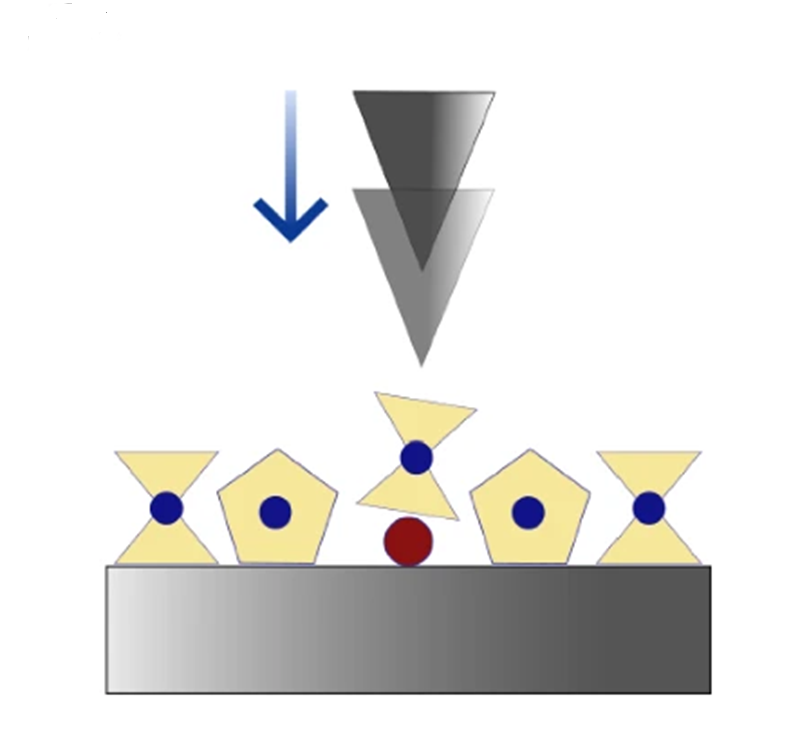
A schematic of the scanning tunneling microscope junction. A lead-coated tip is approached to a nickelocene molecule (yellow) above a subsurface iron atom (red) on Pb(111). Source: C. Mier et al (2026) Nat. Commun. doi: 10.1038/s41467-026-76478-4CC BY-NC-ND 4.0
Impurity states and Andreev reflections have usually been treated as separate subjects. A recent experiment 1 places them in the same device. A nickelocene molecule, a nickel atom sandwiched between two five-carbon rings, sits on a lead surface above a single iron atom trapped between the molecule and the lead. On its own, the molecule carries a spin that appears as characteristic steps in the measured spectra. Above the iron, those steps vanish and YSR states appear instead. Density-functional calculations explain why: the magnetic moments of molecule and iron point in opposite directions and almost cancel, leaving a leftover spin of one half on the iron. That spin couples to the lead and produces a single pair of YSR states.
The second superconductor is a lead-coated STM tip, lowered toward the molecule at 2.4 kelvin. Far away, electrons tunnel through a wide vacuum barrier and the tip merely reads out the YSR states, which appear as lopsided peaks near the edge of the gap. As the tip approaches, the junction becomes more transparent, meaning electrons cross it more easily, and the setup becomes a weak link between two superconductors. At moderate conductance, new peaks appear at half the sum of the gaps, the signature of second-order Andreev reflection. At the highest conductances, a sharp peak develops at zero voltage: the Josephson contribution. Thermal fluctuations of the superconducting phase broaden this peak, as is typical of STM junctions.
These stages do not simply stack. As the tip approaches, the YSR peak moves to lower energy and mingles with the Andreev peaks. The interpretation is that the bound state becomes a stopping point along the Andreev path. Peaks then appear at the tip’s gap plus the bound-state energy, divided by n, rather than at the ordinary positions. This is called YSR-assisted multiple Andreev reflection.
Odd and even orders
A simple argument explains why odd and even orders differ. Each reflection carries the particle to the opposite electrode, and only the lead surface contains the magnetic atom; the tip has none. After an odd number of crossings the particle ends on the surface, where it can land in the bound state. The peak shifts and acquires the lopsided shape typical of tunneling into a single level. After an even number it ends in the tip, among ordinary states, and those peaks stay closer to their usual positions, although the second-order peak still turns lopsided at higher conductance as a YSR-assisted component splits off. Simulations reproduce this pattern. In the measurements, thermal broadening blurs finer details such as the third-order peak, and small features near zero voltage seem to reflect a mixture of both processes.
Reproducing the evolution of the spectra required two changes together: higher transparency and a stronger exchange coupling between the iron spin and the lead. Raising transparency alone gives a growth of the key peak that the measurements do not show. A likely reason is that the approaching tip slightly squeezes the molecule and strengthens the coupling, though this is an inference. The model treats the spin as classical and its two parameters as effective ones, so it is a phenomenological decomposition rather than a unique microscopic extraction. It also cannot capture the zero-voltage peak.
Even so, the result shows that YSR states and Andreev reflections are two limits of one problem, tuned continuously within a single molecular junction. Under suitable conditions, such spin-active links might also host a Josephson diode, in which supercurrent flows more easily in one direction, or a π-junction, in which the two superconductors prefer opposite phases. These remain possibilities, not demonstrated effects.
Author: César Tomé López is a science writer and the editor of Mapping Ignorance
Disclaimer: Parts of this article may have been copied verbatim or almost verbatim from the referenced research paper/s.
References
C. Mier, A. Fetida, R. Robles, P. Boronat, D. Jyoti, N. Lorente, L. Limot, and D. -J. Choi (2026) Yu-Shiba-Rusinov-assisted Andreev transport in a molecular junction between superconductors Nat. Commun. doi: 10.1038/s41467-026-76478-4↩
Existem alternativas para quem deseja jogar títulos adquiridos para PC no iPhone, mas poucas focam na execução local desses games.
Para quem quer rodar localmente a própria biblioteca da Steam, da GOG ou da Epic Games Store, o Playport é um aplicativo de código aberto que traduz e renderiza jogos x86 no iPhone sem a necessidade de jailbreak.
O software utiliza o Wine, o tradutor de x86 para ARM FEX e o DXMT, que converte o Direct3D 10 e 11 para o Metal, tendo sido testado com 47 jogos até o momento — dos quais 34 são jogáveis e 13 não rodam ou são injogáveis. A lista completa pode ser conferida no site oficial do projeto.
Os desenvolvedores destacaram a compatibilidade com Portal 2 (capaz de rodar em até 60 quadros por segundo), The Witcher 3: The Wild Hunt (com cerca de 36qps) e Hollow Knight (até 120qps). Os testes foram realizados em um iPhone com o chip A19 Pro.
Divulgação/Playport
O aplicativo é instalado por meio de um IPA via sideloading, com auxílio da técnica JIT para a tradução em tempo real, e exige que o Modo Desenvolvedor esteja ativado.
A matéria avalia que a investida da Apple no mercado de videogames ao longo da última década foi consistente o suficiente para conquistar de fato o público gamer. Oliver, vale lembrar, assumiu a liderança da loja de aplicativos do ecossistema da Apple, após Phil Schiller deixar o posto em agosto.
O executivo falou sobre os esforços da empresa no segmento, que, segundo ele, vão além da distribuição, e ressaltou a chegada de títulos AAA ao ecossistema:
O que está acelerando esse movimento hoje é a tecnologia que impulsiona esse ecossistema. Apoiamos os desenvolvedores na App Store com muito mais do que distribuição. Continuamos investindo pesadamente em gaming: de novas tecnologias de hardware que entregam o mais alto desempenho sustentado, como o ray tracing acelerado por hardware do A20 Pro e a câmara de vapor de última geração no iPhone 18 Pro; a ferramentas de desenvolvimento, como o Game Porting Toolkit 4, o Metal e os nossos plugins de código aberto da Unity.
Temos observado o crescimento no número de jogos que chegam à App Store, em geral, com mais títulos premium este ano do que no anterior. […] Enquanto muitos são indies, nós estamos vendo mais franquias de consoles e PC chegando ao mobile, já que é um público em expansão para esses jogos.
O executivo também falou sobre a relação da Apple com os desenvolvedores independentes, além de destacar as diferentes formas de levar os jogos a Macs, iPhones e iPads:
Desde o primeiro dia, a App Store foi pensada para equilibrar as condições de descoberta e distribuição, de modo que um título indie possa se equiparar às maiores franquias do entretenimento. […]
Nós queremos dar aos desenvolvedores um ambiente confiável para alcançar usuários ao redor do mundo, dar-lhes suporte em cada passo e ajudá-los a construir negócios bem-sucedidos. […] Para atingir esses objetivos, nós oferecemos modelos de negócio flexíveis. Isso significa que um fenômeno inovador como Balatro pode prosperar como um jogo premium, e também pode encontrar um espaço no serviço Apple Arcade. O importante é que damos aos desenvolvedores a flexibilidade para fazer a melhor escolha e, a todos os jogos e jogadores, a liberdade de jogar como quiserem.
O Apple Arcade conta com mais de 200 títulos no acervo (livres de propagandas ou compras internas), os quais podem ser acessados por até cinco membros de um Compartilhamento Familiar em iPhones, iPads, Macs, Apple TVs e/ou Apple Vision Pros. O serviço de jogos custa R$14,90 por mês e também faz parte do pacote de assinaturas da empresa, o Apple One.
NOTA DE TRANSPARÊNCIA: O MacMagazine recebe uma pequena comissão sobre vendas concluídas por meio de links deste post, mas você, como consumidor, não paga nada a mais pelos produtos/serviços ao usar os nossos links de afiliado.
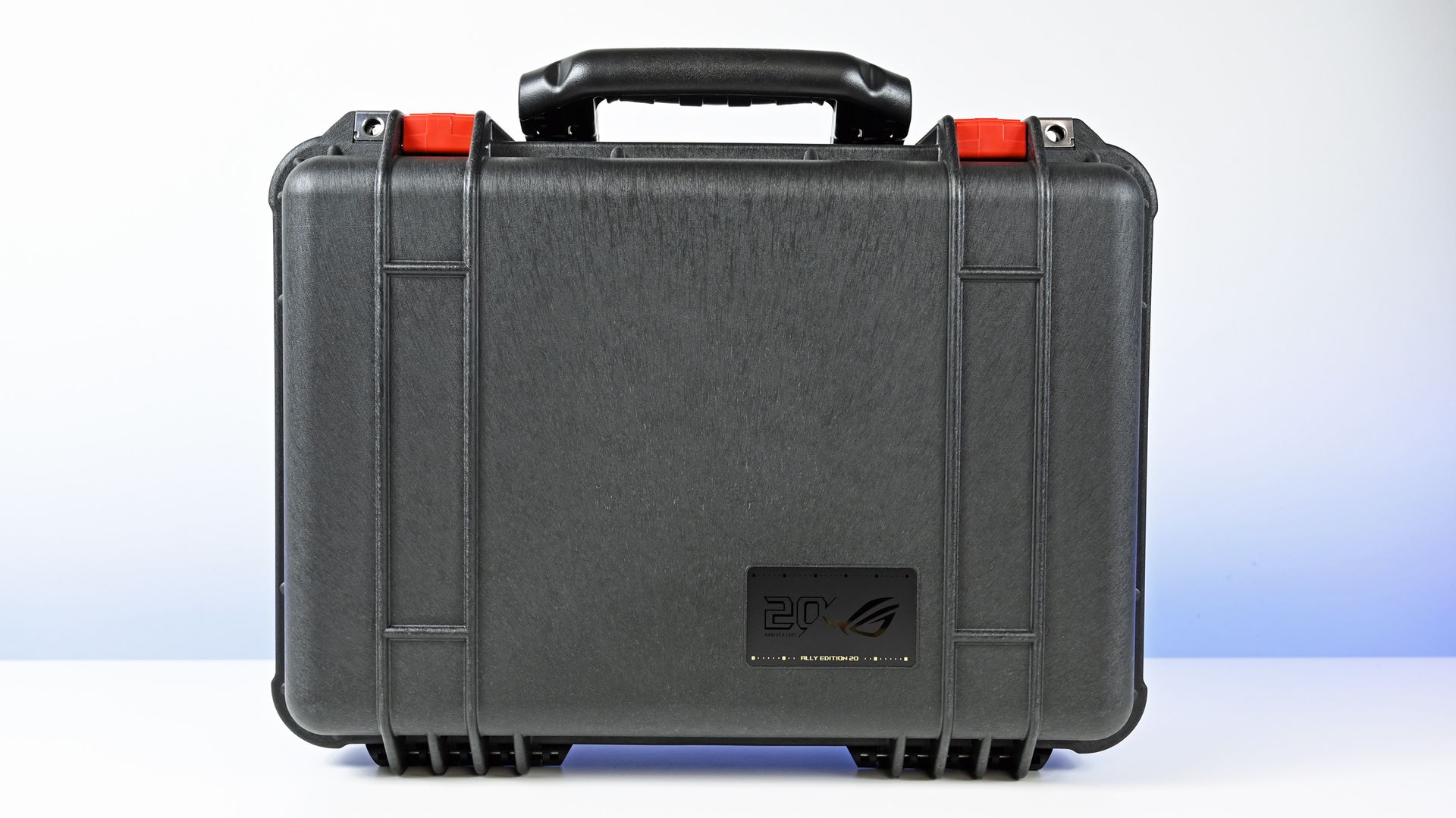
Well, apparently it looks like an enormous, heavy-duty Pelican case that feels like it should contain either extremely expensive gaming hardware or something you've been tasked with delivering to a secret government facility.
Inside is the new ROG Xbox Ally X20 (now available at Best Buy), ASUS' limited-edition handheld celebrating 20 years of its Republic of Gamers brand, along with the new ROG XREAL R1 Edition 20 AR glasses, a custom dbrand Killswitch and skin, and all the accompanying accessories.
There's even an empty cutout where you can add your own Xbox controller, which is objectively kind of fun (as it implies I'm going to show up randomly to public places carrying this kit, which is certainly a baller move).
And yes, I unboxed the whole ridiculous thing (see video below):
Let's talk about this Pelican case
Front view of the closed black Pelican Protector Case with red latches and a gold 20th Anniversary ROG badge. (Image credit: Daniel Rubino)
The first thing you'll notice is that ASUS didn't exactly go for subtlety.
The X20 bundle arrives inside a custom Pelican Protector Case, with everything nestled into its own section. And having now handled the thing, I can confirm two things: it's incredibly substantial, and it has some of the most satisfying, snappy latches I've ever used on a case (with holes for padlocks, natch!).
Opening it feels like an event.
That's appropriate because the hardware inside isn't exactly normal either. The X20 uses a translucent black chassis with gold accents underneath, giving it a distinct throwback look that fits the 20th-anniversary theme without making the handheld look like a toy.
Even the Xbox logo/button now glows green (and you can set it to static, pulsing, or fading), which is really sharp-looking and reminds you this is XBOX FIRST.
More importantly, I've now spent some actual time using the X20, and I'm warming up to this thing considerably.
That OLED display really does make a difference
ASUS' new 7.4-inch ROG Nebula HDR OLED display (120Hz VRR) is a huge selling point and upgrade over the current Ally X's LCD panel (7-inch, IPS). (Image credit: Daniel Rubino)
The centerpiece is ASUS' new 7.4-inch ROG Nebula HDR OLED display, a 1080p panel capable of 120Hz with FreeSync Premium Pro and VRR support from 30Hz to 120Hz. It can also reach a claimed 1,400-nit peak brightness.
And yeah, it's good.
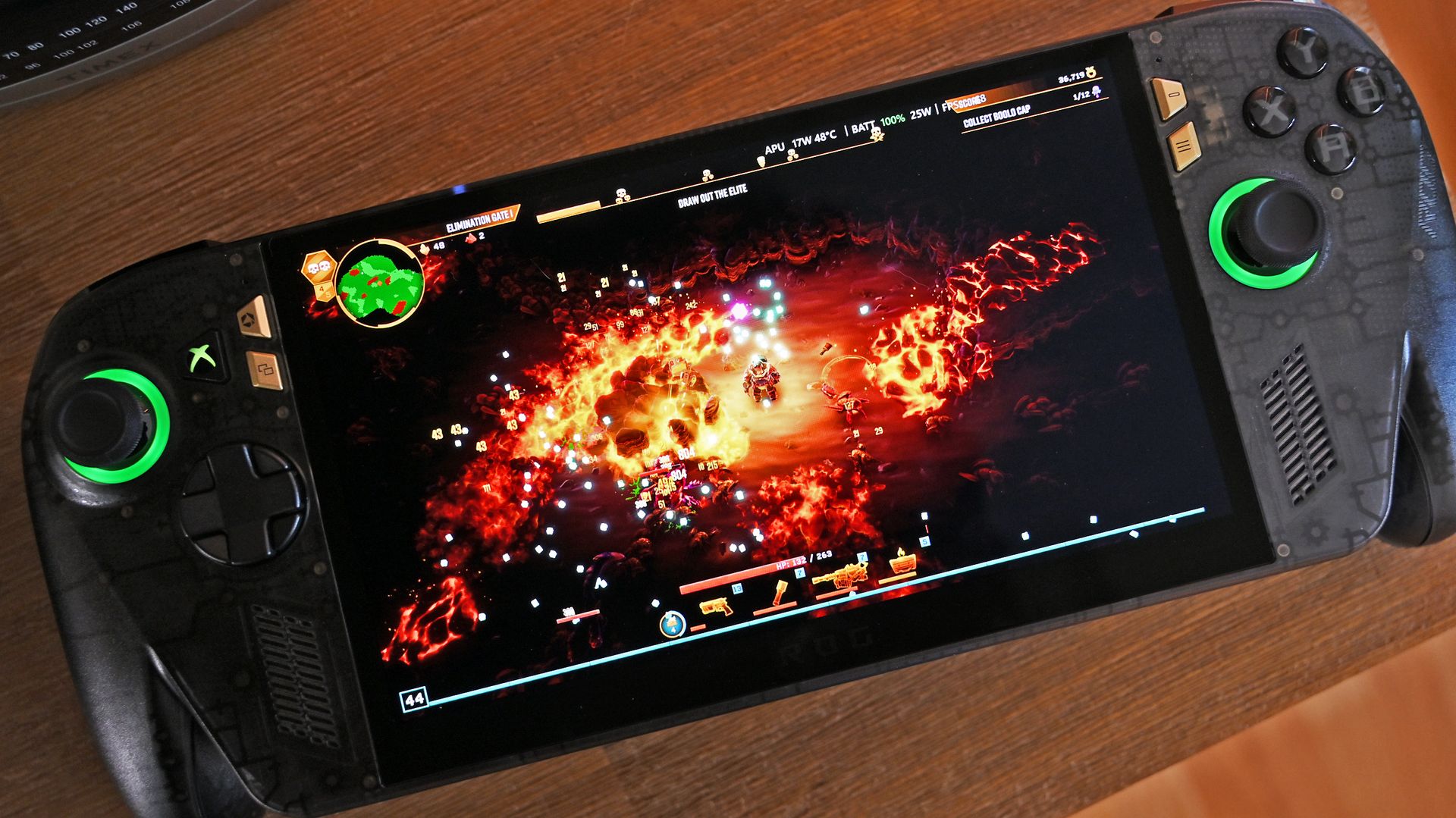
The OLED panel is one of those upgrades that becomes immediately obvious when you put the X20 in front of you. It's a significant improvement over the display on the existing ROG Xbox Ally X and gives ASUS' latest handheld some real visual punch.
Playing Deep Rock Galactic: Survivor on the X20's OLED display is a dream. (Image credit: Daniel Rubino)
They're absurdly loud. In fact, they're the loudest speakers I've heard on a gaming handheld so far, and between the audio and that OLED screen, the X20 makes a surprisingly strong first impression before you even start digging into performance.
Underneath all of that is AMD's Ryzen AI Z2 Extreme, paired with 24GB of LPDDR5X memory, a 1TB M.2 2280 SSD and an 80Wh battery. ASUS has also redesigned the cooling system, while TMR joysticks, a transforming D-pad, and rubberized grips round out some of the hardware changes.
Then ASUS throws a 171-inch virtual display into the box
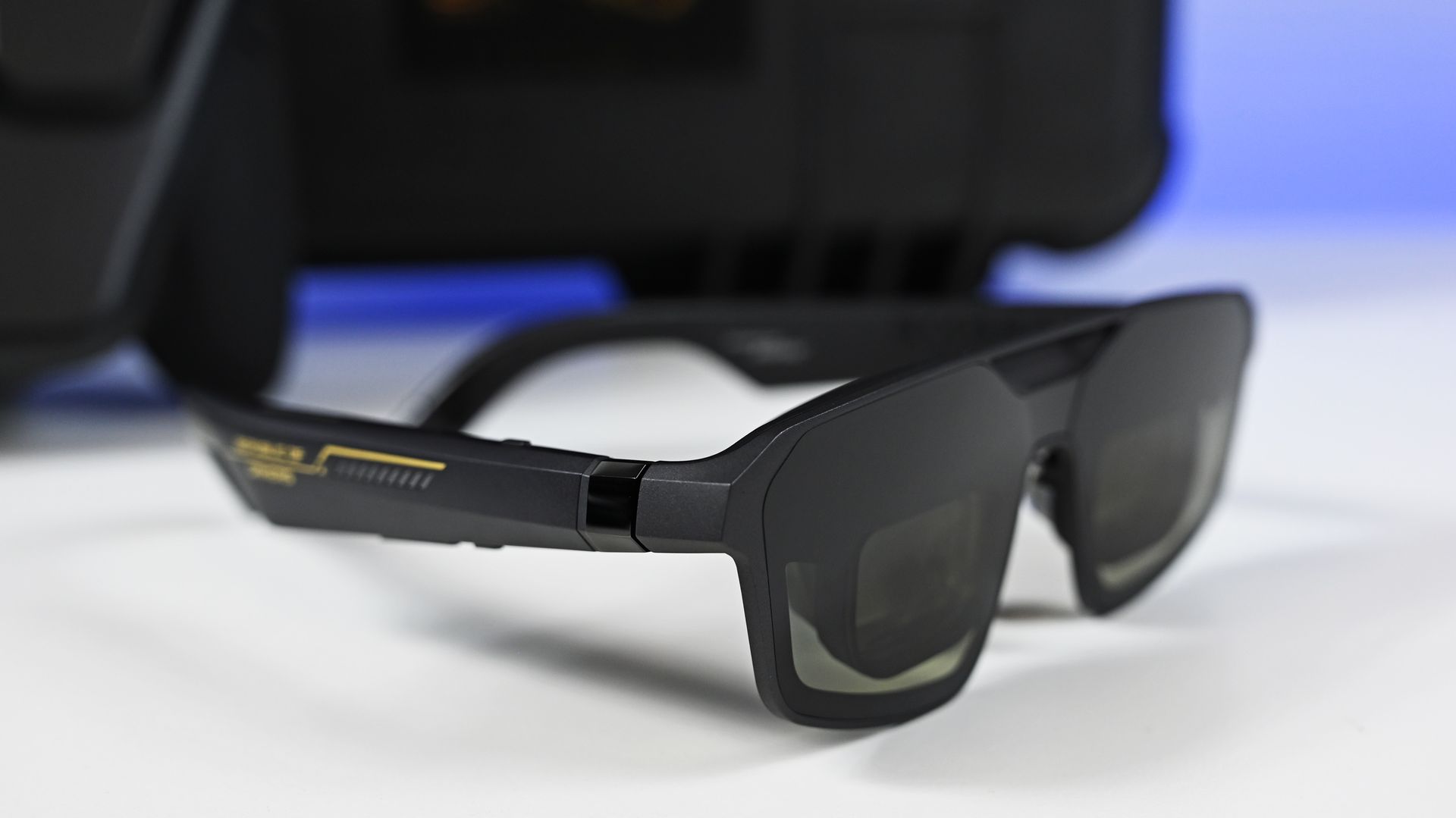
The ROG XREAL R1 Edition 20 AR smart glasses with 240Hz refresh and OLED internal displays. (Image credit: Daniel Rubino)
Because apparently a $2,499 bundle needs more toys.
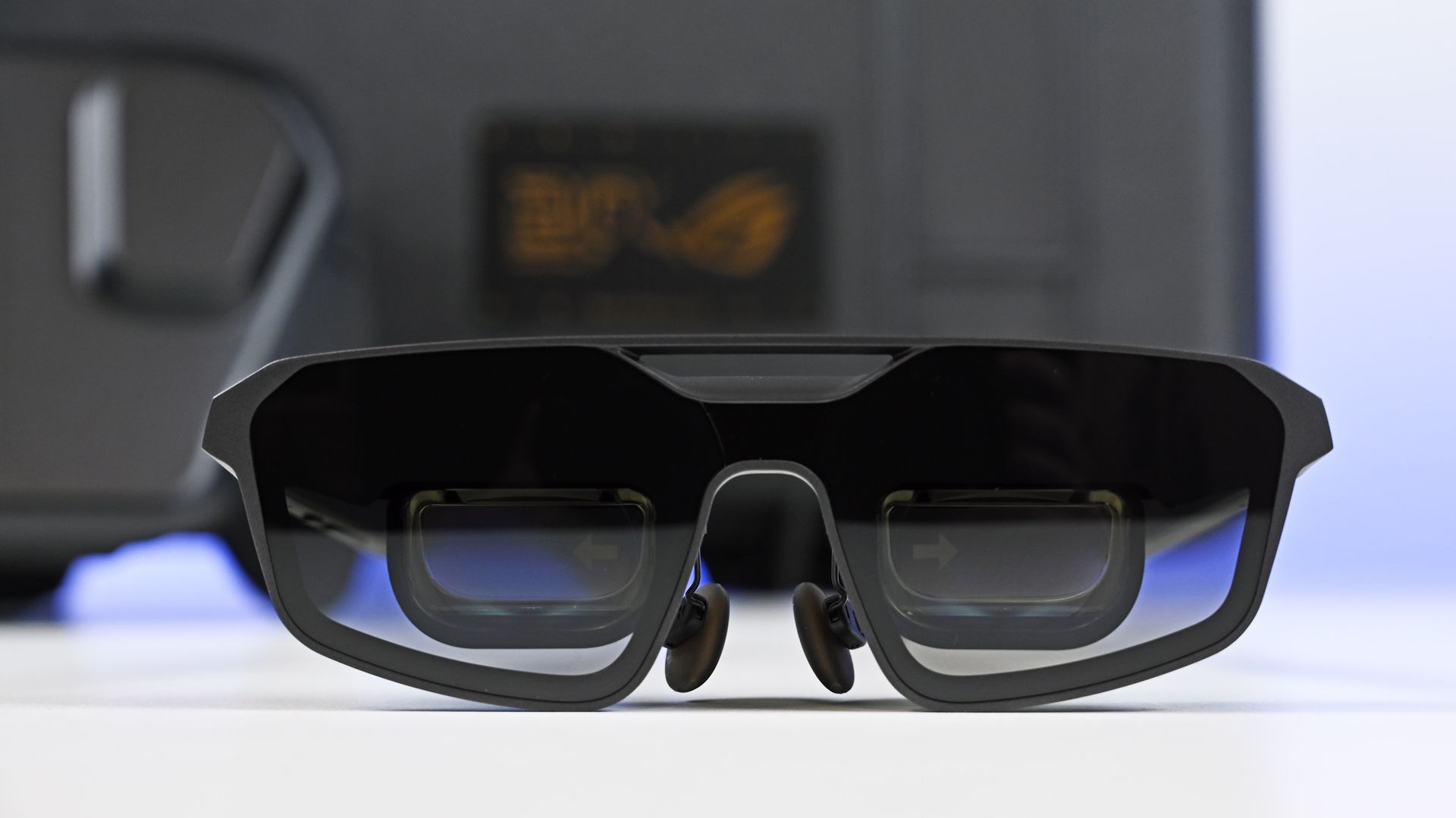
The ROG XREAL R1 Edition 20 Gaming AR Glasses (MSRP: $849) can create a virtual display of up to 171 inches viewed from roughly 13 feet away. They use Micro-OLED panels and support up to a 240Hz refresh rate, along with native 3DoF tracking and an Anchor Mode that can keep the virtual screen fixed in position while you move your head.
Front view of the matte black ROG XREAL R1 Edition 20 AR glasses, with tinted lenses and dual display prisms. (Image credit: Daniel Rubino)
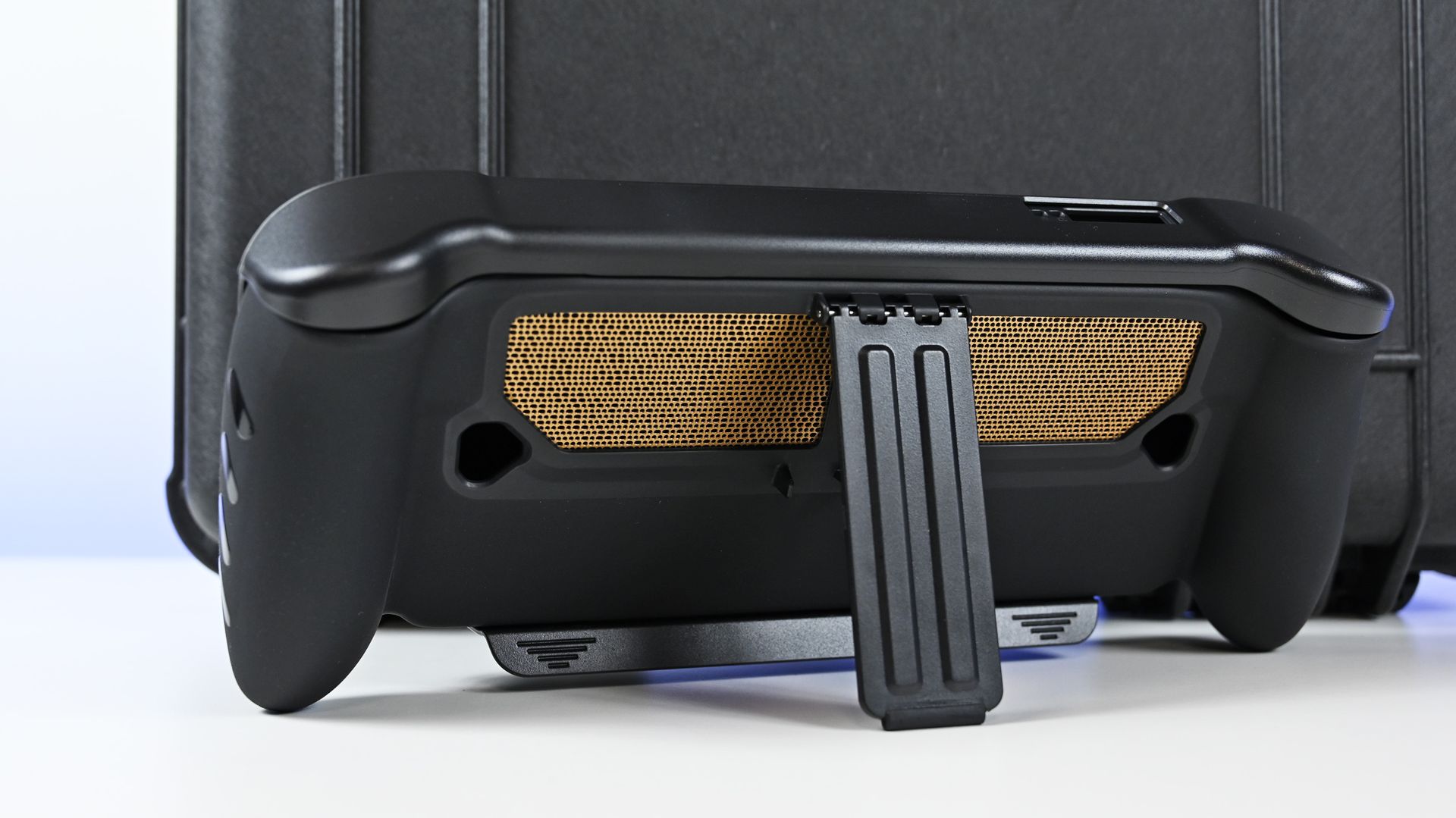
You also get a custom dbrand Killswitch (see our review) designed for the X20, complete with an exclusive skin and stick caps. I'm torn about using it. On one side, it's an excellent case with a cover, making it perfect for tossing in the bag. On the other, you're now covering 80% of the translucent case, which seems kinda sacrilegious.
There's a 68W charger in the package too, along with the various accessories for the glasses.
It's basically the "give me everything" configuration.
$2,499 is bonkers, but thankfully you don't need to spend that much
The Pelican case with custom foam holding the powered-on ROG Ally X20 handheld, 68W charger, and AR glasses case. (Image credit: Daniel Rubino)
Let's be realistic: $2,499 for a gaming handheld bundle is an enormous amount of money.
This isn't the mainstream X20 package. It's a collector's bundle for the hardcore ROG enthusiast who wants the limited-edition machine, AR glasses, custom accessories, and a Pelican case capable of making the whole setup feel like precious cargo.
The good news is that ASUS isn't forcing you to buy all of that.
Daniel RubinoDaniel RubinoDaniel RubinoDaniel RubinoDaniel Rubino
And after spending more time with it, that's the version I'm increasingly interested in.
At $1,299, the X20 certainly isn't cheap either. But the combination of its excellent OLED display, booming speakers, unique translucent design and other hardware improvements is making it feel like a much more substantial upgrade over the current Ally X than I initially expected.
I'll have a lot more to say about that very soon.
Stay tuned to Windows Central for my full ROG Xbox Ally X20 review in the coming week, where I'll answer the question that really matters: is ASUS' new $1,299 handheld actually worth it?
Now available
ASUS
ROG Xbox Ally X20 Bundle
Twenty years of ROG innovation, marked by the limited ROG Edition 20 lineup in an exclusive colorway. The ROG XBOX Ally X20 Bundle carries that celebration forward, pairing the handheld with the ROG XREAL R1 Edition 20 Gaming AR glasses to create a complete gaming setup that travels with you.
Join us on Reddit at r/WindowsCentral to share your insights and discuss our latest news, reviews, and more.
Measure PPC value beyond clicks with conversion tracking, impression signals, and business records that help validate attribution as buying journeys move into AI.
Google Ads introduces channel prioritization and budget allocation controls, giving advertisers more flexibility over spending across Search, Performance Max, and other campaigns.
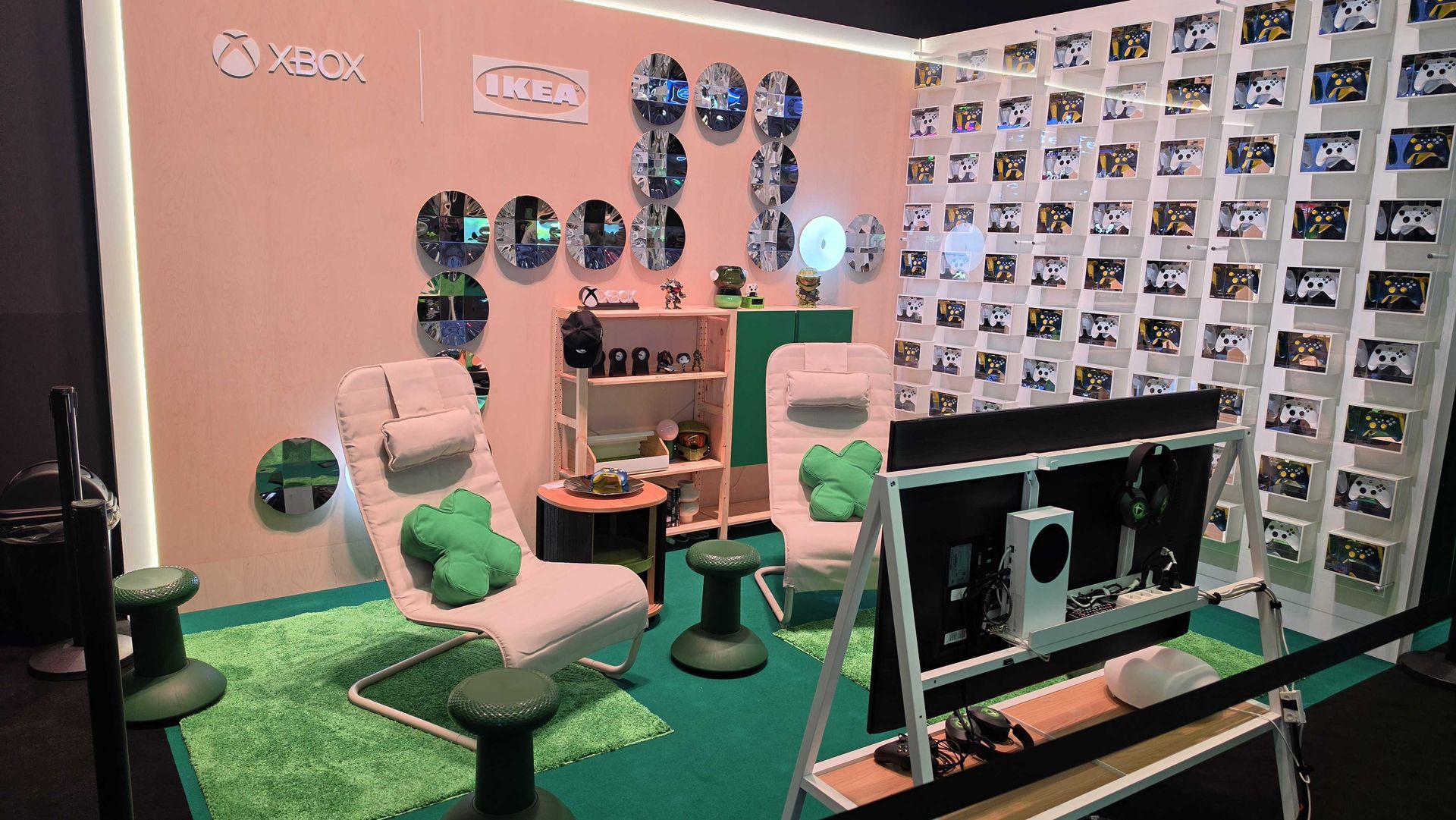
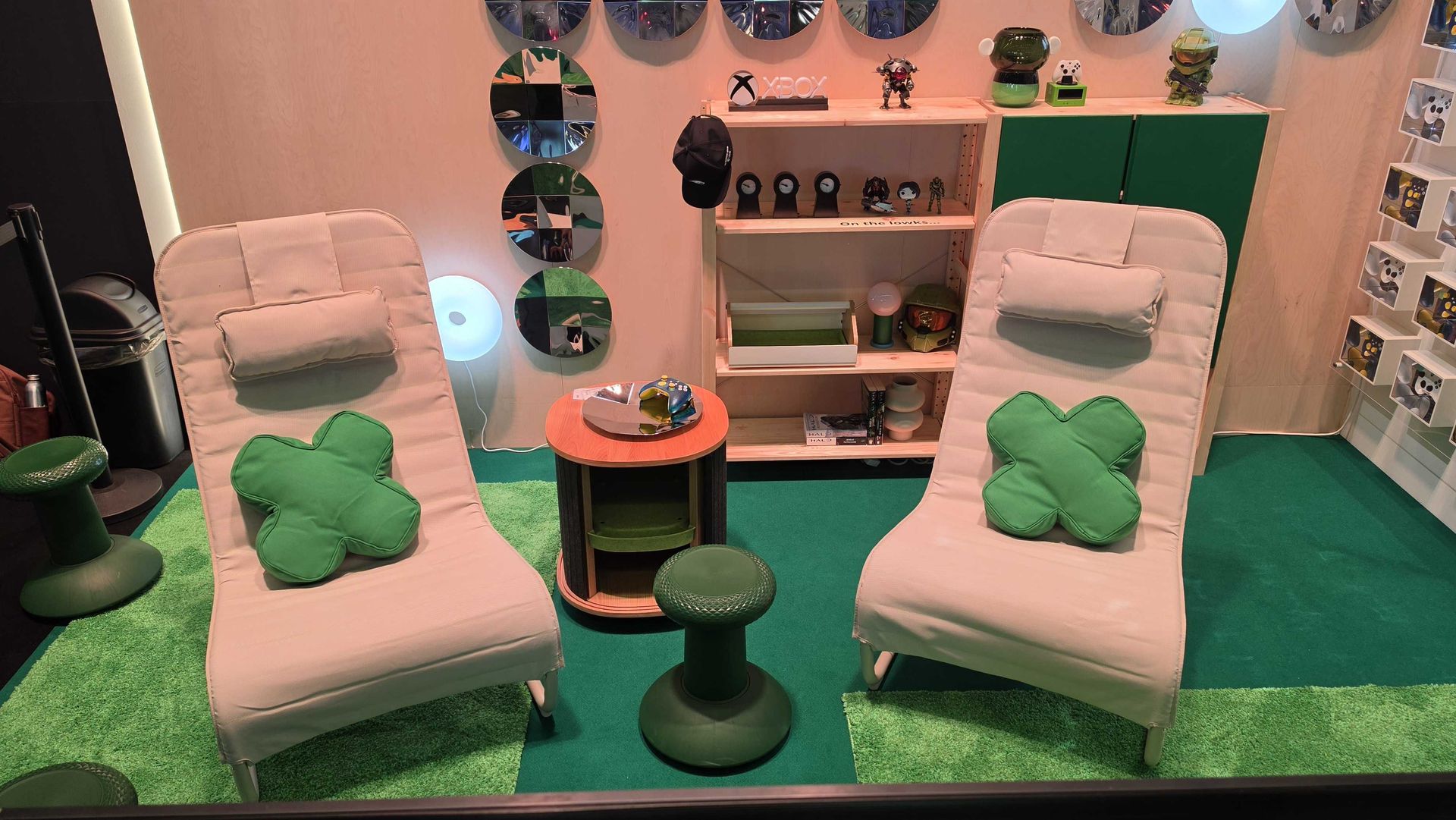
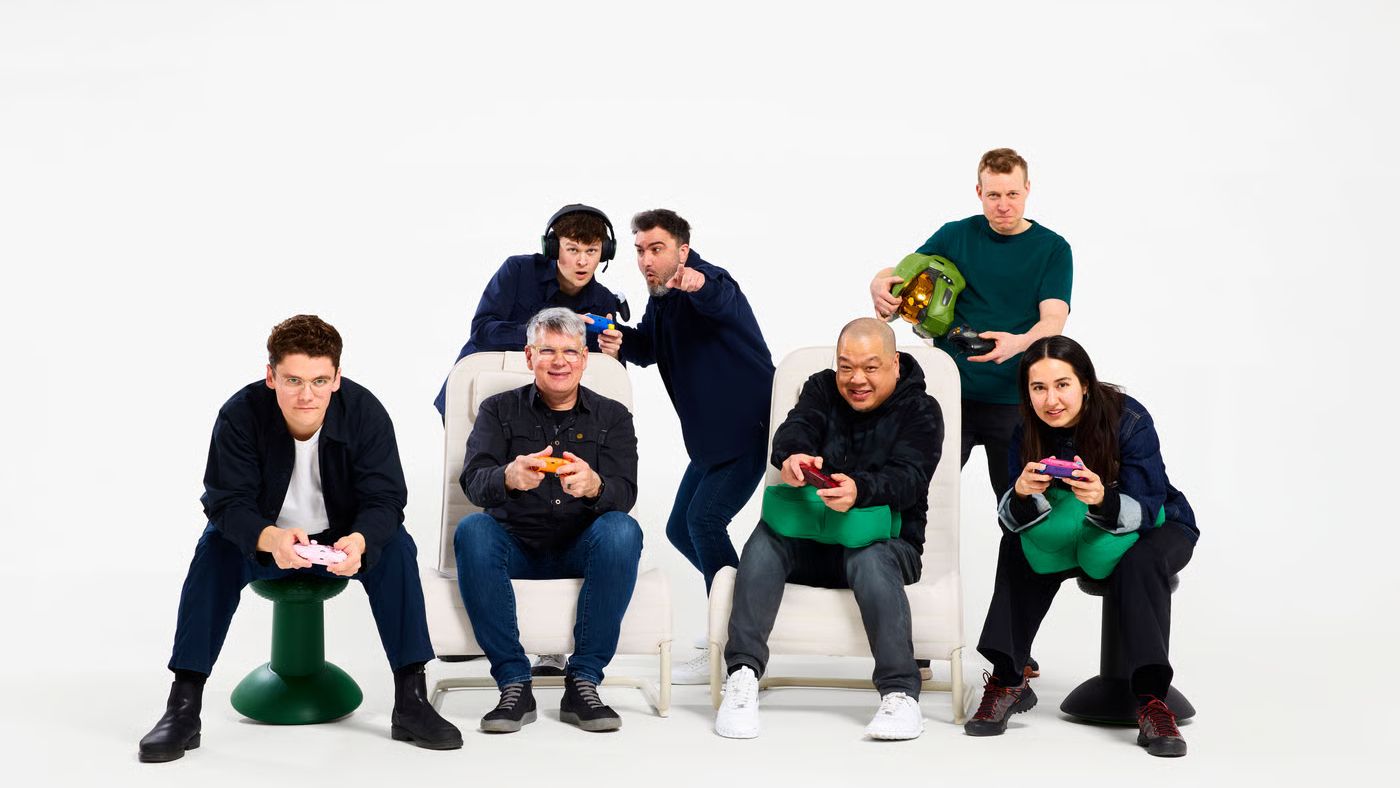
With its multi-functional side table, TV stand, and decorative controller box, this is some smartly made furniture with some genuinely helpful uses. Then, with a thumbstick stool and a D-pad cushion, it's also one of the silliest things I've seen.
Taken as a whole, you can see it's a mix of the playful and the practical. After I spoke to designers at both IKEA and Xbox at the show, it turns out that was the point all along.
"That was present throughout the journey because it's important," explained Philip Dilé, product developer for IKEA of Sweden. "Playing games is playful; it is fun. Solving people's needs connected to that can be very functional and practical. We tried to balance that, for sure.
"We wanted to make things that are relevant for people who play games. Something that reflects you, or that you feel allows you to express yourself...but the object itself is a beautiful piece of home furnishing."
It's a philosophy echoed by Carl Ledbetter, partner head of design at Xbox: "Just like when we design a console, it can be as quiet as people want it. They can put it back and let it recede into their environment. Or they can pull it forward and have it be very expressive. And I think some of those same qualities are in these products in the YXSTABY collection."
(Image credit: Future / IKEA / Xbox)
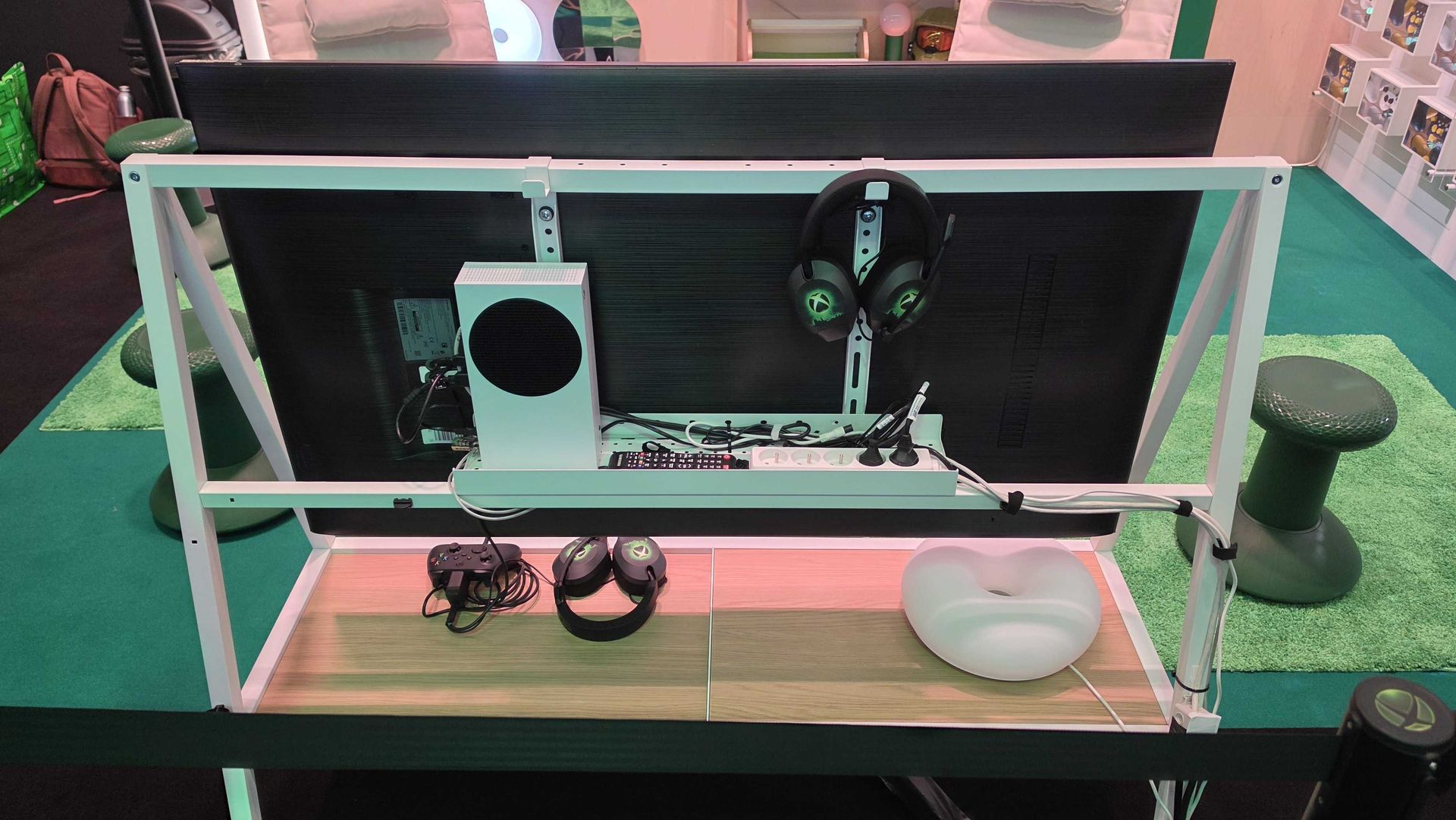
Ledbetter used the controller display box and the TV stand as examples of this. With the former, it's ideal for enthusiast gamers who like to collect controllers and show off their favorite designs in a dedicated gaming space. Meanwhile, with the latter, it serves a "dual life" — whether it's sitting in the corner while you're watching shows and movies, or wheeled front and centre for an intense gaming session.
"That was a big part of our philosophy: how do we make products that can adapt to how people want to use them? Either be as expressive as possible, or just be part of your world," summarised Ledbetter.
You can see that approach clearly in all of the more practical products from the collection.
Take the side table. Closed up and next to your sofa, it could be mistaken for another piece of clean and minimalist furniture you'd find in IKEA. Open up the sliding doors on the front, though, and inside there's space specifically designed to store controllers, headsets, and battery packs — plus the all-important cable management and power connectivity options you need to keep your tech charged between sessions.
(Image credit: Future / IKEA / Xbox)
"This came up time and time again: cable management, charging stuff — where do you put it when you're done? People don't want it all over the place," said Ledbetter.
And Dilé agreed: "We looked at it from the perspective of: what does gaming throughout the home look like? Because, of course, people play at their desks, in the living room, on the couch. In so many different ways. For us, it was important to cater for a lot of these different needs.
"And there's one never-ending challenge working for IKEA: cable management. It always comes up over and over again. I think it's a very real frustration for people.
"Take the TV stand, for example. Yeah, you need to have the console there; you need to have somewhere to charge the controllers, somewhere to put a headset. That was one of the benefits of working together with someone like Xbox that knows gaming, and the hardware, and the players. That made the brief really, really clear."
(Image credit: Future / IKEA / Xbox)
And even though designing for gamers was a big part of their brief, both teams were also well aware that they wanted products that a non-gamer would be happy to live in their home. This meant offering something that wasn't bedazzled with RGB lighting and garish colors.
"You need to cater for gamers, but also for non-gamers or people who are living with gamers, or people who want to have the functionality but still want to have a nice home," said Dilé.
"[We wanted to create] things that maybe your spouse or the people you live with also want to put in your home. These aren't just things that you accept because of your hobby. That was an important balance for us.
"There are so many people who play games, so it’s incredibly diverse. We really wanted to showcase that you can have that [gaming] experience and still have beautiful products that blend into your home to create a nice environment that you want to live in."
(Image credit: IKEA)
That led Ledbetter to reminisce about the first meeting between both parties, where they both discovered they shared very similar design philosophies and were keen to get both of their respective design teams together to bounce around ideas.
The result is this YXSTABY collection — nine products encompassing everything from stools, seats and cushions, to TV stands, storage and display cases — set to launch in October later this year. A weird and wonderful mix of items that speak to both the fun side of gaming and the practical needs in the home.
Ledbetter summed up his hopes for the collection as follows: "Think about it: we create these controllers, and we sell millions of controllers, but we're not in charge of the controller’s home. We make the controller, and then where does it go? We don’t know. So, now, there's this opportunity between IKEA and Xbox to build that home. It felt like a completion of that journey."
Indie games have arguably become a cornerstone of PC gaming, even more so with modern-day entries becoming huge hits such as Hollow Knight: Silksong, Hades 2, and a superhero surprise from developer Adhoc, Dispatch.
In comes Blackwood, a cinematic third-person action indie, set in New York in 2012. You play as Anton Blackwood, an ordinary DVD store owner by day and an assassin by night, taking on contracts and dealing with the challenge of balancing two lives at once.
After playing two hours of Act 1 (the only one available so far) during my short preview at Gamescom 2026, I can see Blackwood'spromise. It's quite evident what developer AttritoM7 Productions is aiming for with its gun-fu style gameplay, heavily focused on explosive, cinematic enemy takedowns, intense gun fights, and stylish maneuvers.
Blackwood is very clearly inspired by classic martial arts and gun-fu movies, notably John Wick, and even borrows elements from classic games like Dead to Rights and Max Payne. Players can either choose to challenge enemies in a gung-ho play style, rushing out and executing different takedowns you can pick before setting out on a mission.
A more tactical approach is also possible, staying in cover and strictly going for headshots only (fitting for a John Wick-styled game), which would perfectly suit the hardest game difficulty.
Blackwood nails enemy takedowns, which is easily the one aspect that will keep me coming back to replay missions I can once Act 1 is complete. (Video Credit: AttritoM7 Productions)
The takedowns swiftly shifting straight back into gunplay are where Blackwood absolutely shines, and I can't go without stressing how impressed I am with what AttritoM7 developers were able to pull off there. In so many sequences, I was instantly taken back to those iconic moments in John Wick movies, where Keanu Reeves pulls no punches.
Ultimately, what holds Blackwood back is jankiness in combat, especially during hand-to-hand encounters. During multiple scenarios, there are bugs and stiffness in certain animations from Anton and enemies that I couldn't ignore.
Controlling Anton can be a struggle sometimes, as certain button prompts are unresponsive while in cover, and since enemies can flank the player, that unresponsiveness can lead to some pretty frustrating deaths.
The weapon recoil feels great, and I can see that AttritoM7 designed Blackwood's gunplay to have players make every shot count — which is especially important, since preparing for missions requires you to purchase ammunition with dirty money earned from fulfilling contracts.
However, I set aim assist to its lowest level (minimal), and it felt like the reticle was fighting against my control of the joystick — and it also doesn't help that the ultrawide field of view resolution desperately needs adjusting.
The opening street shootout was a great way to kick the game off, and I very quickly learned that enemies are unforgiving, requiring the player to be wary of a gung-ho playstyle. (Video Credit: AttritoM7 Productions)
Some of the audio in both combat and some NPC dialogue feels a bit out of place too, particularly during one of the early contract missions in a subway station. There are many elements like this, especially involving animations (notably Anton's run and other NPCs' movements), that end up impacting immersion.
Fortunately, while Blackwood isn't launching in early access, its remaining Acts will be released later for free (for existing owners), with Act 2 planned for March 2027 and Act 3 in September 2027 on Steam. Hopefully, with the release of the following content, patches can be made to significantly tweak and adjust those pain points.
Blackwood is a very promising game and has plenty of opportunity to shine among some of the best indie games available. However, it's a little rough around the edges at the moment, and a few steps away from realizing its potential.
They're intended to supersede the previous PlayStation Pulse models
There's no word on pricing yet
Sony has just unveiled the "next line of PS5 audio products" with two new PlayStation Pulse wireless gaming headsets.
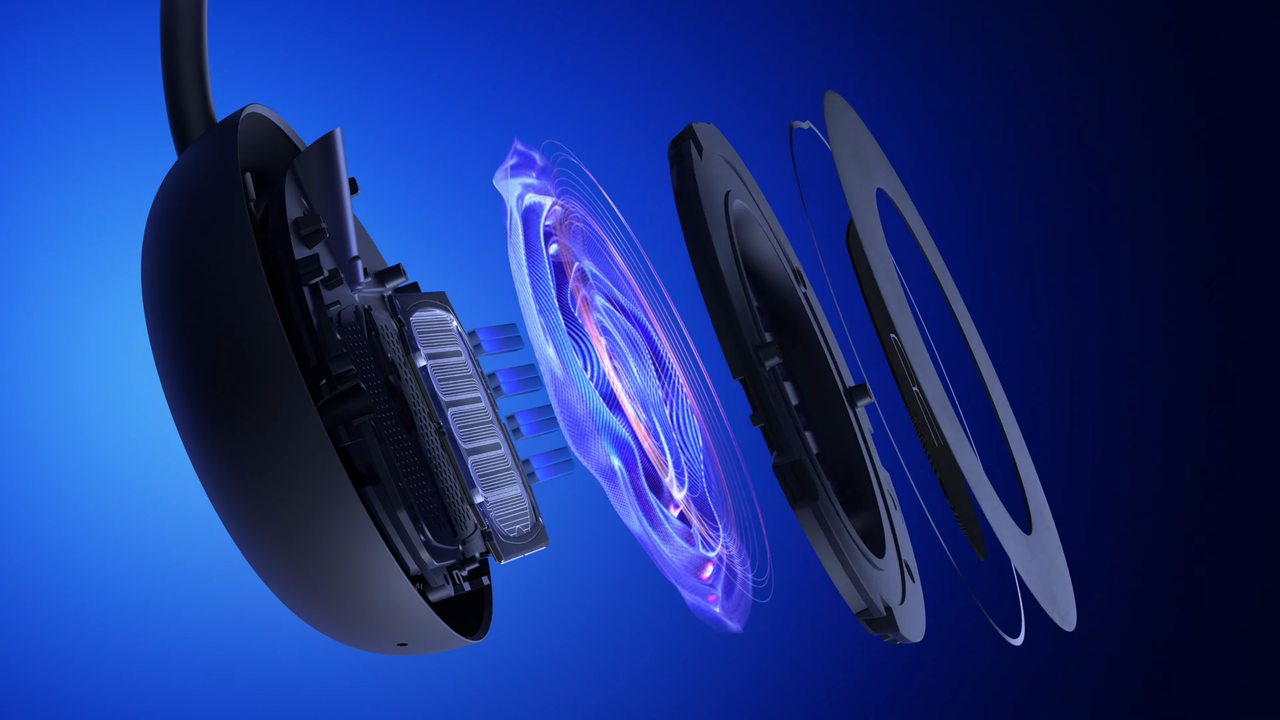
Both models are intended to supersede the old PlayStation Pulse Elite, which was released in 2024. The new PlayStation Pulse Edge boasts custom planar magnetic drivers that deliver "studio-inspired" sound and has eight magnets under the hood.
It comes with a detachable boom mic offering AI noise rejection alongside a USB Type-C adapter and premium carrying case.
Major features include built-in volume controls that integrate with the console's operating system, a game audio and chat balance slider, and active noise cancellation.
The upcoming PlayStation Pulse, in contrast, is positioned as a more entry-level model. It cuts the number of driver magnets down to four, which likely means less bass and reduced clarity. There's no boom mic either, so you need to rely on an integrated microphone instead.
It also loses the game audio and chat balance feature, lacks active noise cancellation, and isn't bundled with any kind of case.
Sony has been quite cagey about pricing, with no word on how much either model will cost on the official PlayStation Blog. This makes it hard to determine whether this refreshed line will offer good value, especially given the abundance of excellent headsets currently offered by third-party brands like SteelSeries and Corsair.
We do know that both models will be available in both white and black, however, and will hit shelves early next year.
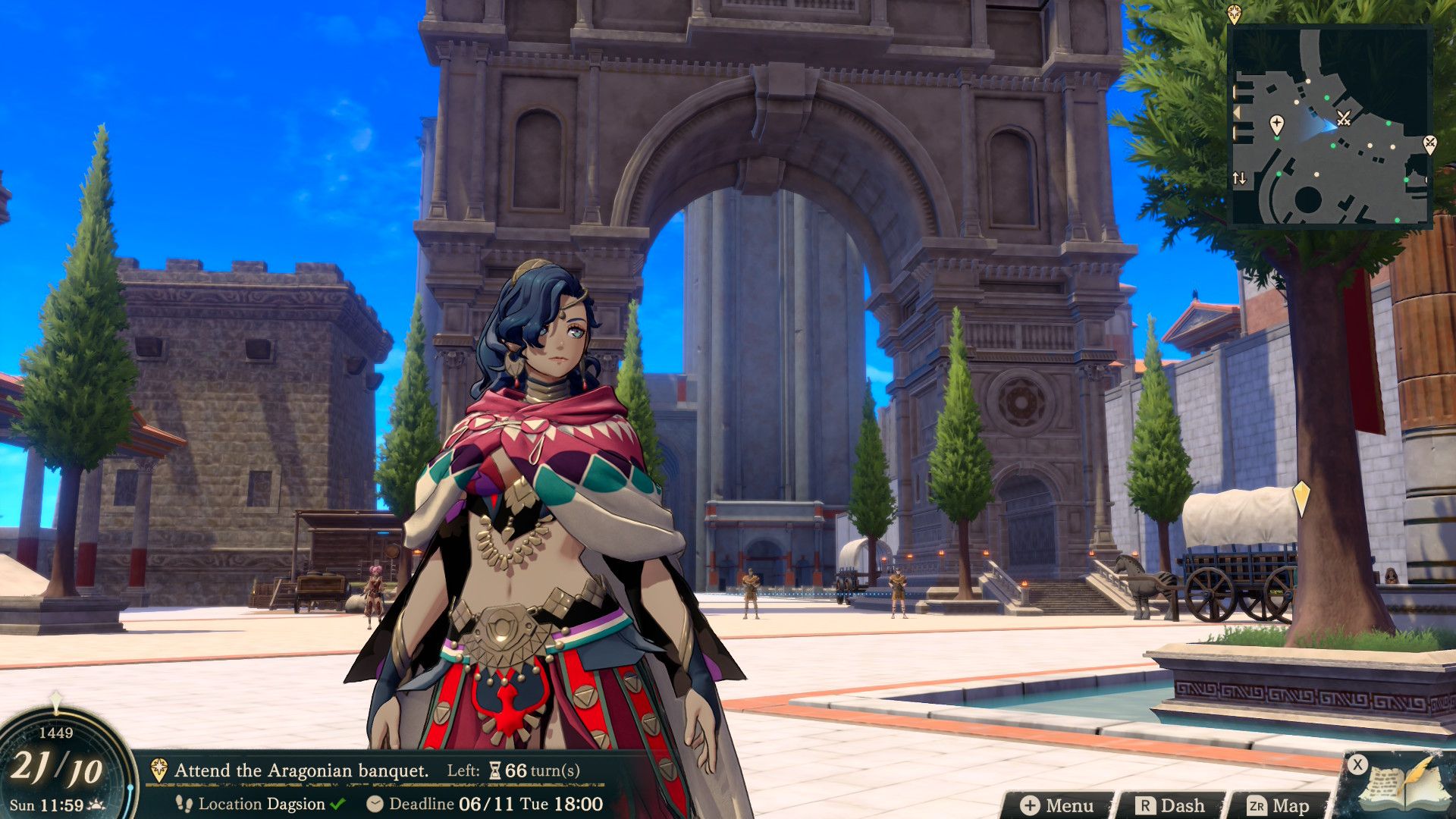
Every now and then, a game comes along that doesn’t just entertain and engage me — it totally enraptures me. It stands as a pure work of art that reminds me of exactly why I love this medium and captures the essence of a book you just can’t put down. For me, that’s exactly what Fire Emblem: Fortune’s Weave is — an engrossing experience that I simply can’t get enough of.
Review info
Platform reviewed: Nintendo Switch 2 Available on: Nintendo Switch 2 Release date: September 17, 2026
This Nintendo Switch 2-exclusive tactical JRPG offers a combination of excellent turn-based combat and rewarding exploration, alongside captivating storytelling and a great cast of characters. And its sheer scale cannot be understated — I’ve spent north of 200 hours in Fortune’s Weave, and there’s still so much more I have to see.
I’ve played through each of the four Flame Lords’ paths and taken the battle to the demonic god Balor, and I’ve got a number of thoughts about gameplay, visuals, and narrative to share. So, without further ado, let’s take a look at why Fire Emblem: Fortune’s Weave is one of the best Nintendo Switch 2 games you can play right now.
Four paths converge
(Image credit: Nintendo)
I won’t get into the weeds of the premise in Fortune’s Weave, but to sum up, you’re able to play as four heroes, known as the Flame Lords, as they compete in a grand arena event known as the Heroic Games. The champion of the Games will be granted a wish of their choosing by Divine Sovereign, Solel, who rules over the land of Dagda and its capital, Dagsion.
After completing the brief prologue — which acts as a solid tutorial for newcomers — you can select any of the Flame Lords’ paths and play through them in any order you like from a central hub area. This approach works nicely, as you don’t have to replay the prologue each time you start a new journey, and you’re able to dip in and out of each story as you please.
This makes up Part I of the game, which was probably my favorite overall. Although some cutscenes and quests are the same across the four stories, they still feel distinct and gripping in their own right. Each pathway has a distinct tone and feeling to it, with each Flame Lord having a deeply personal ambition and a unique set of close allies. For instance, the vengeful and skilful Leda is joined by the womanizing bard Sirocco and protective warrior Buccar, whereas Dietrich is partnered with the excitable Esmeralda and bizarre and eccentric missionary, Fabio.
The core cast of characters is truly excellent, but you’ll also be able to recruit more allies as you progress the story, including foes you face in the Heroic Games and parties of interest across Dagsion. Many of these units can be recruited across all four stories, though their recruitment requirements often vary, which encouraged me to experiment with different characters across different stories.
Best bit
(Image credit: Nintendo)
Anything with Dietrich and Fabio. They're an unlikely yet incredible duo, with Dietrich's bloodlust and Fabio's eccentricity somehow combining to create some of the most hilarious — and sometimes emotive — dialogue in the series.
What makes the multi-path system click is that you’ll uncover revelations in one story that answer questions — or even pose new ones — about events in one of the other paths. There are plenty of twists and turns — some perhaps more obvious than others — which change the way you perceive certain characters and add substantial depth to units that may seem less significant on some paths than others.
This cross-path storytelling is done really well, and the narrative is strong, more generally. I won’t spoil anything, but it’s got its fair share of shock instances, touching moments, and character development that help it to hit — and if not, exceed — the standards that the series has set thus far.
Gameplay-wise, things are kept pretty fresh too. Each Flame Lord has specific abilities that they can make use of on the world map and beyond, with Deitrich able to battle warriors and learn their combat arts, Leda capable of holding performances to unlock unique materials, Theodora able to recruit warriors to assign battalions, and Cai skilled enough to wrangle mounts for himself and his allies.
And luckily, all of this comes together nicely in the latter parts of the game. While Part I is more individually tailored to each Flame Lord and their journey through the Heroic Games, paths begin to converge in Part II, known as the War Arc. Again, I won’t spoil anything here, but Part II offers far less variation across each pathway, but there are still some interesting differences in dialogue, and the way you approach battles will likely change considerably.
I loved how the enormity of Fortune’s Weave came together in Part III, though. Here, you’ll be able to unite all of the Flame Lords beside the game’s true protagonist, you. It’s awesome that you’re able to make use of all of the heroes’ unique abilities and even re-recruit old units for the final battle against the demonic lord, Balor.
Being able to bring all of your units, inventory, and abilities into a singular, epic finale is incredibly rewarding and makes building the ultimate army even more enjoyable.
I see grids in my sleep
(Image credit: Nintendo)
Let’s delve a bit more deeply into gameplay, which, as you’d expect, is outstanding in Fortune’s Weave.
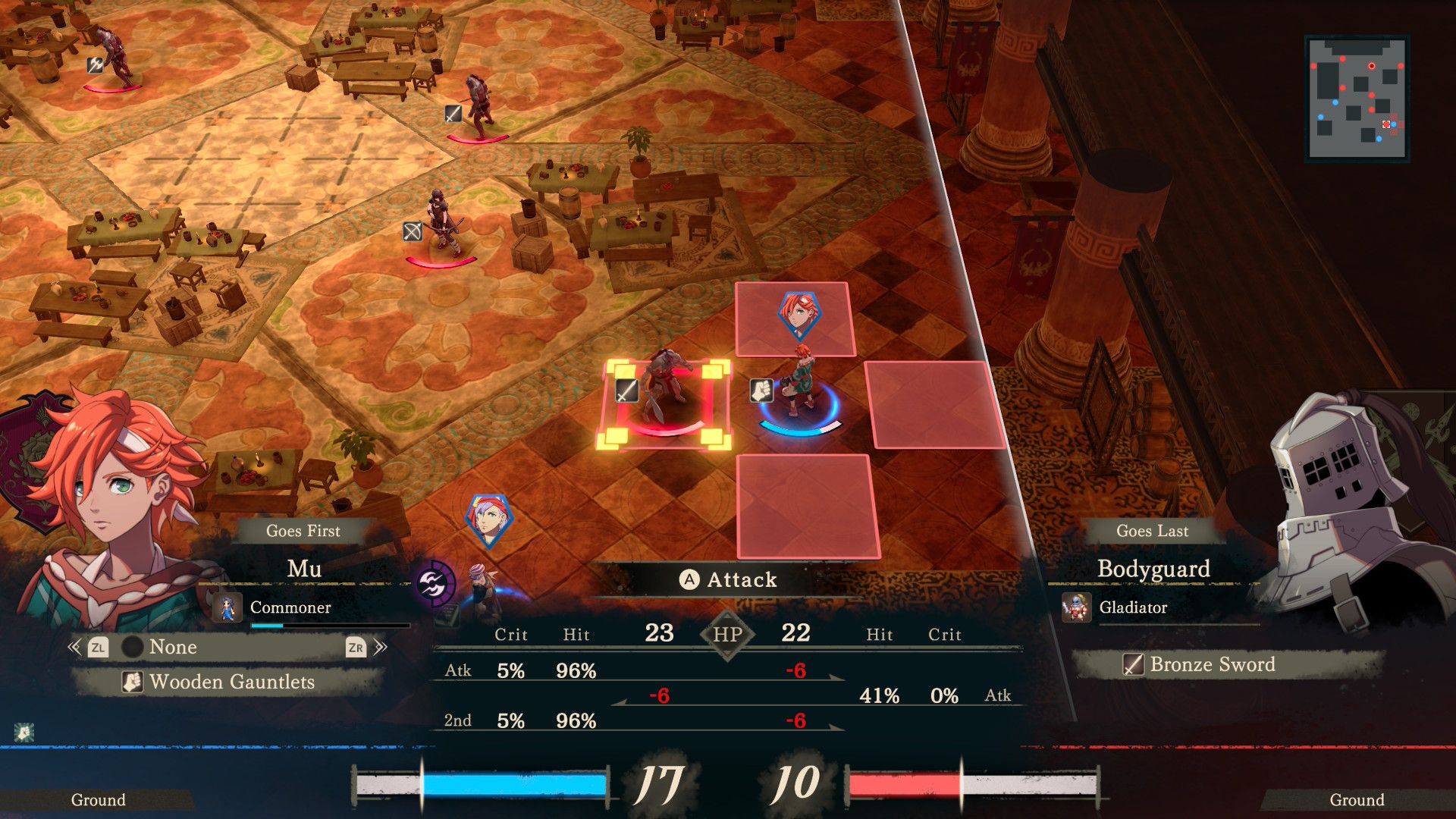
For the most part, you’ll be battling on classic grid-based battlefields. Honestly, I’ve fought on these so many times I’m starting to see them in my dreams. It's that classic turn-based Fire Emblem that you know and love, with some returning features, like Combat Arts (which provide benefits in exchange for weapon durability) and gambits (in Theodora’s path), for instance.
But there are new mechanics too, like Blaze Arts, which are unique to specific units. By sacrificing HP, Blaze Arts enable you to deal more damage, move further, buff allies, and more. The health trade-off means they don’t feel like a cheat code, and they also fill a blaze gauge, which will burst at a certain point, forcing you to work with reduced HP for the rest of the map.
(Image credit: Nintendo)
Standard battles feel brilliantly balanced, and I never felt that difficulty spikes were too severe or that I had to grind much to push past my opponent. When you do want to grind, though, you can enter into a skirmish against foes on the world map, or try your luck in a dungeon.
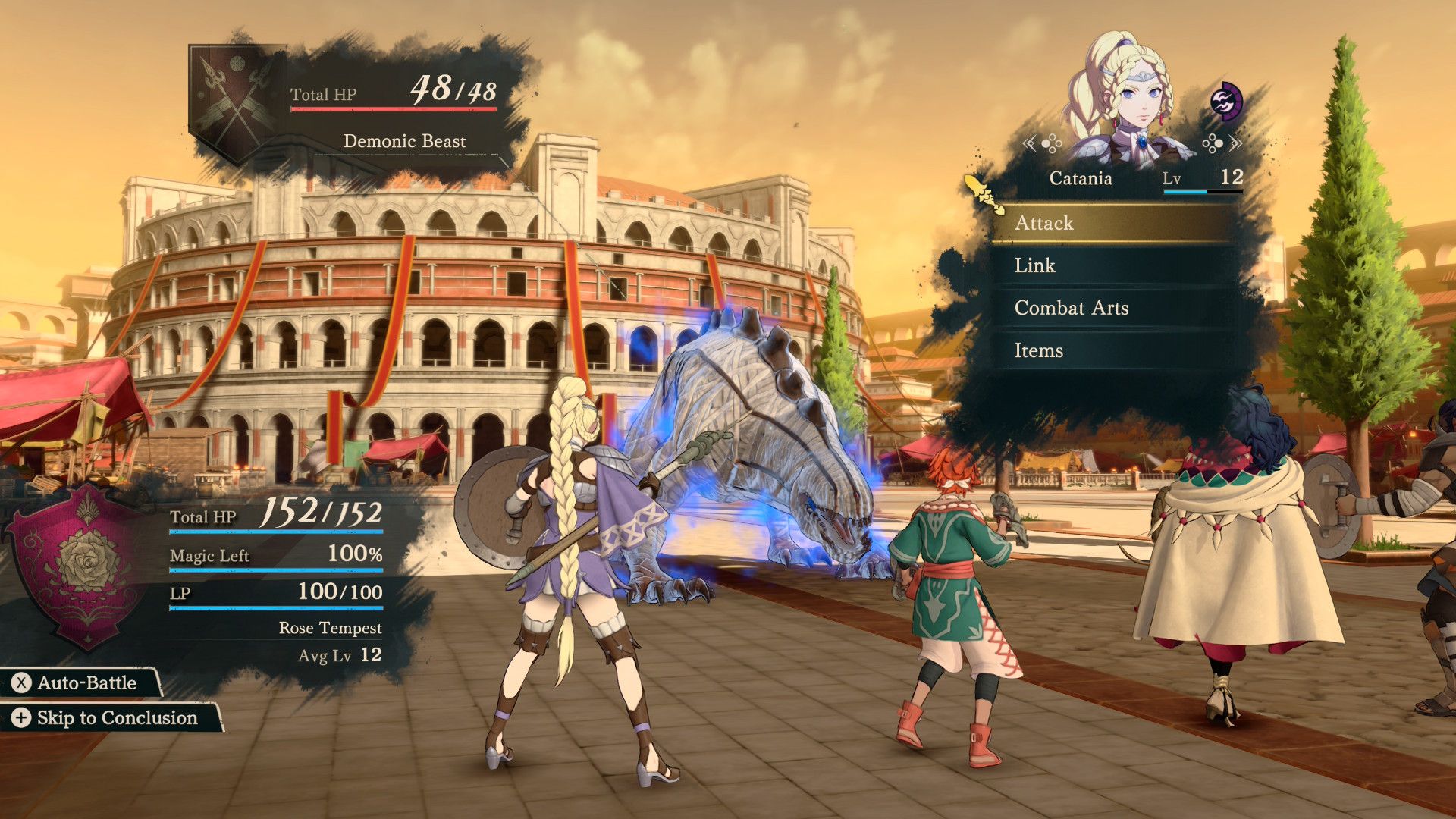
Dungeons work a bit differently, and you’ll move around a 3D area to face foes in Clash Battles. These are a bit different and combine light action segments with more traditional turn-based JRPG combat rather than tactical grid-based battles. I think that they’re a great option if you want a break from the usual maps and want a faster-paced method for gaining experience or class proficiency for your units.
That’s not to say that the standard maps aren’t engaging though; quite the opposite. There’s some excellent map variety, and some battles will ask more of you than just routing the enemy. In some cases, I had to defeat more giants than my opponents, rescue defenseless citizens from a huge serpent, or even collect missing cargo before thieves made off with it. Battlefields are also delightfully diverse throughout the heroic games, and become even grander as the stakes rise towards the back end of the game.
If at any point you’re struggling, you can make use of Blessings, enabling you to rewind to a previous turn, increase your strength, or reduce the cost of Combat Arts, for example. I kept usage of these to a minimum, as I was playing on the slightly more gracious Normal/Casual difficulty. But there’s also a Hard mode, and you can play Classic (where units are permanently lost when they fall in battle), where Blessings will likely feel a bit more necessary.
All in all, combat is incredibly addictive, varied, and offers impressive depth. Building a squad with the right balance in terms of classes and weapons is massively satisfying, and breaking things up with a bit of dungeon crawling keeps the experience feeling fluid and fun for the game’s full runtime. And given that we’re talking about a title that will take you well over 100, if not 200, hours to finish, that’s an impressive feat in itself.
Beyond the battlefield
(Image credit: Nintendo)
Before I wrap up, I want to touch on my experience with Fortune’s Weave outside of battle. There’s quite a bit to do, both within the capital, Dagsion, and in the land of Dagda more broadly.
Dagsion has all of the stuff you’d expect. A training ground to boost your aptitude with specific weapons, a shopping district, an inn for viewing support conversations and restoring motivation (which is used for training and increasing your Blessings level), and an area where you can take an exam for whatever class you want to be.
A lot of your time in Fortune’s Weave will be spent using these facilities to increase your weapon levels, boost support with your allies, and acquire better equipment.
If I were to nitpick, I’d argue that the support grind can become a little tiresome for some units. If you want to recruit a new ally who requires a high support level, it can take quite some time to fill the gauge and add them to your team, though some are easier to add to your roster than others.
There are more things to do, though, like going to the Theater, taking a bath at the Thermae spa, and accepting subquests from distressed townsfolk. Perhaps the most unusual option, however, is Bird Time.
Here, you can feed the Pale Raven (the main protagonist in bird form) to increase your support level for later in the game. Is it a bit goofy? Yeah. Does it get a bit repetitive? Sure. But I kinda love the feeling of getting that sweet ‘perfect bird time’ message when you have a successful interaction with your ally.
Outside of Dagsion, you can enter the aforementioned dungeons, search for materials, enter into some smaller hub areas, and speak with wandering merchants. The world map is easy to navigate, but you’ll only have a set amount of time to explore before the day of the Main Quest arrives. This helps the game to maintain good pacing throughout, and while there’s a ton to explore, it’s broken up with main story goodness in healthy intervals, in my view.
(Image credit: Nintendo)
On a technical level, Fire Emblem: Fortune’s Weave is pretty solid too. It keeps a lot of the enticing visual style seen in Fire Emblem: Three Houses, but being a Nintendo Switch 2 exclusive, there’s a clear step-up in terms of resolution, and character models look excellent too. Be it Fortuna, whose vibrant hair pops with eye-catching yellow, or the striking, rich reds of Bertrand, the White-Maned Demon’s clothing, I found myself impressed by the visuals pretty consistently.
Some background textures do look a bit basic, however, and while the game runs smoothly, it’s not targeting a silky 60fps (but this never bothered me, personally).
I also want to shout out the game’s excellent soundtrack, which is more eclectic than you may think. There’s the classic orchestral-style stuff, which creates a real sense of grandeur and high stakes, but there are also spacey, synth-led tunes in the temples, which create ambience and intrigue, as well as electronic music with pumping bass in some mysterious hidden areas.
On the topic of sound, the voice acting is exceptional in Fortune’s Weave. You feel each character’s unmistakable personality through just about every performance, and this only makes you feel more attached to your units. The perfect example is Fabio, whose voice acting is just as outlandish and unusual as you’d hope for the character, though he also has some authentic, impassioned emotional scenes that stole the show. Great stuff all round.
To conclude, then, Fire Emblem: Fortune’s Weave is a masterful tactical JRPG that has it all. Addictive, depth-filled combat, fresh mechanics, a well-paced, multi-layered story, and a likeable cast of characters. It hypnotized me from minute one, all the way to the end, and its careful balance of tight turn-based gameplay and exploration really worked for me. As things stand, I consider Fortune’s Weave to not only be among the best Fire Emblemgames in recent memory, but also the best game on the Nintendo Switch 2 thus far.
Whatever you do, don’t skip this one.
Should you play Fire Emblem Fortune’s Weave?
(Image credit: Nintendo)
Play it if…
You want to sink your teeth into an epic RPG Fire Emblem: Fortune’s Weave is a huge game that will easily take you north of 100 hours to finish if you want to complete each Flame Lord’s path and clear every subquest. If you’re looking for a true epic to get your money’s worth out of, this is the game for you.
You’re a fan of character-driven narratives Yes, Fortune’s Weave features a very high-stakes story, but the narrative is largely centered around the four Flame Lords, and their personal ambitions in the Heroic Games. Watching each story unfurl, and seeing how each hero develops is a joy, so if you’re into more character-driven stories, then you’ll likely enjoy this.
Don’t play it if…
You’re not a big fan of tactical combat There are some light action segments and swifter turn-based dungeon battles in Fortune’s Weave, but a lot of the time will be spent commanding your units on a grid. If you’re not into the more strategic style of other Fire Emblem games, then you may not have the best time with this one either.
You need top-tier performance from your games While Fortune’s Weave looks pretty solid, it’s by no means pushing boundaries as far as visuals go. It’s very stable, in terms of performance, but it’s also not going to give you the buttery smoothness of other Switch 2 games, like Metroid Prime 4: Beyond, say, which can even run at 120fps in handheld mode.
Accessibility features
There are a handful of ways to customize your experience in Fire Emblem: Fortune’s Weave. You can make UI adjustments, like altering the size of the battle minimap, toggling the grid display on and off, you can personalize camera controls and sensitivity, and choose from a number of different subtitle languages.
There’s even an Enemy Masking mode that changes the appearances of insectile enemies if you have arachnophobia or entomophobia. There is no colorblind mode, or similar.
(Image credit: Nintendo)
How I reviewed Fire Emblem: Fortune's Weave
I spent just over 200 hours with Fire Emblem: Fortune’s Weave, during which time I played through the main story (including each of the Flame Lords’ individual paths), completed just about every subquest, and recruited countless allies.
For the most part, I played in docked mode, with my Nintendo Switch 2 connected to my Sky Glass Gen 2 TV and Marshall Heston 120 soundbar. However, I did dip into handheld mode now and then, and usually had my Sennheiser CX 80U wired earbuds connected when playing on the go.
Valve's popular Steam Deck handheld pushed handheld gaming PCs into the mainstream with its affordable, Linux-based console, and its potential successor seemingly aims to make the same impact. Speaking to IGN's Jacqueline Thomas, Valve software developer Pierre-Loup Griffais touched on the fabled 'Steam Deck 2' and whether the ongoing RAM crisis could affect its development.
We want to make sure there's a very delineated performance improvement for something like a future Steam Deck.
Pierre-Loup Griffais, Valve
When asked whether ongoing hardware shortages — which have already affected pricing for its Steam Machine PC and Steam Frame VR headset — have changed how Valve thinks about a Steam Deck successor, Griffais answered, "Not really." For now, it sounds like any potential 'Steam Deck 2' will target the same balance of performance and affordability as before, but is that realistic?
Steam Deck performance was crushed years ago
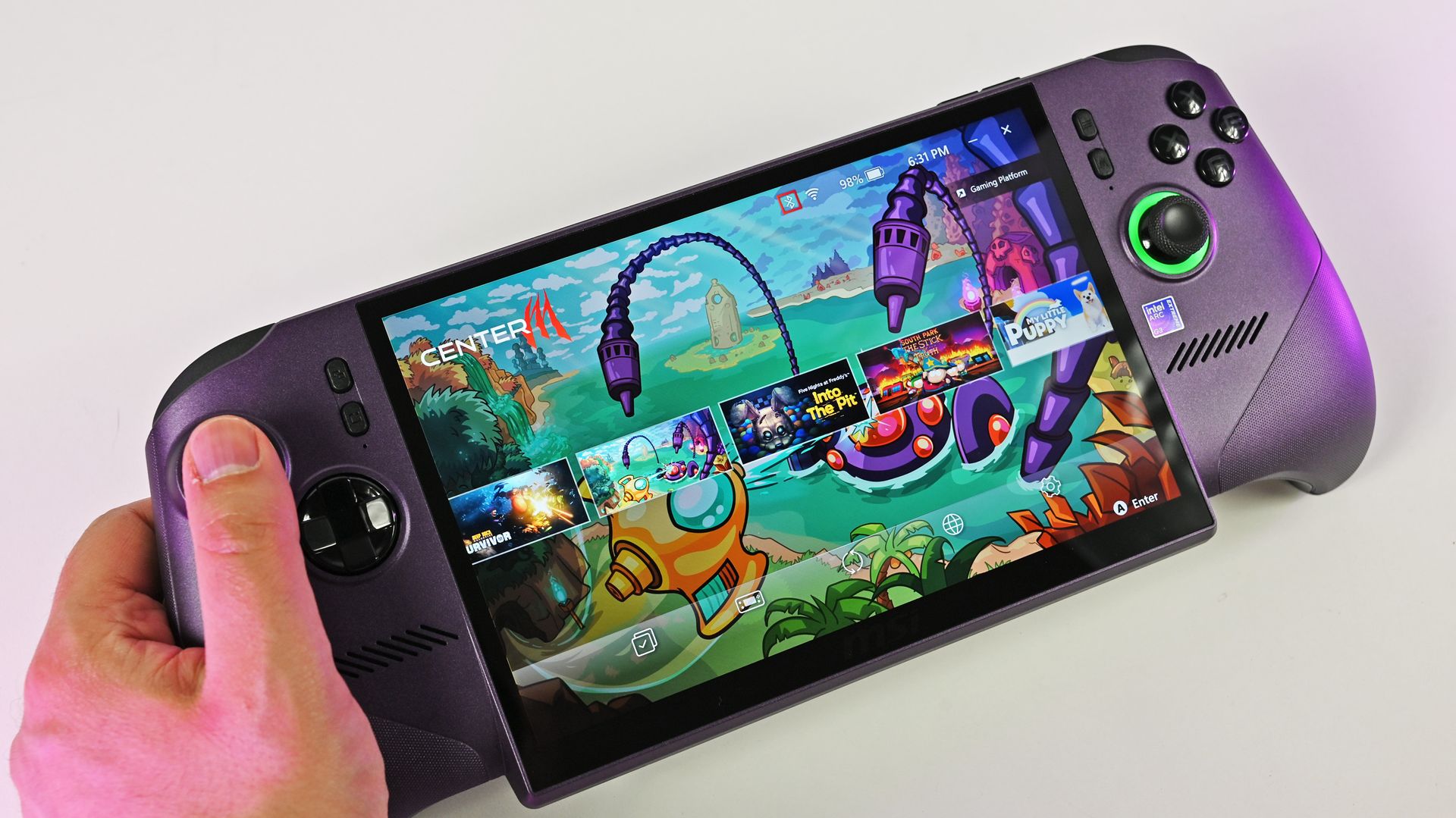
MSI Claw 8 EX AI+ stands as one of the best Windows-based handhelds today. (Image credit: Daniel Rubino)
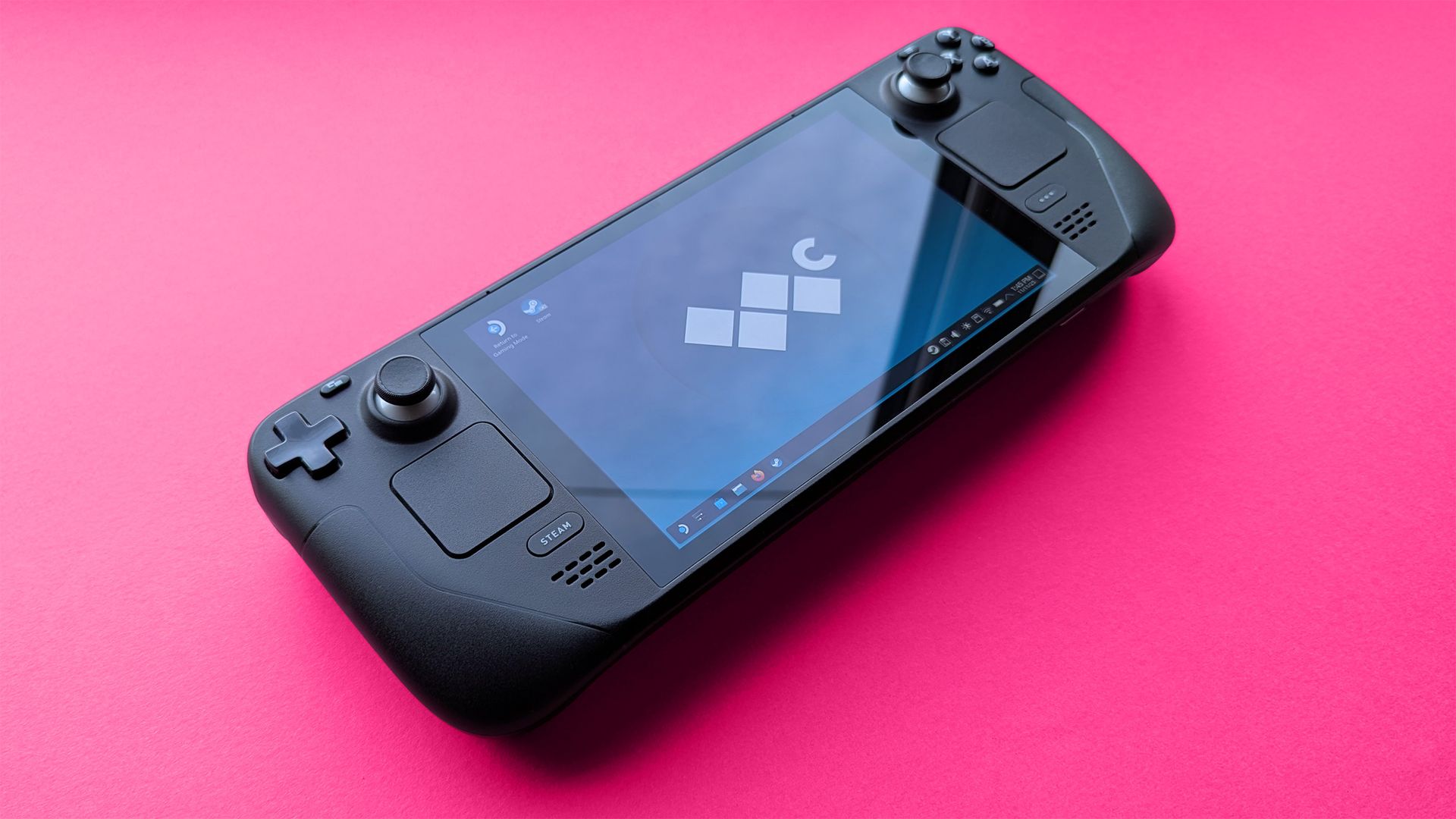
For clarity, I use my Steam Deck almost every day, and it still powers through my library of built-for-Windows PC games with relative success. However, there's no denying its age, and the custom-made Zen 2/RDNA 2 APU doesn't stand a chance in many of the AAA games released in the past few years. For those demanding titles, plenty of Windows-based handhelds are far better suited.
Unfortunately, much like the Claw [8 EX AI+], the Steam Machine is a premium engineering marvel suffering from historically terrible macroeconomic timing.
Daniel Rubino, Windows Central
In that, I'm trying to stay grounded when I hear that Valve's plans haven't changed for the Steam Deck 2 (or whatever it might be called), because that never necessarily meant it would target the same price point as its first handheld. After all, the company just launched its new Steam Frame VR headset for $1,059, which is higher than it originally planned (via PC Gamer).
So, Valve is stuck between a rock and a hard place: sourcing a follow-up (presumably also custom-made) processor and the corresponding components for a mass-produced handheld without pricing it so high that it loses mainstream appeal. It won't be easy, and I wouldn't be surprised if we don't hear anything concrete about the Steam Deck 2 for a few years.
Join us on Reddit at r/WindowsCentral to share your insights and discuss our latest news, reviews, and more.
CallRail’s Meagan McLoughlin explains what to audit before/after Local Services Ads migrate into Google Ads, from historical reports to tracking numbers and lead quality.

 Login