❌

Reading view

What Is Dark Energy? The Mystery Behind the Universe’s Accelerating Expansion

Dark energy is one of the least satisfying names in astronomy because it sounds more specific than it is. Scientists did not discover a glowing substance called dark energy. They gave that name to the unknown influence associated with the accelerating expansion of the universe. The evidence is strong that the expansion is speeding up […]

The post What Is Dark Energy? The Mystery Behind the Universe’s Accelerating Expansion appeared first on Curiosmos.

  •  

Largest-Ever Physics Survey Raises New Doubts About Our Model of the Universe

Dark Matter Cosmic Web ConceptPhysicists around the world remain deeply divided on key mysteries of the universe, from dark matter to quantum gravity. The standard cosmological model failed to gain majority support, and no leading theory dominated the survey results. The largest survey ever conducted among physicists worldwide reveals surprisingly little agreement on some of the field’s biggest mysteries, [...]
  •  

Dark Energy May Not Be Constant After All, New Supernova Survey Suggests

This is an artist’s concept of a Type Ia supernova exploding in the intergalactic space between galaxies within a galactic cluster. Image credit: Alex Parker / NASA / SDSS.

Astronomers have combined 2,884 Type Ia supernovae -- which are used to measure cosmic distances -- with cosmic microwave background and galaxy-mapping data, deepening cracks in the standard ‘cosmological constant’ model.

The post Dark Energy May Not Be Constant After All, New Supernova Survey Suggests appeared first on Sci.News: Breaking Science News.

  •  

Has Dark Matter Finally Been Detected?

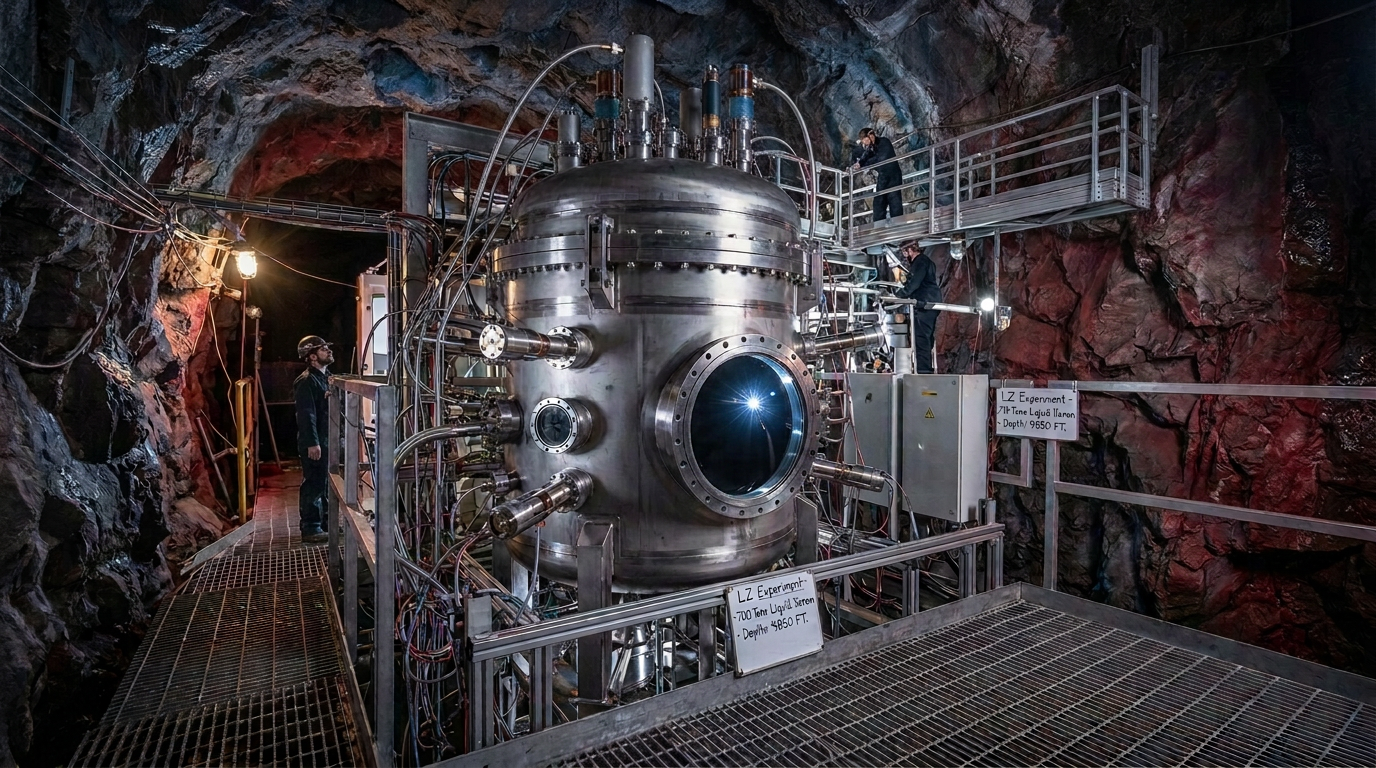
The LUX-ZEPLIN experiment in South Dakota recorded an unexplained flash of light in 2023, suggesting a potential dark matter particle interaction. While the statistical significance of 2.6-sigma indicates low odds of error, much more evidence is needed before confirming a dark matter discovery, which remains elusive despite ongoing research.

  •  

NASA’s Roman Space Telescope Could Soon Unravel the Greatest Mysteries of the Cosmos—Here’s What to Expect

Roman Space Telescope
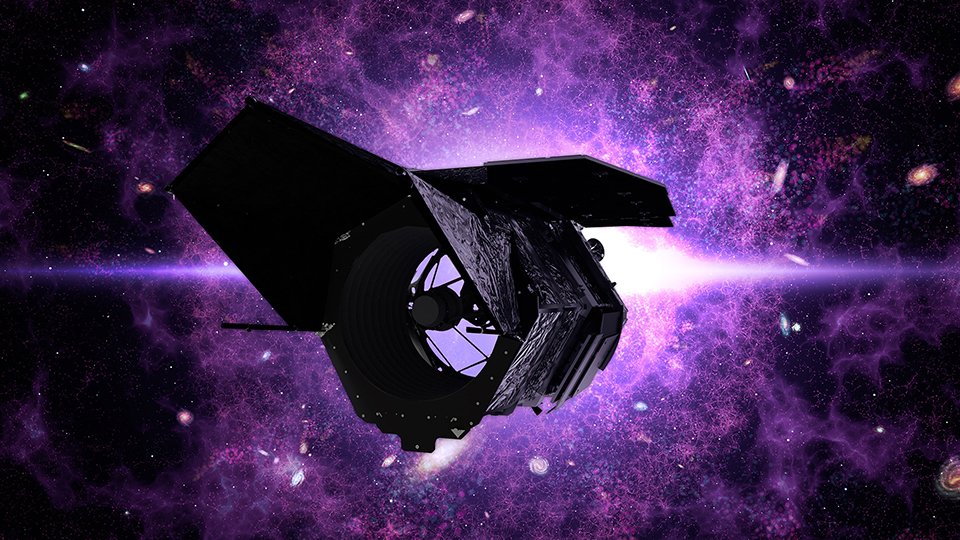
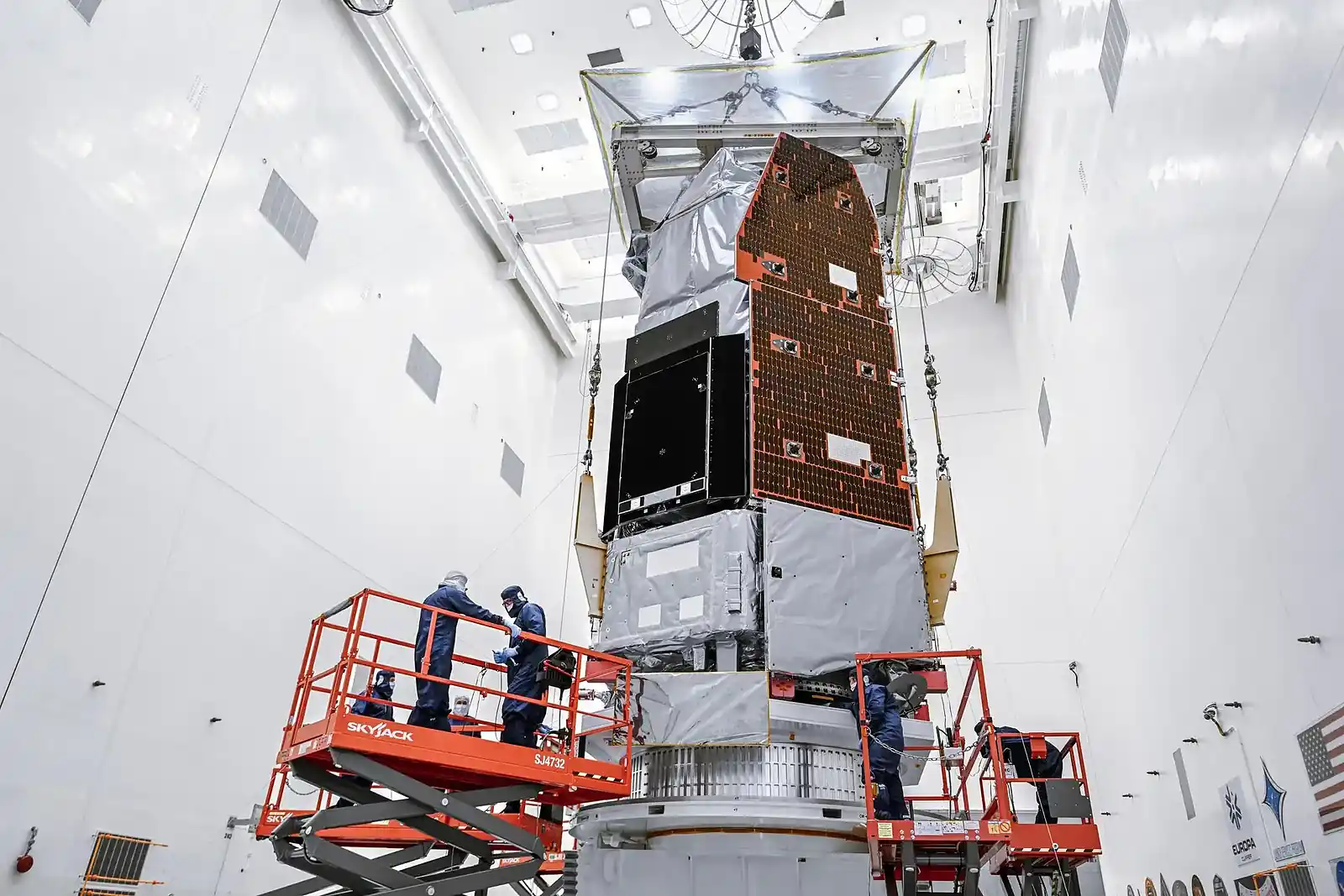
Artist’s concept of the Nancy Grace Roman Space Telescope (Credit: NASA).

Welcome to this special edition of The Intelligence Brief… This week, NASA is preparing to launch the Nancy Grace Roman Space Telescope, its next flagship space observatory and a mission poised to transform our understanding of distant worlds and some of the universe’s greatest mysteries. In our analysis, we’ll be looking at 1) how Roman’s powerful Wide Field and Coronagraph instruments will survey the cosmos on an unprecedented scale, 2) how the telescope could discover thousands of new exoplanets—including elusive rogue worlds—and directly image planets around other stars, 3) how Roman will survey more than a billion galaxies in search of new clues about dark matter and dark energy, and 4) why its combination of Hubble-like image quality and an enormously wider field of view could usher in a new era of astronomical discovery.

Quote of the Week

“We are poised at the brink of unfathomable scientific discovery.”

– Julie McEnery, Roman’s senior project scientist at NASA Goddard

If you enjoy the news and perspectives offered by The Debrief, make sure that you aren’t missing our stories by making us one of your “preferred sources” on Google News. You can simply follow this link to add The Debrief to your list of favorites, and you can read more about Google’s preferred sources in our article here.


RECENT NEWS from The Debrief


NASA’s Nancy Grace Roman Space Telescope Prepares for Lift-Off

On Sunday morning, NASA will set a new milestone with the launch of the Nancy Grace Roman Space Telescope, setting the course for discoveries that may include new insights into some of the universe’s greatest mysteries.

As NASA’s next flagship space observatory, this powerful new telescope is designed to discover thousands of distant worlds while also probing the lingering mysteries of dark matter and dark energy. Named after Nancy Grace Roman, NASA’s first chief of astronomy and an early advocate for the efforts that led to the launch of the Hubble Space Telescope, the new space observatory bearing her name is poised to offer one of the most detailed views of our universe ever captured.

Scheduled to lift off aboard a SpaceX Falcon Heavy rocket on August 30, 2026, at 7:26 a.m. EDT, the Roman telescope’s mission is comparable in ambition to those of the Hubble and James Webb Space Telescopes, but also very different in many respects. Here’s a look at what to know about this historic mission, what it may help researchers uncover, and why it could set the pace for a range of important scientific advancements in the coming years.

Roman’s Historic Mission to Observe the Cosmos

At the heart of its mission, Roman will offer astronomers a remarkably wide view of the cosmos. Surveying immense portions of the sky, the powerful instruments on board the telescope will capture high-resolution imagery comparable to Hubble at certain optical and infrared wavelengths—imagery that could dramatically reshape scientists’ understanding of both planets and the universe they inhabit.

In terms of the technologies it will carry with it into space, Nancy Grace Roman Space Telescope will rely on two primary instruments: its Wide Field Instrument (WFI) and Coronagraph Instrument. The WFI is equipped with a 300-megapixel near-infrared camera enabling wide-area imaging and spectroscopy, allowing Roman to conduct large-scale surveys with great precision and sensitivity—all of which make it ideal for use in the hunt for dark energy, exoplanets, and other hard-to-spot cosmic phenomena.

Meanwhile, Roman’s Coronagraph Instrument is designed specifically for imaging and studying exoplanets. Equipped for both imaging and spectroscopy, the coronagraph will suppress the overwhelming glare of distant stars, potentially making much fainter planets orbiting nearby visible. According to NASA, Roman’s powerful Coronagraph will be the first instrument deployed on a space observatory to leverage “numerically optimized, precision-fabricated coronagraph masks.”

By suppressing the overwhelming glare of distant stars so that much fainter planets around them become visible, Roman’s Coronagraph could achieve as much as 100 times the performance of existing facilities, offering a promising chance that some of the faintest planets in the cosmos—some as much as a billion times fainter than their host stars—could become visible.

With a little luck, Roman could also break new ground with the first direct imagery of an exoplanet possessing rings. Going beyond its immediate discoveries, the coronagraph will also demonstrate technologies that could eventually be incorporated into future observatories, including NASA’s proposed Habitable Worlds Observatory.

A New Era of Planet Hunting

Presently, astronomers have confirmed roughly 6,000 planets beyond our Solar System. However, once Roman’s mission gets underway, that number could see a dramatic increase.

One of the ways it will achieve such landmark detections will be with the help of gravitational microlensing, which relies on detecting how the gravity of a foreground object can magnify light from a source much farther away. Using microlensing alone, there is a good chance Roman may discover several hundred—but more likely thousands—of planets, which may include worlds small enough that they have eluded previous detection using existing methods.

Along with the planets it discovers, astronomers anticipate that Roman will also find several new additions to the growing catalog of “rogue planets,” mysterious planetary bodies that wander through the cosmos without orbiting a star.

Additionally, NASA says that anywhere from 60,000 to 200,000 additional candidate planets could be revealed through transit observations, though only a fraction of these are expected to be confirmed through additional observations.

Mapping the Dark Universe

Arguably, one of the most significant components of Roman’s mission involves its study of the unseen side of the cosmos: the mysterious phenomena known as dark energy and dark matter.

In search of answers to such mysteries, Roman will soon begin scanning more than a billion galaxies as it maps the structure and evolution of the universe throughout cosmic history, providing data that will at the very least help researchers narrow down the most promising interpretations among a range of competing explanations for dark energy.

Simultaneously, the telescope will probe dark matter, the unseen material whose gravitational effects are currently needed to explain phenomena in our universe that include the motions of galaxies, as well as the evolution of some of the largest structures in the cosmos.

Hubble’s Vision, But at Far Greater Scale

In many ways, what Roman is expected to achieve will be comparable to its predecessor, the Hubble Space Telescope, although at a far greater scale.

At some wavelengths, Roman will be capable of producing images that approach the clarity of Hubble’s iconic views of our universe, all while capturing as much as 100 times more of the sky with each observation. By capturing more of the sky with each image it produces, Roman’s efforts to map the universe could occur at a remarkable pace—perhaps a thousand times faster than those of its predecessor.

A Historic Mission Lifts Off This Sunday

If all goes according to plan, Roman will be launched aboard a SpaceX Falcon Heavy rocket at 7:26 a.m. EDT this Sunday, Aug. 30. NASA will begin live coverage of Roman’s launch on Sunday at 6:20 a.m. Eastern Time, and you can follow the updates online with NASA’s free streaming platforms.

Once it lifts off, Roman will be carried 930,000 miles from Earth to the Sun-Earth Lagrange Point 2 region, which is the same location where the James Webb Space Telescope is currently operating. After it reaches orbit, for the next 90 days, Roman will undergo commissioning, after which science operations are expected to begin sometime in early 2027.

The observatory’s primary mission will last five years, although Roman could potentially remain operational for more than a decade, offering astronomers an unprecedented look at our universe and possibly a few answers to some of the most baffling questions about our universe.

That concludes this week’s installment of The Intelligence Brief. You can read past editions of our newsletter at our website, or if you found this installment online, don’t forget to subscribe and get future email editions from us here. Also, if you have a tip or other information you’d like to send along directly to me, you can email me at micah [@] thedebrief [dot] org, or reach me on X: @MicahHanks.

Here are the top stories we’re covering right now…

  •  

NASA’s Nancy Grace Roman Space Telescope is Ready for Launch—Here’s How to Watch it Happen This Sunday

NASA engineering teams are preparing for the launch of the Nancy Grace Roman Space Telescope, which will soon begin the first phase of its historic mission to help scientists unlock the mysteries of dark energy.

On Wednesday, the American space agency reported that the completed telescope, presently contained within its payload fairing, has been transported from NASA’s Payload Hazardous Servicing Facility to a SpaceX hangar located at the famous Launch Complex 39A at NASA’s Kennedy Space Center.

If all goes according to plan, the telescope will be launched aboard a SpaceX Falcon Heavy rocket at 7:26 a.m. EDT this Sunday, Aug. 30.

What Roman’s Science Tool Kit Includes

The telescope’s unique science instruments make Roman a different breed of space observatory from its predecessors, like the James Webb Space Telescope and Hubble Telescope, as they are designed with the special focus of advancing the search for dark energy.

Nancy Grace Roman Space Telescope
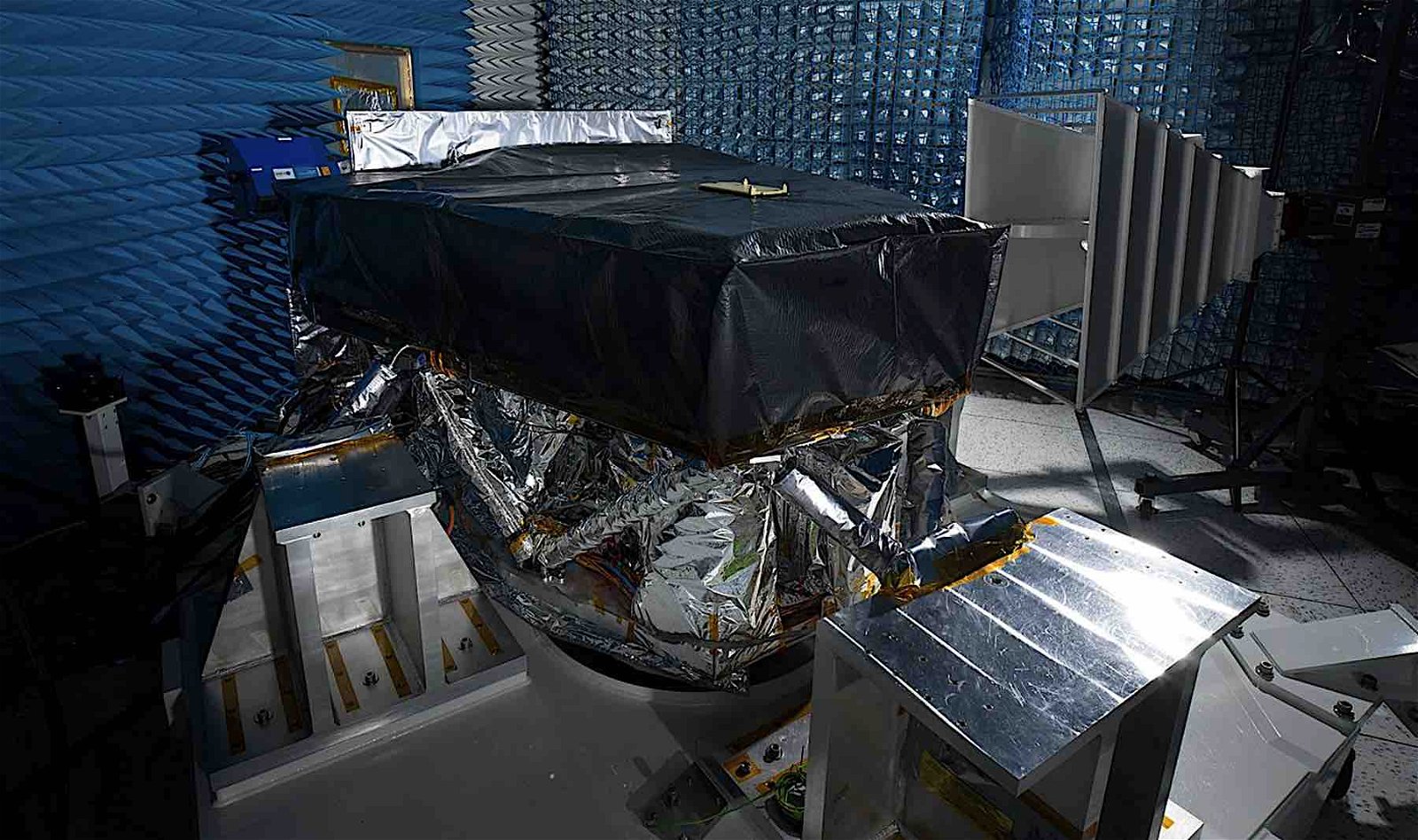
The Nancy Grace Roman Space Telescope, seen as it was nearing assembly (Credit: NASA/JPL-Caltech).

Roman is equipped with two primary capabilities, which involve its Wide Field Instrument (WFI) and Coronagraph Instrument. With a 300-megapixel, near-infrared camera designed for large area image capture and spectroscopy, the WFI will enable astronomers to observe a 0.281 square degree field of view and includes a special imaging mode with two slitless spectroscopy modes.

“The instrument provides a sharp point spread function, precision photometry, and stable observations for implementing the Dark Energy, Exoplanet Microlensing, and NIR surveys,” according to a NASA FAQ page detailing Roman’s primary instrument.

Exoplanet Imagery and Spectroscopy

Meanwhile, the telescope’s Coronagraph Instrument also features both imaging and spectroscopy modes, with capabilities fine-tuned for imaging exoplanets.

“The Coronagraph will be the first instrument on a space telescope to make use of numerically optimized, precision-fabricated coronagraph masks,” NASA’s FAQ page reads. This will be achieved by employing a combination of deformable mirrors that will enable high-order wavefront control, a low-order wavefront sensing and control system, and finally, CCD detectors designed for electron multiplication and counting low-flux photons.

A Next-Generation Space Observatory Prepares for Launch

Along with its search for dark energy and exoplanets, Roman will also provide NASA and researchers around the world with an unprecedented opportunity to study the formation of galaxies and the way that dark matter governs their evolution over time.

NASA will begin live coverage of Roman’s launch on Sunday morning at 6:20 a.m. Eastern Time, and you can follow the updates online with NASA’s free streaming platforms.

Micah Hanks is the Editor-in-Chief and Co-Founder of The Debrief. A longtime reporter on science, defense, and technology with a focus on space and astronomy, he can be reached at micah@thedebrief.org. Follow him on X @MicahHanks, and at micahhanks.com.

  •  

NASA Is Targeting an August Launch for Roman. Here’s What the Telescope Will See

NASA is currently targeting August 30 for the launch of the Nancy Grace Roman Space Telescope from Florida. The date can move, as launch dates do, but the mission is close enough to the pad that its central idea deserves a clear look: Roman will survey huge stretches of the universe in one exposure, gathering […]

The post NASA Is Targeting an August Launch for Roman. Here’s What the Telescope Will See appeared first on Curiosmos.

  •  

Scientists Say a New Universe Could Form Inside a Dying Star

Inside GravastarA new study suggests that the collapse of a massive star could spark the creation of a tiny expanding universe rather than a black hole. The resulting object, called a gravastar, would avoid the singularity and event horizon that make black holes so puzzling. Massive stars produce light and heat through nuclear fusion in their [...]
  •  
  •  

Astronomers Confirm Dark Energy After Shock Challenge Rocked Cosmology

Supernova Purple Starburst in SpaceA major challenge to dark energy, the mysterious force believed to be driving the universe’s accelerating expansion, has been overturned by a new study. Astronomers say a new analysis has reinforced one of the most important discoveries in modern cosmology, finding that the universe is still expanding at an accelerating rate. The result counters a [...]
  •  

Black Holes Aren’t Real? Astronomers Propose Elusive Formation Mechanism for “Gravastar” Alternative That is “Easier to Accept”


Scientists from Goethe University, Frankfurt, studying alternatives to black holes have suggested a mathematically viable formation mechanism for one proposed alternative called a ‘Gravastar.’

Although the team behind the newly proposed gravastar formation mechanism conceded that black holes still represent the simplest and most natural solution to gravitational collapse, they also suggest that the physics behind the alternative, which doesn’t require a single point where spacetime curves infinitely, called a “singularity,” can make them “easier to accept” than black holes.

If correct, and some or all black holes are, in fact, gravastars that mimic their expected properties, the work would establish a valid formation mechanism that could rewrite decades of accepted science and open a new field of research dedicated to understanding this previously misunderstood phenomenon.

Meet Gravastar: The Black Hole Mimicker without a Singularity

According to standard cosmology theories, black holes form when extremely massive stars stop generating energy, allowing the force of gravity to take over and collapse the remaining matter into a single point, or singularity. Unfortunately, the research team behind the new study notes that “the laws of physics break down” within the singularity, making the formation of the resulting black hole a difficult phenomenon to predict.

“How can spacetime be curved infinitely at that point, the singularity?” asks the team’s statement announcing the new approach. They also note that no information escapes a black hole, including light, making studying its inner workings effectively impossible, and opening up the possibility that “black holes are in fact entirely different objects.”

Some options have been proposed, including ‘horizonless’ black hole mimickers. The team notes that these proposed options are “mathematically consistent alternatives” that also address the physics challenges posed by traditional black holes. 

Still, how these alternative objects form has remained largely unclear. The research team said this lack of a formation mechanism constitutes “a significant open problem” since understanding how they form is the “first step” to determining if they truly exist.

New Model Creates a ‘Big Bang’ Inside a ‘Mini-Universe’

In the new formation model, theoretical physicists Daniel Jampolski and Theoretical Astrophysics Professor Luciano Rezzolla from Goethe University showed that the collapse of a dying star may not go far enough that it reaches the point of no return, where “the collapse to a black hole is inevitable.”

Instead, the collapse slows down near a point scientists call the Schwarzschild radius, then stops. The result is what the team termed a “miniature universe” within the collapsing matter, which they compared to the dynamics of the Big Bang, which most theorists agree formed the entire universe.

Since the universe’s expansion was driven by dark energy, the new model proposes that the dark energy within the mini-universe establishes an “equilibrium” with the counteracting force of gravity, therefore halting the collapse of the star “before a black hole can form.”

“The Big Bang of the emerging universe can unfold once the star has already collapsed almost to the point of becoming a black hole,” explained Jampolski, who discovered the black hole alternative gravastar solution in his master’s thesis while under the supervision of Professor Rezzolla.

Maintaining an Unbiased Approach Toward “What We Do Not Know”

When discussing the impact of their proposed black hole alternative formation model, Jampolski said that from a mathematical and physics standpoint, it is “easier to imagine that the Big Bang occurs only at a very late stage, when matter has already been compressed to an extreme degree, thereby giving rise to new effects.” The team also notes that the unresolved behavior of matter in this environment “leaves room for new physics.”

Although the team’s model offers a mathematically sound formation for an alternative to black holes, Rezzolla notes that the search for gravastars or other alternatives “should not suggest a skepticism towards black holes,” which, he adds, “still represent the most natural and simplest solution to the fate of gravitational collapse.”

Instead, the Goethe professor explained, his general role as a scientist and his specific discipline as a theoretical physicist make it essential that he and his colleagues “maintain an unbiased approach towards what we do not know and hence explore both the accepted wisdom and the more exotic interpretations.”

“History teaches us that it is not unusual for the latter to become the former,” the professor added.

The paper “Formation of gravastars” was published in the journal Physical Review D.

Christopher Plain is a Science Fiction and Fantasy novelist and Head Science Writer at The Debrief. Follow and connect with him on X, learn about his books at plainfiction.com, or email him directly at christopher@thedebrief.org.

  •  

New Analysis Confirms the Universe is Still Expanding, Refuting Controversial 2025 Claims and Prompting Immediate Response


A new study has taken a fresh look at a late 2025 Yonsei University study claiming the universe’s expansion is stalling out and instead has found that the universe is still expanding as previously believed.

Led by researchers from the University of Southampton, the team behind the new analysis acknowledged the scientific value of the 2025 team’s work, noting that their calculations were not wrong but lacked the additional data needed to confirm the universe’s expansion rather than refute it.

The lead author of the 2025 study, Dr. Chul Chung, told The Debrief that he and his colleagues “have already submitted our response to Wiseman, Riess et al. 2026 on May 14,” adding that the paper, “Still accelerating: age bias correction in supernova cosmology is robust to host-progenitor age mapping,” has also been posted on arXiv.

“The abstract summarizes the two main issues we identify in Wiseman et al., so I think it provides a concise overview of our position,” Chung told The Debrief.

Challenging Universal Expansion

According to a statement announcing the findings, scientists first confirmed the universe’s expansion was accelerating in 2011, a discovery that won astrophysicists Professor Adam Riess and Professor Brian Schmidt the Nobel Prize in Physics. Since that discovery, cosmological models have incorporated this accelerating expansion, with experiments on dark matter and dark energy attempting to explain it.

Then last year, a separate team of astronomers announced that a new analysis of stellar phenomena indicated that the universe was no longer expanding. Adding to the controversy was the team’s claim that dark energy may not exist, citing the lack of concrete evidence for a universe undergoing accelerating expansion.

According to the Southampton-led team behind the new study, the 2025 study suggested that previous methods used to measure the universe’s expansion, such as measuring supernovae, “were fundamentally flawed.”

“This points to a time-varying dark energy and a universe that is no longer accelerating, representing a potential paradigm shift in cosmology if confirmed,” explained Professor Chul Chung, co-lead author on the study, in a 2025 email to The Debrief.

The claims sent shockwaves through the scientific community, a result that the researchers note could have dismantled the Nobel Prize-winning team’s historic findings, and “nearly three decades of astronomical progress.”

When discussing the 2025 team’s work, the lead author of the new study, Dr Phil Wiseman, said the team’s findings and the resulting debate were not necessarily incorrect. Instead, the Southampton researcher said it was primarily a result of a scientific understanding.

“The previous and well-accepted measurements were, in fact, fine and our current understanding of the fate of the universe remains robust.”

Recalculating Galaxy Masses and White Dwarf Star Ages Reestablishes Expansion

In their reanalysis, the Southampton-led team recalibrated the original data to account for variables not in the original study. According to Wiseman, these included “different host environments and populations.”

For example, the research team looked at Type 1a supernovae, which are violet, extremely bright explosions of white dwarf stars. The authors of the 2025 study claimed that this class of supernova had “different maximum brightness,” which had tricked astronomers into thinking the cosmos was accelerating, when their analysis said it was actually slowing down.

When they took a fresh look at the data, the Southampton team found that they had incorrectly estimated the age of these stars. The new study also says the 2025 team didn’t account for the mass of the galaxies hosting these cosmological phenomena, which they described as “a standard correction used in modern cosmology to prove accuracy.”

When his team factored those data points in, Wiseman said the evidence for a stalling expansion was not supported. Instead, the researcher observed that “the evidence for cosmic acceleration remains remarkably consistent.”

In their reply on ArXiv, the Yonsei University team said the new research failed to factor in two variables of their own, adding that “when these two effects are consistently combined in computing the redshift-dependent magnitude correction, the final correction, and hence the resulting cosmological impact, remain largely unchanged,” from the original 2025 calculations.

“Extraordinary Claims Require Especially Careful Testing”

When discussing the new study’s findings, Southampton Professor Mark Sullivan highlighted the benefits of scientific review, noting that “this is how progress is made.”

“Although this idea did not turn out correct, it has opened up new ways of thinking about how supernovae explode and how we can measure dark energy more accurately,” the researcher added.

Paper co-author, Dr Brodie Popovic agreed, noting that the 2025 study provided astronomers a good opportunity to “go back over all of our assumptions,” adding that “it turns out, yes, we do understand this stuff, and we’re accounting for it in our cosmology measurement.”

In a salute to the Sagan Standard established by astronomer Carl Sagan, which says “extraordinary claims require extraordinary evidence,” Reiss seemed to celebrate the new findings that reestablish his original work by quipping that “extraordinary claims require especially careful testing.”

With the accelerating expansion of the universe seemingly reestablished, at least for now, Dr Wiseman said: “we can get back to trying to understand what dark energy actually is, rather than wondering if it exists at all.”

“Thankfully we have averted this crisis, but the mystery about why the universe is still accelerating in size remains,” he added. 

The study “Still Accelerating: Type Ia supernova cosmology is robust to host galaxy age evolution” was published in Monthly Notices of the Royal Astronomical Society.

Christopher Plain is a Science Fiction and Fantasy novelist and Head Science Writer at The Debrief. Follow and connect with him on X, learn about his books at plainfiction.com, or email him directly at christopher@thedebrief.org.

  •  

A Universe Without Dark Energy? Mathematicians Challenge Standard Cosmology

Dark Matter Particles Astrophysics ConceptNew mathematical research suggests dark energy may not be needed to explain the accelerating expansion of the universe, challenging the foundations of the standard cosmological model. Mathematicians are questioning whether dark energy is actually responsible for the universe’s accelerating expansion. In a new study published in Proceedings of the Royal Society A, researchers at the [...]
  •  

Getting a Peek of Kitt Peak National Observatory

KPNO

After AAS 247 in Phoenix, Arizona, AAS Nova Editor Kerry Hensley and I had the chance to travel about 150 miles south for a tour of Kitt Peak National Observatory.

A Window into Kitt Peak

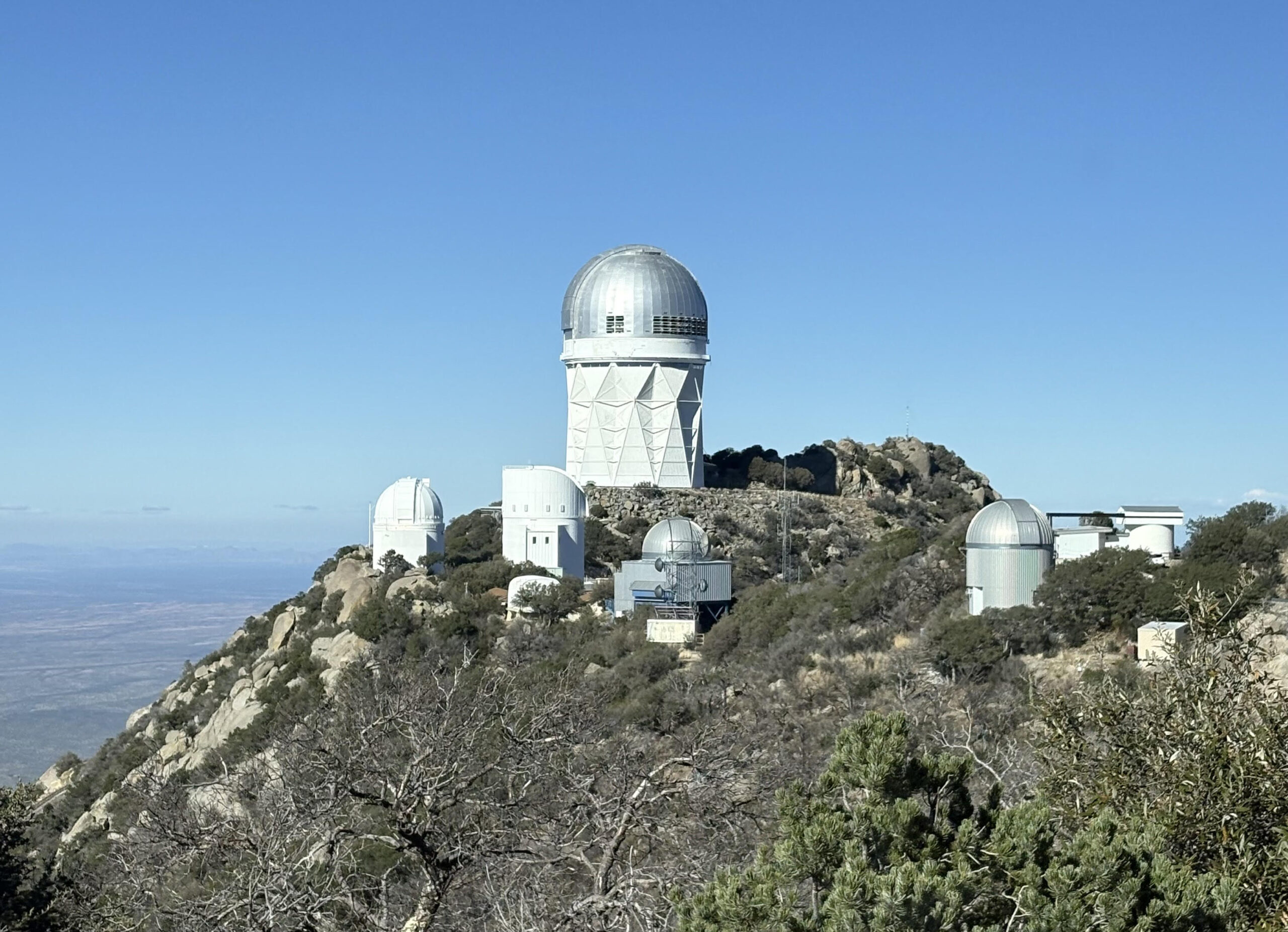
Located 60 miles southwest of Tucson, Kitt Peak National Observatory (KPNO) resides on a mountain top within the Tohono O’odham Nation reservation. Founded in 1958, Kitt Peak is home to nearly two dozen active telescopes ranging in wavelength coverage and scientific objectives. Ronald Proctor, Lori Allen, and Jacelle Ramon-Sauberan, all serving in crucial roles for the observatory, led our tour around the mountain.

Windows Center Lobby

The Windows On the Universe Center’s lobby exhibit displaying the Tohono O’odham language with words describing the land and astronomy. Jacelle Ramon-Sauberan, the Tohono O’odham Nation Education Liaison, is seen to the left. [KPNO/NOIRLab/NSF/AURA/R. Proctor; CC BY 4.0]

Our visit began in the new Windows on the Universe Center — the first science center inside of a telescope. Situated inside the retired McMath-Pierce Solar Telescope, the Windows Center takes visitors through exhibits exploring the universe, the telescope’s original control room, and the observatory’s connection to the Tohono O’odham Nation.

The center’s lobby introduced visitors to the beautiful land KPNO calls home. Working with Tohono O’odham linguists, Jacelle, the observatory’s Tohono O’odham Nation Education Liaison, curated the lobby exhibit that features the native language and the Nation’s connection to astronomy and the observatory. The science center serves as an educational resource and place of cultural exchange, expanding the relationship between the observatory and the Tohono O’odham Nation. 

Astronauts

Apollo astronauts in the control room of the McMath-Pierce Solar Telescope in 1964. [United States Geological Survey; CC BY 4.0]

After walking through an introduction to the universe exhibit, visitors enter the original control room of the telescope. Mirrors across the room’s ceiling focus the Sun’s light onto table screens where visitors can observe the Sun in real time without burning their eyeballs. In addition to observing the Sun, the solar telescope allowed astronauts in the 1960s to view a projection of the Moon’s surface and plan their landing site for the Apollo 11 mission. Visitors can stand in the same place and witness the instruments that made the moon landing possible.

At the end of the Windows Center is a Science On a Sphere Theater — a spherical display system that allows visitors to see planets, stars, moons, and even large-scale structures of the universe in 3D. Featuring multiple programs, the theater takes visitors through the universe and displays data collected right there on the mountain!

WIYN

The WIYN 3.5-meter telescope at sunset. [KPNO/NOIRLab/NSF/AURA/P. Marenfeld; CC BY 4.0]

A WIYN for Exoplanetary Science

Though not typically open to the public for tours, our next stop took us to the WIYN 3.5-meter telescope. This telescope is operated and owned by the WIYN Consortium, a partnership between the University of Wisconsin, Indiana University, NSF’s NOIRLab (National Optical-Infrared Astronomy Research Laboratory; formerly NOAO), Pennsylvania State University, and Princeton University. Operating since 1994 with a strong collection of instruments, WIYN has observed galaxies near and far, stars across their lifetimes, and exoplanets tugging on their host stars.

Lexi at WIYN

Me, Lexi Gault (AAS Media Fellow), in front of the WIYN 3.5-meter telescope. I have used WIYN’s SparsePak spectrograph to collect data for my dissertation research! [AAS Nova/Kerry Hensley]

WIYN’s newest instrument, NEID (pronounced “NOO-id”), has been advancing exoplanetary science since its first light in early 2020. Derived from the word meaning “to see” in the Tohono O’odham language, NEID is a high-resolution spectrograph that uses the radial velocity method to detect exoplanets. As a planet orbits its host star, its gravitational pull induces a wobble in the star, and NEID can detect these wobbles with unprecedented precision. This instrument allows astronomers to find exoplanets that were previously undetectable.

The partnership between public and private universities and a government institution was the first of its kind. Through this consortium, hundreds of undergraduate and graduate students have conducted research with WIYN, and the telescope’s suite of instruments have enabled early career astronomers to explore the universe both near and far.

Mysteries of Dark Energy at Mayall

We concluded our tour at the Mayall 4-meter Telescope, the tallest telescope dome on the mountain at a staggering 18 stories high. This iconic telescope saw first light in 1973, and at the time, was the second-largest (in diameter) telescope in the world. Originally built for wide-field optical and infrared studies of the universe, the Mayall has enabled decades of critical scientific research.

Mayall dome

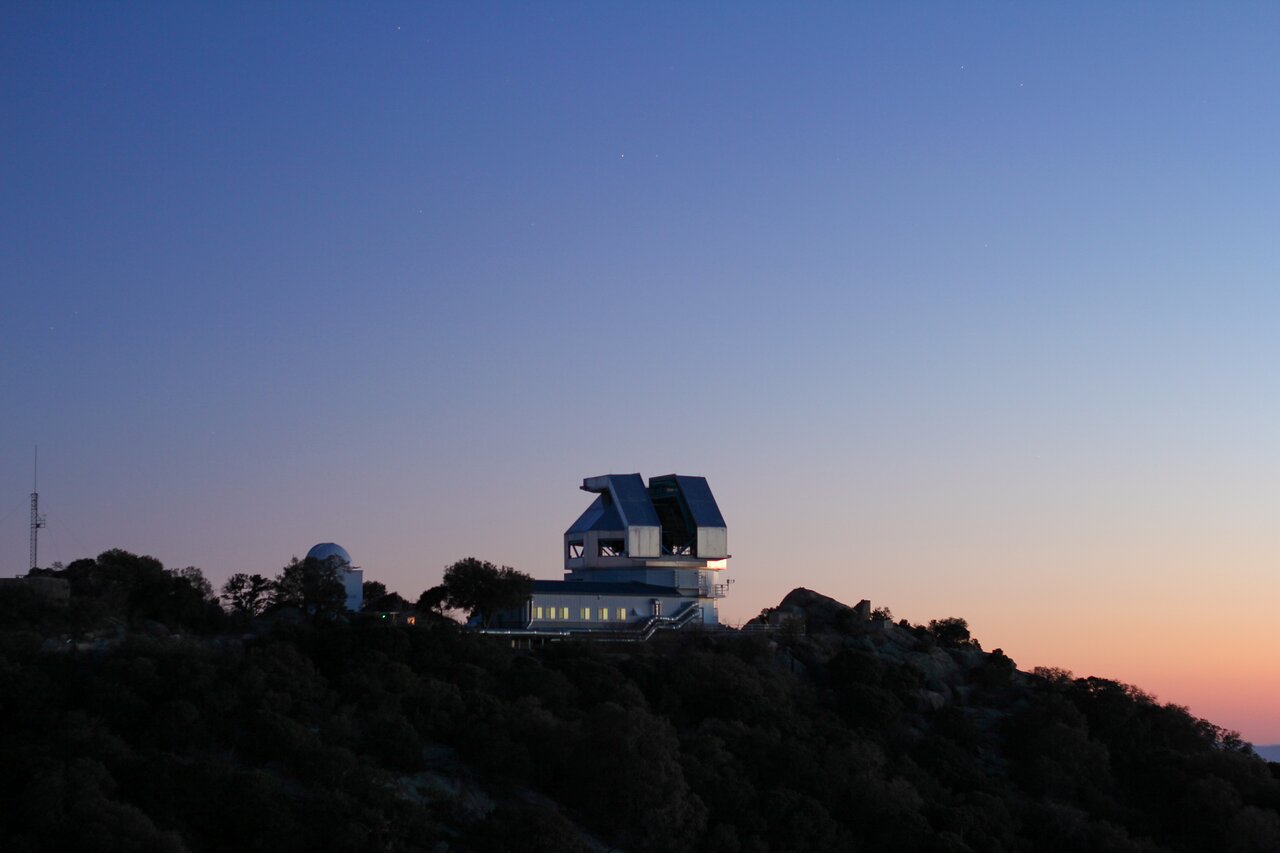
The Mayall dome across the mountain as seen from inside the WIYN dome. [AAS Nova/Lexi Gault]

Mayall is now home to the Dark Energy Spectroscopic Instrument (DESI), the most powerful multi-object survey spectrograph in the world. The DESI survey measures the impact of dark energy on the expansion of the universe through creating the largest ever 3D map of the universe. Mapping the distances to hundreds of millions of galaxies, DESI has revolutionized cosmology and enabled groundbreaking research into the origins of the universe. 

From the telescope’s massive dome, to the busy DESI control room, to the gallery floor with a nearly 360 degree view of the surrounding desert, the Mayall offers visitors a unique glimpse into Kitt Peak’s history and its future. While WIYN is a hidden gem, the Mayall 4-meter Telescope is open to the public for tours daily, so you can experience the exciting era of research and discovery at KPNO. 

Visit Kitt Peak

Interested in getting a peek yourself? KPNO is open to the public daily with multiple tour types to choose from, including both daytime and nighttime visits! Plan your visit to Kitt Peak here.

The post Getting a Peek of Kitt Peak National Observatory appeared first on AAS Nova.

  •  
  •  

Standing For Truth Against the Big Bang

I presented on the subject of problems for the big bang on the YouTube channel Standing for Truth Ministries. I discussed the most common problems the big bang theory has, the contradictions, fudge factors and failures.

  •  

Black Hole Superradiance Search for Dark Photons

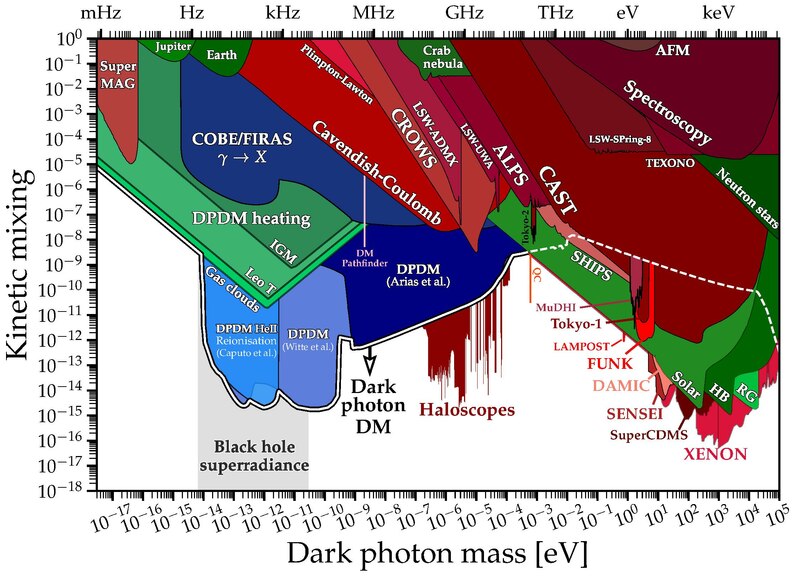
Since 2015, black holes have gained attention in astronomy, particularly regarding their potential role in discovering elusive dark matter particles like dark photons. Superradiance, a theoretical process, could theoretically boost these particles' energies near black holes. However, the absence of observed superradiance raises questions about dark matter's complexity and the validity of existing cosmological theories.

  •  

Dark Photons and the Illusion of Dark Matter

Dark matter is equated to the metaphor of the Emperor's new clothes. Dark photons and other hypothetical particles are fictitious constructs used to explain phenomena without concrete evidence, underlining that current astrophysical models are flawed and nonsensical.

  •  

Should Biblical Creationists Believe in Dark Matter and Dark Energy?

I question the acceptance of Dark Matter and Dark Energy by biblical creationists, suggesting they are problematic placeholders for undiscovered physics. The arguments for their existence are challenged by alternative cosmological models and criticisms of observational methodologies, calling for a re-evaluation of accepted astrophysical tenets.

  •  
❌