The Schiller exit is a bit more notable. Unlike Maestri, he still had a real job: The veteran executive ran the App Store and Apple Events. The App Store portion alone is no joke. It generates an estimated $30 billion a year and can be very challenging to manage. Apple’s app marketplace is loved by many consumers, but often criticized by developers and subjected to increasingly onerous regulations. It was a busy, all-encompassing gig and nowhere near a semiretirement.
[…]
But there’s a bit more to the story, I’m told. Ternus and services chief Eddy Cue want to make even more money from the App Store and figure out ways to raise margins and squeeze additional recurring revenue from the platform. Schiller, on the other hand, seems to believe that such moves will only further irk developers and governments. While there was no internal blowup or anything like that, it’s something he wanted no part of.
“Product guy” dreams about margins, forgets that people buy Apple hardware because of the software.
Apple admitted during its July earnings call that regulatory changes have started to weigh on its Services growth. Apple reported services revenue of $30.7 billion for the June quarter, a record for the period but short of the $31.4 billion that analysts expected.
As Apple Fellow, Schiller continued to oversee the App Store and Apple events, but the role may not have left him with sufficient time for his own endeavors. In 2024, The Wall Street Journal said Schiller was working close to 80 hours a week.
[…]
Schiller is stepping down from overseeing the App Store and Apple product launches just as John Ternus is set to take over as Apple CEO.
[…]
Apple is moving the App Store to Eddy Cue, who oversaw it until 2015. Cue is Apple’s services chief and will reportedly be taking a more influential role under Ternus’ leadership. Carson Oliver, who has long been on the App Store team, will oversee its day-to-day operations.
In 2020, Phil Schiller became an Apple Fellow after a long career at Apple that began in 1987.
Apple’s Phil Schiller, one of the company’s most visible executives spanning the Steve Jobs and Tim Cook eras, has stepped down from running the App Store and Apple’s product events, according to Bloomberg News’ Mark Gurman.
The 66-year-old, who left the senior vice president of marketing role in 2020 and became an Apple Fellow, made the change in recent days, people familiar with the matter told Gurman. Schiller will remain at Apple as a Fellow and work on unspecified initiatives. Company employees view the move as a significant step toward an eventual retirement.
Schiller first joined Apple in 1987, left in 1993, and returned in 1997 when Jobs came back. He was a central figure in launches of the iPod, iPhone, iPad, and Apple Watch, and later oversaw App Store policy through years of regulatory pressure, including Europe’s Digital Markets Act. In 2020, Apple said he would keep leading the App Store and events after handing marketing to Greg Joswiak. As recently as 2024, he was still reported to be working nearly 80 hours a week.
Responsibility for the App Store is moving to the services organization led by Eddy Cue, who previously oversaw the store until 2015. Day-to-day operations, including app distribution, third-party marketplaces, and Apple Arcade, will be handled by Carson Oliver. Ann Thai, who has worked on distribution tools and alternative marketplaces, will report to Oliver. Leadership of product events is going to Nola Weinstein, Schiller’s deputy since 2023, who will report to communications vice president Kristin Huguet Quayle.
The shift comes on Tim Cook’s last day as CEO and as John Ternus prepares to take over, with Cook becoming executive chairman. The App Store remains a major services business, widely estimated to generate more than $30 billion a year. Weinstein’s team is preparing for Apple’s September 9th event, expected to include a foldable iPhone and updated Apple Watch models.
MacDailyNews Take: The only constant is change,
Please help support MacDailyNews — and enjoy subscriber-only articles, comments, chat, and more — by subscribing to our Substack: macdailynews.substack.com. Thank you!
Charlotte Henry and Chuck Joiner examine Apple TV’s strategy through the expansion of Monarch: Legacy of Monsters, the theatrical release of Tenzing, and Eddie Cue’s Cannes Lions recognition. They compare Apple’s stated quality-over-quantity approach with Netflix’s engagement-first model, then consider F1 sequel plans and speculate on what smart glasses could mean for the streaming service from […]
Charlotte Henry and Chuck Joiner discuss the Apple Sports app expanding to more than 170 countries, its World Cup features, and how sports increasingly connect Apple’s entertainment ecosystem. They also consider possible Apple smart glasses, Apple TV’s growing industry credibility under Eddy Cue that includes his Cannes Lions honor, the return of Knife Edge: Chasing Michelin Stars, and Apple TV bundling through financial products as a strategy to gain subscribers.
A executiva de longa data Jennifer Bailey, responsável pelo Apple Pay e pelo Apple Wallet, se aposentará após mais de duas décadas na empresa. Ela deixará o cargo de vice-presidente em outubro — e ainda não foi informado quem assumirá sua posição.
Antes de ajudar a lançar o Apple Pay, Bailey foi a vice-presidente responsável pela loja online da empresa. Ela ingressou na Maçã no início dos anos 2000, após passar por diversas empresas de internet.
Após mais de 25 anos na Apple, Jennifer Bailey decidiu se aposentar em outubro. Durante sua trajetória, Jennifer fez contribuições extraordinárias, desde liderar a Apple Store Online em um período de crescimento significativo e expansão global até supervisionar o lançamento do Apple Pay.
Sob a liderança de Jennifer, o Apple Pay transformou a maneira como centenas de milhões de nossos usuários realizam pagamentos, oferecendo uma experiência mais simples, segura e privada. Ela também liderou o desenvolvimento e o crescimento do Apple Wallet, supervisionou o desenvolvimento e o lançamento do Apple Card e comandou nossas iniciativas em prevenção de fraudes e operações com parceiros na área de Serviços, além de Gift Cards e Confiança e Segurança. E essas são apenas algumas de suas realizações.
Em um âmbito pessoal, Jennifer tem sido uma amiga e líder incrível, e sentirei falta de trabalhar com ela.
Por favor, juntem-se a mim para agradecer a Jennifer por suas contribuições incríveis à Apple. Antes da transição de Jennifer, no final de outubro, anunciaremos nosso plano de sucessão, e ela continuará disponível para apoiar o processo em uma função consultiva.
Enquanto continuamos trabalhando em direção à nossa visão de substituir a carteira física, estou mais confiante do que nunca no trabalho que todos nós estamos realizando e aguardo com entusiasmo o futuro promissor que temos pela frente.
Obrigado,
Eddy
A saída de Bailey é considerada uma perda significativa para a Apple, com a percepção de que isso prenuncia uma debandada mais ampla de líderes seniores na faixa dos 60 anos. Isso porque a Apple enfrenta um desafio demográfico: uma geração de executivos do alto escalão está chegando à idade de aposentadoria simultaneamente.
Como já informamos, a diretora jurídica da empresa, Kate Adams, também se aposentará este ano, enquanto a chefe da área ambiental, Lisa Jackson, deixou o cargo no início de 2026.
Josh Rosenstock, diretor sênior de comunicação corporativa que atuava em relações públicas voltadas a finanças e investidores, também está deixando a empresa, segundo Gurman.
Another Apple exit: Josh Rosenstock, spokesman for corporate & financial communications, is leaving after 14 years. He’s helped shape the narrative around Apple & Tim Cook. A loss for Apple PR amid supply crunch, OpenAI suit & CEO change. Will be interesting to see where he goes.
Mais uma saída na Apple: Josh Rosenstock, porta-voz de comunicação corporativa e financeira, está deixando a empresa após 14 anos. Ele ajudou a moldar a narrativa em torno da Apple e de Tim Cook. É uma perda para a área de relações públicas da Apple em meio à escassez de suprimentos, ao processo da OpenAI e à mudança de CEO. Será interessante ver qual será o próximo passo dele.
Ademais, o ex-diretor financeiro Luca Maestri e o veterano chefe de marketing Phil Schiller permaneceram na empresa em funções de menor escopo — mas provavelmente estão chegando ao fim de suas trajetórias na companhia.
No mais, a equipe executiva da Apple inclui vários outros líderes que se aproximam da idade tradicional de aposentadoria. O próprio Cue, além de Deirdre O’Brien (chefe de varejo) e Greg Joswiak (chefe de marketing), estão na Apple há cerca de quatro décadas, por exemplo.
Mas sem dúvida nenhuma a mudança mais significativa envolve Tim Cook, que deixará o cargo de CEO1Chief executive officer, ou diretor executivo. em 1º de setembro, daqui a poucas semanas. Ele será substituído por John Ternus, então chefe da divisão de hardware da empresa.
Em sua tradicional newsletter “Power On”, o jornalista Mark Gurman (da Bloomberg) tratou dos planos da Maçã para futuro do Apple Watch. A linha poderá passar por reformulações em seu formato, expandindo a variedade de modelos ofertados — mas essa mudança não estaria no horizonte de curto prazo.
Ainda que o bem-estar seja um pilar basilar do segmento de vestíveis (tanto por parte da Apple quanto na concorrência), a equipe de design industrial da empresa trabalha em novos produtos que funcionem como a resposta da Maçã à expansão da gama de dispositivos vestíveis disponíveis no mercado, sejam os anéis inteligentes ou as pulseiras sem tela.
Gurman salientou, no entanto, que essas mudanças poderão “levar tempo” para chegar ao consumidor final, e que atualizações modestas deverão definir o tom da linha durante pelo menos os próximos dois anos; ele reiterou ainda que a Apple planeja reintroduzir o acabamento em cerâmica — ou agora em setembro, com o “Apple Watch Series 12” e o “Ultra 4”, ou com os modelos que deverão ser apresentados no ano que vem —, além de apresentar melhorias significativas de performance.
Quem lidera a frente de ampliação dos vestíveis da Apple é Eddy Cue, que assumiu o comando do setor de saúde no ano passado. O executivo parece estar atento às iniciativas de empresas como a WHOOP ou a Oura, que redefiniram a relação dos wearables com a integração de recursos de inteligência artificial (IA) — o que, dada a expansão da IA no ecossistema da Maçã, poderá ser um caminho para os diferenciais em termos de software.
Os planos para o futuro, de acordo com o jornalista, envolvem variações de wearables sem telas, que deverão ser ainda mais acessíveis do que o Apple Watch SE, além de variantes que extrapolam a linha Ultra e Hermès. Gurman mencionou que, embora acredite que a hipótese nunca se transformará em um lançamento real, a Apple cogitou ainda a implementação de telas redondas.
Ao fazer um breve passeio pela trajetória do Apple Watch, ele destacou que as suas evoluções, assim como as do iPhone, partiram (e seguem partindo) de mudanças incrementais, sem romper com o formato do relógio apresentado por Tim Cook em 2014. Ao traçar um paralelo com a trajetória dos iPhones, a ampliação dos formatos do Apple Watch lembra a expectativa de que o “iPhone Ultra” redefina o paradigma de formato dos celulares da Maçã.
Apple Watch Ultra 3
Cores: natural ou preto Pulseiras: loop Alpina, loop Trail, Oceano ou estilo milanês de titânio
Material: alumínio ou titânio Cores: cinza-espacial, prateado, ouro rosa, preto brilhante, natural, dourado ou ardósia Tamanho: 42mm ou 46mm Conectividade: GPS ou GPS + Cellular Pulseiras: esportiva ou estilo milanês
NOTA DE TRANSPARÊNCIA: O MacMagazine recebe uma pequena comissão sobre vendas concluídas por meio de links deste post, mas você, como consumidor, não paga nada mais pelos produtos/serviços usando os nossos links de afiliado.
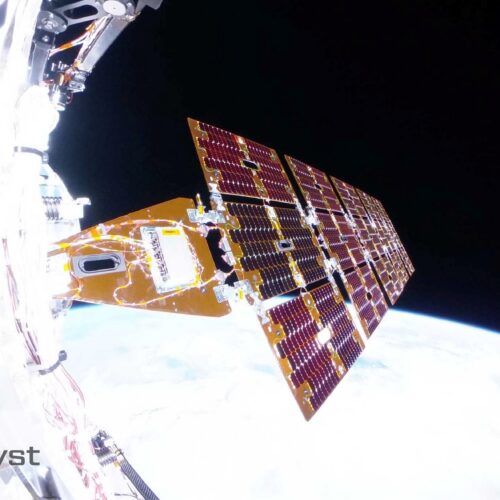
Nearly a month since its launch, a first-of-its-kind commercial satellite built to save NASA's Swift gamma-ray telescope from a fiery reentry is having problems of its own, the agency announced Tuesday.
The Link satellite developed by Katalyst Space Technologies "experienced issues with attitude control" over the weekend, NASA said, causing the spacecraft to spin and resulting in sporadic communications.
"Preliminary investigation shows that two of Link's three reaction wheels currently are not operable, and there is some loss of functionality in its cold gas thruster system," NASA said.
Industrial mining giants Fortescue have been leading the charge towards electrifying every aspect of their operations – and last week, the company’s CEO took some time to actually get out and test drive some of the company’s newest battery-powered heavy machines.
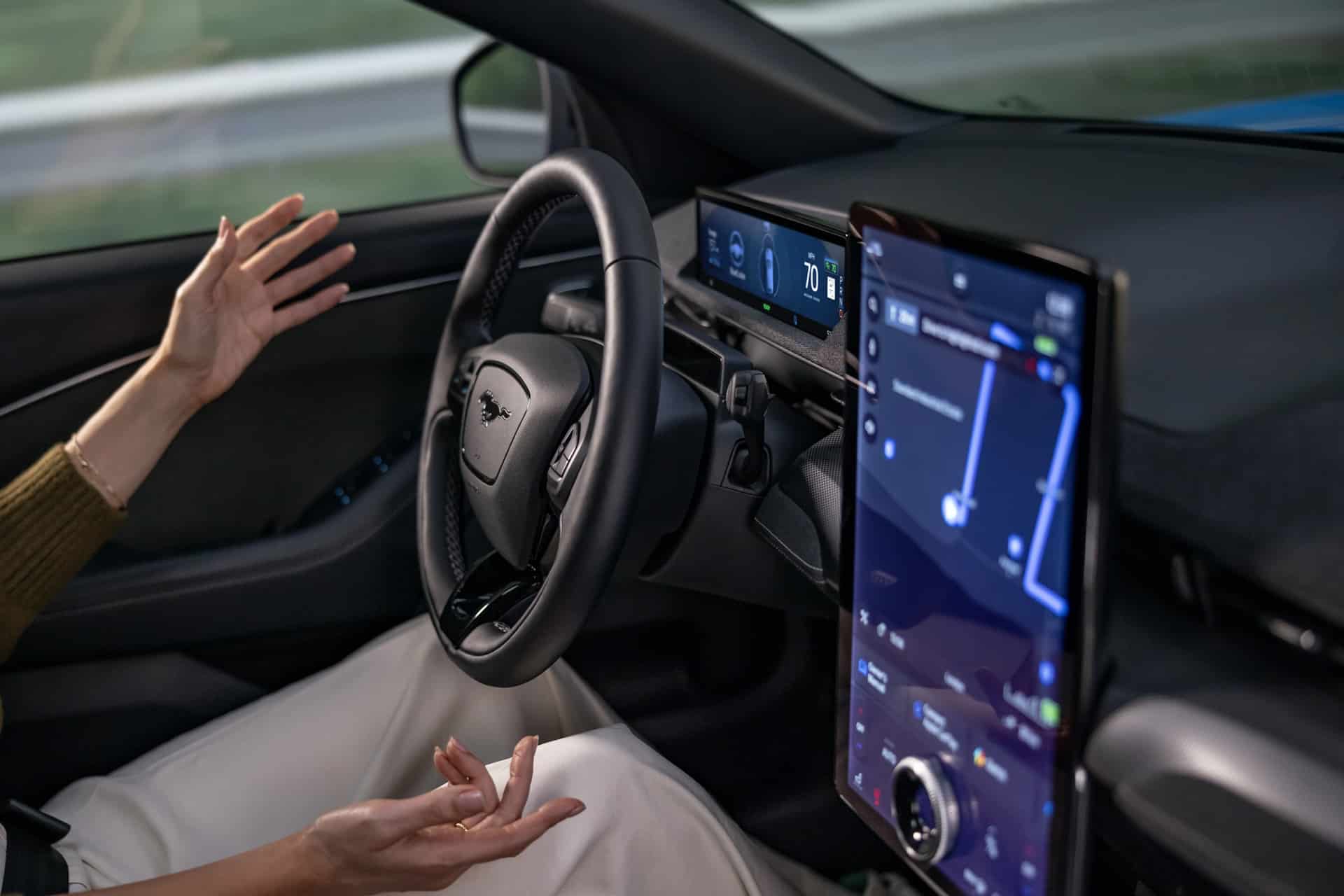
Ford Apple Maps integration will place the navigation service directly inside a new family of affordable electric vehicles, beginning with a midsize pickup expected to start at approximately $30,000 in 2027.
The truck will not depend on CarPlay or a connected iPhone to access Apple Maps. Ford plans to embed the service through MapKit for Automotive, allowing the automaker to incorporate Apple navigation into its own displays, controls and software environment.
CarPlay will remain available for drivers who want to use iPhone apps, messages, calls and media. The native integration, however, means Apple Maps can continue providing directions when no phone is connected or when the driver uses a device from another manufacturer.
The partnership extends beyond dashboard navigation. Ford also intends to use road-level information from Apple Maps while developing future versions of BlueCruise, connecting Apple mapping data with the driver-assistance technology planned for its Universal Electric Vehicle Platform.
Ford Apple Maps Moves Beyond CarPlay
Ford Apple Maps represents a different approach from the familiar relationship between an iPhone and a vehicle.
CarPlay runs from the phone and presents selected apps through the dashboard. The embedded version of Apple Maps will operate as part of the truck software, giving Ford greater control over how directions, charging information and vehicle data appear across its displays.
Drivers can expect turn-by-turn guidance, live traffic conditions, incident reports and detailed destination information. Ford will be able to adapt the visual experience to match the interface created for its new electric platform rather than reproducing the standard CarPlay layout.
EV routing may become the most practical benefit. The system can consider available range, charging locations and route conditions before recommending where a driver should stop.
When supported by the vehicle, navigation can also trigger battery preconditioning before arriving at a fast charger. Bringing the battery toward an appropriate temperature can reduce charging time, particularly during cold or extremely hot conditions.
Integrating those functions removes part of the planning burden from longer electric trips. Drivers will not need to move constantly between a navigation app, charging network software and separate vehicle menus to understand whether a station is suitable.
The native experience also gives Ford an alternative to building a complete mapping platform internally. Apple already maintains search, traffic, routing and place information across a large geographic network, while Ford can concentrate on vehicle-specific functions.
Apple, meanwhile, gains a route into factory-installed automotive software without needing to produce its own car.
A Different Strategy From CarPlay Ultra
The Ford arrangement should not be confused with CarPlay Ultra.
CarPlay Ultra expands the iPhone experience across multiple vehicle screens and can combine phone content with information supplied by the car, including speed, fuel or battery levels and climate controls.
Ford is taking a more selective path. Apple Maps becomes a native service, but the broader dashboard remains a Ford environment.
That distinction may appeal to automakers reluctant to hand control of the cabin interface to another company. Ford can use Apple technology for navigation while preserving its own identity, subscription services and software architecture.
Drivers still receive a recognizable Apple product, but the vehicle manufacturer determines where it appears and how it interacts with charging, driver assistance and other functions.
The arrangement could provide a model for other automakers that want access to individual Apple services without adopting the complete CarPlay Ultra experience.
Image Credit: Ford
A $30,000 Electric Truck Needs More Than a Low Price
The targeted price of approximately $30,000 would place it below many electric pickups currently available in the United States. Ford is aiming at drivers interested in an EV but unwilling or unable to spend the amounts associated with large premium trucks.
The company says the vehicle will provide more passenger space than a recent Toyota RAV4 while including a front storage compartment and a conventional truck bed. Performance is expected to compare with a Mustang EcoBoost, giving the pickup a stronger argument than affordability alone.
Reaching the price target requires changes throughout the vehicle rather than a smaller battery placed inside an existing truck design.
Ford has reduced the number of components, fasteners and assembly operations involved in the new platform. Its zonal electrical architecture is intended to shorten wiring and simplify how software-controlled systems connect across the vehicle.
Lithium iron phosphate batteries will form part of the structural floor. The chemistry avoids nickel and cobalt, generally costs less than alternatives focused on maximum energy density and can offer strong durability for repeated charging.
Production is planned for the Louisville Assembly Plant in Kentucky, where Ford is introducing a manufacturing process that separates major vehicle sections before bringing them together later in assembly.
Apple Maps supports the same cost-conscious strategy. Ford can offer a mature navigation experience without financing the creation of every mapping layer from the beginning.
Apple Maps Will Support BlueCruise Development
The partnership becomes more significant when mapping information begins supporting driver assistance.
Ford Latitude AI plans to use road-level Apple Maps data while developing future BlueCruise capabilities. The objective is to create smoother hands-free travel from a highway entrance ramp through the eventual exit.
Apple Maps can provide advance knowledge of road layouts, interchanges, curves and exits. Ford sensors and onboard systems must still identify vehicles, pedestrians, construction and unexpected changes in real time.
Apple is not developing or controlling BlueCruise. Ford remains responsible for the cameras, sensors, processors and driving decisions used by the system.
The maps provide another layer of context. A vehicle that understands the route in advance can prepare for lane changes, merges and exits before its sensors reach them.
Ford is also developing a large driving model through Latitude AI using extensive road data. Combining that work with detailed maps could allow the company to improve assistance without depending entirely on moment-to-moment visual detection.
The Universal Electric Vehicle Platform is expected to support more capable automated driving in later models. Ford has discussed eyes-off operation from 2028, although final hardware, pricing and regulatory approval remain unresolved.
Introducing that technology through an affordable platform would represent a departure from the usual industry pattern. Advanced driver assistance often begins in expensive vehicles where premium pricing absorbs the cost of sensors and computing.
Ford wants to distribute the development expense across a larger family of electric products.
Image Credit: Ford
Apple Maps Gives the Truck a Familiar Entry Point
The Apple Maps name may make the new truck feel less unfamiliar to customers buying an electric vehicle for the first time.
Charging behavior, range estimation and route planning can create hesitation among drivers accustomed to gasoline vehicles. Presenting those functions through a navigation service already used on millions of iPhones reduces the number of unfamiliar interfaces introduced at once.
Existing Apple Maps users may also recognize saved locations, search behavior and visual guidance, although Ford has not explained which personal features will require an Apple Account or connected iPhone.
The embedded service will still need reliable integration with vehicle range, charger availability and battery temperature. A familiar logo alone cannot compensate for inaccurate charging information or route estimates.
Ford has not yet announced the truck name, final driving range, battery capacity, production specifications or confirmed base price. Those details will determine whether the pickup can combine its promised affordability with enough capability for everyday work and travel.
The first production model is scheduled for 2027, leaving Ford time to refine the software and reveal how Apple Maps will appear across the dashboard before the Louisville assembly line begins building customer vehicles.
L'été approche et les repas en plein air reviennent sur le devant de la scène. Si vous envisagez d'investir dans un barbecue à charbon, Cdiscount met actuellement en avant le Weber Compact Kettle à prix réduit. Avec sa cuve en acier émaillé et son format adapté aux repas conviviaux, ce modèle...
Fortescue‘s recently-acquired turbine subsidiary Nabrawind has done something that was believed to be impossible: they’ve installed a full-scale, energy producing wind turbine in harsh Namibian conditions using a new, crane-less deployment process.

 Login