❌

Reading view

NASA Demonstrates Next-Generation Heat Shield Technologies

4 min read

Preparations for Next Moonwalk Simulations Underway (and Underwater)
008Q8328.NEF
A KREPE-3 capsule floats inside the Northrup Grumman Cygnus XL 24 cargo spacecraft on October 7. Inside the capsule is a 3-D printed heat shield designed by researchers at NASA’s Johnson Space Center in Houston.
NASA

NASA is testing heat shields that can keep astronauts safe as they return from missions to the Moon and Mars in an unusual way: by taking out the trash.

When Northrop Grumman 24th cargo resupply mission for NASA undocked from the International Space Station, it carried a fleet of 12 small, experimental capsules designed to test the next generation of thermal protection materials that could serve as the foundation for future heat shields.

The experiment, called the Kentucky Reentry Probe Experiment (KREPE-3), is the third in a series of low-cost, high-impact missions that use the final moments of the cargo spacecraft’s lifespan to gather valuable data.

The experiment is a collaboration among the University of Kentucky, the state of Kentucky, NASA’s Established Program to Stimulate Competitive Research (EPSCoR), several NASA centers, and other federal and commercial partners.

“KREPE-3 is a great example of the goals of NASA’s EPSCoR program,” said David Berger, EPSCoR program manager at NASA’s Headquarters in Washington. “We are supporting the next generation of scientists and engineers as they develop unique projects that benefit their education and NASA’s mission goals.”

Trash to treasure

Before the mission’s Cygnus XL spacecraft departed the station, astronauts packed it with waste and activated the 12 small capsules carried inside. Designed by University of Kentucky students, the capsules include sensors that will measure temperature, pressure, motion, magnetic field, and light during re-entry. 

As the vehicle harmlessly breaks apart in Earth’s atmosphere on its planned route, the capsules will eject and begin collecting data on how each set of experimental heat shield materials performs. Satellite signals will transfer live data to researchers, offering insights into how larger heat shields could protect future cargo or crew.

“It’s a smart way to get flight data on materials that are still in development,” said Keith Peterson, a materials engineer at NASA’s Ames Research Center in California’s Silicon Valley. “We’re essentially hitching a ride on a vehicle that’s already coming back to Earth.”
Close up of an Ames-produced thermal protection system (TPS) (heat shield) for the Kentucky Re-Entry Probe Experiment (KREPE) in the Sensors & TPS Advanced Research Laboratories (STAR Labs) N242.
NASA/Brandon Torres-Navarrete

Heating up innovation

The capsules will carry a variety of thermal protective components, including proven technology such as the ceramic tile material used on the space shuttle. Others will test new options, such as a 3D-printed heat shield from the Additive Manufacturing of Thermal Protective Systems project developed at NASA Johnson and Oak Ridge National Laboratory.

Researchers at NASA Ames are contributing several materials to KREPE-3, including two capsules that will fly a next-generation family of protective coverings known as Materials Engineered for Re-entry using Innovative Needling Operations (MERINO). Made from layers of carbon and phenolic fibers stitched together like felt, the materials are more flexible, faster to produce, and less expensive than traditional protective substances – making them promising candidates for Mars missions. Thanks to Mars’ thinner atmosphere, missions to land on the Red Planet involve lower heat loads and allow for lighter protection.

A third capsule will combine those protective coverings with other elements. The Kentucky Instrumented Conical Hypersonic Experiment will utilize a dual-cone shape. It combines a tungsten tip attached to a cone layered with carbon and hear-resistant plastic fibers, and an aft cone wrapped in MERINO. This unique design will validate computer models against real-world data.

Another capsule is shaped like the protective aeroshell that will protect NASA’s upcoming mission, Dragonfly, as it arrives at Saturn’s moon, Titan, and will test the dynamic stability of the design. It is covered in Phenolic Impregnated Carbon Ablator, a material developed at NASA Ames that has applications for commercial vehicles and flew on NASA’s Stardust, Mars Science Laboratory, and Mars 2020 missions.

One capsule will test a deployable heat shield called Adaptable Deployable Entry and Placement Technology, which is shaped like an umbrella to increase surface area and slow descent. At full scale, Adaptable Deployable Entry design could be folded, making it ideal for deploying payloads that are larger than the rockets that launch them into flight.

While some capsules are testing new materials to carry missions to Mars, others are testing new shapes and designs that will further research and understanding of computer modeling and sensor design — technologies that could open doors to another generation of re-entry design innovation.

Additional capsules developed by domestic and international partners will test a variety of known and new materials, including a heat flux sensor developed at the University of Stuttgart in Germany, that will help researchers measure how heat moves across a surface during re-entry.

“We’re pushing the boundaries of what heat shields can do,” said Peterson. “And we’re testing them in a way that’s fast, affordable, and incredibly effective.”
  •  

NASA, SpaceX Advance Wind Tunnel Tests for Starship Rocket 

4 Min Read

NASA, SpaceX Advance Wind Tunnel Tests for Starship Rocket 

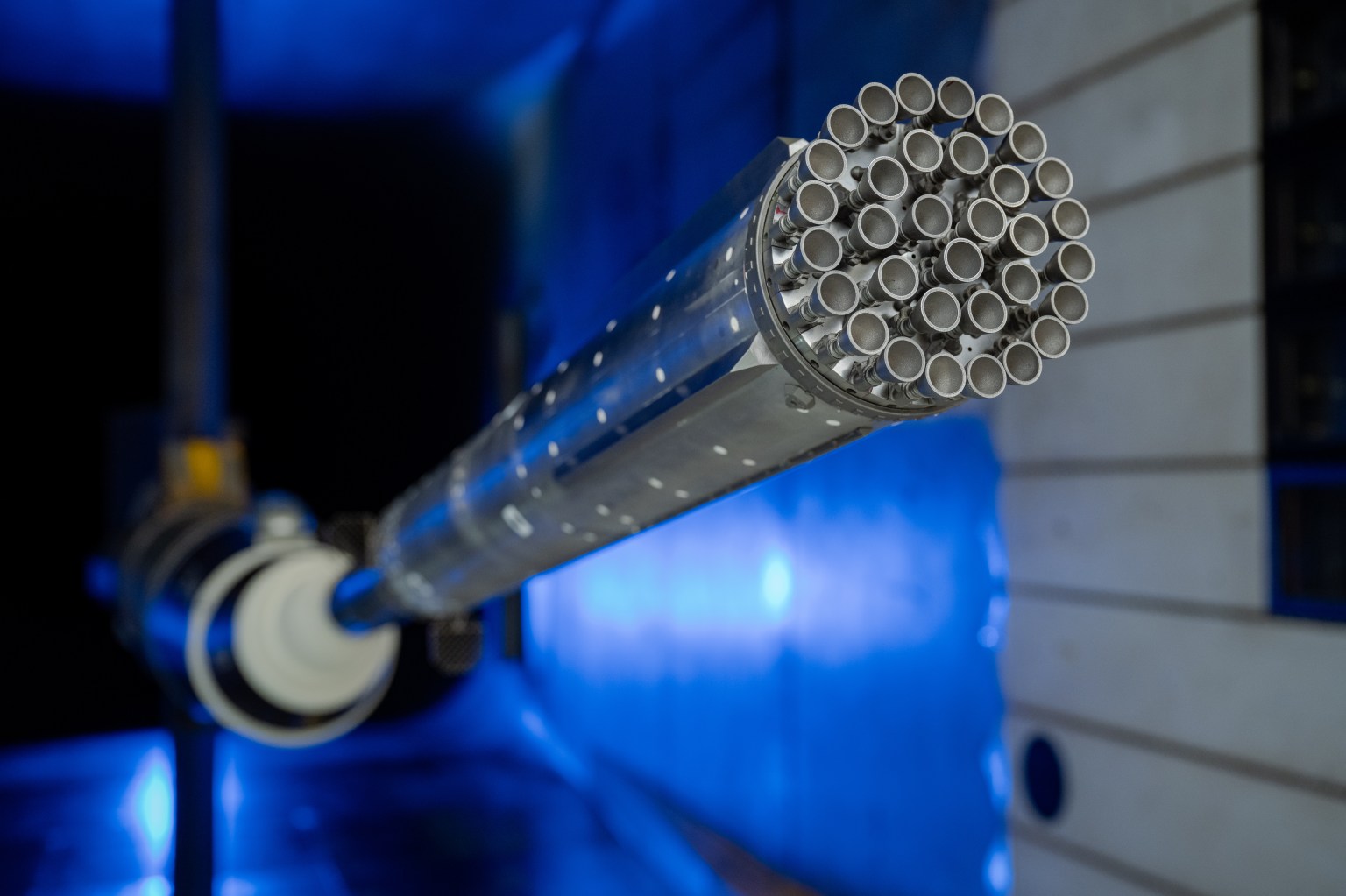
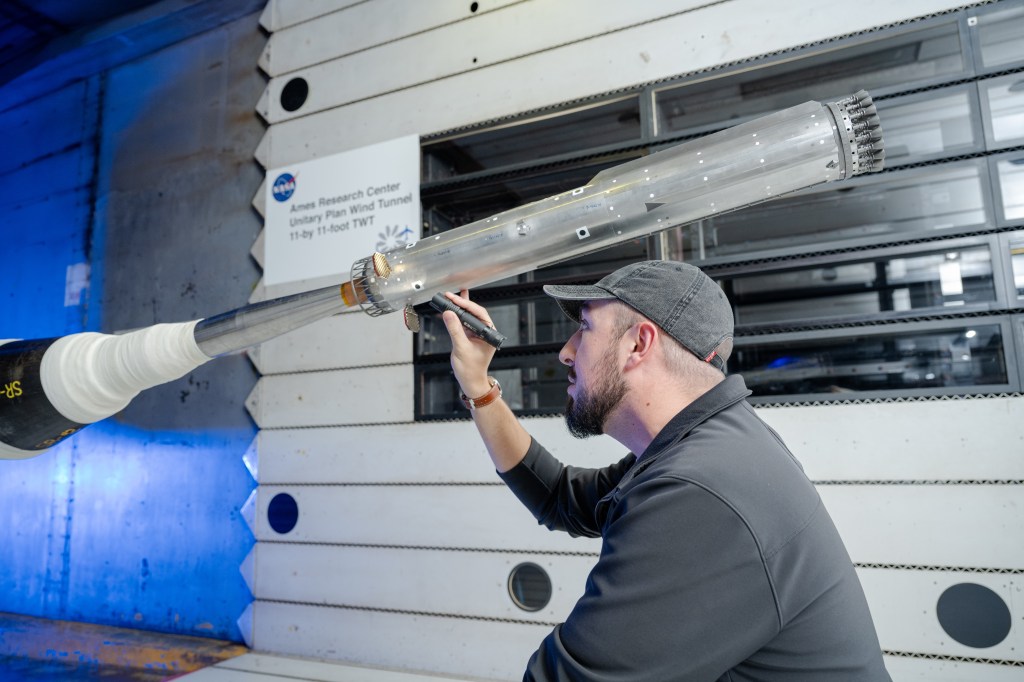
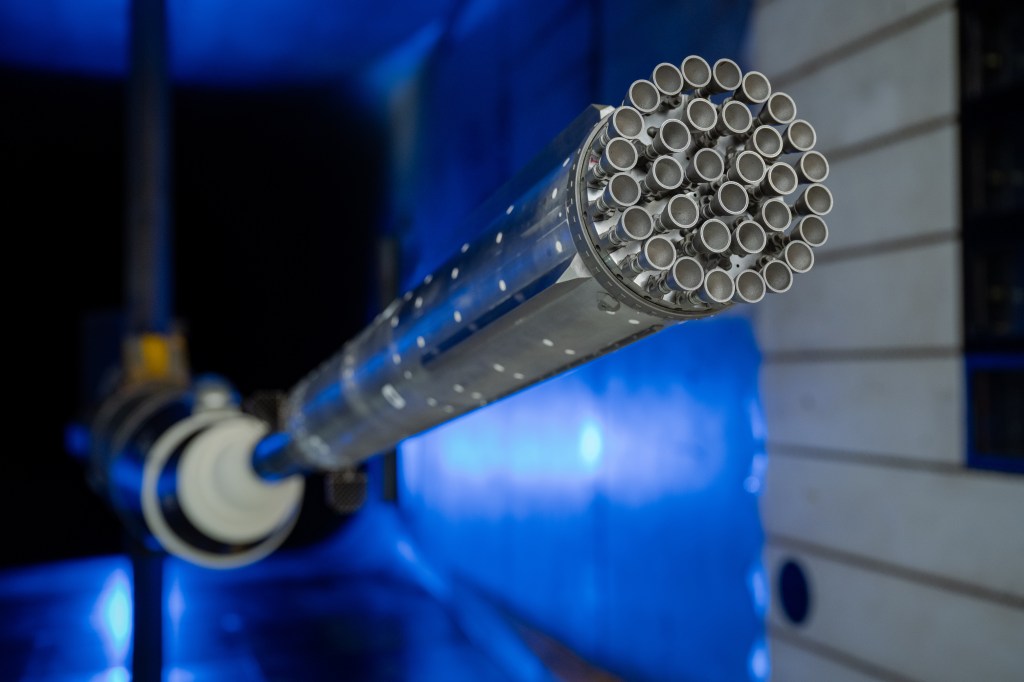
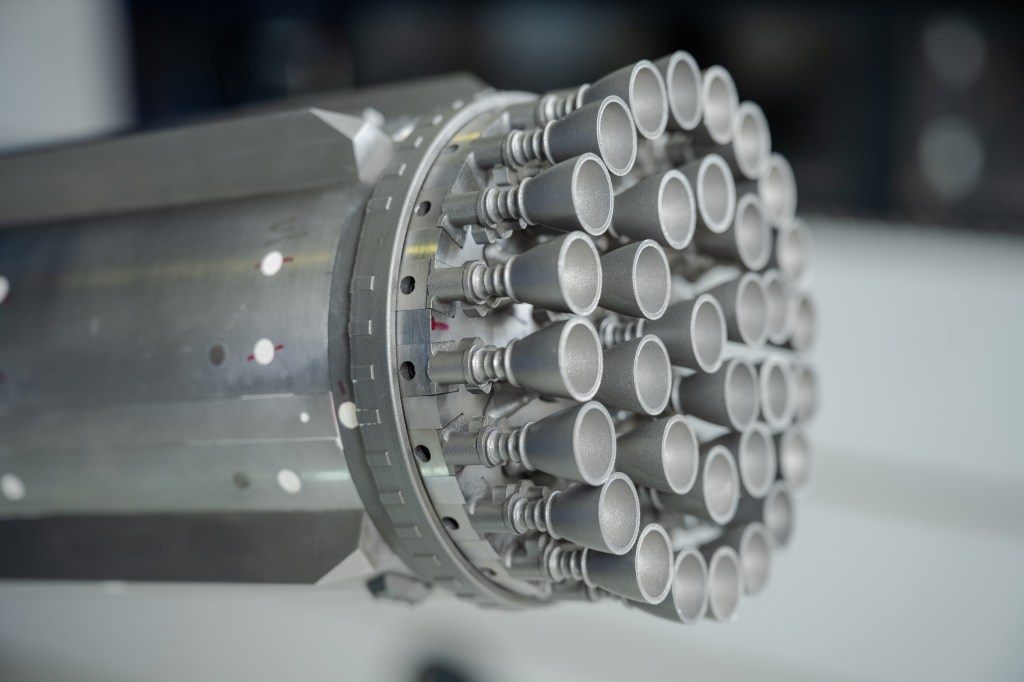
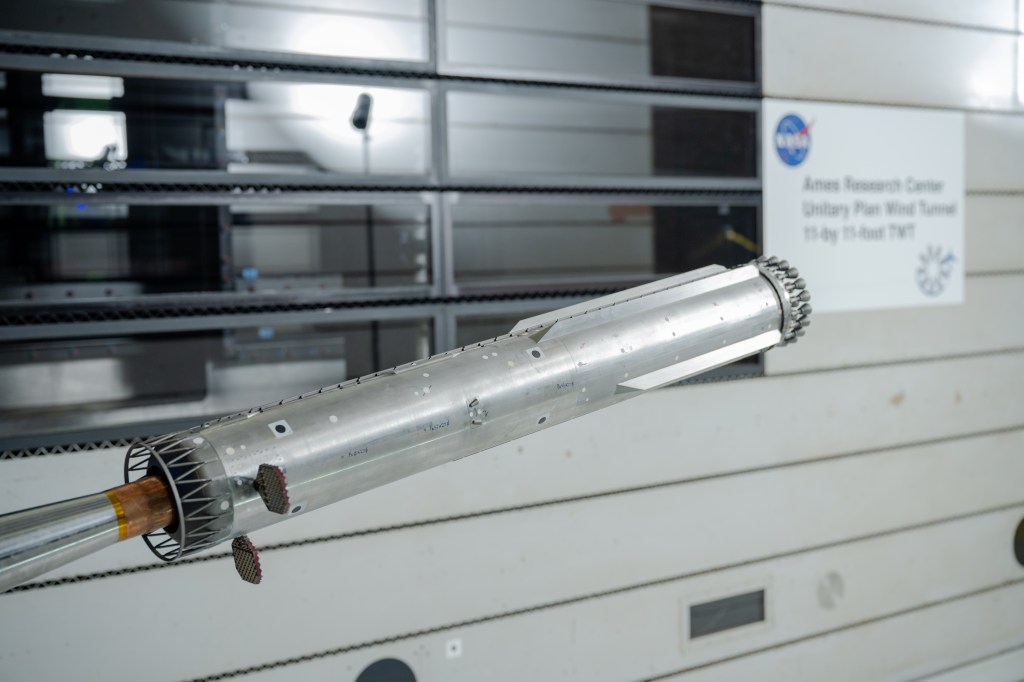
Engineers at NASA Ames conduct transonic and supersonic wind testing on a 1.2% scale model of the Super Heavy Version 3 rocket that will launch the Starship human landing system.
Credits: NASA

NASA and its industry partners are preparing for next year’s Artemis III demonstration mission by completing new wind tunnel tests on SpaceX’s Super Heavy Version 3 rocket booster. The tests, conducted at NASA’s Ames Research Center in California’s Silicon Valley, focused on better understanding the extreme aerodynamic forces the rocket can experience during re-entry. The recent test series builds on previous testing completed at NASA Ames in 2024.

NASA is working with SpaceX to develop the company’s Starship Human Landing System (HLS) to safely carry astronauts from lunar orbit to the Moon’s surface and back. The upgraded Super Heavy rocket booster is part of SpaceX’s Starship launch system. Version 3 of Starship and Super Heavy is expected to be the basis for the Starship HLS for Artemis III in 2027 and a later crewed lunar landing in 2028.

Engineers at NASA Ames conduct transonic and supersonic wind testing on a 1.2% scale model of the Super Heavy Version 3 rocket that will launch the Starship human landing system.
NASA
Engineers at NASA Ames conduct transonic and supersonic wind testing on a 1.2% scale model of the Super Heavy Version 3 rocket that will launch the Starship human landing system.
NASA
Engineers at NASA Ames conduct transonic and supersonic wind testing on a 1.2% scale model of the Super Heavy Version 3 rocket that will launch the Starship human landing system.
NASA
Engineers at NASA Ames conduct transonic and supersonic wind testing on a 1.2% scale model of the Super Heavy Version 3 rocket that will launch the Starship human landing system.
NASA

Although Starship HLS is a lunar lander designed and built by SpaceX, NASA collaborates with commercial companies to provide access to specialized testing facilities, like the wind tunnels at NASA Ames, and technical expertise, such as the team that set up the wind tunnel testing and helped analyze the results.

“NASA has a lot of experience with unsteady aerodynamics,” said Manish Mehta, discipline lead engineer for the HLS Plume and Aero Environments team, NASA’s Marshall Space Flight Center in Huntsville, Alabama. “We used the agency’s broad experience base of conducting wind tunnel tests for the space shuttle, the SLS (Space Launch System) rocket, and Orion spacecraft to efficiently set up and analyze the wind tunnel testing for the Super Heavy Version 3. In fact, similar testing at the Ames Unitary Plan Wind Tunnel resulted in adding strakes to SLS for Artemis II, so what we learned for Artemis II is helping us get to Artemis III and beyond.”

Testing

SpaceX’s Starship consists of a 33-engine first-stage Super Heavy rocket, or booster, and the second-stage Starship. Version 3 of Super Heavy incorporates many new and upgraded systems, including:

  • New propulsion systems and new Raptor 3 rocket engines
  • No engine section skirt, individual engine shrouds, or integrated large-scale base heat shield
  • Three gridfins on the Super Heavy booster instead of four, with each fin now 50% larger
  • An integrated hot stage replacing the previous single-use protective interstage

With significant changes to Super Heavy, NASA and SpaceX engineers wanted more information about the steady and unsteady aerodynamic forces the rocket will experience during atmospheric re-entry as it returns to the launch site for refurbishment and re-use.

“When a rocket, or an airplane, flies through air at high speed, it’s subjected to steady aerodynamic forces and moments, and unsteady aerodynamic forces and moments,” explained Jayanta Panda, unsteady aerodynamics subject matter expert at NASA Ames and part of the Human Landing System Plume and Aero Environments team. “An example of a steady aerodynamic force would be when air smoothly flows over the surface of the rocket as it ascends. An unsteady aerodynamic force would be air ‘buffeting,’ or hitting, certain areas the rocket at less predictable times and potentially causing vibrations.”

Wind tunnels

NASA and SpaceX used a 1.2% scale model of the Super Heavy Version 3 in the transonic wind tunnel and the supersonic wind tunnel at NASA Ames for testing. The transonic tunnel blasts scale models of rockets or aircraft with air at speeds ranging from Mach 0.2 to Mach 1.4 (Mach 1 is the speed of sound, or about 761 miles per hour). The smaller supersonic tunnel fires winds at higher speeds, from Mach 1.55 to Mach 2.5. The wind tunnel tests on Super Heavy Version 3, conducted in late 2025, used both tunnels to measure steady and unsteady air flows on the surfaces of Super Heavy. 

“Resulting wind tunnel data on steady forces and moments helps predict how the rocket will react to forces in the atmosphere during re-entry so the flight software can effectively guide the rocket during flight,” Mehta said. “The unsteady pressure data helps engineers understand the environment around the rocket as it re-enters Earth’s atmosphere. Engineers use that information as one input into software that analyzes loads on the rocket.”

Through the Artemis program, NASA is returning humans to the Moon for scientific discovery, economic opportunity, to establish an enduring human presence on the lunar surface, and build the foundation for the first crewed missions to Mars – for the benefit of all.

To learn more about Artemis, visit:

https://www.nasa.gov/artemis

Share

Details

Last Updated
Jul 31, 2026
Editor
Lee Mohon
Contact
  •  

NASA Announces New Spacecraft Technology Demonstration Mission at Moon    

4 min read

NASA Announces New Spacecraft Technology Demonstration Mission at Moon    

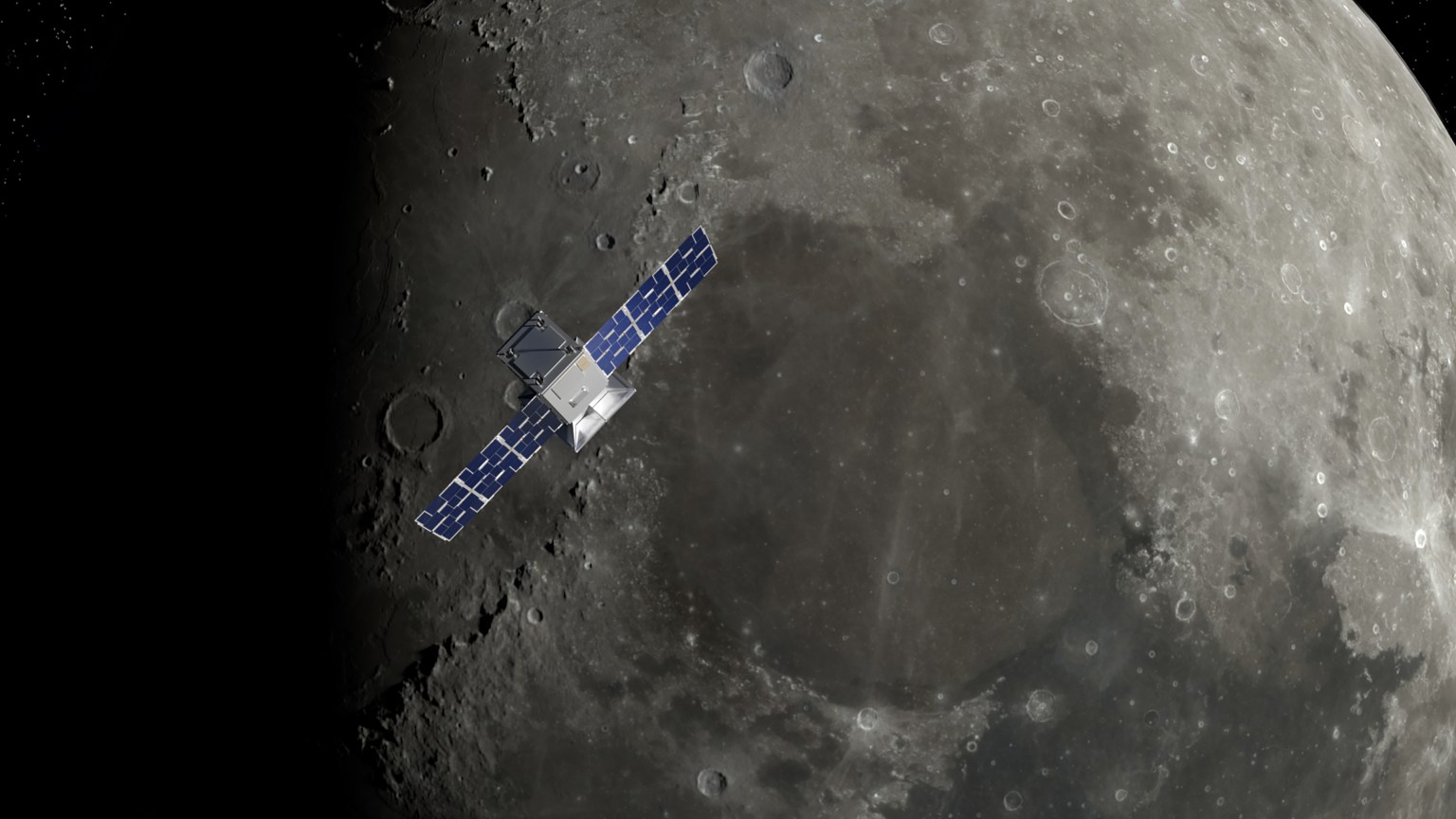
Artist rendition of two Capstone 2 in space above the Moon.
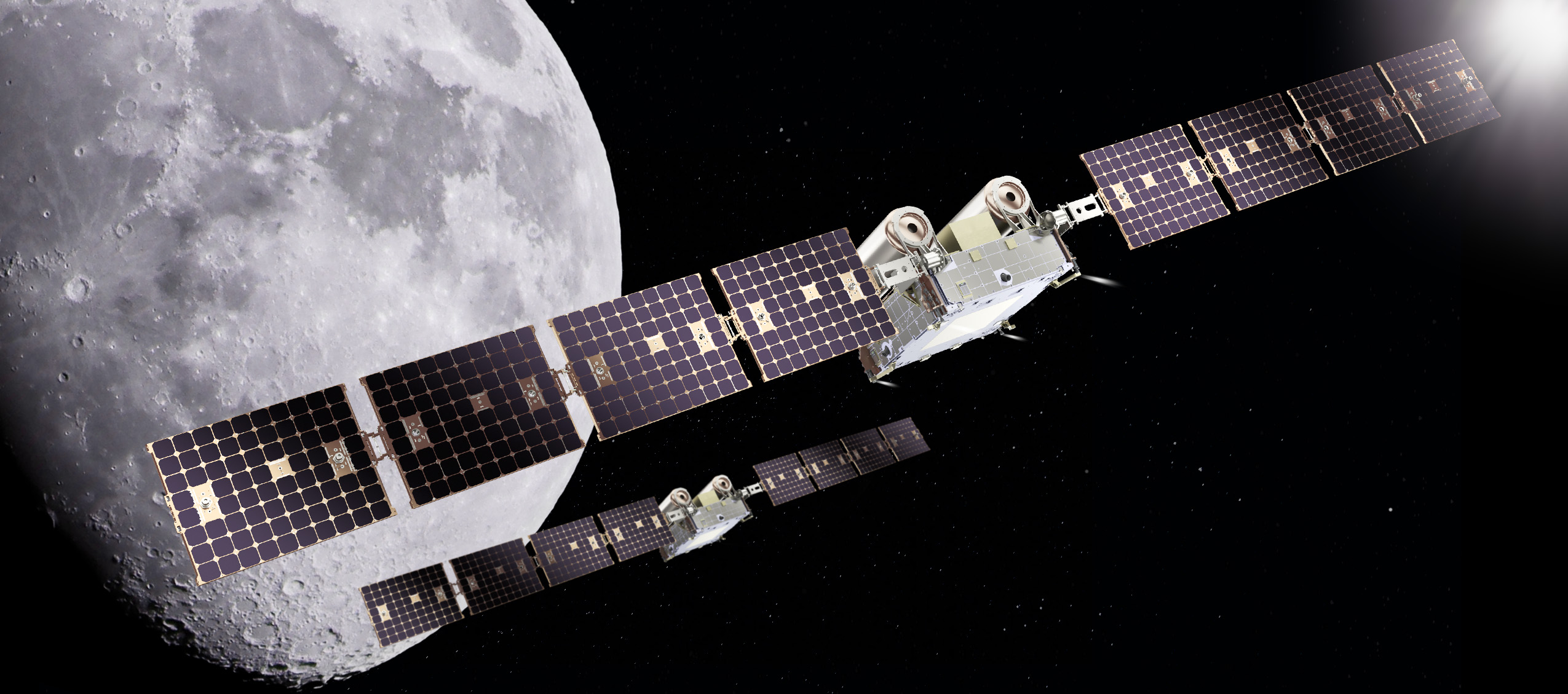
An artist’s rendering of NASA’s CAPSTONE 02 spacecraft in lunar orbit. The mission features two identical small spacecraft that will further mature technologies to support Artemis, Moon Base, and deep space exploration.
Terran Orbital

NASA is working with industry to advance the next phase of cislunar infrastructure for the agency’s Artemis program and Moon Base, including orbital assets and demonstrations. Under a contract awarded to Advanced Space, the agency’s CAPSTONE 02 mission will demonstrate rendezvous and proximity operations, autonomous navigation, and cislunar communication capabilities while continuing to characterize the radiation environment at the Moon.  

The CAPSTONE 02 mission, targeted for launch in 2027, will use two small spacecraft in lunar orbit to facilitate these demonstrations to support future NASA lunar and deep space missions.  

NASA’s original CAPSTONE demonstration, short for Cislunar Autonomous Positioning System Technology Operations and Navigation Experiment, became the first U.S. commercial mission to the Moon and the first spacecraft to operate in a near rectilinear halo orbit around the Moon. This is a nearly stable orbit, thanks to the interactive pull of gravity from both the Earth and the Moon.  

The mission successfully validated communications, networking, and autonomous navigation capabilities while gathering operational experience in cislunar space. The second CAPSTONE mission expands upon these accomplishments by transitioning from orbit validation to demonstrations that will inform future lunar exploration and infrastructure development. 

Achieving our most ambitious space exploration goals requires iterative, risk-tolerant demonstrations in partnership with industry. Technology development through flight testing is how we convert hard problems into the lasting capabilities needed for a permanent presence at the Moon.

Christopher Baker

Christopher Baker

Lead of the In‑Space Infrastructure portfolio within the Research and Technology Mission Directorate at NASA Headquarters in Washington, DC.

NASA’s CAPSTONE 02 mission will demonstrate advanced relative navigation technologies for rendezvous and proximity operations in cislunar space. These techniques are more sophisticated than those used in low Earth orbit and are designed to support NASA astronauts as they dock with Moon landers in cislunar orbit, enabling safe crew transfers to and from the lunar surface. 

The demonstration will fly two identical spacecraft of approximately 400 kilograms (882 pounds) from Terran Orbital Systems, Inc. Mission operators will conduct a series of rendezvous and proximity operations and loitering – or formation flying – techniques in lunar orbit with each spacecraft to better understand the trajectories of the spacecraft under the simultaneous influence of Earth and Moon gravities, otherwise known as three-body orbits.   

The CAPSTONE 02 mission will use ground tracking measurements, optical sensors, and celestial bodies to help one spacecraft locate and rendezvous with another. The mission will apply  navigation strategies similar to those planned for Orion’s approach to a lunar lander in deep space, helping NASA build confidence in these techniques for future exploration. 

Each CAPSTONE 02 spacecraft will have the ability to switch between ‘chaser’ and ‘target’ roles, testing a broad range of operational scenarios under a variety of environmental conditions in cislunar space. Transporting crew to the lunar surface from cislunar orbit depends on knowing how well navigation systems will perform during these operations. Since these conditions can’t be fully recreated on Earth, they must be tested in space. 

The CAPSTONE 02 mission also will serve as an operational testbed, enabling testing of three NASA-developed navigation software suites. Each software application will collect data during CAPSTONE 02’s low energy transfer trajectory, which will take it from the Earth to beyond the Moon before settling into a lunar orbit. The spacecraft will carry an optical imaging payload from Lawrence Livermore National Laboratory to support the navigation demonstration as well as capture imagery of the Moon. In addition, the mission will further mature the Cislunar Autonomous Positioning System navigation software that was first demonstrated on CAPSTONE as a method of determining spacecraft position relative to other spacecraft without relying on Earth-based tracking.  

The suite of technologies on CAPSTONE 02 are designed to automate routine navigation tasks, reduce reliance on traditional space-to-ground data, and enable new mission concepts that may be derived from increased inter-satellite coordination. Additionally, the CAPSTONE 02 spacecraft are designed for cost-effective, rapid deployment, demonstrating a scalable and repeatable mission model. 

“This mission represents an important step in the maturation of cislunar capabilities,” said Sean Fuller, Moon Base CAPSTONE manager. “By expanding on the lessons learned from CAPSTONE to demonstrate increasingly sophisticated operational concepts, CAPSTONE 02 lays the foundation for lunar infrastructure and commercial services that support Artemis, Moon Base, and future missions to deep space.”  

The CAPSTONE 02 mission is funded by NASA’s Human Spaceflight Mission Directorate with support from the Research and Technology Mission Directorate. The mission is managed by Small Spacecraft & Distributed Systems, based at NASA’s Ames Research Center in California’s Silicon Valley, within the Research and Technology Mission Directorate. NASA used a Small Business Innovation Research Phase III contract to fund the mission.  

To learn more about NASA’s CAPSTONE mission, visit: 

https://www.nasa.gov/mission/capstone02/

The post NASA Announces New Spacecraft Technology Demonstration Mission at Moon     appeared first on NASA Science.

  •  

NASA Announces New Spacecraft Technology Demonstration Mission at Moon    

4 min read

Preparations for Next Moonwalk Simulations Underway (and Underwater)

Artist rendition of two Capstone 2 in space above the Moon.
An artist’s rendering of NASA’s CAPSTONE 02 spacecraft in lunar orbit. The mission features two identical small spacecraft that will further mature technologies to support Artemis, Moon Base, and deep space exploration.
Terran Orbital

NASA is working with industry to advance the next phase of cislunar infrastructure for the agency’s Artemis program and Moon Base, including orbital assets and demonstrations. Under a contract awarded to Advanced Space, the agency’s CAPSTONE 02 mission will demonstrate rendezvous and proximity operations, autonomous navigation, and cislunar communication capabilities while continuing to characterize the radiation environment at the Moon.  

The CAPSTONE 02 mission, targeted for launch in 2027, will use two small spacecraft in lunar orbit to facilitate these demonstrations to support future NASA lunar and deep space missions.  

NASA’s original CAPSTONE demonstration, short for Cislunar Autonomous Positioning System Technology Operations and Navigation Experiment, became the first U.S. commercial mission to the Moon and the first spacecraft to operate in a near rectilinear halo orbit around the Moon. This is a nearly stable orbit, thanks to the interactive pull of gravity from both the Earth and the Moon.  

The mission successfully validated communications, networking, and autonomous navigation capabilities while gathering operational experience in cislunar space. The second CAPSTONE mission expands upon these accomplishments by transitioning from orbit validation to demonstrations that will inform future lunar exploration and infrastructure development. 

Achieving our most ambitious space exploration goals requires iterative, risk-tolerant demonstrations in partnership with industry. Technology development through flight testing is how we convert hard problems into the lasting capabilities needed for a permanent presence at the Moon.

Christopher Baker

Christopher Baker

Lead of the In‑Space Infrastructure portfolio within the Research and Technology Mission Directorate at NASA Headquarters in Washington, DC.

NASA’s CAPSTONE 02 mission will demonstrate advanced relative navigation technologies for rendezvous and proximity operations in cislunar space. These techniques are more sophisticated than those used in low Earth orbit and are designed to support NASA astronauts as they dock with Moon landers in cislunar orbit, enabling safe crew transfers to and from the lunar surface. 

The demonstration will fly two identical spacecraft of approximately 400 kilograms (882 pounds) from Terran Orbital Systems, Inc. Mission operators will conduct a series of rendezvous and proximity operations and loitering – or formation flying – techniques in lunar orbit with each spacecraft to better understand the trajectories of the spacecraft under the simultaneous influence of Earth and Moon gravities, otherwise known as three-body orbits.   

The CAPSTONE 02 mission will use ground tracking measurements, optical sensors, and celestial bodies to help one spacecraft locate and rendezvous with another. The mission will apply  navigation strategies similar to those planned for Orion’s approach to a lunar lander in deep space, helping NASA build confidence in these techniques for future exploration. 

Each CAPSTONE 02 spacecraft will have the ability to switch between ‘chaser’ and ‘target’ roles, testing a broad range of operational scenarios under a variety of environmental conditions in cislunar space. Transporting crew to the lunar surface from cislunar orbit depends on knowing how well navigation systems will perform during these operations. Since these conditions can’t be fully recreated on Earth, they must be tested in space. 

The CAPSTONE 02 mission also will serve as an operational testbed, enabling testing of three NASA-developed navigation software suites. Each software application will collect data during CAPSTONE 02’s low energy transfer trajectory, which will take it from the Earth to beyond the Moon before settling into a lunar orbit. The spacecraft will carry an optical imaging payload from Lawrence Livermore National Laboratory to support the navigation demonstration as well as capture imagery of the Moon. In addition, the mission will further mature the Cislunar Autonomous Positioning System navigation software that was first demonstrated on CAPSTONE as a method of determining spacecraft position relative to other spacecraft without relying on Earth-based tracking.  

The suite of technologies on CAPSTONE 02 are designed to automate routine navigation tasks, reduce reliance on traditional space-to-ground data, and enable new mission concepts that may be derived from increased inter-satellite coordination. Additionally, the CAPSTONE 02 spacecraft are designed for cost-effective, rapid deployment, demonstrating a scalable and repeatable mission model. 

“This mission represents an important step in the maturation of cislunar capabilities,” said Sean Fuller, Moon Base CAPSTONE manager. “By expanding on the lessons learned from CAPSTONE to demonstrate increasingly sophisticated operational concepts, CAPSTONE 02 lays the foundation for lunar infrastructure and commercial services that support Artemis, Moon Base, and future missions to deep space.”  

The CAPSTONE 02 mission is funded by NASA’s Human Spaceflight Mission Directorate with support from the Research and Technology Mission Directorate. The mission is managed by Small Spacecraft & Distributed Systems, based at NASA’s Ames Research Center in California’s Silicon Valley, within the Research and Technology Mission Directorate. NASA used a Small Business Innovation Research Phase III contract to fund the mission.  

To learn more about NASA’s CAPSTONE mission, visit: 

https://www.nasa.gov/mission/capstone02/

  •  

NASA Awards Facilities Support Services Contract for Ames Research Center 

CONTRACT RELEASE

NASA has selected Chugach Intelligence Solutions LLC to provide comprehensive operations, maintenance, and repair services for NASA’s Ames Research Center in California’s Silicon Valley. 

The Ames Facilities Support Services II contract ensures that the center’s historic and specialized facilities are properly maintained, fully operational, and capable of supporting the agency’s missions and tenant partners in the NASA Research Park. 

The hybrid contract has a five-year period of performance, consisting of a 12-month base period and four 12-month option periods, with the possibility of a six-month extension. The performance period is expected to begin Thursday, Aug. 13. The contract includes cost-plus-award-fee core requirements, firm-fixed-price phase-in, and indefinite-delivery/indefinite-quantity task orders, providing flexibility to address both routine and emergent facility needs. The award has a maximum potential value of approximately $158 million, inclusive of all options and total indefinite-delivery/indefinite-quantity ceiling value. 

For more information about NASA and its missions, visit: 

https://www.nasa.gov

-end- 

Jeanne Neal
Ames Research Center, Silicon Valley, Calif.
650-604-4789
jeanne.c.neal@nasa.gov

The post NASA Awards Facilities Support Services Contract for Ames Research Center  appeared first on NASA Science.

  •  

NASA Study of Pristine Meteorite Adds to Story of Ancient Asteroids

6 min read

NASA Study of Pristine Meteorite Adds to Story of Ancient Asteroids

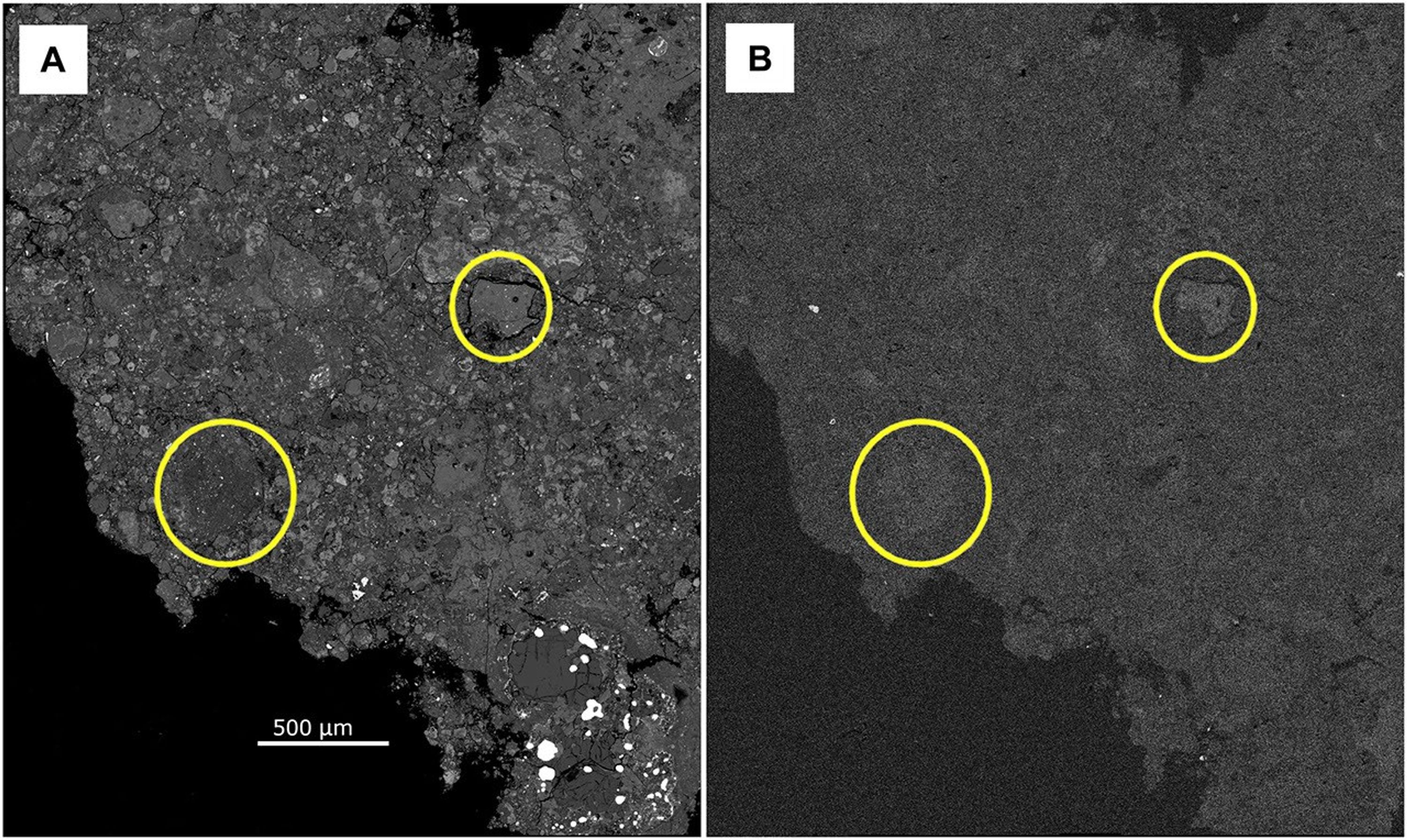
Two grayscale microscope images of the same area of the Hillsborough meteorite are shown side by side. In both panels, two circular features are outlined in yellow. The left panel is a backscattered electron image that reveals the meteorite's internal structure and the locations of two C1 clasts. The right panel is an X-ray elemental map of the same area, where the circled clasts appear brighter than the surrounding material, indicating elevated sodium concentrations. The comparison shows that sodium is concentrated within the C1 clasts.
C1 clasts in Hillsborough: On the left is a back-scattered electron image with two C1 748 clasts circled. On the right, an X-ray map of the same area as (A), indicating Na enrichment in 749 of the C1 clasts relative to the bulk of Hillsborough. Credit: NASA/SETI

A meteorite recovered immediately upon its fall to Earth on July 16, 2024, is helping NASA scientists uncover new clues about ancient water, the chemical evolution of primitive asteroids, and the ingredients that may have helped make life possible throughout the early solar system.

This rapid recovery began when an amateur astronomer in New Jersey quickly recognized that a newly fallen meteorite had landed on his property. Recognizing its scientific value and wearing protective gloves, he collected the fragments and stored them in aluminum foil and glass containers, which preserved delicate minerals and organic compounds that are often altered by moisture, weather, and contamination.

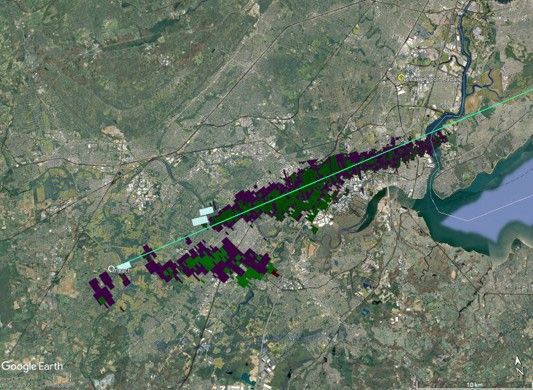
As the meteorite fell to Earth, cameras across New Jersey captured its fiery passage through the atmosphere. Scientists used these observations to reconstruct the fireball’s trajectory and, after recovering the meteorite, combined this data with laboratory analyses to determine where in the solar system the rock most likely originated. In a study published Wednesday in the journal Science Advances, researchers found evidence that ancient salty water altered minerals within the meteorite’s parent asteroid, preserving unique minerals and a rich inventory of organic compounds.

“When we have both a documented fireball and a quick recovery of its meteorite, we can learn not only what the rock is made of, but where it came from in the asteroid belt,” said Peter Jenniskens, meteor astronomer at both NASA’s Ames Research Center in California’s Silicon Valley and the SETI Institute, and lead author of the study.
Satellite map of the Hillsborough, New Jersey, area with the meteorite's projected flight path shown as a green diagonal line extending from southwest to northeast. Colored radar detections along and below the flight path indicate where falling meteorite fragments were detected as winds carried them east-northeast during their descent. The figure illustrates how radar observations helped scientists reconstruct the meteorite's fall.
Combined radar detections from the Hillsborough meteorite fall. The green line shows the fireball’s projected path, while colored radar signatures show falling meteorite fragments drifting east-northeast with prevailing winds. Credit: NASA/Marc Fries

Named for the township where it was recovered, the Hillsborough meteorite belongs to a class of carbon-rich meteorites known as CM carbonaceous chondrites. These primitive rocks preserve some of the oldest materials in the solar system, recording the chemical processes that shaped asteroids more than 4.5 billion years ago.

While examining the unusually pristine meteorite, researchers found a mosaic of tiny broken-up rocks and noticed that some contained unusually high concentrations of sodium — an unexpected finding for this type of meteorite. The surprising signal prompted a closer investigation using powerful electron microscopes that allowed scientists to examine the meteorite from the millimeter scale down to individual atoms. By combining observations across multiple scales, researchers reconstructed the history of the minerals and the fluids that once flowed through them.

These analyses revealed microscopic fractures filled with sodium-rich material left behind by ancient brines. Unlike pure water, brines contain dissolved salts that allow them to transport elements and chemically alter the rocks they move through. In the case of the Hillsborough sample, those ancient fluids altered the asteroid’s minerals and left behind chemical evidence that remained preserved for billions of years.

Scientists were also able to detect fragile sodium-carbonate salts that normally react with moisture in Earth’s atmosphere before they can be studied. Jangmi Han, a paper co-author and mineralogist at NASA’s Johnson Space Center in Houston, identified evidence of ancient brines preserved within microscopic fractures. Similar salts were identified in samples returned from the asteroids Bennu and Ryugu by NASA’s OSIRIS-REx mission and JAXA’s (Japan Aerospace Exploration Agency) Hayabusa2 mission. However,Hillsborough marks the first time the salts have been identified in a CM carbonaceous chondrite meteorite, offering a new glimpse into the surfaces of the primitive asteroids that produced these meteorites.

Together, these findings suggest that ancient, salt-rich brines were more widespread among primitive asteroids than previously recognized, and provide scientists with new opportunities to compare how water altered different asteroid bodies across the early solar system.

“The chips of the most salt-rich bits of this meteorite are quite comparable to the samples returned by the Hayabusa2 and OSIRIS-REx missions,” said Mike Zolensky, a meteorite researcher at NASA Johnson and co-author of the study. “They’re not identical. They’re different in some very interesting ways, but they’ve seen very similar processes.”

Following the history of water through the solar system is an essential part of understanding the origin of life.

Mike Zolensky

Meteorite Researcher

Scientists expected Hillsborough to contain a rich suite of organic compounds because it is a CM carbonaceous chondrite. What made the meteorite exceptional was how quickly it was recovered, allowing researchers to study those compounds before prolonged exposure to Earth’s environment could contaminate the sample.

“One of the big surprises for me when we analyzed a small chip of the Hillsborough meteorite was the complexity of amino acids and other organic compounds,” said Danny Glavin, senior scientist in the Astrobiology Analytical Laboratory at NASA’s Goddard Space Flight Center in Greenbelt, Maryland, and co-author of the study.

Its diversity of amino acids and other organic compounds is, comparable to the Murchison meteorite, a nearly 100-kilogram carbonaceous chondrite that fell in Australia in 1969 and became the benchmark for extraterrestrial organic chemistry.

“It’s just more proof that the chemical building blocks of life could have been delivered — and are still being delivered — to Earth today by these carbonaceous asteroid fragments,” said Glavin, who was a co-investigator on OSIRIS-REx, leading an international team that studied the organic composition of the samples delivered to Earth from asteroid Bennu in 2023.

Understanding the Hillsborough meteorite required expertise from multiple scientific disciplines.

Astronomers reconstructed the meteorite’s journey through space, finding evidence that it may have originated from the Erigone asteroid family in the inner asteroid belt, home to the asteroid Donaldjohanson, which was visited in 2025 by NASA’s Lucy spacecraft. Mineralogists identified evidence of ancient brines preserved within microscopic fractures, while organic chemists analyzed the meteorite’s inventory of amino acids and other organic compounds.

“Together, those complementary studies are helping scientists build one of the clearest pictures yet of how primitive asteroids such as the asteroid Erigone evolved chemically over billions of years,” said Jenniskens.

Researchers continue to study the Hillsborough meteorite, revealing new details about how water transformed primitive asteroids and shaped the early solar system.

By tracing the history of water on primitive asteroids, scientists are learning how water and the chemical ingredients for life were distributed throughout the early solar system.

“If you follow the water through the solar system, you’re actually following life,” Zolensky said. “Following the history of water through the solar system is an essential part of understanding the origin of life.”

For more information on NASA’s astromaterials research and exploration, visit:

https://science.nasa.gov/astromaterials

Karen Fox / Molly Wasser
Headquarters, Washington
240-285-5155 / 240-419-1732
karen.c.fox@nasa.gov / molly.l.wasser@nasa.gov

Victoria Segovia
NASA’s Johnson Space Center, Houston 281-483-5111
victoria.segovia@nasa.gov

About the Author

Victoria Segovia

Keep Exploring

Discover More Topics From NASA

  •  

NASA Announces Public-Private Partnership to Advance Mars Science

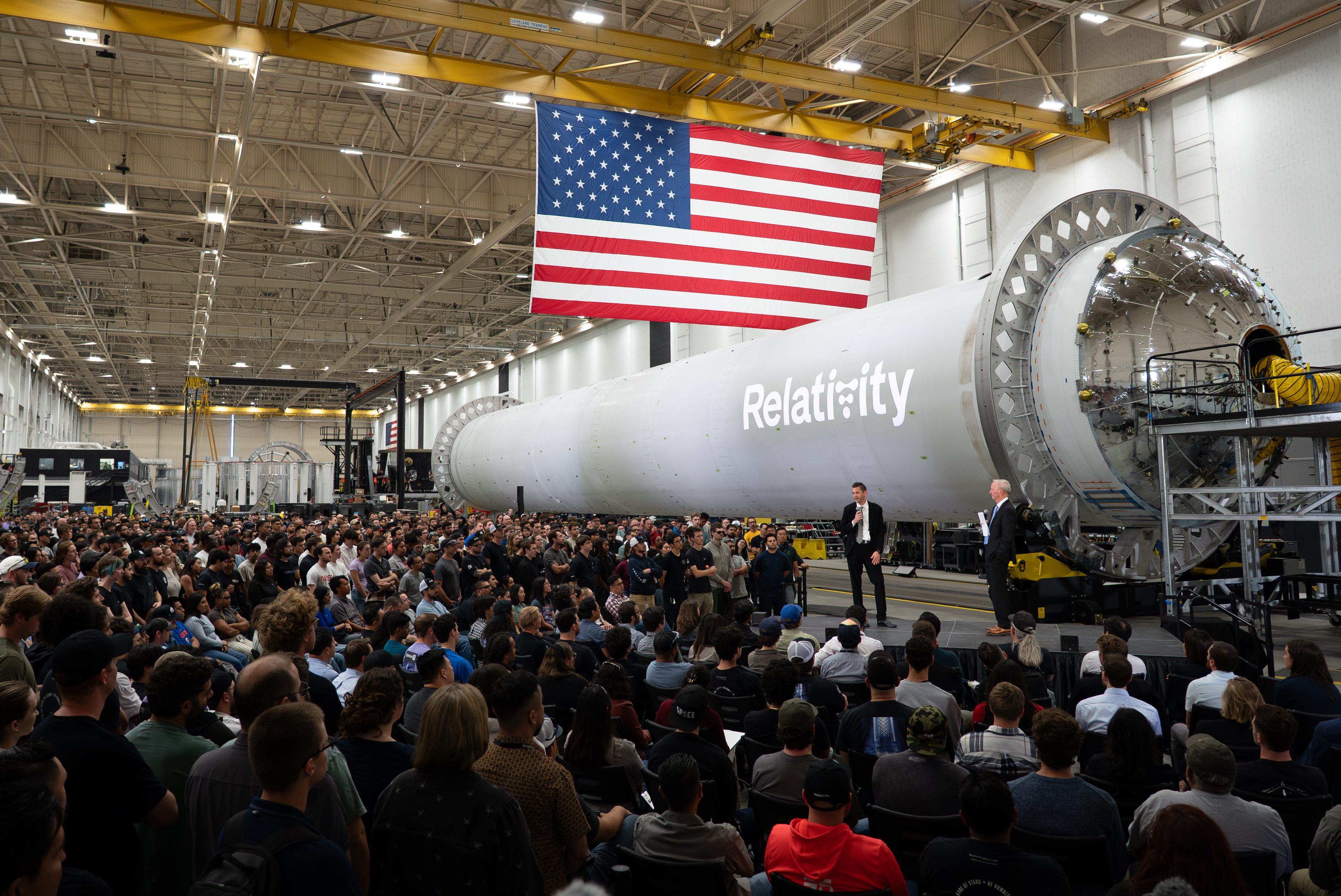
NASA Administrator Jared Isaacman stands in front of a large, cylindrical, gray spacecraft with a white Relativity logo on it and addresses hundreds of Relativity Space employees. A large American flag hangs from the ceiling.
NASA Administrator Jared Isaacman announces a public-private partnership to advance Mars science during an event at Relativity Space on June 17, 2026.
Credit: Relativity Space

NASA Wednesday announced a new public‑private partnership to advance Mars science by combining the agency’s scientific leadership with commercial innovation. Under this model, NASA will provide the Aeolus atmospheric‑science instrument payload suite, while Relativity Space supplies the spacecraft, rocket, and cruise operations necessary to deliver the instruments to Mars.

This partnership reflects NASA’s growing commitment to approaches that accelerate discovery, expand mission cadence, and strengthen the foundation for future human exploration. By leveraging commercial investment and development capacity, NASA can focus resources on high‑value science while enabling more frequent opportunities to gather critical data about Mars, data essential to safely navigating the Martian atmosphere and ultimately landing humans on the surface.

“Public-private partnerships like this are a force multiplier for science,” said NASA Administrator Jared Isaacman. “By pairing NASA’s world‑class instruments with commercial innovation and investment, we can deliver more science, more often, and reduce the time it takes to get essential data into the hands of researchers preparing for future human missions to Mars.”

Aeolus, scheduled to launch in 2028, is a NASA‑developed suite of four complementary instruments designed to provide the first integrated, daily, global view of Martian winds, temperatures, dust, and clouds. By improving models for dust, winds, temperature, and seasonal atmospheric behavior, Aeolus will generate the detailed environmental knowledge required to reduce risk for future crewed and uncrewed landings. These measurements will directly inform entry, descent, and landing systems and support safer, more predictable mission planning for astronauts.

Aeolus builds on more than two decades of NASA missions that have studied the Martian atmosphere, including orbiters such as MAVEN (Mars Atmosphere and Volatile Evolution), the Mars Reconnaissance Orbiter, and Mars Odyssey, while taking the foundation laid by earlier missions even further, continuing NASA’s tradition of expanding the frontiers of Mars science. Researchers at NASA’s Ames Research Center in California’s Silicon Valley will design, build, and integrate the payload, while Relativity Space will manage spacecraft development and mission operations.

“As NASA’s Innovation Center of Excellence, Ames is committed to delivering the technologies, capabilities, and creative partnerships that enable the agency’s boldest missions,” said Dr. Eugene Tu, center director, NASA Ames. “Aeolus reflects how innovative collaboration accelerates science and strengthens the foundation needed for one day landing humans on Mars.”

The Aeolus payload suite includes four NASA‑built instruments:

  • Doppler Wind and Temperature Sounder (DWTS‑Ozone): Measures wind and temperature profiles from the surface up to approximately 37 miles (60 km). A collaboration with GATS.
  • Thermal Limb Sounder (TLS): Provides vertical temperature profiles and observations of dust and water‑ice clouds. A collaboration with Xiomas Technologies.
  • Surface Radiometric Sensor Package (SuRSeP): Measures surface energy balance, dust, and cloud properties.
  • Wide‑Field Context Camera (WFCC): Captures daily global images of atmospheric activity.

NASA will support operations of science instruments for at least one Martian year, while Relativity Space maintains the spacecraft. As part of the agreement, NASA will develop the data‑processing pipeline needed to transform raw measurements into high‑quality, ready‑to‑use data products for broad scientific use.

This effort is supported under NASA’s first six‑year reimbursable Space Act Agreement, providing a stable framework for sustained collaboration, predictable development, and mission continuity.

Learn more about Mars science at:

https://science.nasa.gov/mars

-end-

Camille Gallo / Cheryl Warner
Headquarters, Washington
202-358-1600
camille.m.gallo@nasa.gov / cheryl.m.warner@nasa.gov

Jeanne Neal
Ames Research Center, Silicon Valley
650-604-4789
jeanne.c.neal@nasa.gov

Share

Details

Last Updated
Jun 18, 2026
Editor
Jessica Taveau

The post NASA Announces Public-Private Partnership to Advance Mars Science appeared first on NASA Science.

  •  

NASA Announces Public-Private Partnership to Advance Mars Science

NASA Administrator Jared Isaacman stands in front of a large, cylindrical, gray spacecraft with a white Relativity logo on it and addresses hundreds of Relativity Space employees. A large American flag hangs from the ceiling.
NASA Administrator Jared Isaacman announces a public-private partnership to advance Mars science during an event at Relativity Space on June 17, 2026.
Credit: Relativity Space

NASA Wednesday announced a new public‑private partnership to advance Mars science by combining the agency’s scientific leadership with commercial innovation. Under this model, NASA will provide the Aeolus atmospheric‑science instrument payload suite, while Relativity Space supplies the spacecraft, rocket, and cruise operations necessary to deliver the instruments to Mars.

This partnership reflects NASA’s growing commitment to approaches that accelerate discovery, expand mission cadence, and strengthen the foundation for future human exploration. By leveraging commercial investment and development capacity, NASA can focus resources on high‑value science while enabling more frequent opportunities to gather critical data about Mars, data essential to safely navigating the Martian atmosphere and ultimately landing humans on the surface.

“Public-private partnerships like this are a force multiplier for science,” said NASA Administrator Jared Isaacman. “By pairing NASA’s world‑class instruments with commercial innovation and investment, we can deliver more science, more often, and reduce the time it takes to get essential data into the hands of researchers preparing for future human missions to Mars.”

Aeolus, scheduled to launch in 2028, is a NASA‑developed suite of four complementary instruments designed to provide the first integrated, daily, global view of Martian winds, temperatures, dust, and clouds. By improving models for dust, winds, temperature, and seasonal atmospheric behavior, Aeolus will generate the detailed environmental knowledge required to reduce risk for future crewed and uncrewed landings. These measurements will directly inform entry, descent, and landing systems and support safer, more predictable mission planning for astronauts.

Aeolus builds on more than two decades of NASA missions that have studied the Martian atmosphere, including orbiters such as MAVEN (Mars Atmosphere and Volatile Evolution), the Mars Reconnaissance Orbiter, and Mars Odyssey, while taking the foundation laid by earlier missions even further, continuing NASA’s tradition of expanding the frontiers of Mars science. Researchers at NASA’s Ames Research Center in California’s Silicon Valley will design, build, and integrate the payload, while Relativity Space will manage spacecraft development and mission operations.

“As NASA’s Innovation Center of Excellence, Ames is committed to delivering the technologies, capabilities, and creative partnerships that enable the agency’s boldest missions,” said Dr. Eugene Tu, center director, NASA Ames. “Aeolus reflects how innovative collaboration accelerates science and strengthens the foundation needed for one day landing humans on Mars.”

The Aeolus payload suite includes four NASA‑built instruments:

  • Doppler Wind and Temperature Sounder (DWTS‑Ozone): Measures wind and temperature profiles from the surface up to approximately 37 miles (60 km). A collaboration with GATS.
  • Thermal Limb Sounder (TLS): Provides vertical temperature profiles and observations of dust and water‑ice clouds. A collaboration with Xiomas Technologies.
  • Surface Radiometric Sensor Package (SuRSeP): Measures surface energy balance, dust, and cloud properties.
  • Wide‑Field Context Camera (WFCC): Captures daily global images of atmospheric activity.

NASA will support operations of science instruments for at least one Martian year, while Relativity Space maintains the spacecraft. As part of the agreement, NASA will develop the data‑processing pipeline needed to transform raw measurements into high‑quality, ready‑to‑use data products for broad scientific use.

This effort is supported under NASA’s first six‑year reimbursable Space Act Agreement, providing a stable framework for sustained collaboration, predictable development, and mission continuity.

Learn more about Mars science at:

https://science.nasa.gov/mars

-end-

Camille Gallo / Cheryl Warner
Headquarters, Washington
202-358-1600
camille.m.gallo@nasa.gov / cheryl.m.warner@nasa.gov

Jeanne Neal
Ames Research Center, Silicon Valley
650-604-4789
jeanne.c.neal@nasa.gov

Share

Details

Last Updated
Jun 18, 2026
Editor
Jessica Taveau
  •  

NASA’s X-59 Reaches Speed, Altitude for Future Quiet Supersonic Flights

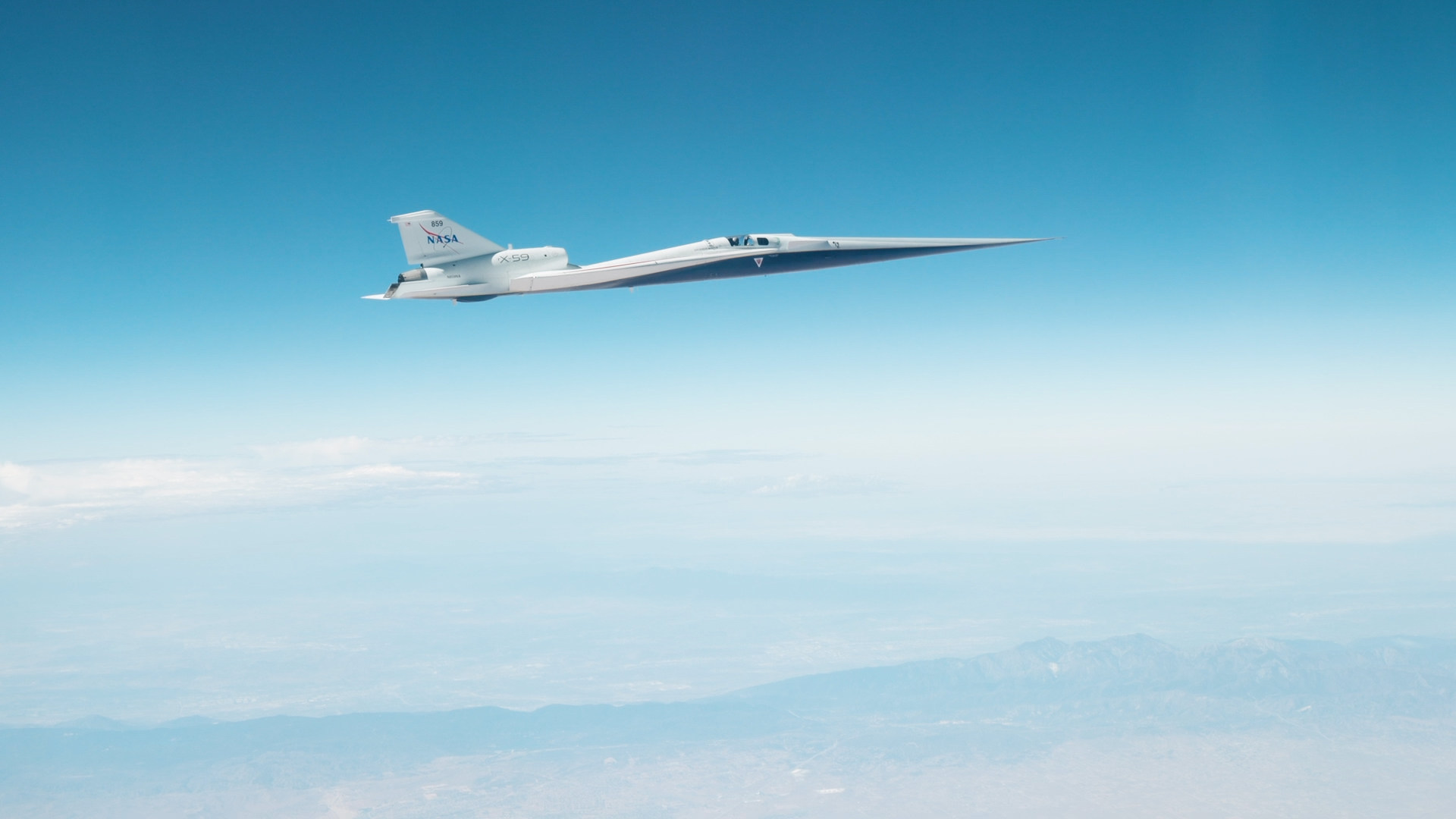
The X-59 in flight on June 12, 2026 against a blue sky.
NASA’s X-59 quiet supersonic research aircraft reached its target speed and altitude for future community overflights for the first time during a flight on Friday, June 12, 2026. The milestone marked the first time the aircraft flew at Mach 1.4 and 55,000 feet — conditions it will fly when gathering community response data to its quiet sonic thump.
NASA/Lori Losey

NASA’s X-59 experimental aircraft reached a major milestone Friday, June 12, flying Mach 1.4 (about 924 mph) and an altitude of 55,000 feet, the conditions required for the aircraft to make future flights critical to its mission.  

The X-59 still has months of performance testing ahead, but after those are complete, NASA’s Quesst mission will fly the aircraft over several U.S. communities to collect data on public perception of the quiet sonic thump it will make at supersonic speeds. Those community overflights will include flights at Mach 1.4 and 55,000 feet. 

The milestone comes just days after the X-59’s first supersonic flight. That flight showed the aircraft performed as expected at Mach 1.1, but Friday’s mission conditions flight was an even more critical step for NASA. 

The aircraft’s team has steadily expanded the aircraft’s flight envelope by evaluating its performance at a variety of speeds and altitudes, and having its pilots take on a battery of maneuvers.  

Photo of the XVS screen on the X-59 showing Mach 1.4 at 55,030 was achieved.
NASA’s X‑59 eXternal Vision System (XVS) shows Mach 1.4 at 55,030 feet on Friday, June 12, 2026 during the aircraft’s first mission conditions flight, the approximate conditions it will fly when gathering community response data to its quiet “sonic thump.” The milestone marks the first time the aircraft flew at its designed speed and altitude.
NASA/Lori Losey

The X-59 was designed to fly supersonic without causing a loud sonic boom. However, for these early supersonic flights it has been accompanied by a NASA F-15 research aircraft, a traditional supersonic jet that causes booms obscuring any noise the X-59 makes. During upcoming flights, a shock-sensing probe mounted to the F-15 will gather measurements of the X-59’s shock wave signature, an early measure of its supersonic performance. 

After the team conducts more tests at a variety of altitudes and conditions to complete envelope expansion, the X-59 will enter the acoustic validation phase of Quesst. During this phase, researchers will thoroughly measure the aircraft’s supersonic acoustic signature — the quiet thump it’s designed to make — to confirm it is performing as intended. 

Each flight brings NASA one step closer to flying the X-59 over communities and gathering feedback that could help shape the future of commercial supersonic flight over land. 

More X-59 to Explore

quesst-logo-horizontal-051826sm

Read more on the Quesst mission page.

The post NASA’s X-59 Reaches Speed, Altitude for Future Quiet Supersonic Flights appeared first on NASA Science.

  •  

Hazard Detection Lidar System Goes to the Moon

Hazard Detection Lidar System Goes to the Moon

A flight testing success story

Enabling landers to autonomously identify the safest sites to touch down

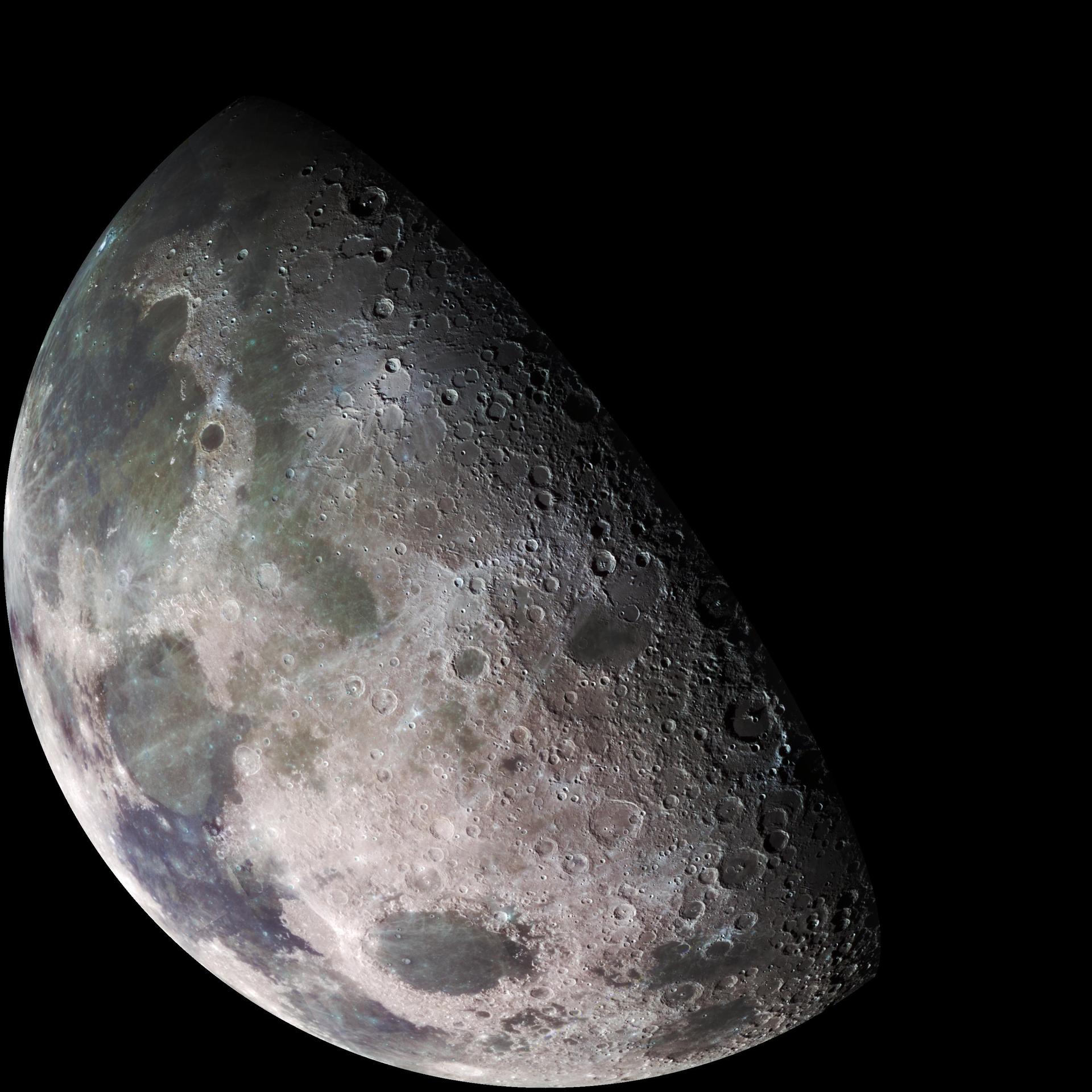
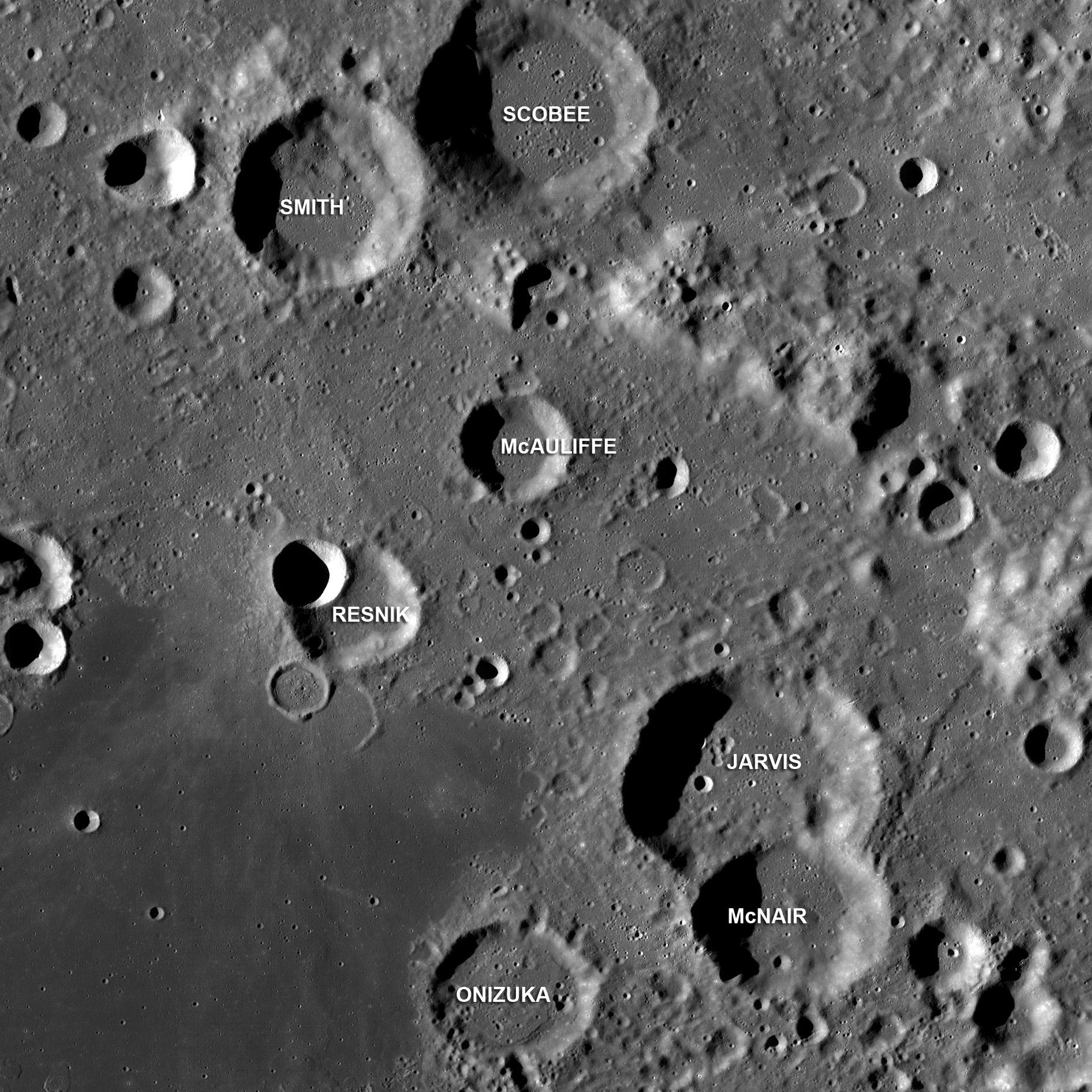
Moon craters and their surrounding areas are high-value destinations for lunar missions since they may contain important resources and valuable science targets. However, these sites are also home to dangers such as steep slopes that are difficult to see in the challenging lighting conditions. As a result, selecting landing sites on lunar surfaces is a critical component for NASA’s CLPS (Commercial Lunar Payload Services) missions. A new technology tested through NASA’s Flight Opportunities program is set to go to the Moon and help provide a safe and precise landing.

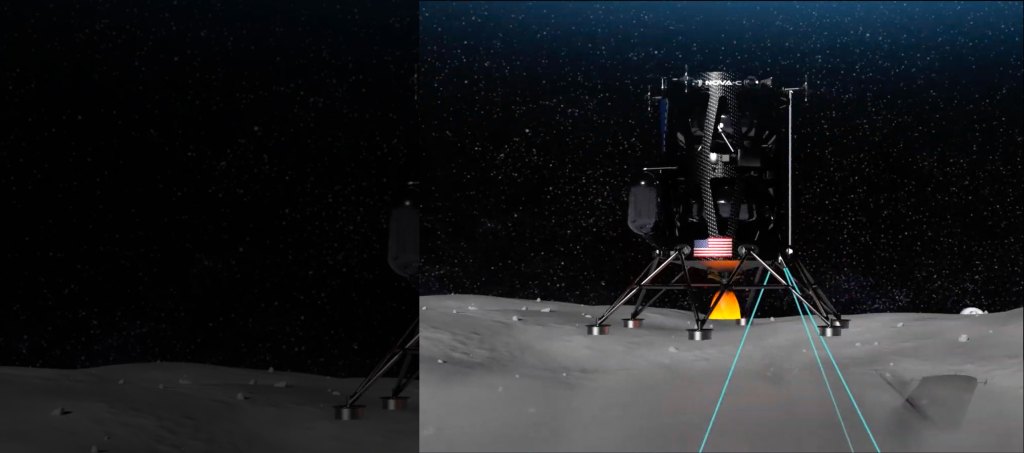
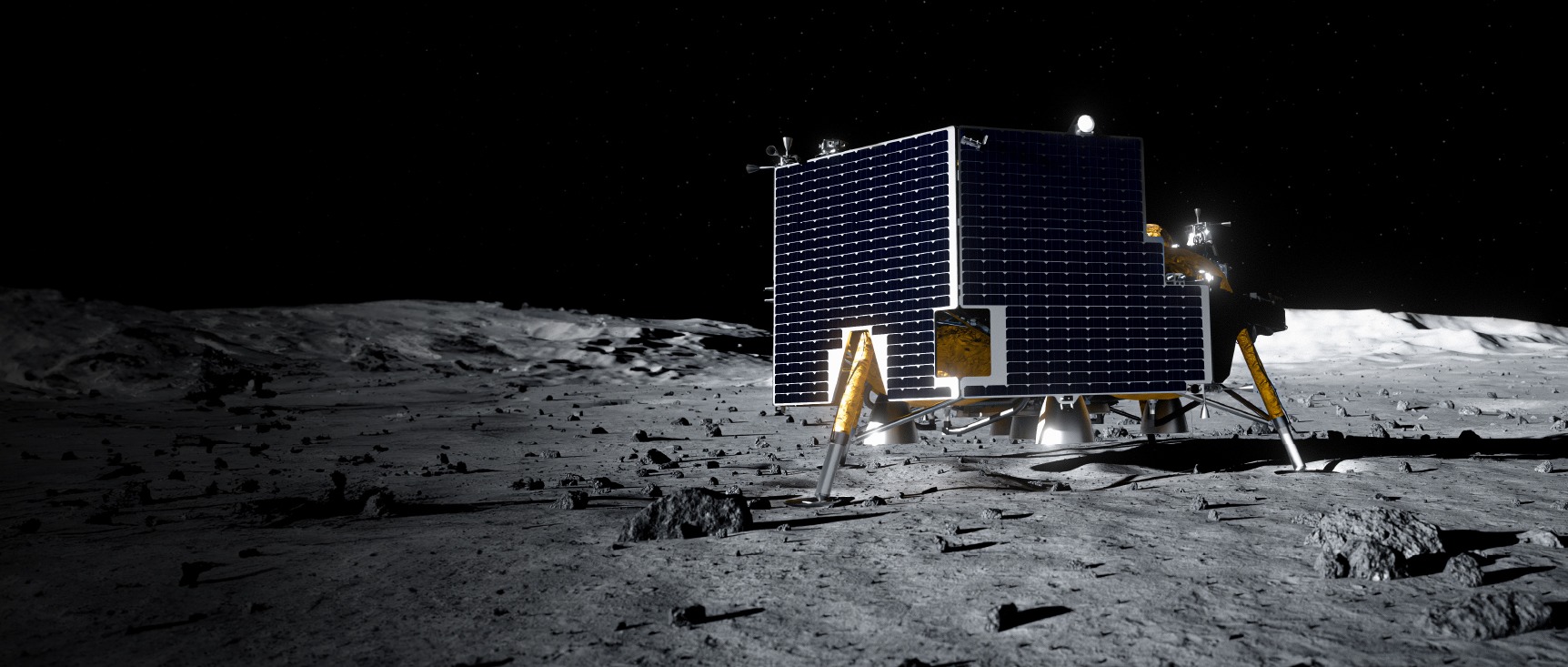
Astrobotic Technology’s Hazard Detection (HD) Lidar system scans and analyzes the terrain in real-time, enabling landers to autonomously map and select the safest landing sites. Lidar stands for light detection and ranging. The Pittsburgh-headquartered company will use its HD Lidar system when its Griffin lunar lander delivers science and technology payloads to the Moon during its CLPS delivery to the lunar south pole.

With Flight Opportunities support, Astrobotic first tested an engineering model of its advanced HD Lidar sensor in November 2024, confirming its ability to select a safe landing site by detecting and avoiding slopes, rough areas, and potential hazards. This flight test provided the Astrobotic team valuable data on the system’s performance, which was later leveraged by a second flight test in March 2026 with an integrated hazard detection and guidance, navigation, and control (GNC) system to further validate the system ahead of its first lunar mission scheduled for later this year. These flight tests helped the company advance the technology for use on its CLPS mission.

Preparing for Griffin Mission One | Flight testing lidar hazard detection video | Additional information

Preparing for Griffin Mission One

The Astrobotic Griffin Mission One will launch aboard a SpaceX Falcon Heavy rocket from Launch Complex 39A at NASA’s Kennedy Space Center in Florida to deliver NASA payloads to the lunar south pole.

Astrobotic’s HD Lidar system is designed to detect hazards as small as 5.9 inches (15 cm) and slopes greater than 10° to identify potential hazards, such as craters or large rocks. During the lander’s final descent phase, the spacecraft performs a stationary hover at an altitude of 100 meters — about the height of a 30-story building — while pointing its lidar toward the intended landing site. During the hover, the lidar scans the terrain, applies motion correction to account for changes in the spacecraft’s position and attitude, and processes the results into a hazard map used to identify the safest available landing location. The spacecraft then maneuvers to the selected landing site and proceeds with touchdown.
 
Astrobotic’s HD Lidar system works in tandem with its terrain relative navigation (TRN) sensor system, which takes live photos of the surface and compares them to an onboard map derived from orbital images to determine the spacecraft’s location above the lunar surface. In preparation for the CLPS mission, Astrobotic fully integrated its HD Lidar and TRN camera into its Griffin lander and demonstrated a successful soft landing simulation using Astrobotic’s Griffin Mission One production flatsat — a platform built with engineering models of the actual flight avionics.

Learn more about the Griffin Mission One CLPS delivery about Preparing for Griffin Mission One
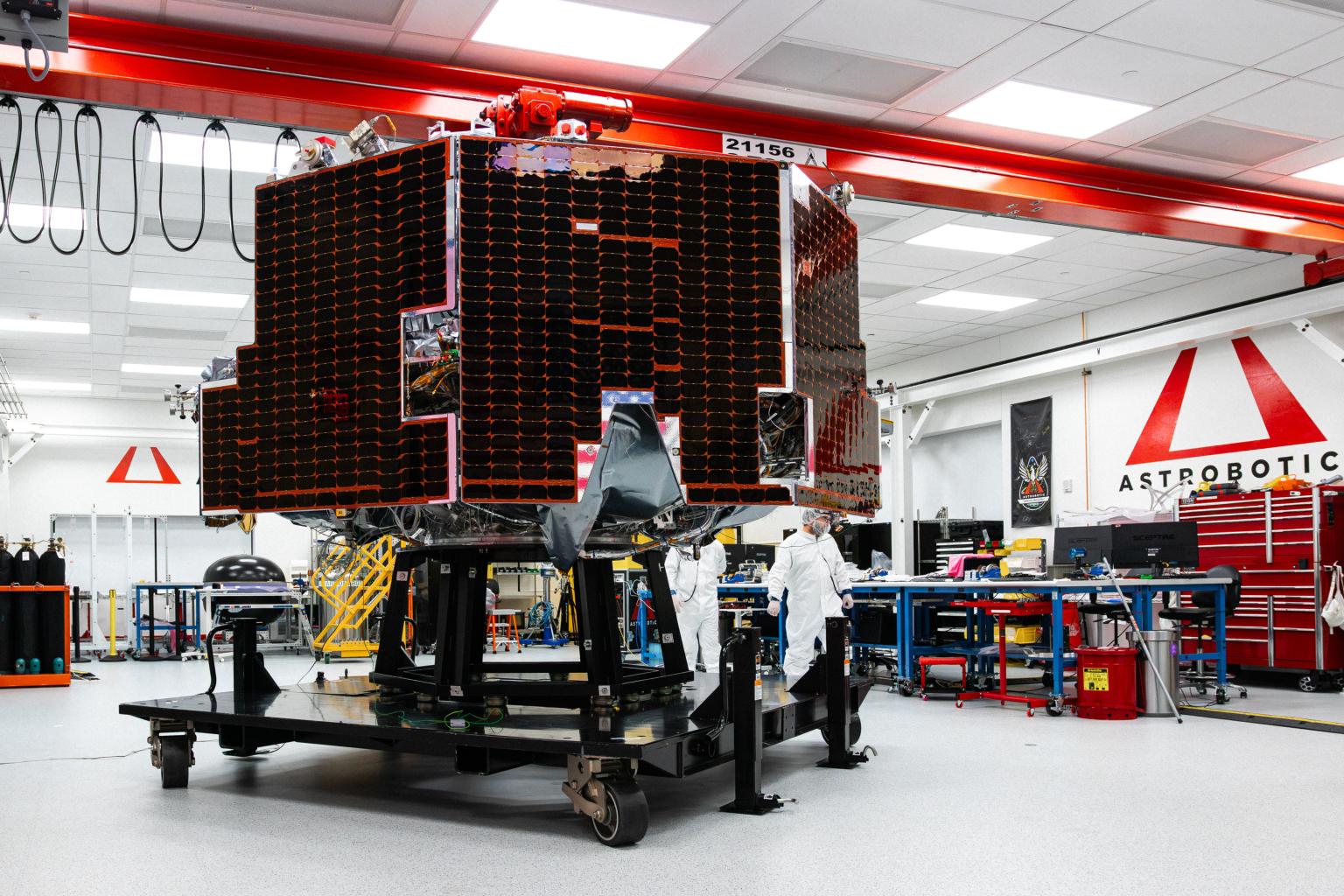
Astrobotic’s Griffin-1 lunar lander on a raised platform inside a spacecraft integration facility beneath a large Astrobotic logo mounted on the wall.
Astrobotic’s Griffin lunar lander inside the company’s integration facility. The lander uses Hazard Detection Lidar technology tested with support of NASA’s Flight Opportunities program.
Astrobotic

Advancing Hazard Detection Lidar Through Flight Testing

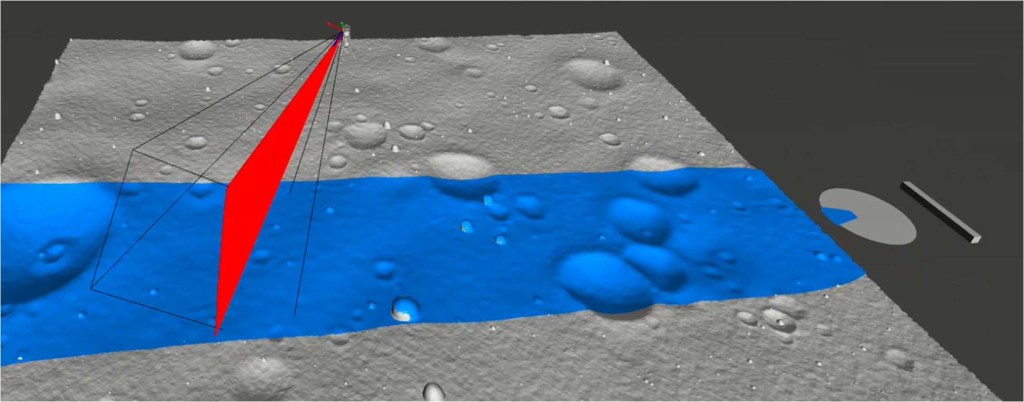
NASA’s Flight Opportunities program supported testing of Astrobotic’s HD Lidar as part of its mission to demonstrate promising technologies for space exploration, scientific discovery, and the expansion of space commerce. During the flight test on Nov. 11, 2024, an engineering model of the HD Lidar sensor successfully collected data over Astrobotic’s Lunar Surface Proving Ground while mounted on the company’s Xodiac reusable vertical takeoff vertical landing rocket. During the flight, the HD Lidar system processed the 3D lidar point cloud data into a terrain hazard map and helped verify lidar communications, settings, and controls under relevant conditions.

This flight test enabled Astrobotic to make a significant advancement in demonstrating space exploration technology capabilities, and the company applied lessons from this test directly to its lunar lander missions.

Learn more about the HD Lidar 2024 flight test

Additional Information

CLPS Flight: Astrobotic Griffin-1

Moon Missions for Flight-Tested Doppler Lidar

Moon - North Polar Mosaic, Color

Commercial Lunar Payload Services Blog

Challenger Astronauts Memorialized on the Moon

NASA Tests New Ways to Stick the Landing in Challenging Terrain

Flight test planning using simulated scans from Xodiac historical flight data and Lidar Hazard Detection scan settings in simulation.
Astrobotic
The Hazard Detection Lidar payload, as integrated on the top of Xodiac. The lidar is the box on the left pointed down towards the ground; This pointing angle enables it to view the surface of the Lunar Surface Proving Ground during the flight test.
Astrobotic
Astrobotic’s Griffin-1 lunar lander inside a spacecraft integration facility.
Astrobotic’s Griffin lunar lander is seen inside the company’s integration facility.
Astrobotic

Learn More About Flight Opportunities

Earthrise as seen from lunar orbit

More Technology Transitions

Learn about other technologies that have advanced their readiness through testing with Flight Opportunities.

World View’s Stratollite high-altitude balloon is inflated on the launch pad.

Access Flight Testing

Learn more about how to flight test your technology, instrument, or experiment with the Flight Opportunities program.

Engineer testing the suborbital rocket.

Flight Providers

Learn about the commercial flight providers that engage with the Flight Opportunities program.

The post Hazard Detection Lidar System Goes to the Moon appeared first on NASA Science.

  •  

NASA Awards Contract for Construction Services in California

NASA insignia.
Credit: NASA

NASA has selected multiple small businesses for the Western Regional Multiple Award Construction Contract, which supports a broad range of facility enhancement, modernization, and sustainment work at NASA’s Armstrong Flight Research Center in Edwards, California, NASA’s Ames Research Center in California’s Silicon Valley, and other federal agencies in the region.

The contract provides general construction, modification, maintenance and repair, and demolition services, as well as new construction of buildings and facilities that incorporate Leadership in Energy and Environmental Design practices and building information modeling to support efficient and sustainable project execution.

The indefinite-delivery/indefinite-quantity, firm-fixed-price contract is a follow-on to the agency’s previous regional construction contract and has a potential value of $450 million over a five‑year period.

Contract awardees are:

  • Abide International Inc.
  • Able Heating and Air Conditioning
  • Anderson Burton Construction Inc.
  • Anna Lisa Luna Construction
  • Barkley Andross Corporation
  • Bibro Construction Company Inc.
  • CM Construction Services
  • CMS Construction Inc.
  • FASONE
  • G‑1 Lead Builders JV LLC
  • Gideon USA
  • Good‑men Roofing & Construction Inc.
  • Groundlevel Construction Inc.
  • IPI Construction Inc.
  • Innovative Project Solutions Inc.
  • Ironwood Commercial Builders Inc.
  • J.I. Garcia Construction Inc.
  • JG Contracting
  • Lead Builders Inc.
  • Martinez Construction Services
  • MX Construction Inc.
  • OCS Construction Services Inc.
  • Patricia I. Romero Inc., doing business as Pacific West Builders
  • Gustav Keoni, doing business as Precision Construction
  • Prime MIK JV LLC
  • Spectrum Builders and Renovations Inc.
  • Sea Pac Engineering Inc.
  • Sergent Construction
  • Souza Construction Inc.
  • TLI Construction Inc.

For more information about NASA and agency programs, visit:

https://www.nasa.gov

-end-

Jennifer Dooren / Jessica Taveau
Headquarters, Washington
202-358-1600
jennifer.m.dooren@nasa.gov / jessica.c.taveau@nasa.gov

Dede Dinius
Armstrong Flight Research Center, Edwards, Calif.
661-276-5701
darin.l.dinius@nasa.gov

Share

Details

Last Updated
Jun 10, 2026
Editor
Jessica Taveau

The post NASA Awards Contract for Construction Services in California appeared first on NASA Science.

  •  

NASA Awards Contract for Construction Services in California

NASA insignia.
Credit: NASA

NASA has selected multiple small businesses for the Western Regional Multiple Award Construction Contract, which supports a broad range of facility enhancement, modernization, and sustainment work at NASA’s Armstrong Flight Research Center in Edwards, California, NASA’s Ames Research Center in California’s Silicon Valley, and other federal agencies in the region.

The contract provides general construction, modification, maintenance and repair, and demolition services, as well as new construction of buildings and facilities that incorporate Leadership in Energy and Environmental Design practices and building information modeling to support efficient and sustainable project execution.

The indefinite-delivery/indefinite-quantity, firm-fixed-price contract is a follow-on to the agency’s previous regional construction contract and has a potential value of $450 million over a five‑year period.

Contract awardees are:

  • Abide International Inc.
  • Able Heating and Air Conditioning
  • Anderson Burton Construction Inc.
  • Anna Lisa Luna Construction
  • Barkley Andross Corporation
  • Bibro Construction Company Inc.
  • CM Construction Services
  • CMS Construction Inc.
  • FASONE
  • G‑1 Lead Builders JV LLC
  • Gideon USA
  • Good‑men Roofing & Construction Inc.
  • Groundlevel Construction Inc.
  • IPI Construction Inc.
  • Innovative Project Solutions Inc.
  • Ironwood Commercial Builders Inc.
  • J.I. Garcia Construction Inc.
  • JG Contracting
  • Lead Builders Inc.
  • Martinez Construction Services
  • MX Construction Inc.
  • OCS Construction Services Inc.
  • Patricia I. Romero Inc., doing business as Pacific West Builders
  • Gustav Keoni, doing business as Precision Construction
  • Prime MIK JV LLC
  • Spectrum Builders and Renovations Inc.
  • Sea Pac Engineering Inc.
  • Sergent Construction
  • Souza Construction Inc.
  • TLI Construction Inc.

For more information about NASA and agency programs, visit:

https://www.nasa.gov

-end-

Jennifer Dooren / Jessica Taveau
Headquarters, Washington
202-358-1600
jennifer.m.dooren@nasa.gov / jessica.c.taveau@nasa.gov

Dede Dinius
Armstrong Flight Research Center, Edwards, Calif.
661-276-5701
darin.l.dinius@nasa.gov

Share

Details

Last Updated
Jun 10, 2026
Editor
Jessica Taveau
  •  
❌