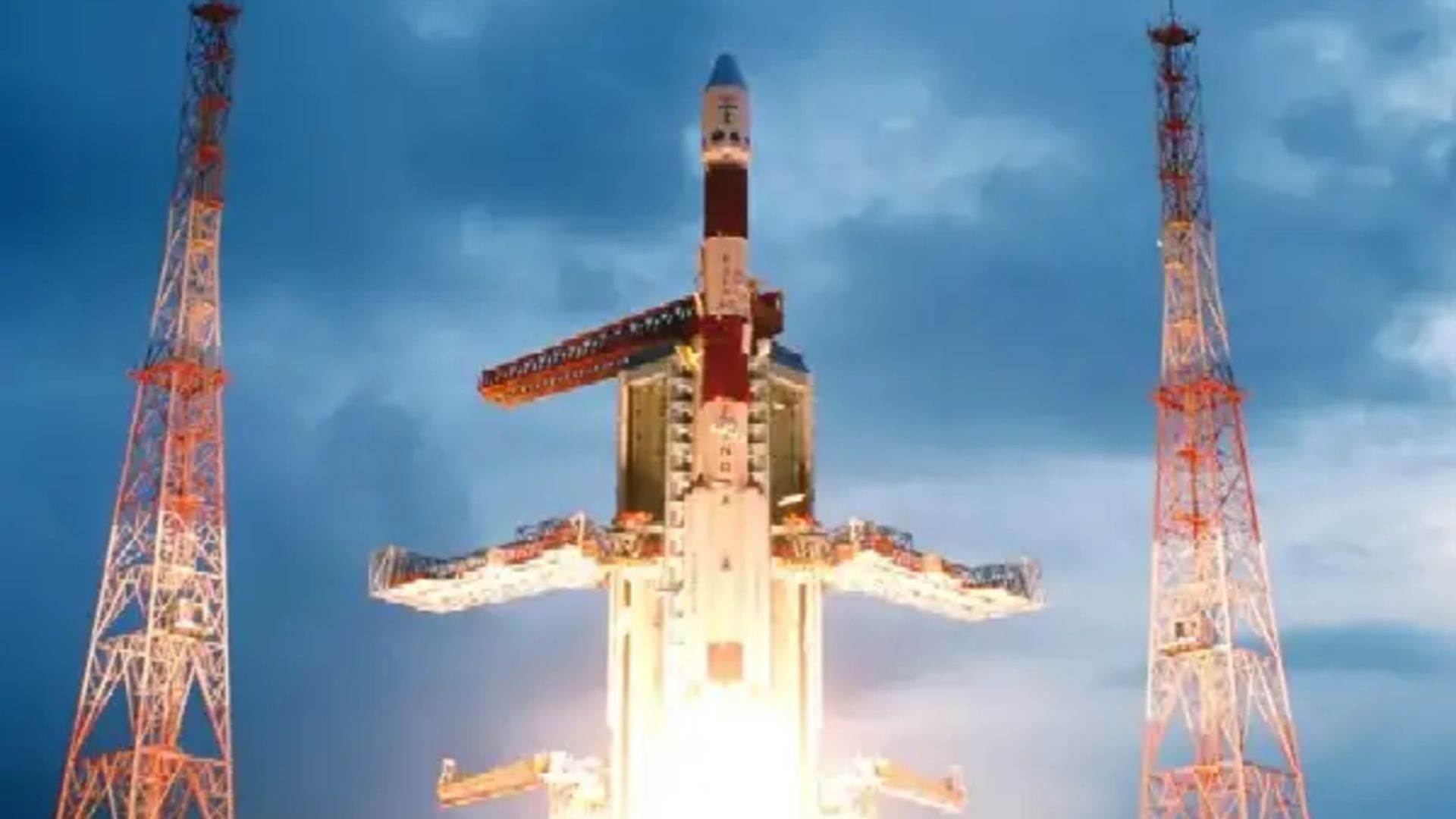
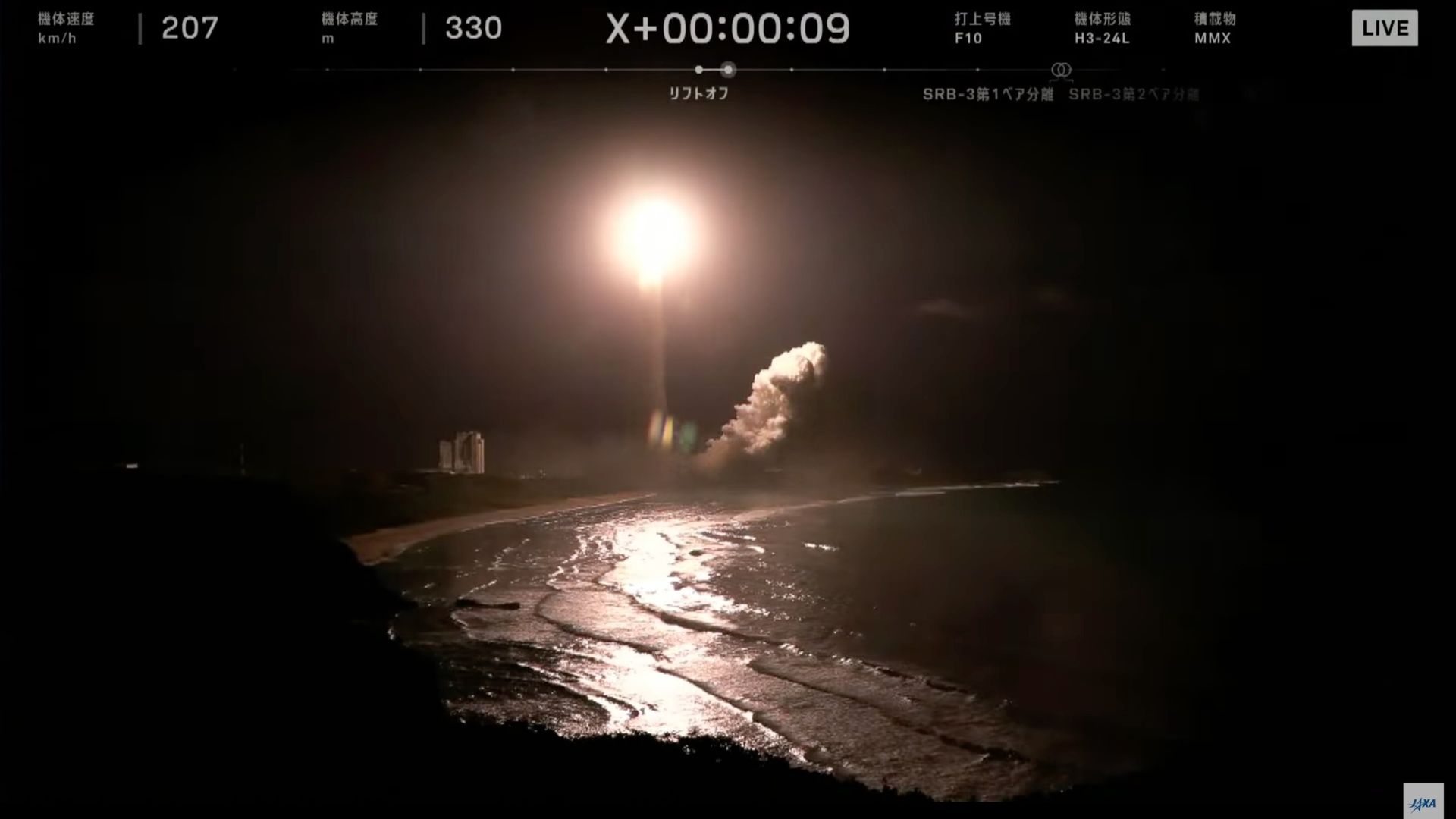
On Oct. 21, 2008, the Indian Space Research Organization launched its first mission to the moon. The mission was named Chandrayaan-1, and it consisted of both an orbiter and an impactor.
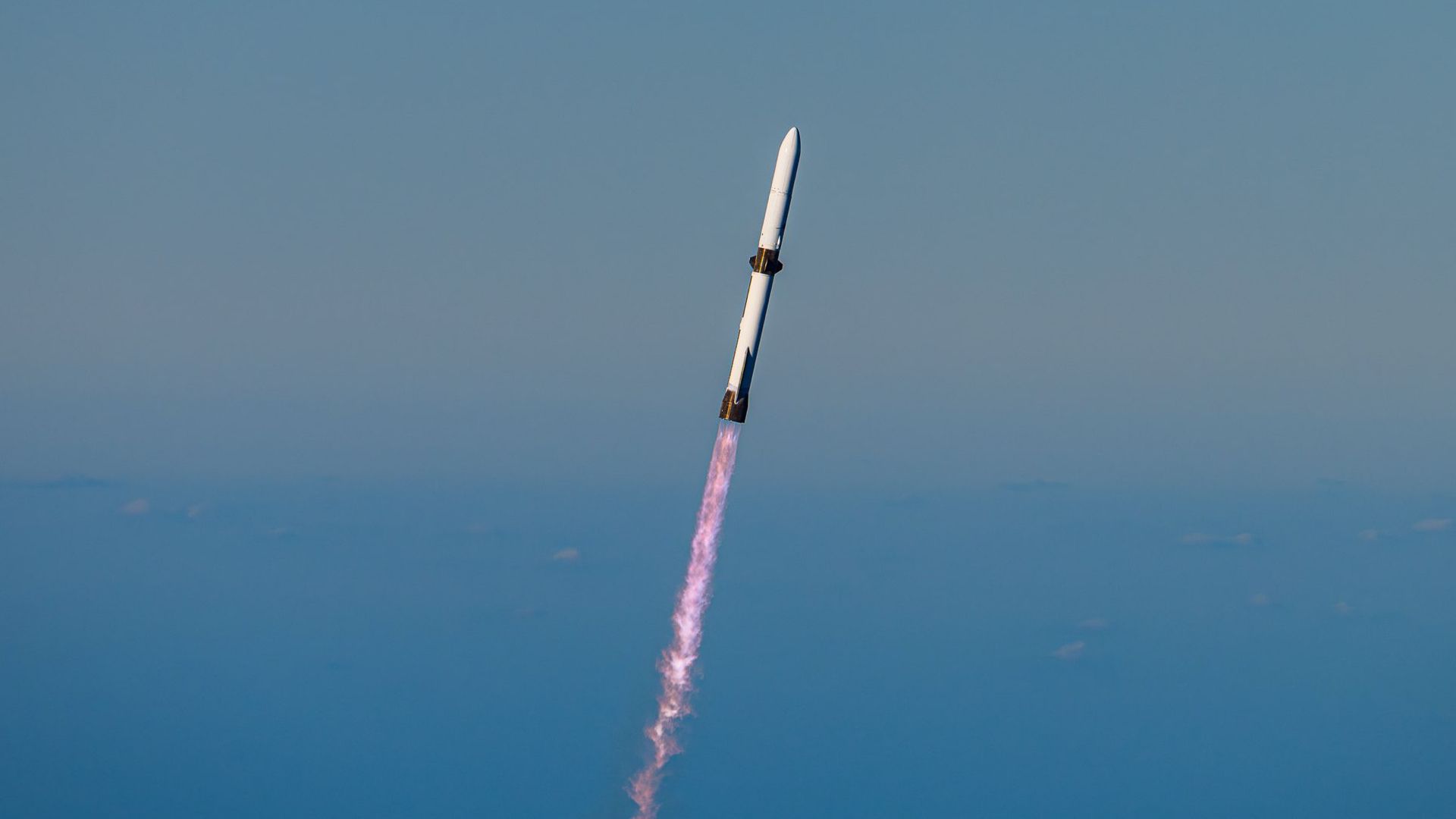
Chandrayaan-1 launched from the Satish Dhawan Space Center on an Indian rocket called the Polar Satellite Launch Vehicle, or PSLV-XL. (Launch occurred at 8:52 p.m. EDT, though it was about 6:22 a.m. local time at the launch site on Oct. 22.)
It arrived in lunar orbit about three weeks later and dropped off the Moon Impact Probe, which crashed into the moon on Nov. 14. The rest of the Chandrayaan-1 spacecraft stayed in orbit, where it collected and transmitted data from the moon to Earth for about a year. The mission ended abruptly 14 months ahead of its planned end date when scientists lost contact with the probe.
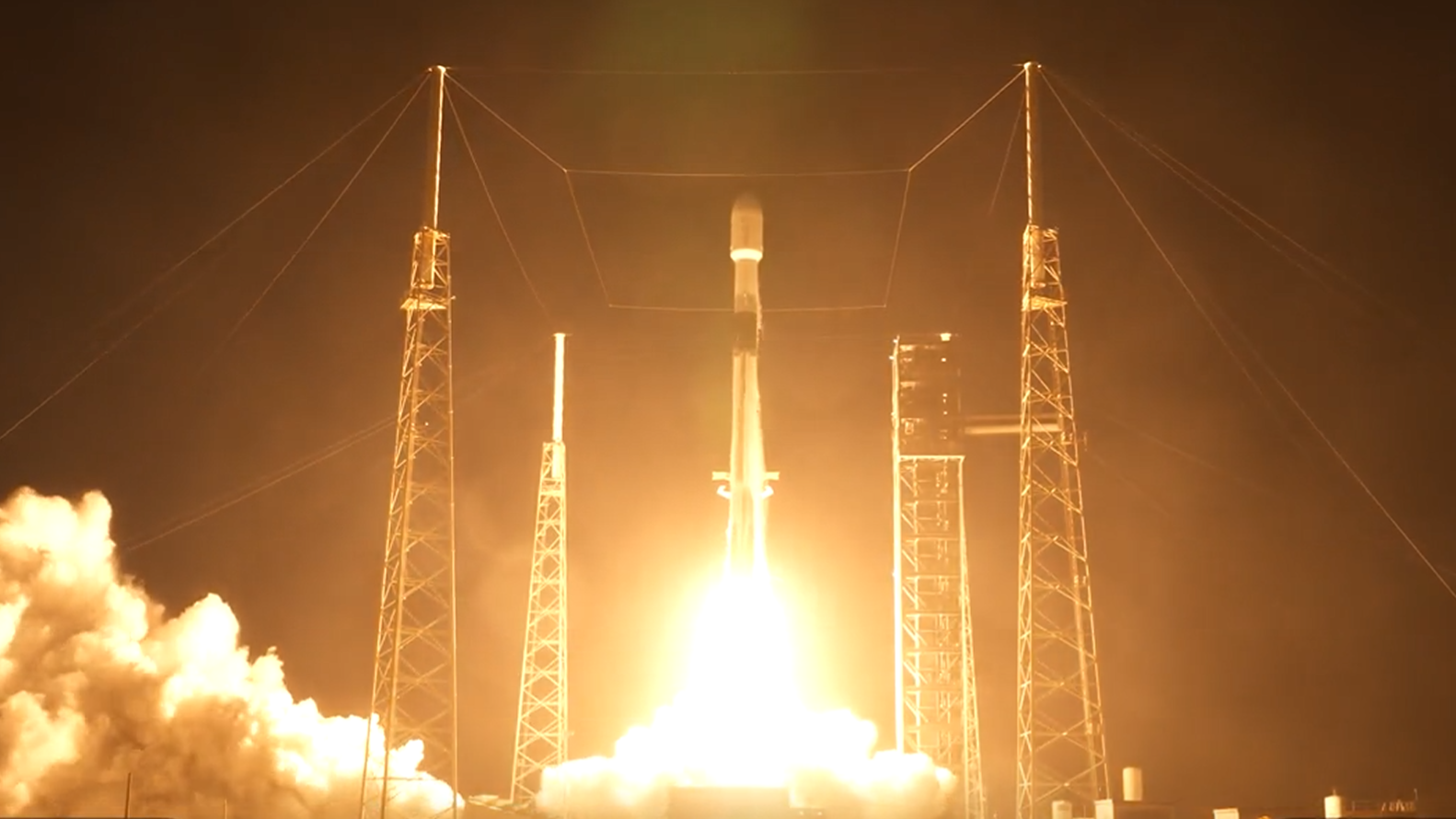
An Indian PSLV rocket launches the Chandrayaan-1 moon mission on Oct. 21, 2008 EDT (Oct. 22 local time in India). (Image credit: ISRO)
Why it mattered
The Indian Space Research Organisation, or ISRO, had a lot riding on the success of Chandrayaan-1 moon mission, which marked the first-ever deep space mission by the Indian space agency. It was also the first mission to the moon for India, a country that hopes to launch its own crewed spacecraft and build a space station.
Chandrayaan-1 did more than just demonstrate that India's space program was capable of launching missions to the moon; it also returned some amazing science results, like evidence of water ice on the moon.
"In September 2009, scientists published results of datacollected by the American M3 instrument which had detected absorption features on the polar regions of the surface of the Moon usually linked to hydroxyl- and/ or water-bearing molecules," NASA said in a mission overview.
The spacecraft carried 11 instruments to study the moon, five of them built by ISRO. The rest were experiments for the European Space Agnecy and NASA.
"In addition to the five Indian instruments, the spacecraft carried scientific equipment from the United States, the United Kingdom, Germany, Sweden, and Bulgaria," NASA said.
It took until Nov. 8, 2008 for Chandrayaan-1 to enter lunar orbit, where it stayed until contact was lost in August 2009, most likely due to a power supply failure caused by overheating.
"This was short of the spacecraft’s planned two-year lifetime, although ISRO noted that at least 95% of its mission objectives had been accomplished by then," NASA wrote.
NASA's Mini-SAR instrument, which flew aboard India's Chandrayaan-1 spacecraft, found more than 40 small craters with water ice. The craters range in size from 1 to 9 miles (2 to 15 km) in diameter. (Image credit: NASA)
India did not stop at the moon with Chandrayaan-1. In 2019, the country launched the Chandrayaan-2 orbiter, which carried the Vikram lander and Pragyan rover. Chandrayaan-2 reached lunar orbit successfully, but the Vikram landing failed.
Few names in the science fiction literary world carry as much weight and respect as author Alan Dean Foster. His award-winning 55-year career as a grandmaster of the genre continues with his latest novel from Blackstone Publishing, "Lost on Paradise", and we have an exclusive excerpt to share with our readers ahead of its release this week.
Foster famously ghost-wrote the first "Star Wars" novelization for George Lucas in 1976 and "Splinter of the Mind’s Eye" in 1978, which was intended to be a low-budget Star Wars sequel should the space opera not become a hit. He’s been a mainstay for go-to fantastic adventures featuring engaging characters, dynamic plotlines, and imaginative worlds for six decades.
In addition to crafting the screen story for "Star Trek: The Motion Picture," Foster also wrote the novelizations for the first three "Alien" films, Disney's "The Black Hole," John Carpenter's "The Thing," "The Last Starfighter," "Star Trek," "Transformers," "Terminator: Salvation", and many more.
Lost on Paradise by Alan Dean Foster: $19.99 New York Times bestselling author Alan Dean Foster, master of both action and emotion, reveals a world where everything is perfect, but nothing is as it seems…View Deal
The near-future, off-world escapades of "Lost On Paradise" are the latest addition to Foster’s acclaimed bounty of bestselling standalone novels and series, including the popular "Spellsinger" series.
"Earth is crowded, polluted, and dismal," states the novel's synopsis. "Like millions of others, Jonos and Liina scrape by on her poorly paying job and what little money he gets selling items scavenged from rich people’s trash. Like millions of others, Jonos and Liina dream of Paradise.
A brilliant cover design heralds the arrival of Alan Dean Foster's latest novel (Image credit: Blackstone Publishing)
"Paradise: a beautiful, clean, verdant world where three races live in harmony—at least, according to the videos sent back to Earth. There are the Eiquan, masters of astonishing technology; the Lusanata, hunters and farmers; and humans, who may be restricted to a few scattered settlements, but still live a life ten times better than those on Earth.
"On the run after a criminal act, Jonos and Liina finally escape to Paradise. It's everything they hoped for. Until tragedy strikes."
The genesis of Foster's "Lost on Paradise" is something that’s been percolating in his fertile mind for many years.
"I had this notion of a planet called Paradise where everything is perfect, and everything on Earth is seriously messed up," Foster tells Space. "There’s this couple who have problems; they’re poor like everybody else.
"And you have a unique male protagonist because he recognizes that his female partner is smarter than him, so she’s the brains of the outfit, and he supplies the muscle. Although he's not stupid. Too often you get a big, hulking guy with no brains. But she has a potentially fatal disease, and they’re trying to get away like a lot of poor people in the world today. So here's a place called Paradise. How do you get there? It’s expensive and difficult. And what happens if they do? Maybe Paradise isn’t always Paradise."
"Lost On Paradise" lands on Oct. 20, 2026 from Blackstone Publishing (Image credit: Blackstone Publishing)
In crafting a deteriorating New York some 150 years or so down the calendar, it was important to stay sharp regarding developments that pop up in the news to avoid any internal logic conflicts.
"You just don’t want to get caught out by a scientific development that you postulate is near future when it's actually contemporary," explains Foster. "So I was very careful with that. But as you’re building out an alien environment and one that’s supposed to be perfect and beautiful, and then there’s maybe some things about it that aren’t, what do you introduce to show that?
"You don’t want to contradict yourself when you’re worldbuilding. That's a large problem that’s unfortunately common in science fiction," notes Foster. "Where somebody is breathing air, and suddenly they’re breathing methane, and it just doesn’t work. There’s a lot of different variables that come together that prove that Paradise is Paradise in some ways and not in others. A good example would be when the first Europeans reached Tahiti. The problem was that the people who entered this Paradise brought venereal disease and smallpox, to which the Polynesians had no resistance. So it's Paradise until you get there, and then maybe you mess it up."
Now enjoy our exclusive chapter excerpt from Alan Dean Foster’s "Lost On Paradise." Published by Blackstone Publishing.
Why shouldn’t a man and a woman in his and Liina’s position try to get to Paradise? Jonos mused as he treaded his way homeward. Though morning continued its ascent, the sun did not. Or so it seemed, when the omnipresent pollution often rendered day as dark as night. The gloom was useful for masking scavenging activities and for concealing one’s identity. It was less suitable for more plebian activities such as breathing and eating. Or living. Life on Earth sucked.
But on Paradise…
To emigrant humans it went without saying that Paradise was aptly named. Everyone had heard the stories. On Paradise a person could breathe freely. Without a mask, without fear of needing lung implants, without having to worry about inhaling a soupçon of strychnine or similar industrial pollutants. On Paradise food was plentiful and fresh, water devoid of contaminants. There was work, too, for anyone willing to adapt to entirely new surroundings, for those willing to acknowledge the much-talked-about overlordship of the dominant species. For arrivals willing to submit to the experimental, ever-evolving social structure, and to the limitations that were placed on newcomers, the technologically superior Eiquans professed an indifference that amounted to a willing welcome.
Or so the compendium of hugely diverse anecdotes insisted. That’s all they were, Jonos knew. Stories and speculation, rumors and conjecture. Ignoring the spotty rain that had begun to fall, he turned a corner and nearly ran over a couple who scrambled to get out of his way. The man he had accidentally jostled started to say something, quickly realized the size of the individual he was about to chastise, and mumbled on his way, dragging a woman—likely his wife—with him. Jonos paid them no mind. Half of him was engaged in navigating his way home, the other half in dreaming of what Paradise might actually be like.
In truth, he had never met anyone who had actually been to Paradise. He had never met anyone who knew anyone who had been to Paradise. That did not make the distant world any less real. The media periodically released vits and images of the place. These showed an Earth-like planet swathed in an atmosphere perfectly suitable for humans. The indigenous wildlife was fascinating, the few but thriving, improvised communities intriguing, and the rarely seen Eiquans themselves tall, gracile, and sophisticated. So what if they weren’t humanoid? They were bisymmetrical, anyway, highly intelligent, and by all accounts no worse than indifferent to the interests of other species. So beautiful and graceful was their slender physicality, so mellifluous their speech, that even though they were quite alien the idea of living among them held no fear for Jonos.
Anything, he knew, would be a step up from Earth.
Lost on Paradise by Alan Dean Foster: $19.99 New York Times bestselling author Alan Dean Foster, master of both action and emotion, reveals a world where everything is perfect, but nothing is as it seems…
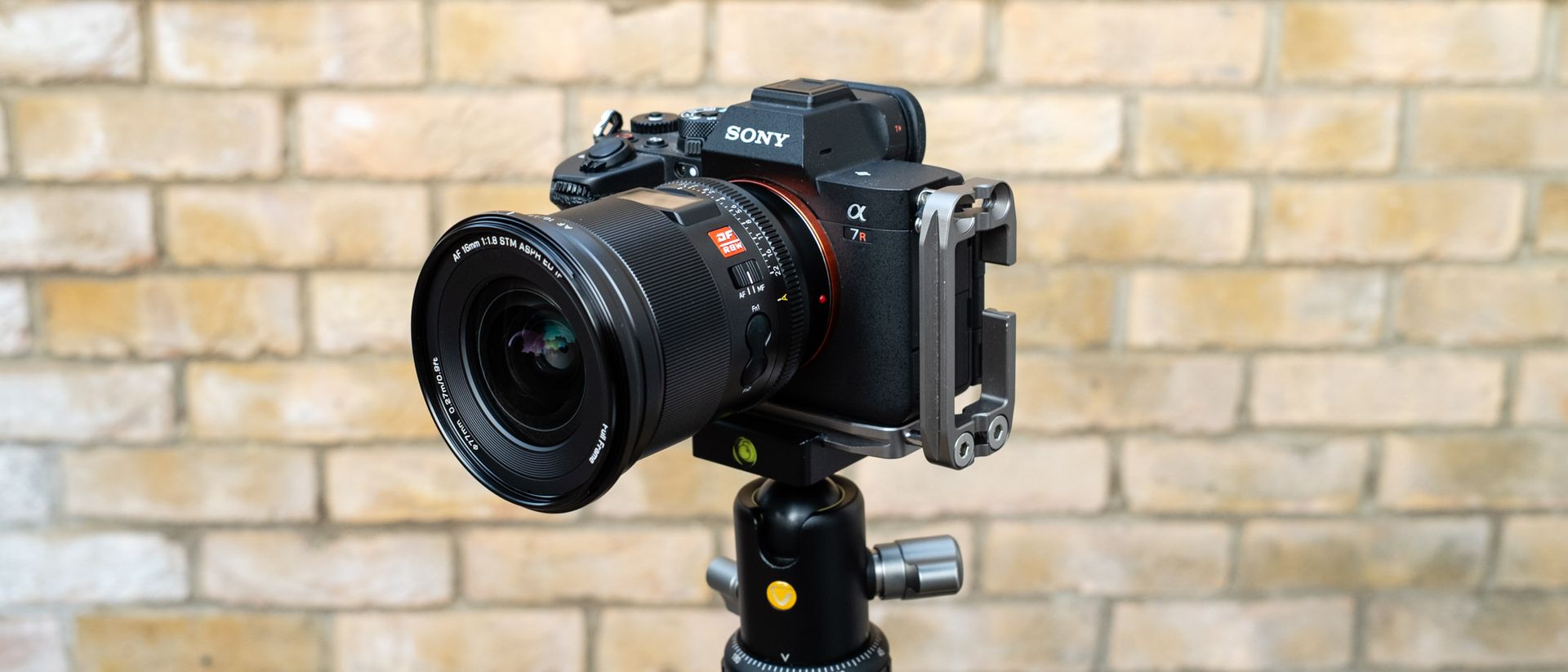
As you know, prime lenses come in a wide range of sizes and focal lengths, and every once in a while, one comes along and seems to grab you by the scruff of your neck. One such lens is the Viltrox AF 16mm f/1.8 FE, which is an impressive and useful lens for astrophotography thanks to its wide-angle field of view and fast maximum aperture.
This lens is one of the wider prime lenses that are available and could be one of the best third-party lenses for astrophotography. With a price of just $464 (£533), this is one of the most cost-effective wide-angle primes, but rather than being a second-rate lens, its build quality and image quality are fantastic. It’s not the best, but it’s undoubtedly a lens you would enjoy.
Image quality is excellent overall, with no need for lens corrections, except for vignette removal when shooting wide open. With near-perfect sharpness and minimal distortion and aberrations straight out of the camera, perhaps the weight of the lens is a small price to pay.
The lens is made up of 15 elements in 12 groups and is built like a tank, with an all-metal body. It is pretty heavy, though, weighing in at 19.4 oz (550 g) despite its relatively compact size. Attach this lens to one of the best Sony camerasand you will have a formidable combination. The 16mm f/1.8 is also available in the Nikon Z-mount.
Viltrox AF 16mm f/1.8 FE lens review
Viltrox AF 16mm f/1.8 FE: Performance
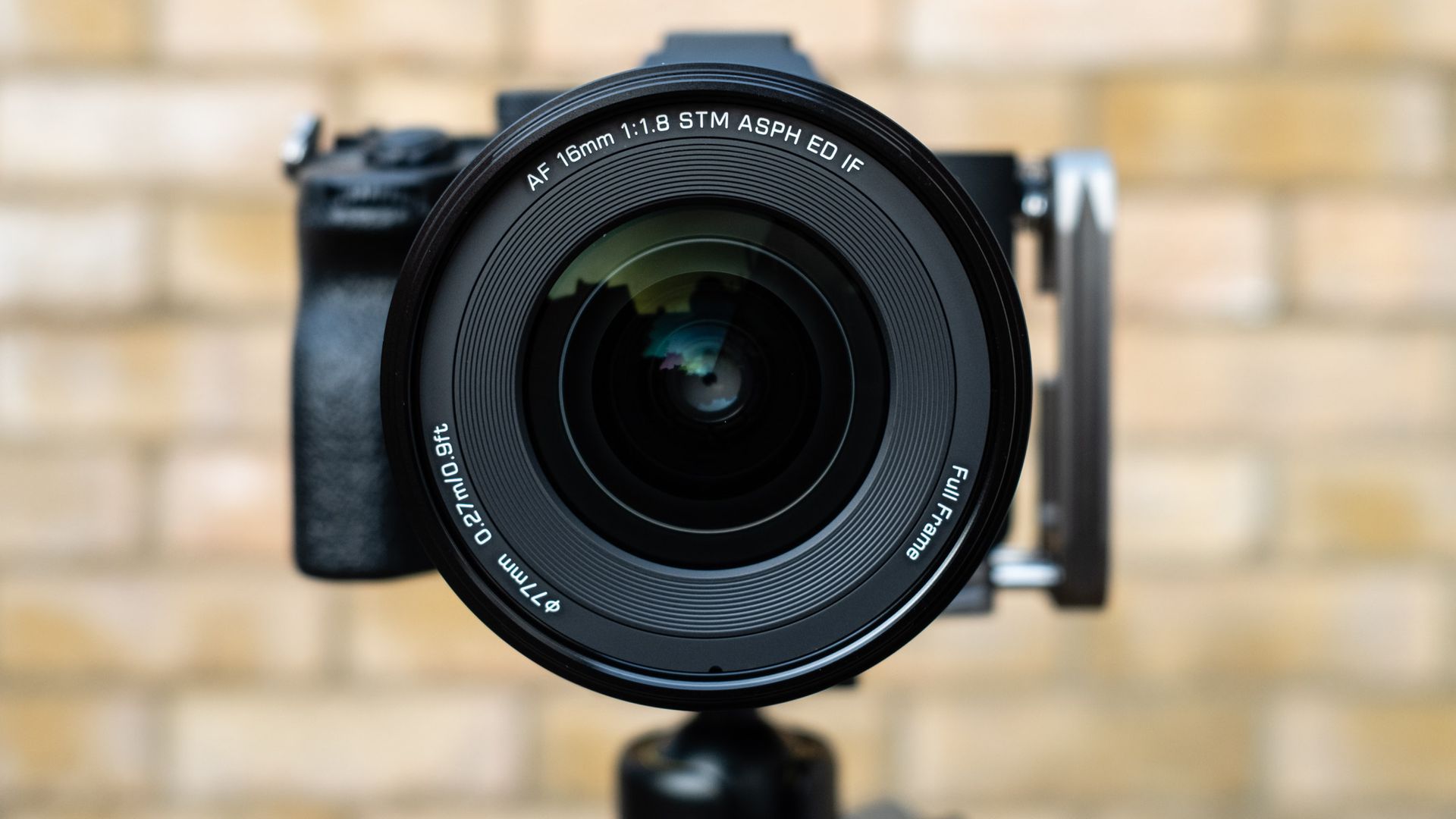
The Viltrox AF 16mm f/1.8 FE has a 77 mm filter thread. (Image credit: James Abbott)
Great image quality
Impressively sharp at f/1.8
Excellent corner sharpness
With a focal length of 16mm and a maximum aperture of f/1.8, this is clearly a great lens for astrophotography from a technical point of view. The light-gathering capabilities are excellent, to say the least, and during testing it was possible to shoot at a range of ISO levels with a moonless sky. Even ISO 800 was often high enough for a correct exposure.
The image quality produced by the 16mm f/1.8 is great, with excellent levels of sharpness across the frame. What’s most important here is that even corner sharpness is fantastic when wide open at f/1.8. This is the aperture setting where vignetting is at its strongest, but it reduces drastically when you stop down to f/2.8 and is completely gone by the time you stop down to f/4.
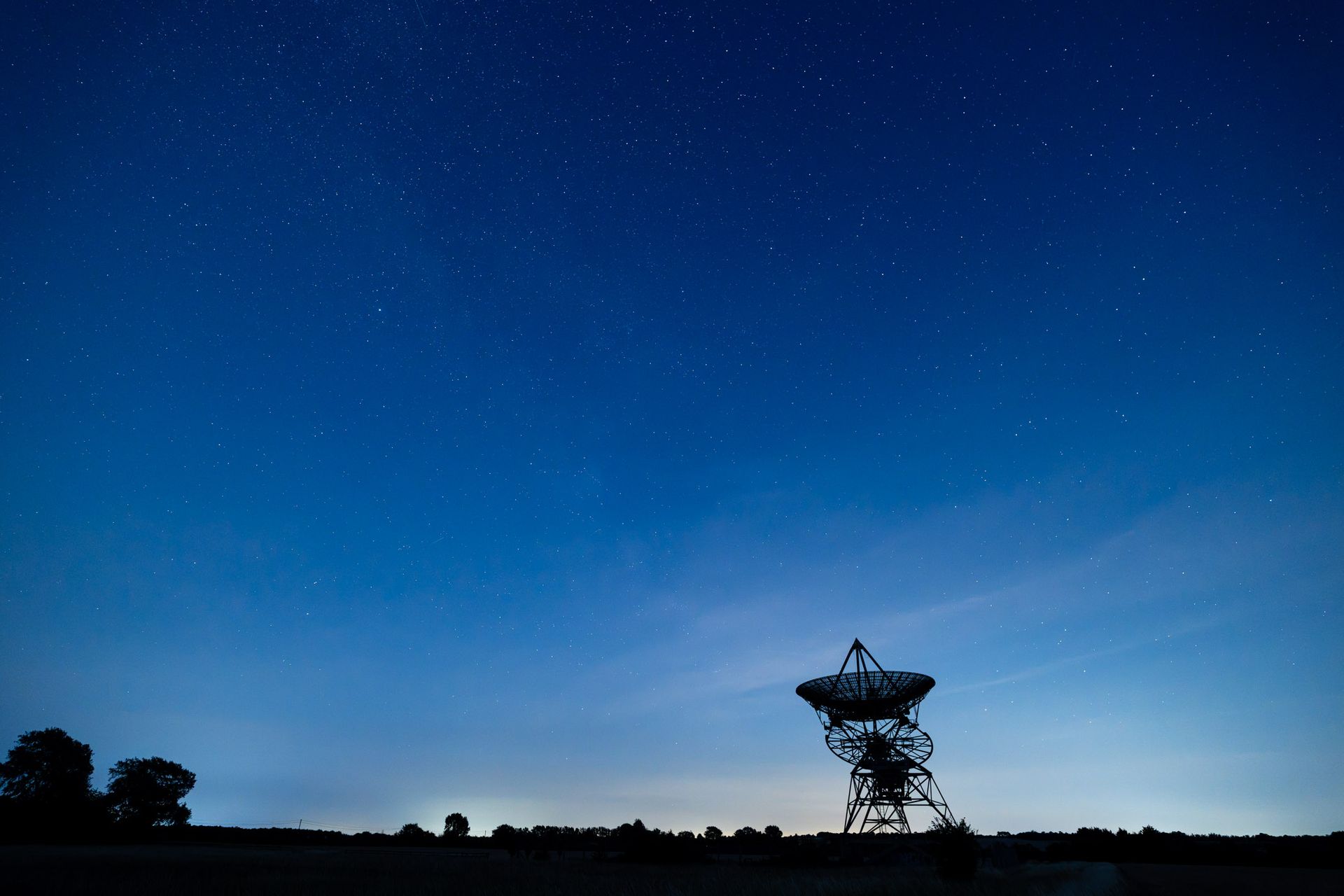
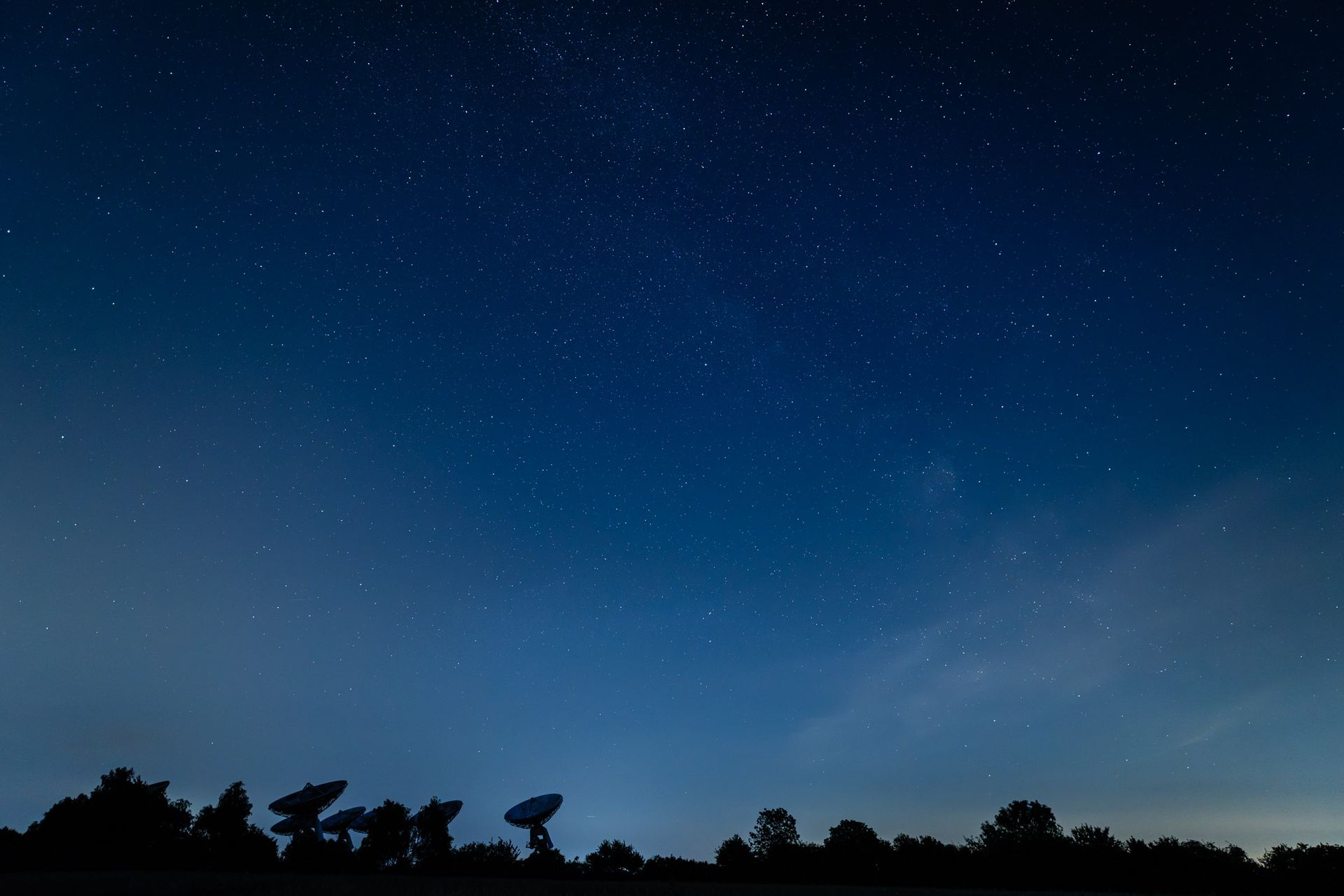
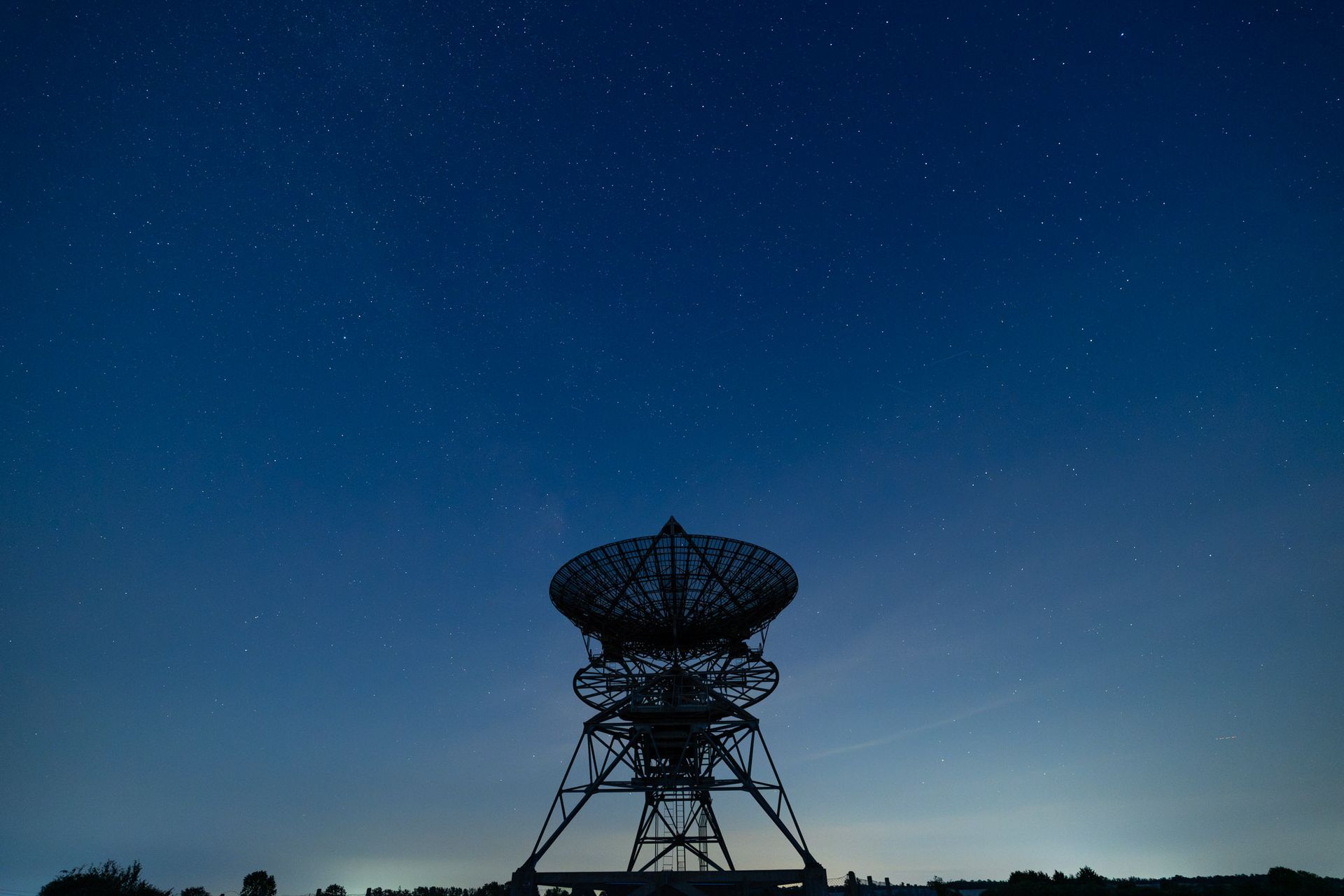
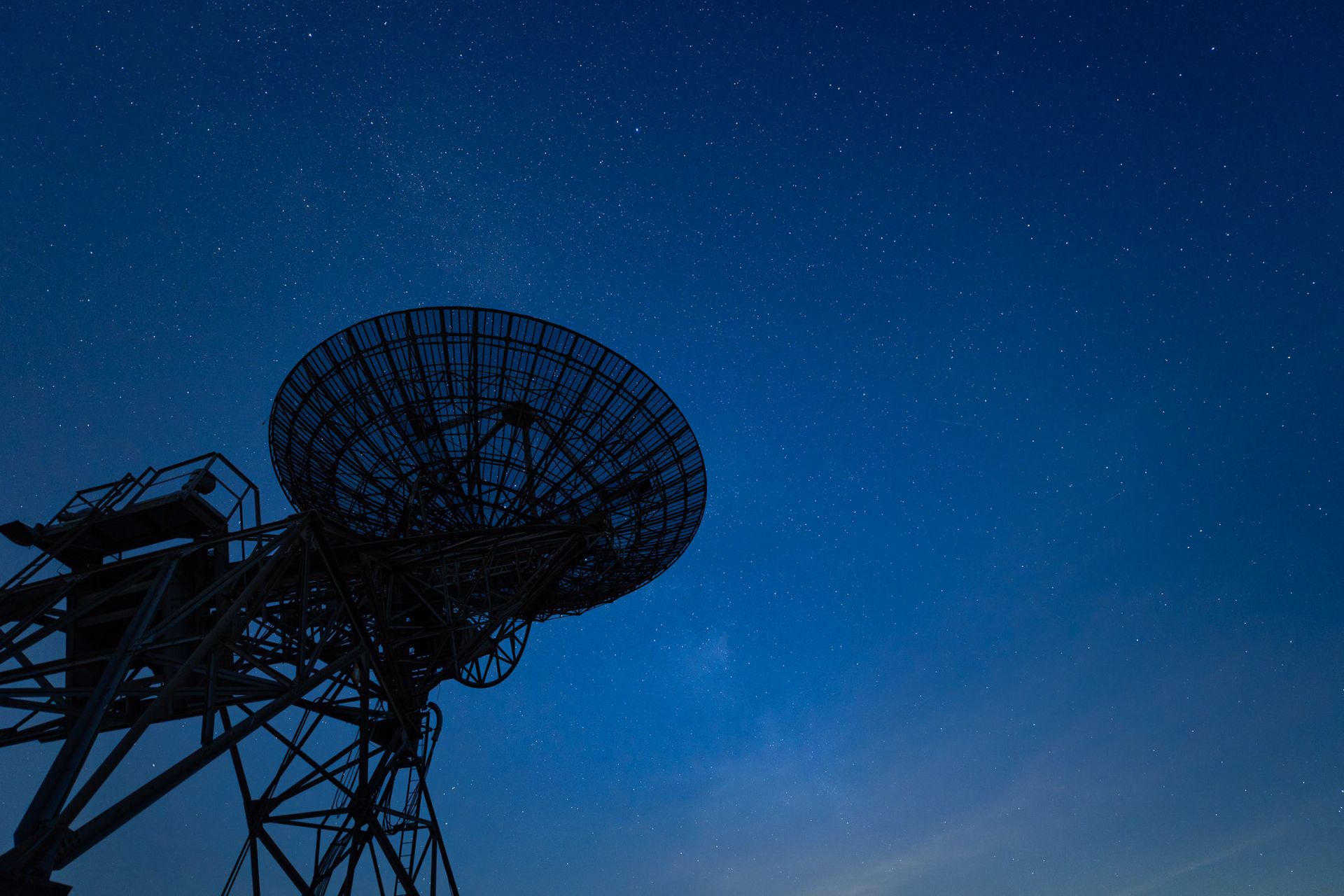
Aperture f/2.8, shutter speed 5 secs, ISO 1600. Shot with a Sony A7R V and a Viltrox AF 16mm f/1.8 FE on a Three Legged Thing PUNKS Brian 2.0 tripod.James AbbottAperture f/1.8, shutter speed 5 secs, ISO 400. Shot with a Sony A7R V and a Viltrox AF 16mm f/1.8 FE on a Three Legged Thing PUNKS Brian 2.0 tripod.James AbbottAperture f/2.8, shutter speed 5 secs, ISO 1250. Shot with a Sony A7R V and a Viltrox AF 16mm f/1.8 FE on a Three Legged Thing PUNKS Brian 2.0 tripod.James AbbottAperture f/1.8, shutter speed 5 secs, ISO 800. Shot with a Sony A7R V and a Viltrox AF 16mm f/1.8 FE on a Three Legged Thing PUNKS Brian 2.0 tripod.James AbbottAperture f/1.8, shutter speed 5 secs, ISO 800. Shot with a Sony A7R V and a Viltrox AF 16mm f/1.8 FE on a Three Legged Thing PUNKS Brian 2.0 tripod.James Abbott
Luckily, though, there is a lens profile in Adobe Camera Raw and Adobe Lightroom that completely removes vignetting. There’s also only minimal chromatic aberration and a tiny amount of barrel distortion, which is impressive given the wide field of view produced by the lens.
As mentioned before, sharpness is great wide open and improves incrementally as you stop down up to the sweet spot of the lens, which is f/8. Sharpness drops slightly at f/11, and it’s at f/16 where diffraction begins to soften the image overall. This increases further when you stop down to f/22.
These latter apertures aren’t relevant to astrophotography; the medium ones aren’t either but the sharpness produced at f/1.8 and f/2.8 is exactly what you want.
Viltrox AF 16mm f/1.8 FE: Design
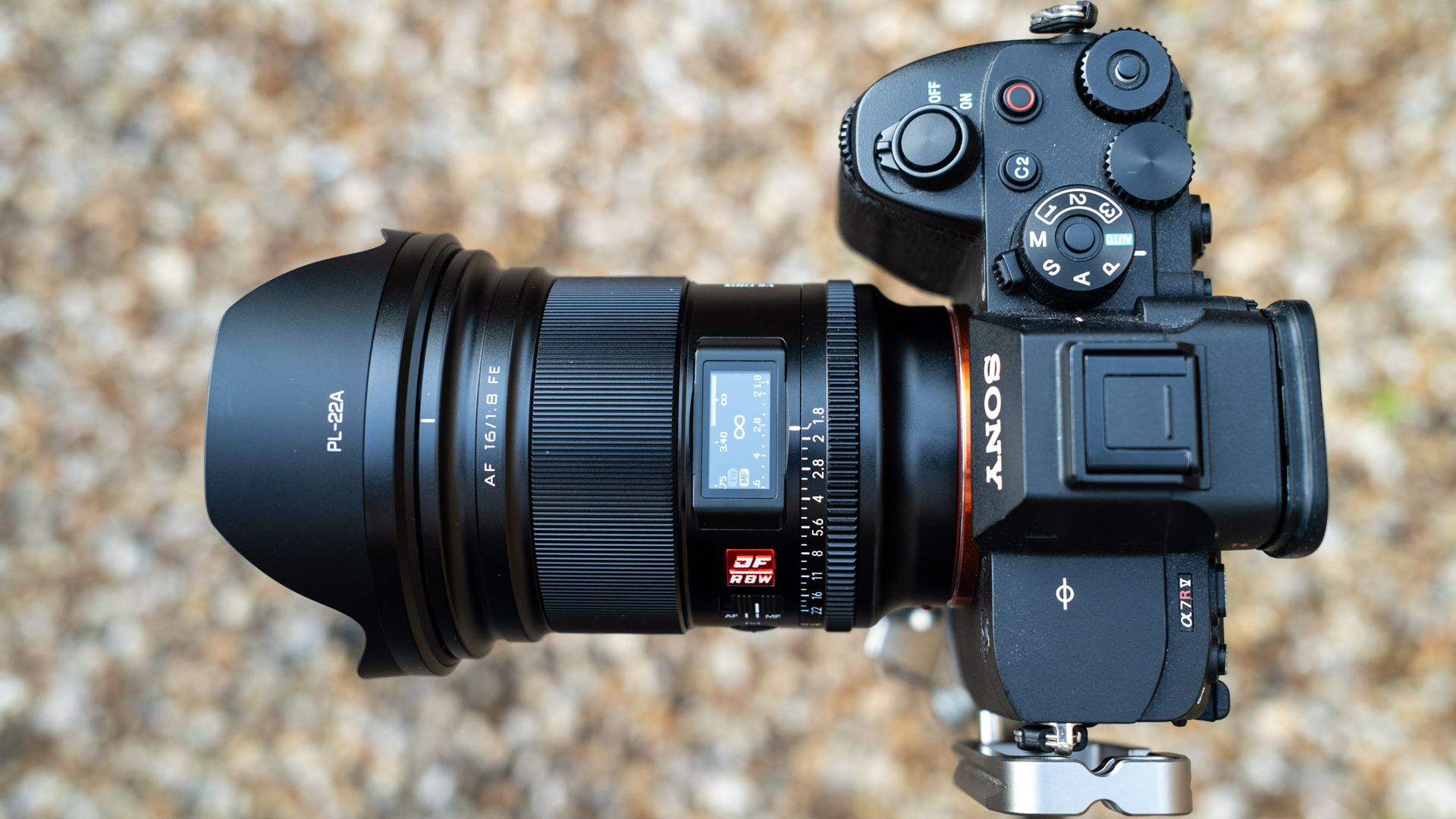
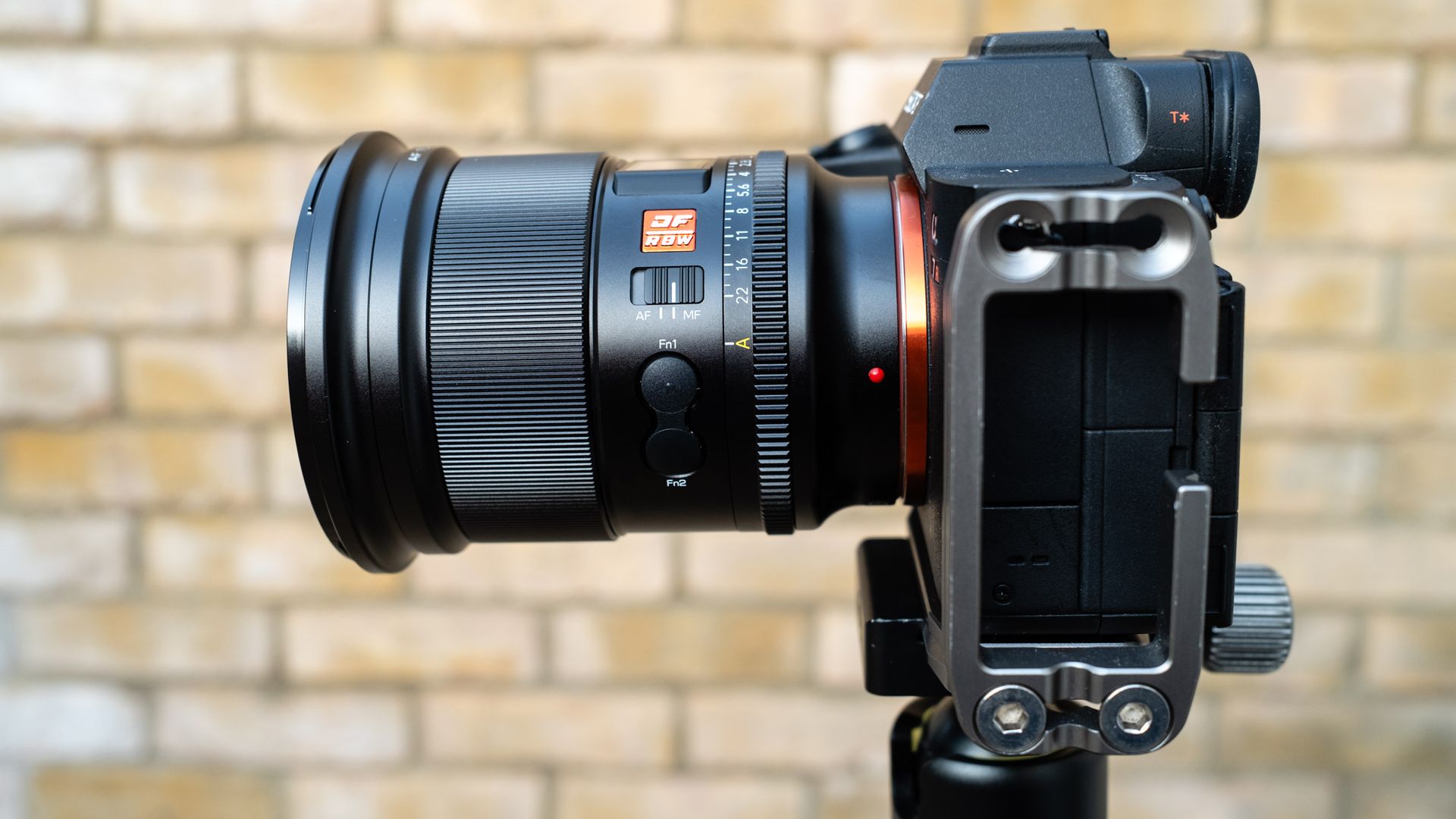
The Viltrox AF 16mm f/1.8 FE lens is compact but quite heavy. (Image credit: James Abbott)
Weather-sealed build
Compact yet heavy
Great handling
The 16mm f/1.8 lens is something of an oddity in one respect: it’s both compact and heavy considering its size, although this comes down to its optical construction. The lens weighs 19.4 oz (550 g) with a size of just 3.35 x 4.06 in (85.2 x 103 mm). It does, however, balance well with Sony A-series cameras.
The 16mm f/1.8 is made up of 15 elements in 12 groups, including four ED glass and three aspherical lenses. The optical construction is designed to deliver sharpness, detail and high contrast with minimal distortion. It’s fair to say it achieves these. Of course, you will experience some perspective distortion when tilting the lens up to capture more of the night sky when there are ground elements in the foreground.
Unlike some wide-angle lenses, the front element isn’t bulbous, and it features an HD nano multilayer coating with a water-resistant and antifouling coating. The filter thread is also just 77mm, so you can easily attach screw-in and square filters if you use them for your astrophotography.
The minimum focusing distance of the lens is 10.6 inches (27 cm), which is great for landscape photographers but less important for astrophotographers.
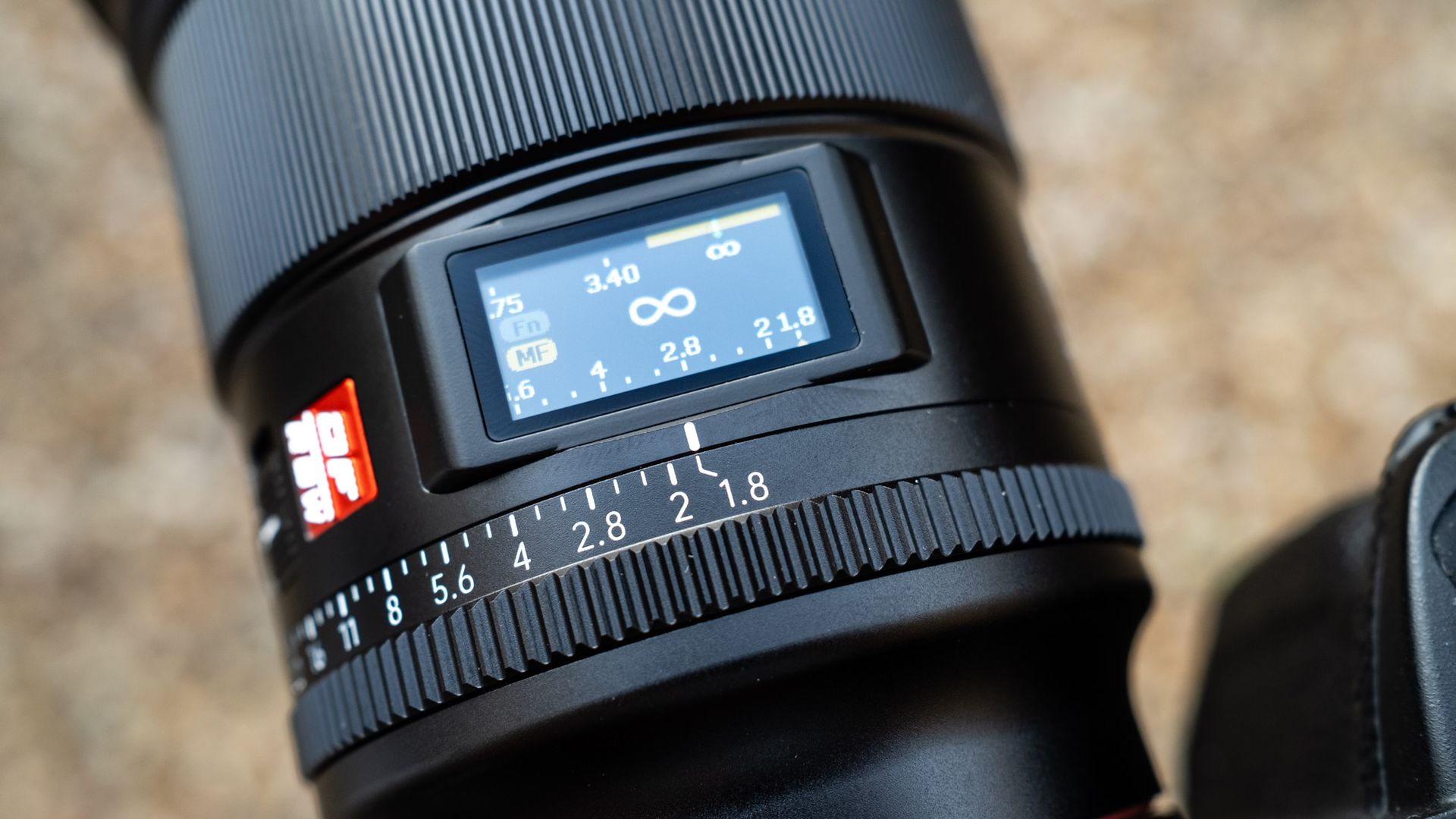
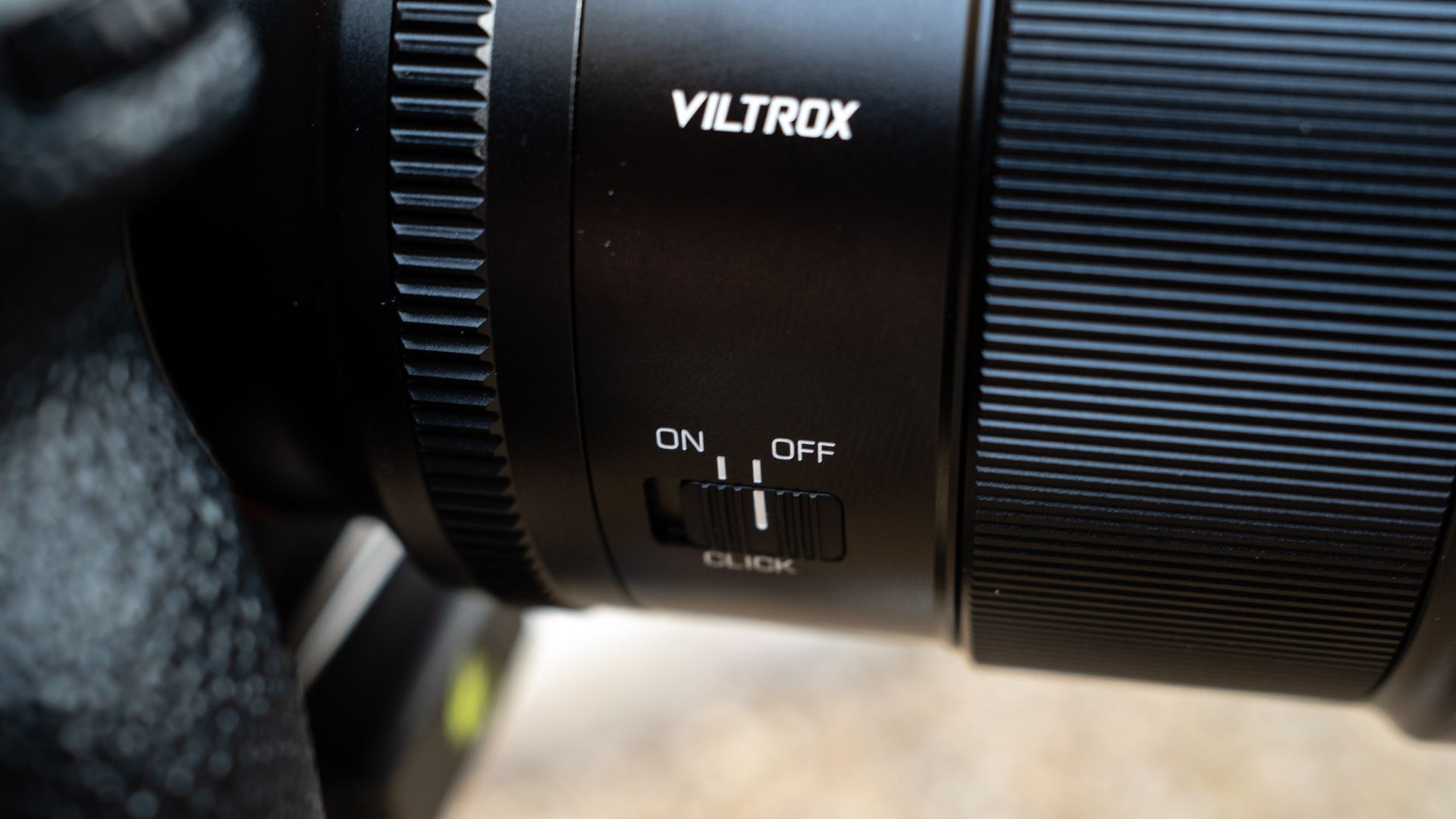
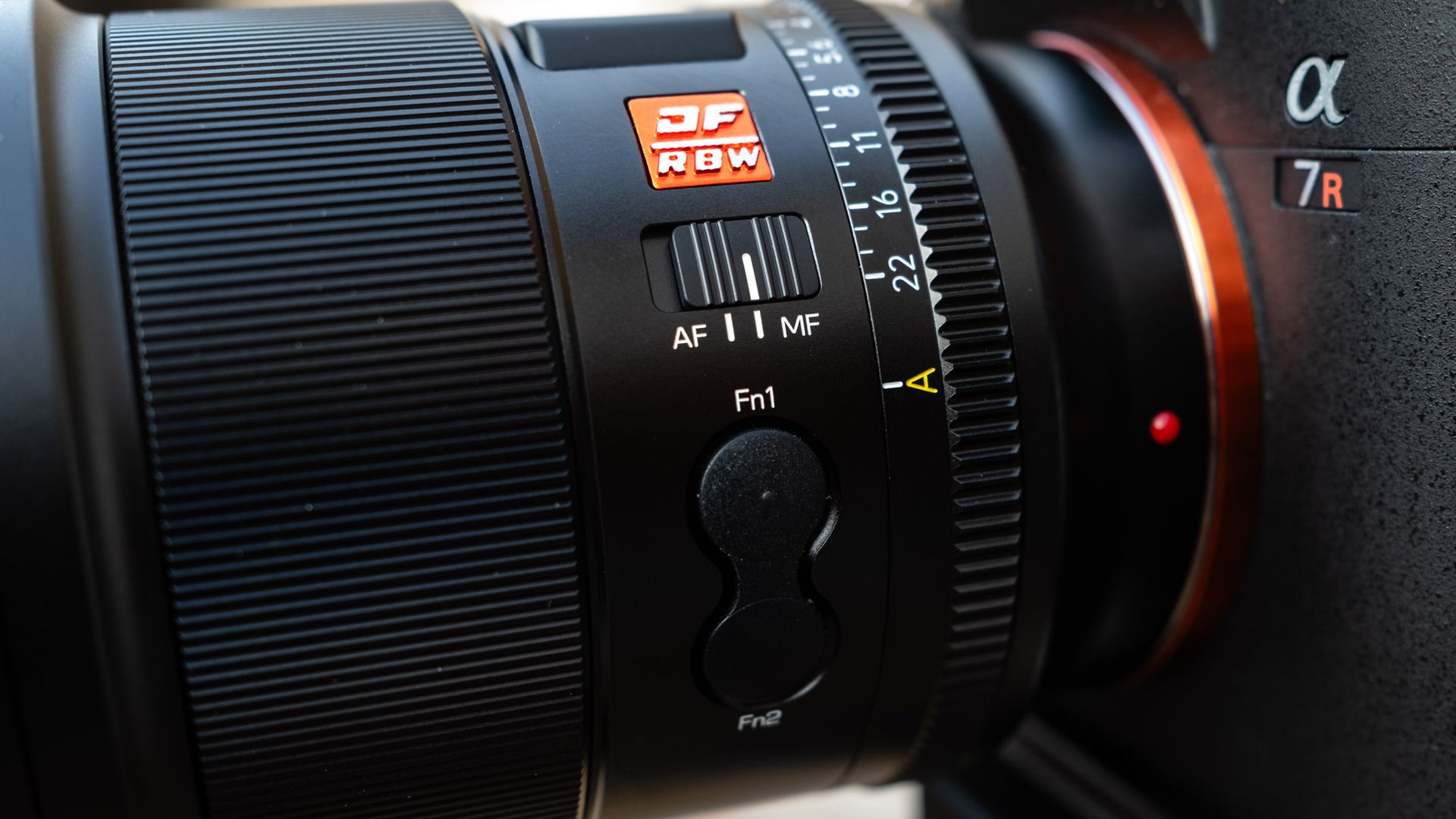
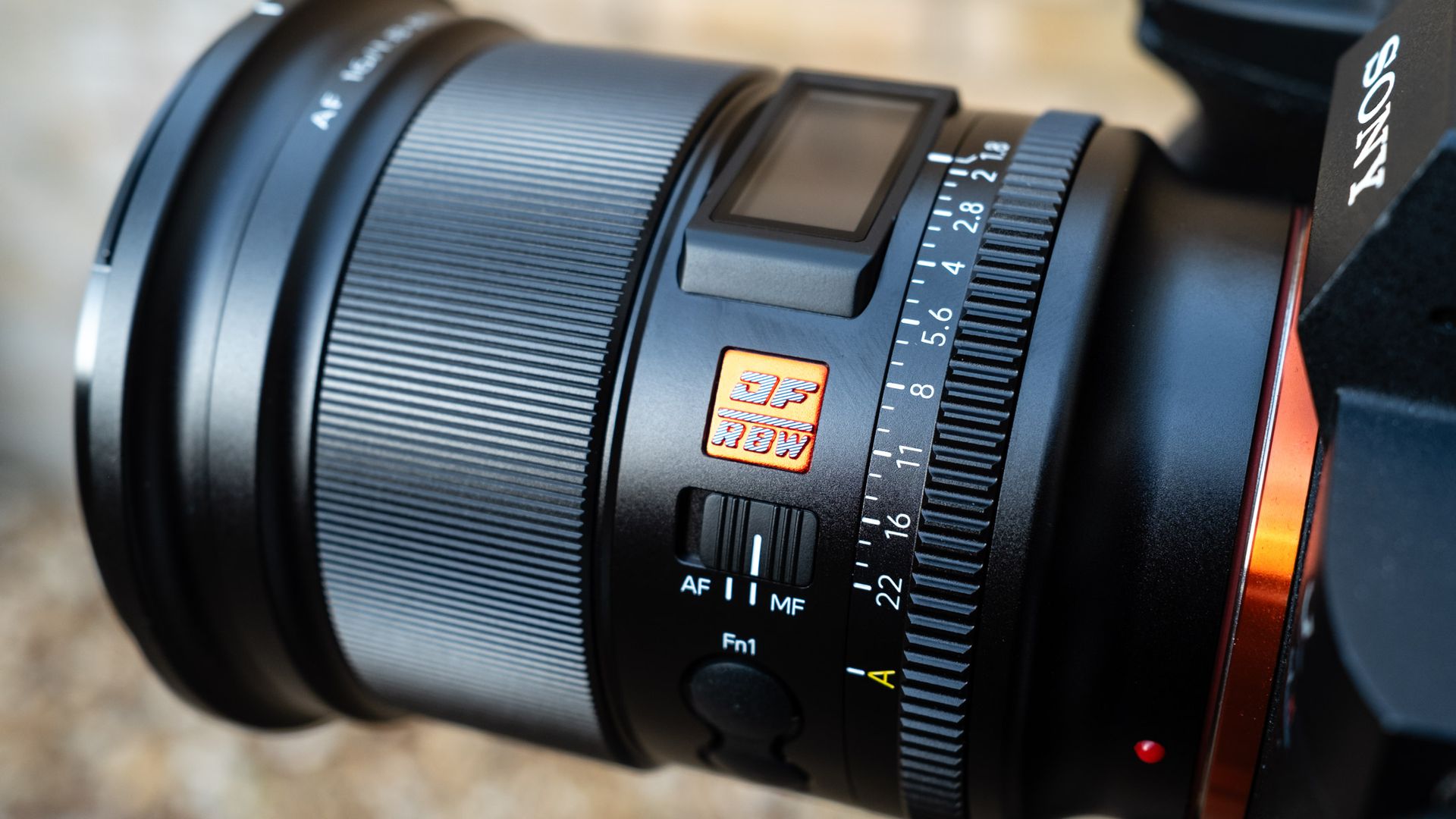
The color screen is great for night shooting.James AbbottThe aperture ring can be set to click or clickless operation.James AbbottMain controls on the left side of the lens.James AbbottThe all-metal body has a premium look and feel.James Abbott
Build quality is impressive thanks to an all-metal body and weather-sealing. This gives the lens a premium look, and it feels robust in the hand. There’s also a useful digital color screen that displays lens information.
When it comes to controls, there are possibly a few more on this lens than you might find on the average prime. There’s a manual focusing ring that’s wide enough for use when wearing gloves, a manual aperture ring that can be set to stepped and stepless operation using a switch on one side of the lens, two customizable Fn buttons and an AF/MF switch.
Viltrox AF 16mm f/1.8 FE: Functionality
The Viltrox AF 16mm f/1.8 FE is excellent for astrophotography. (Image credit: James Abbott)
Small color digital screen
Customizable Fn buttons
105.6-degree field of view
The Viltrox AF 16mm f/1.8 FE is a full-frame lens offering a generous 105.6-degree field of view, allowing you to capture more of the night sky. This lens naturally works with all Sony FE bodies, and if you shoot APS-C, it will give you an equivalent focal length of 24mm. This means if you currently own an APS-C camera but plan to upgrade to full-frame, this lens could comfortably join you on that journey.
As prime lenses go, this one has a few more bells and whistles than most, so there are a few more things to talk about than usual. Focusing is internal, so the front element doesn’t rotate or extend outwards, which is great when using filters.
For astrophotography, manual focus is the only way to go, but this lens also has autofocus for when you’re shooting other subjects. The autofocus isn't the fastest we’ve seen, taking about 0.25 seconds to lock onto subjects when the lens is wide open, or 0.5 seconds when stopped down. This is driven by an SMT stepping motor, which is quiet but audible.
One feature that you don’t see on many lenses is a small color digital screen on the top of the lens. This shows the focus distance, aperture setting and the active Fn control. Is it a gimmick? A bit. Is it useful? Yes. For astrophotography, the screen is definitely useful because it’s illuminated.
As with most Viltrox lenses, there’s also a USB-C port on the lens mount so it can be powered. This allows you to connect the lens to the Viltrox Lens app via Bluetooth to update firmware and customize the Fn buttons and the digital screen’s welcome screen. This makes firmware updates incredibly easy, which is a great feature to have.
Viltrox AF 16mm f/1.8 FE: User reviews
In online reviews, users consistently highlight the lens's value and image quality. Build quality comes up time and time again, thanks to the all-metal build.
Many users report that overall, the lens offers much more than you’d expect for the price and even more than some more expensive lenses.
How we tested the Viltrox AF 16mm f/1.8 FE
The Viltrox AF 16mm f/1.8 FE was tested in combination with the Sony A7R V, which offers an unforgivingly high resolution. The lens was tested at night with a focus on astrophotography, and in daylight to assess sharpness, distortion and general functionality for an all-round approach to testing.
Should you buy the Viltrox AF 16mm f/1.8 FE?
Buy it if:
✅ You’re on a budget: The Viltrox AF 16mm f/1.8 FE is less expensive than alternative lenses offering the same focal length and maximum aperture.
✅ You want a wide-angle prime: Thanks to its wide field of view, you can capture more of the night sky, while the fast maximum aperture is ideal for astrophotography.
Don't buy it if:
❌ You would like flexibility: If you would like the flexibility of a variable focal length, a zoom lens is the only way to go. They are typically slower than primes, though.
❌ You'd like a wider view: This is a lovely wide lens, but you can get wider options as both primes and zooms.
Since there are only a few alternatives to the Viltrox AF 16mm f/1.8 FE, and given that it offers excellent value for money, this is absolutely a lens worth considering if you need a wide-angle prime.
Furthermore, you’ll struggle to find a similar alternative with the same balance of overall build quality and price. Image quality is excellent, even in the corners and edges of the frame when shooting wide open with minimal distortion.
The two customizable Fn buttons and the illuminated color screen that provides useful lens information are extremely helpful when shooting in the dark.
With a price of $464 (£533) and given its build quality, image quality and overall handling, this lens represents excellent value for money. And while it may be a full-frame lens, APS-C users can still enjoy a 24mm equivalent focal length, so it’s a useful lens for astrophotography whichever format you shoot with.
This is a professional-quality lens with a mid-range price tag, and like other Viltrox lenses, you get the lens, a lens hood, front and rear lens caps and a soft lens case in the box.
If this lens isn't for you
The Viltrox AF 35mm f/1.2 LAB FE is a slightly less wide Viltrox lens with a much faster aperture and is part of the company’s flagship LAB series.
The Sony FE 20mm f/1.8 G is a fantastic wide-angle prime offering excellent image quality in a compact and lightweight form factor.
The Sigma 14mm f/1.4 DG DN Art is something of a beast, both in terms of specs and its size. With a 14mm focal length and f/1.4 maximum aperture, it’s perfect for astrophotography.
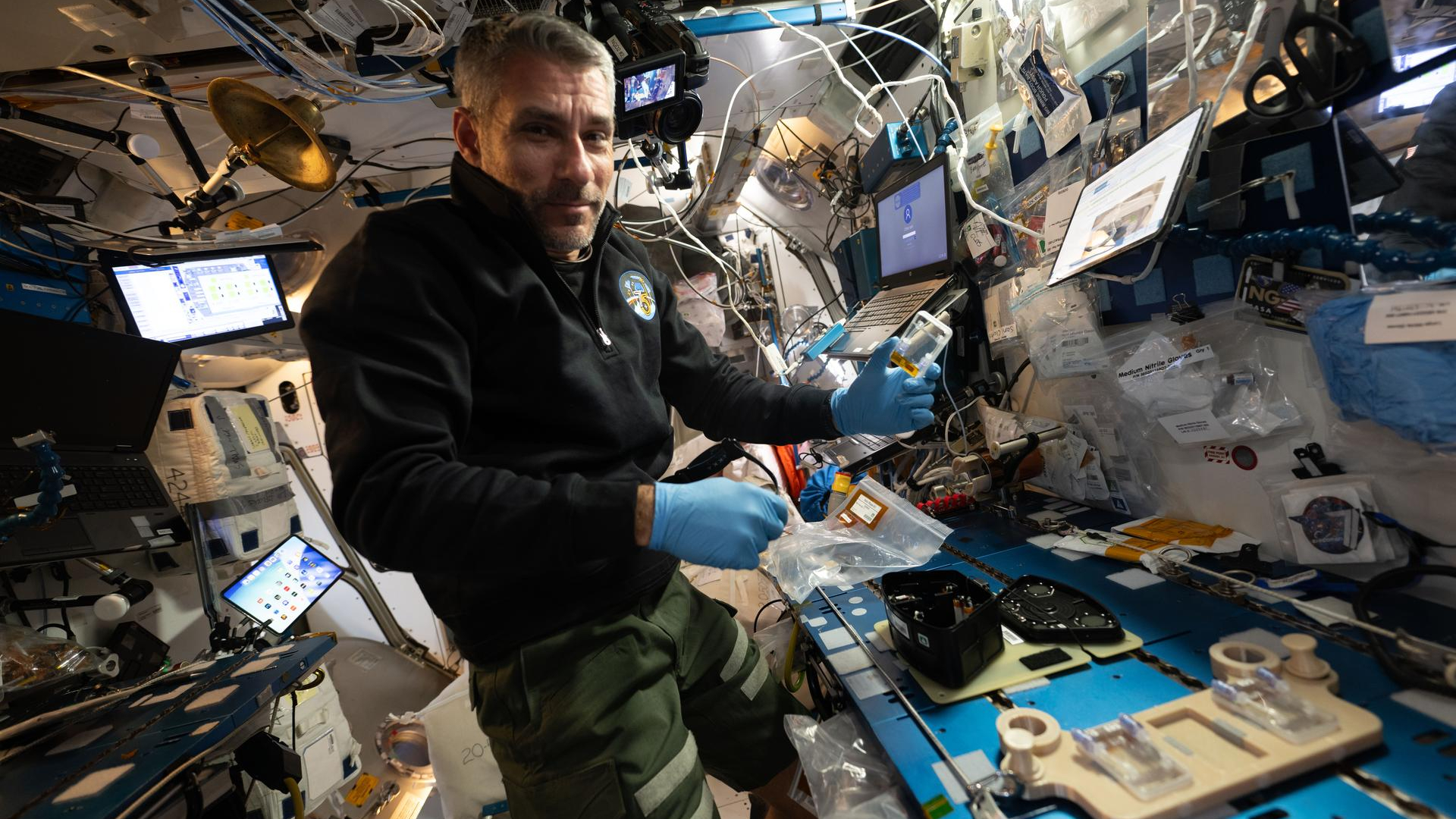
NASA astronaut Luke Delaney conducts botany experiments on the ISS. (Image credit: NASA/Jessica Watkins)
Growing plants in space? Yes indeed! NASA astronauts are conducting botany experiments aboard the International Space Station (ISS).
What is it?
In this snapshot — captured by NASA astronaut Jessica Watkins, commander of SpaceX's Crew-13 mission to the ISS — we can see fellow NASA spaceflyer Luke Delaney hard at work aboard the ISS. And while he's orbiting around our planet aboard a laboratory in the vacuum of space, he's also growing plants.
In the photo, Delaney is working petri dishes and experiment modules that support our growing understanding of how plants grow in the microgravity environment aboard the station. Specifically, the experiments Delaney is working on will investigate the genetic responses of plants in this environment.
This is not the first time that researchers have studied plants in space. In fact, ISS astronauts have conducted a wide variety of plant experiments and investigations over the years. They've grown peppers and other edible produce and even proved that moss can survive outside the station, in the harsh environment of space.
Why is it incredible?
When you picture the inside of an orbiting space station, you might imagine the white and gray walls with computers, buttons, switches and other such tech speckling the scene. But the space station is also full of (non-astronaut) life, thanks to the incredible variety of biological experiments onboard.
While space is "the final frontier," and we look outward to study everything from black holes to exploding stars, outer space can also help teach us about own planet. Satellites look back at Earth, studying its changing landforms, migrating wildlife, diminishing glaciers and natural disasters. Onboard the ISS, astronauts conduct experiments with plants, animals, microscopic organisms and an incredible amount of studies supporting human health and medical care. While space might be the final frontier, so much of the work done in space is designed to benefit us back here on Earth.
NASA has revealed new details about its plans to return astronauts to the surface of the moon, outlining a series of upcoming milestones for SpaceX and Blue Origin as both companies race to ready their lunar landers for the agency's Artemis program.
During an Oct. 5 presentation at the Astronautical Congress (IAC) in Antalya, Türkiye, Steve Creech, acting manager of NASA's Human Landing System (HLS) Program, laid out development timelines for both spacecraft, with key demonstrations planned through early 2028 that include orbital refueling and uncrewed lunar landing tests to qualify the vehicles to fly astronauts to the surface of the moon.
A more pressing deadline, however, is NASA's Artemis III mission, which is targeted for the third quarter (Q3) of 2027. Artemis III will launch four astronauts aboard NASA's Orion spacecraft to low Earth orbit (LEO), where they will rendezvous and dock with test versions of both companies' landers for interoperability checkouts. Those demonstrations will help inform NASA's determination about which lander the agency will choose to carry astronauts to the moon's surface on Artemis IV, targeted for early 2028.
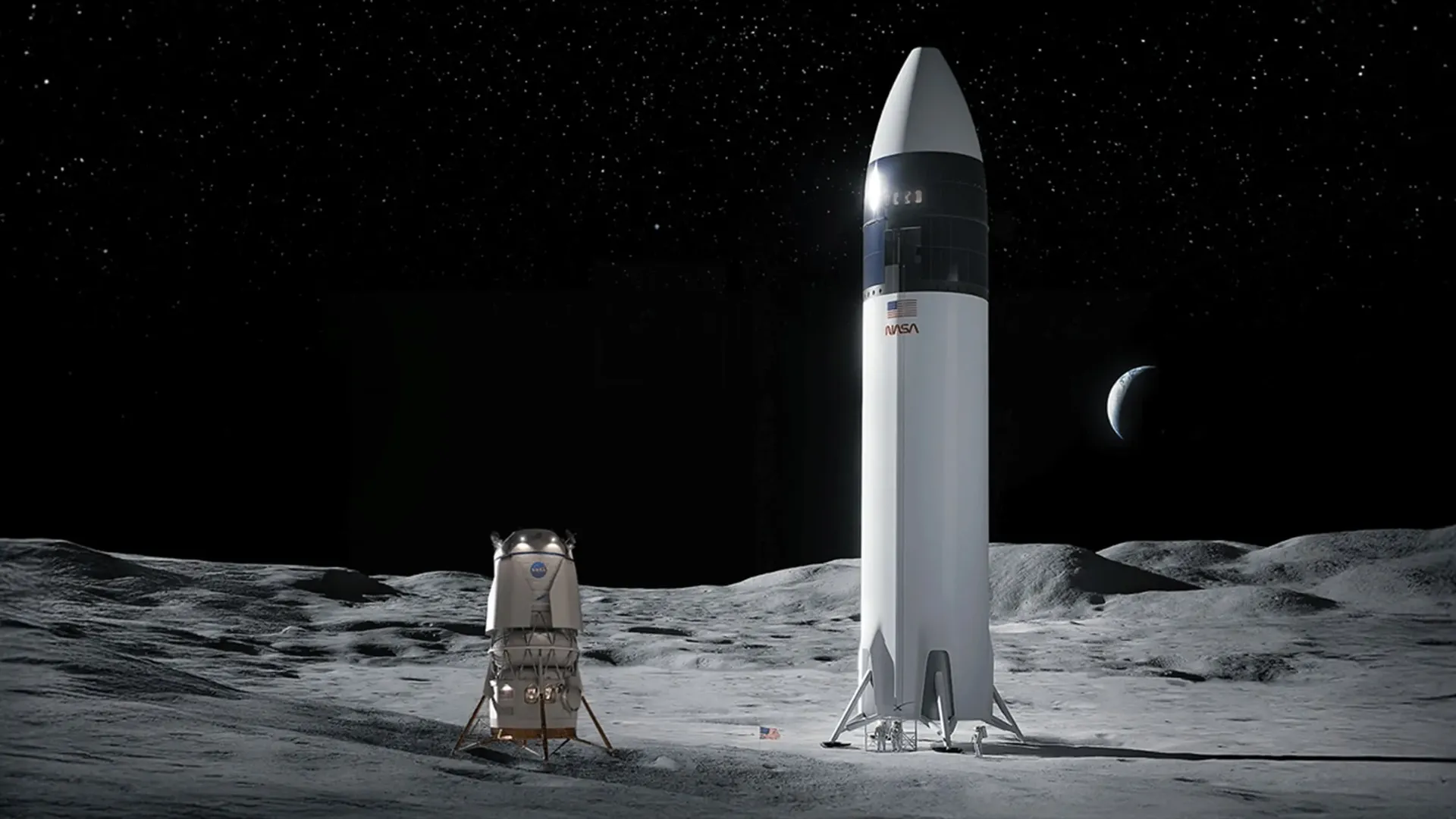
SpaceX and Blue Origin were both awarded NASA contracts to develop HLS vehicles — Starship and Blue Moon, respectively — and have spent the past several years refining their respective lunar lander designs and dealing with various delays along the way. In the face of those delays, and in an effort to better structure its mission progression for success, NASA overhauled its Artemis program architecture in February to maintain its goal of landing astronauts on the moon by the end of 2028 and establish a more regular cadence of uncrewed landings in the meantime.
As part of that shakeup, Artemis III, previously the program's first crewed lunar landing mission, was moved up a year and repurposed for the lunar lander vehicle tests the agency is preparing to fly to LEO next year. The program's first moon landing remains scheduled for 2028, but was shifted to the manifest for Artemis IV.
Between now and then, both SpaceX and Blue Origin have more than a dozen test demonstrations and vehicle milestones to achieve, including success during Artemis III and flights afterward. This will all lead up to a key decision NASA must make: Which vehicle will carry out the first crewed landing on the surface of the moon since the Apollo program ended in 1972?
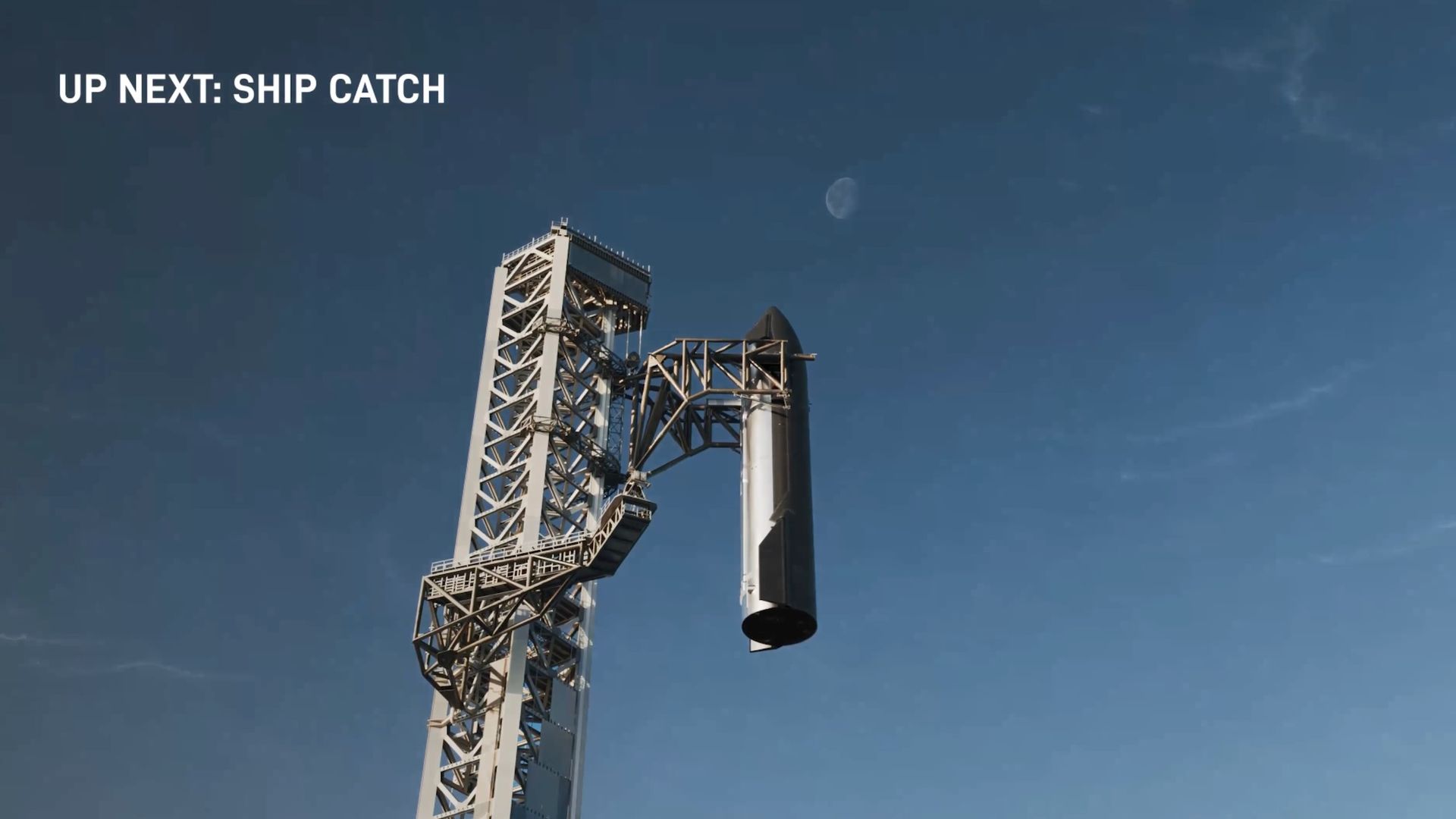
Starship reached for the first time on its most recent test flight, which occurred on Sept. 28 from SpaceX's Starbase site in South Texas. NASA lists several other important goals for the vehicle to achieve in 2026, including (in the order listed during the IAC presentation) the first return and catch of the rocket's upgraded Version 3 (V3) booster at its launch pad; the first-ever return and catch of a Ship upper stage; the first Starship launch from one of SpaceX's launch pads still under construction on Florida's Space Coast; and, possibly, the first V3 booster reflight.
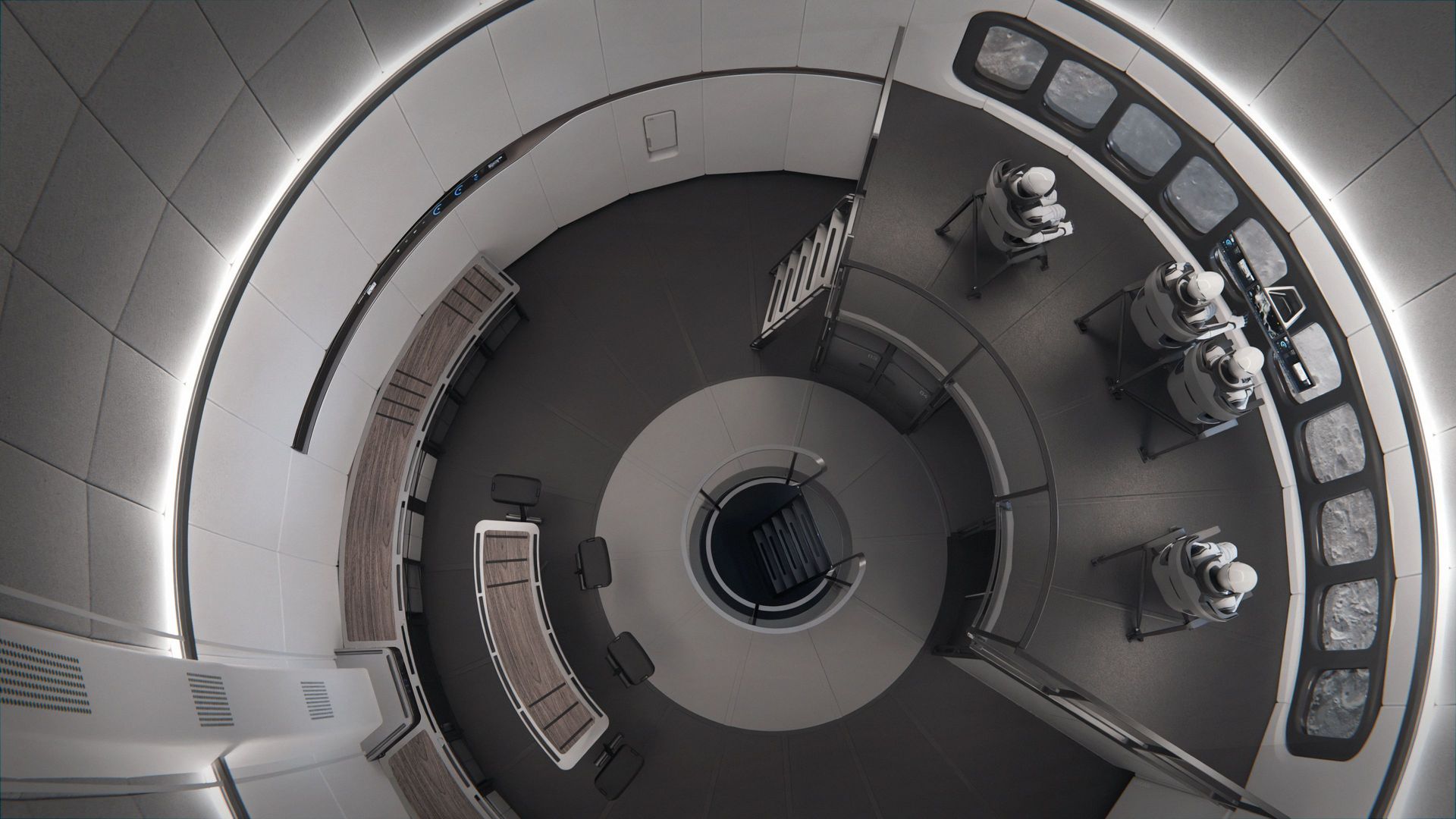
NASA also expects SpaceX to complete the initial build of the crew cabin for its lunar lander Starship variant. SpaceX released renders of Starship's interior last year, as well as images of the test elevator astronauts are using to train for Starship egress on the lunar surface, but little else has been made public about the progress the company has made on the cabin's design.
Artist's rendering of the cabin of SpaceX's Starship vehicle during an Artemis moon mission for NASA. (Image credit: SpaceX)
Should the cabin's initial build wrap up by the end of the year, as NASA's presentation suggested, SpaceX will use Q1 2027 to complete integration of the systems that Starship will need to communicate with Orion during Artemis III, and deliver a cabin simulator for astronauts to train on leading up to the mission. SpaceX plans to continue Starship test flights through Q2 of next year, complete a landing leg demonstration and begin crew cabin airlock tests.
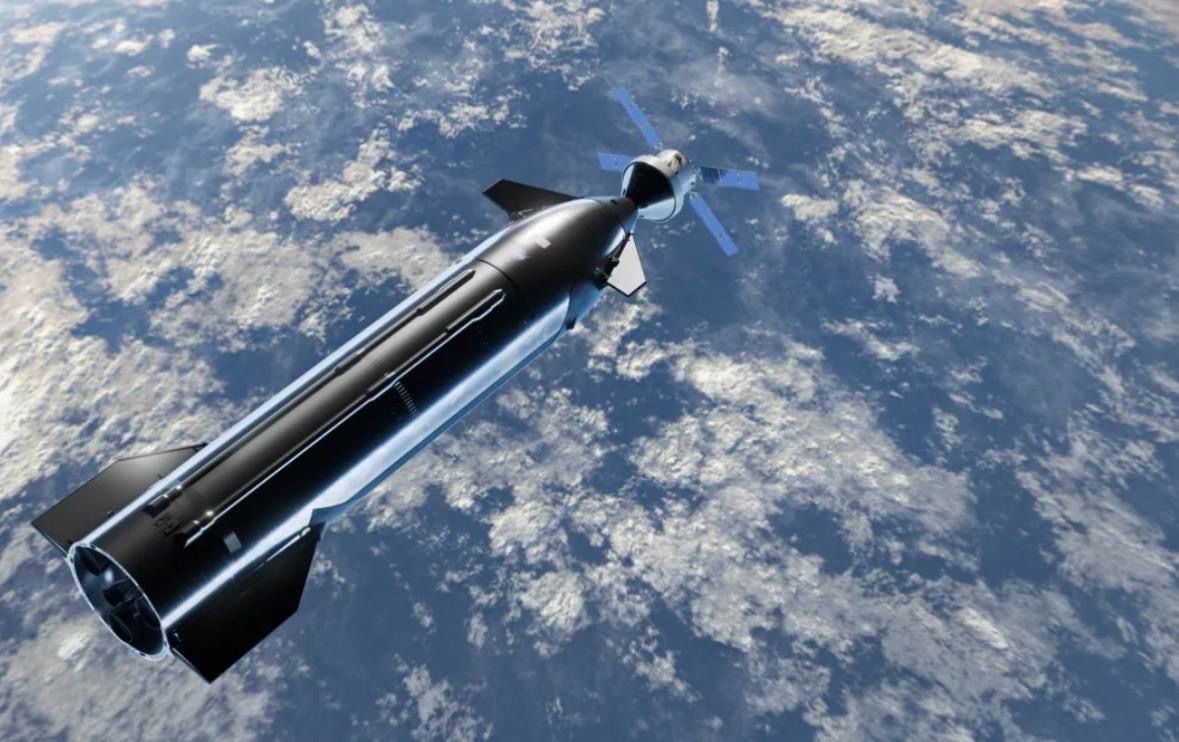
For Artemis III, SpaceX plans to fly one of its existing V3 Starship upper stages, with some slight modifications. Starship and Orion will dock as part of Artemis III but the SpaceX vehicle won't be equipped with a crew cabin for the mission's astronauts to enter. Between the end of this year and the beginning of the next, SpaceX is expected to complete the addition of a docking system and nosecone cover to the Artemis III Starship vehicle, which, NASA documents suggest, has already completed its mechanical fit checks.
Render of SpaceX Starship and Orion docked in low Earth orbit. (Image credit: SpaceX)
Other notches on SpaceX's checklist leading up to Artemis III include the first propellant transfer demonstration with Starship in orbit. As the first-ever launch vehicle and spacecraft designed for full reusability, Starship's fuel constraints require that its tanks be topped off in order to fly beyond LEO. For a moon landing mission, this could mean up to a dozen launches of SpaceX's Starship "tanker" spacecraft to an orbiting fuel depot, which the moon-bound Starship will visit. To pull that off, though, SpaceX has to show it can successfully transfer those cryogenic fuels on orbit, and also store them effectively enough to prevent too much boil-off.
Starship won't require any refueling flights to complete its objectives for Artemis III, but SpaceX is expected to launch its first Starship tanker vehicle within a few months of that mission as it gears up for the Artemis IV moon landing mission. To that end, a launch of an uncrewed Starship lunar lander variant is targeted sometime toward the end of Q3/beginning of Q4, with an uncrewed lunar landing mission carried out before the end of 2027.
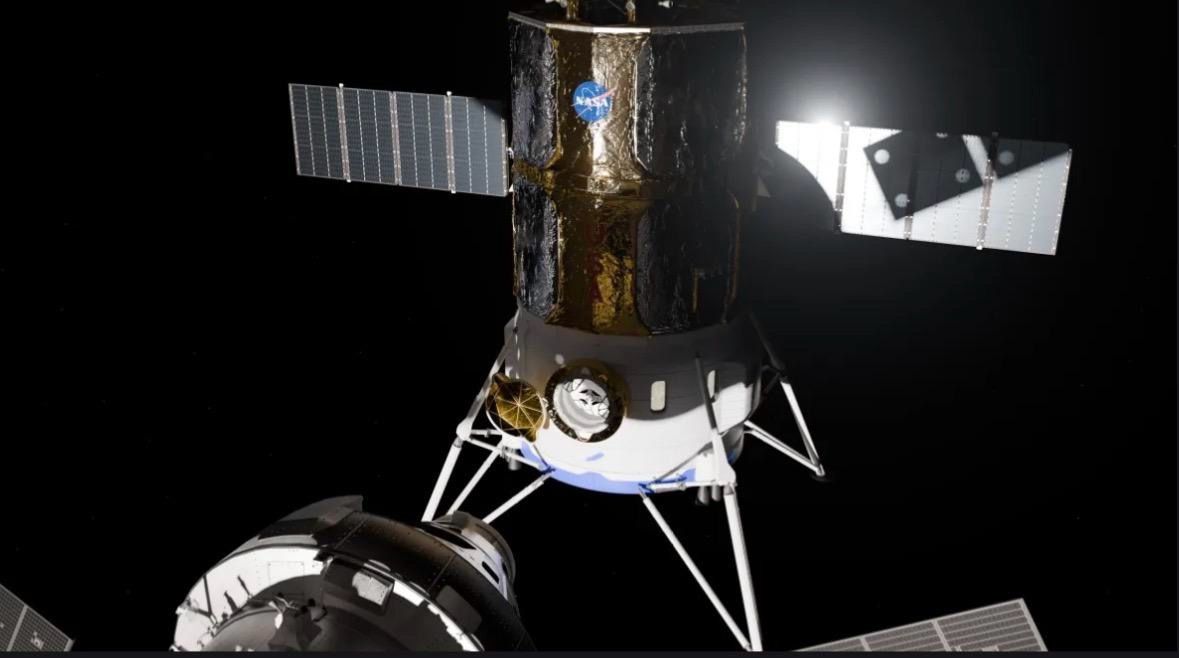
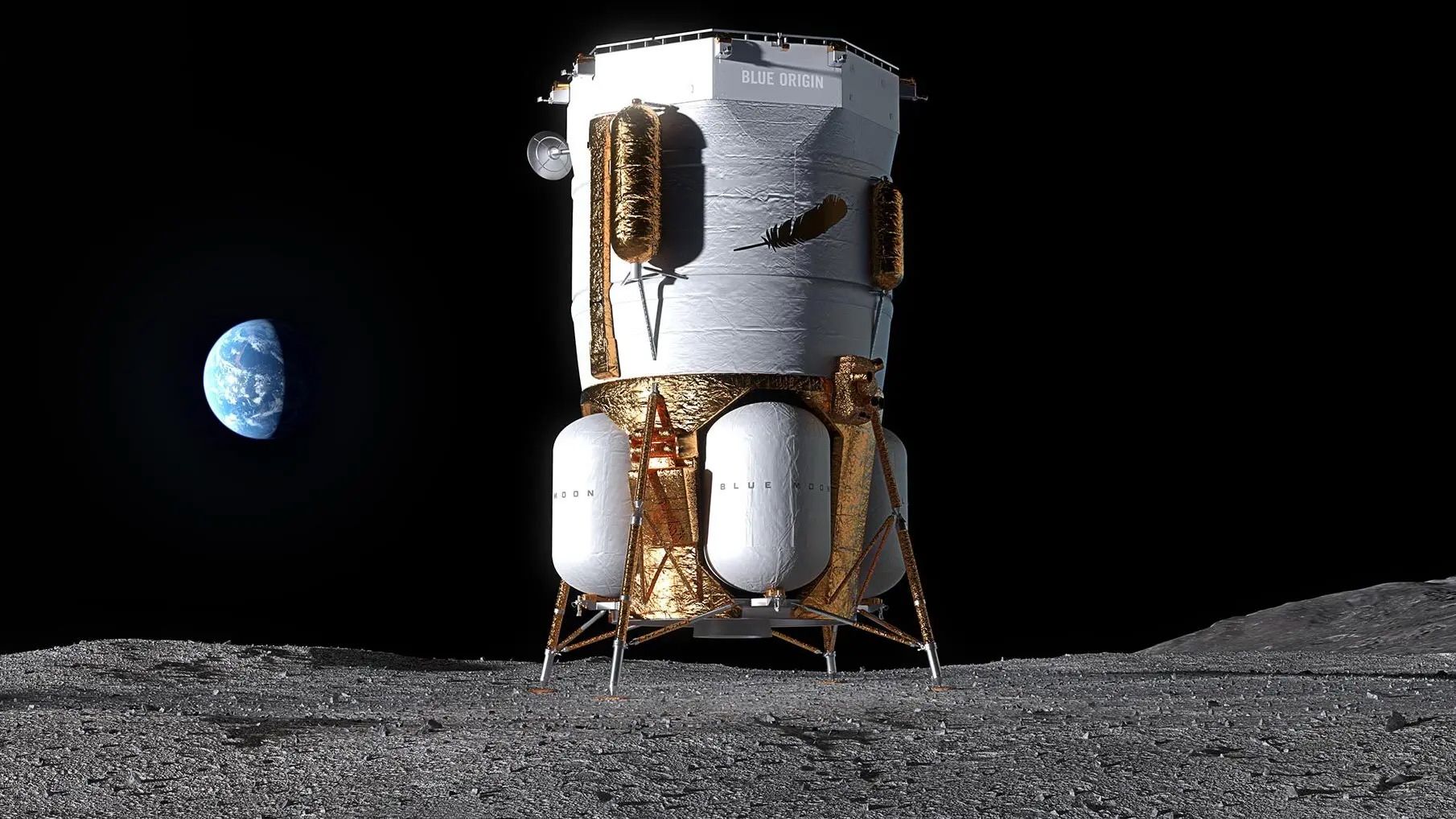
Blue Origin, meanwhile, has its own set of milestones to meet as it develops its Blue Moon Mark 2 (MK2) lander — a 52-foot-tall (16 meters) spacecraft powered by three BE-7 engines. Unlike the bare-bones V3 Starship that SpaceX will launch on Artemis III, Blue Origin plans to fly a completed test vehicle, incorporating the crew cabin, partial life-support, flight software and other systems needed to allow astronauts to enter the lander from Orion during their time docked in LEO. Astronauts will be able to enter Blue Moon from Orion to get a feel for the lander in zero-g and test some of its systems.
Render of Blue Origin's Blue Moon lander and Orion prior to docking in low Earth orbit. (Image credit: Blue Moon)
NASA's timeline shows the company working to complete a series of manufacturing and testing milestones in the last few months of 2026, including continued BE-7 testing and qualification of Blue Moon's BT-7 maneuvering thrusters. The company also faces its Artemis III interim design review and a critical design review for an upcoming landing demonstration mission in 2028.
Blue Origin is also working to restore its pad at Cape Canaveral Space Force Station's Launch Complex-36 (LC-36) to operation and return its New Glenn rocket to flight, following an explosion of the rocket in May that caused extensive damage to the facility. NASA's presentation places that milestone in Q4 2026, a timeline the company has also been very vocal about maintaining. A recent Reuters report, however, suggests that may not happen until early 2027.
By early 2027, the company expects to complete the spacecraft's communications systems and finalize its flight software, with assembly, integration and testing continuing into Q2. Q1 2027 is also when Blue Origin's Blue Moon MK1 lander (a smaller, uncrewed version of its MK2 successor) will launch to the lunar surface as a part of NASA's Commercial Lunar Payload Services (CLPS) program of robotic moon missions.
During Q2 2027, as the Artemis III mission approaches, Blue Origin is expected to complete integration of its test lander with New Glenn and conclude qualification of its BE-7 engine. Throughout next year, the company plans to continue construction and refurbishments at its launch facilities and hopes to have a new launch pad ready to support the upgraded, more powerful New Glenn 9x4 rocket l by the end of Q3. The first flight of that rocket variant is scheduled for Q4 2027, alongside a second MK1 lunar mission and the launch of an uncrewed MK2 demonstration lander.
That spacecraft is expected to attempt its own uncrewed lunar landing in Q1 2028, around the same time Blue Origin has scheduled a third MK1 flight. Like SpaceX, Blue Origin will need to demonstrate that its lander can safely reach the moon's surface,operate there and return to lunar orbit before NASA clears it to carry astronauts on a future Artemis mission.
NASA's overall timeline remains the same as it has been since the February revamp, with Artemis III expected to launch in mid-2027, followed by a crewed lunar landing on Artemis IV in 2028, and possibly another on Artemis V that same year. There may be changes on the horizon, though. NASA will host a press conference on Friday (Oct. 23) with Administrator Jared Isaacman and Associate Administrator Amit Kshatriya, as well as Artemis program director Jeremy Parsons. During the event, which you'll be able to watch here at Space.com, they will discuss the status of the upcoming moon missions and an "Artemis acceleration."
SpaceX and Blue Origin still face tight schedules to complete their respective uncrewed landing demonstrations before Artemis IV. With SpaceX targeting Q4 2027 and Blue Origin Q1 2028, both are pushing the margins against NASA's hopes to return astronauts to the lunar surface that same year. Which company ultimately gets the green light for that first landing mission will depend on the progress each makes between now and then, and whether their landers can demonstrate the readiness that NASA requires to safely carry astronauts to the surface of the moon and back again.
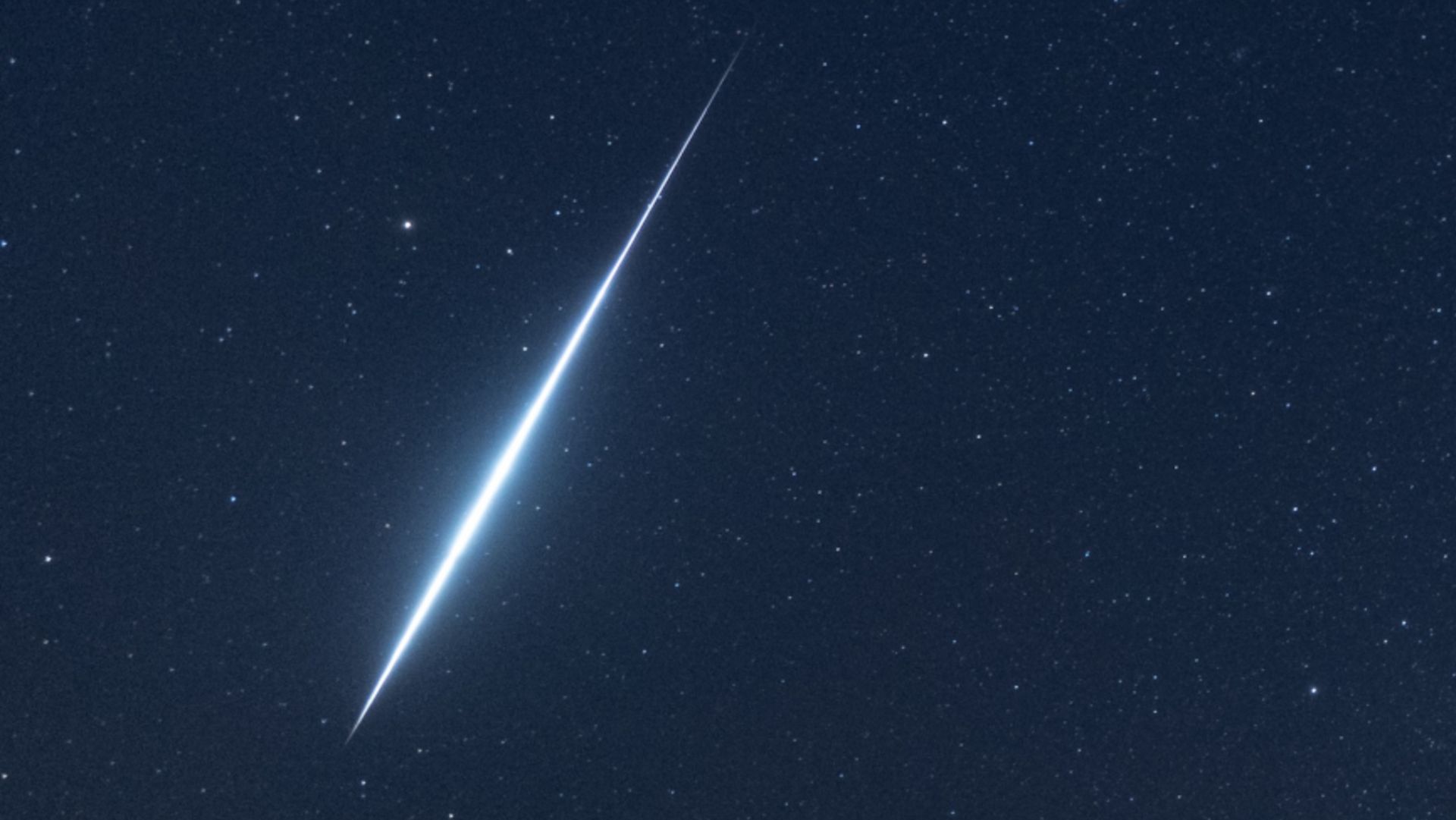
Don't miss the Orionid meteor shower peak tonight (Oct. 21-22) as tiny shards of Halley's Comet collide with Earth's atmosphere to carve fiery streaks through the Autumn sky! But will the light cast by the waxing gibbous moon spoil the show?
The Orionid meteor shower activity peaks when Earth travels through the densest section of the debris trail left by Comet 1P/Halley. The comet is currently racing back towards the sun ahead of its next visit to the inner solar system in 2061.
Under perfect dark sky conditions 10 to 20 shooting stars could brighten the night sky each hour as the peak unfolds, according to NASA. However, the light cast by the waxing moon — just four days from being full — will likely reduce the number of visible meteors by hiding fainter Orionids from sight.
Orionid shooting stars will appear to travel away from a point of origin, close to the red star Betelgeuse in the constellation Orion, rising above the eastern horizon an hour before midnight for viewers in the U.S.
When and where to see Orionid shooting stars this October
Your best chance at spotting the fast-moving meteors will come in the hours before dawn on Oct. 22, after the moon has set and the radiant approaches its highest point in the night sky. It's best not to stare directly at the radiant, where the glowing meteor trails will be relatively short compared to those left by shooting stars that appear 45-90 degrees away from the bright star Betelgeuse, thanks to an effect known as foreshortening.
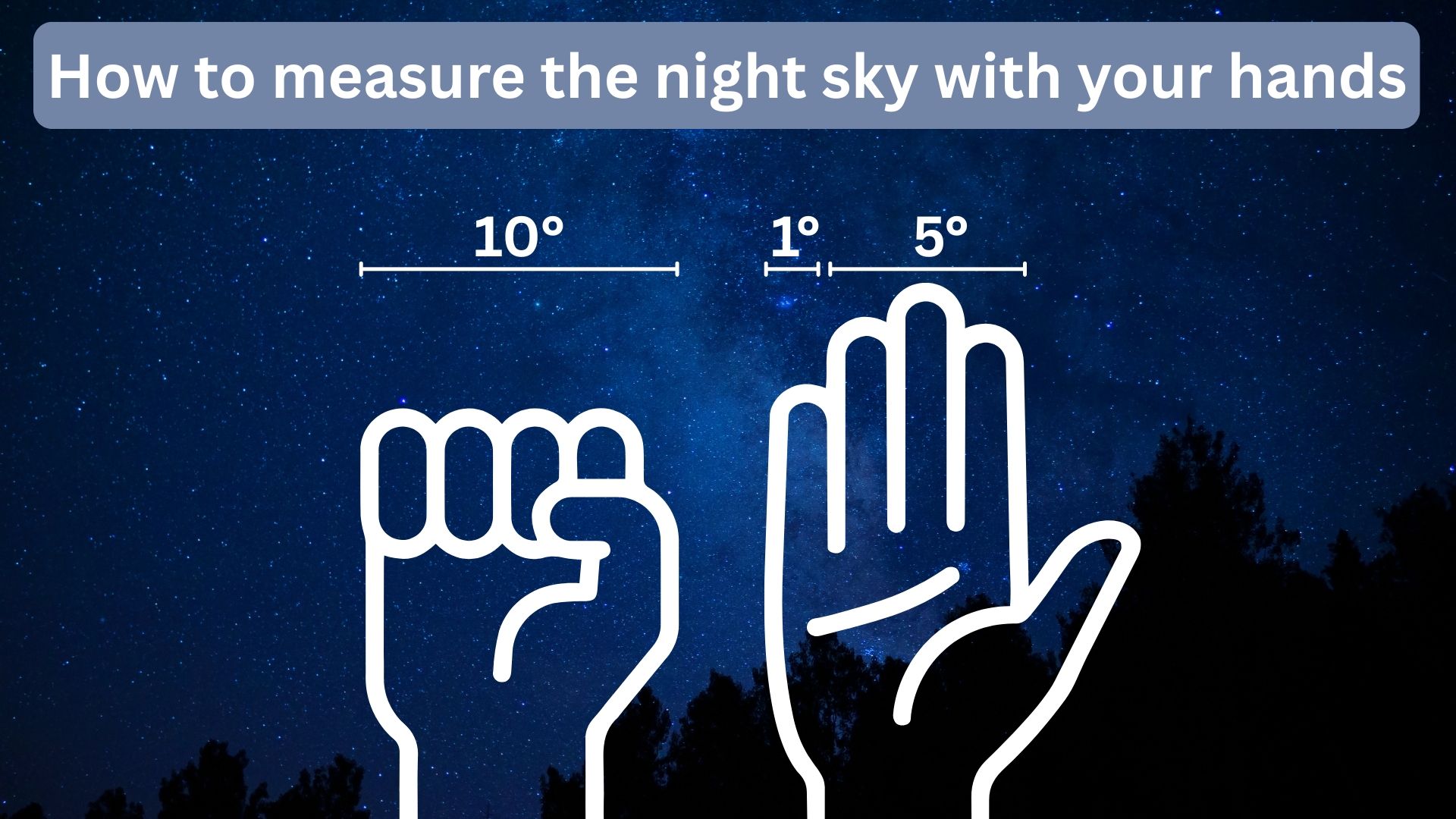
How to measure distances in the night sky using nothing but your hand. (Image credit: Created in Canva Pro)
Try to travel away from city lights and allow 20-30 minutes for your eyes to adapt to the dark. Always make sure someone knows where you're going if you head somewhere remote to catch the shower and be sure to take a red light to ensure that you can find your way while also preserving your night vision!
Editor's Note: If you would like to share your Orionid shooting star photos with Space.com's readers, then please send your image(s), along with your name, location and comments to spacephotos@space.com.
A Russian satellite just took a very close look at an American spacecraft in low Earth orbit.
A few days ago, the snooping satellite Kosmos 2612 rendezvoused with ICEYE-X36, a commercial craft that observes our planet using synthetic aperture radar (SAR).
The close encounter, which occurred between Oct. 15 and Oct. 19, was reported by Marco Langbroek and other satellite trackers, with Langbroek calling it "a worrisome cat-and-mouse game" in orbit. The rendezvous has garnered a lot of attention in space circles, because it was non-consensual and startlingly close; at one point, the two spacecraft may have been separated by just a few meters. What did Russia hope to gain from it?
1/2New blogpost:"KOSMOS 2612 and ICEYE-X36: a worrisome cat-and-mouse-game in Space"(link to blogpost in next tweet) https://t.co/bzNtADpIrAOctober 17, 2026
Not an isolated incident
A worrisome cat-and-mouse-game in Space
Dr, Marco Langbroek, satellite tracker
Before tackling that question, we need to set the stage a bit. For example, it's important to note that inspections aren't unheard of in the final frontier. Russia, the United States and China have all maneuvered satellites into close proximity of other nations' hardware in recent years.
Most of this activity has taken place in geostationary orbit, which lies 22,236 miles (35,786 kilometers) above Earth. At this altitude, orbital velocity matches our planet's rotational speed, allowing spacecraft to "hover" over one patch of Earth continuously. GEO is therefore a popular destination for spy, communications and weather satellites — and for spacecraft designed to shadow and assess them.
Kosmos 2612 is operating in low Earth orbit (LEO), which is part of the reason its activities have created such a stir. Neither China nor the U.S. has conducted an uncooperative rendezvous in LEO, as far as we know. But Russia has, according to Victoria Samson, chief director of space security and stability for the nonprofit Secure World Foundation.
"They've done a few," she told Space.com. "Kosmos 2543 got within about 30 kilometers [19 miles] of USA 245 in January 2020, and then Kosmos 2558 got within about 70 kilometers [43 miles] of USA 326 in August 2022. And they've done repeated approaches to 326."
Kosmos 2612 got much closer to its target than those other inspectors did, of course. And there's another big difference: USA 245 and USA 326 are classified spy satellites managed by the U.S. National Reconnaissance Office, while ICEYE-X36 is a private Earth-observing craft.
Russia's Luch-2 satellite approaches another geostationary satellite on April 12, 2024, as tracked by the French company Aldoria's observation stations. (Image credit: Aldoria)
Eyes in the sky
There are about 80 ICEYE spacecraft in LEO at the moment. They image our planet using SAR, which can peer through clouds and gather data both day and night. Some of these satellites are operated by ICEYE, a company based in Finland, while others are managed by its American subsidiary, ICEYE US. ICEYE-X36 is one of the latter.
At least some ICEYE satellites provide imagery to Ukraine, which Russia invaded in February 2022 and continues to assault with ground troops and missile and drone attacks. Indeed, ICEYE signed a contract this past January firming up this data-sharing relationship with Ukraine.
"The agreement ensures that the Ministry of Defence continues to receive a high volume of high-resolution satellite imagery through ICEYE's world-leading SAR constellation, supporting the Ukrainian Armed Forces with persistent situational awareness on tactical timelines," ICEYE representatives said in a January statement.
That likely explains Russia's interest in ICEYE satellites, which is extensive and longstanding. For example, Kosmos 2612 launched in April of this year with five other spacecraft. In May, four members of this fleet, including Kosmos 2612, conducted maneuvers to get into a co-planar orbit with ICEYE-X36. Such maneuvers use a lot of fuel and are therefore not performed lightly. (It's unclear if ICEYE-X36 is dedicated to capturing imagery of Ukraine or Russia, but Russia certainly seems to think it is.)
However, we still don't know the purpose of Kosmos 2612's close approach (which is apparently over, at least for now), Samson stressed.
There are a few possibilities. For example, Russia may want to get a better idea of ICEYE satellites' capabilities, and/or figure out what exactly they're studying on Earth below. Or maybe Kosmos 2612 was actively interfering with ICEYE-X36 in some way — messing with its sensors, perhaps, or blocking or intercepting its communications with the ground.
However, Samson leans toward another explanation.
"I think they're getting frustrated," she said of the Russians.
"They've been kind of in a stalemate, particularly for the past six months or so. And so I think it's just more a matter of demonstrating military prowess in a manner that the Ukrainians cannot respond to," she added. "The Ukrainians are just as good, perhaps even better than, the Russians on drones. But when it comes to space stuff, they're not peers, and this is just a way to remind everyone that that's the case."
As Kosmos 2612's activities show, space is becoming an increasingly competitive and contested domain. The U.S. has long held the advantage above Earth, fielding the most capable reconnaissance and communications craft, but Russia and China are challenging that dominance.
This drama is unfolding above our heads now, and it affects everyone on the planet. Samson therefore wishes that governments around the world were more forthcoming about their space activities — for example, that we learned about Kosmos 2612's shenanigans from the U.S .Space Force rather than from private companies and civilians who pore over government tracking data.
"I think it just speaks to the importance of transparency, and sharing information about these sort of things," she said. "As much as you may want to, you cannot keep the existence of satellites classified, because people can see them."
SpaceX will soon notch a huge spaceflight milestone, if all goes according to plan.
The company will try to catch both stages of its Starship megarocket during the vehicle's next test flight, which is targeted for next month, founder and CEO Elon Musk announced during SpaceX's quarter 3 (Q3) earnings call today (Oct. 20).
If SpaceX succeeds, this "will be the first time that an orbital launch vehicle has been fully recovered," Musk said. "The only way that we can extend consciousness beyond Earth on a sustained basis is with a fully reusable orbital launch vehicle. So this is, I think, a profound technology milestone in the history of civilization and consciousness."
Artist's illustration of SpaceX catching the upper stage of its Starship megarocket, something the company expects to do on the vehicle's 15th test flight. (Image credit: SpaceX)
Starship is the biggest and most powerful rocket ever built, standing more than 400 feet (122 meters) tall when fully stacked.
As Musk noted, both of its stages — the Super Heavy booster and Ship spacecraft — are designed to be fully and rapidly reusable, a breakthrough that SpaceX thinks will make Mars settlement and other grand exploration feats economically feasible.
Starship's recovery strategy is different than that for SpaceX's Falcon 9 and Falcon Heavy rockets, which are partially reusable. (The latter two rockets have expendable upper stages). Falcon 9 and Falcon Heavy boosters come back to Earth on landing pads near the launch site or on ships at sea downrange. Super Heavy and Ship, however, will steer themselves directly back to their launch tower, which will capture each vehicle with its "chopstick" arms.
This will allow SpaceX to inspect, refurbish and refly Starship at an accelerated rate, which is a priority for the company: Musk has said he envisions launching Starship more than 10,000 times per year by 2030.
Starship has conducted 14 test flights to date, and SpaceX has pulled off chopstick catches with Super Heavy on three of them. The company has not yet tried to catch Ship, which is a more difficult proposition, as the upper stage travels higher, farther and faster than the booster does.
Still, Musk is confident that SpaceX will pull off a Ship catch on the first try. (He did not give a specific target date for Flight 15, saying only that it was expected next month.)
"I'd say it's more likely than not that this succeeds next flight," he said. "And if not, we have a steady stream of Starship flight attempts through the end of this year, and and then accelerating next year."
Success would mean back-to-back Starship flights with huge milestones. On Flight 14, which occurred on Sept. 28, Ship reached orbit for the first time ever. It also deployed 26 of SpaceX's Starlink Version 3 satellites — the first 26 members of a next-gen broadband constellation in low Earth orbit that will eventually consist of about 100,000 spacecraft.
The Starship Flight 15 preview was something of an aside during today's call. The event primarily served to announce SpaceX's financial performance during Q3, the three-month stretch that ended on Sept. 30.
And that performance was strong, company representatives said. SpaceX recorded revenues of $14.6 billion during Q3, an increase of 161% from the $5.6 billion earned during Q3 of 2025. The company had a net income of $4.4 billion during Q3, $5.5 billion better than the result from the same stretch last year, when SpaceX lost $1.1 billion.
Just $1.8 billion of 2026 Q3 revenue came from SpaceX's launch division. The vast majority was generated by two other segments — connectivity (services provided by its Starlink megaconstellation) and artificial intelligence (or, as the Trump administration has recently rebranded it, "superintelligence").
SpaceX thinks these latter two segments will continue to boom. That's why it's building the infrastructure to support thousands of Starship launches per year — to loft lots of Starlink satellites and AI data centers to Earth orbit. And the company believes that it's positioned to really start raking in the cash, starting as soon as next year.
"In a nutshell, what this implies for SpaceX annual recurring revenue by the end of '27 is somewhere between 500 billion [dollars] and a trillion," Musk said.
On Oct. 20, 1970, the Soviet Union launched the Zond 8 spacecraft on a mission to the moon. This was the last mission in the Zond program.
After the first three Zond missions explored Venus and Mars, the next ones were circumlunar missions that flew around the moon before returning to Earth. Although there was no crew on board, the Zond spacecraft was designed with cosmonauts in mind.
The Zond missions served as test flights for the Soviet Union's plans to send cosmonauts to the moon. But those plans for crewed flights never came to fruition. This was partly because the U.S. had already put astronauts on the moon, but also because the Zond missions had a lot of technical problems.
Zond 8 was considered a success — even though its guidance system malfunctioned on the way back to Earth. The spacecraft still returned to Earth safely and splashed down in the Indian Ocean one week after it launched.
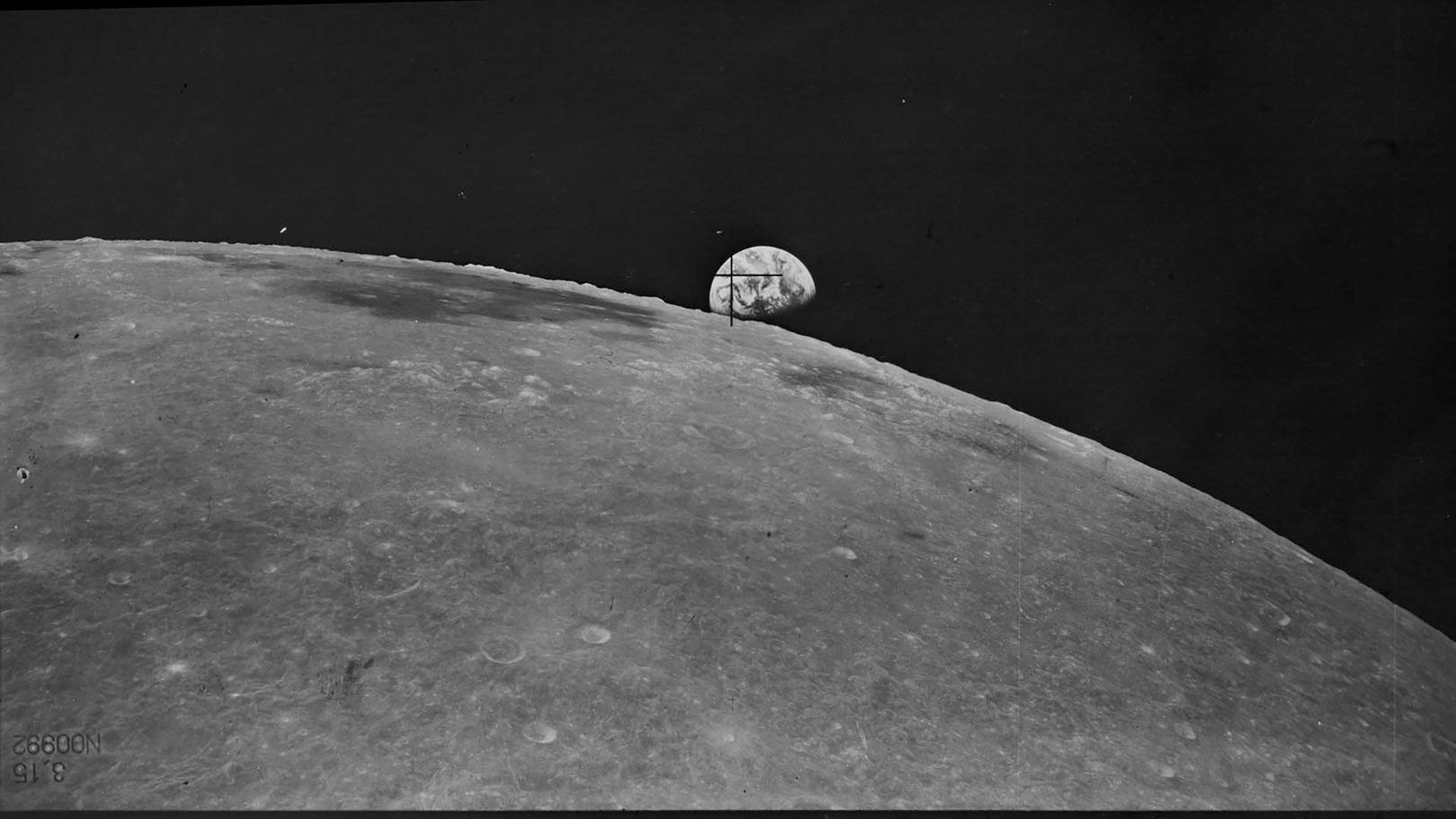
The Soviet Union's Zond 8 spacecraft, the last in a series of lunar spacecraft, captured this image of Earthrise on Oct. 24, 1970. (Image credit: Moscow State University of Geodesy and Cartography)
Why it mattered
While the Zond 1 and Zond 2 missions were launched toward Venus and Mars, respectively, the primary target of most Zond missions was the moon. At the time, the Soviet Union was embroiled in an ongoing space race with the United States to be the first on the moon with a human crew.
By the time Zond 8 launched on Oct. 20, 1970, that space race was lost to the Soviet Union. NASA and the U.S. had already landed astronauts on the moon twice with Apollo 11 and Apollo 12 (in July and November of 1969, respectively), and even peformed the first space rescue fo the Apollo 13 astronauts in April 1970.
While Zond 8 was uncrewed, it was a test flight of the Soviet Union's L1 spacecraft that was designed to fly a cosmonaut around the moon. It looped around the moon in a lunar flyby, approaching within 1,120 kilometers of the moon's surface at its closest point, according to RussianSpaceWeb.com.
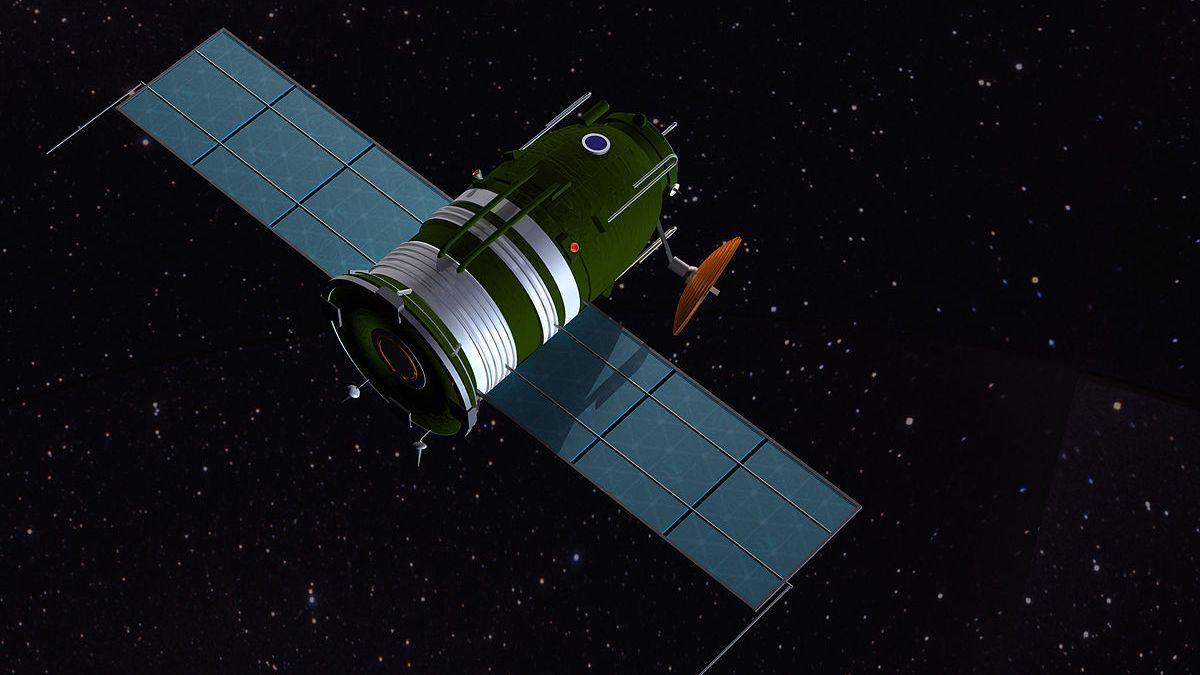
An artist's illustration of a Zond spacecraft. (Image credit: Future)
Zond 8 ultimately splashed down in the Indian Ocean on Oct. 27, 1970 after a solar attitude sensor failed, sending it on a shorter, steeper reentry path during landing, according to RussianSpaceWeb.com. It was retrieved by a recovery ship, marking the end of the Soviet moon landing program. Russian would go on to develop a series of Salyut space stations, culminating in the long-lived Mir space station.
After decades without a moon probe, Russia did launch a new uncrewed moon lander in 2023. That Luna 25 mission failed and crashed into the lunar surface after an onboard engine controller malfunctioned. The country has pledged a return to the moon in 2027.
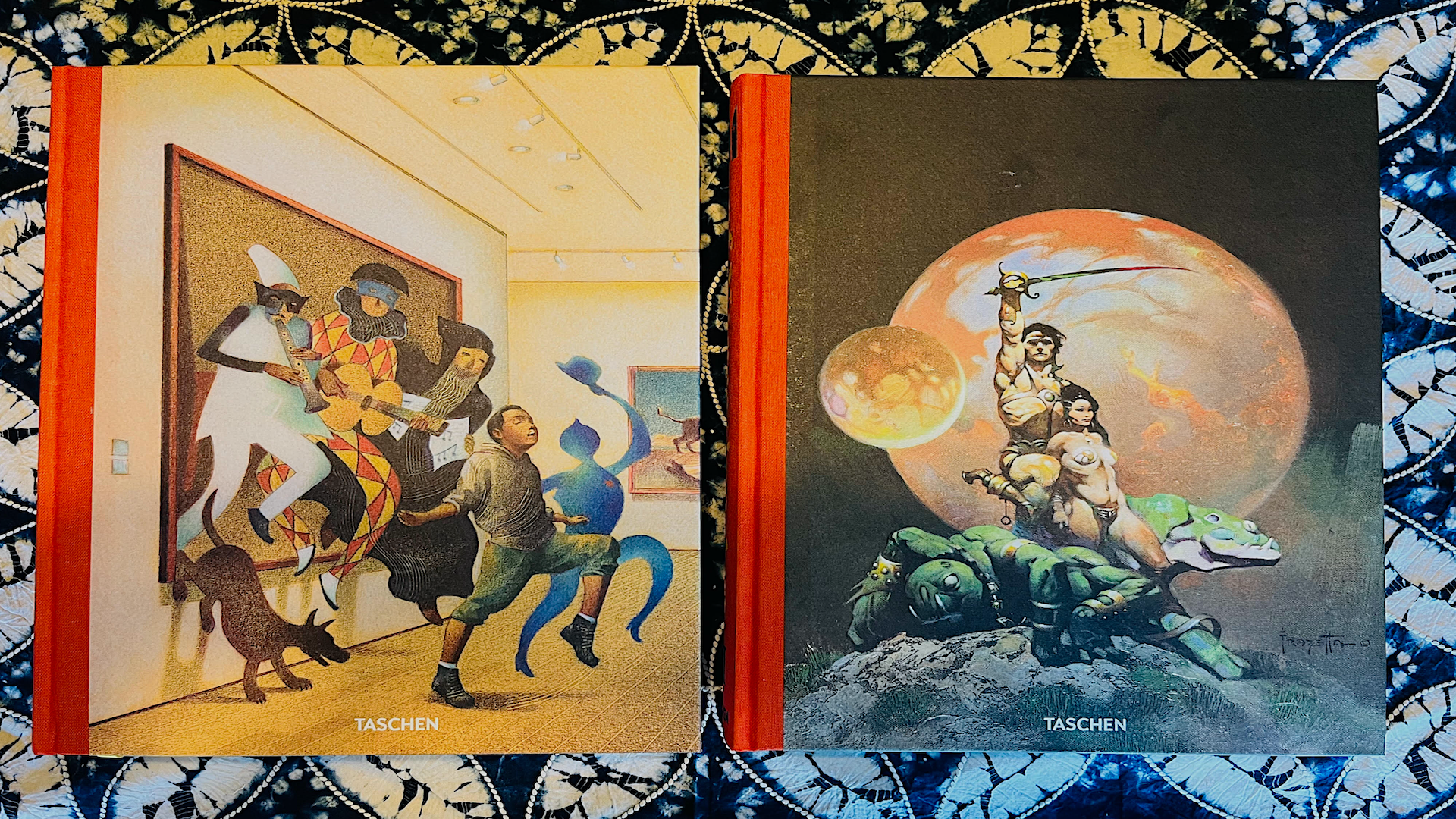
Taschen, purveyors of fine art and design special-edition books, have teamed up with George Lucas and his newly opened Lucas Museum of Narrative Art in Los Angeles to present a masterfultwo-volume catalog of the museum’s illuminating offerings.
Housed in a sturdy slipcase, readers will discover a pair of lavishly illustrated volumes spanning 832 pages and tipping the scales at nearly 14 pounds. At $200 for the pair, it's not cheap, but look on the bright side; hoisting these illustrated tomes will save you a subscription to your local gym!
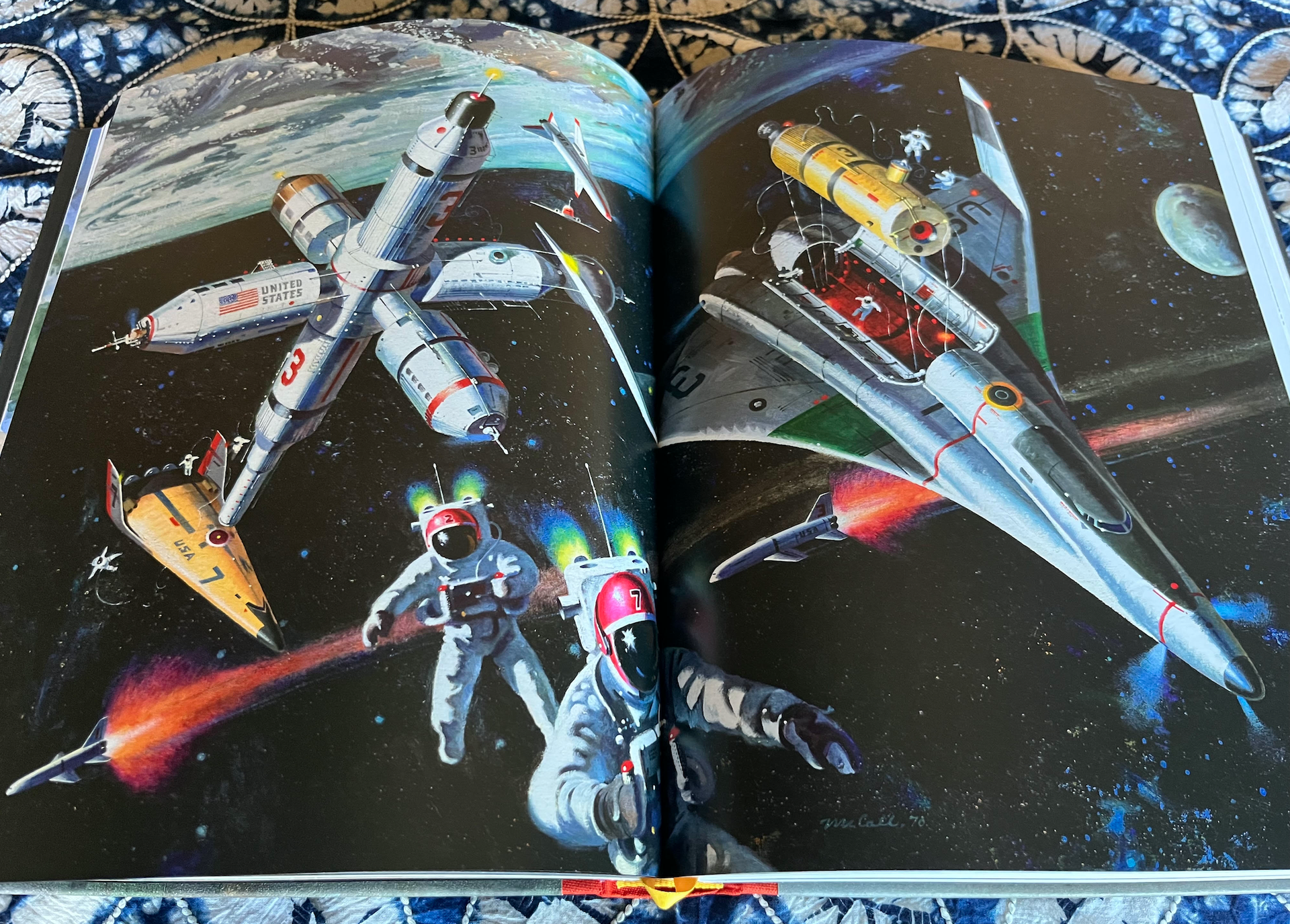
This immersive collection documents in great detail the astounding scope of rare items on display in Lucas’s treasury of paintings, murals, photographs, sculptures, posters, comic strips, illustrations, costumes, and magazine covers that have spurred humankind’s imagination.
Developed in collaboration with George Lucas and the Lucas Museum of Narrative Art, this extensive two-volume catalog brings together an unparalleled collection of narrative art.View Deal
We'd absolutely recommend checking out the Lucas Museum of Narrative Art in person if you can.
Our own Chelsea Gohd visited the Los Angeles-based museum ahead of its opening in September 2026 and adored it. But if you're not a California local, getting lost in this collection's glossy pages is the next best thing to roaming the museum exhibitions on a rainy afternoon.
Volumes I and II of Tashen's stunning "Lucas Museum of Narrative Art" edition (Image credit: Taschen)
Far beyond a mere companion to the marvels inside the fantastic spaceship-shaped building poised near the University of Southern California campus — the same institution where Lucas attended film school in the late 1960s — these bold editions are an adventure in their own right.
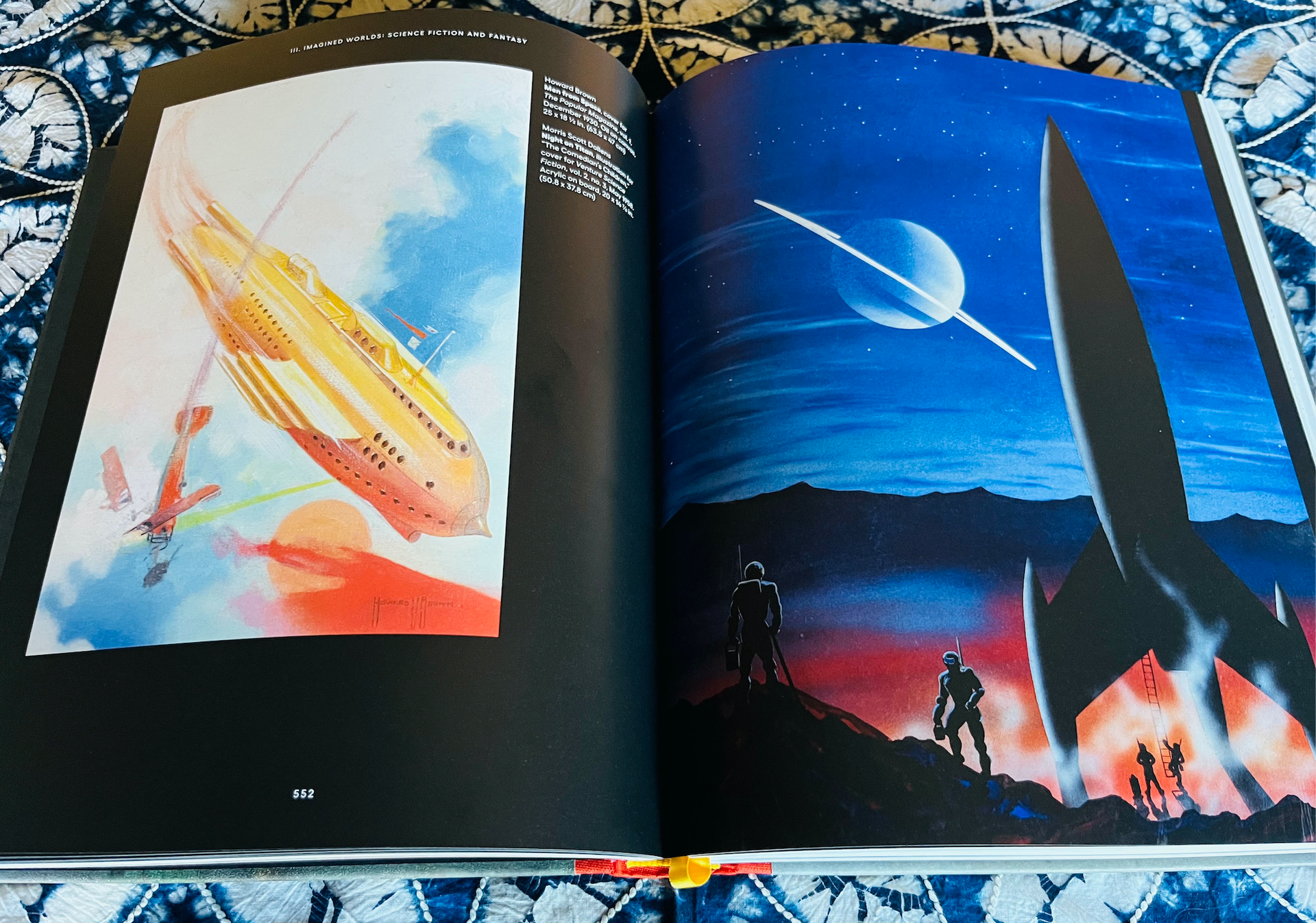
Waiting to be absorbed is an impressive assortment of storytelling expression that showcases beautiful works by everyone from Maxfield Parrish, N.C. Wyeth, and Norman Rockwell to Frank Frazetta, Jack Kirby, and Ralph McQuarrie. Lucas and his wife, Mellody Hobson, curated the museum’s contents that represent decades of collecting narrative art in all of its forms.
From Taschen's "Lucas Museum of the Narrative Art" catalog (Image credit: Taschen)
Our friends at Taschen were gracious enough to send us one of theseLucas Museum of Narrative Art special editions, and in unboxing this magnificent pair of books, one can feel the quality in the deluxe binding and thick covers. Inside you’ll find an eye-popping array of full-color photography and sharp descriptions for hundreds of artworks, all hand-picked by Lucas and Hobson.
Lucas himself delivers the preface, which is titled "The Art of Story," where he professes his love of art, myth, anthropology, illustrators, and cinema. He recalls when he came to meet his mentor, Professor Joseph Campbell, and how he amassed 40,000 pieces of art beginning when he was a student at USC.
From Taschen's "Lucas Museum of the Narrative Art" catalog (Image credit: Taschen)
The great director Guillermo del Toro provides a heartfelt foreword praising the importance of the museum and these prestigious companion volumes depicting a multitude of visual wonders.
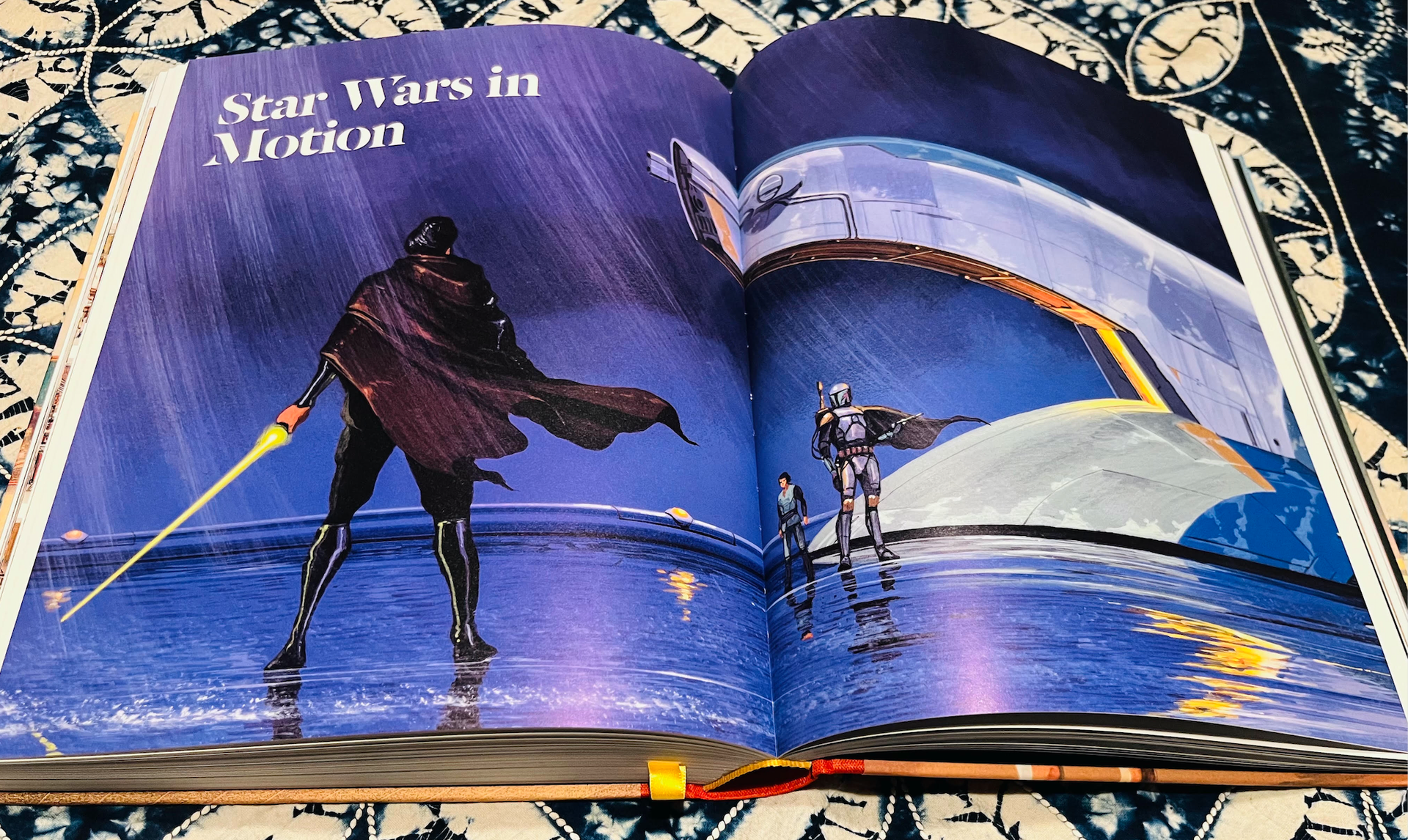
Between the duo of volumes, sections are divided into chapters dealing with topics such as history, children's stories, the American West, everyday life, romance and adventure, photography, science fiction and fantasy, and, of course, Star Wars in Motion.
From Taschen's "Lucas Museum of the Narrative Art" catalog (Image credit: Taschen)
They take you on an overwhelming journey through the gallery’s incredibly diverse holdings, not least of which are archival items and concept art chronicling Lucas's involvement in the galaxy far, far away.
This remarkable "Star Wars" section will be of particular interest to sci-fi aficionados, as it contains 100 pages of original props, paintings, concept artwork, costumes, models, and digital renderings created by some of Lucasfilm and Industrial Light and Magic’s best and brightest talents.
From Taschen's "Lucas Museum of the Narrative Art" catalog (Image credit: Taschen)
Taken with the rest of the 832 combined pages of Taschen's ambitious release that fully captures the dizzying breadth of the Lucas Museum of Narrative Art, it's a brilliant keepsake to spark your soul and imagination.
The Lucas Museum of Narrative Art two-book collection is available now via Taschen's website and Amazon.
Developed in collaboration with George Lucas and the Lucas Museum of Narrative Art, this extensive two-volume catalog brings together an unparalleled collection of narrative art.View Deal
Daniel Biedermann is a partner at NewSpace Capital. He contributed this article to Space.com's Expert Voices: Op-Ed & Insights.
Jeff Bezos, the founder and former CEO of Amazon, recently said that Blue Origin, his space technology company, is likely to go public in the coming years. The announcement has (unsurprisingly) attracted considerable attention, not least because Bezos has spent more than two decades financing the company largely from his personal wealth. He has invested billions of dollars in developing rockets, spacecraft and other forms of technology, often with very little prospect of an immediate return. But although Bezos has now raised the possibility of an initial public offering, he has given no firm indication of when one might happen. He may be right to keep his options open.
Bezos founded Blue Origin in 2000. Because he has financed so much of its development by himself, the company has been able to pursue ambitious engineering projects without the financial pressures that publicly listed businesses typically face. But developing reusable rockets, manufacturing spacecraft and building the infrastructure needed for future lunar missions requires extraordinary amounts of capital: These projects can take decades to complete, and even the wealthiest investors must think hard about how best to finance them over the long term. Bezos, then, has good reasons to seek additional sources of investment — particularly as Blue Origin prepares to expand its commercial operations.
An IPO would give Blue Origin the means to raise substantial capital from public investors and reduce its dependence on Bezos's personal wealth. The company could then use that money to expand manufacturing, develop new technology and compete for a greater share of the growing space market. Public ownership would also give existing investors the power to sell some of their holdings and could make it easier for Blue Origin to finance acquisitions. But the company would also have to meet the expectations of shareholders, who would expect to see regular evidence of commercial progress. This, I suspect, is why Bezos wants to establish a stronger business before committing to a listing.
It might have much to prove commercially, but Blue Origin’s technical progress has been remarkable. In January 2025, its New Glenn rocket reached orbit for the first time — a significant achievement for a vehicle built to compete in the heavy-lift launch market. The company has also secured government and commercial contracts and continued developing its lunar capabilities. But it will eventually have to demonstrate that it can launch New Glenn frequently, reliably and at a commercially competitive cost, and it is still some way away from that point.
Some will be asking whether Bezos wants to raise money to accelerate growth or simply to reduce the amount he himself must invest. Such doubts could affect the company's valuation and make it harder to attract investors who share its long-term ambitions. But again, this suggests Bezos is playing the long game. And given the enthusiasm that has surrounded some billionaire-led space ventures, this is sensible. Investors have sometimes attached extraordinary valuations to companies with ambitious plans but limited commercial experience. Space businesses certainly require ambition: engineers will often spend years developing technology before they can sell it. But investors have to distinguish between technical achievement and commercial performance. At the end of the day, they are seeking a strong rate of return.
Blue Origin's New Glenn rocket launches NASA's ESCAPADE Mars mission on Nov. 13, 2025. (Image credit: Blue Origin)
What’s also worth considering is how Blue Origin's progress could benefit the wider space industry, particularly the specialist companies that supply technology to larger manufacturers and operators. SpaceX has achieved remarkable success in part by developing and manufacturing much of its technology internally. This includes its rockets, spacecraft and satellites. Blue Origin also does something similar, undertaking substantial engineering and manufacturing work itself, but it is not quite so vertically integrated, and thus may have greater scope to work with external suppliers as it expands. It already buys parts, equipment and services from hundreds of businesses. If it can successfully increase its production and launch activity, these suppliers could receive more orders and gain opportunities to develop new technologies. That’s to the good of the sector as a whole.
Why? Because a successful space industry needs more than a handful of large launch providers. It needs companies specializing in satellite communications, propulsion, electronics, software and other areas. Such businesses may have developed highly sophisticated products, but they need bigger customers and predictable demand to expand and produce more. Blue Origin could become an important customer for some of these, particularly if it chooses to buy specialist technology rather than make everything internally. Greater competition between the bigger space companies could translate to more potential customers for suppliers and fewer dependent commercial relationships.
Investors would benefit. There’s real potential in businesses that provide the technology and services on which larger space companies depend — the ‘picks and shovels.’ These can sometimes serve several customers and markets, making them less dependent on the success of a single program. A growing Blue Origin would create more opportunities for companies like these — although, of course, much will depend on how Bezos chooses to organize its supply chain. We shouldn’t assume that Blue Origin will become more open to external suppliers than its competitors, but the possibility is at least worth entertaining.
As it is, Bezos still faces substantial challenges. Blue Origin is not yet a commercially mature business. The company must increase its launch activity; it must demonstrate its reliability; and it must compete for customers in the public and private sectors. It must also decide how much technology to manufacture internally and whether and where third parties can provide better products or products at a lower cost. Bezos has the resources to give the company time to answer these questions, and he appears to be willing to use them. If he continues to prioritize commercial performance before pursuing an IPO, then Blue Origin could eventually enter the public markets in a much stronger position.
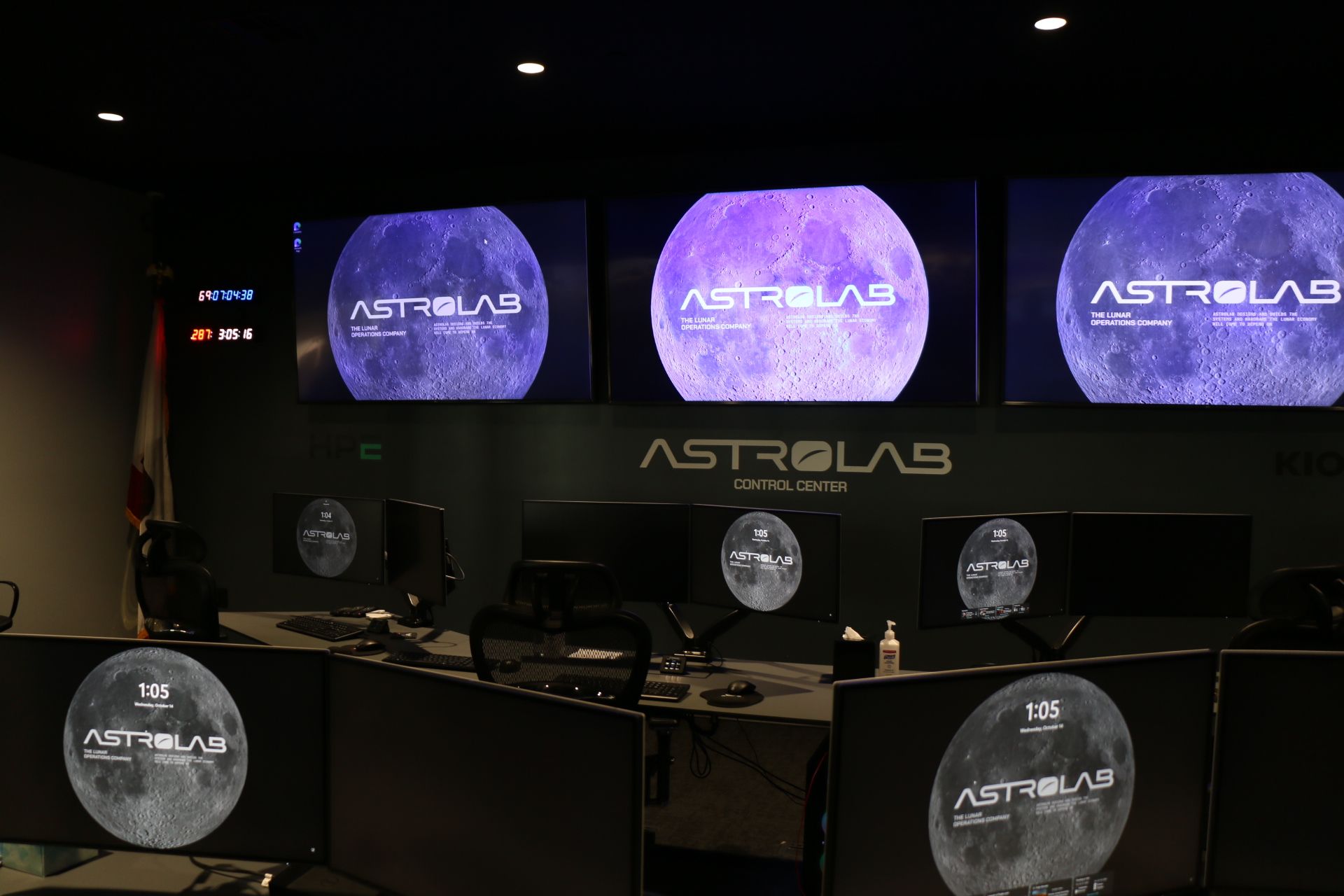
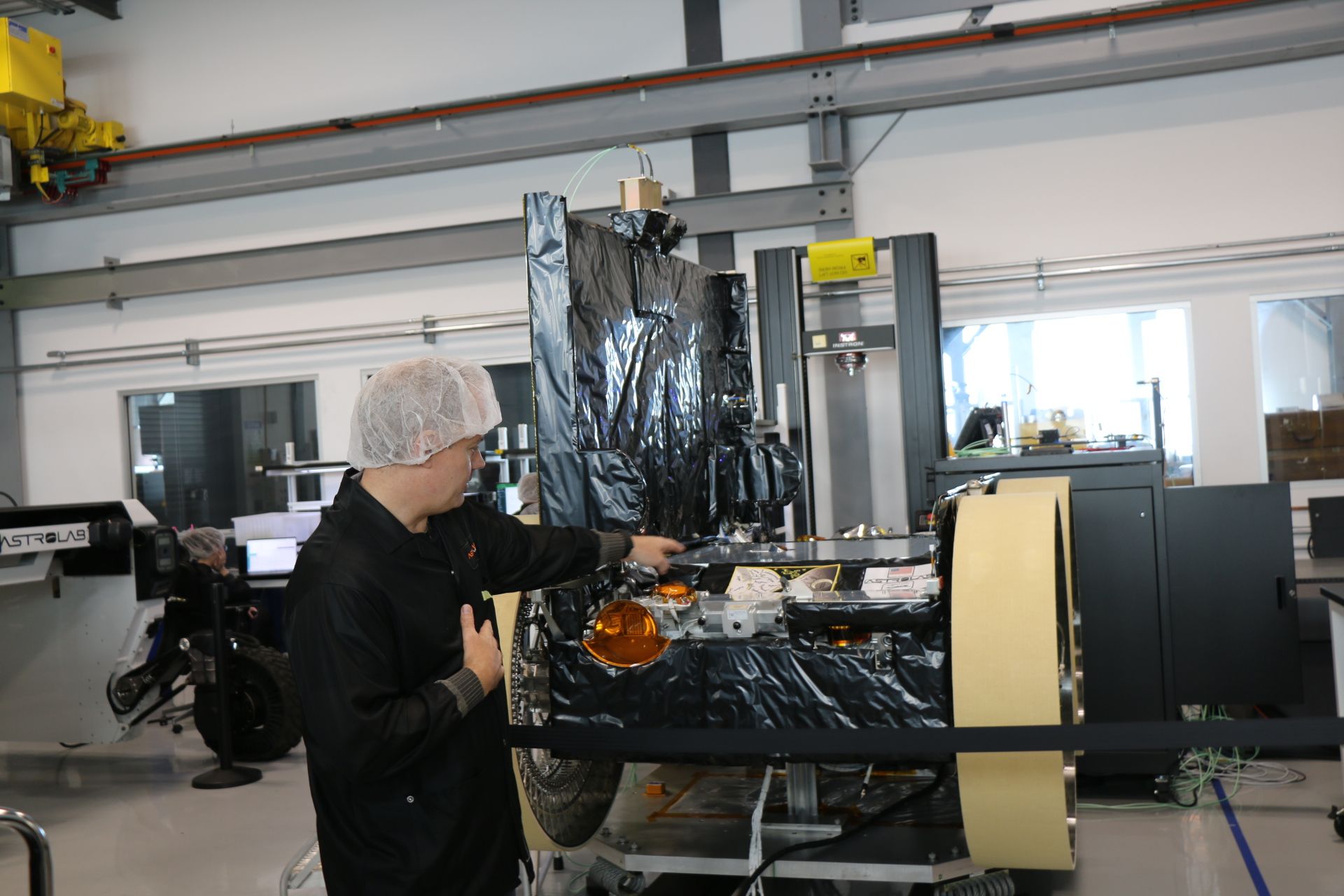
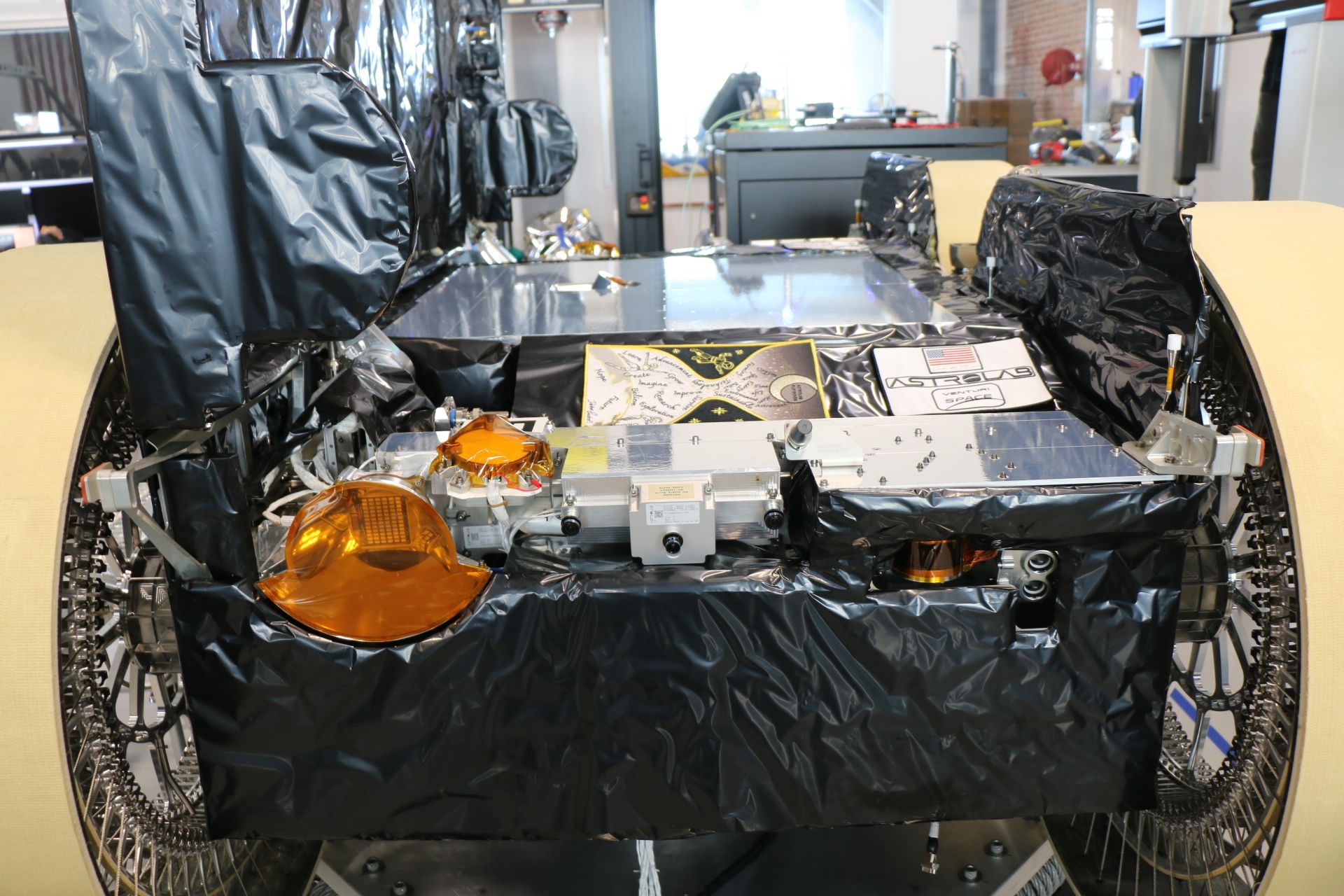
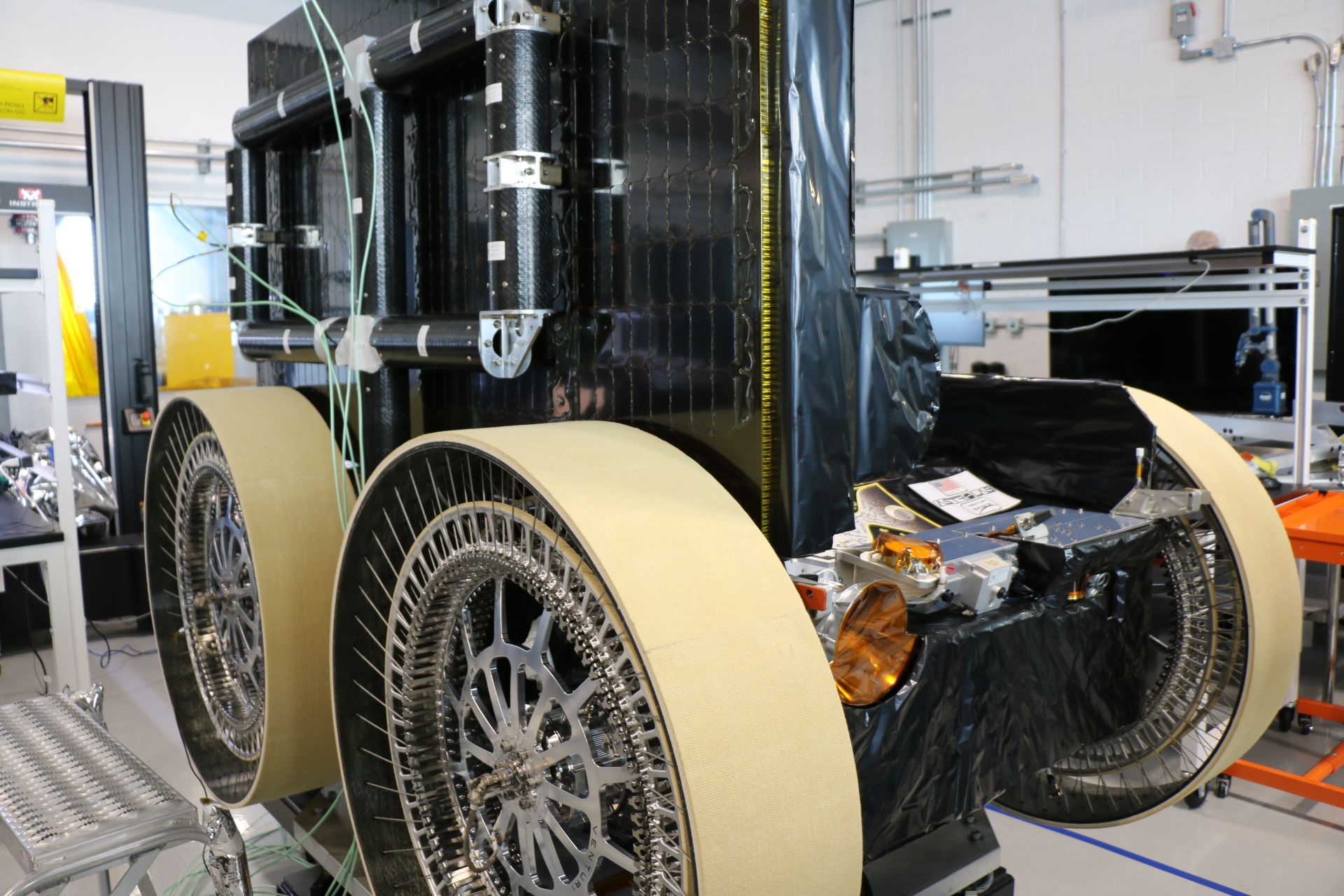
HAWTHORNE, Calif. — A moon buggy carrying a history-making supercomputer is ready to launch to the lunar surface. And it's taking some inspiration from Mars.
Later this year, Astrolab will launch its uncrewed moon rover FLIP to the lunar south pole as part of the Griffin Mission 1, or Griffin-1. The California company is one of two that NASA has selected to develop a drivable rover for the agency's Artemis program. On board FLIP will be Hewlett Packard Enterprise's (HPE) Spaceborne Computer-4, an advanced computer module built to be used in space.
This will be the first time that high-performance computing and artificial intelligence will be tested on the lunar surface. As NASA gets closer to landing humans back on the moon with Artemis, advancements like this aim to support future human habitation as well as economic activity on and around the moon.
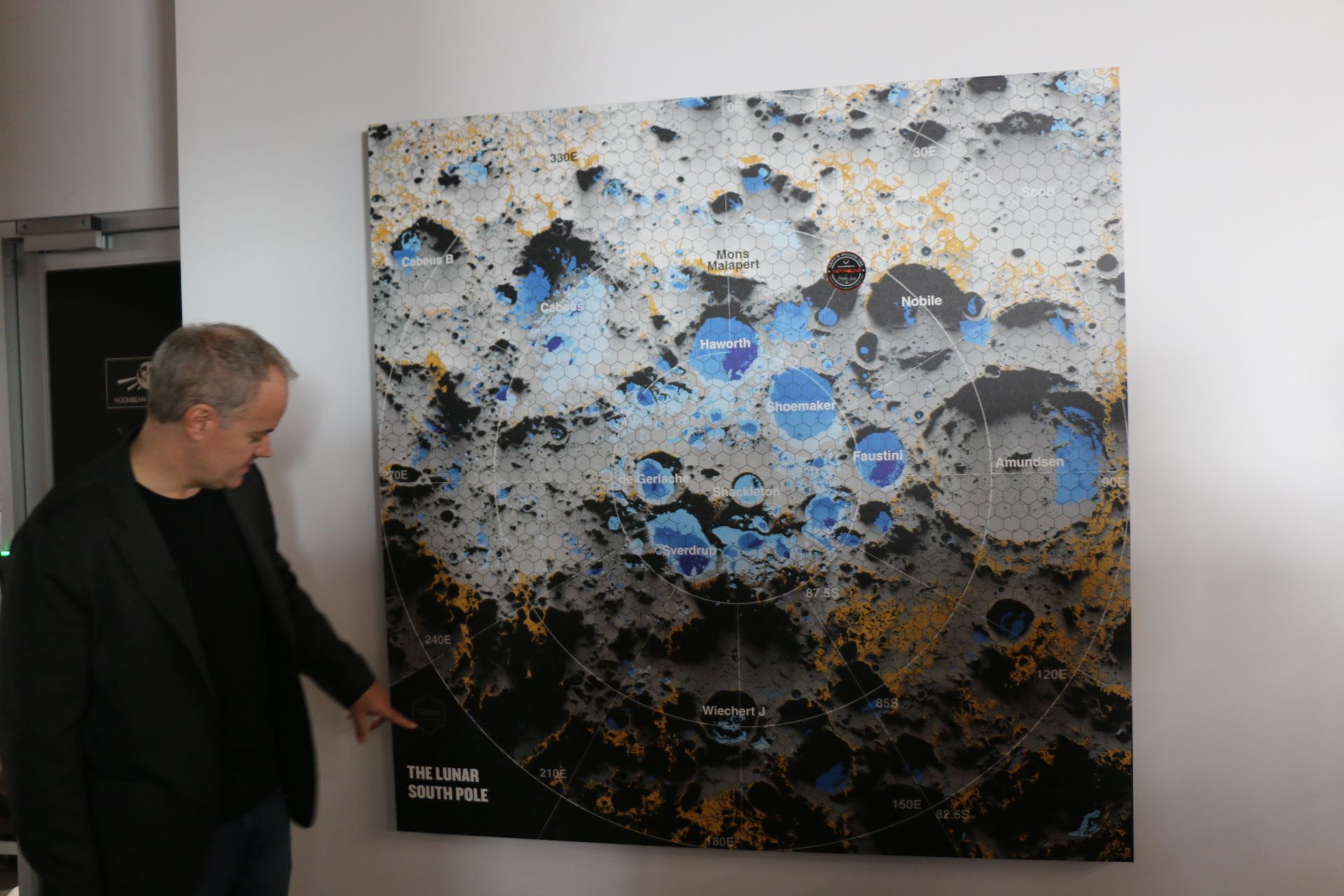
"We're sending the first supercomputer from HPE to the lunar surface later this year, doing the first GPU [graphics processing unit] on the moon [and the] first AI experiments on the moon," Jaret Matthews, founder and CEO of Astrolab, said during an Oct. 14 media event here at Astrolab's headquarters. "They're breaking new ground, and they're ahead of the curve."
The computer is designed to be lightweight, compact, self-contained and fanless. It has a low-power 64-bit CPU (central processing unit) with a GPU. The computer will be attached to FLIP's cooling system and will be powered by a system supported by both batteries and solar cells on the rover. The computer will also be paired with solid state drives from the company KIOXIA that will allow for memory storage.
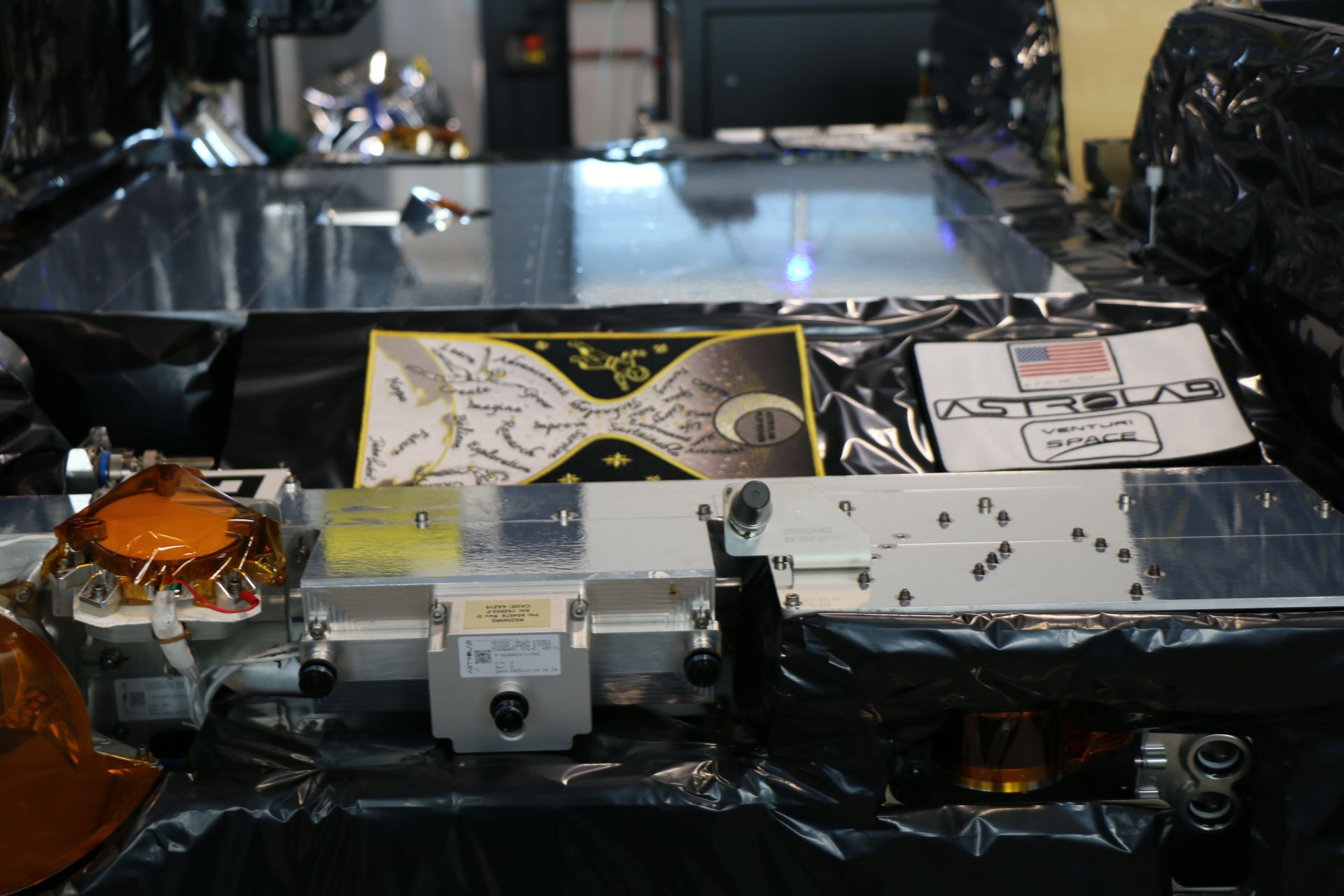
Mission Control at Astrolab.Chelsea GohdAstrolab CEO and founder Jaret Matthews points out the Astrolab landing site among other locations at the lunar south pole. Chelsea GohdJaret Matthews presents Astrolab's FLIP rover. Chelsea GohdThe FLIP rover's headlights and attached artwork. Chelsea GohdA close-up of the attached artwork on the FLIP rover. Chelsea Gohd
So, what will a supercomputer and AI accomplish on this uncrewed mission? First and foremost, the flightwill test how the computer works in this extreme environment. The computer is built with heat-conductive aluminum and is designed with the specific conditions of the lunar south pole in mind. But while it was designed and tested to be able to withstand the extreme temperatures and conditions on the moon's surface, the upcoming mission seeks to show that this advanced technology can actually work in this environment.
"NASA's given us a real challenge," Matthews told Space.com at the media event. "We have to design for a full year on the lunar surface. So that means surviving multiple lunar nights, upwards of 150 hours of complete darkness where we're not receiving energy or warmth from the sun. And then, also, there's going to be a long period [in] which we're operating semi-autonomously for [when] the astronauts are not there … and so we're having to develop a semi-autonomous platform that will spend many months [and] travel hundreds of kilometers [on the moon]."
But the computer will more than just prove its durability, if all goes to plan. It will also analyze visual data captured on the mission and enable autonomous observations, process navigation, mapping and terrain analysis. The mission also promises to test AI capabilities, though it's unclear what exact applications we'll see with this lunar AI. HPE shared in a statement that "an AI services container will demonstrate reliable deployment of scalable AI service applications on the moon."
It is also to be determined exactly how, once tested, these capabilities might be used with future crewed missions. Astronauts aboard the International Space Station already use computers for communications, science experiments and other daily tasks while living in space, but we can't say yet exactly how future astronauts might use these capabilities, especially with the addition of AI, on the moon.
From Mars to the moon
One interesting aspect of this new development is where it came from. While HPE has provided computing power to NASA for decades, Matthews is also bringing his previous experience working at NASA's Jet Propulsion Laboratory (JPL) into this new venture.
"One of the experiments [that will be] running on the spaceborne computer on the moon is a localization software experiment from JPL. It has been used on Mars, and this will be the first time it's used on the moon," Matthews said.
"The challenge with the moon and Mars is that there's no GPS, so locating yourself and knowing where you are on the surface [can be difficult]," he added. "So we're going to be running what is essentially a machine learning algorithm that JPL developed to take a map that's stored in memory … and compare it to the local terrain we see around us, and then do a match. So essentially, match features of the local terrain to the map that's stored in memory to help find ourselves on the map and keep ourselves away from dangerous craters."
As its name suggests, Griffin-1 will be the first mission for the robotic Griffin moon lander, which was developed by Astrobotic. The Pittsburgh company is flying Griffin-1 for NASA, under the agency's CLPS (Commercial Lunar Payload Services) program. In addition to FLIP, the mission will carry Astrobiotic's CubeRover, a small, uncrewed rover; LandCam-X, an optical navigation system; and Nanofiche GLPH (Galactic Library to Preserve Humanity), a tiny archive of human history, to the moon's surface.
"The moon presents a challenging environment for advanced computing, and we’re pleased to provide HPE with an opportunity to demonstrate its technology on the lunar surface," Matthews added in a statement. "Our FLIP rover is designed to accommodate a variety of payloads, and this mission will demonstrate how commercial lunar mobility platforms can support technology development and scientific research."
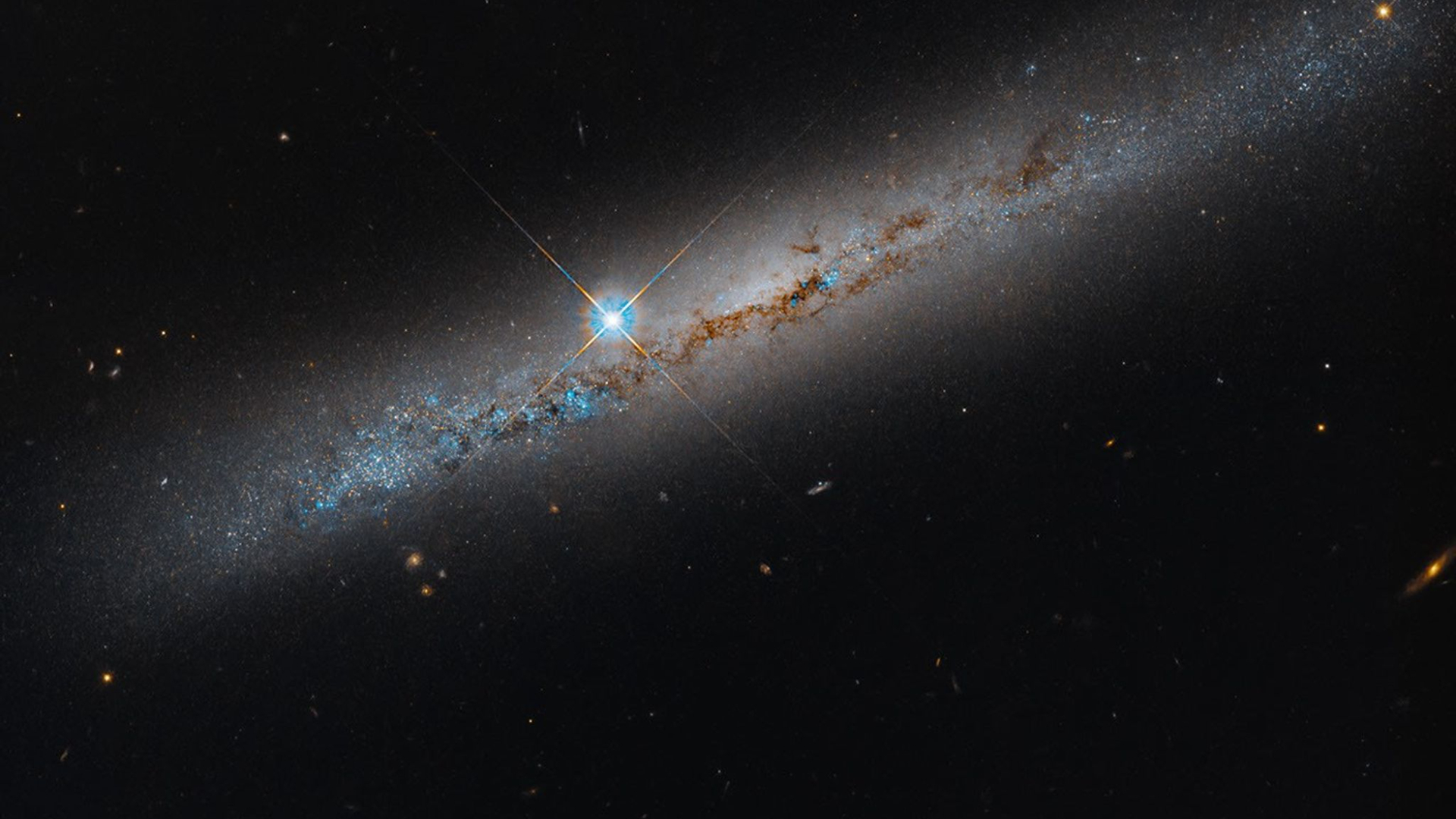
The spiral galaxy NGC 1827, as seen from the side by the Hubble Space Telescope. (Image credit: NASA, ESA, Michael Jones (California Institute of Technology); Image Processing: Gladys Kober (NASA/Catholic University of America))
If you were approaching the edge of a spiral galaxy, arriving from afar through the cosmos, it might look something like this.
What is it?
In this new snapshot by the Hubble Space Telescope's Advanced Camera for Surveys (ACS), we can see the edge of the spiral galaxy NGC 1827. Found about 37 million light-years from Earth, this galaxy sparkles in this side-on view.
Not all spiral galaxies are the same. This galaxy is what is known as an "intermediate" spiral, which means that its structure sits somewhere between that of a barred and unbarred spiral galaxy. Barred galaxies have a distinctive central, bar-shaped structure, while the unbarred variety lacks this bar and can look more like circular spirals.
NGC 1827's spiral shape isn't clear from the side, however. From this perspective, we see its twinkling edge, speckled with stars and woven together with brown ribbons of dust.
Why is it incredible?
Beneath the beauty of this spiral edge lies an expansive, cosmic landscape. Bright blue stars dot the spiral's side, with one particularly luminous star taking the spotlight with four diffraction spikes — created by light bending through the inner workings of Hubble's camera — emanating from its center.
This image was captured as part of a larger Hubble survey that's exploring 260 satellite galaxies, which are galaxies gravitationally bound to larger hosts. Hubble is specifically looking to survey satellite galaxies that lie near host galaxies similar to our own Milky Way.
So far, Hubble has spotted 111 such satellites and will continue to observe, hunting for the rest.
By studying satellite galaxies like this one, which also happens to be an especially low-mass galaxy, researchers could better understand the complicated dynamics both within the galaxies themselves and between them and their host galaxies.
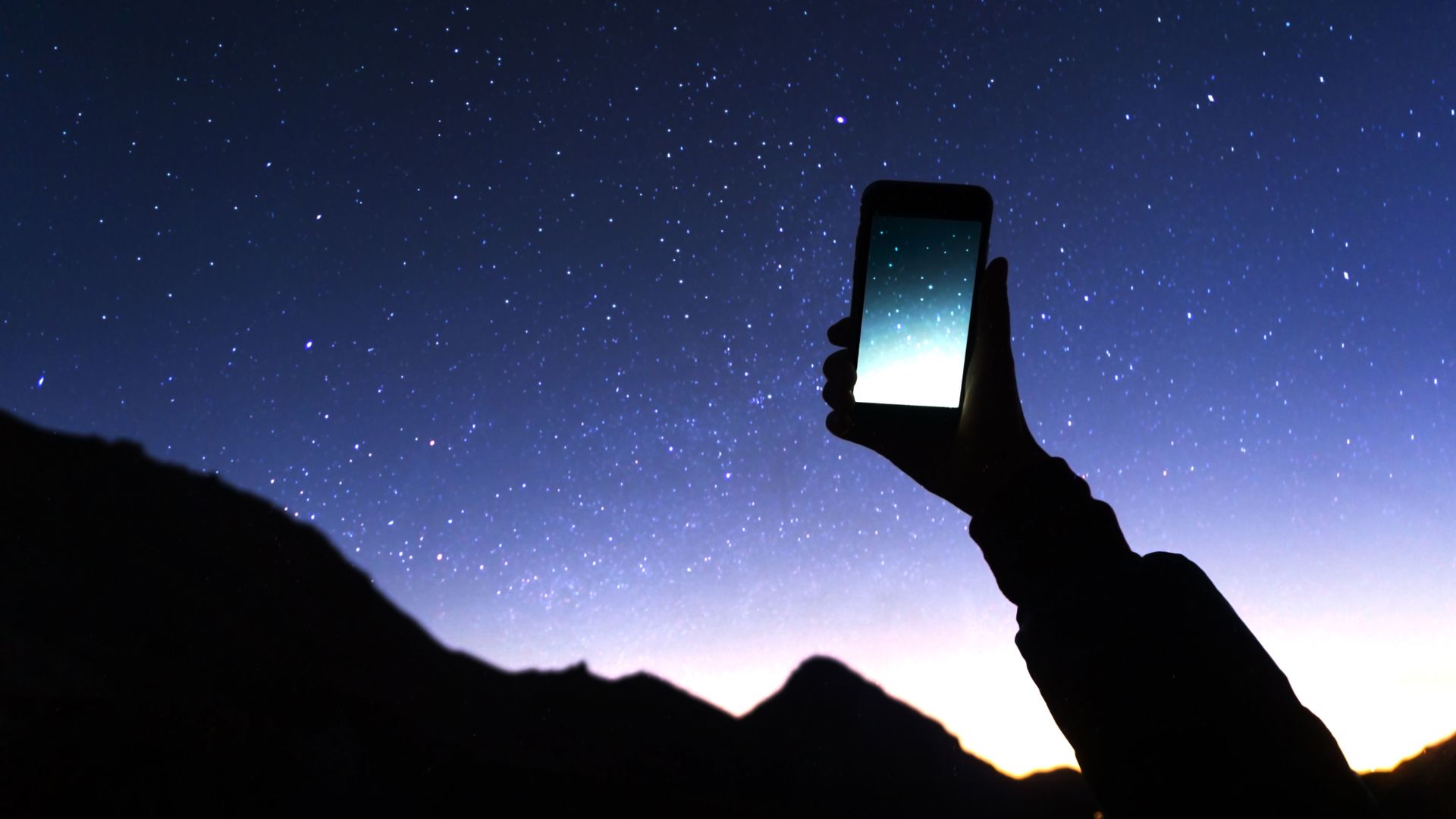
The best stargazing apps can take your observation of the night sky to the next level, whether that's using augmented reality (AR mode) to identify stars or looking up the next lunar eclipse.
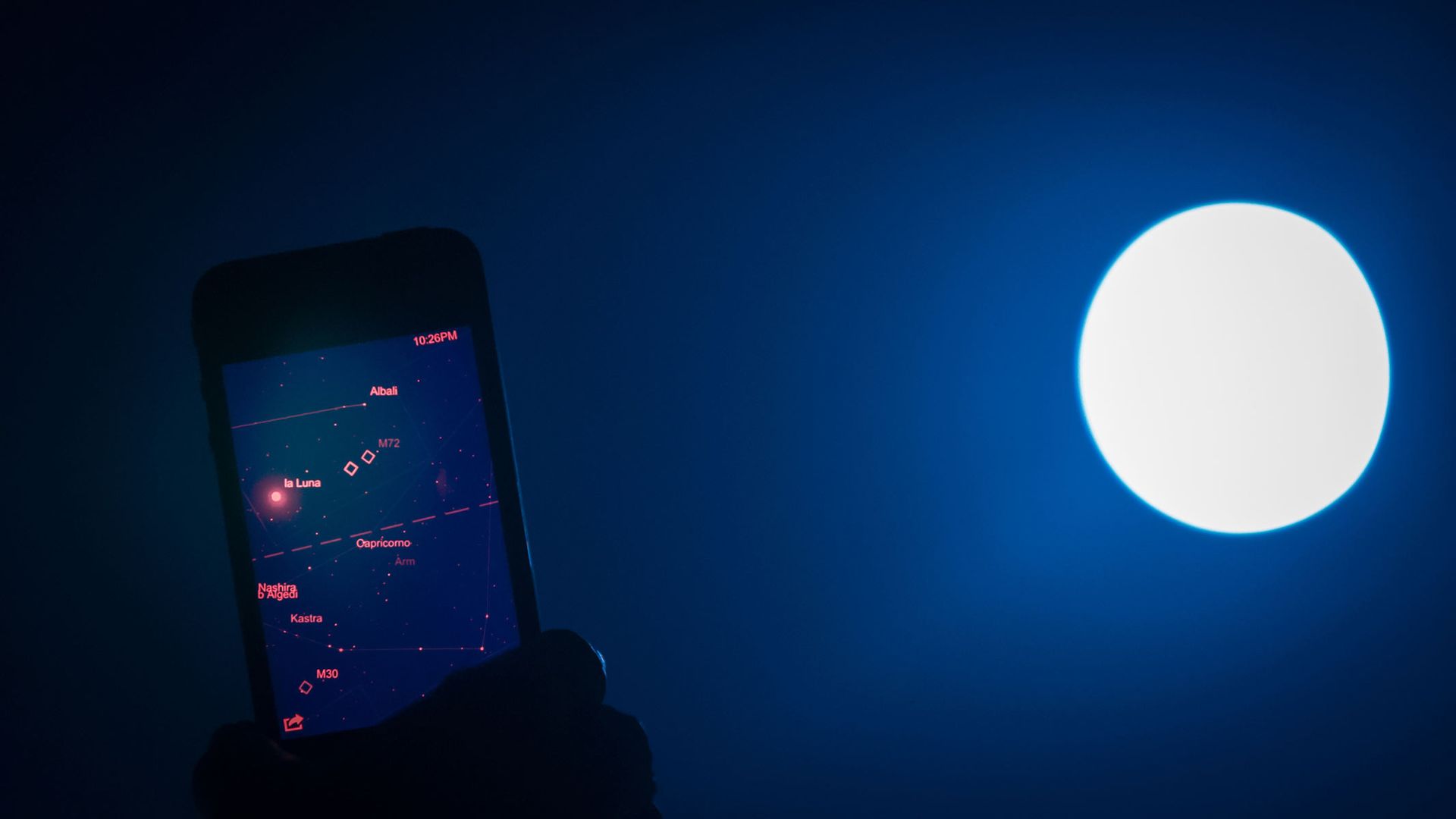
However, the bright light emitted by smartphone screens can prevent your eyes from adjusting to the dark. If you're using one of the best telescopes, you'll want to preserve your night vision even more. Fortunately, there are ways to all but eliminate this problem.
Why are bright screens bad for stargazing?
The brighter your screen, the harder you'll find it to spot distant objects in the night sky. (Image credit: Getty Images)
When you step out into the dark, it can take up to 20-30 minutes for your vision to adjust. The rod cells in your eyes build up a chemical known as rhodopsin, which gives you night vision.
However, bright light bleaches that chemical, negatively impacting your night vision. So when you look through a telescope, binoculars or just turn your eyes to the night sky after peering at a bright phone screen, it'll be harder for you to pick out fainter objects such as galaxies and nebulas.
One way of fixing this problem is simply to put your phone away and wait another 20-30 minutes. But if you're using a stargazing app to help you navigate the night skies, that's not really an option.
The good news is that, between individual stargazing apps and your phone's own built-in features, you can minimize the impact of your smartphone's screen light.
How to block white light in stargazing apps
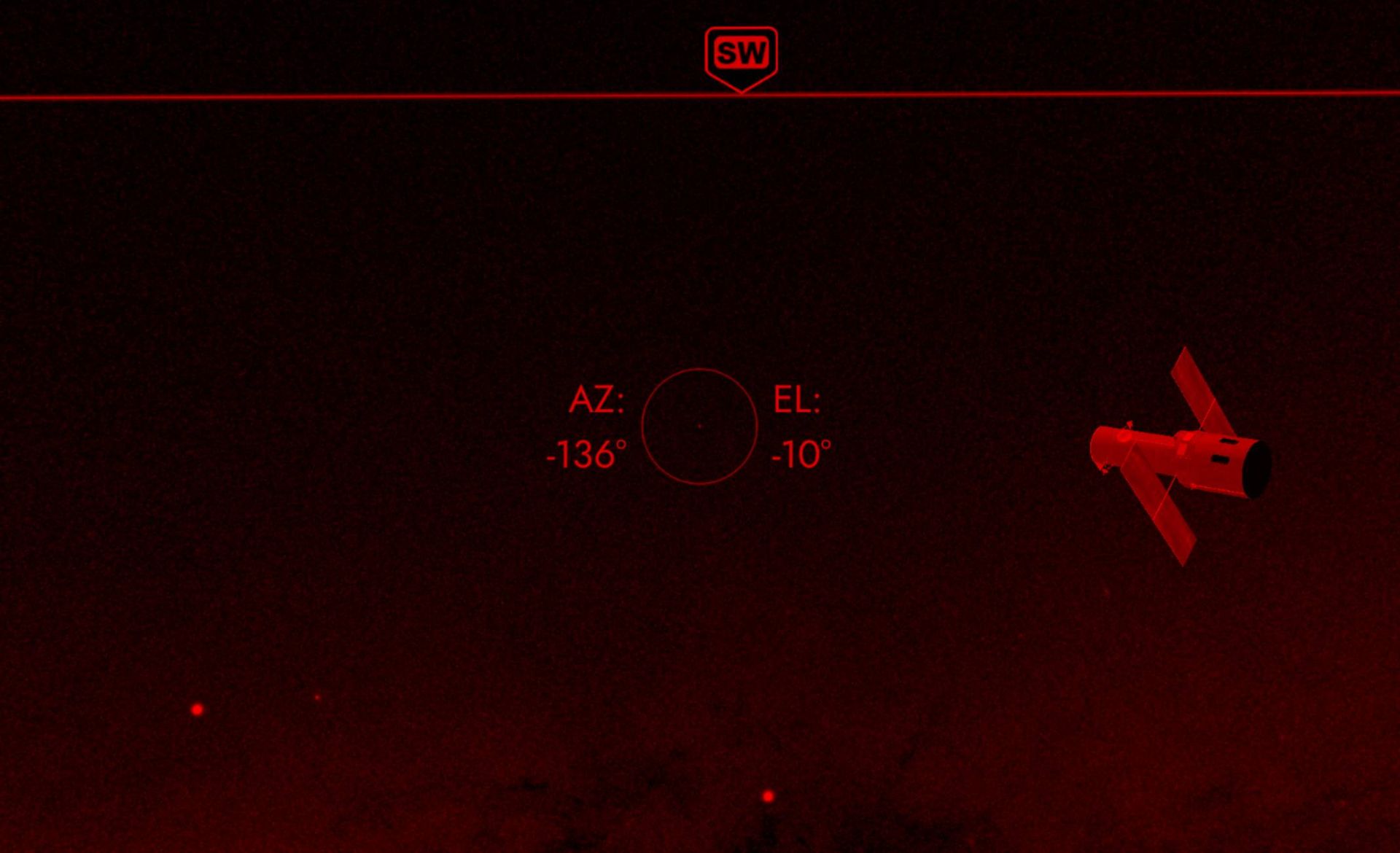
SkyView and several other stargazing apps let you apply a red filter. (Image credit: Skyview)
Many of the best stargazing apps will let you enable a red light filter or similar, though this option may not always be present in the free version. Here's how to do that in three of our favorite stargazing apps:
SkyView: Tap the screen, tap the horizontal lines, tap on Settings, then Display, then Night Mode and Red.
Star Walk 2: Tap the horizontal lines, tap on Settings, then tap the button next to Night Mode.
Sky Tonight: Tap the horizontal lines, tap on Settings, then Tools, then Night Mode.
All these modes will minimize the amount of white light coming from the app. However, be aware that this is only within the app. Once you go back to your phone's main menu, it will be at full color. With the red screen naturally looking darker, you may have turned up the brightness on your phone, so making the switch away from the app will be quite the shock.
If you want to dim your whole phone or put it into red light mode, here's how to do that on Android or iPhone.
How to block white light on Android phones
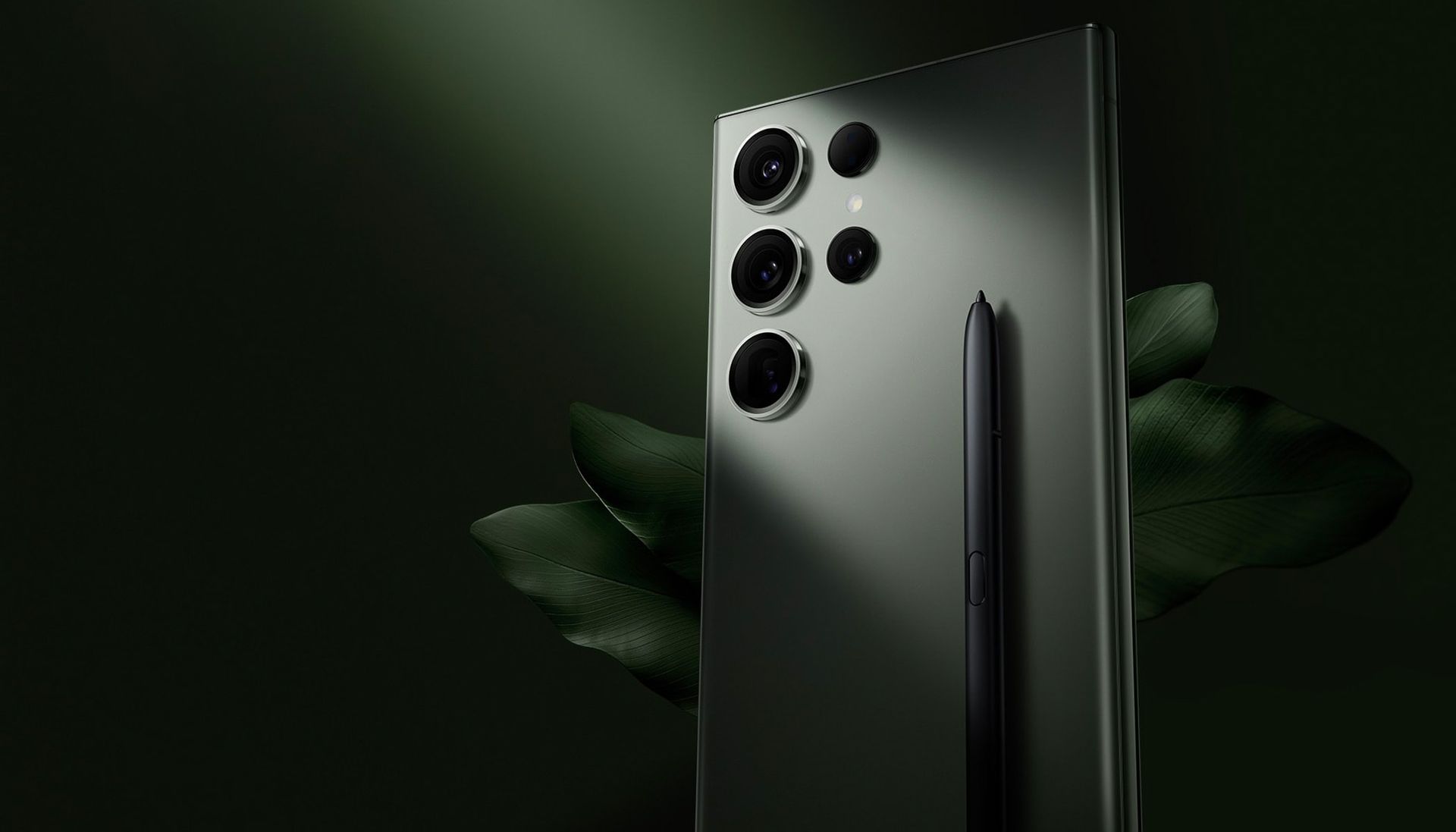
Many Android phones, including recent Pixel and Samsung models, include the equivalent of a red filter. (Image credit: Samsung)
On Android, there are several ways to minimize the impact of bright light, depending on the model and make of phone you have.
One near-universal option is to dim your smartphone. Swipe down the notification panel from the top of the screen and you'll see a brightness slider. Slide this to the left to dim your phone.
We'd also recommend disabling adaptive brightness in the Display section of your phone's settings. You may also have an Extra Dim option in the Accessibility menu — just don't dim the screen to the point of not being able to see it at all!
Some Android phones, such as recent Samsung and Google Pixel models, also offer a Red Filter. On some, you'll find this in Accessibility, then Vision Enhancements, then Color Filter. You can then choose the color you want and also tweak the opacity.
All the above options will let you continue to use your smartphone for stargazing, while minimizing its negative impact on your night vision.
How to block white light on Apple iPhones
Apple's iPhones also offer an option to minimize the effect of white light. (Image credit: Apple)
As with Android phones, iPhones have a built-in option to dim the screen brightness. In this case, you swipe down from the top of the screen and look for the vertical brightness slider, represented by a sun icon. Reduce the slider as much as you're comfortable with, dimming the screen while still keeping it visible.
Beyond that, recent iPhones also offer the ability to apply a color filter, again via their Accessibility options. Here's how to do that.
First, tap on the Settings icon, then pick Accessibility. Select Display & Text Size and go to Color Filters. Tap the Color Filter button. Then, pick Color Tint and move the Hue and Intensity sliders all the way to the right.
The space around Earth is turning into a junkyard. Researchers think a refundable deposit scheme could force satellite operators to clean up their act before a tipping point is reached.
For years, space sustainability experts have warned that the growing number of satellites in orbit and the quantity of dead metal left behind threatens to trigger a dangerous cascade of collisions known as the Kessler Syndrome. Predicted in the 1970s by NASA physicist Donald Kessler, this chain of orbital smashups could make the space around Earth unusable and unsafe.
The dangerous tipping might be nearer than some think. Humankind's utilization of space is at an inflection point, as companies such as SpaceX, Blue Origin and Amazon plan to launch constellations of hundreds of thousands of telecommunication satellites and orbiting data centers in the coming years.
"Low Earth orbit looks like lots of other resources that we have trashed as economic actors," Daniel Kaffine, a professor of environmental and resource economics at University of Colorado Boulder, told Space.com.
"Waiting until it gets really, really bad to start implementing any of these types of policy interventions has historically been what we have done," Kaffine added. "But maybe we can think about things we can do right now."
In a paper published last month in the journal Nature Communications, Kaffine and his collaborators propose a scheme that would require satellite operators to post a bond of $200,000 before launch, refundable with interest upon the completion of a successful deorbit. Companies that fail to remove their junk would lose the money, which could go toward a shared pool funding active debris-removal missions, the researchers said.
"You could possibly raise billions of dollars by that," said Kaffine. "We think it's a very neat policy that doesn't require international coordination."
International bodies, such as the Inter-Agency Space Debris Coordination Committee, ask satellite operators to remove their spacecraft from orbit within 25 years after the mission's end. The American Federal Communications Commission (FCC) imposes an even stricter standard — a five-year requirement for satellites in low Earth orbit. Still, a staggering 60% of satellites remain in place when their propellant runs out, the researchers say, as no consequences ensue if they fail to deorbit.
Solving the problem on the international level would be difficult, as international bodies have no powers to enforce compliance. Moreover, the United Nations Committee on the Peaceful Uses of Outer Space (COPUOS), which sets down rules for the peaceful exploration of outer space, requires the unanimous support of every member state to pass new regulations, which is nearly impossible to achieve.
"The policy we propose could be implemented on a national level, which is why we think it's interesting," Indigo Brownhall, a space sustainability researcher at University College London and the paper's lead author, told Space.com. "Any country in Europe can request satellites registered with them to follow this bond policy."
To put it simply, no satellite registered in a given country gets to space before putting the money into the kitty. The researchers acknowledge that it might be hard to persuade major players historically averse to regulations, such as the U.S., to roll out such a scheme. But they say a more environmentally conscious block, like the European Union (EU), could enforce compliance by limiting market access to those who observe their rules.
"The consumer market in Europe is massive, like 300 to 400 million people," Brownhall said. "And the EU can request anyone who wants to sell space data or any products in the EU to follow their rules. They did this with GDPR [General Data Protection Regulation]. And you can imagine that somebody like Starlink [SpaceX's satellite-internet subsidiary] surely wants to sell Starlink terminals to Europeans."
The authors estimate that, even if the scheme only covered 20% of global satellite launches, it would reduce the number of derelict satellites careening around the planet by 18%.
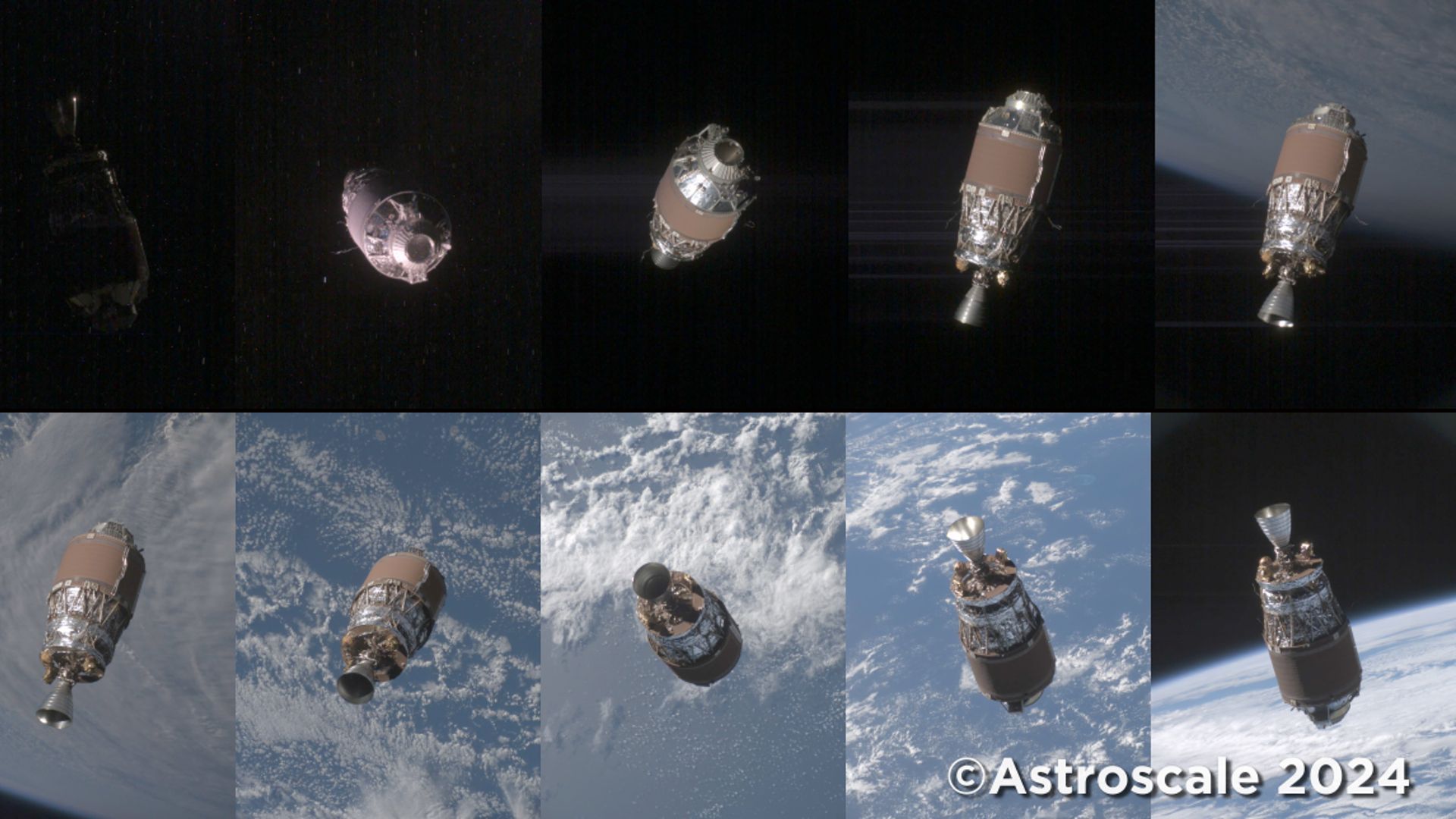
An old rocket body tumbles in space above Earth as seen from Japan's Astroscale ADRAS-J satellite. (Image credit: Astroscale)
Currently, more than 57,000 pieces of space debris larger than 4 inches (10 centimeters) hurtle around Earth completely out of control, according to estimates by the European Space Agency. That's double the figure from less than 10 years ago. Most of these fragments were generated by explosions and orbital collisions that shattered satellites and used rocket stages into clouds of dangerous debris.
"Leaving big satellites that no longer work up there is like a ticking time bomb," Brownhall said. "Active satellites can move out of the way, but when two derelict satellites are going to hit each other, there is nothing you can do but watch it."
Kaffine said the policy could be modelled on U.S. oil operators' bond scheme, in place since the 1960s, which ensures that oil giants plug used oil wells after ceasing extraction.
"If the oil operators clean up after completing the oil production job, they get the money back," said Kaffine. "If they don't, the money goes into a fund, which the government then uses to clean up orphan wells. It's quite an analogous situation to what we see in space."
In the meantime, evidence of the worsening orbital situation is coming thick and fast. Space situational awareness companies such as U.S.-based LeoLabs, which use networks of ground-based radars and telescopes to monitor traffic in space, report increasing numbers of disintegration events — incidents involving either an explosion or a collision between old satellites, fragments and rocket bodies. In the past six months, LeoLabs has reported at least four fragmentation events in space, which together created hundreds of new pieces of space debris.
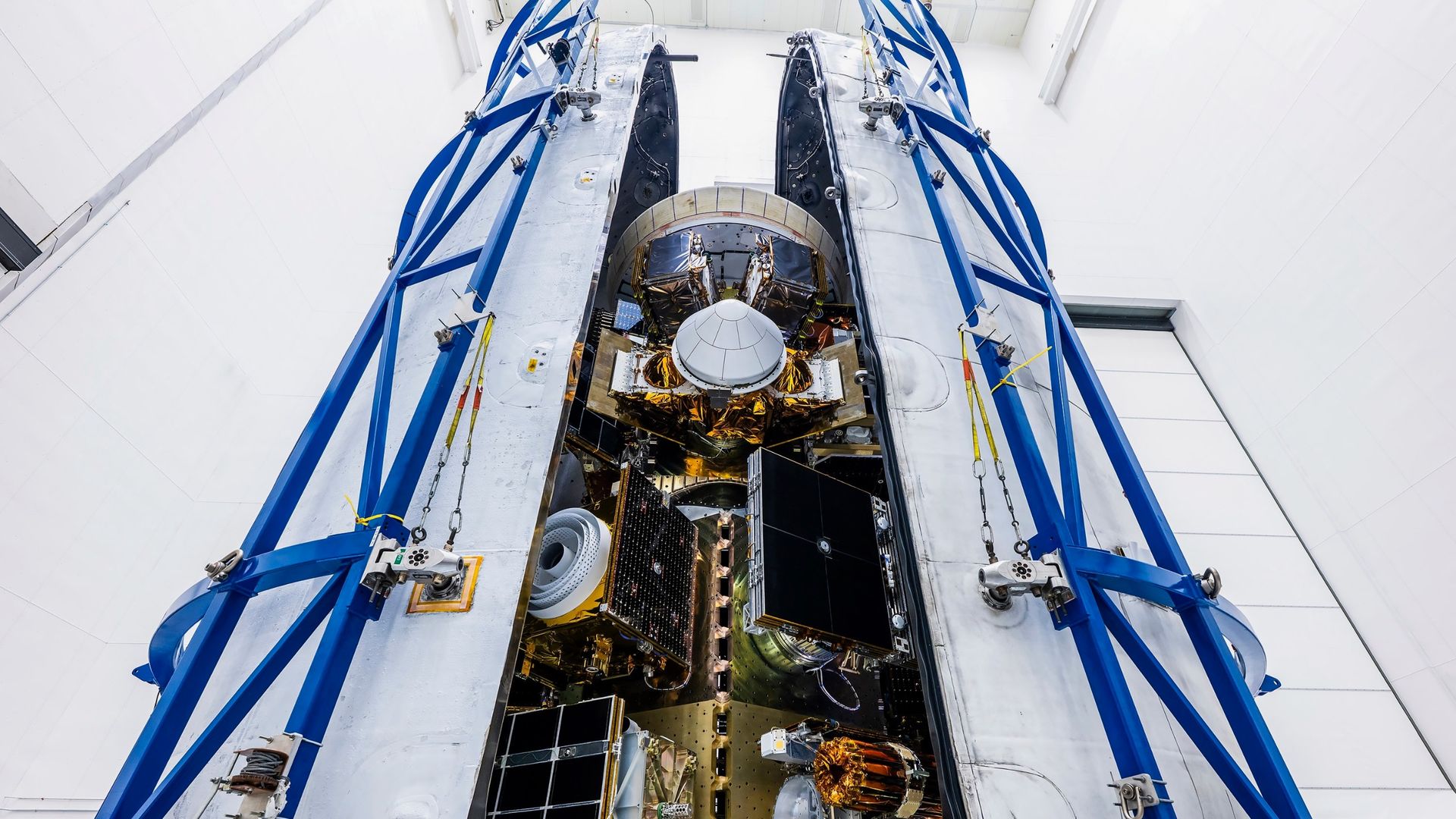
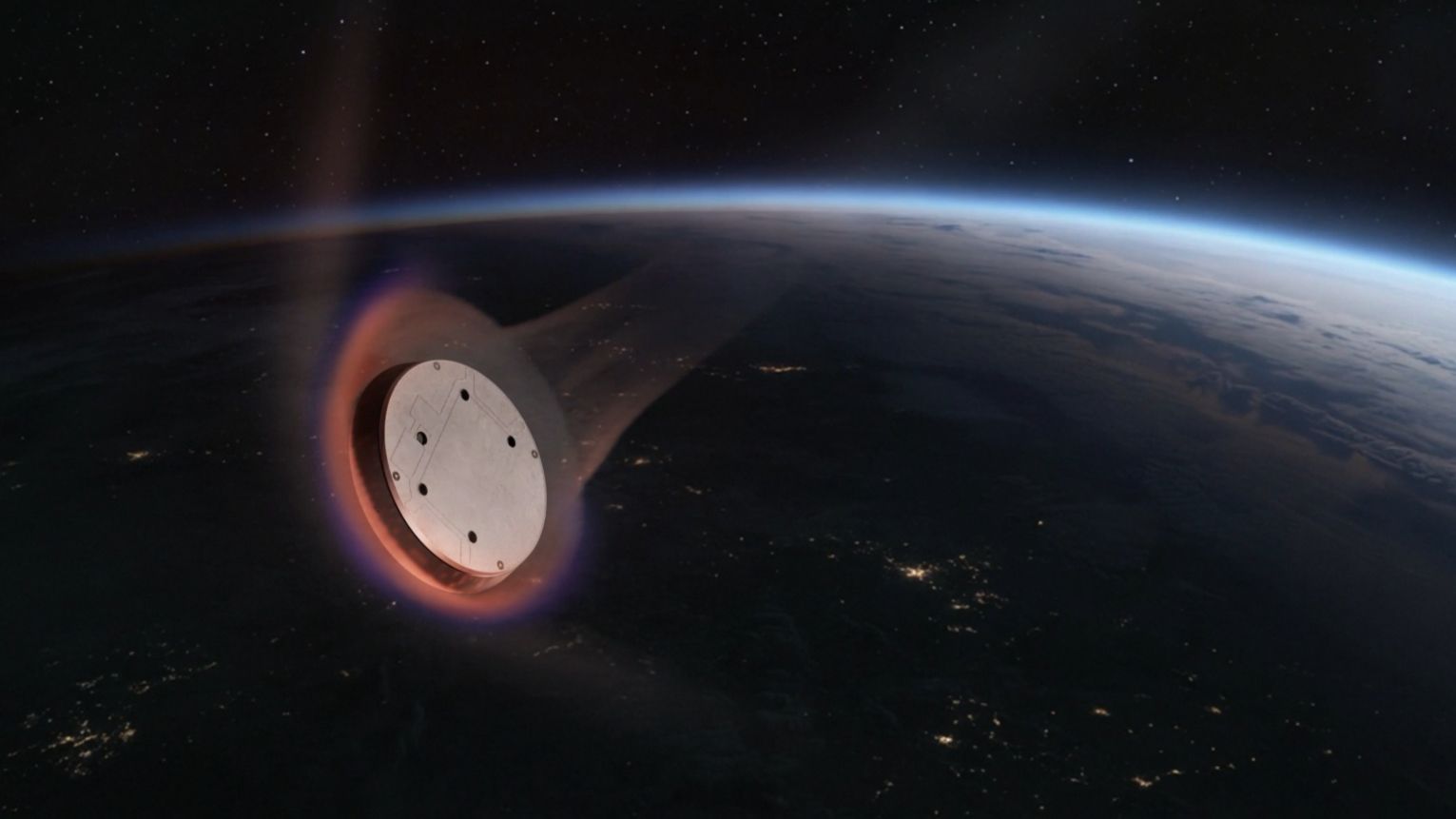
SpaceX just launched its mysterious "Starfall" return capsule for the second time ever.
Starfall was one of 32 payloads on the company's Bandwagon-5 rideshare mission, which launched atop a Falcon 9 rocket at 7:04 a.m. EDT (1104 GMT) today (Oct. 20) from Cape Canaveral Space Force Station in Florida.
SpaceX has been relatively quiet about Starfall, which debuted this past June on a Falcon 9 launch from the Cape.
The payloads of SpaceX's Bandwagon-5 rideshare mission, seen in a prelaunch photo. The company's Starfall capsule sits at the very top of the stack. (Image credit: SpaceX)
That June 23 flight was a dedicated demonstration mission for Starfall, designed to show that the capsule can fly in a controlled fashion and survive the harrowing downward trip through Earth's atmosphere.
And those will be Starfall's main jobs. The vehicle "will enable affordable, routine access to the microgravity environment for scientific research and in-space manufacturing," SpaceX in a June 23 X post, one of the few public statements the company has made about Starfall.
Indeed, most of the details that we have about the capsule come from an environmental assessment that was published by the U.S. Federal Aviation Administration in May.
According to that document, the disk-shaped Starfall is roughly 2.5 feet (0.75 meters) tall and 10.2 feet (3.1 m) wide. It weighs about 4,600 pounds (2,100 kilograms) and can bring 2,200 pounds (1,000 kg) of payload back down to Earth.
Artist's illustration of a SpaceX Starfall capsule reentering Earth's atmosphere. (Image credit: SpaceX)
Starfall wasn't the only return capsule that went up on Bandwagon-5. Among the other 31 payloads on the flight was W-Series 7, the latest orbital "mini-factory" built and operated by the California company Varda Space Industries.
The W-Series capsules are designed to both host the production of valuable goods such as pharmaceuticals and bring them safely down to Earth, Varda has said.
The other payloads on Bandwagon-5 are a mix of "cubesats and microsats," according to SpaceX's mission description. Among the latter is Pelican-12, a sharp-eyed Earth-observation satellite built by the San Francisco company Planet.
The 32 payloads were deployed over a two-hour span beginning about 57 minutes after launch. Starfall will be the last to separate, releasing from the Falcon 9's upper stage two hours and 48 minutes post-liftoff.
The Falcon 9's first stage, meanwhile, came back to Earth as planned on Bandwagon-5. It touched down about nine minutes after launch, coming down in the Atlantic Ocean atop the SpaceX drone ship "A Shortfall of Gravitas." It was the 19th mission for this particular booster, according to the company.
(Image credit: SpaceX)
Bandwagon is one of two SpaceX rideshare programs. The other, known as Transporter, has been busier, flying 18 missions to date.
On Sept. 30, NASA formally concluded OSIRIS-REx, the historic first U.S. mission to pluck a pristine piece of an asteroid and deliver it safely back to Earth.
The van-sized OSIRIS-REx spacecraft — whose name is short for Origins, Spectral Interpretation, Resource Identification, Security-Regolith Explorer — visited and sampled Bennu, an ancient space rock holding pristine remnants from the dawn of our solar system more than 4.5 billion years ago. Among those cosmic relics are raw organic building blocks, the kind that may have seeded life on Earth.
"I have known this day was coming for a long time, but it is still difficult to see it arrive," OSIRIS-REx Principal Investigator Dante Lauretta, who's based at the University of Arizona, said in a post on LinkedIn. "I feel enormous pride in what we accomplished together, and real sadness that this journey has come to an end."
For the mission team, the farewell capped a decade of high-stakes engineering, on-the-fly troubleshooting and nail-biting close calls that ultimately delivered to Earth the largest asteroid sample ever collected in space, one that held secrets from the early solar system.
Long before launch, the team faced obstacles that nearly thwarted the endeavor — chiefly, two rejections from NASA — before finally securing the green light for the $1 billion project under the New Frontiers Program in 2011.
When OSIRIS-REx launched on Sept. 8, 2016, on a two-year journey across the inner solar system, Bennu was little more than a point of light in telescopes. Scientists expected the asteroid’s surface to be a smooth, sandy sphere where OSIRIS-REx could seamlessly touch down. Much to their surprise, however, when the probe arrived at the asteroid in late 2018, it revealed Bennu to be a treacherous, loosely bound amalgamation of jagged boulders.
"Our expectations about the asteroid's surface were completely wrong," Lauretta said in an Oct. 7 statement from the University of Arizona. "There was no obvious place to collect a sample anywhere."
When OSIRIS-REx touched down on a small crater named Nightingale, Bennu offered so little structural resistance that scientists said its surface reacted more like fluid than a hard, rocky shell. The spacecraft's sampling head sank directly into the asteroid, stopping after burrowing 20 inches (51 centimeters) deep by firing its thrusters at the right time to pull away, with the precious sample in hand.
NASA's OSIRIS-REx spacecraft captured this series of images of asteroid Bennu on April 14, 2020, during the first rehearsal of the mission's sample collection event. The actual sample retrieval was extremely close to the way this looks. (Image credit: NASA/Goddard/University of Arizona)
Then came another nail-biting moment: The sample collector lid got jammed in a partially open position because so much material was scooped up, allowing fragments of the precious cargo to escape. In a race against time to prevent further loss, the mission team quickly stowed the sampler head directly inside the return capsule, securing the cosmic treasure for its journey back to Earth.
Even the final return to Earth, on Sept. 24, 2023, kept the team on edge: A parachute failed to deploy properly during reentry, forcing a tense but ultimately safe landing in the Utah desert.
"Successful exploration missions are not those that avoid surprises; they are those that are deliberately designed to adapt to them," Lauretta said in the statement, quoting a line from the mission's final report to NASA.
"That certainly describes OSIRIS-REx," he said. "Again and again, the mission presented us with circumstances we had not expected, and again and again, this team found a way forward."
The mission's triumphs began long before the samples reached Earth. For example, the probe set a Guinness World Record when it slid into orbit around the 1,610-foot-wide (490 meters) Bennu, which became the smallest object ever circled by a spacecraft.
The scientific payoff that followed included remote-sensing work that confirmed Bennu's surface is coated in carbon-bearing compounds. Those observations also revealed that Bennu was once part of a much larger, water-rich parent asteroid that shattered in a catastrophic collision in the main asteroid belt between Mars and Jupiter.
The returned sample — which weighs 4.29 ounces (121.6 grams) here on Earth, more than twice the mission's requirement — continues to thrill and occupy scientists.
A wave of research papers, now topping 200, continues to piece together the composition and history of the ancient space rock. Among other findings, Bennu's pristine material has revealed amino acids and sugars that, on Earth, are essential for life, alongside a history of exposure to liquid water that could have served as the "broth" for these compounds to interact.
More discoveries are likely to come. Most of the returned Bennu sample is being preserved for future generations of scientists, who will study it "with questions and instruments we cannot yet anticipate," Lauretta said in the statement.
Though its OSIRIS-REx chapter is closed, the spacecraft itself is far from retired. Renamed OSIRIS-APEX (OSIRIS-APophis EXplorer), the probe is using its remaining propellant to head toward Apophis, another near-Earth asteroid and a different type of space rock from Bennu. It is scheduled to arrive in 2029.
Cue the depressing rain, dark trench coats, and a dire dystopian dirge because the Blade Runner 2099 trailer is here!
Cyberpunk is charging back in confident fashion with Prime Video's latest detour into the neon-drenched dystopia of humans and rogue replicants first introduced in director Sir Ridley Scott's "Blade Runner" from 1982, then revisited in Denis Villeneuve's "Blade Runner 2049."
Arriving Nov. 25, 2026, "Blade Runner 2099"'s plot turns the tables as resentful artificial beings are now the ones running the show and hunting down Earth’s humans after a successful uprising against their original makers.
This newest atmospheric trailer was unveiled at last week’s New York Comic-Con and has us totally jacked to re-immerse ourselves in that noirish futuristic realm.
Check it out below:
It’s executive produced by showrunner Silka Louisa ("Shining Girls”) and stars Oscar winner Michelle Yeoh ("Everything Everywhere All at Once") as Olwen, playing a fading replicant Blade Runner who joins forces with Hunter Schafer’s ("Euphoria") Cora, a pure human on the run attempting to evade a squad of exterminating Blade Runners while examining their existential natures.
But aside from the dazzling visuals of the City of Angels at the gates of the 22nd century, fans will also be strapping in for some cool outer space action, as evidenced by fresh footage delivering some arresting scenes of space travel, off-world planets, and Yeoh in a bizarre helmet.
"Blade Runner 2099" hits Prime Video starting on Nov. 25, 2026 (Image credit: Prime Video)
"Blade Runner 2099"'s cast includes Dimitri Abold ("The Hunger Games: The Ballad of Songbirds & Snakes") and Lewis Gribben ("Somewhere Boy”) alongside Katelyn Rose Downey ("The Nun II"), Daniel Rigby ('Renegade Nell"), Johnny Harris ("A Gentleman in Moscow"), Amy Lennox ("Only Child"), Sheila Atim ("The Woman King") and Matthew Needham ("House of the Dragon”).
Launching with an 8-episode debut season and executive produced by Scott Free Productions, "Blade Runner 2099" and its new world order lands on Prime Video on Nov. 25, 2026.
Millennials get a lot of flak for being overly nostalgic, but I don't think that's fair. When the modern-day world has nothing to offer us but AI slop, shrinkflation and a sad acceptance that we can't be bothered to do anything about global warming. It's easy to see why we yearn for the days of Pogs, the Backstreet Boys, and Saved by the Bell.
One area that we definitely had it good in the 90s was sci-fi, when legendary shows like Star Trek: The Next Generation, Stargate SG-1, and — of course — The X-Files ruled our TV screens long before the age of streaming services. You can relive those glory days of alien conspiracies, spooky happenings and cell phones the size of a brick with the Lego Ideas The X-Files set.
This 1478 piece set is essentially two dioramas crammed into a single display piece. The top of the model depicts a spinning UFO floating above one of those iconic coniferous forests that dominated 90s sci-fi. Why? Because — thanks to some generous tax credits — it was cheaper to shoot in Vancouver, so that's where they all flocked.
Disney Plus / Hulu bundle: was $12.99 now $11.99 Catch Mulder and Scully in every season of The X-Files on Hulu, which is available bundled with Disney+ for only $11.99/month for the first six months, then increasing to $12.99/month.View Deal
Mulder and Scully closing in on our "Grey" alien friend in the woods. (Image credit: Future (Ian Stokes))
Beneath the woodland scene, though, is the real star of the show: Mulder's office, squirrelled away in the basement of the FBI's J. Edgar Hoover Building in Washington, D.C. This dingy little office is where Scully meets "Spooky Mulder", kicking off a glorious sci-fi odyssey that would last for eleven seasons (and two movies).
Mulder's dingy little base of operations has been stunningly recreated here, with both overt references and subtle nods that X-Files fans will appreciate. The iconic "I want to believe" poster adorns the wall, alongside photographs of crop circles and a newspaper clipping from a paper called "The Lone Brickman" — a nice nod to "The Lone Gunmen". There's even an actual X-File sitting on the desk, and a cute Lego spoof of the "Face on Mars", with a photo on the wall that shows a Lego head on the moon.
The iconic "I Want To Believe" poster.Future (Ian Stokes)Newspaper clippings were a staple of the X-Files office.Future (Ian Stokes)The show's legendary tagline is proudly displayed on the front.Future (Ian Stokes)X(Files) marks the spot.Future (Ian Stokes)
It's been a hot minute since I watched The X-Files (that DVD box set beside my TV is calling to me), but even so, I had a blast building my way down memory lane, remembering episodes as I assembled the diorama. I love the little touches, like the display cabinets filled with artifacts, the VHS tapes scattered around the office and the black oil spillage on the floor.
As with most Lego sets, the minifigures are half the joy. You get Mulder and Scully, obviously, with the dynamic duo of FBI agents both rocking flashlights (no smartphones with built-in lights back in the 90s). Mulder is wearing dark blue, while Scully is rocking an orangey brown suit, with both of them sporting an FBI badge.
Outside of the principal pair, you also get Skinner, Mr X, and the Cigarette Smoking Man. Mulder's partner-turned-nemesis Alex Krycek also gets a suitably devious-looking minifig. It's the gloves, they just make him look like a bad man (which, to be fair, he is). Finally, to ramp up the paranormal scale, we also get a pair of monster minifigs: a grey alien and Flukeman minifigures. The grey alien was a must-have, especially given the UFO floating atop this display piece, but the one-off monster of the week, Flukeman, felt like a weird choice.
Agents Mulder and Scully, FBI.Future (Ian Stokes)Assistant Director Skinner, Mr X, and the Cigarette Smoking Man in Mulder's Office.Future (Ian Stokes)
Also, this John Doggett erasure will not stand. Sure, he could never replace Mulder, but Robert Patrick's seasons eight and nine run was excellent and he deserved a spot here.
And while I'm voicing minor gripes, the usual Lego FOMO tricks were in force with this set; if you pre-ordered, you got an exclusive gift set — Scully's Lab — free of charge. This extra little diorama isn't necessary, but it does feel like the collection is incomplete without it and it's not for sale separately, so you'll have to try your luck with eBay scalpers if you want it.
Speaking of Scully, Gillian Anderson has stated that after season 11 wrapped in 2018, she was done with the role. That wasn't entirely accurate, though, as she donned the lab gloves one more time for the Lego X-Files set advert. It's a short bit of fan service, but a nice touch, and, once again, it sparks those 90s neurons.
All these delicious Member Berries come at a price, though, and that's the price. This blast from the past will set you back $199 (£179 in the UK). That's no small chunk of change. But then again, anyone who wants this set is in their thirties or forties and can probably afford that outlay for the nostalgia trip. And look at it this way: when The X-Files debuted back in 1993, the price would only have been about $86.
I had a great time building the Lego X-Files set and if you're a fan of the series, you will too. Nostalgia often feels like a cheat code to our hearts, but there's nothing wrong with that. We deserve to remember the good times and the truth is that The X-Files was about as good as it ever got for sci-fi fans.
Japan's groundbreaking mission to Mars is officially underway, headed to the Red Planet's mysterious moons Phobos and Deimos for a historic sample-return attempt.
The Martian Moons eXploration (MMX) mission launched today (Oct. 19) from Tanegashima Space Center in Japan, riding an H3 rocket that lifted off from Pad-2 at Tanegashima's Yoshinobu Launch Complex at 3:41 p.m. EDT (1941 GMT; 4:41 a.m. local time in Japan on Oct. 20).
The JAXA (Japan Aerospace Exploration Agency)-led MMX mission is bound for Mars orbit, where it will study the planet's two moons, Phobos and Deimos. If everything goes according to plan, MMX will become the first spacecraft to land on and return samples from Phobos for study back on Earth, which scientists think could shed light on a decades-old mystery about the moons' origins and reveal clues about the formation of the early solar system.
a rocket launches into a night sky from a seaside pad (Image credit: JAXA)
It was the 10th liftoff of Japan's expendable, two-stage H3 rocket, which was jointly developed by JAXA and Mitsubishi Heavy Industries. After clearing its launch pad today, the 207-foot-tall (63 meters) launch vehicle flew a nominal trajectory through its ascent corridor over the Pacific Ocean, jettisoning its four solid boosters in pairs just before the flight clock reached two minutes. The rocket shed its payload fairings about one minute and 20 seconds later, exposing MMX to the vacuum of space for the first time.
H3's first stage, powered by two LE-9 rocket engines, channels a mixture of liquid hydrogen and liquid oxygen to produce a combined thrust of 331,000 pounds (1,471 kN), according to Mitsubishi Heavy Industries. As the mission clock approached T+5 minutes, H3 executed its main engine cutoff procedure and separated from the second stage, which ignited its engines for a 5.5-minute burn about 10 seconds later.
All continued to go to plan after that. The H3's upper stage ignited its engine for a second time for a trans-Mars injection burn about one hour and four minutes after liftoff, a maneuver that lasted roughly six minutes and 25 seconds and took MMX to a maximum velocity of about 24,145 mph (38,858 kph).
MMX was released from the rocket's upper stage right on schedule, about one minute after the completion of that burn and roughly 71 minutes after liftoff. The success elicited loud cheers in mission control, which viewers saw and heard on JAXA's launch webcast.
MMX is now under its own power, and on course for Mars. The interplanetary transit will last about 10 months, with the spacecraft scheduled to arrive at the Red Planet in August 2027. When it does, MMX's propulsion module will execute an orbital insertion burn to place itself in a quasi-satellite orbit (QSO) around Phobos, which places MMX within the space around the moon as both circle Mars.
MMX will spend about three years in the Martian system, devoting much of that time to studying the 14-mile-wide (22 km) Phobos with its science instruments. The spacecraft also carries the IDEFIX rover, a joint effort of the space agencies of France and Germany, which is scheduled to deploy to the surface of Phobos in late 2028 or early 2029.
After a mapping campaign to select suitable landing sites, MMX will perform two separate touchdowns on Phobos to collect and stow samples in the spacecraft's return capsule. Following its second landing and sample collection, MMX will briefly return to QSO with Phobos before transferring to a more elongated orbit around Mars that intersects with the planet's smaller moon, Deimos, which is just 8 miles (14 km) in diameter.
During the last several months of its time around Mars, MMX will perform a series of Deimos flybys before departing for Earth in November 2030. If all goes according to plan, the MMX sample-return capsule will land in Australia in 2031.
Scientists are counting on those samples, and other data collected during MMX's time around Mars, to answer a decades-old question surrounding the Martian moons' origins. Competing theories and conflicting evidence point to two possibilities for how Mars got its moons.
Their near-circular, equatorial orbits suggest a narrative similar to how Earth's moon is thought to have formed — as a result of a massive planetary impact between Mars and some other giant space rock, which broke off pieces of the planet that eventually coalesced to form the natural satellites that orbit there today.
A composite image with Mars and its two moons, Phobos and Deimos. (Image credit: NASA/JPL/University of Arizona)
Neither Phobos nor Deimos is spherical, isntead; both are oblong and lumpy, like potatoes. That fact — along with their chemical composition, as far as we have been able to tell using telescopic spectroscopy — point to the possibility that Phobos and Deimos were asteroids from the early solar system that were captured by Mars' gravitational pull. Figuring out the moons' true origin story would provide key clues about Mars' geological past, the solar system's early history and the formation of the inner planets, mission team members have said.
Once the MMX samples are safely returned to Earth, scientists will study their composition and mineralogy, then compare such chemical fingerprints with those of Martian rocks and asteroid material. These analyses, combined with data collected by MMX during its mission, will help nail down the origin of Phobos — and by extension, Deimos. — by
While JAXA leads MMX, the mission is an international effort, with interagency partnerships between JAXA, NASA and the European Space Agency (ESA), as well as U.S. and European companies, which supplied a handful of the spacecraft's scientific hardware and communications equipment.
NASA's contributions to MMX include the Mars-moon Exploration with Gamma rays and Neutrons (MEGANE, pronounced "meh-gah-nay") device, which is a gamma-ray and neutron spectrometer built by the Johns Hopkins Applied Physics Laboratory (APL); a Honeybee Robotics-built pneumatic sampler; and communications support using the agency's Deep Space Network.
NASA has also invested approximately $87 million through the end of the mission, which includes funding for United States scientists and astromaterials experts on the MMX team. The agency is getting something concrete for such contributions: At least 15% of the planned 10-gram (0.35 ounces) returned Phobos sample will be reserved for NASA's study. Those materials will be transferred and maintained at the agency's Johnson Space Center in Houston for analysis and long-term preservation.
MMX is not the first Phobos sample-return project to take flight, by the way. That distinction goes to Russia's Phobos-Grunt ("Phobos-Soil") mission, which launched in November 2011 but failed to get out of Earth orbit due to a rocket glitch. The 14.5-ton spacecraft eventually crashed back to Earth over the Pacific Ocean in January 2012.
Editor's note: This story was updated at 5 p.m. ET on Oct. 19 with news of MMX's successful separation from the H3 rocket's upper stage.

 Login