Don't miss the Orionid meteor shower peak tonight (Oct. 21-22) as tiny shards of Halley's Comet collide with Earth's atmosphere to carve fiery streaks through the Autumn sky! But will the light cast by the waxing gibbous moon spoil the show?
The Orionid meteor shower activity peaks when Earth travels through the densest section of the debris trail left by Comet 1P/Halley. The comet is currently racing back towards the sun ahead of its next visit to the inner solar system in 2061.
Under perfect dark sky conditions 10 to 20 shooting stars could brighten the night sky each hour as the peak unfolds, according to NASA. However, the light cast by the waxing moon — just four days from being full — will likely reduce the number of visible meteors by hiding fainter Orionids from sight.
Orionid shooting stars will appear to travel away from a point of origin, close to the red star Betelgeuse in the constellation Orion, rising above the eastern horizon an hour before midnight for viewers in the U.S.
When and where to see Orionid shooting stars this October
Your best chance at spotting the fast-moving meteors will come in the hours before dawn on Oct. 22, after the moon has set and the radiant approaches its highest point in the night sky. It's best not to stare directly at the radiant, where the glowing meteor trails will be relatively short compared to those left by shooting stars that appear 45-90 degrees away from the bright star Betelgeuse, thanks to an effect known as foreshortening.
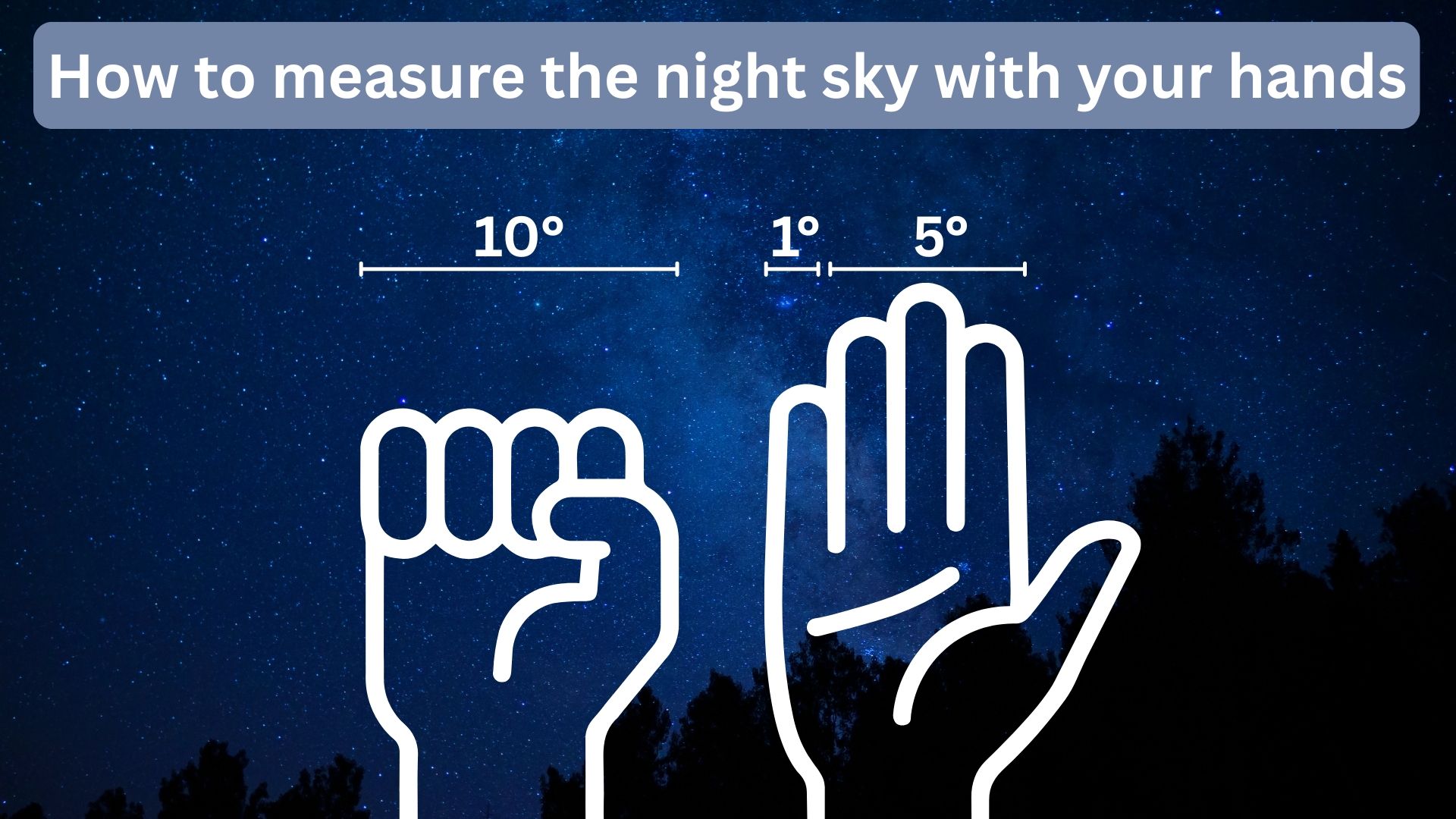
How to measure distances in the night sky using nothing but your hand. (Image credit: Created in Canva Pro)
Try to travel away from city lights and allow 20-30 minutes for your eyes to adapt to the dark. Always make sure someone knows where you're going if you head somewhere remote to catch the shower and be sure to take a red light to ensure that you can find your way while also preserving your night vision!
Editor's Note: If you would like to share your Orionid shooting star photos with Space.com's readers, then please send your image(s), along with your name, location and comments to spacephotos@space.com.
The Orionid meteor shower peaks overnight on Oct. 21-22, triggering a spectacular display of shooting stars as Earth plunges through the densest part of the debris trail shed by Halley's Comet. Here's what you need to know.
When is the best time to see Orionid shooting stars?
Orionid meteors are best spotted between the hours of midnight and dawn on Oct. 22, when 10-20 shooting stars may be seen brightening the night sky each hour under ideal dark-sky.
The glare cast by the 74%-lit waxing gibbous moon will hide fainter shooting stars for much of the night. Thankfully, the lunar disk will set a few hours after midnight, leaving a window of beautifully dark sky before dawn in which to enjoy the full majesty of the annual meteor shower. Remember to use a trusted website like Time and Date to discover the exact moment of moonset for your location.
Where should I look to see Orionid meteors?
Orionid shooting stars will appear to originate from a patch of sky, or radiant, located close to the red giant star Betelgeuse in the constellation Orion, which glistens above the southeastern horizon for stargazers in the U.S. during the early hours of Oct. 22.
For the best views look 40-90 degrees away from the radiant, where the glowing trains left in the wake of the fast-moving meteors will be at their longest. Be sure to head away from artificial lights and allow 20-30 minutes for your eyes to fully adapt to the dark for the best
Shooting stars become visible when particles of the ancient comet collide with our planet's atmosphere at 147,600 miles per hour (237,539 kilometers per hour), vaporizing in a spectacular display of natural fireworks.
Editor's Note: If you would like to share your Orionid photos with Space.com's readers, then please send your photo(s), comments, and your name and location to spacephotos@space.com.
If you love watching meteors, 2026 has given you plenty to enjoy. This summer, the annual Perseid meteor shower peaked on the day of a new moon — and a solar eclipse — so moonlight stayed out of the way. And there's more to look forward to: in December, the Geminids, the year's most prolific shower, will peak after a waxing crescent moon sets early in the evening, opening the door to excellent viewing.
Right between those two headline showers, the dependable Orionids take their turn, reaching peak activity around Oct. 21-22.
So, when and where can you catch the show?
When and where to watch
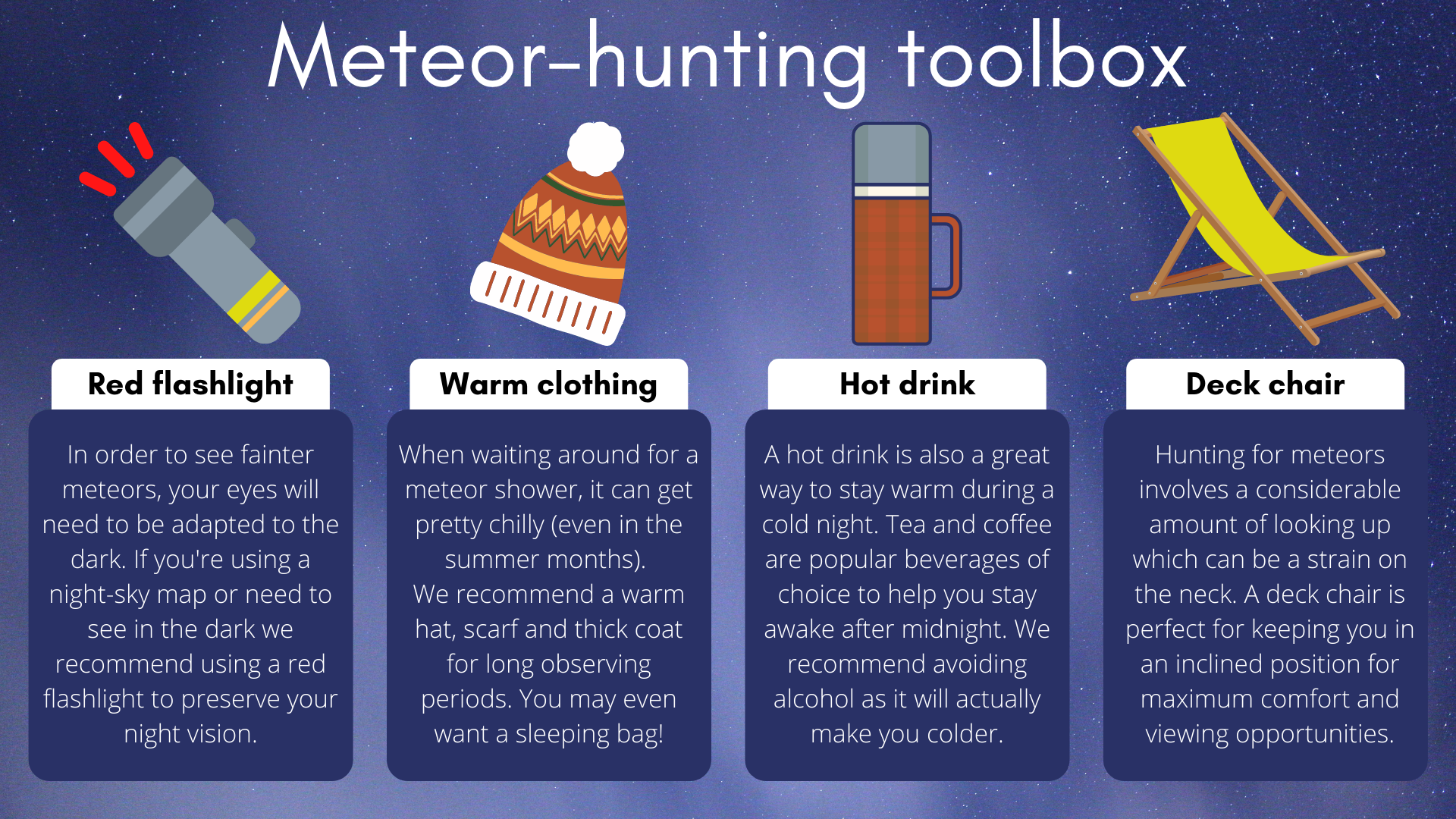
Make sure you wrap up warm for a night of Orionid hunting. (Image credit: Created in Canva by Daisy Dobrijevic)
The Orionids take their name from the spot where they seem to fan out: Orion's raised club, just above and to the left of the reddish star Betelgeuse. Orion is usually a winter favorite, so in early autumn the mighty hunter doesn't fully clear the eastern horizon until after 11 p.m. local daylight time. Don't rush outside just yet though. Wait until around 2 a.m., when Orion is well above the horizon. By about 5 a.m., just before dawn, Orion reaches its highest point in the southern sky — and the view should be at its best.
Orionid meteors tend to be faint, so city lights can easily wash them out. If you can, head to a safe, dark rural spot. Get comfortable in a reclining lawn chair or sleeping bag, give your eyes time to adjust, and enjoy the view overhead and toward the southern sky.
Why the moon won't spoil the show
And what about the moon? A full moon arrives October 25-26, but there's still a welcome stretch of dark sky for several mornings before Wednesday.
By Oct. 21-22, the waxing gibbous moon will be resting among the dim stars of Capricornus, reaching its highest point around 8:45 p.m. local daylight time. Here's the good news: it will set shortly after 2 a.m., leaving roughly 3½ hours of dark sky before dawn. In that window, one observer may spot as many as 15 to 20 Orionids per hour. Because those hours line up with the shower's peak, the moon shouldn't steal the show this year.
Meteoroids are tiny leftovers from a comet's nucleus. As a comet nears the sun, frozen material on its surface turns directly into gas, a process known as sublimation. The comet becomes a kind of cosmic litterbug, sprinkling dust and debris along its orbit. Those pieces are tiny and brittle, with the consistency of cigar ash, and every swing past the sun leaves more behind.
Comets are among the solar system's oldest and most fascinating objects. They formed alongside the sun and planets about 4.6 billion years ago, yet they have changed remarkably little. Think of them as time capsules from the solar system's childhood. Far beyond the outer planets, they spend most of their time in a deep freeze, where temperatures hover just above absolute zero, -459.67°F (-273.15°C). In that extreme cold, chemical reactions largely stop, helping comets preserve material from those earliest days.
Over the past 100,000 years, Halley's Comet has probably circled the sun well over a thousand times, leaving a fresh trail of debris on every visit. Each October and May, Earth brushes close to Halley's orbit. Some of that dust meets our atmosphere at a breathtaking 41 miles (66 km) per second, lighting up as the streaks we call "shooting stars."
The Orionids have another lovely feature: about half of these meteors leave glowing trails that linger longer than those of equally bright meteors. Halley's composition may be the reason. The particles begin burning up about 80 miles (130 km) above Earth, perhaps because they're made of lightweight material from the comet's diffuse surface rather than its core.
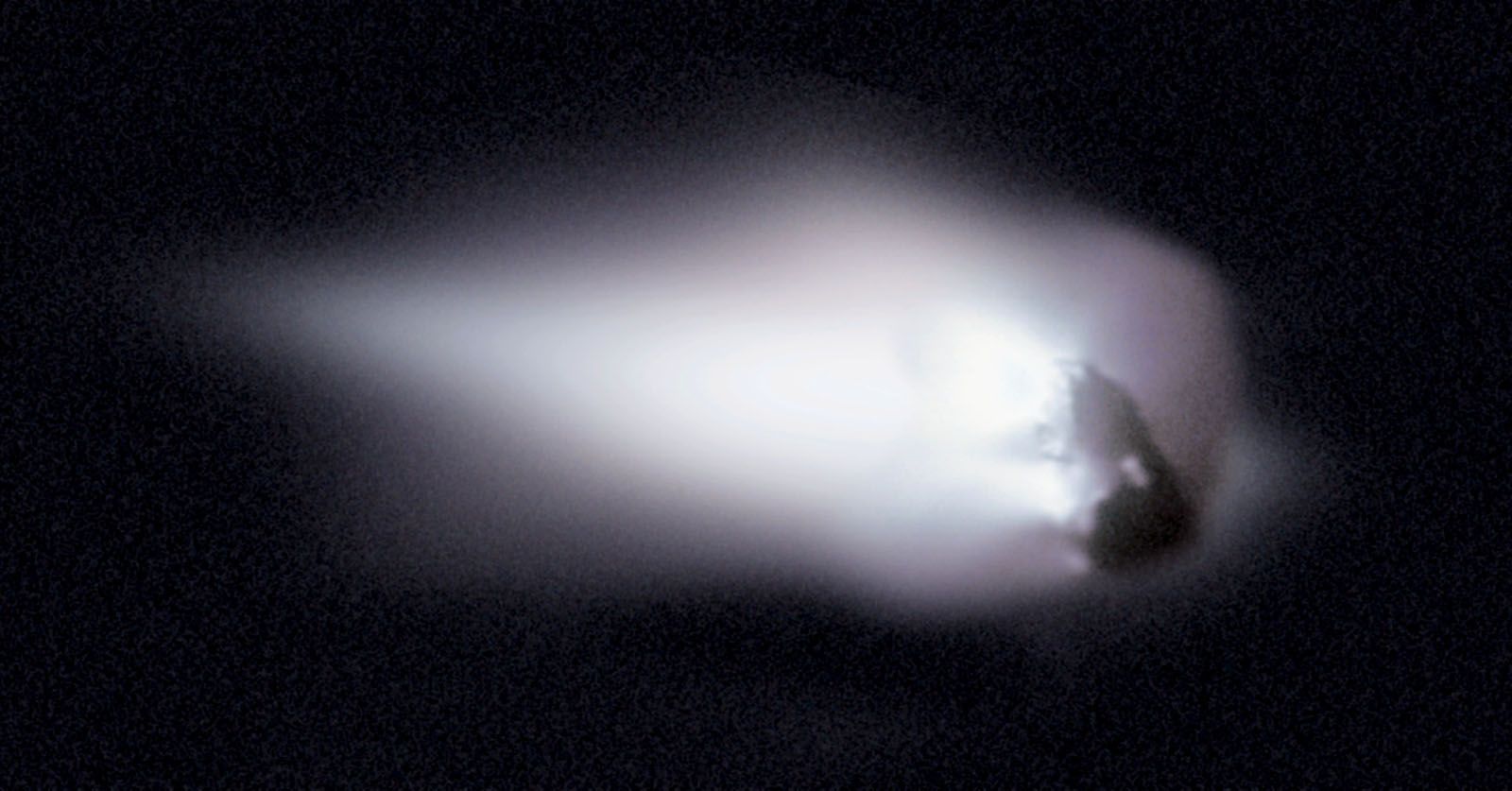
Close-up view of Halley's Comet captured by the Giotto spacecraft in 1986. (Image credit: ESA. Courtesy of MPAe, Lindau)
Looking backward . . . and forward
Perhaps you remember seeing Halley's Comet when it last swept through the inner solar system in late winter and early spring of 1986. With an orbital period of 75.4 years, this celebrated visitor is due back in late July or early August 2061.
For a little perspective, average life expectancy is 79.5 years in the United States, 82.2 years in the United Kingdom, and 83.4 years in Canada. So, if you were born after 1980, there's a fair chance you'll be here to welcome the "mother of all Orionids" home in 2061.
As for me, I saw Halley in 1986 at the "advanced age" of 30. The odds of another reunion are pretty long — you can do the math.
Until then, I'll be more than happy to step outside early on Wednesday morning and greet a few of "Halley's children." I hope you'll join me.

 Login