❌

Reading view

Entanglement Survives Violence of CERN’s Large Hadron Collider

In 2012, physicists from the ATLAS and CMS experiments at CERN announced the discovery of a new boson looking very much like the Higgs boson. Image credit: Daniel Dominguez / CERN.

Physicists from the ATLAS Collaboration at CERN’s Large Hadron Collider have confirmed that quantum entanglement -- the phenomenon Albert Einstein called ‘spooky action at a distance’ -- can survive in some of the most extreme conditions ever produced in a laboratory.

The post Entanglement Survives Violence of CERN’s Large Hadron Collider appeared first on Sci.News: Breaking Science News.

  •  

New Study Explains Why Venus Has No Moon

NASA’s Mariner 10 spacecraft captured this view of Venus in February 1974. Image credit: NASA / JPL-Caltech.

Dr. Stephen Kane from the University of California, Riverside and colleagues offer a tidy explanation for one of the Solar System’s enduring puzzles: why Venus, so similar to Earth in size and mass, has no moon at all.

The post New Study Explains Why Venus Has No Moon appeared first on Sci.News: Breaking Science News.

  •  

Spanish Amber Deposit Offers Rare Window into Cretaceous Life

Life reconstruction of Hallucinochrysa diogenesi. Image credit: J.A. Peñas.

El Soplao, a fossil site tucked into the hills of Cantabria in northern Spain, stands out for yielding amber pieces with a blue-violet hue and abundant bioinclusions, according to a new review paper.

The post Spanish Amber Deposit Offers Rare Window into Cretaceous Life appeared first on Sci.News: Breaking Science News.

  •  
  •  

Mercury Has Shrunk Even More than Planetary Scientists Thought

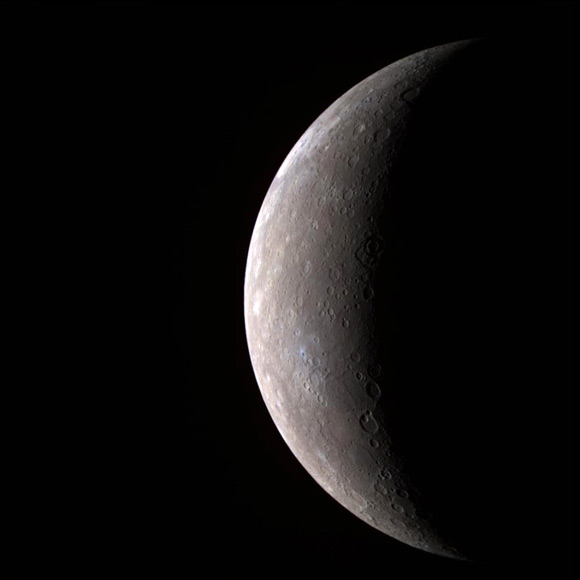
This color image of Mercury was generated from three MESSENGER images taken through filters sensitive to light in different wavelengths. Image credit: NASA / Johns Hopkins University Applied Physics Laboratory / Carnegie Institution of Washington.

The Solar System’s smallest planet has contracted by nearly 19 km (12 miles) across, as crater debris masked telltale wrinkles on its surface, according to new research led by the German Aerospace Center’s Institute of Space Research.

The post Mercury Has Shrunk Even More than Planetary Scientists Thought appeared first on Sci.News: Breaking Science News.
  •  

Devonian Armored Fish Show Multiple Ways to Crush Hard-Shelled Prey

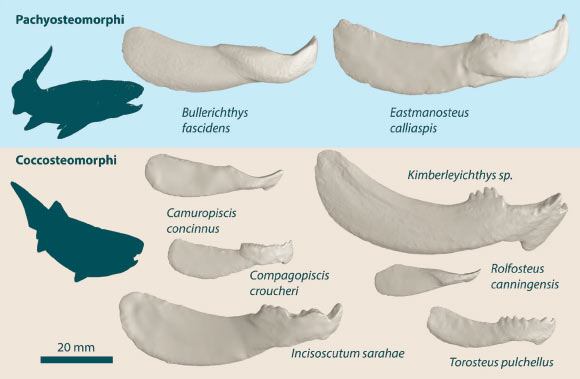
Devonian placoderm inferognathal jaw bones used display ranging size and morphology reflecting their evolutionary and ecological diversity. Image credit: Mitchell et al., doi: 10.1038/s41598-026-57261-3.

Long before sharks or reptiles ruled the seas, armor-plated fish called placoderms were already experimenting with different jaw designs to crush hard-shelled prey.

The post Devonian Armored Fish Show Multiple Ways to Crush Hard-Shelled Prey appeared first on Sci.News: Breaking Science News.
  •  

Study: Interstellar Comet 3I/ATLAS Formed in Cold, Nitrogen-Rich Environment

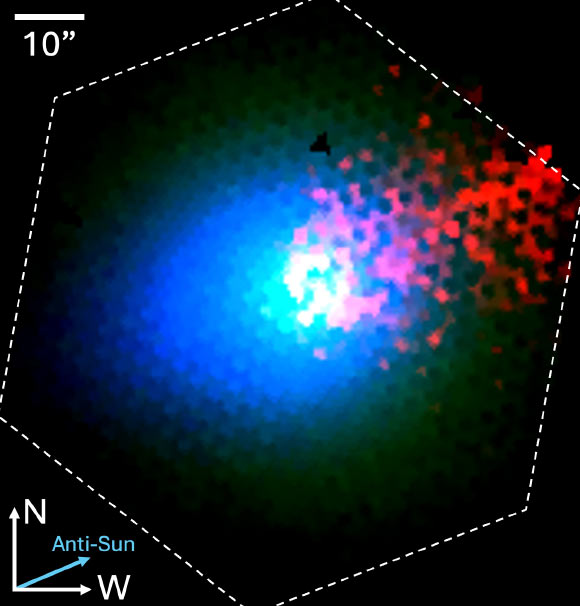
The distribution of dust (blue), gas (green) and ions (red) in the interstellar comet 3I/ATLAS. Image credit: Lea Ferellec.

Astronomers have found new evidence that 3I/ATLAS, only the third confirmed interstellar object ever detected entering the Solar System from beyond, formed in an extremely cold environment far from any star.

The post Study: Interstellar Comet 3I/ATLAS Formed in Cold, Nitrogen-Rich Environment appeared first on Sci.News: Breaking Science News.
  •  

Ichthyosaurs Had Surprisingly Dense Ribs, New Study Finds

Cryopterygius kristiansenae, a species of ophthalmosaurid ichthyosaur from the Jurassic of Svalbard. Image credit: Esther van Hulsen.

New research from the Natural History Museum at the University of Oslo suggests ichthyosaurs’ rib cages may have done a job modern whale ribs don’t: acting as ballast to help them dive.

The post Ichthyosaurs Had Surprisingly Dense Ribs, New Study Finds appeared first on Sci.News: Breaking Science News.
  •  

Exceptionally Preserved Bird Feathers Found in 66-Million-Year-Old Dinosaur Coprolite

While some dinosaurs are thought to have had ‘fuzzy’ or ‘downy’ feathers (shown in this illustration as the yellow spikes on a Nanotyrannus’ neck), ancient birds (such as the one in the Nanotyrannus’ mouth) were more likely to have had feathers that look similar to the birds of today. Image credit: Andrey Atuchin.

Paleontologists in Montana have discovered remarkably preserved feathers of an ancient aquatic bird inside a fossilized dinosaur dropping, offering rare insight into why certain birds survived the asteroid strike that wiped out the dinosaurs 66 million years ago.

The post Exceptionally Preserved Bird Feathers Found in 66-Million-Year-Old Dinosaur Coprolite appeared first on Sci.News: Breaking Science News.

  •  

Denisovans Once Roamed Southwest China, New Fossils Reveal

An artist’s concept of a Penghu Denisovan walking under the bright Sun during the Pleistocene of Taiwan. Image credit: Cheng-Han Sun.

Paleoanthropologists have identified a trove of Denisovan fossils from a cave in China’s Yunnan province, extending the known range of the elusive human relative and providing the first-ever direct evidence of what its forearm bones looked like.

The post Denisovans Once Roamed Southwest China, New Fossils Reveal appeared first on Sci.News: Breaking Science News.

  •  

Paleontologists Discover First-Ever Adult Tyrannosaurus rex Trackway

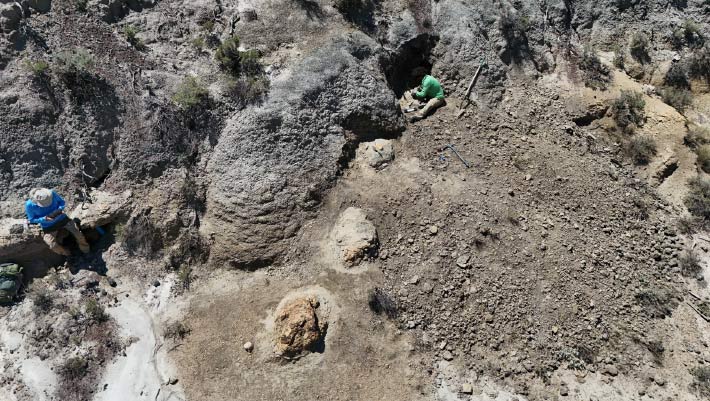
The Tyrannosaurus rex trackway in the Hell Creek Formation in North Dakota, the United States. Image credit: Kent Hups.

Paleontologists in North Dakota have unearthed a set of 66.5-million-year-old fossilized footprints that can be confidently attributed to a full-grown Tyrannosaurus rex.

The post Paleontologists Discover First-Ever Adult Tyrannosaurus rex Trackway appeared first on Sci.News: Breaking Science News.

  •  

Elephants Show Talent for Resisting Impulses

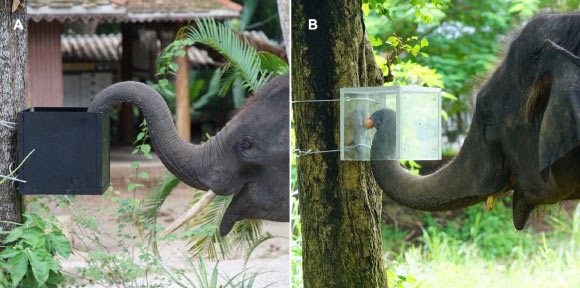
Experiment setup: (A) an elephant enters the ‘over’ opening to gain access to food in a familiarization trial; (B) an elephant enters the ‘under’ opening to gain access to food (apple) in a test trial. Image credit: Sangpa Dittakul.

In experiments in Thailand, Asian elephants (Elephas maximus) learned to ignore an enticing but ineffective route to food and quickly adapted when a familiar solution stopped working.

The post Elephants Show Talent for Resisting Impulses appeared first on Sci.News: Breaking Science News.

  •  

Britain’s Tallest Standing Stones Traced to Their Geological Source

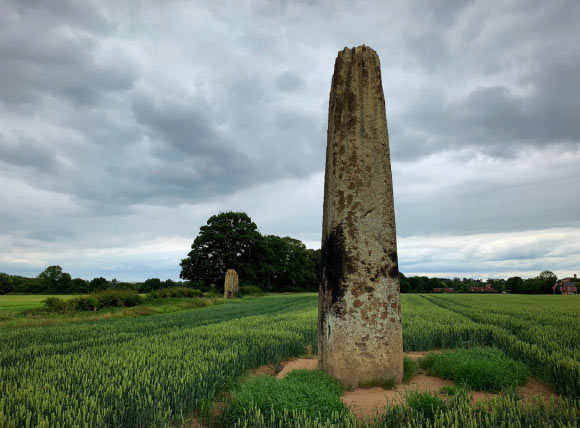
The Devil’s Arrows, the three towering gritstone megaliths on the western outskirts of Boroughbridge, Yorkshire, the United Kingdom. Image credit: Curtin University.

Scientists from Curtin University and the University of York have pinpointed the origin of the Devil’s Arrows, the three towering gritstone megaliths that have stood on the edge of Boroughbridge, Yorkshire, for roughly 4,000 years, ending a long-running archaeological debate.

The post Britain’s Tallest Standing Stones Traced to Their Geological Source appeared first on Sci.News: Breaking Science News.
  •  

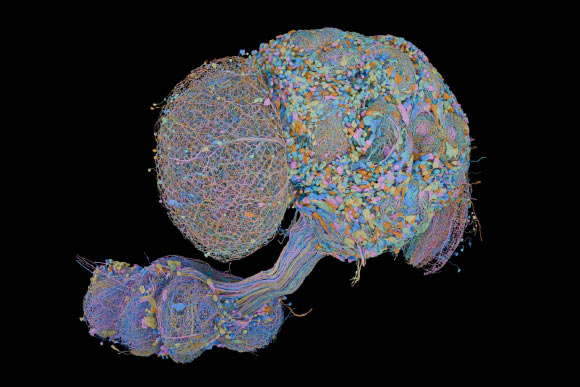
Researchers Unveil Complete Fruit Fly Connectome

The wiring diagram of the central nervous system of an adult male fruit fly will help researchers better understand how the brain enables complex action, from sensory perception to behavior. Image credit: FlyEM Project Team, HHMI’s Janelia Research Campus / Cambridge Connectomics Group / Google Research / Philip Hubbard, HHMI Janelia Research Campus.

After nearly two decades of work, scientists have completed a wiring diagram of the central nervous system of an adult male fruit fly (Drosophila melanogaster).

The post Researchers Unveil Complete Fruit Fly Connectome appeared first on Sci.News: Breaking Science News.
  •  

Hubble and Webb Team Up to Spy Tiny Frozen Worlds beyond Neptune

This artist’s concept depicts a trans-Neptunian object. Image credit: NASA / ESA / Leah Hustak, STScI.

For the first time, astronomers combined Hubble and Webb space telescopes to hunt down some of the smallest, faintest objects ever spotted in the outer Solar System.

The post Hubble and Webb Team Up to Spy Tiny Frozen Worlds beyond Neptune appeared first on Sci.News: Breaking Science News.
  •  

New Owl Species Discovered in Peru

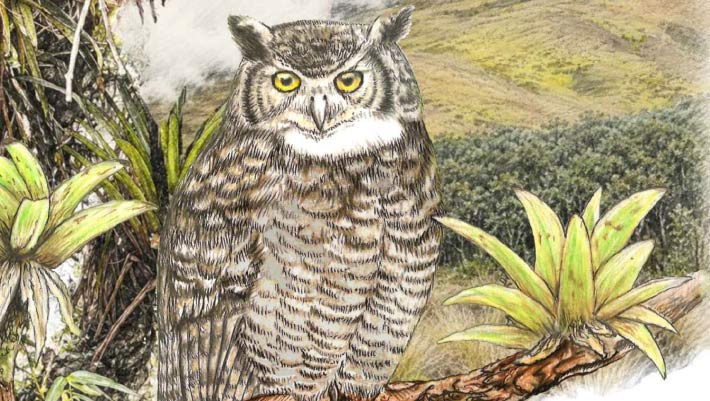
The Jalca horned owl (Bubo jalca). Image credit: López-Lanús et al.

A horned owl living in a narrow strip of high-Andean grassland in northern Peru is a species new to science, according to a paper published in July 2026 in the journal Audiornis.

The post New Owl Species Discovered in Peru appeared first on Sci.News: Breaking Science News.
  •  

Could Scoop of Moon Dust Reveal Alien Technology?

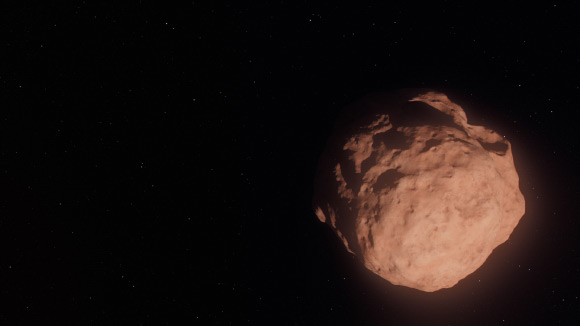
Meteoroids bombarded the Earth-Moon system 800 million years ago. Image credit: Murayama, Osaka University.

A cubic meter of lunar soil might be one of our best bets for finding physical proof that another advanced civilization once existed somewhere in the Milky Way, according to a new paper to be published in the International Journal of Astrobiology.

The post Could Scoop of Moon Dust Reveal Alien Technology? appeared first on Sci.News: Breaking Science News.
  •  

Dark Energy May Not Be Constant After All, New Supernova Survey Suggests

This is an artist’s concept of a Type Ia supernova exploding in the intergalactic space between galaxies within a galactic cluster. Image credit: Alex Parker / NASA / SDSS.

Astronomers have combined 2,884 Type Ia supernovae -- which are used to measure cosmic distances -- with cosmic microwave background and galaxy-mapping data, deepening cracks in the standard ‘cosmological constant’ model.

The post Dark Energy May Not Be Constant After All, New Supernova Survey Suggests appeared first on Sci.News: Breaking Science News.
  •  
❌