
❌

Reading view

Homo antecessor Had Surprisingly Modern Skull, New Fossils Suggest
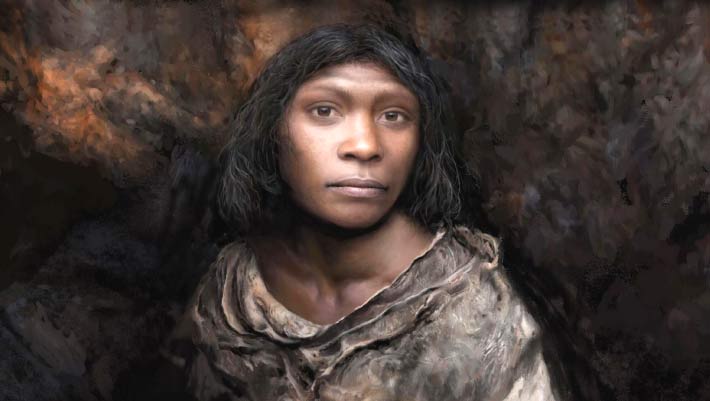
An artist’s rendering of a Homo antecessor individual known as the Girl of Gran Dolina. Image credit: Tom BjΓΆrklund.

A new analysis of three skull fragments unearthed at the Gran Dolina cave site in Spain indicates that Homo antecessor had bone thickness closer to that of Neanderthals and modern people than to more archaic hominins.

The post Homo antecessor Had Surprisingly Modern Skull, New Fossils Suggest appeared first on Sci.News: Breaking Science News.
  •  

Webb Captures Stunning Infrared View of Eskimo Nebula

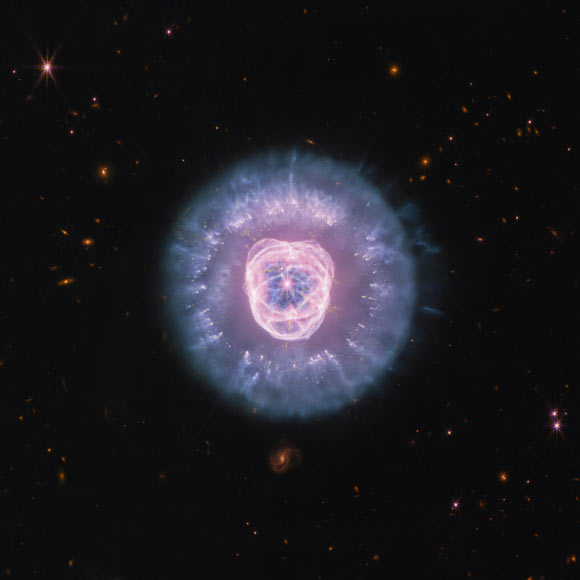
This Webb/NIRCam/MIRI image shows the Eskimo Nebula, a bipolar planetary nebula some 4,200 light-years away in the constellation of Gemini. Image credit: NASA / ESA / CSA / Webb / STScI / Alyssa Pagan, STScI.

New infrared observations of the Eskimo Nebula, a bipolar double-shell planetary nebula in the constellation of Gemini, reveal clumps of dust, ionized gas and expanding shells surrounding a central star.

The post Webb Captures Stunning Infrared View of Eskimo Nebula appeared first on Sci.News: Breaking Science News.
  •  

Why Were There No Tiny Non-Avian Dinosaurs? Mammals May Have Been to Blame

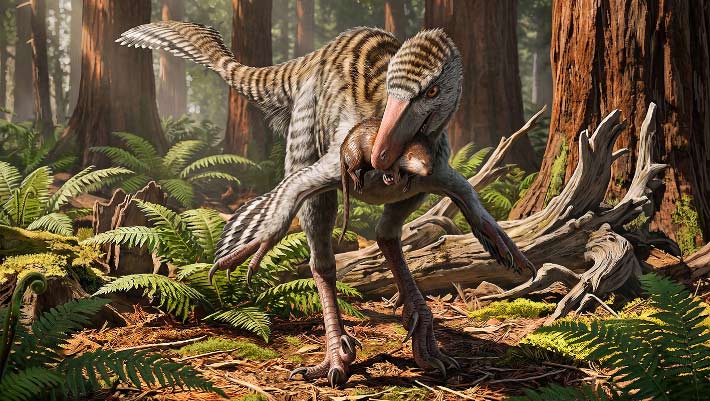
Torvosaurus gurneyi. Image credit: Β© Sergey Krasovskiy.

Dinosaurs evolved into some of the largest animals ever to walk the Earth, but a new mathematical model suggests that early mammals may have crowded them out of the ecological niches reserved for the smallest creatures.

The post Why Were There No Tiny Non-Avian Dinosaurs? Mammals May Have Been to Blame appeared first on Sci.News: Breaking Science News.

  •  

Webb Finds Stellar β€˜Treasure Chest’ in Carina Nebula

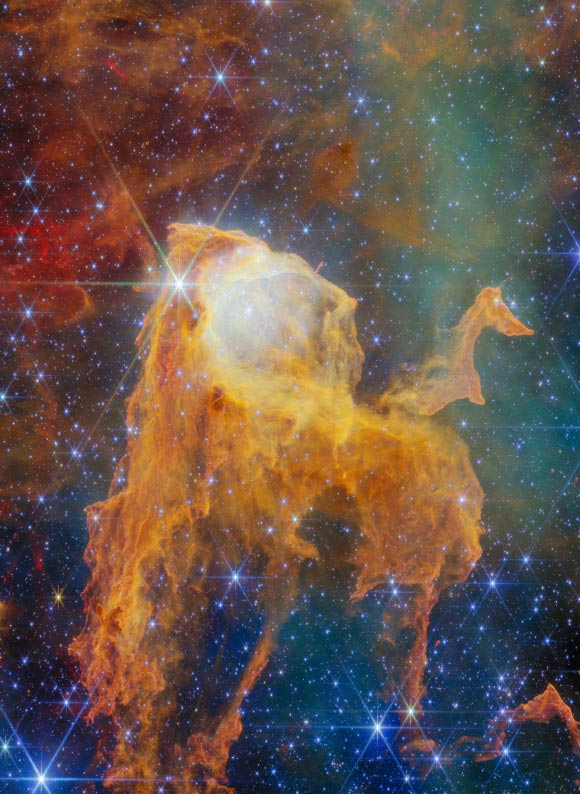
This Webb image shows the Treasure Chest, a cometary globule located within the famous Carina Nebula. Image credit: NASA / ESA / CSA / Webb / M. Reiter / M.H. Γ–zsaraΓ§.

A stunning new image from the NASA/ESA/CSA James Webb Space Telescope reveals a comet-shaped cloud in the Carina Nebula hiding a cluster of about 70 young stars, including a rare giant of O-type nearly 19 times as massive as the Sun.

The post Webb Finds Stellar β€˜Treasure Chest’ in Carina Nebula appeared first on Sci.News: Breaking Science News.
  •  

Liquid Nitrogen May Have Flowed on Pluto’s Surface in Recent Past

This Pluto mosaic was made from New Horizons LORRI images taken on July 14, 2015, from a distance of 49,700 miles (80,000 km). This view is projected from a point 1,118 miles (1,800 km) above Pluto’s equator, looking northeast over the dark, cratered Cthulhu Regio toward the bright, smooth expanse of icy plains called Sputnik Planum. Pluto’s North Pole is off the image to the left. This mosaic was produced with panchromatic images from the New Horizons LORRI camera, with color overlaid from the Ralph color mapper onboard New Horizons. Image credit: S.A. Stern et al.

Planetary researchers analyzing images from NASA’s New Horizons spacecraft have found evidence that liquid nitrogen may still be seeping up from beneath the dwarf planet’s giant glacier, Sputnik Planitia, marking the first suggested case of recently flowing liquid on Pluto’s surface.

The post Liquid Nitrogen May Have Flowed on Pluto’s Surface in Recent Past appeared first on Sci.News: Breaking Science News.

  •  

Neanderthal Gene Still Shapes Muscle and Jaws in Some Living Humans

Velazquez-Arcelay et al. found that genetic material from Neanderthal ancestors may have contributed to the propensity of some people today to be early risers, the sort of people who are more comfortable getting up and going to bed earlier. Image credit: Holger Neumann / Neanderthal Museum.

Neanderthals vanished roughly 42,000 years ago, but a piece of their biology appears to be quietly at work in some people today, according to a new study led by scientists from the Max Planck Institute for Evolutionary Anthropology.

The post Neanderthal Gene Still Shapes Muscle and Jaws in Some Living Humans appeared first on Sci.News: Breaking Science News.

  •  

Study Points to Sugar, Not Just Meat, as Fuel for Human Brain Evolution

Paranthropus boisei. Image credit: Β© Roman Yevseyev.

A team of researchers from the University of Sydney and the University of Glasgow argues that dietary sugars, not animal foods, may have played the decisive role in the expansion of the human brain over the past 4 million years, as hominin brain size grew nearly fivefold, from about 300 grams in early relatives like […]

The post Study Points to Sugar, Not Just Meat, as Fuel for Human Brain Evolution appeared first on Sci.News: Breaking Science News.
  •  

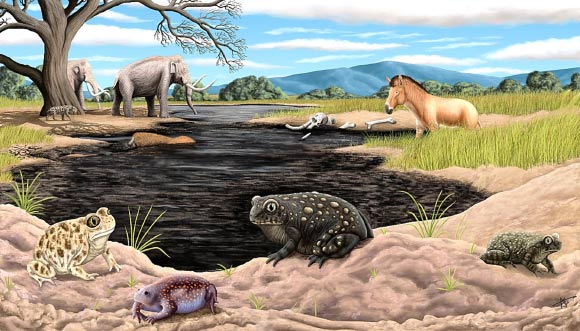
La Brea Tar Pits Yield New Species of Ice Age Toad

Reconstruction of Spea labreae (center and right) in La Brea Tar Pits compared with Spea hammondii (left), the species currently present in the area, and the presence of the Mexican burrowing toad (bottom). Image credit: Arturo DΓ‘valos.

Paleontologists studying the La Brea Tar Pits, one of the world’s richest Ice Age fossil sites, have identified a previously unknown species of spadefoot toad that lived in what is now California during the latest Ice Age.

The post La Brea Tar Pits Yield New Species of Ice Age Toad appeared first on Sci.News: Breaking Science News.
  •  

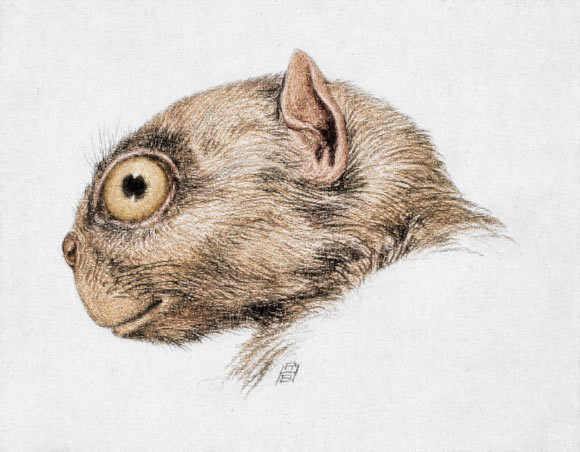
Tiny New Primate Species Emerges from 50-Million-Year-Old Wyoming Sandstone

Tetonius homunculus (colorized) by R. Bruce Horsfall from W.B. Scott’s History of Land Mammals in the Western Hemisphere.

Paleontologists working in southern Wyoming have identified a previously unknown species of omomyid primate, adding a new chapter to the story of one of the best-studied fossil lineages in North America.

The post Tiny New Primate Species Emerges from 50-Million-Year-Old Wyoming Sandstone appeared first on Sci.News: Breaking Science News.
  •  
  •  

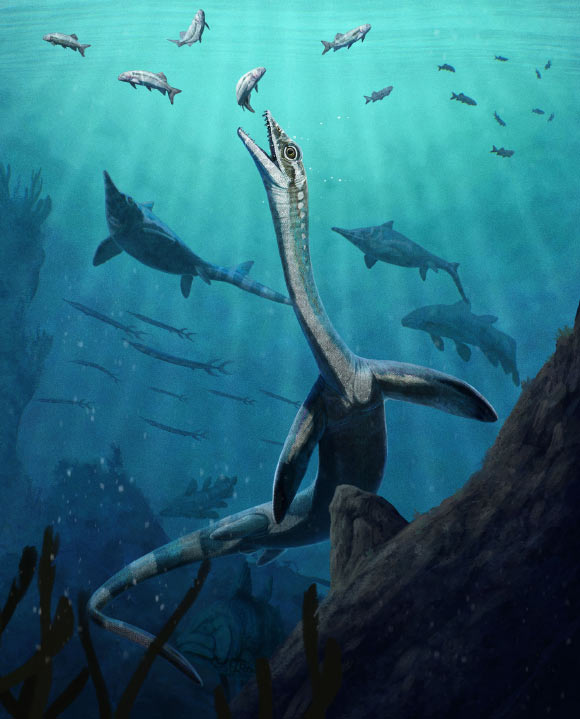
244-Million-Year-Old Fossil Preserves Earliest Reptilian Digestive System

Life reconstruction of Austronaga minuta. Image credit: Gabriel Ugueto.

An exquisitely preserved specimen of Austronaga minuta, a small, long-necked marine reptile from the Triassic of China, contains a fossilized stomach, liver and intestines, offering paleontologists their oldest detailed glimpse yet of how early reptiles digested food.

The post 244-Million-Year-Old Fossil Preserves Earliest Reptilian Digestive System appeared first on Sci.News: Breaking Science News.
  •  

Pluto’s Thin Atmosphere May Be Starting to Shrink

According to NASA scientists, complex chemical compounds called tholins give Pluto a distinctive blue haze. Image credit: NASA / Johns Hopkins University Applied Physics Laboratory / Southwest Research Institute.

Pluto’s tenuous atmosphere appears to have begun contracting after years of holding steady, according to a new study published in the Planetary Science Journal.

The post Pluto’s Thin Atmosphere May Be Starting to Shrink appeared first on Sci.News: Breaking Science News.

  •  

Scientists Find Traces of Two Unknown Archaic Hominins in Human DNA

An archaic hominin. Image credit: Ninara / CC BY 2.0.

New research led by the University of California, Berkeley reveals that beyond Neanderthals and Denisovans, humans interbred with two mysterious β€˜ghost’ lineages: one in Africa more than 50,000 years ago, another in Eurasia over 1.7 million years ago.

The post Scientists Find Traces of Two Unknown Archaic Hominins in Human DNA appeared first on Sci.News: Breaking Science News.

  •  

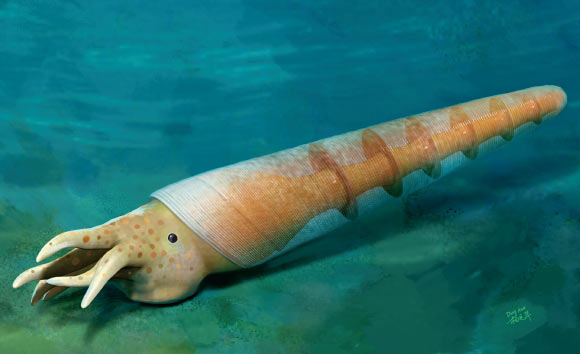
520-Million-Year-Old Fossil from China Fills Gap in Evolutionary History of Cephalopods

Life reconstruction of Eoceras shaanxiense. Image credit: Dinghua Yang.

Paleontologists have identified the earliest-known cephalopod equipped with a siphuncle -- a tubular extension of the mantle found in shelled cephalopods -- pushing back the fossil record of this key evolutionary feature to the Early Cambrian, roughly 520 million years ago.

The post 520-Million-Year-Old Fossil from China Fills Gap in Evolutionary History of Cephalopods appeared first on Sci.News: Breaking Science News.
  •  

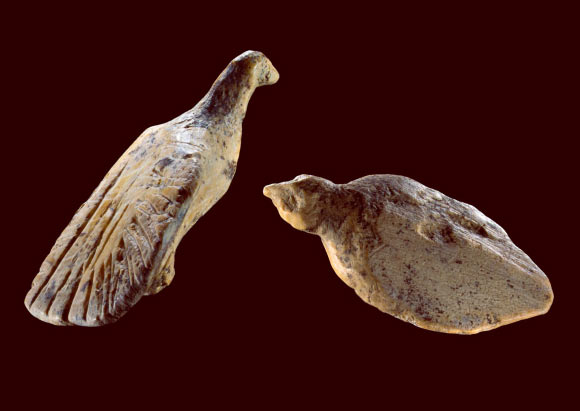
40,000-Year-Old Bird Figurines Found in German Cave

Two bird figurines found at Hohle Fels Cave in Germany. Image credit: Ralf Ehmann / University of TΓΌbingen / Museum of Prehistory and Ice Age Art.

Archaeologists in southwestern Germany have unearthed two miniature bird figurines carved from mammoth ivory, among the smallest and most delicate examples of Ice Age art ever found.

The post 40,000-Year-Old Bird Figurines Found in German Cave appeared first on Sci.News: Breaking Science News.
  •  

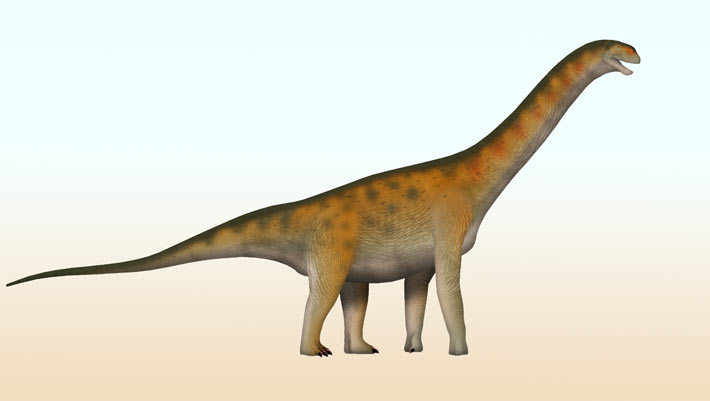
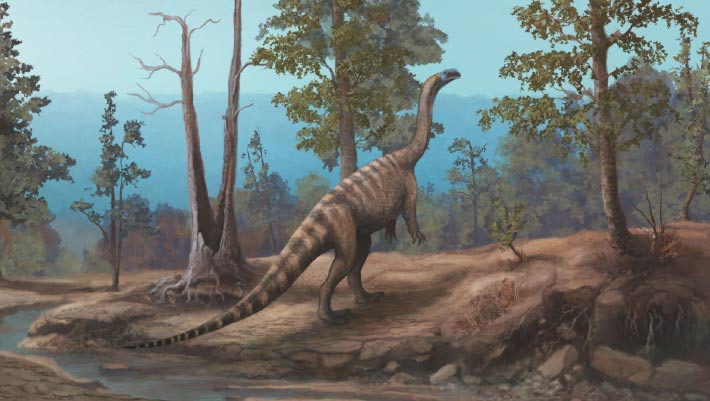
New Species of Triassic Dinosaur Discovered on Shores of Zimbabwe’s Lake Kariba

Life reconstruction of Musango matusadonaensis. Image credit: Mark Witton.

An international team of paleontologists has identified a new species of early sauropodomorph dinosaur in Zimbabwe, adding to growing evidence that southern Africa hosted a richer diversity of dinosaurs during the Late Triassic epoch than previously recognized.

The post New Species of Triassic Dinosaur Discovered on Shores of Zimbabwe’s Lake Kariba appeared first on Sci.News: Breaking Science News.
  •  

Ancient Footprints in Kenya Hint at Bigger Bodies and Group Behavior among Early Human Relatives

One of 1.43-million-year-old footprints found at the GaJi10 site in the Koobi Fora Formation in northern Kenya; a 15-cm (6-inch) ruler is shown for scale. Image credit: Kay Behrensmeyer.

A set of 1.43-million-year-old fossil footprints preserved along the margin of an ancient lake in northern Kenya is offering paleoanthropologists new evidence about the size, gait and social lives of the beings who made them and reopening questions about which species they belonged to.

The post Ancient Footprints in Kenya Hint at Bigger Bodies and Group Behavior among Early Human Relatives appeared first on Sci.News: Breaking Science News.

  •  

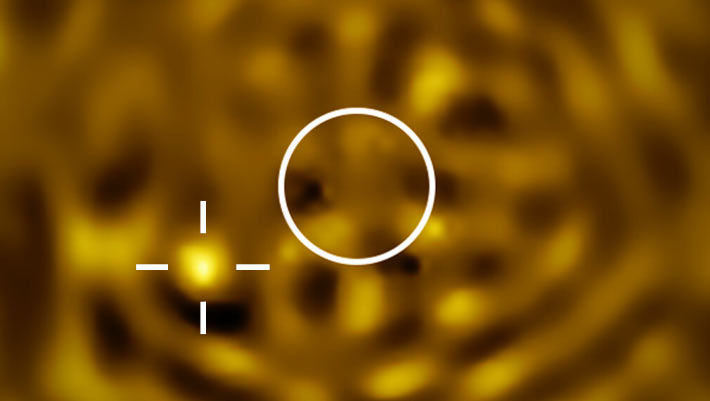
Astronomers Directly Image Betelgeuse’s Long-Suspected Stellar Companion

This VLT/SPHERE image shows the clearest image ever of what likely is Betelgeuse B. Image credit: ESO / Montargès et al.

After a century of speculation, astronomers using ESO’s Very Large Telescope (VLT) have captured the clearest evidence yet that the red supergiant Betelgeuse is orbited by a faint companion star.

The post Astronomers Directly Image Betelgeuse’s Long-Suspected Stellar Companion appeared first on Sci.News: Breaking Science News.
  •  

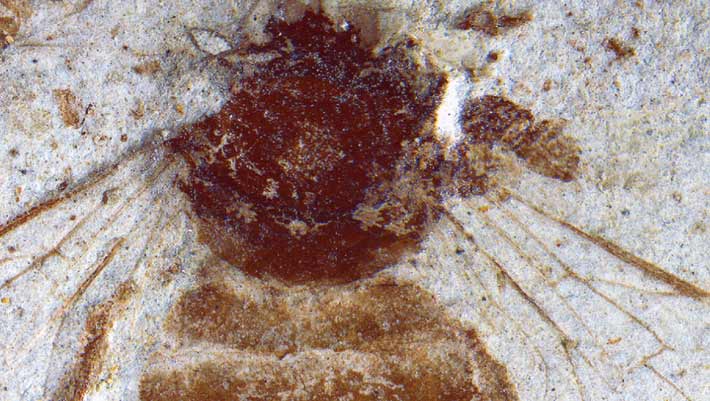
Japanese Fossil Bee Fills Two-Million-Year Gap in Honeybee History

Apis aibai. Image credit: Y. Takahashi & J-ichi Takahashi, doi: 10.3897/zookeys.1255.162389.

Paleontologists have announced the discovery of a new fossil honeybee species that fills a long-standing gap in the evolutionary record of the genus Apis.

The post Japanese Fossil Bee Fills Two-Million-Year Gap in Honeybee History appeared first on Sci.News: Breaking Science News.
  •  
❌