❌

Reading view

New 3D silicon chip stacks circuits on top of each other to boost computing power

The massive hardware demands of artificial intelligence (AI) applications are stretching the physical and structural limitations of semiconductors. But researchers have engineered a three-dimensional silicon chip that they propose as the solution.

In a new study published May 27 in the journal Nature, scientists found a way to cram more computing power into a chip by stacking silicon circuits in multiple layers in a way that doesn't impact performance.

Stacking chips vertically, known as 3D integration, is more efficient than traditional 2D chips, where silicon circuits are spread across a single surface. This is because stacking shortens the distance that data has to travel and reduces the power required for data transmission.

The researchers' 3D chip uses ultrathin silicon membranes and low-temperature manufacturing techniques to overcome the challenges of current chip architectures.

"Our method is not only easier to implement with lower cost, but it has several advantages over previous approaches to stack silicon wafers," Qing Cao, first author of the study and a materials science and engineering professor at the University of Illinois Urbana-Champaign, said in a statement.

Extending Moore's law

Since the 1960s, ensuring that electronics can handle more demanding applications has meant making transistors smaller so more can be packed onto a single chip. But, as Cao pointed out, doubling the number of transistors every couple of years — a principle known as Moore's law — is becoming less feasible.

"If you look at the actual size of transistors, they're not getting smaller, especially in terms of their contacted gate pitch," Cao said in the statement — defined as the combined width of one transistor gate and the space needed to separate it from the next.

"This is because we're becoming limited by the intrinsic material properties of silicon and the fundamental rules of quantum mechanics. If we're going to keep up the trend of increasing processing power of our microprocessors, we have to start thinking beyond just squeezing more devices on a single surface."

The researchers think vertical integration across multiple layers is the best way to guarantee that engineers can continue to adhere to Moore's law, because this approach creates room for more transistors on a chip.

"Today it takes six microelectronic devices called transistors on a single plane to store one bit of information," Cao explained, suggesting that just like in a densely populated city, the only way to solve overcrowding is to build upward. "You get the same functionality, but the spatial footprint is reduced while making communication between layers faster and more efficient."
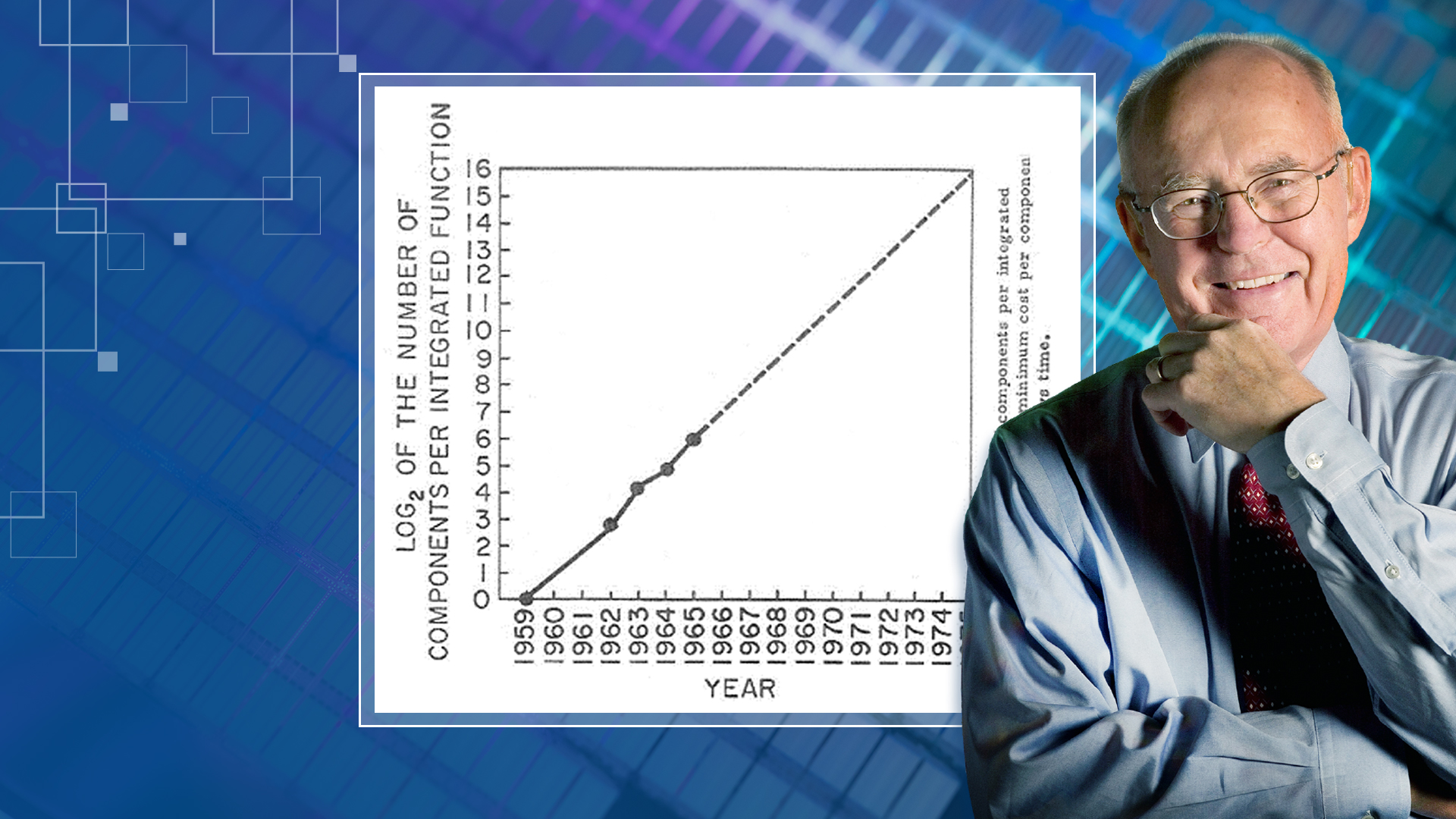
Gordon Moore photographed beside a graph representing Moore's Law.

Scientist Gordon Moore seen with a graph representing Moore's Law. (Image credit: Intel)

Getting around the heat problem

Stacking is nothing new, of course, but vertical integration — building layers directly on top of one another — can create thermally dense packages. In the study, the researchers noted that the fabrication of high-quality silicon chips demands temperatures up to 1,832 degrees Fahrenheit (1,000 degrees Celsius).

However, once the first chip layer has been completed, the metal wiring introduced to connect further layers can be destroyed by such high temperatures. As a result, the "thermal budget" — the maximum amount of heat that can be endured before degradation starts to occur — for any additional layers is 752 F (400 C), said Cao. This can result in performance and reliability issues.

When creating 3D stacked silicon chips, manufacturers have sought to avoid this problem by using alternatives to single-crystalline silicon for the upper layers, according to the researchers. These materials include amorphous and nanocrystalline metal oxides, carbon nanotubes and polycrystalline silicon, but they can lead to performance and reliability issues, the scientists said in the study.

To overcome this challenge, Cao and his team adopted an approach called "monolithic integration" — a process in which all chip components are fabricated on a single piece of substrate, as opposed to making them separately and then bonding them together later.

To build each chip, the researchers created ultrathin silicon nanomembranes that they then transferred, using a roll laminator, onto a substrate containing the bottom layer.

The maximum temperature required to generate a strong bond using this method was just 392 F (200 C) — five times less than the heat normally required. The membranes they transferred were also just 10 nanometers thick or less — about the size of a protein — compared with the approximately 500-to-700-micrometer (500,000 to 700,000 nanometers) thickness of a typical wafer. Because they are thin, these membranes are mechanically flexible to conform to the underlying surface, Cao added.

The result of this process was a 3D chip with three layers, each containing 625 transistors. This pales in comparison to the billions of transistors that can be crammed onto chips already on the market, but the researchers believe their technology boasts power efficiency benefits. The electrical current that can flow through the chip has proved to be at least three to four times greater than that of monolithic chips made from alternative materials.

The big question is whether their 3D silicon chip can make the leap from the laboratory to commercial applications. While the research demonstrates the potential of a chip comprising three stacked layers, the scientists suggested that plenty more layers can be added in future iterations.

Can you match these ancient devices to their pictures? Find out with our computing quiz!
  •  

'Another dinosaur has entered the luxury collectibles market': Gus the T. rex just sold for $50 million. Here's what its loss means to science.

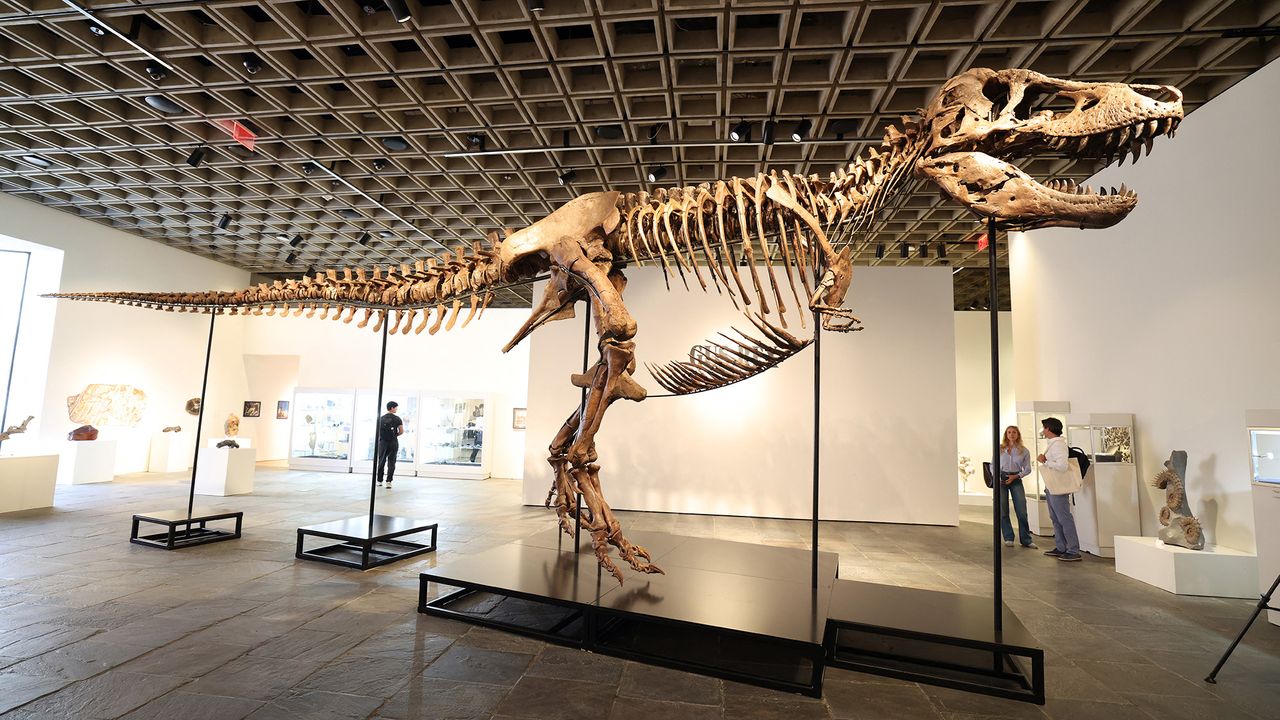
On July 14, 2026, "Gus," one of the most complete specimens of Tyrannosaurus rex, went to an as yet unidentified buyer for US$50.1 million. This auction at Sotheby's set a record for most valuable fossil ever sold. Another dinosaur has entered the luxury collectibles market, a reminder that even Earth's deepest history can be sold to the highest bidder.

To paleontologists like me, however, a fossil like "Gus" — excavated from the Hell Creek Formation in South Dakota over three years starting in 2021 by commercial collector Thomas Heitkamp and his team — is not a trophy or a work of art. It is an irreplaceable scientific archive. Fossils preserve evidence of evolution, extinction, growth, disease, injury and ancient ecosystems. They are finite, nonsubstitutable records of life’s history on Earth.

Science depends on independent verification of claims and healthy debate. Researchers must be able to revisit specimens, test earlier conclusions and ask new questions.

But once a scientifically important fossil enters a private collection, access for researchers is no longer guaranteed. Collectors typically sequester their fossils in their homes. Even when privately owned specimens are loaned to museums, the owners can change their minds, ending access at any time. This issue is especially of note when it comes to Tyrannosaurus rex; a 2025 study found that while there were 61 T. rex fossils in public trusts at that time, 71 were privately held.

That is why the Society of Vertebrate Paleontology, of which I'm a long-term member and president-elect, has long argued that scientifically significant vertebrate fossils belong in the public trust, curated in museums and universities that preserve them permanently, make them available for research and share them with the public.

Finding a fossil

Supporters of commercial fossil sales often argue that without sales to private collectors, specimens like "Gus" would remain buried or erode away. They’re right about one thing: Discovery matters. Many extraordinary fossils have been found by ranchers, hikers, amateur collectors and commercial excavators. Paleontology is accessible to everyone who has an eye for observing nature — you don't need to be an expert with academic credentials to make an important discovery.

A close up of a person's hands unearthing rocks from a tan block

Fossil kits are sold on Amazon and other online retailers, encouraging curiosity in budding paleontologists. (Image credit: Amazon)

But discovery is only the beginning. A fossil's scientific value depends on careful documentation of where it was found, the rocks surrounding it, and the plants and animals preserved alongside it. Those details allow scientists to reconstruct ancient ecosystems, understand how an animal lived and died, and interpret how its remains became fossilized. When that contextual information is incomplete or lost, much of the fossil's scientific value is lost as well.

Yet even discovery, excavation and publication barely scratch the surface of a fossil's scientific importance. The greatest scientific value of a specimen often comes decades later, when researchers ask new questions and apply new technologies that earlier generations never imagined. A specimen that seems fully studied today may yield surprising new information tomorrow, but only if it is still available for study.

Delayed discoveries

Consider the iconic dinosaurs, including T. rex, Triceratops, Diplodocus and Stegosaurus, first collected more than a century ago. Early paleontologists could describe their shapes but had no way to dig deeper by peering inside the bones. Because those specimens were preserved in museum collections, later generations could revisit them with technologies that didn't exist when they were discovered.

Paleontologist Larry Witmer and his collaborators at Ohio University started using CT imaging 20 years ago to reconstruct the internal anatomy of historic dinosaur fossils without damaging them, based on how X-rays travel through specimens. Brain cavities, inner ears, air spaces, nerves and blood vessels became visible for the first time, revealing how dinosaurs balanced, heard, smelled and perceived their world.

Henry Fricke, Thomas Cullen and other geochemists have used isotopic signatures preserved in fossil teeth and eggshells to reconstruct dinosaur diets, migration patterns and body temperatures. This research has revealed how dinosaurs lived: what they ate, how they moved through ancient landscapes, and even how warm their bodies were.

More recently, molecular paleontologist Jasmina Wiemann and her collaborators have identified chemical traces preserved in fossil bone, eggshell and skin that reveal aspects of dinosaur biology unimaginable even a generation ago. Until now, paleontologists had no way to know details about metabolic rates and reproduction or the colors of skin, feathers and eggs.

A close up of red cells under a microscope

A thin section of a Diplodocus femur reveals the microscopic architecture of the bone, preserving a record of the animal's growth and life history.  (Image credit: Kristina Curry Rogers)

In my own research I use microscopes to uncover the hidden stories preserved inside dinosaur bones and teeth. Thin sections of fossil bones reveal that dinosaurs grew more like mammals and birds than like oversized reptiles. Microscopic modifications to bones capture traces of ancient scavenging, and tiny signatures deep inside baby dinosaur bones indicate the moment of hatching.

None of these discoveries would have been possible if the original fossils had vanished into inaccessible private collections.

Shared natural heritage, on the auction block

Fossils are not static objects whose scientific value is exhausted once they are described. Their value grows as science advances, but only if future researchers can continue to examine the original specimens.

Of course, sometimes dinosaur fossils are rescued from obscurity through purchase and immediate deposition or donation to natural history museums. Some of the world's most important dinosaur fossils are accessible today because individuals, companies or organizations with the means to acquire extraordinary specimens recognized that they belong where scientists can continue to study them and where future generations can learn from them.

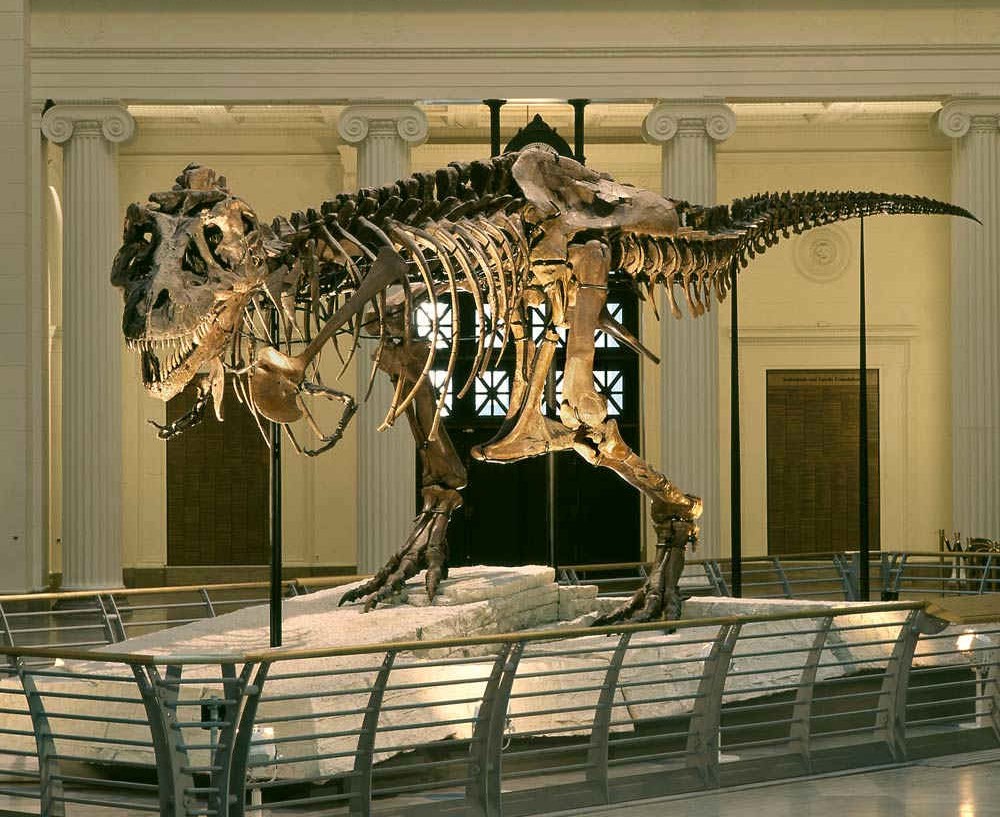
The <em>Tyrannosaurus rex</em> named Sue, shown here at The Field Museum in Chicago, may not have used her little arms much when she was alive, scientists say.

Schoolchildren were among the first to visit 'Sue' the T. rex once it was displayed at the Field Museum of Natural History in Chicago, Ill., thanks to funding from the California State University system, Walt Disney Parks and Resorts and McDonald's. (Image credit: copyright The Field Museum)

Purchasing a fossil in order to place it permanently in the public trust is fundamentally different from acquiring it as a private collectible: One expands access, the other leaves access uncertain.

But as fossil prices rise into the millions, museums increasingly cannot compete. The most significant fossils are no longer reliably entering public collections. Instead, they are becoming luxury assets whose market value supersedes their scientific value.

Dinosaurs belong to our shared natural heritage. They inspire wonder because they connect all of us to a world unimaginably older than our own. For me, the question raised by auctions like the one on July 14 of "Gus" is not who can afford to own these relics of the past. It is whether future generations have the chance to study and learn from them.

This edited article is republished from The Conversation under a Creative Commons license. Read the original article.

How much do you know about the king of the dinosaurs? Test your knowledge with our T. rex quiz!
  •  

Orange-lipped monkey that roars and snorts deep in Congo rainforest is new species to science

Scientists have identified a new species of monkey that has orange lips and makes unique roars and snorting sounds. The distinctive monkey lives in a remote region of the Democratic Republic of the Congo (DRC).

It is only the fifth new monkey species to be identified in Africa in the past 75 years, and there might be more unknown monkey species in the region, scientists behind a new study suggested. Researchers named the newly identified species of monkey Colobus congoensis, after the region, and it is known by the common name "lik­weli" in the local Kilanga language.

"This is remarkable because it's not very common these days to find a new, never-before-documented primate species, let alone a relatively large species of monkey," said Joshua Linder, an anthropologist and president and co-founder of the The Forest Collective, a nonprofit that aims to conserve and restore tropical rainforests.

In 2008, conservationists in the dense rainforests of Lomami National Park, within the Congo Basin in the DRC, photographed an unidentified monkey, but it was partially obscured. Then, in 2018 a similar-looking animal was captured on camera, prompting study co-author Junior Amboko, a Lomami National Park researcher and a Florida Atlantic University anthropologist, to set out to find the mysterious monkey.

To see what was already known, Amboko and his colleagues showed the pictures to people from 52 villages around the park.

"These people really know the fauna and flora in the forest," Amboko told Live Science. "In only eight villages, people knew the monkey ‪—‬ and these were hunters, who know the economic value of animals or how much food each animal can provide, but even they didn't know much."

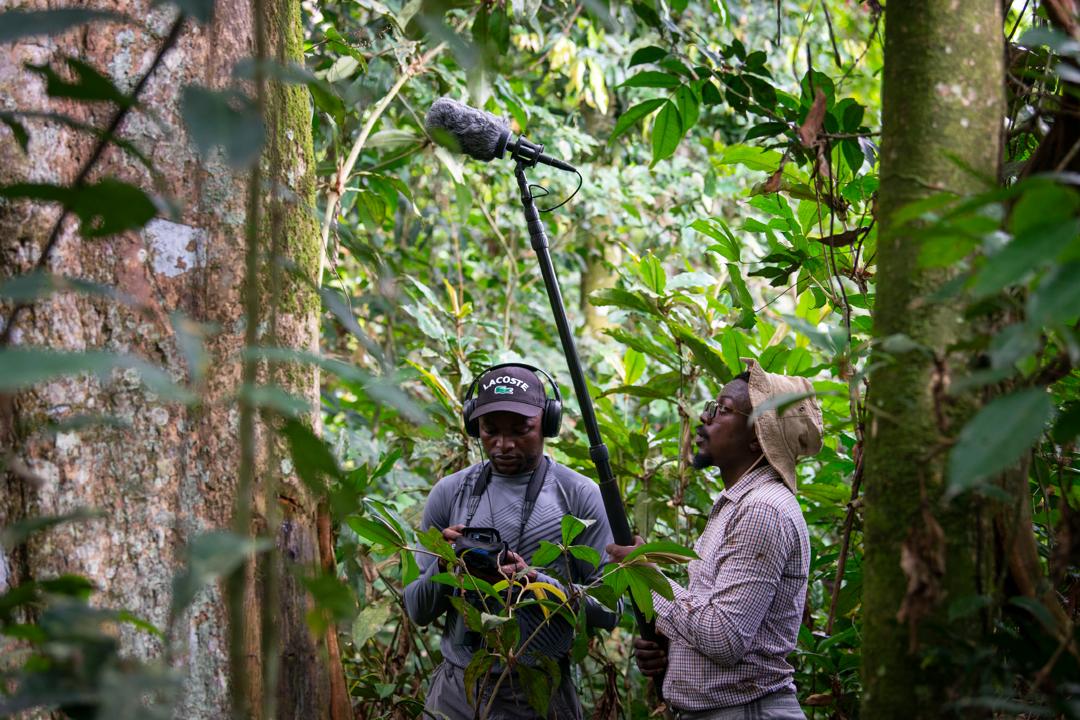
Two men wearing long sleeves and hats stand in the middle of a dense jungle.

The researchers worked in the Lomami National Park, within the Congo Basin in the Democratic Republic of Congo. (Image credit: Daniel Rosengren, Frankfurt Zoological Society  )

Hunters of the Balanga ethnic group called the monkey "likweli," although the meaning of this name isn't known. Some in the Mituku local communities called the species "kasaba nkoni," which Amboko said means "the branch shaker." This refers to the way colobus monkeys leap from branch to branch, Amboko said.

In their searches between 2018 and 2022, the researchers recorded 114 sightings of the species across an estimated range of about 660 square miles (1,700 square kilometers) naturally isolated between the Lomami and Lualaba rivers. They reported their findings July 15 in the journal PLOS One.

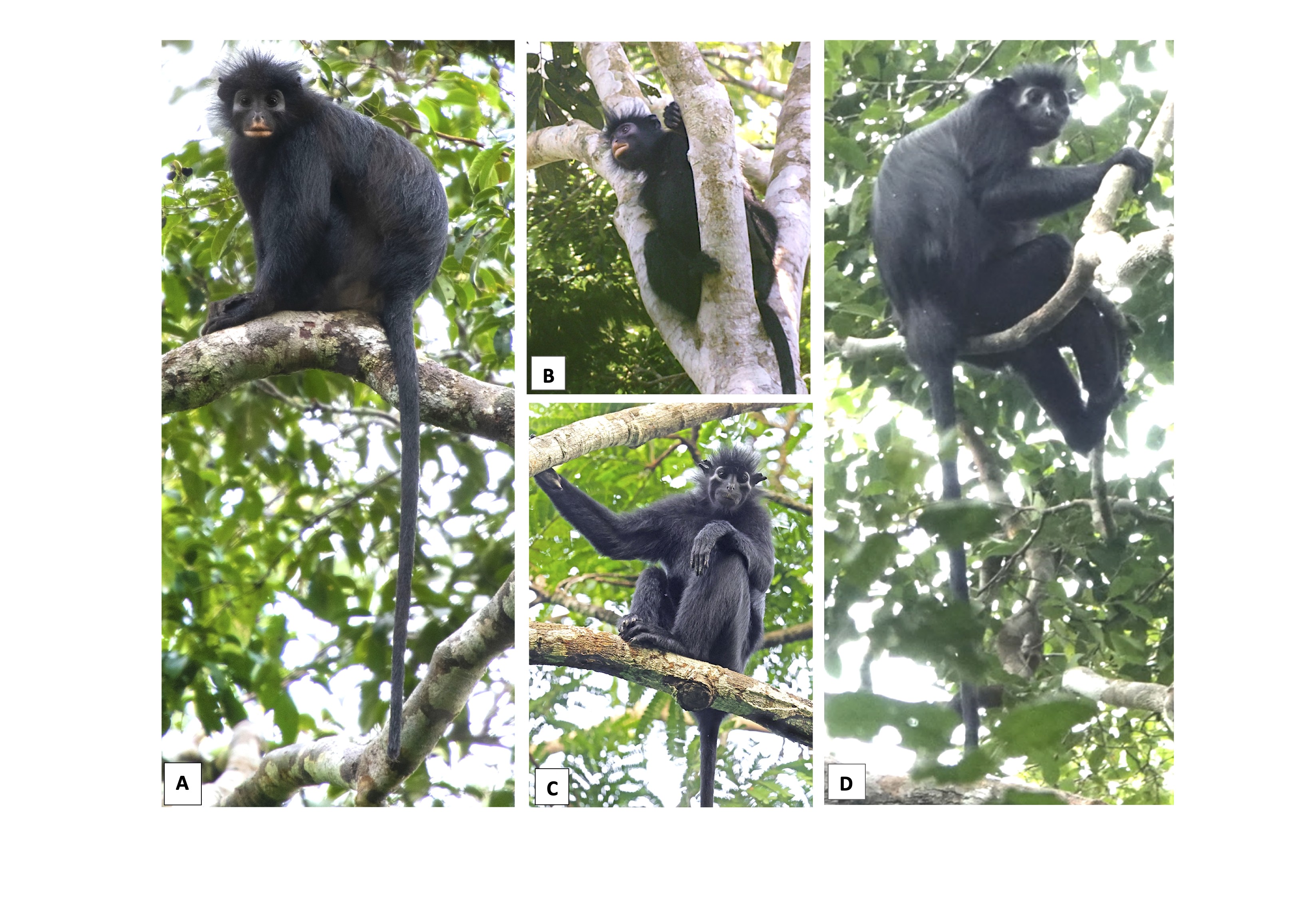
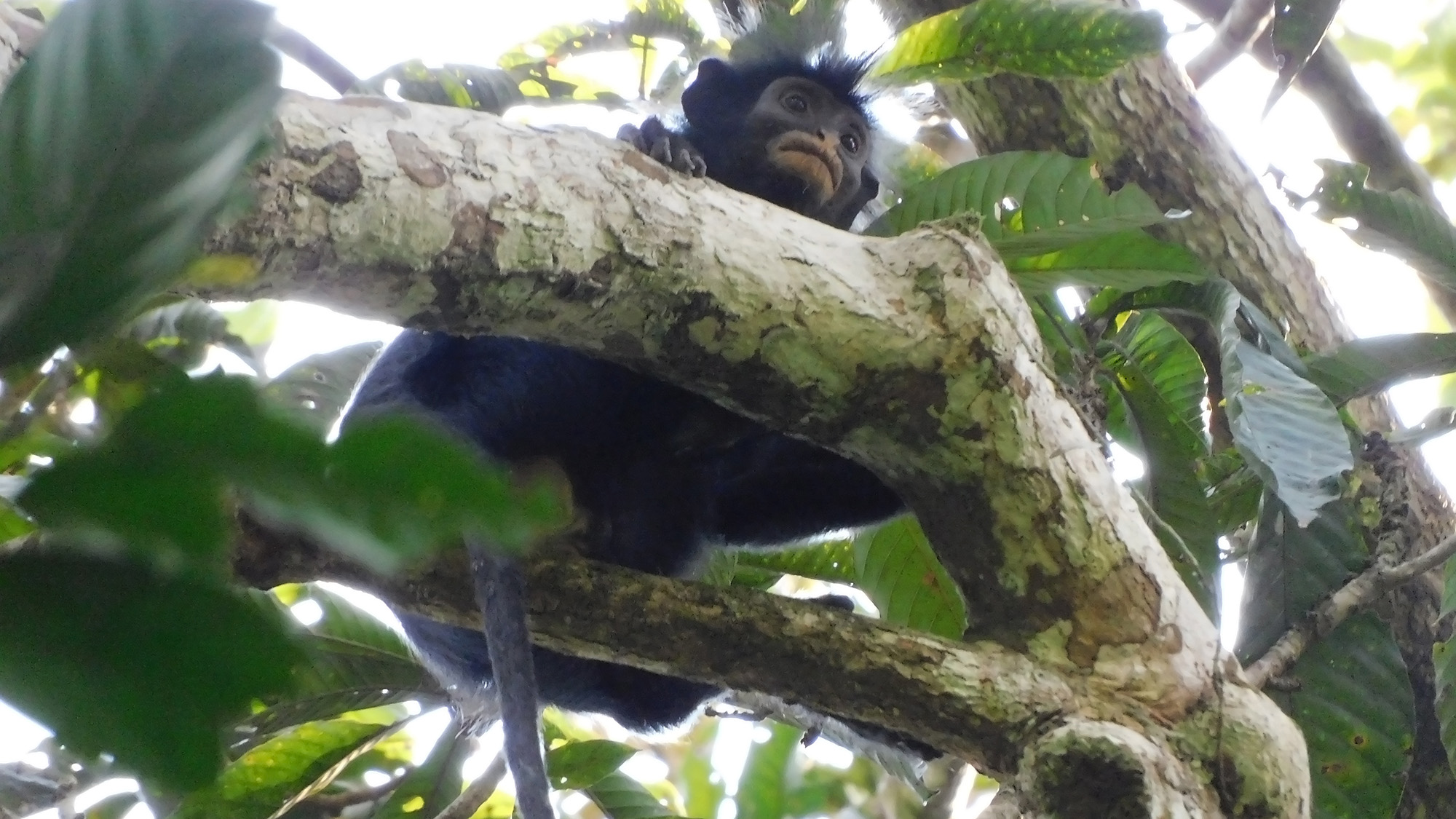
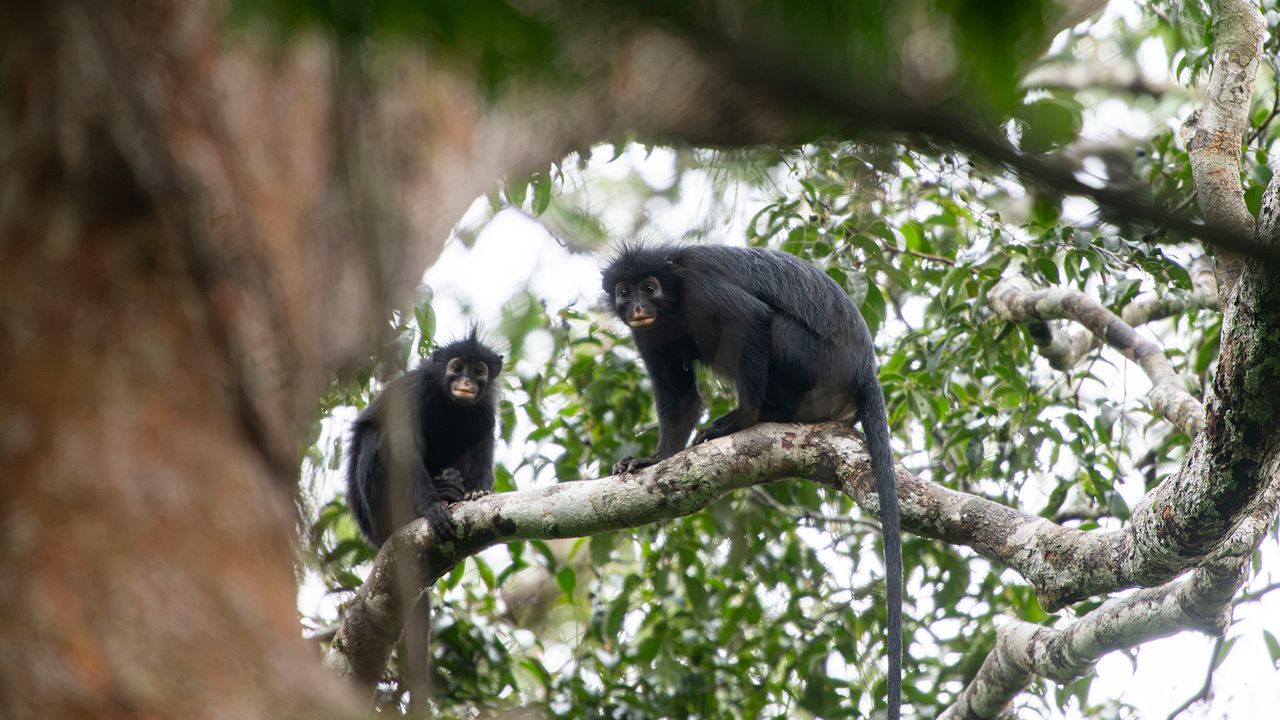
The monkeys, seen hanging out in groups of between one and 20 individuals, are mainly glossy black, but they have a conspicuous orange patch around the mouth and nose. Bare gray skin on their cheekbones makes it look as if they're wearing masks. They also have a patch of white fur around the anus.

"We're going with the face and the rump as the two distinctive traits," said study co-author Kate Detwiler, an anthropologist at Florida Atlantic University. "If you see the face, you see this unique bare skin that's orange cream. And then if you're coming from behind, you see this white patch."

Images of three black monkeys in trees.

DNA analysis confirmed C. congoensis was a previously unknown species. (Image credit: Daniel Rosengren, Frankfurt Zoological Society  )

The monkeys, which weigh about 15 pounds (7 kilograms), also make deep, loud roars, punctuated by distinctive snorts. These unique‬ vocalizations distinguish them from other colobus monkeys, Detwiler told Live Science.

By taking samples, and sequencing DNA, from monkeys killed by hunters and destined for the illegal bushmeat trade, and comparing the results with what’s in museum collections and datasets of genetics, skulls, teeth and pelts for other colobus monkeys, the team confirmed that C. congoensis was a previously unknown species.

"My lab got the tissue sample and did the genetics, and we were shocked by how divergent the key area of the mitochondrial genome was from other colobus monkeys," Detwiler said.

A close up of an orange-lipped monkey in a tree

Researchers think the new species diverged up to 5.78 million years ago. (Image credit: Daniel Rosengren, Frankfurt Zoological Society  )

The monkeys live in the same forest as the Angola colobus (Colobus angolensis), but their closest relatives are black colobus monkeys (Colobus satanas), which live around 750 miles (1,200 kilometers) to the west, in Cameroon, Gabon and Bioko Island.

"The fact that the results show that the closest living relative to this new species is the black colobus located 1200 km away in West Africa is equally remarkable," Linder, who was not involved in the new study, told Live Science via email.

Detwiler estimates that these close relatives diverged between 5.78 million and 3.44 million years ago ‪—‬ the longest known split between species within the Colobus genus. "The discovery is reshaping our understanding of African monkey evolution," she said.

Given the small geographic range, rare sightings and increasing habitat loss, the researchers recommend that C. congoensis be classified as endangered on the IUCN Red List.

The discovery also emphasizes the importance of Lomami National Park, where another previously undescribed monkey, the lesula (Cercopithecus lomamiensis), was reported in 2012 by a team that included Detwiler.

The Congolian rainforest ranging across this part of Africa is the world's second-largest tropical forest, after the Amazon, and about 60% of it is in the DRC. "It is a paradise for biodiversity," Amboko said, adding that there might be more undescribed primate species there. "If we are able to discover two big new primate species, who knows how many other new mammals, fish, reptiles or plants there could be?"

What do you know about chimpanzees and great apes? Test your smarts with our primate quiz!
  •  

Robot dog can climb stairs, navigate a forest and bound over logs thanks to new, rapid AI training technique

A four-legged robot has learned to change the way it runs while navigating forests, staircases and obstacle courses. — seamlessly switching between a steady trot and a faster bounding gait without instructions from a human operator.

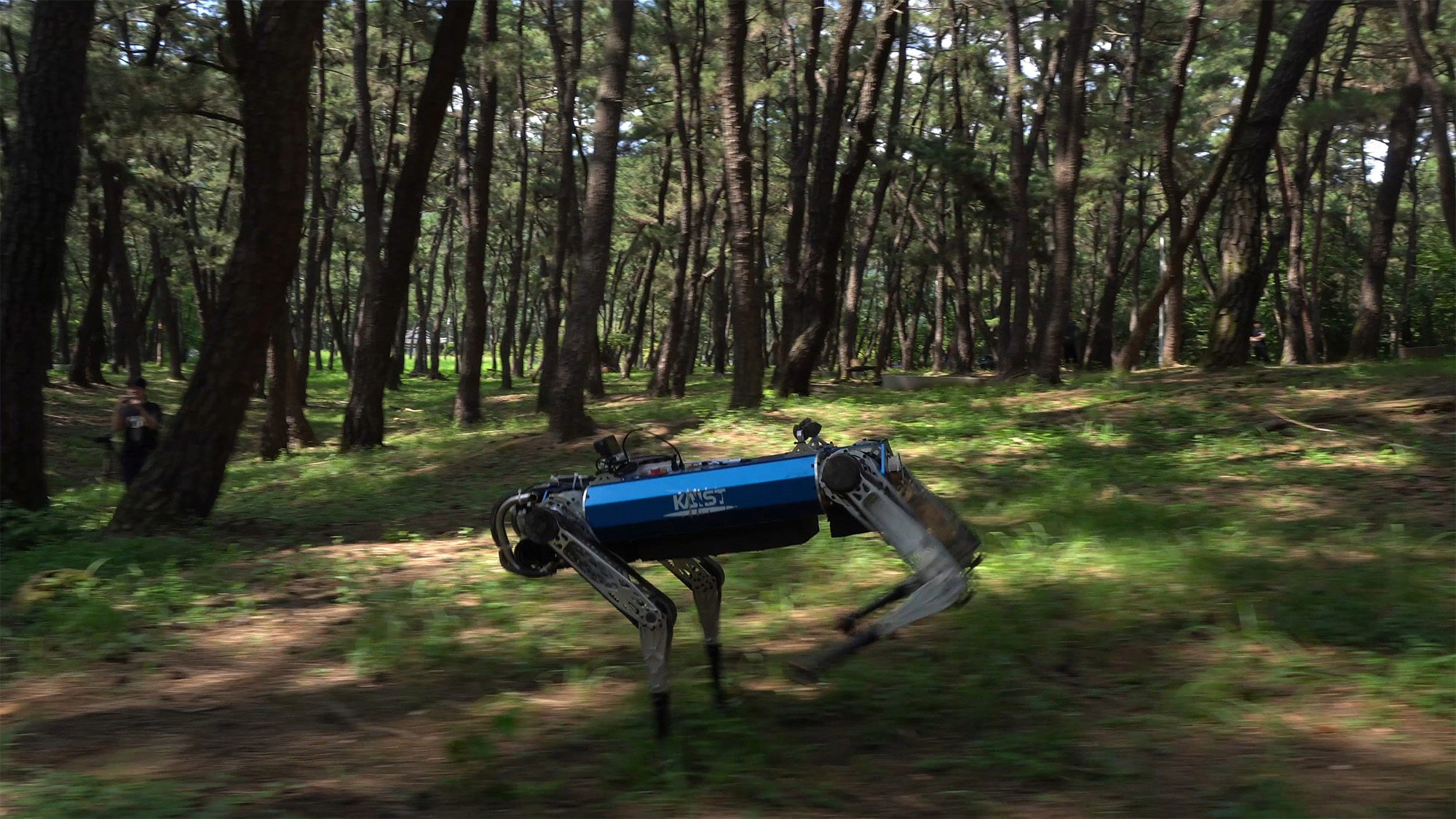
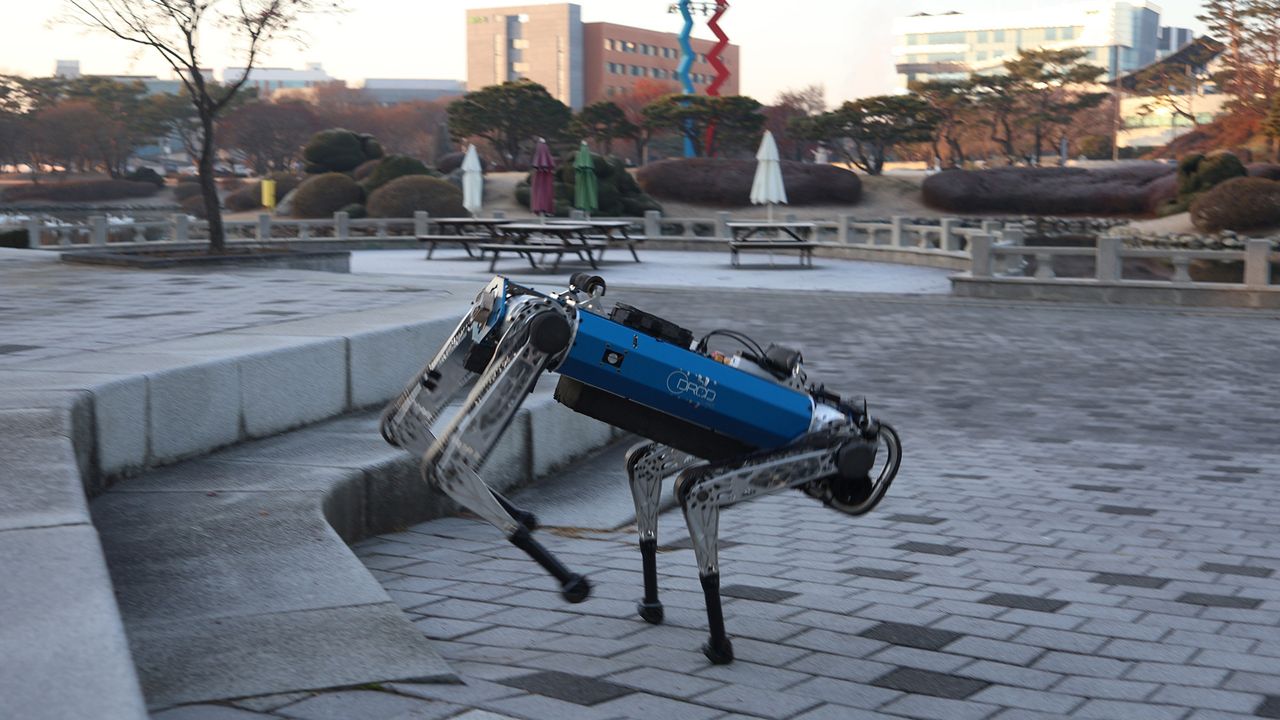
The 100-pound (45 kilograms) robot, called KAIST HOUND, uses cameras and lidar to scan the ground ahead, then selects an appropriate gait and adjusts its movements in real time. In outdoor tests, it crossed a 0.7-mile (1.1- kilometers) university campus route and a 0.2-mile (0.3 km) forest trail strewn with roots, logs and slippery leaves.

The researchers described the robotic framework on July 15 in the journal Science Robotics.

Changing gait

Animals naturally change their gait depending on their speed and surroundings. A dog might trot carefully across uneven ground, for example, before bounding over a fallen branch. Reproducing this adaptability in robots is tricky because different movements are often controlled by separate, highly specialized coding systems, and transitions between them can cause a lag that drives the robot to stumble.

To overcome this issue, researchers developed a special training framework called action pretrained transformer–based reinforcement learning (APT-RL). This is an artificial intelligence (AI) training system that first studies many examples of actions, uses a transformer to understand patterns across those actions, and then improves through rewards and penalties.

The training began with a simple, two-dimensional computer model of the robot. Using trajectory optimization — a technique that calculates physically workable movements for the robot — the team generated 180,000 short trotting and bounding sequences, including the joint forces the robot's legs need to perform. The dataset represented about 15.5 hours of movement but took only around eight minutes to produce.

During reinforcement learning — a machine learning technique where AI learns to make the best decisions by engaging with a particular environment through trial and error — an AI system then learned how to select and modify those skills while negotiating simulated stairs, stepping stones, hurdles, gaps and rough ground.

In digital simulations, the robot dog was not limited to copying its prerecorded movements. It could also make corrections for three-dimensional terrain and unexpected situations, such as jumping over a log — a behavior that wasn't included in the original, flat-ground training data.

A four-legged robot dog with a blue torso runs through a forested landscape.

The KAIST HOUND quadrupedal robot navigates a forested terrain (Image credit: Jun-Gill Kang, Jaehyun Park)

Finally, the researchers configured the system to include the robot's depth camera and lidar scanner in the simulation.

In one indoor test, HOUND bounded across an obstacle 2 feet (60 centimeters) high while briefly achieving 9.5 mph (15 km/h). It also jumped down a three-step staircase. The robot generally chose trotting at lower speeds on irregular ground, while bounding became more common at higher speeds or when it encountered larger steps, hurdles or gaps. The AI system that could select either gait performed more consistently across the different simulated environments than the version restricted to trotting or bounding alone.

The researchers suggest the technology could eventually help robots navigate disaster zones or other places inaccessible for wheeled machines. However, the current framework only allows two gait choices and mainly handles forward movement. Rapid turning, sideways motion and other behaviors like crawling remain future goals for the research team.

  •  

'Smaller than the tiniest scale in nature': Physicists made a black hole out of light and used it to test Stephen Hawking's elusive radiation theory

Physicists have coaxed a black hole's most famous glow out of a strand of optical fiber and, for the first time, watched that light react back on the simulated black hole that produced it.

The result gives researchers a rare, hands-on look at Hawking radiation ‪—‬ the faint thermal emission that Stephen Hawking predicted should leak out of black holes ‪—‬ and offers a first clue about the tiny push that could, in principle, make a real black hole slowly evaporate, the research team said in a new study.

Working with a tabletop experiment in optical fibers, the international team detected both the radiation and its long-sought "back reaction" — the way the radiation feeds energy back and reshapes the object that created it.

According to the new study, published July 1 in the journal Nature, the light behaved exactly as Hawking predicted it should: like the glow of a warm object, with a definite temperature and a spectrum that fades away steadily toward higher frequencies. It did so even in a regime where the usual textbook description of a black hole should break down.

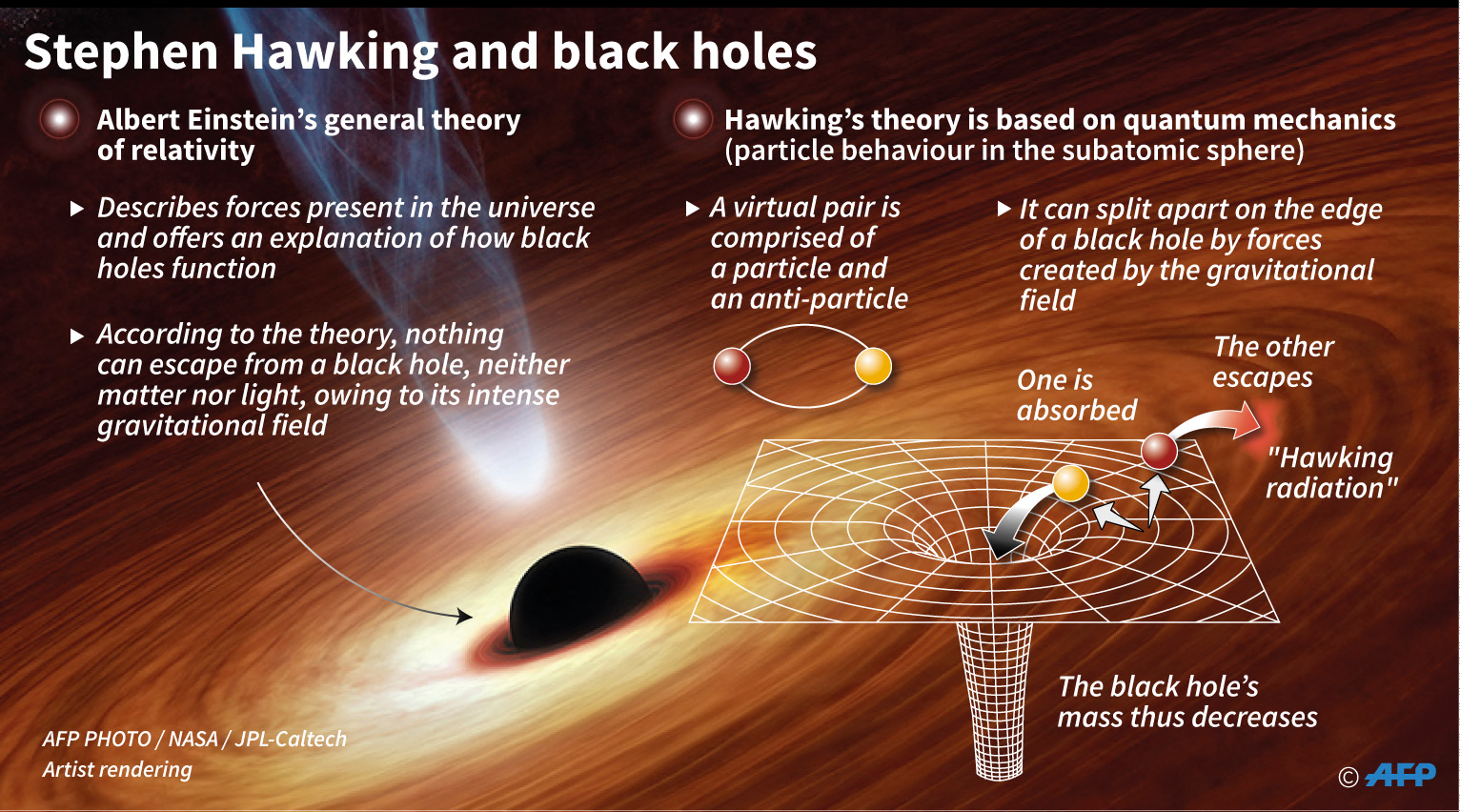
Illustration of two theories by Einstein and Hawking regarding black holes (Graphic by AFP)

An infographic explaining how Hawking radiation works, contrary to the predictions of general relativity. (Image credit: ALAIN BOMMENEL,VALENTINA BRESCHI,WILLIAM ICKES via Getty Images)

Where three great theories collide

Hawking radiation is famous because it sits at the crossroads of physics' biggest ideas.

"Jacob Bekenstein predicted that black holes have an entropy and a temperature, and Hawking calculated the thermal radiation of the black hole," study co-author Ulf Leonhardt, a physicist at the Weizmann Institute of Science in Israel, told Live Science via email. "In Hawking-Bekenstein radiation, quantum physics, general relativity and thermodynamics come together — subjects that are normally in conflict with each other."

The conflict runs deep: General relativity pictures space and time as smooth and continuous, while quantum mechanics describes a world of discrete, unpredictable jumps ‪—‬ and no one has managed to fully reconcile the two.

That combination is exactly what makes Hawking radiation so hard to study. Astronomers have never seen Hawking radiation from a real black hole and probably never will; the glow is far too faint to pick out across the cosmos. So physicists have turned to laboratory stand-ins that obey the same equations, building black hole analogues out of flowing water, ultracold atoms and, as in this study, light.

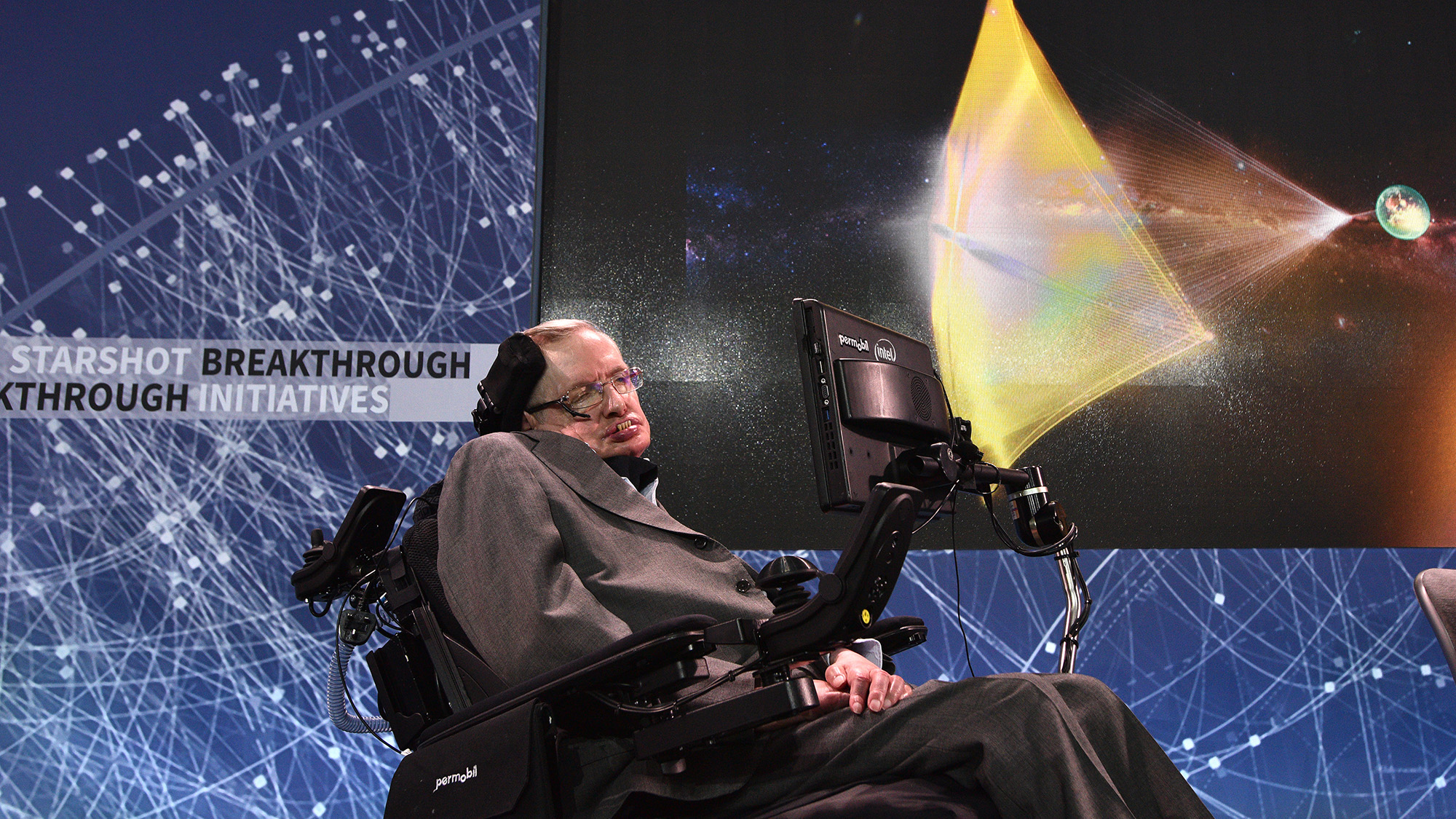
A man in an electronic wheelchair stands in front of a projector screen with various space images on it

Physicist Stephen Hawking that black holes should be able to lose information through an elusive type of radiation. New research zooms in on the mechanism that makes it possible. (Image credit: Bryan Bedder / Stringer via Getty Images)

Building a black hole from light

The trick behind every black hole analogue is a moving medium. "Imagine a swimmer in the sea with a current faster than he can swim," Leonhardt explained. "He is swept away. This is what happens beyond the [event] horizon, and this is why normally nothing can escape the black hole."

A black hole's event horizon is the boundary where that current — space itself, in real life — starts moving faster than anything can travel. To recreate it, the team needed a material that appears to rush along at the speed of light. Their solution was elegant: use light to make the "material."

"In optics we need a material that appears to move at the speed of light," Leonhardt said. "For this we use light itself — in nonlinear optics, light acts like a material."

In practice, the researchers fired an intense, ultrashort "pump" pulse into a thin photonic-crystal fiber — a strand of glass threaded with a pattern of tiny air channels running along its length, which lets researchers fine-tune how light moves through it. As it traveled, the pulse slightly changed how the glass bent light, creating a moving speed bump that raced along with it. A second, much weaker "probe" pulse then ran into this moving front. Where the probe could no longer keep up, an artificial horizon formed — and the black hole analogue was born.

Catching the glow and its pushback

The payoff came in the ultraviolet. According to theory, Hawking radiation is created in pairs: One partner escapes, while the other, carrying "negative" energy, is the mirror image that would fall into a real black hole. In the fiber, that partner showed up as ultraviolet light.

"We counted photons in the ultraviolet that correspond to the Hawking partners beyond the horizon," Leonhardt explained. "They have a wavelength around 233 nanometers. This was our signal."

Just as important as seeing the glow was understanding how it was made. For years, researchers assumed the fiber built up its Hawking radiation through a cascade — a chain of separate steps in which the light is converted first into one intermediate form, and then another, each feeding the next before the radiation finally emerges. The team found that, instead, a single, direct interaction does the job, with the pump and probe light producing the Hawking pair in one clean step. It is a much simpler picture that the researchers said may carry over to other analogues and perhaps even to real black holes.

Because energy has to come from somewhere, making Hawking radiation should nudge the source that created it. For a real black hole, that nudge is how it loses mass and, over unimaginable timescales, evaporates entirely — the process Hawking described in his landmark 1974 paper. No experiment had ever captured that recoil.

Here, the team saw it. Producing the radiation shifted a small fraction of the pump pulse's own light to a slightly different color, leaving a telltale lopsided pattern in the spectrum. That asymmetry, absent in earlier experiments, is the fingerprint of the back reaction, or recoil — the black hole analogue quietly paying the energetic price for its own glow.

The road to a quantum experiment

The result also speaks to one of the thorniest puzzles in black hole physics: the trans-Planckian problem. Trace Hawking's radiation back to where it was born and the calculation runs into territory no physicist can vouch for — the Planck scale, the vanishingly small size at which space and time are thought to lose their familiar meaning and all known physics gives out. Hawking's prediction, in other words, appears to rest on a foundation that may not exist.

"Any light getting away from the horizon is stretched out enormously," Leonhardt said. "So it must come from waves smaller than the tiniest scale in nature, where the physics is unknown. Would that still give Hawking radiation? That was the question, and we have answered it in our experiment." Remarkably, the glow stayed perfectly thermal even in this extreme regime.

The team's next step is concrete. So far, they have used ordinary laser light, which reproduces the spectrum of Hawking radiation but not its deepest quantum weirdness. Next, the team plans to "go quantum," Leonhardt said. "We will explore how to get into the quantum regime and observe quantum features such as entanglement" — the ghostly link that should tie each escaping Hawking particle to its lost partner.

See how much you know about black holes with our black hole quiz!

  •  

We tested Canon’s $10,000 wildlife zoom — can it replace a prime lens?

When it comes to the "silly money" category of lenses, they are typically those ridiculously long prime lenses that make your arms ache just by looking at them. They provide incredible image quality but lack the versatility of a zoom. Enter the Canon RF 100-300mm f/2.8L IS USM: With a constant f/2.8 aperture throughout the entire 100-300mm focal range, this lens is a serious contender for wildlife pros and sports photographers.

Of course, at an eye-watering $10,500, it's not for everyone. It's not even for "many people"; it's for a select few who either have serious money lying around or make serious money from photography, where a lens of this caliber would be a sensible investment. Still, we took it for a test drive to see just how much better the performance is compared to the more reasonably priced wildlife zoom lenses.

Canon RF 100-300mm f/2.8L IS USM: Design

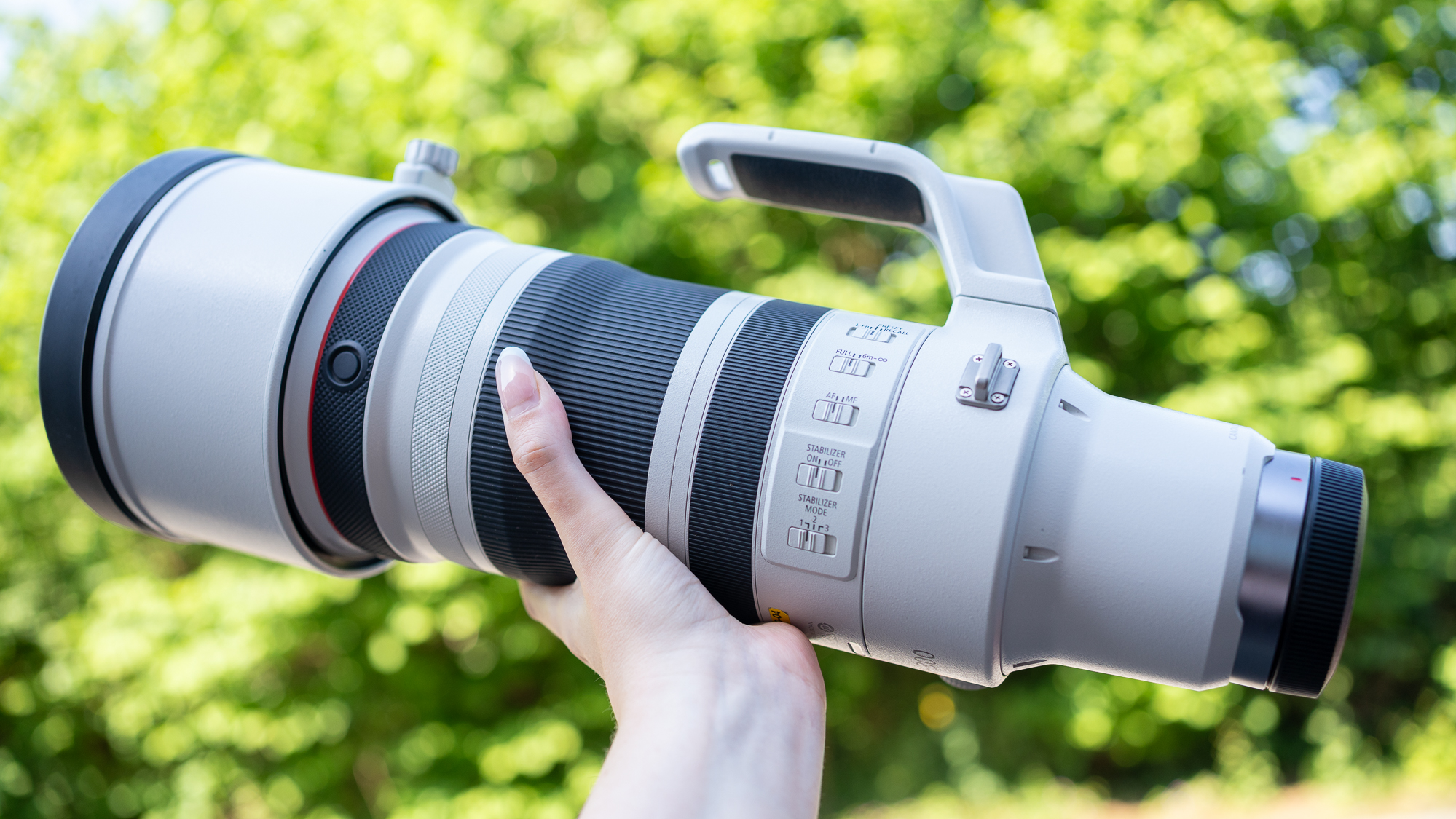
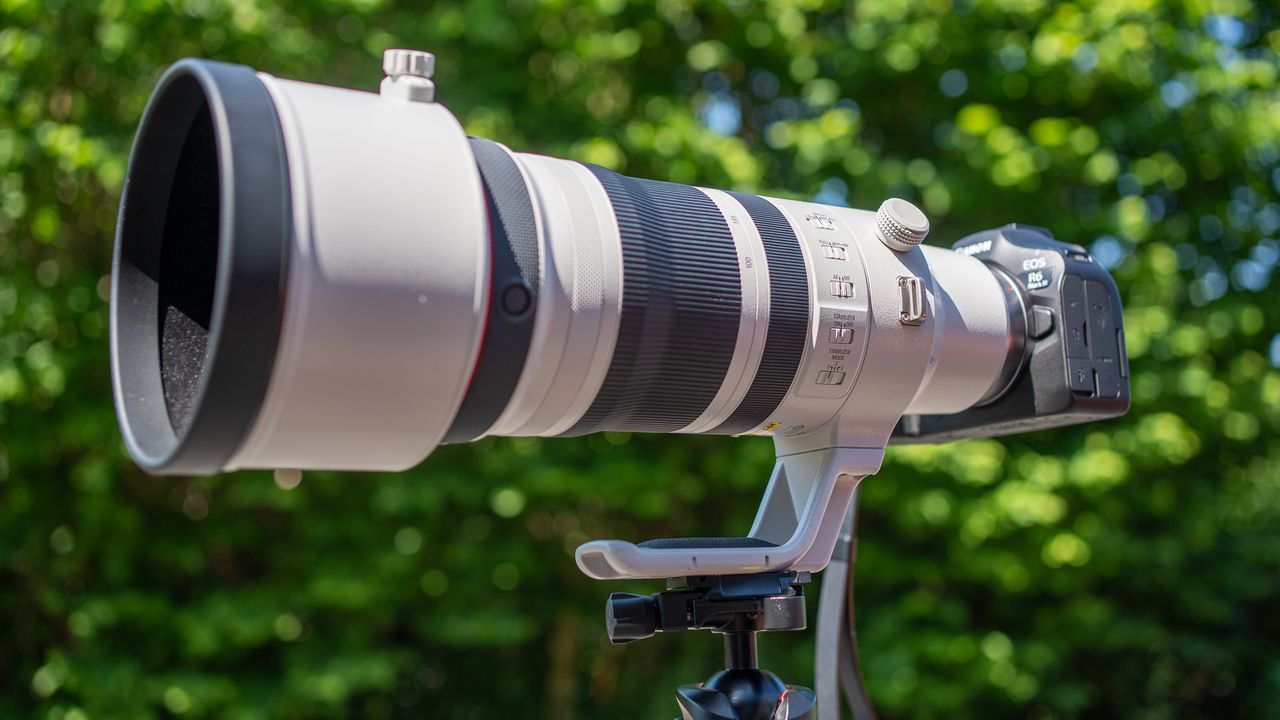
Canon RF 100-300mm f/2.8L IS USM lens against green foliage
Kimberley Lane
Canon RF 100-300mm f/2.8L IS USM lens against green foliage
Kimberley Lane
Canon RF 100-300mm f/2.8L IS USM lens against green foliage
Kimberley Lane
  • Weight is surprisingly manageable
  • Internal zoom
  • Solid and sturdy build quality

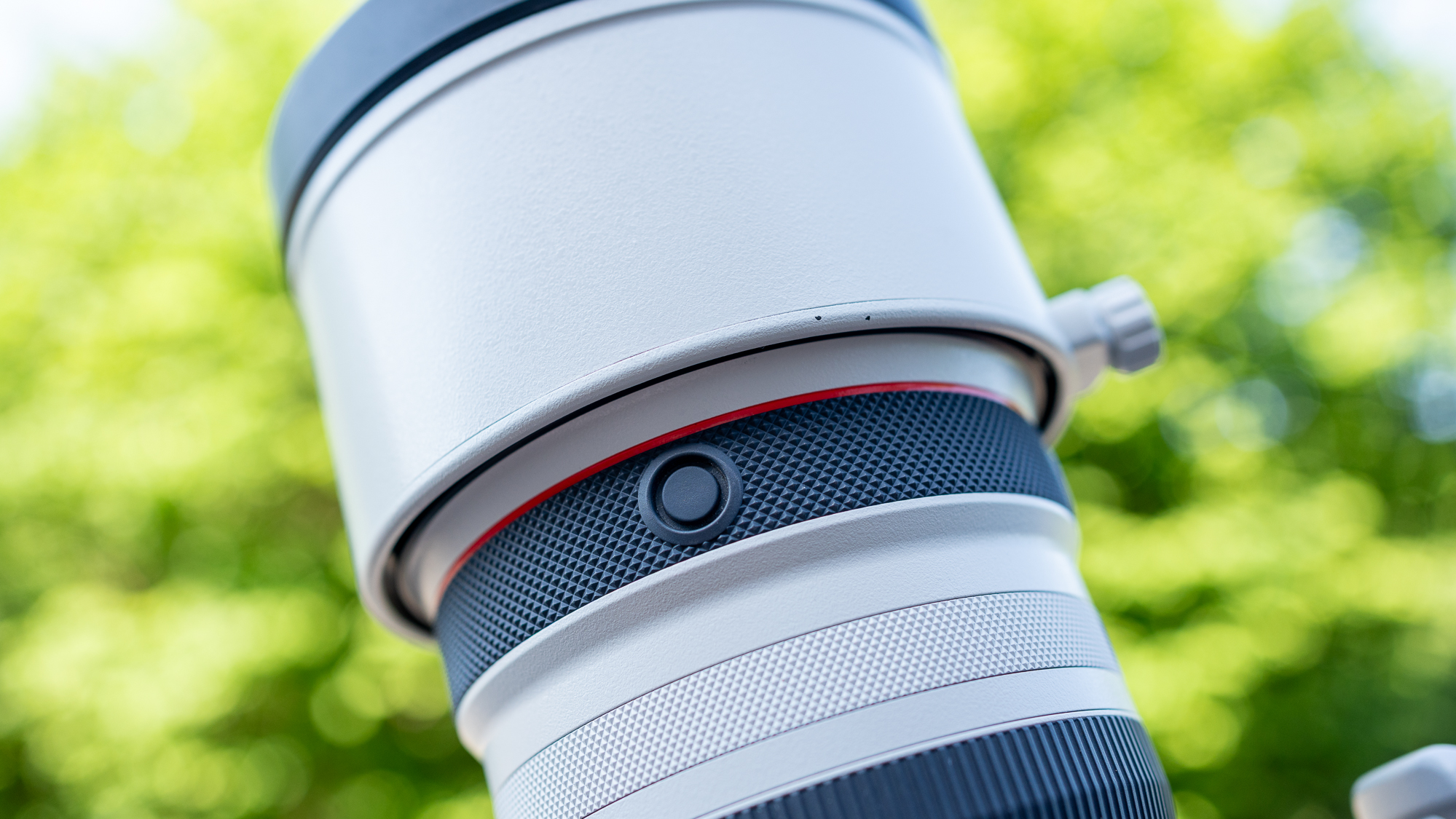
Although its weight is comparable to that of the much cheaper SIGMA 60-600mm Sport lens we tested recently, this lens from Canon is actually the lightest f/2.8 300mm lens on the market. And because the zoom is internal, the weight distribution feels much more manageable in the smaller package than it does on a lens that extends. (But that’s not to say our arms weren’t aching the following day).

It's also dust- and weather-resistant, which we’d expect on a lens that's this expensive. It's solid and sturdy with a plethora of lens coatings to eliminate glare and ghosting, and it feels every bit the professional-grade Canon L lens you would want.

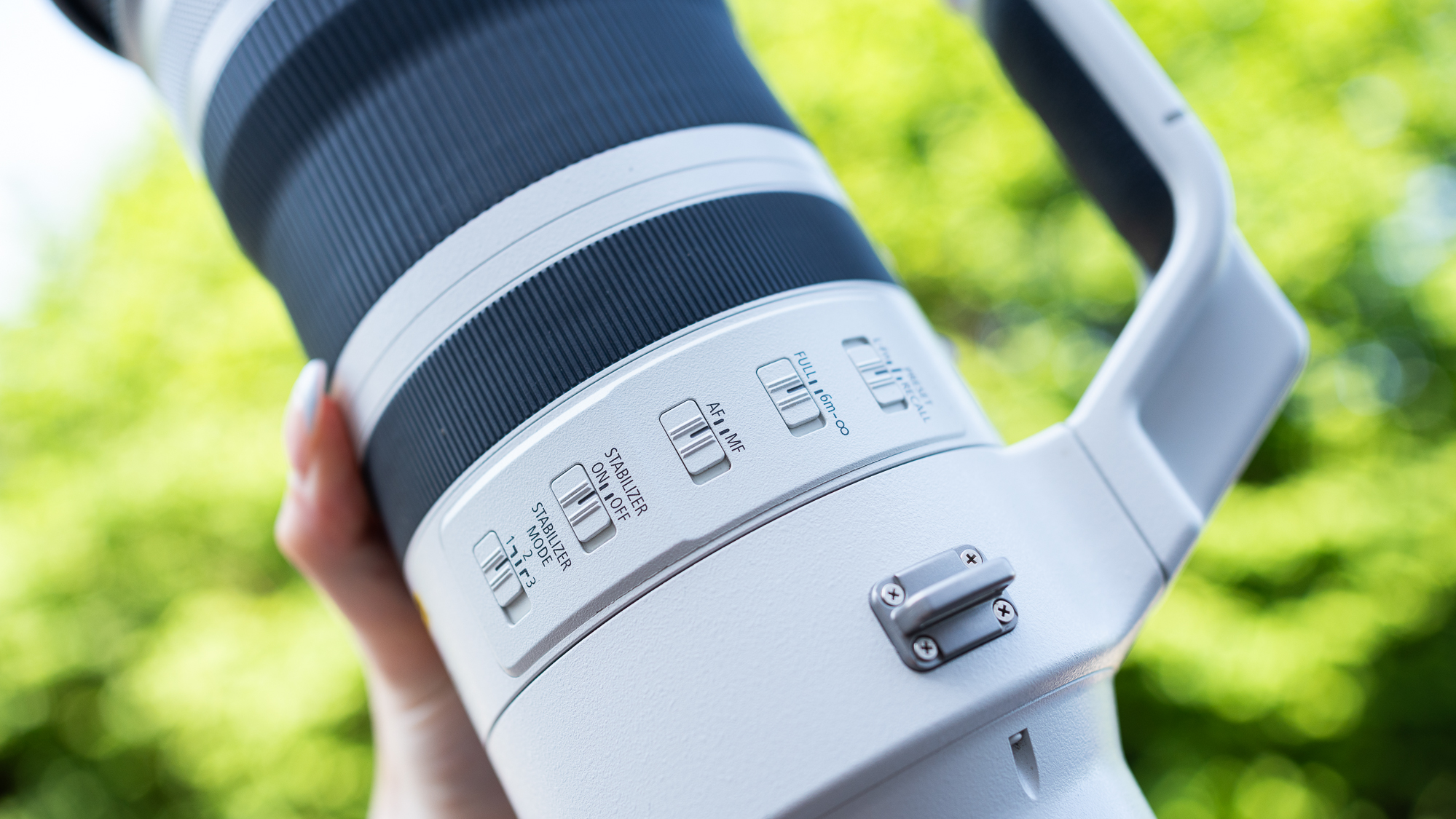
It comes with plenty of buttons and switches on the barrel, including the standard AF/MF switch, focus limiter and IS on/off. It has another switch to choose between three stabilization modes (mode 1 for static subjects, mode 2 for panning and mode 3 for tracking erratic moving subjects).

The final switch is a focus preset button, which enables you to pre-focus on a certain spot where you expect the action to be, then switch back and forth as you're shooting. Alternatively, you can set this switch to L-Fn to utilize it as a programmable function button instead.

Key specs:

Type: Canon full frame, mirrorless
Focal length: 100-300mm
Aperture: Constant f/2.8
Close focusing distance: 5.9 feet / 1.8 m (constant)
Image stabilization: 5.5 stops
Filter thread: 112 mm
Dimensions: 5.04 x 12.73 inches / 128 x 323.4 mm
Weight: 5.7 lbs / 2,590 g

This lens isn't expensive because it introduces any revolutionary build features. It's expensive because Canon has combined every premium design element — internal zoom, magnesium construction, professional weather sealing, compact packaging and meticulous engineering into a lens that is designed to meet the needs of professional photographers.

Canon RF 100-300mm f/2.8L IS USM: Performance

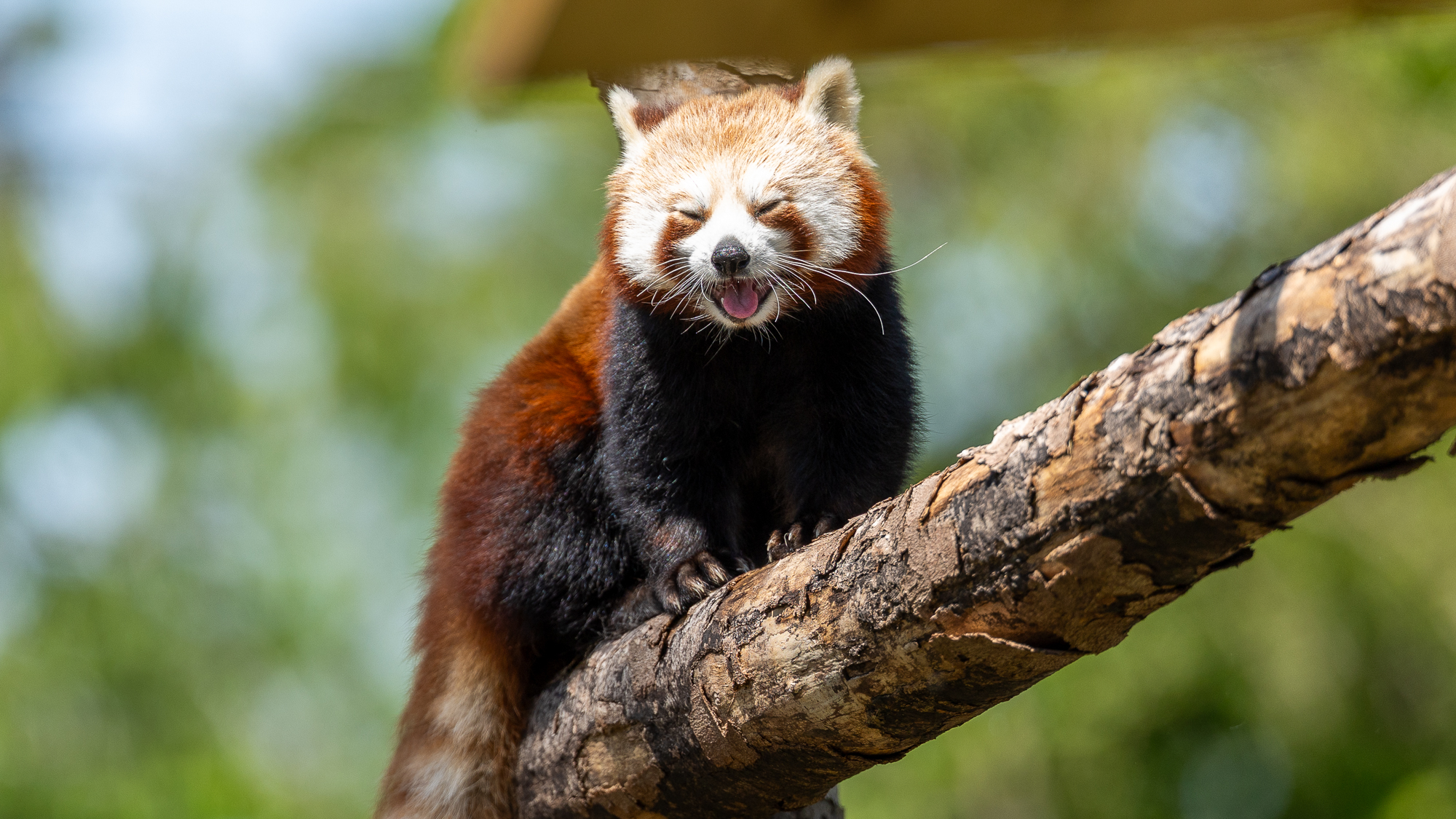
happy red panda sat in a tree
Kimberley Lane
red panda peering over a tree branch
Kimberley Lane
happy red panda sat in a tree
Kimberley Lane
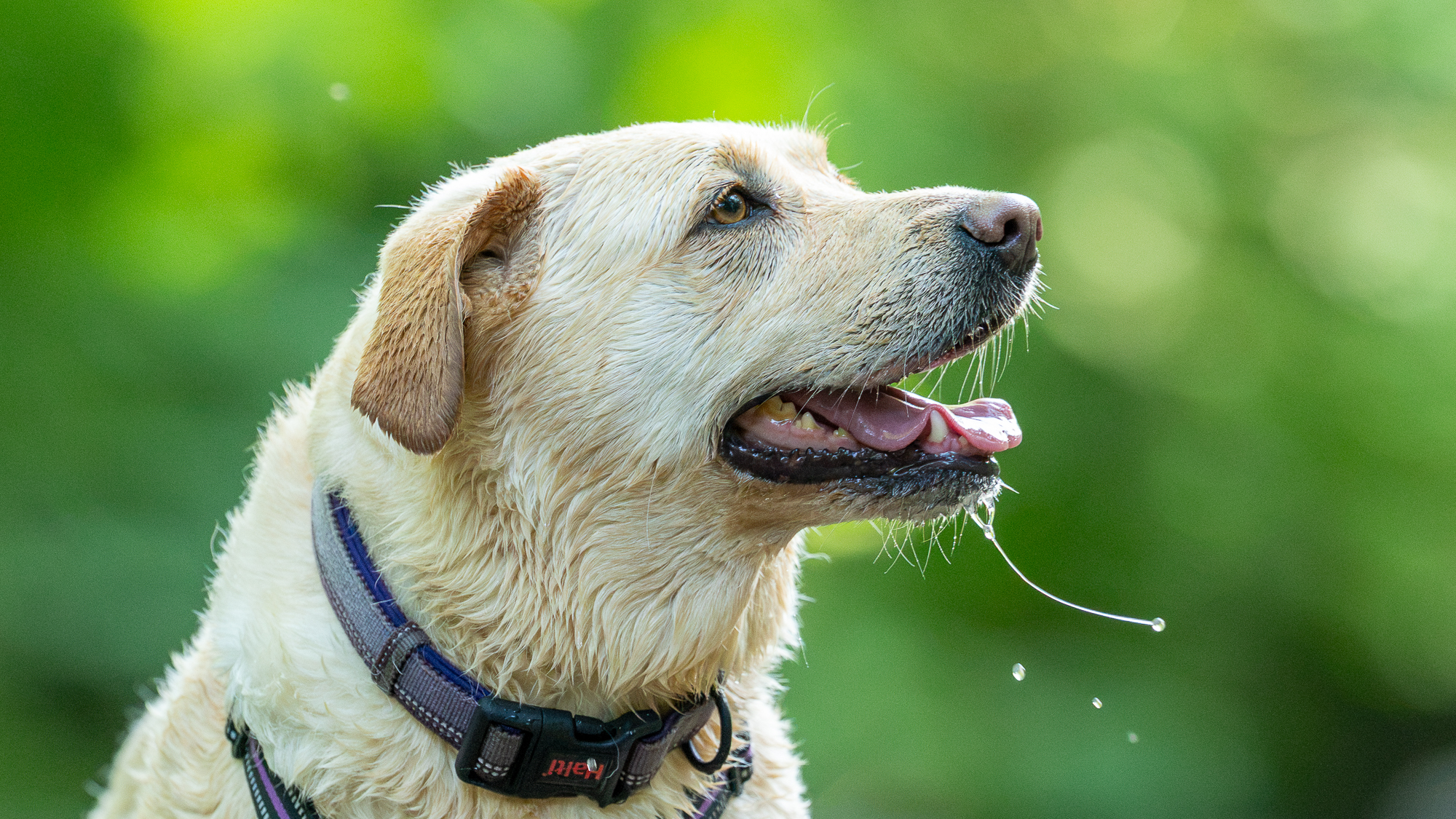
golden labrador looking to the side
Kimberley Lane
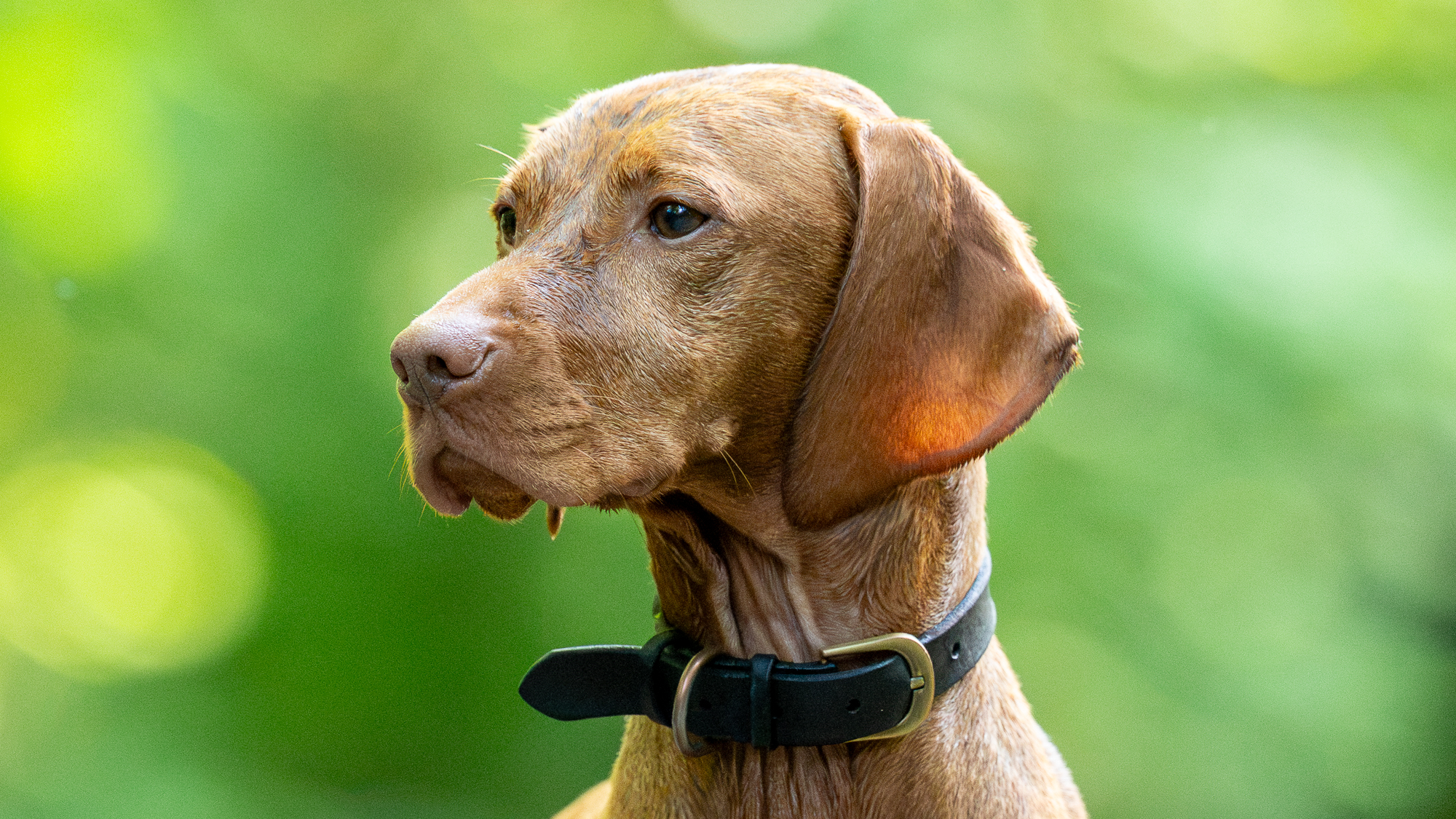
brown dog looking to the side
Kimberley Lane
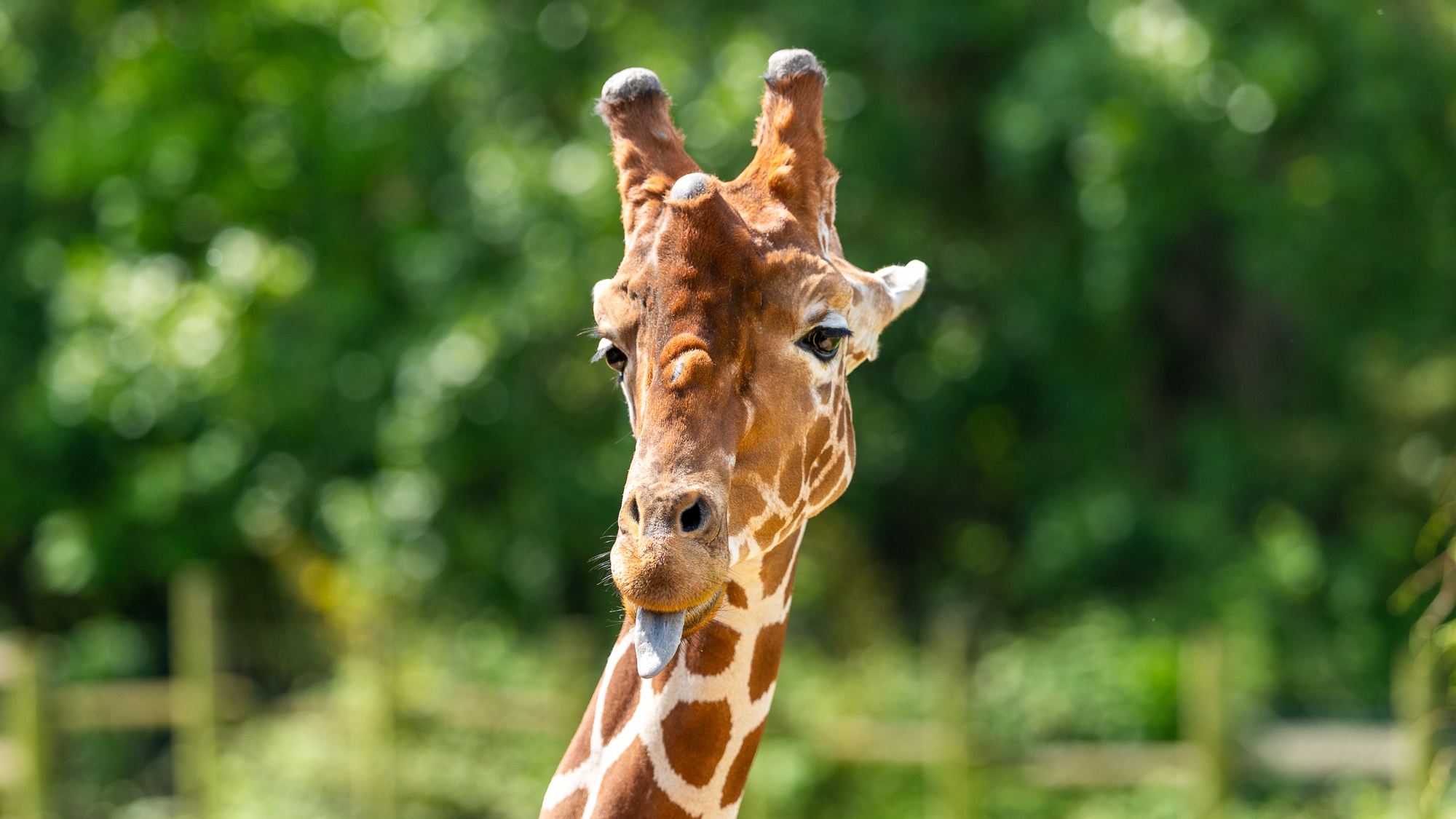
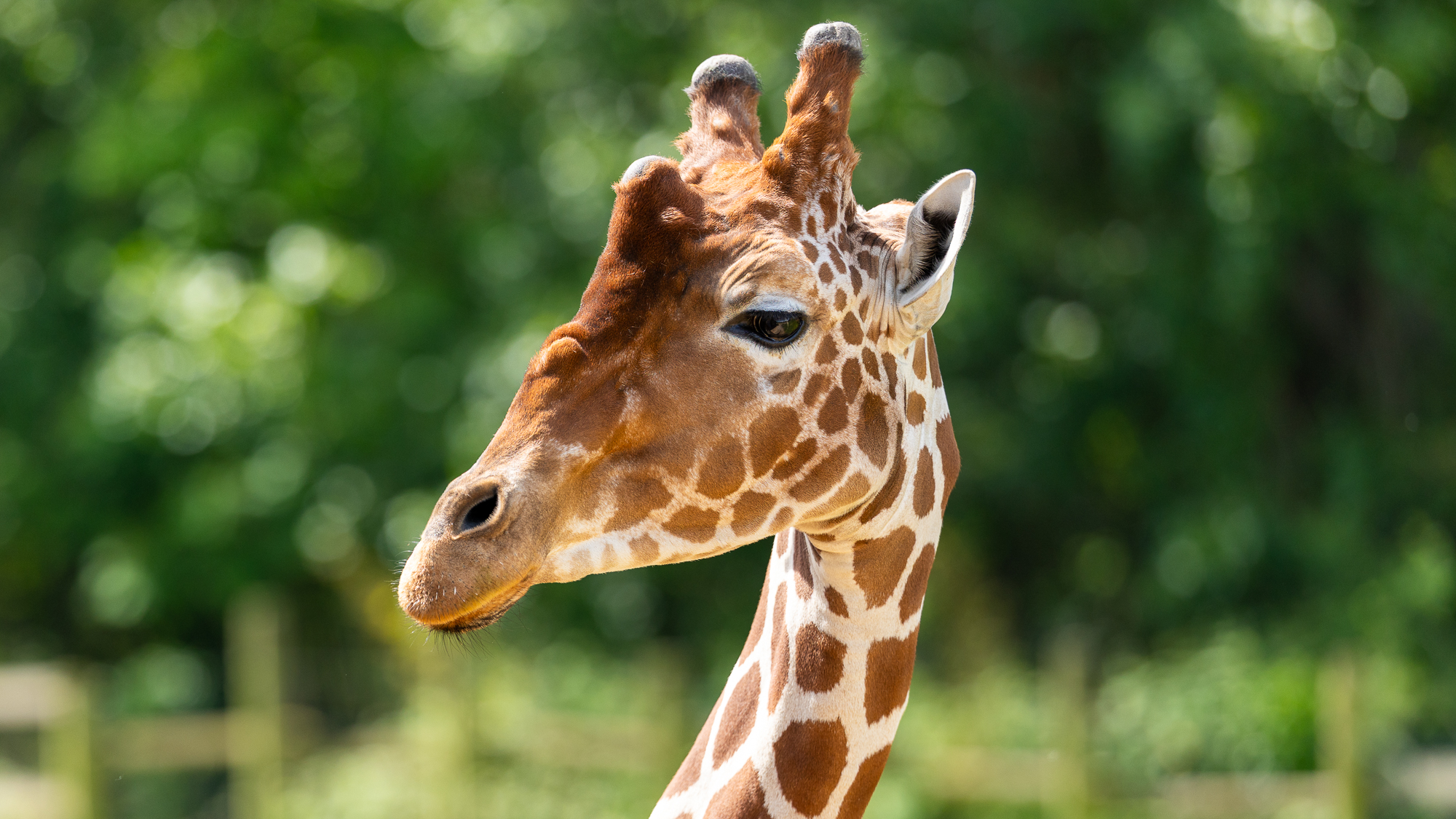
giraffe with its tongue out
Kimberley Lane
  • Outstanding image quality
  • Basically no image defects
  • Beautiful bokeh

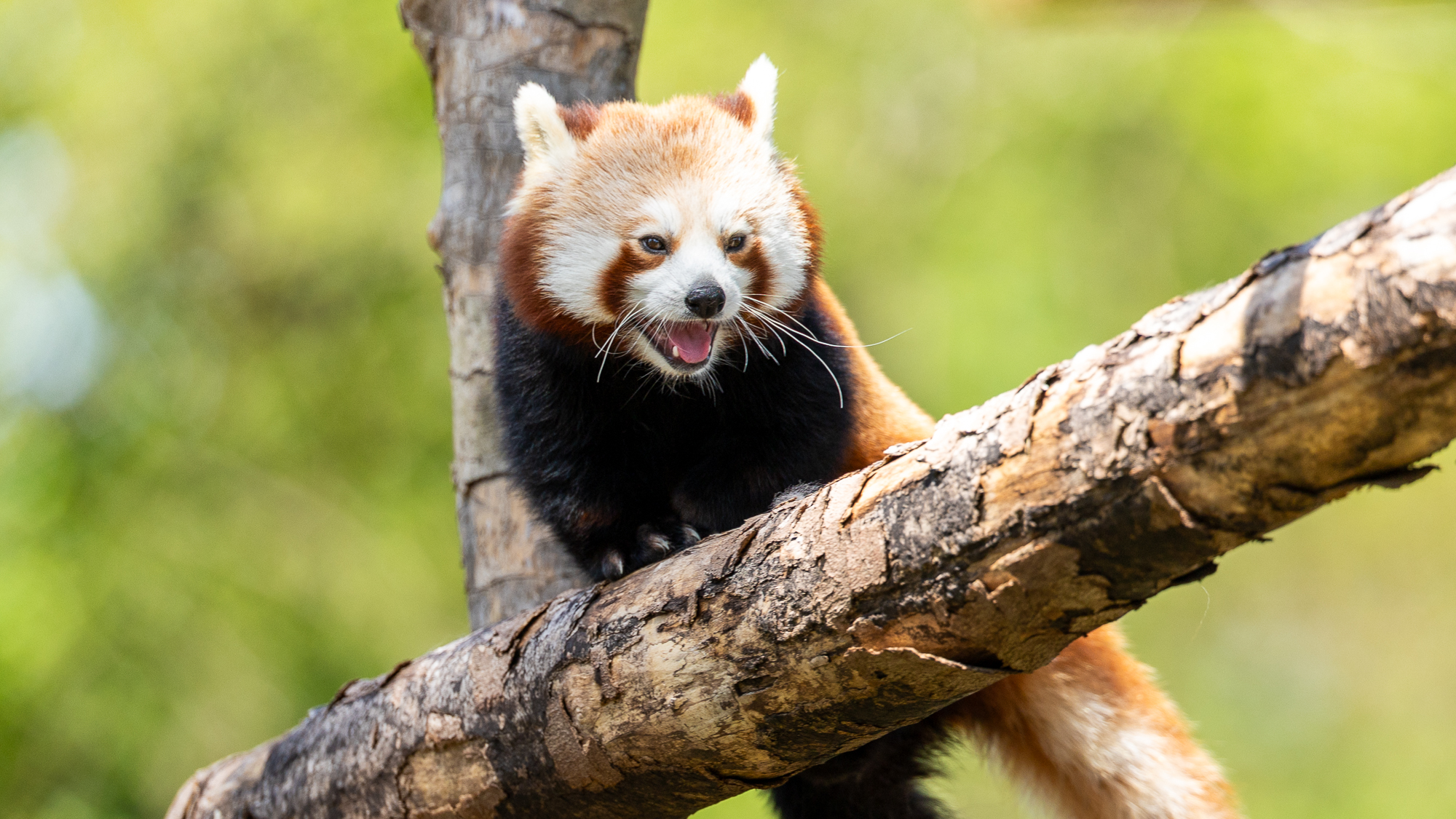
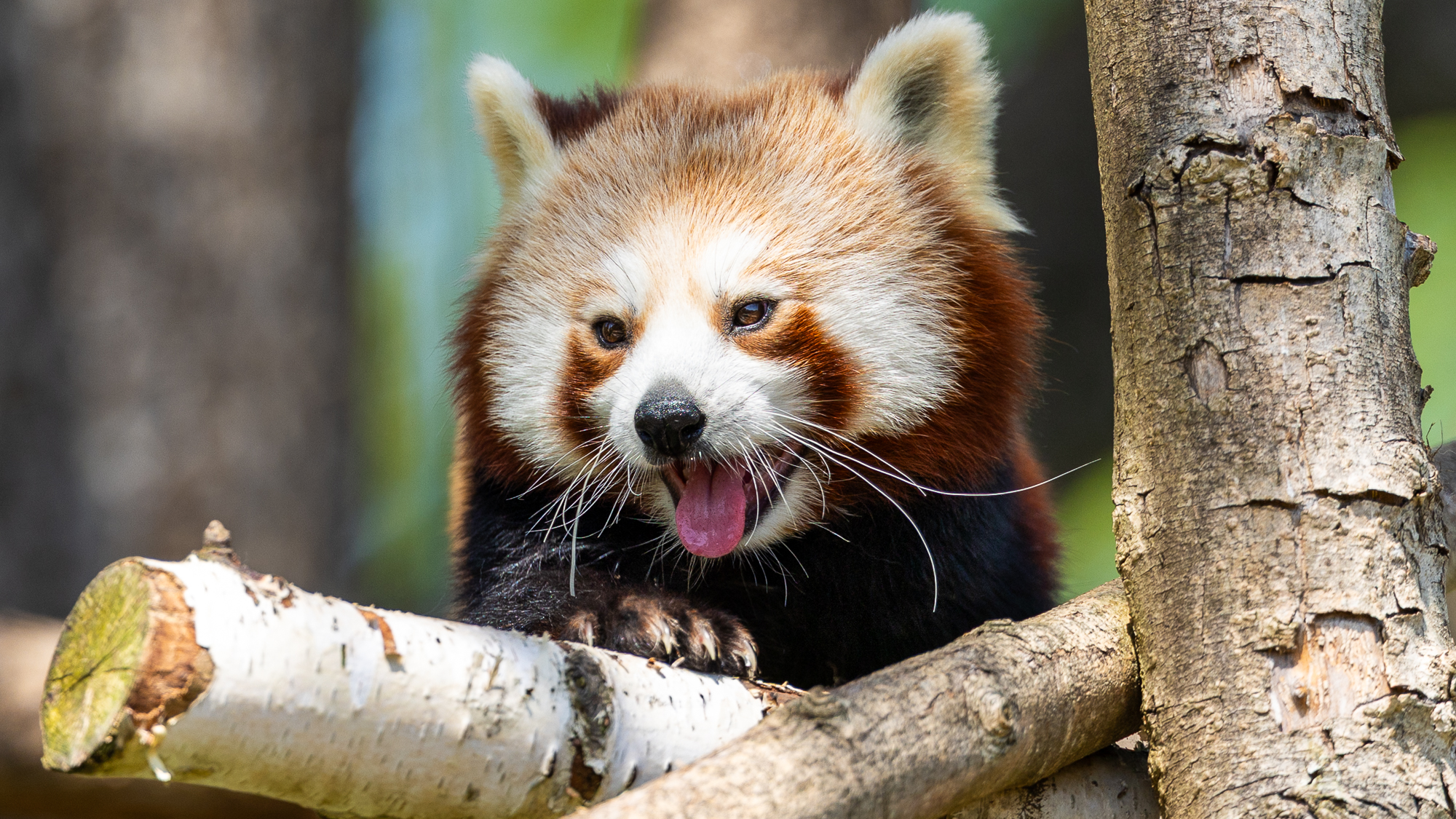
Image quality is, unsurprisingly, absolutely beautiful. The shots we took are razor-sharp and clean with basically no defects whatsoever. There's a tiny bit of distortion, which is easily corrected in Lightroom (and wouldn't be detectable unless you were directly comparing the before/afters), but the images have no chromatic aberration or vignetting at all.

This lens shows every strand of fur or feather and effortlessly captures the moment perfectly every time. The bokeh is soft and creamy thanks to the constant f/2.8 aperture, which beautifully isolates the subject and blurs out distracting background elements.

We took images at f/2.8, f/4, f/5.6, f/8 and f/11 at 100mm, 200mm and 300mm to see how the lens performs across a variety of settings. Looking at the center portion of our test chart shots, the sharpest images are f/5.6 at 100mm, f/2.8 at 200mm and f/2.8 at 300mm. At 100mm, our f/2.8, f/4 and f/5.6 shots were all of similar quality in terms of central sharpness, but f/5.6 has the edge when it comes to contrast.

Those same three apertures were also very similar at 200mm, but in this instance, f/2.8 has the edge. At 300mm, there was a significant drop in contrast between f/2.8 and f/4, but both images were of similar sharpness. Unsurprisingly, the corners were sharpest towards the f/8 range, but wildlife photography rarely ever calls for sharpness across the entire frame, so the softer corners at f/2.8 - f/5.6 aren't a dealbreaker.

Canon RF 100-300mm f/2.8L IS USM: Functionality

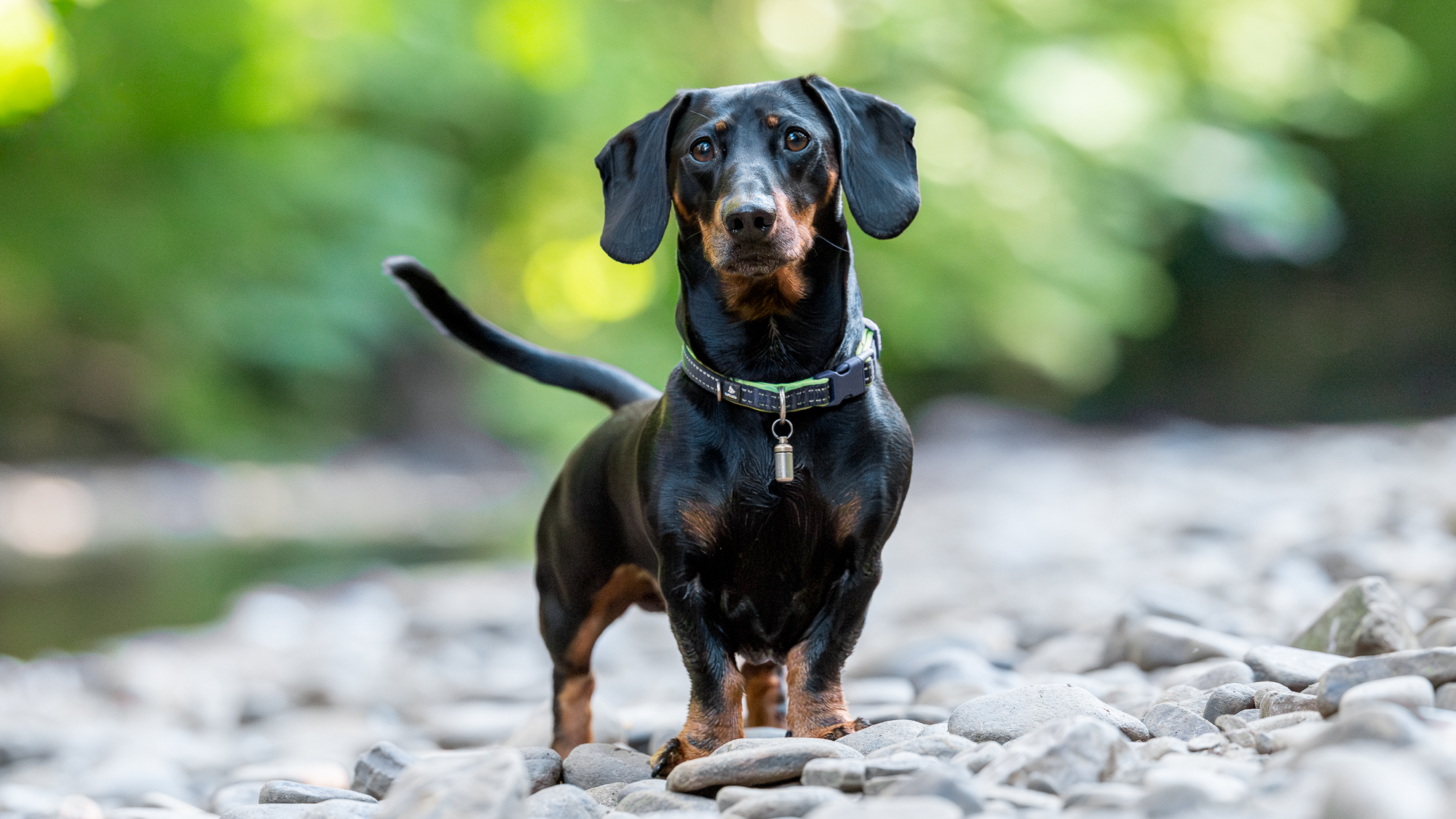
sausage dog stood next to a stream
Kimberley Lane
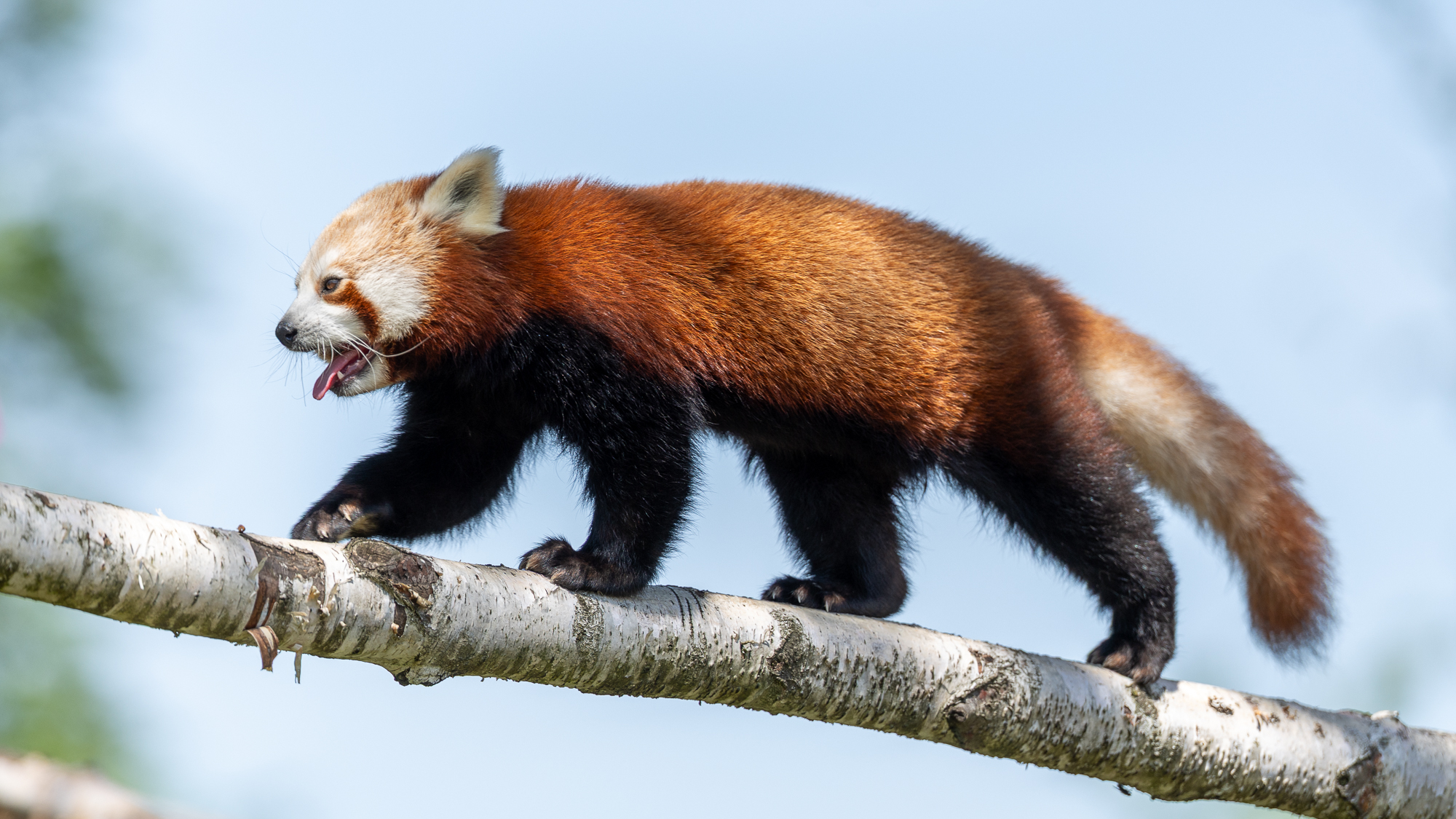
red panda walking along a tree branch
Kimberley Lane
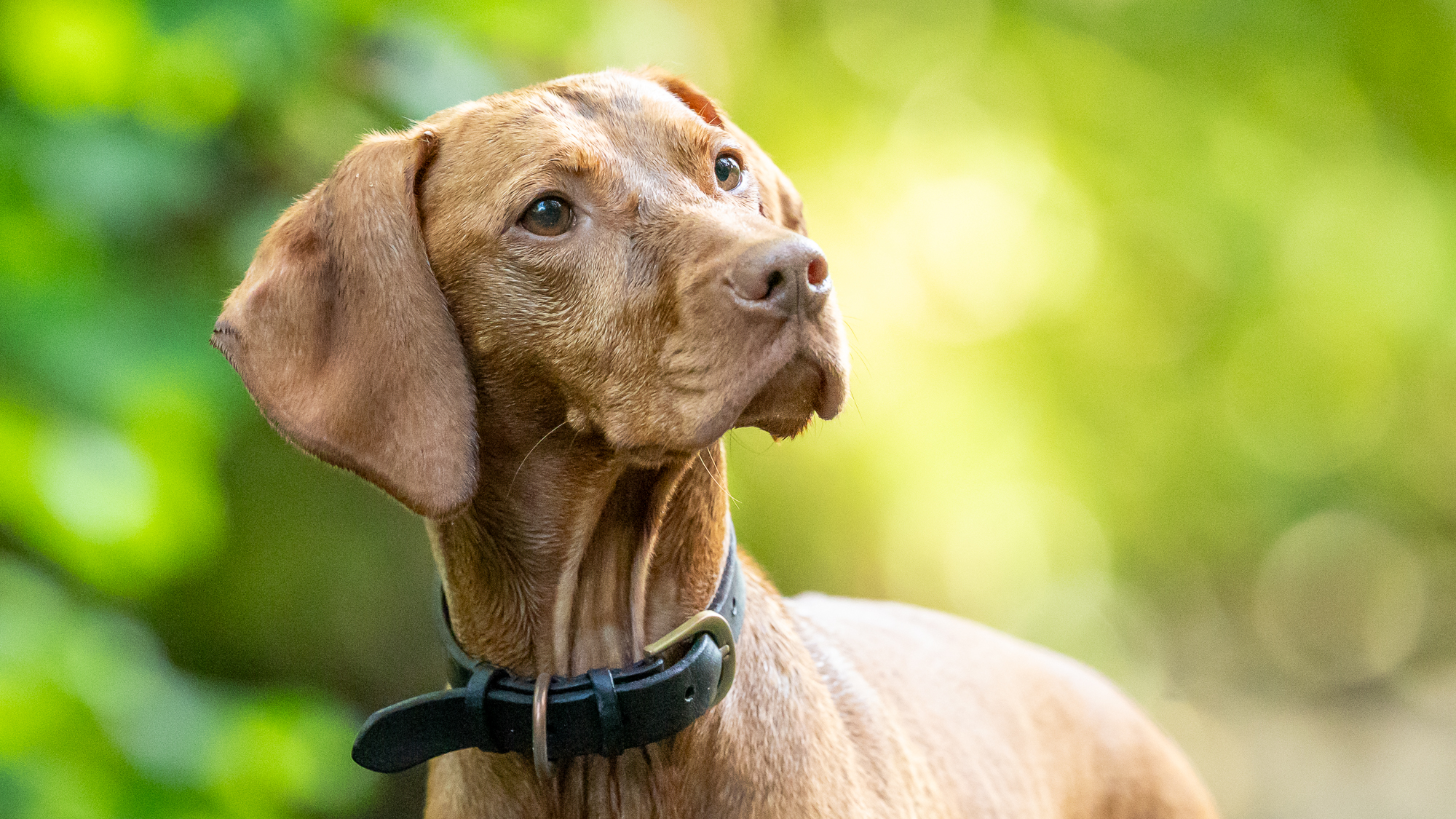
brown dog looking to the side
Kimberley Lane
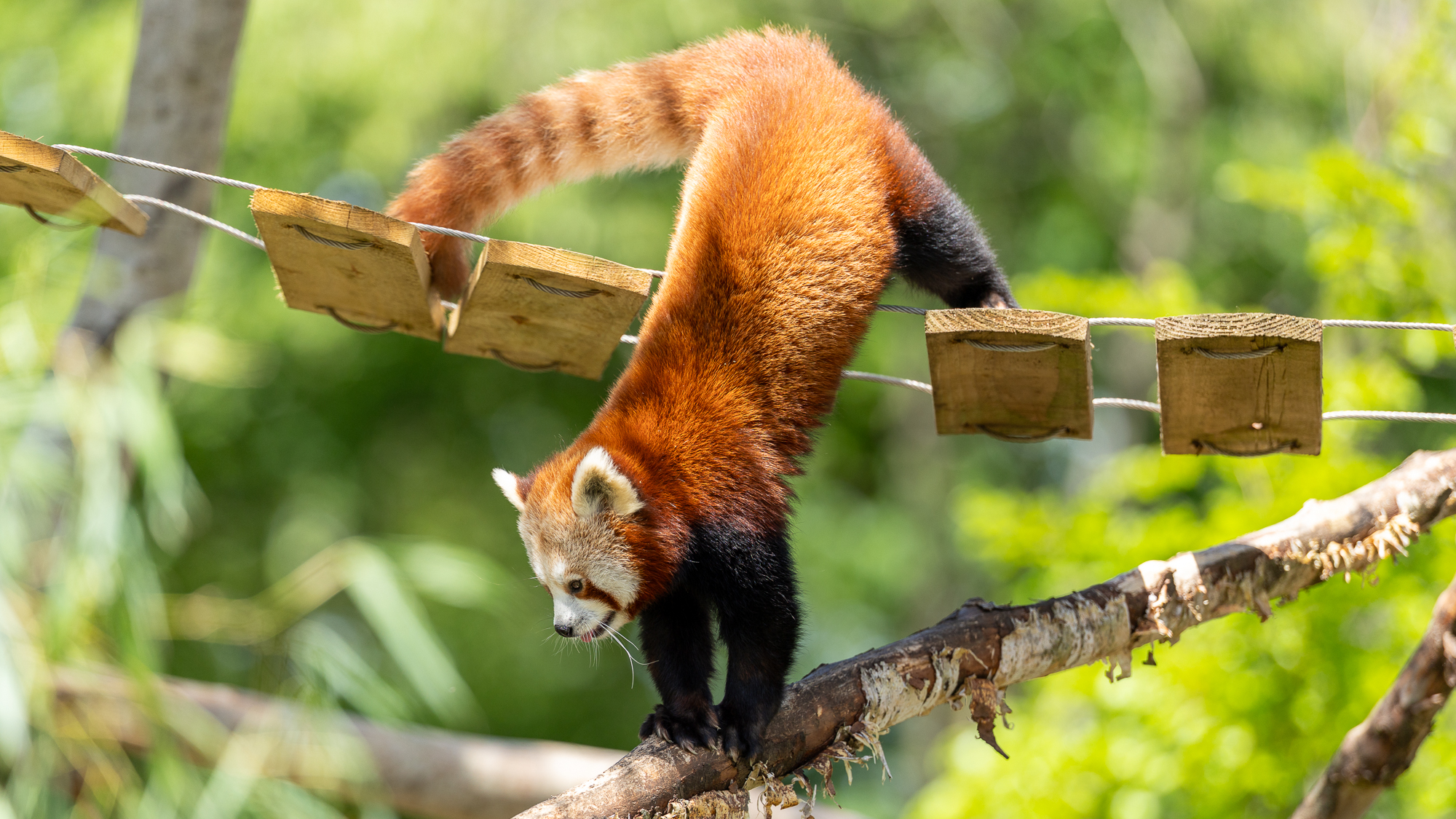
red panda climbing on tree branches
Kimberley Lane
giraffe looking to the side
Kimberley Lane
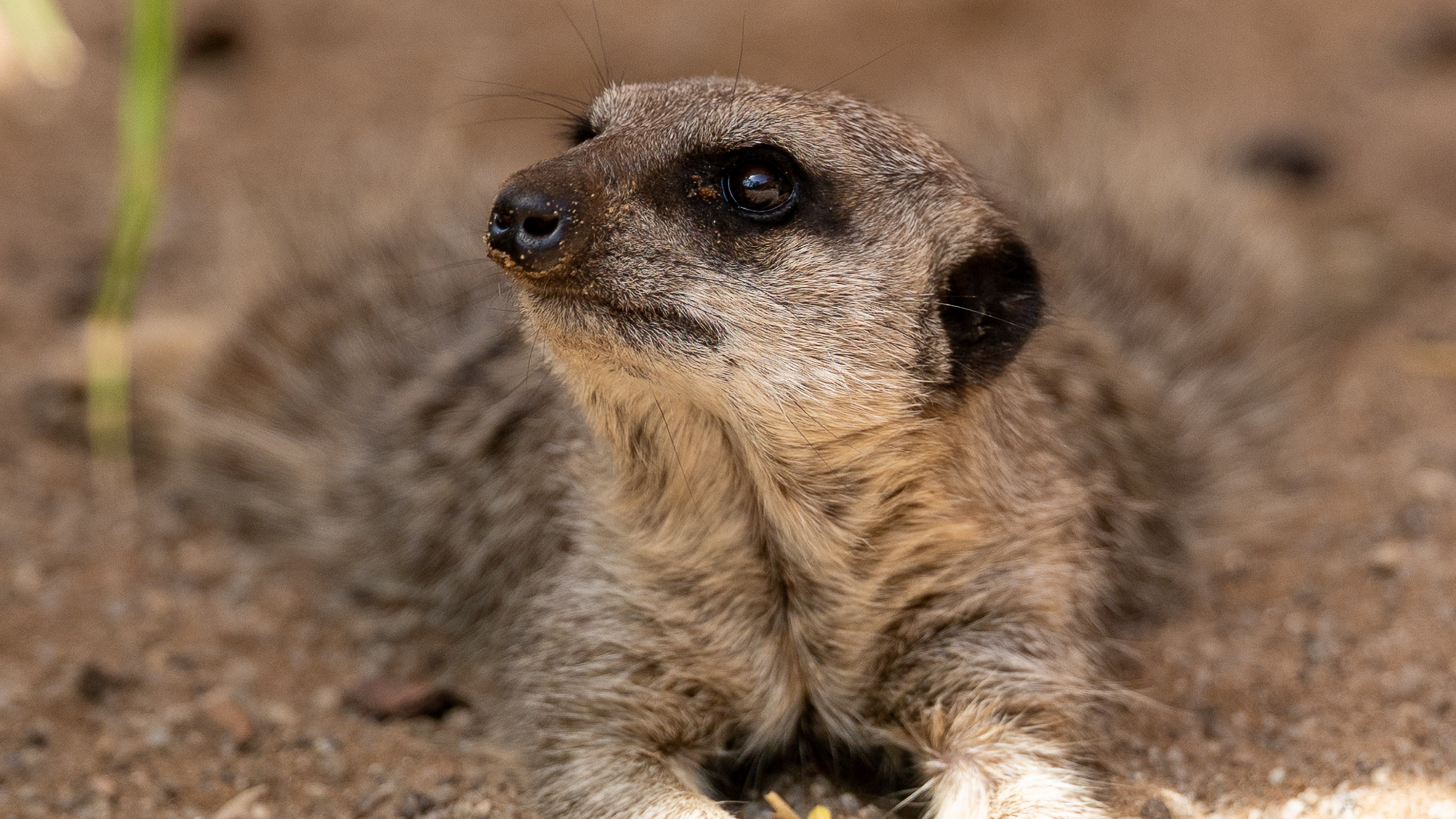
meerkat sat in the shade
Kimberley Lane
  • Constant f/2.8 aperture throughout the whole zoom range
  • 5.5 stops of image stabilization
  • Versatile focal length and teleconverter compatibility

A big selling point with this type of lens is the constant f/2.8 aperture throughout the entire focal range — and this is a common feature with many lenses at this price range. The wide aperture allows for faster shutter speeds, which is ideal for capturing sharp images of fast-moving wildlife or sports photography, and the wide aperture also increases light intake in low-light situations, like photographing animals at dawn or dusk or indoor sports.

Although the 100-300mm focal length wouldn't be the best choice for photographing small birds or distant subjects, it provides a good focal range to cover many other types of wildlife, like equine or safari photography, as well as a variety of indoor sports. While it's not the biggest zoom range on offer, it eliminates the need to switch between lenses while on a shoot.

This, in turn, means faster reactions to changing scenes, less chance of missing shots when the subject moves unexpectedly and better protection from dust and rain due to less swapping. Plus, when paired with the Canon 1.4x teleconverter, this lens becomes a 140-420mm f/4, and a 200-600mm f/5.6 with the 2x extender, opening up the possibilities even further.

With the lens's 5.5 stops of image stabilization (which increases to 6 stops when paired with EOS R cameras with IBIS), this lens has no trouble following fast-moving subjects smoothly and efficiently — which is useful for both image quality and viewfinder steadiness.

Should you buy the Canon RF 100-300mm f/2.8L IS USM?

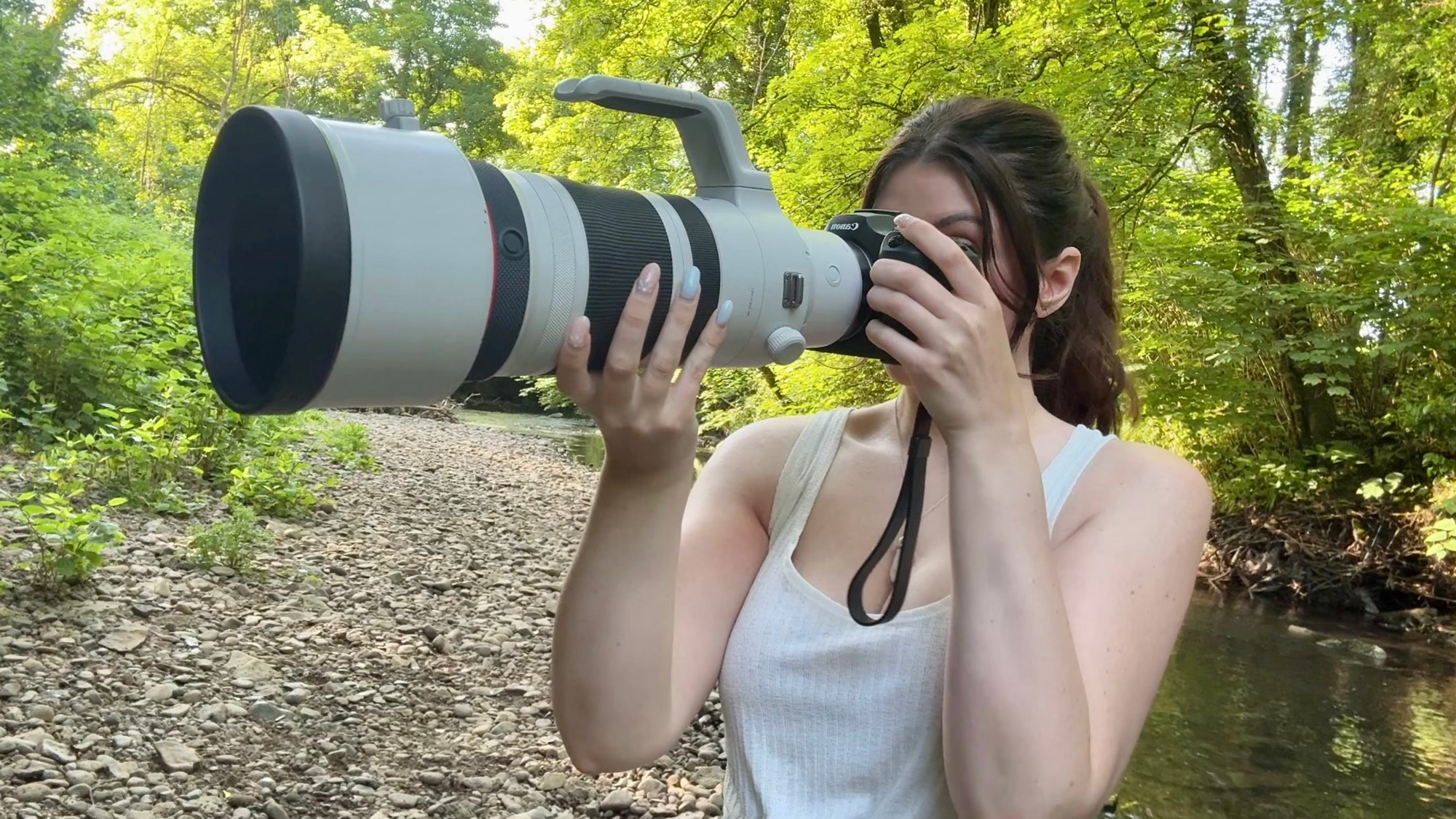
author Kimberley Lane using the Canon R6 III and Canon RF 100-300mm f/2.8L IS USM lens in a wooded area

(Image credit: Kimberley Lane)

It feels counterintuitive to give this lens 5 stars but say "no, don't buy it," and it's not that we're saying "don't buy it," but as good as this lens is, it's quite niche, and we are finding it hard to justify the price compared to other setups from Canon.

Currently, this lens is the only way to get 300mm at f/2.8 (unless you get a used EF 300mm f/2.8L IS II USM and an EF-EOS R adapter), so unless you really need to shoot between 200-300mm at f/2.8 and have the money to do so, there are more sensible options that either save money or give you more value.

For example, you could buy an R1 and a used EF 300mm f/2.8L lens with an adapter for around the same price as this 100-300mm lens. And if you find good deals, you could even add the Canon RF 70-200mm f/2.8L IS II USM to that lineup with a teleconverter. The only advantage the 100-300mm would then have is that you wouldn't need to change lenses — but is that worth such a steep price?

If this lens isn't for you

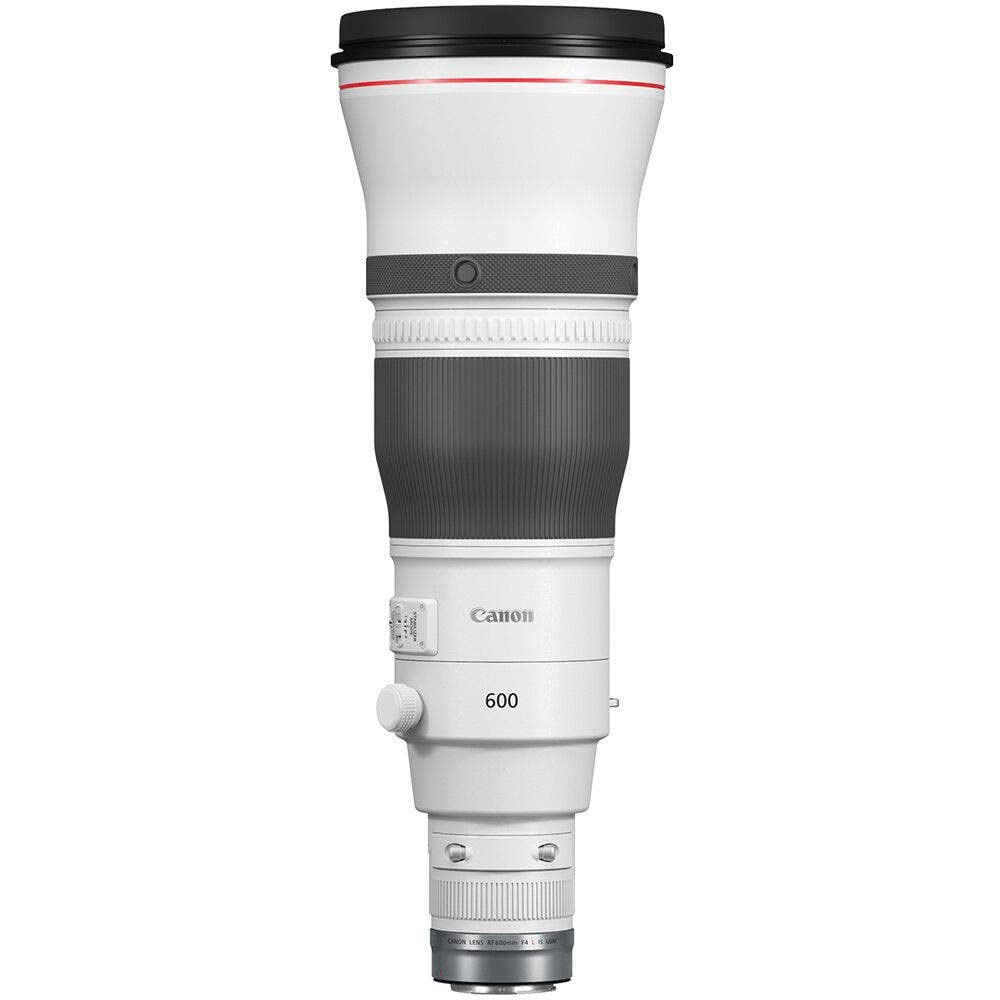
Canon RF 600mm f/2.8L IS USM on a white backgroundFor serious birders

Canon RF 600mm f/4L IS USM

For birds or distant wildlife, the Canon RF 600mm f/4L IS USM lens will be more appropriate. Although you lose a bit of aperture at the wide end, it won't make too much difference in practice, and the longer reach makes this lens much more suitable for photographing birds.

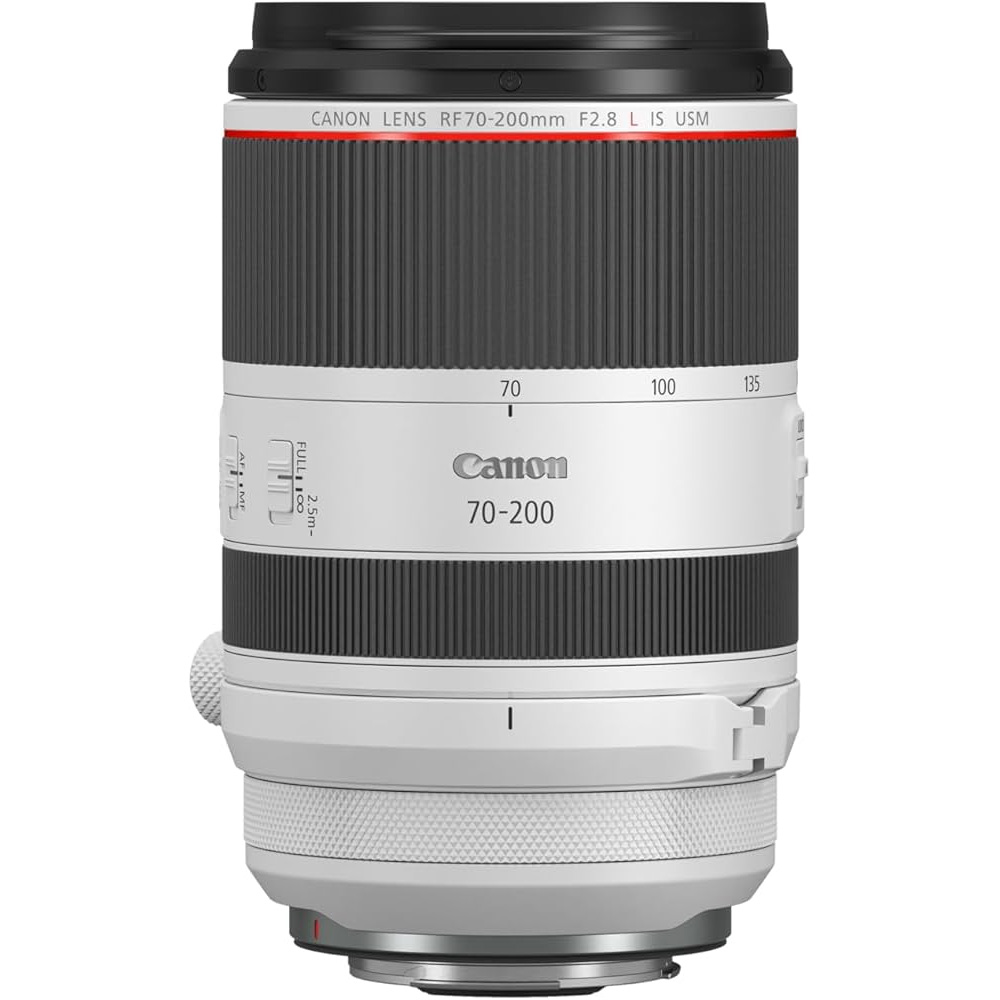
Canon RF 70-200mm f/2.8L IS USM on a white backgroundIf you want a cheaper telephoto zoom

Canon RF 70-200mm f/2.8L IS USM

For photographers who don't need 300mm very often and want to save several thousand dollars, the Canon RF 70-200mm f/2.8L IS USM covers up to 200mm and also has a constant f/2.8 aperture. Plus, it's a lot lighter and more compact.

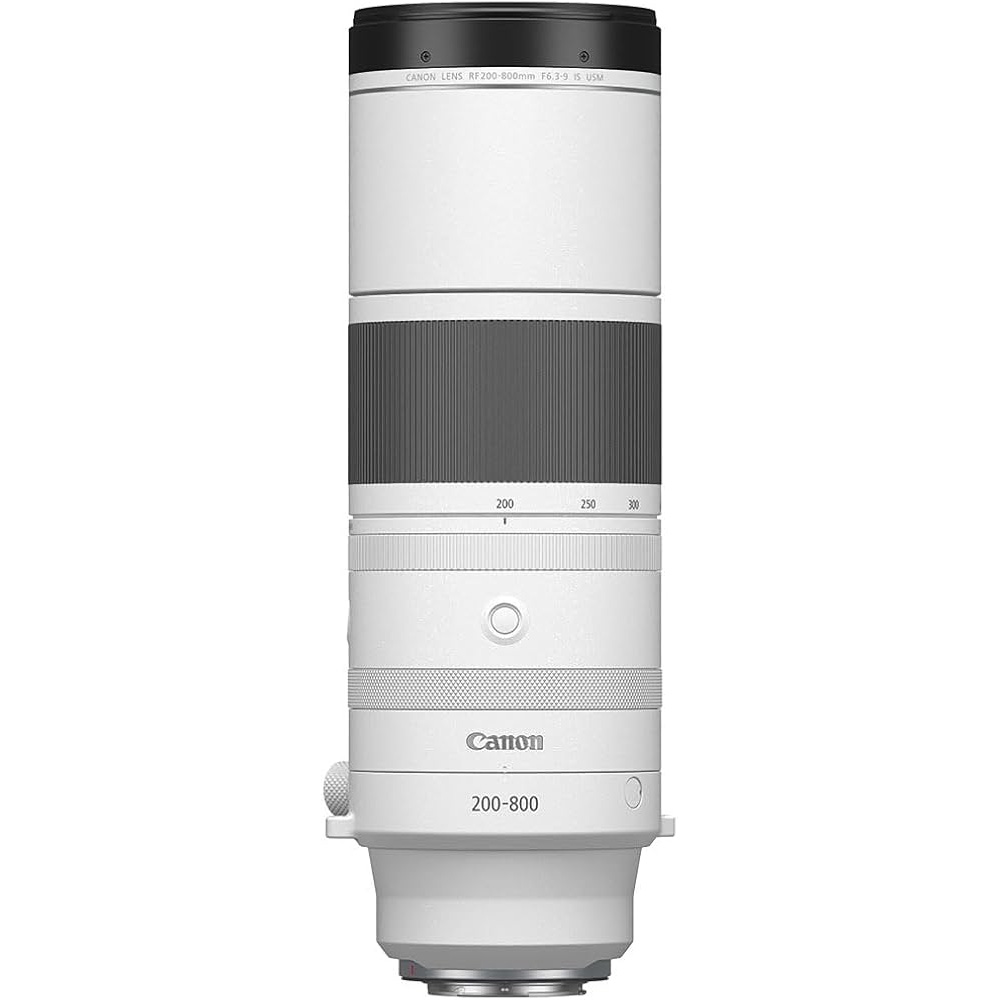
Canon RF 200-800mm F6.3-9 IS USM on a white backgroundIf you prioritize reach over speed

Canon RF 200-800mm f/6.3-9 IS USM

If you photograph distant subjects or small birds in good light and you need more reach, the Canon RF 200-800mm f/6.3-9 IS USM has the most reach of any Canon zoom and produces beautiful images.

Read our full Canon RF 200-800mm f/6.3-9 IS USM review

  •  

Diagnostic dilemma: Junk-food diet caused a teen's permanent blindness

The patient: A 14-year-old boy in the United Kingdom

The symptoms: The teen was brought to his family's general practitioner because he felt unusually tired. His doctor asked about the boy's eating habits and described him as a "fussy eater" in notes from the appointment. The doctor also indicated that the teen had no symptoms other than tiredness, according to a report of the case.

Tests revealed that the teen had mild anemia and low levels of vitamin B12, which comes from a person's diet because the body does not produce it. The body needs vitamin B12 for maintaining the health of red blood cells and the nervous system. The teen's doctor provided dietary advice and prescribed supplementary B12 injections.

What happened next: Later, at age 15, the teen began developing problems with his sight. An eye exam detected no abnormalities, and the ophthalmologist was unable to determine the cause of the vision loss, which worsened over time. When the patient was 17 years old, his general practitioner referred him to a neuro-ophthalmologist for further testing. (Neuro-ophthalmologists can assess vision problems related to the nervous system.)

Additional vision tests showed that the patient's visual acuity — a measurement of a person's ability to accurately see details from certain distances — was 20/200 in both eyes. In other words, objects that would be visible to a person with normal (20/20) vision at a distance of 200 feet were not clearly visible to him beyond a distance of 20 feet. Vision of 20/200 or lower falls within the parameters of legal blindness, according to the American Foundation for the Blind.

When asked, the patient denied using drugs, alcohol or tobacco, and his eyes showed no signs of disease, nor were they scarred or injured. The results of a neurological exam were normal.

However, blood tests showed that his red blood cells were enlarged, which can suggest vitamin deficiencies. His blood levels of copper and vitamin D were lower than normal. Furthermore, elevated concentrations of the amino acid homocysteine and methylmalonic acid — compounds that B12 helps to break down — further hinted that he was deficient in the vitamin, as at earlier examinations.

The diagnosis: The patient admitted that he was no longer taking the recommended B12 injections. (The case report did not indicate exactly when he had stopped.) His body mass index (BMI) was normal, and he was of average weight for his height. But because his B12 levels were low, the doctors questioned him about his diet.

National Eating Disorders Association

Visit the NEDA website for free screening tools, information about treatment options, and access to free and low-cost support for eating disorder recovery. If you know someone with an eating disorder, you can also find helpful guidance about how to support them.

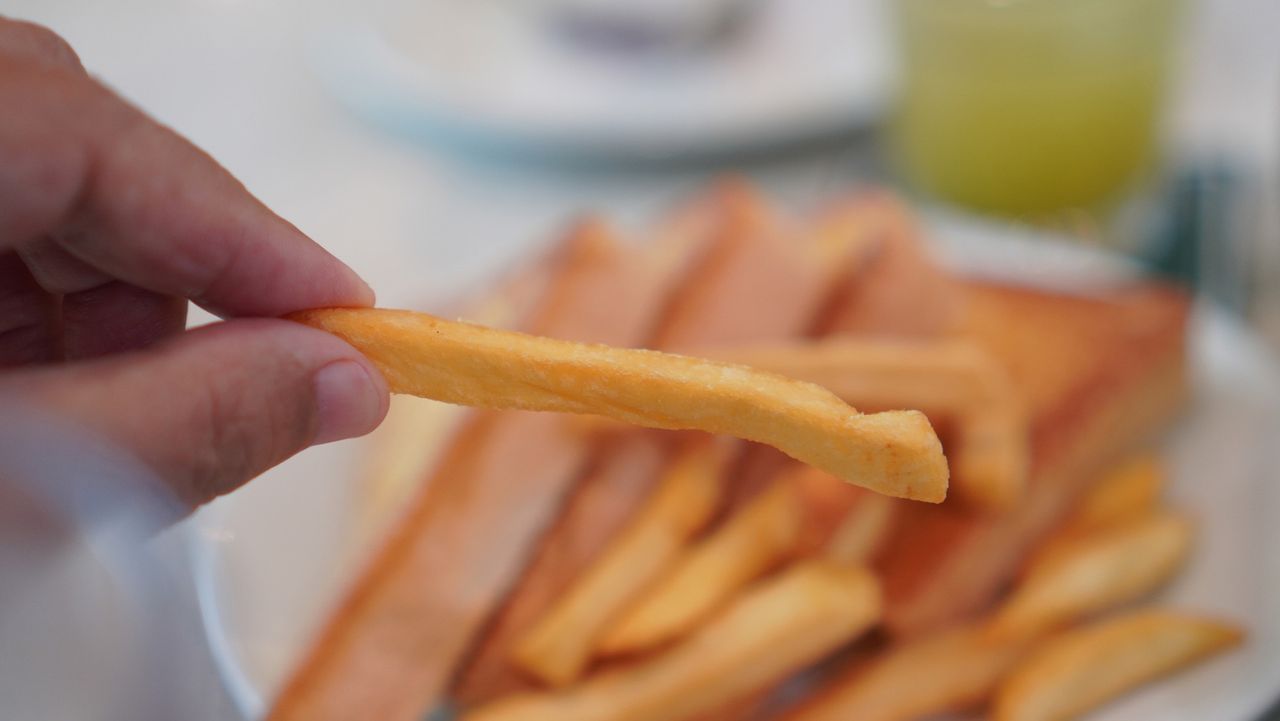
He replied that he could not tolerate certain food textures; as a result, since elementary school, he had avoided most foods. For years, his daily diet consisted of fast-food french fries, white bread, potato chips, sausages and processed ham.

This diet lacked vital nutrients, leading to a condition called nutritional optic neuropathy, a rare type of vision loss that is often caused by severe deficits in B12 and other B vitamins. It causes atrophy of the optic nerve, which relays information from the eye to the parts of the brain that process vision. Copper deficiencies have also been linked to this type of optic neuropathy and to enlarged red blood cells, according to the report's authors.

The treatment: The doctors prescribed the teen supplements to correct his nutritional deficiencies and referred him to mental health services to treat his food aversions, which the doctors identified as a type of eating disorder.

Following treatment, the patient's vision did not deteriorate further. However, there was no improvement in his sight. Nutritional optic neuropathy may be reversed when caught early, but if the optic nerve becomes atrophied, the vision loss is permanent, the physicians explained in the report.

What makes the case unique: Nutritional optic neuropathy is rarely caused by dietary deficiencies alone. Historically, cases in the medical literature have generally been associated with malnutrition caused by war and famine. More recent cases have usually involved both nutritional deficits and smoking or abuse of alcohol or drugs.

In some instances, this type of neuropathy results from inflammatory bowel disease or bariatric surgery, which limit the body's absorption of certain nutrients. It can also stem from restrictive diets that are not adequately supplemented with missing vitamins and minerals.

The teen's case is also unusual because his normal BMI masked the vitamin deficiencies that caused his blindness. In other words, doctors may have overlooked his dietary deficits because his weight was within a normal range.

Moving forward, "nutritional optic neuropathy should be considered in any patient with unexplained vision symptoms and poor diet, regardless of BMI," the authors wrote in the report.

For more intriguing medical cases, check out our Diagnostic Dilemma archives.

This article is for informational purposes only and is not meant to offer medical advice.

Can you guess the diagnosis in these strange medical cases? Find out with our diagnostic dilemma quiz!
  •  

Tobacco companies are pushing nicotine pouches on teens — and we need to act now to stop them

The use of nicotine pouches is increasing among teenagers and young adults in the U.S. As researchers who study nicotine use among young people and develop strategies to prevent it, we worry these discreet products might be driving a new public health crisis. It may be that more and more teens are becoming addicted to nicotine pouches under our watch.

To stop that crisis in its tracks, we need to act now. Myriad strategies would help, including eliminating flavored pouches and reducing the amount of nicotine in the products, as well as regulating their marketing and stopping companies from making deceptive claims. And while we await such regulation, informing educators, parents and teens about the harms of nicotine pouches will be key.

Why worry now? Nicotine pouches — small, pillow-like products that users place between their gum and lip — are now the second most used tobacco product among U.S. adolescents. In a recent survey, 2.3% of high school and about 1% of middle school students, an estimated 460,000 students total, reported using a pouch in the past month. More than 9 in 10 pouch users opted for flavored pouches, with mint being the most popular.

While rates of pouch use remain behind e-cigarette use, more students reported using pouches than cigarettes, cigars, smokeless tobacco or any other form of nicotine. Nicotine pouches were the only product whose use increased in the survey, while the popularity of other products declined or remained stable.

What makes nicotine pouches particularly tricky is how invisible they are to the outside observer. Unlike cigarettes, they produce no smoke. Unlike e-cigs, they generate no visible aerosol. They are small and easy to conceal. That invisibility is not a coincidence; it's part of big tobacco companies' intentional design. An adolescent can use nicotine pouches during class and no one around them would know.

Each pouch contains nicotine powder that is either derived from tobacco plants or synthetically produced, as well as other ingredients like acidity regulators and flavorings. Those flavors can be dessert-like, fruity, minty, and reminiscent of coffee or cocktails — all of which appeal to young people.

The amount of nicotine per pouch varies by brand, but generally, using one pouch is roughly equivalent to smoking one to four — or more — cigarettes. That's a problem because, although pouches don't produce smoke, nicotine is still very addictive and harmful to the developing brain.

Nicotine use can negatively affect teens' attention and impede their impulse control, hurting their academic performance and mental health. In regards to physical health, data suggest that smokeless oral nicotine products may harm some aspects of heart health and raise the risk of death in people with existing heart disease.

A close up of a male teenager's mouth where he holds a small rectangular object in his open mouth

Tobacco companies are employing the same advertising tropes that they've successfully used to lure young users in the past. (Image credit: Peter Dazeley via Getty Images)

It may be tempting to wave away concern because the percentage of adolescents using these pouches appears relatively small. However, that would be a mistake, as doing so would mean watching history repeat itself.

Rates of e-cigarette use also started low, and by the time national data finally showed a clear increase, their use was already a deeply entrenched behavior among adolescents, with many addicted. Furthermore, national surveillance studies are, by design, snapshots in time and often lag behind what is happening in real time in classrooms and communities.

We're concerned that more teens are becoming addicted to nicotine pouches, now, and want to curb the trend. At Stanford Medicine's REACH lab, we work with thousands of schools and teachers across the U.S. every year, providing free, evidence-based tobacco prevention curriculums. We've spoken with hundreds of educators, parents and students across the country who have raised significant concerns about nicotine pouches, and presented talks to over 1,200 people on the subject.

It became clear that we must create a specific approach to prevent teens from using pouches — so, we created a course called Not So Sweet: Oral Nicotine and Smokeless Tobacco Prevention Curriculum.

The free course is designed to be used in schools or by anyone who works with teens. It explains the different types of oral nicotine and smokeless tobacco products and their many health effects, including addiction. It also lays out the marketing tactics employed by the tobacco industry to attract youth in the first place. In just a few short weeks of releasing the curriculum, we already have over 1,500 active users.

We're heartened that people are already engaging with the course, because we might already have a public health crisis on our hands.

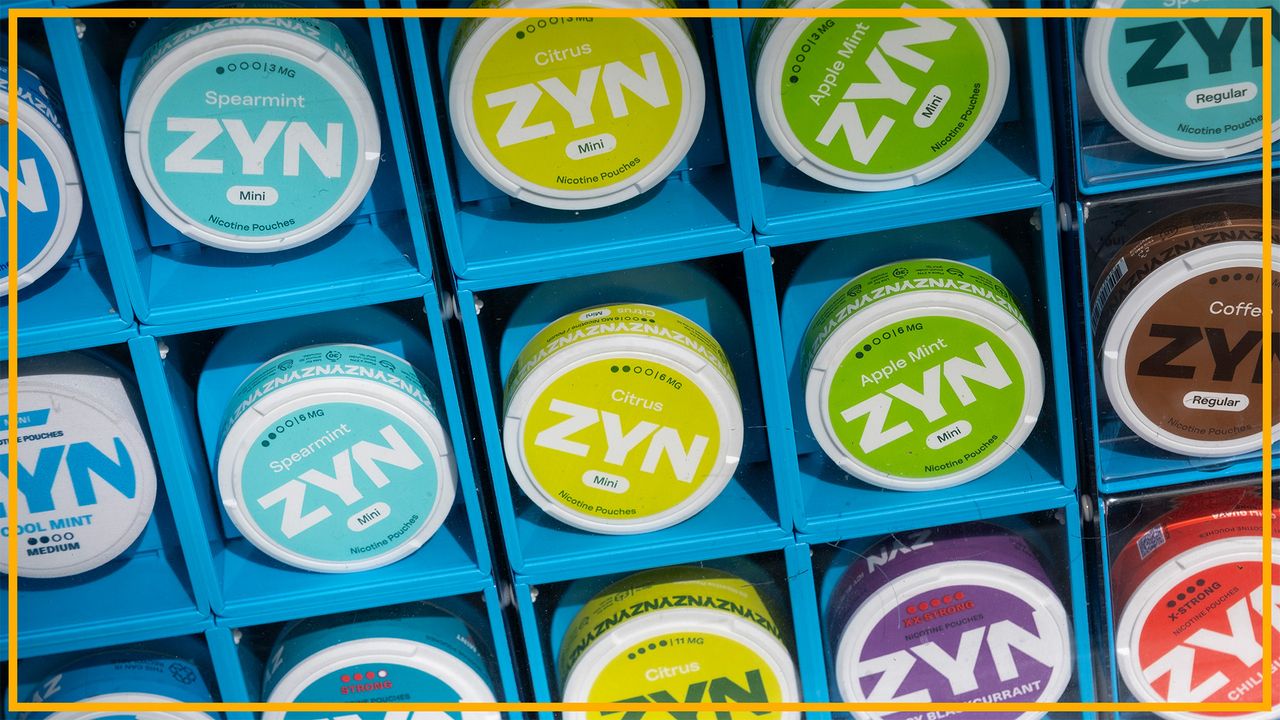
Today's nicotine pouch market in the U.S. is dominated by three brands: the top seller, ZYN; On!; and VELO. These brands are owned by Philip Morris International, Altria, and British American Tobacco, respectively. The companies have decades of knowledge in marketing nicotine products that they are now deploying to sell nicotine pouches.

They're falling back on successful advertising tropes, telling consumers that nicotine pouches could help them socialize, unwind, or appear cool to potential romantic partners. Ads also emphasize the discreet nature of the pouches, which allows them to be used anywhere without drawing too much attention.

Through these marketing strategies, nicotine pouches have soared in popularity and sales, Zyn has become a household name, gaining nicknames like Zynnie, Zynfluence and Zyndulgence. Zyn has effectively become the "Coke" of colas, the Kleenex of tissues, the Juul of e-cigs.

What's more, the Food and Drug Administration just authorized various Zyn products to be marketed with the claim that using Zyn instead of cigarettes puts you at a lower risk of mouth cancer, heart disease, lung cancer, stroke, emphysema and chronic bronchitis. But when it comes to teenagers, we see many using Zyn or other nicotine pouches alone or alongside other nicotine products that aren't cigarettes. Unlike adult smokers who may be switching to pouches, teens may be newly introduced to nicotine addiction through products like Zyn.

It is not a matter of cigarettes versus Zyn for many teens; it is Zyn versus nothing.

Nicotine pouches might come in tantalizing flavors, but they are not sweet — they are dangerous, especially for adolescents. Reminiscent of what we've seen for decades with cigarettes and over the last decade with e-cigarettes, we once again have a nicotine product that is very appealing to and being increasingly used by young people. Yet, they contain a great deal of nicotine and are unsafe. We need to work together, now, to ensure we don't perpetuate another generation of addicted kids.

Editor's note: Bonnie Halpern-Felsher has served as an expert witness in litigation against various tobacco companies.

This article is for informational purposes only and is not meant to offer medical advice.

Opinion on Live Science gives you insight on the most important issues in science that affect you and the world around you today, written by experts and leading scientists in their field.

  •  

Scientists show that DNA can last for up to 50,000 years in Africa ‪—‬ much longer than previously thought

Researchers have extracted DNA from a 50,000-year-old tooth belonging to an African antelope, setting a record for the oldest DNA ever retrieved from sub-Saharan Africa, a new study reports.

The finding suggests that DNA preservation in sub-Saharan Africa is possible for tens of thousands of years. In most cases, the region's hot climate breaks down the molecule and prevents researchers from understanding the evolution of numerous species, including ancient human ancestors and relatives.

While some temperate regions are known for preserving ancient human DNA — for instance, the Sima de los Huesos ("Pit of Bones") in Spain preserved DNA from a mysterious relative of modern humans that lived around 400,000 years ago — the sub-Saharan African climate is less forgiving. The oldest human DNA from sub-Saharan Africa is about 18,000 years old and was discovered in bones found in a rock shelter in Tanzania. And the oldest sub-Saharan animal DNA is just 9,300 years old, from an extinct antelope in South Africa.

In the new study, researchers tested whether DNA could be successfully extracted from ancient skeletons even older than that. By analyzing more than 300 teeth from animals that lived in the past 110,000 years, they discovered that small amounts of DNA could be identified even in remains from the Late Pleistocene, the latter part of the last ice age.

a group of reedbucks gather in a grassy area

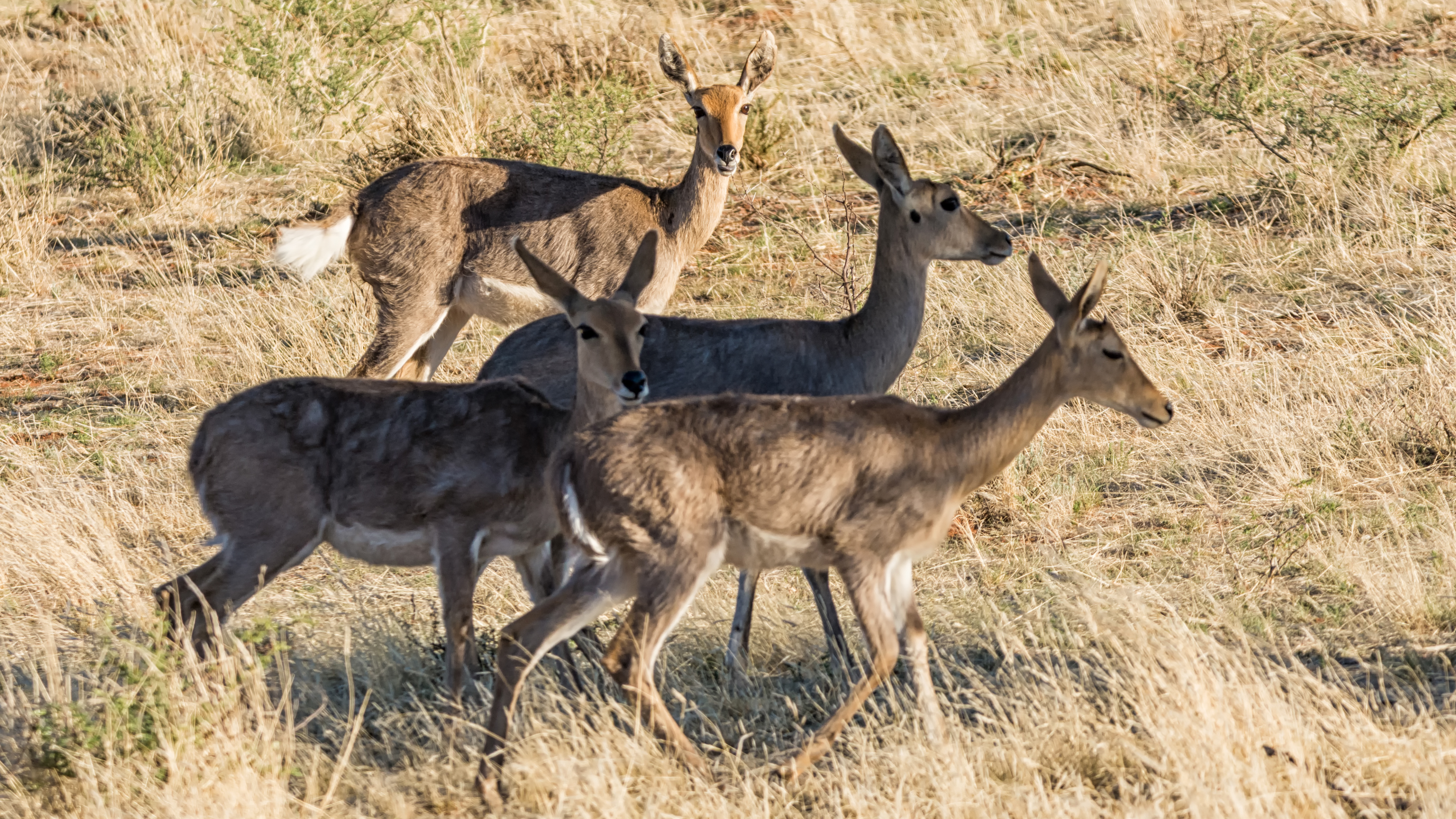
Researchers extracted the DNA from the 50,000-year-old tooth of a mountain reedbuck (Redunca fulvorufula), a species of antelope that still lives in Africa today. (Image credit: Getty Images)

In a study published online May 27 in the journal Quaternary Science Reviews, researchers extracted DNA from dozens of Holocene bovid specimens younger than 11,700 years old and from four Late Pleistocene bovid specimens between 12,000 and 50,000 years old. Although many of the teeth didn't yield DNA, a handful did. The oldest DNA the researchers found came from a partial molar from an African antelope called a mountain reedbuck (Redunca fulvorufula) discovered in Boomplaas Cave in southern South Africa. The other old DNA samples came from three extinct long-horned buffalos (Syncerus antiquus) ‪—‬ two that died 21,000 years ago and one that died 12,000 years ago.

"The 50,000-year-old DNA is exciting," study first author Deon de Jager, a paleogenomics expert at the University of Copenhagen, told Live Science in an email. "But I am myself skeptical of it, for two reasons."

The reedbuck DNA is significantly older than the next-oldest DNA the researchers retrieved, from the long-horned buffalo, de Jager explained, and the reedbuck specimen was contaminated with some human DNA, which they were able to remove. These two issues mean the 50,000-year-old antelope DNA result is not ironclad. However, since the publication of the study, the researchers have also sequenced the genome of a 42,000-year-old wildebeest from Ethiopia, suggesting DNA lasts a lot longer in Africa's climate than experts once thought.

"There is of course a limit to DNA preservation in Africa, but what it is, is not clear," de Jager said. "There are certainly parts of Africa where DNA will be preserved even better than from the sites we have surveyed. Deep caves with stable, low temperatures will certainly be good candidates, but also high-elevation sites where temperatures have been very low for a long time."

The Late Pleistocene teeth that de Jager and colleagues analyzed produced very low amounts of DNA, which is thought to have a half-life of about 521 years, meaning half of the DNA in a specimen disappears every 521 years until none is left. But the amount the researchers found is still useful, de Jager said.

The DNA is sufficient for identifying evolutionary lineages, de Jager added. If they can gather enough data, researchers might be able to compare gene flow and interbreeding among species and populations.

Although these results suggest that DNA analysis is possible for understanding the past 40,000 to 50,000 years of animal and human evolution in South Africa, we may never be able to extract DNA from ancient human relatives like Homo naledi, which went extinct around 240,000 years ago, or Paranthropus robustus, which died out around 1 million years ago.

"I think the chances of obtaining DNA from Homo naledi are very, very low, unfortunately," de Jager said. "One would have to get very lucky with an incredibly well-preserved skull with the petrous bone still present, which is the best bone for obtaining ancient DNA. To get DNA from something in Africa nearly 1 million years old would probably be impossible, as the conditions in Africa are just too harsh."

How much do you know about Earth's frosty past? Find out with our last ice age quiz!
  •  

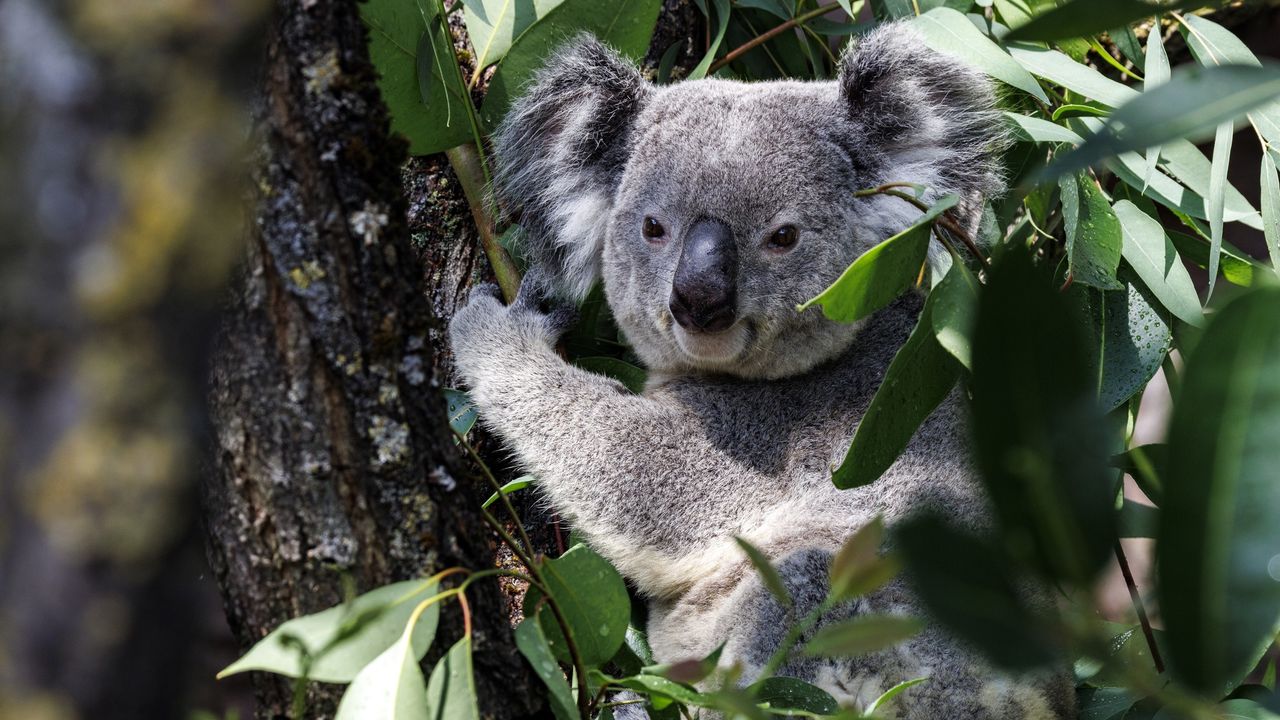
Scientists are deep-freezing koala eggs and sperm to protect the species from extinction

Scientists in Australia are deep-freezing koala eggs and sperm as a "genetic backup" to save the wild population from future extinction.

The backup could be used to create healthy koala embryos through artificial insemination and in vitro fertilization (IVF), the researchers said in a statement. When koalas (Phascolarctos cinereus) die, unique traits and diverse genes that may help them adapt to changing environments are lost, but the new project offers a way to store this valuable material, the team said.

"Losing genetic diversity can weaken future generations and decreases the ability of the species to adapt to challenges," Andres Gambini, a reproductive biologist at the University of Queensland who is involved in the project, said in the statement. "This project will create a safe and systematic way to rescue and preserve koala spermatozoa and eggs to support future conservation programs."

Australia is facing a paradox with its koalas. In some regions of Queensland and New South Wales, koala populations have crashed by as much as 80% since the late 1990s due to deforestation, bushfires, drought and disease. This prompted the Australian government to change koalas' conservation status in their eastern range from "vulnerable" to "endangered" in 2022.

Meanwhile, in parts of southern Australia, koalas are overabundant. However, the places where koalas are currently thriving may not be able to support a booming population much longer, because the animals are overbrowsing and killing the trees they need to survive, recent research suggests.

To protect against koalas' decline, the scientists will freeze koala reproductive cells in liquid nitrogen (LN2), which has a boiling point of minus 321 degrees Fahrenheit (minus 196 degrees Celsius). This method would enable the team to cryopreserve the cells for several decades until they are needed, said Vincent Lynch, an evolutionary developmental biologist and associate professor of biological sciences at the University at Buffalo in New York.

Every year, many koalas are admitted to wildlife hospitals because of illness or injury and sadly, not all of them survive.

Andres Gambini, reproductive biologist at the University of Queensland

"I've successfully woken cells up that were frozen in LN2 a couple of decades ago," Lynch, who is not involved in the koala project, told Live Science in an email.

The sperm and eggs will be supplied by wildlife hospitals that will harvest sex cells from dead koalas or koalas that can no longer breed due to disease or trauma, according to the statement.

"Every year, many koalas are admitted to wildlife hospitals because of illness or injury and sadly, not all of them survive," Gambini said.

The researchers will then test the cells for Chlamydia pecorum, a highly contagious and deadly form of chlamydia. In koalas, this infection causes painful urinary tract infections, gastrointestinal issues, and conjunctivitis, which can lead to blindness. It can also cause infertility in females. C. pecorum is one of the main contributors to koalas' decline in recent years, with infertility driving a sharp reduction in the number of koala joeys being born. In the worst-affected populations, situated mostly in Queensland and New South Wales, almost 90% of koalas are infected with chlamydia.

If the reproductive cells contain C. pecorum, "we have the technology now to remove the infection from the samples," Steve Johnston, an associate professor of animal reproduction and captive husbandry at the University of Queensland who works on the koala project, said in the statement.

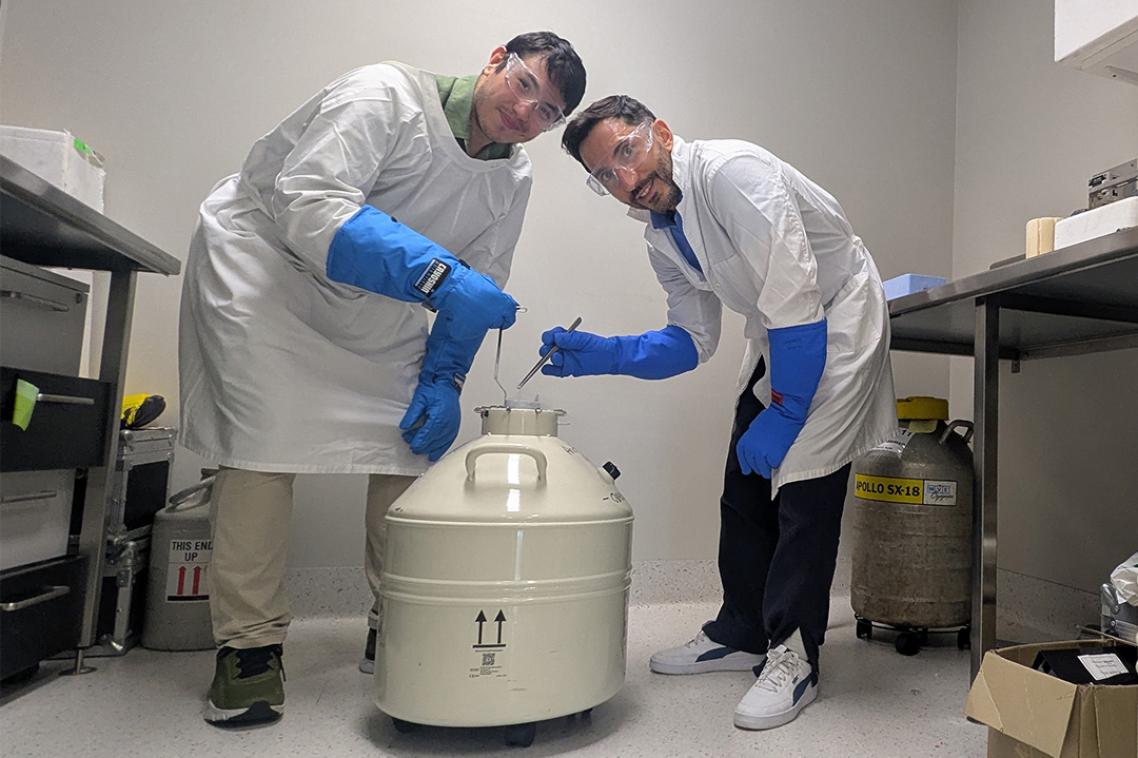
Two scientists posing with a liquid nitrogen storage cannister in a laboratory.

Andres Gambini and doctoral student Patricio Dandy Palacios, who participated in the project, want to preserve koala sex cells in liquid nitrogen. (Image credit: The University of Queensland)

In 1998, Johnston was part of a research team at the University of Queensland that created the world's first koala joey born through artificial insemination. The new project also builds on a 2025 study, led by Gambini, that produced the first-ever IVF kangaroo embryos. (These did not result in live births; at the time, the scientists said that would take another decade.)

It's unclear how many sperm and egg cells the researchers plan on freezing, and it's hard to say how many cells they would need to ensure the survival of healthy koala populations, as the number of cells required is probably increasing with time, Lynch said. As koala populations shrink, genetic material is being lost at an accelerating pace, so the team will have to get more samples as time goes on to obtain the same amount of diversity.

The project does not replace more traditional conservation approaches — such as habitat protection, disease management and population monitoring — but researchers cannot afford to wait until populations are smaller and genetic diversity is harder to recover, Gambini said.

Although conservationists are concerned about the fast rate of koalas' decline, "there is a chance" that scientists can save the species through cryopreservation, Lynch said.

"I support multipronged approaches like this," he said. "By preserving the environment with traditional conservation we allow re-introductions because the species have somewhere to live."

  •  

'It affects your daily life suddenly': Sea level researcher explains why once-in-a-century floods could become the new normal

Extreme coastal flooding events are occurring far more frequently in our warming world than ever before, threatening countless communities that will only become more vulnerable as climate change intensifies.

A recent study found that once-in-a-century flooding events now strike on our planet about once a decade. The study, published June 10 in the journal Nature Climate Change, also found that human-driven climate change has quadrupled the frequency of coastal sea level extremes since 1900.

The findings were released alongside another study by a separate team, published in the journal Science Advances, that found human-caused sea level rise was clearly measurable at 97% of sites sampled around the world, and was responsible for around 58% of the observed daily extreme water level exceedances between 2000 and 2018. In other words, human activities are the primary drivers behind sea level extremes — which include storm surges, high tides and rising sea level anomalies.

As the ocean's potential to devastate coastal communities surges, Live Science spoke with Sönke Dangendorf, lead author of the Nature Climate Change study, to learn more about what's to come. Here's what he had to say.

Patrick Pester: How do you separate human-driven sea level rise from natural forces?

Sönke Dangendorf: The absolute basis for doing these kinds of investigations is to work with observations, but observations are unfortunately sparse. We have a few more than 100 tide gauges [distributed worldwide] that offer long, century-scale records of sea level change since the early 20th century. We see that sea levels are changing at those locations, but we cannot tell a whole lot about what is happening elsewhere. So, what we can do is use the same climate models that we use to produce future projections of sea level change.

If you compare observations with the models, then the models need to be able to reproduce what the observations have shown. That was the first step we did, and indeed we proved in this study that the climate models are capable of reproducing observed climate. The nice thing with climate models then is that if you are able to reproduce what has been observed, you can start doing experiments. For instance, you can keep greenhouse gases constant in the modeling and then assess the influence of natural climate variability on the changes that we have observed. That's what we did in the study.

We found that we have seen already a 12-fold increase on average globally in what used to be a once-in-100-year event in 1900. And when we do these forcing experiments, we have also seen that anthropogenic forcing [human-driven change], in particular since the 1970s, has become the dominant force.

PP: What does this mean for coastal communities around the world?

SD: A couple of centimeters of sea level rise doesn't sound like a whole lot in theory, but if you live along the coast, it hits you much harder than you might think. Just an example: I used to live along the U.S. East Coast in Norfolk, Virginia. The community was built along the water, and they used to be fine in the 1950s and 1960s; they wouldn't see flooding at all, or maybe just once every five or six years. But due to sea level rise, what happens now is that high tide leads to flooding. You see flooded streets, and that affects your commute, so people increasingly cannot make it to work.

It affects your daily life suddenly. And then it makes it very hard for you and your coastal community because you have increasing insurance costs — the accumulated costs of these events can easily be as much as a major hurricane making landfall. So, this is a daily experience that many people already have, and it's a direct impact of sea level rise.

With respect to what we assessed in these more extreme events, people may absorb a once-in-a-100-year event once in their lifetime. They may experience something like a Storm Sandy, and they may be able to recover from that, but if you think about recovering from that basically every eight years — the frequency of these events nowadays compared to 1900 — that's of course way more difficult and not feasible for many people.

PP: What can we do?

SD: We can adapt. The silver lining here is that we have shown humans are the dominant forcing factor behind these changes. That's the silver lining because it means if we react, we can do something about it.

The reaction to changes in climate is often delayed, so we have sea level rise that we are already committed to. For instance, if you look into projections, they all agree with respect to what happens until around 2060, independently of how much greenhouse gases are emitted. There's no way around that. We could stop emitting greenhouse gases today, and we would still experience it. So, we need to adapt to that sea level rise, but if we mitigate climate change, if we stop emitting greenhouse gases, then we can avoid dangerous sea level rise, and that's very important.

A photo of flooding outside someone's home.

Flooding is becoming more severe and disruptive as our planet warms. (Image credit: Roberto Westbrook via Getty Images)

PP: What will the world look like in 2060 with the committed sea level rise?

SD: According to the last IPCC [Intergovernmental Panel on Climate Change] report, what used to be a once-in-a-100-year event in the present day will occur annually at 19% to 31% of tide gauge locations by 2050. So, at about a quarter of the locations, you will experience these once-in-a-100-year events annually, and that is something that is just mind-blowing.

The changes are happening much quicker in low-latitude locations. The reason is that in the tropics you typically have a less variable climate. You don't have these massive swings all the time. For instance, in the North Sea, we have a storm season, and we have huge tide ranges. We are already adapted to pretty massive changes of multiple meters, so a couple of centimeters of sea level rise do not play out that hard, but in the tropics, where it's more calm, it makes a huge difference.

As an analogy, think about two hurdle runners. You have one hurdle runner that's compared to the tropics; he jumps very consistently but always below the hurdle, so he never makes it over. Then you have another hurdle runner that's the North Sea type of guy. His jumps are very variable. Sometimes he's very high and makes it over that hurdle, but very often he also jumps very low. Now think about lowering that hurdle, which is comparable to increasing sea levels. Suddenly, that hurdle runner who is very consistent makes it over all of the time, while the guy from the North Sea may jump over the hurdle a couple more times, but he also still has the very extreme lows. So, the constant jumper is way more sensitive to these changes.

Editor's note: This interview has been edited and condensed for clarity.

  •  

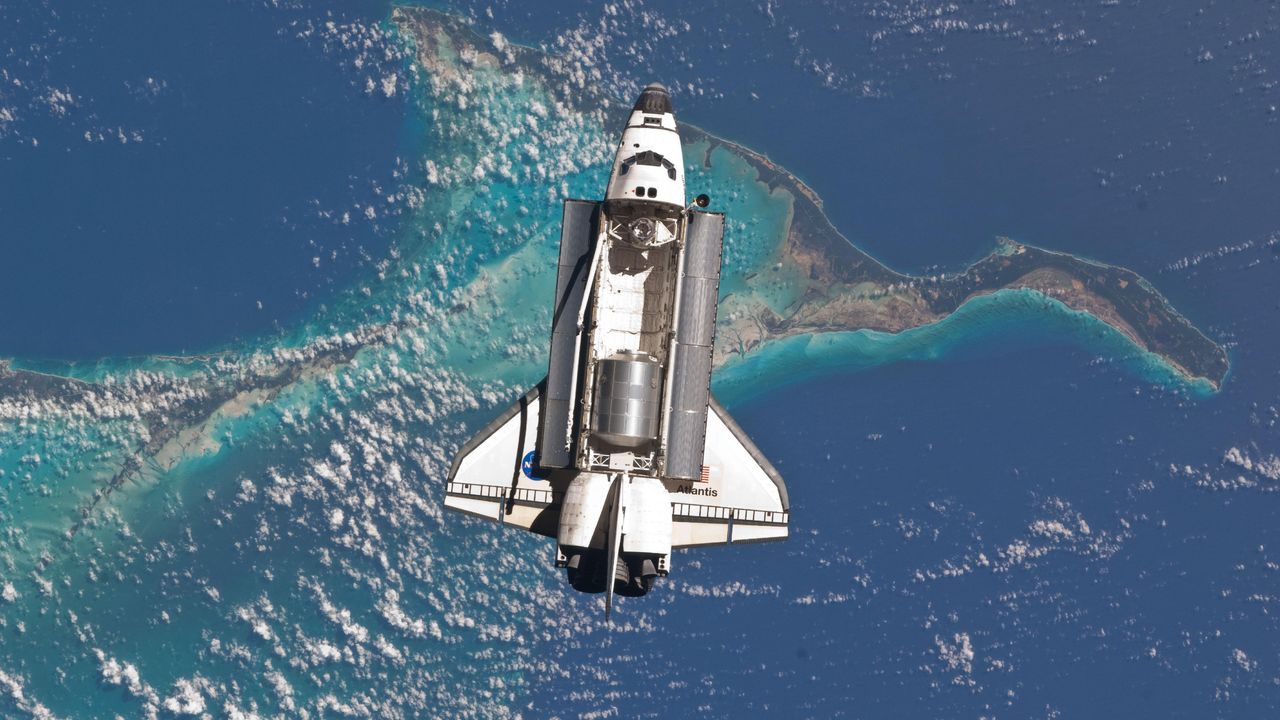
Space shuttle photobombs Earth for the final time, 15 years ago — Earth from space

QUICK FACTS

Where is it? Over the Bahamas

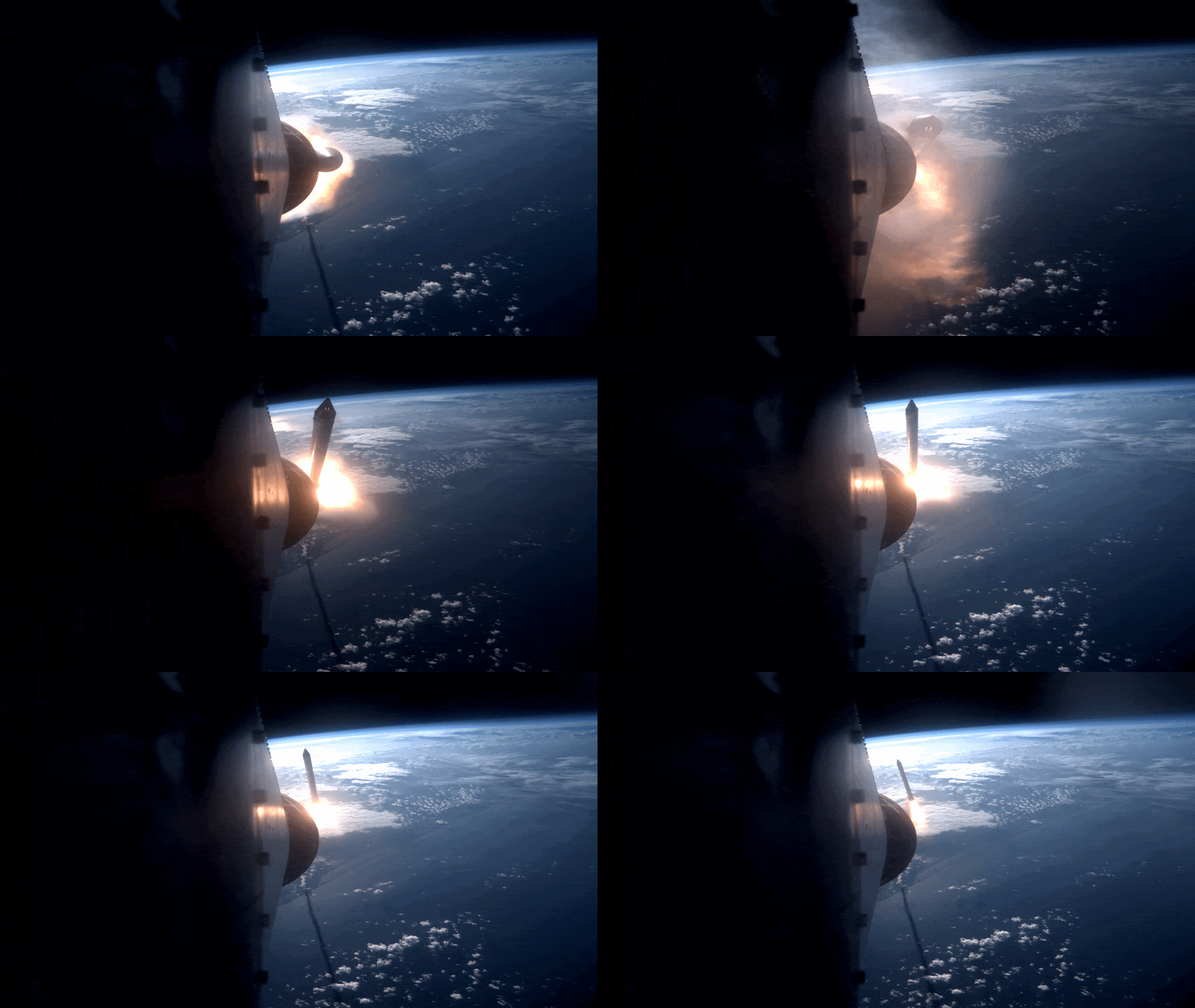
What's in the photo? The space shuttle Atlantis, preparing to dock with the International Space Station (ISS)

Who took the photo? An unnamed astronaut on board the ISS

When was it taken? July 10, 2011

This stunning astronaut photo shows the last time one of NASA's iconic space shuttles photobombed astronauts' view of Earth as the spacecraft docked with the ISS.

NASA's Space Shuttle Program included five plane-like spacecraft — Columbia, Challenger, Discovery, Atlantis and Endeavour — which collectively completed 135 missions between 1981 and 2011, racking up more than 32,000 hours in space. During that time, they helped to construct the ISS and, later, ferry astronauts to and from the station. The space shuttles also helped to deploy and maintain several other important spacecraft, including the Hubble Space Telescope.

The last space shuttle to fly was Atlantis, which successfully completed 33 missions (the second-highest total, behind Discovery).

This photo shows Atlantis approaching the ISS for the last time as it passed over the distinctive turquoise waters of the Bahamas. The space shuttle's bay doors are open, exposing its cargo area. This was standard procedure for all space shuttles once they reached low Earth orbit because it prevented the spacecraft's radiators from overheating.

The open doors also enabled the shuttle's docking mechanism, located within its cargo bay, to attach to the ISS, thus creating a pressurized seal so that astronauts could move between the two spacecraft.

Atlantis' final flight began on July 8, 2011, when it launched from the Kennedy Space Center in Florida vertically strapped to a massive fuel tank and a pair of rocket boosters. It returned to Earth on July 21, gliding down to land onto a runway at the launch site. (The spacecraft is now on display at the Kennedy Space Center Visitor Complex.)

In addition to helping construct the ISS, NASA's space shuttles visited Russia's Mir space station, serviced Hubble, and deployed both the Magellan probe to Venus and the Galileo probe to Jupiter. In total, the space shuttle orbited Earth 4,848 times, traveling nearly 126 million miles (203 million kilometers) — more than 525 times the distance between Earth and the moon.

Astronaut photos of the space shuttles were popular because they offered "punctuated snapshots of distinct places on Earth" that were "framed by a human eye," NASA representatives wrote in 2011. "These images speak to people."

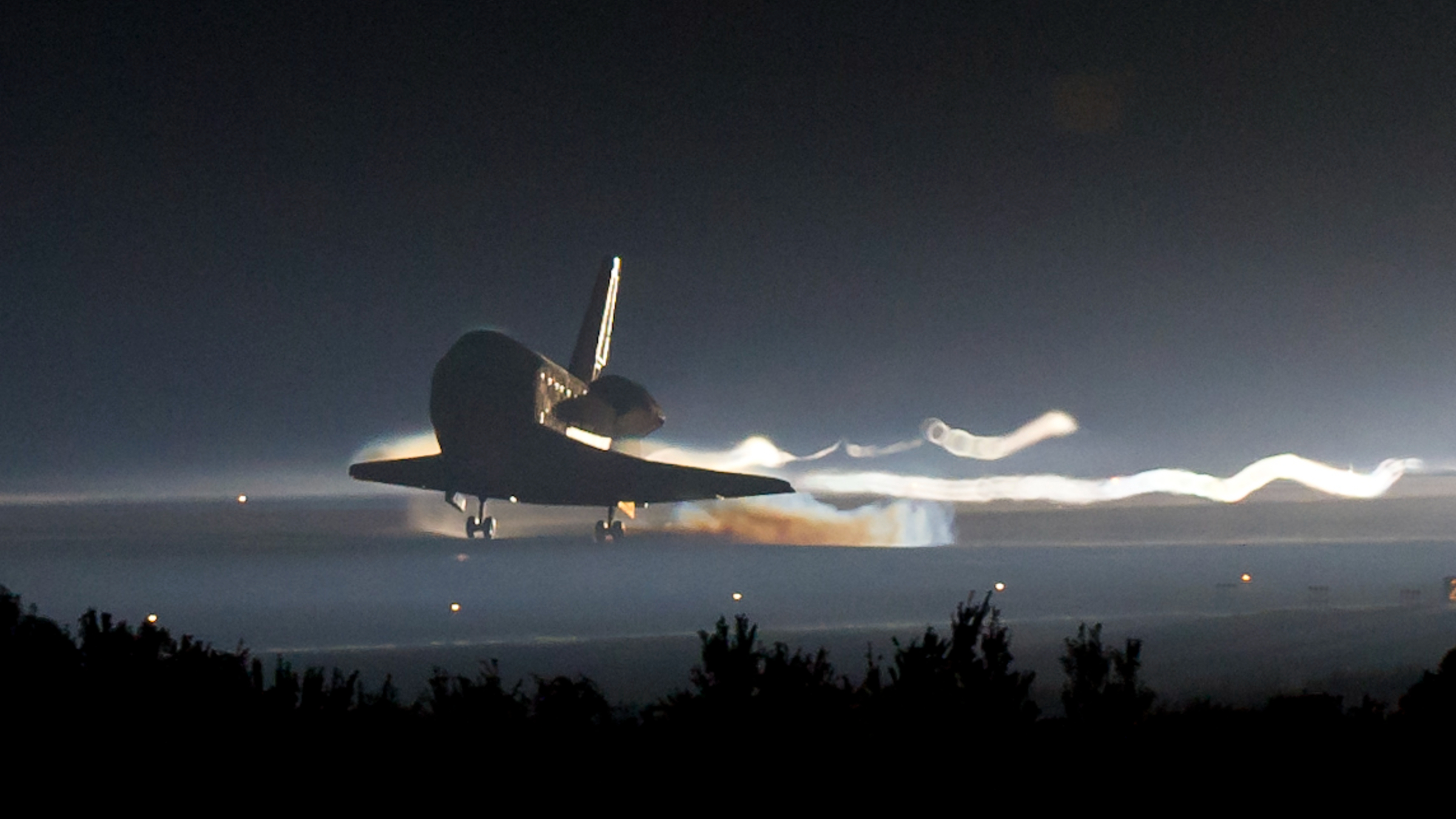
Photo of Atlantis touching down for the final time on a runway at the Kennedy Space Center at night

Atlantis touched down at the Kennedy Space Center on July 21, 2011, brining the 30-year Space Shuttle program to an end. (Image credit: NASA/Bill Ingalls)

While the Space Shuttle Program achieved a lot during its 30-year history, it famously suffered two tragedies: the 1986 Challenger and 2003 Columbia disasters, which killed all crewmembers on board.

NASA eventually canceled the program in 2011, citing the high cost of maintaining the aging spacecraft and a reduced need for the vehicles after the completion of the ISS the same year. To this day, the space shuttles remain the only winged spacecraft to carry humans into space.

See more Earth from space

Close up satellite photo of the Great Bahama Bank showing the colorful folds of the sandbanks and seagrass'Painting-like' ripples in the Bahamas

A 2020 satellite photo shows off the ethereal beauty of submerged sandbanks and seagrass beds in the Great Bahama Bank.

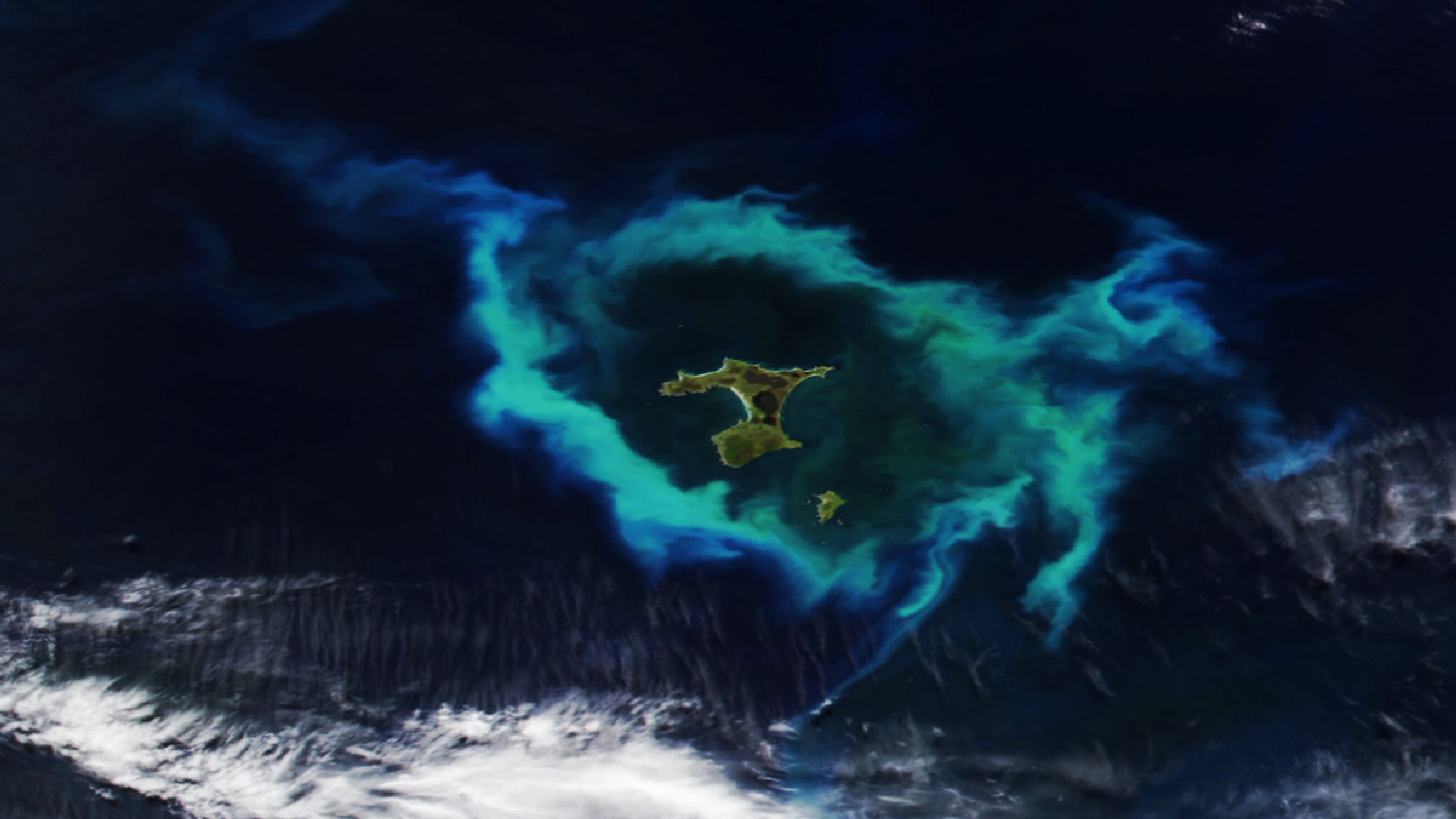
A satellite photo showing a group of islands in the Pacific Ocean with a glowing green ring of algae surrounding themGlowing ring of algae in New Zealand

A 2026 satellite photo captured a gleaming halo of phytoplankton encircling the remote Chatham Islands and a hidden underwater plateau.

A beautiful light blue plume swirling in the sea off Key WestArctic blast paints plume in Florida

A 2026 satellite photo captured a stunning scene of sediment swirling across the West Florida Shelf after an extreme cold snap.

  •  

5 'extremely rare' iron shackles discovered in France highlight Celtic slave trade 2,300 years ago

Archaeologists have found five pairs of iron shackles at a 2,300-year-old Celtic site in France ‪—‬ a discovery that suggests the small settlement was frequented by metalsmiths and slave traders.

The "extremely rare" shackles were discovered in the town of Allonnes in France's Loire Valley in 2019, but the finds from the two-year-long excavation were announced to the public on July 9 in a translated statement from the French National Institute for Preventive Archaeological Research (INRAP).

The settlement at Allonnes was established along with a religious complex in the third century B.C., according to the statement. Specialist artisans ‪—‬ including blacksmiths, coppersmiths, bronze workers and sheet-metal workers ‪—‬ plied their trade from small workshops, archaeologists found at Allonnes.

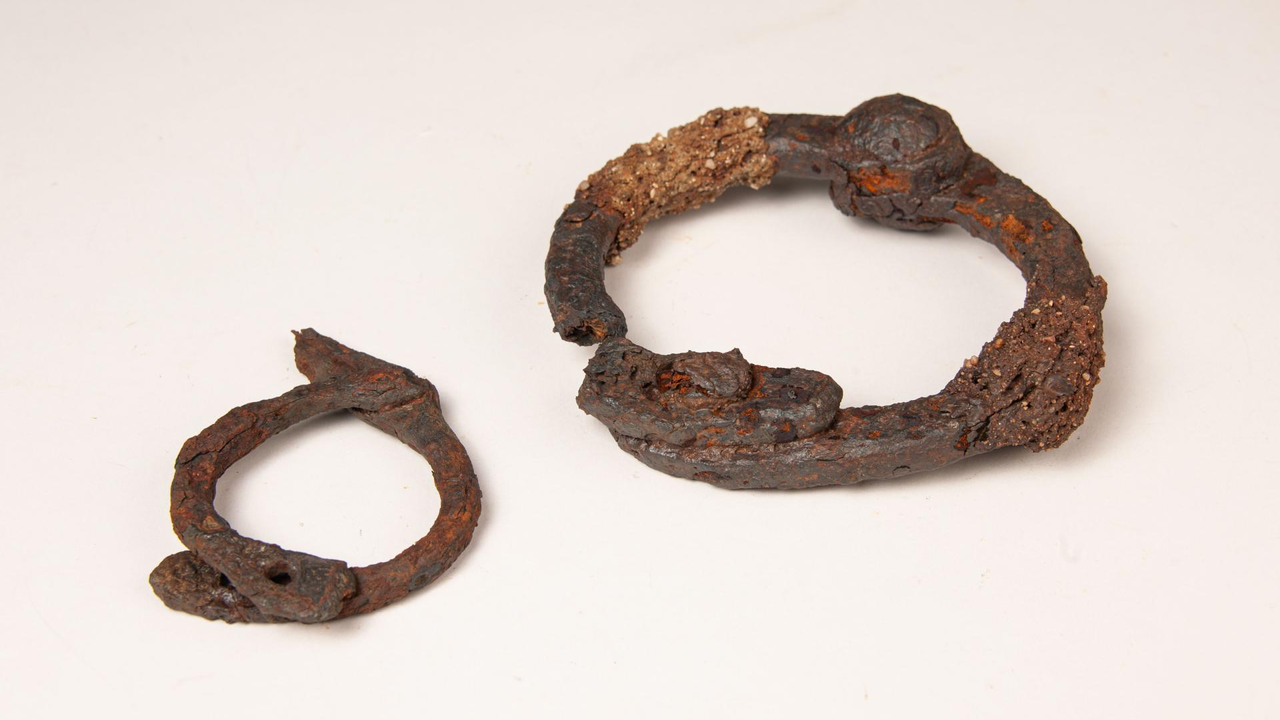
During the excavation, the team discovered a large number of high-quality metal objects — such as swords, spearheads, keys and horse harness fittings — but the iron shackles were a surprise because they are extremely rare for the time period. Excavators found a double-wrist restraint, an ankle restraint and three other portions of metal restraints.

The presence of shackles suggests that Allonnes may have been a hub for slave trading in the Late Iron Age (450 to 50 B.C.), according to the statement.

"The identification of restraints and weapons suggests a hierarchical social organization composed of dominant and subordinate groups — prisoners or slaves," Thierry Lejars, a specialist in Celtic metalwork, said in a translated interview with INRAP.

The Gauls, a loose association of Celtic tribes, were known to enslave prisoners of war, convicts and debtors, according to the statement, and they were often forced to work in the fields. These men, women and children then lost their rights and could be bought and sold by their owners. Because the Celts did not leave many historical records of their own, however, not much is known about the practice of slavery in pre-Roman Gaul. The shackles from Allonnes provide new insight into the lives of people who were typically invisible in historical accounts.

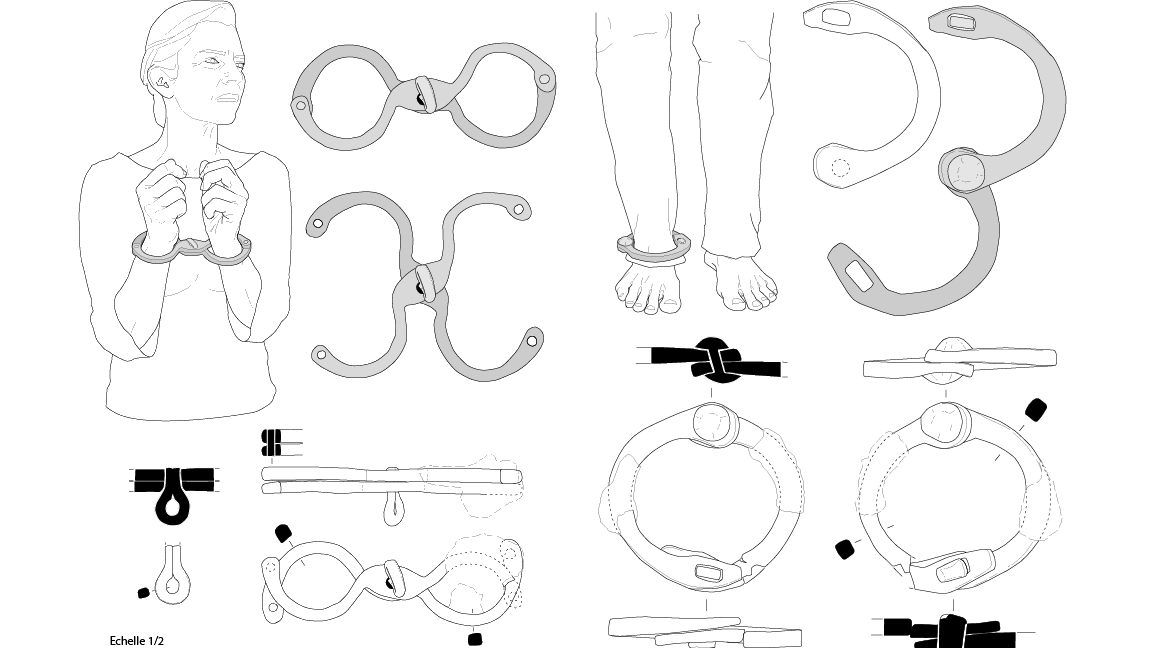
line drawings of people wearing wrist and ankle shackles

A drawing of wrist restraints, likely used on women or children, and an ankle shackle. (Image credit: © Elven Le Goff, INRAP)

The small diameter of the wrist restraint ‪—‬ 2.4 inches (6 centimeters) ‪—‬ suggests it may have been used on a woman or a child, according to the statement. And the ankle restraint was over 2.2 pounds (1 kilogram), revealing the weight that enslaved people had to carry around.

Archaeologists also uncovered a religious sanctuary at Allonnes, along with offerings that included clothing and jewelry such as rings and amulets. Many of the offerings had been deliberately deformed or mutilated, likely to transform a mundane possession into a gift for the gods, the statement reported.

Hundreds of coins were also recovered at the site, and their mint dates spanned more than five centuries, Isabelle Bollard-Raineau, an ancient-coin expert with the French ministry of culture, said in the translated INRAP interview. About a third of the coins found at Allonnes had been filed, sheared or etched with a chisel.

"These mutilations reveal a ritual intention: the removal of the coin's commercial function in order to dedicate the object to the sacred, thereby ensuring the permanence of the offering," Bollard-Raineau said.

Allonnes was a significant Celtic site at the intersection of several major roads in ancient times, and the analysis of the metal finds has revealed important new information about some of the most powerless members of Gallic society.

See how much you know about the Celts with our Celtic quiz!
  •  

Sweet! Sugar found in raspberries was discovered near the Milky Way's center, hinting that life's ingredients are common in space

Interstellar space just got a little sweeter: A type of sugar called erythrulose has been found near the center of the Milky Way, according to a new study.

The detection, made in a gas cloud called G+0.693-0.027, is the first time this sugar has been found outside the solar system and adds to research identifying similar life-friendly ingredients around our galaxy, such as water.

Erythrulose, which is made up of four carbon atoms, is also found in raspberries. Its interstellar presence was confirmed by the Yebes 40-meter and IRAM 30-meter radio telescopes in Spain, the research team reported Monday (July 13) in the journal Nature Astronomy. The signal of erythrulose was confirmed with patterns measured in the laboratory.

While space researchers often focus on water and carbon when searching for the ingredients of life, sugars are also essential. "Sugars are important molecules in living systems, helping to provide energy, build important biological structures, and form parts of genetic material," the researchers said in a statement.

"We were able to achieve this detection thanks to the combination of exceptionally sensitive observations, extensive frequency coverage, and highly accurate laboratory spectroscopic data," study co-author Izaskun Jiménez-Serra, a staff researcher at the Spanish National Research Council, told Live Science in an email. "In addition, our astronomical target is one of the richest chemical inventories in the galaxy, which enhances the probabilities of detection,"

Finding erythrulose, he added, "is particularly relevant for the field of origins of life" because that sugar changes the configuration of threose — yet another sugar which is believed to be the precursor of the first nucleic acids that evolved into RNA and DNA.

A large satellite dish is seen under a glowing blue and gold night sky.

The Milky Way rises during a clear summer night over a radio telescope from the Yebes Observatory. (Image credit: Marcos del Mazo via Getty Images)

Sugar, space, and everything nice

Sugar has been spotted in meteorites and asteroid samples before, particularly ribose (an RNA building block) and glucose (a product of photosynthesis on Earth). Recently, for example, samples from the asteroid Bennu returned by the OSIRIS-REx mission were found to contain both ribose and glucose, suggesting that these vital ingredients for biology are available elsewhere in the solar system.

Previously, scientists could not figure out how erythrulose could be made in conditions simulating the early Earth. That's because lab experiments "yield insufficient concentrations" of erythrulose on the surface of prebiotic (pre-life) Earth, the researchers explained.

The new finding of erythrulose in an interstellar gas and dust cloud, by contrast, suggests that erythrulose could be found in the interstellar medium for incorporation into rocky planets like Earth earlier, when they are first forming and evolving.

As such, ribose, glucose and erythrulose could have been part of the "sugar inventory" on Earth before it fully formed, the researchers said. "The findings suggest that erythrulose can be made from simpler molecules on dust grains in space, and may then become part of more complex chemical systems," the team said in the statement.

The sweet detection adds further evidence to the theory that many, if not all, of the essential ingredients of life are plentiful in space.

"One of the most exciting next steps is to search for even more complex sugars and for molecules that are direct precursors of RNA, and other biologically important compounds," Jiménez-Serra told Live Science. "We want to understand how far prebiotic chemistry can progress before planets are even formed, and what chemical inventory young planetary systems inherit from interstellar space."

  •  

Elamite helmet with divine figures: A warrior king's 3,500-year-old bronze armor depicting a raptor and gold-plated gods

QUICK FACTS

Name: Elamite helmet with divine figures

What it is: A bronze helmet with gold decorations

Where it is from: Southwestern Iran

When it was made: Circa 1500 to 1100 B.C.

This unique helmet comes from the Elamite culture, an ancient civilization that flourished for nearly three millennia in what is now Iran. Likely worn by a warrior king more than 3,000 years ago, the helmet has been decorated with a large bird of prey that is swooping down over three divine figures.

The dome-shaped bronze helmet measures roughly 8.5 inches (21.6 centimeters) in diameter and has a thin, cutaway area on the front that would have gone over the wearer's eyebrows. Originally, a small projection would have extended down between them to cover the wearer's nose. Gold-covered silver studs line the edge of the helmet, and a bronze tube on the back likely once held a plume of feathers or hair.

The helmet, which is in the collection of the Metropolitan Museum of Art, was made by a master artisan of the Elamite culture, one of the earliest civilizations of the ancient Near East. The Elamites lived in what is now southwest Iran, along the eastern Persian Gulf, from roughly 2700 B.C. until they were conquered by the Persian Empire in 539 B.C. Elam was frequently at war with neighboring Mesopotamian cities, including Ur and Babylon, and archaeologists have found numerous examples of the culture's elaborate weapons and armor.

But this particular helmet is "a masterpiece of ancient art" that "has no parallels in either the representative art of the ancient Near East or from excavations," archaeologist Oscar White Muscarella wrote in a 1988 book about the ancient Near Eastern bronze and iron artifacts in The Met's collection. This helmet's unique shape and decorations make it stand out from other Elamite armor.

On the front of the helmet are three gold deities: two females and one male. The male deity carries a vessel with water cascading out of it, suggesting he is an Elamite water god. The two identical goddesses wear horned headdresses and jewelry, and they are holding up their hands in a gesture of prayer. A raptor is positioned vertically over the water god, possibly symbolizing the bird of prey of the battlefield that awaits the victims of the warrior king who wore the helmet, Charles K. Wilkinson, curator emeritus of Near Eastern art at The Met, wrote in a 1965 study of the object.

The helmet certainly would have been worn by someone of high rank in the Elamite culture, Muscarella and Wilkinson both wrote, but it was likely symbolic as well as functional. The representations of important deities were probably intended to ward off evil and conflict on the ancient battlefield.

For more stunning archaeological discoveries, check out our Astonishing Artifacts archives.

Can you put together last week's Astonishing Artifact?

  •  

'The moon looked wrong': Artemis II mission controller Chris White on taking historic lunar flyby photos from 250,000 miles away

On April 6, the four crewmembers of NASA's Artemis II mission swooped around the far side of the moon in their Orion spacecraft, disappearing from Earth's sight and losing all contact with humanity for roughly 40 minutes.

At the same time, some 250,000 miles (400,000 kilometers) away, Chris White, the mission's lead communications officer, was nervously pacing the halls of NASA's Mission Control Center in Houston, waiting for the chance to do his job again.

"It was all nerves," White, the lead integrated communications officer (INCO) on Artemis II, told Live Science. In addition to maintaining communication with the Orion spacecraft (an impossible task while the moon blocked every signal), the INCO team also controlled its exterior cameras — a job White had previously done for the International Space Station (ISS).

The team knew for over a year what Orion's lunar flyby would entail, and which shots the cameras should capture. They had sent a checklist of nearly 300 commands to Orion that morning, telling the cameras exactly what to do after the spacecraft vanished behind the moon. All that remained was to wait.

After 40 minutes, bits of telemetry data started popping up on White's monitor as the Orion crew reemerged safely from behind the moon. Voice contact soon followed. But it would still take another day for Orion's flyby photos to traverse the space between the moon and Houston. When White finally opened the file the next morning, his body failed him.

"I opened a photo — the eclipse photo — and I couldn't breathe," White said. "I was like, 'There's no way that this turned out this well on the first try.'"

The INCO team's incredible Orion spacecraft photos have now been viewed by tens of millions of Earthlings. Live Science recently spoke with White to get the inside story of the images and the entire Artemis II mission as it was seen from NASA mission control.

Two men in blue and gray suits and ties wearing headsets look at several monitors.

Artemis II Lead INCO Chris White (right) and INCO Flight Controller Matthew Johns (left) in the White Flight Control Room at NASA’s Mission Control Center in Houston on April 6. On the monitor behind, the Orion spacecraft approaches the moon for its close flyby. (Image credit: NASA/Robert Markowitz)

Brandon Specktor: In a nutshell, what was your job on the Artemis II mission?

Chris White: During the mission, the INCO console manages all of the communication systems on the spacecraft, as the name kind of implies. We handle not just the video and the camera system but also the onboard audio system — which was the first flight for that — the system for radio communication and the optical communication system, which was a laser system on Artemis II. We also handle a couple of other minor systems.

During liftoff, I looked up from my console screen zero times to look at the live video.

BS: What was the vibe during liftoff?

CW: So, for liftoff, I was in the back, in a support room. The vibe was intense. Everybody was laser-focused on the task at hand. During simulations leading up to it, we had fake, simulated CGI views [of liftoff] to give us an idea of what we were going to see. I always thought, "Man, it's going to look so much cooler in real time." But then during liftoff, I looked up from my console screen zero times to look at the live video. So I didn't see a lot of that footage until the next day, when I had a chance to breathe.

The INCO team was basically flat-out busy for at least the first three flight days. For a lot of my team, it wasn't until after flight day three where things — and I'm going to use air quotes — loosely "calmed down." I don't think any of us truly relaxed until the vehicle was safely in the water.

A view from a rocket ship as boosters eject with a fiery blast, headed back to Earth.

A view from cameras on board the Orion spacecraft as the solid rocket boosters are jettisoned several minutes after liftoff. (Image credit: NASA)

BS: Let's talk about the lunar flyby. What was your experience watching along with the crew as they got closer and closer to the moon?

CW: It was incredible. I've seen the moon through the ISS cameras, and I'd watched the moon, over the course of the previous five flight days, slowly get larger and larger. But there was something logarithmic — almost like it just got really large very quickly on flight day six as we got close to the moon.

And the moon looked wrong, which sounds kind of crazy to say. We're so used to the way that the moon looks from our perspective here on the Earth, that when the vehicle was coming at it from an angle, you could see more of the backside of the moon. So you're in awe of it approaching and getting larger and realizing what's about to happen ‪—‬ but also my brain hurt trying to reconcile what I was seeing, because it didn't look correct. The shape and texture were different than what my brain expected.

A view of the gray moon with a white spacecraft in the bottom left of the image.

The Orion spacecraft approaches the moon during its close flyby. "The moon looked wrong" from this unusual angle, White said. (Image credit: NASA)

BS: And the colors too, based on what the astronauts said. Did you notice anything unusual about the moon's coloration?

CW: It was hard to tell. The bandwidth limitations of being that far away from Earth made it hard to distinguish a lot of those finer details. But there was a moment where we looked at it and we were like, "I think we can tweak the exposure on this." It was a little too dark, and then we bumped it up a little bit. And all of a sudden, these muted grays became a little bit more brown. I was not expecting to be able to see that from our cameras.

You see it much more in some of the high-res photos that the crew took. But it was honestly shocking to see how much more color shows up even just a little bit as you get closer.

My brain hurt trying to reconcile what I was seeing.

BS: As you were doing that flyby, did you have a strict checklist of shots you had to take?

CW: Yeah, absolutely. Flyby was a heavily choreographed event for the Orion cameras, as well as the crew and the science community. But we had started working on that plan well over one year earlier, and we knew exactly what shots we wanted and when we wanted them. The timing of all that shifts slightly, depending on exactly when you launch. So we had a framework in place, and then we just tweaked the timing in the 24 hours leading up to the events.

I think it was something like 290 total commands over the course of eight hours. We just scripted and time-tagged and put them on the vehicle, so it just clicked through them.

Camera on the Orion capsule (foreground) see the Earth setting behind the moon

Orion's cameras capture Earthset — the surreal moment when a crescent Earth disappears beyond the moon's horizon. (Image credit: NASA)

BS: How does that work during the eclipse phase, when you were out of contact?

CW: So we knew when Earthset ‪—‬ and, therefore, the start of the loss of signal (LOS) ‪—‬ would be and when Earthrise would be. And so we had the cameras flip into kind of a time-lapse mode at that point and then take a 30-second interval time lapse as the Earth got smaller and smaller and smaller behind the moon. All of that was scripted.

And then, behind the moon, during the LOS, it continued to take photos at a slower pace. I think it was like once every few minutes. We had all that on a timer, basically.

BS: How soon after the lunar flyby did you get to see the images?

CW: Luckily, we had a great optical comm pass that same night. So all those photos came down via laser to the Earth, and I saw them the next day. I didn't see them in the moment; I saw them the next day.

And I opened that photo — the eclipse photo — and I couldn't breathe. I was like, "There's no way that this turned out this well on the first try."

BS: Is that the photo that stands out most to you from the flyby?

CW: Yeah, it absolutely is. A lot of the photos you take in space, people are like, "Oh, where are the stars?" And it's because you have to expose the camera to the very bright, shiny spacecraft in front of you, and all the stars fade away into the blackness in the background.

But because the sun was behind the moon, you have the moon in the foreground in focus, the sun kind of bleeding out from behind it. The stars and the planets are all there. You can see Venus; you can see Saturn; you can see Mars. And then you have the glow of the spacecraft — it's not lit by the sun, but by the Earth — in the foreground. It was an incredible photo.

A dark sphere is seen with a glowing light peeking out behind it on its left side.

The Orion crew experienced a total solar eclipse while orbiting behind the moon. The spacecraft cameras capture the first hint of sunlight bleeding into view again as the capsule begins to reemerge. (Image credit: NASA)

BS: What were you guys doing during that loss-of-signal phase? What was the vibe like then?

CW: I was pacing around the control center. The INCO team is responsible for keeping communication with the vehicle as much as we can, and there's not really much that we can do about that when you put a celestial body between us and the crew.

It's all nerves. It's all of the, "Hey, did we configure everything correctly? Are communications going to come back on the other side?" So just to distract myself for the 40 minutes that we were at LOS, I just kind of walked around the building and chatted with other people, just to try to keep myself distracted.

It wasn't until about three or four minutes after Earthrise that we started getting stable video, and then the crew called down. And that was really when I breathed a sigh of relief, once I heard voice coming down from the vehicle again.

BS: Do you feel different after this mission?

CW: People keep asking me that. I don't know that I've had quite enough time to fully unpack the mission. But I think it's slowly sinking in that we just sent four people around the moon, literally further away from Earth than ever. And I think, not only did we change them and the flight control team from that experience, but I think we changed a lot of people's perceptions of the moon, which is awesome.

BS: Do you know what your role for Artemis III is going to be?

CW: I definitely still plan to be on the INCO team for Artemis III. I will not be the lead for that mission. But I definitely still plan to be on console and hope to take some even more incredible photos during that mission.

BS: Any closing thoughts?

CW: I just want to stress what a team effort this was. The vehicle cameras had a script and a plan that involved not just the INCO team. But to point these cameras, I have to get the solar arrays swung forward in a specific direction, so I have to coordinate with the power guys. I have to sometimes ask the GNC [guidance, navigation and control] team to rotate the vehicle itself, which is entirely different from how we do things on ISS. There was our imagery team handling camera settings and proper exposure. There's the engineers who developed these systems.

This was not just me and the INCO team on console. It was truly a full flight control team effort to get these.

Editor's note: This interview has been condensed and edited lightly for clarity.

Are you a NASA nerd? See how well you score on our Artemis quiz to find out!

  •  

AI is giving people bad money advice. Here's what I worry about most, as a finance professor.

Consider the following scenario. Suzy is 63, recently retired, and trying to decide when to start receiving Social Security and how to manage her retirement savings to minimize the tax hit.

She opens an AI chatbot, types in the details and gets a calm, well-organized and confident answer: Claim now, convert this much, here is the reasoning.

The chatbot sounds authoritative and even shows its work. So Suzy follows its guidance and never calls a financial planner. Maybe the advice was fine. But maybe it quietly ignored the fact that Suzy's spouse is younger and in poor health, which can flip the Social Security math. It also may have overlooked that the retirement savings plan conversion it suggested would push Suzy into paying higher Medicare premiums two years later.

Suzy won't find out for a long time, if ever, whether this guidance was right for her. And the AI will never call back to say it was unsure.

Suzy isn't an exception. AI chatbots have entered everyday life with remarkable speed: A 2025 Pew Research Center survey found that 34% of U.S. adults and 58% of those under 30 have used ChatGPT, roughly double the share two years earlier.

A growing number are asking AI about money, and some are getting burned. According to a 2025 survey of 2,000 U.S. adults by Pearl.com, a professional services platform, 19% said they lost more than $100 by following financial advice from an AI chatbot. Among Gen Z investors, that figure rose to 27%.

These aren't hypothetical risks. People are already paying for answers about their money that are confident — and wrong.

As a finance professor who has been closely watching the spread of AI into personal finance, this is the part of the AI story that worries me most. And it's not the part you usually hear about.

We argue about AI the wrong way

There are two seemingly opposite complaints about AI. One is that people trust it too much, treating a chatbot like an oracle, a tendency researchers call algorithm appreciation. The other is that people don't trust it enough and dismiss its useful tools, a tendency known as algorithm aversion.

I argue these are actually two sides of the same coin, and what decides which side you see is whether you can tell when the AI is wrong.

When an AI fails in an obvious way, you notice and lose confidence. So you're more likely to seek a professional or another human you trust sooner than you otherwise would. That is the safe failure.

The dangerous failure is the opposite. The answer is fluent, confident — and wrong. You have no way to catch it, so you keep managing the problem yourself long past when you should have asked for help.

The trouble is that with money, the second kind of failure is the common kind.

A person looks at their phone. The image is overlaid with graphics showing a chatbot.

Typical users of chatbots for financial advice tend to be younger, with men outnumbering women. (Image credit: Krongkaew via Getty Images)

When you mistake fluency for accuracy

Three things make financial advice especially treacherous for AI.

First, fluency is not accuracy. People naturally read a confident and well-articulated answer as competent. But how polished an answer sounds tells you almost nothing about whether it fits your situation or the accuracy of the proposed solution. A chatbot can be word-perfect and still be wrong about your taxes, because your taxes depend on details it never asked about.

Second, AI is least reliable exactly where the stakes are highest. AI tools are good at routine and general topics: what a Roth IRA is, how compound interest works, the difference between a stock and a bond.

But financial life is full of rare, complicated, one-time decisions: exercising stock options, understanding the alternative minimum tax, making required, minimum 401(k) distributions, deciding on a Social Security strategy as a couple, drawing up a divorce settlement.

I made a similar argument three years ago about AI trading on Wall Street. Because market crashes are rare, there's little data for AI to learn from, so it can be most confident exactly where it is least informed.

That worry hasn't faded. Market watchers now caution that AI trading bots are creating fresh financial risks, and that same blind spot applies to your personal finances. Researchers call this uneven competence a "jagged frontier" — reliable with common cases but unreliable for unusual ones. And in finance, the unusual cases tend to be the expensive ones.

Third, you often can't check the work. Financial advice is what economists call a "credence good," like a mechanic's diagnosis or a doctor's recommendation. You often can't tell whether the advice was good, sometimes for years. A mistaken tax move may not surface until an audit. A bad 401(k) drawdown plan may not bite until the stock market slumps. Without quick feedback, the wrong-but-confident answer never gets corrected.

This is why the Pearl numbers above are probably an undercount, since they capture only losses people noticed.

The quiet failure is the one to watch

Notice that the real harm in Suzy's story isn't a single dramatic mistake. It's that a confident answer made Suzy feel no need to call a professional, so the call never happened.

The danger is not so much that you act on bad advice but that you never seek good advice. The smoother and more reassuring the tool, the easier it is to stay in do-it-yourself mode past the point when you need outside help.

Who's most at risk? In a study of a large robo-advising platform in India, co-author Vishaal Baulkaran and I found that its users skew young, are predominantly male and tend to be smaller retail investors and professionals. And new account sign-ups rise during periods of high market volatility.

In other words, the people leaning hardest on automated advice match that 27% figure among those Gen Zers who lost more than $100 while using a chatbot for financial advice. They reach for it just when markets turn turbulent and a wrong move is most costly.

There's also an incentive worth naming. In my new analysis, I argue that a tool that earns its revenue by holding your attention has a reason to sound confident and helpful: Confidence keeps you on the platform. The catch is that the user it retains that way is sometimes the one who should have been handed off to a human.

A system tuned to keep you engaged isn't the same as one tuned to protect your financial future, and the two can point in different directions. The disruption is already underway, as wealth managers face what Bloomberg has called a chatbot reckoning. A single, new AI tax tool recently sent wealth management stocks sliding as investors bet that automated advice will eat into the business.

How to be smart about using AI

These findings don't mean that people should avoid AI for money advice. Used well, these tools are a valuable and free financial educator.

This is also not to say that a financial adviser always has the right answers. As with finding any kind of specialist, it's important to do research first and make sure they meet the kind of criteria laid out by the Consumer Financial Protection Bureau. Fee transparency is also crucial.

But if you do turn to AI, the skill is knowing where to draw the line.

Treat AI as a starting point, not a verdict. It's excellent for learning concepts, drafting questions and getting oriented before a meeting. It can teach people the vocabulary to have a smarter conversation with an expert.

But watch out for the signals that you have left its comfort zone and entered the territory where AI is weakest and a confident answer is least trustworthy. The red flags are large dollar amounts, tax consequences, anything irreversible and anything that turns on the specifics of your situation rather than a general rule.

Estate questions, the drawdown of retirement savings, strategies for claiming Social Security benefits, business structure and major one-time transactions all belong in this category. Those are the decisions that call for bringing in a human, such as a certified financial planner.

And remember, confidence isn't competence. When the answer about your money sounds most polished and most certain, that's not a reason to relax. On the hardest questions, that smooth confidence is exactly the signal that you should pick up the phone and talk to an expert.

This edited article is republished from The Conversation under a Creative Commons license. Read the original article.

  •  

18 ancient Egyptian tombs with dozens of gold 'tongues' discovered along the Mediterranean coast

Archaeologists have discovered 18 ancient tombs in an Egyptian town along the Mediterranean Sea.

The tombs ‪—‬ which were unearthed in Marina el-Alamein (also spelled Alamin), about 60 miles (100 kilometers) west of Alexandria ‪—‬ date to the Ptolemaic (322 to 30 B.C.) or Roman (30 B.C. to A.D. 395) period, the Egyptian Ministry of Tourism and Antiquities said in a translated statement announcing the find.

During the Ptolemaic period, Egypt was ruled by the descendants of one of Alexander the Great's generals, while the Roman period started with the death of Cleopatra VII, when Egypt became incorporated into the Roman Empire as a province.

The team noted that 11 of the tombs had been carved deep into the ground, while the seven others were located closer to the ground's surface. The tombs held many artifacts ‪—‬ most notably, 24 "gold tongues" that were likely put into the mouths of mummies, and an offering altar with a base designed to look like a false door.

A series of stone ruins in a sandy desert.

An entrance to one of the tombs in Marina el-Alamein (also spelled Alamin). (Image credit: Courtesy of the Egyptian Ministry of Tourism and Antiquities)

"The false door is one of the oldest and most recognizable elements of ancient Egyptian funerary architecture. In traditional Egyptian belief, it symbolized the interface between the worlds of the living and the dead, through which the deceased could spiritually receive offerings presented by the living," Hesham Hussein, the undersecretary for Lower Egypt and Sinai archaeology at Egypt's Ministry of Tourism and Antiquities, told Live Science in an email.

The fact that the design of a false door was carved into the altar "suggests that the symbolic meaning of the false door remained important even as its architectural function evolved," Hussein added.

Gold tongues from ancient Egypt

Gold tongues have been found in mummies at a number of ancient Egyptian sites. The ancient Egyptians considered gold to be the flesh of the gods, and they believed gold tongues could help the deceased communicate with them in the afterlife.

A series of golden objects against a dark background.

Some of the gold tongues discovered inside the tombs. The ancient Egyptians believed these tongues could help the deceased communicate in the afterlife. (Image credit: Courtesy of the Egyptian Ministry of Tourism and Antiquities)

"Gold tongues are a well-documented feature of some burials dating to the Ptolemaic and Roman periods in Egypt," Hussein said. "They are generally interpreted as symbolic funerary amulets intended to enable the deceased to speak in the afterlife, particularly during the judgment before Osiris, or more broadly to communicate and recite sacred formulas in the next world."

Interestingly, one of the newly found gold tongues is shaped like the "Eye of Horus." Horus was a falcon-headed god associated with the sky and warfare. Artifacts shaped like his eye are often found in Egypt and were used to ward off evil, according to the statement.

However, it's unclear if some of these artifacts are actually gold tongues, Attilio Mastrocinque, a retired archaeology professor formerly at the University of Verona in Italy, told Live Science. Mastrocinque has written extensively about Greek and Roman religion but was not involved in this excavation.

After looking at the photos posted by the ministry, he noted that one appears to show a wheat ear. Wheat ears were associated with fertility and images of them were popular in the ancient world. The newfound artifact looks similar to silver wheat ears that have been found in Roman sanctuaries in Europe, Mastrocinque added.

A tan stone relic against a black background

An offering altar with a base that resembles a false door. (Image credit: Courtesy of the Egyptian Ministry of Tourism and Antiquities)

Altar with a false door?

False doors are commonly found in ancient Egyptian tombs and offering altars are often near these doors. In this case, the base of an offering altar resembles a false door.

Krzysztof Jakubiak, an archaeology professor at the University of Warsaw who has excavated at Marina el-Alamein in the past but was not involved in the recent excavation, noted that this find likely needs additional analysis.

"I would exercise caution in asserting a direct comparison between the iconographic motifs visible on the discovered altar and those of the false door iconography," Jakubiak told Live Science in an email. He said it's possible that the altar was not finished and its existing appearance simply resembles a false door.

Hala Mostafa, an archaeology professor at Ain Shams University said in an email that he thought the altar may depict the hieroglyphic sign for "offering" rather than a false door.

A small white marble statue with one arm stands against a black background.

An unfinished statue of the goddess Aphrodite, who was associated with love and beauty. (Image credit: Courtesy of the Egyptian Ministry of Tourism and Antiquities)

Goddess statue and other finds

One of the tombs contained an 8.2-foot-long (2.5 meters) granite coffin whose lid was still on when the tomb was discovered. The team is currently examining the skeletal remains found inside.

Other finds included an incomplete statue of Aphrodite, a Greek goddess associated with love and beauty. During ancient Egypt's Ptolemaic dynasty, Greek culture and religion became increasingly popular in Egypt. Mastrocinque said it will be interesting to see if there is a structure for Aphrodite near the statue

"It is important to know where this statue has been found," Mastrocinque told Live Science in an email. "Was there a little cultic place of Aphrodite within this funerary complex?"

Dorota Dzierzbicka, director of the Polish-Egyptian Archaeological Mission to Marina el-Alamein, said that the new finds, along with finds made at the site in the past, reveal that the town was "a culturally diverse community in which Egyptian and Graeco-Roman traditions coexisted and blended in everyday life and funerary practices." She noted that the new discoveries were made by Egyptian archaeologists who work at the site.

See how much you know about mummies with our mummy quiz!

  •  

Venezuela's devastating 'earthquake doublet' holds a warning for California's San Andreas Fault

The two major earthquakes that struck Venezuela just 39 seconds apart on June 24 had slightly different epicenters in north-central Venezuela. The first (M7.2) struck near San Felipe, and the second (M7.5) near Yumare, leaving thousands dead and thousands more injured, according to government officials. But beyond the devastation, the sequence opened a rare scientific opportunity: Researchers think the unusual "earthquake doublet" could offer new insight into how large fault systems interact and how some of the most destructive earthquakes grow.

Large earthquakes are typically followed by smaller aftershocks. But particularly intense events can also alter stress on nearby faults ‪or along the same fault, ‪triggering another major earthquake.

These scenarios are infrequent but not unprecedented. The 2023 sequence in Kahramanmaraş, Turkey, and the 1997 earthquake doublet in Harnai, Pakistan, are two well-known examples.

The Venezuelan sequence also reinforces an emerging consensus among seismologists: that treating faults as isolated structures may underestimate the destructive power of quakes in regions where multiple tectonic faults meet, as they do both in Venezuela and around California's San Andreas Fault system. That's a problem, because many of the seismic hazard models in California do not account for those multi-fault interactions.

A natural laboratory for understanding major earthquakes

The fault system involved in the Venezuelan earthquake ‪—‬ which includes the Boconó, Morón, San Sebastián and El Pilar faults ‪—‬ shares several key characteristics with the San Andreas Fault. Both are right-lateral strike-slip fault systems ‪—‬ in which the crustal blocks slide horizontally past each other ‪—‬ located along the boundary between two tectonic plates: the South American and Caribbean plates in Venezuela, and the Pacific and North American plates in California.

Despite these similarities, researchers caution that the two systems differ in important ways.

"The main difference is that the Venezuelan plate boundary has a much more complex fault architecture," Julián García Mayordomo, a senior scientist in the Geological Hazards and Climate Change Department at the Geological and Mining Institute of Spain, told Live Science.

The difference stems largely from the Maracaibo block, whose interaction with surrounding faults creates a much more intricate plate boundary than California's.

"The other difference is the speed at which the plates move," García Mayordomo pointed out.

In Venezuela, the tectonic plates move past each other at about 0.8 inches (20 millimeters) per year, compared with roughly 1.2 inches (30 millimeters) along the San Andreas Fault. Faster plate motion allows tectonic stress to accumulate more quickly, which influences how often large earthquakes occur over long timescales, but not when the next one will strike.

aerial view of the san andreas fault

An aerial view of the San Andreas Fault in California. (Image credit: Kevin Schafer/Getty Images)

Along the San Andreas Fault, magnitude 7 or larger earthquakes occur, on average every 100 to 200 years, although the frequency of recurrence varies along the fault. The last major rupture in Southern California was the magnitude 7.9 Fort Tejon earthquake in 1857. In Venezuela, estimated slip rates suggest recurrence intervals of one to two centuries. The region experienced two devastating earthquakes in 1812, part of a multiple-rupture sequence that included events of magnitude 7.5, 7.2 and 6.5, and a 2018 study concluded that the Boconó Fault had already accumulated enough strain to generate another major earthquake.

However, these are statistical averages. The recurrence of large earthquakes is highly irregular and depends on a multitude of factors, many of which we still don't fully understand. So a major event could occur in 100 years ‪—‬ or even tomorrow.

Looking beyond individual faults

This uncertainty is precisely one of the reasons the Venezuelan seismic doublet is generating so much interest among seismologists.

"It is the kind of natural event that can sharpen and test the rupture-interaction concepts that paleoseismic models like ours can only infer indirectly," said Liliane Burkhard, a geologist and geophysicist at the University of Bern and first author of a recent study suggesting that the junction between the San Andreas and San Jacinto faults in Southern California is experiencing some of its highest tectonic stress levels in the past 1,000 years, told Live Science.

"Our Cajon Pass work relied on centuries of paleoseismic reconstructions to infer how stress evolves and whether ruptures can cross between fault systems," Burkhard told Live Science. But that doesn't give geologists real-time data, captured by seismic instruments, showing how different faults interact during quakes, she added.

The Venezuela doublet offers exactly that opportunity. The main lesson for California, Burkhard said, is that interactions between neighboring faults can play an important role in the evolution of large earthquakes.

"Whether it is Cajon Pass where the San Andreas and San Jacinto systems meet or the Boconó-San Sebastián in Venezuela, these are precisely the locations where single-fault hazard models break down because the real behavior depends on how stress is shared and transferred between adjacent structures," she said.

Many times the winner isn't the boxer who lands the hardest punch but the one who keeps punching for longer.

Julián García Mayordomo, senior scientist at the Geological and Mining Institute

Still, the two systems are quite different. The Venezuelan sequence represents a different type of cascading rupture than the one described in Burkhard's research. At Cajon Pass, the "earthquake gate" concept explores whether a single rupture can jump from one fault system to another during the same earthquake, over tens of seconds of rupture propagation along a continuous fault trace. The Venezuelan doublet, by contrast, "looks like two distinct ruptures on what may be two separate fault structures, triggered in close succession," Burkhard said.

For Burkhard, the Venezuelan earthquake reinforces the need for seismic hazard models to move beyond treating faults as isolated structures and instead represent them as interconnected networks. The challenge is particularly relevant in California, where roughly 300 active faults may interact in ways that traditional hazard models do not capture.

New Zealand has already incorporated this lesson. After the 2016 Kaikōura earthquake ruptured at least 12 faults in a single event, New Zealand revised its National Seismic Hazard Model to include complex multifault ruptures.

García Mayordomo argues that both Venezuela and the United States should incorporate these complex rupture scenarios into seismic hazard assessments and building codes. Earthquakes involving multiple faults can produce longer-lasting shaking that increases structural fatigue and, ultimately, the risk of collapse.

"It's like a boxing match," García Mayordomo said. "Many times the winner isn't the boxer who lands the hardest punch but the one who keeps punching for longer."

Even so, researchers cautioned against drawing sweeping conclusions from a single earthquake.

"Each earthquake gives us one possible scenario," Judith Hubbard, an earthquake scientist and structural geologist at Cornell University told Live Science. "The range of earthquake behaviors is wide."

  •  

James Webb telescope captures never-before-seen glimpse of 'Centaur' galaxy's battle wounds — Space photo of the week

Quick facts

What it is: Centaurus A galaxy (NGC 5128)

Where it is: 11 million light-years away, in the constellation Centaurus

When it was shared: July 6, 2026

This image from the James Webb Space Telescope (JWST) offers a rare look at the hidden workings of Centaurus A, one of the most unusual and active galaxies relatively near Earth. JWST detected wavelengths of light humans cannot see, revealing a galaxy shaped by violence and chaos.

Centaurus A is relatively close to the Milky Way, which enabled JWST to study the strange galaxy in remarkable detail. It's no quiet, ordinary galaxy; it's the aftermath of a major cosmic collision. At its heart is an actively feeding supermassive black hole, surrounded by vast clouds of dust that trace the galaxy's turbulent history.

In visible light — such as images from the European Southern Observatory's La Silla Observatory and Very Large Telescope in Chile — thick dust lanes obscure Centaurus A's center, blocking part of the story. The Hubble and Spitzer space telescopes, both of which can see in near-infrared wavelengths, previously imaged Centaurus A, but they also saw mainly dust. But infrared light can pass through that dust, which enabled JWST's Mid-Infrared Instrument to see the galaxy's center glowing in white and pale pink, revealing filaments, loops and clouds of warm dust stretching across the scene.

Scientists believe Centaurus A collided with another galaxy roughly 2 billion years ago. That ancient merger left visible scars, which JWST captured in striking detail. Evidence of a galaxy pulled, stirred and reshaped over immense timescales appears throughout the image, from the warped gray-and-white parallelogram-shaped structure cutting across the galaxy, to the pink and lavender ribbons curving above and below it in an S shape. The image reveals how galaxy mergers rearrange dust and gas, trigger star formation and influence galaxy growth over time.

Centaurus A, also known as NGC 5128, is well known for its dramatic dusty lanes of dark material. A swirling cloud of dark gas is seen in deep space.

Hubble’s view of Centaurus A is heavily obscured by dust, blocking the view of its turbulent core. (Image credit: NASA, ESA, and the Hubble Heritage (STScI/AURA)-ESA/Hubble Collaboration. Acknowledgment: R. O’Connell (University of Virginia) and the WFC3 Scientific Oversight Committee)

The image also shows how a nearby supermassive black hole can both fuel and limit the birth of stars. As material falls toward the black hole at the center of Centaurus A, it releases enormous energy and launches powerful jets that shape the surrounding gas and dust.

The image comes near the end of JWST's fourth year of science operations, which began with the release of spectacular images in July 2022. The telescope launched on Dec. 25, 2021, and is predicted to operate for about 20 years.

See how much you know about the world's most powerful telescope with our James Webb Space Telescope quiz!

  •  
❌