❌

Reading view

NASA Pushes New Wing Design to Find Structural Limits
3 Min Read

NASA Pushes New Wing Design to Find Structural Limits

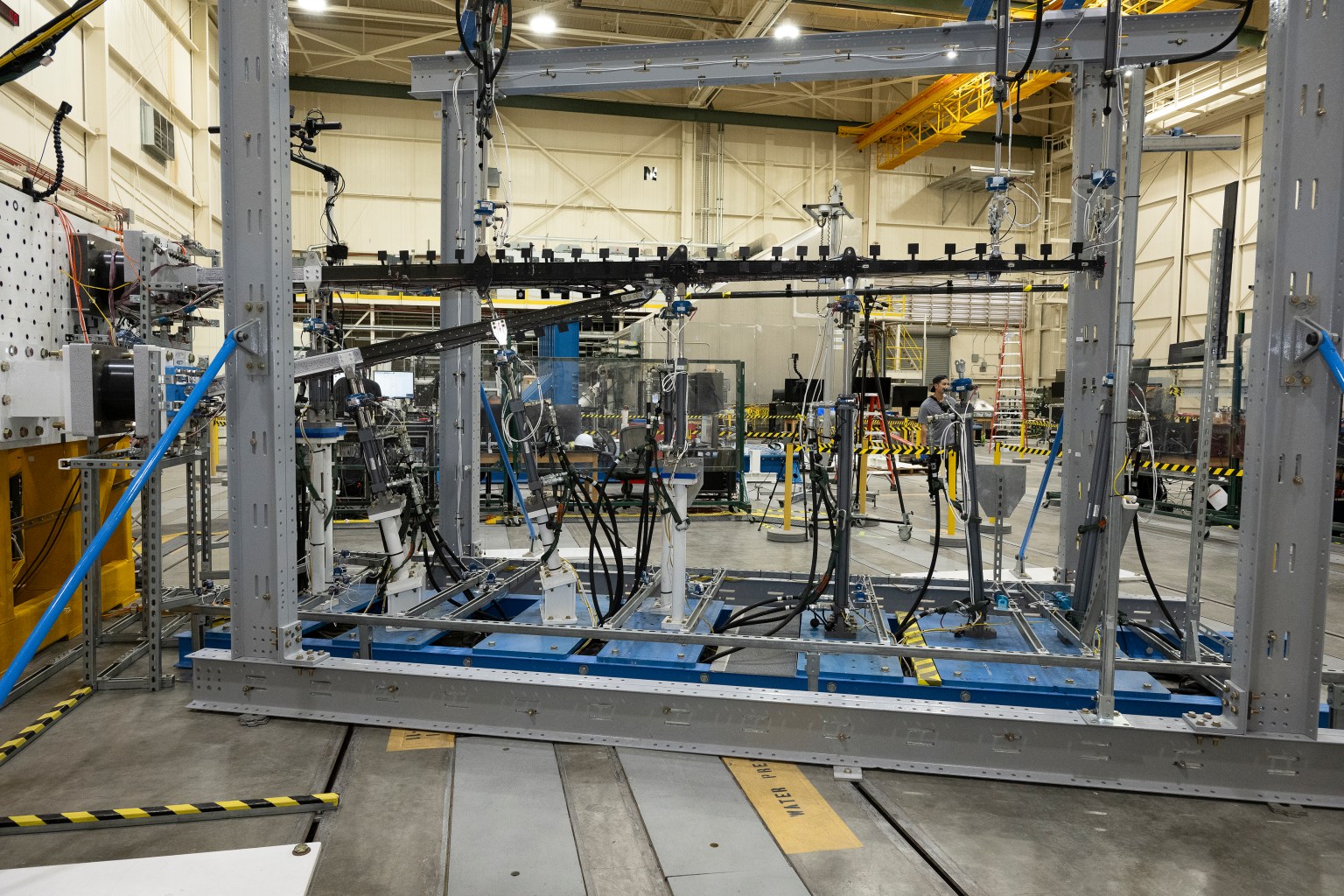
A wide view of a test structure in a laboratory shows a full test assembly secured inside a steel rig. Hydraulic lines, sensors, and support equipment surround the structure, with additional lab equipment visible in the background.
The 15-foot Structural Wing Experiment Evaluating Truss-bracing test article is fully installed in the Flight Loads Laboratory at NASA’s Armstrong Flight Research Center in Edwards, California, on Wednesday, May 20, 2026. The model is part of NASA’s research to develop technologies for future ultra-efficient aircraft.
Credits: NASA/Carla Escamilla

NASA researchers recently put a new wing design, appearing long and thin with a lightweight structural design, through a series of grueling tests to find its structural limits. What they found left them encouraged about the wing’s potential, even when they pushed it past its intended limits.

The 15-foot Structural Wing Experiment Evaluating Truss-bracing (SWEET-15) test article is part of NASA’s research to develop future ultra-efficient aircraft. The design incorporates a long wing supported by an aerodynamic strut, based on NASA’s earlier Transonic Truss‑Braced Wing concept.

The research team is working to understand whether SWEET-15’s design and its new lightweight structural designs could help commercial airliners save fuel. But first, they need to understand how it behaves under the kinds of force wings experience in flight.
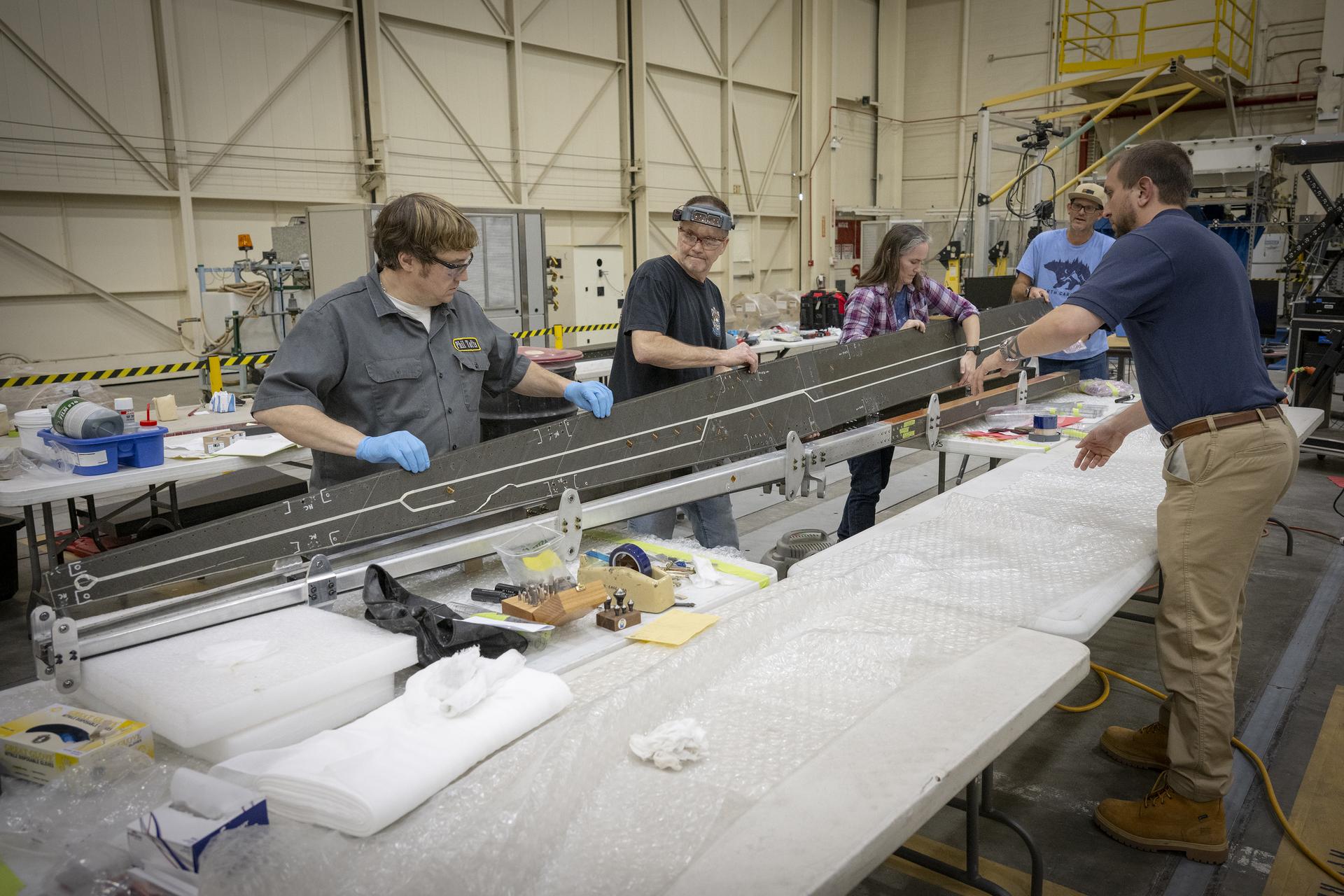
A group of people work together in a large workshop, handling and inspecting a long metallic structure laid across padded tables. Tools, materials, and protective equipment are spread across the workspace.
Lab technicians Phil Tofts, Chris McLain, and Jeff Howell and NASA engineers Erin Anderson and Richard Larson prepare the 15-foot Structural Wing Experiment Evaluating Truss-bracing model in the Flight Loads Laboratory at NASA’s Armstrong Flight Research Center in Edwards, California, on Thursday, Dec. 11, 2025. The model is part of NASA’s research to develop technologies for future ultra-efficient aircraft. 
NASA/Christopher LC Clark

The SWEET-15 design originated with combining five different advanced composite manufacturing and assembly technologies that enabled the novel structural design. The 15-foot-long test article was then designed and fabricated at NASA’s Langley Research Center in Hampton, Virginia, before traveling to NASA’s Armstrong Flight Research Center in Edwards, California, for testing.

Over several months, NASA engineers intentionally bent the test wing in the Flight Loads Laboratory at NASA Armstrong. Numerous strain and load sensors, including fiber-optic strain sensors, were placed throughout the structure to track how the wing responded as forces increased.

The data from the sensors confirmed the predictions made by NASA’s computer models. According to initial findings, the wing withstood the anticipated in-flight forces without issue. The results provided the team with confidence in the new manufacturing approaches and methods for connecting wing parts used in SWEET-15, which could support future efficient aircraft designs. The manufacturing approach, developed at NASA Langley used the Integrated Structural Assembly of Advanced Composites robot, aims to produce lighter and stronger composite structures for aerospace vehicles.
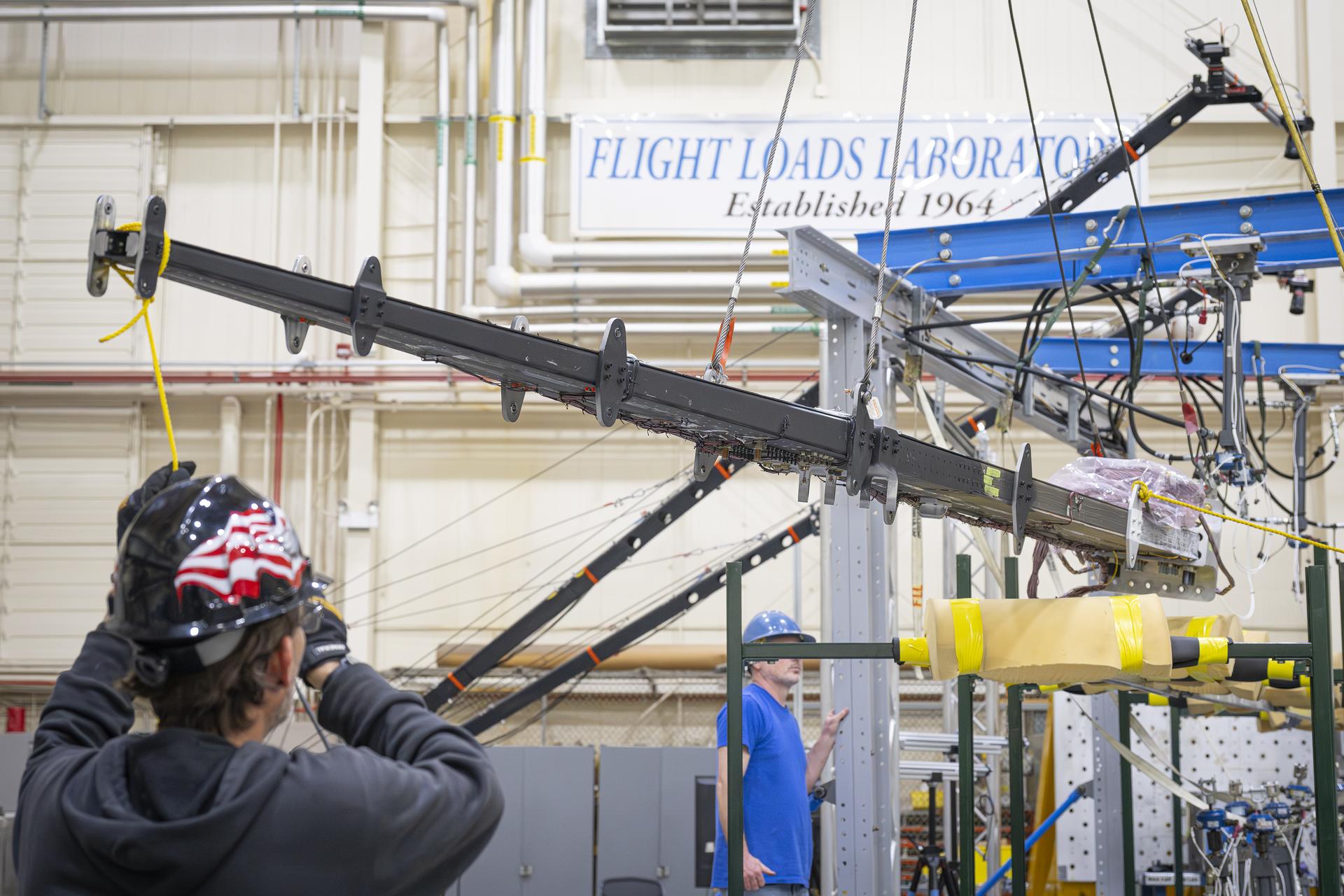
A long beam is suspended in a laboratory while personnel observe and guide its placement. Overhead support equipment, cables, and lab infrastructure surround the test area.
Lab technicians Jeff Howell, left and Chris Mount install the 15-foot Structural Wing Experiment Evaluating Truss-bracing model in the Flight Loads Lab at NASA’s Armstrong Flight Research Center in Edwards, California, Wednesday, February 11, 2026. The model is part of NASA’s research to develop technologies for future ultra-efficient aircraft.
NASA/Christopher LC Clark

The test concluded with a deliberate test-to-failure, where engineers increased loads beyond the wing’s design limits to determine how and where it would fail. The structure ultimately failed at roughly 127% of its design limit load, with visible damage appearing near the back edge of the wing and in the upper wing cover. This element of testing provided valuable insight into how the joints connecting the wing to its main strut and a secondary one, called a jury strut, behave under forces beyond the expected flight envelope.

This marks the first time a representative composite truss-braced wing configuration has undergone this type of structural evaluation.  It was made possible only through NASA collaboration across centers and projects, with researchers utilizing agency resources such as the Fiber Optic Sensing System developed to gather data on both aircraft and spacecraft.
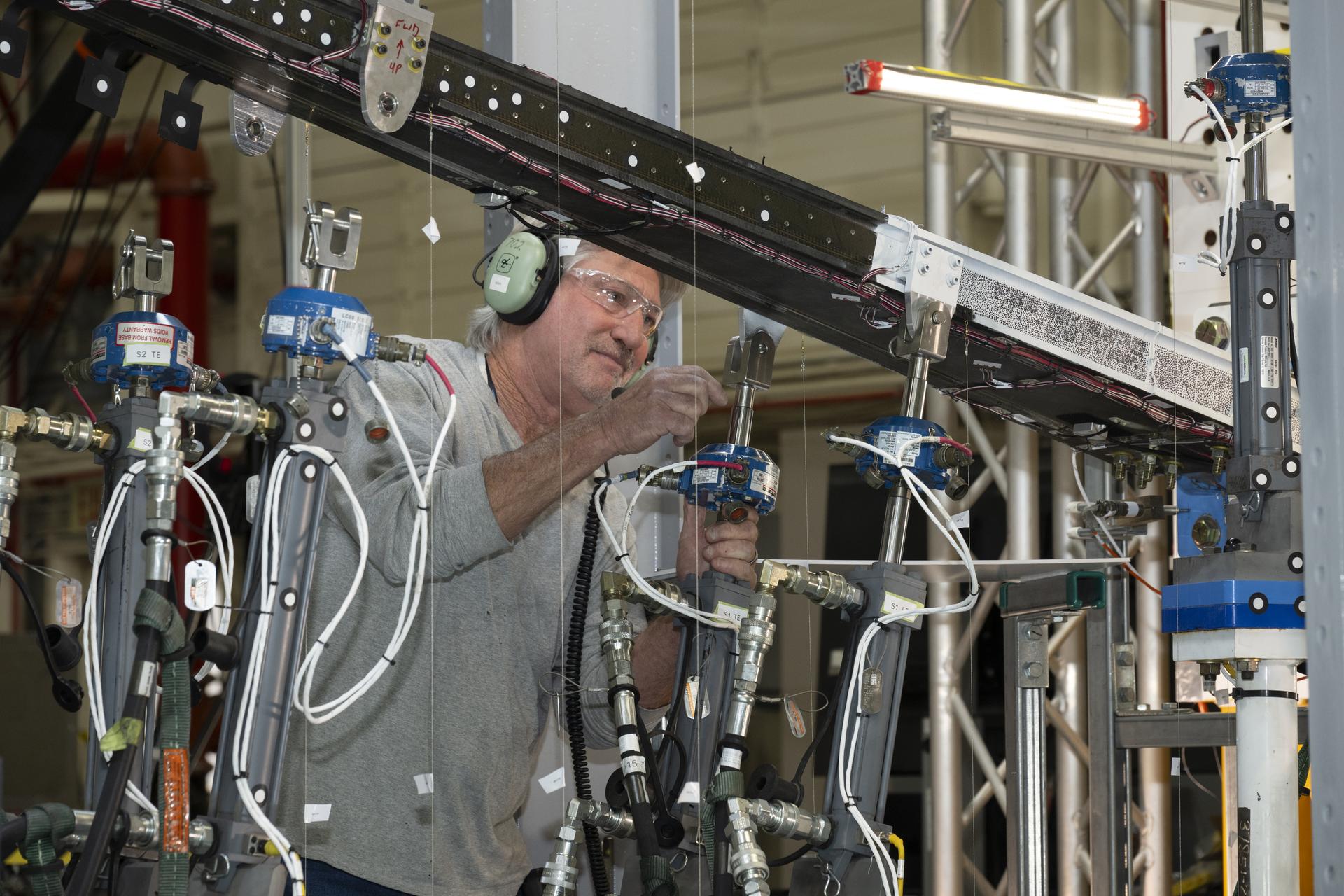
A man wearing ear protection works closely with multiple hydraulic and instrumentation units connected to a large beam mounted on a test structure. Numerous cables, hoses, and measurement devices extend from the setup.
NASA research engineer Walter Hargis regulates the 15-foot Structural Wing Experiment Evaluating Truss-bracing model in the Flight Loads Laboratory at NASA’s Armstrong Flight Research Center in Edwards, California, on Tuesday, March 31, 2026. The model is part of NASA’s research to develop technologies for future ultra-efficient aircraft. 
NASA/Ryan Kline

To prepare for the testing, engineers at NASA Langley designed, analyzed, and manufactured the wing and completed safety preparations and lab setup.

Researchers will now analyze the data collected during testing to inform future airframe designs and support NASA’s ongoing efforts to develop more efficient aviation technologies.

The work is being conducted through NASA’s Subsonic Flight Demonstrator project in the agency’s Research Technology Mission Directorate. The successful testing of multiple innovative components marks a milestone in NASA’s aeronautics research.

To learn more, visit:

https://www.nasa.gov/aeronautics/

The post NASA Pushes New Wing Design to Find Structural Limits appeared first on NASA Science.
  •  

The Growing Crescent of Mars as NASA’s Psyche Mission Approaches

1 Min Read

The Growing Crescent of Mars as NASA’s Psyche Mission Approaches

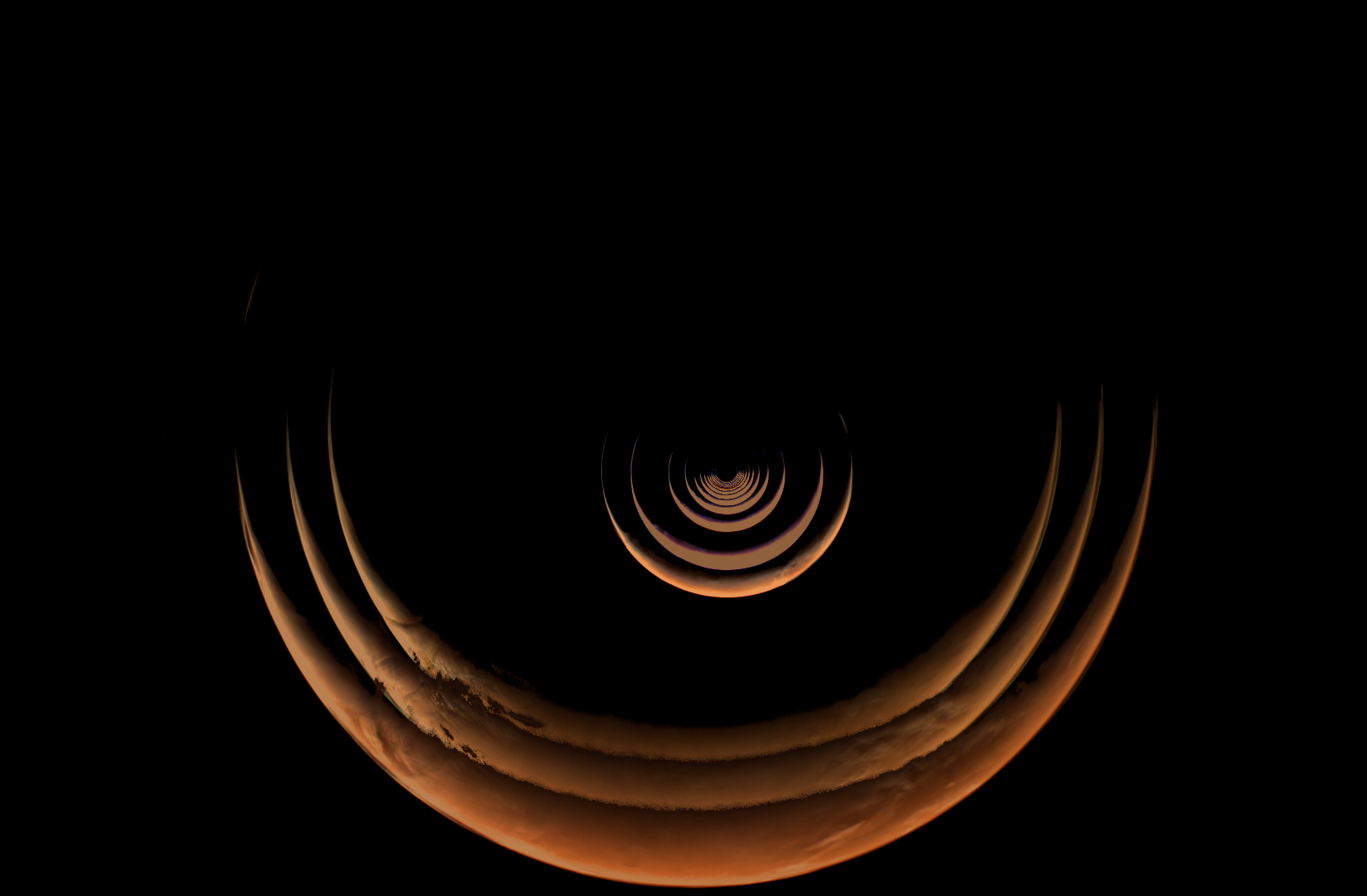
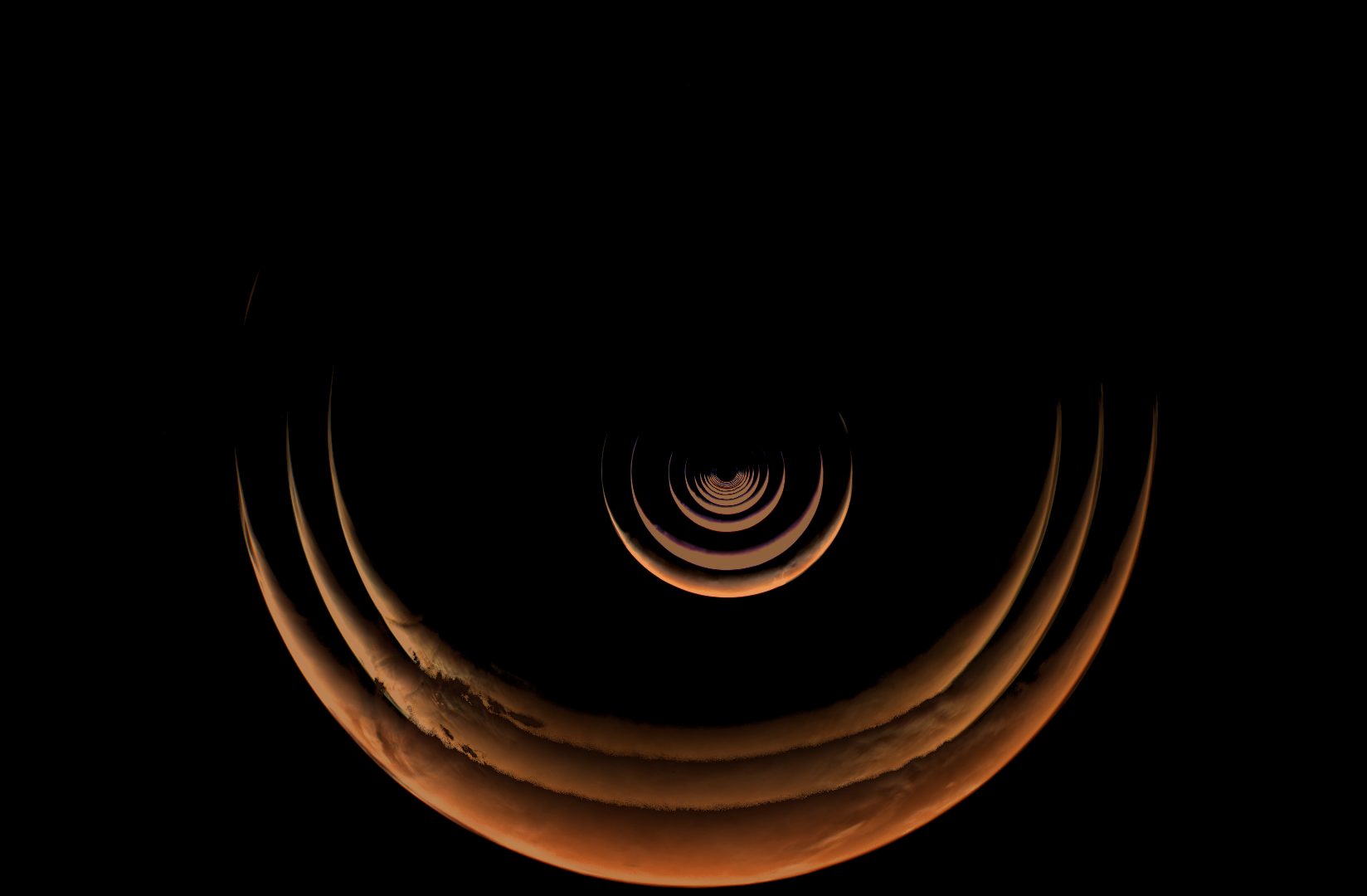
A time-lapse composite against a black background shows a series of concentric, glowing orange crescent planetary horizons that expand outward from a small central point, illustrating a spacecraft's approach during a Mars flyby.
PIA26586
Credits: NASA/JPL-Caltech/ASU

Downloads

The Growing Crescent of Mars as NASA’s Psyche Mission Approaches

PNG (3.48 MB)

Description

This composite of images taken by NASA’s Psyche mission shows the crescent of Mars grow as the spacecraft approached the planet for a gravity assist from May 2 to May 15, 2026. The series begins with the smallest crescent at the center of the of the image as Mars is farthest from the spacecraft, and progressively grows as the spacecraft gets closer. After these views were captured by the spacecraft’s multispectral imager instrument, Mars began to overfill the field of view as Psyche made close approach with the planet and captured a series of high-resolution images of the surface.

Because Psyche approached Mars from a high phase angle, the planet appeared as a thin crescent in the days running up to the close approach, lit by sunlight reflecting off its surface. Using these views of the approach, close approach, and departure from Mars, the Psyche team compiled a stunning time-lapse of its entire Mars encounter.

For more information about NASA’s Psyche mission, visit:

https://science.nasa.gov/mission/psyche/

The post The Growing Crescent of Mars as NASA’s Psyche Mission Approaches appeared first on NASA Science.
  •  

Establishing a VTE Risk Score for Astronauts Algorithm

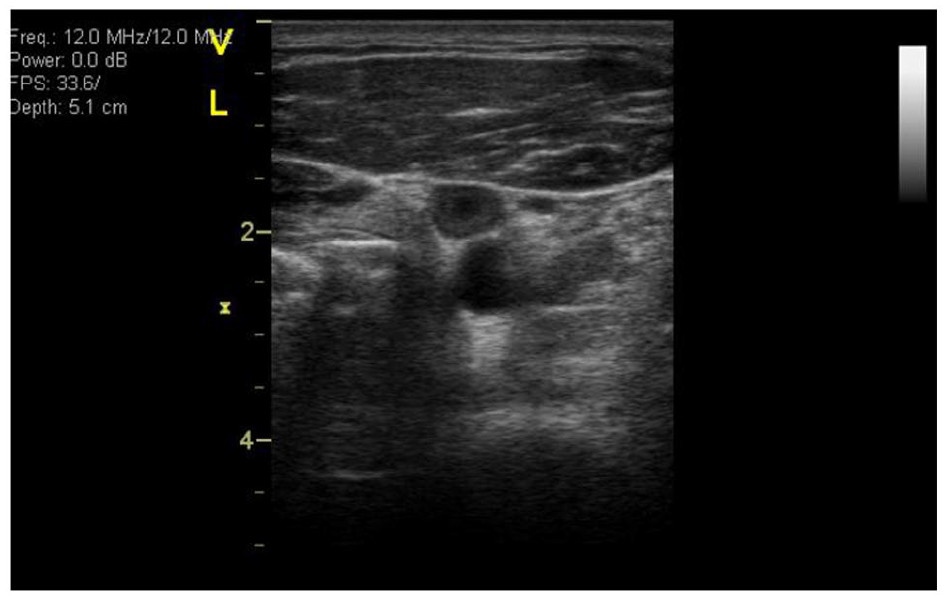
Spontaneous echo contrast (SEC) grade 3 with peripheral echogenicity.
NASA/Pavela

In April 2026, NASA’s Office of the Chief Health and Medical Officer (OCHMO) initiated a working group to review updated VTE case information, additional data gathered revealing altered blood flow status within a cohort of astronauts, and discuss progress of research and clinical activities intended to mitigate the risk of VTE during spaceflight with new evidence-based clinical practice recommendations.

Recommendations

The following is a summary of the working group’s recommendations:

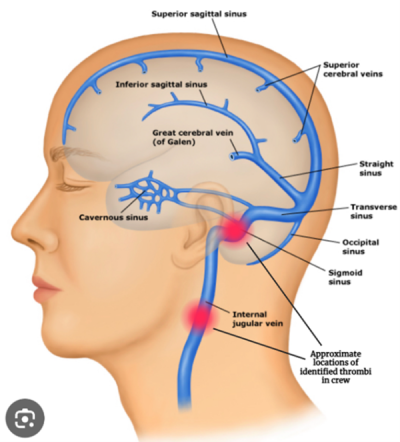
  • The working group’s conclusions emphasized that stasis in the left internal jugular vein (IJV) is consistently viewed as a dominant risk factor for VTE in microgravity, though there is active debate regarding the relative contributions of slow qualitative flow, endothelial factors and/or retrograde flow.
  • Limitations of current in-flight ultrasound capabilities to accurately measure stasis/slow flow was cited as a concern, especially if using only stasis as a factor for indicating the need for prophylaxis.
  • Additional review of assessing stasis with ultrasound in-flight was recommended.
  • After reviewing the risk factors, additional discussions following the working group led to the majority of the panel agreeing that stasis and retrograde flow warranted use of prophylaxis.
  • The working group also recommended assessing all other risk factors other than stasis to also determine when prophylaxis is warranted.
  • Based on a literature review and summary of the panel contributions, a VTE Risk Score for Astronauts Algorithm was developed, which includes providing anticoagulation prophylaxis for stasis alone, or a combination of other thrombosis risk factors that are weighted by terrestrial literature.

Risk of Venous Thromboembolism During Spaceflight

NASA initially formed a working group in October 2024 after diagnosing venous thromboembolisms (VTEs) in astronauts during ISS missions. Experts reviewed case data, updated Clinical Practice Guidelines, and examined possible causes.

Approximate location of identified thrombi in crewmembers.
Source: Modified from Cerebral Sinus Venous Thrombosis – University of Colorado Denver

The post Establishing a VTE Risk Score for Astronauts Algorithm appeared first on NASA Science.

  •  

NASA Awards Facilities Support Services Contract for Ames Research Center 

CONTRACT RELEASE

NASA has selected Chugach Intelligence Solutions LLC to provide comprehensive operations, maintenance, and repair services for NASA’s Ames Research Center in California’s Silicon Valley. 

The Ames Facilities Support Services II contract ensures that the center’s historic and specialized facilities are properly maintained, fully operational, and capable of supporting the agency’s missions and tenant partners in the NASA Research Park. 

The hybrid contract has a five-year period of performance, consisting of a 12-month base period and four 12-month option periods, with the possibility of a six-month extension. The performance period is expected to begin Thursday, Aug. 13. The contract includes cost-plus-award-fee core requirements, firm-fixed-price phase-in, and indefinite-delivery/indefinite-quantity task orders, providing flexibility to address both routine and emergent facility needs. The award has a maximum potential value of approximately $158 million, inclusive of all options and total indefinite-delivery/indefinite-quantity ceiling value. 

For more information about NASA and its missions, visit: 

https://www.nasa.gov

-end- 

Jeanne Neal
Ames Research Center, Silicon Valley, Calif.
650-604-4789
jeanne.c.neal@nasa.gov

The post NASA Awards Facilities Support Services Contract for Ames Research Center  appeared first on NASA Science.

  •  

NASA’s Chandra and IXPE Study Pulsar in Lighthouse Nebula

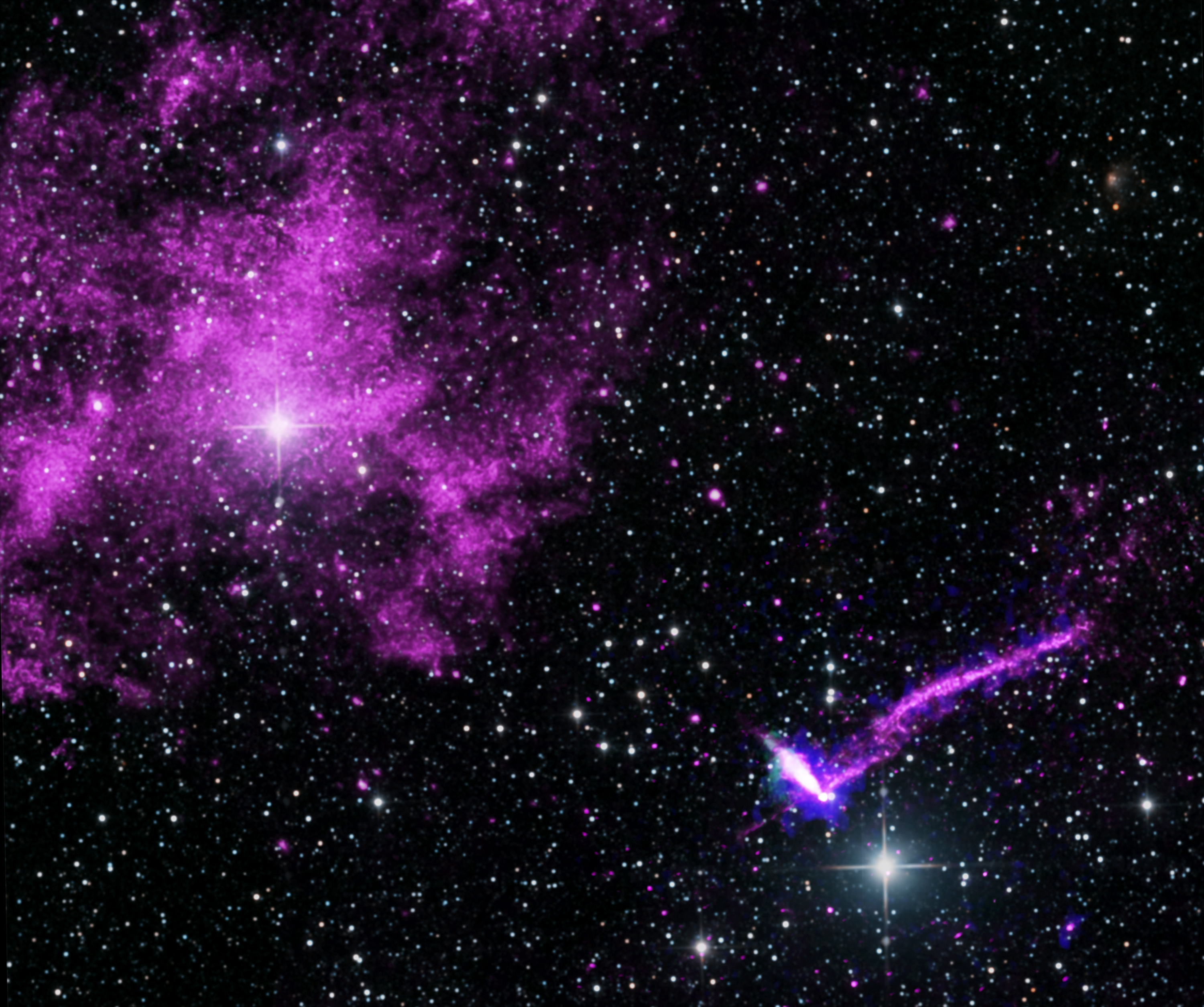
This composite multiwavelength image captures the turbulent environment surrounding the Lighthouse pulsar, set against a vast, black background speckled with twinkling white and faint green stars. In the upper-left quadrant, a massive, cloud-like nebula glows in a textured, vibrant purple hue, anchored by a prominent four-pointed star shining brightly near its center. Moving toward the lower-right quadrant, the pulsar itself is located at the lower tip of a concentrated, brilliant whitish-blue elongated point of light. Extending outward from its core is a long, narrow, and slightly curved jet of purple and blue emission that streaks upward and to the right. This jet represents a massive 37-light-year tail of high-energy particles trailing behind the rapidly spinning star as it plow through interstellar space. This composite image contains X-ray data from NASA's Chandra X-ray Observatory in purple, additional X-ray from NASA's IXPE in blue, and radio data from CSIRO in green. The starfield is optical data from the 2MASS survey.
Scientists using NASA’s IXPE (Imaging X-ray Polarimetry Explorer) directly measured the magnetic fields of PSR J1101−6101, a pulsar located within what is often referred to as the “Lighthouse” Nebula, for the first time.
X-ray: Chandra: NASA/CXC/Stanford Univ./J. Dinsmore et al.; IXPE: NASA/MSFC/J. Dinsmore et al., Radio: CSIRO/ATNF/ATCA; Optical: 2MASS/UMass/IPAC-Caltech/NASA/NSF; Image processing: NASA/CXC/SAO/L. Frattare

This composite image, released on July 9, 2026, shows the region around a pulsar – a neutron star with a strong magnetic field that spins incredibly fast – within the Lighthouse nebula. The image contains X-ray data from NASA’s Chandra X-ray Observatory in purple, X-rays from NASA’s IXPE (Imaging X-ray Polarimetry Explorer) in blue, and radio emission captured by the Australia Compact Telescope Array in green.

Scientists used IXPE – for the first time ever – to directly measure the magnetic fields of the pulsar. The results provide new insight into the structure of some of the most extreme objects in the cosmos, as NASA continues to explore the secrets of how the universe works. A paper describing the results published July 9 in the Astrophysical Journal.

Read more about this novel use of IXPE.

Image credit: X-ray: Chandra: NASA/CXC/Stanford Univ./J. Dinsmore et al.; IXPE: NASA/MSFC/J. Dinsmore et al., Radio: CSIRO/ATNF/ATCA; Optical: 2MASS/UMass/IPAC-Caltech/NASA/NSF; Image processing: NASA/CXC/SAO/L. Frattare

The post NASA’s Chandra and IXPE Study Pulsar in Lighthouse Nebula appeared first on NASA Science.

  •  

La NASA invita a los medios de comunicación al lanzamiento del telescopio espacial Roman

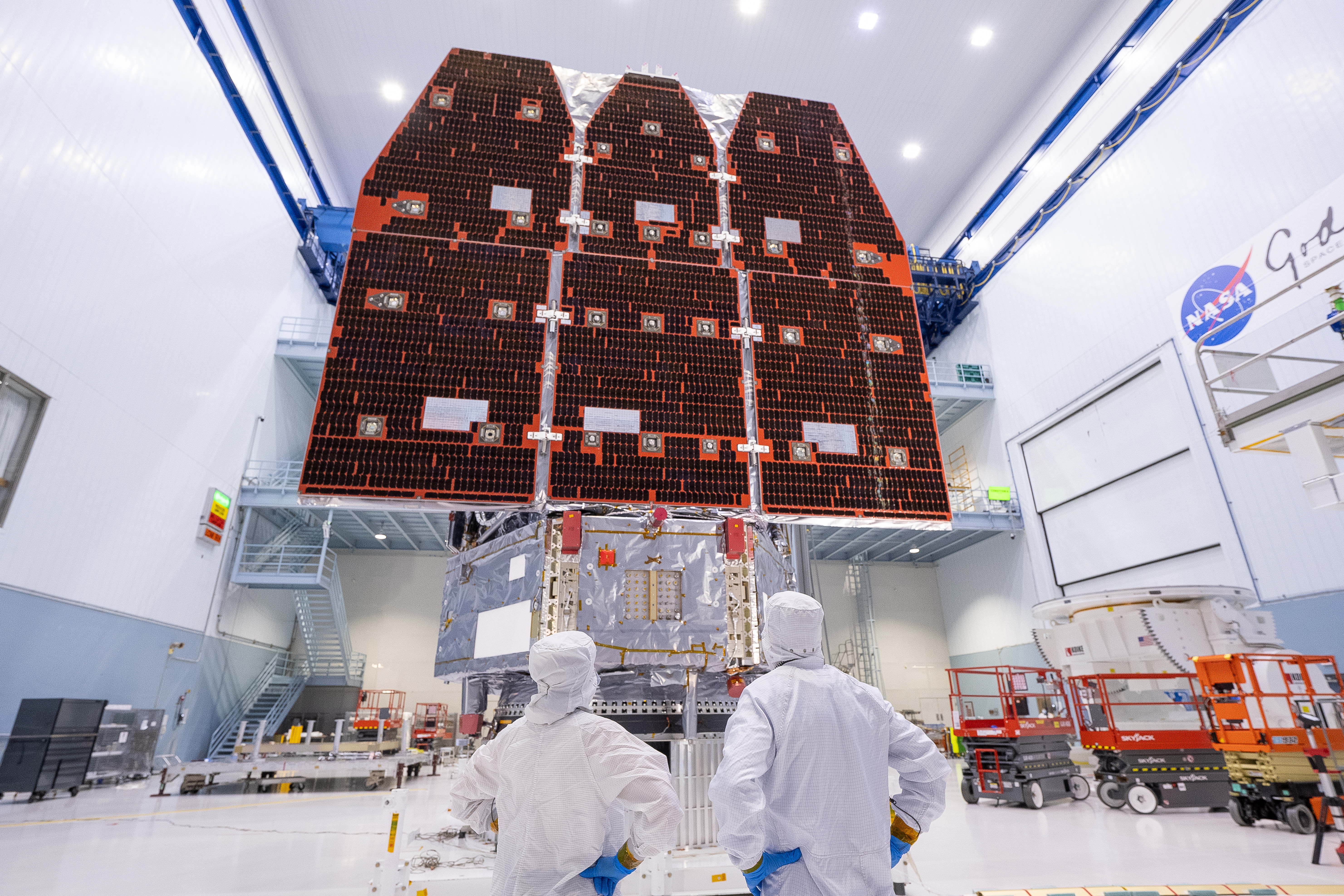
Aquí puede verse el telescopio espacial Nancy Grace Roman de la NASA en la sala limpia del Centro de Vuelo Espacial Goddard de la agencia en Greenbelt, Maryland, donde este observatorio fue construido y sometido a pruebas. Los amplios y profundos sondeos de Roman explorarán la materia oscura, la energía oscura, los exoplanetas y prácticamente cualquier objeto celeste, desde nuestro propio sistema solar hasta galaxias situadas en los confines del universo observable.
Crédito: NASA/Jolearra Tshiteya

Read this release in English here.

Ya está abierto el plazo de acreditación de los medios de comunicación para el lanzamiento de la misión del telescopio espacial Nancy Grace Roman de la NASA.

El lanzamiento del telescopio Roman está programado para no antes de las 7:20 a.m. (hora del este) del domingo 30 de agosto, a bordo de un cohete Falcon Heavy de SpaceX, desde el Complejo de Lanzamiento 39A en el Centro Espacial Kennedy de la NASA en Florida. Este observatorio, que lleva el nombre de la primera astrónoma jefa de la NASA, ofrecerá una visión profunda y panorámica del cosmos, generando imágenes nunca antes vistas que revolucionarán nuestra comprensión del universo.

Los medios interesados en asistir al lanzamiento deben presentar su solicitud antes de los siguientes plazos:

  • Los representantes de medios de comunicación internacionales sin ciudadanía estadounidense deben presentar su solicitud antes de las 11:59 p.m. del domingo 26 de julio.
  • Los medios de comunicación de Estados Unidos y los ciudadanos estadounidenses que representen a organizaciones de medios internacionales deben presentar su solicitud antes de las 11:59 p.m. del jueves 30 de julio.•

Todas las solicitudes de acreditación deben ser enviadas en línea a través del sitio web:

https://media.ksc.nasa.gov

La política de acreditación de medios de la NASA está disponible en línea. Para consultas sobre la acreditación o para solicitudes logísticas especiales, envíe un correo electrónico a: ksc-media-accreditat@mail.nasa.gov.

Para otras consultas, comuníquese con la sala de prensa del Centro Espacial Kennedy de la NASA al teléfono: 321-867-2468.

Para obtener más información sobre esta misión, visite el sitio:

https://www.ciencia.nasa.gov/roman

-fin-

Alise Fisher / María José Viñas
Sede central de la NASA, Washington
202-385-1287
alise.m.fisher@nasa.gov / maria-jose.vinasgarcia@nasa.gov

Leejay Lockhart
Centro Espacial Kennedy, Florida
321-747-8310
leejay.lockhart@nasa.gov

Claire Andreoli
Centro de Vuelo Espacial Goddard de la NASA, Greenbelt, Maryland
301-286-1940
claire.andreoli@nasa.gov

Share

Details

Last Updated
Jul 17, 2026

Related Terms

The post La NASA invita a los medios de comunicación al lanzamiento del telescopio espacial Roman appeared first on NASA Science.

  •  

Water Resources 

Water Resources

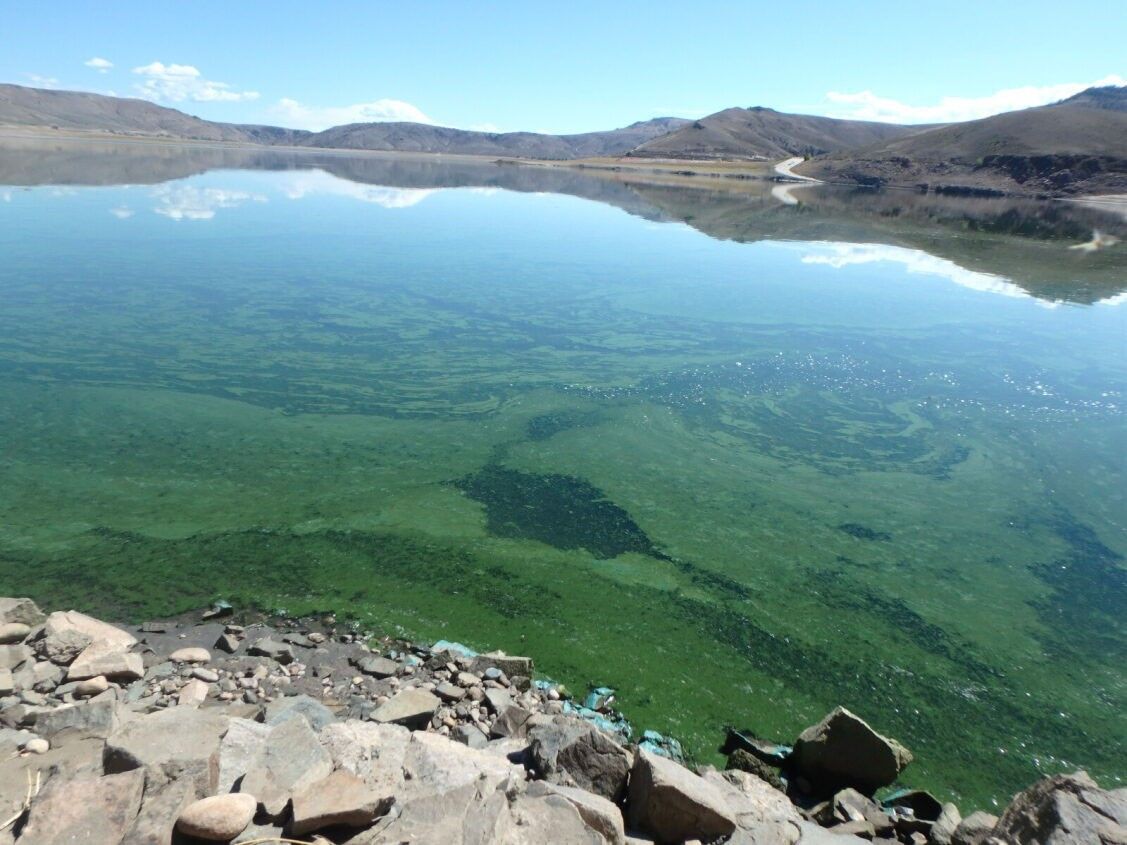
A photograph taken from a rocky shoreline along the Iola Basin show mats of green growth coating the surface of the water.

The NASA Earth Action Water Resources program area advances the use of Earth science data to support sustainable and adaptable water resources management. Through collaboration with partners, the program area works to enhance water use efficiency, advance water quality monitoring and modeling, and strengthen water resilience. These efforts empower informed decision-making and address critical challenges in water resources.  

Program Manager: Erin Urquhart 

See examples of recent Water Resources grants. Example 1 & Example 2

The post Water Resources  appeared first on NASA Science.
  •  

Health and Air Quality 

Health and Air Quality

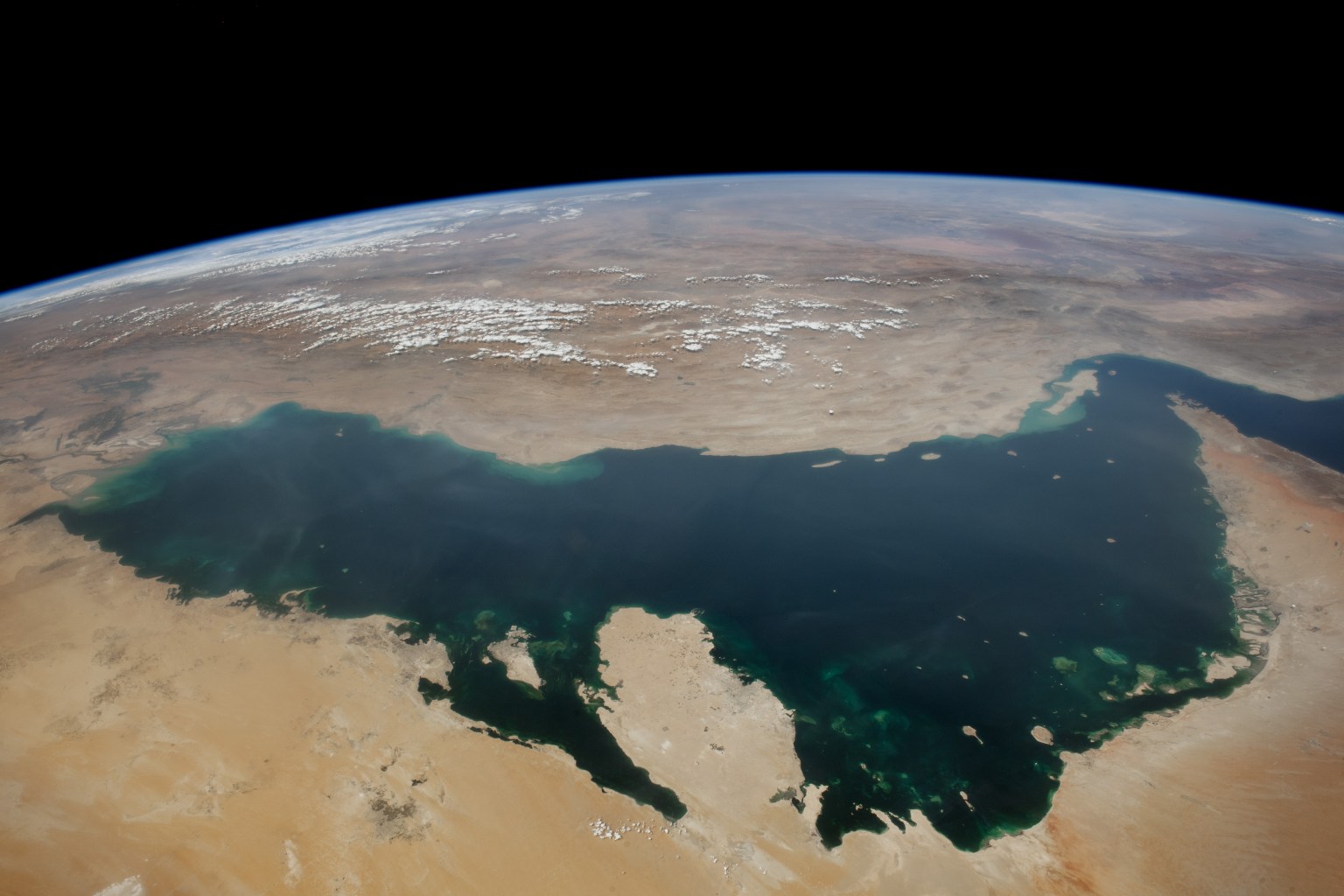
Haze Sweeps Over the Mediterranean

The NASA Earth Action Health and Air Quality program area encourages the use of Earth observations in air quality management and public health, including environmental health and infectious diseases. The program area helps public health and air quality managers, policymakers, and the public manage health-related decisions and minimize disease risk. 

Program Manager: John Haynes 

Visit the Health and Air Quality Applied Sciences Team (HAQAST) page. 

The post Health and Air Quality  appeared first on NASA Science.
  •  

Energy and Infrastructure 

Energy and Infrastructure 

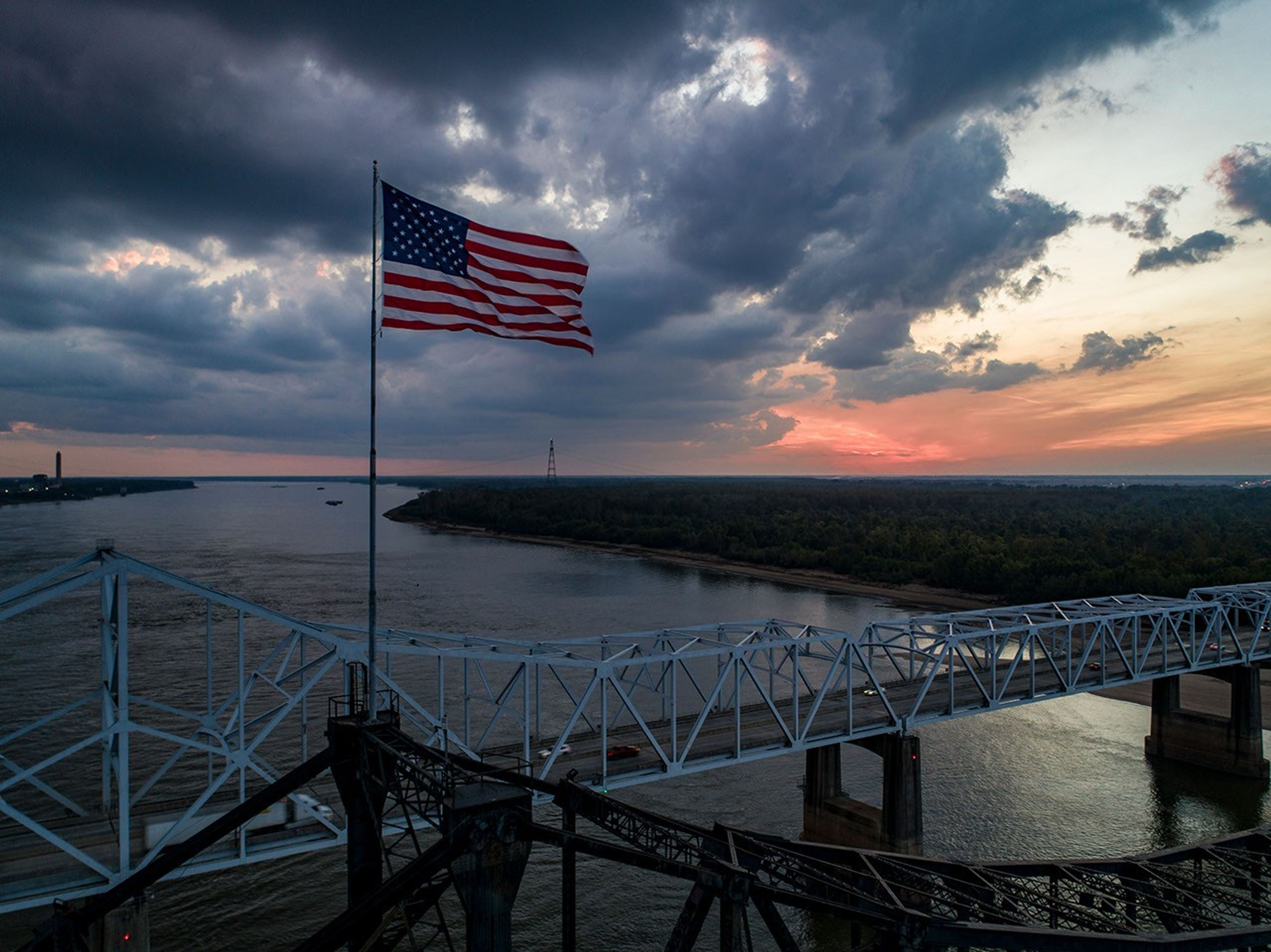
American flag in the breeze over a blue steel bridge over a large river at sunset.

The Energy and Infrastructure program area provides solar, meteorological, and other types of Earth information to aid decision-making related to energy production and management, power systems planning, building energy efficiency and sustainability, and resilient infrastructure. Two major projects are: Prediction Of Worldwide Energy Resources (POWER), which curates satellite and modeling data in free web platforms, and Risk Analysis and Solutions Innovators (RASI), which tailors meteorological and other Earth information to support infrastructure resilience for U.S. communities, especially those surrounding NASA Centers.  

Program Manager: Shanna Combley 

Learn more about POWER and RASI. 

The post Energy and Infrastructure  appeared first on NASA Science.
  •  
❌