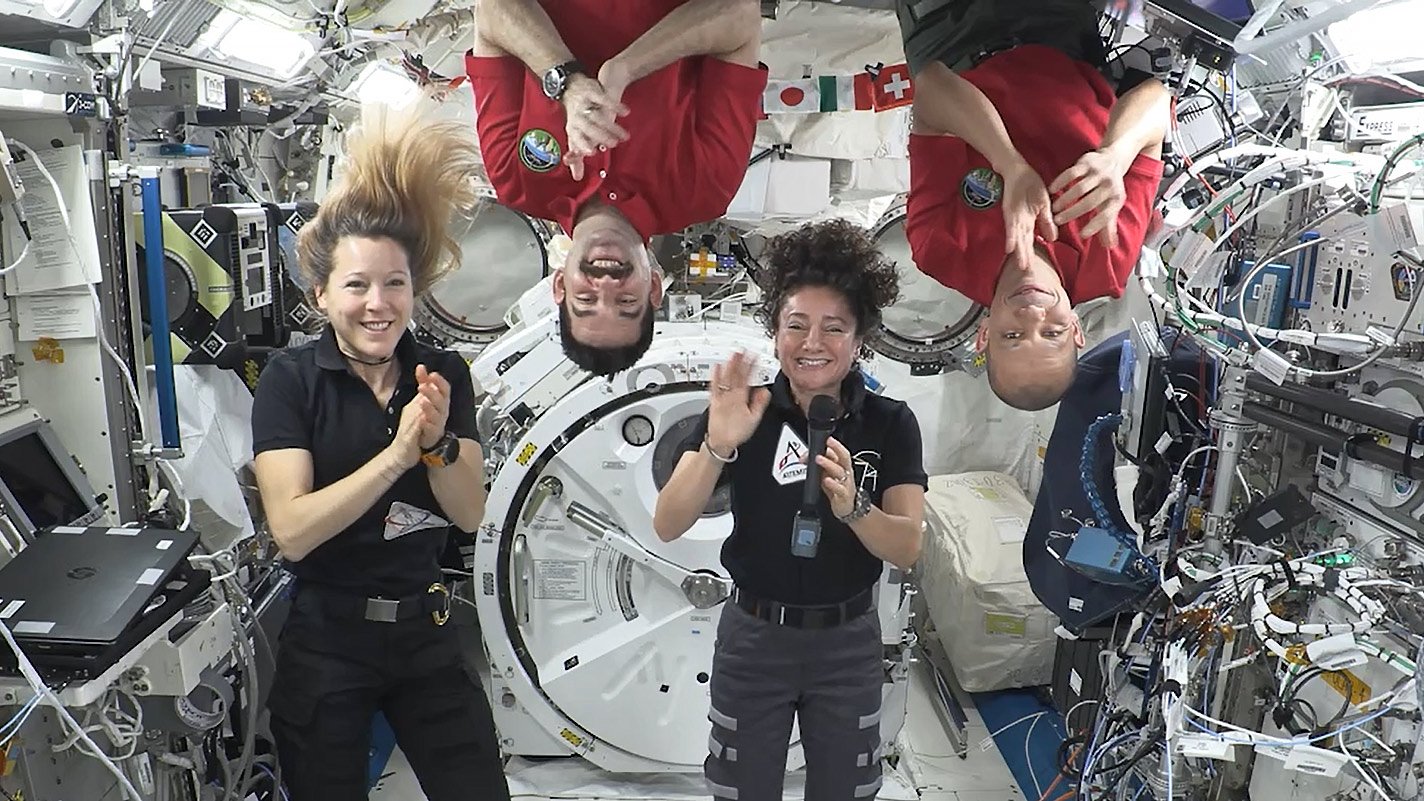
Expedition 74 crew members (from left) Sophie Adenot, Jack Hathaway, Jessica Meir, and Chris Williams congratulate the Artemis III crew in a recorded video message.
NASA
Microbiology and human research were the main scientific focus aboard the International Space Station on Tuesday to protect health on and off the Earth. The Expedition 74 crew members also worked on advanced research hardware and sent down a congratulatory message to the Artemis III crew, who were named during an announcement from the Johnson Space Center in Houston.
Some common bacteria have shown an increased resistance to antibiotics in the space environment potentially affecting an astronaut’s ability to fight an infection. Flight engineers Jack Hathway of NASA and Sophie Adenot of ESA (European Space Agency) explored the antibiotic-resistant organisms inside the Kibo laboratory module’s Life Science Glovebox and the Harmony module’s maintenance work area by processing the microbial samples and preparing them for DNA extraction and analysis. Doctors will use the data to understand how microbes adapt to microgravity possibly informing countermeasures to reduce the risk to astronaut health and protect patients on Earth.
NASA flight engineers Jessica Meir and Chris Williams partnered together loading a CubeSat-packed small satellite orbital deployer into Kibo’s airlock that will soon be placed into the vacuum of space. The Japanese robotic arm will grapple the deployer and point it away from the orbital outpost where it will safely deploy the shoebox-sized satellites into Earth orbit. A series of tiny satellites will be released for public and private research, including the Hokushin-1 CubeSat that will test space technologies such as radio frequency, propulsion, and solar arrays.
Roscosmos cosmonauts Sergey Kud-Sverchkov and Andrey Fedyaev worked on a pair of different investigations on Tuesday to continuously monitor how weightlessness affects the human body. Kud-Sverchkov, the orbital outpost’s commander, strapped an acoustic sensor around his neck that recorded his rapid exhalation to learn how living in space affects the respiratory system. Fedyaev wore a set of cuffs attached to his arms, wrist, and fingers measuring his blood pressure for a microgravity cardiac experiment. Roscosmos flight engineer Sergei Mikaev was back on artificial intelligence research studying new tools to boost crew efficiency and communications aboard a spacecraft.
Four of the station’s astronauts also sent down a message congratulating the four new Artemis III crew members commander Randy Bresnik of NASA, pilot Luca Parmitano of ESA, and NASA mission specialists Frank Rubio and Andre Douglas. The four flight engineers each spoke a few inspiring words with Meir stating, “Congratulations, Artemis III and godspeed on the journey ahead.” Watch the crew message on @Space_Station X.
NASA astronaut Andre Douglas, ESA (European Space Agency) astronaut Luca Parmitano, and NASA astronauts Randy Bresnik and Frank Rubio take a photo together on June 9, 2026. The four were announced as the Artemis III crew.
NASA’s Artemis III mission in low Earth orbit will test integrated operations between the Orion spacecraft and one or both commercial landers from SpaceX and Blue Origin respectively.
Mentor-Protégé Program Agreements under the NASA Small Business Supplier Development Program incentivize NASA prime contractors to assist small businesses and other eligible protégés to increase their capability to compete for and perform NASA prime and subcontracts. These agreements are designed to build supplier capacity to fulfill NASA requirements and support a strong, dynamic, and robust industrial base, which is critical to the health of our economy and to our nation’s effort to lead in space.
Our highest priority is for agreements focused on addressing NASA’s supply chain gaps and mission-critical needs, which are highlighted in our targeted NAICS codes, in our Moon to Mars Architecture, and in the civil space shortfalls that NASA has identified, which are technology areas requiring further development to meet future exploration, science, and other mission needs. Visit the pages below to learn more about how to participate as a mentor or protégé in the NASA Small Business Supplier Development Program.
Select each of the 3 images below to find out more.
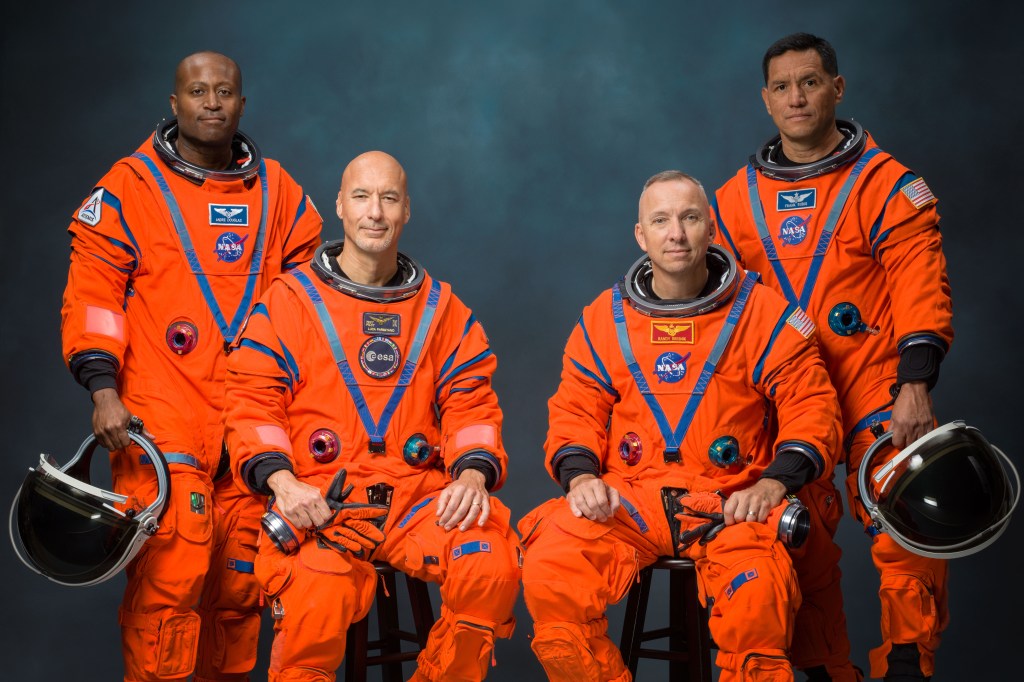
La tripulación de Artemis III posa para una foto oficial en sus trajes espaciales naranjas (de izquierda a derecha: Andre Douglas, Luca Parmitano, Randy Bresnik y Frank Rubio).
La NASA dio el martes otro paso hacia una de las misiones tripuladas más complejas de la historia reciente al ofrecer nuevos detalles sobre Artemis III y anunciar a los cuatro miembros principales de la tripulación y a un suplente para este vuelo de prueba. En 2027, la misión llevará a cabo una serie de exigentes pruebas cerca de la Tierra que son esenciales para Artemis IV, la primera misión tripulada al Polo Sur lunar, prevista para 2028.
En la misión Artemis III, el cohete SLS (por las siglas en inglés de Sistema de Lanzamiento Espacial) de la agencia lanzará la nave espacial Orion y a su tripulación desde el Centro Espacial Kennedy de la NASA, en Florida, a la órbita terrestre baja. Tras las verificaciones de los sistemas de Orion, la nave espacial demostrará por primera vez sus capacidades de encuentro y acoplamiento con versiones de prueba de uno o ambos sistemas comerciales estadounidenses de aterrizaje humano, que están siendo desarrollados por Blue Origin y SpaceX. Esta misión, cuidadosamente coreografiada, incluye una espectacular campaña de múltiples lanzamientos de los cohetes más potentes del mundo y pondrá a prueba el equipamiento integrado entre Orion y los módulos de aterrizaje, así como las interfaces de los sistemas, el software, la propulsión y las comunicaciones.
Los astronautas asignados a la tripulación son los siguientes:
el astronauta de la ESA (Agencia Espacial Europea) Luca Parmitano, piloto
el astronauta de la NASA Andre Douglas, especialista de misión
el astronauta de la NASA Frank Rubio, especialista de misión
Durante el evento del martes, el astronauta de la NASA Bob Hines fue nombrado miembro suplente de la tripulación. La tripulación comenzará a entrenarse de inmediato en los sistemas de la nave espacial Orion y también colaborará en el desarrollo y las operaciones de las versiones de prueba de los módulos de aterrizaje de Blue Origin y SpaceX.
“Hoy damos otro paso audaz en el regreso de la humanidad a la Luna, basándonos en los extraordinarios cimientos sentados por los astronautas de Artemis II”, dijo el administrador de la NASA, Jared Isaacman. “Sus logros reavivaron el entusiasmo mundial por la exploración, y ahora le pasan la antorcha al equipo de Artemis III: Randy, Luca, Frank y Andre. Artemis III demostrará el poder de la innovación estadounidense y la colaboración internacional mientras ponemos a prueba operaciones complejas de encuentro y acoplamiento, y avanzamos las tecnologías que algún día nos llevarán más adentro del sistema solar. Esta misión requerirá la coordinación más impresionante de lanzamientos de cohetes de carga pesada de la historia, aprovechando el talento y las capacidades de equipos de todo el ámbito gubernamental y de la comunidad de vuelos espaciales. Los astronautas de Artemis III, junto con la ESA y nuestros socios internacionales, y las decenas de miles de las personas más brillantes y capaces de la agencia y la industria, están dando inicio a una nueva edad dorada de la exploración, impulsando las esperanzas y los sueños de la próxima generación, así como los astronautas del programa Apolo lo hicieron por tantos de nosotros”.
Esta también es la primera vez que se asigna a un astronauta de la ESA a una misión de Artemis.
“Artemis III ampliará los límites de las operaciones de naves espaciales en órbita. La asignación de Luca como piloto refleja la profundidad de la experiencia europea en los vuelos espaciales tripulados y se basa en su amplia experiencia operativa en situaciones de alta presión”, dijo Josef Aschbacher, director general de la ESA. “Al mismo tiempo, el Módulo de Servicio Europeo de la ESA volverá a aportar las capacidades fundamentales que proporcionan energía a Orion, lo que demuestra la presencia duradera de Europa en el corazón mismo del programa Artemis. La noticia que hoy llega desde Houston es un poderoso reconocimiento del papel de la ESA al hacer posible el regreso de la humanidad a la Luna, y un avance clave en nuestra colaboración con la NASA. Los europeos pueden enorgullecerse de formar parte de este apasionante viaje”.
Avances de la misión
La NASA y sus socios están avanzando en los preparativos para el vuelo de prueba. Este verano boreal, los equipos de ingeniería conectarán el módulo de la tripulación y el módulo de servicio de Orion, e integrarán el sistema de acoplamiento de la nave espacial, que volará por primera vez. Continúan las pruebas del escudo térmico, ya que cada uno de los bloques ha sido sometido a inspecciones ultrasónicas y se ha instalado en la estructura del escudo térmico.
El procesamiento del cohete también está muy avanzado. Los técnicos de SLS están integrando la sección del motor con el resto de la etapa central antes de instalar los cuatro motores RS-25 este verano boreal. Con todos los segmentos de los propulsores sólidos del cohete ya en el centro Kennedy de la NASA y el acondicionamiento del lanzador móvil avanzando según lo previsto, también se prevé que el apilamiento del cohete comience este verano. La NASA continúa con el diseño y la fabricación de un segmento espaciador que reemplazará la etapa superior en Artemis III.
Blue Origin está desarrollando una versión tripulada de su módulo de aterrizaje lunar Blue Moon, mientras que SpaceX está desarrollando una versión de módulo de aterrizaje lunar tripulado de su nave Starship. Ambas empresas están construyendo unidades de prueba para Artemis III. La NASA brinda apoyo directo a ambos proveedores de módulos de aterrizaje durante el diseño, el desarrollo, las pruebas y la evaluación, lo que incluye compartir la experiencia y las capacidades de la agencia obtenidas en misiones anteriores.
Durante el evento, la NASA ofreció actualizaciones de la agencia y de ambos socios comerciales, así como detalles sobre las operaciones previstas para Artemis III, las cuales respaldarán una mayor cadencia de misiones, aumentarán la producción e impulsarán mejoras en la cadena de suministro del programa Artemis.
La misión Artemis III se basa en el exitoso vuelo de Artemis II, que se completó en abril, y ayudará a la agencia a prepararse para enviar a los primeros astronautas, estadounidenses, a Marte.
Artemis III contempla el lanzamiento en rápida sucesión de los cohetes más potentes del mundo. El módulo de aterrizaje de exploración (pathfinder) de Blue Origin, que puede permanecer en órbita durante varias semanas, se lanzará primero y esperará a la tripulación. La NASA usará el cohete SLS para enviar a los astronautas a bordo de Orion a orbitar la Tierra, antes de un encuentro en el espacio con la unidad de prueba del módulo de aterrizaje de la empresa, con la cual Orion permanecerá acoplada durante unos dos días para llevar a cabo pruebas y demostraciones tecnológicas, incluido el ingreso al módulo de aterrizaje.
Tras completar las operaciones acoplada con Blue Origin, Orion se separará y esperará a Starship. El módulo de exploración Starship de SpaceX se lanzará y se encontrará con Orion para pasar aproximadamente un día acoplados para verificaciones y pruebas. Después de eso, Orion y su tripulación se desacoplarán y regresarán a casa, amerizando de manera segura en el océano Pacífico, donde un equipo de la Marina de Estados Unidos y la NASA recuperará a los astronautas.
En total, se prevé que la tripulación permanezca en el espacio durante unas dos semanas. La duración exacta de la misión se determinará en tiempo real en función de las operaciones de lanzamiento, encuentro y acoplamiento.
Más información sobre los miembros de la tripulación de Artemis III Esta será la tercera misión espacial de Bresnik, quien fue lanzado a bordo del trasbordador espacial Atlantis en la misión STS-129 a la Estación Espacial Internacional en 2009. Posteriormente, viajó a la estación espacial en la nave espacial Soyuz MS-05 desde el Cosmódromo de Baikonur, en Kazajistán, y se desempeñó como ingeniero de vuelo en la Expedición 52 y como comandante de la Expedición 53 de la estación. Originario de California, se graduó en The Citadel con un título en matemáticas y fue seleccionado por la NASA en la promoción de candidatos a astronautas de 2004. Coronel retirado del Cuerpo de Marines de Estados Unidos, ha acumulado más de 7.000 horas de vuelo en 95 tipos de aeronaves y es miembro de la Sociedad de Pilotos de Pruebas Experimentales. Desde 2018, se ha desempeñado como asistente del jefe de la Oficina de Astronautas para asuntos de exploración, supervisando el desarrollo y las pruebas de la nave espacial y los sistemas que operarán durante las misiones de Artemis.
Artemis III también será el tercer vuelo espacial de Parmitano. Seleccionado por la ESA como astronauta en 2009, primero se desempeñó como ingeniero de vuelo en la primera misión de larga duración de la Agencia Espacial Italiana (ASI, por sus siglas en italiano) a la estación espacial, despegando en una nave Soyuz desde Baikonur en 2013. Regresó al laboratorio orbital en 2019 a bordo de Soyuz MS-13 para su segunda misión, durante la cual ejerció de comandante de la Expedición 61 y se convirtió en el tercer europeo, y el primer italiano, en comandar la estación. Parmitano obtuvo una licenciatura en ciencias políticas en la Universidad de Nápoles Federico II y una maestría en ingeniería de pruebas de vuelo experimentales en el Instituto Superior de la Aeronáutica y del Espacio en Toulouse, Francia. Graduado de la Academia de la Fuerza Aérea Italiana, se convirtió en piloto de pruebas en 2007 y fue ascendido a coronel en 2019. Ha acumulado más de 2.000 horas de vuelo en 40 tipos de aeronaves.
Este será el segundo viaje al espacio de Rubio, quien fue lanzado a bordo de la nave espacial Soyuz MS-22 desde Baikonur a la estación espacial el 21 de septiembre de 2022 y regresó el 27 de septiembre de 2023, batiendo el récord del vuelo espacial individual más largo realizado por un astronauta estadounidense, con 371 días en órbita. Rubio fue seleccionado por la NASA en la promoción de candidatos a astronautas de 2017. Originario de Florida, se graduó en la Academia Militar de Estados Unidos en 1998, obtuvo un doctorado en medicina en la Universidad de Servicios Uniformados de las Ciencias de la Salud en 2010 y ha servido durante más de 28 años en el Ejército de Estados Unidos como aviador, médico y astronauta.
La misión es el primer vuelo espacial de Douglas. Fue seleccionado por la NASA en la promoción de candidatos a astronautas de 2021 y anteriormente se desempeñó como miembro suplente y de la tripulación de cierre de la misión Artemis II de la agencia. Originario de Virginia, Douglas obtuvo una licenciatura en ingeniería mecánica en la Academia de la Guardia Costera de Estados Unidos y cuatro títulos de posgrado en distintas instituciones, entre ellos un doctorado en ingeniería de sistemas de la Universidad George Washington. Durante su tiempo en la Guardia Costera, llevó a cabo operaciones de búsqueda y rescate, salvamento marítimo e interdicción de drogas. Además, su trabajo en el Laboratorio de Física Aplicada de la Universidad Johns Hopkins incluyó el diseño y la prueba de vehículos autónomos multidominio, sistemas de exploración espacial y numerosas plataformas de guerra submarina.
Como miembro suplente de la tripulación, Hines se entrenará junto con Bresnik, Parmitano, Rubio y Douglas. En caso de que un miembro principal de la tripulación no pueda participar en la misión, se uniría a la tripulación de Artemis III. Hines se desempeñó anteriormente como piloto de la misión SpaceX Crew 4 de la NASA a la Estación Espacial Internacional. Seleccionado por la NASA en la promoción de candidatos a astronautas de 2017, antes de su selección se desempeñó como piloto de investigación en el Centro Espacial Johnson de la agencia. Es coronel de la Fuerza Aérea de Estados Unidos, con más de 27 años de servicio como piloto instructor, piloto de combate y piloto de pruebas.
Como parte de una edad de oro de innovación y exploración, la NASA enviará astronautas en misiones cada vez más difíciles para explorar más de la Luna con fines de descubrimiento científico y beneficios económicos, establecer una presencia humana duradera en la superficie lunar y continuar sentando las bases para las primeras misiones tripuladas a Marte.
The Artemis III crew poses for an official portrait (from left: Andre Douglas, Luca Parmitano, Randy Bresnik, Frank Rubio).
Credit: NASA/Bill Stafford
Taking another step toward one of the most complex human spaceflight missions in recent history, NASA on Tuesday provided new Artemis III details and announced the four prime crew members and a backup for the test flight. The mission will undertake a series of challenging tests in Earth orbit in 2027, essential for Artemis IV, the first planned crewed mission to the lunar South Pole in 2028.
During Artemis III, the agency’s SLS (Space Launch System) rocket will launch the Orion spacecraft and its crew from NASA’s Kennedy Space Center in Florida to low Earth orbit. After Orion systems checkouts, the spacecraft will, for the first time, demonstrate rendezvous and docking capabilities with test versions from one, or both, American commercial human landing systems in development by Blue Origin and SpaceX. This highly choreographed mission includes a dramatic multi-launch campaign of the world’s most powerful rockets, testing integrated hardware between Orion and the landers, including system interfaces, software, propulsion, and communications.
As part of Tuesday’s event, NASA astronaut Bob Hines was named as a backup crew member. The crew will begin training immediately on Orion spacecraft systems, as well as assist in the development and operations of the test versions of Blue Origin and SpaceX landers.
“Today we take another bold step in humanity’s return to the Moon, building on the extraordinary foundation laid by the Artemis II astronauts,” said NASA Administrator Jared Isaacman. “Their achievements reignited global excitement for exploration, and now they pass the torch to the Artemis III team, Randy, Luca, Frank, and Andre. Artemis III will demonstrate the power of American innovation and international partnership as we test complex rendezvous and docking operations and advance the technologies that will one day carry us deeper into the solar system. This mission will require the most awe-inspiring coordination of heavy-lift rocket launches in history, drawing on the talent and capability of teams across government and the spaceflight community. The Artemis III astronauts, alongside ESA and our international partners, and the tens of thousands of the best and brightest across the agency and industry, are ushering in a new Golden Age of exploration carrying forward the hopes and dreams of the next generation just as the Apollo astronauts did for so many of us.”
This also is the first time an ESA astronaut has been assigned an Artemis mission.
“Artemis III will push the boundaries of spacecraft operations in orbit. Luca’s assignment as pilot reflects the depth of European expertise in human spaceflight and draws on his extensive operational experience in high-pressure situations,” said Josef Aschbacher, ESA’s director general. “At the same time, ESA’s European Service Module will once again provide the critical capabilities that power Orion, demonstrating Europe’s enduring role at the very heart of the Artemis program. The news out of Houston today is a powerful recognition of ESA’s role in enabling humanity’s return to the Moon – and a key advancement in our partnership with NASA. Europeans can take pride in being part of this exciting journey.”
Mission progress
NASA and its partners are making progress preparing for the test flight.
Engineers will connect the Orion crew module and service module this summer and integrate the spacecraft’s docking system, which will fly for the first time. Heat shield testing continues with individual blocks having undergone ultra-sonic inspections and installation onto the heat shield structure.
Rocket processing also is well underway. Technicians for SLS are integrating the engine section to the rest of the core stage ahead of installing the four RS-25 engines this summer. With all solid rocket booster segments now at NASA Kennedy and mobile launcher refurbishments on track, rocket stacking also is scheduled to begin this summer. NASA continues design and fabrication of a spacer that will replace the upper stage on Artemis III.
Blue Origin is developing a crewed lunar version of the company’s Blue Moon lander, while SpaceX is developing a crewed lunar lander version of the company’s Starship, with both companies building test articles for Artemis III. NASA is supporting both lander providers hands-on throughout design, development, testing, and evaluation, including sharing agency expertise and capabilities gained from previous missions.
In addition to status updates from NASA and both commercial partners, the agency discussed details during the event about the planned operations for Artemis III, which will support an increased mission cadence, ramp up production, and drive supply chain improvements for the Artemis program.
The Artemis III mission builds on the successful Artemis II flight completed in April and will help the agency prepare to send the first astronauts, Americans, to Mars.
Artemis III includes launching the world’s most powerful rockets in short order. Blue Origin’s lander pathfinder, which is able to stay in orbit for multiple weeks, will launch first and await the crew. NASA will send the astronauts aboard Orion by SLS to orbit Earth, before rendezvousing in space with the company’s lander test article and spending about two days docked together for tests and technology demonstrations, including entering the lander.
After completing docked operations with Blue Origin, Orion will detach and await Starship. SpaceX’s Starship pathfinder will launch and meet up with Orion to spend about a day connected for checkouts and testing. After that, Orion and its crew will undock and return home, splashing safely down in the Pacific Ocean where a team from the U.S. Navy and NASA will recover the astronauts.
In total, the crew is expected to remain in space for about two weeks, with exact mission length to be determined in real-time based on launch, rendezvous, and docked operations.
Learn more about Artemis III crew members
This will be the third mission to space for Bresnik, having launched aboard space shuttle Atlantis on the STS-129 mission to the International Space Station in 2009. He later flew on the Soyuz MS-05 spacecraft from the Baikonur Cosmodrome in Kazakhstan to the space station, serving as a flight engineer for the station’s Expedition 52 and commander of Expedition 53. A California native, he graduated from The Citadel with a degree in mathematics and was selected by NASA in the 2004 astronaut candidate class. A retired U.S. Marine colonel, he has logged more than 7,000 hours in 95 types of aircraft and is a fellow in the Society of Experimental Test Pilots. Since 2018, he has served as assistant to the chief of the Astronaut Office for exploration, overseeing the development and testing of the spacecraft and systems that will operate during Artemis missions.
Artemis III also will be the third spaceflight for Parmitano. Selected by ESA as an astronaut in 2009, he first served as a flight engineer on the Italian Space Agency’s (ASI) first long-duration mission to the space station, launching on a Soyuz from Baikonur in 2013. He returned to the orbital laboratory in 2019 aboard Soyuz MS-13 for his second mission, during which he served as commander of Expedition 61, becoming the third European, and the first Italian, to command the station. Parmitano earned a bachelor’s degree in political sciences from the University of Naples Federico II and a master’s degree in experimental flight test engineering from the Institut Supérieur de l’Aéronautique et de l’Espace in Toulouse, France. A graduate of the Italian Air Force Academy, he became a test pilot in 2007 and was promoted to colonel in 2019. He has logged more than 2,000 flight hours across 40 types of aircraft.
Rubio is making his second trip to space. He launched aboard the Soyuz MS-22 spacecraft from Baikonur to the space station on Sept. 21, 2022, and returned on Sept. 27, 2023, breaking the record for the longest single-duration spaceflight by an American astronaut with 371 days in orbit. Rubio was selected by NASA in the 2017 astronaut candidate class. A Florida native, he graduated from the U.S. Military Academy in 1998, earned a doctor of medicine from the Uniformed Services University of the Health Sciences in 2010, and has served for more than 28 years in the U.S. Army as an aviator, a physician, and an astronaut.
The mission is Douglas’ first spaceflight. Selected by NASA in the 2021 astronaut candidate class, he previously served as a backup and closeout crew member for the agency’s Artemis II mission. A Virginia native, Douglas earned a bachelor’s degree in mechanical engineering from the U.S. Coast Guard Academy and four postgraduate degrees from various institutions, including a doctorate in systems engineering from George Washington University. During his time in the Coast Guard, he conducted search and rescue, maritime salvage, and drug interdiction operations. Additionally, his time at the Johns Hopkins University Applied Physics Laboratory involved designing and testing multidomain autonomous vehicles, space exploration systems, and numerous undersea warfare platforms.
Serving as a backup crew member, Hines will train alongside Bresnik, Parmitano, Rubio, and Douglas. Should a primary crew member be unable to participate in the mission, he would join the Artemis III crew. Hines previously served as pilot of NASA’s SpaceX Crew-4 mission to the International Space Station. Selected by NASA in the 2017 astronaut candidate class, he served as a research pilot at the agency’s Johnson Space Center prior to his selection. He is a colonel in the U.S. Air Force with more than 27 years of service as an instructor pilot, fighter pilot, and test pilot.
As part of the Golden Age of innovation and exploration, NASA will send Artemis astronauts on increasingly difficult missions to explore more of the Moon for scientific discovery, economic benefits, establish an enduring human presence on the lunar surface, and to build on our foundation for the first crewed missions to Mars.
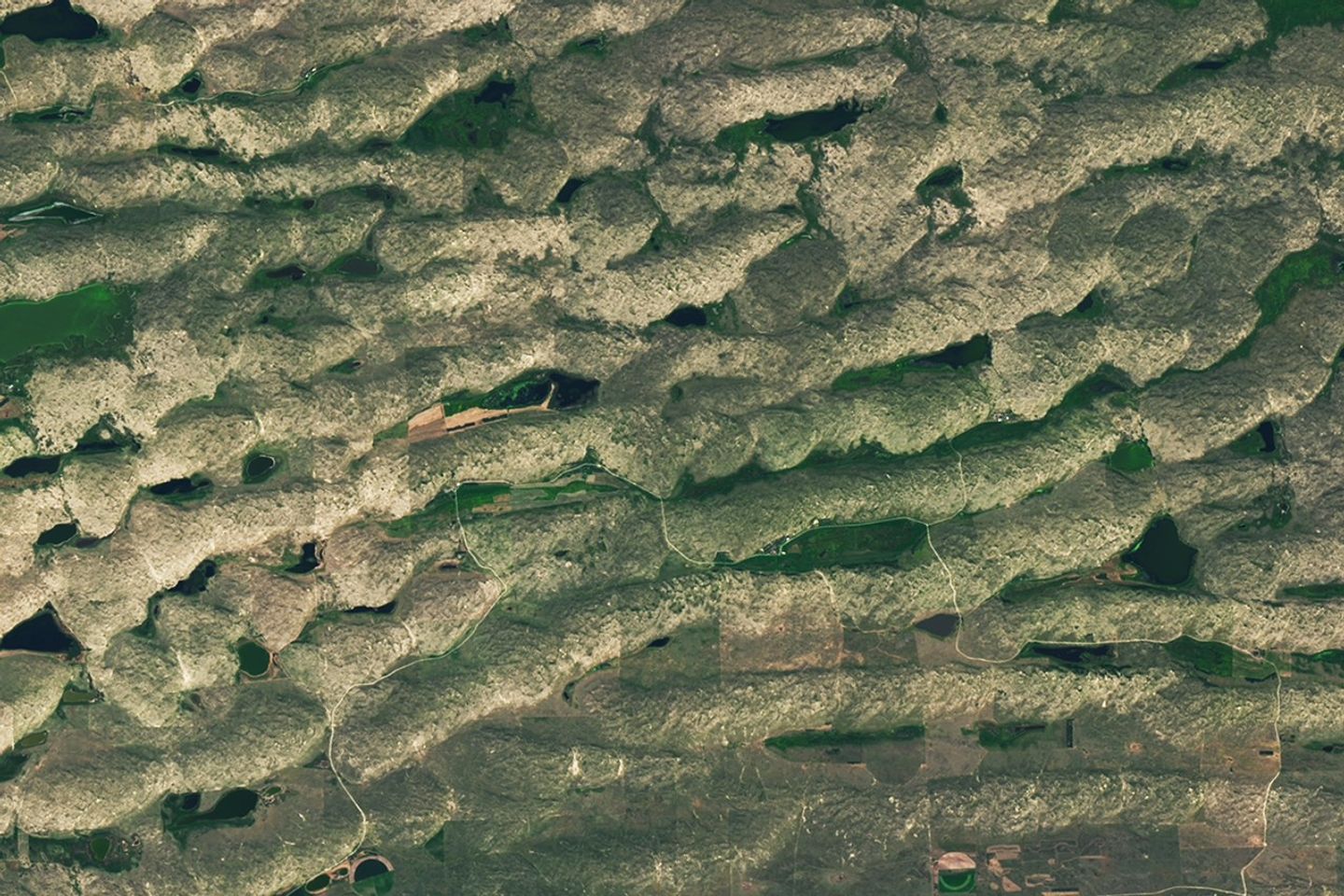
Every month, NASA Earth Observatory features a puzzling satellite image. The June 2026 puzzler appears above.
Your Challenge Identify the location shown in this satellite image. Share what clues you see, where you think it is, and what makes this place interesting or unique to you.
How to Answer Submit your response using this form and select “Puzzler Answer” as the topic. Please include your preferred name or alias.
You can keep it simple and just guess the location. Want to impress us? Tell us which satellite and instrument captured the image, which spectral bands were used, or point out a subtle detail about the geology or history of the area. If something catches your eye, or if this is your home or means something to you, we’d love to hear about it.
The Prize We can’t offer prize money or a trip to space to see Earth like satellites and astronauts do. But we can offer something almost as rewarding: puzzler bragging rights.
About a week after the challenge, we’ll post the answer at the top of this page, along with a link to an Earth Observatory Image of the Day story that explains the image in more detail. We’ll recognize the first person who correctly guesses the location, and we may also highlight readers who share especially thoughtful or interesting answers. By submitting a response, you acknowledge that your comments may be edited, excerpted, and published on this page.
Until then, zoom in, look closely, and enjoy the challenge. See you at the reveal!
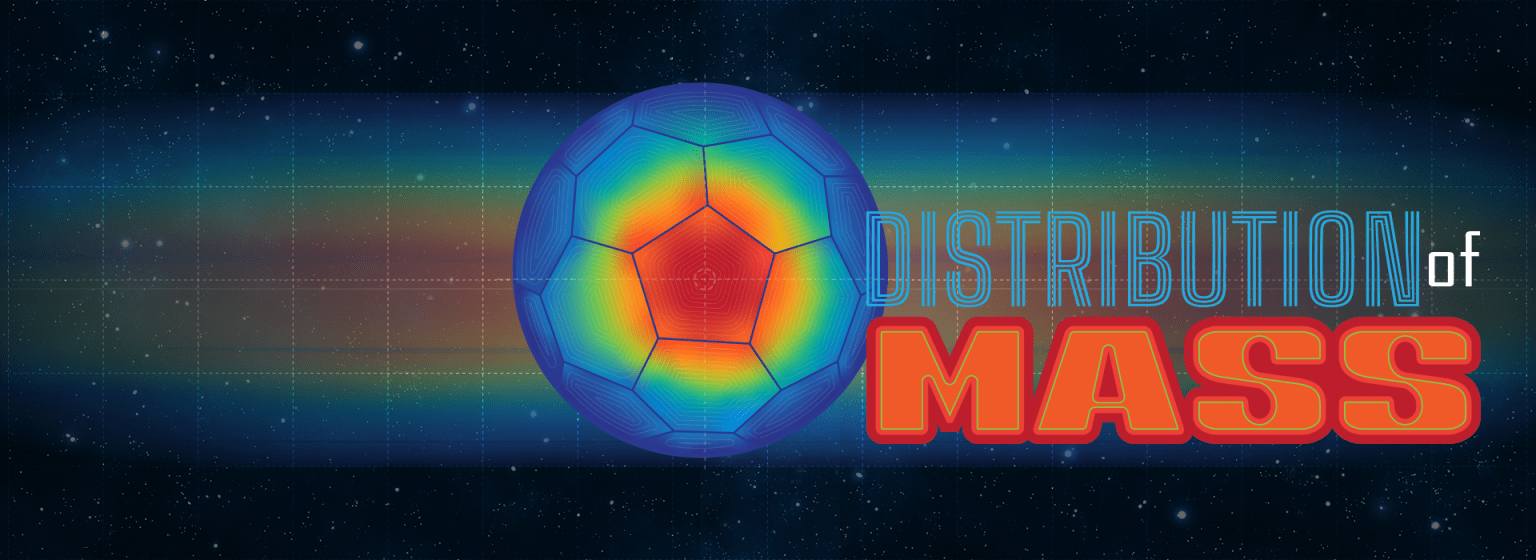
Mass distributionaffects everything from galaxy shapes to aircraft design to planetary rotation. It’s used to map stars in our universe, figure out what planets are made of, and even to determine how luggage is loaded onto an airplane.
Mass distribution can be a tricky thing to understand. So, let’s explore it using an everyday example: a soccer ball.
How Does Mass Distribution Affect Center of Mass?
Have you ever kicked a soccer ball and wondered why it curves, spins, or sometimes wobbles? Mass distribution plays a part.
On the outside, soccer balls look simple – a series of geometric shapes woven together in a pattern. But on the inside, they are carefully engineered. The key to a great soccer ball is something you can’t see: how the mass is distributed inside the ball.
When engineers build a soccer ball, they try to make sure its mass is evenly balanced in all areas. This is because the way a ball spins and flies depends on how its mass is arranged. If one part of the ball is slightly heavier, its center of mass shifts. If the ball’s center of mass isn’t precisely balanced, the ball won’t move smoothly.
Scientists and engineers use tools like precision scales, computer models, and repeated testing to determine an object’s mass distribution. These efforts help them design balanced airplanes, rockets, and even soccer balls. Their goal is to achieve dynamic balance, meaning the object can travel smoothly without unexpected movements.
How Does Gravity Affect How We Study Mass Distribution?
On Earth, gravity hides some of the details about how objects move. In microgravity, astronauts can observe motion more clearly. In 2019, Adidas partnered with NASA and sent soccer balls to the International Space Station.
Astronauts conducted tests to help engineers confirm their designs and understand the physics behind ball motion in ways they simply can’t on Earth. The results of the space station experiments have already helped improve the accuracy and consistency of modern soccer balls.
Try It Yourself
You don’t need to go to space to explore the physics of a ball in motion. Try this experiment at home or school:
Grab different types of sports balls (soccer ball, basketball, tennis ball)
Spin each one on the ground or between your hands
Watch for wobbling, flipping, or smooth spinning
Can you tell which balls are well balanced? Or which ones might have uneven mass distribution?
Career Corner
Are you interested in a career that explores the science and engineering of mass distribution? Many different occupations can help you strike the perfect balance. Here are a few examples:
Computer-Aided Design (CAD) Technician/Drafter: These specialists convert sketches and engineering designs into technical drawings. They use powerful computer software to create detailed 3D and 2D drawings of objects. A two-year associate degree from a technical or community college is key to this career path.
Computational fluid dynamics engineer: These engineers use computer simulation tools to model and analyze fluid behavior in real-world situations. They might study airflow around sport ball designs or explore ways to improve aircraft wings. They need a strong background in engineering and the ability to analyze complex problems.
Physicist: These scientists study matter and energy. They develop models and theories to explain how things work, conduct experiments, and use math to better understand the universe. A career in physics demands a strong understanding of math and complex problem-solving and usually requires an advanced college degree.
Research Physical Scientist, Wildland Fire Science Program Management, Chemistry and Dynamics Branch, Science Directorate, NASA Langley Research Center
About
Dr. Amber Soja is an interdisciplinary scientist, with 30 years of research experience in wildland fire and smoke science. Her goal is to connect these integral physical and chemical processes through the biosphere, atmosphere, weather, and climate systems, using Earth Observation and ground-based data. Amber’s inspiration comes from having been born into a family that spent every spare moment exploring the natural world.
Over the years, Dr. Soja has participated in and led numerous projects and field campaigns (e.g., FireBear, INTEX-A, INTEX-B, TexAQS, ARCTAS, FIREX-AQ, Fuel2Fire). She led international teams of scientists to remote Siberia, where they measured emissions from fires, spectral signatures, and biomass fuels from both wildfire and set experimental fires (1999-2014 Crimea). For decades, she continued as a lead scientist for the Northern Eurasian Earth Science Partnership (NEESPI), working with scientists from this challenging continent to collate data and manuscripts (4 special issue, 40 books and chapters, 160 collaborative international projects, 750 scientists across 30 countries). Over her career, she served as an Associate Program Manager for the Wildland Fire Program (2014-2018), where the teams excelled at advancing a mean of 5 steps in Applications Readiness Levels (ARL), several reaching ARL 8 and 9. She led the LaRC Disasters program (2016-2018), coordinating data and multi-Center responses to volcanoes, dust events, and wildfires.
In her senior research role, she works closely with scientists across disciplines, organizations, and nations. Our key motivations are to enhance our understanding of the novel interconnected processes that advance science, especially those that have societal relevance and cannot be realized by single disciplines. Amber is proud to have worked to enhance the use of satellite data in partner agencies, and she has an affinity for guiding Earth Observations towards ‘usable’ impactful information for sustained benefit in partnership with public- and private-sector organizations. Working with the Environmental Protection Agency (EPA), she advanced the incorporation of multiple satellite platforms in our National Fire Emissions Inventory (NFEI) to support the EPA, state and regional decisions. Her most recent work focuses on enhancing fire and smoke data to develop epidemiological studies that can target human health.
Soja AJ and PY Groisman (2018) Earth Science and the integral climatic and socio-economic drivers of change across northern Eurasia: The NEESPI legacy and future direction. Environ. Res. Lett.13, 040401, https://doi.org/10.1088/1748-9326/aab834
Soja AJ, HH Shugart, A Sukhinin, S Conard, PW Stackhouse Jr. (2006) Satellite-derived mean fire return intervals as indicators of change in Siberia (1995-2002), Mitigation and Adaptation Strategies for Global Change 11 (1), 75-96, https://doi.org/10.1007/s11027-006-1009-3
Manuscript selected by ScienceWatch.com as one of the 17 core papers comprising the front in Boreal Forest Fires and Climate Change, Environment/Ecology (list of Top Topics April 2010).
Best Scientific Research Article, National Institute of Aerospace (2007)
3 NASA Group Achievement Awards (2004-2019)
Education/Professional Experience
B.A. 1996 University of Virginia, Charlottesville VA, Environmental Sciences
2000 – 2003 Science To Achieve Results (STAR), EPA Fellowship
Ph.D. 2004 University of Virginia, Charlottesville VA, Environmental Sciences
2004 – 2005 The National Academies National Research Council Post-doctoral Fellowship
National/International Leadership
2023: National Academies of Sciences Committee: Greenhouse Gas Emissions from Wildland Fires: Toward Improved Monitoring, Modeling, and Management
2018 – 2023: International Association of Wildland Fire (IAWF) Board of Directors and co-Chair IAWF Long Range Conference Planning Committee
2021 National Science Foundation Wildfire & the Biosphere Innovation Lab Community engagement
2019-2020: Aerosol Clouds Climate and Precipitation (ACCP) Application Impact Team (AIT) Mission Planning for Atmosphere Observing System AOS
2018- Present: Serve on several Interagency Working Groups (IWG): NOAA Interagency Council on Advancing Met. Service (ICAMS) Fire Weather WG; Wildland Fire Leadership Council; IWG Smoke Impacts Subgroup; U.S.-Canada: Interagency coordination on wildfire smoke and health research.
2015: Subcommittee on Disaster Reduction (SDR). Author on “Wildland Fire Science and Technology Task Force Final Report” with NSTC presented to Obama administration.
The Future Large Gamma-ray Mission Concepts working group will hold a hybrid work session to review progress and needed inputs for a technical report on gamma-ray instrumentation. Working group members will present updates and lead discussions to complete gathering of input on gamma-ray capabilities, mission concepts, and technologies. The group will work on identifying and filling gaps in the draft and refining the content of the report.
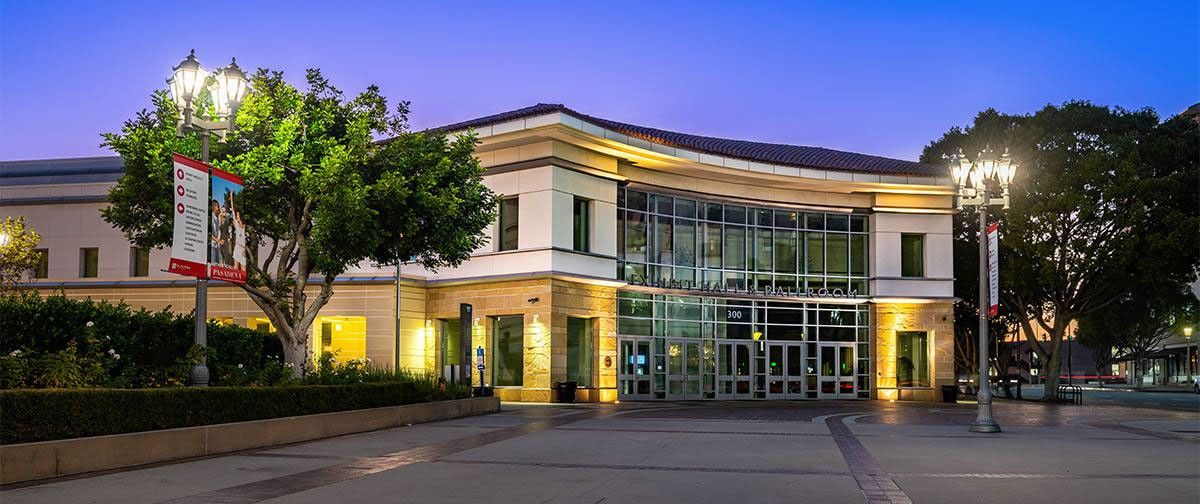
Pasadena Convention Center ‑ Conference Center, 204
American Astronomical Society
The 248th Meeting of the AAS
The 248th AAS meeting (joint with the High Energy Astrophysics and the Laboratory Astrophysics Divisions) will be held 14-18 June 2026 in Pasadena, California.
NASA Astrophysics is developing the Fornax Initiative, a cloud-based system that brings together data, software, and computing so that researchers can focus on science.
This webinar will be on the ASTRA initiative, as the deadline for white paper submissions approaches (June 26th). We will present some brief updates about the process and the September Ad ASTRA workshop, as well as hear brief presentations about the science impact of the planned white paper submissions.
The Symposium will take place on the University of Maryland campus in College Park, Maryland, USA.
Location
College Park, Maryland
Dates
21-26 June 2026
Community
Physics of the Cosmos
Type
Symposium
About the LISA Symposium
A Biennial Gathering of Researchers Working on the Laser Interferometer Space Antenna and the Gravitational Wave Science It Will Enable
First held in 1996, the International LISA Symposium is held every two years to celebrate and share information and science related to the Laser Interferometer Space Antenna mission.
The 16th International LISA Symposium will highlight gravitational wave astrophysics, with a primary focus on the most up-to-date mission development, theory and analysis enabling the science to be performed with the Laser Interferometer Space Antenna.
The Community Science (Ad ASTRA) Workshop is organized by the NASA Astrophysics Division to engage the community in defining future large, strategic astrophysics missions. Structured over three thematic days—Science, Capabilities, and Missions—the workshop provides a comprehensive framework to connect scientific priorities with technological readiness and mission implementation. Across all three days, plenaries, panels, breakout sessions, and poster contributions are designed to maximize community input. The outcomes of the workshop will help NASA prioritize mission concepts and shape a balanced, forward-looking astrophysics portfolio.
This workshop is organized by the NASA Astrophysics Program Offices in partnership with the Infrared Processing and Analysis Center (IPAC).
Important Dates:
Registration opens: March 31, 2026
Abstract deadline: June 24, 2026
Contributed talks/posters selection: July 1, 2026
Deadline for in-person registration: August 15, 2026
Deadline for virtual registration: August 31, 2026
Plan for the Workshop: Deliverables and Mandate (Day 2 focus)
EC PAG Chairs
9:10am
Innovation Workshop Summary
Innovation Workshop SOC speaker
9:50am
NASA Strategic Technology Gaps
Chief Technologist from PAGs
10:10am
Morning Break
10:40am
Emerging Technologies (session)
Presentations from community/industry members (TBA)
12:30pm
Lunch
Afternoon
2:00pm
Astrophysics Technology: Capabilities Needed
Parallel Breakout Sessions: What are the capabilities needed (software and hardware, platform, location) relevant to the ASTRA submitted mission concepts?
-Breakout categories TBD
Contributed presentations from community members (TBA after abstract selection)
4:00pm
Afternoon Break
4:45pm
Synthesis panel to summarize the breakout sessions on capabilities
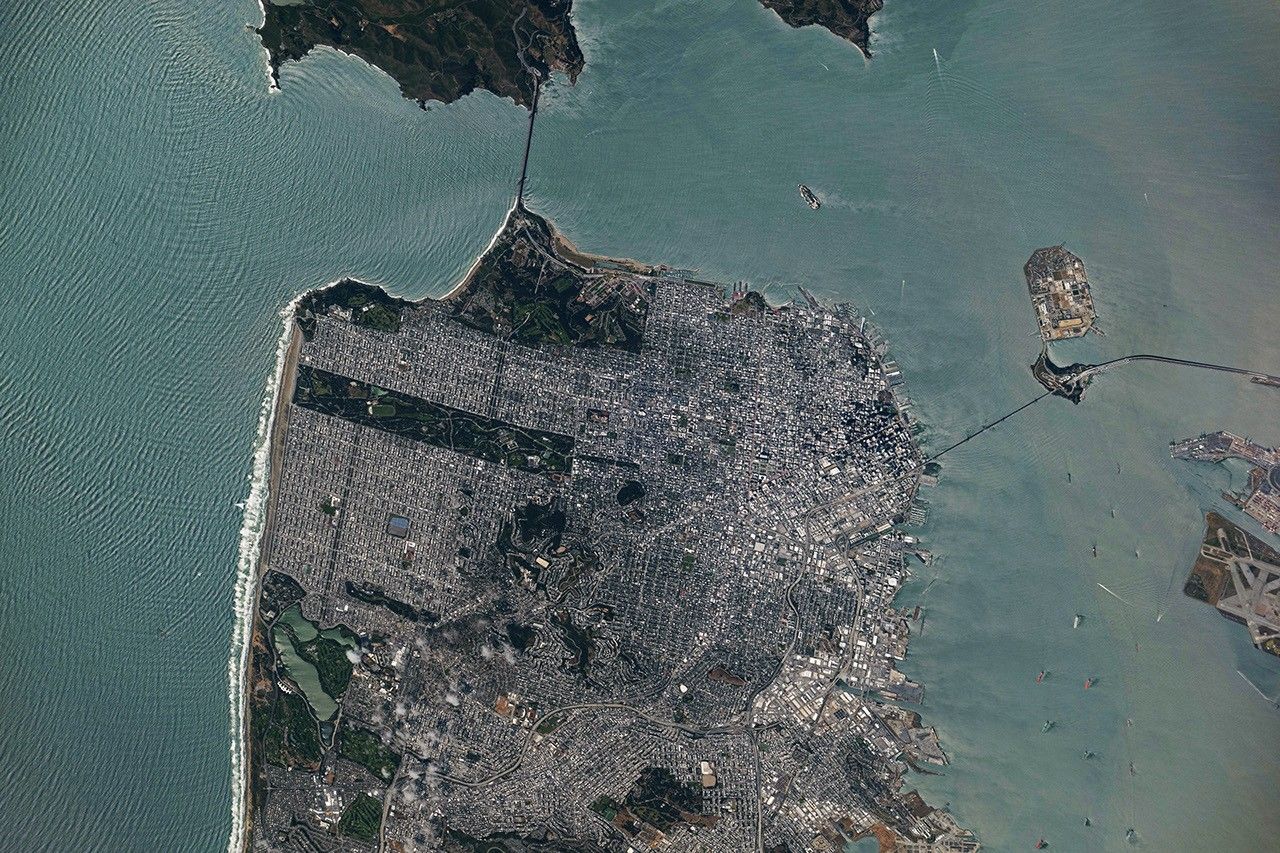
A period of unsettled weather brought scattered showers and thunderstorms to California’s Bay Area on May 27, 2026. That afternoon, a break in the clouds left downtown San Francisco and nearby communities beneath mostly cloud-free skies, allowing an astronaut aboard the International Space Station to take this photograph.
The image captures two of the region’s iconic bridges. The Golden Gate Bridge connects the northern San Francisco Peninsula with Marin County to the north, while the San Francisco-Oakland Bay Bridge spans the bay toward Oakland to the east.
Near the center of the image, Golden Gate Park stands out as a long, rectangular strip of green amid the dense urban landscape. Spanning more than 1,000 acres (400 hectares), the park encompasses meadows, gardens, wooded areas, and lakes. Additional green space toward the north around the Golden Gate Bridge is part of a national recreation area.
The nadir (downward-looking) perspective also provides a clear view of the patchwork of street grids, which were laid out over San Francisco’s hilly terrain as the city grew in successive stages. In the heart of the downtown area, Market Street runs southwest to northeast and serves as a prominent divider between two distinct grid orientations: one aligned with the bay and the other aligned with the street.
Along the northeastern and eastern waterfront, various structures extend into the bay. Toward the north, these include a historic wharf, seawalls, and piers—most built in the early 1900s, though some date back into the 1800s. The adjacent waters support heavy maritime traffic, including cargo and container ships, cruise vessels, and regional ferries.
Breaking waves are visible along the western coast, including at Ocean Beach, the 3.5-mile stretch of sandy shore adjacent to Golden Gate Park. On May 27, the National Weather Service warned of hazardous conditions at the region’s beaches due to strong northerly winds. Long-period swells from the northwest contributed to the increased risk of rip currents as well as sneaker waves in the days after this image was acquired.
Astronaut photograph ISS074-E-619284 was acquired on May 27, 2026, with a Nikon Z9 digital camera using a focal length of 800 millimeters. It is provided by the ISS Crew Earth Observations Facility and the Earth Science and Remote Sensing Unit at NASA Johnson Space Center. The image was taken by a member of the Expedition 74 crew. The image has been cropped and enhanced to improve contrast, and lens artifacts have been removed. The International Space Station Program supports the laboratory as part of the ISS National Lab to help astronauts take pictures of Earth that will be of the greatest value to scientists and the public, and to make those images freely available on the Internet. Additional images taken by astronauts and cosmonauts can be viewed at the NASA/JSC Gateway to Astronaut Photography of Earth. Story by Kathryn Hansen.
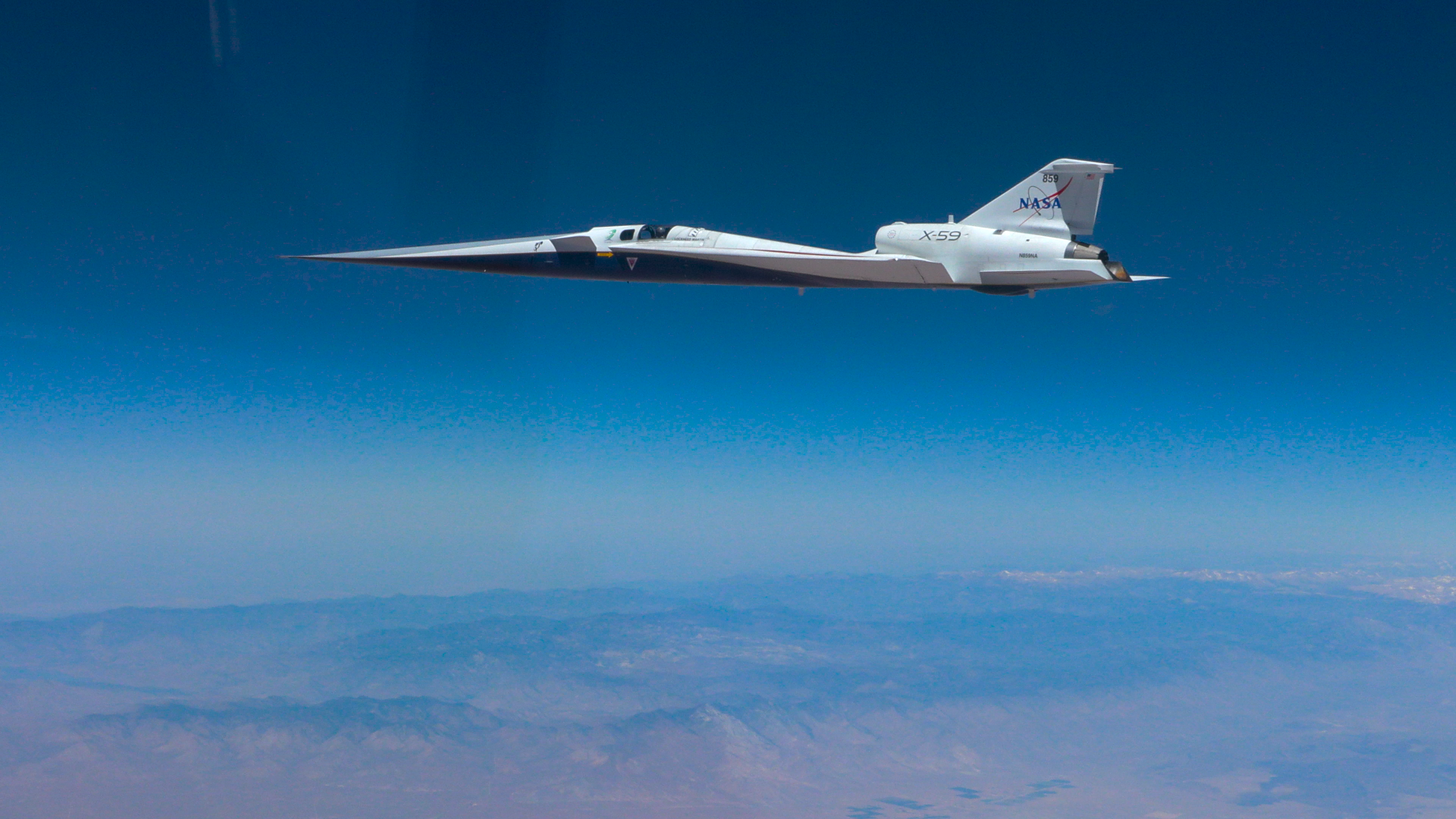
NASA’s X-59 quiet supersonic research aircraft completed its first supersonic flight Friday, June 5, 2026, marking the first time the aircraft exceeded the speed of sound in support of NASA’s Quesst mission. The milestone represents a major step in flight testing as the aircraft expands into the supersonic portion of its flight envelope.
The 81-minute flight achieved a speed of Mach 1.1 (approximately 713 mph) at an altitude of 43,400 feet, with the X-59 performing as expected. For NASA test pilot Jim “Clue” Less, the plane’s instruments were the only indication of flying supersonic — exactly what the team wanted.
“You know you are supersonic when gauges say you are supersonic. I didn’t feel anything,” Less said. “It went smoothly, and we easily got to Mach 1.1.”
The X-59 is designed to fly at supersonic speeds while creating only a quiet thump instead of a loud sonic boom. For this flight, a NASA F‑15 chase plane flew nearby to monitor the test. Its loud sonic booms obscured any sound made by the X-59. The X-59 will conduct flights focused on its sound profile during a later phase of testing.
Now that the X-59 has officially kicked off supersonic flight tests, the next big step is its first mission conditions flight. During this test, the X-59 will fly at the same speed and altitude planned for future tests, where the aircraft will fly over several U.S. communities to gather data from people on the ground about its noise levels: Mach 1.4 (925 mph) at 55,000 feet.
“The plane wants to go faster, and we are looking forward to that,” Less said.
The X-59 is the centerpiece of NASA’s Quesst mission, which aims to demonstrate quieter supersonic flight and to help enable commercial supersonic flight over land.

 Login