❌

Reading view

AGN SIG Spotlight Series, 21 July 2026

AGN SIG Spotlight Series

Active Galactic Nuclei Science Interest Group

AGN SIG about AGN SIG Spotlight Series

Location

Virtual

Dates

21 July 2026
1:00pm ET / 10:00am PT

Community

AGN SIG

Type

Seminar

Spin Signatures in Horizon-Resolved Images of LLAGN

Speaker

Dr. Daniel Palumbo, Harvard University

Abstract

With the advent of the Event Horizon Telescope (EHT), near-horizon black hole imaging with sub-mm very-long-baseline interferometry (VLBI) is now routine for the two sources for which terrestrial VLBI is sufficient to resolve the black hole shadow: Messier 87* and Sagittarius A*. Since the first images of M87*, the theoretical analysis of these images has advanced a broad class of black hole spin tracers in horizon-resolving observations, all of which have complex interplay with the astrophysical conditions near the horizon. Meanwhile, space VLBI mission concepts such as the Black Hole Explorer aim to drastically improve the angular resolution available via sub-mm VLBI, resolving out the primary accretion disk image to isolate the strongly lensed “photon ring,” which more robustly exposes black hole mass, spin, and viewing inclination to distant observers. In this talk, I will detail the spin signatures in both of these angular resolution regimes, and how they work together to build a “robustness ladder” for spin measurement with which the spins of many more low-luminosity AGN will soon become accessible as sub-mm VLBI sensitivity, frequency coverage, angular resolution improves. The resulting local “spin census” will help fill in missing pieces of the history of accretion and merging in the broader AGN population.

Coupling Driven H2 Excitation in Seyferts: GATOS JWST/MRS

Speaker

Daniel Delaney, University of Alaska

Abstract 

We utilize James Webb Space Telescope/Mid Infrared Instrument (JWST/MIRI) Integral Field Unit observations from the Galaxy Activity, Torus and Outflow Survey to investigate the diverse range of ionized outflow rates of obscured active galactic nuclei (AGN) with similar bolometric luminosity and explore potential associations with AGN feedback. We explore spatial correlations between ionized emission potentially associated with fast shocks ([Fe II]5.34μm) and the excitation of H2. We further constrain our investigation to the inner 400 pc (the nuclear and circumnuclear regions r < 200 pc), and estimate the excitation temperature and column density of H2 assuming local thermodynamic equilibrium and using the S(1)–S(8) rotational H2 emission lines visible to JWST/MIRI spectroscopy. We report the molecular gas temperature of the deprojected 400 pc nuclear region to correlate with the ionized mass outflow rate. We also observe a stronger degree of spatial correlation between [Fe II]5.34μm emission and H2 gas temperature. We observe regions of enhanced [Fe II]5.34μm/[Ar II]6.99μm spatially coincident with the ionization cones of objects with higher ionized outflow rates and [Fe II]5.34μm/[Ar II]6.99μm in the deprojected 400 pc nuclear region to scale positively with both the ionized outflow rate and the estimated molecular gas temperature. We do not observe the estimated jet cavity power within the central 400 pc as strongly correlated with the ionized mass outflow rate or molecular gas temperature of the nuclear region. We take the preceding observations to suggest a higher degree of interaction between AGN outflows and the circumnuclear disk.

Seminar Connection

Zoom Registration (note this is a new registration link), you will receive connection details by email after registration: 

https://alaska.zoom.us/meeting/register/V1okit8uSk2ql97gegbdzg

News Straight to Your Inbox

Subscribe to your community email news list

We will never share your email address.
Privacy Policy

Sign Up
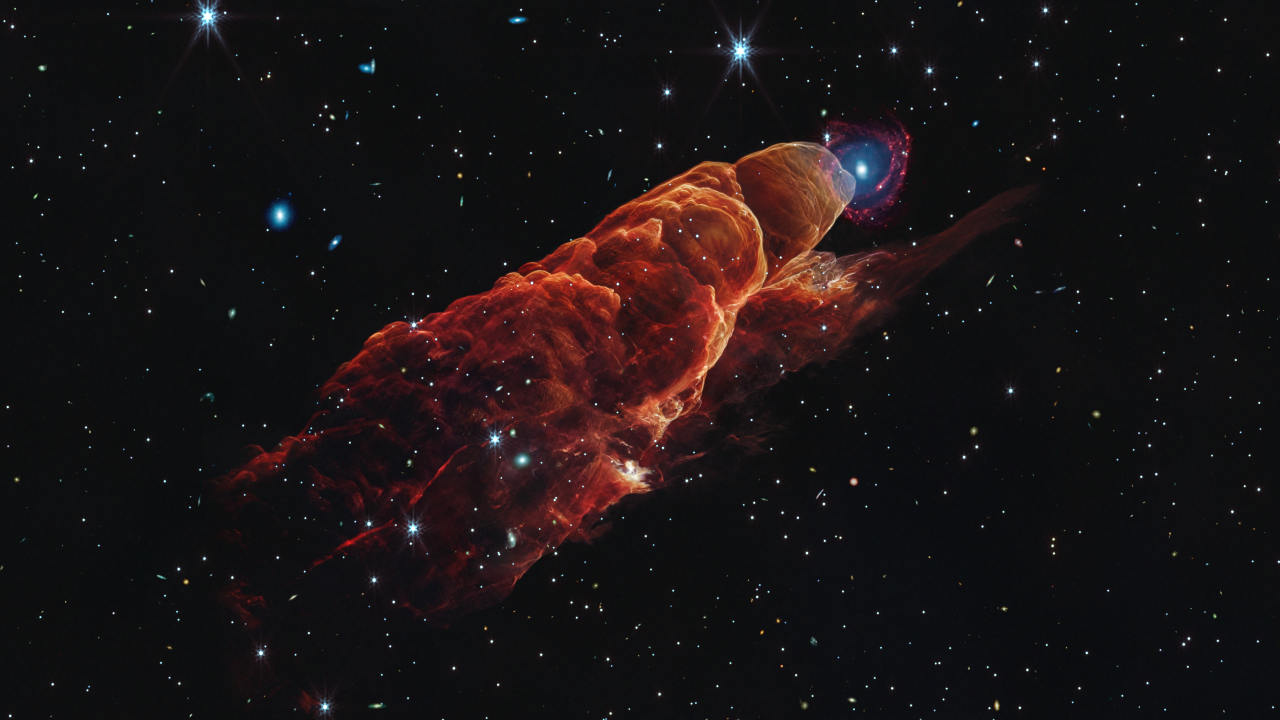
Angled from the upper left corner to the lower right corner is a cone-shaped orange-red cloud known as Herbig-Haro 49/50. This feature takes up about three-fourths of the length of this angle. The upper left end of this feature has a translucent, rounded end. The conical feature widens slightly from the rounded end at the upper right down to the lower right. Along the cone there are additional rounded edges, like edges of a wave, and intricate foamy-like details, as well as a clearer view of the black background of space. In the upper left, overlapping with the rounded end of Herbig-Haro 49/50, is a background spiral galaxy with a concentrated blue center that fades outward to blend with red spiral arms. The background of space is speckled with some white stars and smaller, more numerous, fainter white galaxies throughout.

The post AGN SIG Spotlight Series, 21 July 2026 appeared first on NASA Science.
  •  

DGCE SIG Seminar, 23 July 2026

DGCE SIG Seminar

Diffuse Gas in Cosmic Ecosystems Science Interest Group

DGCE SIG about DGCE SIG Seminar

Location

Virtual

Dates

23 July 2026
4:00pm ET / 1:00pm PT

Community

DGCE SIG

Type

Seminar

From Micro to Macro: Connecting the Physics of Galaxy Formation Across Scales

Speaker

Drummond Fielding, New York University

Abstract

Galaxy formation is controlled by the cycling of diffuse gas through the ISM, CGM, and larger-scale environment, but predictive models remain limited by unresolved microphysics. I will discuss how sub-pc processes—including cosmic-ray transport, magnetic reconnection, and turbulent mixing—regulate multiphase structure, energy and momentum transport, and the launching of galactic winds. I will then describe how simulations, analytic models, and new multi-scale numerical methods can connect these processes to kpc-scale feedback and Mpc-scale galaxy evolution. The aim is to build physically grounded models of gas cycling that can sharpen our interpretation of observations and move galaxy formation theory beyond phenomenological feedback prescriptions.

Seminar Connection

Join the Seminar

News Straight to Your Inbox

Subscribe to your community email news list

We will never share your email address.

Privacy Policy

Sign Up
Angled from the upper left corner to the lower right corner is a cone-shaped orange-red cloud known as Herbig-Haro 49/50. This feature takes up about three-fourths of the length of this angle. The upper left end of this feature has a translucent, rounded end. The conical feature widens slightly from the rounded end at the upper right down to the lower right. Along the cone there are additional rounded edges, like edges of a wave, and intricate foamy-like details, as well as a clearer view of the black background of space. In the upper left, overlapping with the rounded end of Herbig-Haro 49/50, is a background spiral galaxy with a concentrated blue center that fades outward to blend with red spiral arms. The background of space is speckled with some white stars and smaller, more numerous, fainter white galaxies throughout.

The post DGCE SIG Seminar, 23 July 2026 appeared first on NASA Science.
  •  

HWO SIG Seminar, 12 August 2026

HWO SIG Seminar

Habitable Worlds Observatory Science Interest Group

HWO SIG about HWO SIG Seminar

Location

Virtual

Dates

12 August 2026

Community

HWO SIG

Type

Seminar

Title TBA

Speaker

TBA

Seminar Connection

Join the Seminar

News Straight to Your Inbox

Subscribe to your community email news list

We will never share your email address.

Privacy Policy

Sign Up
Angled from the upper left corner to the lower right corner is a cone-shaped orange-red cloud known as Herbig-Haro 49/50. This feature takes up about three-fourths of the length of this angle. The upper left end of this feature has a translucent, rounded end. The conical feature widens slightly from the rounded end at the upper right down to the lower right. Along the cone there are additional rounded edges, like edges of a wave, and intricate foamy-like details, as well as a clearer view of the black background of space. In the upper left, overlapping with the rounded end of Herbig-Haro 49/50, is a background spiral galaxy with a concentrated blue center that fades outward to blend with red spiral arms. The background of space is speckled with some white stars and smaller, more numerous, fainter white galaxies throughout.

The post HWO SIG Seminar, 12 August 2026 appeared first on NASA Science.
  •  

GW SIG Seminar, 23 July 2026

GW SIG Seminar

Gravitational Wave Science Interest Group

GW SIG about GW SIG Seminar

Location

Virtual

Dates

23 July 2026
10:00am – 11:15am ET

Community

GW SIG

Type

Seminar

LISA Preparatory Science and LISA Science Gaps

Details TBA

Seminar Connection

Join the Seminar

News Straight to Your Inbox

Subscribe to your community email news list

We will never share your email address.

Privacy Policy

Sign Up
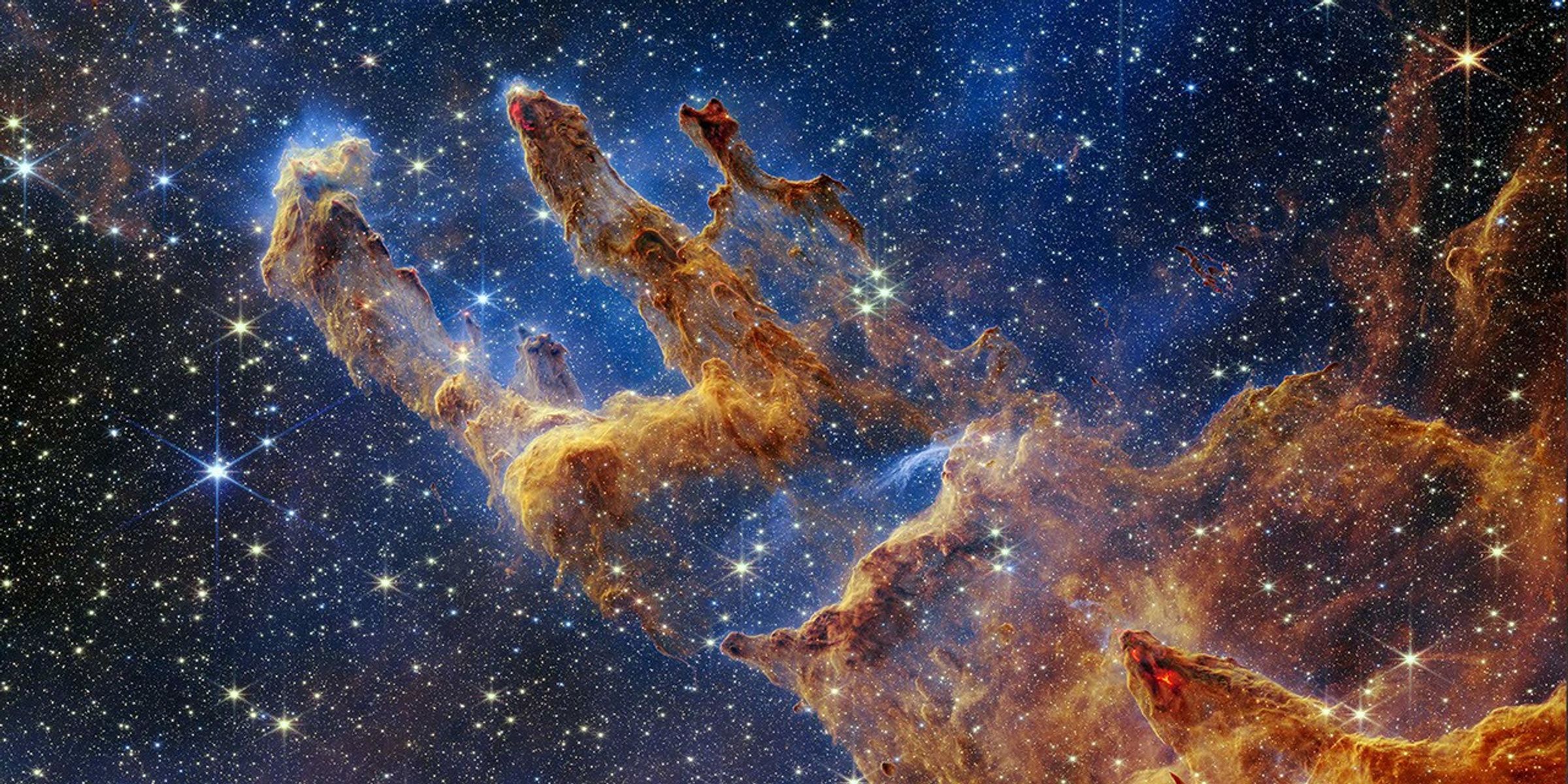
This cropped horizontal image has layers of semi-opaque rusty red colored gas and dust that starts at the bottom right and goes toward the top left. There are three prominent pillars rising toward the top left. The left pillar is the largest and widest. The peaks of the second and third pillars are set off in darker shades of brown and have red outlines.

The post GW SIG Seminar, 23 July 2026 appeared first on NASA Science.
  •  

Habitable Worlds Observatory SIG Seminar, 12 Aug 2026

Habitable Worlds Observatory SIG Seminar

Habitable Worlds Observatory Science Interest Group

HWO SIG about Habitable Worlds Observatory SIG Seminar

Location

Virtual

Dates

12 August 2026

Community

HWO SIG

Type

Seminar

Title TBA

Speaker

TBA

Seminar Connection

Join the Seminar

News Straight to Your Inbox

Subscribe to your community email news list

We will never share your email address.

Privacy Policy

Sign Up
This cropped horizontal image has layers of semi-opaque rusty red colored gas and dust that starts at the bottom right and goes toward the top left. There are three prominent pillars rising toward the top left. The left pillar is the largest and widest. The peaks of the second and third pillars are set off in darker shades of brown and have red outlines.

The post Habitable Worlds Observatory SIG Seminar, 12 Aug 2026 appeared first on NASA Science.
  •  

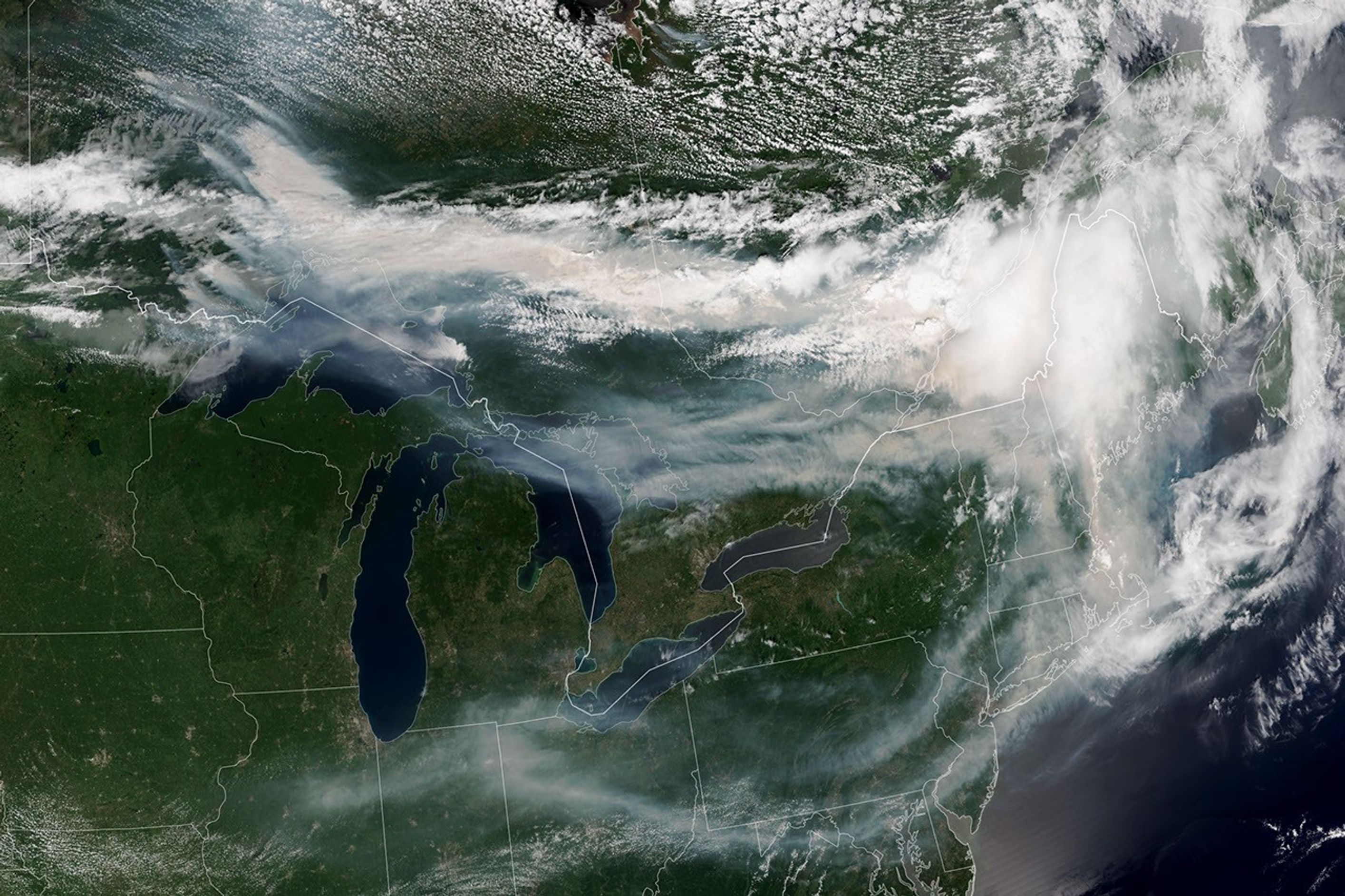
Ontario Wildfire Smoke Moves East

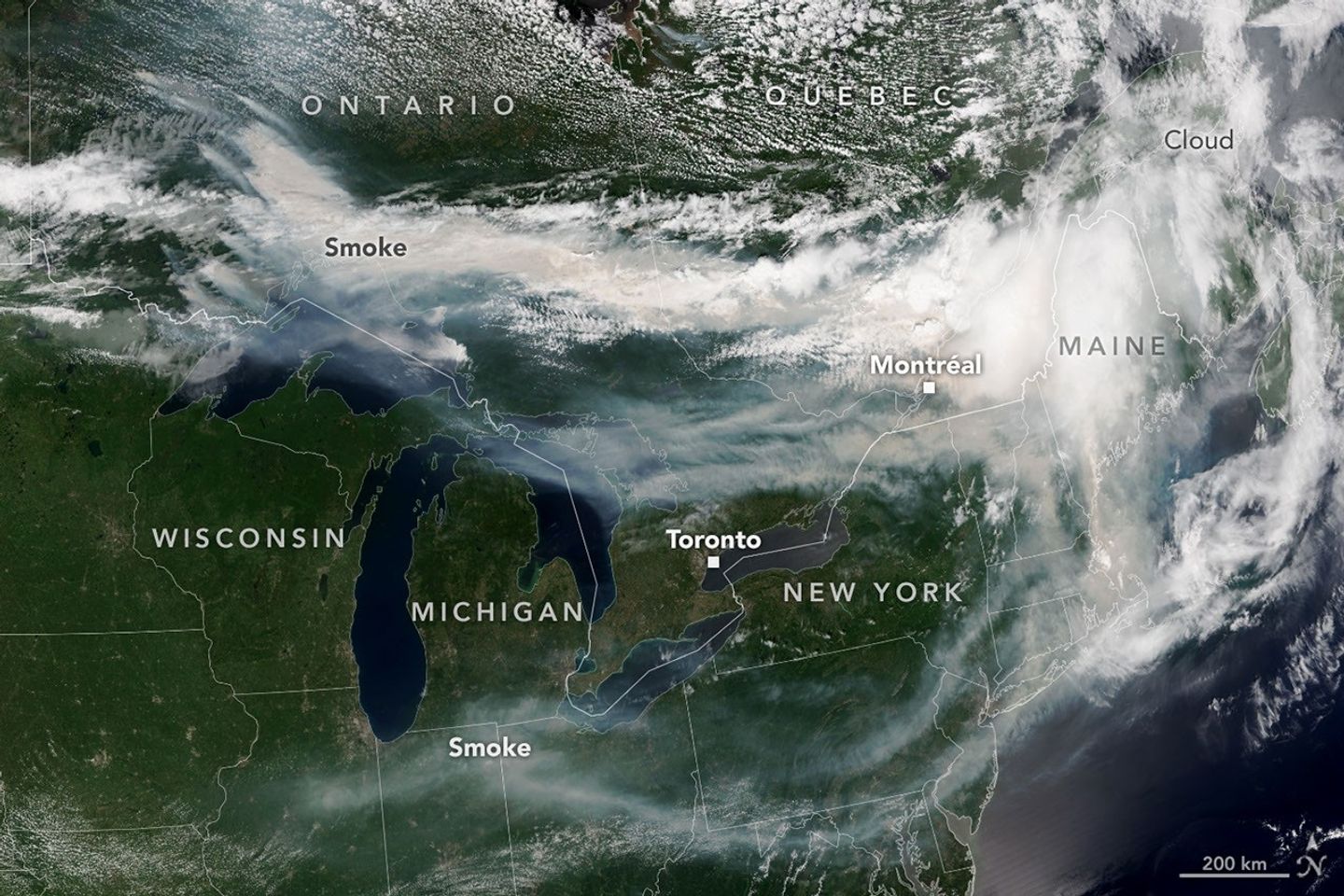
A satellite image shows brown smoke from wildfires in Ontario, Canada, streaming east across parts of Canada and the U.S. Areas of white clouds are mixed in with the smoke.
Smoke from wildland fires pours eastward over Canada and the U.S. in an image captured on the afternoon of July 14, 2026, by the VIIRS (Visible Infrared Imaging Radiometer Suite) on the NOAA-21 satellite.
NASA Earth Observatory/Lauren Dauphin

After a slow start to Canada’s 2026 fire season, activity picked up by the end of June amid dry, warm conditions and returned closer to the 25-year average. By mid-July, almost 850 fires were actively burning across the country, according to the Canadian Interagency Forest Fire Centre. More than 180 of those were burning in Ontario.

This NOAA-21 image, acquired on the afternoon of July 14, 2026, shows smoke billowing from the Ontario fires. Winds carried the smoke primarily southeast over much of the southern part of the province, as well as parts of Quebec and the U.S. Midwest and Northeast, tinting the sky shades of gray and yellow and the Sun orange in many areas.

The smoke’s impact on air quality varied, depending largely on altitude. In areas where smoke was high in the atmosphere, air quality impacts were negligible; where it drifted closer to the ground, conditions worsened. Air quality in Toronto, for instance, reached unhealthy levels, according to AirNow. People in the southern parts of the province were also grappling with a heat wave, compounding the health risks.

Much of the smoke came from fires in Northwestern Ontario, where eight blazes saw significant growth on July 13 and 14. The fires prompted officials to issue evacuation orders for several communities in this part of the province, according to news reports.

As of July 14, fires across Canada have burned 1.9 million hectares (4.7 million acres) since the start of the year—still well below the season totals from the extreme fire years of 2023 and 2025. How the rest of the season plays out remains to be seen. A seasonal fire outlook—compiled by wildland fire experts from the U.S., Canada, and Mexico—shows where fire conditions are more or less likely through July, August, and September.

NASA Earth Observatory image by Lauren Dauphin, using VIIRS data from NASA EOSDIS LANCE , GIBS/Worldview , and the Joint Polar Satellite System (JPSS). Story by Kathryn Hansen.

Downloads

A satellite image shows brown smoke from wildfires in Ontario, Canada, streaming east across parts of Canada and the U.S. Areas of white clouds are mixed in with the smoke.

July 14, 2026

JPEG (3.96 MB)

References & Resources

You may also be interested in:

Stay up-to-date with the latest content from NASA as we explore the universe and discover more about our home planet.

Fighting Fire With Fire
3 min read

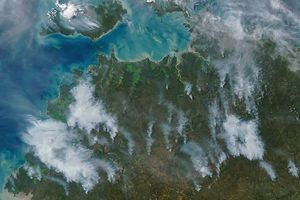
In fire-prone ecosystems in Australia’s Northern Territory, prescribed burns are lit to minimize the severity of fires later in the…

Article
Fires Tear Through Nebraska Grasslands
3 min read

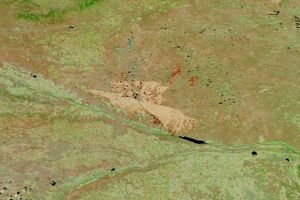
Dry, warm, and windy conditions across the U.S. Great Plains led to extreme fire activity in March 2026.

Article
Cottonwood Fire Chars Utah
5 min read

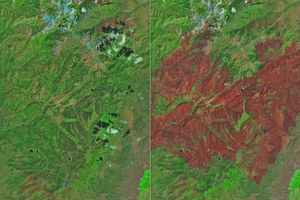
The blaze burned more than 150 square miles and swept through parts of a ski resort.

Article

The post Ontario Wildfire Smoke Moves East appeared first on NASA Science.

  •  

NASA Uses Subscale Aircraft to Accelerate Flight Innovation

4 Min Read

NASA Uses Subscale Aircraft to Accelerate Flight Innovation

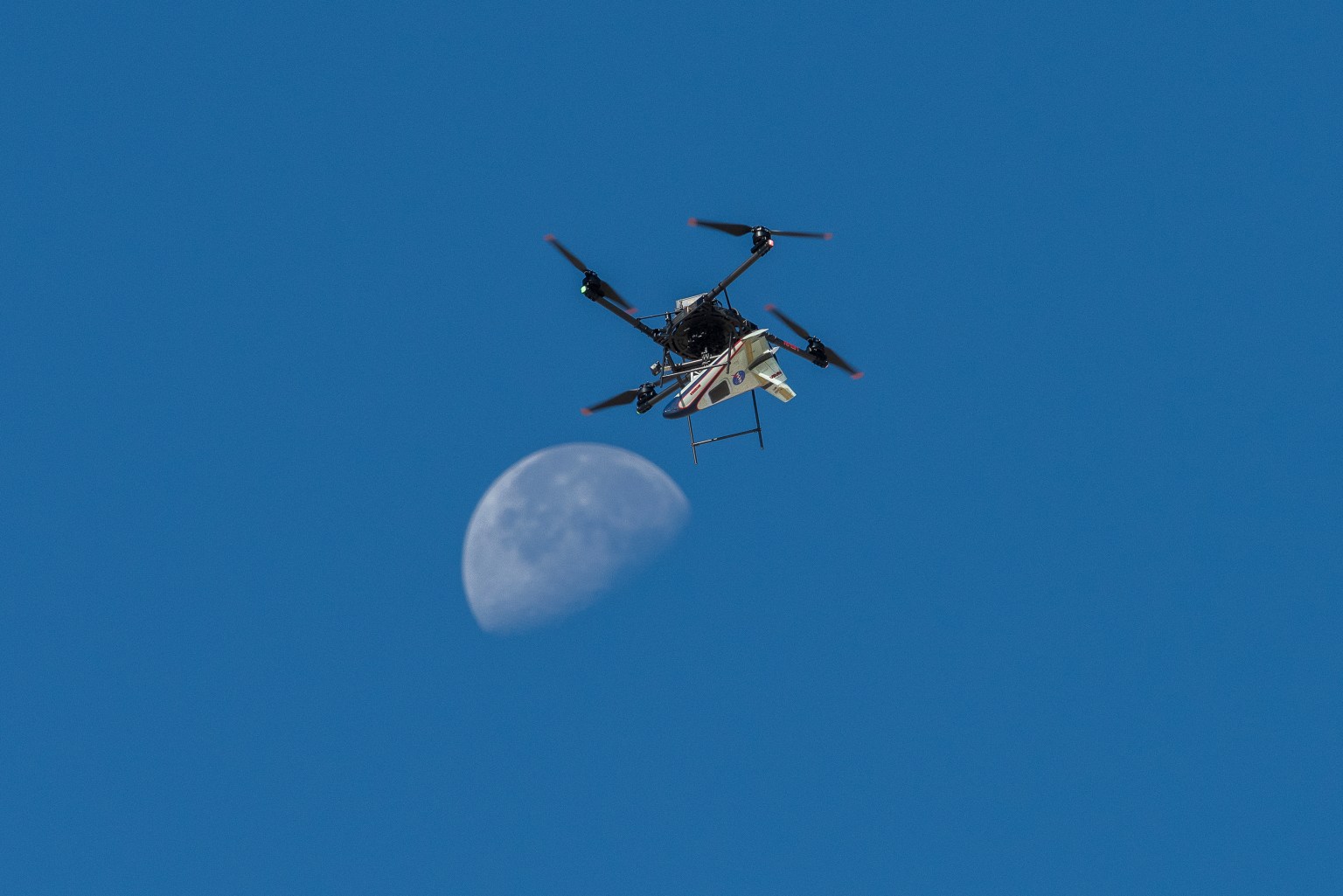
A white, blue, and red probe attached to a rotor with four blades flies in the blue sky, just above the Moon.
An atmospheric probe model attached upside down to a quad rotor remotely piloted aircraft ascends with the Moon visible on Oct. 22, 2024. The quad rotor aircraft released the probe above Rogers Dry Lake, a flight area adjacent NASA’s Armstrong Flight Research Center in Edwards, California. The probe was designed and built at the center.
Credits: NASA/Steve Freeman

Testing new aerospace concepts in flight remains one of NASA’s most effective ways to advance knowledge and reduce risk.

The Dale Reed Subscale Flight Research Laboratory at NASA’s Armstrong Flight Research Center in Edwards, California, supports this mission by using small, remotely piloted and autonomous aircraft as cost‑effective platforms to mature innovative ideas, accelerate learning, and enable smoother transitions to full‑scale flight.

When experiments require a flight platform, several NASA remotely piloted aircraft are available: the Alta‑X quadrotor; the Dryden Remotely Operated Integrated Drone (DROID) with its 10‑foot wingspan; and the Multi‑Use Cub, a 14‑foot‑span fixed‑wing aircraft with an expandable payload capacity for flight experiments. For electric vertical takeoff and landing testing, the HQ‑90 quadrotor provides an additional option.

Once aircraft and experiments are cleared for operations, laboratory pilots support the mission, including ground operations and flight activities.

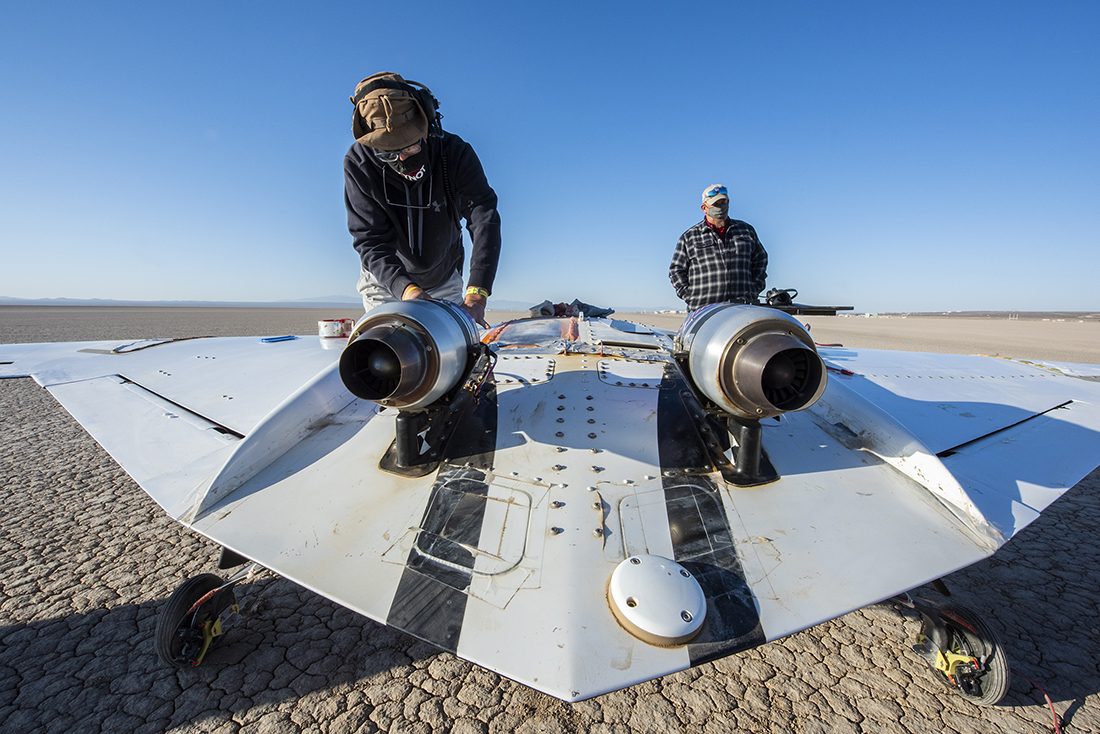
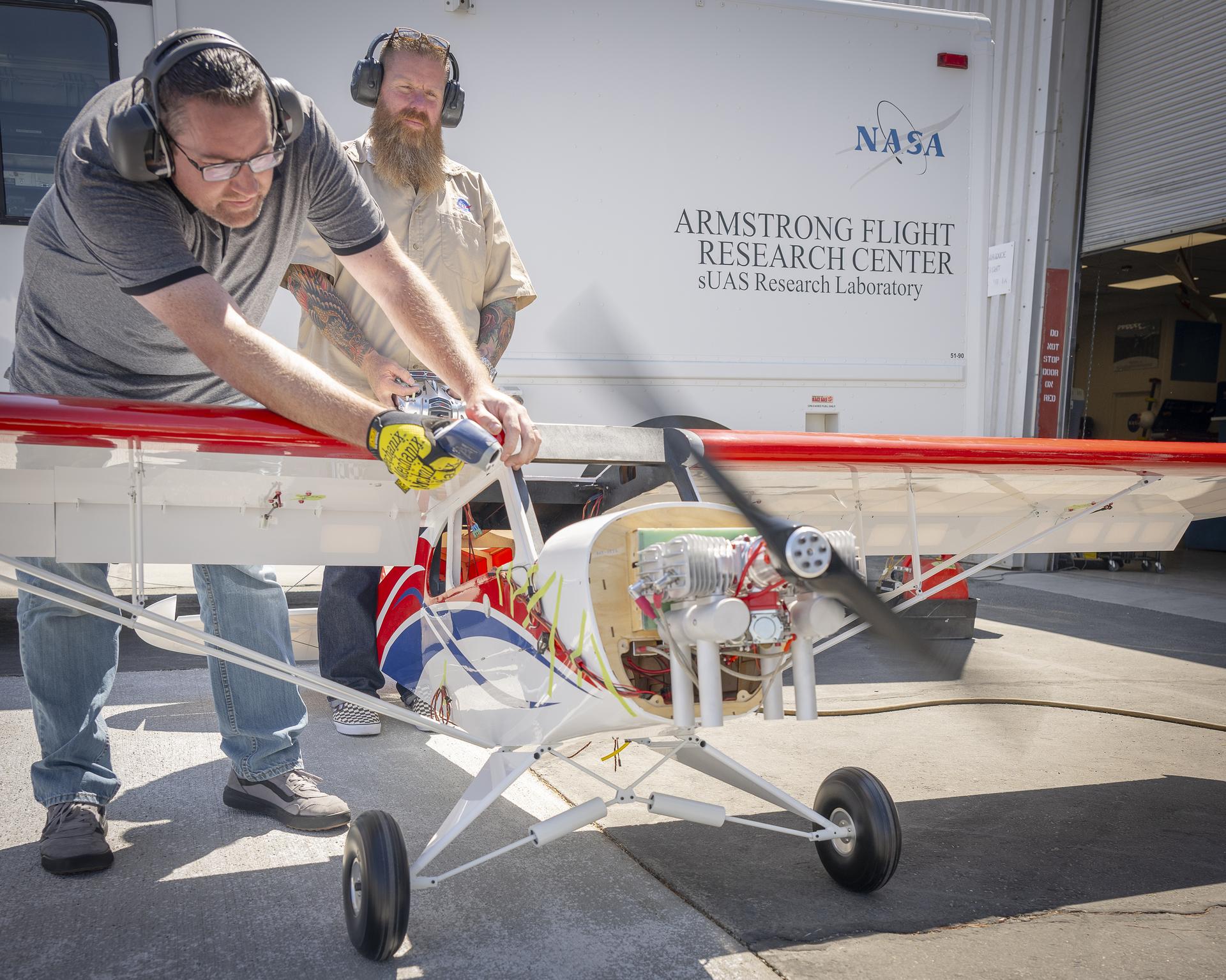
One man manages engine speed with a hand-held controller, while another firmly holds the subscale aircraft in place.
Justin Link, left, holds the subscale aircraft in place, while Justin Hall manages engine speed during preliminary engine tests on Friday, Sept. 12, 2025, at NASA’s Armstong Flight Research Center in Edwards, California. Link is a pilot for small uncrewed aircraft systems at the center’s Dale Reed Subscale Flight Research Laboratory and Hall is the chief pilot.
NASA/Christopher LC Clark

Flight expertise

Each staff member serves as an experienced and certified subscale aircraft pilot and is prepared to fly unique one-of-a-kind or modified commercial aircraft wherever the mission requires.

NASA’s FireSense project conducted flights in the Geneva State Forest, located about 100 miles south of Montgomery, Alabama. NASA Armstrong flight research staff integrated the instrument onto an Alta-X drone and tested the system before deployment. Two team members then transported the drone and sensor to the forest, prepared the vehicle for flight, and operated it during the mission. The NASA sensor was flown on the drone to demonstrate how remotely piloted aircraft can gather localized weather data that influences smoke movement and fire behavior. This information may help operational agencies improve wildfire decision-making and better allocate firefighters and resources.

Other missions occur closer to NASA Armstrong, such as the Enhancing Parachutes by Instrumenting the Canopy (EPIC) project. EPIC involved air‑launching a capsule containing a parachute and flexible sensor from the Alta‑X. Laboratory staff piloted the flights, supported flight operations, and worked with the EPIC team to design and integrate the parachute‑drop mechanism and safety system into the aircraft.

These tests demonstrated that a flexible sensor could help researchers study supersonic parachutes. Continuation of this work can help fill gaps in computer models, making supersonic parachutes safer and more reliable for delivering science instruments and payloads to Mars.

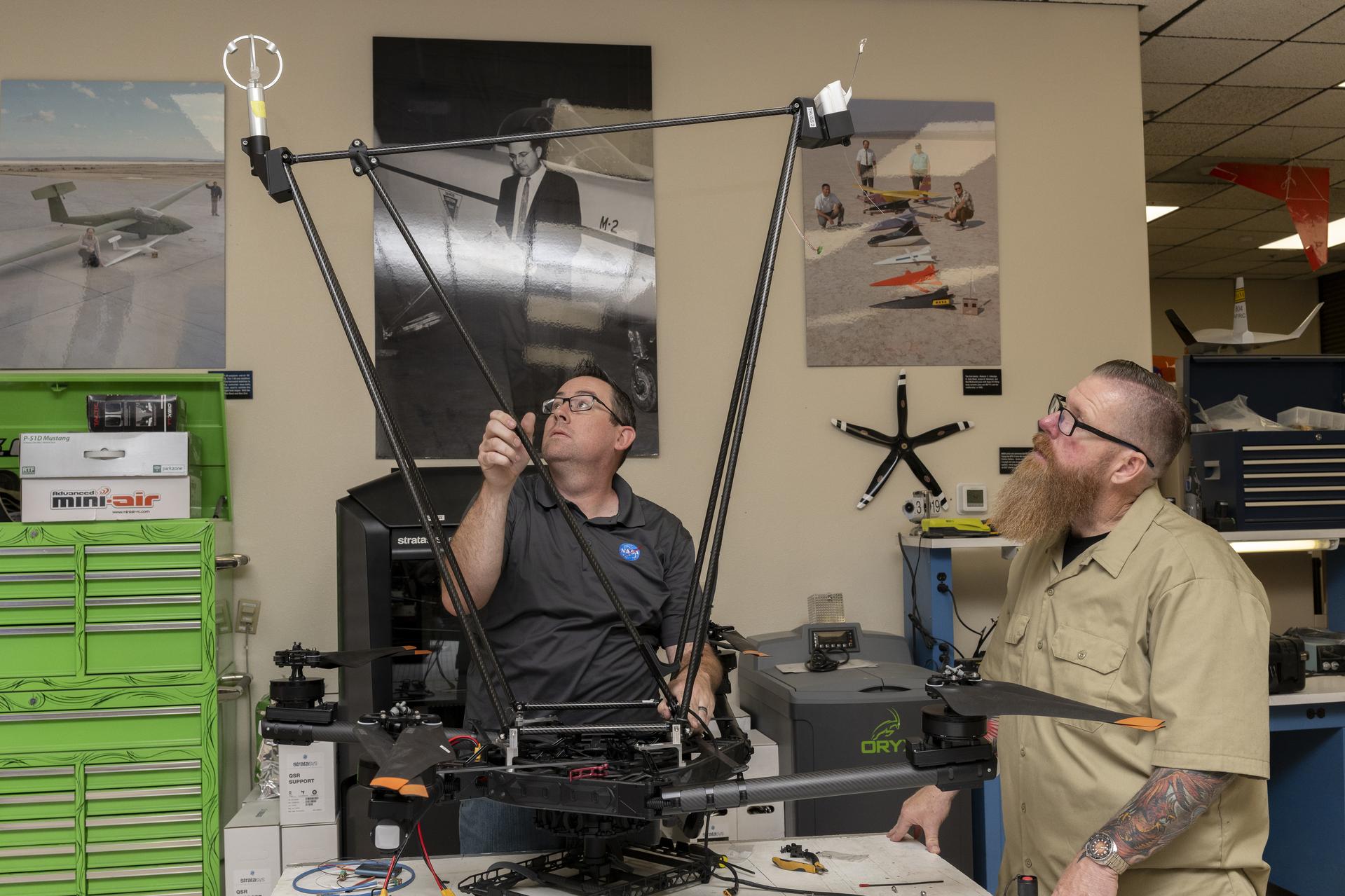
Two men integrate instruments onto a drone.
Justin Link, left, pilot for small uncrewed aircraft systems, and Justin Hall, chief pilot for small uncrewed aircraft systems, install weather instruments on NASA’s Alta X drone at the agency’s Armstrong Flight Research Center in Edwards, California. Members of the center’s Dale Reed Subscale Flight Research Laboratory used the Alta X to support the agency’s FireSense project in March 2025 for a prescribed burn in Geneva State Forest, which is about 100 miles south of Montgomery, Alabama.
NASA/Steve Freeman

Advancing challenging research

The Dale Reed Subscale Flight Research Laboratory uses rapid design and testing capabilities to help small aircraft fly big ideas. These concepts could lead to future breakthroughs that support NASA’s missions across aeronautics, science, and exploration.

For decades, NASA and its partners have advanced Automatic Collision Avoidance Technology. The research demonstrated an autopilot could detect and recover from an imminent ground collision – a capability now helping save lives in high‑performance U.S. military jets. NASA Armstrong had key roles in that work and developed a simplified version, the Automatic Ground Collision Avoidance System, which was installed on the DROID for testing.

The system demonstrated on the DROID — developed to assist general aviation pilots as well as remotely piloted and autonomous aircraft — performed well and led to further research toward a version that provides alerts and steering cues. The NASA Armstrong Technology Transfer Office is working to license the technology for U.S. businesses to develop the system as a commercial product.

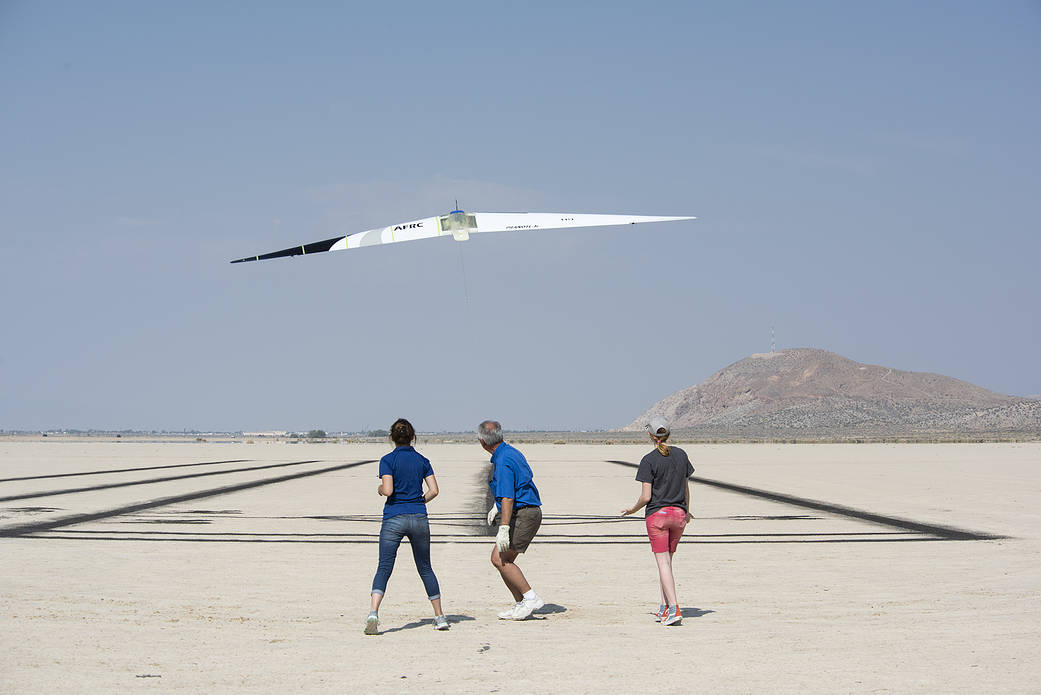
The Prandtl‑D (Preliminary Research Aerodynamic Design to Lower Drag) flying‑wing glider was also designed, fabricated, and flown at NASA Armstrong. Researchers found that its twisted wing design could reduce drag and generate thrust at the wingtips, advancing concepts that may support greater fuel economy for future aircraft. The original Prandtl‑D is now part of the Smithsonian National Air and Space Museum collection in Washington, and the Prandtl-D3 is at the California Science Center in Los Angeles. Researchers continue developing the next generation of the design in the laboratory.

A wide range of capabilities in the laboratory help transform promising concepts into flight-ready test structures. These include rapid prototyping using traditional and advanced 3D manufacturing techniques, as well as composite and conventional fabrication processes. The team of engineers and technicians also provides custom component design and specialized fabrication to meet unique research needs.

The laboratory supports electrical and mechanical design, hardware and software integration, and the safety and flight-readiness processes required for successful missions. Additional technical facilities, such as the Experimental Fabrication Branch and the Environmental Laboratory at NASA Armstrong, further enhance these capabilities. Together, they support development, testing, and validation activities that advance NASA’s aeronautics and exploration goals.

Deborah Jackson, Al Bowers and Abbigail Waddell successfully launch the subscale Prandtl-D 3C glider.
NASA

Share

Details

Last Updated
Jul 15, 2026
Editor
Dede Dinius
Contact

The post NASA Uses Subscale Aircraft to Accelerate Flight Innovation appeared first on NASA Science.

  •  

GW SIG Seminar, 29 June 2026

GW SIG Seminar

Gravitational Wave Science Interest Group

GW SIG about GW SIG Seminar

Location

Virtual

Dates

29 June 2026
1:00pm ET

Community

GW SIG

Type

Seminar

Laser Interferometer Lunar Antenna: a Sub-Hertz GW Detector on the Moon

Speaker

Volker Quetschke, University of Texas Rio Grande Valley

Abstract

The moon offers unique opportunities and challenges to realize interferometric gravitational wave detectors that are sensitive over a range of frequencies that are currently not covered. Compared with Earth-based detectors, the moon’s reduced gravity and lower seismic activity allow us to shift the sensitivity to lower frequencies.

An update on the Laser Interferometer Lunar Antenna (LILA) project—a next generation gravitational-wave detector on the surface of the Moon—will be presented. The LILA detector will have unique access to sub-Hertz frequencies of gravitational waves. This frequency range of waves cannot be measured by any ongoing or upcoming experiment on the Earth or in space, thus fundamentally changing the landscape of multi-messenger astrophysics that otherwise cannot be achieved. LILA will provide early warnings prior to mergers of black holes and neutron stars. Measurements in the deci-Hertz regime can vastly improve measurements of the Hubble constant, the equation of state of neutron stars, and tests of General Relativity. Furthermore, LILA will uniquely observe phenomena like white dwarf mergers as Type Ia supernovae progenitors, tidal disruption around intermediate mass black holes, and novel dark matter probes.

A preliminary design for the LILA project and the planned future development stages will be shown: the LILA Autonomous Interferometry Technology Demonstration (LILA-AITD), the Initial LILA (iLILA) strainmeter and the full, operational LILA Observatory.

Seminar Connection

Join the Seminar

News Straight to Your Inbox

Subscribe to your community email news list

We will never share your email address.

Privacy Policy

Sign Up
This cropped horizontal image has layers of semi-opaque rusty red colored gas and dust that starts at the bottom right and goes toward the top left. There are three prominent pillars rising toward the top left. The left pillar is the largest and widest. The peaks of the second and third pillars are set off in darker shades of brown and have red outlines.

The post GW SIG Seminar, 29 June 2026 appeared first on NASA Science.
  •  

AMMB STIG Seminar, 1 July 2026

AMMB STIG Seminar

Astrophysics from the Moon, Mars, and Beyond Science and Technology Interest Group

AMMB STIG about AMMB STIG Seminar

Location

Virtual

Dates

1 July 2026
2:00pm -3:00pm ET
11:00am – 12:00 pm PT

Community

Physics of the Cosmos

Type

Seminar

Why and Where Do We Want to Put Telescopes on the Moon?

Speaker

Nivedita Mahesh, CU Boulder

Abstract

The Moon is emerging as a uniquely valuable platform for astrophysics, enabling observations that neither Earth nor free-flying spacecraft can support. This talk surveys the scientific motivation across four complementary regimes. At low radio frequencies, the radio-quiet lunar farside opens a window onto the cosmological Dark Ages and the magnetospheres of exoplanets. In the mid-band gravitational-wave regime, the Moon’s low seismic activity bridges the sensitivity gap between terrestrial and space-based detectors. At ultraviolet wavelengths, its natural vacuum and long coherence times allow high-resolution stellar imaging beyond what is possible on Earth. And in the far-infrared, the cold, stable conditions of permanently shadowed regions offer a naturally cryogenic, absorption-free site for probing star and planet formation and the obscured Universe.

For each regime, I will share updates from the mission concept leads on the efforts now developing within the Astrophysics from the Moon, Mars & Beyond (AMMB) Science Interest Group. Together, these cases point to a paradigm shift: astrophysics from the Moon is becoming not just desirable but necessary.

Seminar Connection

Join the Seminar

News Straight to Your Inbox

Subscribe to your community email news list

We will never share your email address.

Privacy Policy

Sign Up
This cropped horizontal image has layers of semi-opaque rusty red colored gas and dust that starts at the bottom right and goes toward the top left. There are three prominent pillars rising toward the top left. The left pillar is the largest and widest. The peaks of the second and third pillars are set off in darker shades of brown and have red outlines.

The post AMMB STIG Seminar, 1 July 2026 appeared first on NASA Science.

  •  

Cosmic Structure SIG Seminar, 17 July 2026

Cosmic Structure SIG Seminar

Cosmic Structure Science Interest Group

CoS SIG about Cosmic Structure SIG Seminar

Location

Virtual

Dates

17 July 2026
10:00am PT / 1:00pm ET

Community

CoS SIG

Type

Seminar

Constraints on Dynamical Dark Energy from the Full Dark Energy Survey

Speaker

Sujeong Lee, Ohio University

Abstract

The nature of dark energy remains one of the central open questions in cosmology, and recent analyses have reported a weak but intriguing preference for an evolving equation of state. I will present constraints on the w0-wa parameterization from the full six-year Dark Energy Survey (DES) dataset, combining growth and geometric probes — supernovae, BAO, and weak lensing and galaxy clustering (3x2pt) — within a single survey. The DES-only combination yields the tightest such constraints using multiple probes from any single survey, and adding external CMB and DESI BAO data gives a 3.0-sigma deviation from a cosmological constant, with the best-fit always favoring w0 > -1, wa < 0. Because DES relies on different probes and systematics than DESI, this provides an independent cross-check on the recent hints for dynamical dark energy. I will discuss how to interpret these results, and what they imply for Stage IV surveys. This work realizes the multi-probe dark energy program envisioned at the inception of DES.

Seminar Connection

Join the Seminar

News Straight to Your Inbox

Subscribe to your community email news list

We will never share your email address.

Privacy Policy

Sign Up
This cropped horizontal image has layers of semi-opaque rusty red colored gas and dust that starts at the bottom right and goes toward the top left. There are three prominent pillars rising toward the top left. The left pillar is the largest and widest. The peaks of the second and third pillars are set off in darker shades of brown and have red outlines.

The post Cosmic Structure SIG Seminar, 17 July 2026 appeared first on NASA Science.
  •  

AI/ML STIG Lecture Series, 29 June 2026

AI/ML STIG Lecture Series

Artificial Intelligence and Machine Learning Science and Technology Interest Group (AI/ML STIG)

Module 9: AI for Science and Engineering at NASA

AI/ML STIG about AI/ML STIG Lecture Series

Location

Virtual

Dates

29 June 2026
4:00pm – 5:00pm ET

Community

AI/ML STIG

Type

Seminar

Speaker

Steven M. Crawford, NASA HQ

Details TBA

Seminar Connection

TBA

News Straight to Your Inbox

Subscribe to your community email news list

We will never share your email address.

Privacy Policy

Sign Up
Angled from the upper left corner to the lower right corner is a cone-shaped orange-red cloud known as Herbig-Haro 49/50. This feature takes up about three-fourths of the length of this angle. The upper left end of this feature has a translucent, rounded end. The conical feature widens slightly from the rounded end at the upper right down to the lower right. Along the cone there are additional rounded edges, like edges of a wave, and intricate foamy-like details, as well as a clearer view of the black background of space. In the upper left, overlapping with the rounded end of Herbig-Haro 49/50, is a background spiral galaxy with a concentrated blue center that fades outward to blend with red spiral arms. The background of space is speckled with some white stars and smaller, more numerous, fainter white galaxies throughout.

The post AI/ML STIG Lecture Series, 29 June 2026 appeared first on NASA Science.
  •  

AMMB STIG Seminar, 1 July 2026

Astrophysics from the Moon Seminar

Astrophysics from the Moon, Mars, and Beyond Science and Technology Interest Group

AMMB STIG about Astrophysics from the Moon Seminar

Location

Virtual

Dates

1 July 2026
2:00pm -3:00pm ET
11:00am – 12:00 pm PT

community

Cosmic Origins

Type

Seminar

Why and Where Do We Want to Put Telescopes on the Moon?

Speaker

Nivedita Mahesh, CU Boulder

Abstract

The Moon is emerging as a uniquely valuable platform for astrophysics, enabling observations that neither Earth nor free-flying spacecraft can support. This talk surveys the scientific motivation across four complementary regimes. At low radio frequencies, the radio-quiet lunar farside opens a window onto the cosmological Dark Ages and the magnetospheres of exoplanets. In the mid-band gravitational-wave regime, the Moon’s low seismic activity bridges the sensitivity gap between terrestrial and space-based detectors. At ultraviolet wavelengths, its natural vacuum and long coherence times allow high-resolution stellar imaging beyond what is possible on Earth. And in the far-infrared, the cold, stable conditions of permanently shadowed regions offer a naturally cryogenic, absorption-free site for probing star and planet formation and the obscured Universe.

For each regime, I will share updates from the mission concept leads on the efforts now developing within the Astrophysics from the Moon, Mars & Beyond (AMMB) Science Interest Group. Together, these cases point to a paradigm shift: astrophysics from the Moon is becoming not just desirable but necessary.

Seminar Connection

Join the Seminar

News Straight to Your Inbox

Subscribe to your community email news list

We will never share your email address.

Privacy Policy

Sign Up
Angled from the upper left corner to the lower right corner is a cone-shaped orange-red cloud known as Herbig-Haro 49/50. This feature takes up about three-fourths of the length of this angle. The upper left end of this feature has a translucent, rounded end. The conical feature widens slightly from the rounded end at the upper right down to the lower right. Along the cone there are additional rounded edges, like edges of a wave, and intricate foamy-like details, as well as a clearer view of the black background of space. In the upper left, overlapping with the rounded end of Herbig-Haro 49/50, is a background spiral galaxy with a concentrated blue center that fades outward to blend with red spiral arms. The background of space is speckled with some white stars and smaller, more numerous, fainter white galaxies throughout.

The post AMMB STIG Seminar, 1 July 2026 appeared first on NASA Science.

  •  

Career Spotlight: Electrician (Ages 14-18)

5 Min Read

Career Spotlight: Electrician (Ages 14-18)

What does an electrician do?

Electricity powers the world, and electricians are the ones who get it where it needs to go. An electrician is an expert who is trained to make sure electrical systems and equipment are installed safely and working correctly. Electricians are involved in a variety of systems, including power, lighting, communications, and more – anything that needs electricity to run.

While electricians ensure systems and equipment have the power they need, electrical technicians focus on building, modifying, or testing electronic devices.

What are some of the different types of work electricians and electrical technicians do at NASA?

At NASA, electricians keep the lights on and the power flowing for rocket launches, scientific research, and everything in between. Their skills support engineers and scientists in building and testing spacecraft, aircraft, satellites, telescopes, and the equipment that makes human spaceflight possible. Electricians make sure all facilities and equipment have the power and functionality they need to be safe and ready to support NASA’s missions.

Electrical technicians at the agency help bring big ideas to life. They might build and wire control systems, connect tiny sensors to circuit boards, or write the software to make a device work in a specific way. They also test instruments in conditions that mimic space – extreme temperatures, intense vibrations, and even a vacuum – to make sure they will survive and perform well during their missions. Technicians use specialized tools, earn certifications, and work with incredible precision.

Being an electrician or electrical technician at NASA is careful, hands‑on work carried out with expertise. Because space hardware is headed to places like low-Earth orbit, the Moon, or even Mars, every detail has to be perfect.

What are the different certification levels for electricians?

The information below is a general overview of the career path of an electrician. Specific guidelines for these roles vary from state to state. It’s important to look up the license requirements in your state.

  • Apprentice electrician: This four-year job training program provides an entry into the industry. An apprentice works as an assistant to an experienced supervisor, gaining vital hands-on experience to move ahead as an electrician.
  • Journeyman electrician: A journeyman is an electrician who has finished an apprenticeship, then passed a test. At this stage, the electrician is licensed and allowed to work without supervision.
  • Master electrician: This is the highest certification possible for an electrician. Typically, a master electrician is someone who has completed approximately 4,000 hours as a journeyman, then passed a licensing exam. These electricians are qualified to work on complicated projects. They can also serve as supervisors for apprentices or journeymen following in their footsteps.

How can I become an electrician?

There are many options that provide the training needed to get started as an electrician or electrical technician.

Many community colleges, trade schools, and technical institutes offer a two-year program leading to an associate degree in electrical technology. Additionally, trade unions and apprenticeship programs provide real-world experience in the field.

Additionally, all branches of the U.S. military offer electronics training that may be transferrable to college credits or civilian certifications.

How can I start preparing today to become an electrician?

It’s never too early to set the stage for an electrifying career! In high school, you can take courses in math, science, and technical education. At the same time, you can start learning about basic electrical concepts such as circuitry and safety.

Begin researching associate degree programs and apprenticeship opportunities so you can consider which pathway seems right for you. Weighing these options now will help you understand program requirements and ensure you’re ready to take the next step.

You can also gain useful experience through part-time work, or shadowing electricians on the job.

What skills will I need to be a successful electrician?

Technical skills focus on the basics – how electricity works, how to stay safe, and how to read schematics and wiring diagrams. Some jobs also call for special hands‑on abilities, like soldering tiny components, putting together cables, or even having some familiarity with chemistry.

Being curious, open‑minded, and a good communicator matters, too. Any time you’re building or improving a device, you must understand who will use it and what they need it to do. Asking questions, sharing ideas, and being able to take feedback are essential to consistently building systems and devices that work well.

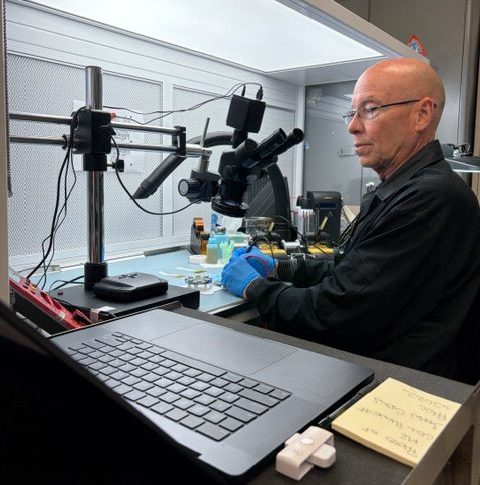
A person sitting at a desk operating equipment
David McClaeb, electronic technician, NASA’s Goddard Space Flight Center in Greenbelt, Maryland

Advice from NASA electricians and electronic technicians

“As an aerospace technician, you have the opportunity to make a big difference. You can make a really big impact.” – Christopher Johnson, aerospace electrical engineering technician, NASA’s Kennedy Space Center in Florida

“What I wish I knew in high school is how many opportunities there are for electricians. I didn’t realize how big of a scale it really was. Everything needs electricity, and the sky’s the limit on what you can do with it. NASA needs electricians for everything from their testing campaigns to keeping their facilities running.” – Levi James, electrician apprentice, NASA’s Glenn Research Center at Armstrong Test Facility in Sandusky, Ohio

“It’s so gratifying when somebody comes in and says, ‘Hey, we want to build this, but it looks really difficult,’ and we say, ‘Yeah, it looks difficult, but we can do it’ – and we build it and then we hand it over to them, and then we’re on to the next thing. It’s a challenge, and I’m telling you, it is just so fun.” – David McClaeb, electronic technician, NASA’s Goddard Space Flight Center in Greenbelt, Maryland

Additional resources

The post Career Spotlight: Electrician (Ages 14-18) appeared first on NASA Science.
  •  

Curiosity Blog, Sols 4927–4933: Let’s Drive to That Smooth Area

4 min read

Curiosity Blog, Sols 4927–4933: Let’s Drive to That Smooth Area

A black-and-white landscape photograph of the Martian surface taken by the Curiosity rover. The ground features a heavily textured, polygonal cracked pattern, with light-colored material forming raised veins or ridges along many of the cracks. Several dark, flat rock slabs and smaller loose rocks are scattered across the foreground and middle ground. On the right side of the image, the textured tread marks of the rover's wheels are clearly visible pressed into the soil, curving slightly as they trail off into the distance.
NASA’s Mars rover Curiosity acquired this image showing a breathtaking diversity of polygons, veins, and other textural features waiting for investigation by the Mars Science Laboratory team. Curiosity captured the image using its Left Navigation Camera on June 17, 2026 – Sol 4928, or Martian day 4,928 of the Mars Science Laboratory mission – at 17:47:52 UTC.
NASA/JPL-Caltech

By Susanne P. Schwenzer, Professor of Planetary Mineralogy at The Open University, UK

Earth planning date: Thursday, June 18, 2026

In the area Curiosity is currently exploring, the science team has mapped several areas with different-looking surface texture on the orbital images. If you wanted to have a look yourself at what there is to see, check the “Where is Curiosity?” map. You’ll discover different shades of orange and beige as well as more rough and more smooth-looking textures. This is what the geomorphologists in our team use to map the areas for exploration by the rover. Of course, we then supplement this all with ground-based images, including bespoke “drive direction imaging,” which is taken after each drive by the Mast Camera. Drive planning is done using a combination of all this information. So there shouldn’t be any surprises, right?

On Monday the team planned three sols in preparation for a Thursday planning to account for the U.S. federal holiday weekend. The workspace turned out to be a little spiky, so we could not find an area we could DRT. APXS still found one good bedrock target, “Rio Baker,” which also had MAHLI documentation. In addition, ChemCam investigated “Rica Aventura,” a textured bedrock, and “Tabebuia,” a darker-looking individual block, using its LIBS and conducted a passive spectral observation on a second dark float block called “Lago Ranco.” Of course, the team also wanted to look into the distance with ChemCam remote imaging, extending our investigation of the Cordillera base outcrop.

Imaging is always high on the list. In Monday’s plan Mastcam is looking into the modern dunes with the “Tacaza” mosaic, and with more mosaics looking forward to the future parking areas, some of which looked really smooth from that vantage point. We also continue our environmental and atmospheric observations looking for dust devils, the opacity of the atmosphere, and monitoring pressure and temperature. After all this, the rover drove about 35 meters (about 115 feet) to an area that looked really smooth in all images we had available at that point. So we were hoping for a good spot to deploy the DRT, but didn’t think we could be in for a surprise.

The drive ended exactly as planned, spot-on in the middle of that — from a distance — smooth-looking area. But when we opened the post-drive images on Thursday morning, we were all reacting with a lot of surprise. From up close, the parking spot looks anything but smooth. You can see the surprise in the title image of this blog. There are polygons, veins, lamination, and probably more, once we inspect the higher-resolution images taken today. “Higher-resolution” is the key for why we were in for such a surprise! The features are quite small, a few centimeters across, and therefore we could not see them in the orbital images or from a distance in our navigation and mast camera images. The camera resolution from a distance just isn’t enough to see them. But up close, the terrain revealed all its beauty! And I am sure there will be more in the even higher resolution of today’s MAHLI and ChemCam RMI imager images!

So, what did we plan after we caught our breath on Thursday? First, you guessed it, images, images, and more images. Mastcam takes a full panorama with its “left eye” and adds a range of closer-up mosaics with its higher-resolution “right eye.” In addition there is a ChemCam Remote Micro Imager image to document structures further afield at high resolution. ChemCam is investigating three targets using LIBS: “Rio Chimore” is a lighter-toned band; you can see some of those in the cover image of this blog, too. The other two LIBS targets are “Rio de Lava,” a vein target, and “Rio de Salta,” one of the polygons. APXS is also looking at the bedrock and the ridges, at the targets “Pampa Grande” and “Iquique Ridge.” MAHLI is having the above-mentioned close “hand lens” look. Let’s see what we will discover when we get those images.

Finally, Curiosity drove up the hill along very smooth-looking terrain that is just littered with tiny polygons. Let’s see if we are in for another surprise reverberating around all our offices — and across two continents, as I had the good fortune to be among the first ones, here in England (Or maybe it was our French ChemCam colleagues, who are in a time zone one hour ahead of me?). Whichever it is, this terrain has a lot to say about the geologic history of Mars!

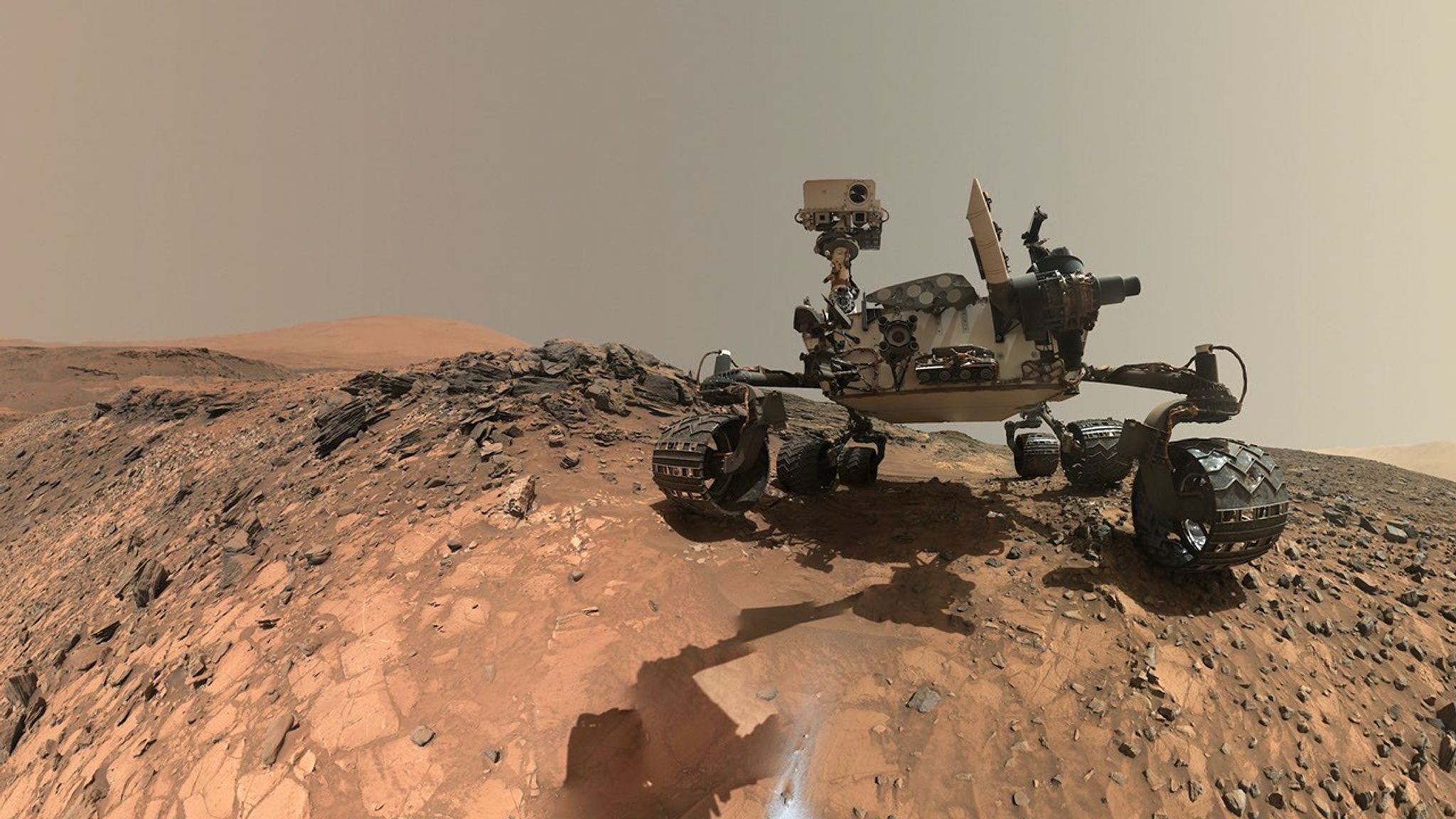
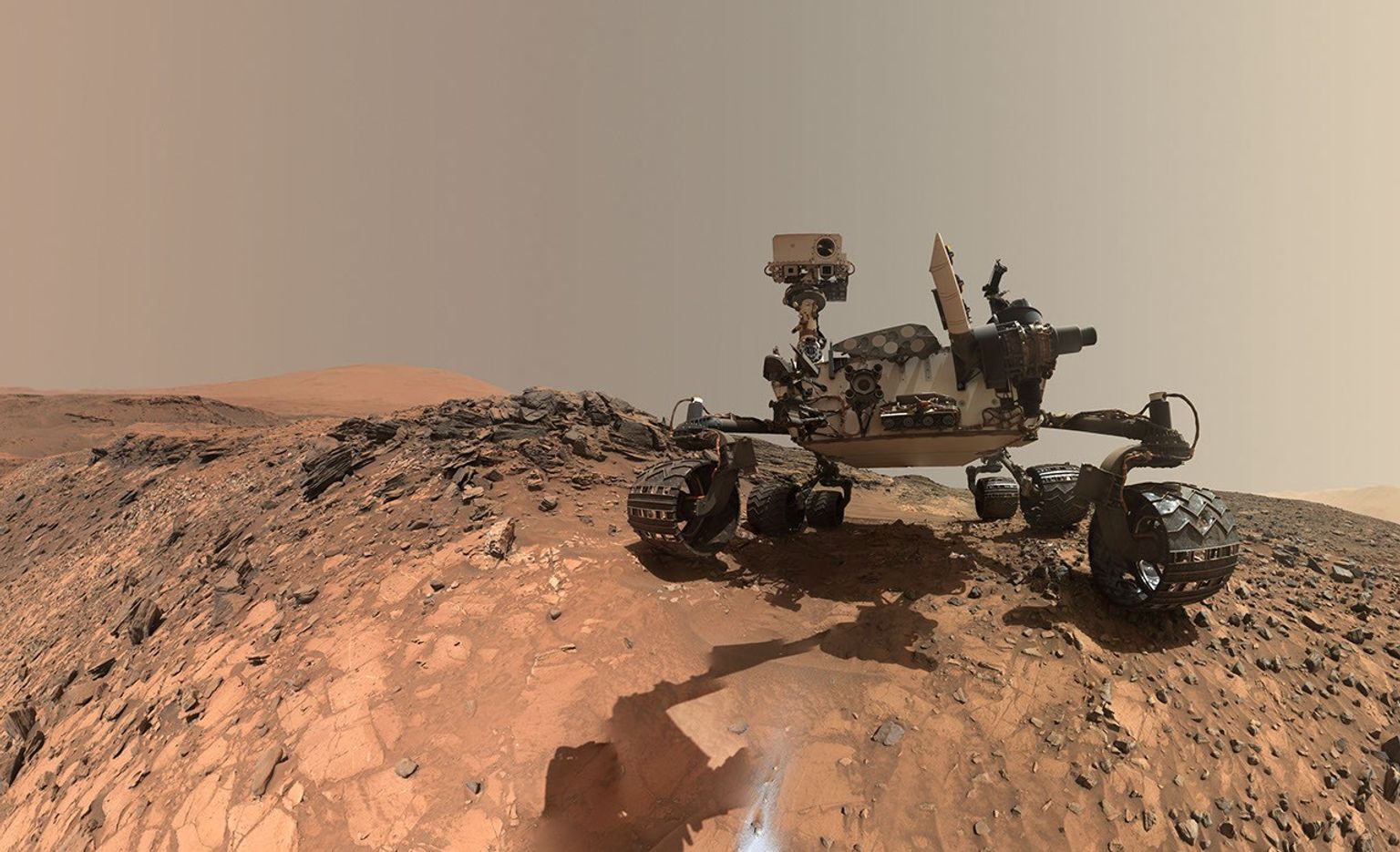
A rover sits on the hilly, orange Martian surface beneath a flat grey sky, surrounded by chunks of rock.
NASA’s Curiosity rover at the base of Mount Sharp
NASA/JPL-Caltech/MSSS

Share

Details

Last Updated
Jun 24, 2026

Related Terms

The post Curiosity Blog, Sols 4927–4933: Let’s Drive to That Smooth Area appeared first on NASA Science.
  •  

Playing the Moon Game 

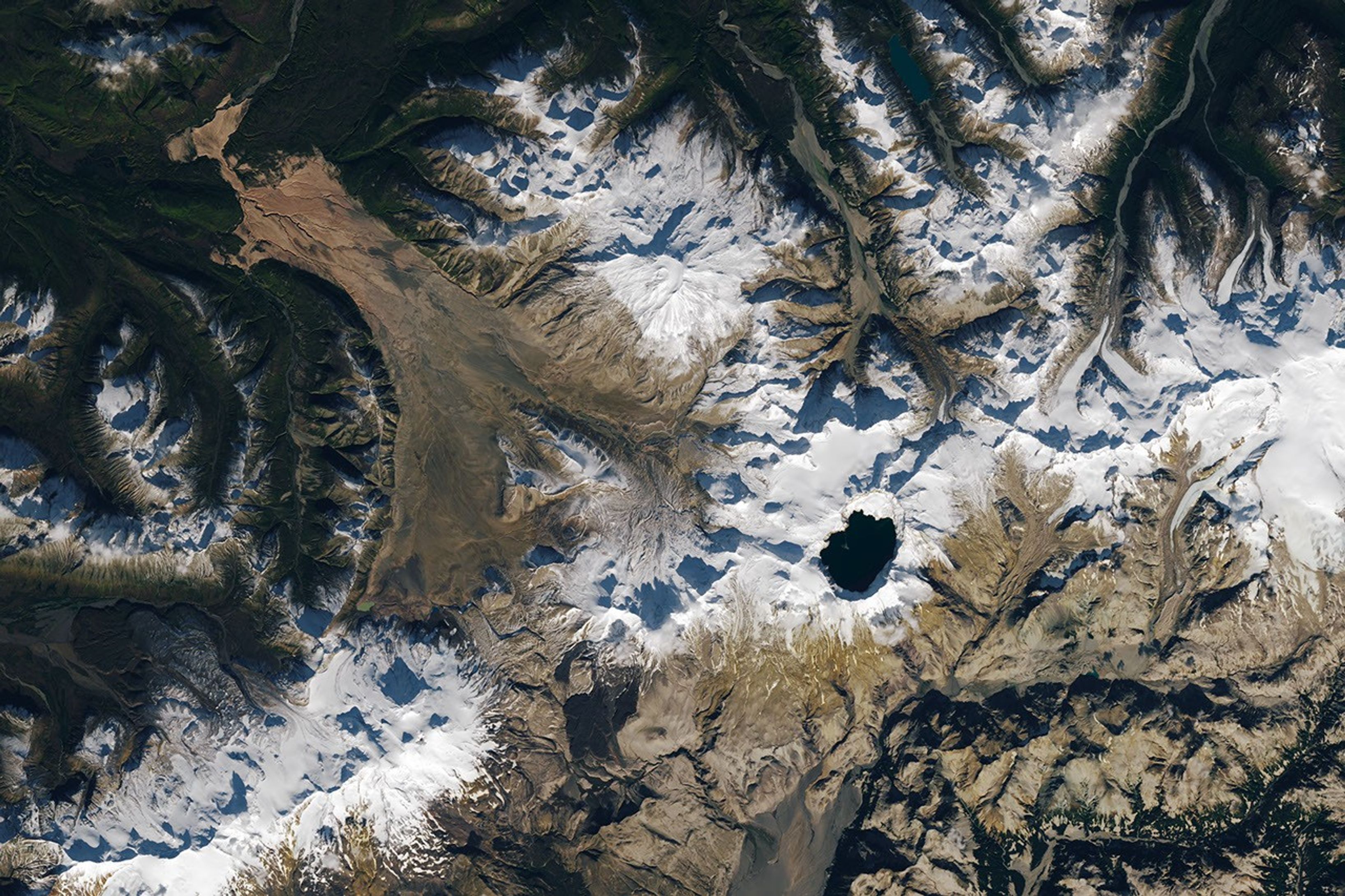
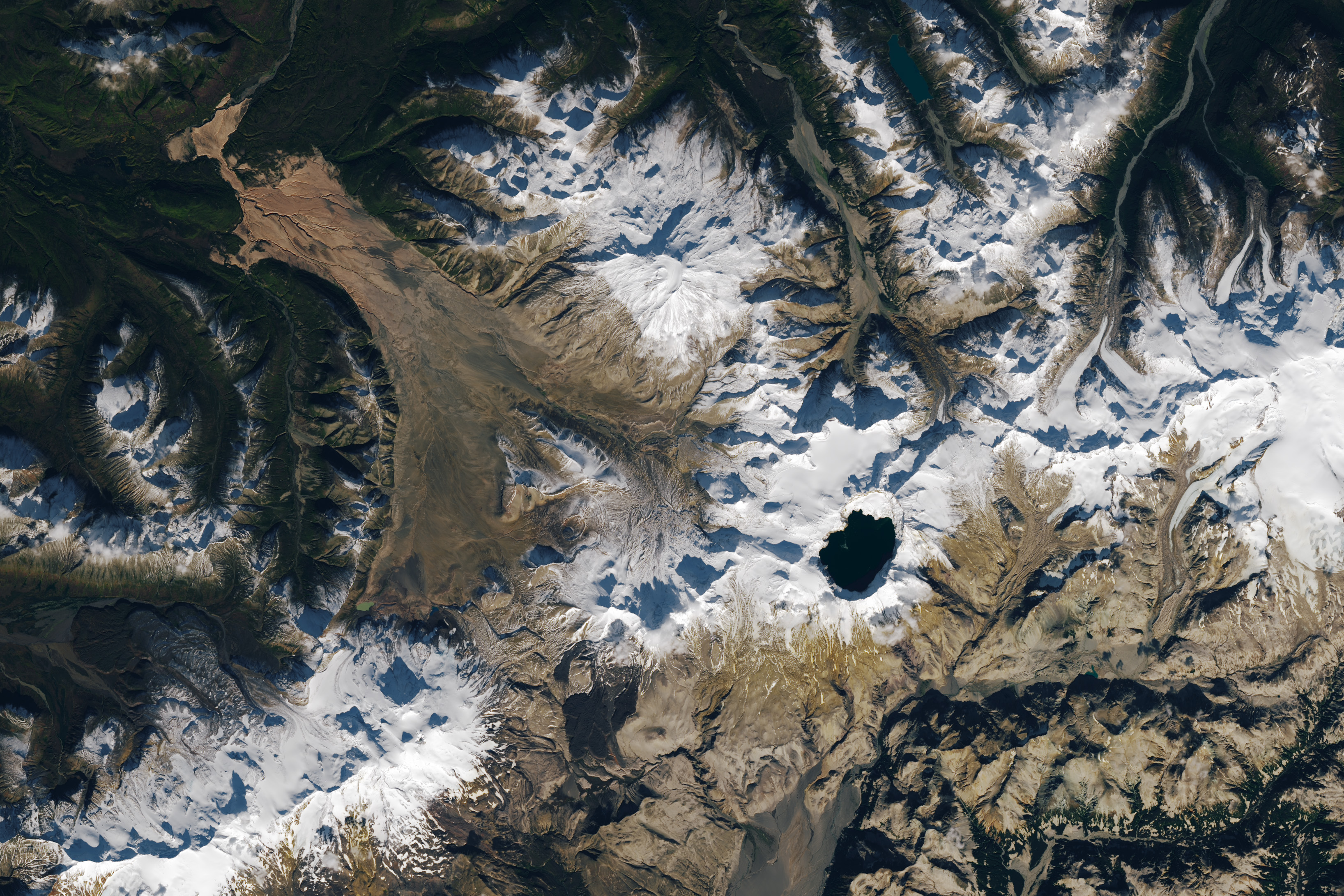
A satellite image shows part of Alaska’s Katmai National Park. A chain of snowy mountain peaks stretches from the bottom left corner to the right side of the image. The Valley of Ten Thousand Smokes is a long, tan-colored feature runs toward the northwest in the upper-left.
September 29, 2025

In preparing to visit the Moon’s surface, soon-to-be lunar explorers in NASA’s Apollo program first ventured into a variety of unfamiliar landscapes on Earth. A couple of these trips, in the summers of 1965 and 1966, took astronauts to Alaska’s remote Katmai National Park for simulations of field geology in Moon-like environments.

In one exercise, which they called “playing the Moon game,” pairs of astronauts were placed at unfamiliar field sites and asked to pretend as if they were on the Moon. By the account of William Phinney, Apollo’s science training coordinator, they were tasked with collecting representative geologic samples and practicing how to communicate their observations to scientists.

A detailed satellite image centers on the Valley of Ten Thousand Smokes in Alaska. The tan-colored feature runs southeast-to-northwest. Snowy peaks appear on the right side of the image, and green, forested valleys fill the left side.
September 29, 2025

The Alaskan setting for the Moon game was an unusual volcanic landscape called the Valley of Ten Thousand Smokes. The valley is full of debris deposited by the 1912 eruption of Novarupta—the largest volcanic event on Earth in the 20th century.

The images above, acquired on September 29, 2025, with the OLI (Operational Land Imager) on Landsat 9, show the massive ash flow deposited by Novarupta. The layer measures up to 660 feet (200 meters) thick and was emplaced at a searing 1,380 degrees Fahrenheit (750 degrees Celsius). 

The Valley of Ten Thousand Smokes, shown in the 1917 photo below, is so named because of the abundance of fumaroles—gas and steam-emitting vents—that filled the valley for a decade after the eruption. A few hundred persisted more than 10 years, with some lasting until the 1990s.

Three people stand in the foreground of this black-and-white photo, silhouetted by steam coming from a fumarole. A dark, barren landscape dotted with plumes of rising steam extends into the background.
1917

Scientists initially suspected that the monster eruption occurred at Mount Katmai, a neighboring volcano with a large caldera located 6 miles (10 kilometers) east of Novarupta’s dome. However, they later determined that the eruption actually occurred at Novarupta—whose name means “new eruption”—after stealing magma from beneath Katmai. As the magma chamber emptied, Katmai collapsed, forming the 2.5-mile-wide (4-kilometer-wide) caldera present today.

The volcanic landscape in the Valley of Ten Thousand Smokes is far fresher than the ancient lava flows that formed the Moon’s volcanic features. But for the Apollo astronauts, it offered an “excellent opportunity to view volcanic materials and landforms in nearly pristine condition,” Phinney wrote. They studied evidence of fumaroles and examined vertical sections of the deposits where streams had eroded deep gorges.

This photo shows a broad valley filled with tan-colored volcanic material in the foreground and snowy mountains in the background. The ashy volcanic deposits create a mostly flat valley floor, except where steep-sided chasms formed by erosion run through it.
June 9, 1991

Researchers continue to visit this Alaskan wilderness in search of clues that could help decipher the geology of the Moon and Mars. In 2024, the Goddard Instrument Field Team (GIFT) trekked to the Valley of Ten Thousand Smokes to study its icy volcanic landscape. Like the valley, Mars contains glaciers and ice sheets layered with dust and ash, a dynamic and difficult-to-interpret environment.

Advancing lunar science, the GIFT team also collected samples from rock formations comparable to the Moon’s Gruithuisen Domes. These mysterious features are made of hardened lava with a different composition than the surrounding rock. With more to learn about our nearest celestial neighbor, the spirit of the Moon game lives on in the 21st century.

NASA Earth Observatory images by Lauren Dauphin, using Landsat data from the U.S. Geological Survey. Photos from National Geographic Society Katmai expeditions photographs, Archives and Special Collections, Consortium Library, University of Alaska Anchorage, and from the U.S. Geological Survey Volcano Hazards Program. Story by Lindsey Doermann. 

Downloads

A satellite image shows part of Alaska’s Katmai National Park. A chain of snowy mountain peaks stretches from the bottom left corner to the right side of the image. The Valley of Ten Thousand Smokes is a long, tan-colored feature runs toward the northwest in the upper-left.

September 29, 2025

JPEG (2.64 MB)

References & Resources

You may also be interested in:

Stay up-to-date with the latest content from NASA as we explore the universe and discover more about our home planet.

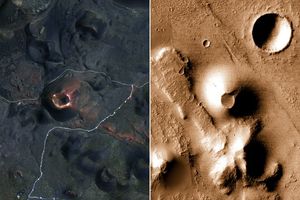
Scoria Cones on Earth and Mars
7 min read

The hill-shaped features are a sign of explosive volcanic activity—a rarity on the Red Planet.

Article
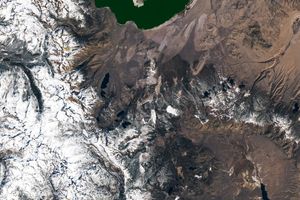
A Volcanic Medley Near Mammoth Lakes 
4 min read

A massive, old caldera and more recently formed craters shape the landscape in the eastern Sierra Nevada.

Article
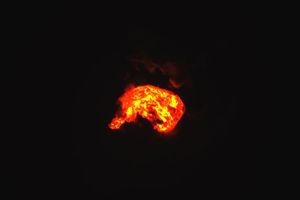
Restless Kīlauea Launches Lava and Ash
3 min read

Episode 43 of the Hawaiian volcano’s current eruption was marked by high lava fountains and widespread ash dispersal.

Article

The post Playing the Moon Game  appeared first on NASA Science.
  •  

NASA Names Sean Gallagher as Chief Information Officer

Sean Gallagher
Official NASA portrait of Sean Gallagher
Credit: NASA

NASA has selected Sean Gallagher as the agency’s chief information officer (CIO). In this role, he is responsible for the agency’s entire portfolio of Information Technology products and services. Gallagher has been serving in an acting capacity since January and his permanent role is effective immediately.

“Sean Gallagher’s leadership has been instrumental in strengthening NASA’s IT foundation and ensuring our workforce has the secure, modern tools needed to enable groundbreaking missions every day,” said NASA Deputy Administrator Matt Anderson. “As CIO, Sean will continue advancing the agency’s technology capabilities to support discovery, innovation, and mission success across NASA.”

Most recently, Gallagher also has served as the deputy chief information officer for Operations in the Office of the Chief Information Officer at NASA Headquarters in Washington, as well as a senior advisor for Transformation. This team provides services to tens of thousands of end users located in the U.S. and abroad in support of NASA missions, enabling discoveries, faster data sharing, increased workforce productivity, and more. Gallagher has worked with all NASA centers to implement efficient and effective IT operating models.

Previously, Gallagher was the CIO of NASA’s Glenn Research Center in Cleveland, leading IT initiatives for aeronautics, space, research and engineering, and test missions. He joined NASA in 2012 as Glenn’s deputy CIO and previously worked at Booz Allen Hamilton as a senior associate supporting a variety of federal, defense, and commercial customers.

Gallagher developed his leadership and management experience as a Signal Corps officer in the United States Army. He also served as a platoon leader managing the combat service support readiness of a tactical communications unit, a human resource manager for the 40th Signal Battalion, and as a network engineer for the 11th Signal Brigade. He has a bachelor’s degree in physics from John Carroll University and a master’s degree in computer information systems from the University of Phoenix.

For more information about NASA’s missions, visit:

https://www.nasa.gov

-end-

Camille Gallo / Cheryl Warner
Headquarters, Washington
202-358-1600
camille.m.gallo@nasa.gov / cheryl.m.warner@nasa.gov

Share

Details

Last Updated
Jun 23, 2026
Editor
Jennifer M. Dooren

Related Terms

The post NASA Names Sean Gallagher as Chief Information Officer appeared first on NASA Science.
  •  

Kathleen Karika

Kathleen Karika

Associate Administrator for the Office of International and Interagency Relations

Kathleen Karika is NASA’s associate administrator for the agency’s Office of International and Interagency Relations (OIIR). The office is responsible for executive leadership and coordination for all NASA international and interagency activities and partnerships, policy interactions between NASA and other U.S. Executive Branch offices and agencies, and administration of export control. She also serves as the agency’s senior accountable officer for the White House’s Made in America Council.

Karika joined NASA in 2025, after spending 15 years in the U.S. commercial space industry, where she led international business development teams and engaged across the U.S. government, and with allies and partners, on commercial, civil, and national security space missions. She most recently served as director of Research Operations at Virgin Galactic, where she managed business development for suborbital microgravity research missions for the U.S. and international governments, academia, and industry.

Prior to joining Virgin Galactic, Karika oversaw capture activities for international government satellite pursuits at both Maxar (now Vantor and Intuitive Machines) and Lockheed Martin. She also held positions at NASA’s Ames Research Center in California’s Silicon Valley, Avascent (now Oliver Wyman), and the U.S. House of Representatives Science, Space, and Technology Committee.

Karika holds a Bachelor of Science in Applied Mathematical Sciences and a Master of International Affairs from Texas A&M University. She served on the Board of Directors for the American Astronautical Society from 2014-2025, where she served terms as the vice president of International and the vice president of Education and Young Professionals.

The post Kathleen Karika appeared first on NASA Science.
  •  

NASA Announces Spacewalkers for Robotic Arm Repair Work

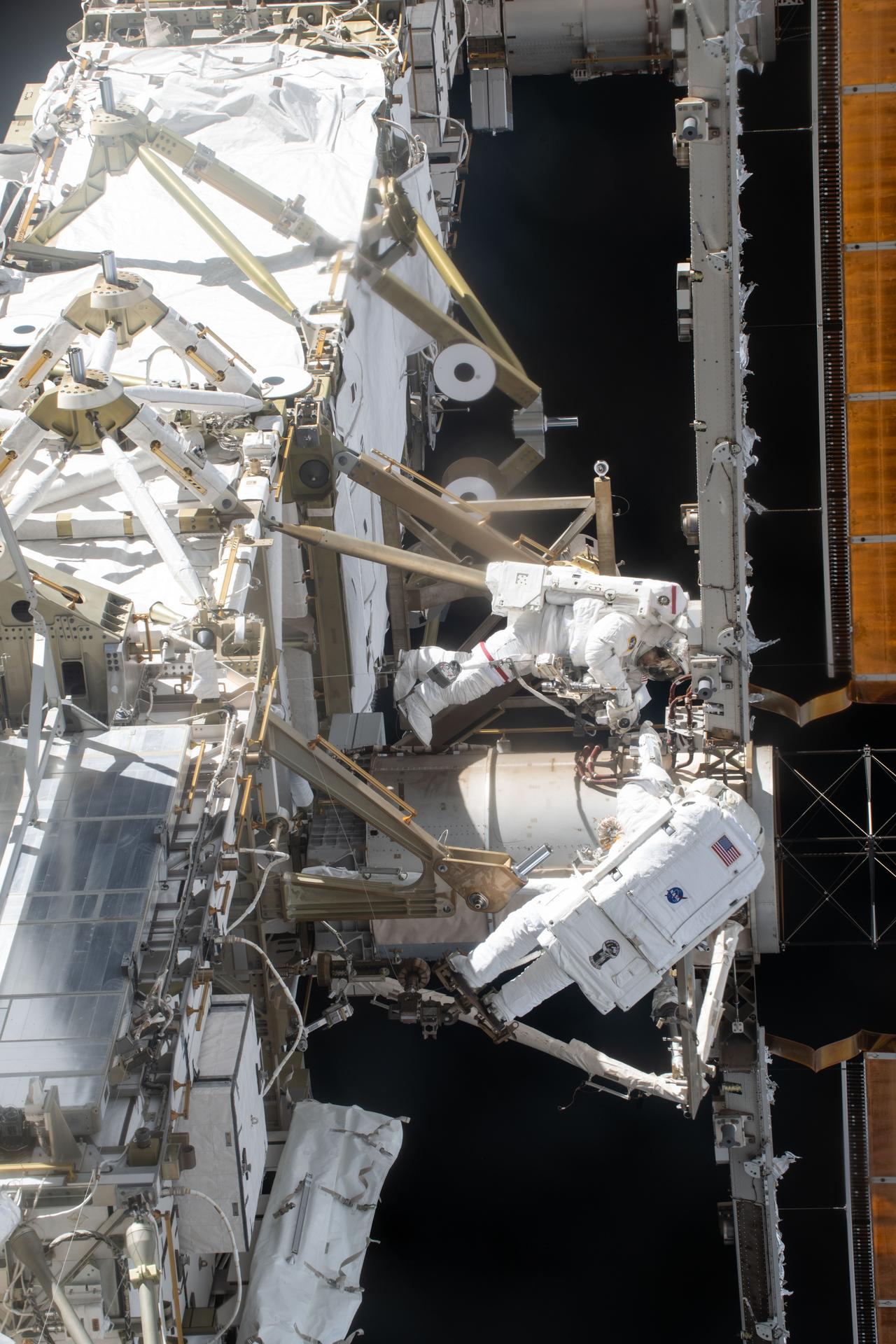
NASA astronauts Jessica Meir and Chris Williams, both Expedition 74 flight engineers, are pictured outside the International Space Station during a spacewalk to complete installation of a modification kit ahead of future solar array installation on the 2A power channel of the orbital outpost. It was William’s first spacewalk, Meir's fourth, and the 278th in support of space station maintenance, upgrades, and assembly.
NASA astronauts Jessica Meir (top) and Chris Williams are pictured during a spacewalk on March 18, 2026, to complete the installation of a solar array modification kit on the International Space Station.
NASA/Jack Hathaway

Spacewalk preparations filled the schedule aboard the International Space Station on Tuesday as a pair of astronauts gear up for next week’s external robotics repair job. CubeSat maintenance and eye checks rounded out the day for the Expedition 74 crew.

NASA flight engineers Chris Williams and Jessica Meir will once again wear their spacesuits and work together in the vacuum of space to repair a wrist joint on the Canadarm2 robotic arm starting at 7:35 a.m. EDT on Tuesday, June 30. The duo will spend about six hours and 40 minutes on the outside of the orbital lab replacing the malfunctioned wrist joint on Canadarm2 that has been in operation for over 25 years. NASA and the Canadian Space Agency (CSA) analyzed the issue and determined a spacewalk was necessary to replace the wrist joint with a spare already on the station. NASA and CSA officials will preview the upcoming spacewalk tasks during a news conference on NASA’s YouTube channel at 2 p.m. on Thursday, June 25.

Williams tried on his spacesuit Tuesday and tested the suit in its powered configuration with assistance from flight engineer Sophie Adenot from ESA (European Space Agency). The duo worked inside the Quest airlock checking the pressurized suit’s comfort and mobility and its communications and life support systems while engineers on the ground monitored.

Williams then joined Meir and reviewed on a computer a 3D interactive animation of the procedures and maneuvers they will use to return the Canadarm2 to full motion. Afterward, the pair took turns servicing emergency jet packs that will be installed on the spacesuits the day the spacewalk begins. Meir also installed batteries inside the pistol grip tools — designed especially for microgravity — they will use to work on the robotic arm.

Adenot and NASA flight engineer Jack Hathaway, who will monitor the spacewalkers from inside the orbital outpost, studied their spacewalk support roles including carefully adjusting the Canadarm2 into position during the repair work. Hathaway also had time for CubeSat work first removing a small satellite orbital deployer that was stowed inside the Kibo laboratory module’s airlock. Next, he installed a set of CubeSats inside the NanoRacks CubeSat deployer that will soon be placed outside Kibo’s airlock for deployment into Earth orbit. The tiny satellites were designed by university students for a variety of communications and technology investigations.

Station commander Sergey Kud-Sverchkov joined flight engineer Sergei Mikaev in the Harmony module for eye checks using standard medical imaging hardware. Doctors on the ground were examining how living in space affects the retina, lens, and cornea. Roscosmos flight engineer Andrey Fedyaev continued testing artificial intelligence tools to boost crew efficiency and communications in space.

Learn more about station activities by following the space station blog, @space_stationon X, as well as the ISS Facebook and ISS Instagram accounts.

Get the latest from NASA delivered every week. Subscribe here.

The post NASA Announces Spacewalkers for Robotic Arm Repair Work appeared first on NASA Science.
  •  

AMMG STIG Seminar, July 1, 2026

Astrophysics from the Moon, Mars, and Beyond STIG Seminar

23 June 2026

2:00pm ET July 1st, 2026

Why and Where Do We Want to Put Telescopes on the Moon?

https://science.nasa.gov/astrophysics/programs/physics-of-the-cosmos/community/ammb-stig-seminar-1-july-2026

Speaker

Nivedita Mahesh | CU Boulder

Abstract

The Moon is emerging as a uniquely valuable platform for astrophysics, enabling observations that neither Earth nor free-flying spacecraft can support. This talk surveys the scientific motivation across four complementary regimes. At low radio frequencies, the radio-quiet lunar farside opens a window onto the cosmological Dark Ages and the magnetospheres of exoplanets. In the mid-band gravitational-wave regime, the Moon’s low seismic activity bridges the sensitivity gap between terrestrial and space-based detectors. At ultraviolet wavelengths, its natural vacuum and long coherence times allow high-resolution stellar imaging beyond what is possible on Earth. And in the far-infrared, the cold, stable conditions of permanently shadowed regions offer a naturally cryogenic, absorption-free site for probing star and planet formation and the obscured Universe.

For each regime, I will share updates from the mission concept leads on the efforts now developing within the Astrophysics from the Moon, Mars & Beyond (AMMB) Science Interest Group. Together, these cases point to a paradigm shift: astrophysics from the Moon is becoming not just desirable but necessary.

News Straight to Your Inbox

Subscribe to your community email news list

We will never share your email address.

Privacy Policy

Sign Up
Angled from the upper left corner to the lower right corner is a cone-shaped orange-red cloud known as Herbig-Haro 49/50. This feature takes up about three-fourths of the length of this angle. The upper left end of this feature has a translucent, rounded end. The conical feature widens slightly from the rounded end at the upper right down to the lower right. Along the cone there are additional rounded edges, like edges of a wave, and intricate foamy-like details, as well as a clearer view of the black background of space. In the upper left, overlapping with the rounded end of Herbig-Haro 49/50, is a background spiral galaxy with a concentrated blue center that fades outward to blend with red spiral arms. The background of space is speckled with some white stars and smaller, more numerous, fainter white galaxies throughout.

The post AMMG STIG Seminar, July 1, 2026 appeared first on NASA Science.
  •  

DGCE SIG Seminar, June 25, 2026

Diffuse Gas and Cosmic Ecosystems SIG Seminar

23 June 2026

4:00pm ET June 25th, 2026

Cosmic Origins Science in the New Landscape of Space Astrophysics

https://science.nasa.gov/astrophysics/programs/cosmic-origins/community/dgce-sig-seminar-25-june-2026

Speaker

Swara Ravindranath | Deputy Chief Scientist of NASA’s Cosmic Origins Program (NASA GSFC)

Abstract

Cosmic Origins Science covers a broad range of topics that are fundamental to our understanding of the evolution of structure in the Universe and the physical processes that can explain the formation of galaxies, stars, and planets that we observe today. The various space telescopes that operate across the electromagnetic spectrum have been crucial to address some of the most fundamental questions related to our cosmic origins. The landscape of Space Astronomy is evolving fast with innovative technology, industry partnerships, and new commercial launch capabilities. In this talk, I will review the Cosmic Origins Program and discuss the new opportunities that offer strategic pathways for focused-science missions.

News Straight to Your Inbox

Subscribe to your community email news list

We will never share your email address.

Privacy Policy

Sign Up
Angled from the upper left corner to the lower right corner is a cone-shaped orange-red cloud known as Herbig-Haro 49/50. This feature takes up about three-fourths of the length of this angle. The upper left end of this feature has a translucent, rounded end. The conical feature widens slightly from the rounded end at the upper right down to the lower right. Along the cone there are additional rounded edges, like edges of a wave, and intricate foamy-like details, as well as a clearer view of the black background of space. In the upper left, overlapping with the rounded end of Herbig-Haro 49/50, is a background spiral galaxy with a concentrated blue center that fades outward to blend with red spiral arms. The background of space is speckled with some white stars and smaller, more numerous, fainter white galaxies throughout.

The post DGCE SIG Seminar, June 25, 2026 appeared first on NASA Science.
  •  
❌