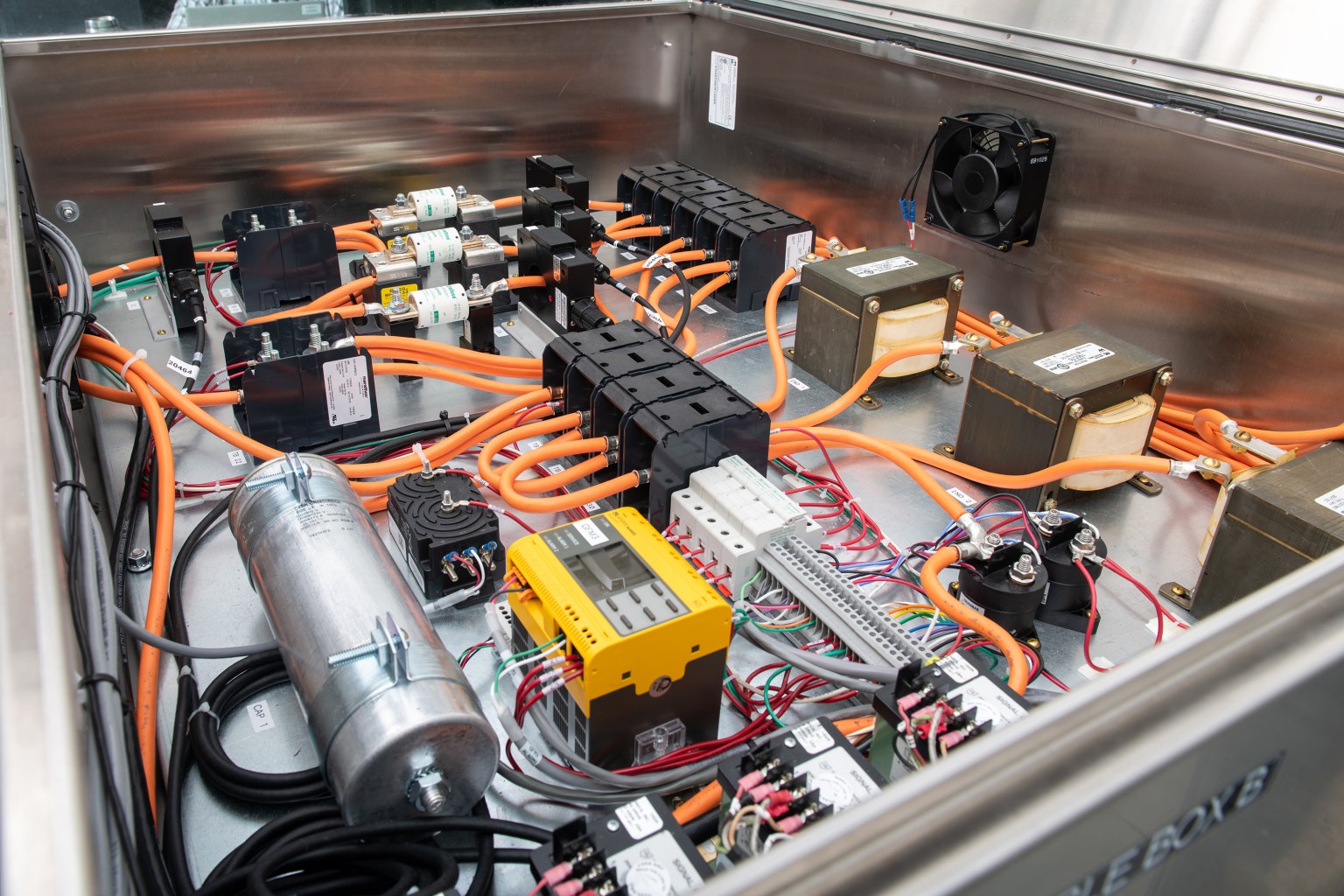
Electricity powers the world, and electricians are the ones who get it where it needs to go. An electrician is an expert who is trained to make sure electrical systems and equipment are installed safely and working correctly. Electricians are involved in a variety of systems, including power, lighting, communications, and more – anything that needs electricity to run.
While electricians ensure systems and equipment have the power they need, electrical technicians focus on building, modifying, or testing electronic devices.
What are some of the different types of work electricians and electrical technicians do at NASA?
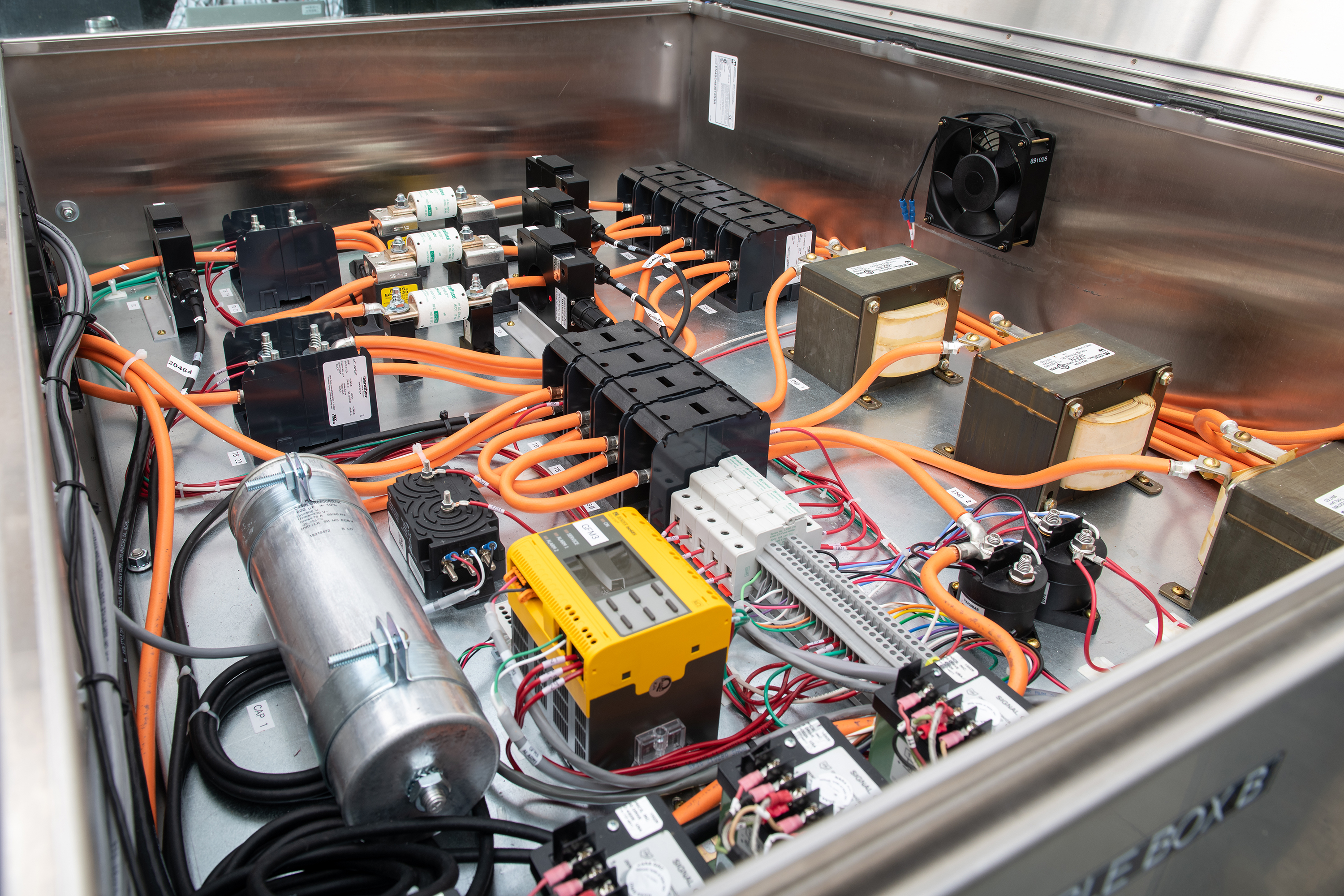
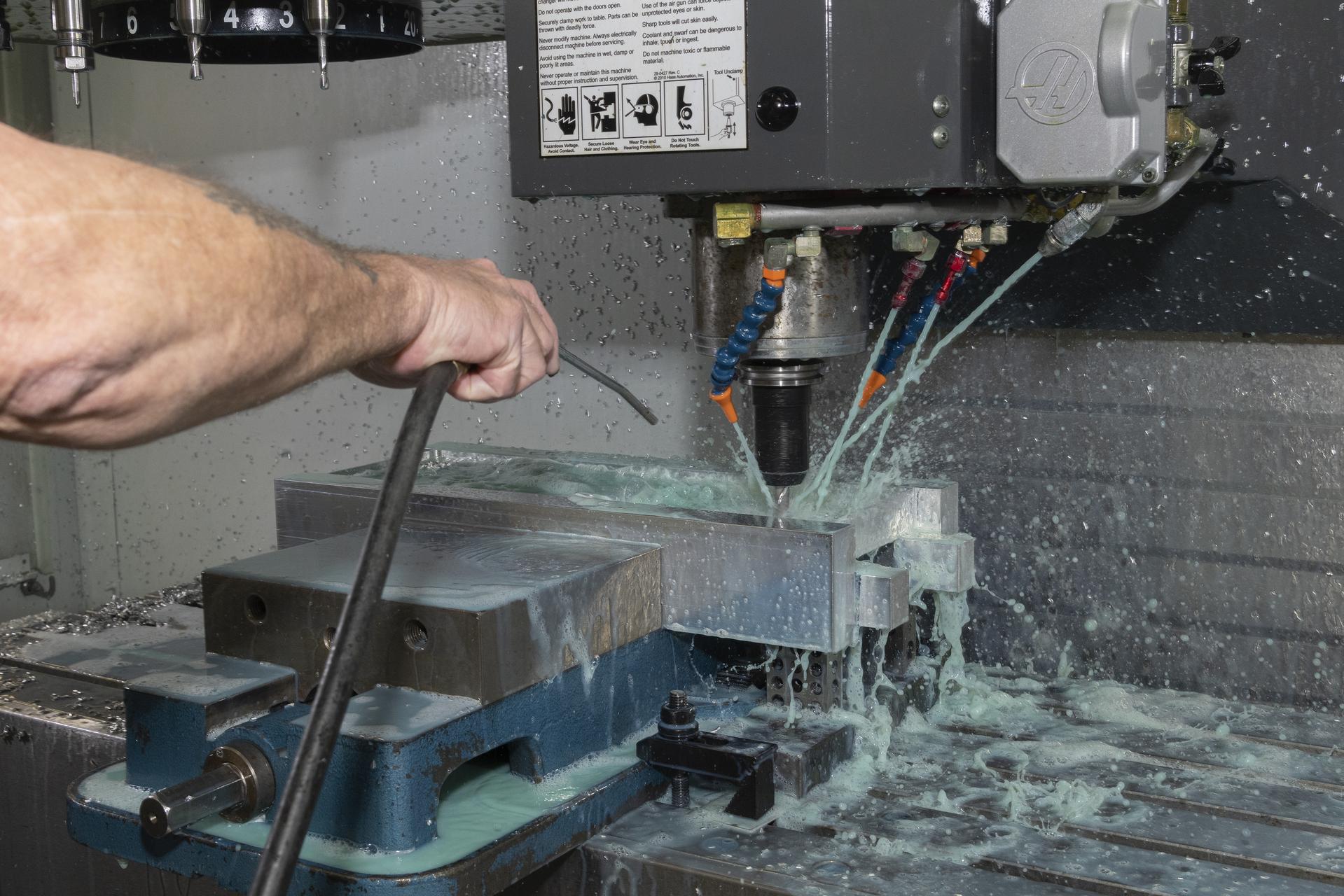
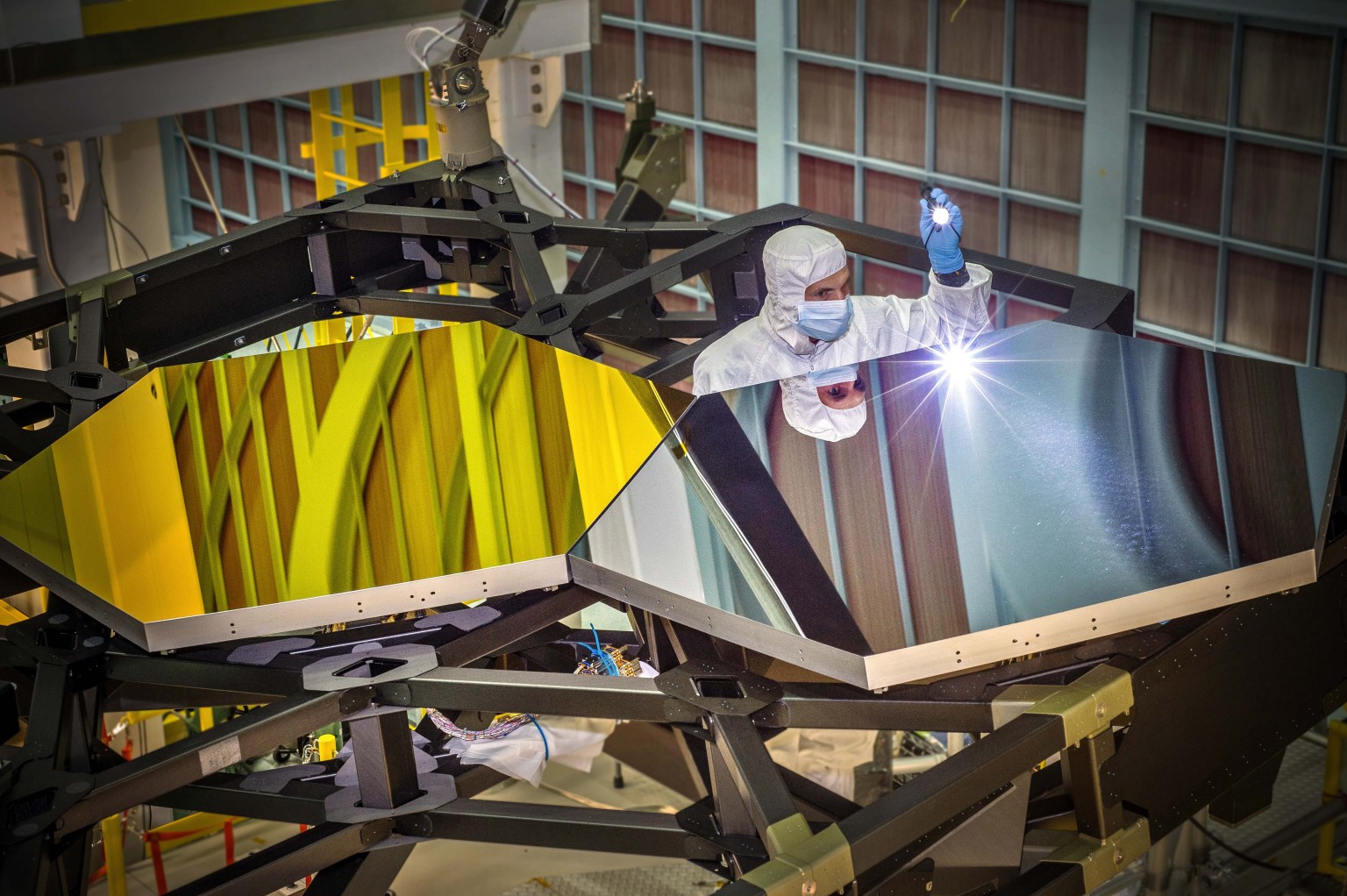
At NASA, electricians keep the lights on and the power flowing for rocket launches, scientific research, and everything in between. Their skills support engineers and scientists in building and testing spacecraft, aircraft, satellites, telescopes, and the equipment that makes human spaceflight possible. Electricians make sure all facilities and equipment have the power and functionality they need to be safe and ready to support NASA’s missions.
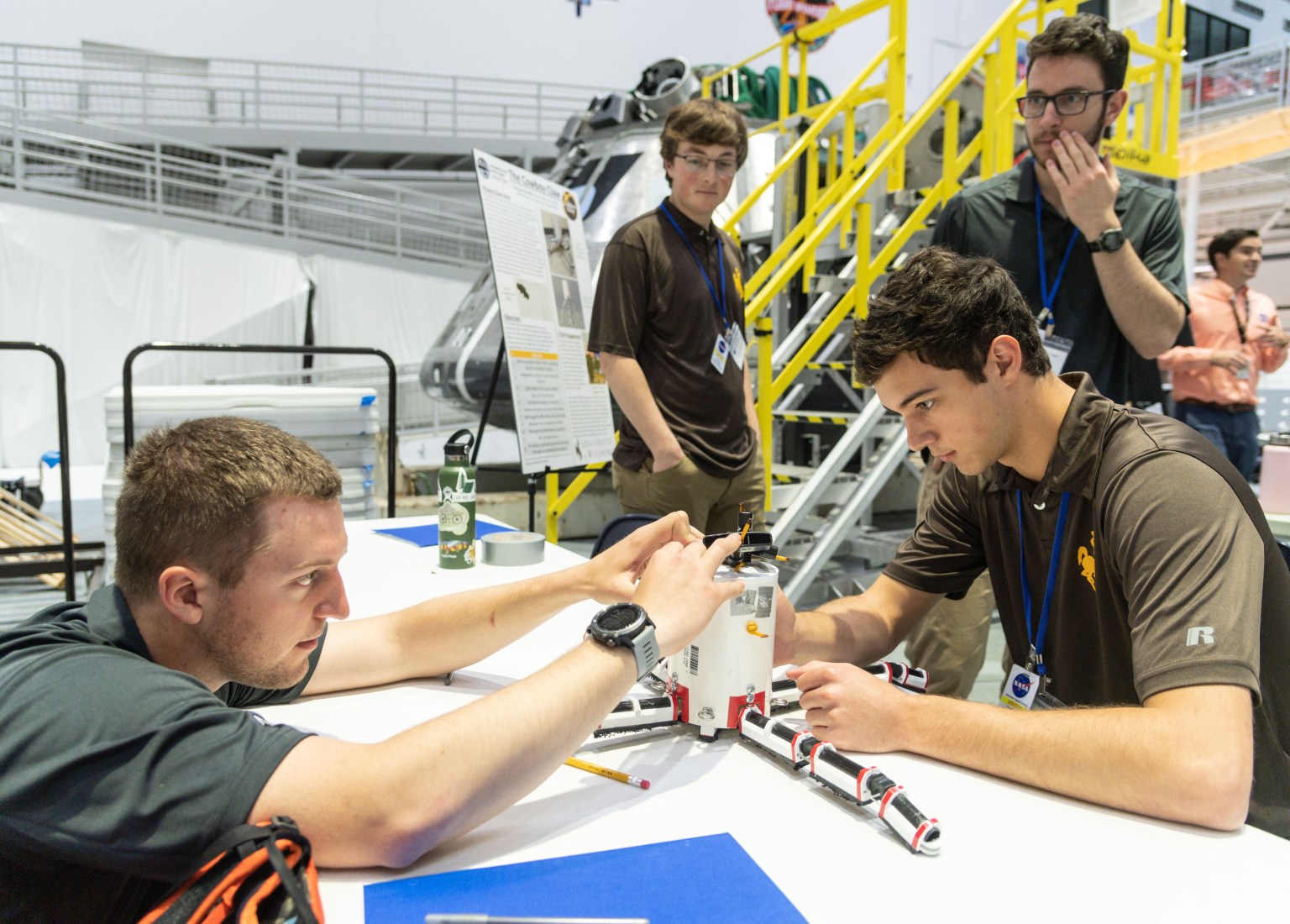
Electrical technicians at the agency help bring big ideas to life. They might build and wire control systems, connect tiny sensors to circuit boards, or write the software to make a device work in a specific way. They also test instruments in conditions that mimic space – extreme temperatures, intense vibrations, and even a vacuum – to make sure they will survive and perform well during their missions. Technicians use specialized tools, earn certifications, and work with incredible precision.
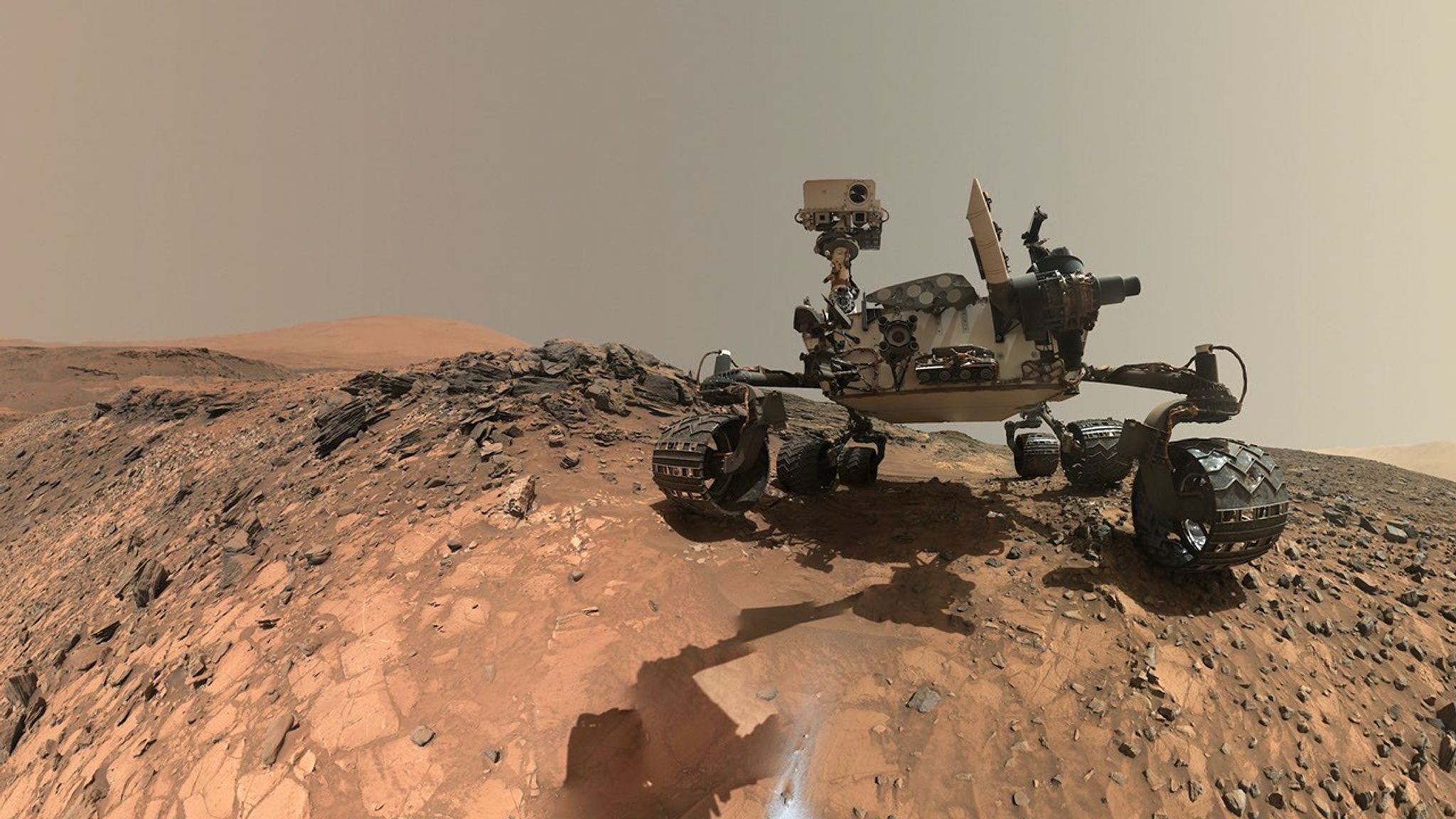
Being an electrician or electrical technician at NASA is careful, hands‑on work carried out with expertise. Because space hardware is headed to places like low-Earth orbit, the Moon, or even Mars, every detail has to be perfect.
What are the different certification levels for electricians?
The information below is a general overview of the career path of an electrician. Specific guidelines for these roles vary from state to state. It’s important to look up the license requirements in your state.
Apprentice electrician: This four-year job training program provides an entry into the industry. An apprentice works as an assistant to an experienced supervisor, gaining vital hands-on experience to move ahead as an electrician.
Journeyman electrician: A journeyman is an electrician who has finished an apprenticeship, then passed a test. At this stage, the electrician is licensed and allowed to work without supervision.
Master electrician: This is the highest certification possible for an electrician. Typically, a master electrician is someone who has completed approximately 4,000 hours as a journeyman, then passed a licensing exam. These electricians are qualified to work on complicated projects. They can also serve as supervisors for apprentices or journeymen following in their footsteps.
How can I become an electrician?
There are many options that provide the training needed to get started as an electrician or electrical technician.
Many community colleges, trade schools, and technical institutes offer a two-year program leading to an associate degree in electrical technology. Additionally, trade unions and apprenticeship programs provide real-world experience in the field.
Additionally, all branches of the U.S. military offer electronics training that may be transferrable to college credits or civilian certifications.
How can I start preparing today to become an electrician?
It’s never too early to set the stage for an electrifying career! In high school, you can take courses in math, science, and technical education. At the same time, you can start learning about basic electrical concepts such as circuitry and safety.
Begin researching associate degree programs and apprenticeship opportunities so you can consider which pathway seems right for you. Weighing these options now will help you understand program requirements and ensure you’re ready to take the next step.
You can also gain useful experience through part-time work, or shadowing electricians on the job.
What skills will I need to be a successful electrician?
Technical skills focus on the basics – how electricity works, how to stay safe, and how to read schematics and wiring diagrams. Some jobs also call for special hands‑on abilities, like soldering tiny components, putting together cables, or even having some familiarity with chemistry.
Being curious, open‑minded, and a good communicator matters, too. Any time you’re building or improving a device, you must understand who will use it and what they need it to do. Asking questions, sharing ideas, and being able to take feedback are essential to consistently building systems and devices that work well.
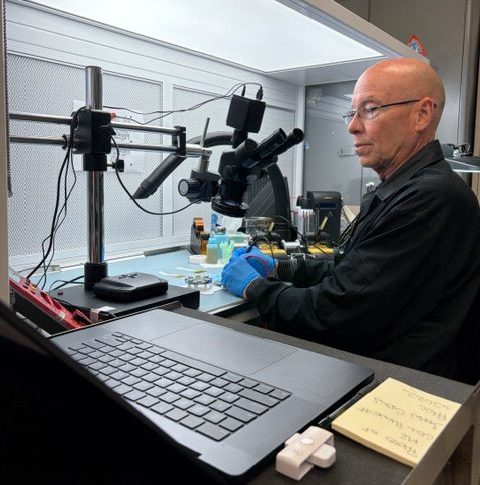
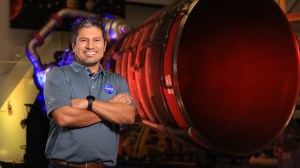
David McClaeb, electronic technician, NASA’s Goddard Space Flight Center in Greenbelt, Maryland
Advice from NASA electricians and electronic technicians
“As an aerospace technician, you have the opportunity to make a big difference. You can make a really big impact.” – Christopher Johnson, aerospace electrical engineering technician, NASA’s Kennedy Space Center in Florida
“What I wish I knew in high school is how many opportunities there are for electricians. I didn’t realize how big of a scale it really was. Everything needs electricity, and the sky’s the limit on what you can do with it. NASA needs electricians for everything from their testing campaigns to keeping their facilities running.” – Levi James, electrician apprentice, NASA’s Glenn Research Center at Armstrong Test Facility in Sandusky, Ohio
“It’s so gratifying when somebody comes in and says, ‘Hey, we want to build this, but it looks really difficult,’ and we say, ‘Yeah, it looks difficult, but we can do it’ – and we build it and then we hand it over to them, and then we’re on to the next thing. It’s a challenge, and I’m telling you, it is just so fun.” – David McClaeb, electronic technician, NASA’s Goddard Space Flight Center in Greenbelt, Maryland
At NASA, electricians keep the lights on and the power flowing for rocket launches, scientific research, and everything in between. Their skills support engi...
Curiosity Blog, Sols 4927–4933: Let’s Drive to That Smooth Area
NASA’s Mars rover Curiosity acquired this image showing a breathtaking diversity of polygons, veins, and other textural features waiting for investigation by the Mars Science Laboratory team. Curiosity captured the image using its Left Navigation Camera on June 17, 2026 – Sol 4928, or Martian day 4,928 of the Mars Science Laboratory mission – at 17:47:52 UTC.
NASA/JPL-Caltech
By Susanne P. Schwenzer, Professor of Planetary Mineralogy at The Open University, UK
Earth planning date: Thursday, June 18, 2026
In the area Curiosity is currently exploring, the science team has mapped several areas with different-looking surface texture on the orbital images. If you wanted to have a look yourself at what there is to see, check the “Where is Curiosity?” map. You’ll discover different shades of orange and beige as well as more rough and more smooth-looking textures. This is what the geomorphologists in our team use to map the areas for exploration by the rover. Of course, we then supplement this all with ground-based images, including bespoke “drive direction imaging,” which is taken after each drive by the Mast Camera. Drive planning is done using a combination of all this information. So there shouldn’t be any surprises, right?
On Monday the team planned three sols in preparation for a Thursday planning to account for the U.S. federal holiday weekend. The workspace turned out to be a little spiky, so we could not find an area we could DRT. APXS still found one good bedrock target, “Rio Baker,” which also had MAHLI documentation. In addition, ChemCam investigated “Rica Aventura,” a textured bedrock, and “Tabebuia,” a darker-looking individual block, using its LIBS and conducted a passive spectral observation on a second dark float block called “Lago Ranco.” Of course, the team also wanted to look into the distance with ChemCam remote imaging, extending our investigation of the Cordillera base outcrop.
Imaging is always high on the list. In Monday’s plan Mastcam is looking into the modern dunes with the “Tacaza” mosaic, and with more mosaics looking forward to the future parking areas, some of which looked really smooth from that vantage point. We also continue our environmental and atmospheric observations looking for dust devils, the opacity of the atmosphere, and monitoring pressure and temperature. After all this, the rover drove about 35 meters (about 115 feet) to an area that looked really smooth in all images we had available at that point. So we were hoping for a good spot to deploy the DRT, but didn’t think we could be in for a surprise.
The drive ended exactly as planned, spot-on in the middle of that — from a distance — smooth-looking area. But when we opened the post-drive images on Thursday morning, we were all reacting with a lot of surprise. From up close, the parking spot looks anything but smooth. You can see the surprise in the title image of this blog. There are polygons, veins, lamination, and probably more, once we inspect the higher-resolution images taken today. “Higher-resolution” is the key for why we were in for such a surprise! The features are quite small, a few centimeters across, and therefore we could not see them in the orbital images or from a distance in our navigation and mast camera images. The camera resolution from a distance just isn’t enough to see them. But up close, the terrain revealed all its beauty! And I am sure there will be more in the even higher resolution of today’s MAHLI and ChemCam RMI imager images!
So, what did we plan after we caught our breath on Thursday? First, you guessed it, images, images, and more images. Mastcam takes a full panorama with its “left eye” and adds a range of closer-up mosaics with its higher-resolution “right eye.” In addition there is a ChemCam Remote Micro Imager image to document structures further afield at high resolution. ChemCam is investigating three targets using LIBS: “Rio Chimore” is a lighter-toned band; you can see some of those in the cover image of this blog, too. The other two LIBS targets are “Rio de Lava,” a vein target, and “Rio de Salta,” one of the polygons. APXS is also looking at the bedrock and the ridges, at the targets “Pampa Grande” and “Iquique Ridge.” MAHLI is having the above-mentioned close “hand lens” look. Let’s see what we will discover when we get those images.
Finally, Curiosity drove up the hill along very smooth-looking terrain that is just littered with tiny polygons. Let’s see if we are in for another surprise reverberating around all our offices — and across two continents, as I had the good fortune to be among the first ones, here in England (Or maybe it was our French ChemCam colleagues, who are in a time zone one hour ahead of me?). Whichever it is, this terrain has a lot to say about the geologic history of Mars!
In preparing to visit the Moon’s surface, soon-to-be lunar explorers in NASA’s Apollo program first ventured into a variety of unfamiliar landscapes on Earth. A couple of these trips, in the summers of 1965 and 1966, took astronauts to Alaska’s remote Katmai National Park for simulations of field geology in Moon-like environments.
In one exercise, which they called “playing the Moon game,” pairs of astronauts were placed at unfamiliar field sites and asked to pretend as if they were on the Moon. By the account of William Phinney, Apollo’s science training coordinator, they were tasked with collecting representative geologic samples and practicing how to communicate their observations to scientists.
September 29, 2025
The Alaskan setting for the Moon game was an unusual volcanic landscape called the Valley of Ten Thousand Smokes. The valley is full of debris deposited by the 1912 eruption of Novarupta—the largest volcanic event on Earth in the 20th century.
The images above, acquired on September 29, 2025, with the OLI (Operational Land Imager) on Landsat 9, show the massive ash flow deposited by Novarupta. The layer measures up to 660 feet (200 meters) thick and was emplaced at a searing 1,380 degrees Fahrenheit (750 degrees Celsius).
The Valley of Ten Thousand Smokes, shown in the 1917 photo below, is so named because of the abundance of fumaroles—gas and steam-emitting vents—that filled the valley for a decade after the eruption. A few hundred persisted more than 10 years, with some lasting until the 1990s.
1917
Scientists initially suspected that the monster eruption occurred at Mount Katmai, a neighboring volcano with a large caldera located 6 miles (10 kilometers) east of Novarupta’s dome. However, they later determined that the eruption actually occurred at Novarupta—whose name means “new eruption”—after stealing magma from beneath Katmai. As the magma chamber emptied, Katmai collapsed, forming the 2.5-mile-wide (4-kilometer-wide) caldera present today.
The volcanic landscape in the Valley of Ten Thousand Smokes is far fresher than the ancient lava flows that formed the Moon’s volcanic features. But for the Apollo astronauts, it offered an “excellent opportunity to view volcanic materials and landforms in nearly pristine condition,” Phinney wrote. They studied evidence of fumaroles and examined vertical sections of the deposits where streams had eroded deep gorges.
June 9, 1991
Researchers continue to visit this Alaskan wilderness in search of clues that could help decipher the geology of the Moon and Mars. In 2024, the Goddard Instrument Field Team (GIFT) trekked to the Valley of Ten Thousand Smokes to study its icy volcanic landscape. Like the valley, Mars contains glaciers and ice sheets layered with dust and ash, a dynamic and difficult-to-interpret environment.
Advancing lunar science, the GIFT team also collected samples from rock formations comparable to the Moon’s Gruithuisen Domes. These mysterious features are made of hardened lava with a different composition than the surrounding rock. With more to learn about our nearest celestial neighbor, the spirit of the Moon game lives on in the 21st century.
NASA Earth Observatory images by Lauren Dauphin, using Landsat data from the U.S. Geological Survey. Photos from National Geographic Society Katmai expeditions photographs, Archives and Special Collections, Consortium Library, University of Alaska Anchorage, and from the U.S. Geological Survey Volcano Hazards Program. Story by Lindsey Doermann.
NASA has selected Sean Gallagher as the agency’s chief information officer (CIO). In this role, he is responsible for the agency’s entire portfolio of Information Technology products and services. Gallagher has been serving in an acting capacity since January and his permanent role is effective immediately.
“Sean Gallagher’s leadership has been instrumental in strengthening NASA’s IT foundation and ensuring our workforce has the secure, modern tools needed to enable groundbreaking missions every day,” said NASA Deputy Administrator Matt Anderson. “As CIO, Sean will continue advancing the agency’s technology capabilities to support discovery, innovation, and mission success across NASA.”
Most recently, Gallagher also has served as the deputy chief information officer for Operations in the Office of the Chief Information Officer at NASA Headquarters in Washington, as well as a senior advisor for Transformation. This team provides services to tens of thousands of end users located in the U.S. and abroad in support of NASA missions, enabling discoveries, faster data sharing, increased workforce productivity, and more. Gallagher has worked with all NASA centers to implement efficient and effective IT operating models.
Previously, Gallagher was the CIO of NASA’s Glenn Research Center in Cleveland, leading IT initiatives for aeronautics, space, research and engineering, and test missions. He joined NASA in 2012 as Glenn’s deputy CIO and previously worked at Booz Allen Hamilton as a senior associate supporting a variety of federal, defense, and commercial customers.
Gallagher developed his leadership and management experience as a Signal Corps officer in the United States Army. He also served as a platoon leader managing the combat service support readiness of a tactical communications unit, a human resource manager for the 40th Signal Battalion, and as a network engineer for the 11th Signal Brigade. He has a bachelor’s degree in physics from John Carroll University and a master’s degree in computer information systems from the University of Phoenix.
For more information about NASA’s missions, visit:
NASA’s Commercial Satellite Data Acquisition program (CSDA) announced contract awards with eight commercial satellite data providers offering a range of data types to support the agency’s Earth science research and application goals.
The CSDA program On-Ramp 2 Multiple Award contract is a firm-fixed-price indefinite-delivery/indefinite-quantity (IDIQ) multiple-award contract with a maximum cumulative value of $476 million and a performance period through November 2028.
The CSDA IDIQ contract includes an on‑ramp provision that allows NASA to periodically reopen the solicitation, giving new vendors the opportunity to submit proposals. This mechanism also enables existing CSDA vendors to propose new data products, whether newly developed or derived from new instruments, that were not available during the original proposal period.
Newly Added Contract Holders
Vendor
Sensor
HydroSat
Thermal Infrared Visible and Near-Infrared (VNIR)
Ororatech
Thermal Infrared – Medium Wavelength Infrared (MWIR) and Long Wavelength Infrared (LWIR)
ImageSat
Optical Multispectral Instrument (MSI)
Satlantis
Optical MSI / Greenhouse Gas (GHG) Emissions
Kuva Space
Hyperspectral – VNIR and Short Wavelength Infrared (SWIR)
Wyvern
Hyperspectral – VNIR
Orbital Sidekick
Hyperspectral – VNIR and SWIR
Muon Space
Global Navigation Satellite System – Radar (GNSS-R)
Current CSDA Contract Holders with New Products
Vendor
Sensor
Airbus
Optical MSI / Synthetic Aperture Radar (SAR)
ICEYE
SAR
GHGSat
GHG Emissions
Planet Labs
Optical MSI / Hyperspectral
PlanetiQ
Global Navigation Satellite System – Radio Occultation (GNSS-RO)
Tomorrow.io
Microwave Sounder
“NASA’s Earth science community relies on a diverse suite of observations from spaceborne, airborne, and in situ assets to better understand our changing planet,” said CSDA Project Manager Dana Ostrenga. “The commercial providers added through this latest CSDA contract on-ramp complement NASA’s existing Earth observation capabilities and our current portfolio of commercial partners, expanding the range of data available for evaluation and use. Together, these observations provide researchers with a more comprehensive view of Earth’s atmosphere, land, oceans, cryosphere, and solid Earth, helping advance scientific discovery and applications that benefit our communities.”
Following issuance of the contract awards, the selected vendors’ data products will be made available to authorized CSDA data users via the Satellite Data Explorer (SDX), CSDA’s web-based data discovery and data access tool that allows approved users to search, discover, access, task, and download the data the program has acquired from its commercial partners.
The Vendor Selection Process
The award process begins with the CSDA issuing a request for proposals that is posted on Sam.gov, the U.S. government’s official system for managing federal contract proposals. Interested companies then submit proposals to enter into an IDIQ contract with CSDA. A Solicitation Evaluation Board is formed to determine whether the proposals are competitive and meet the CSDA’s technical requirements for continuous observations, orbit platforms, and data that aligns with NASA Earth Science Division (ESD) goals. The CSDA makes its selections from the proposals that meet the requirements and then submits them to NASA leadership for approval. Once approved, the contracts are then awarded and the companies are able to get their data evaluated by CSDA. Once the evaluations are complete, the commercial data providers can then compete for competitive task orders through CSDA.
About the CSDA Program
NASA’s Earth Science Division (ESD) established the CSDA Program as the agency’s central mechanism for identifying, acquiring, and evaluating commercial Earth observation (EO) data. The program augments NASA’s and partner agencies’ Earth-observing capabilities by acquiring commercial satellite data that offer higher spatial resolution, increased revisit frequency, complementary measurement capabilities, and taskable observations. To learn more about the program, its commercial partners, data evaluation process, and more, visit the CSDA website.
Become an Authorized Data User
Commercial data discoverable through the SDX is made available to CSDA authorized data users. To become an authorized user, fill out the CSDA Program Data Authorization Form. Note: Use of SDX also requires an Earthdata Login.
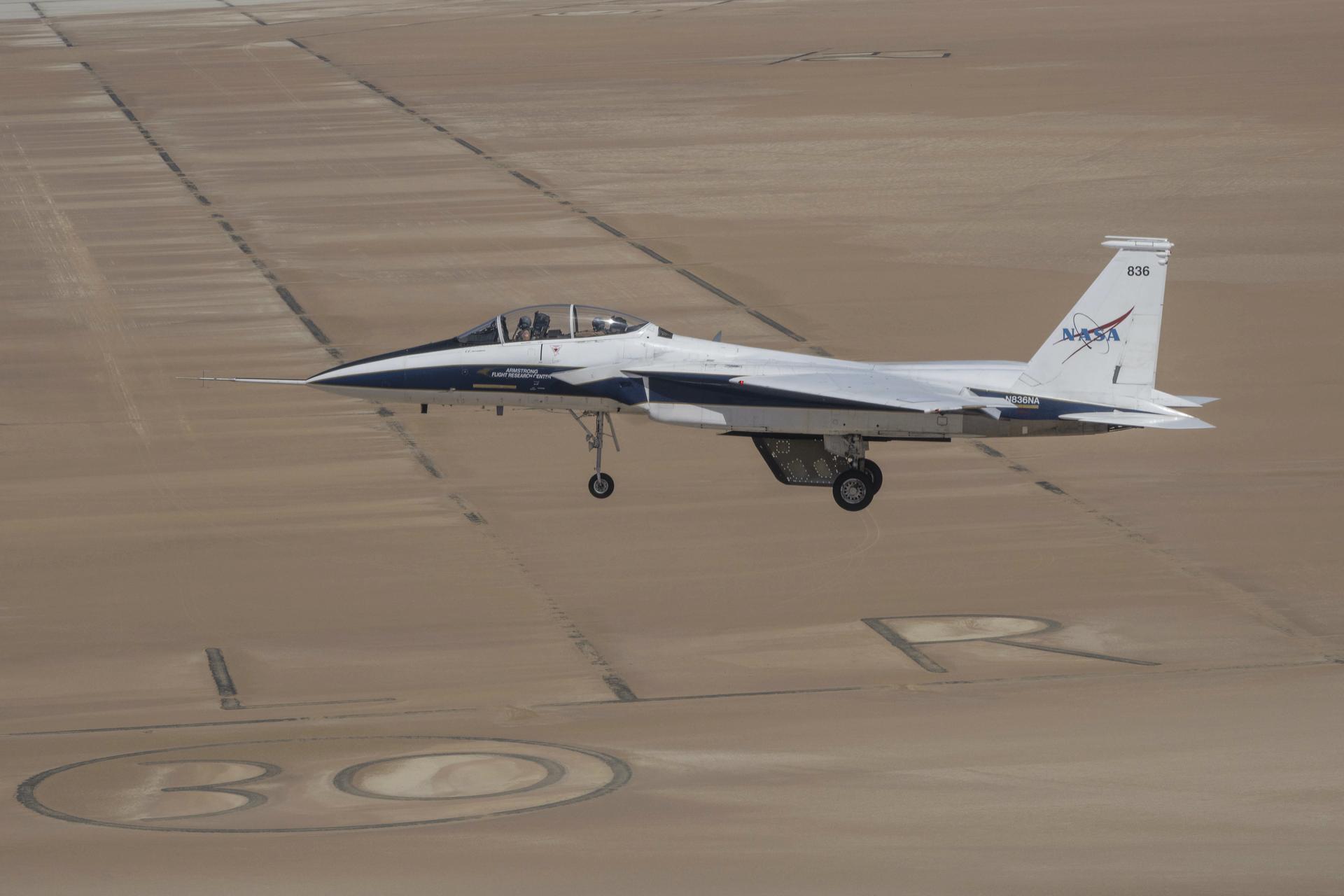
An F-15 aircraft flies above the world’s largest compass rose above NASA’s Armstrong Flight Research Center in Edwards, California, on Monday, April 20, 2026. NASA’s Crossflow Attenuated Natural Laminar Flow (CATNLF) test article is attached to the bottom of the F-15. The project aims to lower fuel costs for future commercial aircraft by testing a scale-model wing designed to improve laminar flow.
Credits: NASA/Jim Ross
Flight tests are a big part of how NASA turns breakthrough ideas into reality. From flying humans faster than the speed of sound to proving designs that helped shape the space shuttle, flight testing transforms bold concepts into safer, more efficient technologies that benefit the public.
“Flight tests are a way to safely and effectively prove new technology, which helps certification authorities certify equipment,” said Wayne Ringelberg, chief pilot at NASA’s Armstrong Flight Research Center in Edwards, California. “It helps industry iterate and make systems better, and it promotes research in areas where new ideas can be developed.”
For nearly 80 years, teams at NASA Armstrong have used flight testing in the Southern California desert to push the limits of aerodynamics and advance aviation. Thanks to that work, NASA-developed innovations are aboard every U.S. commercial aircraft and inside every control tower today.
“The space side of NASA uses flight test, too. Every mission, like Artemis II, is never routine,” Ringelberg said. “Everything we’re doing when flying a test mission is something new or different.”
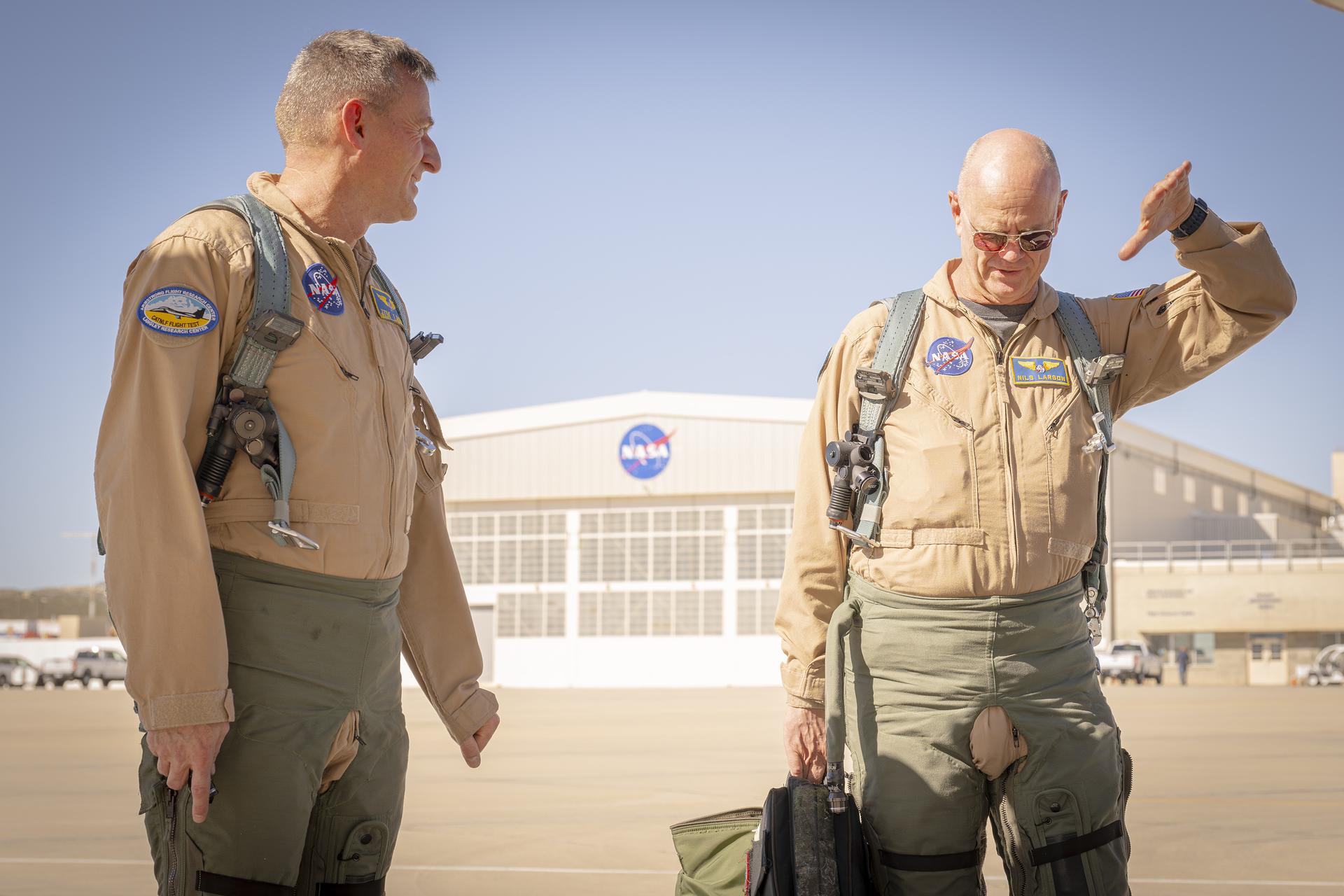
NASA test pilots Jim Less, left, and Nils Larson walk away from a hangar at NASA’s Armstrong Flight Research Center in Edwards, California, on Thursday, Feb. 4, 2026. The pilots support the agency’s Crossflow Attenuated Natural Laminar Flow (CATNLF) project, which aims to lower fuel costs for future commercial aircraft by testing a scale-model wing designed to improve laminar flow.
NASA/Christopher LC Clark
Every NASA test flight — whether it’s studying new software, hardware, or the revolutionary technology of an experimental X-plane — relies on engineers, researchers, pilots, maintenance crew, control room operators, and many others working together.
“Experienced operators and engineers evaluate how things work in flight,” Ringelberg said. “Most new technologies are designed to work in a lab or can be tested in a wind tunnel or other facility, but you never really know how they’ll perform until you fly them.”
Preflight tests often include computer analysis, simulation, wind tunnel testing, and ground tests focused on an aircraft’s ability to withstand the forces of flight and the environments through which it may fly. After hardware or software is deemed safe to fly, researchers turn the mission over to the flight test team.
To support testing, NASA Armstrong maintains an aircraft fleet modified to create space for new hardware or instruments, as well as the ability to integrate new software. These aircraft are flying laboratories, and pilots are trained to accomplish experimental missions.
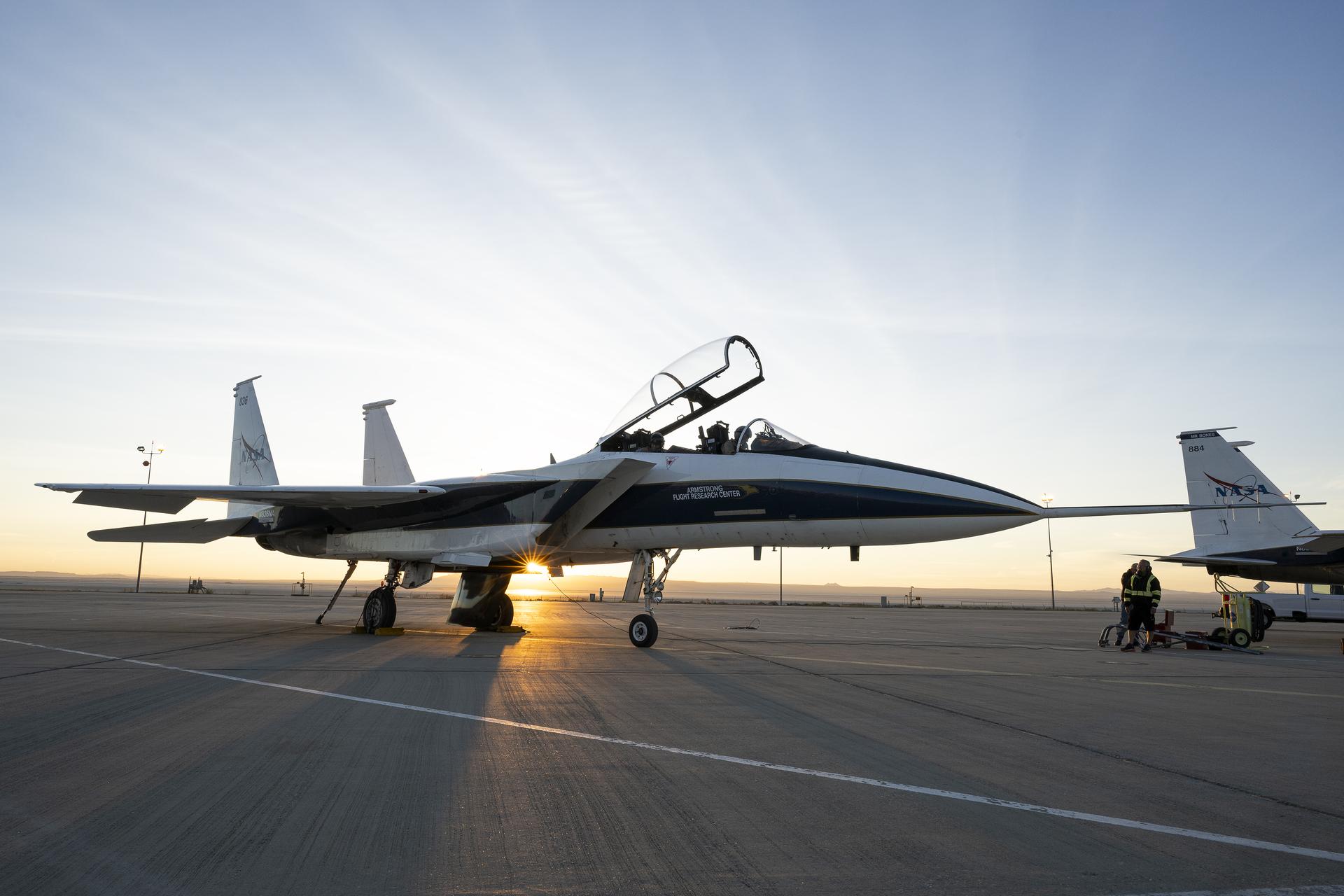
An F-15 research aircraft sits on the ramp at NASA’s Armstrong Flight Research Center in Edwards, California, on Tuesday, March 17, 2026. NASA pilots Jim Less, front seat, and Carrie Worth prepare for the flight. The agency’s Crossflow Attenuated Natural Laminar Flow (CATNLF) test article is attached to the bottom of the F-15. The project aims to lower fuel costs for future commercial aircraft by testing a scale-model wing designed to improve laminar flow.
NASA/Carla Escamilla
For example, flight testing recently helped NASA gather critical data on laminar flow, or the smooth flow of air, over a wing. The work could lower fuel costs for future airliners. Computer modeling, wind tunnel tests, and other methods helped advance the research, but to find out even more about how the wing concept could reduce drag for future airliners, NASA used a scale model in actual flight.
NASA researchers strapped the Crossflow Attenuated Natural Laminar Flow (CATNLF) model wing to the belly of one of NASA Armstrong’s F-15s. The arrangement allowed them to collect all the information they would need without doing the extensive, costly modifications required to install a full-scale wing on an aircraft.
After a flight series is complete, engineers and researchers analyze the data. Did the instrument work as designed? Did the experimental aircraft perform safely at a high altitude? Did the software operate as planned? Each test raises its own set of questions to evaluate.
NASA continues working with academia, the Department of War, and industry partners to advance U.S. aviation through flight test and bring new benefits to the flying public.
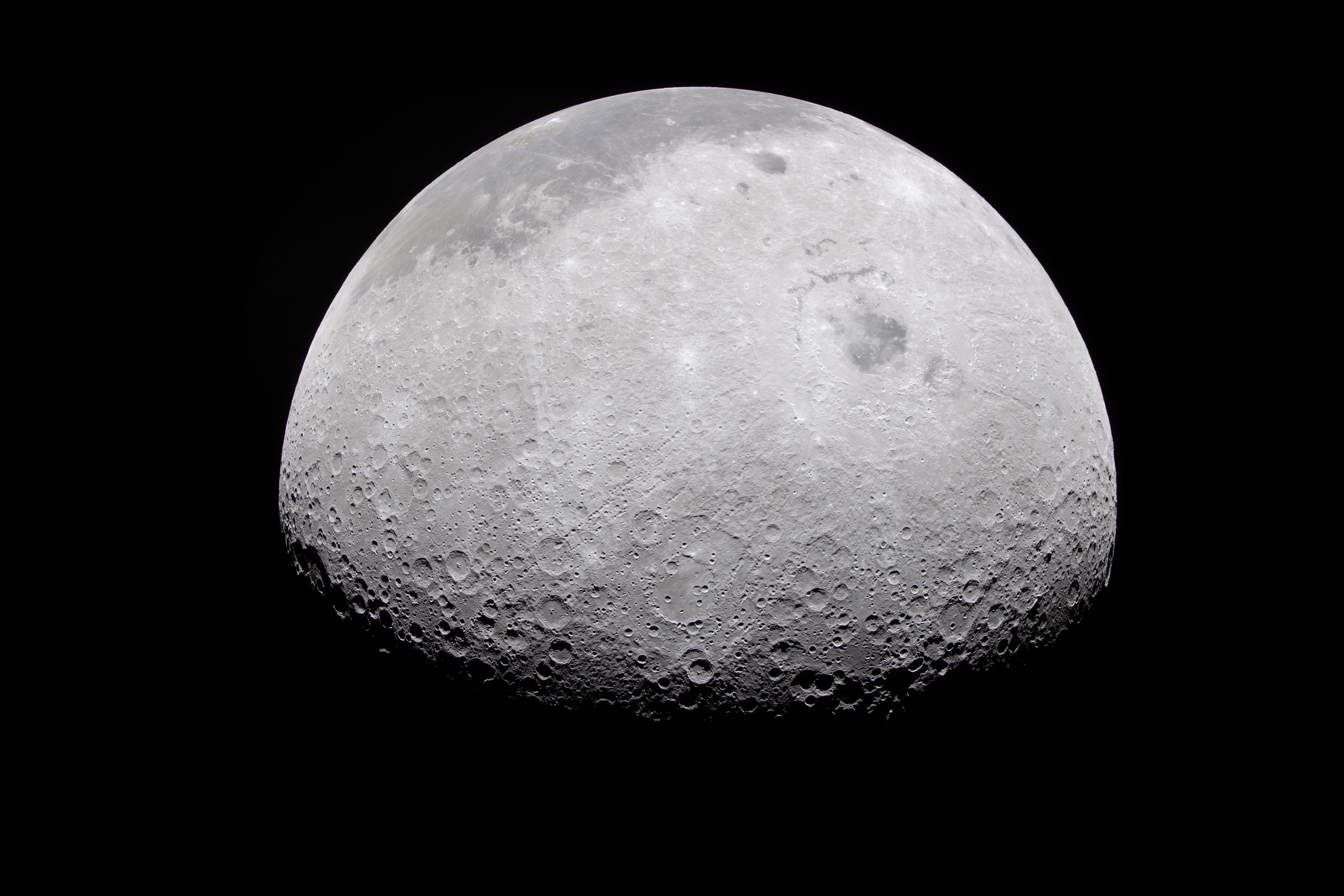
The Moon’s rocky, uneven, and otherworldly surface features are highlighted by the terminator – the difference between light and darkness.
NASA
The Moon appears half-illuminated in this photo captured by the Artemis II crew on flight day 6. The terminator – the difference between light and darkness – provides a stark contrast and even greater perspective of the Moon’s rocky, uneven, and otherworldly surface features. The near side, which is what we can see from Earth, appears in the dark gray regions at the top of this image.
Preparations for Next Moonwalk Simulations Underway (and Underwater)
NASA / Lillian Gipson/Getty Images
THIS PAGE WAS UPDATED ON JUNE 23, 2026
This Aeronautics Research Mission Directorate (ARMD) solicitations page compiles the opportunities to collaborate with NASA’s aeronautical innovators and/or contribute to their research to enable new and improved air transportation systems.
Most opportunities to participate in research are officially announced through the Web-based NASA Solicitation and Proposal Integrated Review and Evaluation System, better known as NSPIRES. You are encouraged to visit the NSPIRES web site, create an account, and sign up for automated email announcements.
Other types of collaborative opportunities, such as those involving Requests for Information or academic research contests, also are included on this page.
This ARMD Solicitations page has four major sections:
Quick list of open solicitations with key dates listed.
August 3, 2026 Deadline for proposals on Open Fan Flight Demonstrations NRA
Currently Open Solicitations
NASA Research Announcement – Development Plan for Open Fan Flight Demonstration – OPEN
As part of NASA’s Advanced Air Vehicles Program, the Subsonic Vehicle Technologies and Tools project endeavors to advance knowledge, technologies, and concepts that enable accelerated introduction of radical aircraft and engine technologies across a range of vehicle classes.
This is achieved through partnerships with industry to ensure that these technologies are applicable to planned products to increase the chances of inclusion in future aircraft systems.
This research announcement solicits proposals for providing an open fan flight demonstration plan with optional accompanying risk reduction activities. The flight demonstration plan will inform the project of the scope of a possible future flight demonstration and provide insight into the roadmap, risk reduction areas, and areas of potential investment.
The Project F.I.R.E. team receives their “Future Game-Changer” award during the 2024 Gateways to Blue Skies forum held at NASA’s Ames Research Center in California. Gateways to Blue Skies is one of several Aeronautics Innovation Challenges open to the academic community.
NASA / Brandon Torres
Aeronautics Innovation Challenges – OPEN
NASA’s nationwide team of aeronautical innovators are committed to giving students of all ages opportunities to solve some of the biggest technical challenges facing the aviation community today. Through NASA-sponsored challenges and competitions, students representing multiple disciplines will put their skills to work by designing and building solutions to real-world problems.
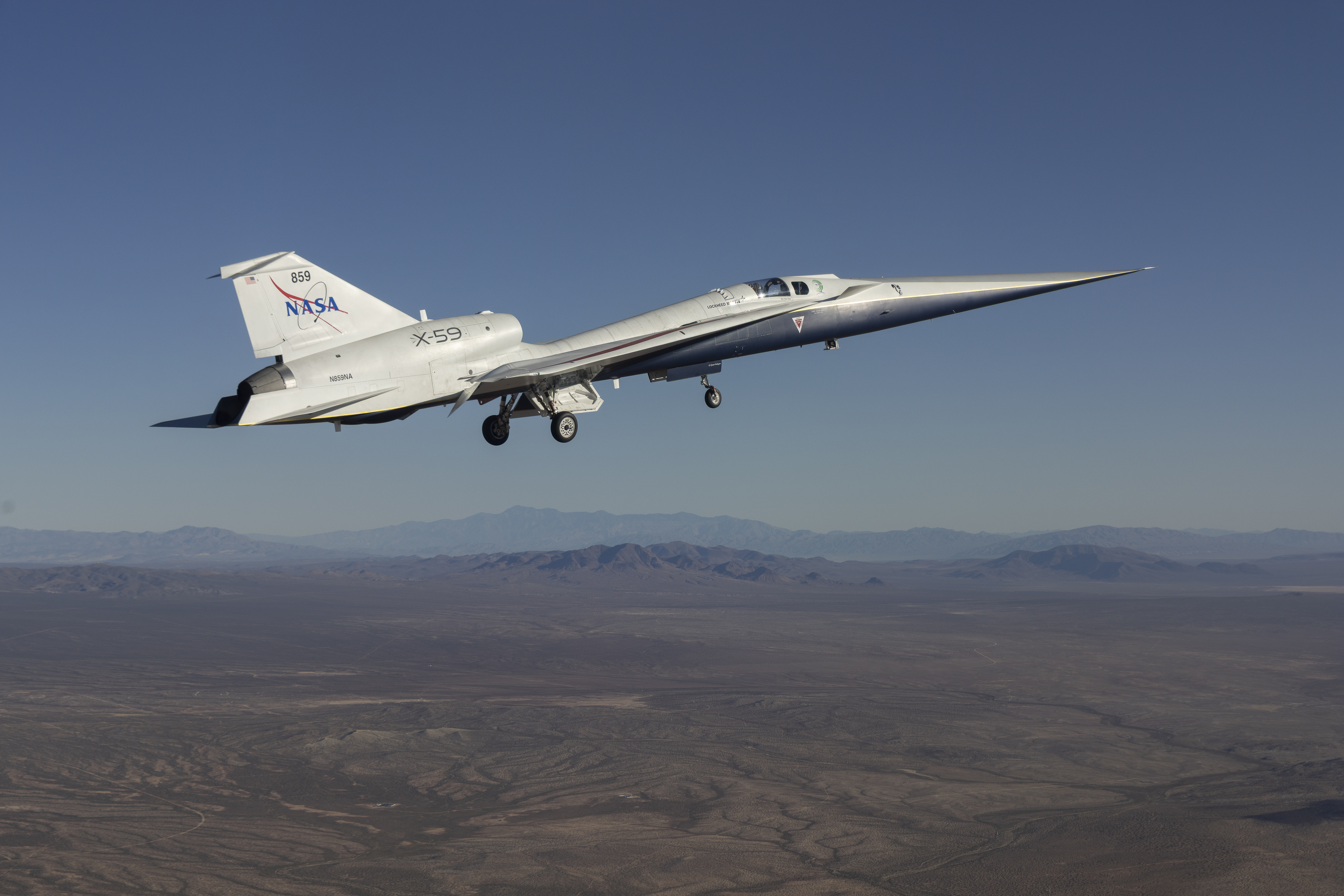
NASA’s X-59 quiet supersonic research aircraft lifts off for its first flight Tuesday, Oct. 28, 2025, from U.S. Air Force Plant 42 in Palmdale, California. The aircraft’s first flight marks the start of flight testing for NASA’s Quesst mission, the result of years of design, integration, and ground testing and begins a new chapter in NASA’s aeronautics research legacy.
NASA/Lori Losey
NASA ARMD Aeronautics Flight Accelerator – CLOSED
NASA’s Aeronautics Research Mission Directorate is seeking information from U.S. industry, academia, and government organizations regarding potential partnerships for research, development, and flight testing under the Aeronautics Flight Accelerator initiative. NASA is requesting input on technologies, concepts, and flight test campaigns suitable for cost shared maturation leading to flight within the next three years. Areas of interest span subsonic (including vertical lift), supersonic, and hypersonic flight technologies.
THIS IS NOT A REQUEST FOR PROPOSAL. NO PROPOSALS SHOULD BE SUBMITTED.
RFI Release Date: April 7, 2026 Responses Were Due: May 7, 2026, 1:00PM Pacific Daylight Time (PDT)
High school students visit the Glenn Research Center Manufacturing Facility and learn about careers in the STEM manufacturing field.
NASA/Marvin Smith
FY26 NASA Aerospace Skilled Technical Workforce Hubs (NAS_Hub) – CLOSED
This opportunity seeks proposals to establish state or regionally focused Skilled Technical Workforce Hubs (NAS_Hubs) that will serve as strategic centers for developing and sustaining a skilled technical workforce aligned with aerospace industry and NASA mission needs. The NAS_Hub Notice of Funding Opportunity has been released and may be found in NASA’s Solicitation and Proposal Integrated Review and Evaluation System (NSPIRES) on the NAS_Hub landing page.
Key Dates
Pre-Proposal Webinar: February 18, 2026, 2:00 to 3:00 p.m. ET
Office Hours Session: March 3, 2026, 2:00 to 3:00 p.m. ET
Proposal Deadline: March 23, 2026, at 11:59 p.m. ET
Anticipated Award Notification: June 2026
About the Opportunity
The rapid expansion of the space economy and renewed national priorities in human space exploration have created an urgent demand for a robust skilled technical workforce—individuals in critical science- and engineering-based roles who do not require a bachelor’s degree. To address nationwide shortages and ensure U.S. competitiveness in aerospace and defense, NASA’s Office of STEM Engagement is launching the NASA Aerospace Skilled Technical Workforce Hubs (NAS_Hub) initiative.
Through this notice NASA seeks lead organizations to establish hubs that:
Collaborate with aerospace employers to align education and training with industry-defined workforce needs.
Partner with community colleges and high school Career and Technical Education programs to deliver hands-on, industry-aligned learning experiences.
Coordinate with state or regional workforce development system.
Build clear and sustainable employment pathways into high-demand aerospace technical careers.
NAS_Hubs will serve as focal points for aligning education, workforce, industry, and government partners to accelerate workforce readiness over a three-year period of performance.
Eligibility
Eligible applicants include:
State, county, city, township, special district, and tribal governments
Public and private institutions of higher education
Nonprofit organizations
For-profit organizations and small businesses
Proposals must include partnerships with, at a minimum:
Three aerospace industry collaborators supporting NASA’s work
Community college career and technical education program
High school career and technical education program
State or regional workforce development system
NASA Center or other NASA facility
Award Information
Maximum Annual Award: $500,000
Maximum Total Award: $1,500,000 over three years
Cost Sharing: Not required
How to Apply
Proposals must be submitted electronically via NSPIRES. Registration in NSPIRES and an active SAM.gov registration are required.
Pre-Proposal Webinar and Technical Assistance
NASA will host an interactive pre-proposal webinar for the NAS_Hub opportunity on Feb. 18, 2026, from 2:00 to 3:00 p.m. ET. This session will provide an in-depth overview of this funding opportunity, including program goals, eligibility requirements, proposal preparation guidance, and submission tips. Proposers will also have the opportunity to receive technical assistance and clarification from NASA staff. Prior to attending a webinar, proposers are strongly encouraged to review the full NAS_Hub notice and to check the NAS_Hub landing page in NSPIRES regularly for updates and additional guidance.
Please note that registration is requiredfor the webinar. Connection details will be provided upon completion of registration. Webinar dates, times, registration links, and connection information will be posted on the NAS_Hub landing page in NSPIRES, which also will feature recordings and presentation materials from the webinar after the event for those unable to attend.
NASA’s Advanced Capabilities for Emergency Response Operations (ACERO) project used this request for information to identify technologies that addressed current challenges facing the wildland firefighting community. NASA was seeking information on data collection, airborne connectivity and communications solutions, unmanned aircraft systems traffic management, aircraft operations and autonomy, and more. This would support development of a partnership strategy for future collaborative demonstrations.
Interested parties were requested to respond to this notice with an information package submitted via https://nari.arc.nasa.gov/acero-rfi no later than 4 pm ET, October 15, 2023. Submissions were accepted only from U.S. companies.
This request for information is being used to gather market research for NASA to make informed decisions regarding potential partnership strategies and future research to enable Advanced Air Mobility (AAM). NASA is seeking information from public, private, and academic organizations to determine technical needs and community interests that may lead to future solicitations regarding AAM research and development.
This particular RFI is just one avenue of multiple planned opportunities for formal feedback on or participation in NASA’s AAM Mission-related efforts to develop these requirements and help enable AAM.
The respond by date for this RFI closed on Feb. 1, 2025, at 6 p.m. EST.
ROA-2025 NRA Amendment 1 – CLOSED
Advanced Air Vehicles Program Fellowship Opportunities
This announcement solicits proposals from accredited U.S. institutions for research training grants to begin the academic year. This Notice of Funding Opportunity is designed to support independently conceived research projects by highly qualified graduate students in disciplines needed to help advance NASA’s mission, thus affording these students the opportunity to directly contribute to advancements in STEM-related areas of study. These opportunities are focused on innovation and the generation of measurable research results that contribute to NASA’s current and future science and technology goals.
Research proposals are sought to address the key challenges summarized in the Elements section at the end of the Amendment 1 document, and which reference NASA’s Hypersonic Technology project.
Reflecting the Fiscal Year 2026 budget changes, the Transformational Tools & Technologies project opportunities originally described in this announcement were cancelled. Proposals citing this project will not be evaluated.
Notices of Intent are not required.
A budget breakdown for each proposal is required, detailing the allocation of the award funds by year. The budget document may adhere to any format or template provided by the applicant’s institution. Two pre-proposal teleconferences for potential proposers will be held and meeting links will be posted on NSPIRES.
Proposals were due by 5 p.m. EDT on June 11, 2025.
NASA Research Opportunities in Aeronautics
Competition for NRA awards is open to both academia and industry.
The current open solicitations for ARMD Research Opportunities are ROA-2024 and ROA-2025.
Here is some general information to know about the NRA process.
NRA solicitations are released by NASA Headquarters through the Web-based NASA Solicitation and Proposal Integrated Review and Evaluation System (NSPIRES).
Participation is open to all categories of organizations, including educational institutions, industry, and nonprofits.
Any updates or amendments to an NRA is posted on the appropriate NSPIRES web pages as noted in the Amendments detailed below.
ARMD sends notifications of NRA updates through the NSPIRES email system. In order to receive these email notifications, you must be a Registered User of NSPIRES. However, note that NASA is not responsible for inadvertently failing to provide notification of a future NRA. Parties are responsible for regularly checking the NSPIRES website for updated NRAs.
NASA’s Jason Peterson is the range operations manager at NASA’s Stennis Space Center. For Artemis II, he supported the team responsible for delivering video and communication feeds for launch and splashdown.
Credits: NASA/Danny Nowlin
Jason Peterson’s responsibilities for NASA’s Artemis II mission went beyond his usual role as the range operations manager at NASA’s Stennis Space Center near Bay St. Louis, Mississippi.
For Peterson, working at NASA is a surreal full-circle moment.
“I grew up in DeLisle, Mississippi, right down the road from NASA,” said Peterson. “You would hear NASA testing, the windows would shake, and you knew they were out there. Not in a million years would I have ever dreamed I would work with NASA.”
His career journey took a few turns before reaching the space agency.
“I got out of school, welded, went to college and then to the Air Force. The path to NASA really started to develop from there,” said Peterson.
Peterson spent 24 years in the U.S. Air Force and Air National Guard, working in airfield and air-to-ground range operations, followed by a few years working as an aircraft dispatcher at Airbus Final Assembly Line.
Peterson credits his military experience with preparing him for the 12-to-16-hour workdays that helped bring the Artemis II test flight around the Moon and into view for audiences around the world.
He supported the team responsible for delivering video and communication feeds for the launch of NASA’s SLS (Space Launch System) rocket with the Artemis II crew aboard the Orion spacecraft, and then splashdown in the Pacific Ocean.
During the nearly 10-day mission, NASA astronauts Reid Wiseman, Victor Glover, Christina Koch, and CSA (Canadian Space Agency) astronaut Jeremy Hansen completed a record-setting lunar flyby, taking them 252,756 miles at their farthest distance from Earth.
Aboard the USS John P. Murtha, Peterson was the first on the ship to spot the capsule returning with the crew.
“The sonic boom was the moment it truly hit me. Even though I was tracking the capsule, it did not fully register until then. Chills went down my neck and back. You realize our astronauts are coming home. It was an incredible and emotional moment.”
JASON PETERSON
Range Operations Manager for NASA Stennis
Jason Peterson, NASA Stennis range operations manager, is shown with the Orion spacecraft aboard the USS John P. Murtha on April 13, 2026. Peterson was the first to spot the capsule returning with the Artemis II crew as he supported the team responsible for delivering video and communication feeds during splashdown operations. Credits: NASA
NASA
Peterson operated one of six cameras providing live coverage by using a high‑resolution, multi‑sensor system with thermal capabilities. Using the ship’s heading and Orion’s predicted trajectory, he located the capsule within minutes and began tracking it.
Orion entered Earth’s atmosphere at about 400,000 feet above the planet’s surface, traveling nearly 35 times the speed of sound and about 1,956 statute miles from its splashdown point off the coast of California. Peterson tracked Orion from the release of the small parachutes that first slow and steady the capsule, through the main parachutes opening, and all the way to splashdown.
“You are fully locked in, keeping it centered, in focus, and steady,” said Peterson.
Peterson’s focus on the mission began weeks earlier at NASA’s Kennedy Space Center in Florida.
In the days leading to launch, Peterson worked with the team running full systems checks, staging communications gear, and preparing drones and fixed‑wing camera assets. He helped configure and operate the systems that ensured live video flowed from the launch pad, the crowds, and surrounding air and ground platforms.
On April 1, the launch day of Artemis II, the team unloaded and set up high‑resolution sensors, connection terminals, routers, monitors, fiber lines, and drone equipment. They flew drones to capture crowd scenes and aerial views before liftoff.
As the SLS rocket launched, Peterson’s full attention was on positioning the drone and maintaining the shot.
“There is not much time to step back and take in the moment, as you are concentrating on precision,” said Peterson.
As the mission got underway, Peterson and the team packed up, returned to the facility, and downloaded the day’s footage.
The Artemis II crew were more than halfway to the Moon as Peterson arrived in San Diego on April 4. In the days leading to splashdown, the team loaded and installed high‑fidelity cameras and supporting equipment, all to help the world witness a historic milestone when the Artemis II crew returned to Earth on April 10.
Next up will be Artemis III. NASA will launch four astronauts from NASA Kennedy aboard the Orion spacecraft on the SLS rocket. Building on the successful Artemis II crewed test flight in April, Artemis III will pave the way for future surface missions, with experts like Peterson helping every step of the way.

 Login